
Bratislava
Discover Bratislava, the charming capital of Slovakia, on a walking tour through the Old Town, Bratislava Castle, St. Martin’s Cathedral, the iconic Blue Church, and the UFO Bridge. A perfect weekend getaway filled with history, architecture, panoramic views, and hidden gems in one of Europe’s most underrated cities.
Piero: it’s time to hit the road again with the van!
Angela: where are we off to this time?
Piero: new trip, new capital: Bratislava this time!
Angela: by van from Milan to Bratislava? It’ll take at least 9 hours…
Piero: don’t worry, I’ve planned a longer trip for the Christmas holidays: a tour through the cities of Austria, using Vienna as a base and a quick trip to Bratislava.
Angela: sounds like everything is already organized, all that’s left is to pack our bags and… off we go!
Vitajte v Bratislave!
Piero: we’ll visit a human-scale city of half a million residents; Bratislava is the capital, economic, political, scientific, and cultural center, as well as the largest city in Slovakia. Together with the country, Bratislava is undergoing a rapid transformation thanks to economic growth tied to Slovakia joining the eurozone.
Angela: it was known in the past by the names Pressburg or Posonio; the current name of Bratislava was chosen through a public competition on March 6, 1919, held to select a Slovak name different from the previous ones. For a few months after the fall of Austria-Hungary, the city carried the name "Wilson City" (Wilsonovo mesto), in honor of the US president at the time, Woodrow Wilson, the main advocate for Czechoslovakia.
Piero: Bratislava was born at the crossroads between the Amber Road, which connected the Baltic Sea to the Mediterranean Sea, and the Danube route, which stretched from Eastern to Western Europe. The city’s history is tied to the nationalities that lived there: Slovaks, Czechs, Germans, and Magyars. Following the Turkish defeat of the Hungarians in 1526 and the subsequent Ottoman occupation of Buda in 1541, the city served as the capital of the Kingdom of Hungary from 1536 to 1784 and as a coronation city until 1835. For centuries, it was home to historic Slovak, German, and Hungarian figures.
Angela: inhabited since the Neolithic era, the first real settlement is owed to Celtic tribes. Under the Romans, the city was part of the Limes Romanus, the border defense system marked for the empire by the Danube River: various Roman structures have been discovered in different parts of the city. The Romans introduced grape cultivation and with it the tradition of winemaking, which has survived to this day and is still going strong.
Piero: with the fall of the empire, the Slavs arrived and Bratislava began to grow into a major hub in the region. Thanks to its border position, it was often targeted by attacks and hosted several battles—yet in return, it gained constant economic growth and an important political status.
Angela: as mentioned, in the 15th century under the Habsburgs, Bratislava became the capital of the Kingdom of Hungary and home to the Universitas Istropolitana. The city thus became the seat of the king, the archbishop, the nobility, and major institutions: between 1536 and 1830, eleven kings and queens were crowned in St. Martin’s Cathedral.
Piero: then-Pressburg reached its peak in the 18th century under the reign of Maria Theresa of Austria, who transformed it into the largest and most important city in the region covering modern-day Slovakia and Hungary. In the following century, however, the city began to lose its influence when the crown jewels were moved to Vienna in 1783, and—in an effort to strengthen the union between Austria and Hungary—many central offices were relocated to Buda, followed by much of the nobility.
Angela: with the fall of the Austro-Hungarian Empire came the creation of Czechoslovakia which, except for the World War II period, remained united as a federation of two states until January 1, 1993, when Czechia and Slovakia split and Bratislava became the capital of Slovakia.
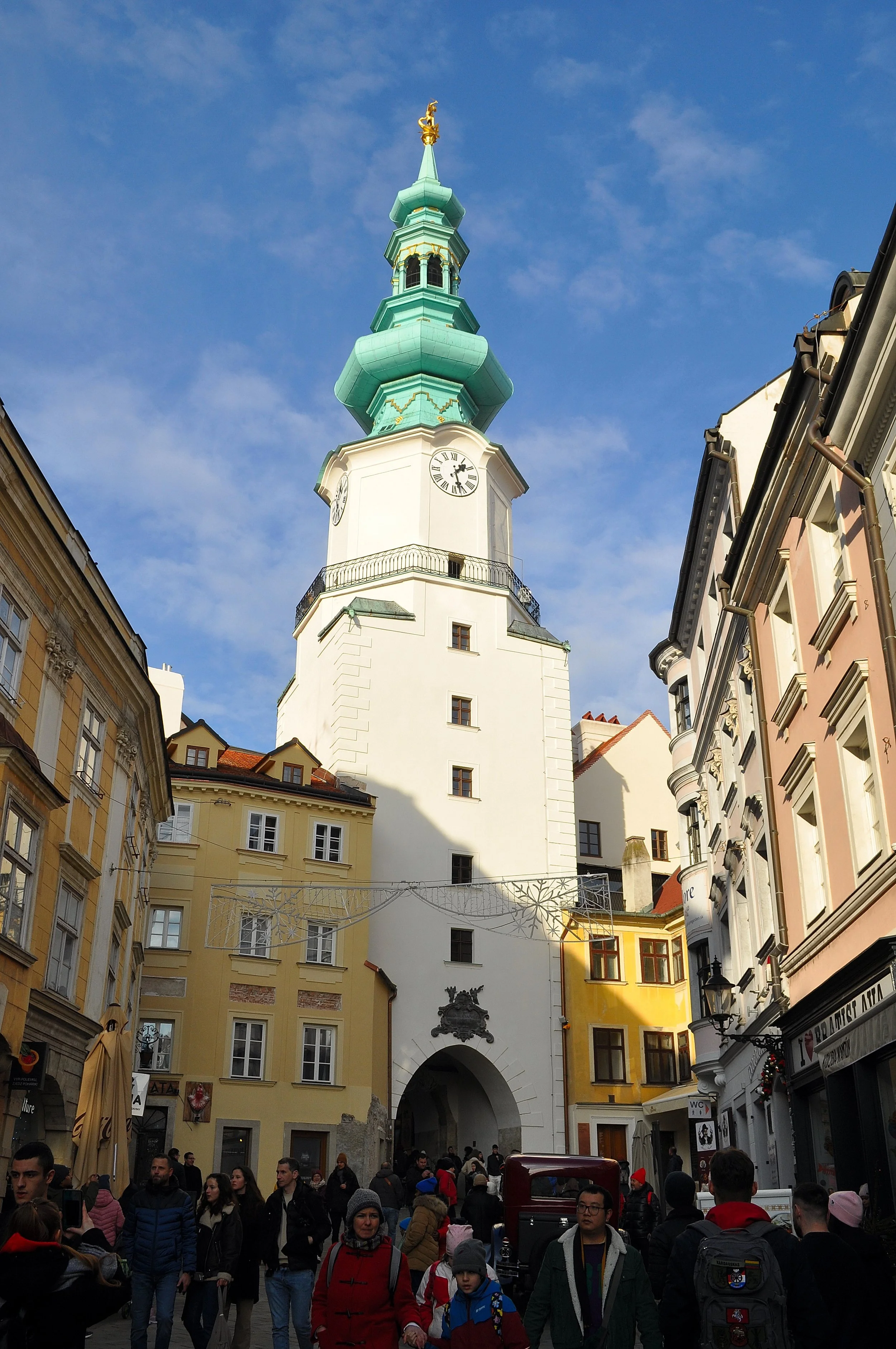


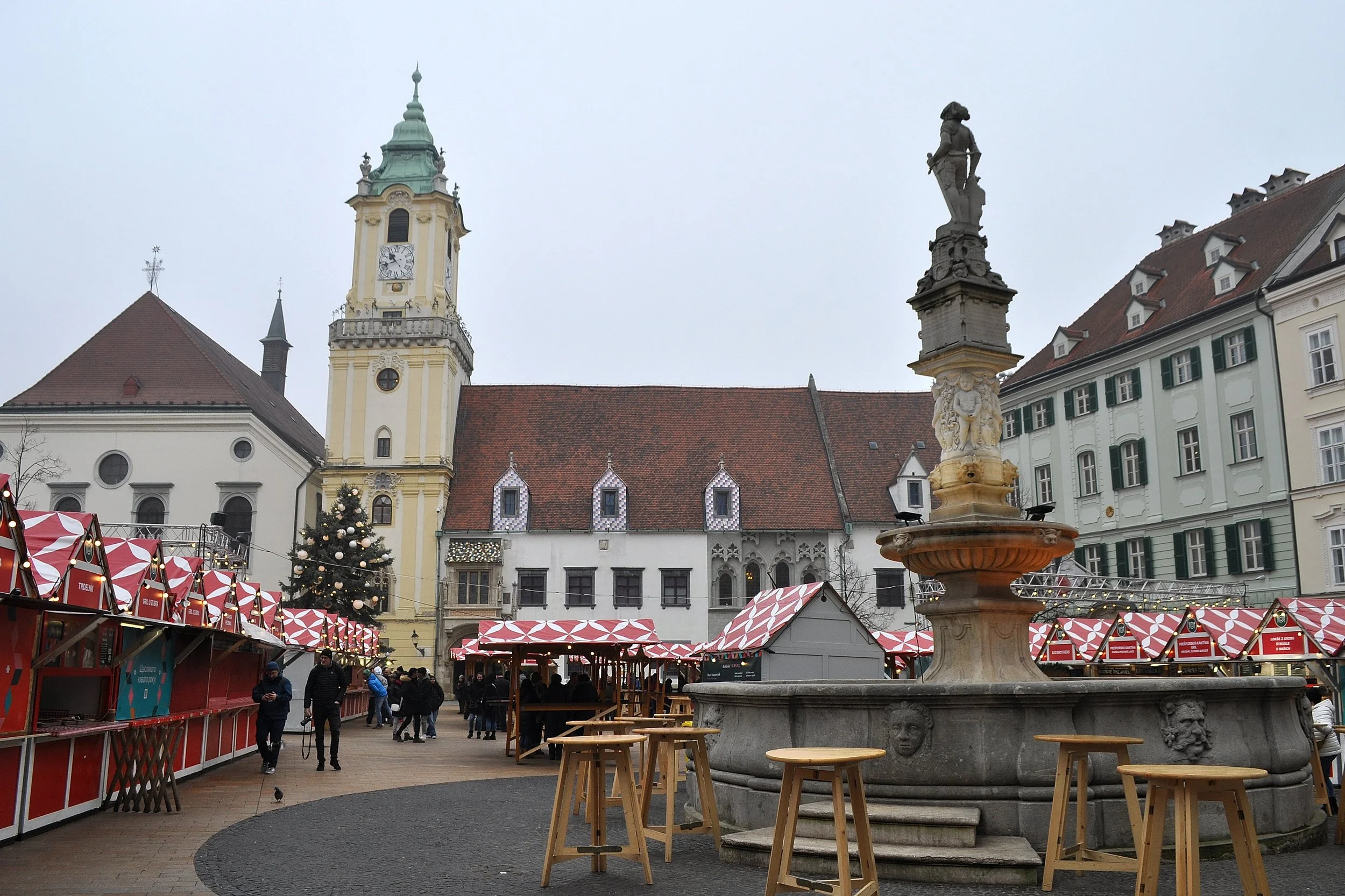
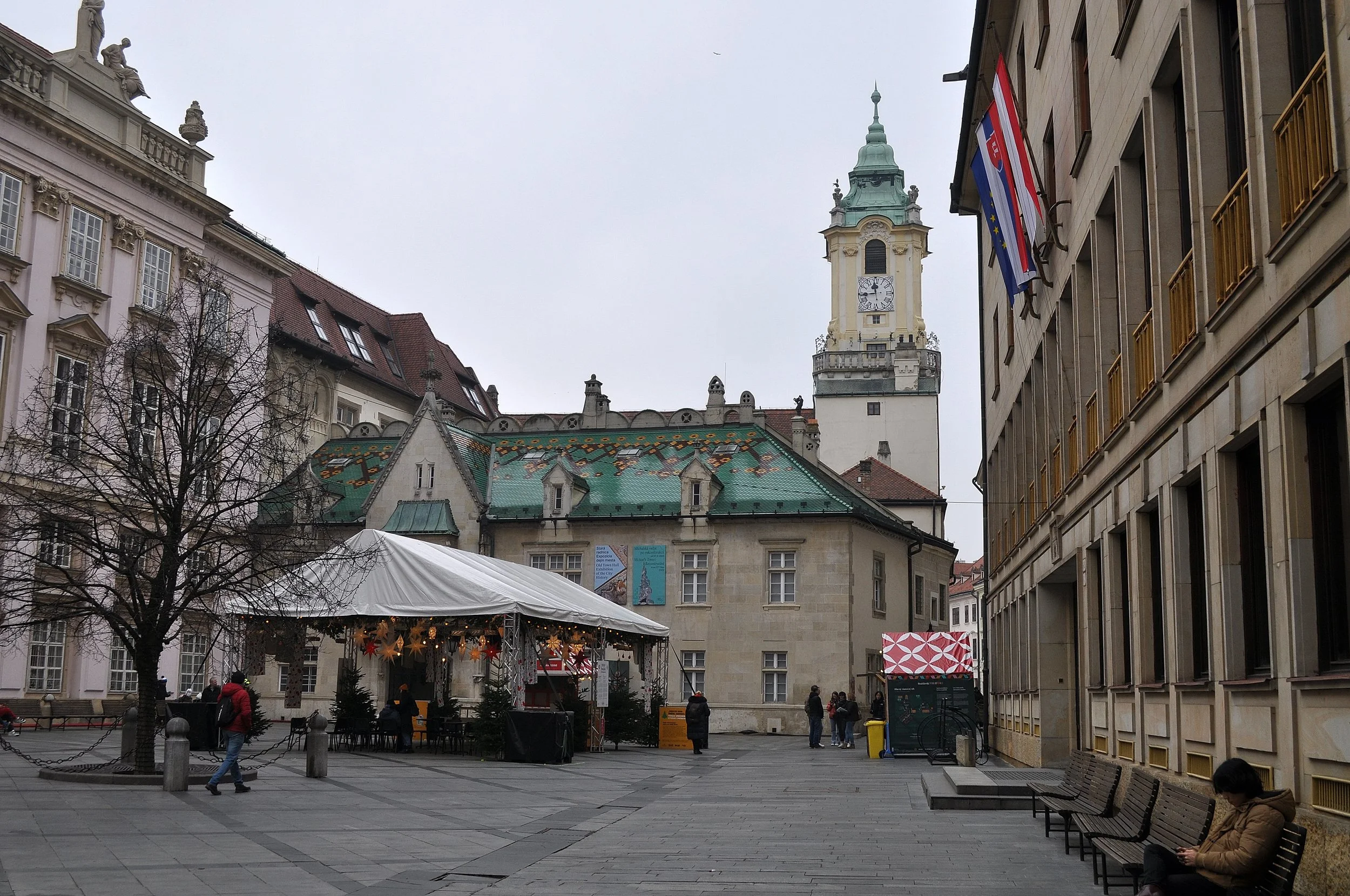
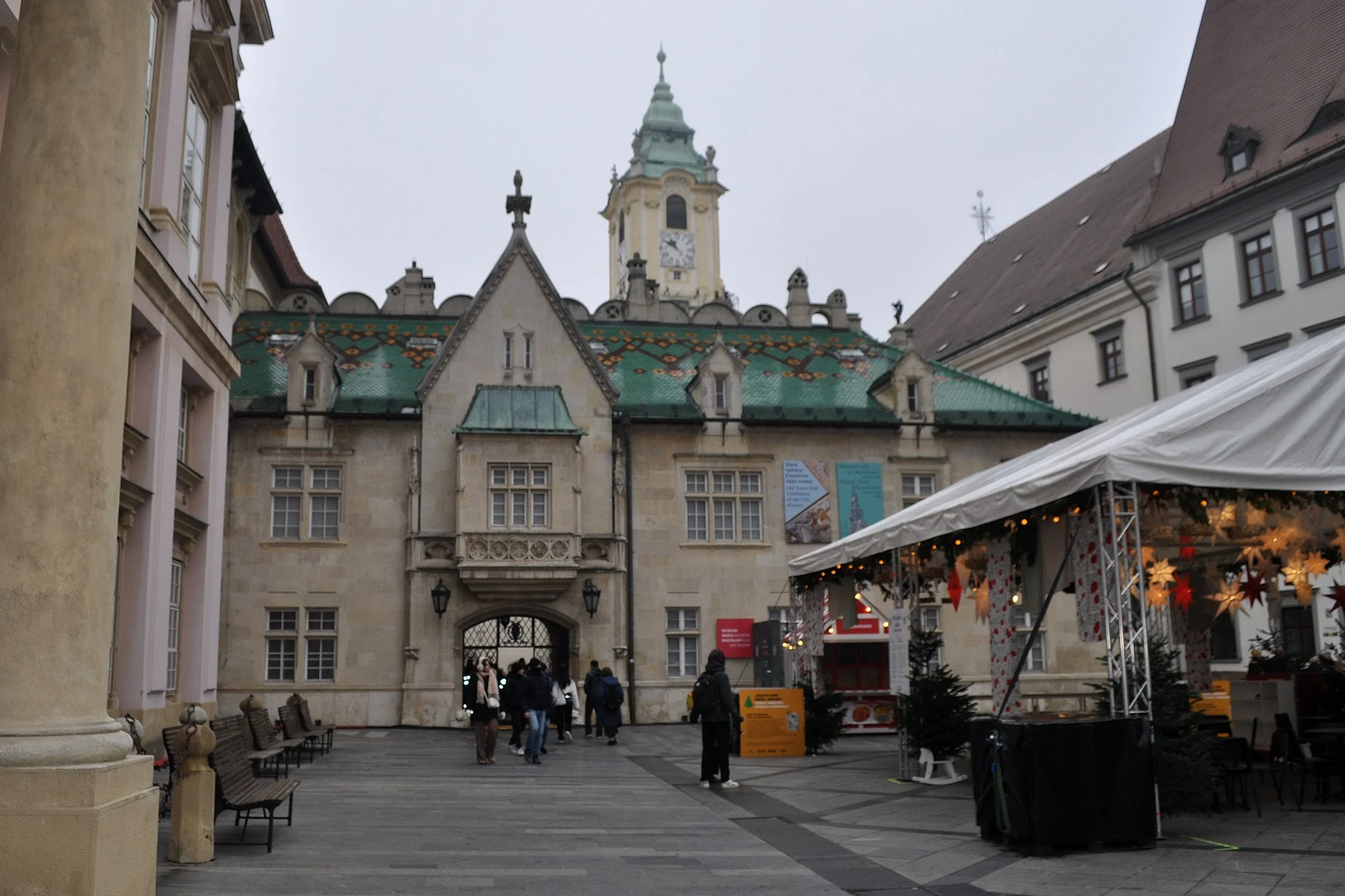
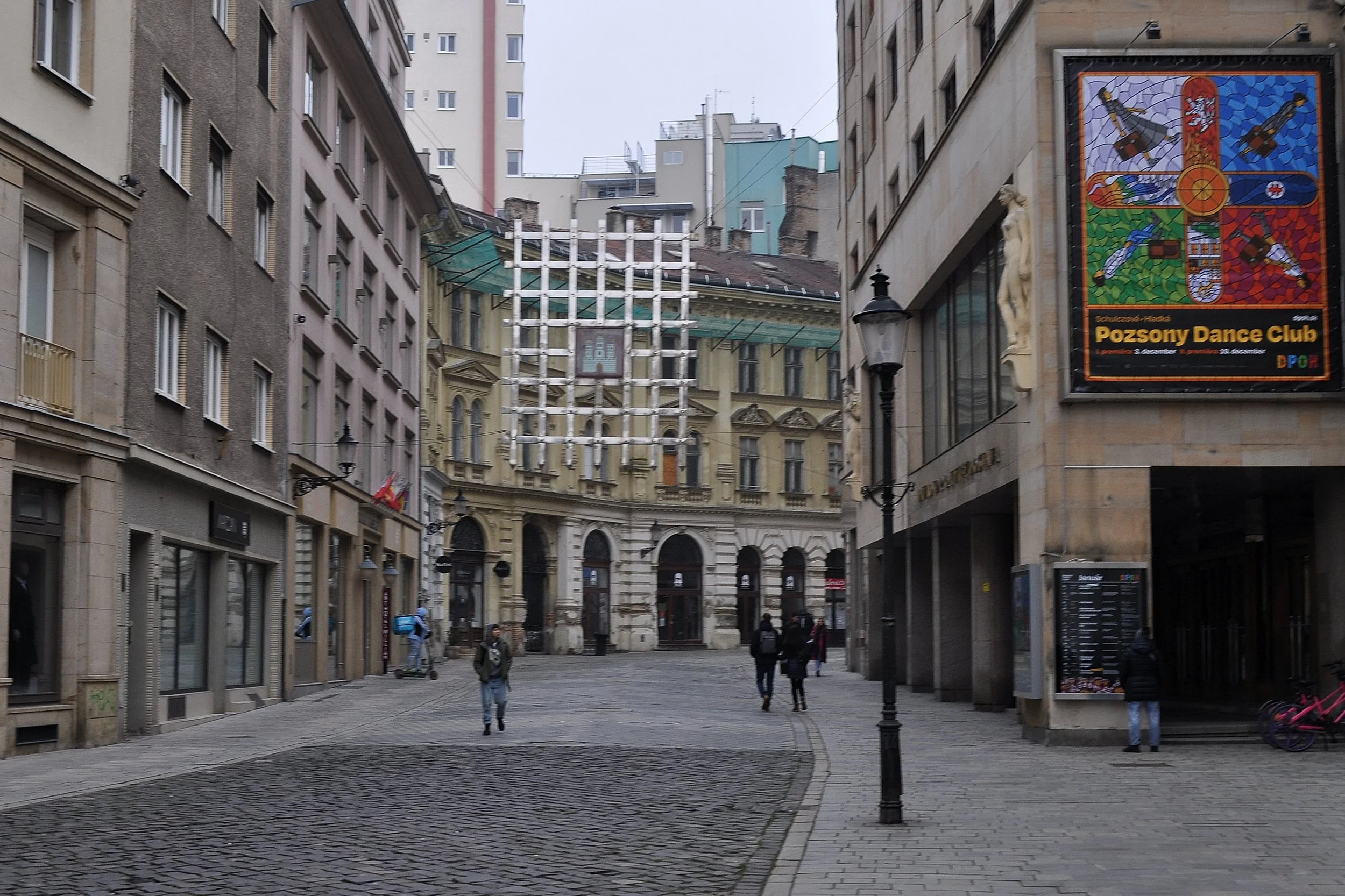
Piero: we pass through the gate and walk down the avenue leading to the main square, admiring the colorful and picturesque shops. Hlavné námestie is the central square of Bratislava, which has always been the heart of the city. The square is home to the Old Town Hall, one of the oldest buildings in all of Slovakia. What we see today is the combination of several structures dating back to different eras, from the Middle Ages to the Rococo style; of particular interest is the bell tower, another important symbol of the city. Today, the building houses the most important Slovak museum.



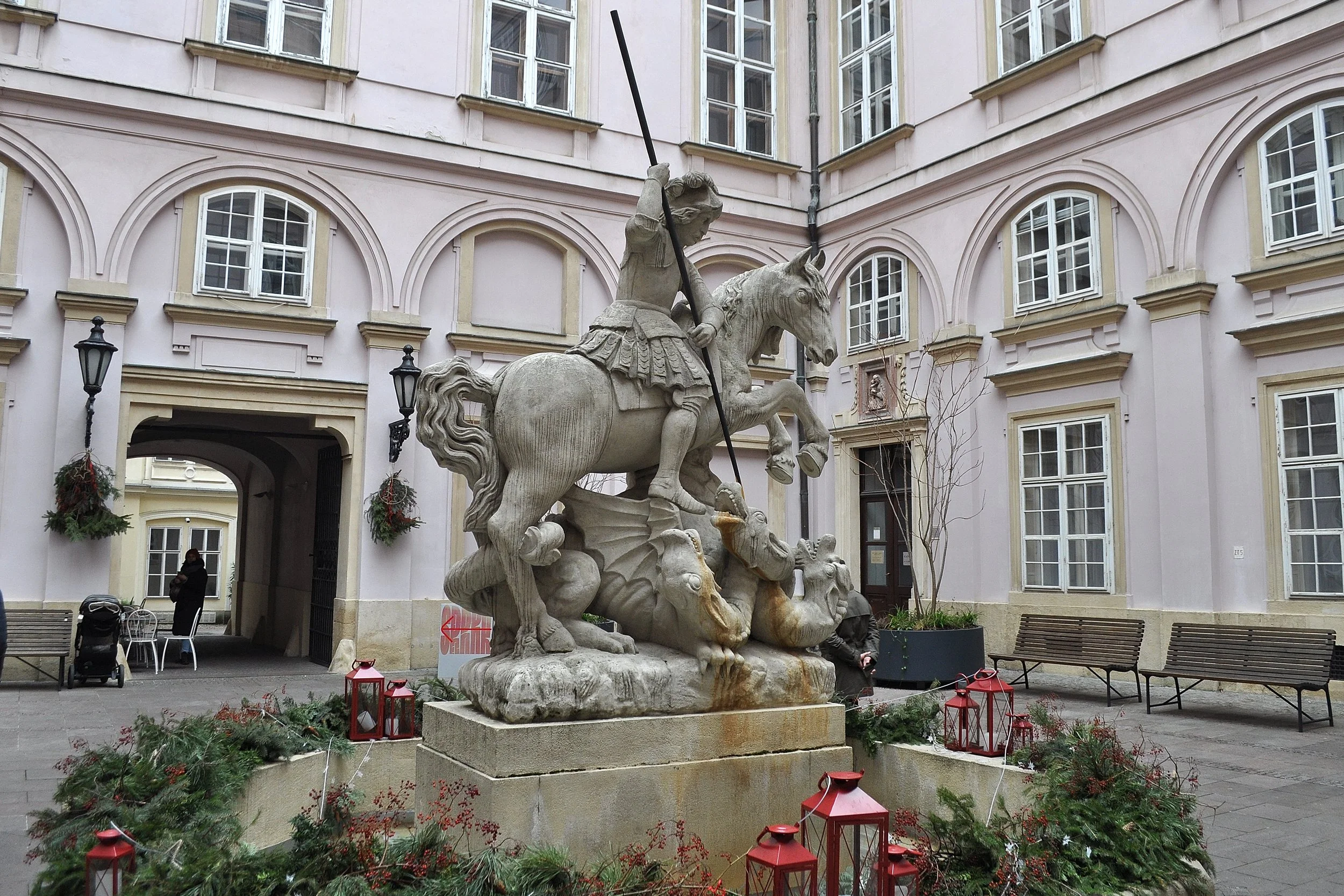
Angela: right behind the Old Town Hall lies another of Bratislava's most visited attractions: the Primate's Palace. It is an elegant and imposing palace with a pale pink neoclassical facade, famous for being the place where the Peace of Pressburg (as mentioned, one of Bratislava's historical names) was signed in 1805 between the Habsburg Empire and France after the Battle of Austerlitz.
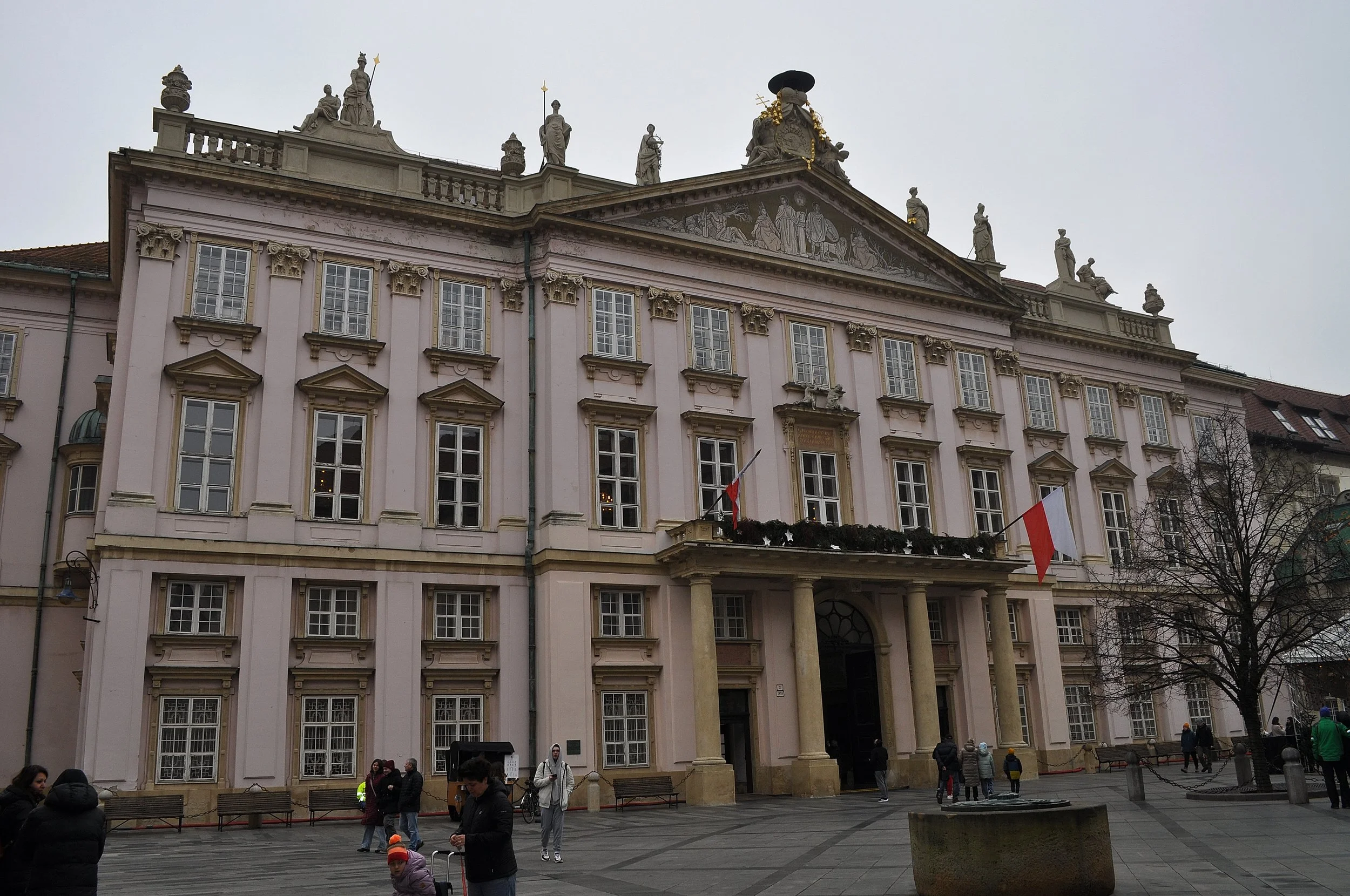
Piero: it dates back to the 18th century and was once the seat of the Archbishop, while today it serves as the City Hall of Bratislava. The guided tour is well worth taking: it begins in the magnificent Hall of Mirrors and continues through the palace’s other colourful state rooms, which house a rich and valuable collection of English tapestries.

Angela: we leave the city centre behind for a short walk to the Blue Church. It is not a particularly significant building from an architectural point of view; however, it is well worth a visit for the distinctive light blue façade, which makes it look more like a fairytale house than an Orthodox church.


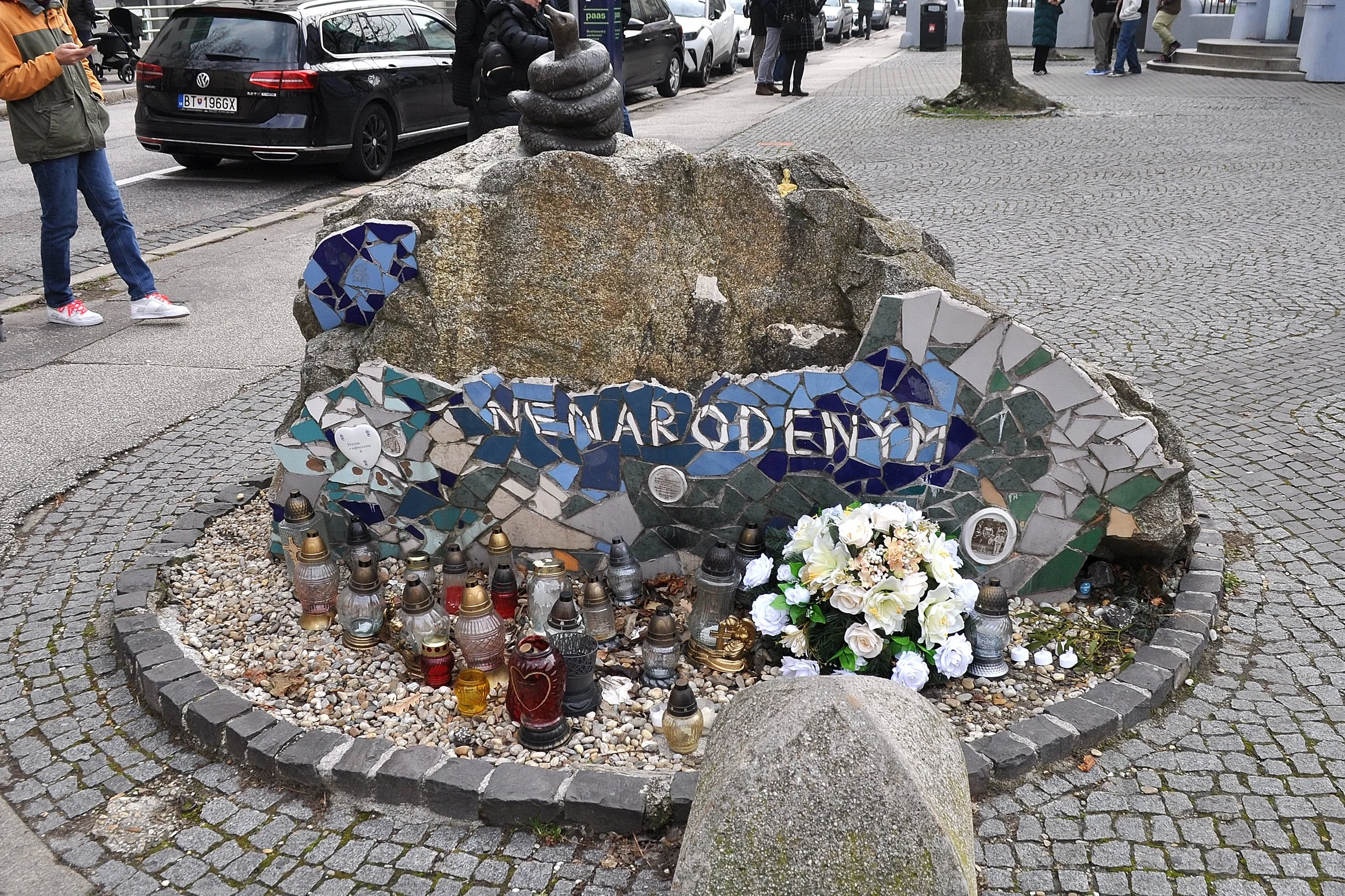
Piero: the church is dedicated to Saint Elizabeth of Hungary, who lived in Bratislava Castle, and it was built relatively recently, in 1907. Right in front of the church stands the Monument to Unborn Children, whose sculpture is always adorned with flowers.
Angela: we then walk back towards the historic centre. The stroll is truly enjoyable along the city's lively boulevards, lined with shops of every kind, restaurants, and market stalls offering distinctive local liqueurs.
Piero: almost by chance, we come across a curious bronze statue: it is Čumil the Watcher, mischievously peeking out of a manhole while smiling at unsuspecting tourists and passers-by. It is just the most famous of the many bronze statues placed throughout the historic centre of Bratislava to bring new life to the Old Town after the fall of communism.
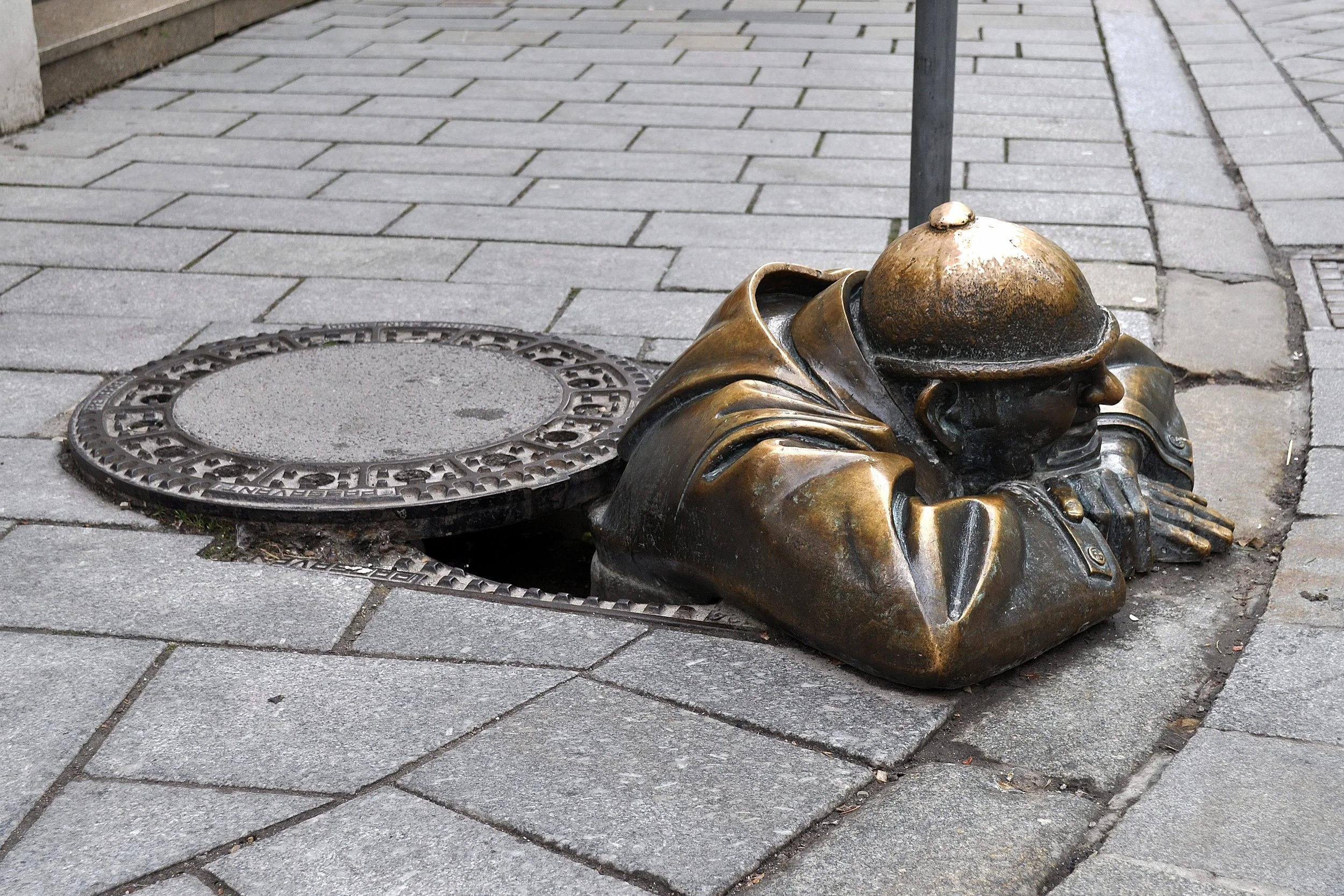
Angela: they are life-sized statues, installed one after another as their popularity grew, with tourists enjoying a sort of treasure hunt to take a selfie with each of them. Alongside Čumil, you will find a Napoleonic soldier, leaning casually against a bench while waiting for the return of his commander, the Paparazzo with his camera, and the Schöne Náci look-alike, smiling from a window at the unsuspecting passers-by. Another important monument is the statue of Hans Christian Andersen, honoured for writing The Little Match Girl in Bratislava. Particularly curious is the statue of Baron Munchausen, seated on a cannonball embedded in the façade of a building.
Piero: we now arrive at St. Martin’s Cathedral, the most important church in Bratislava, where the Kings and Queens of Hungary were crowned for centuries.
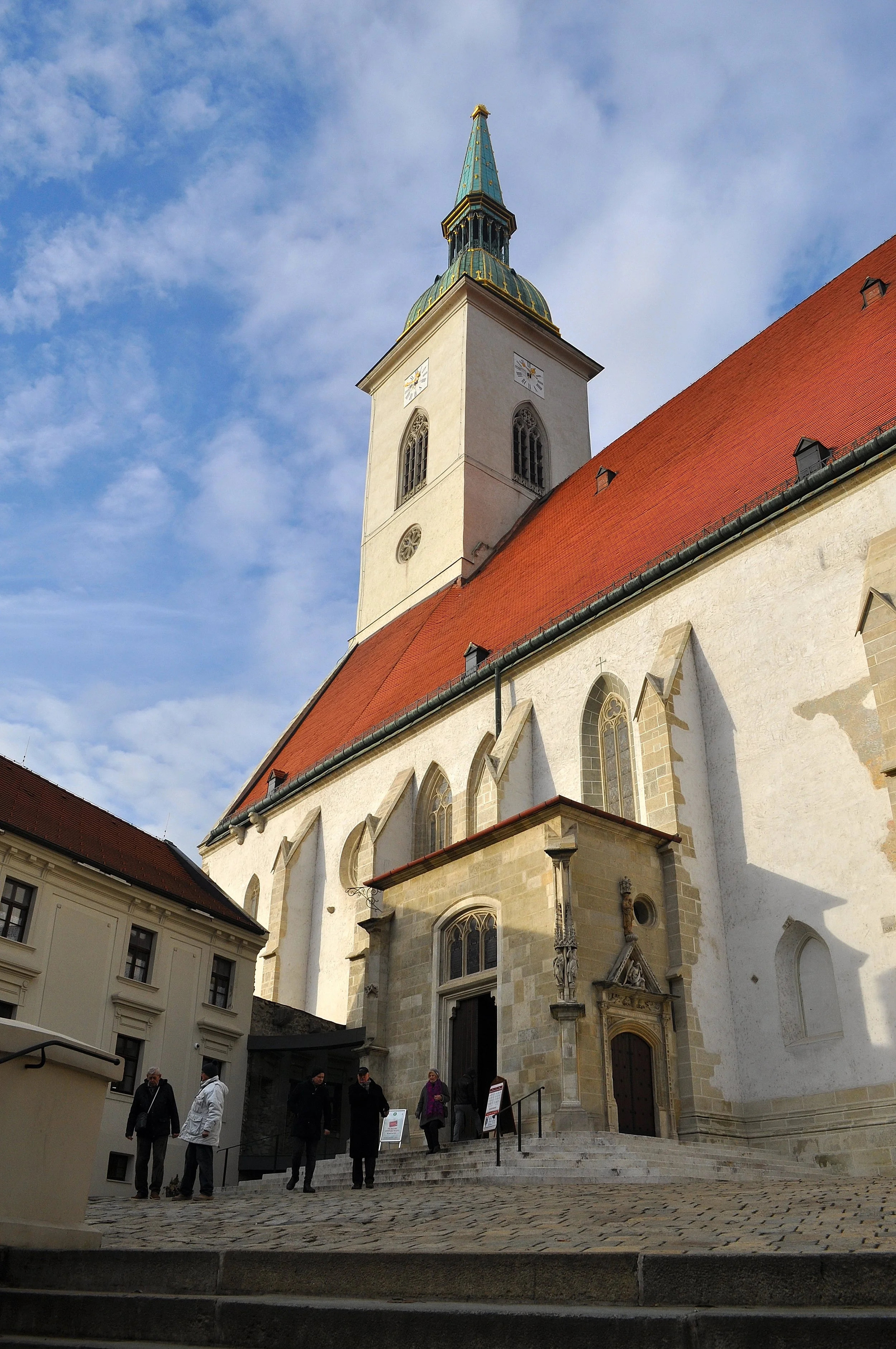
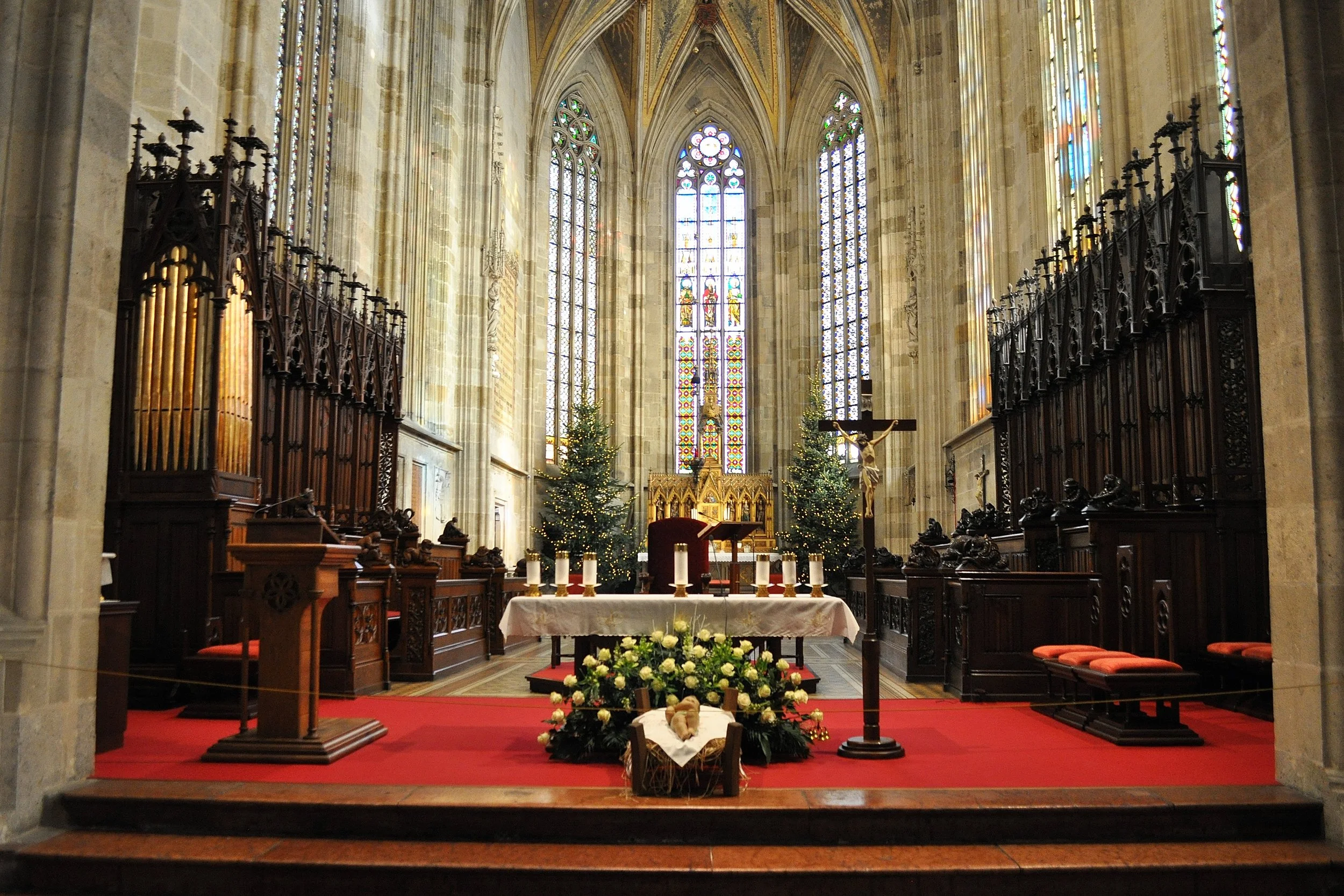
Angela: it was built in the Gothic style, on the site of an earlier Romanesque church. Its three naves, the altar, the pipe organ, and the main portal, depicting Saint Martin cutting his cloak with his sword to share it with a beggar, are particularly beautiful. The 85-metre-high tower dominates the city skyline. A curious detail: the bell tower is topped by a replica of the Hungarian Crown, weighing an impressive 300 kilograms.




Piero: the cathedral is the starting point for the climb to the hill that is home to one of our final attractions: Bratislava Castle.
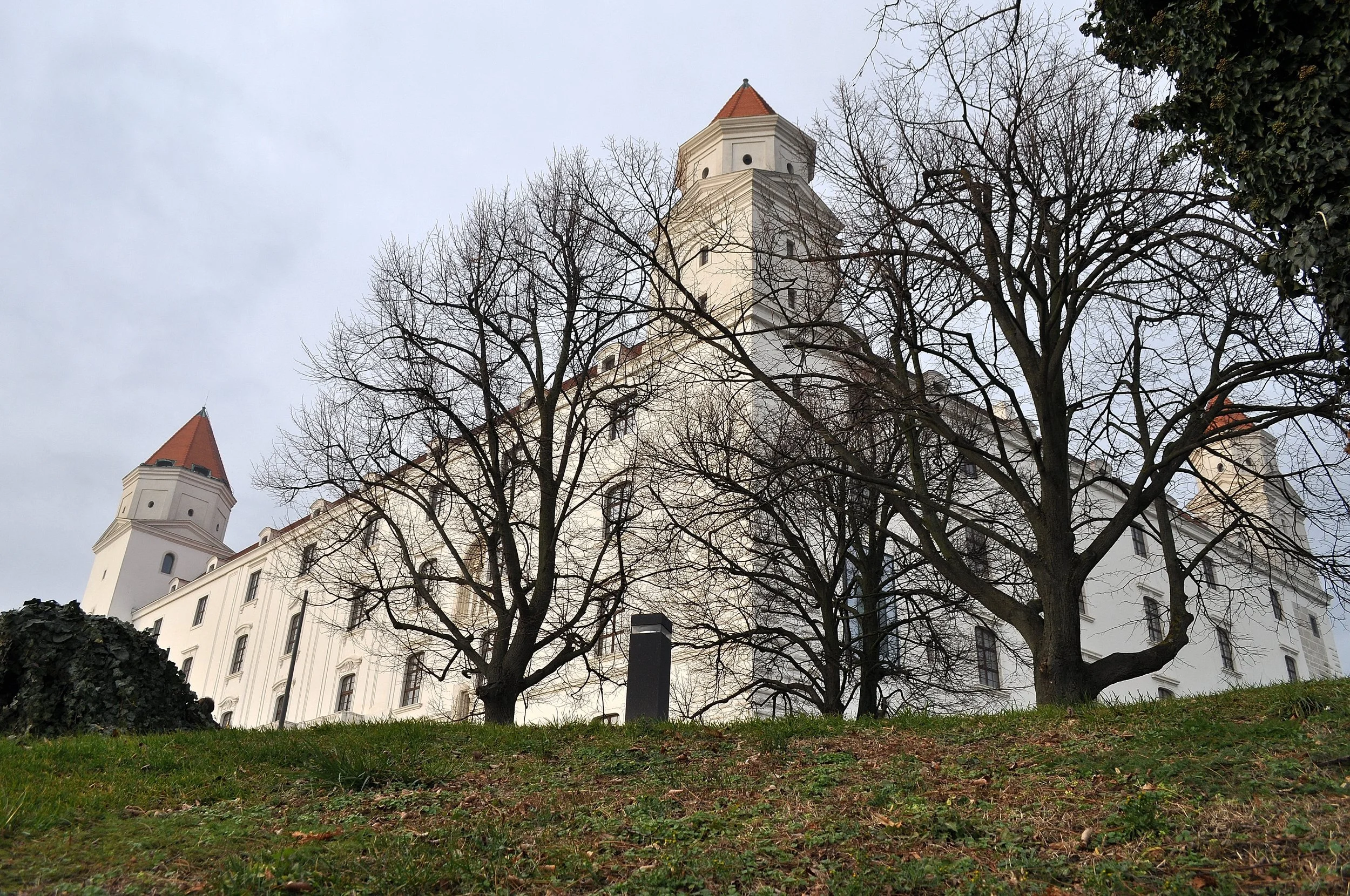
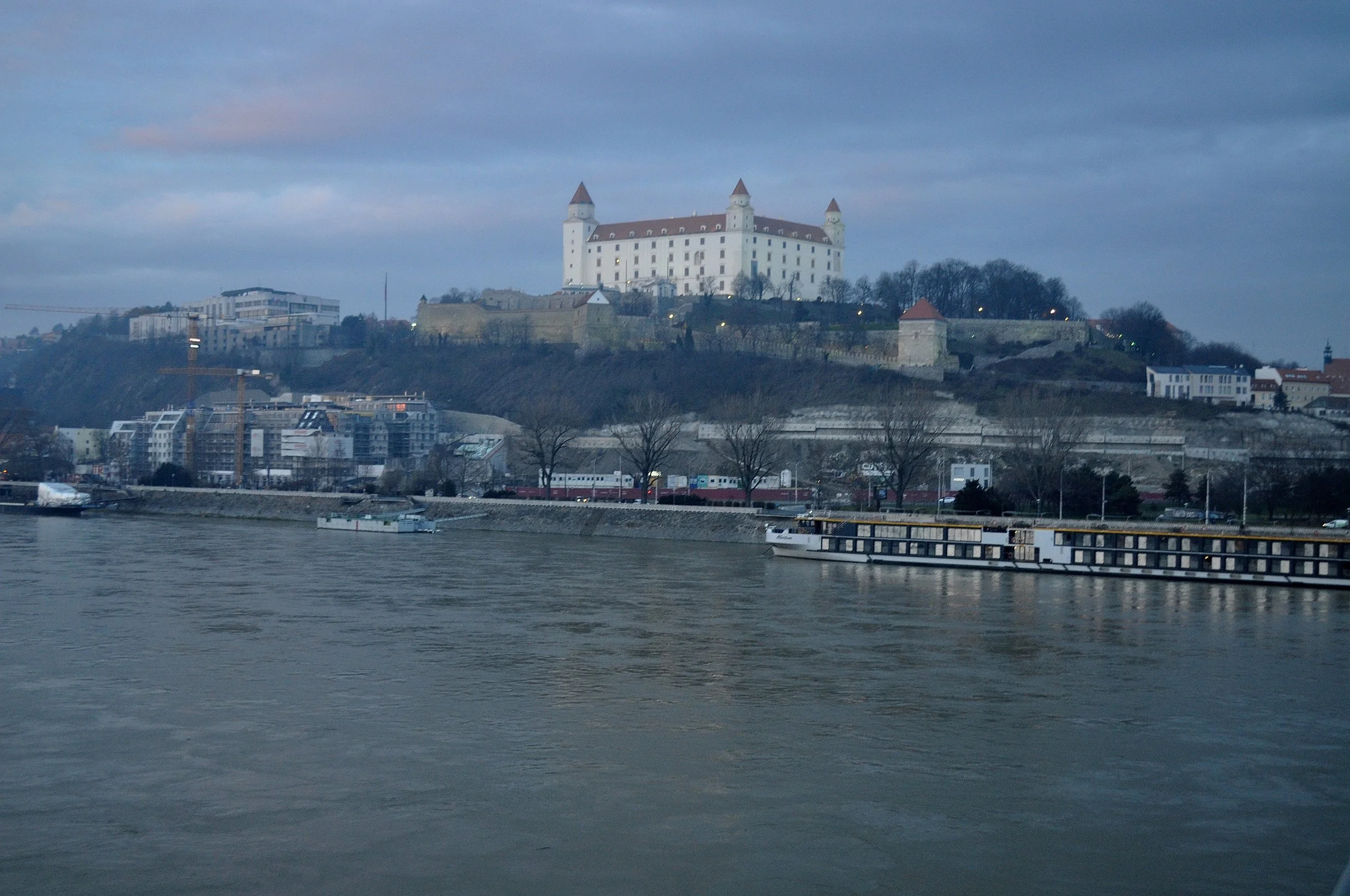
Angela: the Castle, thanks to its commanding position and imposing appearance, overlooks the Danube and the city. It dates back to the 10th century and has been repeatedly modified, rebuilt, destroyed, and restored over the centuries. In 1811, a devastating fire, caused by the negligence of Napoleonic soldiers, completely destroyed the castle, and for the following 150 years only its ruins dominated the skyline of the city. Today, it is home to the Slovak National Museum and also serves as a representative seat of the Slovak Parliament.


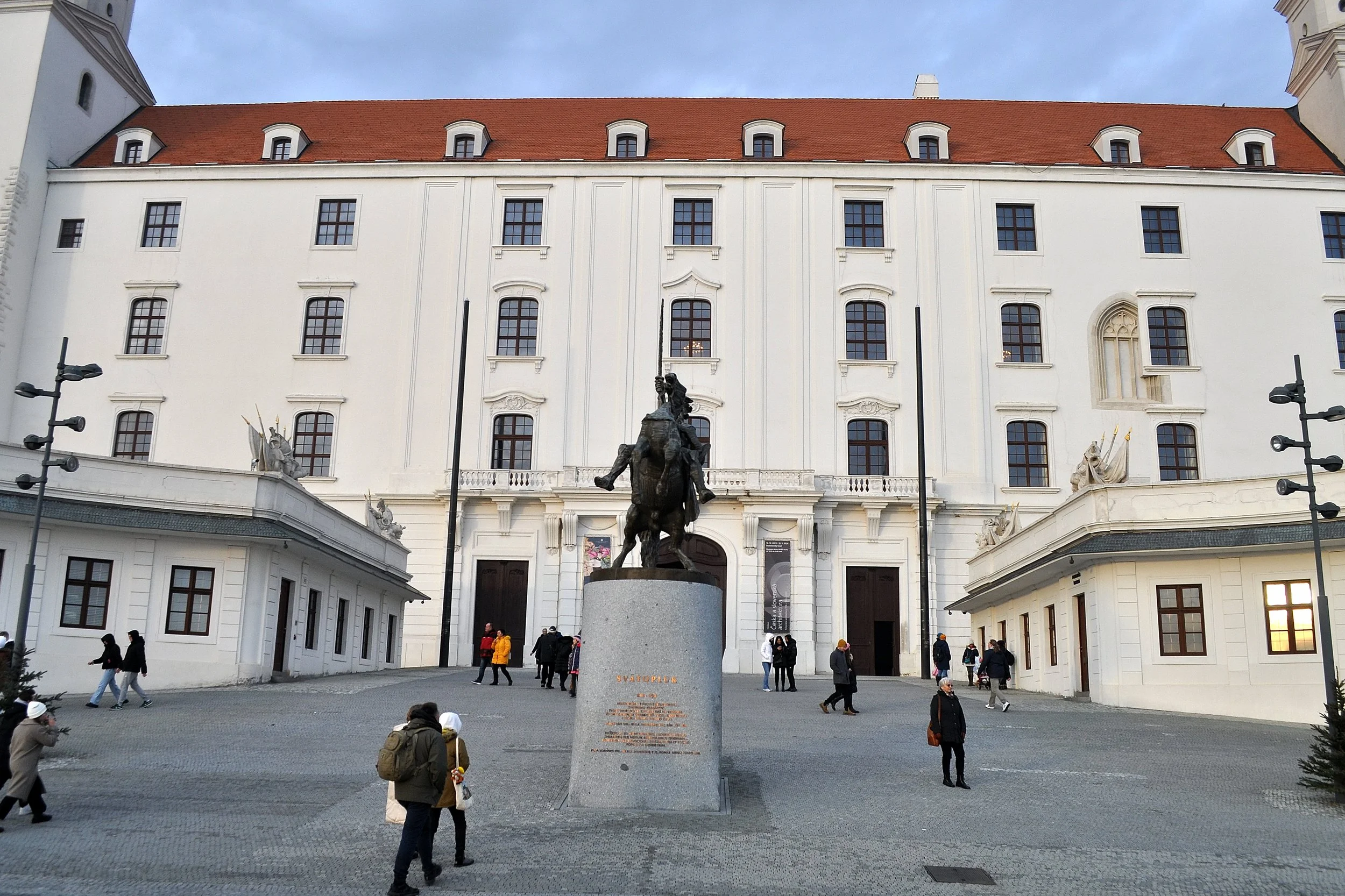

Piero: the Castle is the ultimate symbol of Bratislava, and from the square in front of it you can enjoy a spectacular view of the city and the Danube. On the clearest days, it is even possible to see Vienna from here.


Angela: our visit is coming to an end, but to return to the train station, located in the new town, we decide to cross the Nový Most Bridge on foot.


Piero: the Old Town of Bratislava is connected to the new district by the Nový Most Bridge (New Bridge), famous for the disc-shaped structure perched on top, known as the "UFO". It is well worth buying a ticket for the lift that takes you to the top of the tower, where you will find a restaurant and a sky bar offering spectacular panoramic views over the city and the Danube.


Angela: the bridge was built between the late 1960s and the early 1970s. It is an asymmetrical cable-stayed bridge with a single span, supported by a single pylon that carries the entire structure. The pylon consists of two legs, with the roadway passing between them. Rather than standing at the centre of the bridge, the supporting tower rises from the right bank of the Danube and is inclined from the vertical to efficiently distribute the load through the stay cables. At its summit, of course, sits the iconic UFO.
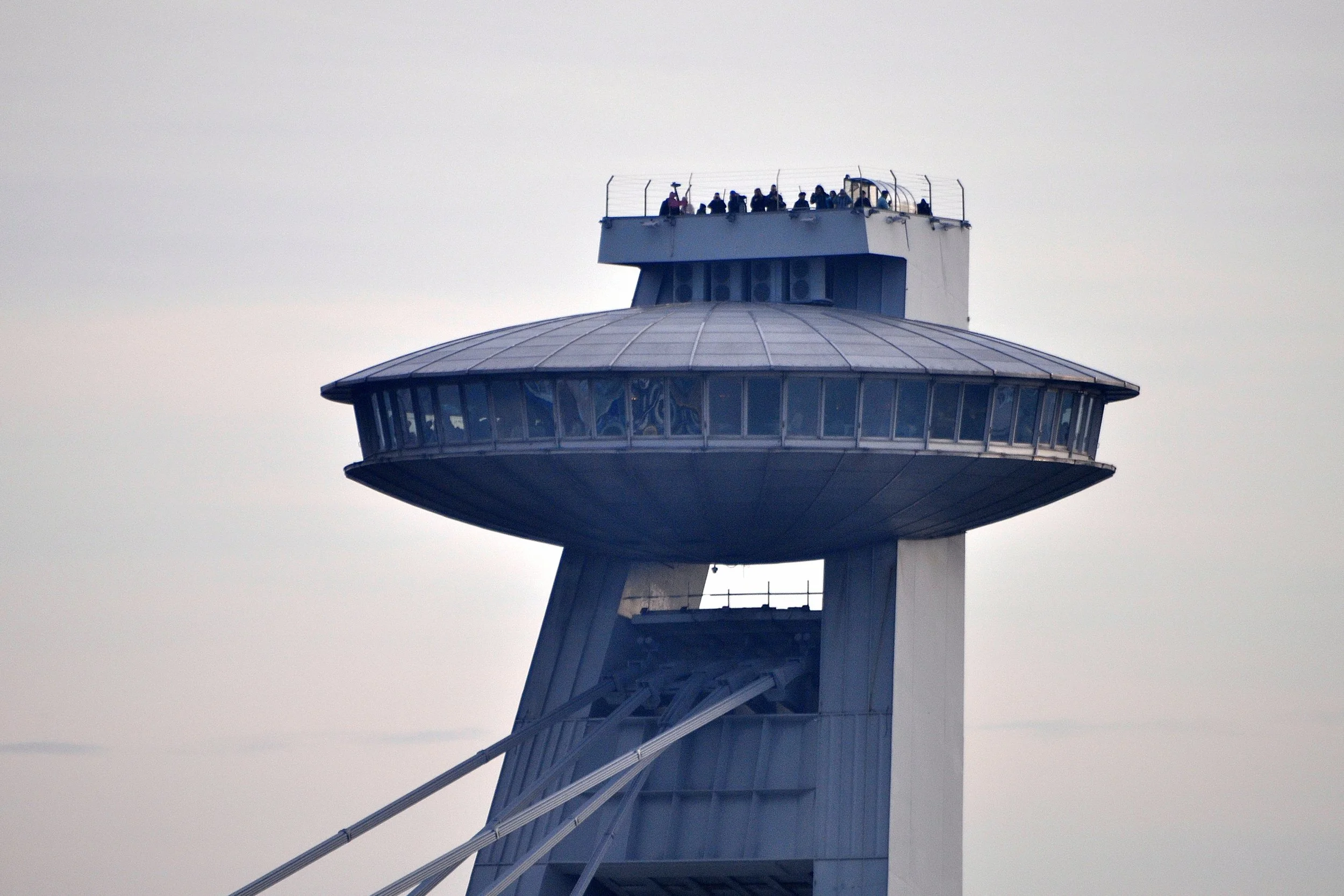
Piero: the bridge’s bold engineering was strongly promoted by the Communist regime to demonstrate its strength and efficiency to both the nation and the world. Its official name is Most SNP (Most Slovenského národného povstania), meaning the "Bridge of the Slovak National Uprising", as it serves as a memorial to the resistance against Nazism. An interesting fact: the construction works swept away what remained of the Jewish Quarter, and, in an act seen as a challenge to the Catholic Church, the politicians of the time had no hesitation in routing the road connected to the bridge just three metres from St. Martin’s Cathedral.
Angela: it is easy to understand why the bridge continues to divide the people of Bratislava. Some see it as an urban planning disaster, while others admire its modern architecture and even regard it as a symbol of Soviet-era pride.
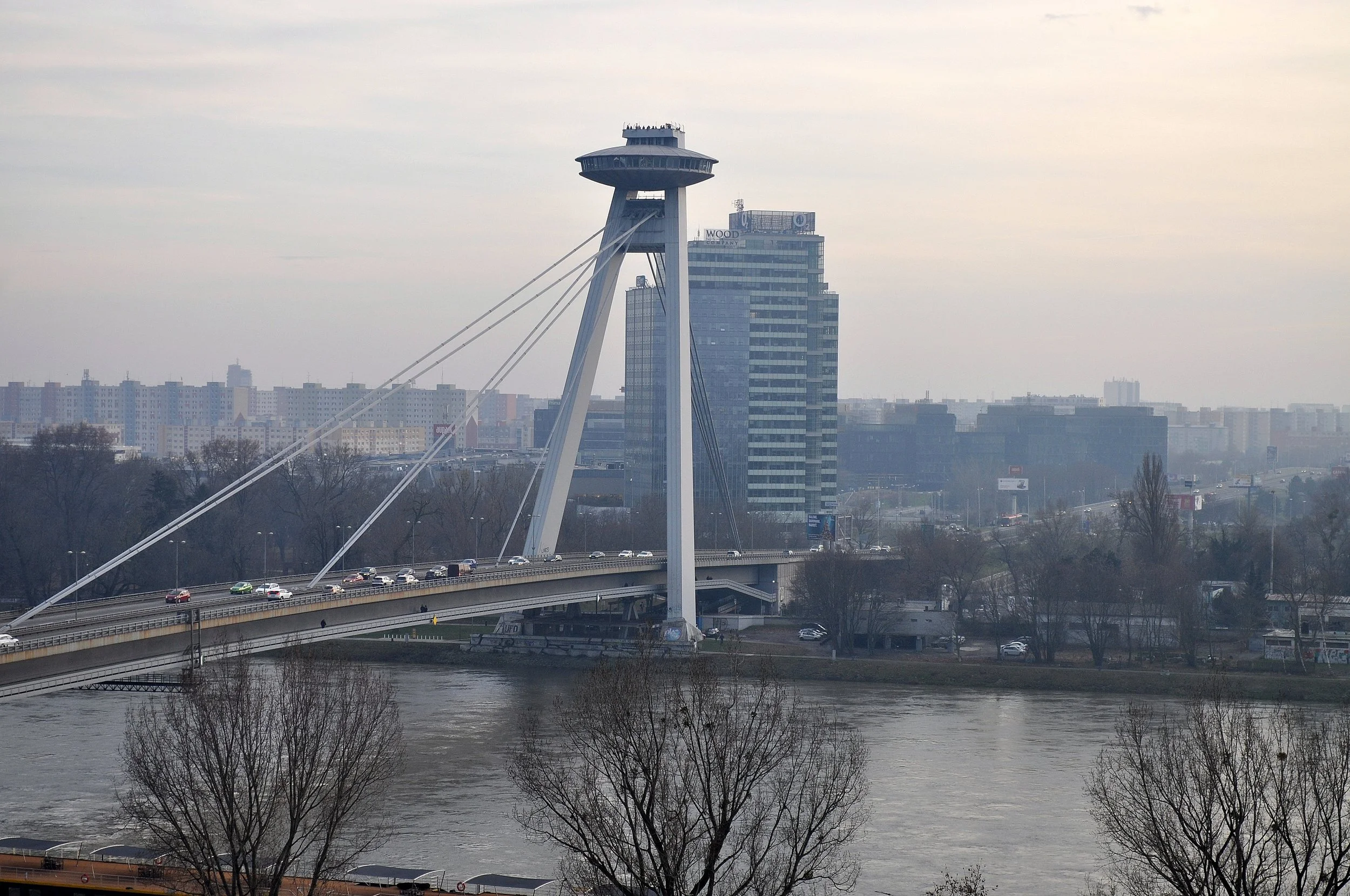
Zbohom Bratislava
Piero: with our visit to the UFO complete and the magnificent panorama of the Danube and the city still fresh in our minds, our visit to Bratislava comes to an end.
Angela: it has been a truly enjoyable visit, perfect even for a weekend getaway away from the usual tourist destinations. It is a genuine human-scale city, easy and pleasant to explore entirely on foot.
Piero: Bratislava and its surroundings certainly have much more to discover and explore, and for that reason, this is not a farewell but simply until next time.
Angela: now, let’s relive our journey through this short video!