Rhodes: island of light and legends
Angela: and once again, when it came to the inevitable question, “Where are we going?”, the answer was obvious.
Piero: of course… Greece!
Angela: by now it's almost a reflex. Whenever we see flights to the Greek Islands, you simply can't resist.
Piero: and you don't even try to stop me anymore!
Angela: to be honest, I've finally surrendered to your passion for Doric columns, whitewashed houses, and feta salads.
Piero: from Milan, with a comfortable flight heading south-east, in less than three hours we arrive on the easternmost island of the Dodecanese. As soon as we land, we're welcomed by warm sunshine and a gentle breeze already carrying the scent of the sea and ancient history.
Angela: but why Rhodes?
Piero: because it is the perfect combination of everything we love: crystal-clear sea, medieval villages, ancient ruins, and... a legendary Colossus. We are going to visit:
Lindos and its Acropolis;
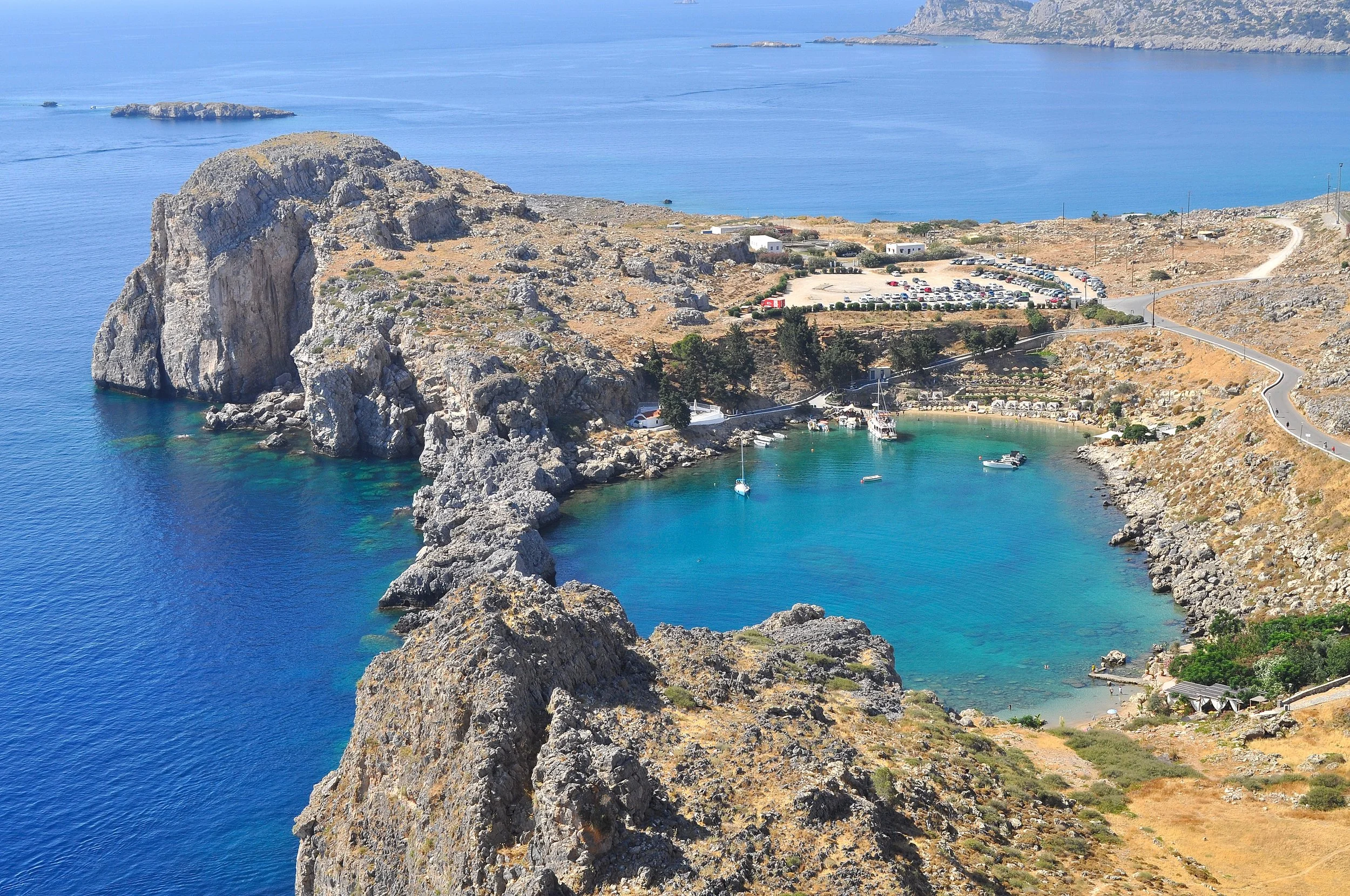
St. Paul's Bay;
Prasonisi;
Anthony Quinn Bay;
Agathi Beach;
Navarone Bay;
Rhodes Town.
The history of Rhodes
Piero: Rhodes has a long and complex history, shaped by peoples, battles, trade, and legends.
Angela: the earliest traces of settlement date back to the Bronze Age, but it was with the arrival of the Mycenaeans, around 1500 BC, that the island truly entered history.
Piero: then came the Dorians, around the 10th century BC, who founded three important cities: Ialysos, Kamiros, and Lindos, all of which can still be visited today.
Angela: and it was these three cities that, in 408 BC, decided to found a new polis together: the city of Rhodes, on the island's north-eastern tip.
Piero: the new city was designed by Hippodamus of Miletus, the great urban planner of antiquity, with a regular grid layout and well-organised harbours.
Angela: a masterpiece of ancient urban planning. Rhodes quickly flourished, becoming an important centre of trade, art, and culture, allied first with Athens and later with Sparta, while always remaining proud of its independence.
Piero: it also became a great naval power, with a fleet respected throughout the Mediterranean. And it was no coincidence that, after successfully repelling the siege of Demetrius Poliorcetes in 305 BC, the Rhodians built a statue to celebrate their victory: the Colossus of Rhodes.
Angela: standing more than 30 metres tall, it represented Helios, the patron god of the island. It was a gigantic work of art that amazed the ancient world.
Piero: although it collapsed little more than half a century later due to an earthquake, it has remained in the collective imagination as one of the Seven Wonders of the Ancient World.
Angela: but the history of Rhodes did not end with the Classical period. With the arrival of the Romans, the island continued to prosper, and later became part of the Byzantine Empire.
Piero: in 1309, the Knights of the Order of St. John, expelled from Cyprus and seeking a new Christian stronghold in the Mediterranean, arrived on the island.
Angela: the Knights built one of the most spectacular fortified cities in Europe. The walls, the Palace of the Grand Master, the hospitals, and the churches all bear witness to the era of the Knights.
Piero: they resisted the Ottomans for more than two centuries, until 1522, when Rhodes was conquered by Suleiman the Magnificent after a terrible siege.
Angela: this marked the beginning of the long Ottoman period, which lasted until the arrival of the Italians in 1912.
Piero: that's right! Rhodes was part of the Kingdom of Italy for more than thirty years, until 1947, when the island was officially united with Greece.
Angela: today, walking through Rhodes is like strolling through a history book: every stone tells the story of a civilisation, every street of a different era.
Piero: and we are ready to discover it, one step at a time.
Lindos, between stone and legend
Angela: we have chosen to stay by the sea, right here, in a peaceful corner of the south-eastern coast of Rhodes, just a few minutes from Lindos.
Piero: opening the windows in the morning and watching the sunrise over the Aegean Sea is priceless. But today there's no time to be lazy: let's go!
Angela: we load our backpacks into our faithful van and set off, driving along scenic roads surrounded by the scent of pine trees. Our destination: Lindos, the ancient sacred town that looks as though it has come straight out of a painting.
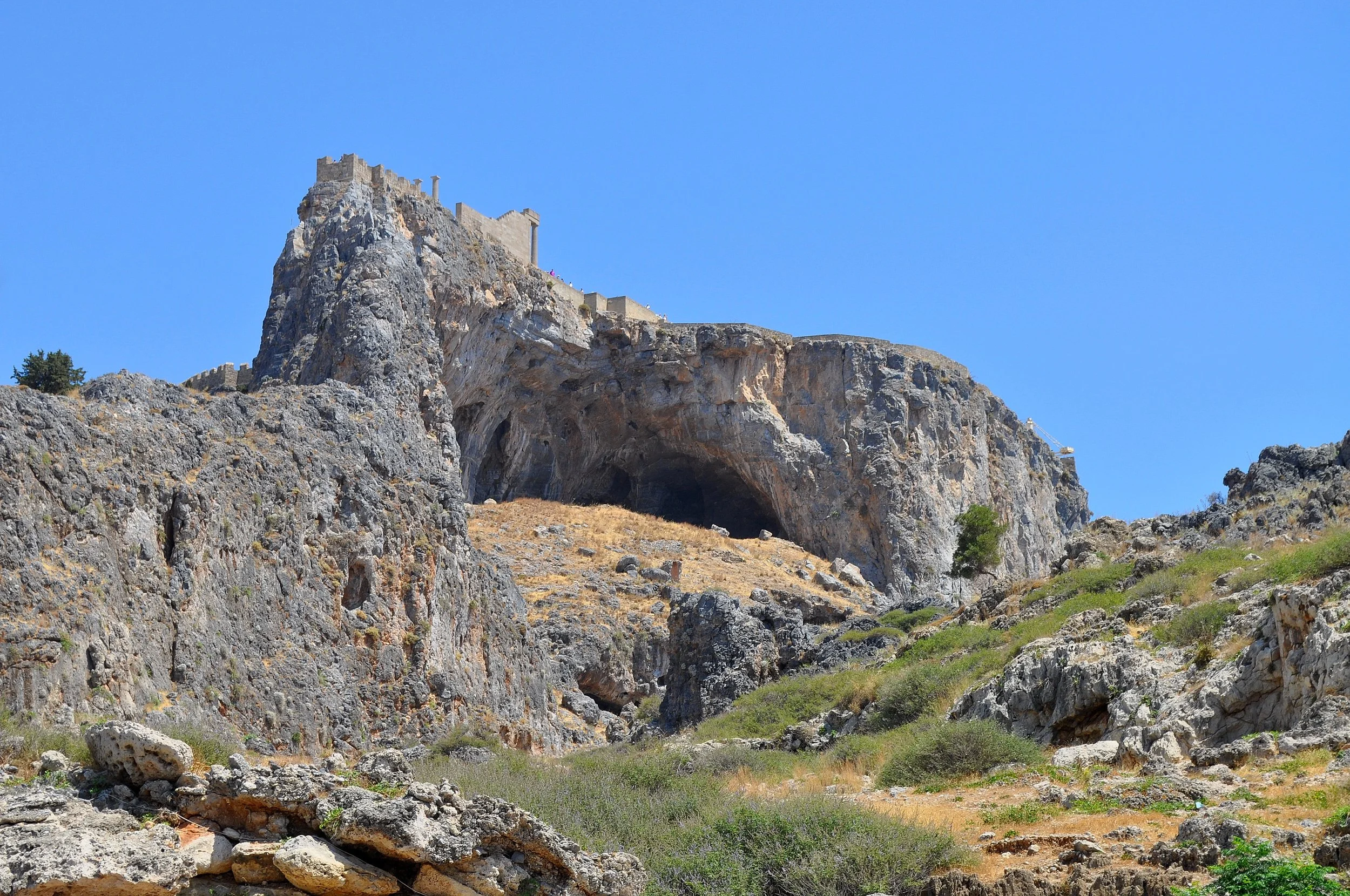
Piero: we arrive within a few minutes, and our eyes are immediately drawn upwards to the Acropolis, towering above the bay, before being captivated by the dazzling white houses, clustered closely together as if embracing one another.
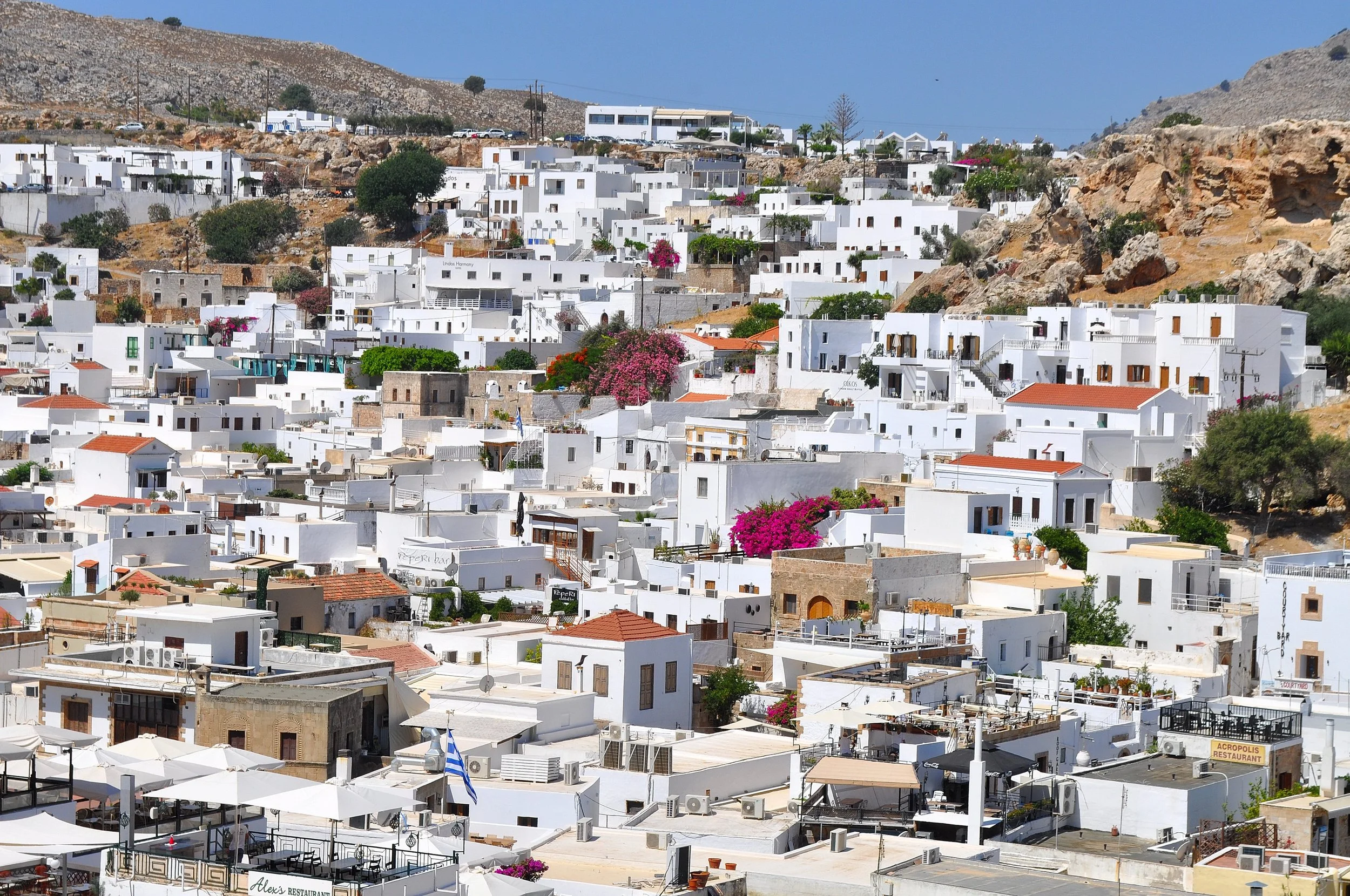
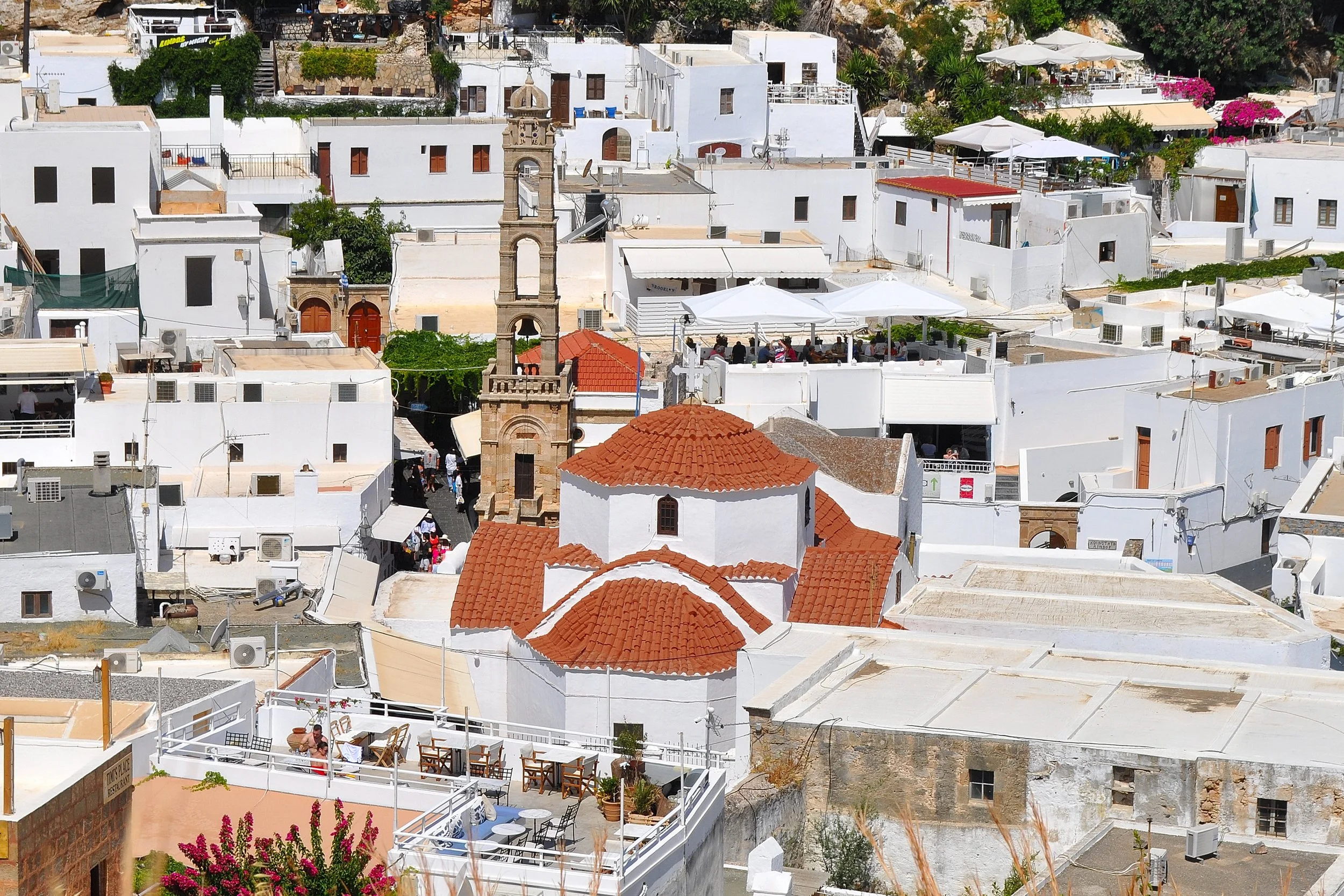
Angela: we leave our van on the outskirts of the village and begin walking through the cobbled streets. The donkey carts pass by slowly, but we prefer to make the climb on foot, enjoying every detail along the way.
Piero: the carved wooden doors, the mosaic doorsteps, the shaded terraces: Lindos is a small maze that is filled with the scent of history and jasmine.
Angela: the climb to the Acropolis is a journey through history. It begins with the remains of an ancient staircase carved into the living rock, then continues past the Castle of the Knights, who transformed this sacred site into a military fortress during the 14th century.
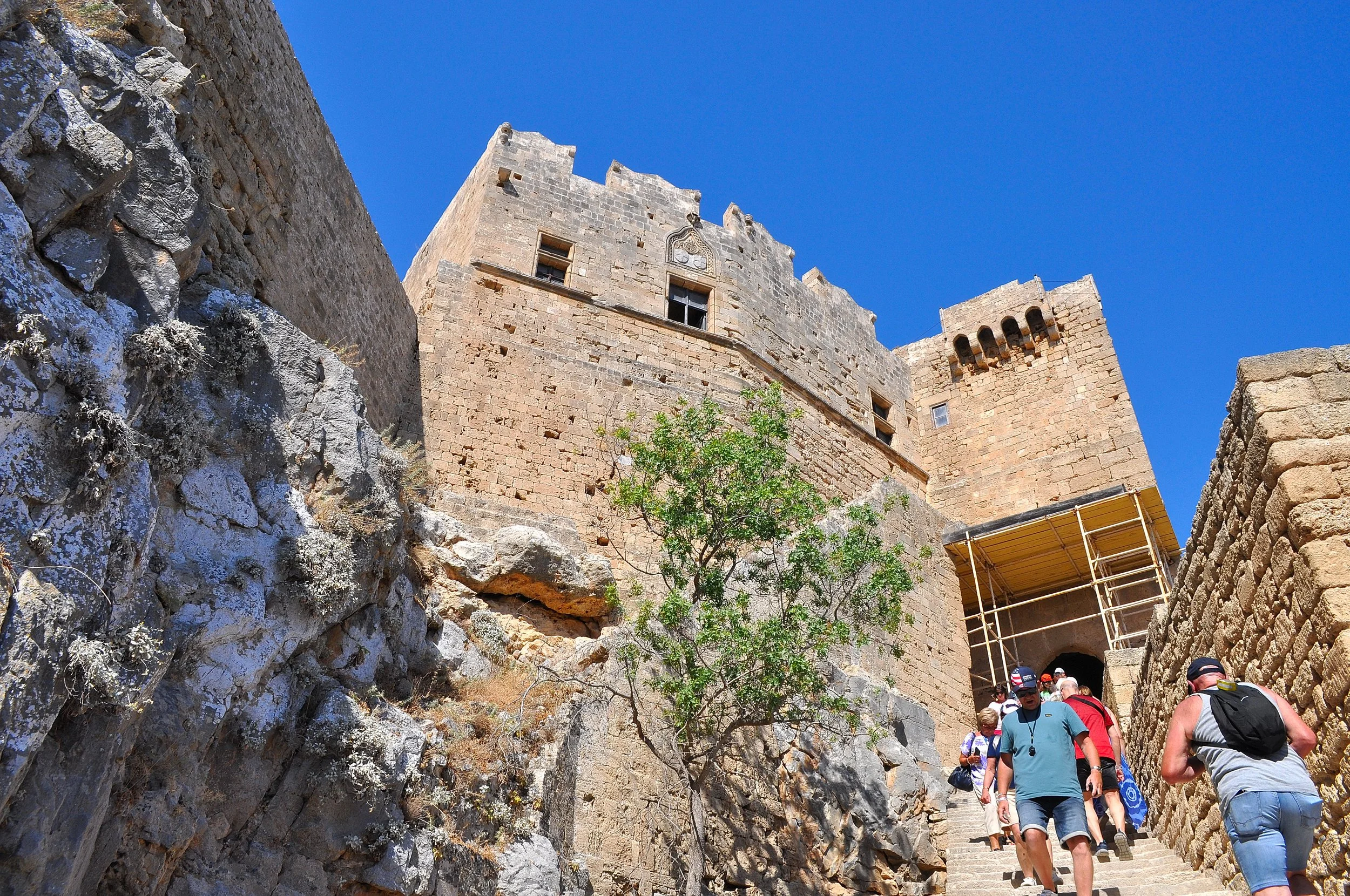
Piero: but once we pass through that gateway, the real wonder reveals itself: the heart of ancient Lindos, where the Temple of Athena Lindia once stood, built in the 4th century BC on the foundations of even older places of worship dating back to the Geometric period.
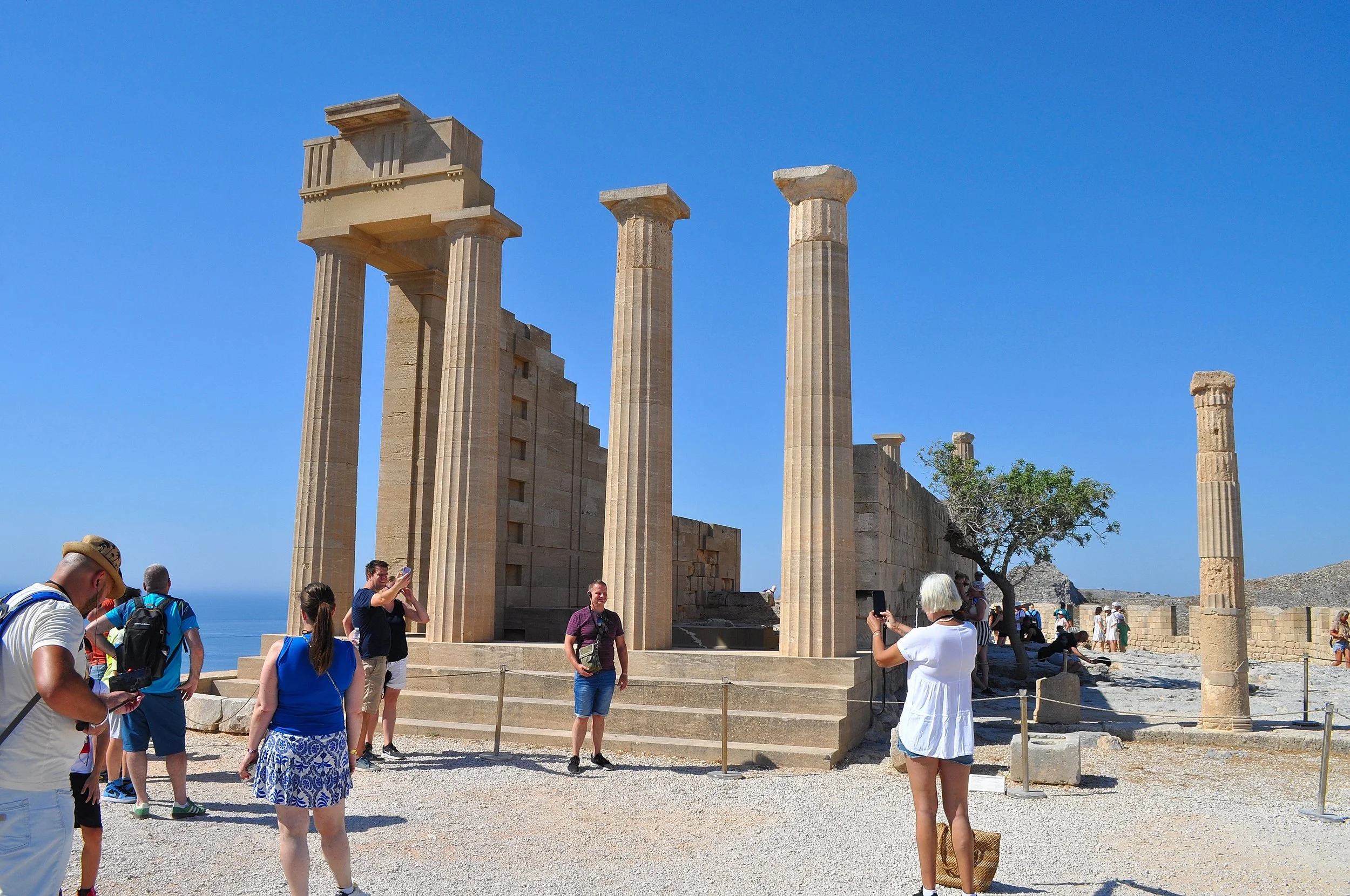
Angela: of that temple, only a few Doric columns remain, slender and majestic, rising towards the blue sky. But what is even more moving is the location: we are standing more than one hundred metres above sea level, on a rocky promontory overlooking two spectacular bays.
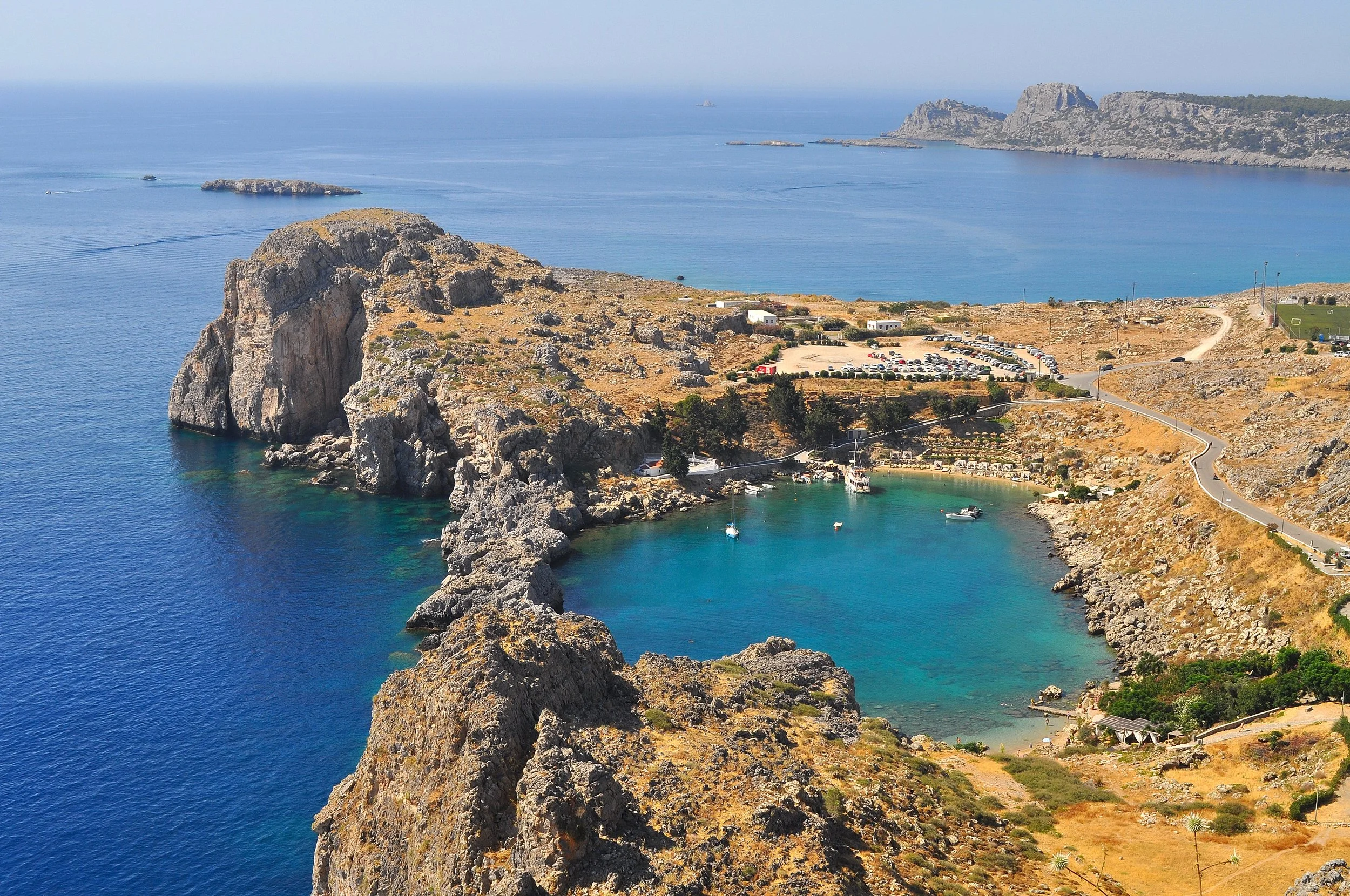

Piero: on one side lies the famous St. Paul's Bay, where, according to tradition, the Apostle Paul landed during his journey to Rhodes. On the other side is the main bay, where the water fades from turquoise to deep blue.
Angela: the Propylaea with their columns, the great Hellenistic stoa, the monumental staircase... everything speaks of the elegance of Classical architecture.


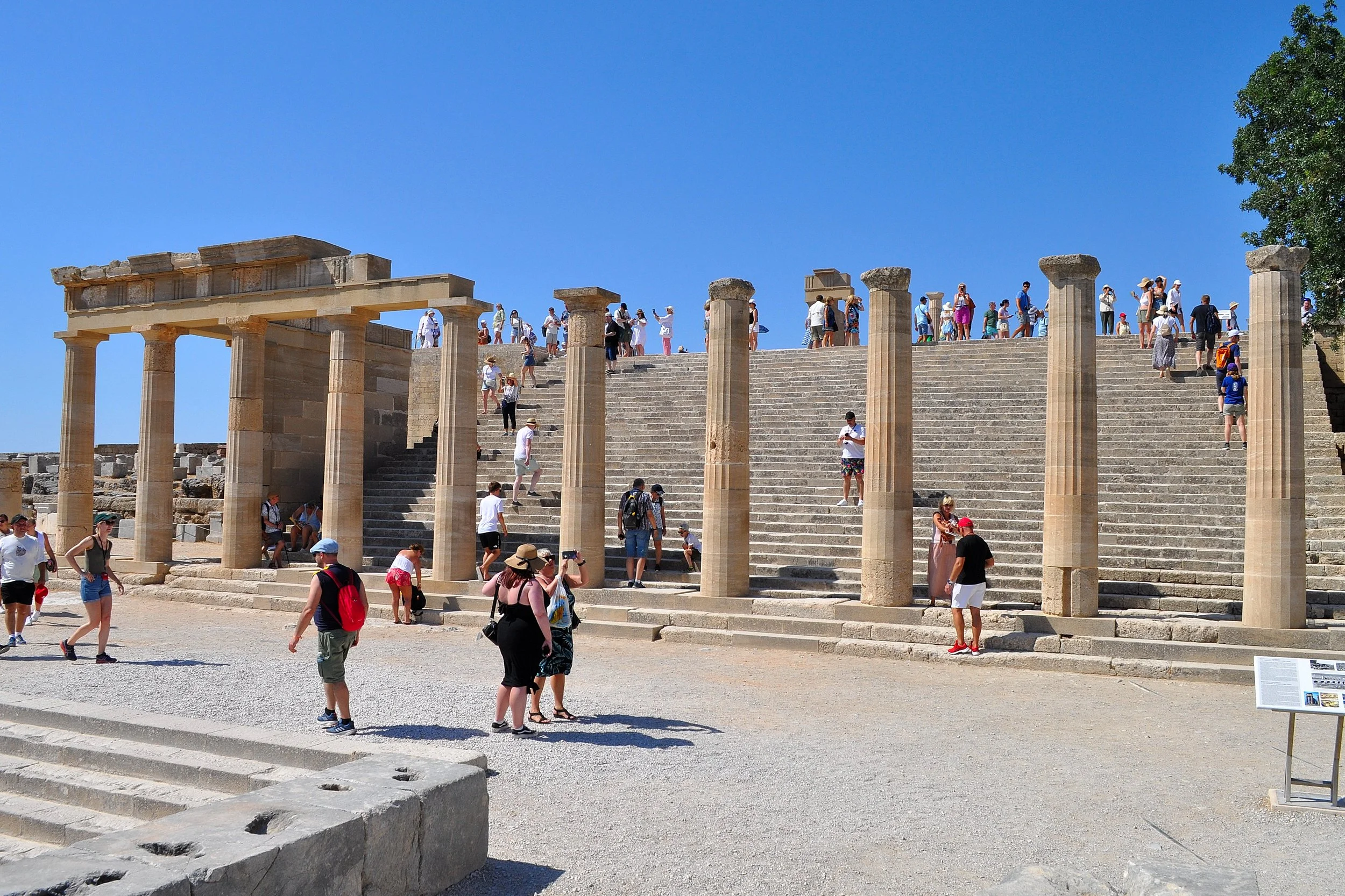


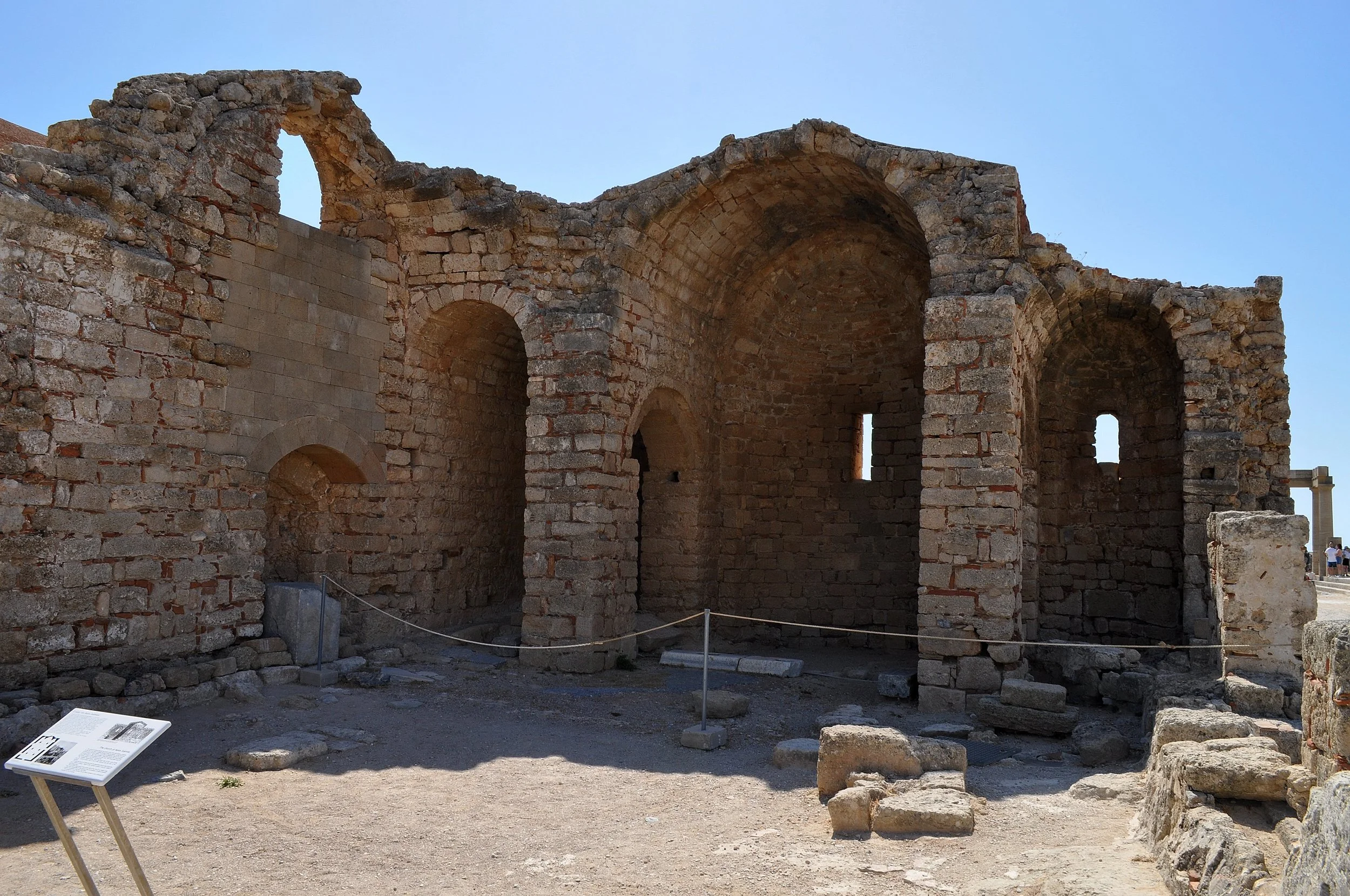


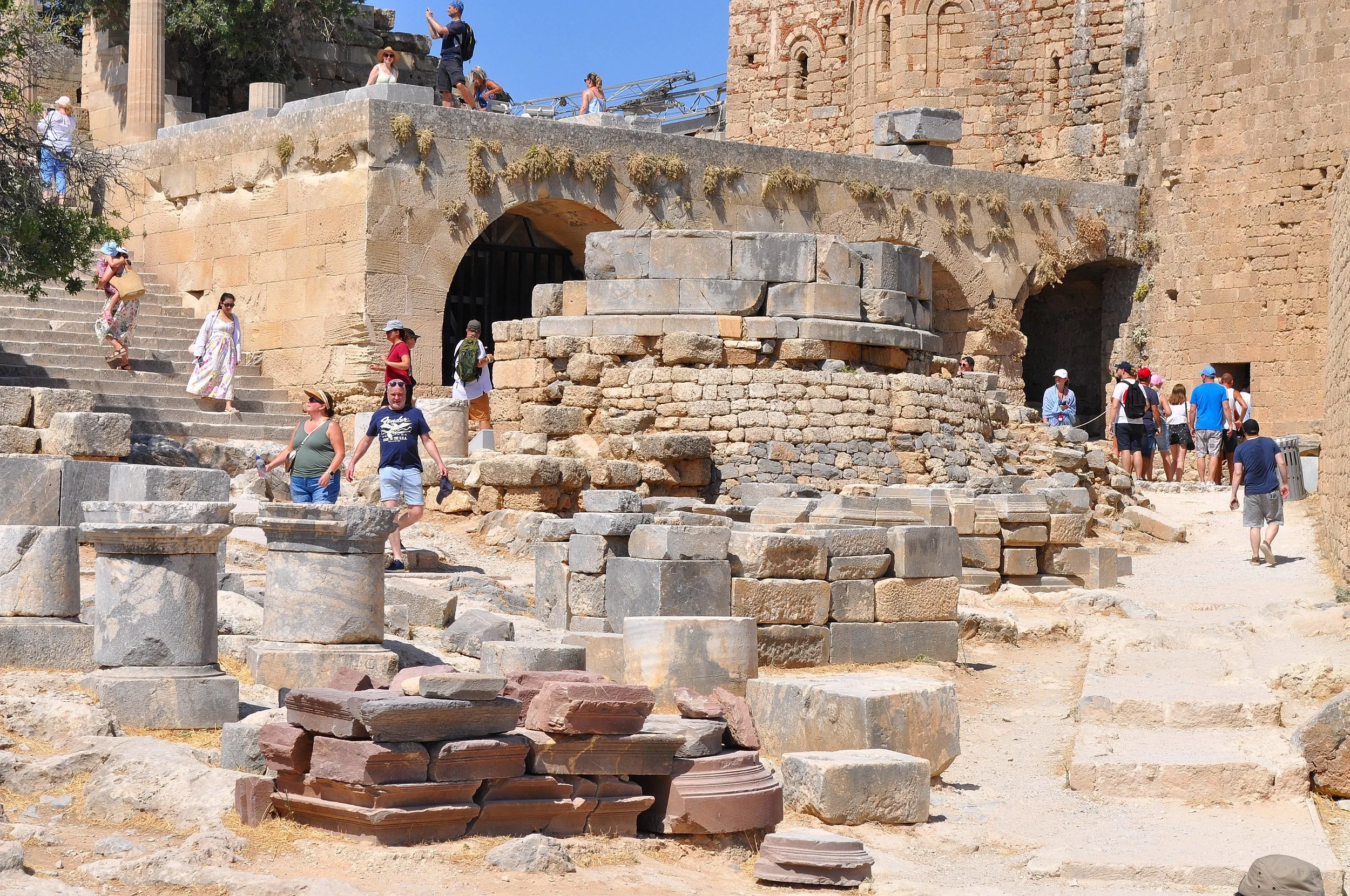

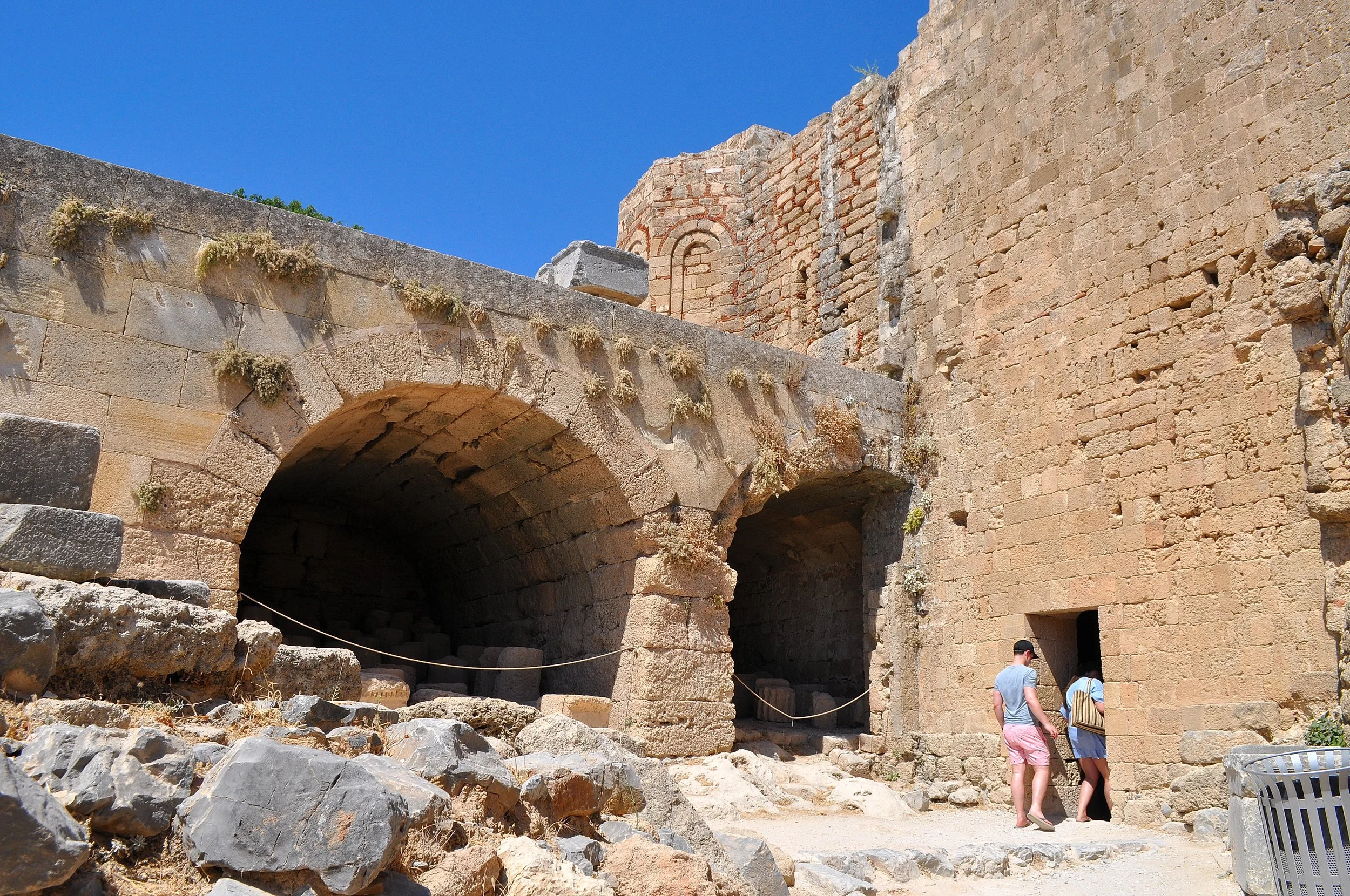
Piero: it was a place of pilgrimage for sailors, who came here to ask the goddess Athena for protection before setting out to sea.
Angela: and today, just like those sailors, we too pause in silence, letting ourselves be embraced by the warm wind and the ancient power of these stones.
Piero: the Acropolis of Lindos is not just an archaeological site: it is still a sacred place, where time seems to stand still.
Angela: we make our way back down with a touch of sadness, but with our eyes filled with beauty. And now... on to our next stop. The day is still long...
Lunch with a mythical view: St. Paul's Bay
Angela: after saying goodbye to the columns of the Acropolis, we make our way on foot through the narrow streets leading down to the sea.

Piero: it is not just a walk downhill: it is a journey through a village that seems to have remained unchanged for centuries. Every narrow street is like a postcard.
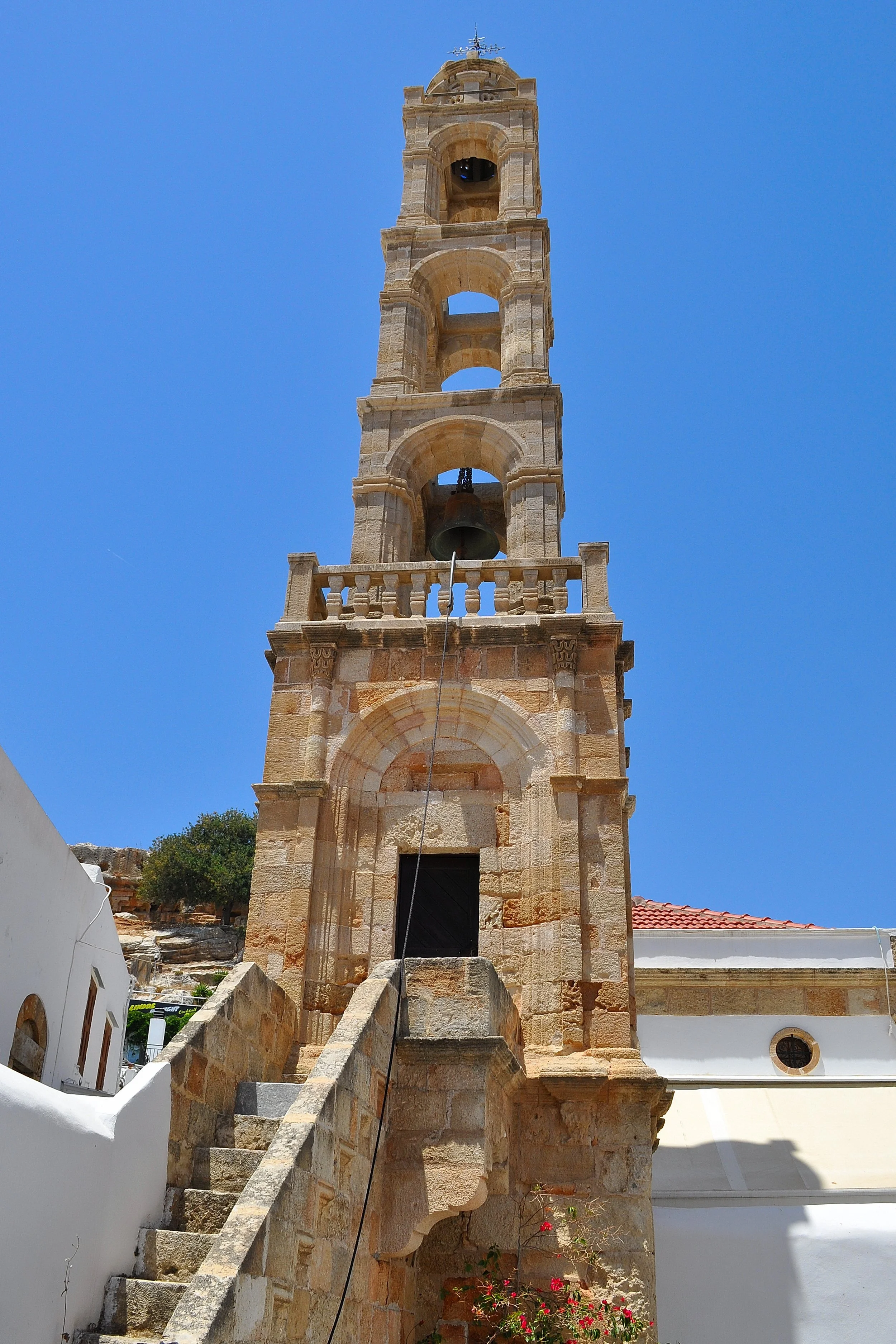
Angela: we come across the bell tower of Lindos, which belongs to the Church of the Assumption of the Virgin Mary.
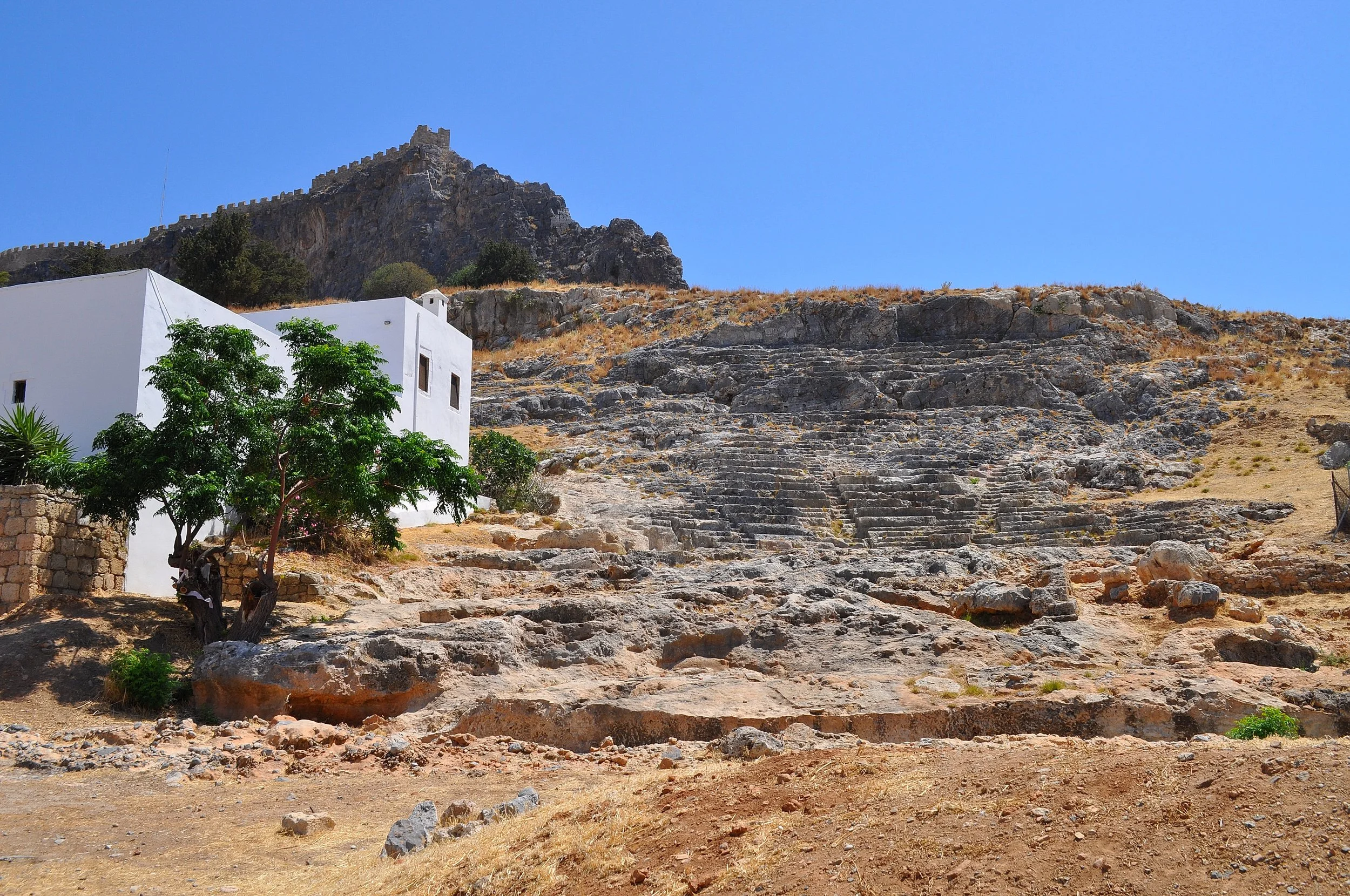
Piero: and then we come across the remains of the Lindos Amphitheatre, near St. Paul's Harbour. It was carved into the rock and is a fine example of how the ancient city of Lindos made use of the natural landscape for its buildings. Nearby, you can also see the remains of an ancient gymnasium and several important inscriptions, including the Chronicle of the Temple of Athena Lindia.
Angela: we walk past small craft shops, flower-filled balconies, and cats sleeping in the shade. And then, there it is: St. Paul's Bay.
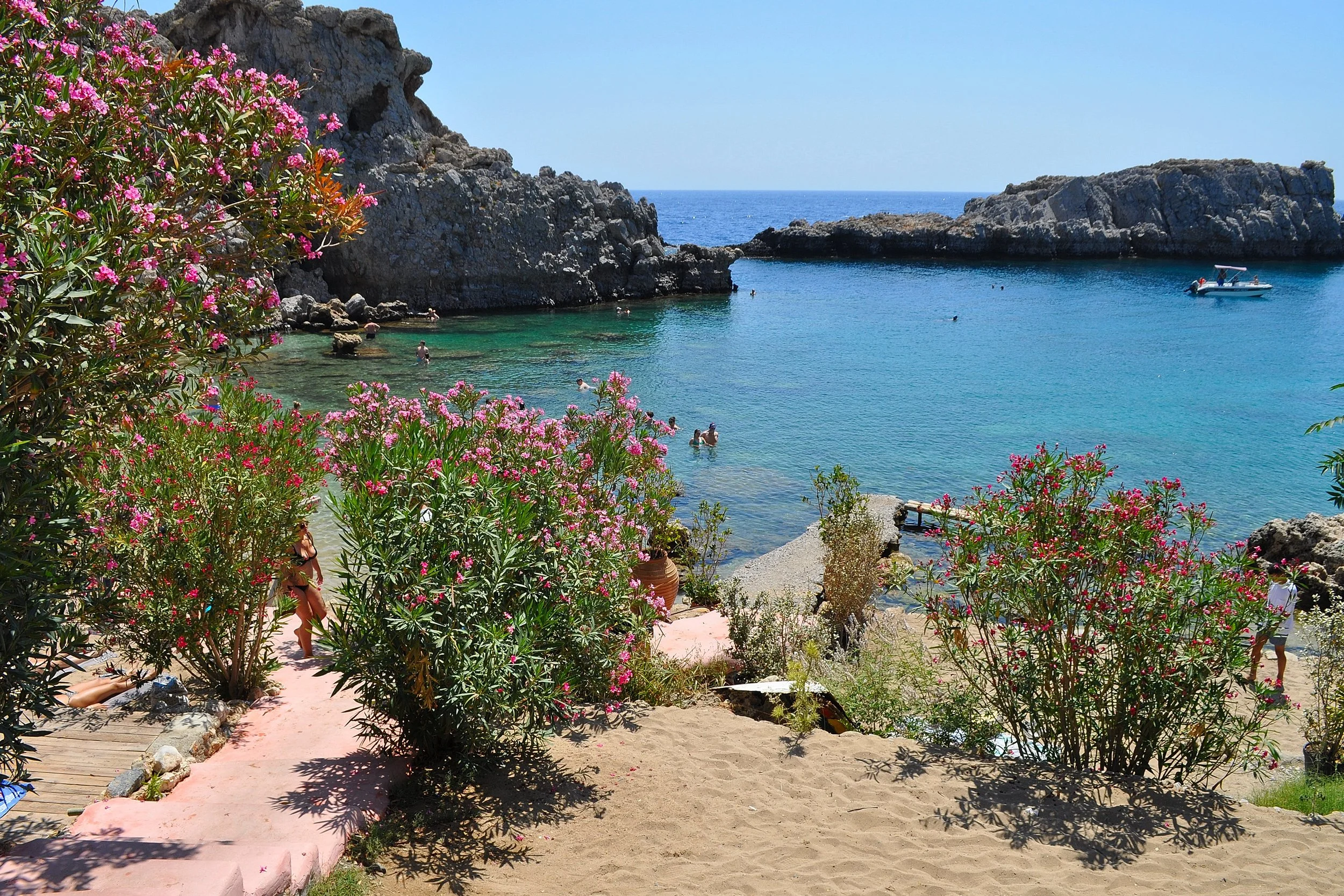
Piero: we had already seen it from above, but reaching it on foot, step by step, makes it even more special.
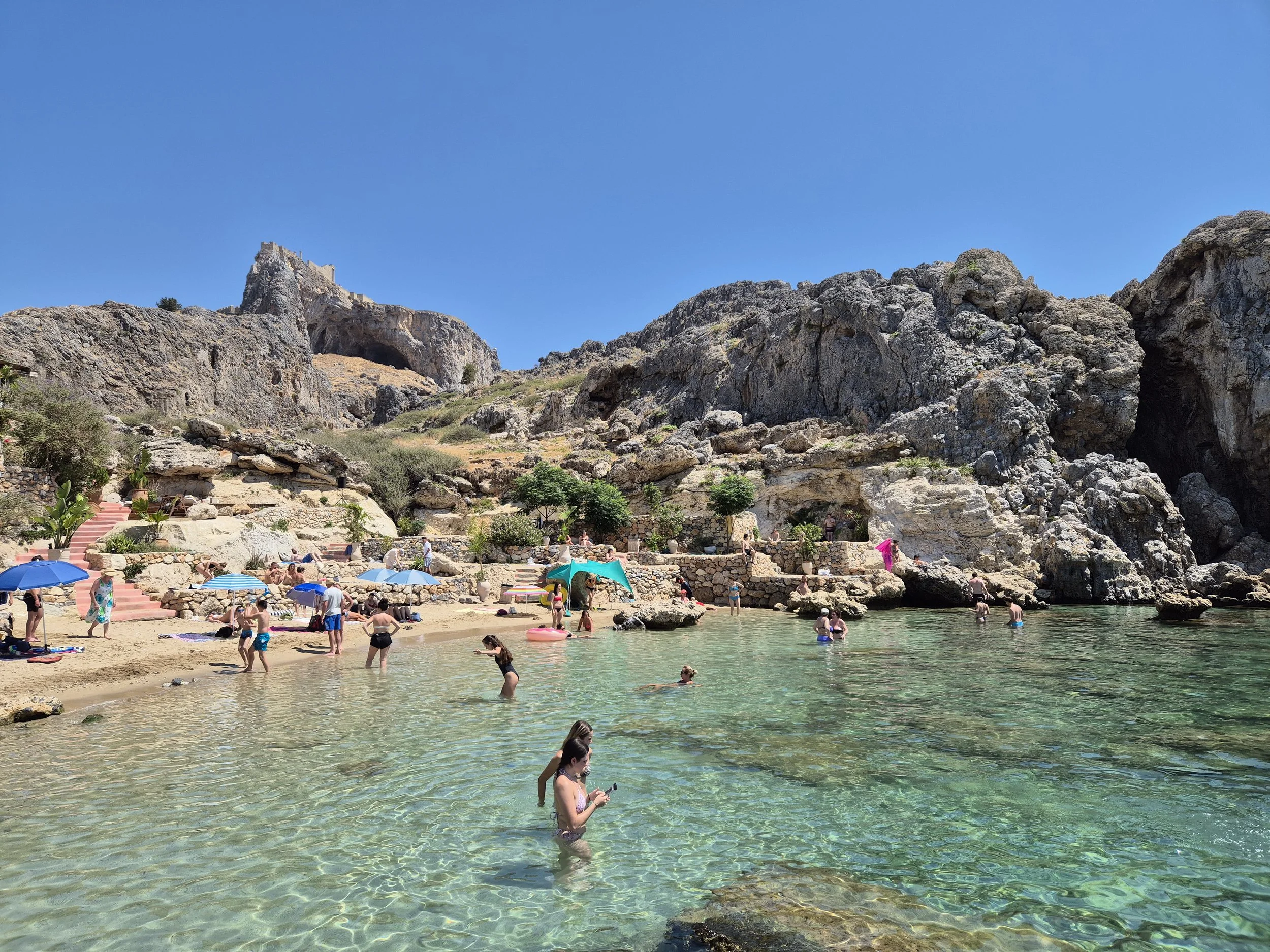
Angela: a strip of sea nestled between the rocks, sheltered by a narrow opening to the vast Aegean Sea. The water is crystal clear, calm, with colours ranging from emerald green to deep blue.
Piero: according to tradition, this is where St. Paul landed during his missionary journey across the Mediterranean. A sacred, peaceful place, where everything seems to speak of tranquillity.
Angela: just a few steps from the shore stands a small white chapel dedicated to the Apostle, simple and elegant, almost hidden among the rocks.
Piero: at this point, we leave our backpacks and towels in a free spot and enjoy a swim in this wonderful bay.
Angela: from here, looking up at the rocky promontory crowned by the Acropolis is just as special.
Piero: afterwards, we take a seat in one of the seafront tavernas, with tables in the shade of a pergola, overlooking the bay.
Angela: the menu is exactly what we love: Greek salad with feta and oregano, grilled octopus, fried courgettes, and a little tzatziki.
Piero: and an ice-cold Mythos beer to accompany the view. What more could we ask for?
Angela: nothing. Just the time to pause, look around, and realise that Greece is exactly this: sun, sea, ancient ruins, and tables laden with delicious food.
Piero: by now, every visit feels like coming home. Even if this is the first time we've ever set foot here.
Prasonissi, where the sea divides and the wind tells its story
Angela: the following morning, we wake up early, with the aroma of Greek coffee mingling with the scent of the sea. Our destination is the southernmost point of the island.
Piero: Prasonissi awaits us, the place where Rhodes ends. Or perhaps where it truly begins.
Angela: the drive is a long one, but the landscape is constantly changing: pine forests, barren hills, olive groves, and then... all of a sudden, pure wonder.
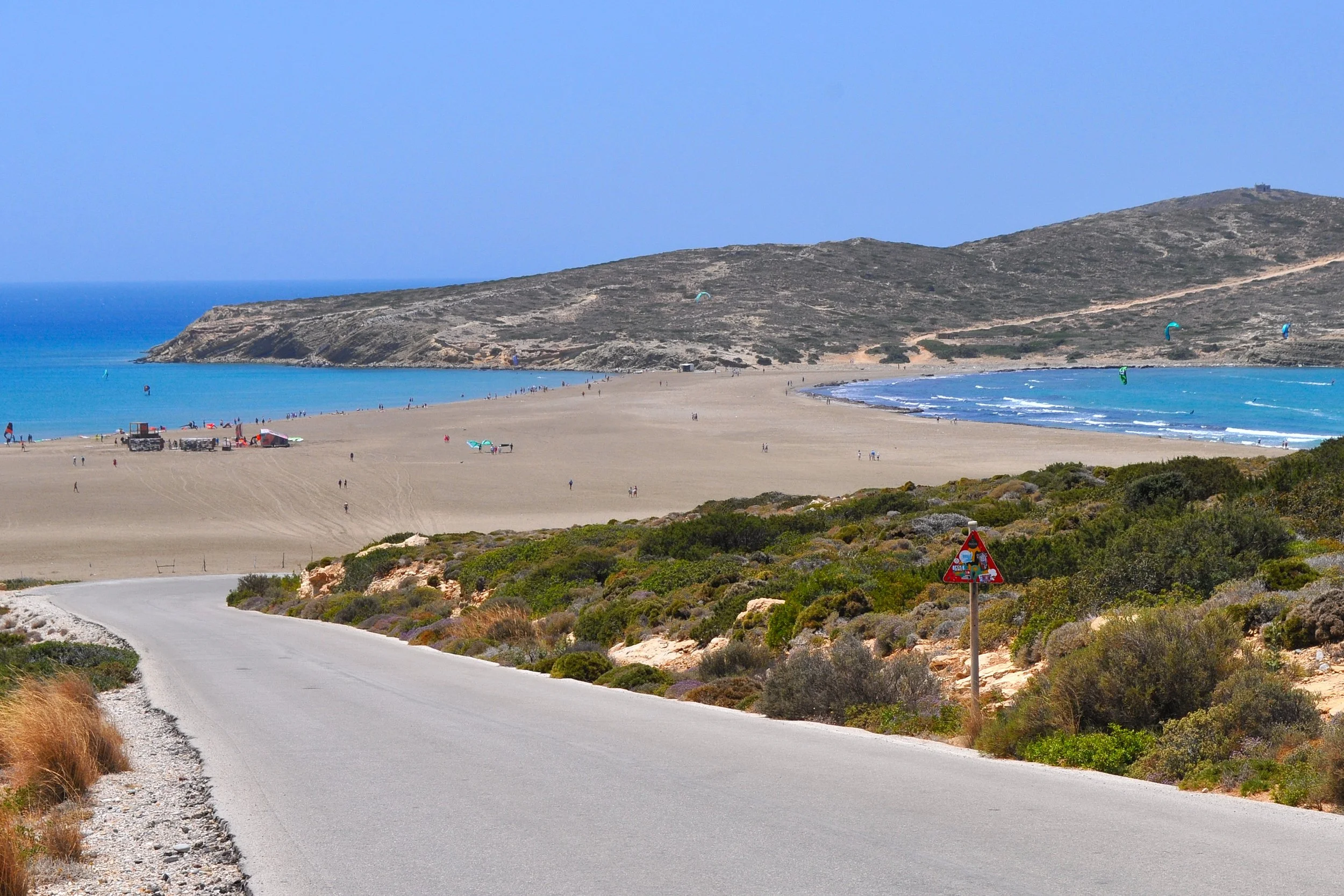
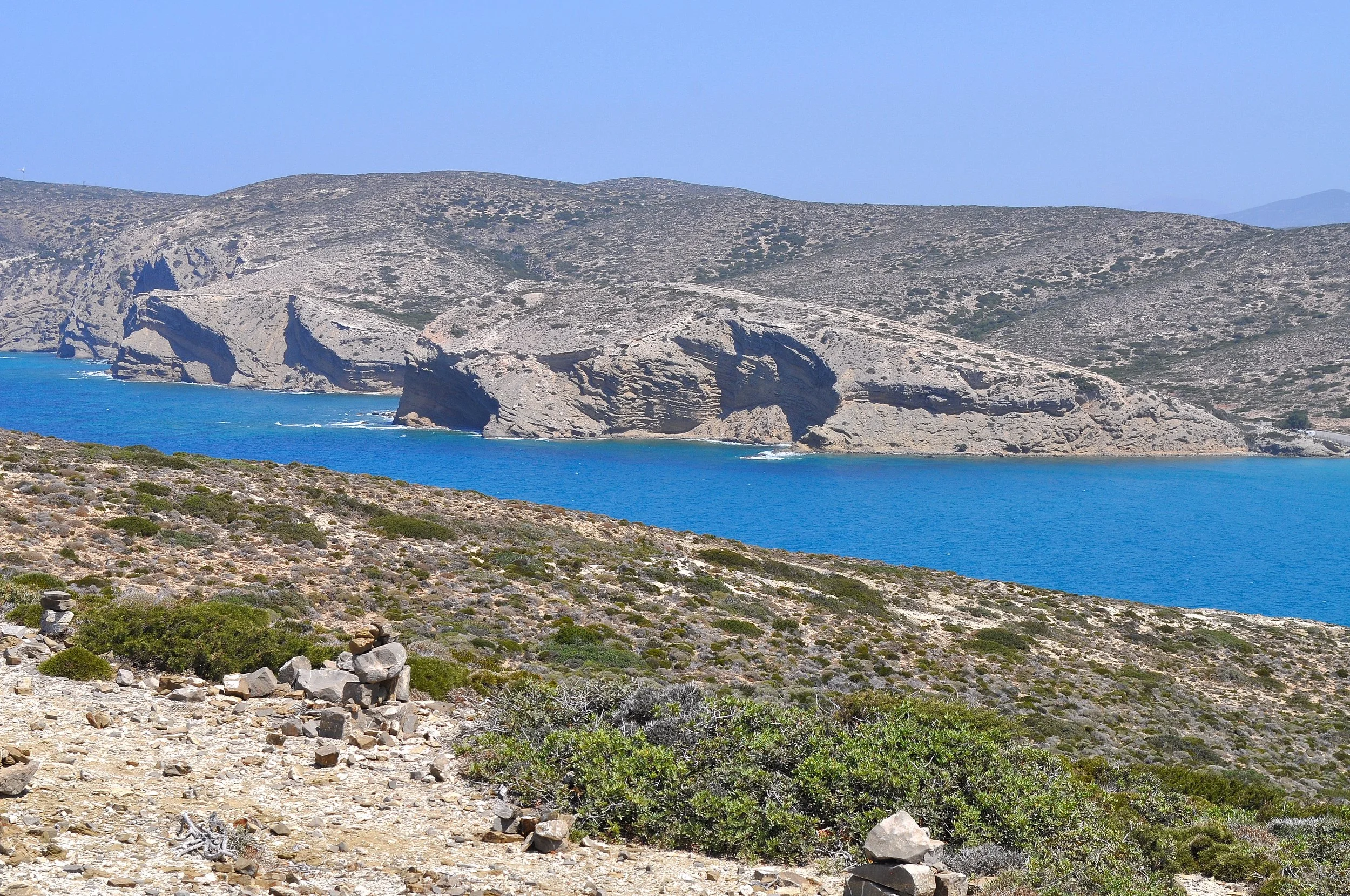
Piero: a strip of pale sand, perfectly shaped, separating two seas. On one side, the Aegean, rough and untamed; on the other, the Mediterranean, calm and crystal clear.
Angela: and that is where our day begins: we walk barefoot across the golden sand, with the water gently lapping at our feet from both sides. A truly unique feeling.
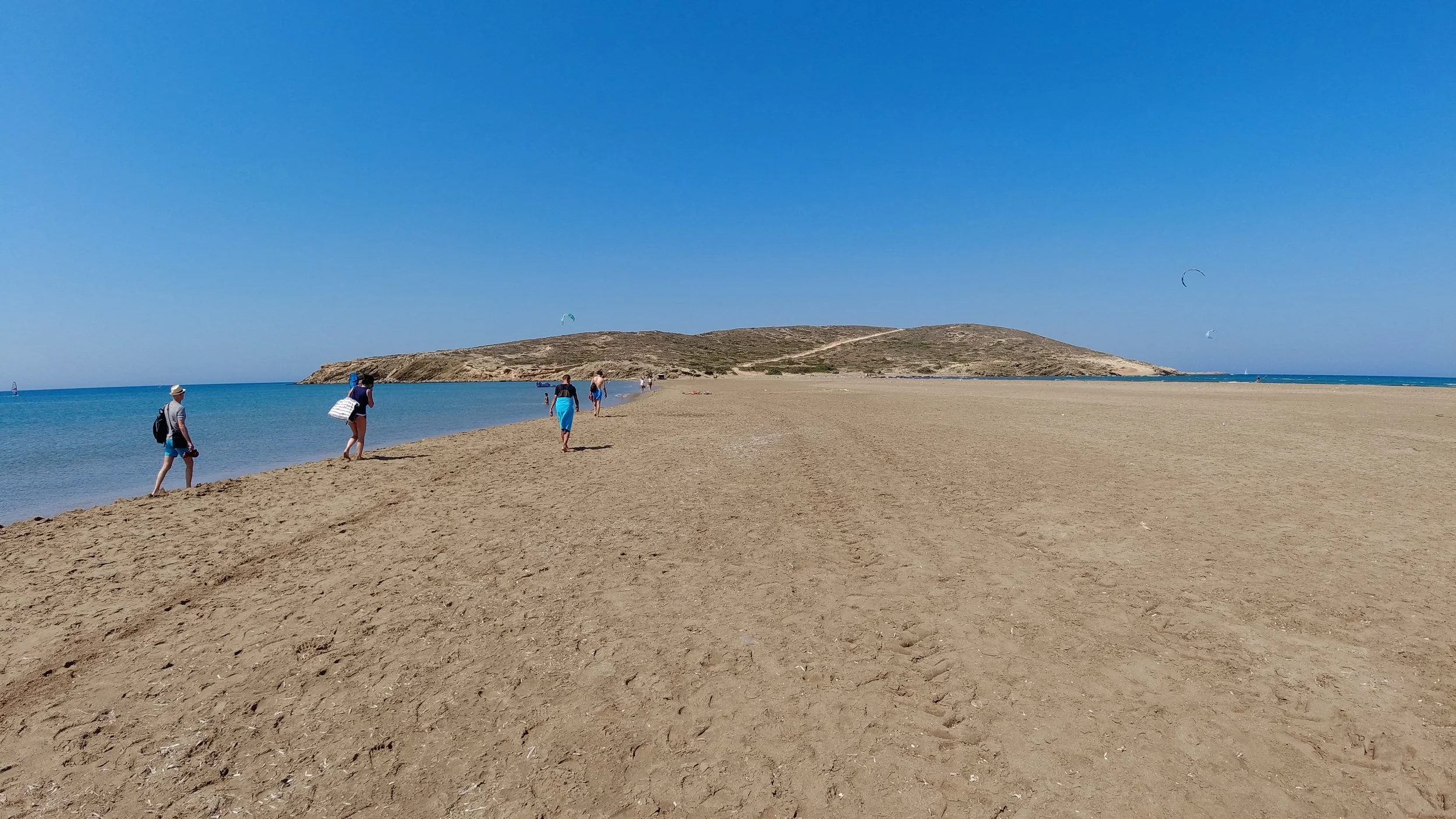
Piero: the wind is the true star here. And it's easy to see why this place is a paradise for surfers and kitesurfers: colourful sails soaring, crossing paths, and dancing above the waves.

Angela: but all it takes is walking a little further to find complete peace. Once we cross the strip of land, we begin the climb towards the Prasonissi promontory, the small island that is connected to the mainland in summer and surrounded by the sea in winter.
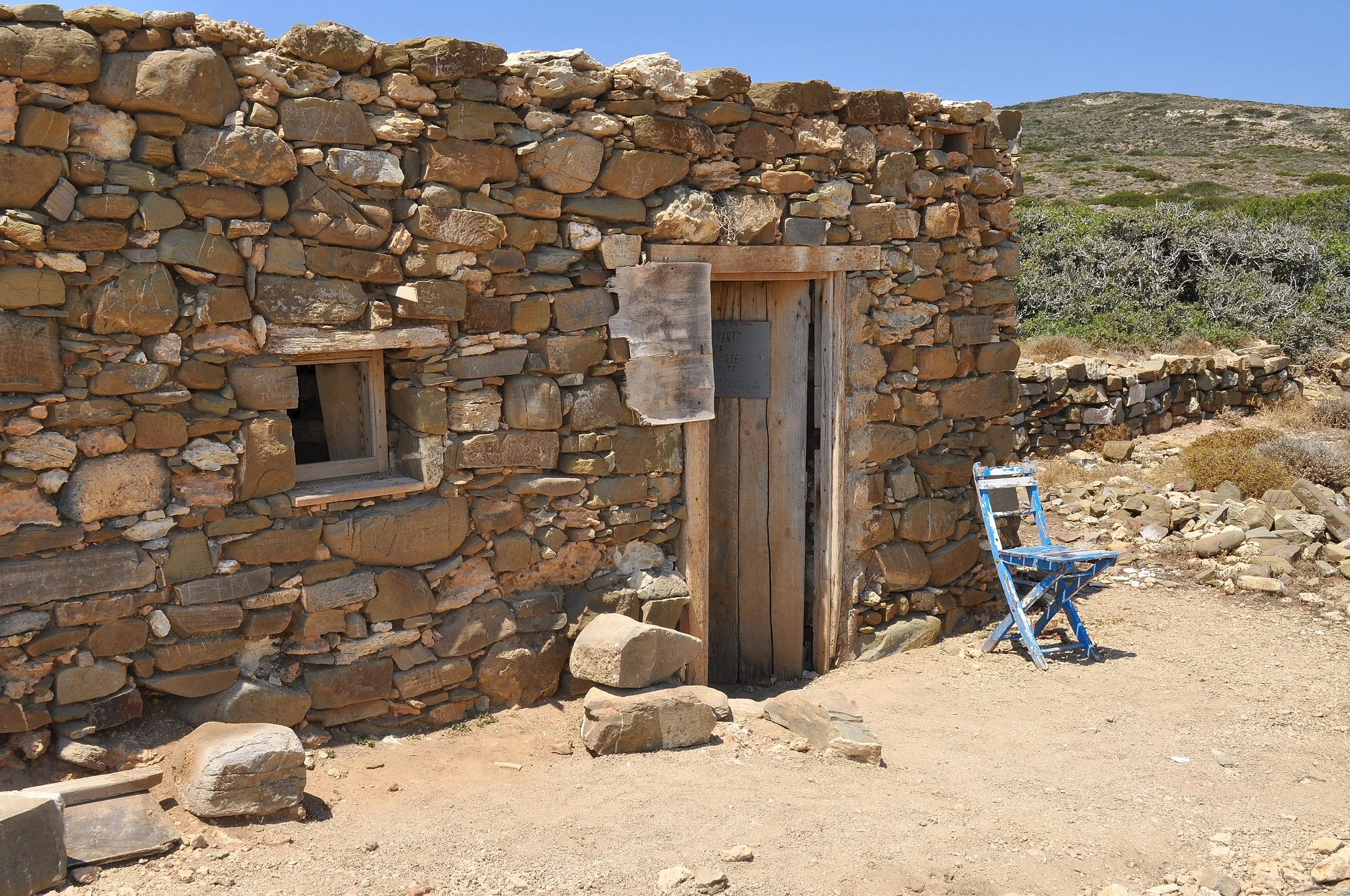
Piero: the trail is wild, scented with sage and thyme. We climb slowly, among sun-warmed rocks and silence. And as we go, the view opens up before us: below lies the twin bay, the boundary between two worlds.
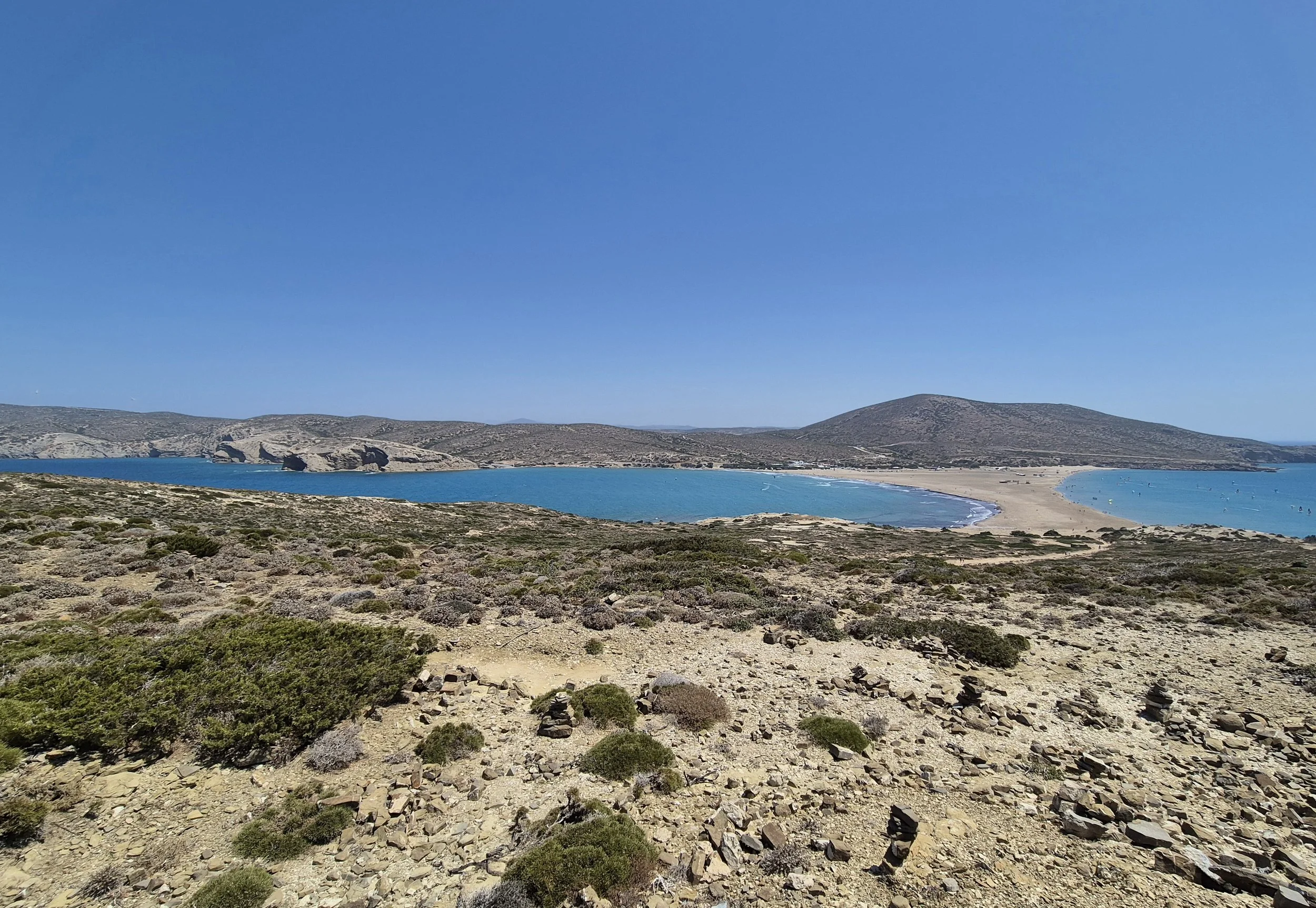
Angela: the view from up here is incredible. You feel so small in the face of the power of the elements. The wind tousles our hair, the sun warms the rocks, and the sea roars and gently caresses the shore.
Piero: we stop in silence. And I find myself thinking how perfect this balance is: nature, freedom, and beauty.
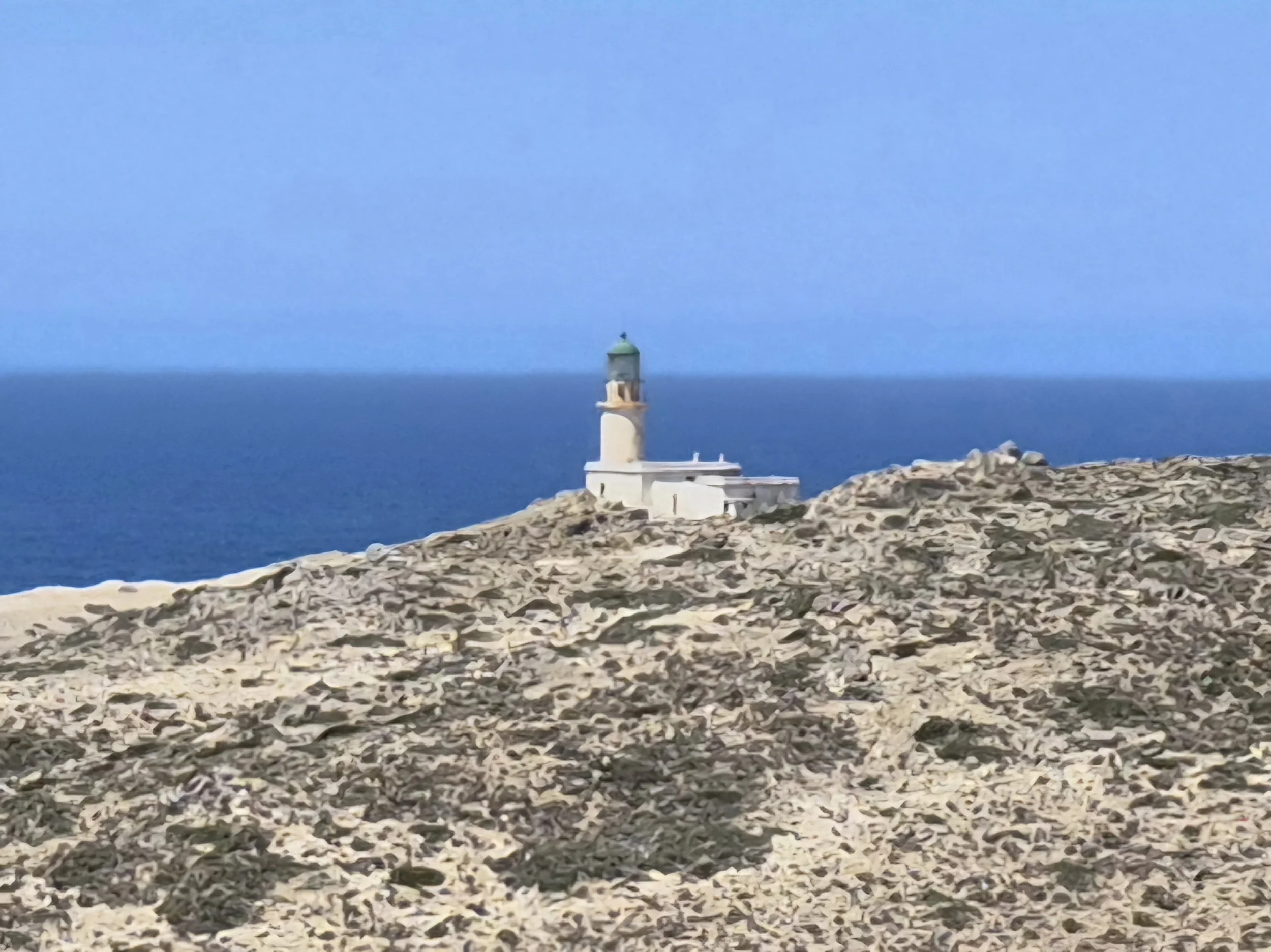


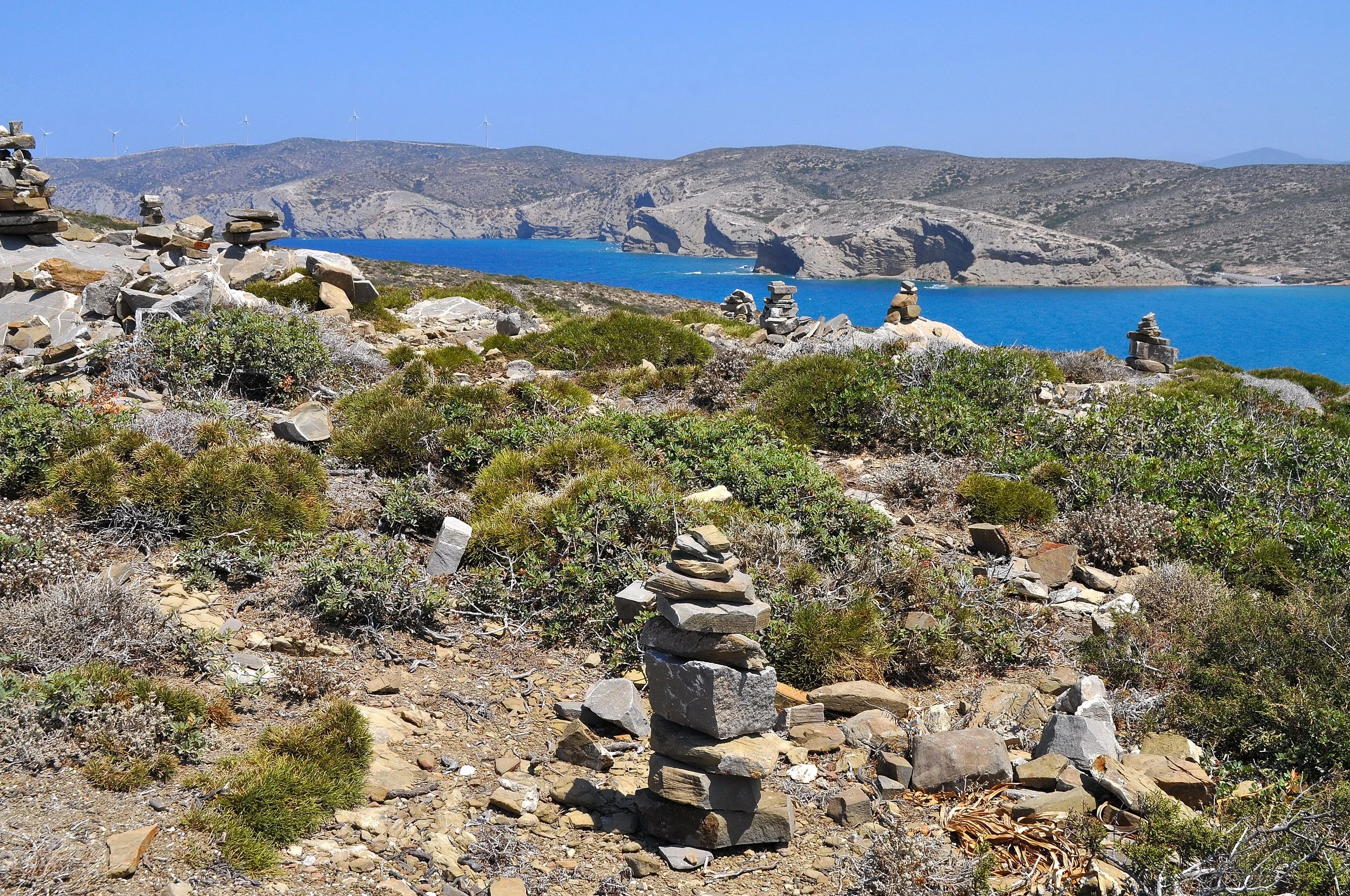



Angela: after our walk, we head back down and treat ourselves to a swim on the calmer side, where the water is crystal clear and the sand is soft.
Piero: and then, of course, we take refuge in a small taverna just behind the beach for a simple but perfect lunch: warm bread, a salad with olives, local cheese, and a drizzle of rich, fragrant olive oil.
Angela: Prasonissi is not just a beach: it is an experience. A place where the island comes to an end, but the real Greece, carries on.
Gold and emerald: Agathi Beach and Anthony Quinn Bay
Angela: after the long and windy day at Prasonissi, today we slow the pace. We head north, towards the east coast: back aboard our van, we set off to discover two very different beaches, yet both unforgettable.
Piero: the first is Agathi Beach, not far from Haraki. A little golden paradise, with fine sand, shallow waters, and crystal-clear sea. The water here looks as though it has been painted, perfect for a relaxing swim.
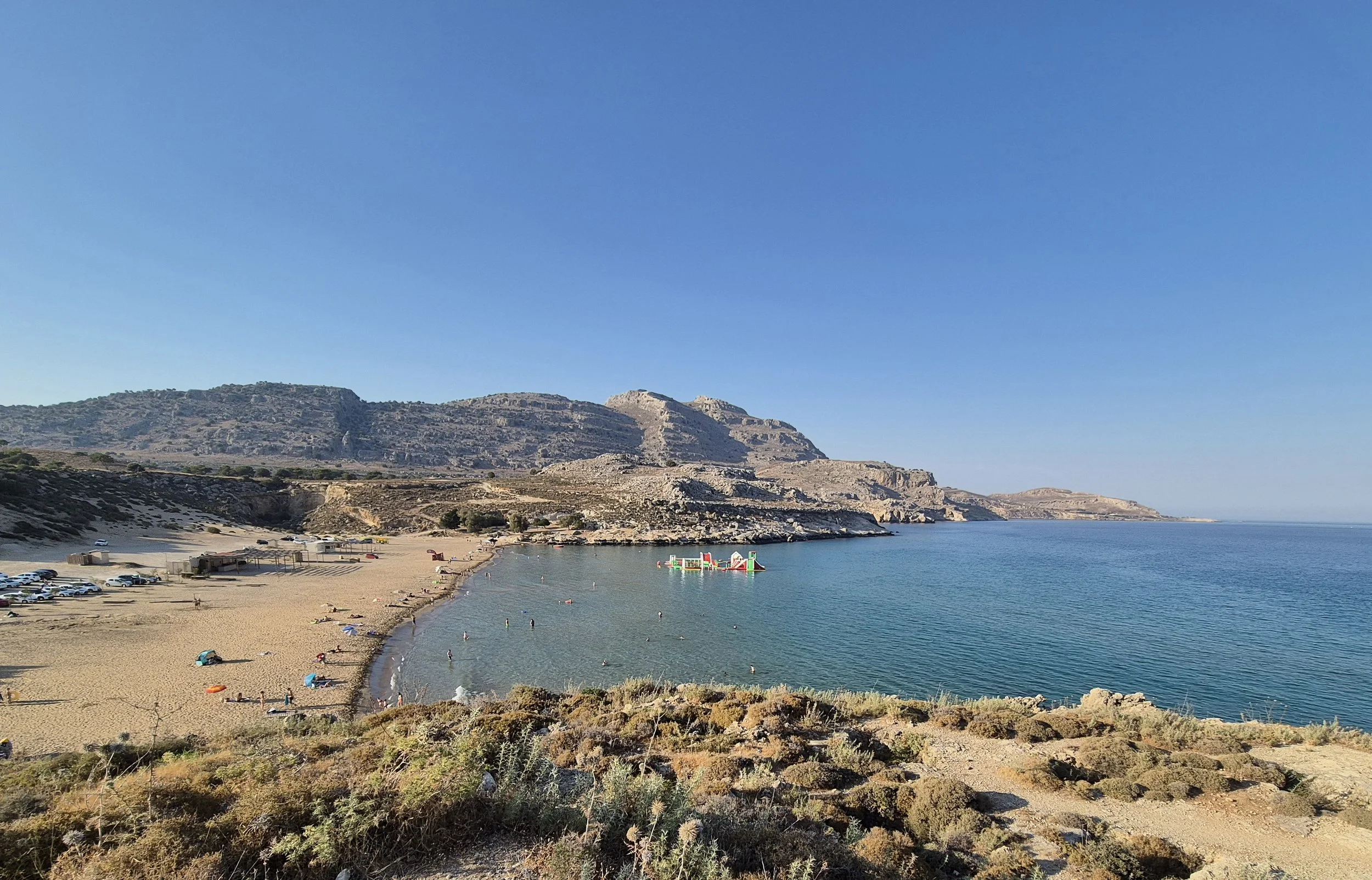
Angela: all around us are barren hills and the outline of an ancient fortress watching over the bay: it is Feraklos Castle, built by the Knights of St. John. You can see it from afar, standing in silence like a guardian of time.
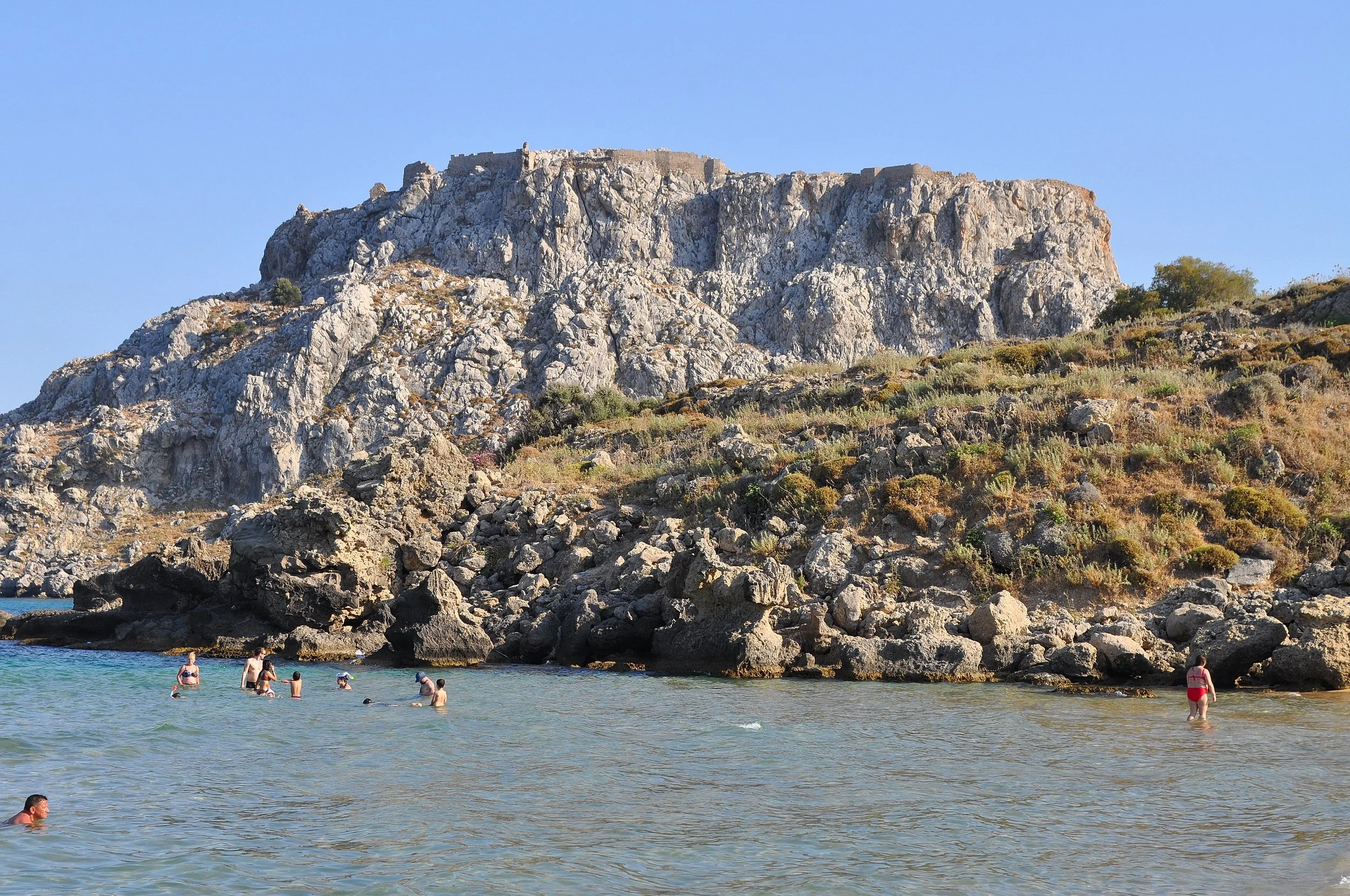
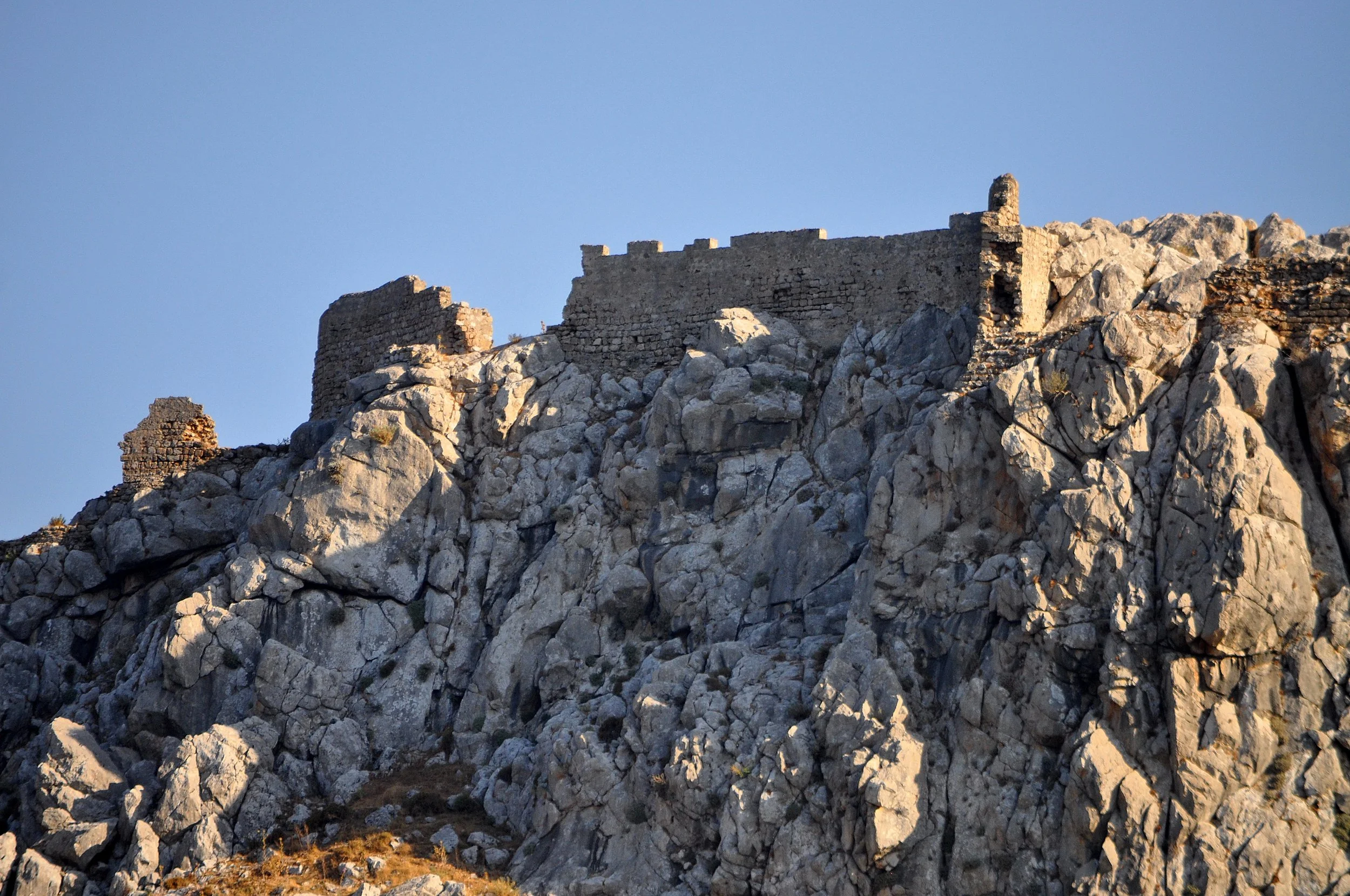
Piero: after a long swim and a break in the shade of a tree, we set off again. Bend after bend, we make our way down a narrow road winding between the rocks and olive trees... until we reach one of the island's most iconic places.
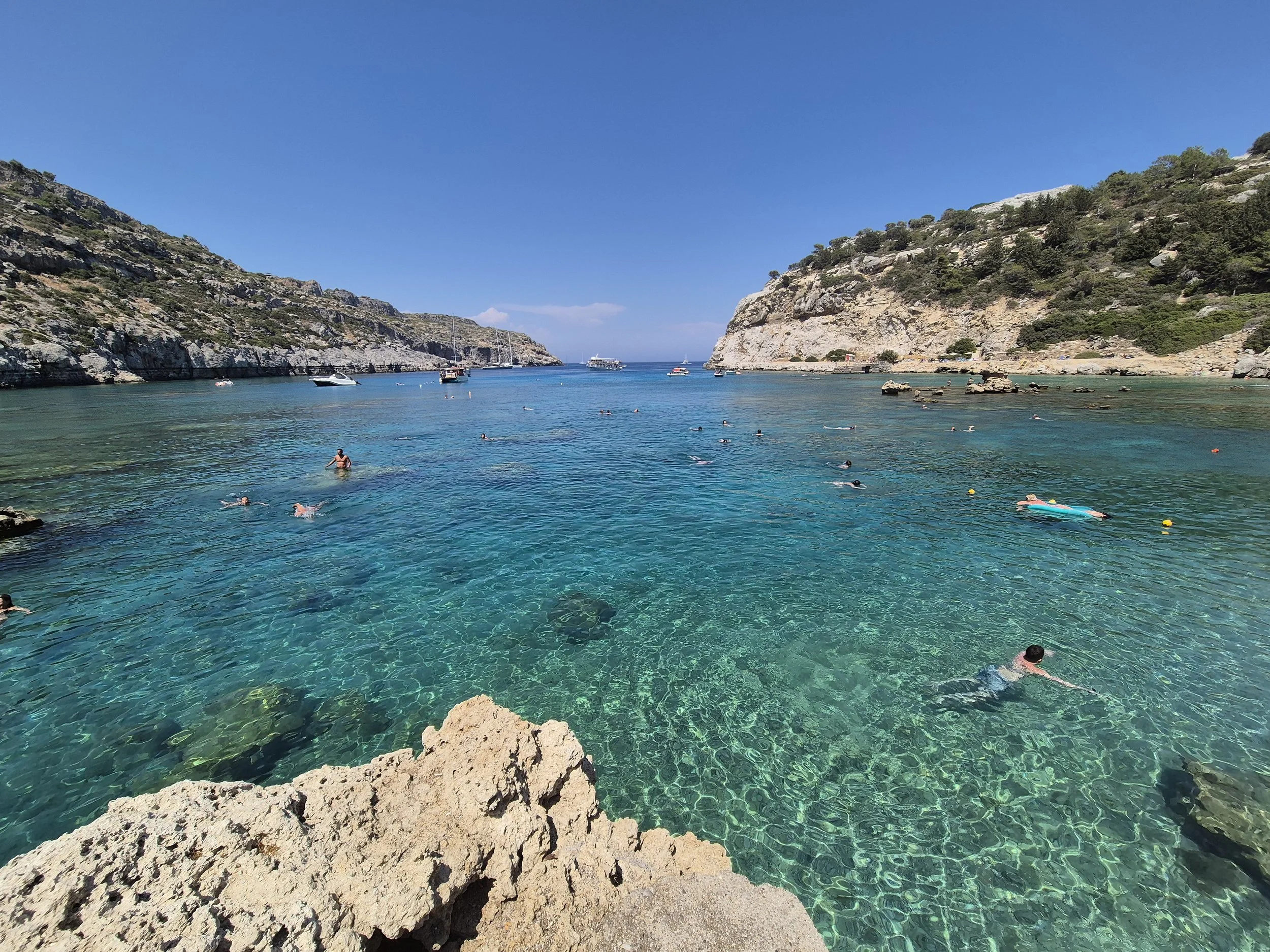
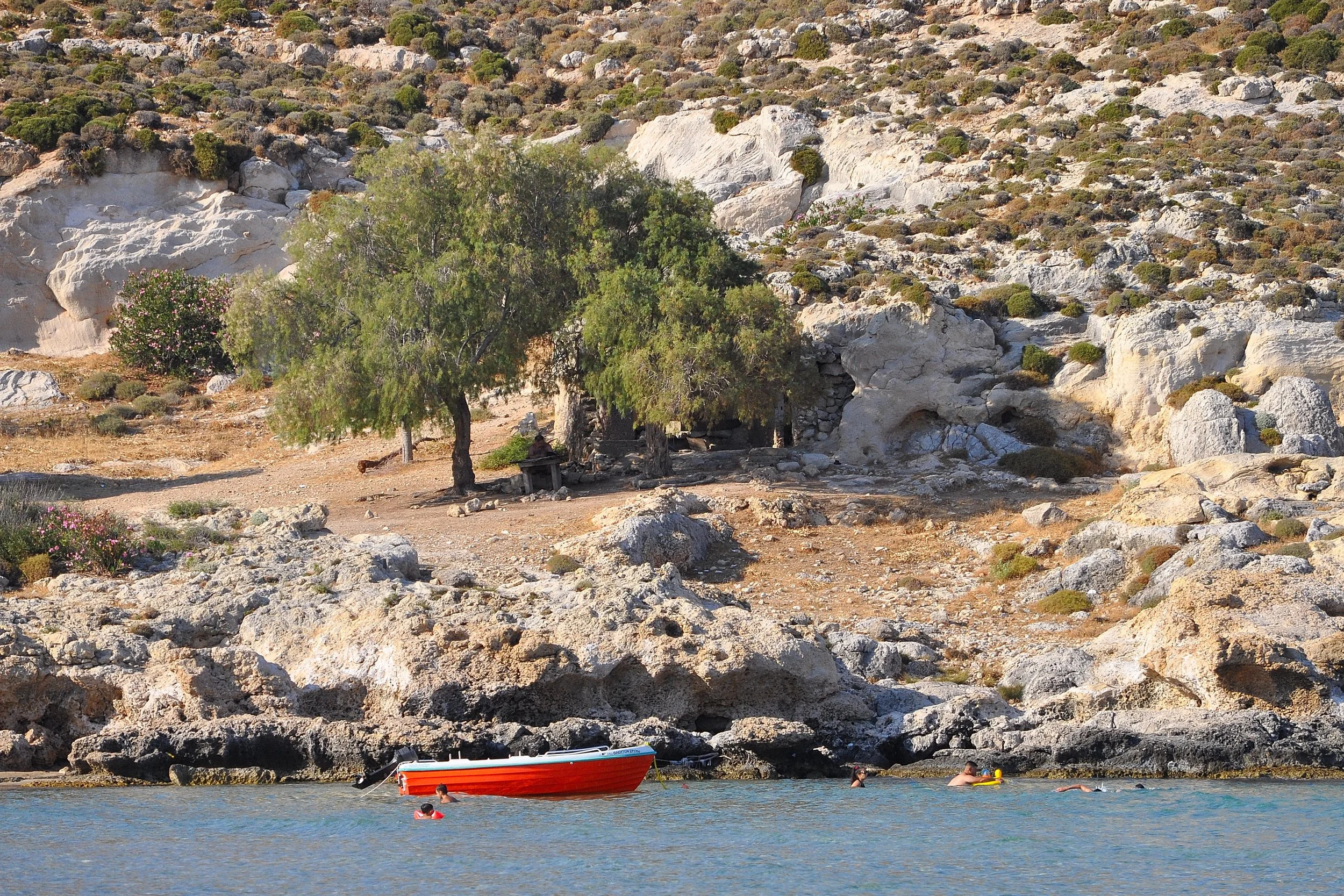
Angela: this is the famous Anthony Quinn Bay, named after the Hollywood actor who filmed several scenes of The Guns of Navarone here (we'll come back to that later...). So captivated was he by its beauty that he even tried to buy it.
Piero: the sea is emerald green, framed by wind-shaped cliffs. You enter the water by walking over smooth pebbles and small natural rock platforms. It feels like a hidden pool nestled among the rocks, with a wild, cinematic charm.


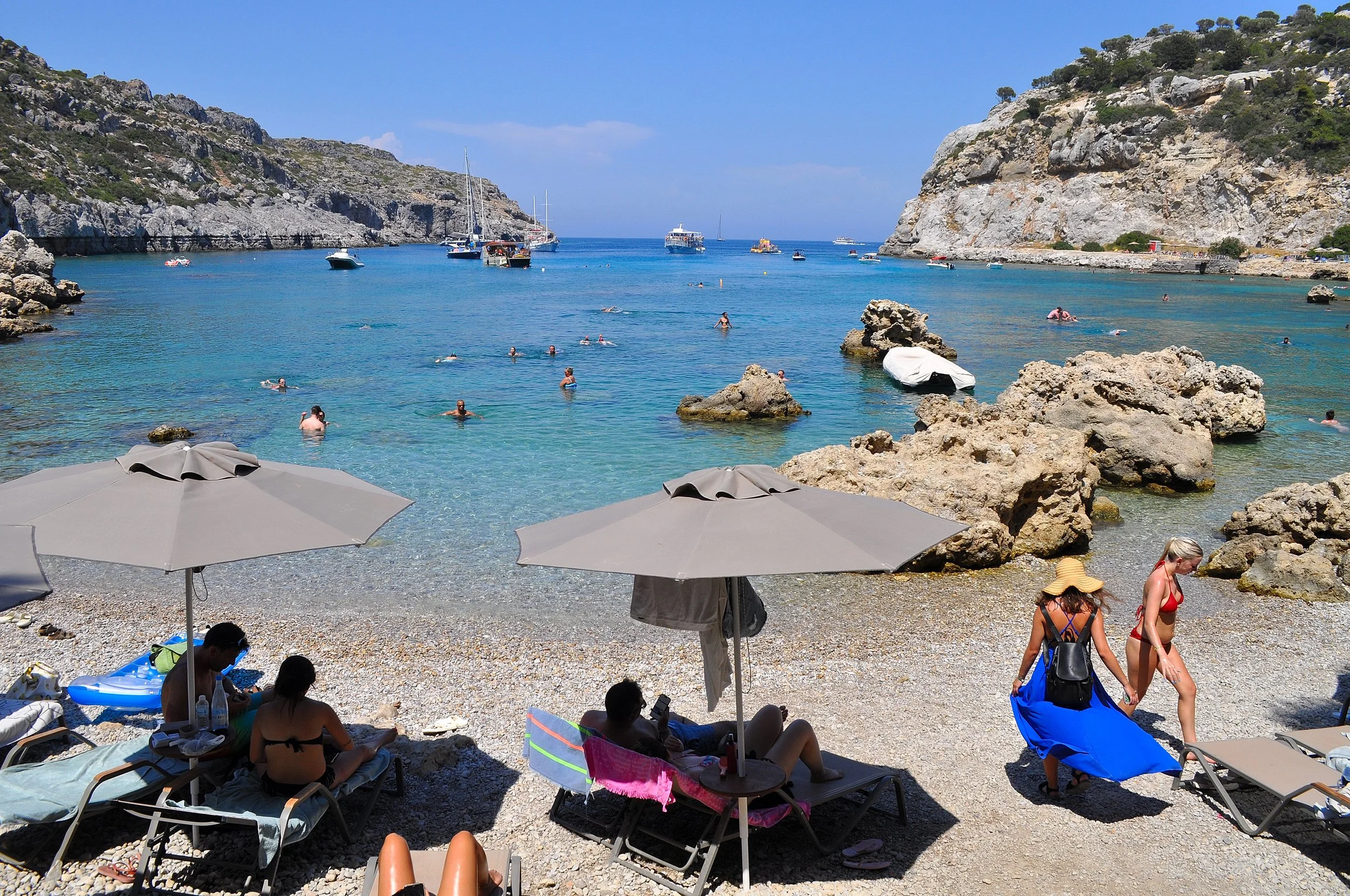

Angela: we stay there until sunset, when the light begins to paint the cliffs pink and the sea turns silver. It's one of those moments that makes you think, "Yes, I'll never forget this place."
Rhodes town: among knights, ancient walls and timeless wonders
Angela: today we leave the sea behind for a while. After three days immersed in nature, it's time to discover the city that gave the island its name.
Piero: Rhodes Town, a crossroads of peoples, wars, trade, and cultures. A fortified jewel where every stone tells a story.
Angela: we park outside the city walls and make our way towards one of the main gates. Even from a distance, the fortified walls leave us speechless.

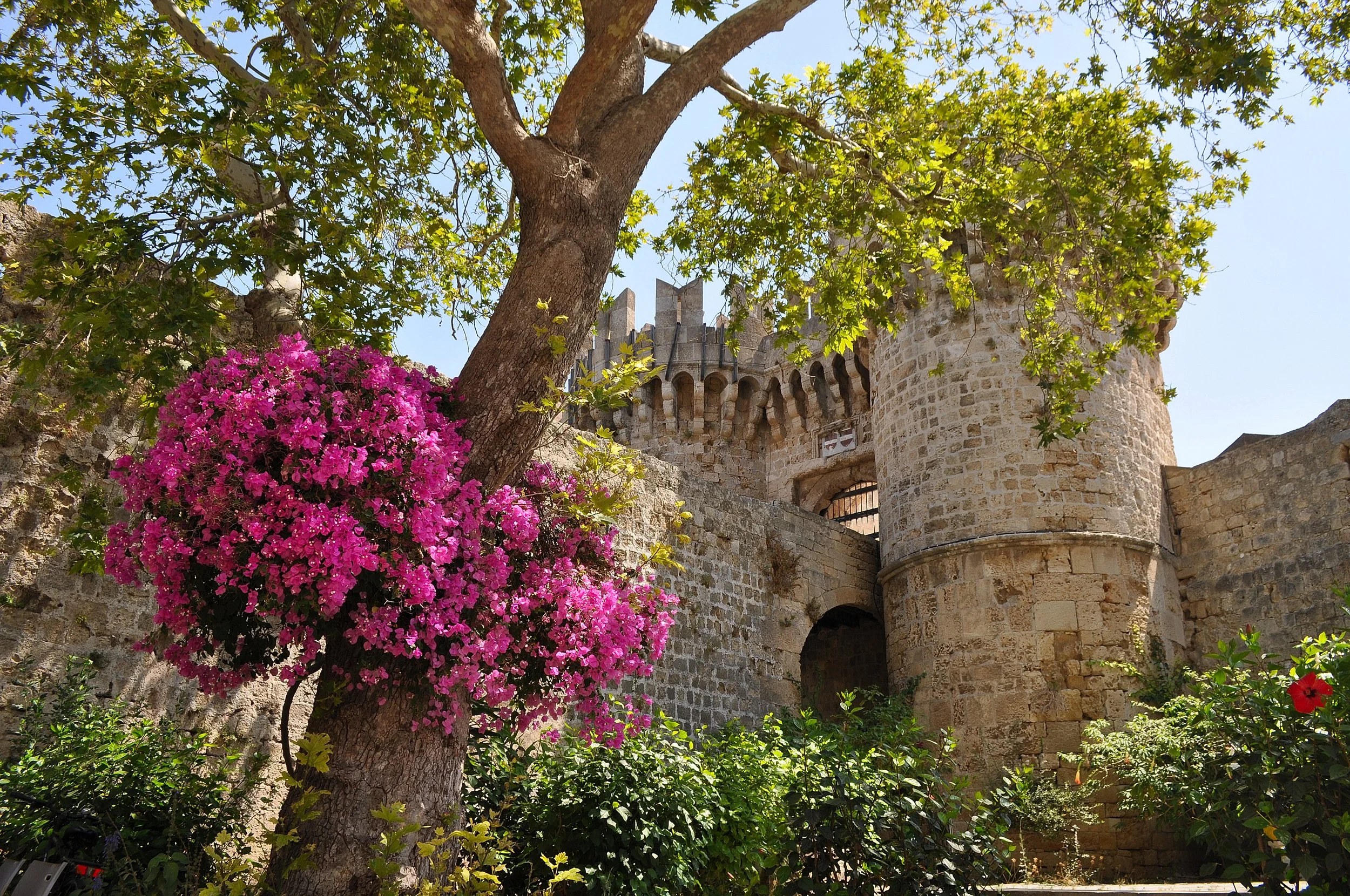


Piero: nearly four kilometres of bastions, towers, and ramparts. The defensive system built by the Knights of St. John between the 14th and 16th centuries is one of the best preserved in the world.
Angela: we enter through the Gate of Amboise, one of the most monumental entrances, with its twin towers and the stone bridge that once crossed the moat.
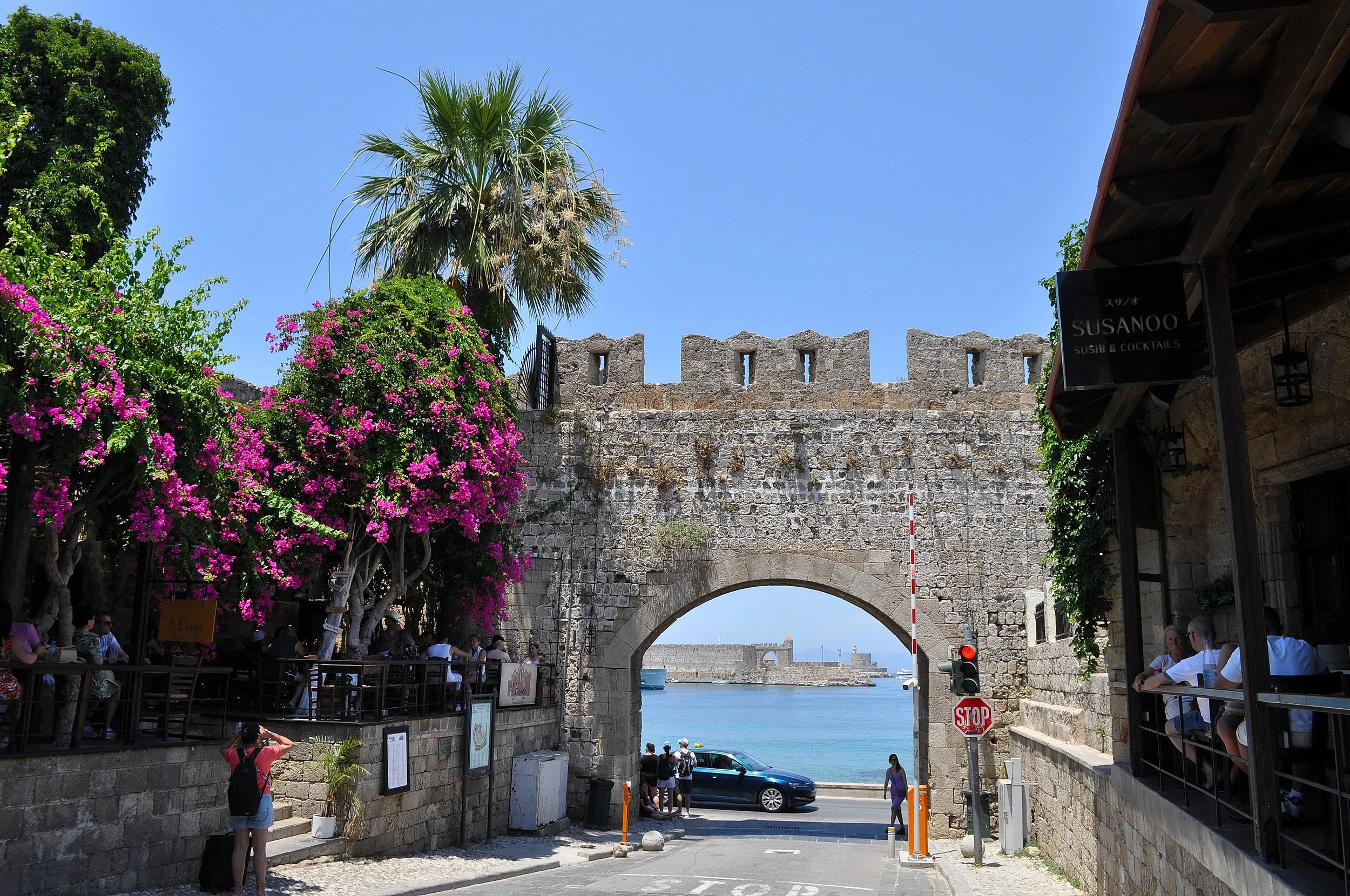
Piero: as soon as we cross the gateway, it's as if we've stepped into another age. The cars disappear, the streets become narrower, and the whole atmosphere changes.
Angela: the cobbled alleyways, the limestone walls, the wrought-iron balconies—everything seems suspended between the Middle Ages and the East.
Piero: we begin our visit along the Street of the Knights, the most famous street in the city. A perfectly straight road linking the lower town to the Palace of the Grand Master.
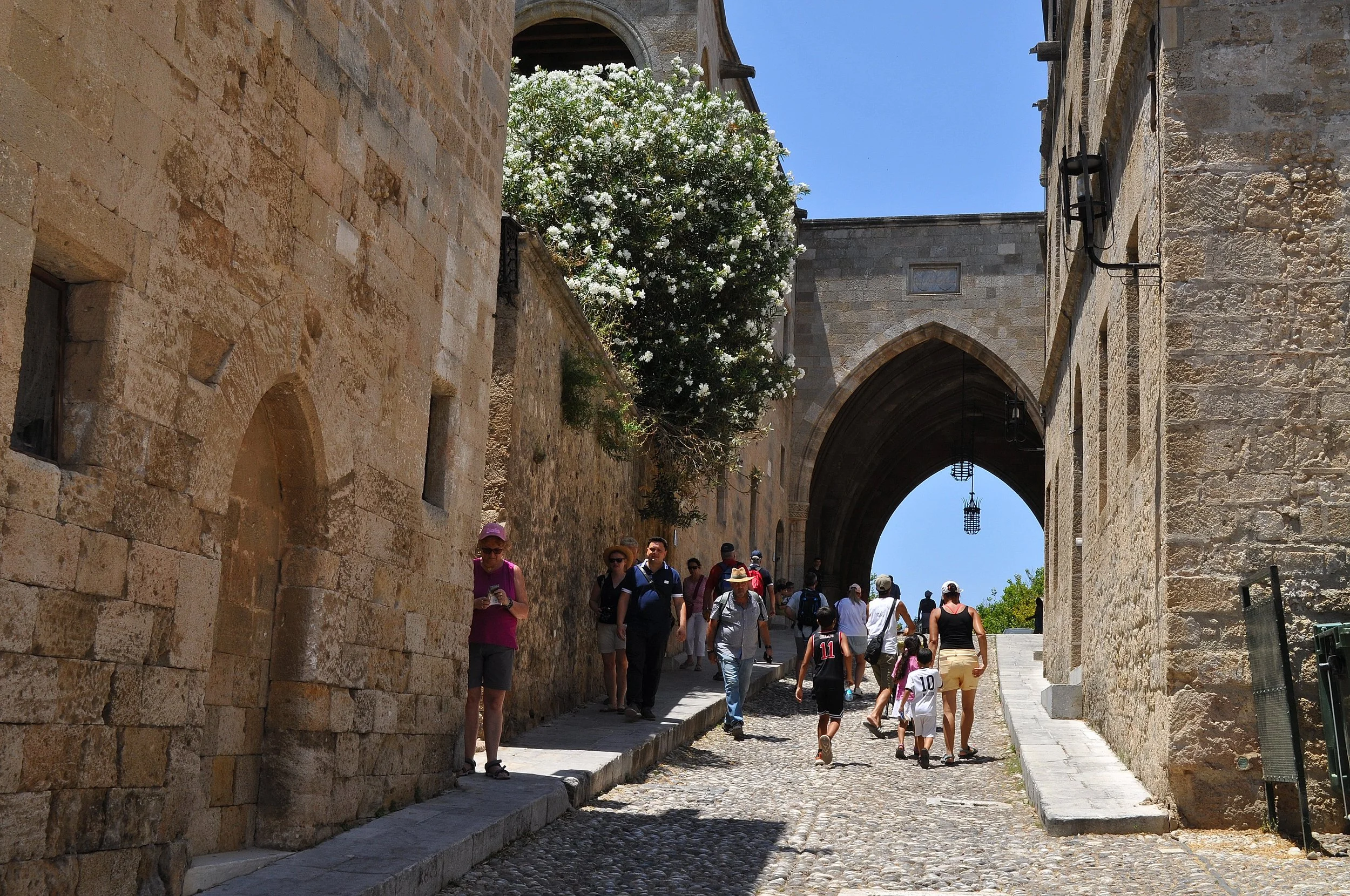

Angela: on both sides stand the Inns of the Tongues, the headquarters of the Knights from the different European nations: the Tongue of Italy, France, Provence, England, Germany...
Piero: every façade is different, yet they all speak the same austere and solemn language of Gothic architecture. Pointed arches, stone coats of arms, and ornate portals.
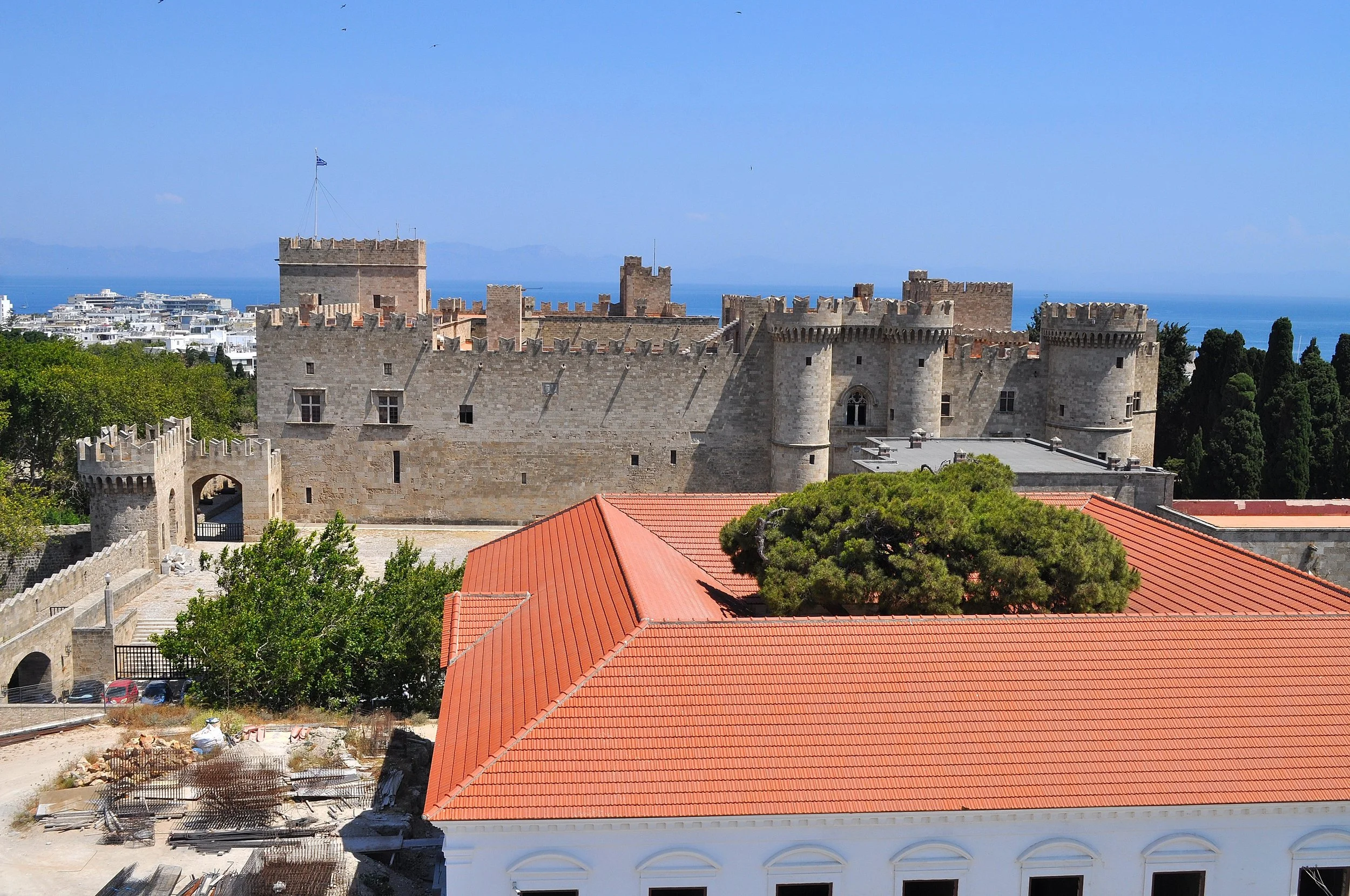
Angela: and at the end of the street, there it is: the Palace of the Grand Master.
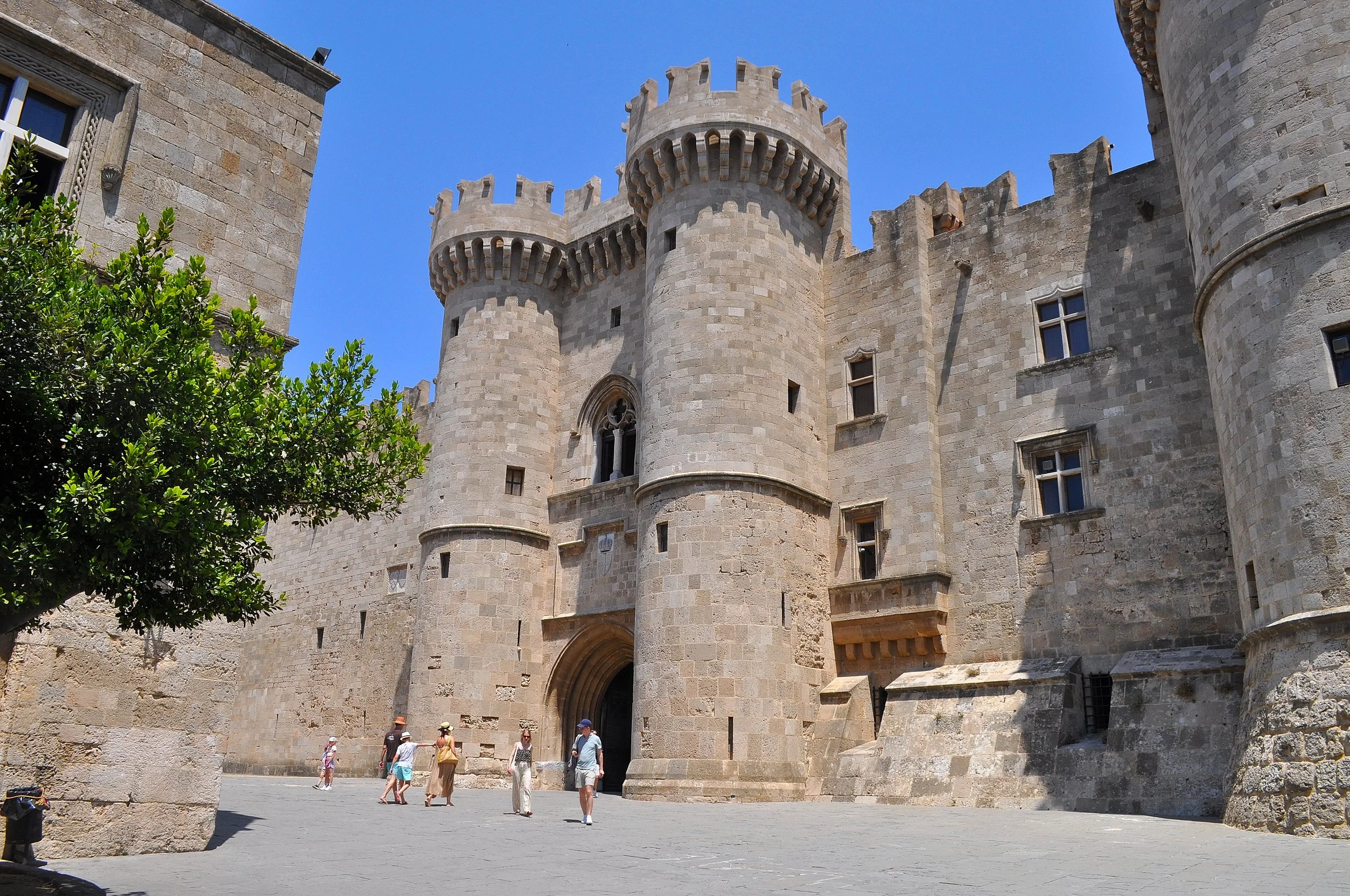
Piero: a true citadel within the city. Built by the Knights in the 14th century, it was severely damaged by an explosion in 1856, but was rebuilt by the Italians in the 1930s, transforming it into a residence for Mussolini and the King of Italy.
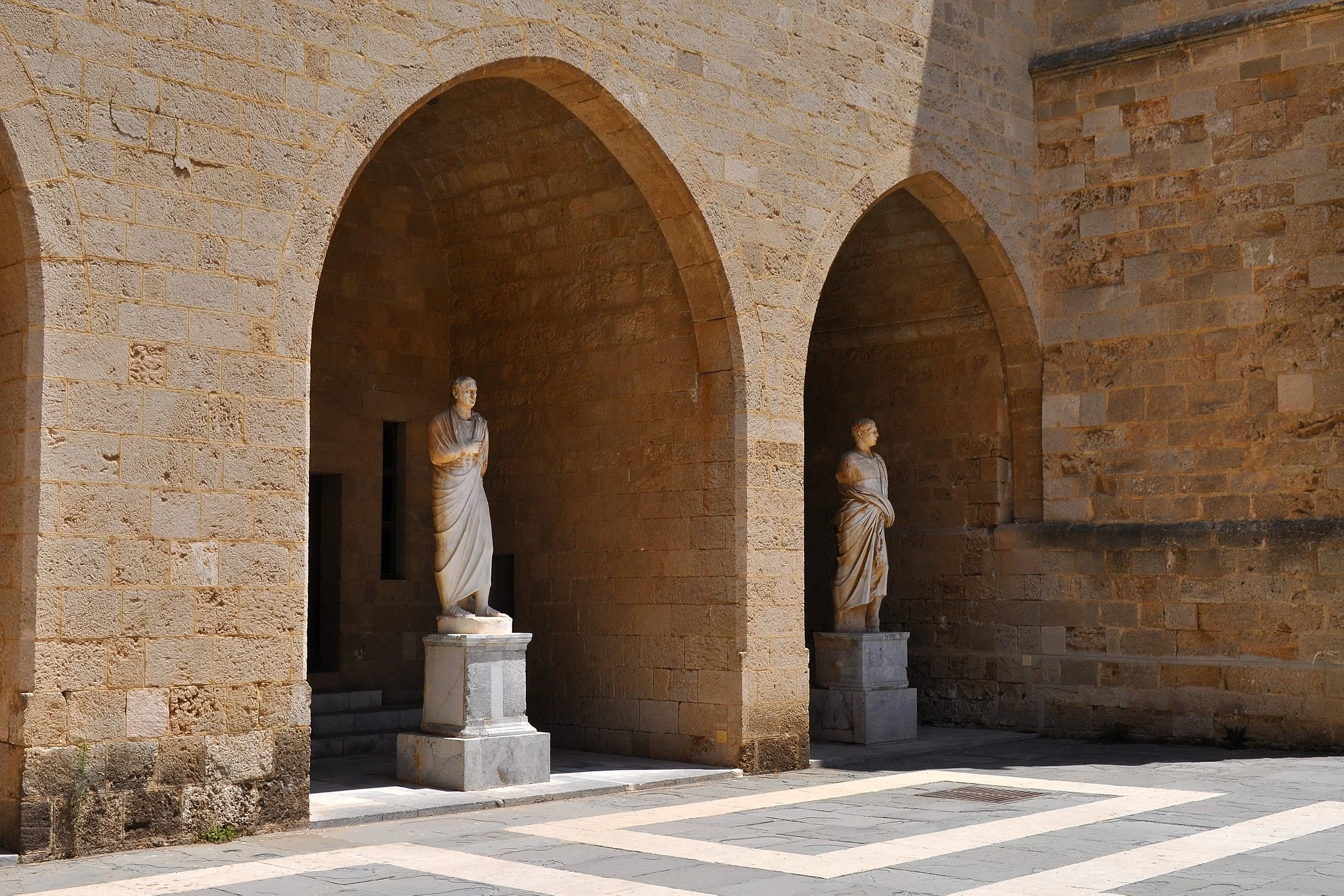


Angela: although the reconstruction took some stylistic liberties, it restored to the city an extraordinary landmark. We step into the courtyard, dominated by Roman columns and statues, before making our way into the grand interior halls.
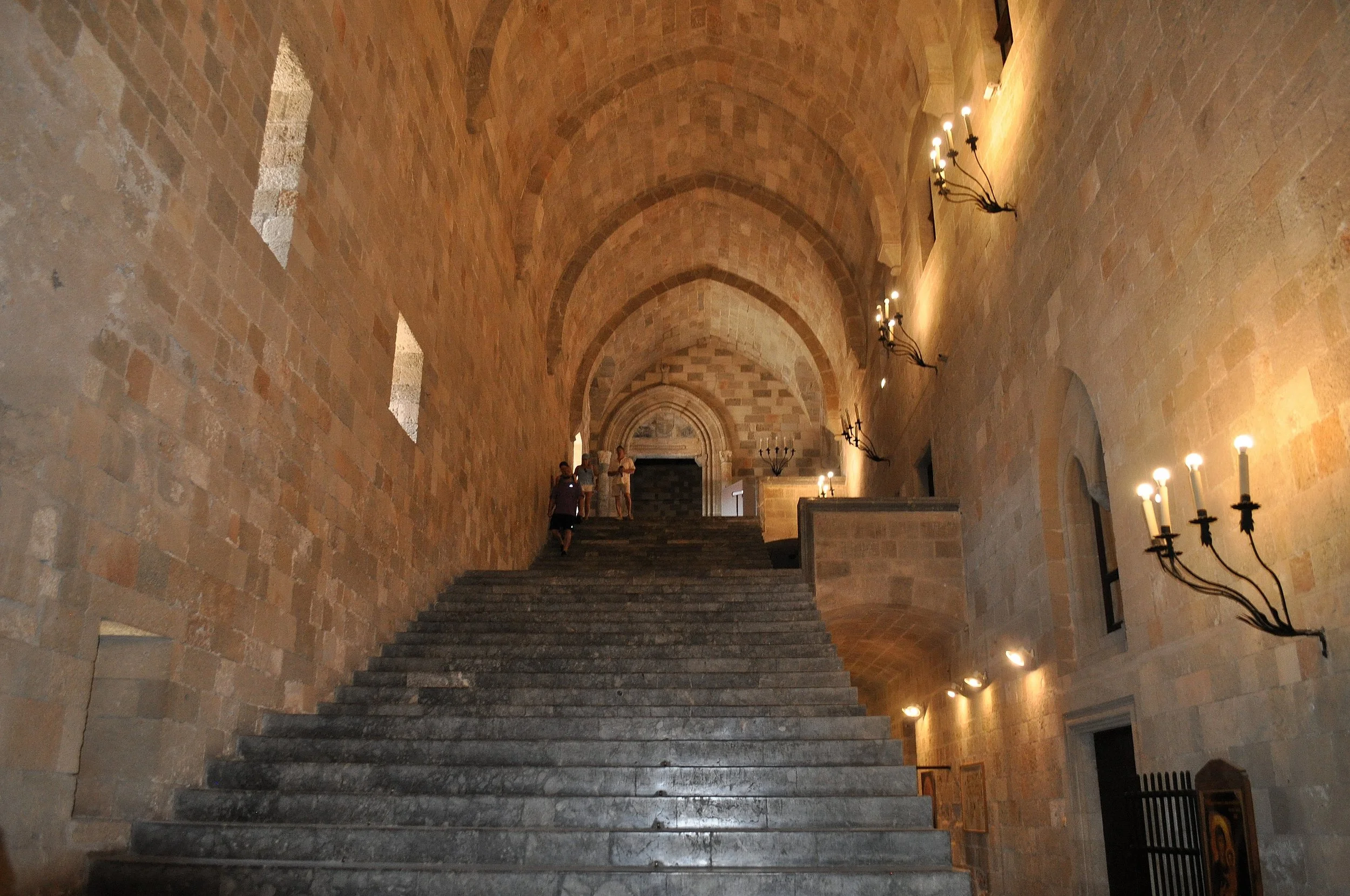
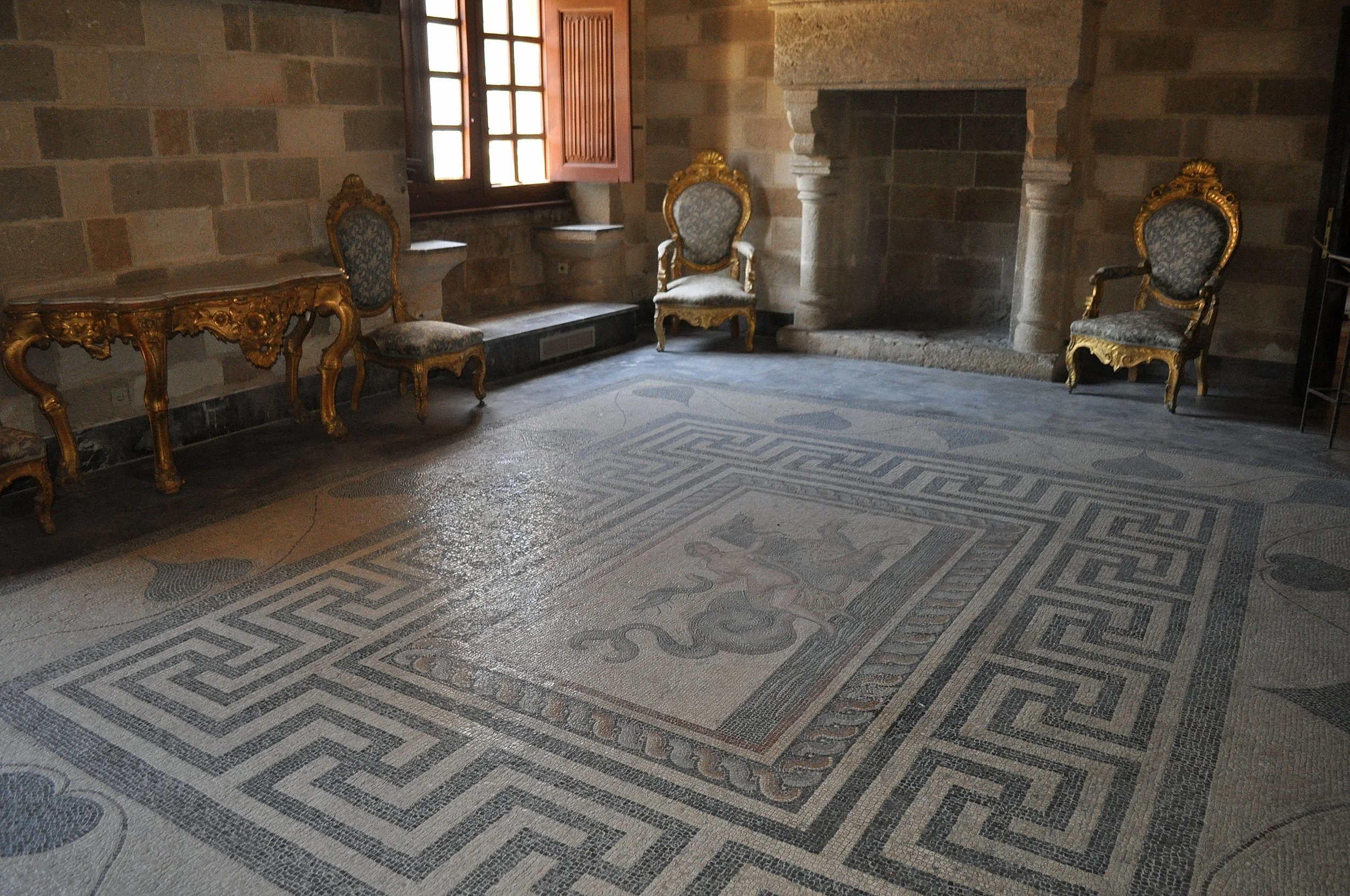
Piero: mosaic floors brought from Kos, wooden ceilings, period furnishings, and rooms that recreate the daily life of the Knights: a journey into history, with a level of scenic detail worthy of a film.
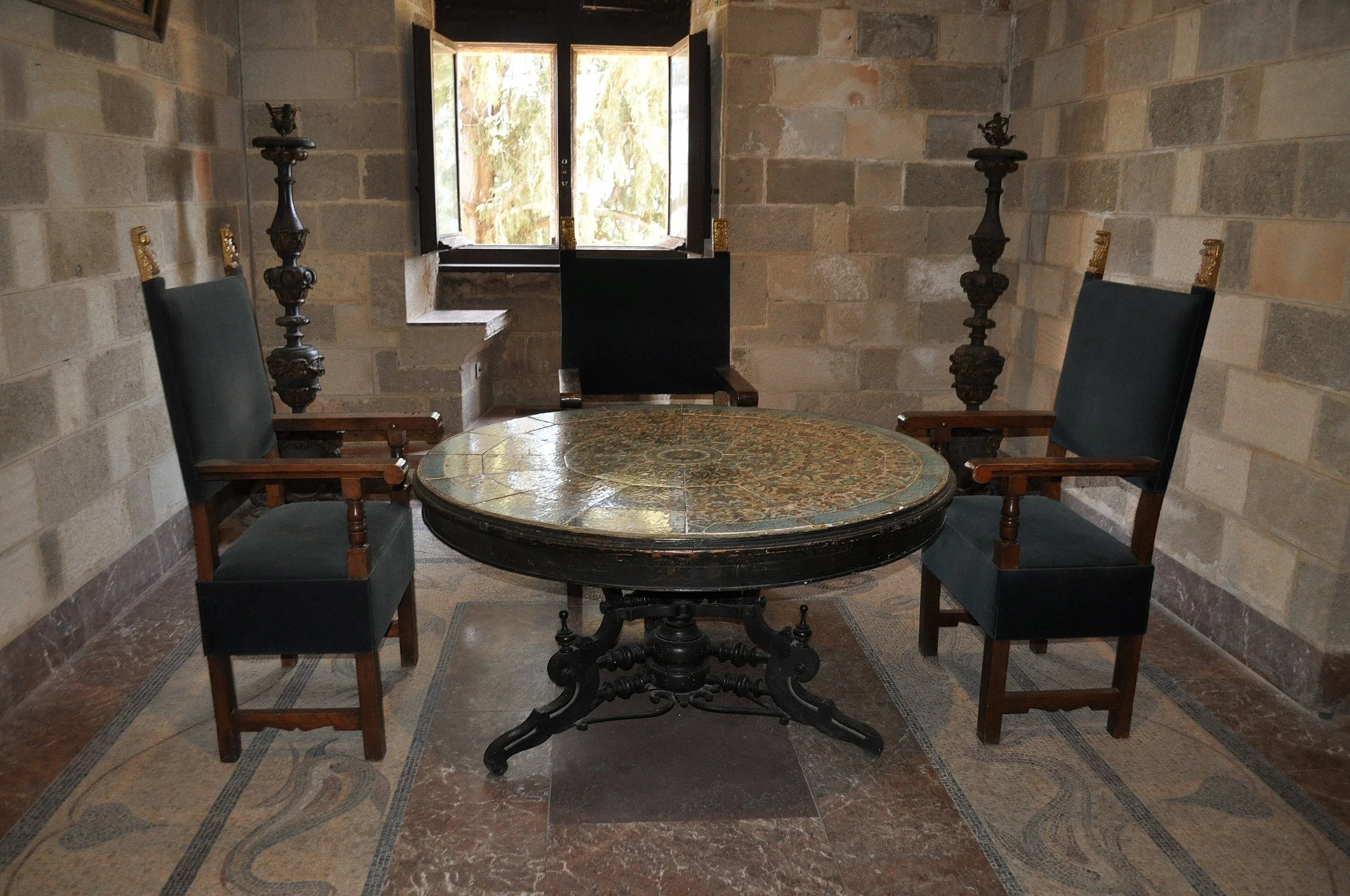
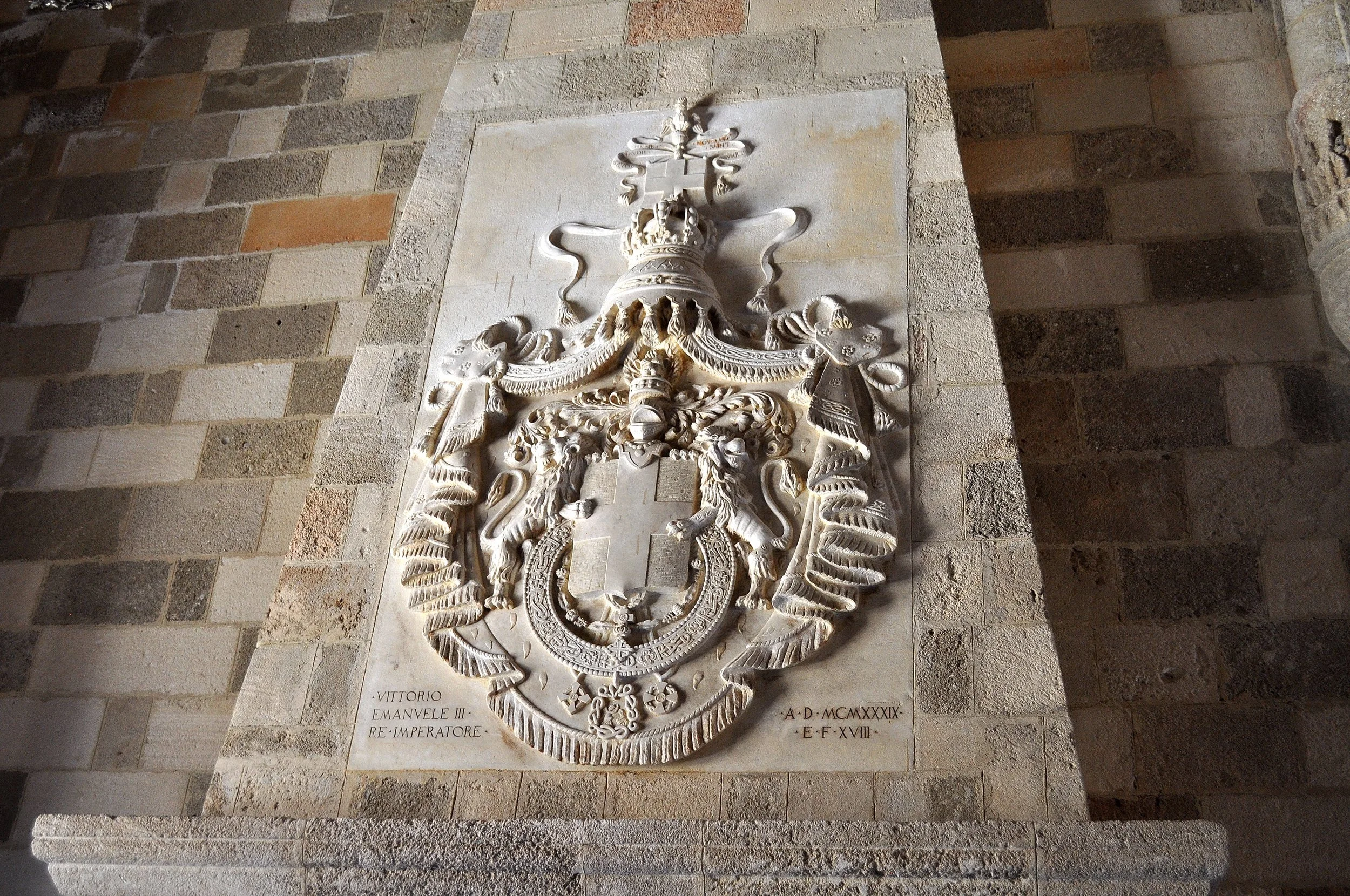

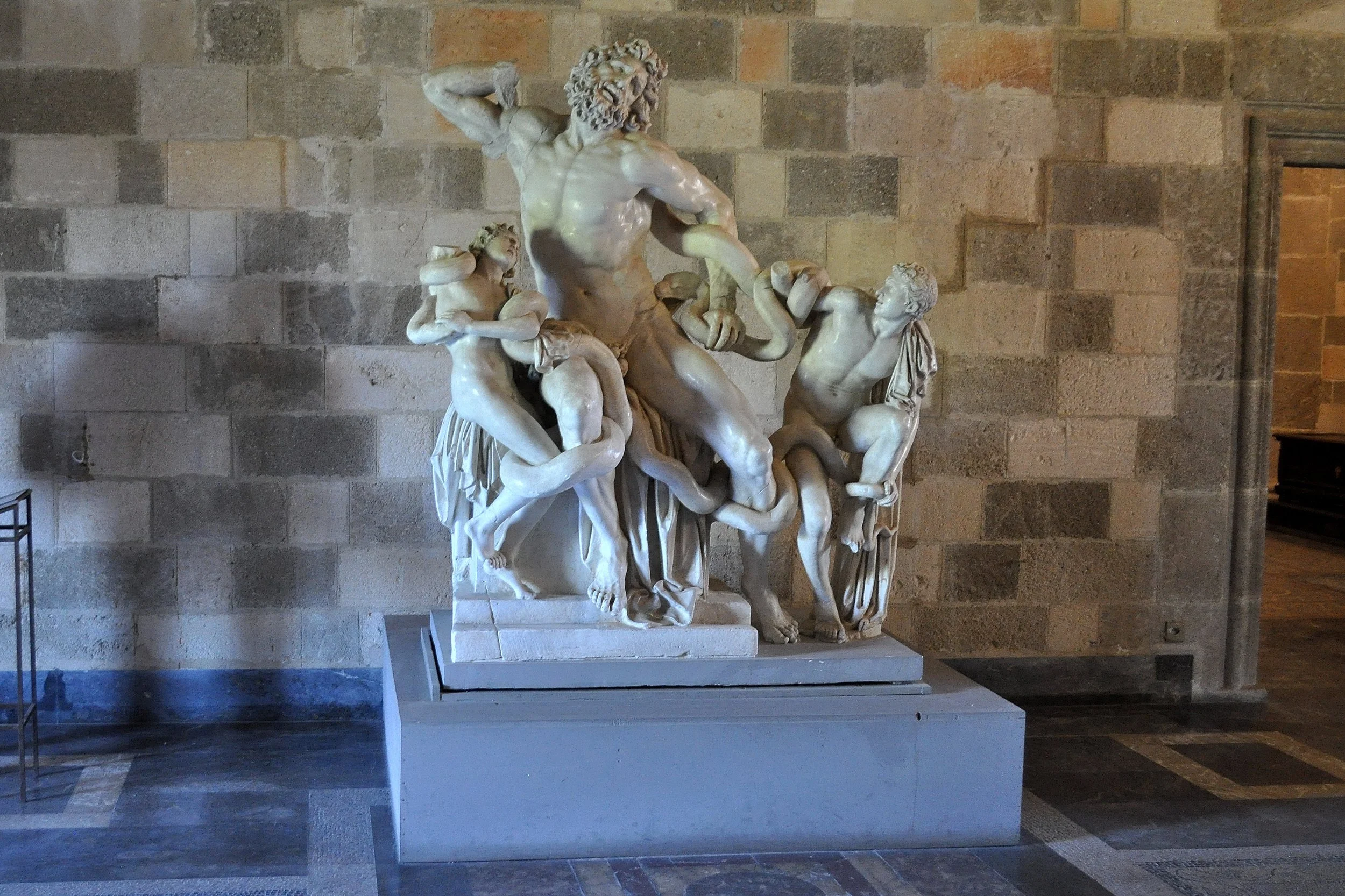

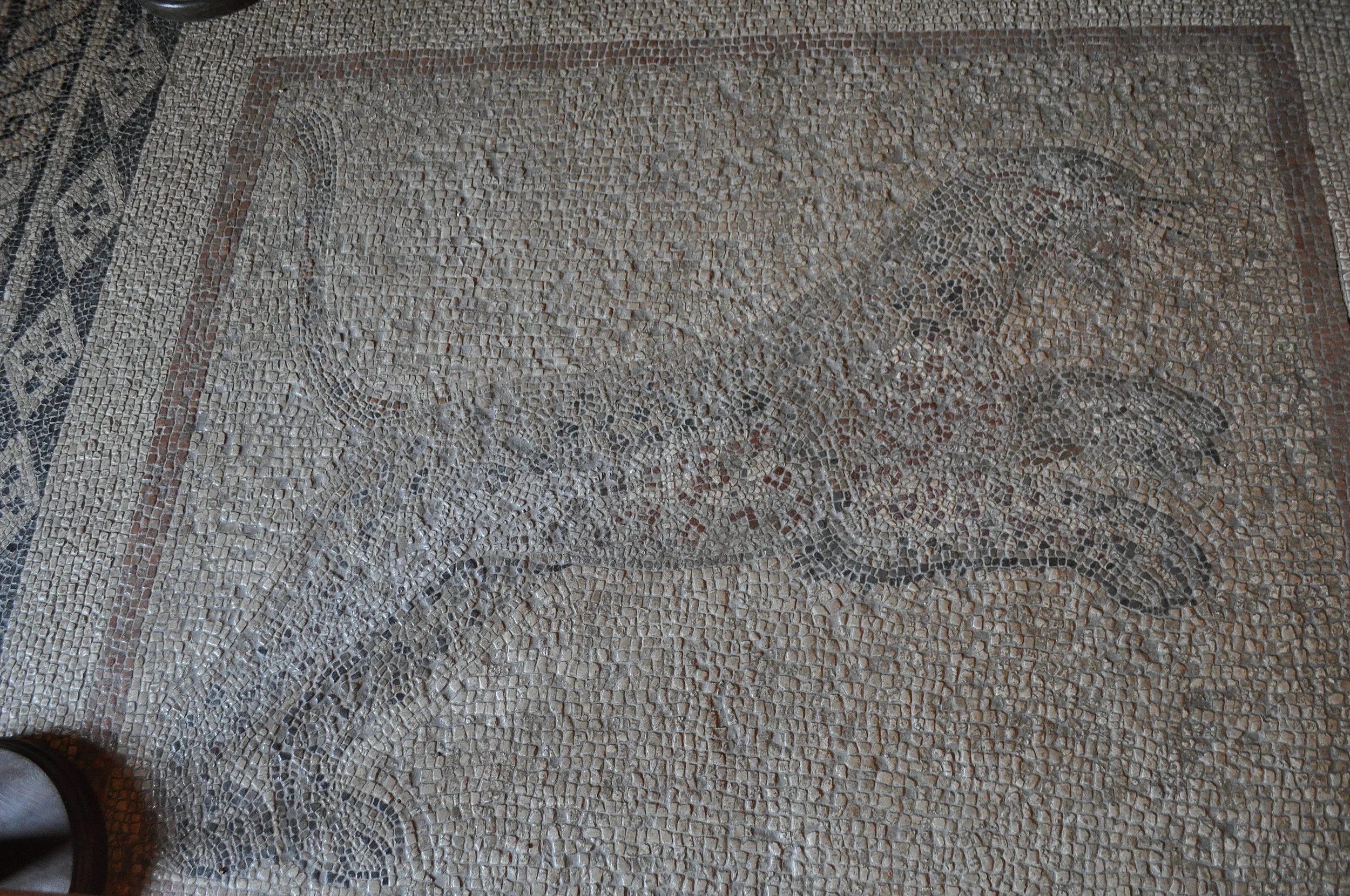
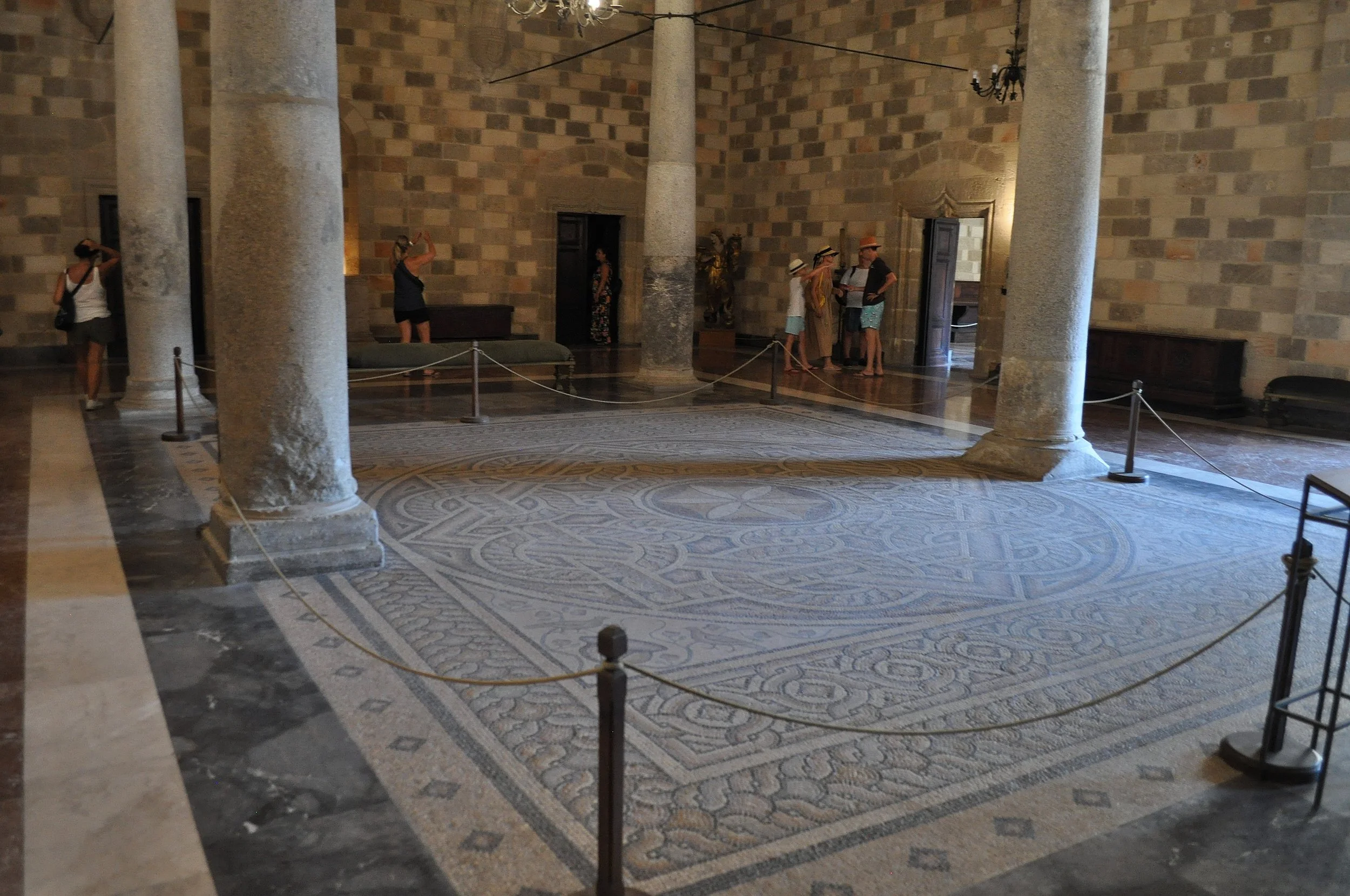
Angela: once outside the Palace, we happily lose ourselves in the liveliest part of the city.
Piero: as we leave the Palace, we let ourselves be guided by the sound of church bells. A little further on, hidden among the medieval rooftops, the Rhodes Clock Tower comes into view.
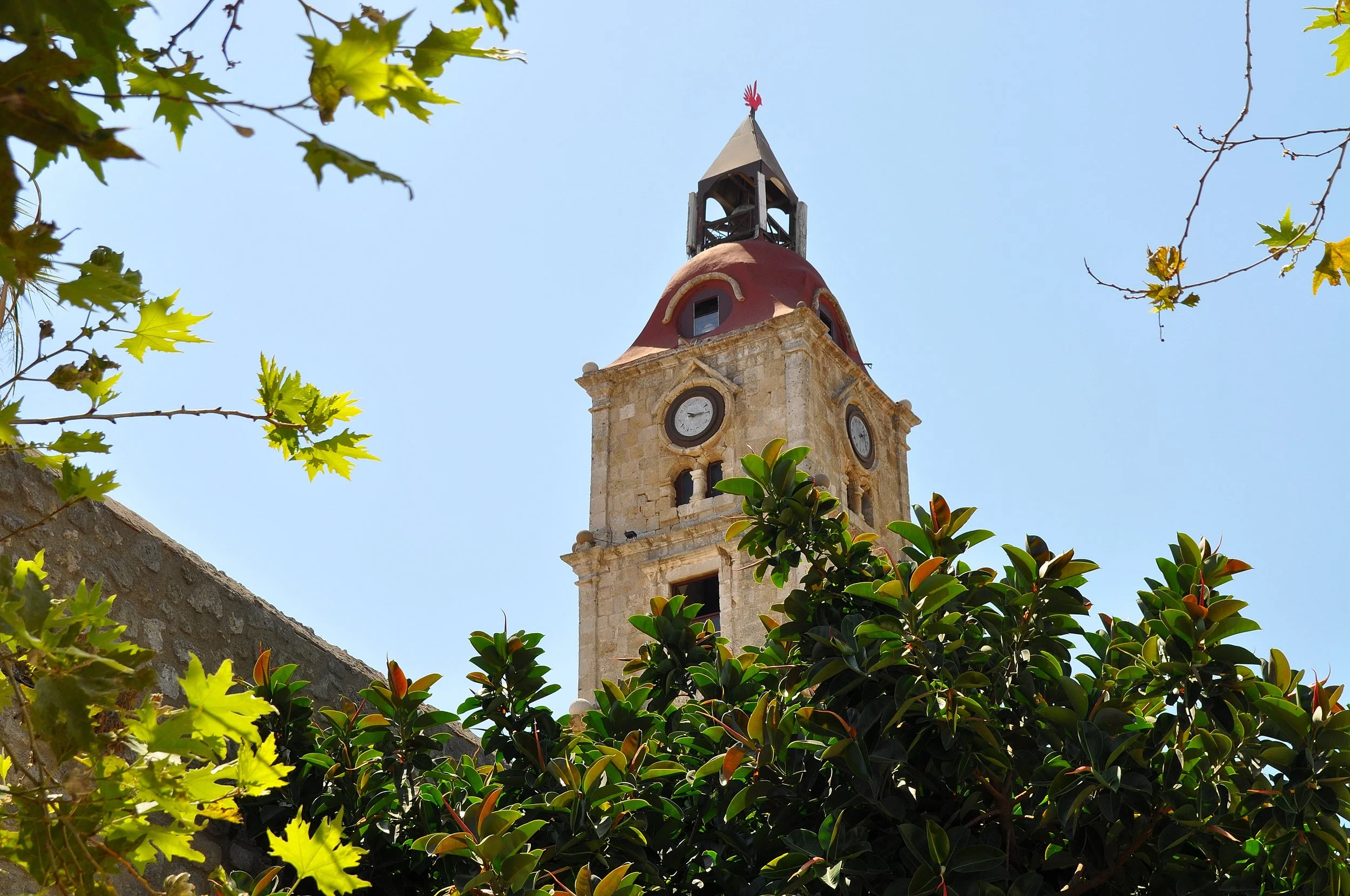
Angela: a small Ottoman gem dating back to the 19th century, with a view that's worth every step. We buy our tickets, climb a narrow spiral staircase, and... wow.
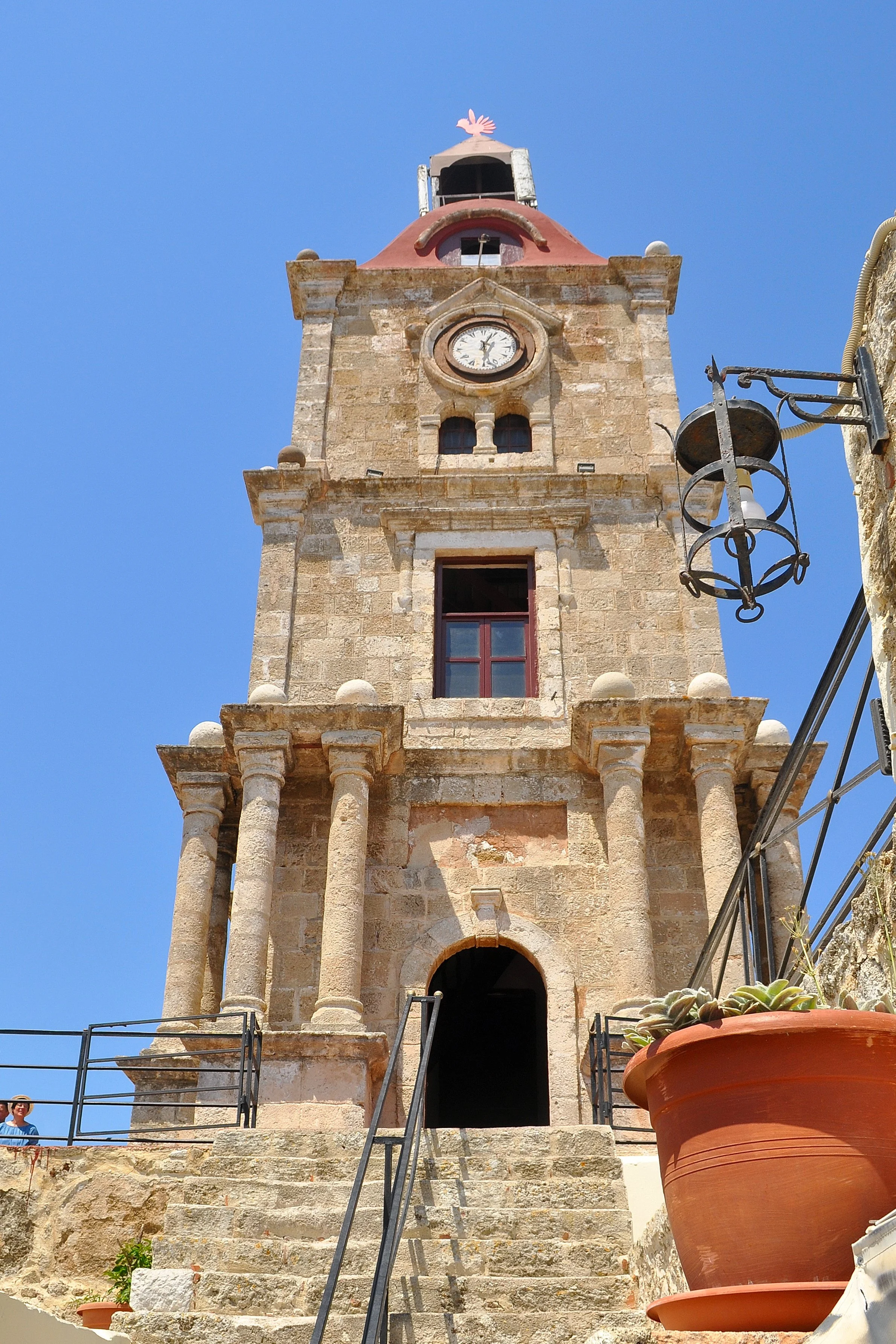
Piero: from up here, you can see everything: the stone rooftops, the city walls, the harbour, the minaret, and even the sea on the horizon.


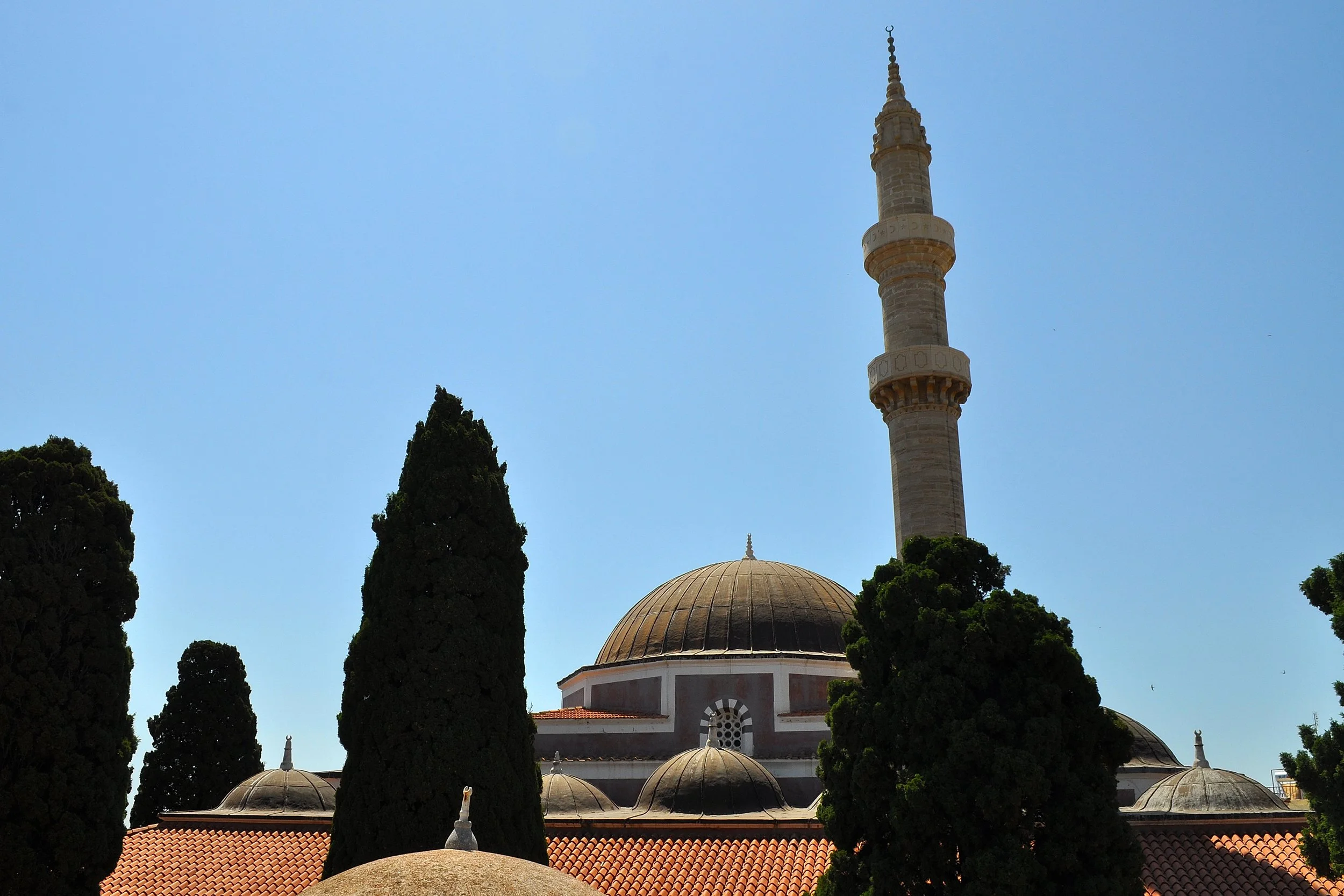
Angela: we make our way back down at a leisurely pace, and as soon as we step outside, we find ourselves standing in front of the Mosque of Suleiman the Magnificent.
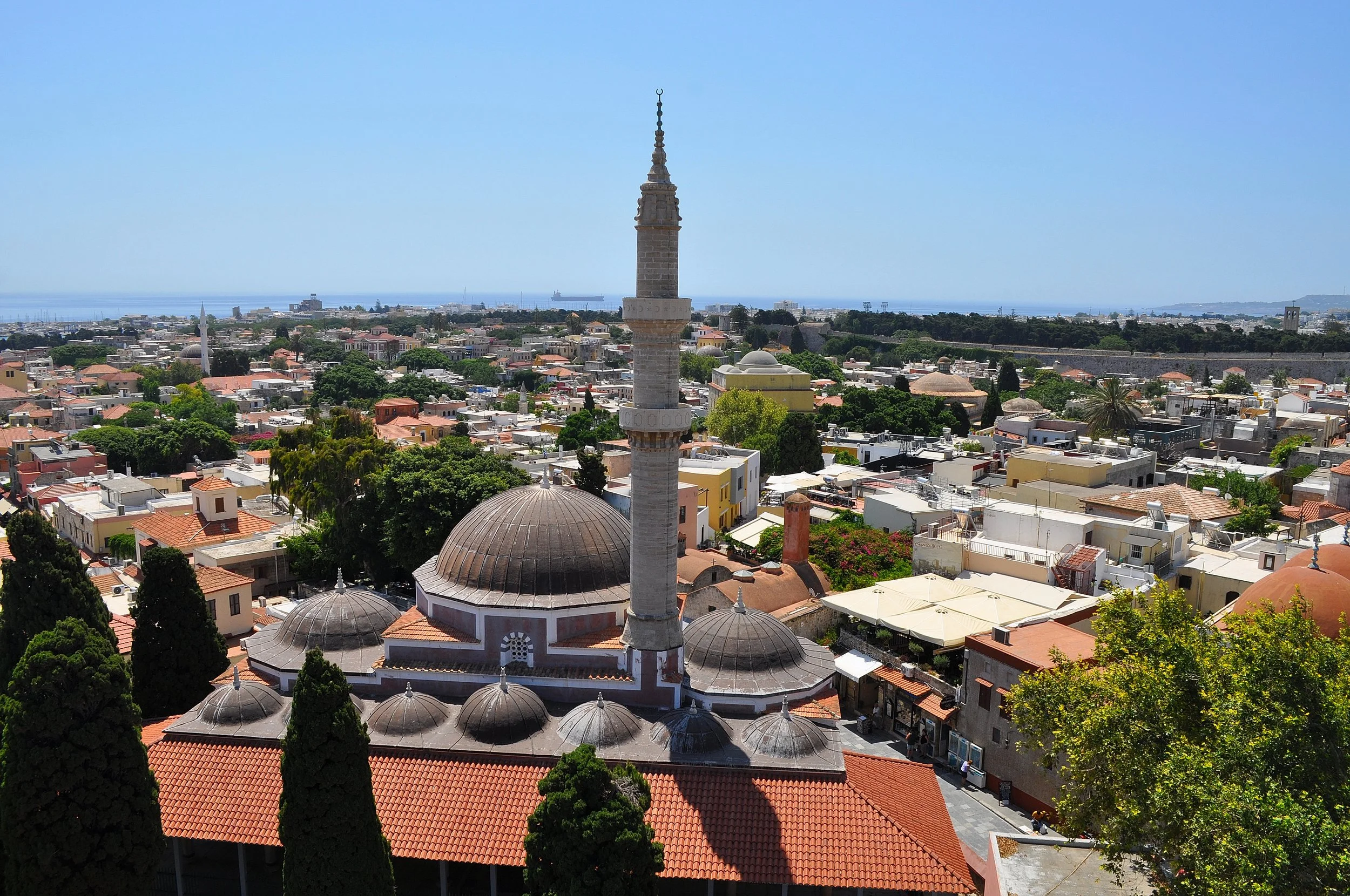
Piero: it was built in 1522, immediately after the Ottoman conquest of the island. It is one of the first tangible signs of the new power that would rule Rhodes for almost four centuries.
Angela: the pink dome, the slender minaret, the portico with its Oriental-style arches... it's as though, simply by turning a corner, we've found ourselves in another city, in another time.
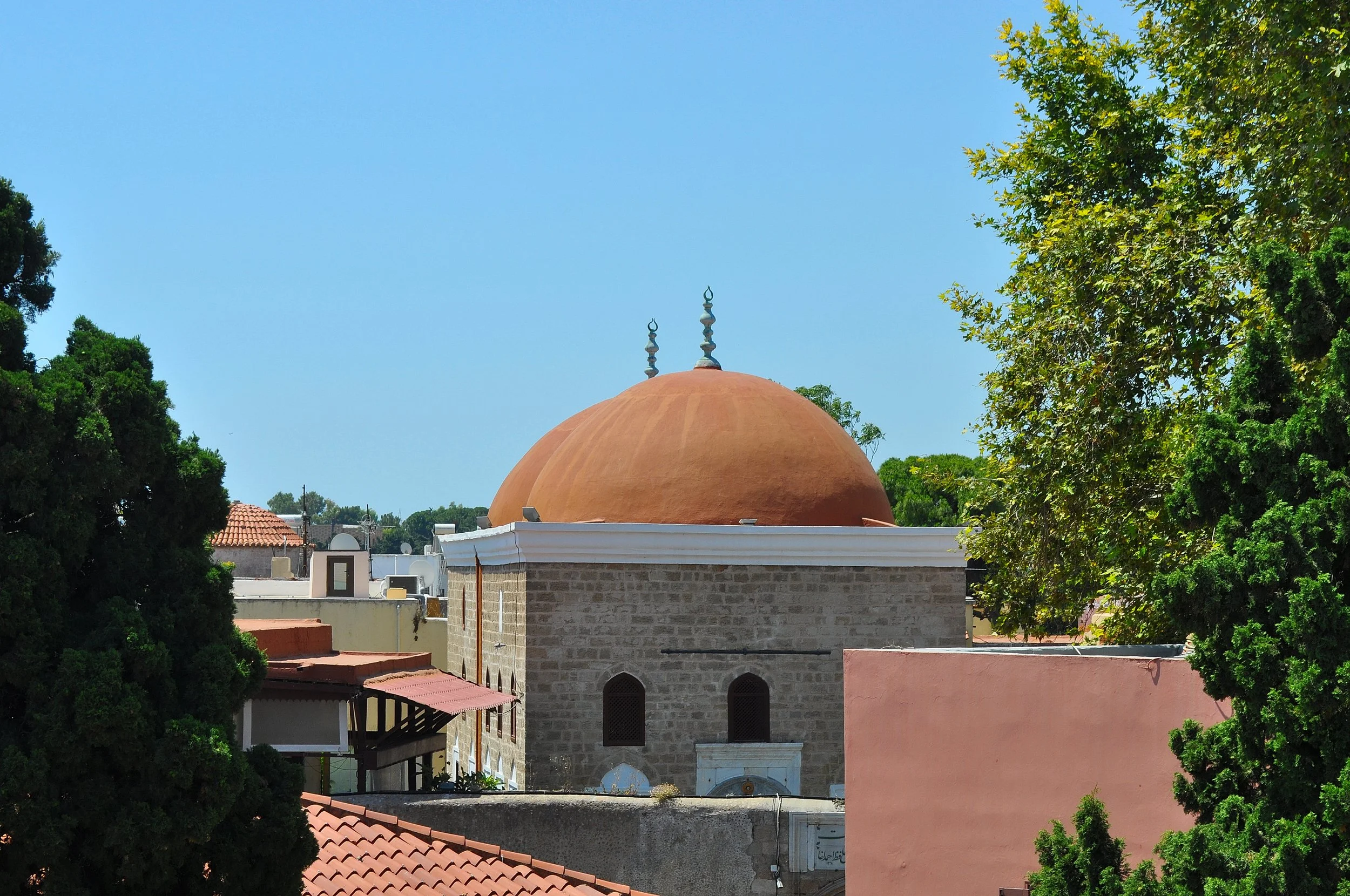

Piero: that's what Rhodes is like: layer upon layer of history. Every ruling power has left its mark, without erasing what came before. Greeks, Romans, Byzantines, Knights, Ottomans, Italians... each of them has written a chapter.
Angela: and we read them, one after another, simply by walking through the city.
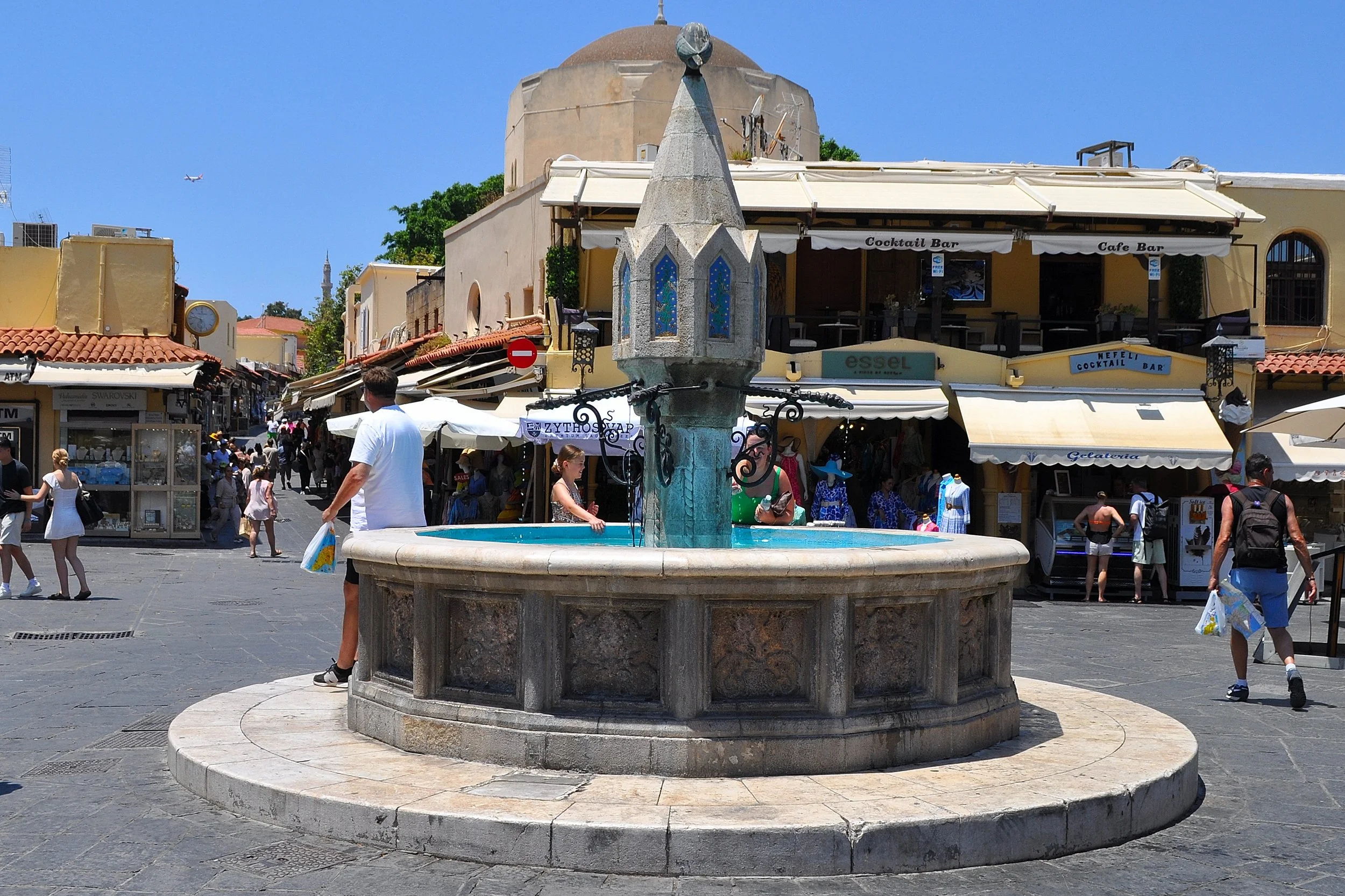
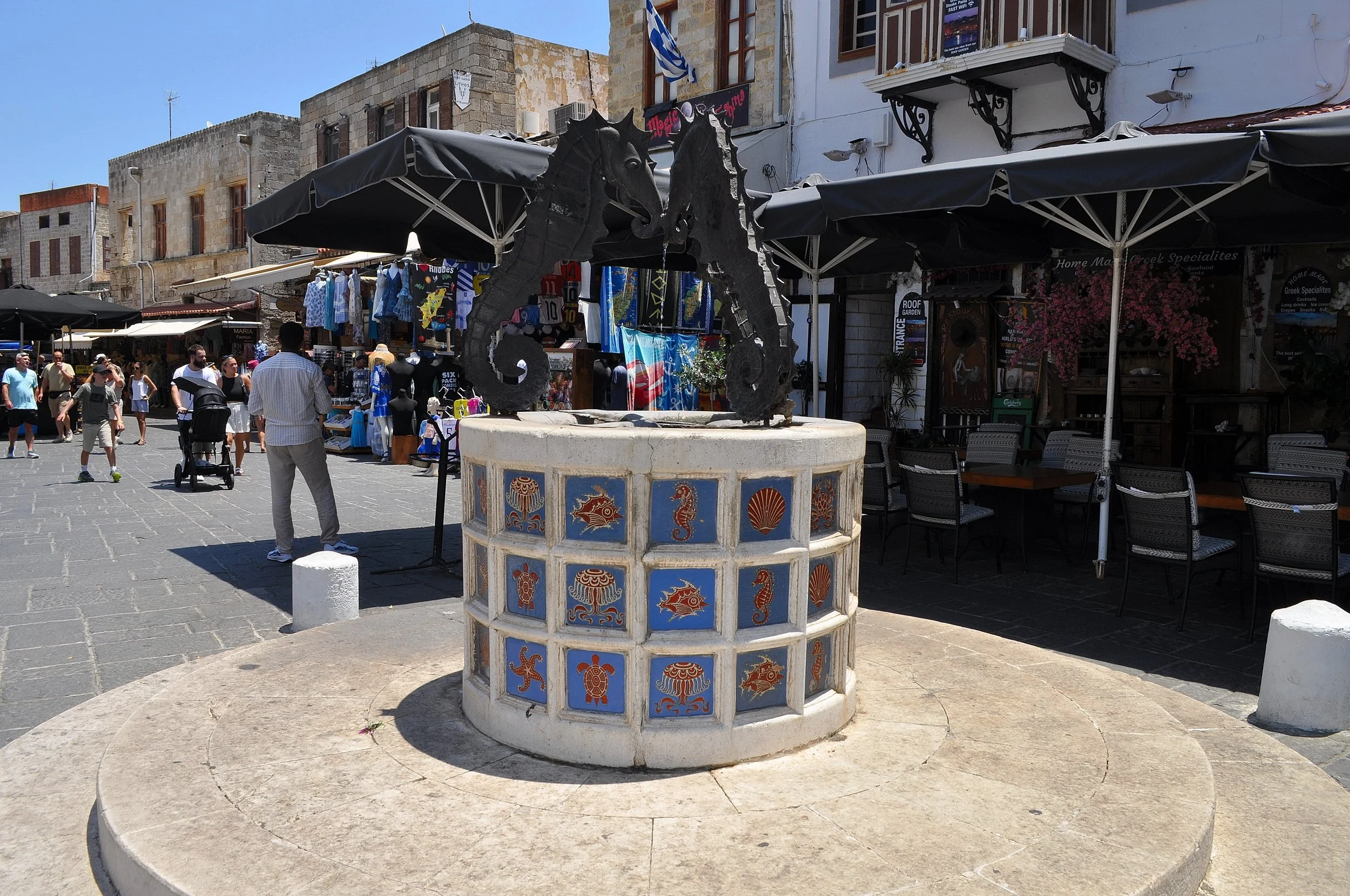
Piero: now we make our way towards Hippocrates Square, with its medieval fountain, artisan shops, sacks of spices, and the aroma of Greek coffee, slowly prepared over hot sand.
Angela: and then there's the Archaeological Museum, housed in the former Hospital of the Knights, with its statues, pottery, stelae, and the beautiful Sarcophagus of Aphrodite.

Piero: here too, every room is a journey through centuries and civilisations: from the Mycenaeans to the Hellenistic period, and from the Romans to the Byzantines.
Angela: we take some time to stroll along the city walls, passing towers and bastions, before stopping in a quiet corner overlooking the harbour.


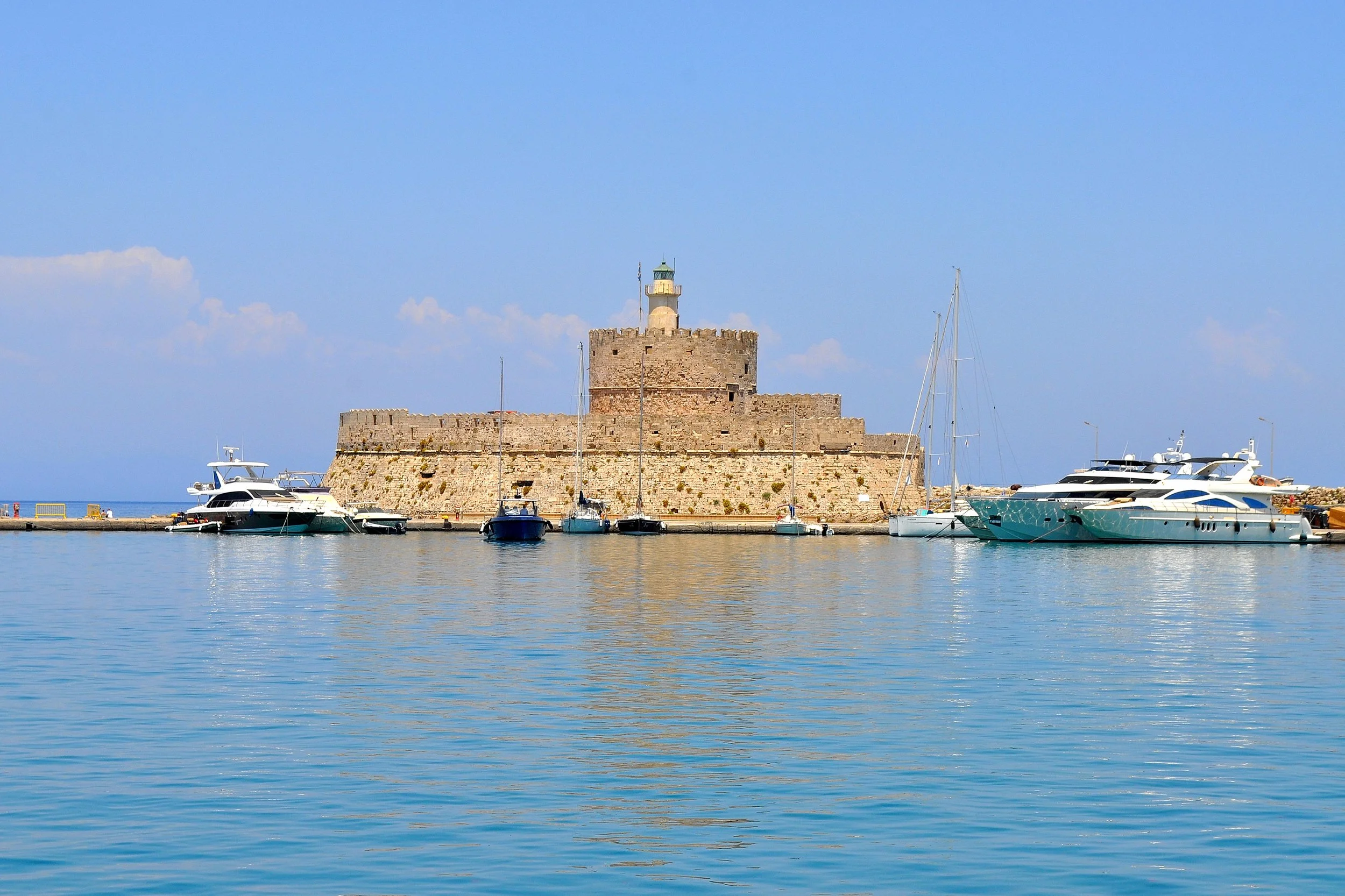
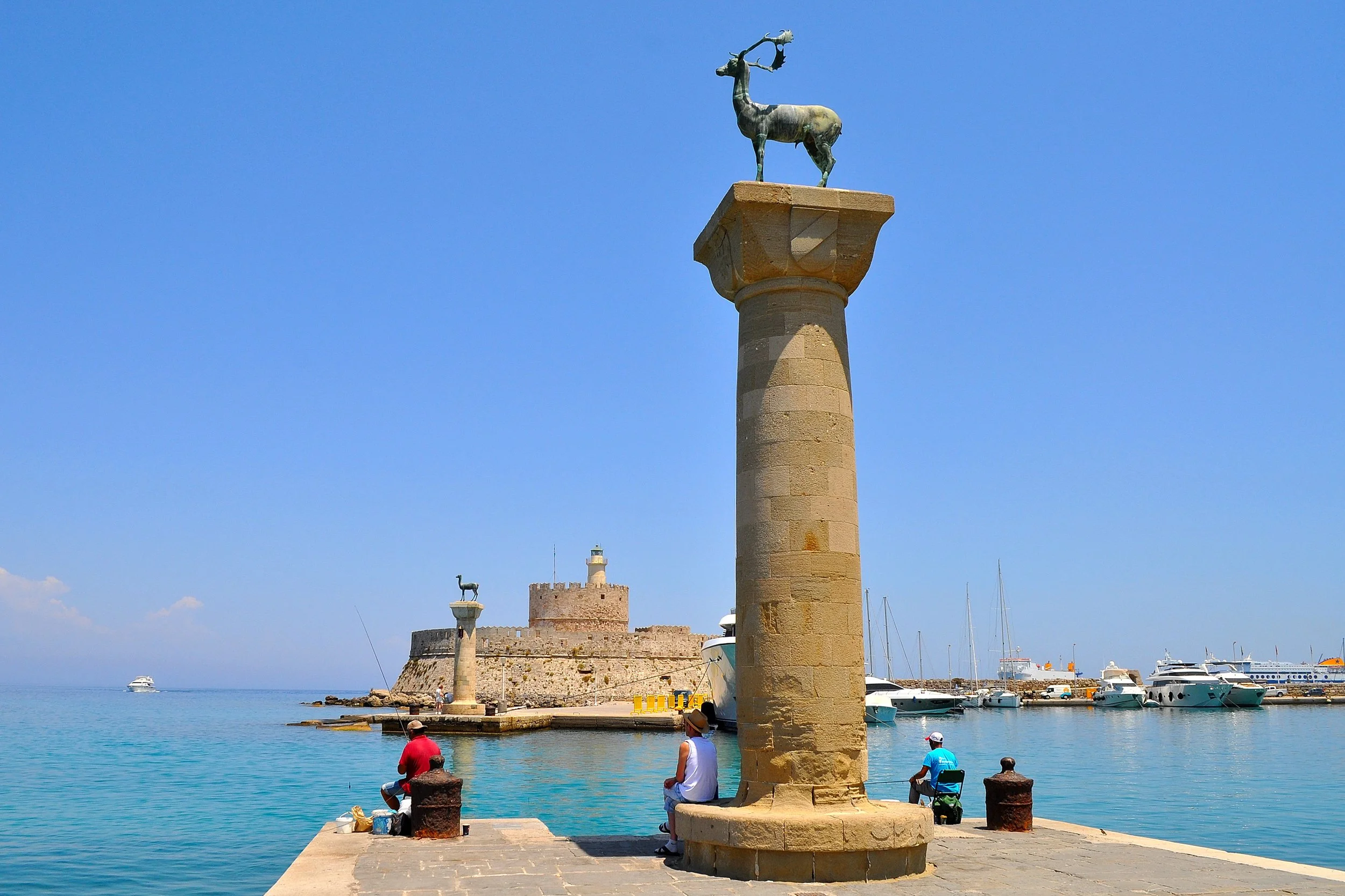
Piero: it is here that, according to legend, the Colossus of Rhodes once stood, at the entrance to the ancient harbour, perhaps spanning the two sides where the bronze deer, the symbol of the city, stand today.
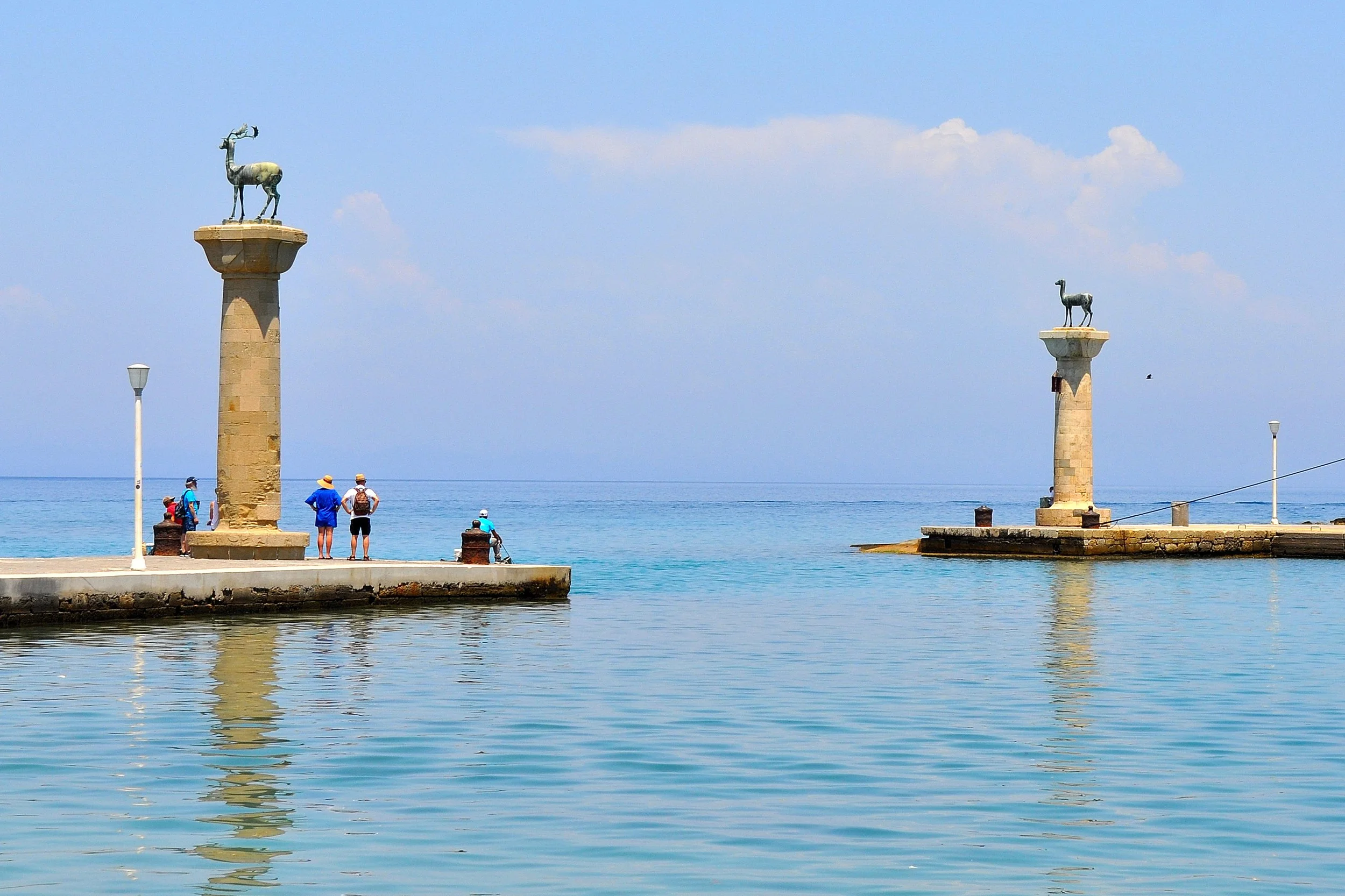
Angela: no archaeological evidence confirms it, but the legend lives on. And in Rhodes, the line between myth and reality is often a very fine one.
Piero: even what we see today is utterly fascinating, and it lets us imagine what it might once have looked like...
Angela: Rhodes Town is not just history: it's identity. It is the beating heart of the island. And today, it has shared so much of its story with us.
Along the coast of Lindos by boat: dreamlike bays and cinematic cliffs
Piero: after three days of history, long walks and ancient wonders, today we treat ourselves to a break at sea. But no crowded beaches for us, today, we're spending the day on a boat!
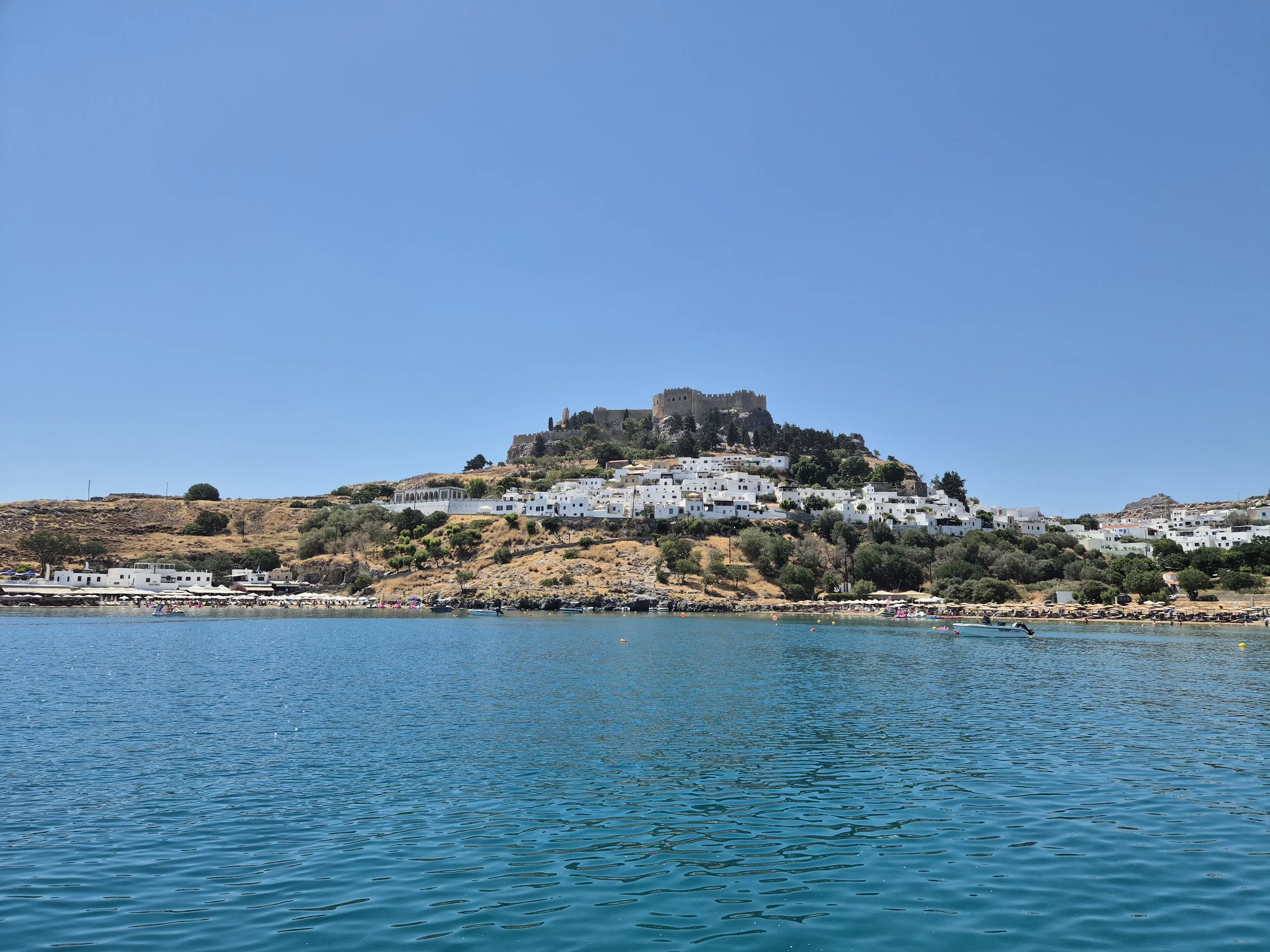
Angela: a small motorboat will take us to discover the wildest and most spectacular side of Rhodes' south-eastern coast.
Piero: our first stop is an obvious one: St Paul's Bay once again, which has now become our favourite little haven. But seeing it from the sea makes it even more magical.
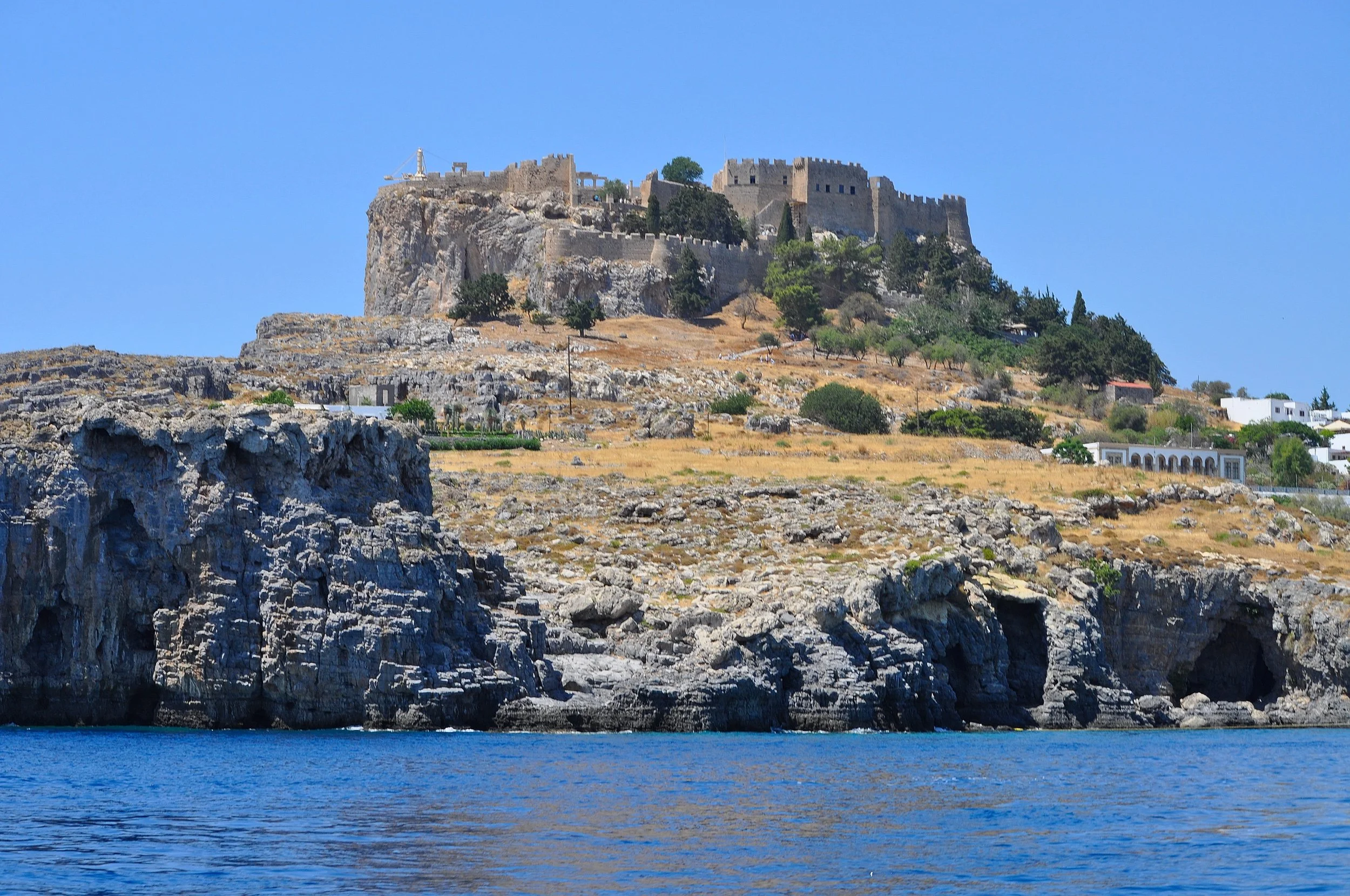
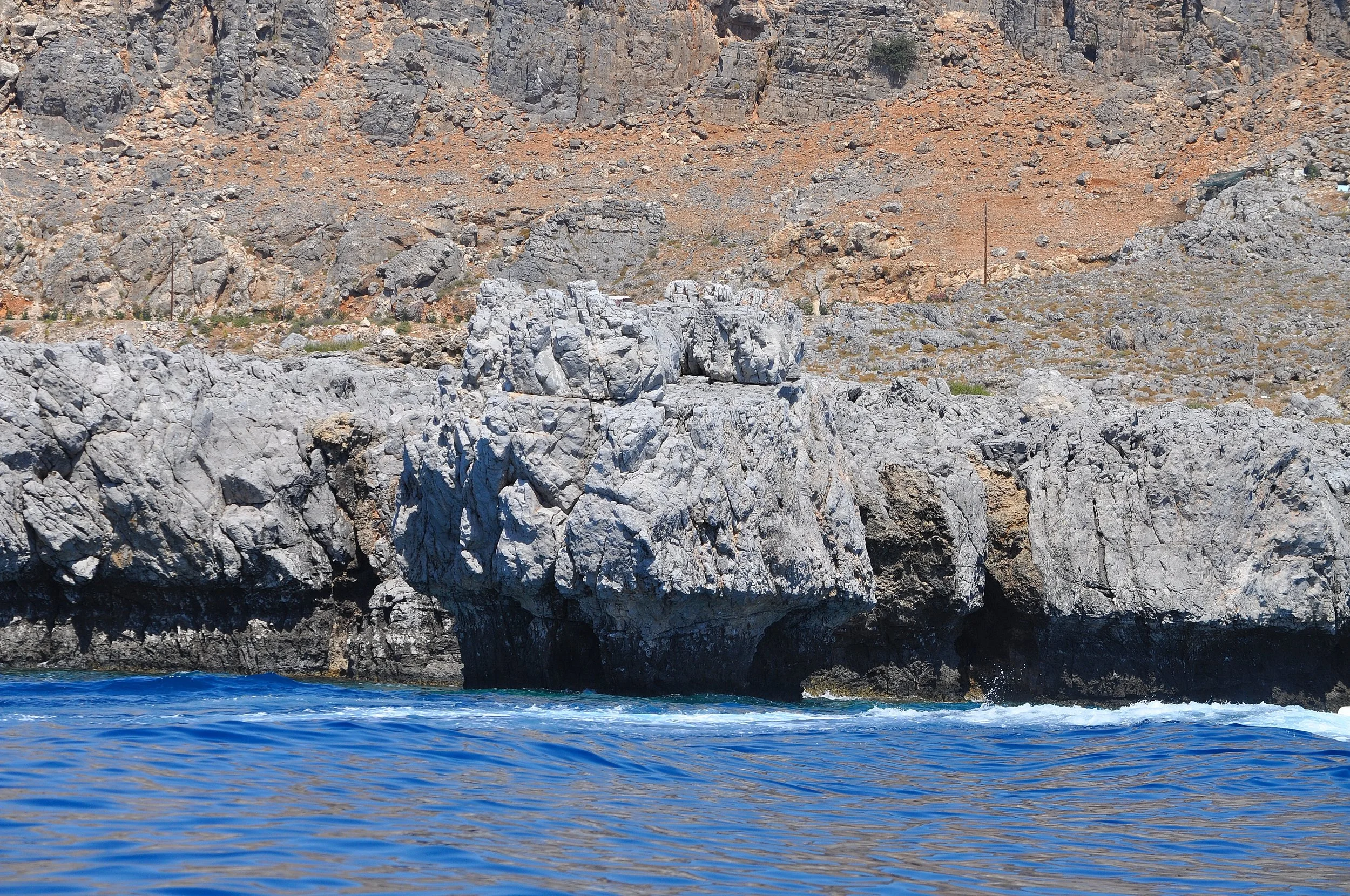
Angela: after a refreshing swim, we set off south once again. And just a few minutes later, there it is: the spectacular Navarone Cliffs.
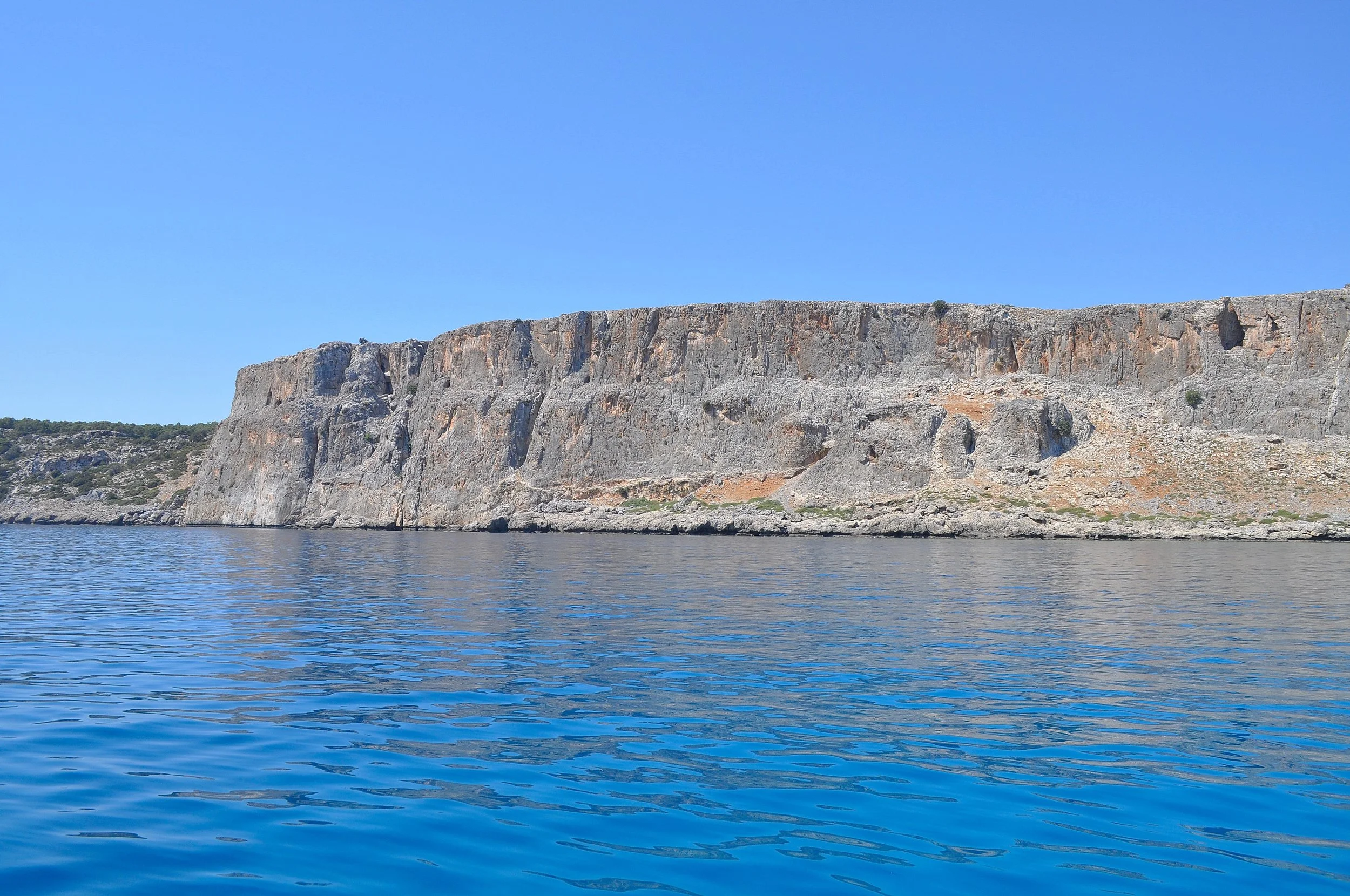
Piero: here, the limestone cliffs rise sheer above the sea, creating a breathtaking contrast with the deep blue water below.
Angela: the name "Navarone" isn't Greek—it has a cinematic origin. This bay became famous in the 1960s, when it was chosen as a filming location for The Guns of Navarone, starring Gregory Peck and Anthony Quinn.
Piero: although the film is set on a fictional island in the Aegean Sea, many scenes were filmed right here, among these spectacular cliffs. Since then, the locals have started calling it Navarone Bay.
Angela: the sea here is deep and crystal clear, perfect for swimming or snorkelling. And the silence, broken only by the gentle lapping of the waves, makes the whole place even more enchanting.
Piero: around midday, we slowly make our way back to Lindos, gently rocked by the waves.
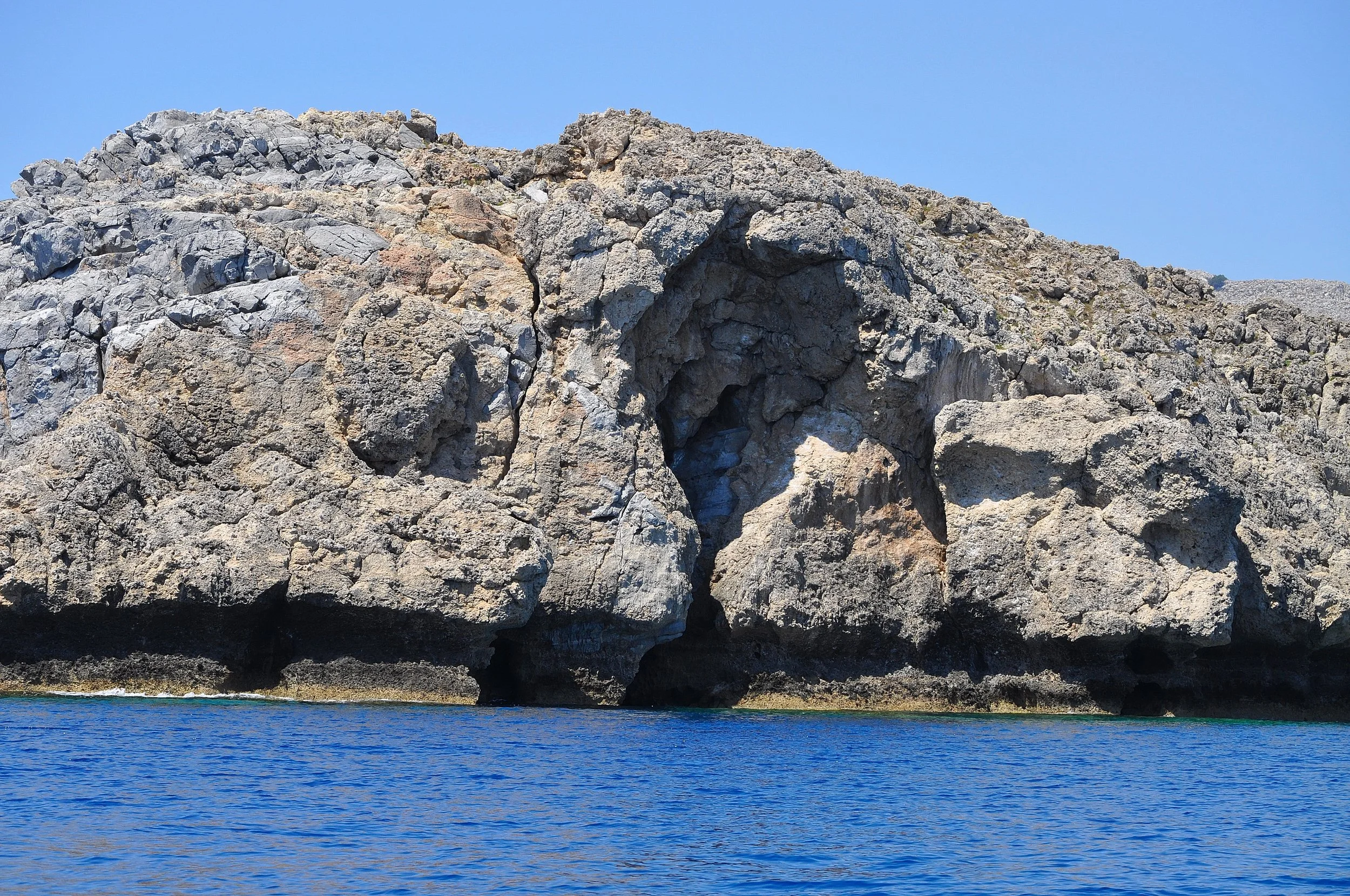


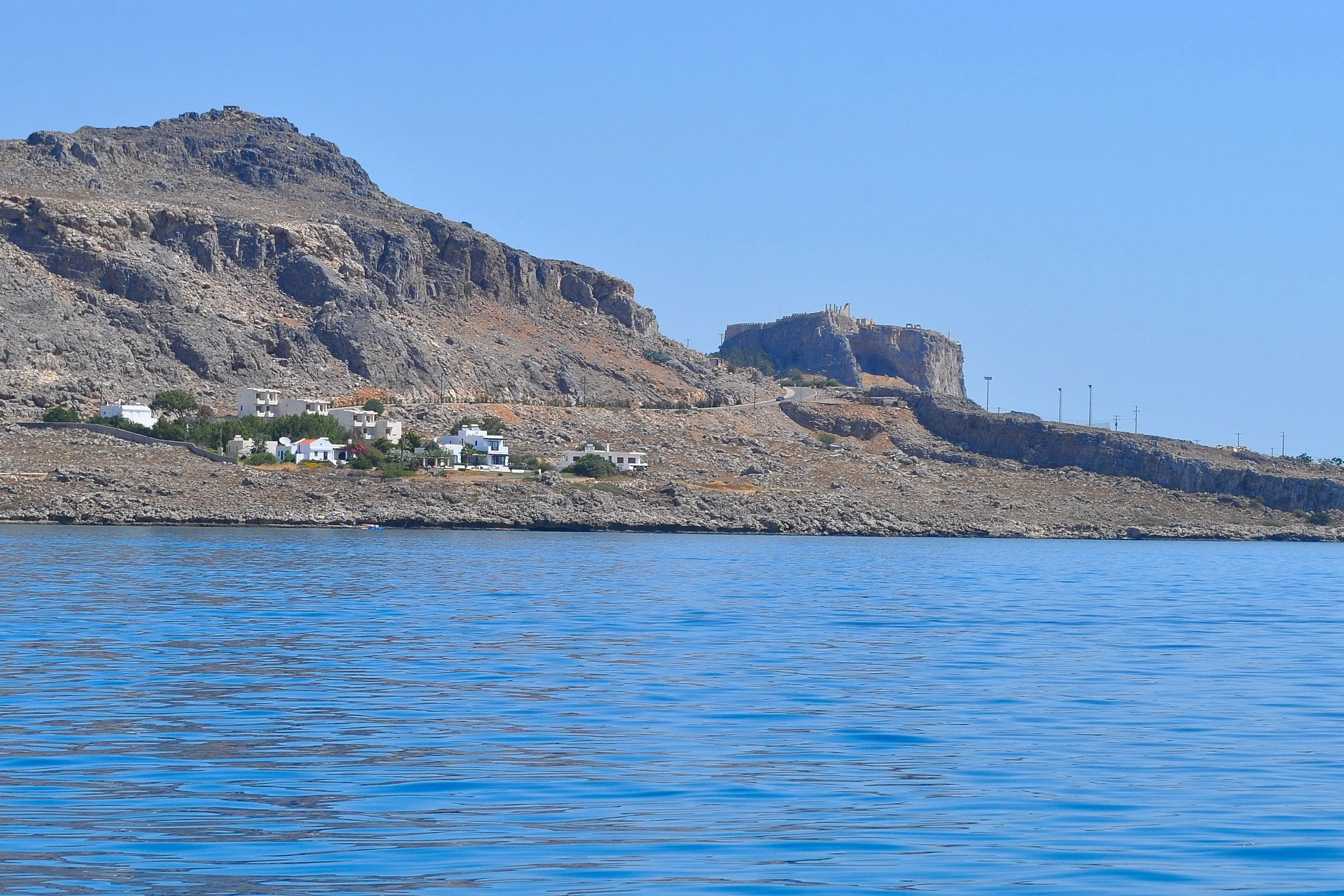



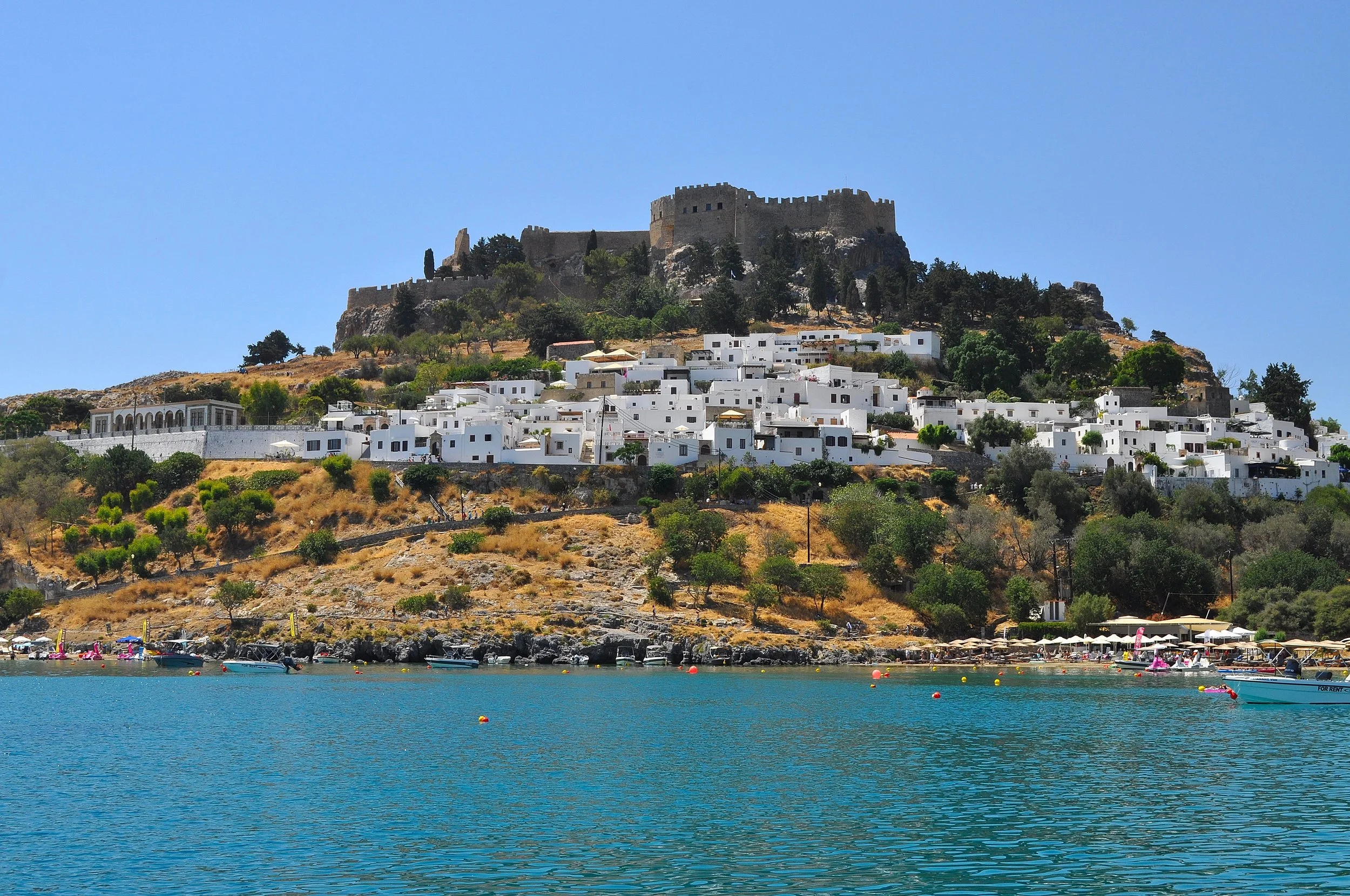
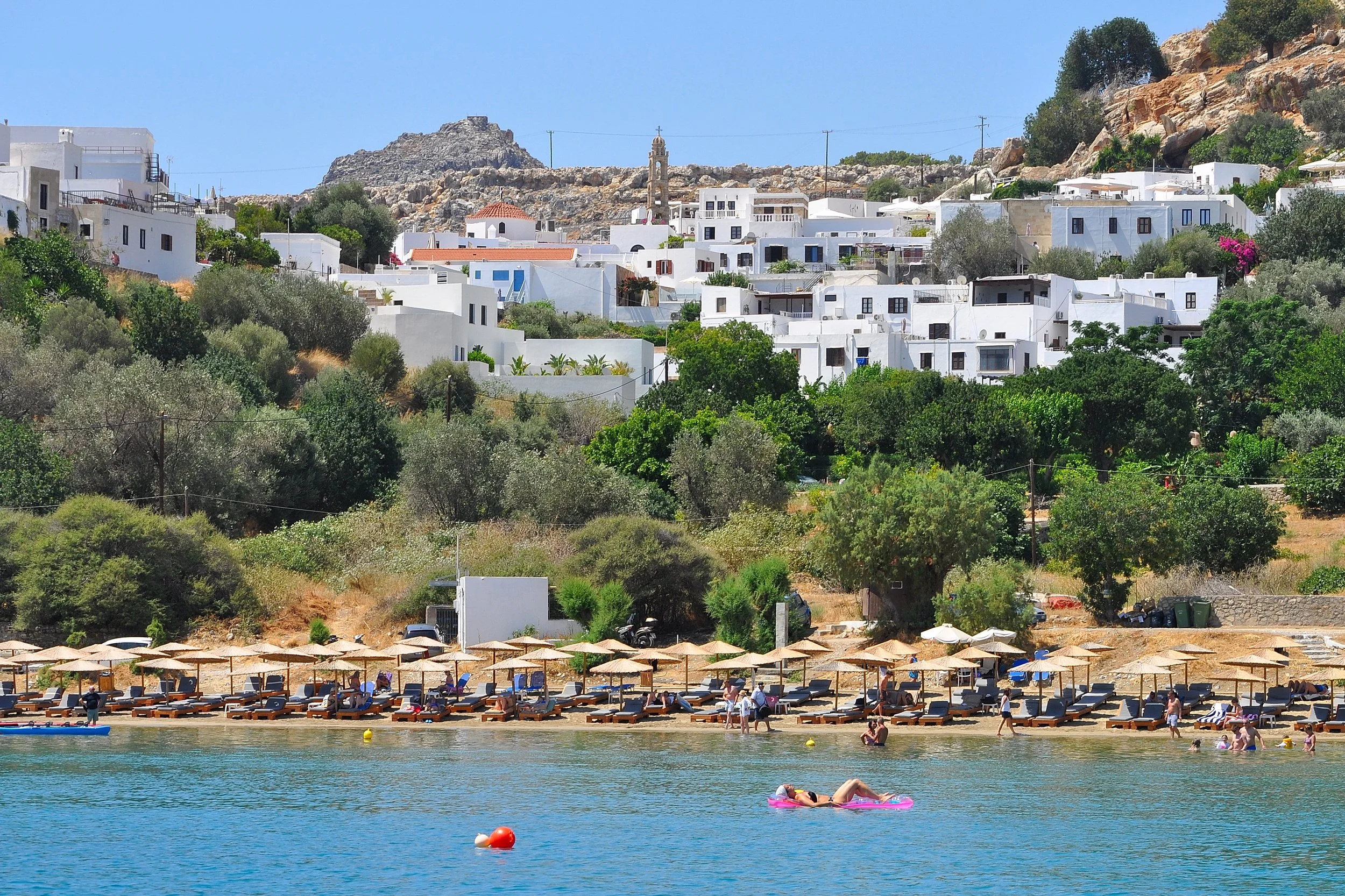

Angela: as we think back on our morning among bays and cliffs, we can't help but look forward to the many wonderful beaches that are still waiting to be discovered on this island.
Piero: next time, we'll certainly explore Tsambika, with its long stretch of golden sand, watched over by the monastery of the same name perched on the hilltop. Then we'll head for the calm waters of Stegna and the beautifully kept bay of Kolymbia. We won't miss the famous Elli Beach, in the heart of Rhodes Town, and perhaps even the windswept shoreline of Ixia, perfect for those who love surfing. On the other side of the island, even wilder landscapes await us: the hidden beach of Fourni, the cliffs of Monolithos, and the crystal-clear waters of Kamiros Skala. And then, further south, Plimmiri and Kattavia Beach, far from the tourist crowds, where the sea blends into the silence.
Angela: Rhodes is an island you'll never stop discovering. Every beach is a world of its own, every corner holds a new surprise.
Piero: but today... we're simply going to enjoy the magic of Lindos, from both the sea and the land.
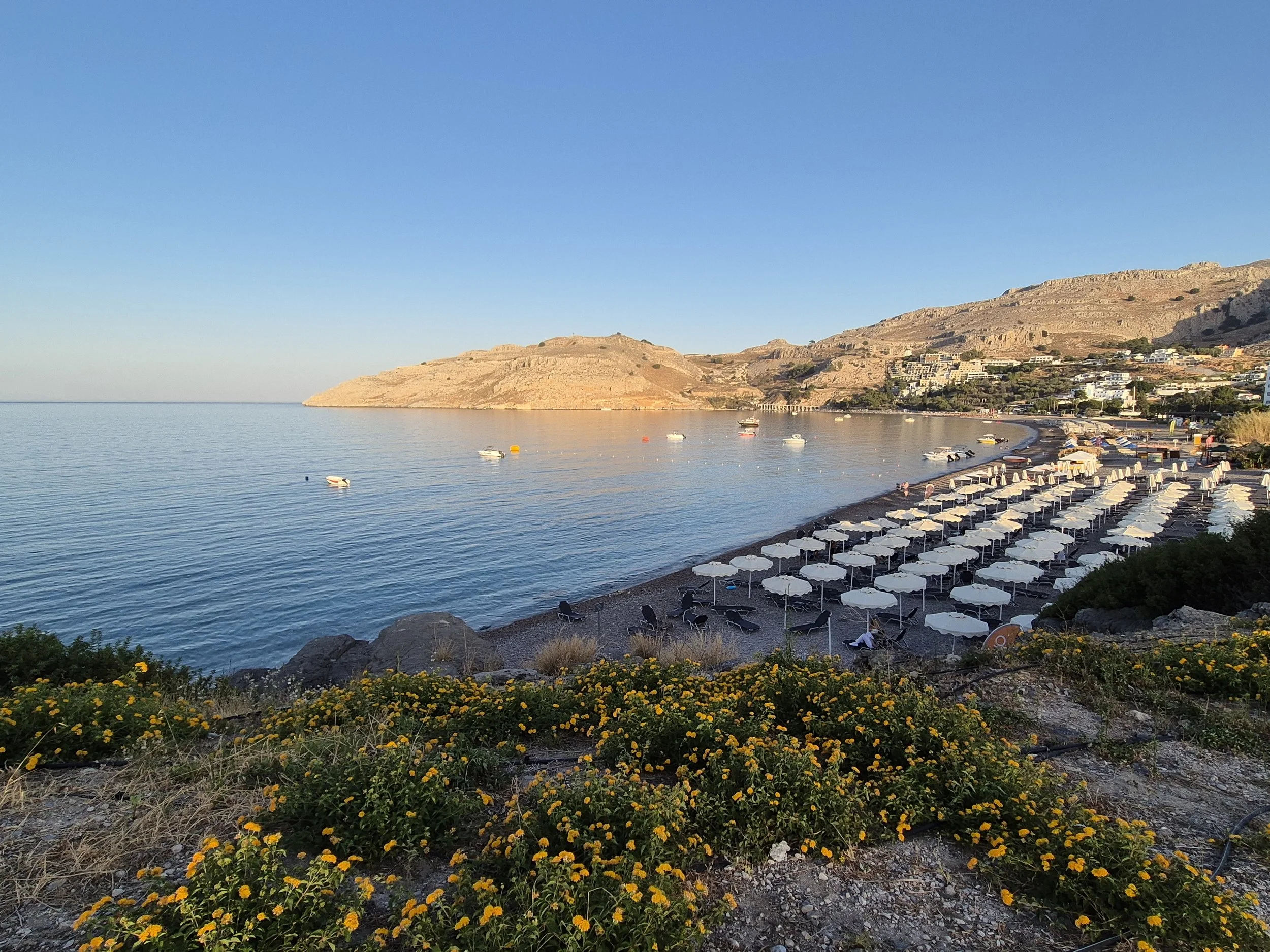
Rhodes has enchanted us... but there's still more waiting for us
Angela: it's time to leave, but we do so with our hearts full. We've walked through history, among medieval walls and the marble monuments of antiquity, swum in dreamlike bays, and listened to the silence among the ruins of temples and palaces.
Piero: but Rhodes doesn't end here. There are still so many places we haven't seen... places that quietly call us back for another journey. The island is easy to explore by car, and the distances are never overwhelming. We've seen the main highlights, but there's still so much left to discover.
Angela: like Monolithos, with its castle perched high on the rock and sunsets that set the sky ablaze.
Piero: or Kritinia, suspended between sea and mountains, with the remains of its ancient Venetian fortress.
Angela: the inland villages, such as Embonas, where time seems to have stood still and the wine flows generously.
Piero: the Kallithea Springs, a jewel of Italian seaside architecture, and the Valley of the Butterflies, the summer refuge of thousands of delicate creatures.
Angela: not forgetting the ancient remains of Kamiros Skala, the ruins of ancient Dorian Kamiros, the windswept west coast, and the beaches where kites dance across the sky.
Piero: Rhodes is an island that changes its face around every bend, bringing together East and West, sea and stone, myth and memory.
Angela: and every corner has a story to tell.
Piero: we return home certain that this isn't goodbye, but simply see you again.
Angela: because some places, once you've experienced them, become a part of you. And they never truly let you go. But for now, let's relive it all in this beautiful video.