
Florence
Discover Florence, the cradle of the Renaissance, on an unforgettable three-day itinerary through its greatest treasures. Explore the Duomo, Uffizi Gallery, Accademia, Ponte Vecchio, Palazzo Vecchio, the Medici Chapels, and more. A journey through art, history, and architecture in one of the world's most extraordinary cities.
Angela: is the van ready?
Piero: as always! And I've also planned a wonderful itinerary. Beauty, art, culture, and the Renaissance... what do they make you think of?
Angela: that one's far too easy this time: Florence!
Piero: then let's start the van and hit the road.
Angela: everything's ready. I imagine you've planned your usual packed itinerary...
Piero: indeed! Three days are nowhere near enough to discover all the wonders of Florence, but we'll make sure to see as much as we possibly can.
Angela: then let's get going!

Welcome to Florence!
Piero: the capital of Tuscany is the cradle of Italian culture, art, and the Italian language. Since the Middle Ages, it has been a key centre for politics, economics, finance, and trade. Florence is the birthplace of the Renaissance, the period that followed the Middle Ages and marked the beginning of a new modern era, a time of profound cultural and scientific rebirth. It was also from the Florentine vernacular, used in the literature of the time, that the modern Italian language was born.
Angela: the city has prehistoric origins, and its name comes from the Etruscans: Florentia meant "may you flourish", almost as if it were foretelling the city's future. Under the Romans, Florence began to thrive, becoming a Municipium Splendidissimum, and from the time of Emperor Hadrian, it was connected to Rome by the Via Cassia. The periods of Byzantine, Ostrogothic, Lombard, and Frankish rule were among the darkest in the city's history, with the population shrinking to just a few thousand inhabitants. Towards the end of the Middle Ages, Florence became an independent commune, marked by intense political rivalry that led to constant struggles between opposing factions, involving famous figures such as Dante Alighieri: first the Guelphs and Ghibellines, and later the White and Black Guelphs. During the Modern Age, and until the Unification of Italy, Florence was the capital of the Grand Duchy of Tuscany, which, thanks to the Medici family, became one of the richest and most progressive states in Italy. Its political history, financial and commercial power, and influence across every field of culture made Florence a pivotal crossroads in both Italian and European history. In 1865, it was proclaimed the capital of the Kingdom of Italy (after Turin), a role it retained until 1871, when, at the end of the Risorgimento, the capital moved to Rome.
Piero: today, Florence is a major university city and has been a UNESCO World Heritage Site since 1982. It is universally recognised as one of the world's great capitals of art and architecture, as well as one of the most visited tourist destinations, thanks to its extraordinary monuments and museums. The city boasts an invaluable legacy left by some of history's greatest minds: Dante, Petrarch, and Boccaccio in literature; Giotto, Brunelleschi, Donatello, Botticelli, Leonardo da Vinci, and Michelangelo in the visual arts; Lorenzo de' Medici and Machiavelli in political thought; and Amerigo Vespucci and Galileo Galilei in the fields of geography, astronomy, and physics.
Florence and the Medici dynasty
Angela: Florence and the Medici family represent the combination to which we owe much of the city’s present-day splendour.
Piero: Lorenzo de’ Medici, in particular, deeply loved this city. To him, and to the great minds he surrounded himself with, we owe the beauty and magnificence of Florence, a city that rewarded him with immortality and eternal gratitude, as well as the title of “the Magnificent”. We must certainly not forget Lorenzo’s visionary grandfather, Cosimo de’ Medici, to whom he owed his education, nor his father Piero and his brother Giuliano.
Angela: with Lorenzo, Florence “is reborn”, leaving the Middle Ages behind and becoming the first among Italian and European cities to embrace a new era. The architects of this revolution, alongside Lorenzo the Magnificent, were a group of young artists, friends and companions of the great patron, who would go on to shape the history of the Renaissance: Filippo Brunelleschi, Botticelli, Donatello, Michelangelo, Ghirlandaio, Pollaiolo, Masaccio, and even Leonardo da Vinci. With their chisels and brushes, their ideals and visions, they gave birth to this extraordinary miracle. The Magnificent seems to have filled the emptiness in his soul with art and poetry, a void created by having been unable to marry the love of his life, forced instead to submit to dynastic duty. Not even the opposition of his great enemy Girolamo Savonarola could diminish Lorenzo’s greatness. By a remarkable coincidence, this precursor of modernity died in the same year that Christopher Columbus discovered America.
Piero: from the beginning of the 15th century, Florence lived and nurtured a vibrant flame of art and culture, fuelled by the patronage of the Medici dynasty. Florence, the Medici, and the Renaissance became an inseparable whole. In those years, Florence shaped art, and art shaped Florence. The entire city was a flourishing centre of talent.
Angela: the Medici Signoria was an oligarchy that ruled Florence for four generations, through Lorenzo’s successors. Despite the gradual erosion of republican freedoms, their enlightened rule gave the Tuscan capital its most prosperous, wealthy, and peaceful era. Through their patronage, they secured popular support, which proved crucial during critical moments such as the Pazzi Conspiracy (1478), while also ensuring the family’s lasting fame through the centuries, thanks to the extraordinary concentration in the city of a remarkable number of talented artists, writers, humanists, and philosophers of the time.
Three days discovering Florence
Piero: anyone preparing to visit Florence naturally has incredibly high expectations, and no matter how high they may be, this city will never disappoint. It is one of the richest and most fascinating cities we have ever visited.
Angela: the special thing is that it is not a single monument or a single museum that creates this sense of wonder, but rather the unique atmosphere of beauty that permeates every corner of the city and makes Florence one of the most sought-after tourist destinations in the world.
Piero: so let’s begin our incredibly packed itinerary, starting from the Duomo of Florence: the Cathedral of Santa Maria del Fiore.
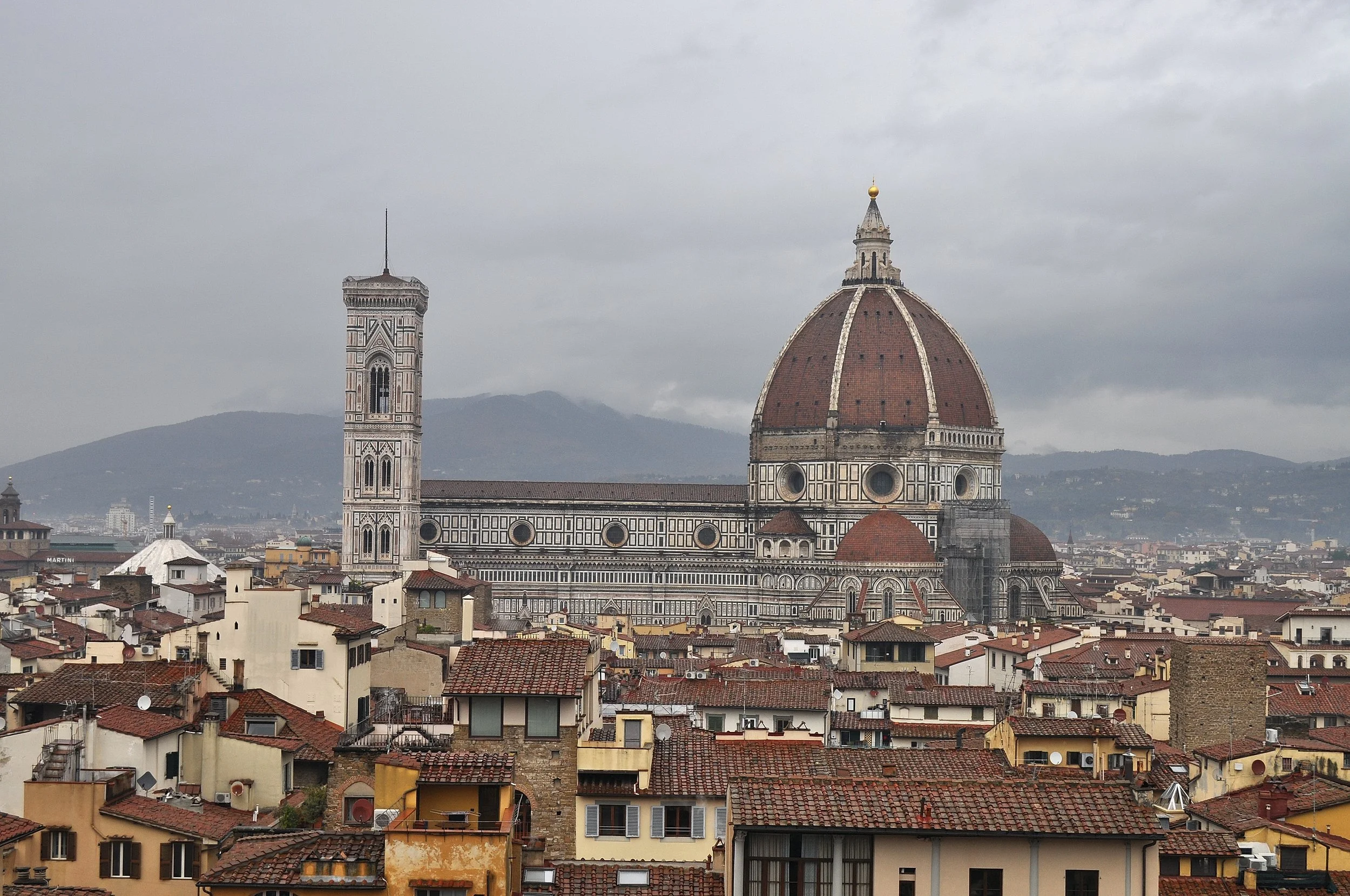
Angela: Santa Maria del Fiore, besides being one of the symbols of Florence, is perhaps the greatest emblem of the Renaissance, with its rigorous yet at the same time magnificent simplicity. A masterpiece of timeless architecture, Filippo Brunelleschi won the competition for the construction of the Duomo’s dome in 1418, astonishing everyone with his revolutionary idea of not using temporary wooden supports: it would become the largest dome ever built without the use of centering structures to support the masonry during construction. It is a structure made of two concentric domes, one inside the other, with a cavity between them that can still be visited today: “to make another dome outside and above this one, to protect it from moisture and make it even more magnificent and imposing” — this is how Brunelleschi himself described his dome and his extraordinary intuition.
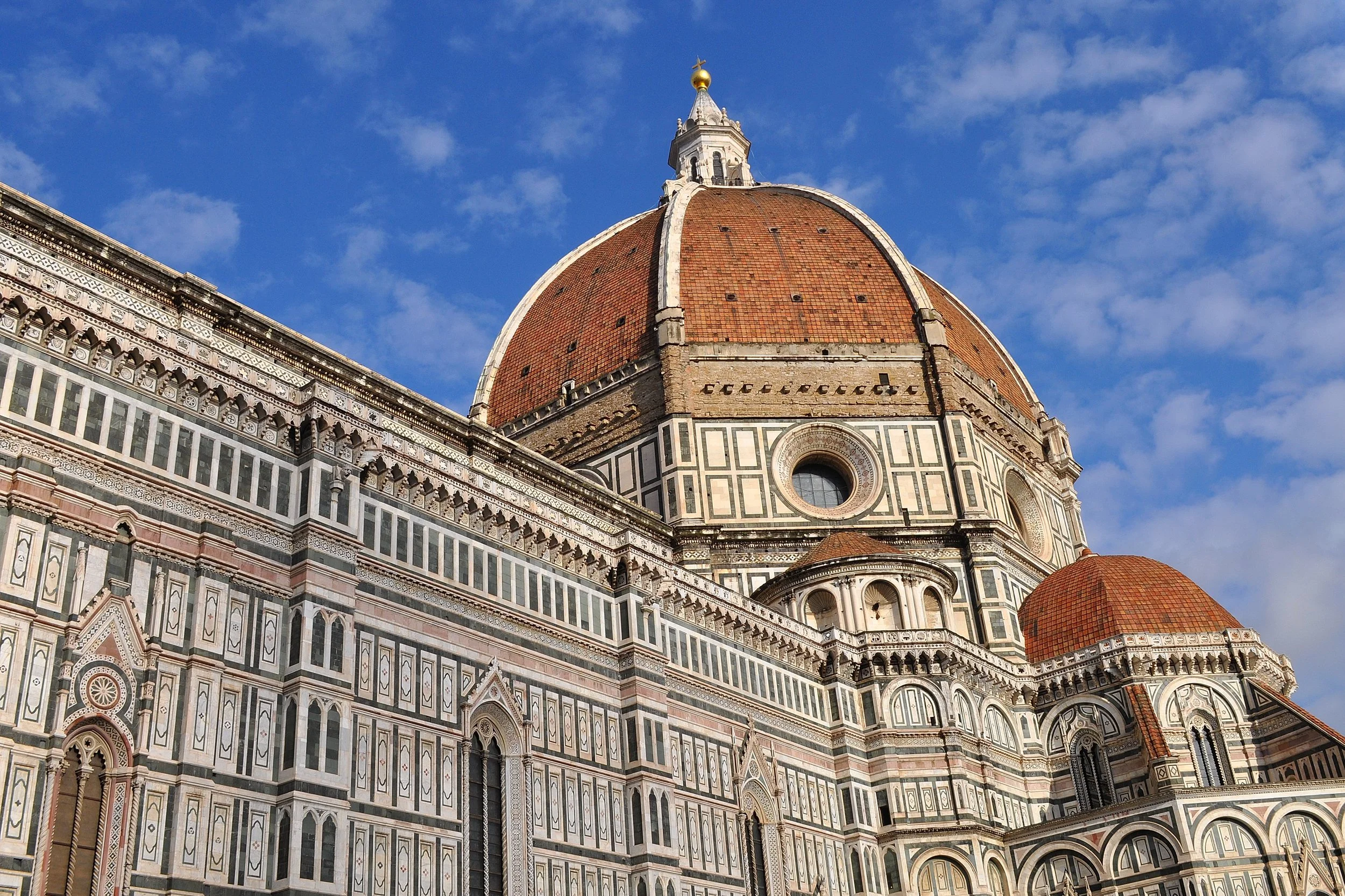
Piero: the dome is certainly the most visible and famous architectural feature, but the cathedral is much more than that, thanks to its extraordinary mystical atmosphere. A clear example is the majestic Last Judgement by the masters Vasari and Zuccari: a monumental fresco, covering the largest surface ever decorated. There are also the magnificent forty-four stained-glass windows, part of one of the most important unified projects of its kind in the world, involving some of the greatest artists of the time, from Paolo Uccello to Lorenzo Ghiberti, from Andrea del Castagno to Donatello, who created here his only two-dimensional work.


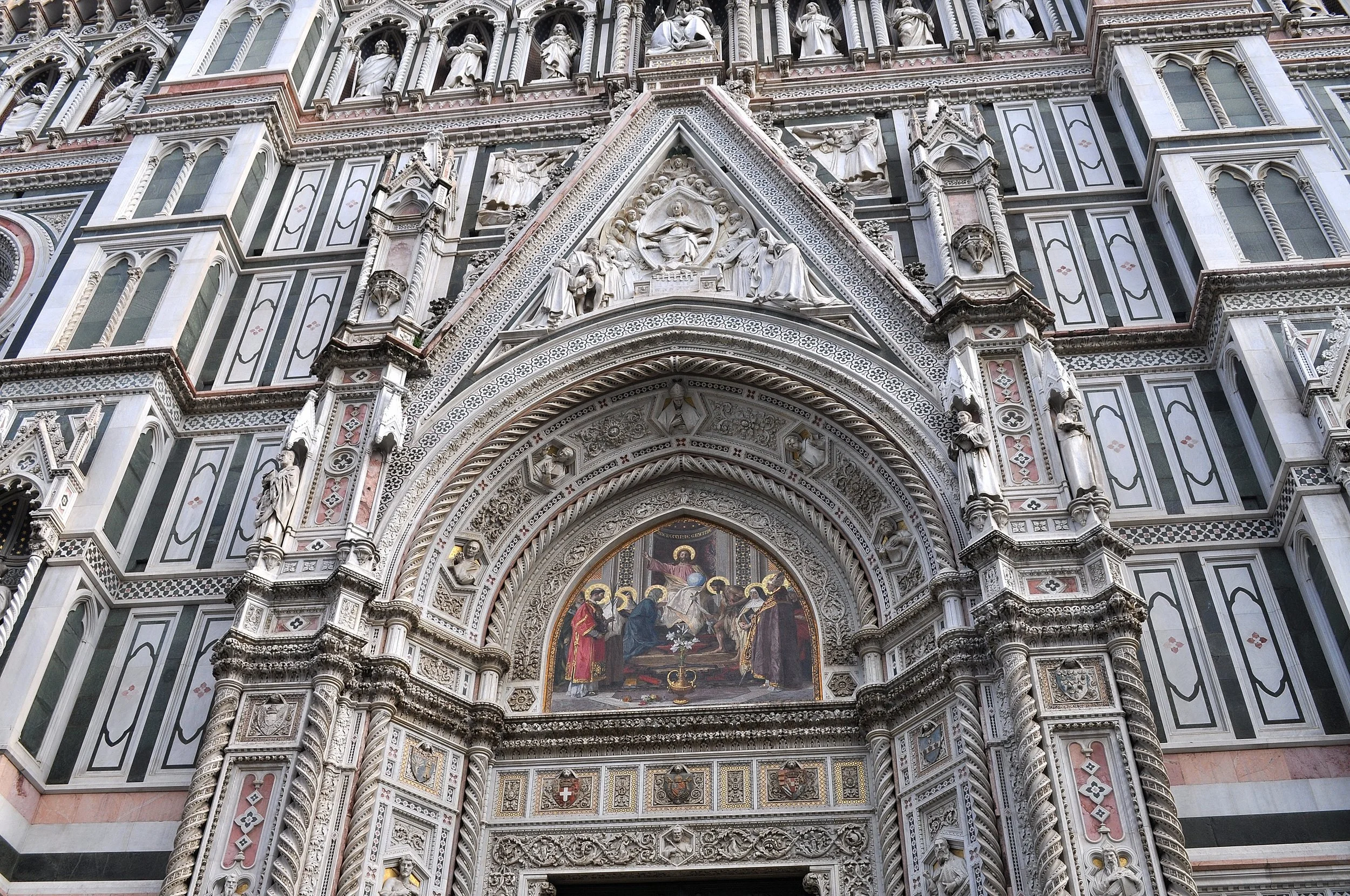
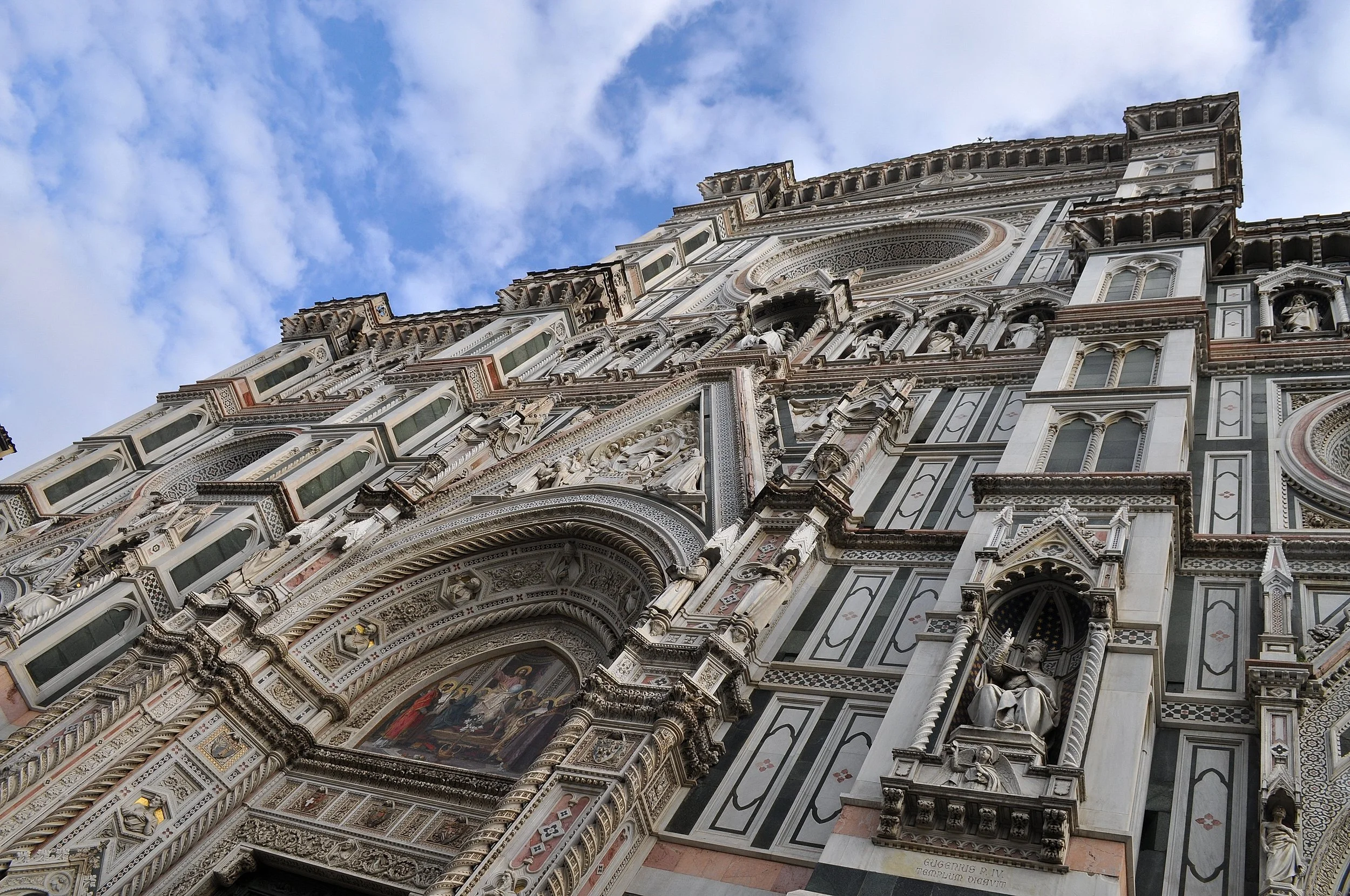


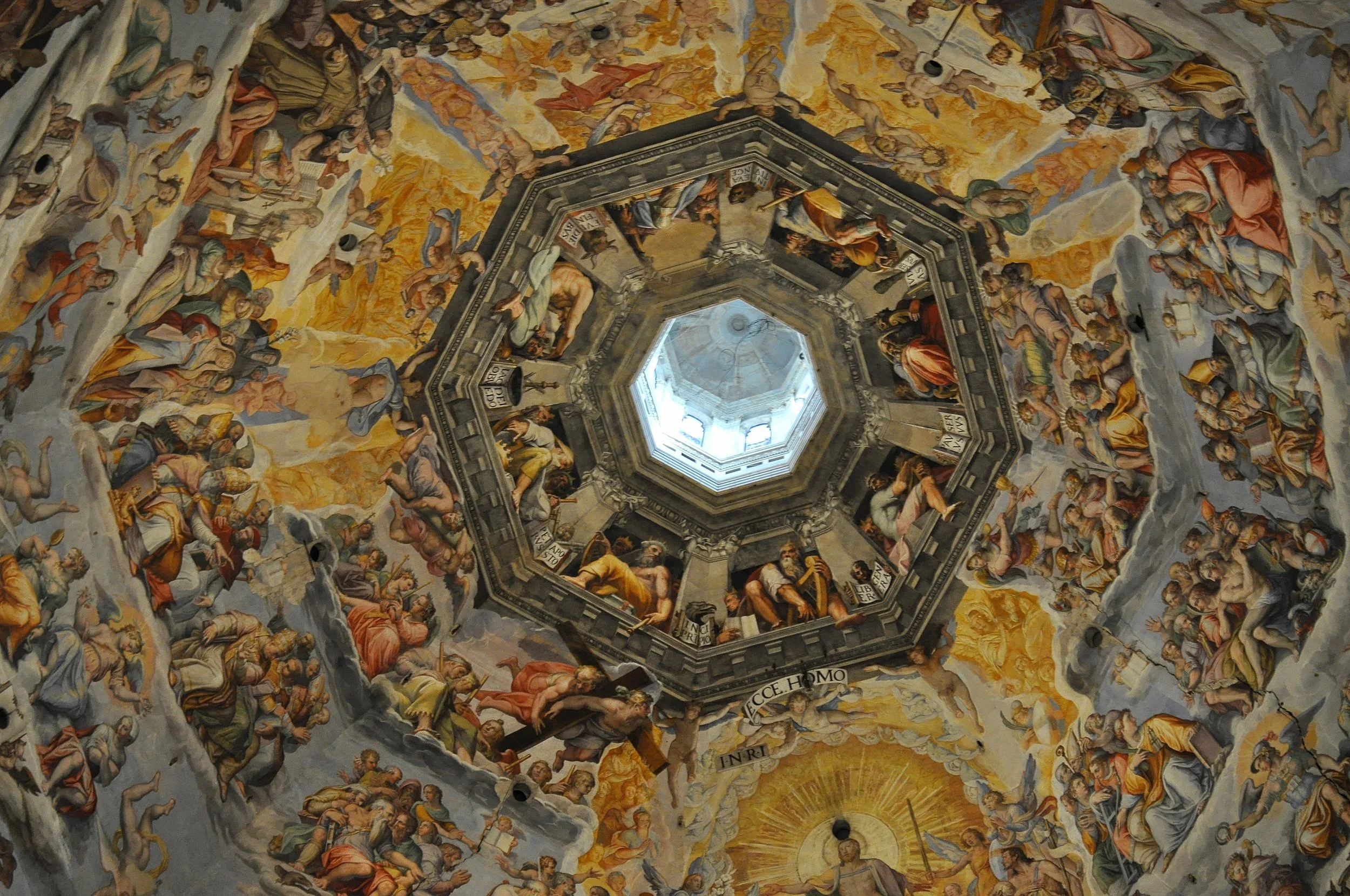

Angela: next to the entrance of the Cathedral, aligned with its façade, stands the magnificent Giotto’s Bell Tower.
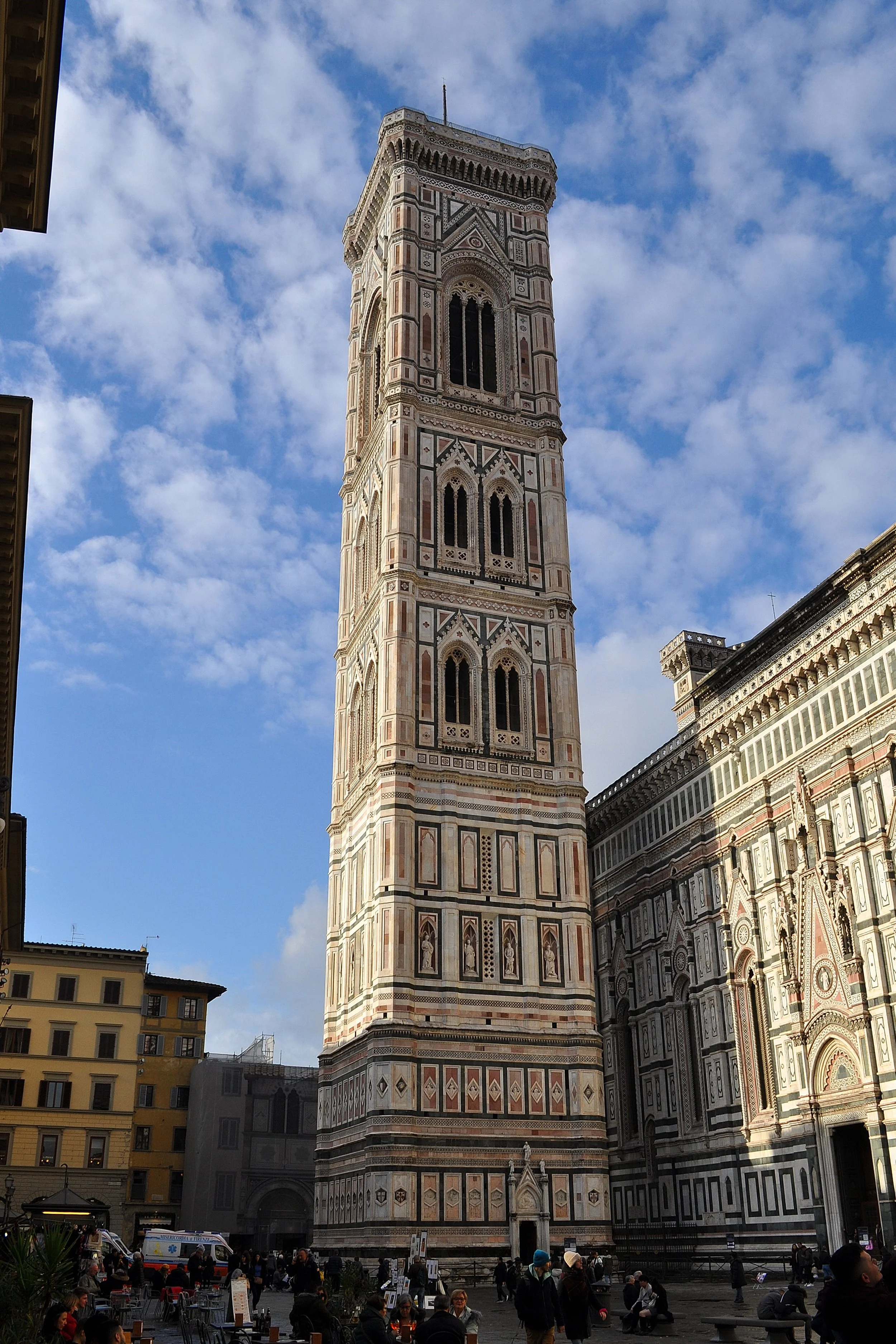
Piero: it is a bell tower, built in the first half of the 14th century, with a square base and standing 85 metres high. The supervision of the works was entrusted to Giotto di Bondone, the greatest living artist of his time, after whom the bell tower is now named. His influence can be seen above all in the precious decoration with white, red, and green marble and in the ornaments of the lower section. Giotto would not complete the work, as he died just three years after construction began: it was then completed by his pupil Andrea Pisano, and later by Francesco Talenti, in 1359.
Angela: it is absolutely worth overcoming vertigo and claustrophobia to climb its 400 steps and reach the top.
Piero: a useful piece of advice that applies to all the main monuments and museums of Florence: it is highly recommended to purchase tickets online well in advance, because the ticket offices always have long queues and availability is limited. Unfortunately, there is no single website where you can buy tickets for all the main attractions; you therefore have to navigate between different websites, although it is nothing particularly complicated.
Angela: after lunch, we prepare to visit perhaps the greatest of all wonders: the Uffizi Gallery.
Piero: the Uffizi Gallery is undoubtedly the most fascinating and exciting museum I have ever visited. Perhaps no other place manages to bring together so much beauty in one location. It welcomes almost two million visitors every year, making it the most visited museum in Italy and one of the most famous in the world. It is essential to plan your visit in advance, purchasing tickets directly from the gallery’s website. I also suggest avoiding holidays and weekends: the crowds could spoil the extraordinary atmosphere.
Although Lorenzo the Magnificent welcomed the talents of all the greatest artists of his time, it was one of his descendants, Cosimo I de’ Medici, who created a unique place to gather their works. The construction of the gallery was entrusted to Giorgio Vasari. In reality, the name reveals a different original purpose for which the building was designed: it was initially intended to house the Florentine magistrates. Vasari himself considered the project of the gallery one of the most daring ever created, suspended as it is between the river and the sky.
The work was completed by Francesco I de’ Medici, who effectively transformed it into a true gallery. It would be impossible to describe here all the extraordinary masterpieces it contains. The wish I can make to anyone visiting the Uffizi is to enter with the desire to truly understand these works. Giotto, Caravaggio, Leonardo da Vinci, Donatello, Piero della Francesca, Raphael, Michelangelo, Titian, Botticelli: all of them nourish the spirit, and no words or descriptions could ever convey the emotions, joy, and beauty experienced when standing before these magnificent works of art.


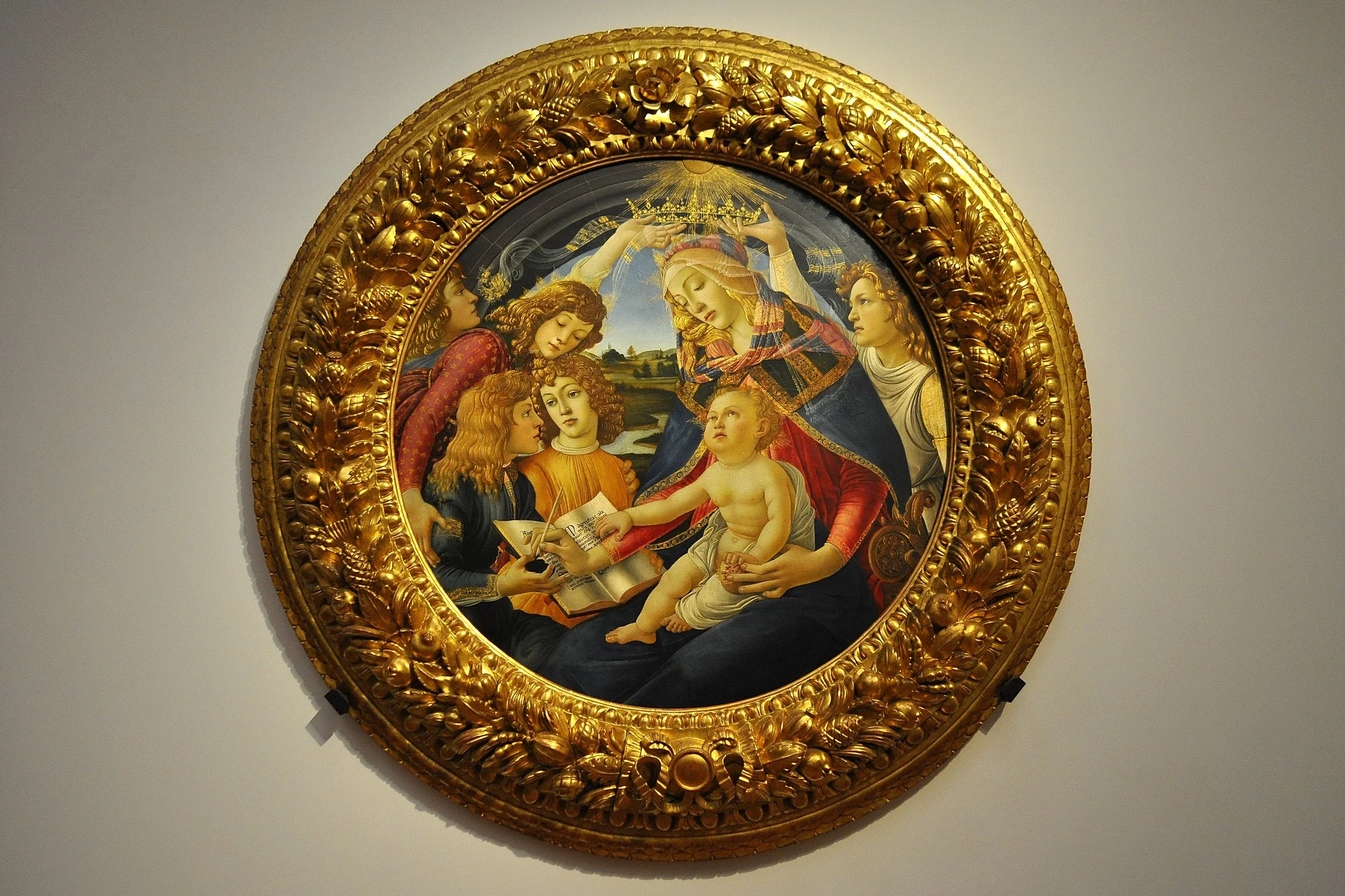


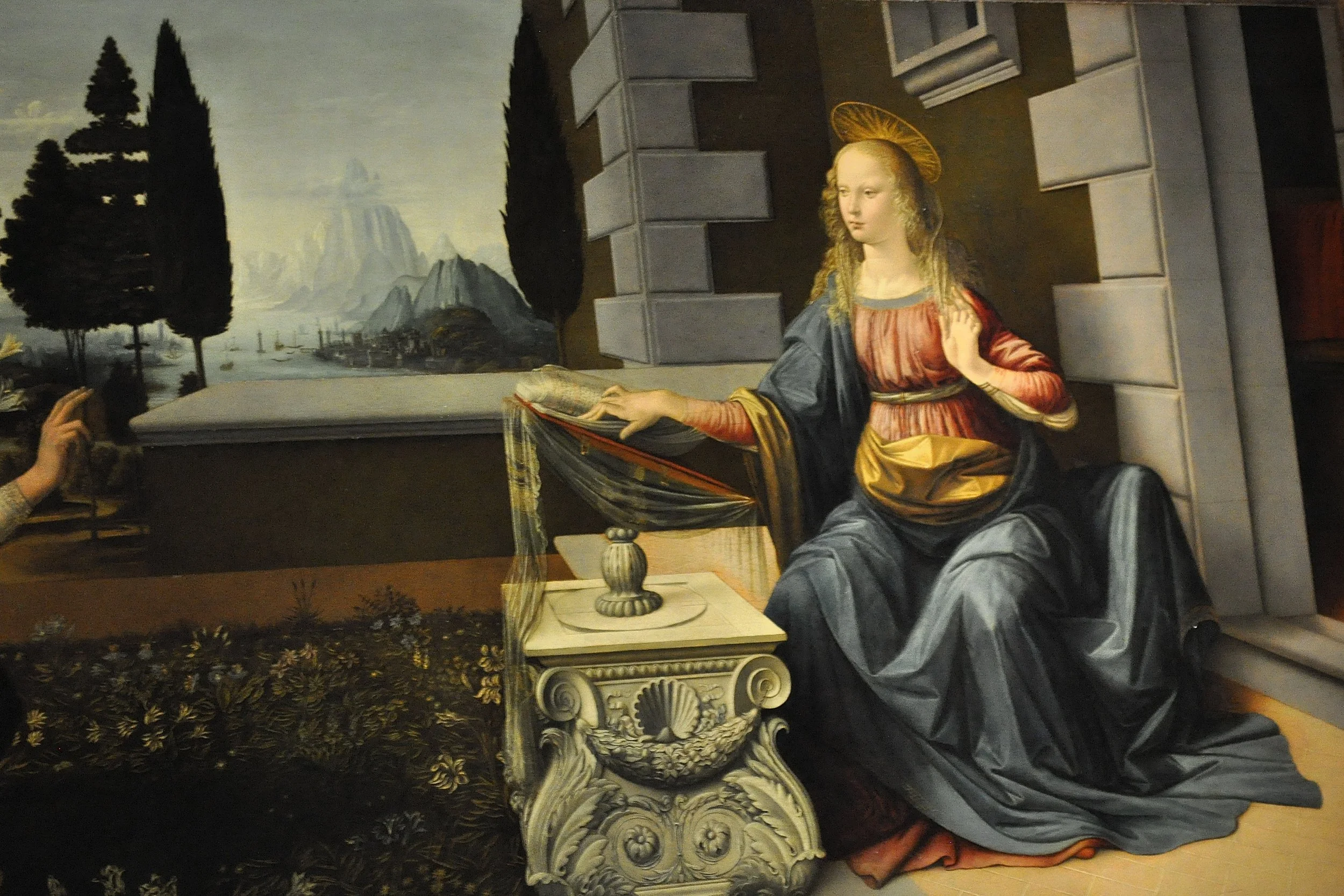
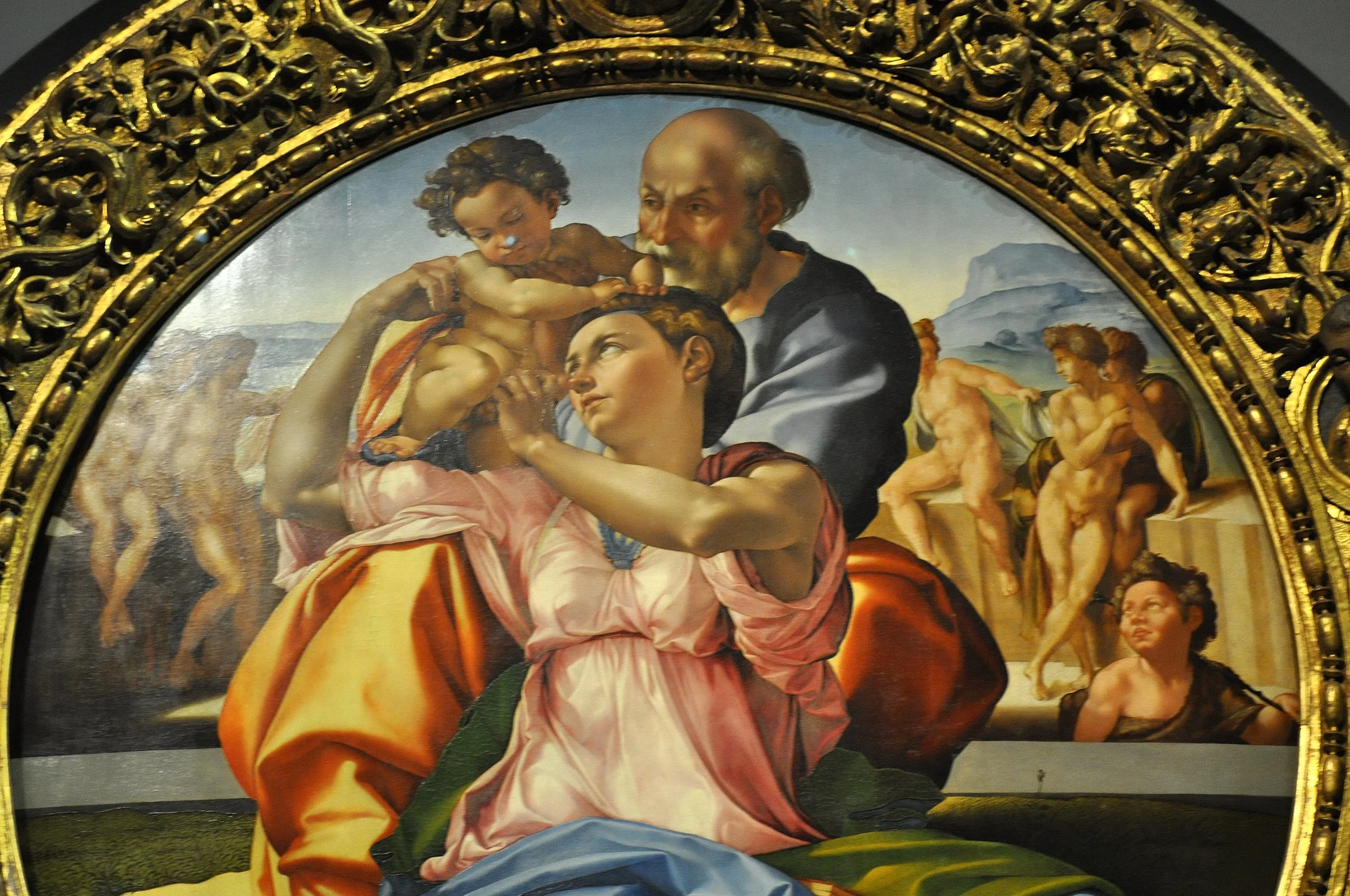
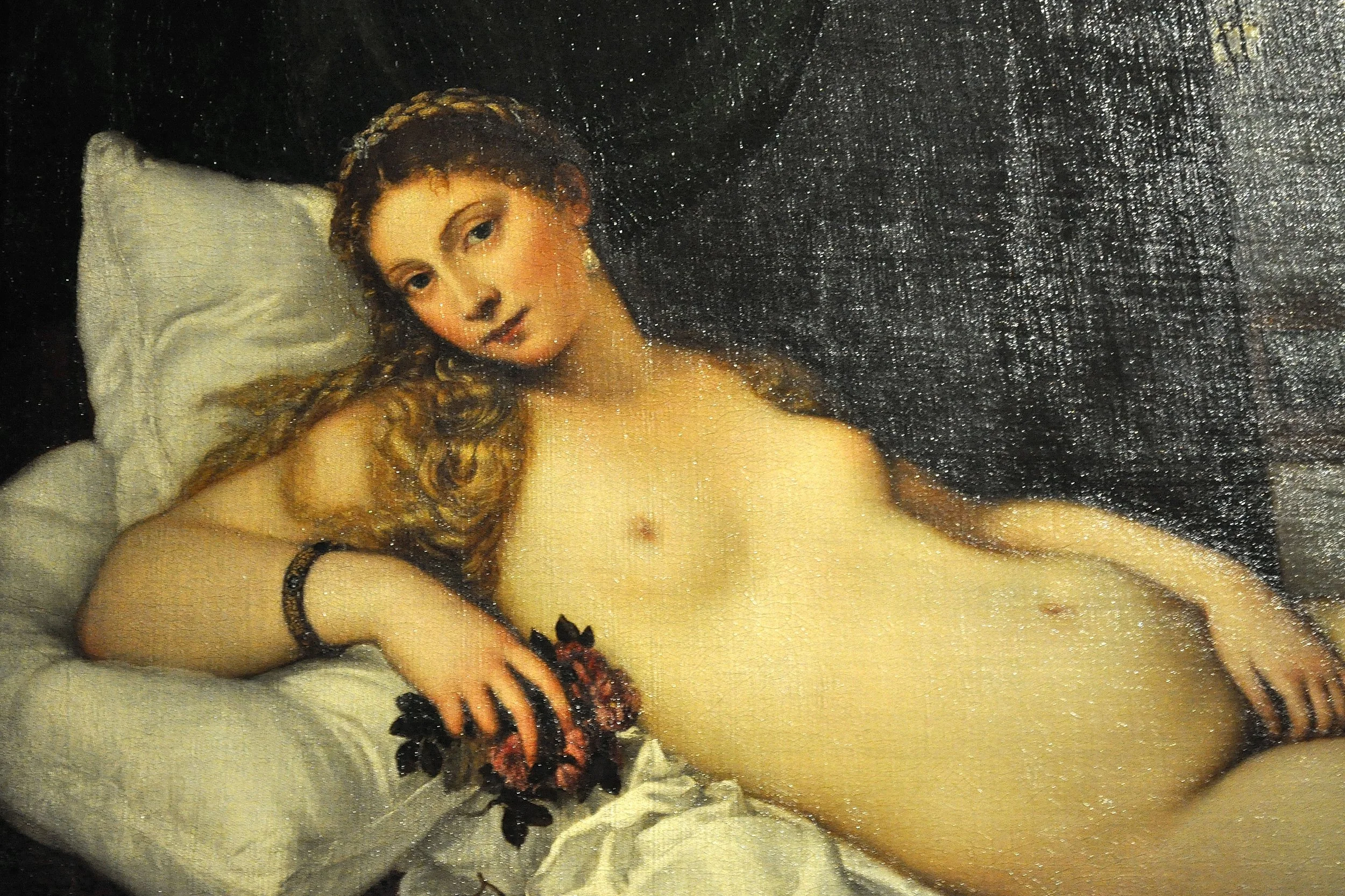


Angela: an entire website would not be enough to describe each of the wonderful masterpieces we have seen. This short video will offer you just a small preview of them.
Piero: tired but still with the wonder of the Uffizi Gallery fresh in our eyes, we bring our first day in Florence to an end.
Angela: our second day begins by bus, heading towards one of the most beautiful viewpoints in Florence, Piazzale Michelangelo.
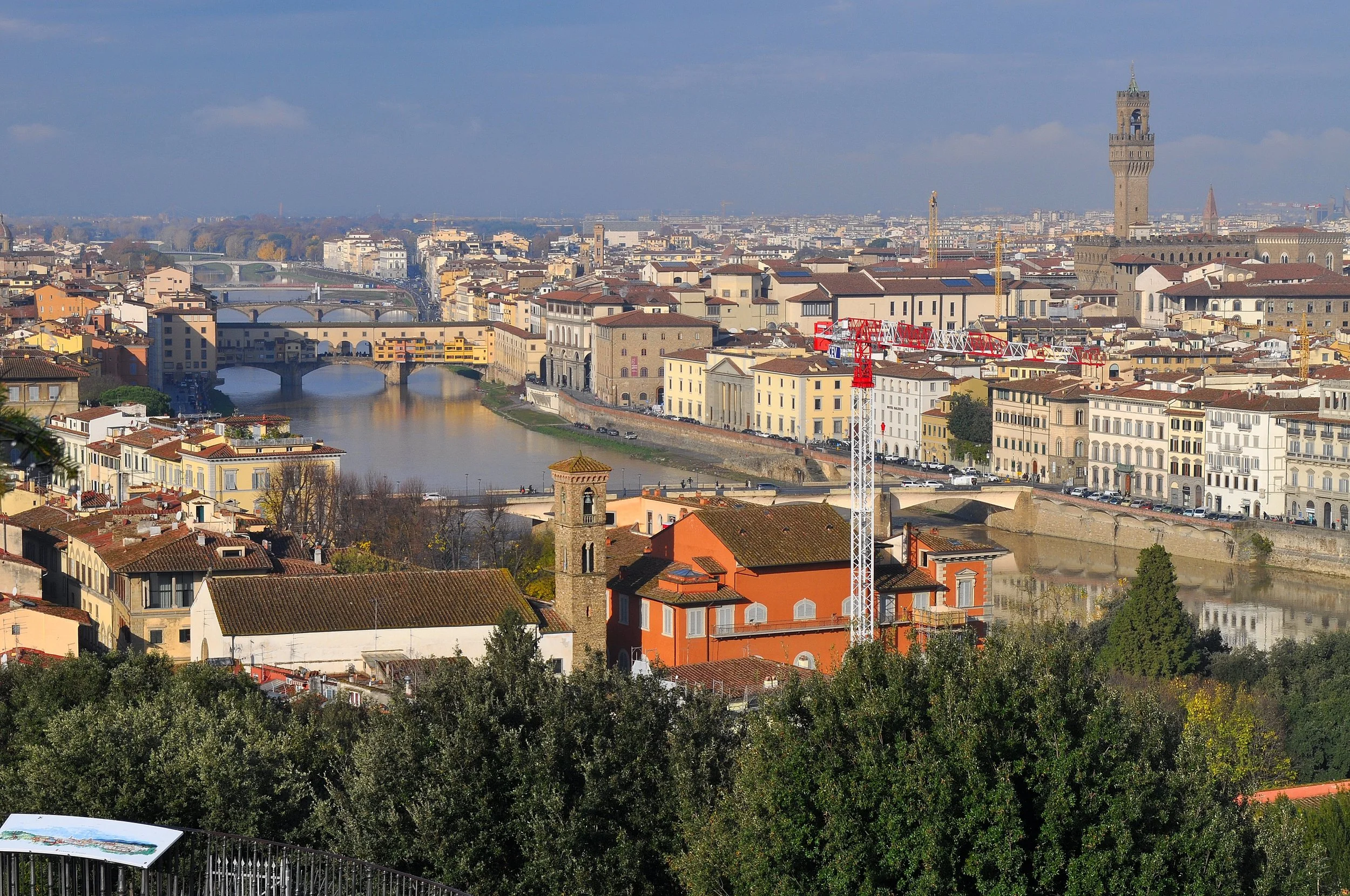
Piero: this square, designed by the architect Giuseppe Poggi in 1869, offers a magnificent view over Florence and the Arno River. This extraordinary terrace was intended to celebrate the greatness of Michelangelo and to house some of his masterpieces, including the David. However, the works of this exceptional artist were never transferred here, and the loggia built for this purpose is now used as a restaurant.


Angela: to return to the city centre, we decide to take a walk that will lead us through the wonderful Rose Garden, which permanently hosts the works of Jean-Michel Folon.
Piero: continuing towards the Arno River, we reach Palazzo Pitti, one of the most impressive Renaissance palaces in Florence.
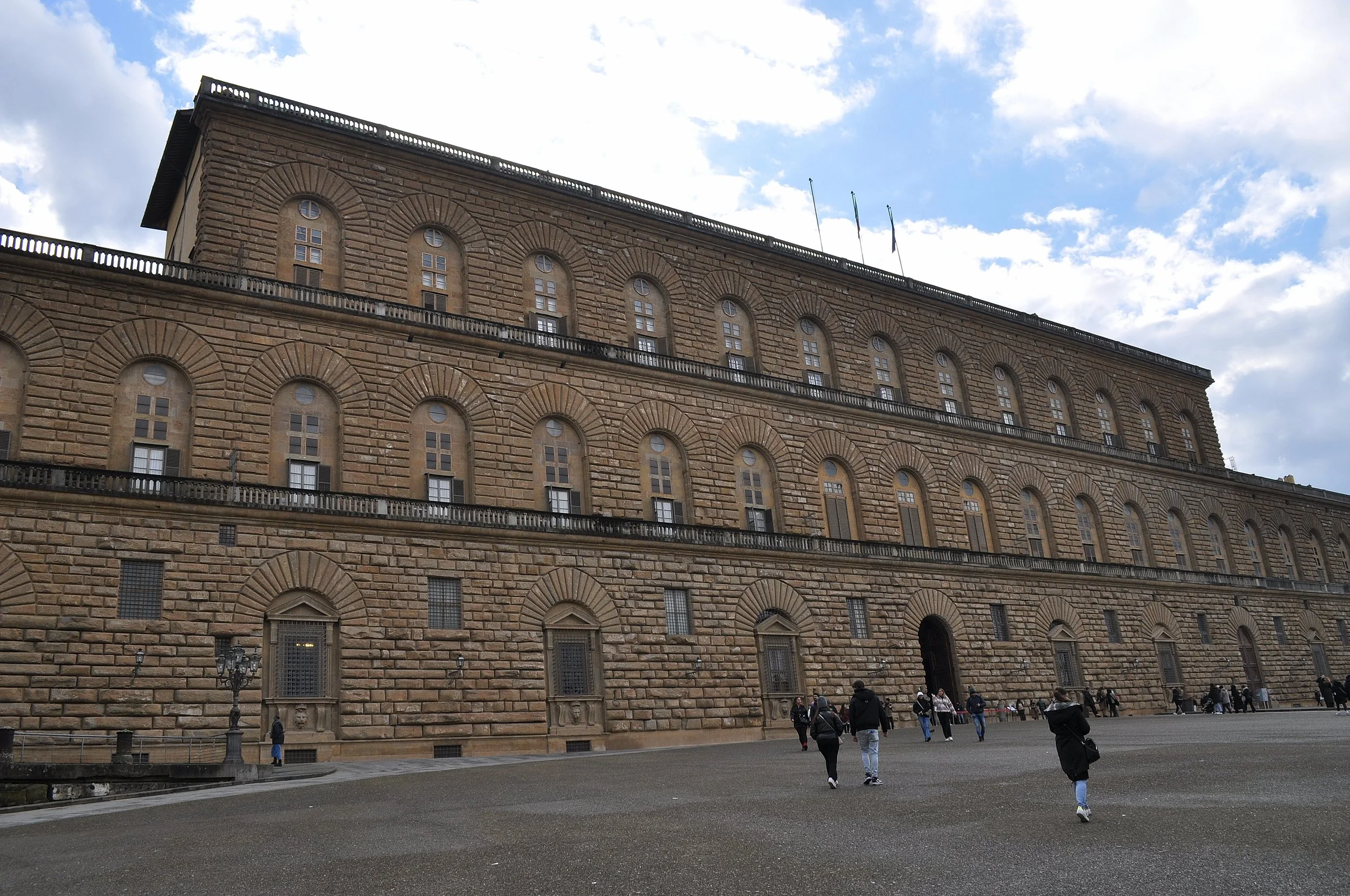
Angela: the palace was originally the residence of the banker Luca Pitti, before becoming the home of the Medici family and the Grand Dukes of Tuscany, and finally the residence of the House of Savoy during the period when Florence was the capital of the Kingdom of Italy.
Piero: today, its interior houses a vast museum complex that includes the Palatine Gallery, with masterpieces by Raphael and Titian, the Royal Apartments, and the Museum of Fashion and Costume, the most important museum in Italy dedicated to this field.
Angela: the palace is completed by the Boboli Gardens, one of the finest examples of an Italian-style garden.
Piero: nearby stands another of the great symbols of Florence: Ponte Vecchio.
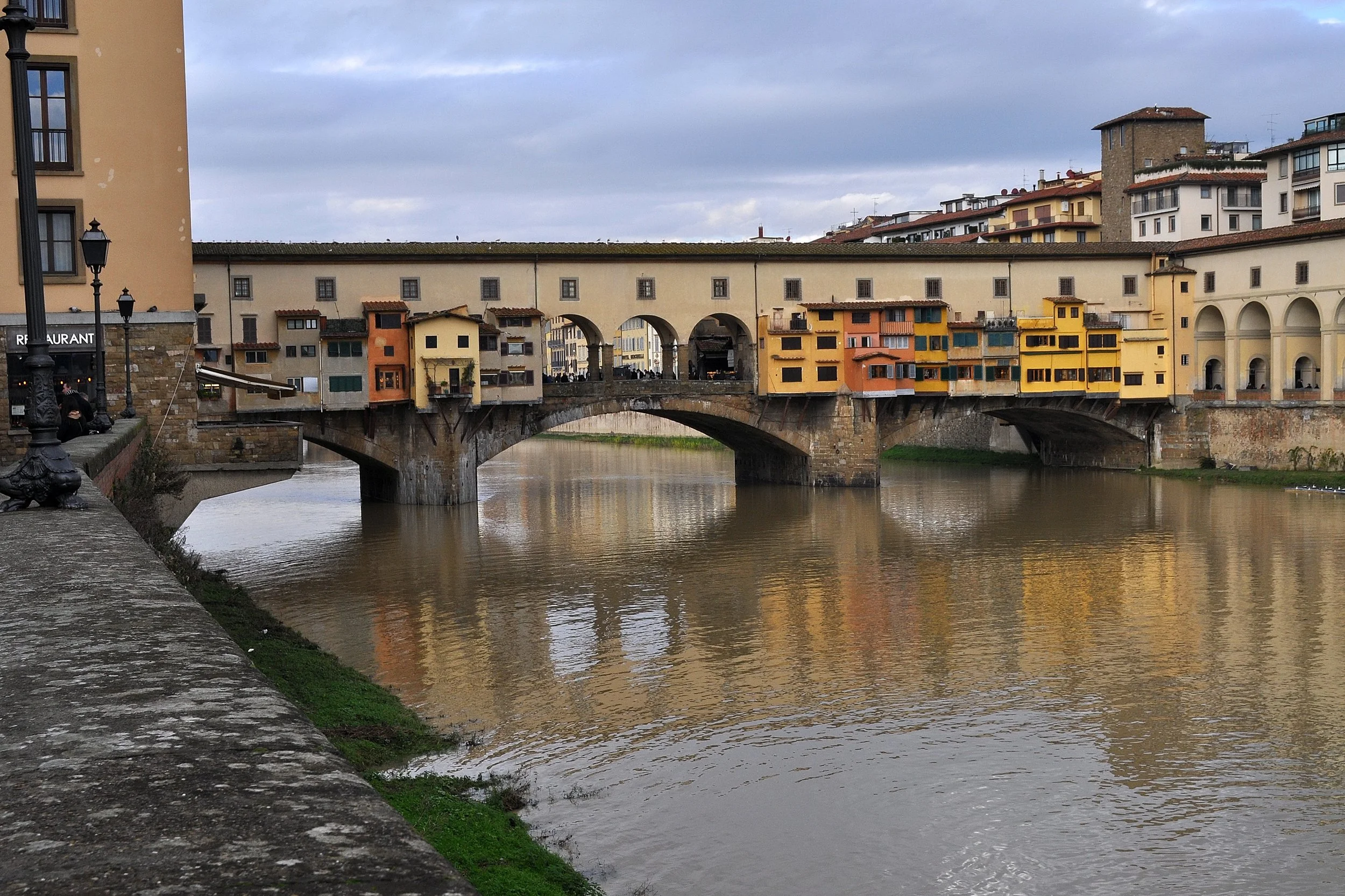
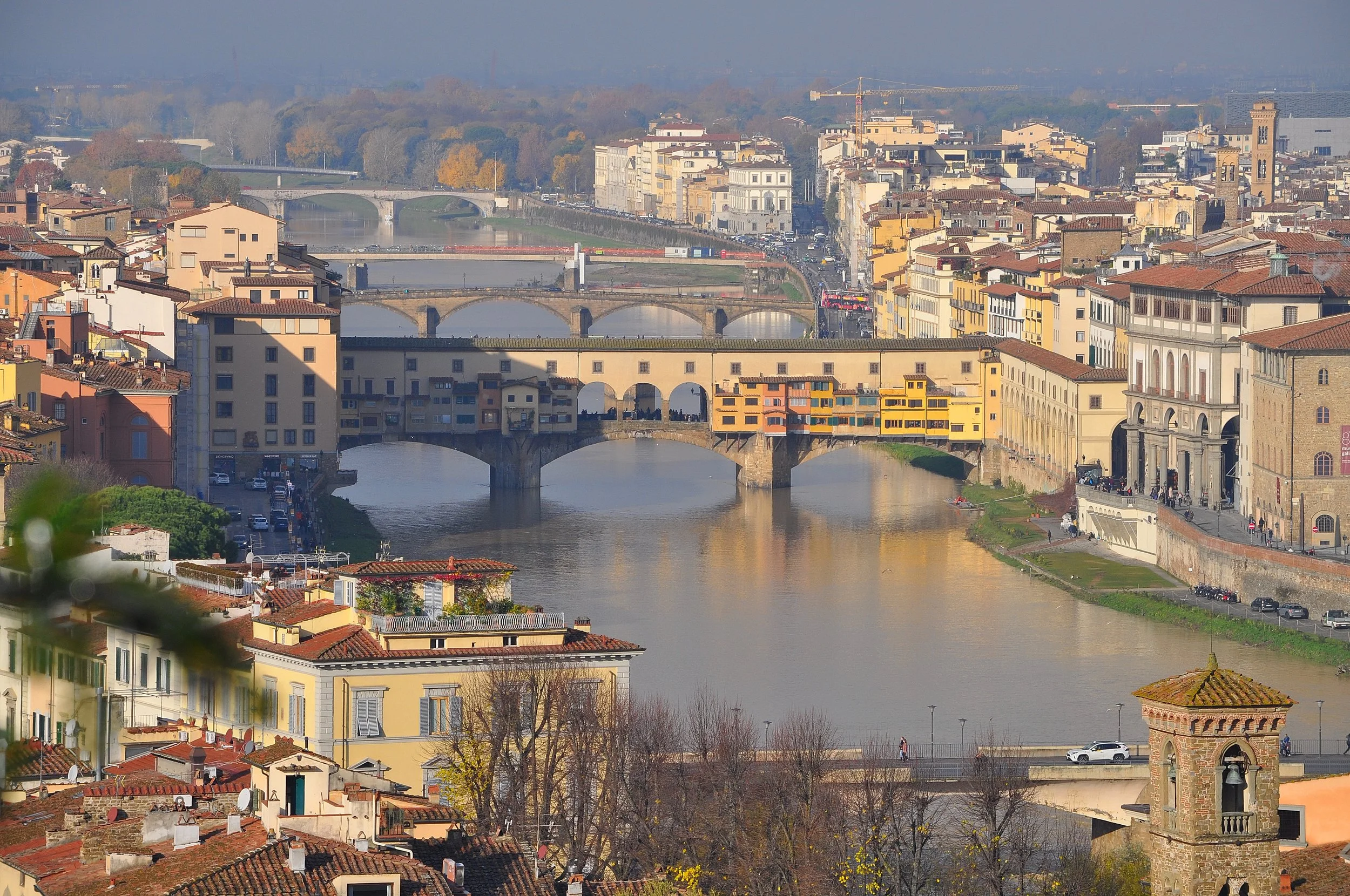
Angela: until 1218, the bridge was the only one crossing the Arno River in Florence. The structure we see today was rebuilt after the flood of 1345. During World War II, the Germans destroyed all the bridges of Florence, but they spared Ponte Vecchio, although they blocked access by demolishing the two medieval buildings standing at either end of it. The bridge miraculously survived the devastating flood of 4 November 1966, which severely damaged the city.
Piero: above Ponte Vecchio we can admire the magnificent Vasari Corridor, built in 1565 by Giorgio Vasari at the request of the Medici family. This allowed them to move from Palazzo Vecchio to Palazzo Pitti without having to walk through the streets of the city. The corridor runs directly above the goldsmith shops that still line both sides of the bridge today.
Angela: moving from one symbol of Florence to another, we head towards Piazza della Signoria, home to Palazzo Vecchio.
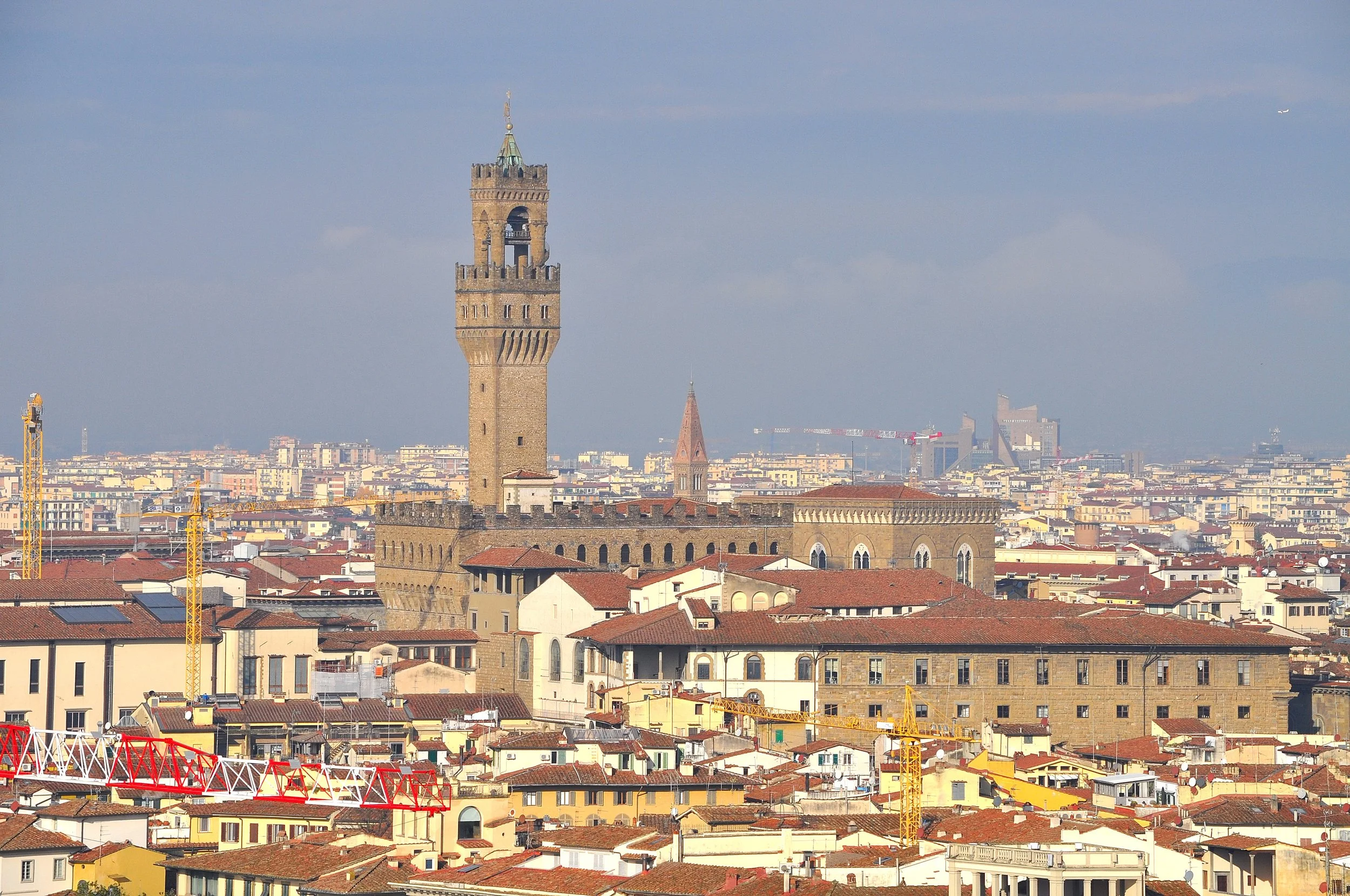
Piero: Piazza della Signoria is the true heart of the city. Before taking this name, it was known as Piazza del Priore and later Piazza del Granduca, but it has always been the stage for Florence’s political life. Dominating the square is Palazzo Vecchio, built in the 14th century by Arnolfo di Cambio and today the seat of the city council. The most striking feature is undoubtedly the 95-metre-high tower, which bears the name of the palace’s architect: Arnolfo’s Tower. A visit to its summit is, of course, absolutely unmissable.
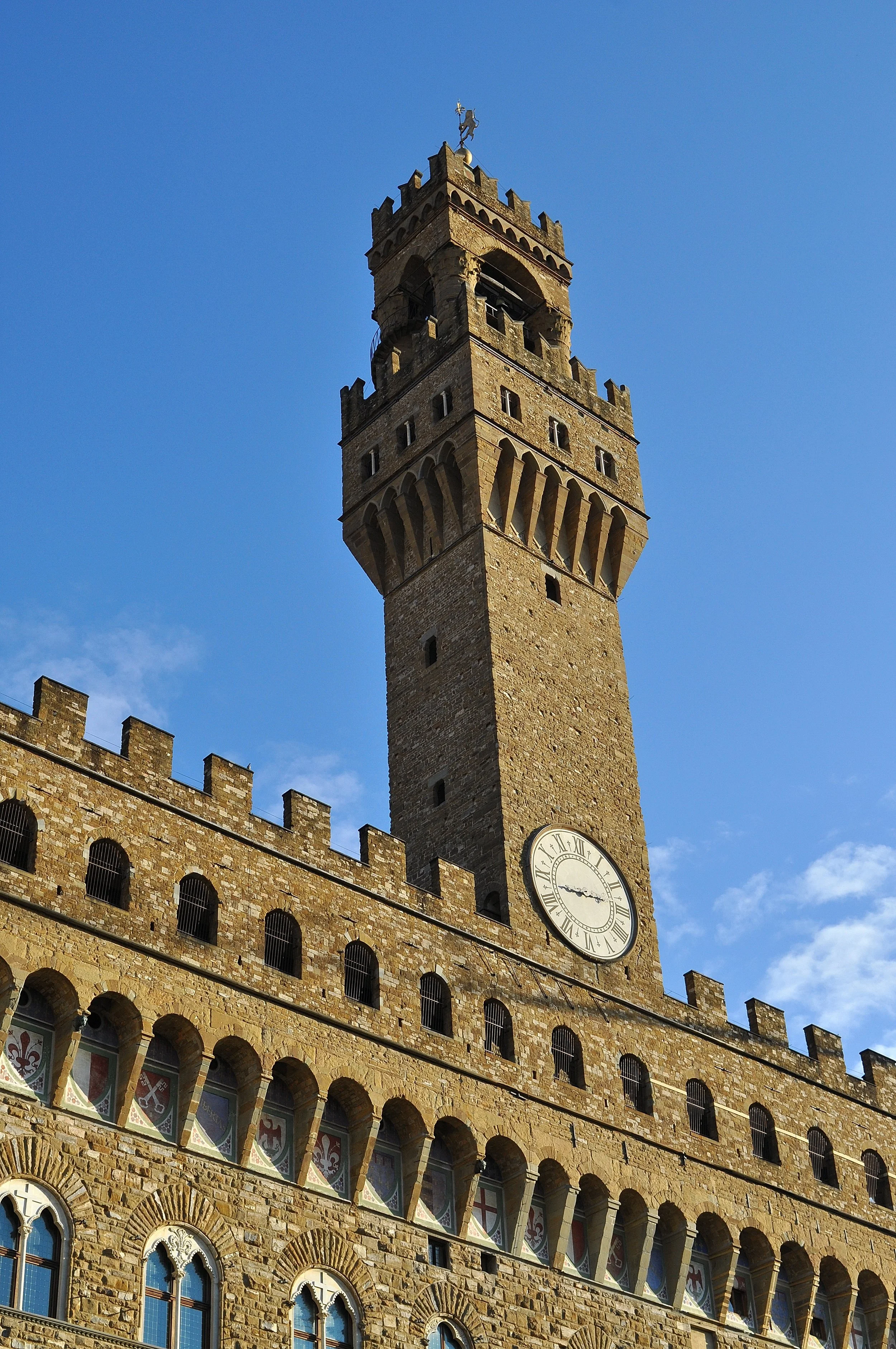
Angela: in the 16th century, the palace reached its greatest splendour, becoming the residence of the Medici family by the will of Cosimo I de’ Medici. Thanks to him, the council hall, originally commissioned by Girolamo Savonarola, was transformed into the imposing Hall of the Five Hundred. Vasari contributed to the modifications of the ceiling, covering it with frescoes until it became a true visual map of the entire Tuscany. Leonardo da Vinci and Michelangelo Buonarroti were both expected to contribute to the wall frescoes, but neither of them completed the work.
Angela: the beauty of the entrance courtyard immediately captures our attention.
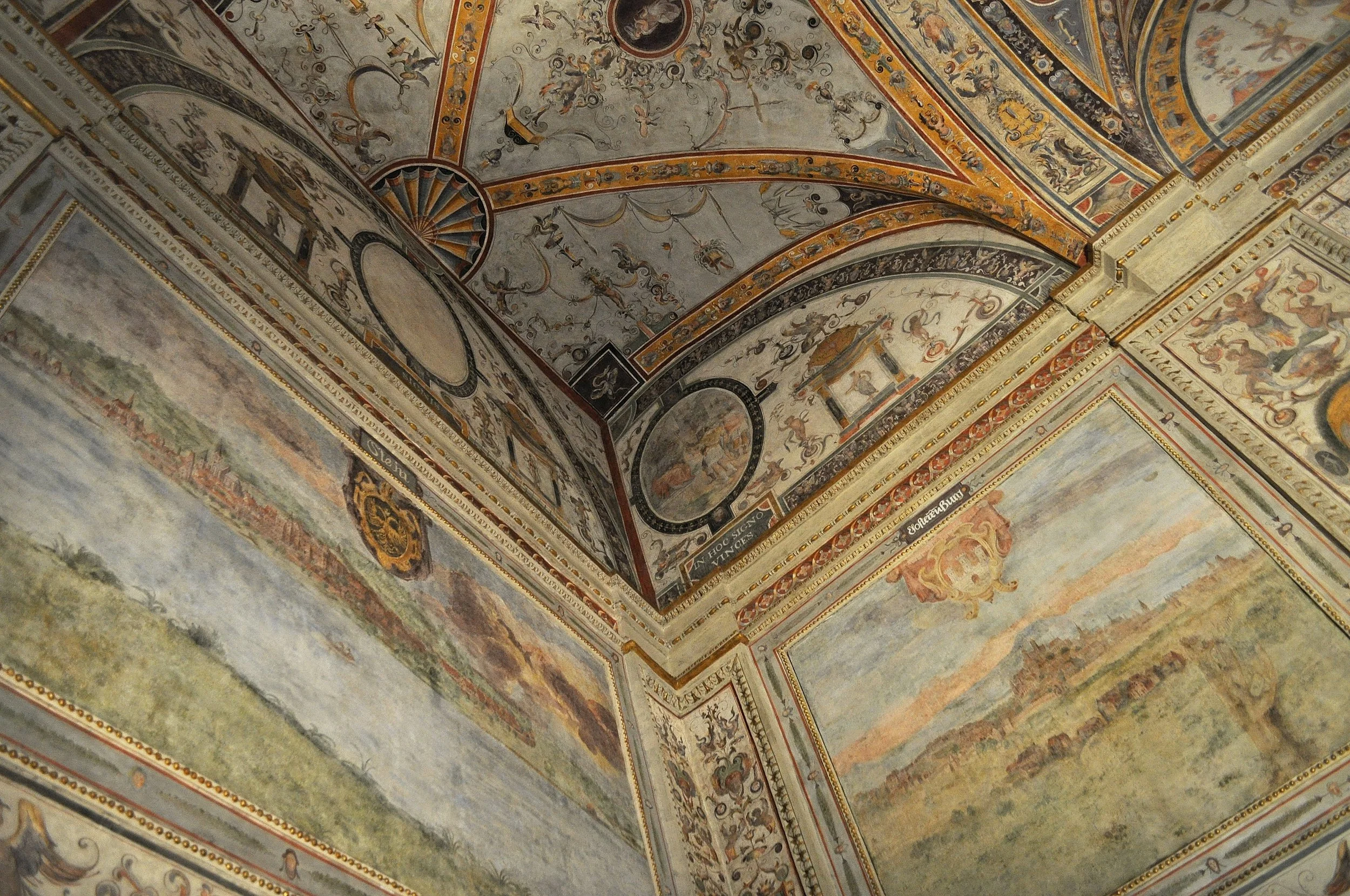

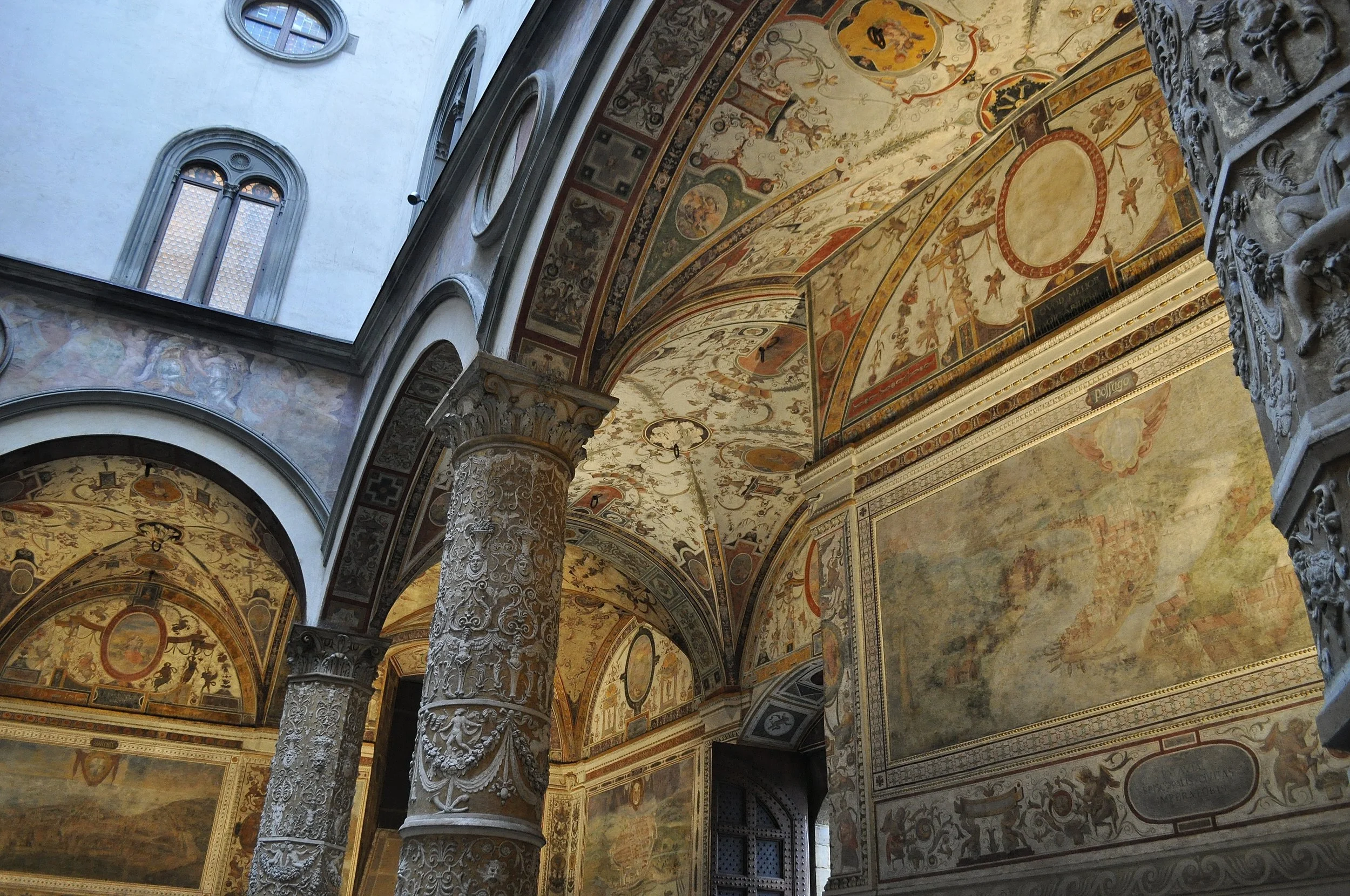


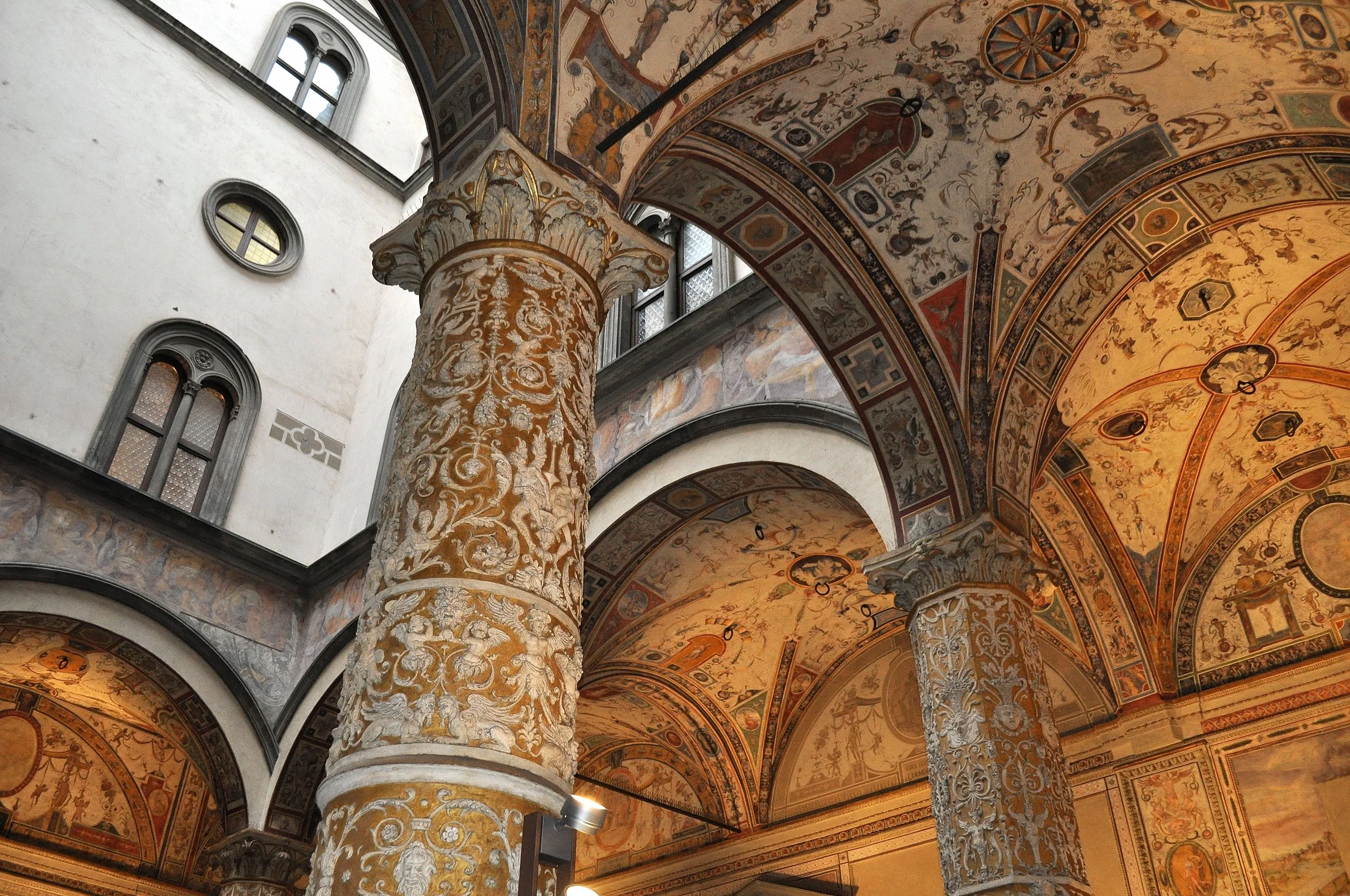


Piero: outside Palazzo Vecchio, on the arengario, stand the oldest statues in the square, now replaced by copies to preserve the originals. They are the Marzocco and Judith and Holofernes, both by Donatello. What certainly captures the visitor’s attention is the reproduction of Michelangelo’s magnificent David, standing right in front of the entrance, alongside Hercules and Cacus by Baccio Bandinelli.

Angela: overlooking the square is the Loggia della Signoria, which was originally designed in the 14th century as a covered arengario, but today it has become a small open-air art gallery. It houses magnificent sculptures such as The Rape of the Sabine Women by Giambologna and Perseus with the Head of Medusa by Cellini.


Piero: also on the square stands the beautiful Fountain of Neptune by Bartolomeo Ammannati, the first public fountain in Florence. The face of Neptune resembles Cosimo I de’ Medici, and the fountain was intended to celebrate the city’s important maritime achievements.
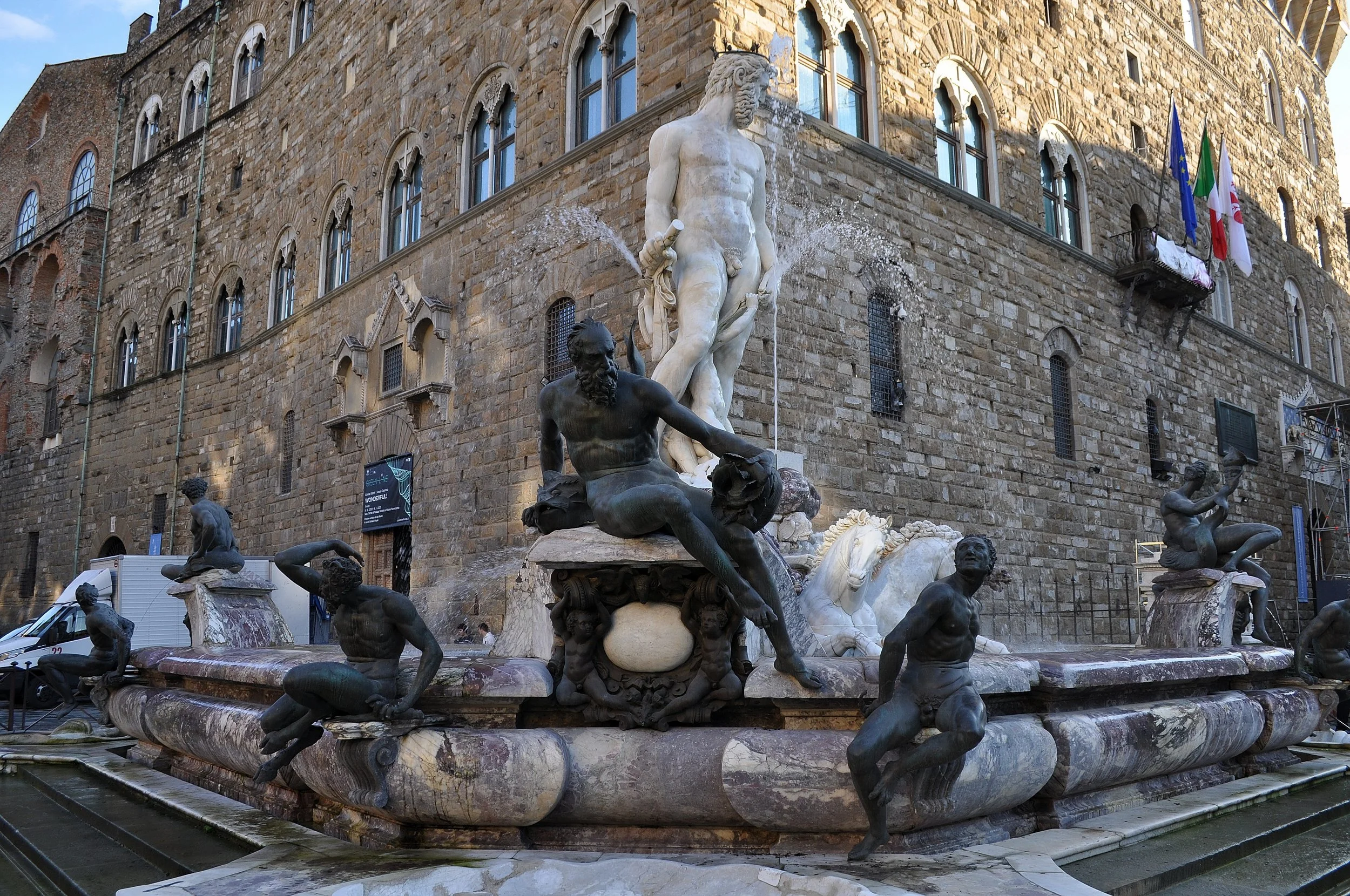

Angela: at this point in our visit, we have another great appointment with beauty.
Piero: before leaving Florence for Rome, Michelangelo Buonarroti gifted the Tuscan city with one of its greatest treasures: the David. The original masterpiece is now housed in the Accademia Gallery, while, as mentioned, only a copy stands in front of the entrance to Palazzo della Signoria.
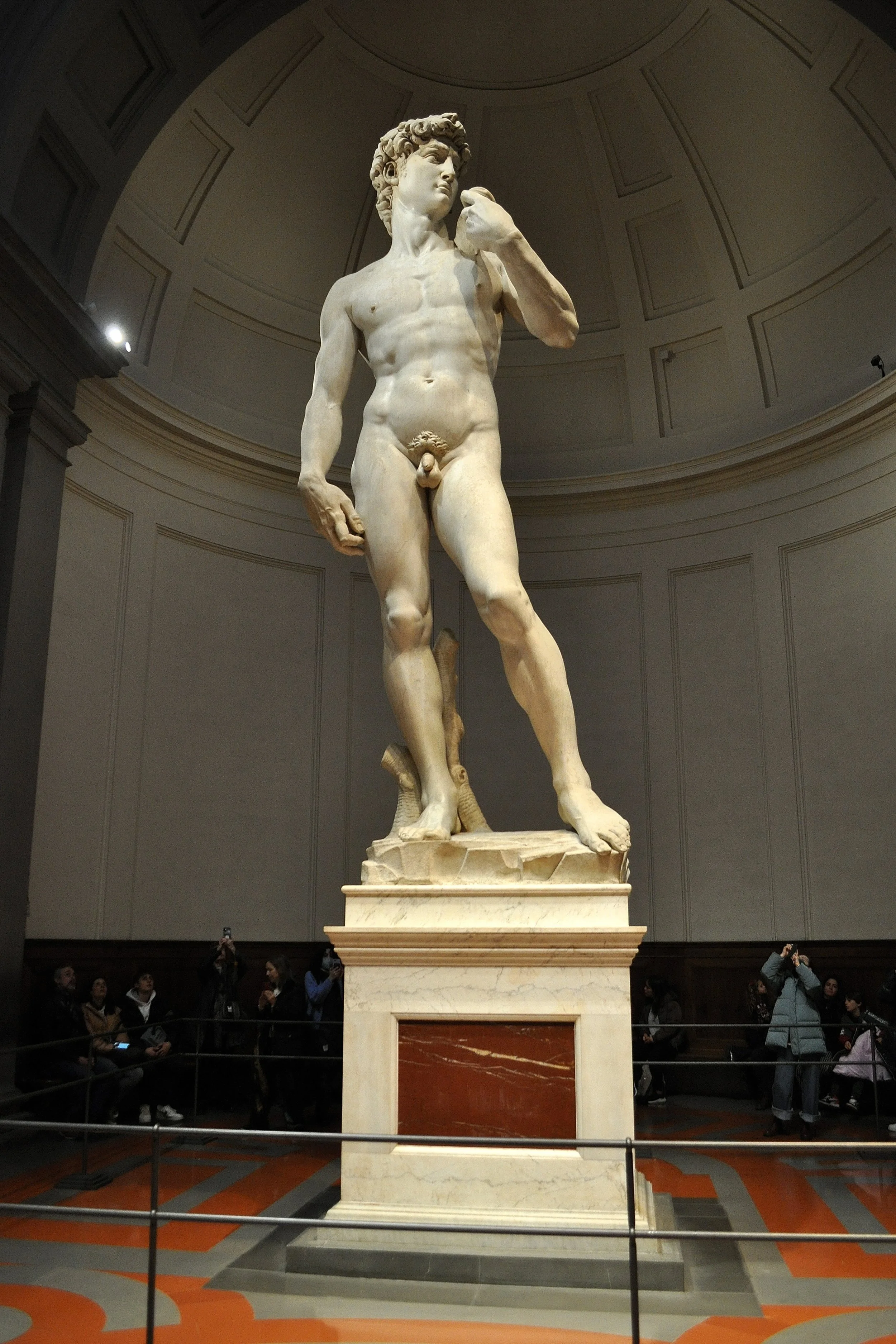
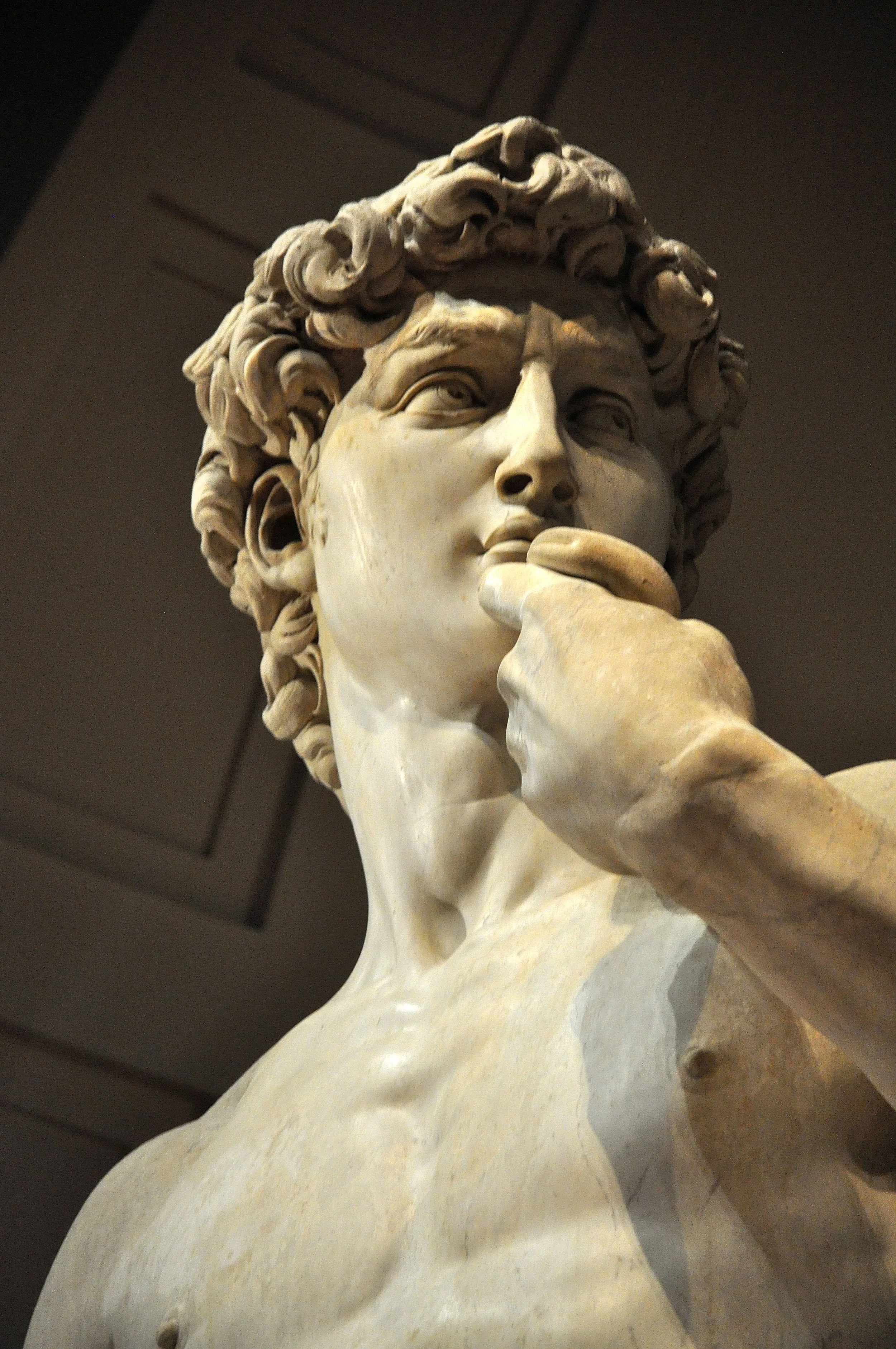
Angela: this magnificent statue is a symbol of perfection, so breathtaking that it leaves us standing in silent admiration, with no desire to move away. Standing 4.10 metres tall, it was born from the vision and determination of its creator, who, with extraordinary perseverance, transformed a block of marble that other sculptors had declared impossible to carve into one of the greatest masterpieces in the history of art. Every detail radiates beauty and strength, from the tense muscles, ready for action, to the proud and determined gaze. Everything conveys a sense of absolute perfection, and it was precisely this feeling that kept us standing in contemplation for several long minutes.


Piero: this is how we bring our second fantastic day to a close, a day filled with wonder and beauty.
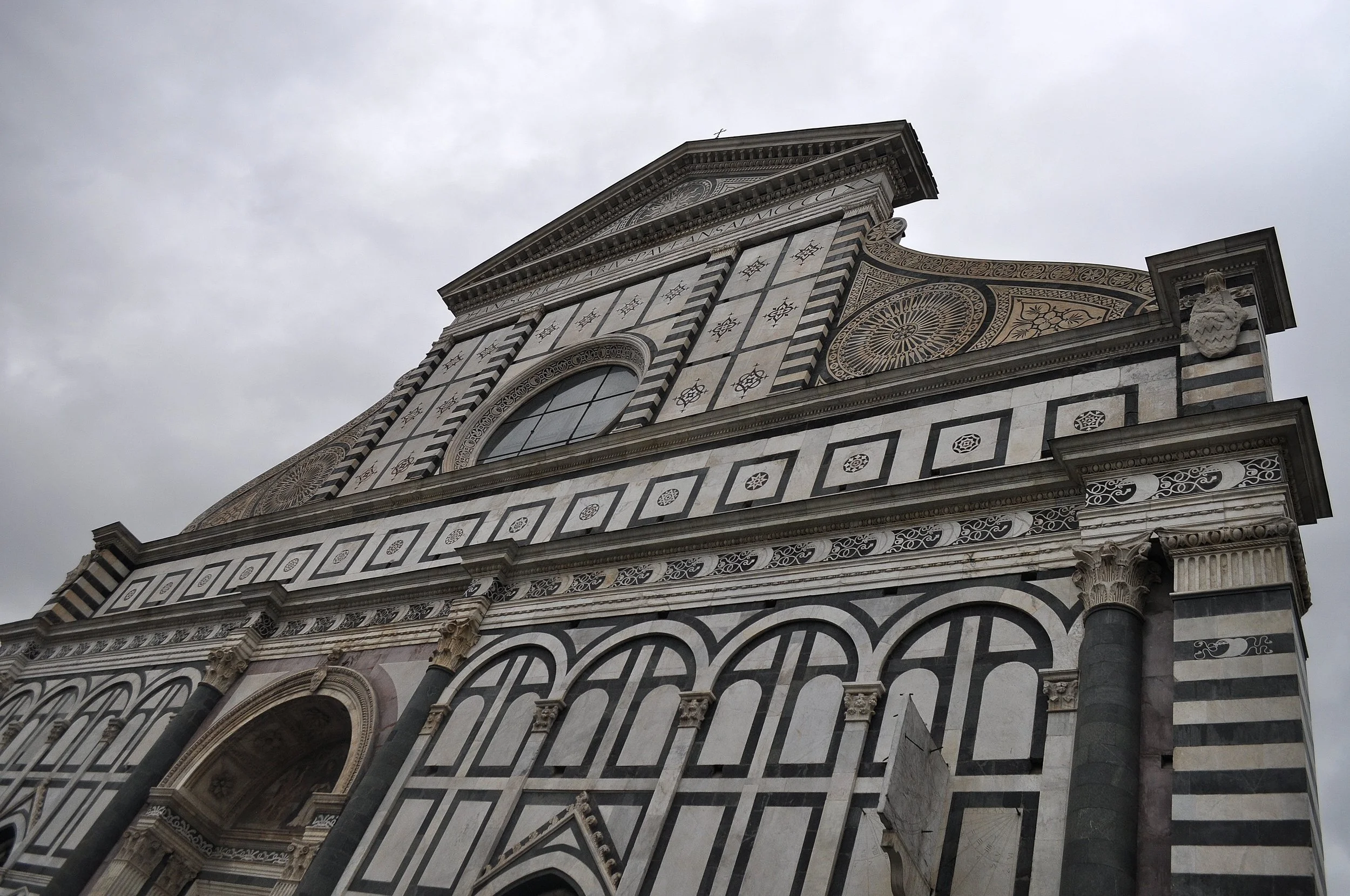
Angela: our third and final day begins with a brief visit to the Basilica of Santa Maria Novella, one of the most important churches in Florence. Admission is only possible by purchasing a ticket on site, and access is subject to specific opening hours.

Piero: from here, we head to another of Florence’s great museums: the Bargello Museum.
Angela: founded as Italy’s first national museum in 1865, it houses an outstanding collection of sculptures and decorative arts, featuring masterpieces by Donatello, Cellini, Giambologna, and Michelangelo. The works are displayed in a ground-floor gallery and in several rooms on the upper floor, reached via a magnificent staircase overlooking the beautiful 13th-century courtyard.

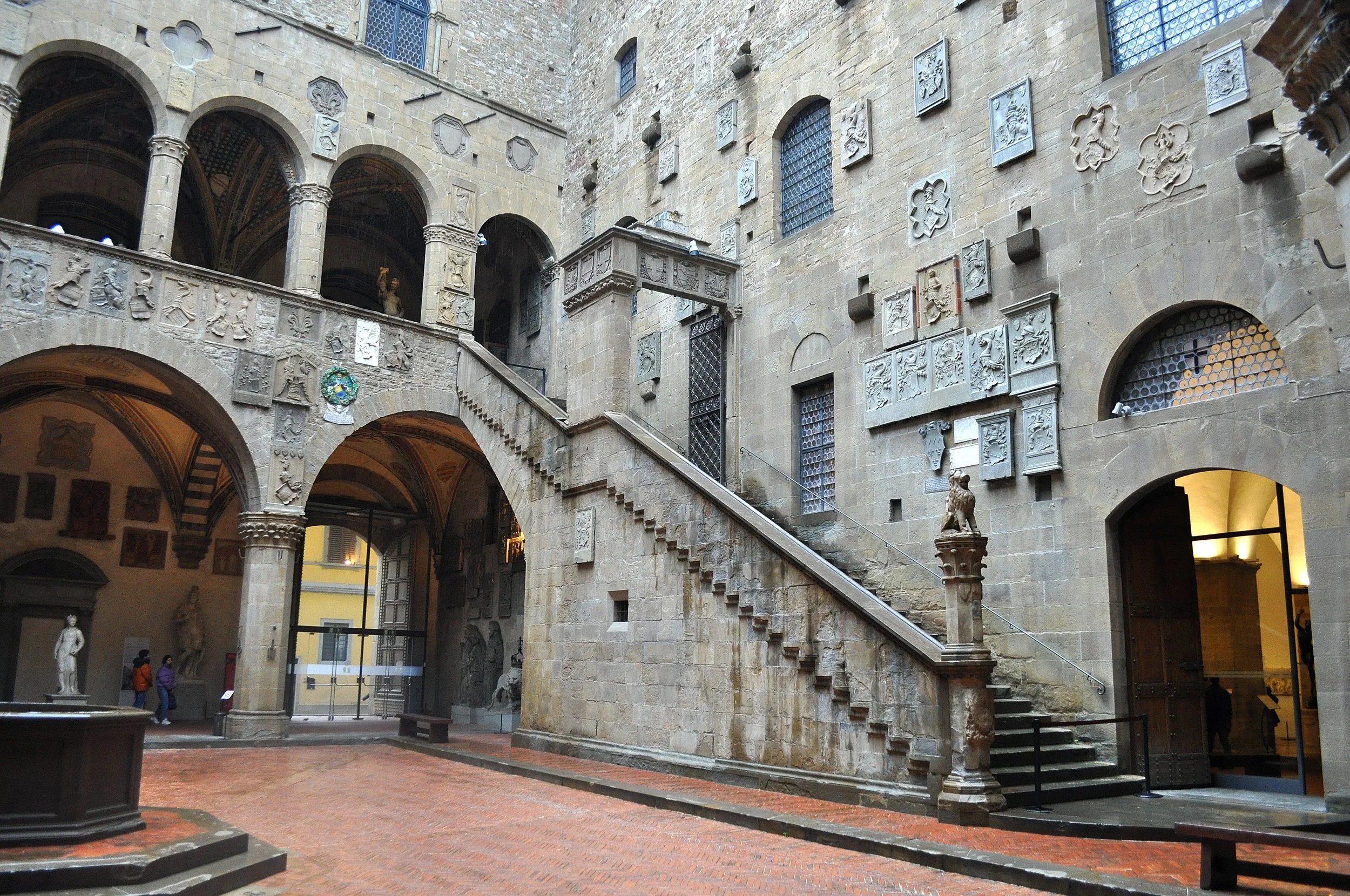


Piero: this palace was originally built as the seat of the Captain of the People, and later became the residence of the Podestà. Under the Medici, it was transformed into the headquarters of the chief of the city guards, known as the Bargello, from whom the building takes its name.
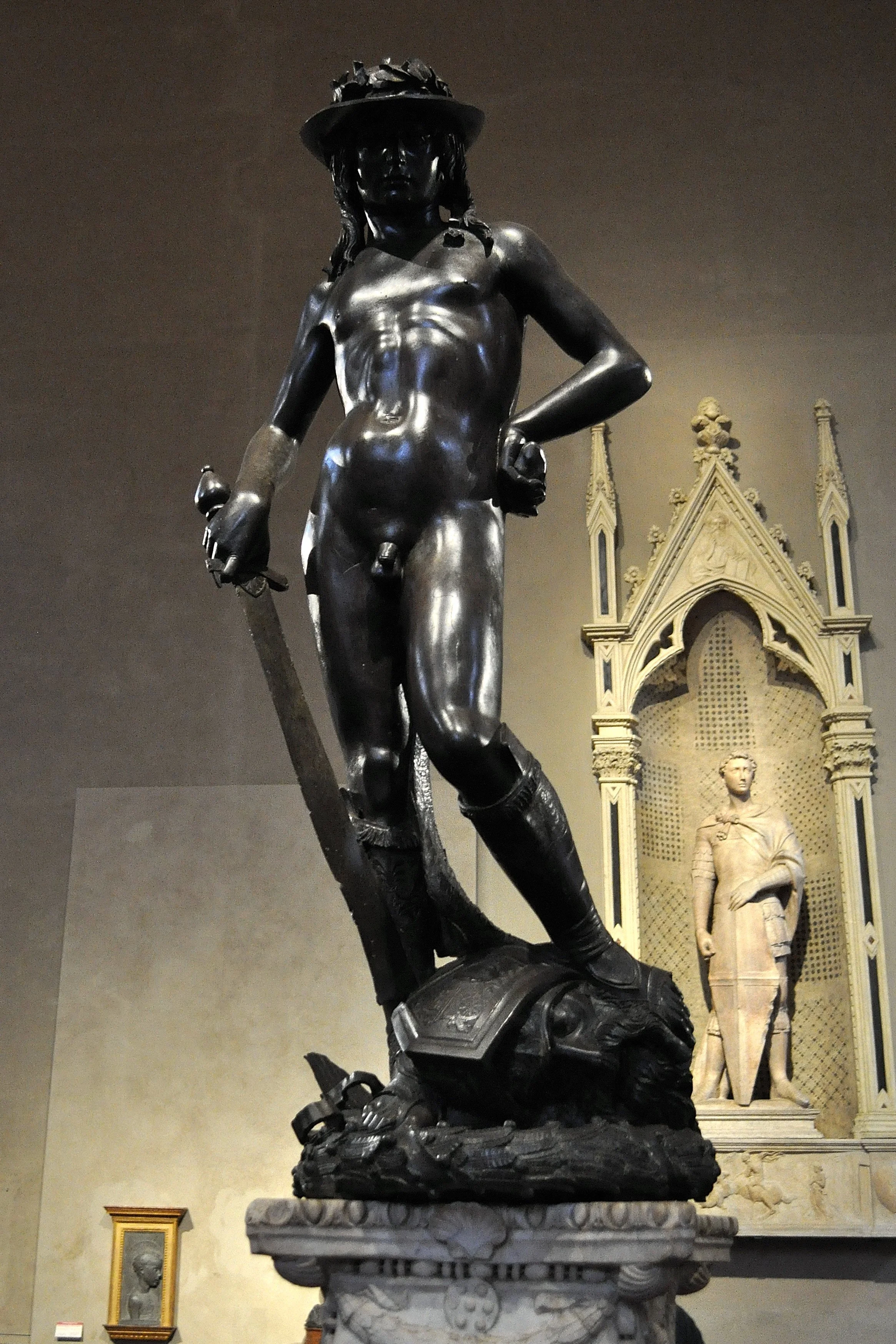
Angela: the museum's most celebrated masterpiece is undoubtedly Donatello’s David, another remarkable sculptural representation of the biblical hero, this time cast in bronze. It symbolises civic virtue and the triumph of reason over brute force and irrationality. The nude hero is depicted standing, wearing an unusual pointed hat adorned with a laurel wreath and knee-high boots. He rests gracefully on his right leg, while his left foot is placed upon the head of the defeated giant Goliath. Unlike Michelangelo’s David, this figure has the body of a slender, youthful boy, delicate yet perfectly harmonious, conveying at the same time both confidence and elegance.
Piero: the ticket purchased for the Bargello Museum also grants us access to another of Florence’s treasures: the Medici Chapels.
Angela: the chapels are part of the Basilica of San Lorenzo complex and serve as the mausoleum of the Medici family.
Piero: the two main sections are the Chapel of the Princes and the New Sacristy.
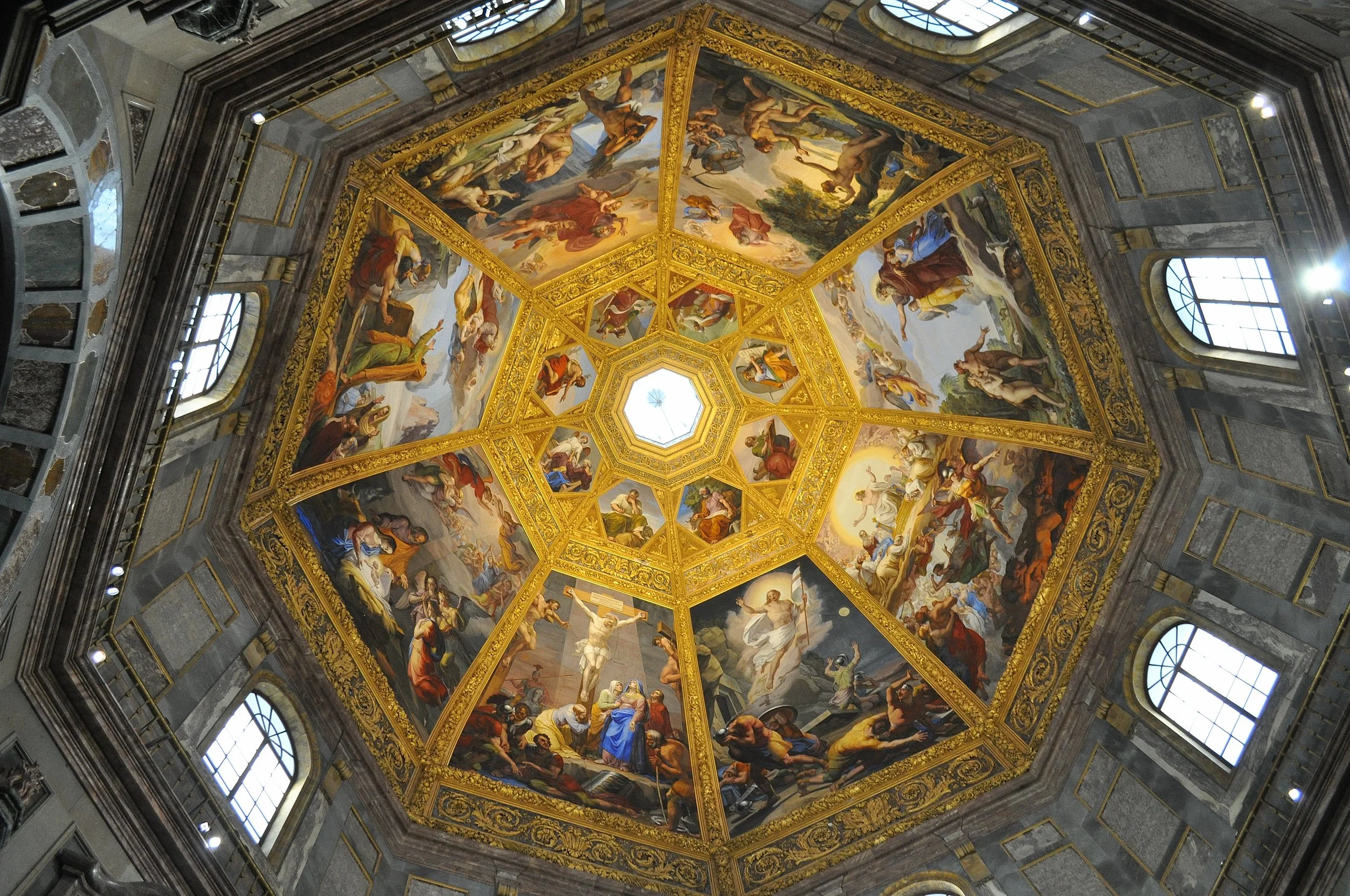
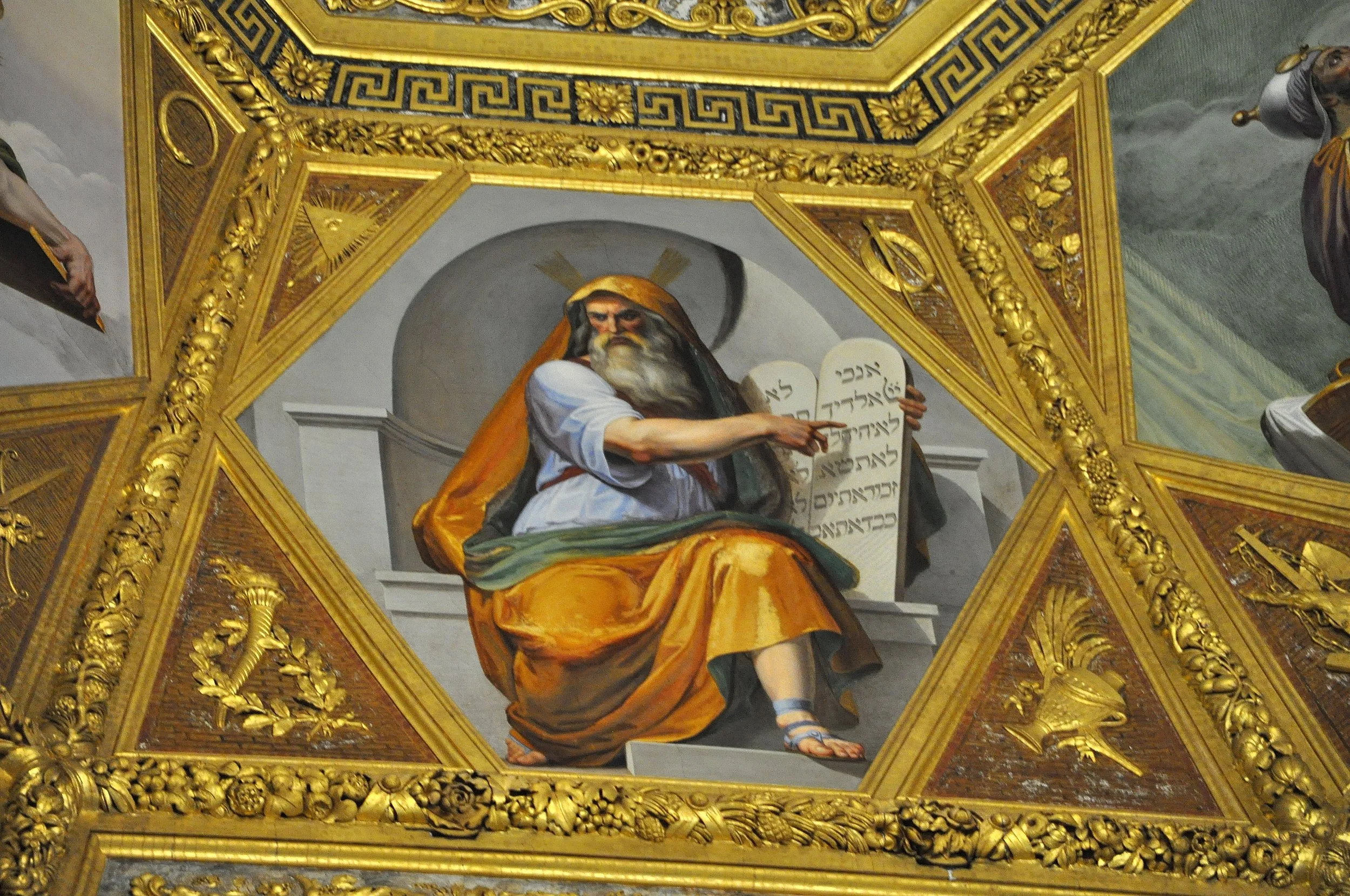
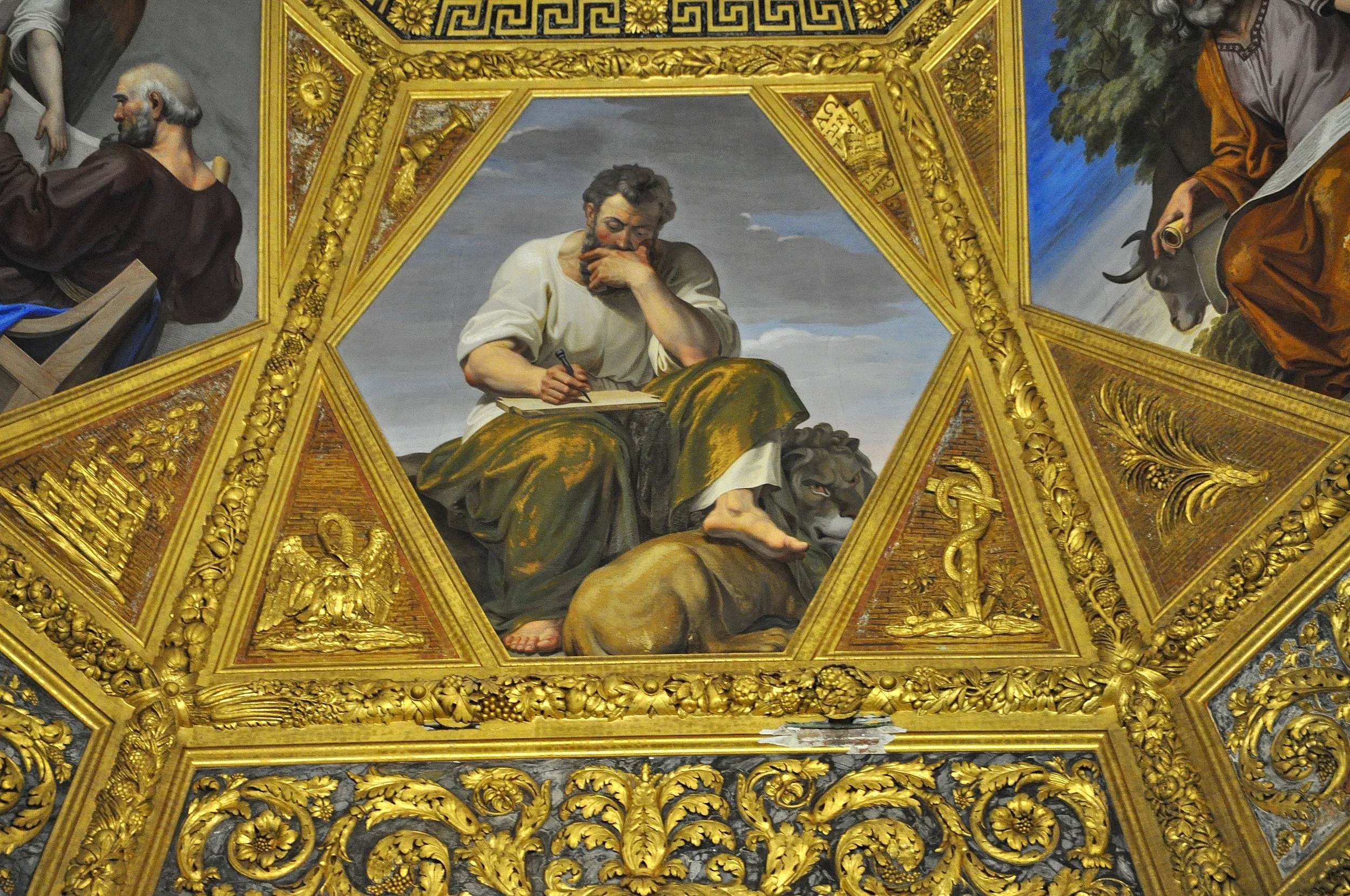
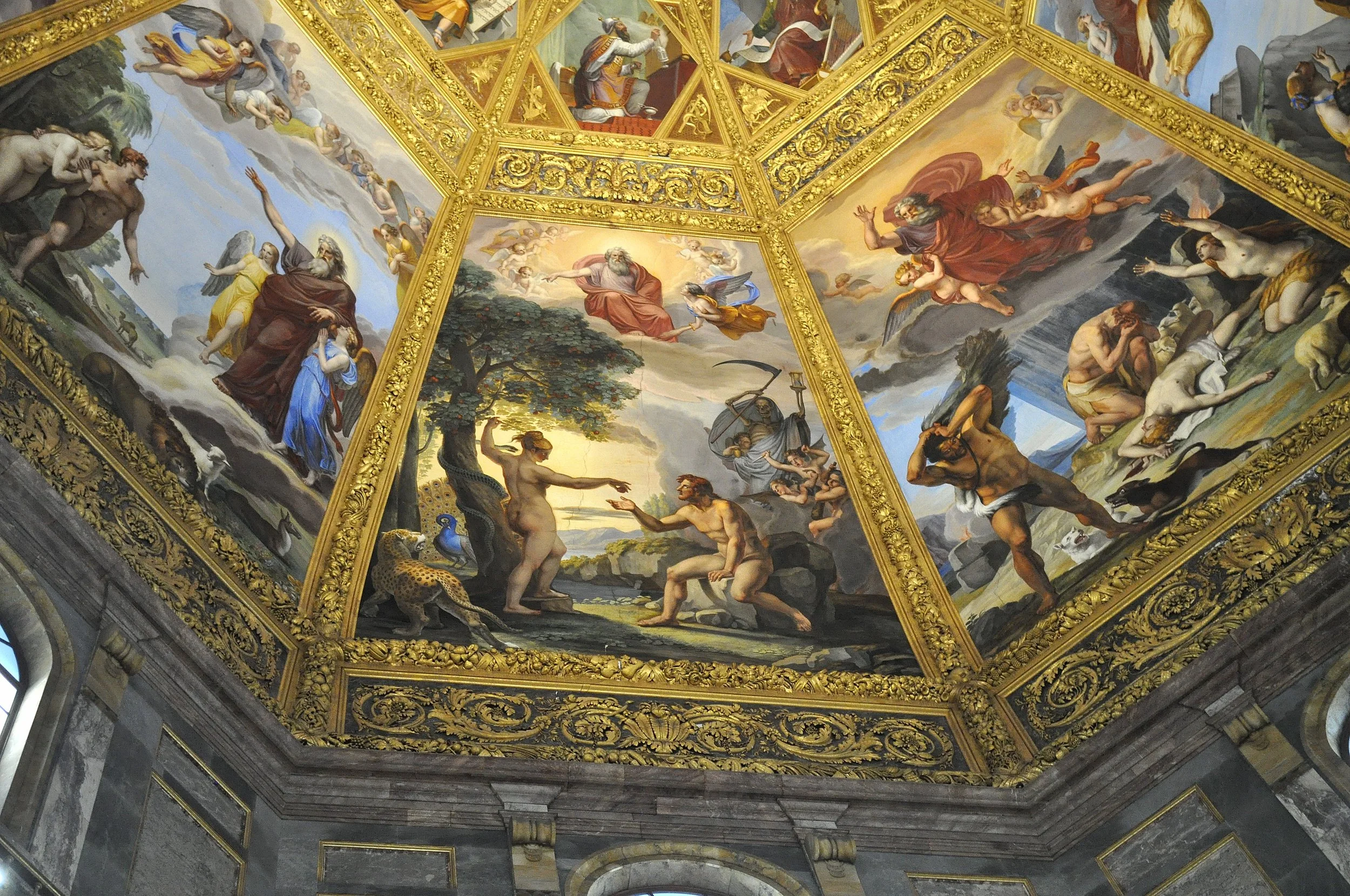
Angela: the Chapel of the Princes, commissioned by Cosimo I de’ Medici and completed by his successors, is an imposing octagonal structure crowned by the dome of San Lorenzo. This vast space is extraordinarily lavish, richly decorated with magnificent marble and semi-precious stones, making it one of the finest examples of Medici magnificence.






Piero: the New Sacristy, on the other hand, was designed by Michelangelo and is reached through a passage from the Chapel of the Princes. The atmosphere is more austere, yet it stands as another great symbol of the Renaissance. It houses the tombs of two young members of the Medici family: Giuliano, Duke of Nemours, and Lorenzo, Duke of Urbino, whose deaths deeply grieved Pope Leo X, respectively their brother and uncle, who commissioned the project. Ironically, he honoured them with a far more magnificent burial place than that of Lorenzo the Magnificent himself.


Angela: with the same ticket, we can also visit the last stop on our itinerary, one that, quite wrongly, we had not originally included in our programme: Orsanmichele.
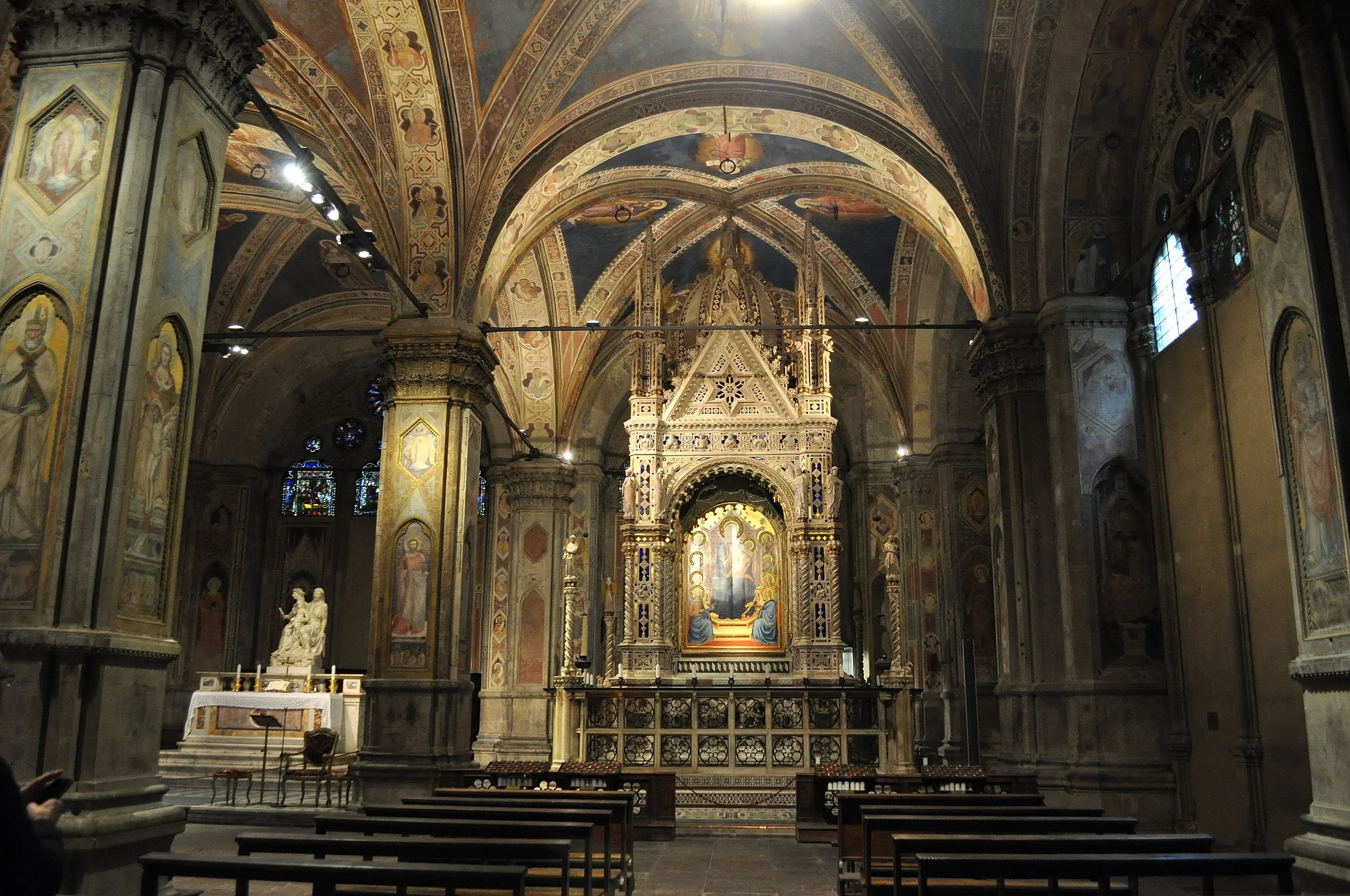
Piero: Orsanmichele is a truly unique and extraordinary monument, combining both civic and religious functions into a single building. It can be seen as a temple of labour, created by the powerful Florentine Guilds that played such a vital role in the greatness of the free Commune of Florence. Originally, this site was occupied by a women’s monastery surrounded by vegetable gardens. Around the middle of the 8th century, a small church dedicated to Saint Michael the Archangel replaced the original oratory. It was known as San Michele in Orto ("Saint Michael in the Garden"), from which the name "Orto di San Michele" and eventually "Orsanmichele" were derived. The church was later demolished to make way for the city's grain market, which was subsequently adapted to provide both storage facilities and a covered marketplace for commercial trading. From the 14th century onwards, the building was once again consecrated for Christian worship, giving rise to the remarkable fusion of commerce, civic life, and religion that still makes Orsanmichele one of the most distinctive monuments in Florence.



Angela: on the first floor of the Museum, the original sculptures that once adorned the niches on the four sides of the imposing stone building are preserved. They are masterpieces created by some of the greatest Florentine artists of the 15th and 16th centuries. On the second floor of the Museum, at the top of the building, visitors are rewarded with a remarkable and truly unique panoramic view of Florence.


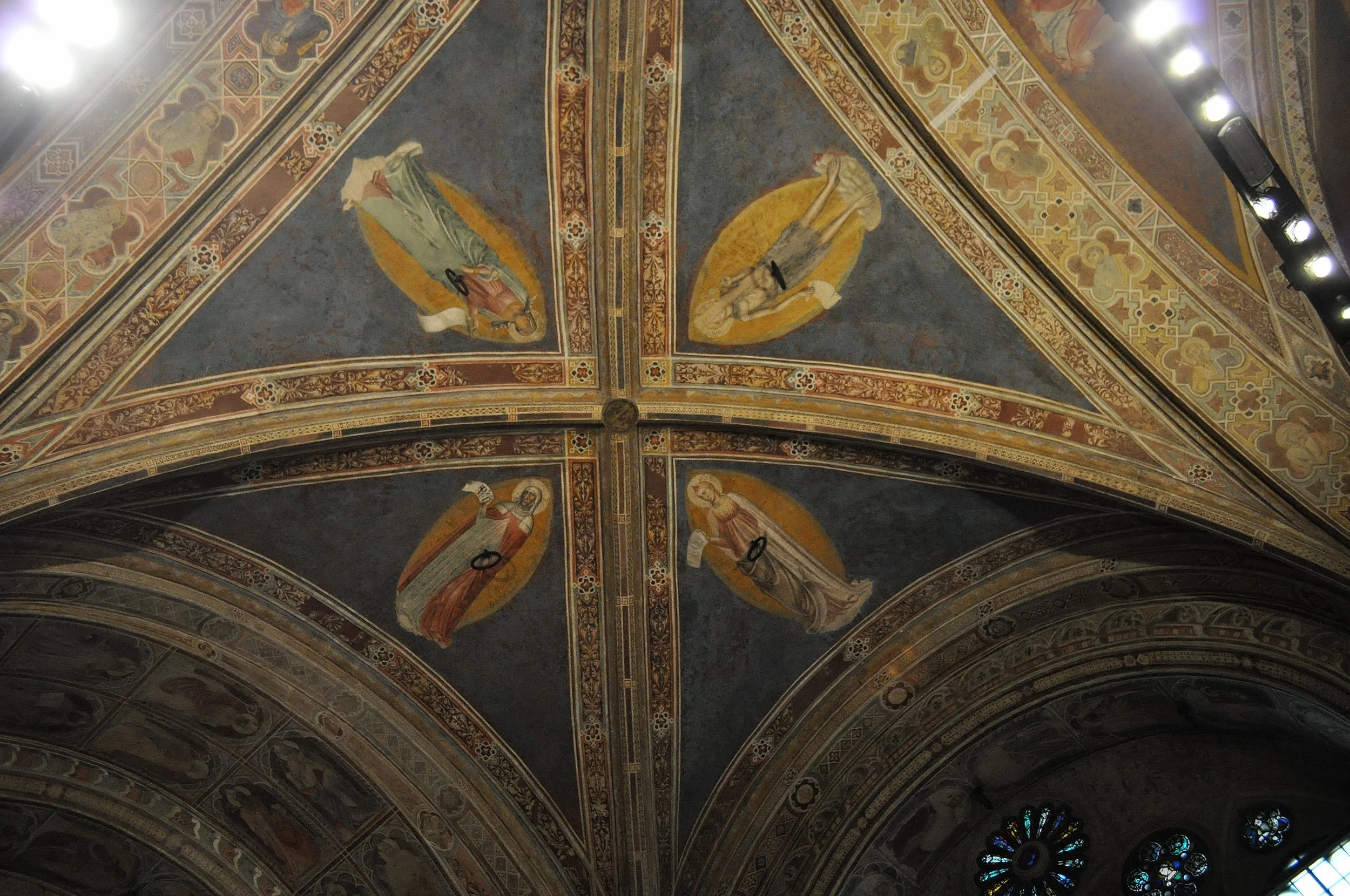
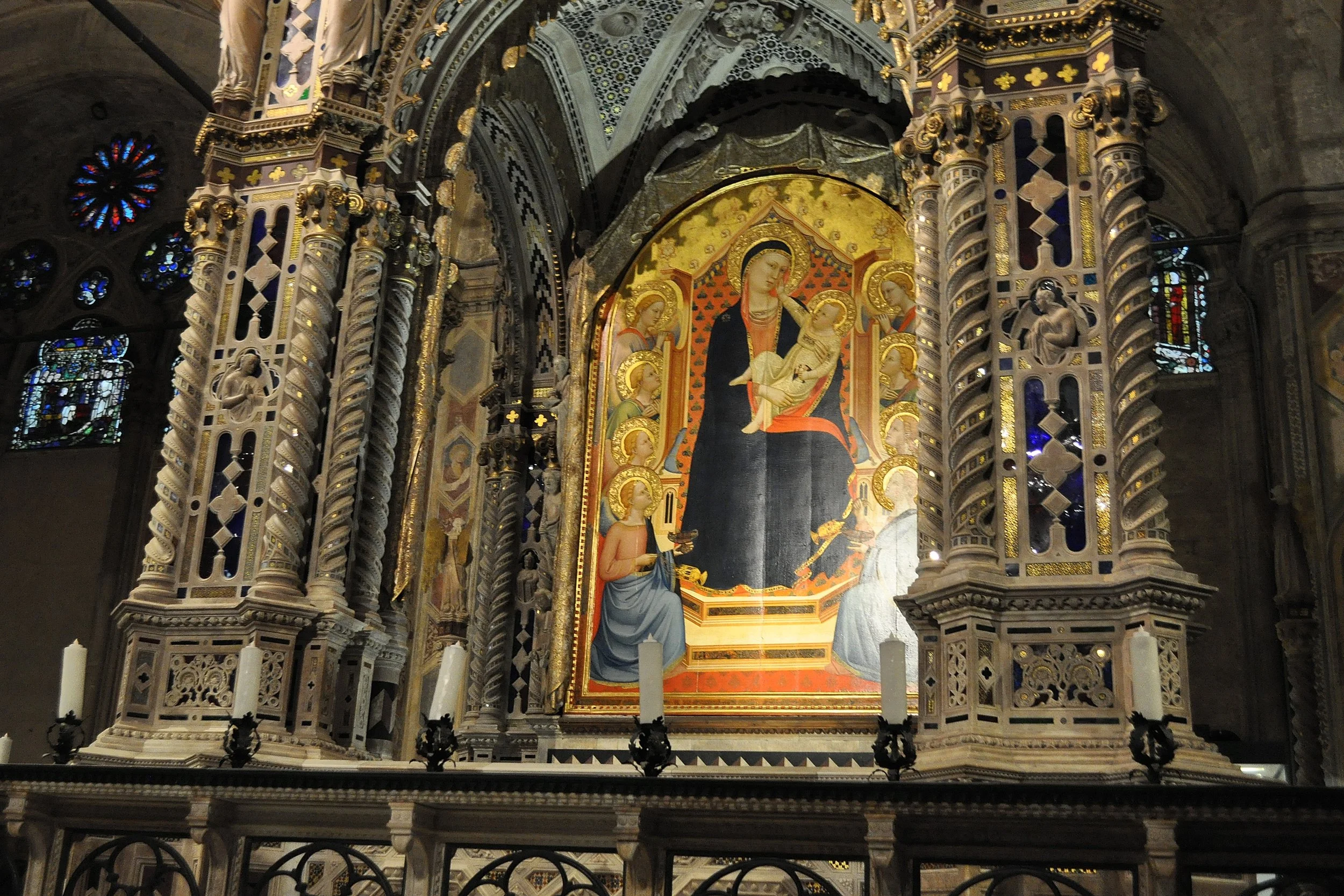
Piero: the church is still consecrated today and houses the magnificent Marble Tabernacle of the Madonna delle Grazie, one of its greatest treasures. Its walls are beautifully decorated with frescoes, creating an atmosphere of remarkable beauty and devotion.
See you Florence!
Angela: with this final masterpiece, our visit to Florence comes to an end. These have been three unforgettable days, filled with beauty, art, and wonder.
Piero: Florence certainly has so much more to discover and experience, and for that very reason, this is not a farewell but simply an until we meet again.
Angela: let's relive our journey through Florence with this short video!