Fuerteventura
Angela: here we go again! Where are we going this time? Shall I get our van ready?
Piero: no van this time though. Let me give you a few clues: ocean, warm weather, beaches, and above all wind… a lot of wind, really strong winds.
Angela: I think I’ve got it: Fuerteventura!
Piero: exactly! We are heading to an island of endless dream beaches, where white and golden sands contrast beautifully with the turquoise waters of the ocean, all under the warm sunlight that shines here throughout the year.

Angela: I can’t wait! We will be surrounded by the constant sea breeze and we will be able to enjoy swimming in calm and crystal-clear waters. Of course, there is always the risk that the gentle breeze may sometimes turn into a strong and persistent wind, and that the ocean water may feel a little too cold, but it will certainly be worth it, especially considering that Fuerteventura enjoys a pleasant climate throughout the year. During the summer, temperatures often exceed 30°C, but humidity levels remain low and rainfall is practically nonexistent. Even in winter, the climate is mild, with temperatures frequently above 20°C and very little rain. After all, the island lies at the same latitude as Mexico and Florida.
Piero: Fuerteventura is easily reached by plane: it takes just about four hours of direct flight from Milan, landing at Puerto del Rosario, the current capital of the island, located right in its central area.
Angela: bags are ready! Let’s board our flight and get ready for take-off!
Welcome to Fuerteventura!

Piero: Fuerteventura is the second largest island of the Canary Islands, after Tenerife. It is also the oldest island of the archipelago and the closest to the African coast, located less than one hundred kilometres from Morocco. Together with Lanzarote, it is perhaps the most arid of the Canary Islands, and this is precisely what gives it landscapes that are quite unexpected for an island destination.
Angela: unlike the other islands of the Canary archipelago, Fuerteventura generally has a low coastline, with long stretches of beaches, many of which remain almost completely deserted.
Piero: although it lies in the middle of the Atlantic Ocean, close to the African coast, Fuerteventura is Spanish territory, and this is certainly an advantage for travellers. Mobile phones, ATMs, credit cards, and the euro work exactly as they do in the rest of Europe, with the additional benefit of a favourable tax system that makes many everyday products—starting with fuel—much cheaper.
Angela: the island, like the entire archipelago, has a volcanic origin. The first settlements date back to the Phoenicians, although very few archaeological remains and sites have survived.
Piero: European colonisation began in the 15th century, with the arrival of the French crusader knights led by Jean de Béthencourt and Gadifer de La Salle. Fuerteventura was the first of the African islands to be colonised by Europeans. In 1404, the ancient capital Betancuria was founded near the western coast, taking its name from Béthencourt himself. This important historical figure may also be connected to the origin of the island’s name: according to one theory, it comes from an exclamation attributed to Béthencourt after the difficult journey to reach the island: “¡Qué fuerte aventura!”, meaning “what a great adventure!”
Angela: a less romantic explanation would be that the name comes from the strong winds that constantly sweep across the island.
Piero: from 1927, Fuerteventura, together with Lanzarote, became part of the province of Las Palmas. The capital, as mentioned, is Puerto del Rosario, which replaced the former settlement known as Puerto Cabras.
Angela: today, in practice, Fuerteventura lives mainly from tourism. The island became one of the most popular destinations starting from the 1960s, with the construction of the airport and the first tourist facilities, beginning a new era for this extraordinary island of wind, beaches, and volcanic landscapes.
Discovering Fuerteventura
Piero: Fuerteventura is still, in many areas, a wonderfully wild island, far from being a glamorous or crowded destination. It is certainly windy, as we have already mentioned, but above all it is blessed with some of the most beautiful beaches in the Canary Islands.
The island is famous for its sea, but its inland landscapes are equally fascinating: dry, rugged, and incredibly evocative. There are also many picturesque villages and spectacular miradores overlooking the ocean, offering breathtaking views.
The quality of life here is truly excellent, and it is certainly a plus that the cost of living remains relatively affordable compared to many other European destinations.
Angela: apart from the wind, as we have said, the island enjoys an extraordinary climate, with more than three hundred days of sunshine per year. This makes Fuerteventura an ideal destination for every type of traveller, at any time of the year.
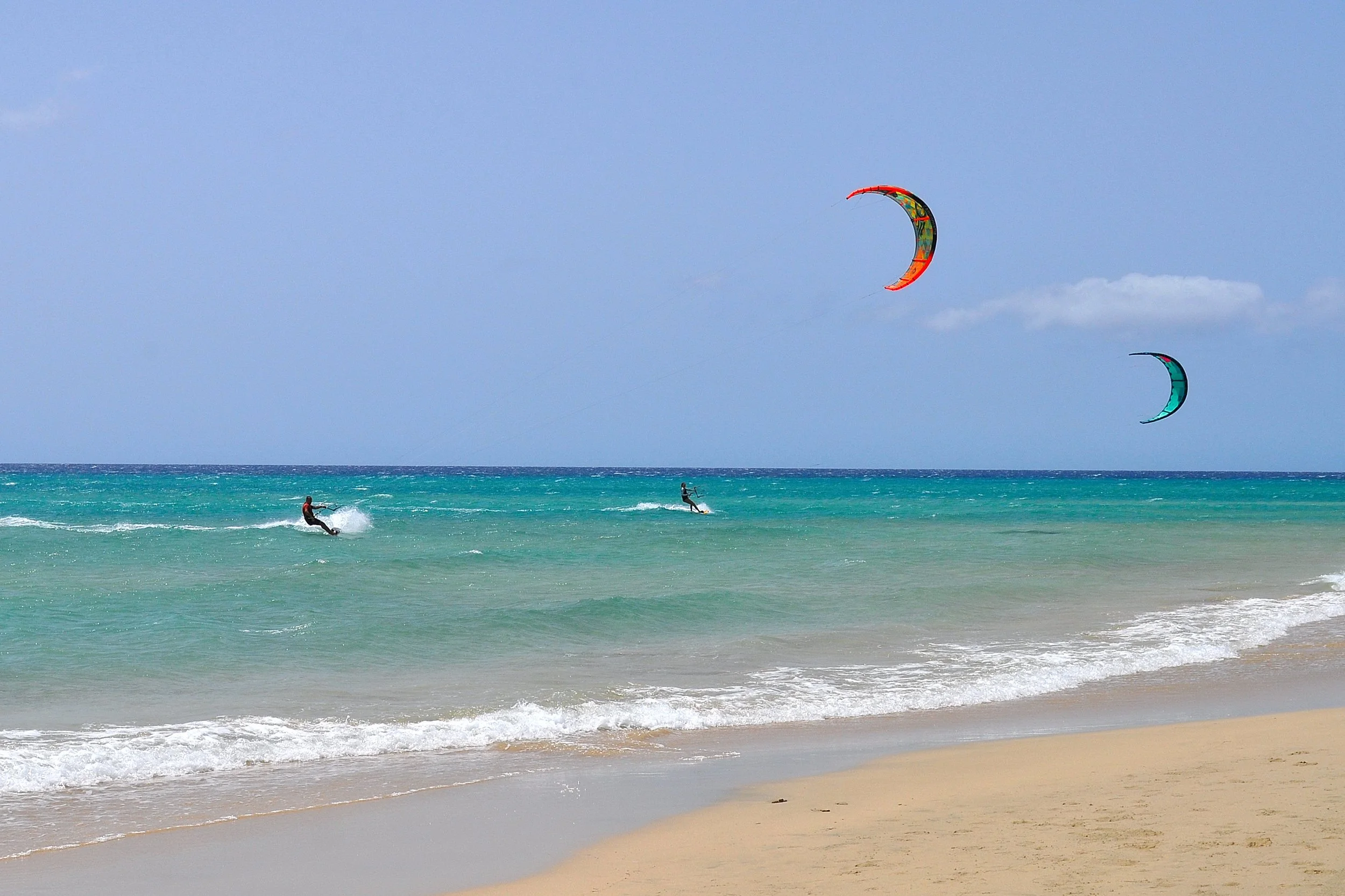
For those who love sport, the island is a true paradise: it is considered the home of surfing and all its variations, thanks to the constant winds and the perfect waves that attract enthusiasts from all over the world.

Piero: the island’s nature is as unique as it is diverse. Its often untouched landscapes are so extraordinary that in 2009 Fuerteventura was declared a UNESCO Biosphere Reserve. Its proximity to Africa gives the island an atmosphere and appearance that often make it feel much closer to that continent than to Europe.
Angela: I can’t wait to start our excursions! Where do we begin?
Piero: I would say we should start with the island’s main attraction: the sea and its most beautiful beaches.
Fuerteventura’s beaches
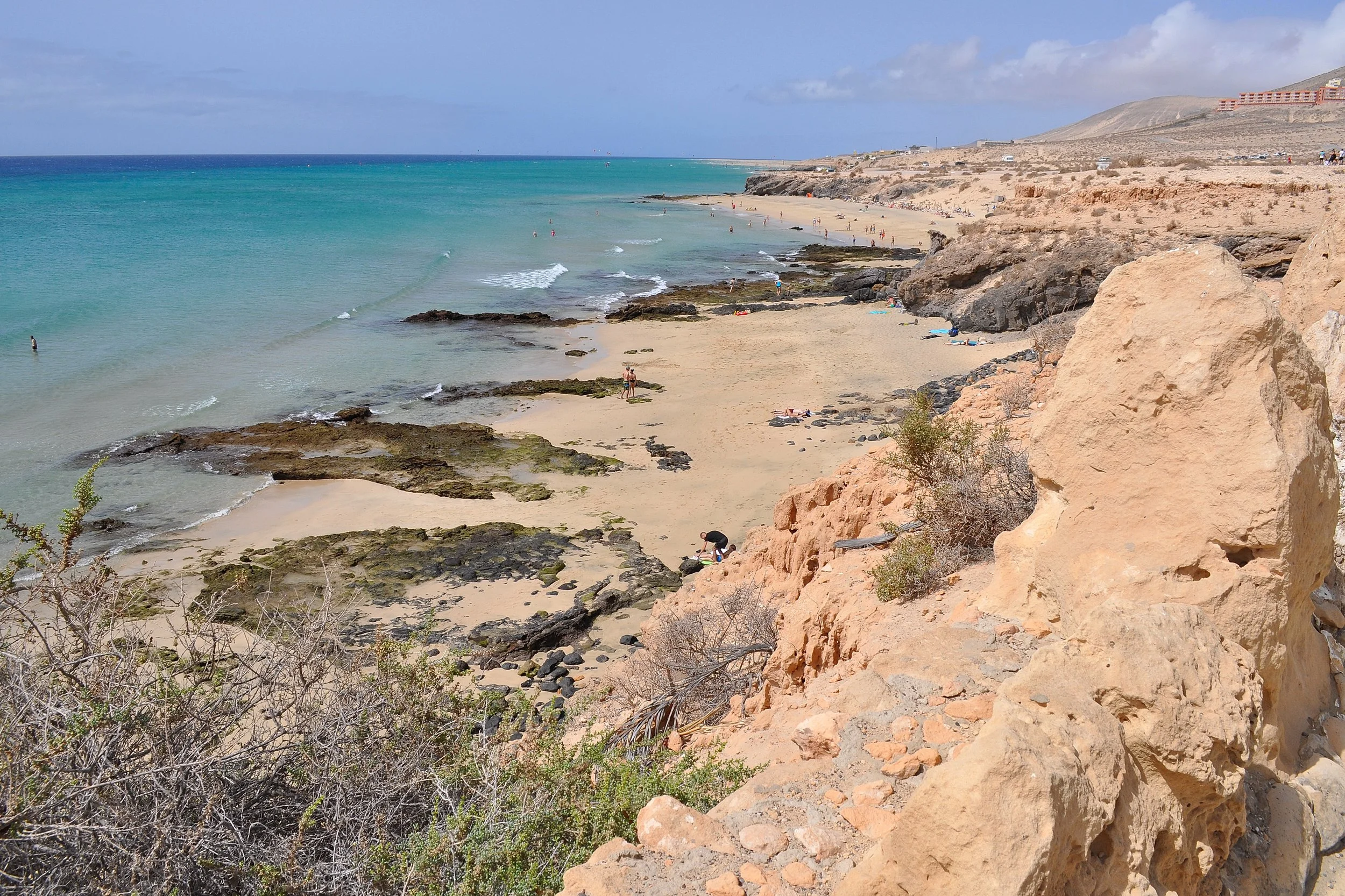
Angela: visiting and describing them all would be an almost impossible task. There are so many beaches on the island, and each one is unique, beautiful, and full of character.
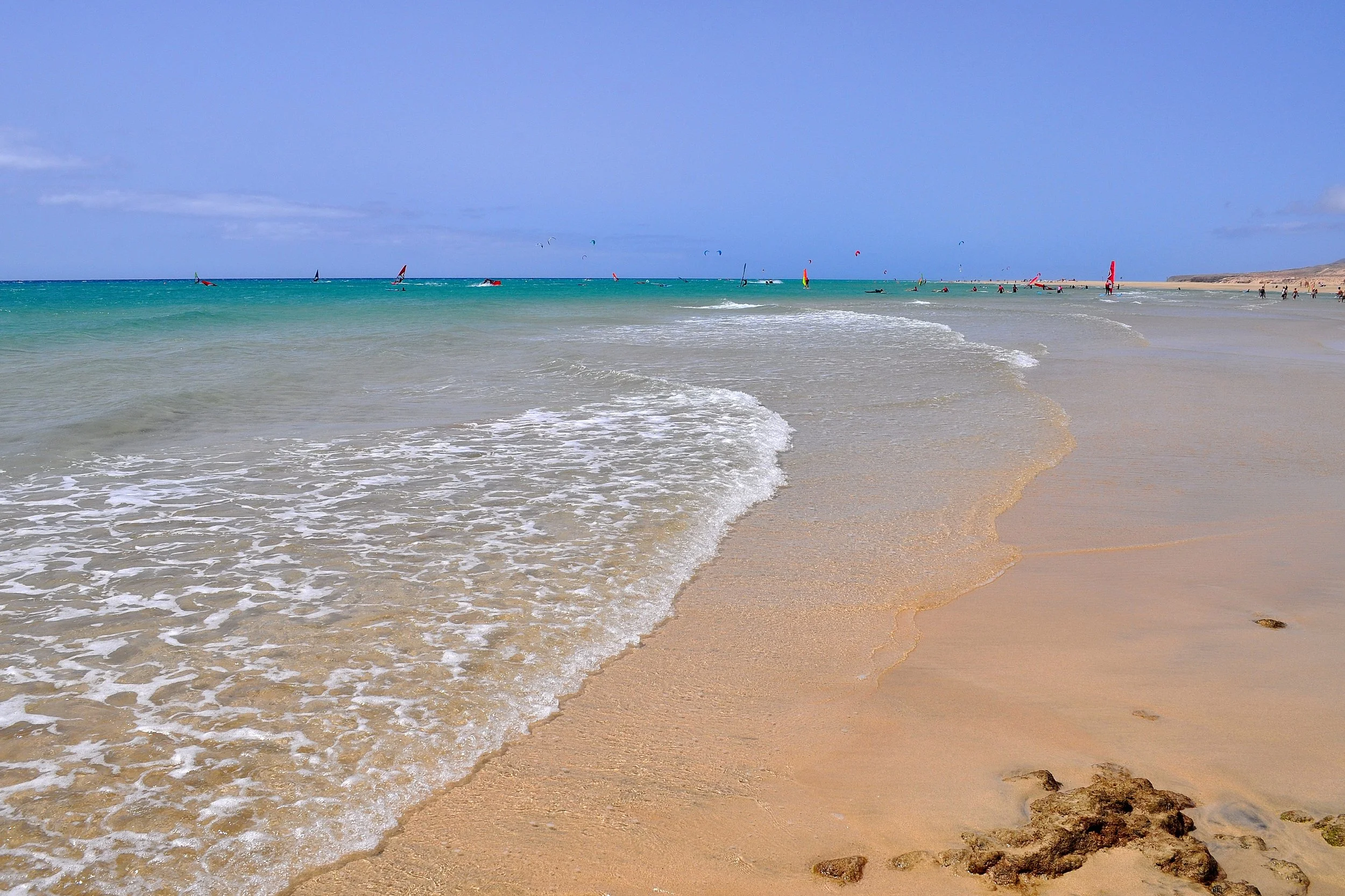
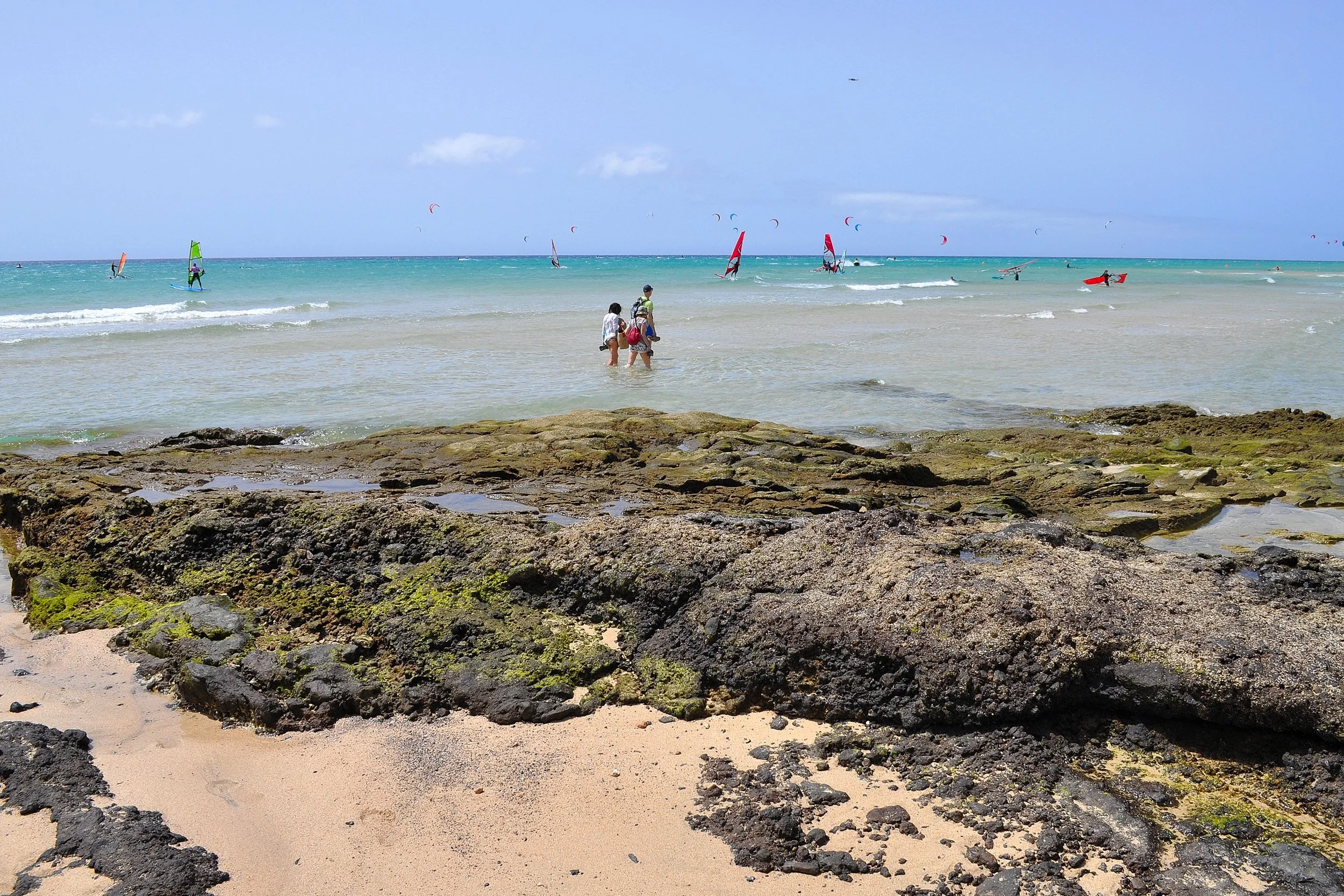
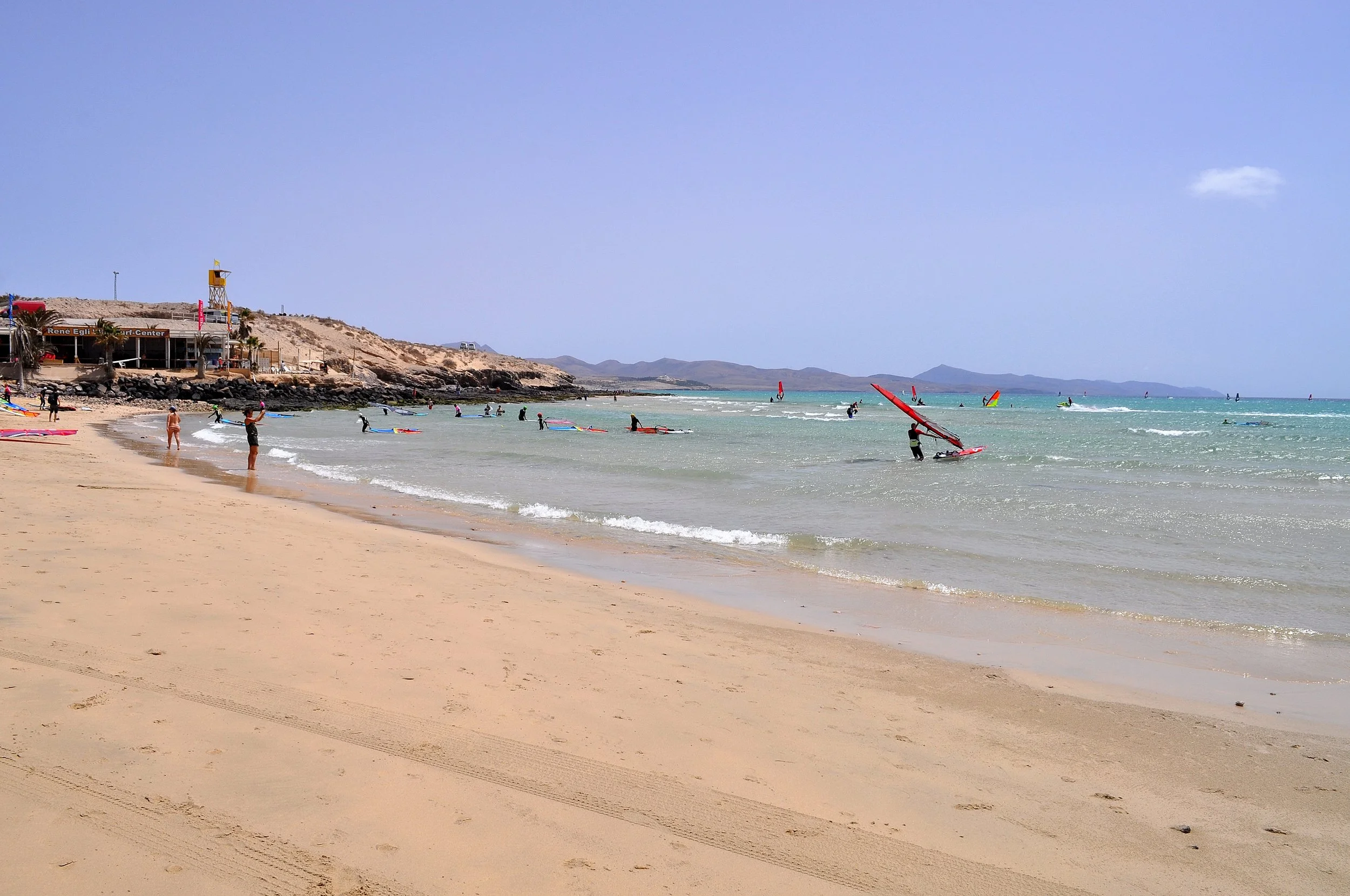
Piero: let’s start with Sotavento, located on the south-eastern coast of the island. It is one of the largest and most spectacular beaches of Fuerteventura, stretching for more than three kilometres. Its incredibly white sand and the stunning turquoise sea make it one of the most famous, photographed, and visited beaches on the island.
It is particularly renowned as one of the favourite destinations for surfers, kitesurfers, and windsurfers, thanks to the constant winds that create perfect conditions for these sports. Despite its popularity, its enormous size makes it the ideal place for a peaceful walk along the shore, enjoying the beauty of the sun, the ocean, and a landscape where the only sounds are the gentle waves and the ever-present wind.


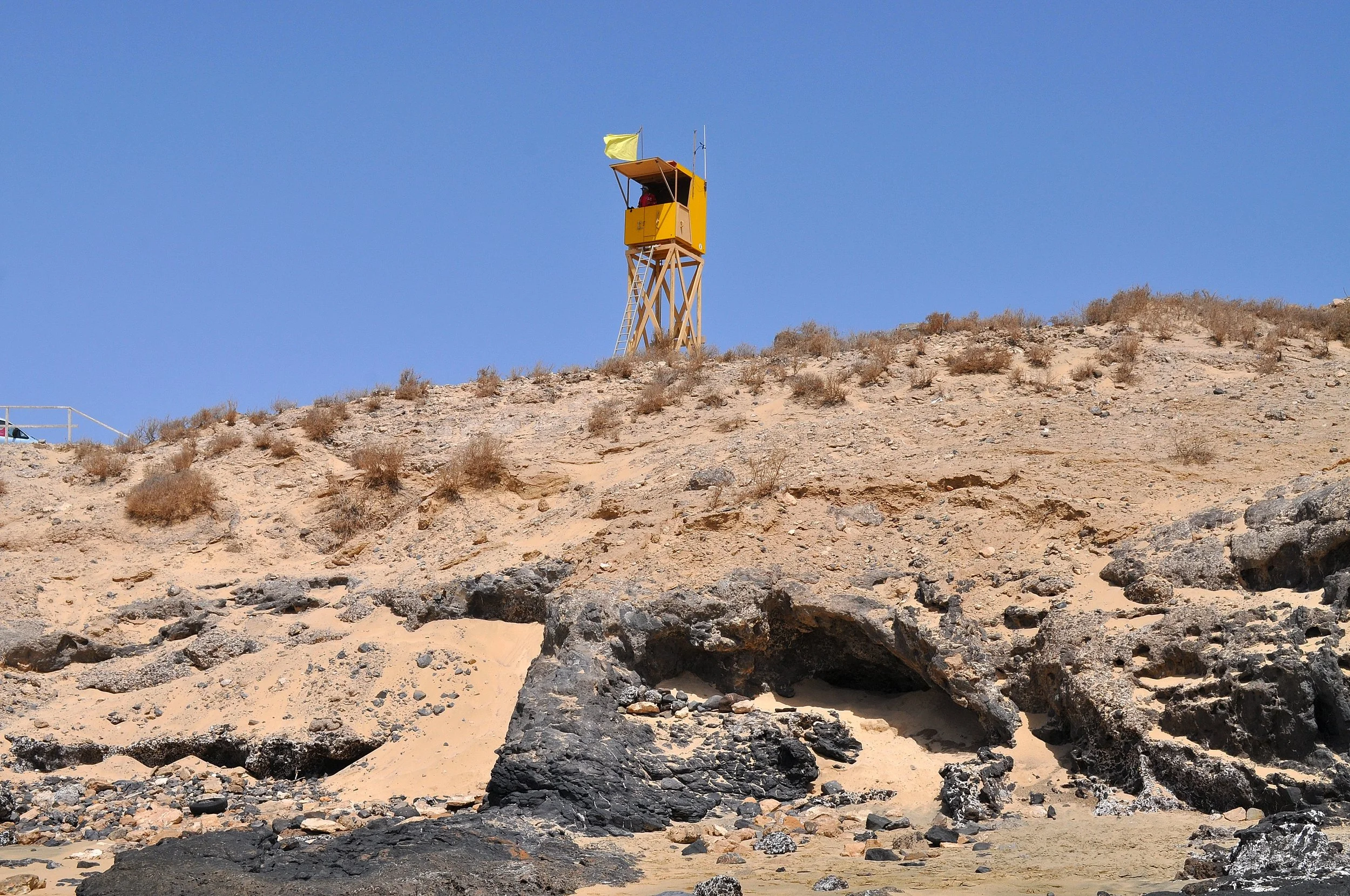


Angela: then there is Cofete, undoubtedly one of the most beautiful beaches on the entire island. It is perhaps the most wild and untouched beach of Fuerteventura, and reaching it is not particularly easy because there are no paved roads leading there. For this reason, it is better to avoid using a rental car and opt instead for a quad or a 4x4 vehicle. It is an immense beach, stretching for more than twelve kilometres, and more than any other it allows visitors to experience a true sense of peace and freedom. Located in the south of the island, it offers a spectacular backdrop: the Jandía Mountains, rising up to around 800 metres above sea level. Because the ocean here is often rough, swimming can be challenging, and in general this beach is not the most suitable choice for families with young children. However, its extraordinary landscape and feeling of isolation make Cofete an unforgettable place, where the power of nature is felt in every direction.
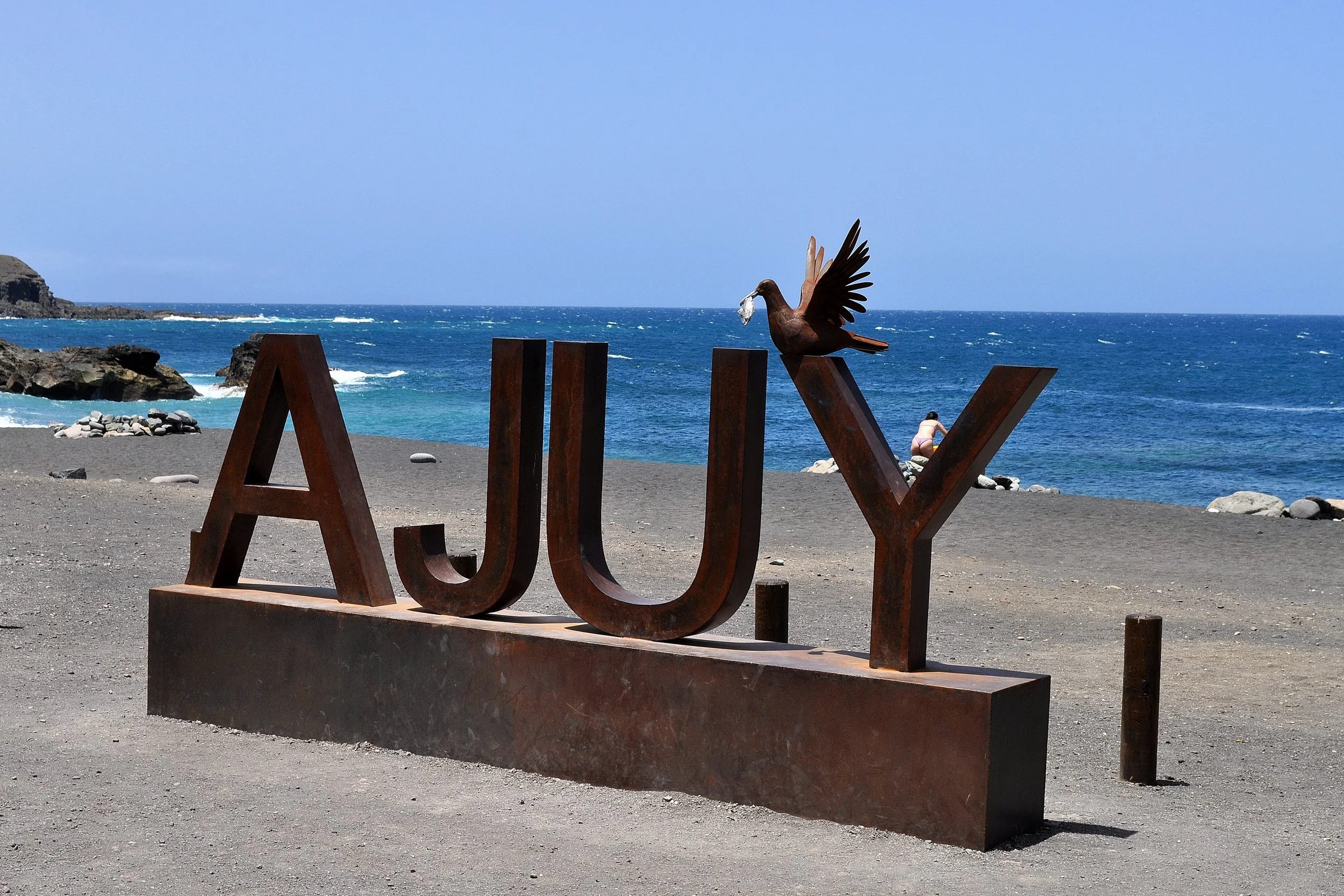
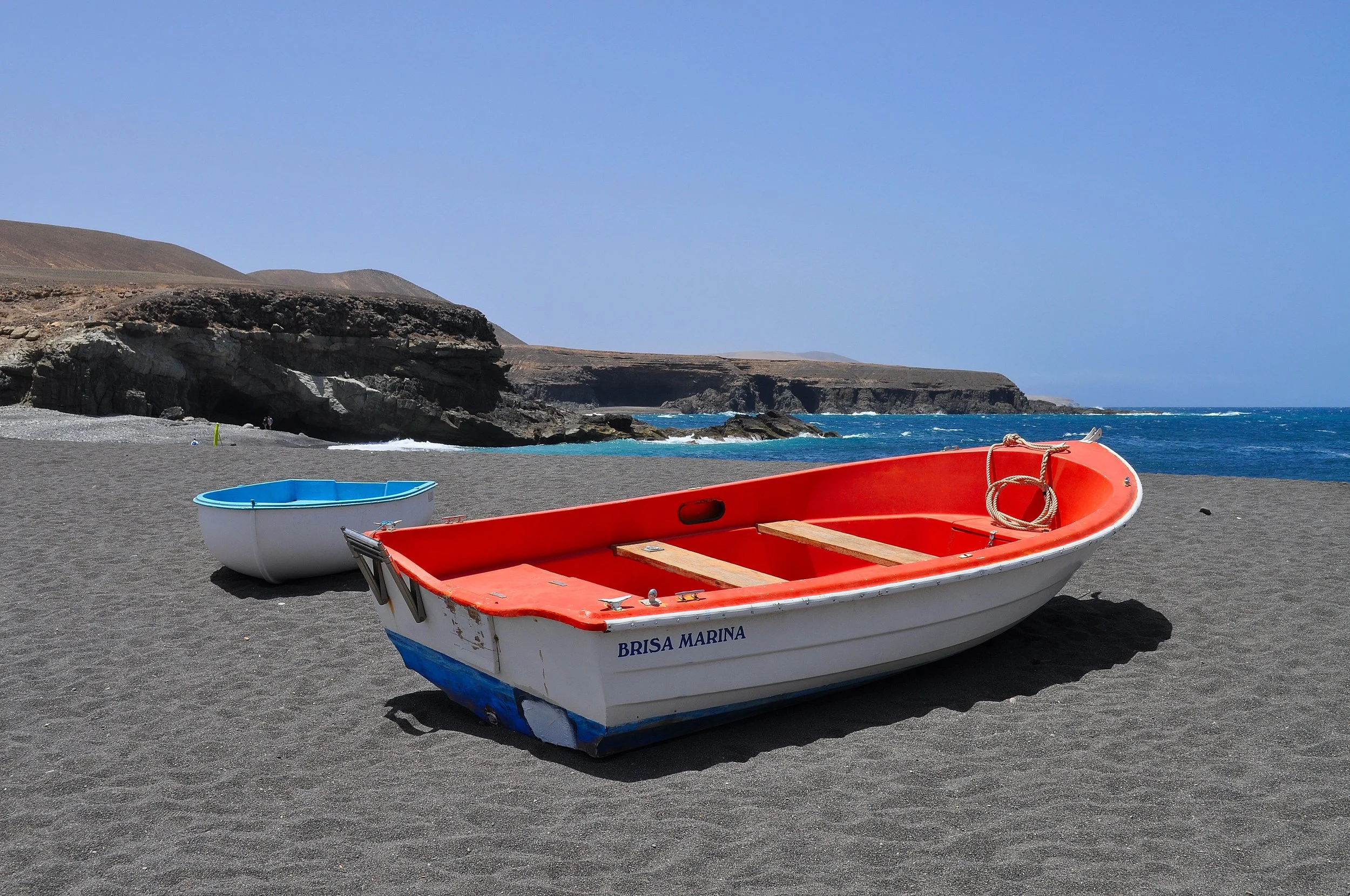
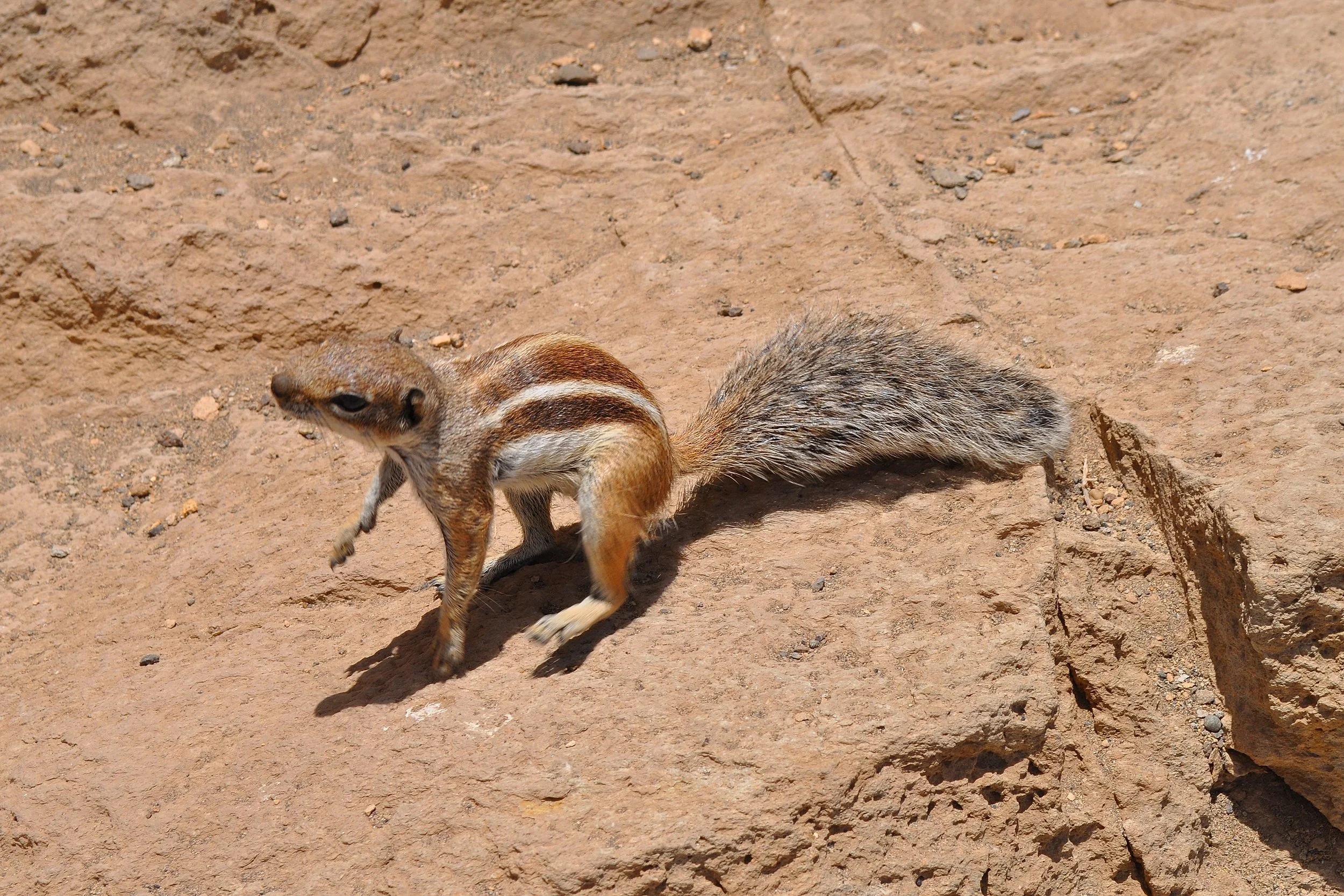
Piero: on the western side of the island, famous for its black sand, lies Ajuy Beach, where you can also discover fascinating sea caves. A walk along the cliffs is absolutely unmissable, offering a spectacular view of the coastline. Unfortunately, those who suffer from vertigo may find it difficult to continue, otherwise it is possible to get very close to the caves and fully appreciate their beauty. It is also very common to walk here accompanied by the many friendly ground squirrels that inhabit the area. A visit to Ajuy is not complete without stopping at one of the small beach restaurants to enjoy some excellent freshly caught fish, while admiring the wild beauty of the Atlantic coast.



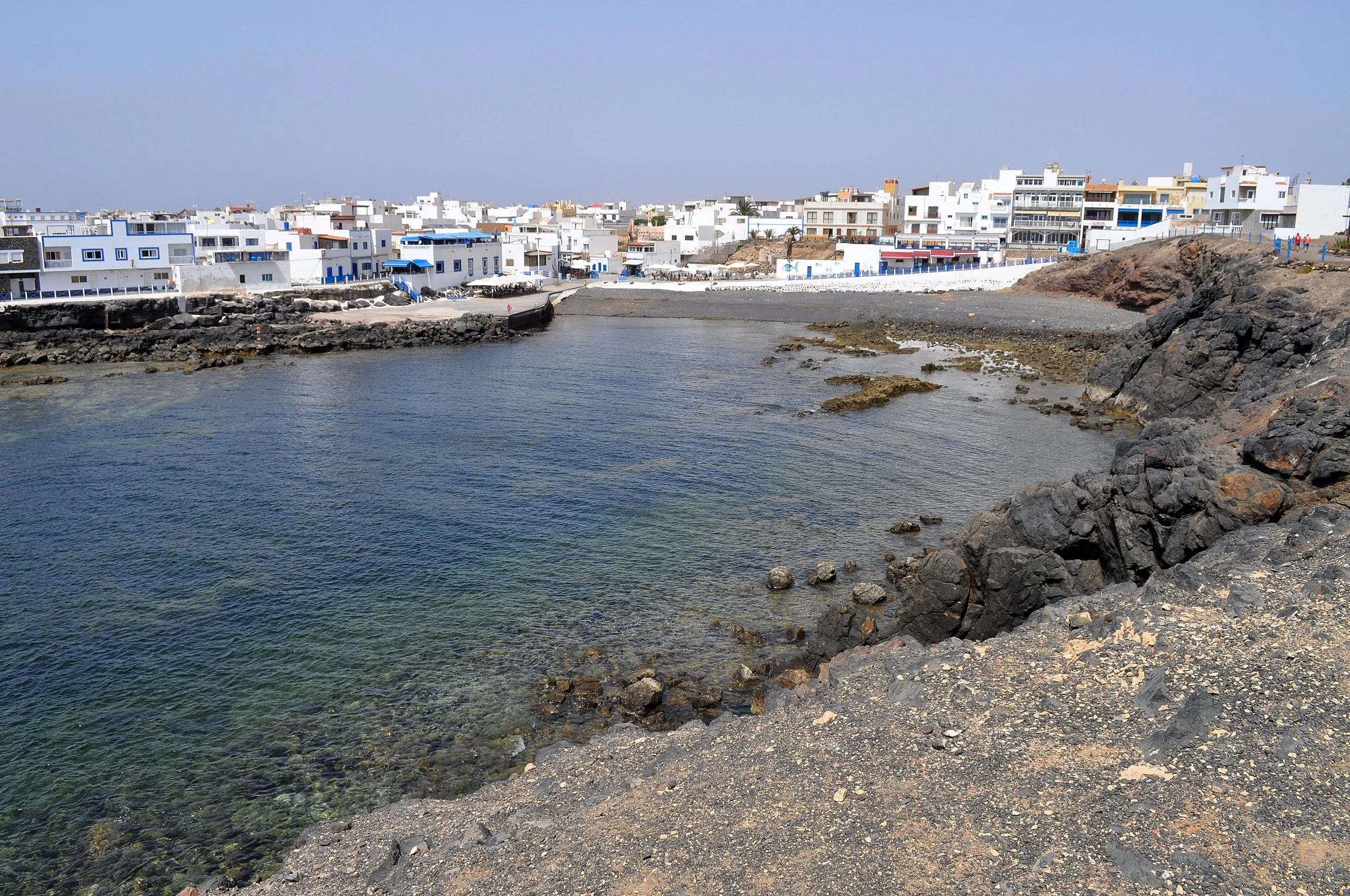
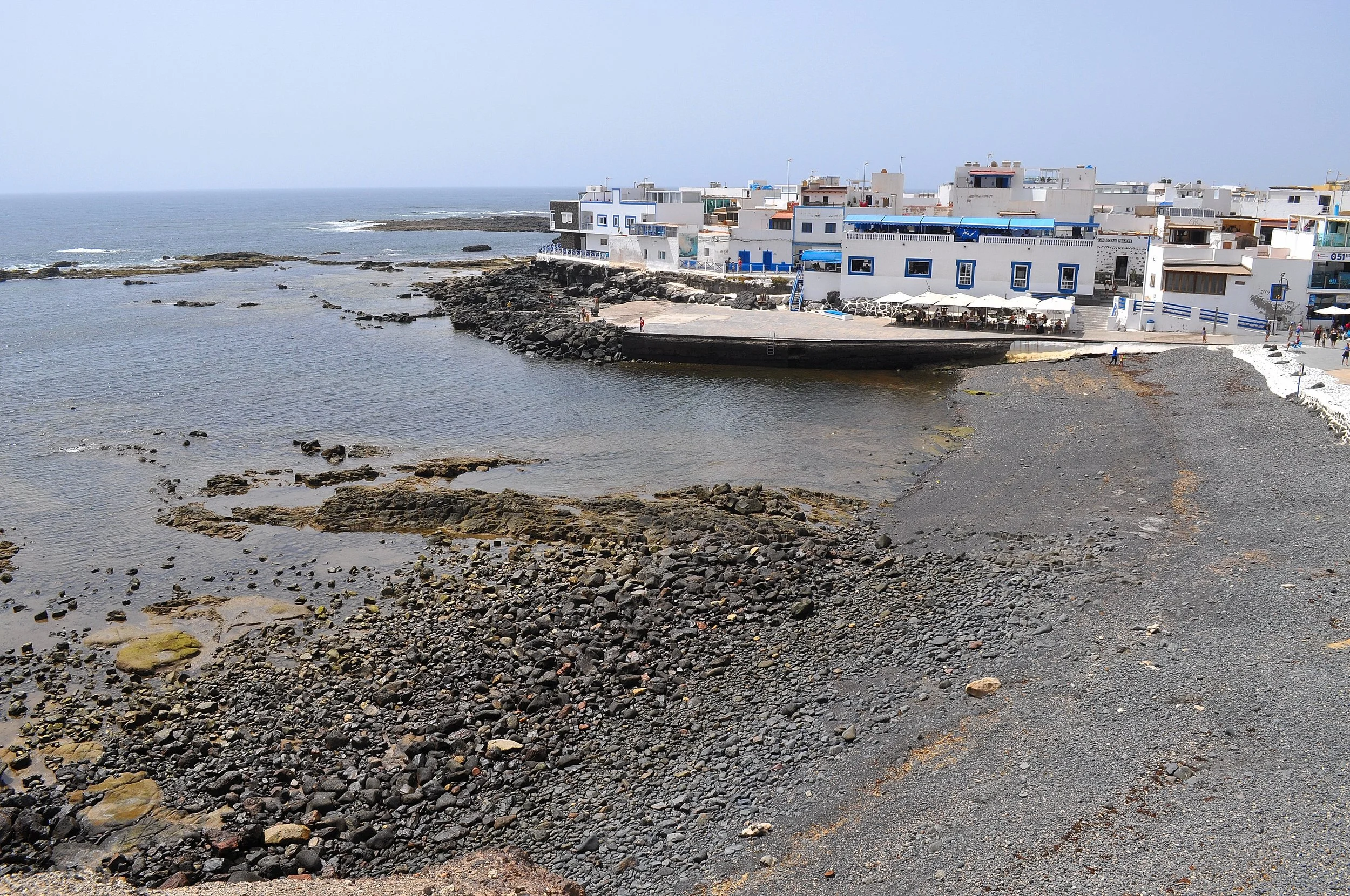
Angela: still on the western side of the island, but further north, lies La Concha Beach, another wonderful stretch of coastline with a breathtaking sea and the ever-present white sand that characterises so many beaches of Fuerteventura. It is definitely worth stopping in the nearby fishing village of El Cotillo, where you can taste some typical local dishes just a few steps away from the ocean. Watching the sunset from here is a truly unique experience and one of those moments that should not be missed during a visit to the island.
More than just sun and sand…
Piero: as we have already mentioned, Fuerteventura is not only about sea and beaches. The island also offers breathtaking landscapes, truly unique villages, and above all a series of extraordinary natural wonders that are absolutely worth discovering.
Angela: one of the places that best represents the essence of Fuerteventura is undoubtedly the Corralejo Dunes Natural Park.
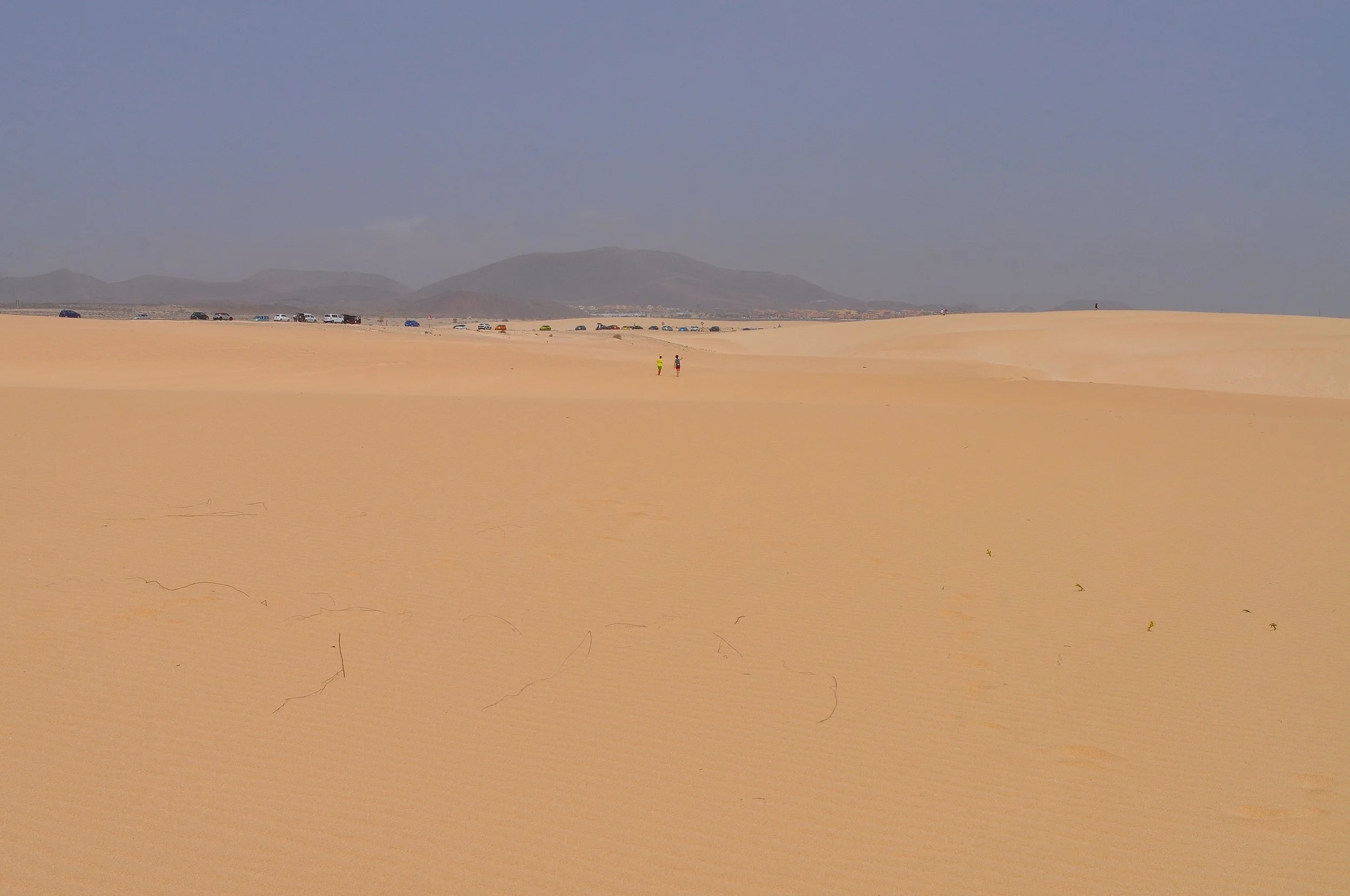
Piero: it is an immense natural park where volcanic rock formations are covered by a thick and soft layer of white sand, creating dunes that make the landscape look like a true desert. It almost feels as if we have reached an overseas extension of the Sahara Desert. The dunes stretch as far as the eye can see, eventually meeting the spectacular beaches where the unmistakable turquoise waters of Fuerteventura complete a landscape that seems almost unreal: a perfect combination of desert, volcanoes, and ocean.
Angela: it is located in the northern part of the island, right next to Corralejo. It is a strip of desert landscape stretching for around twelve kilometres in length and about one kilometre in width. It is very easy to reach, as it runs alongside the road connecting Puerto del Rosario to Corralejo.
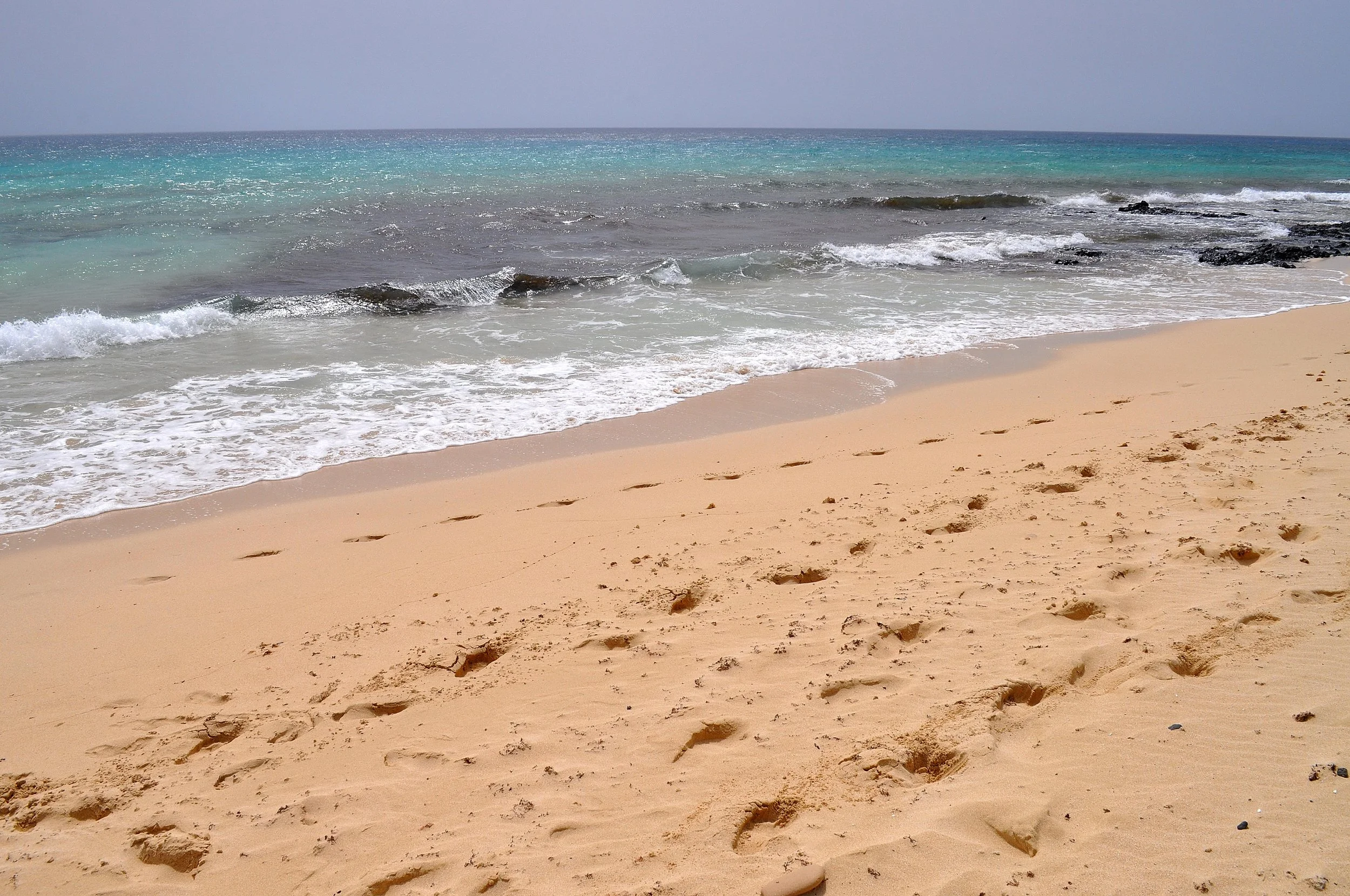
Piero: from the car park, access is easy and completely free, and this is where the magic begins. We start climbing the dunes, while the wind constantly erases every footprint left in the sand. A few minutes of walking through the silence, surrounded by the gentle ups and downs of the dunes, and suddenly the ocean appears before us, offering a breathtaking contrast between the golden-white sand and the intense turquoise waters. A landscape that feels like a meeting point between the Sahara and the Atlantic Ocean.


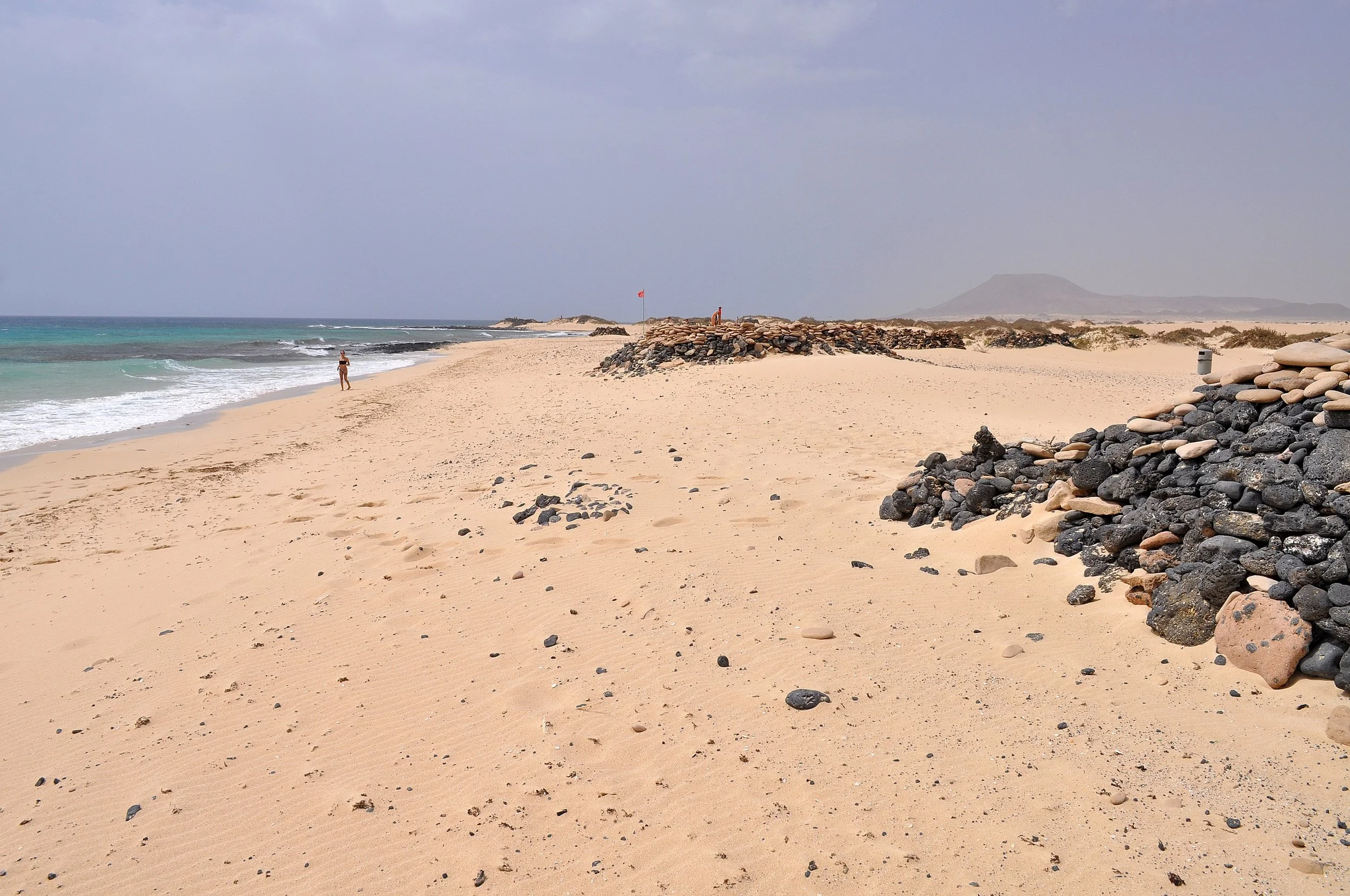
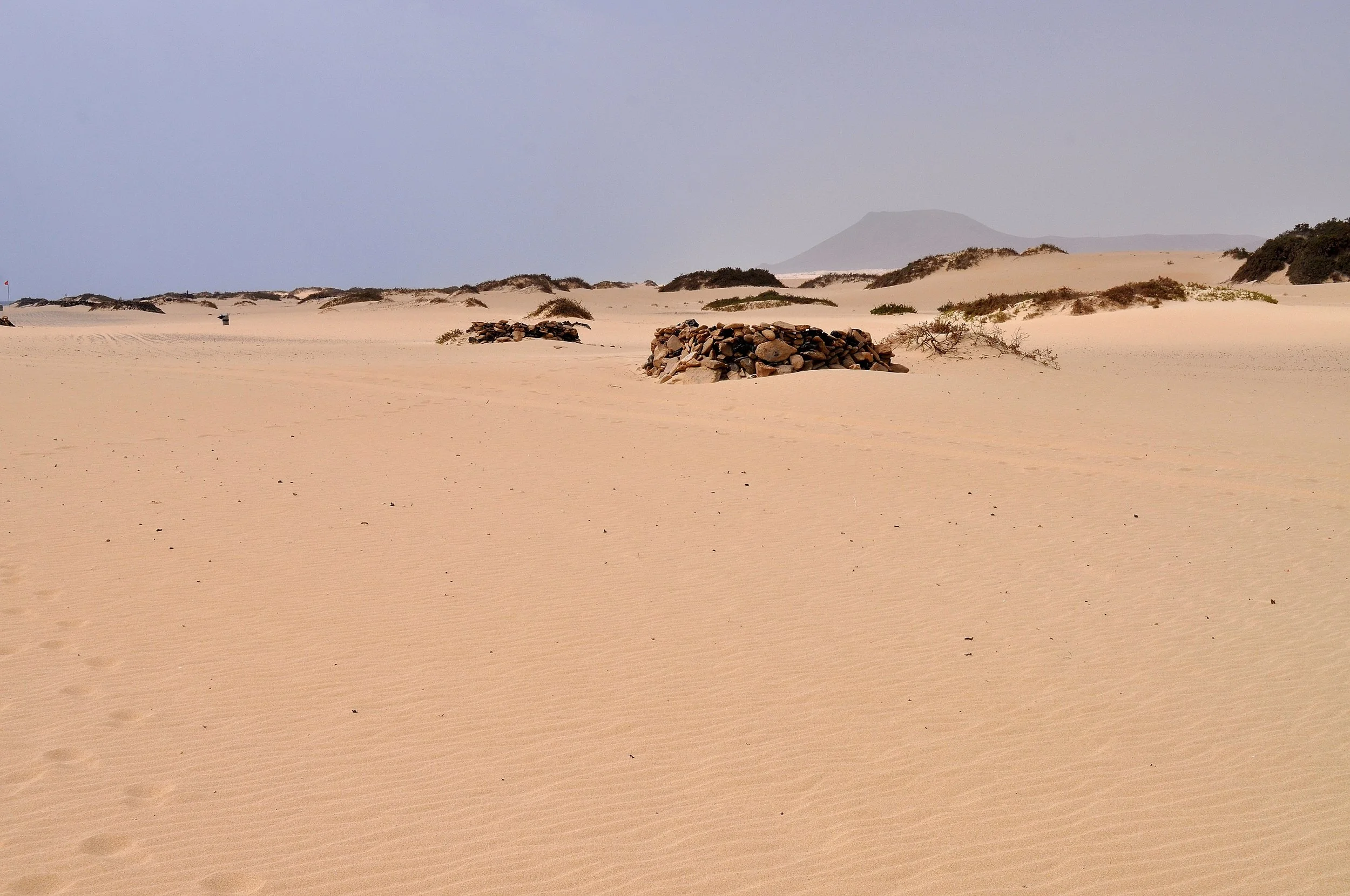
Angela: to protect ourselves from the wind, we stop at one of the small stone castles made of volcanic rock that are scattered all along the beach.
Piero: from the Corralejo Dunes, we head to nearby Corralejo. There is nothing particularly remarkable to visit, although it is undoubtedly one of the island's main hubs. Shopping streets, wine bars, trendy restaurants, and nightlife venues give the town its lively atmosphere. If you're not planning to spend the evening here, a short walk is enough to explore it.
Angela: from Corralejo, it is well worth taking the 15-minute ferry to the uninhabited Lobos Island, located between Lanzarote and the northern coast of Fuerteventura. It is the perfect place for anyone who wants to relax in the sun and enjoy some peace and quiet.
Piero: the island is a nature reserve and is home to just one lighthouse and a couple of fishermen's huts, surrounded by volcanic rocks, turquoise waters, and unspoilt sandy beaches.
Angela: just outside Corralejo, heading west, you can easily reach a group of volcanic craters, the most famous of which is Calderón Hondo. It is well worth climbing to the summit via a trail that can be completed in about forty-five minutes.


Piero: it was thanks to these volcanoes that the surface of Fuerteventura increased over time, bringing the island closer to Lanzarote and also creating the small island of Lobos.
Angela: still in the northern part of the island, near La Concha Beach and El Cotillo, it is well worth driving along the peninsula that leads to the north-western tip of Fuerteventura, where you will find the Tostón Lighthouse.
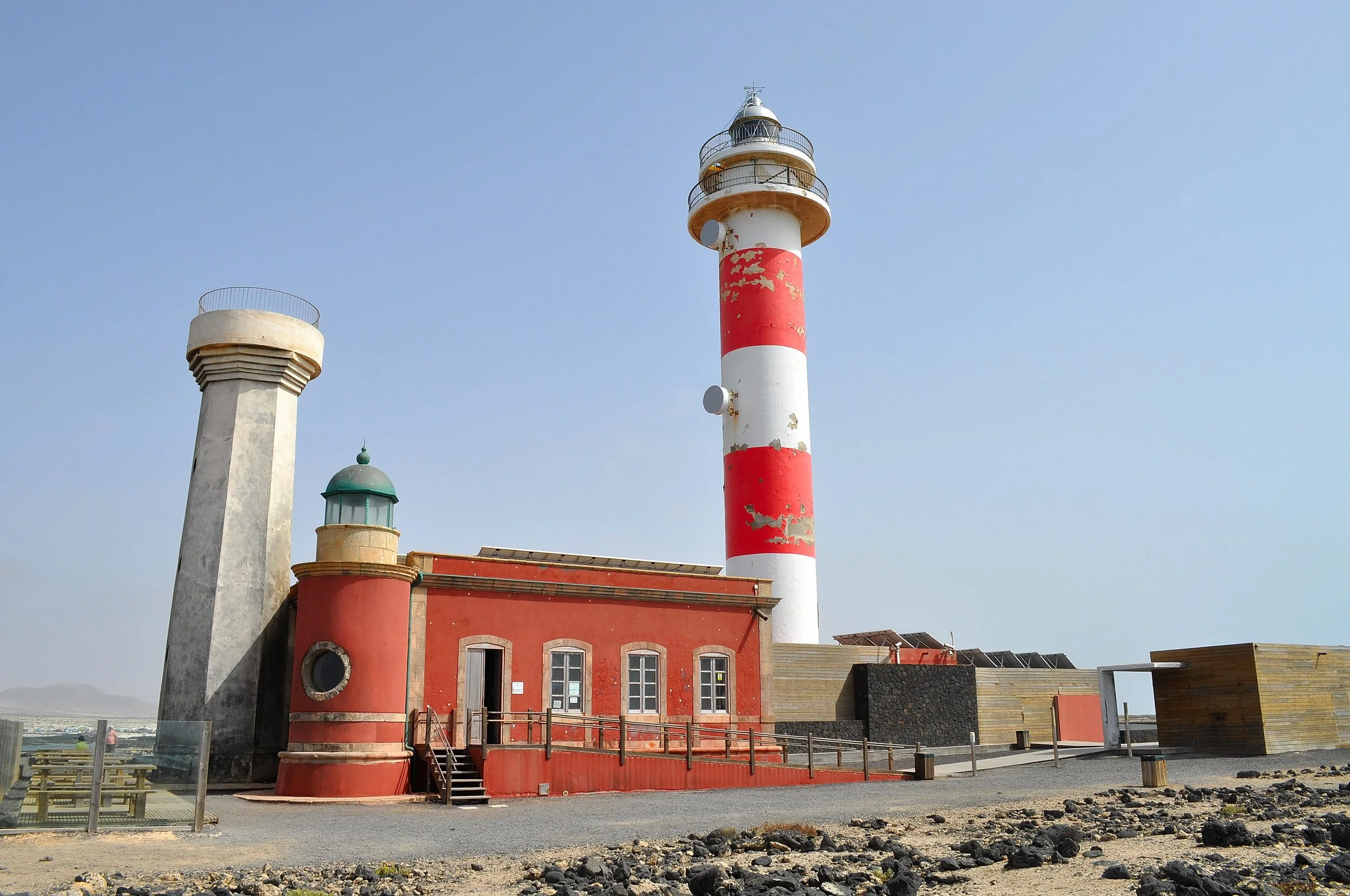
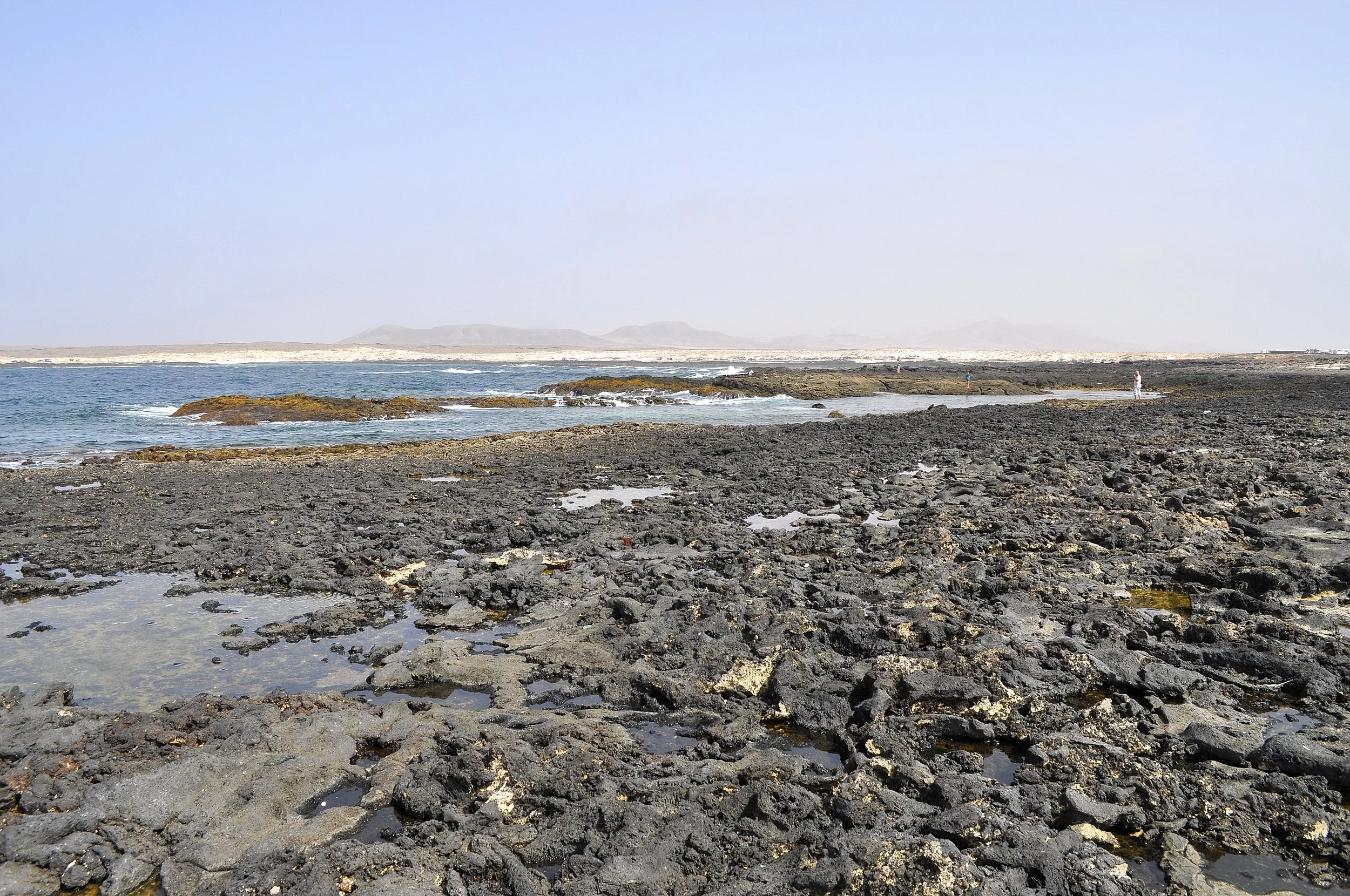
Piero: the lighthouse is no longer in operation and now houses a fishing museum. It is well worth taking a walk around the area, where the volcanic rocks meet the Atlantic Ocean, creating a truly unique contrast of colours.



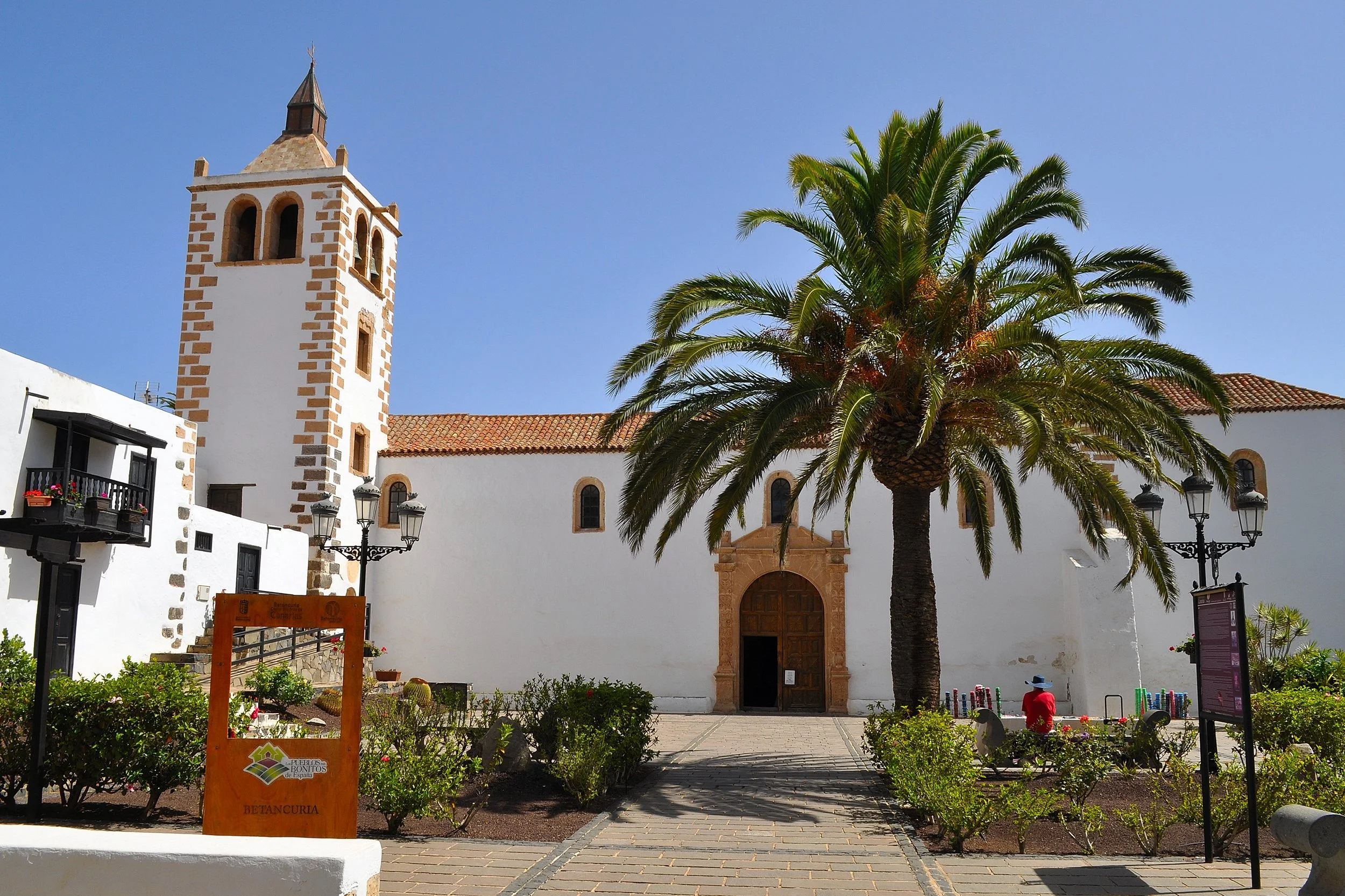
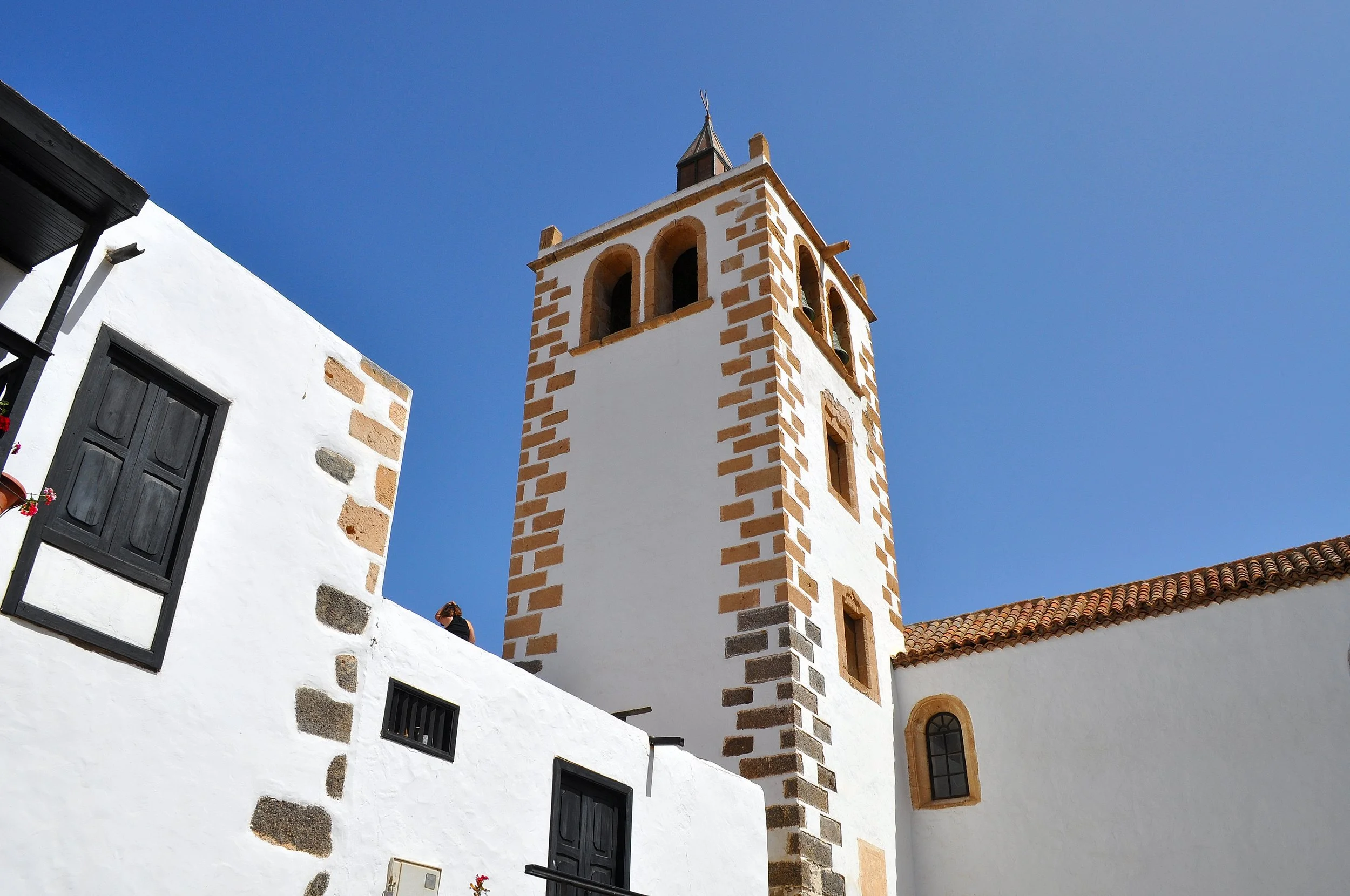
Angela: another must-see is undoubtedly the island's former capital, Betancuria. It is the oldest settlement on the whole of Fuerteventura. This small town has preserved its charming colonial atmosphere, with its cobbled streets and the beautiful Church of Santa María, the first religious building ever constructed on the island.

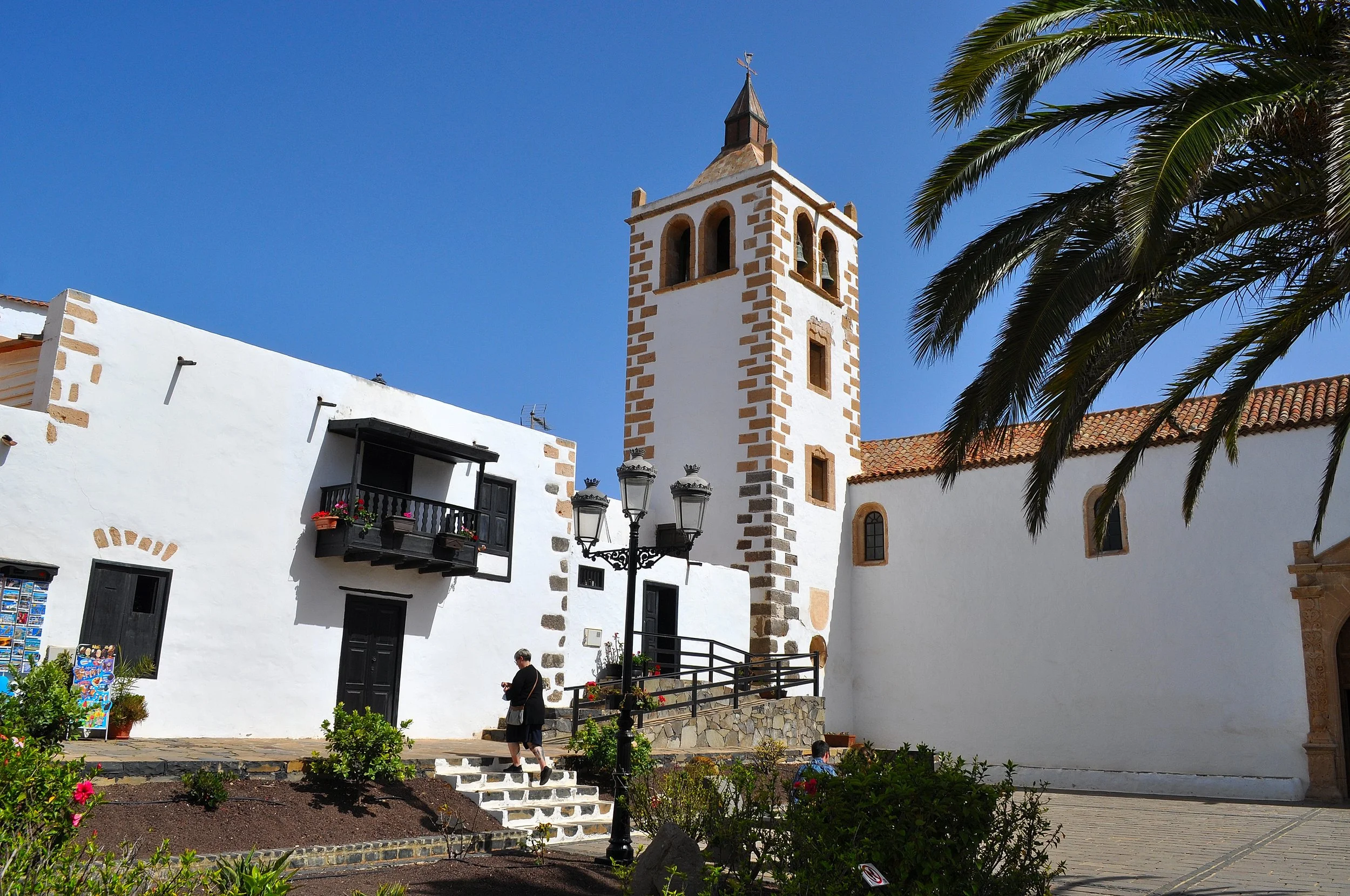


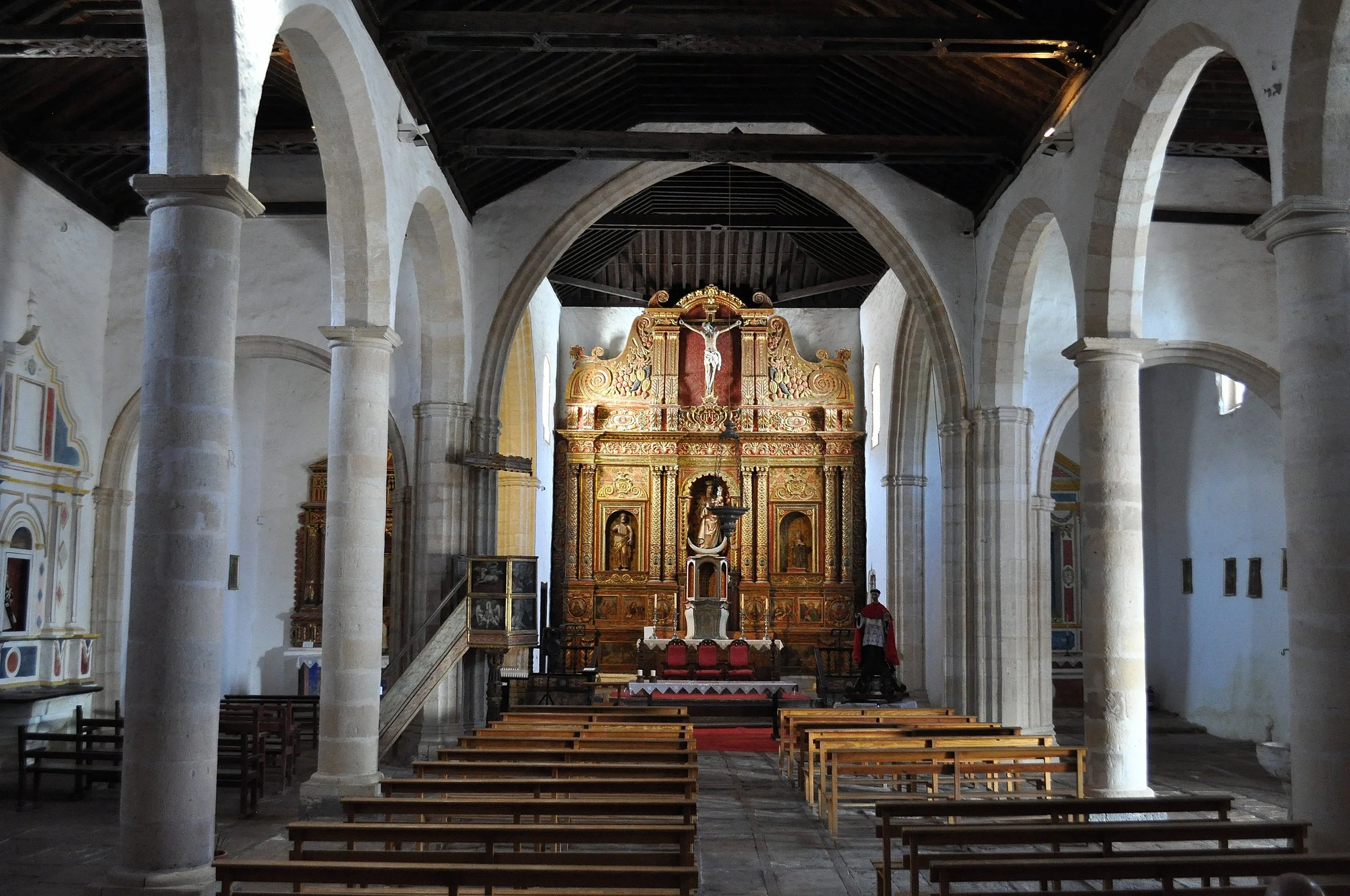

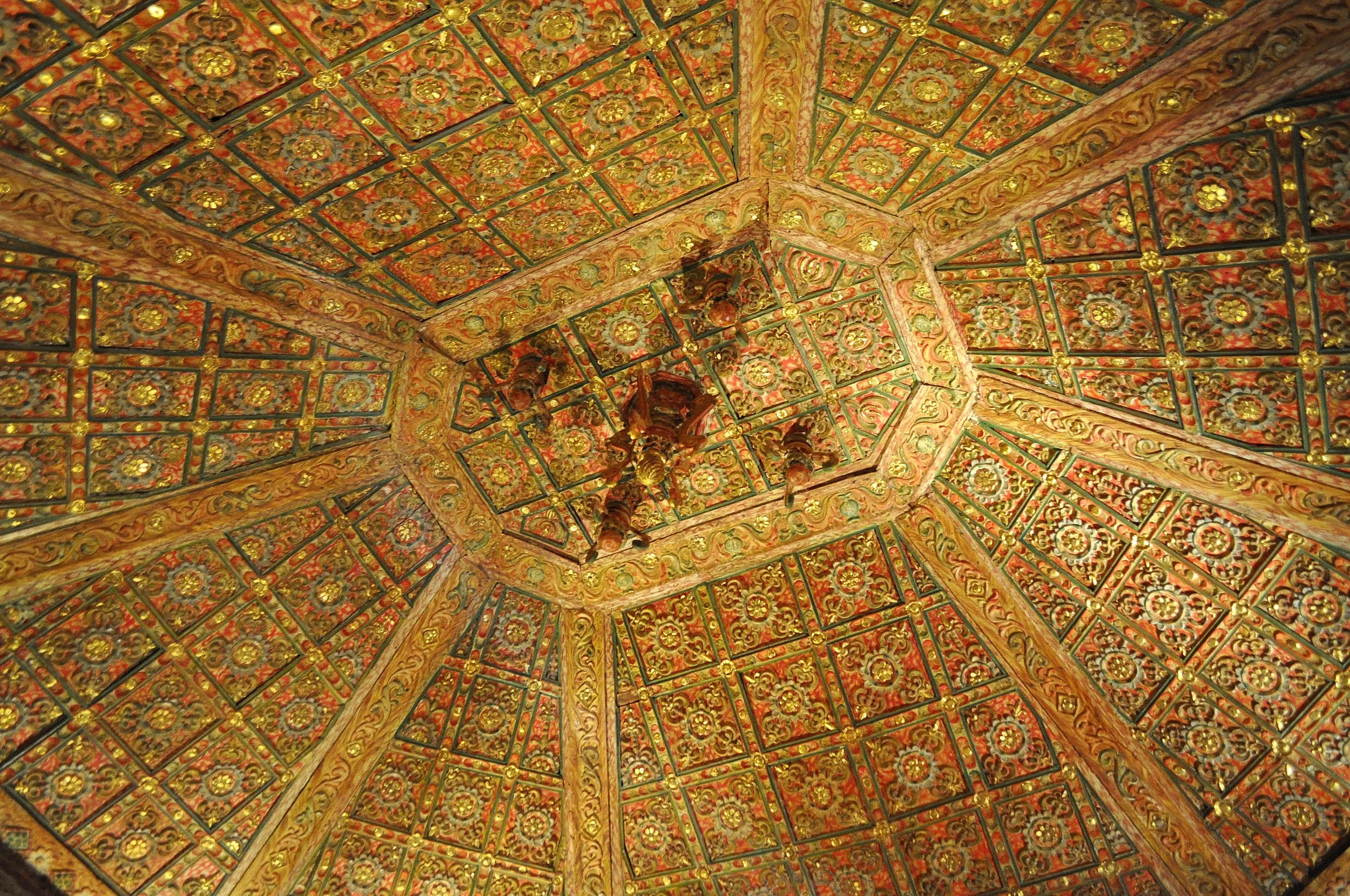
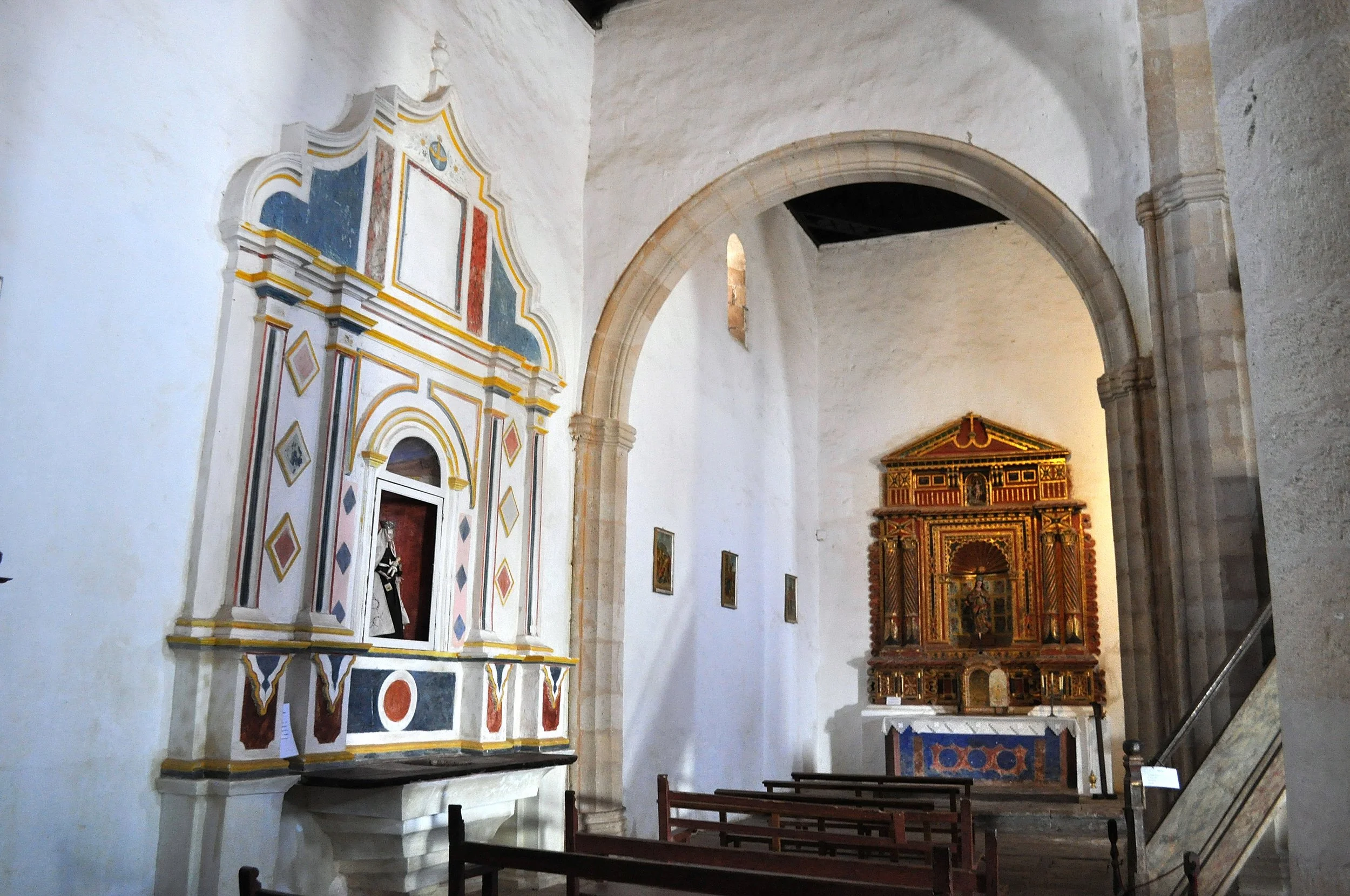
Piero: the surroundings of Betancuria also offer countless opportunities to take beautiful photographs of the island's dry and rugged landscapes. The scenery is truly spectacular, with rolling volcanic hills, winding roads, and wide open views that perfectly capture the wild beauty of Fuerteventura.


Angela: in the southern part of the island, it is well worth visiting Jandía, its lighthouse, and its beautiful beach, which is essentially a continuation of Sotavento Beach. It is a modern town, with plenty of shops and attractive streets for shopping. Its beach is also one of the least affected by the wind.
Piero: it's also the perfect opportunity to try some more local specialities, such as mojo picón, a traditional sauce made with chilli peppers and paprika, usually served with meat and cheese. In some versions, it can be incredibly spicy!
Angela: another local delicacy that should not be missed is queso majorero, a distinctive goat's cheese made from the milk of a native breed of goats. It was the first Spanish cheese to be awarded Protected Designation of Origin (PDO) status.
Piero: it takes its name from the people of Fuerteventura, who are known as majoreros, a word derived from the island's ancient name, Maxorata.
Adiòs Fuerteventura!
Angela: sometimes you don't have to travel far to find a true paradise. Fuerteventura is truly enchanting. The postcard image of its white sand and turquoise waters is certainly the first thing that strikes you, but this island is so much more.
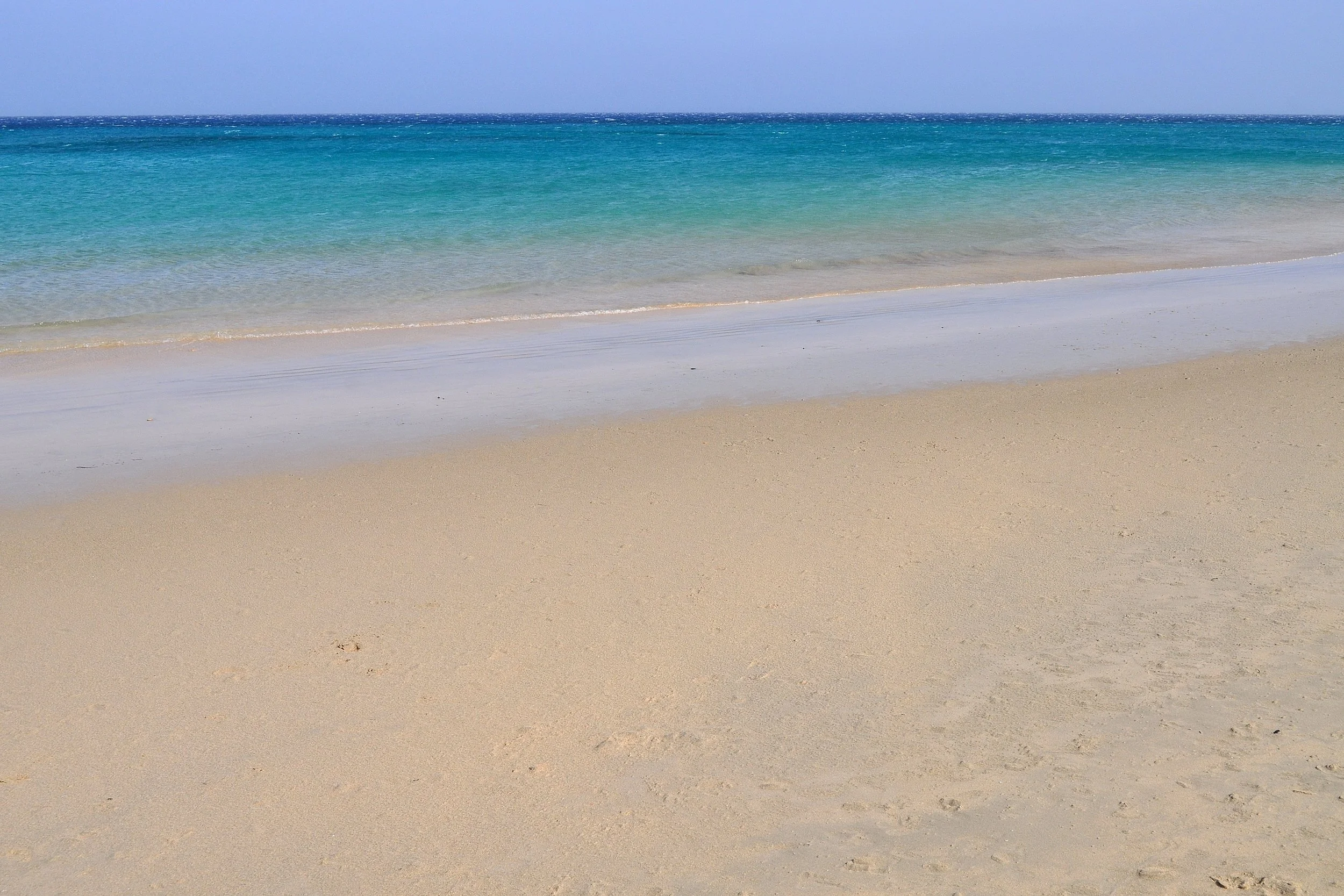
Piero: it is undoubtedly the island of tranquillity and a slow pace of life, of unspoilt nature in all its forms, and of a sense of peace interrupted only by the wind that blows incessantly.
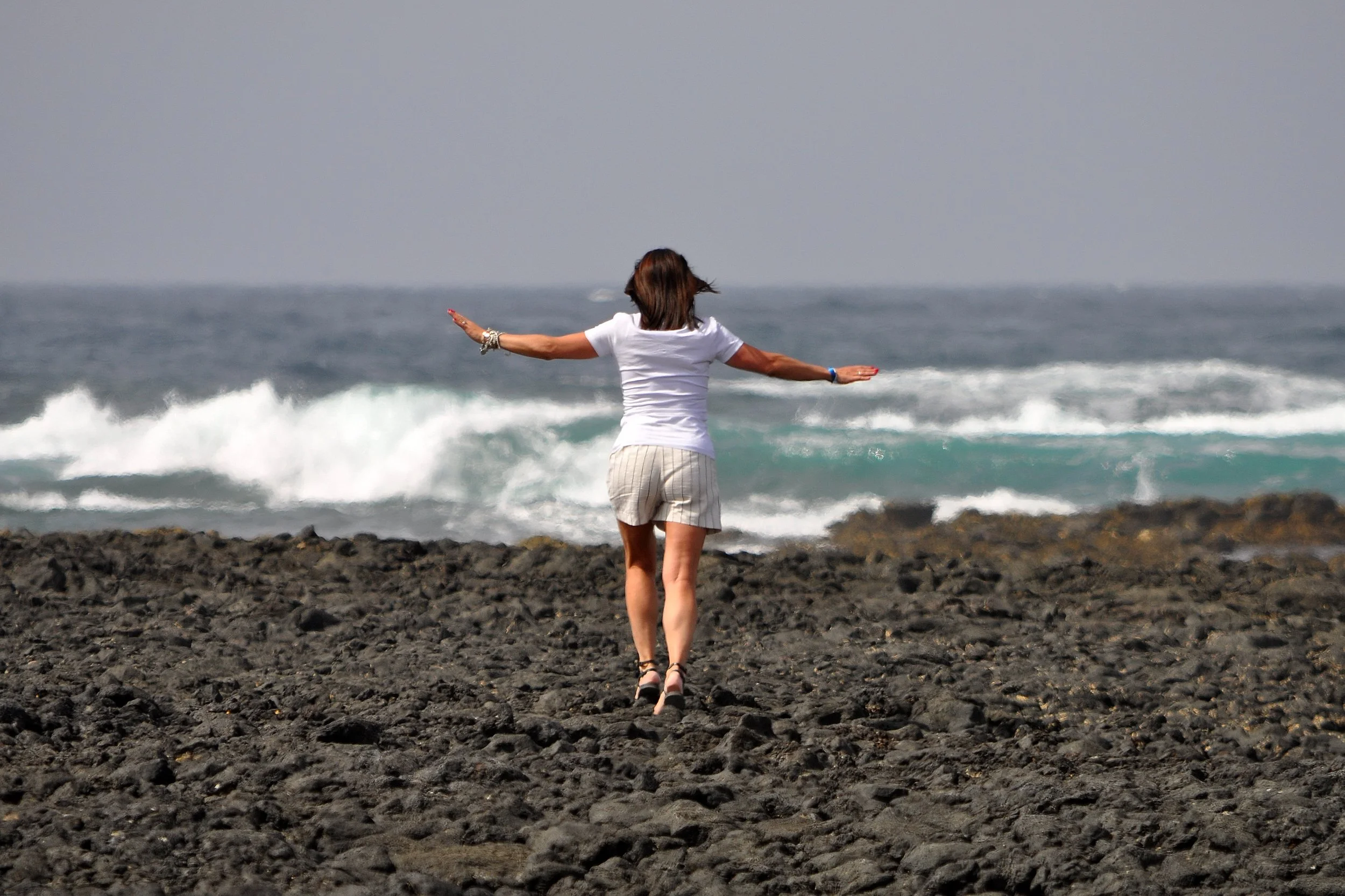
Angela: its volcanic origin gives it a very distinctive charm, with landscapes, colours, and atmospheres that are truly unique.
Piero: let's relive it all in this short video!