
Monteriggioni, the perfect fortress on the Via Francigena
Monteriggioni is one of the most iconic medieval villages in Tuscany. founded in the 13th century as a defensive castle of the Republic of Siena, it overlooks the Via Francigena with its perfectly preserved walls. a short but intense walk through a Medieval world that has remained intact, even mentioned by Dante in the Divine Comedy.
Piero: the van has been stationary for a while. too long. i think it’s time for another one of our trips.
Angela: what do you have in mind this time? you know we only have a few days.
Piero: yes, and that’s exactly why i thought of Tuscany. we’ll base ourselves in Siena and take a few detours through the Chianti and Val d’Orcia.
Angela: then the first must-see stop on the way to Siena i can already imagine. on the hill, seemingly placed with millimetric precision, appears Monteriggioni. a stone crown that looks designed rather than built, a mandatory stop along the road.
Piero: how can you just drive past a place like this? the view from the highway alone is spectacular.
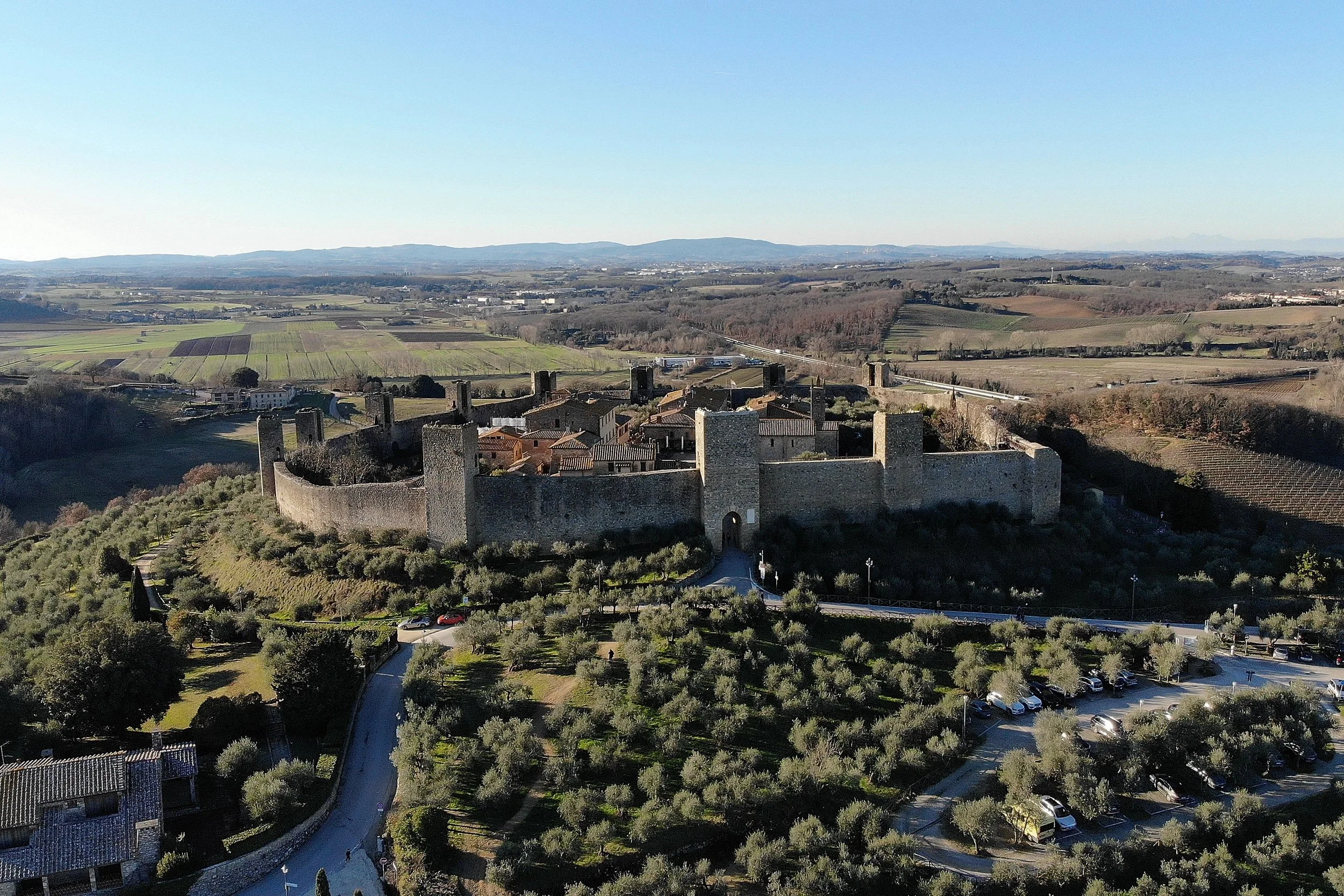
Angela: immediately i wonder: why has Monteriggioni remained so intact? why has it become a symbol of medieval Tuscany? and how has its profile been recognizable for centuries?
Piero: we enter, and the answers come step by step.
Monteriggioni: a castle designed
Angela: here you immediately understand that this is not a medieval village born by chance.
Piero: exactly. this is a designed castle, not one that grew organically. Monteriggioni was founded in the early decades of the 13th century, during a period of intense political and military tension between Siena and Florence. the two cities fought for control of the territory and, above all, the communication routes.
Angela: and this position is by no means accidental.
Piero: no, here Siena decided to act preemptively. the Republic of Siena needed to defend its northern border and control a vital artery: the Via Francigena. an ancient road, traveled for centuries by pilgrims heading to Rome, but also by merchants, ambassadors, and armies. the Via Francigena was not just a religious route. it was a true medieval infrastructure, a continuous flow of people, goods, and information. controlling it meant controlling the territory, the economy, and security.
Angela: whoever controlled this road controlled everything that passed through.
Piero: and indeed, Siena decided to fortify it. pilgrims heading to the Eternal City, merchants carrying fabrics and spices, soldiers on the march—all passed here. a new fortress, modern for its time, was needed: visible from afar, capable of inspiring respect even before being attacked. between 1213 and 1219, the castle of Monteriggioni was built in just a few years. a coherent, unified project, with no later stratifications. this is what makes the medieval village so compact and readable even today.
Angela: it really seems like it was drawn first on a map.
Piero: and then placed here, with no second thoughts. the walls enclose the space, define the perimeter, control the hill and the Via Francigena below. they are not only for defense: they are a clear political and military message.
Angela: it’s like saying, “Siena stops here.”
Piero: and beyond, begins the contested territory. Monteriggioni remained under Sienese control until 1554. it was not conquered by force, but handed over to the Florentines through betrayal. a bitter ending, which does not diminish the effectiveness of its defensive architecture. only then did the Florentines and Cosimo I de’ Medici impose their rule over the territory and the inhabitants of Monteriggioni.
Angela: the walls resist. the men do not.
Piero: one interesting fact shows how famous Monteriggioni already was in the 14th century.
Piero: so famous that it ends up in the Divine Comedy.
Angela: not a small thing… in Canto XXXI of the Inferno, Dante compares the towers of the castle to giants rising from the infernal abyss:
Però che, come su la cerchia tonda
Monteriggion di torri si corona,
così la proda che ’l pozzo circonda
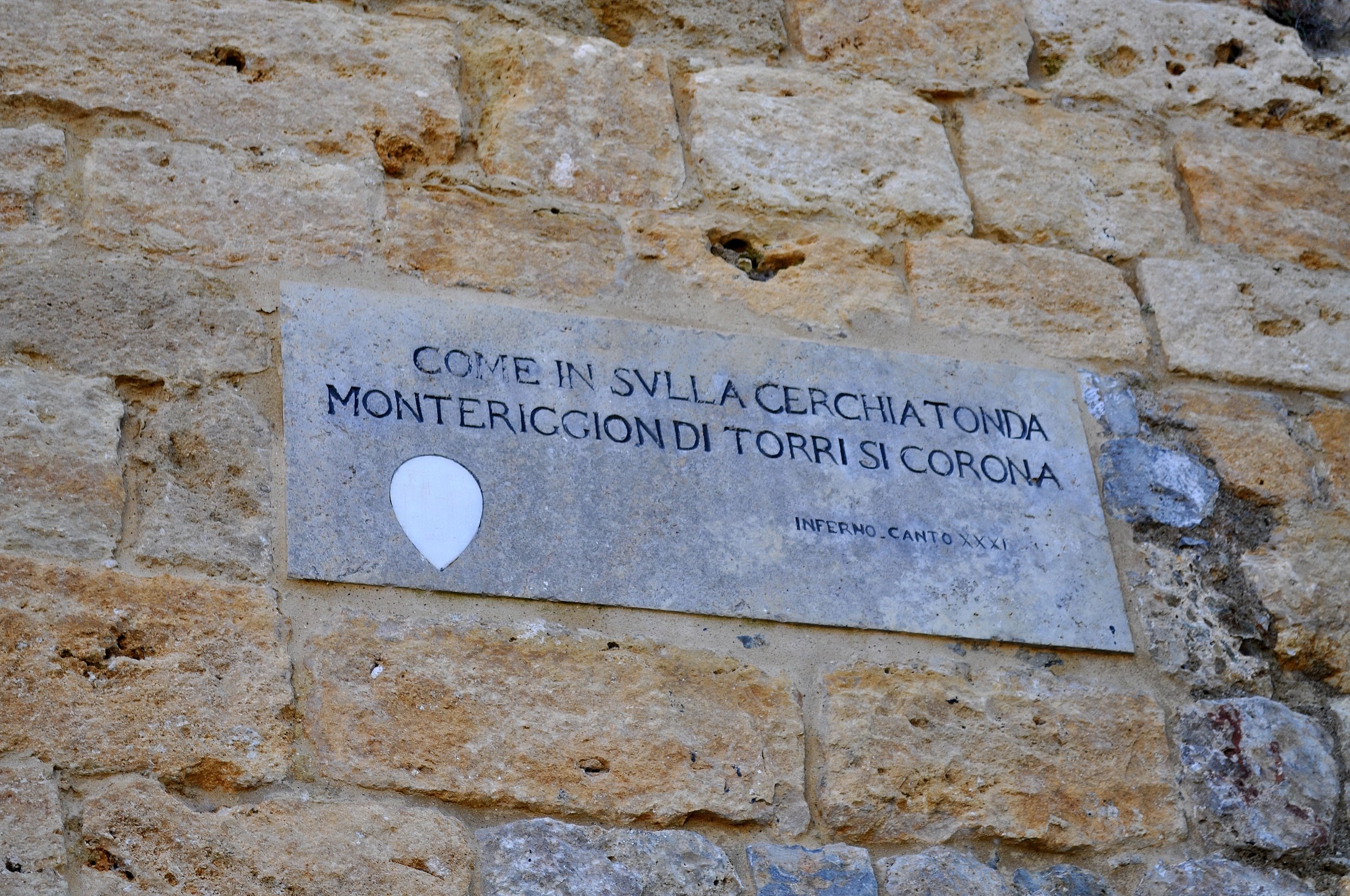
Piero: it’s an extremely powerful image. the towers of Monteriggioni become a metaphor for grandeur and fear.
Angela: being mentioned by Dante means never being forgotten.
Piero: and there’s another curiosity about Monteriggioni, this time much less highbrow…
Angela: ah, yes! this magnificent castle and village are the setting of a famous video game: Assassin’s Creed.
The walls of Monteriggioni: geometry and power
Piero: the walls are the soul of the castle. an almost perfect ring, about 570 meters long, interrupted by 14 square towers that still dominate the profile of the medieval village today.
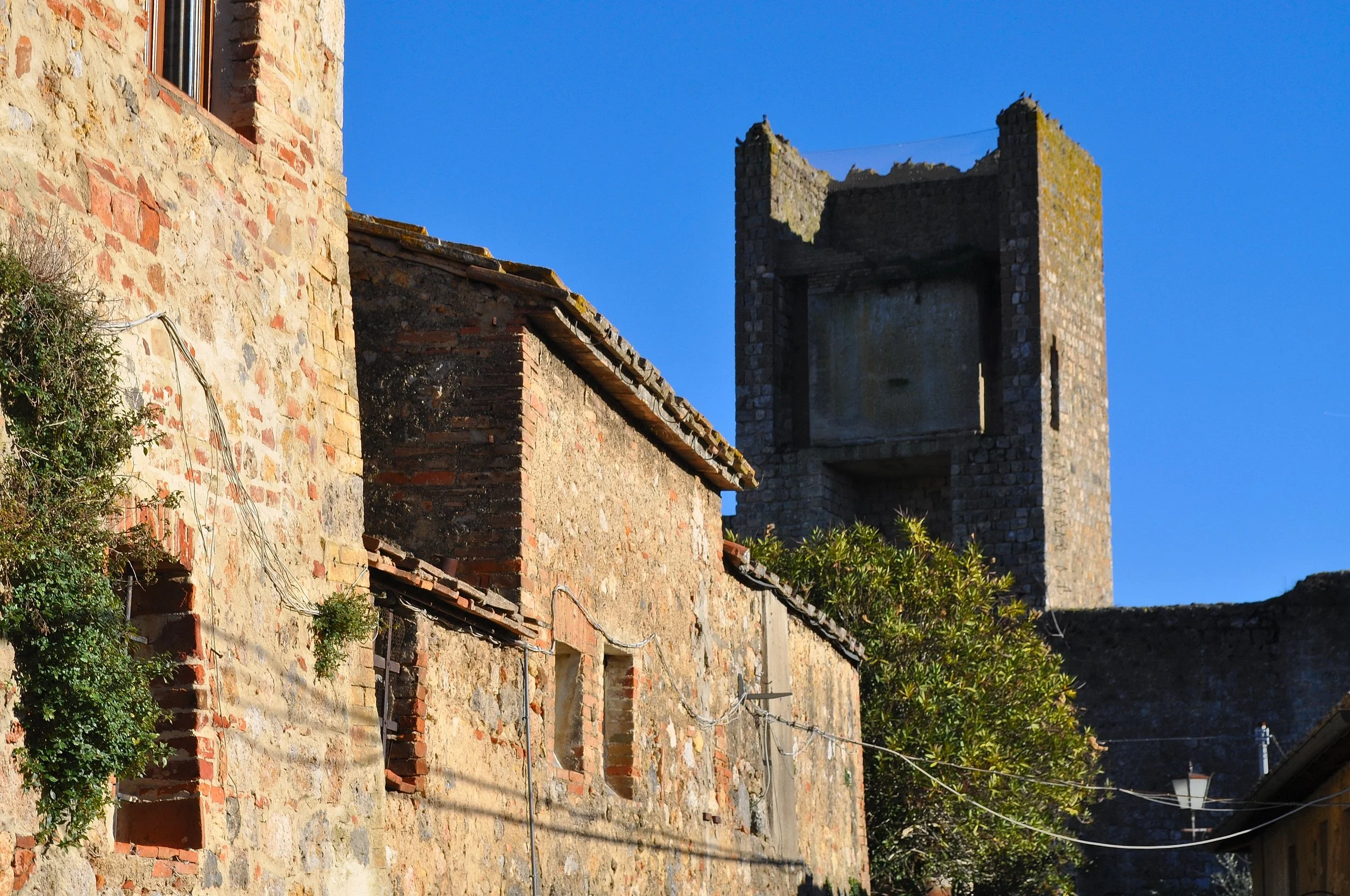
Angela: seen from afar, they are almost intimidating.
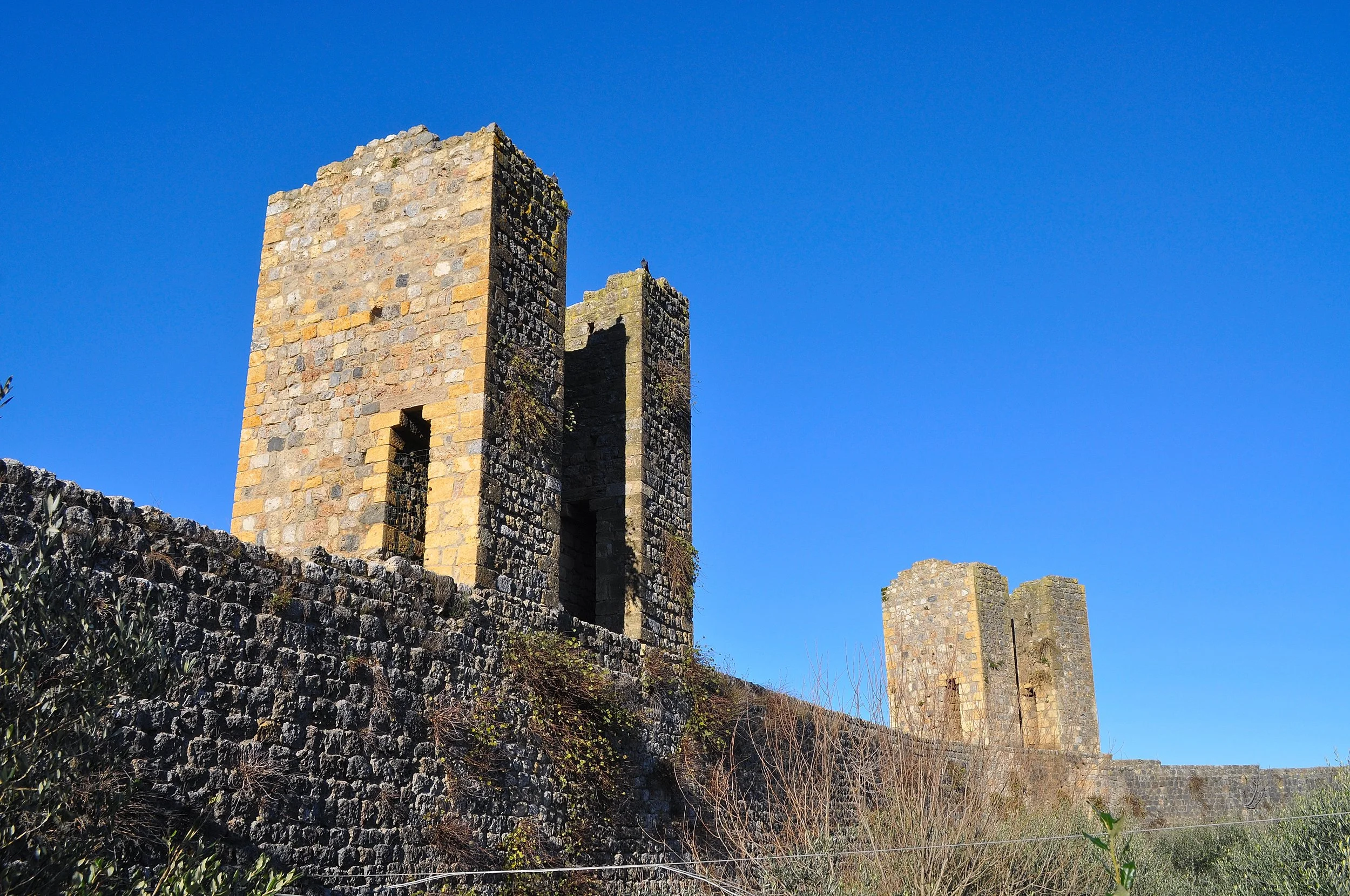
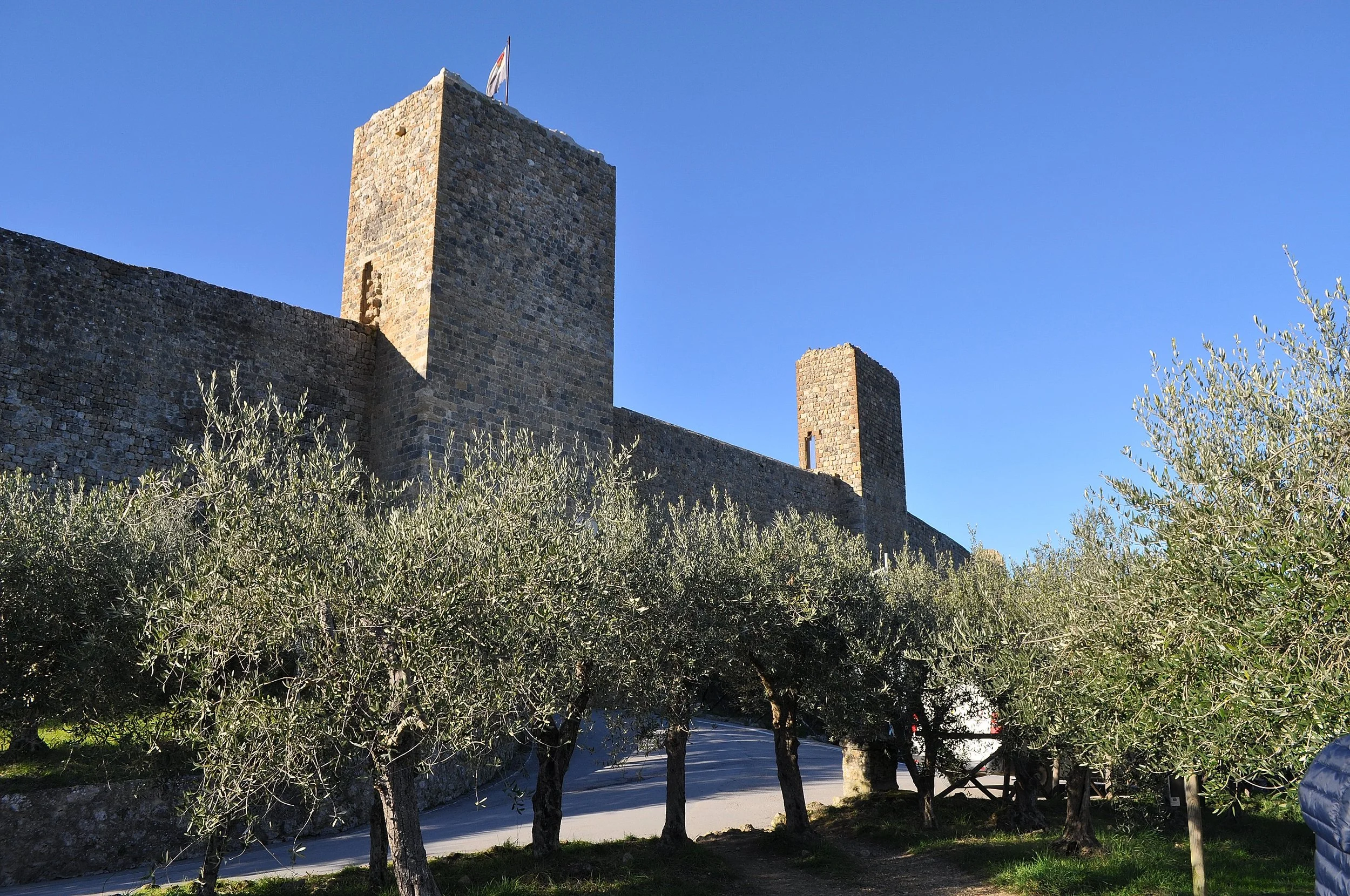
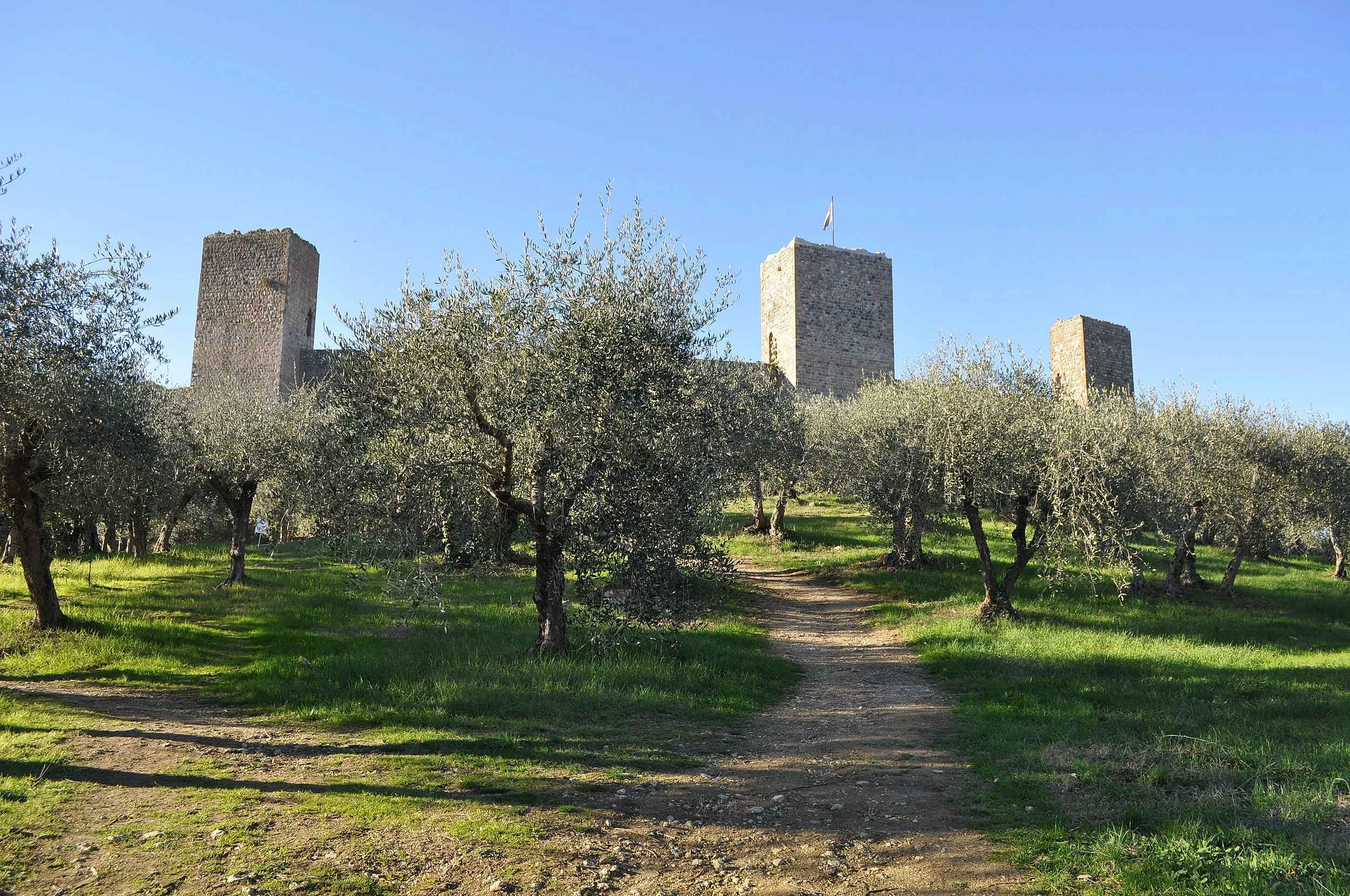
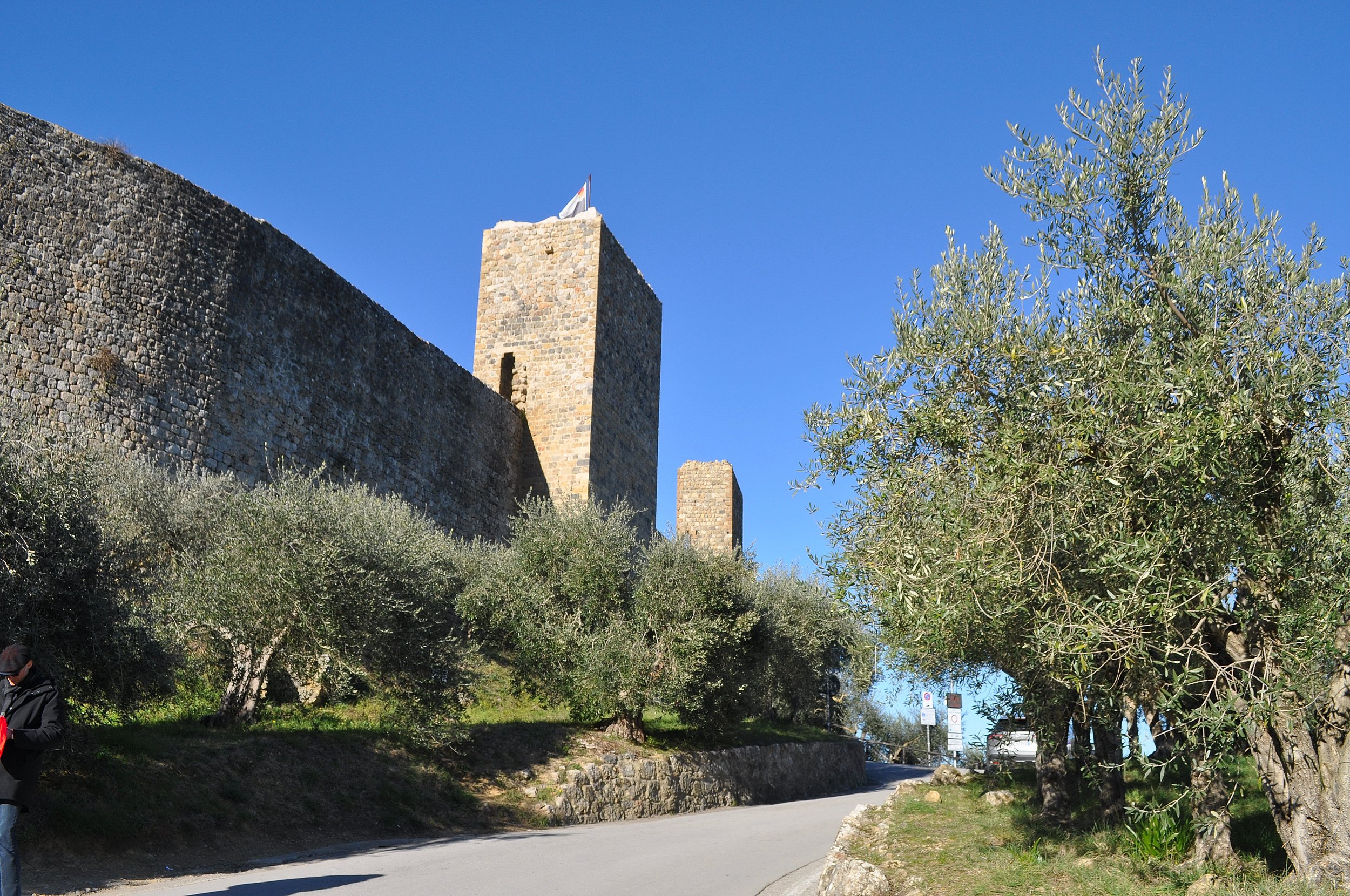
Piero: they were meant to intimidate even before defending.
Angela: the walls follow the natural contours of the hill, adapting to the terrain. the local limestone changes color with the light: paler in the morning, warmer at sunset.
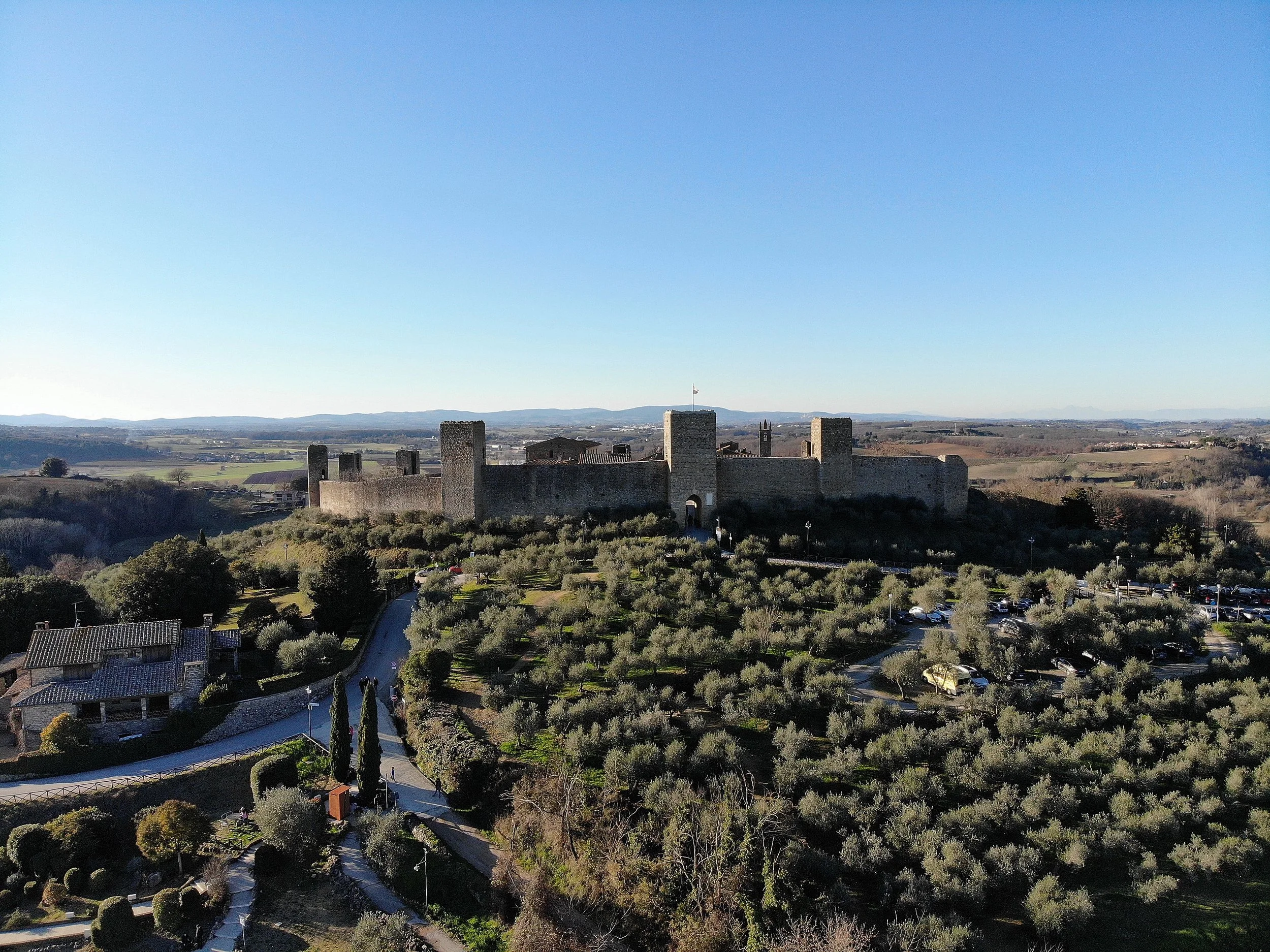
Piero: climbing the walkway along the walls means reading the landscape as medieval sentinels once did: the Sienese hills, the Chianti, the access roads. we didn’t have this opportunity, since the walkway is closed, but it must be truly worth it.
Angela: from here, everything could be controlled, and no one passed unnoticed.
Piero: like every medieval fortress, Monteriggioni has only two gates. historians do not agree on the possible presence of a drawbridge. what is certain is the presence of portcullises, thick wooden doors covered with iron, operated by pulleys. even today, the two gates still show the hinge marks and the holes caused by the closing bars. the castle of Monteriggioni was also surrounded by so-called “carbonaie”, ditches filled with charcoal and wood that were set on fire to repel attacks. being atop a hill, it would have been impossible to have water-filled moats like those usually seen in reconstructions of medieval castles.
Angela: few access points, then, controllable and secure.
Piero: exactly what a castle needs.
Angela: Porta Franca, also called Romea, faces Siena and was the main access for those traveling the Via Francigena. Porta Fiorentina, on the other hand, looks toward Florence, the historical enemy.
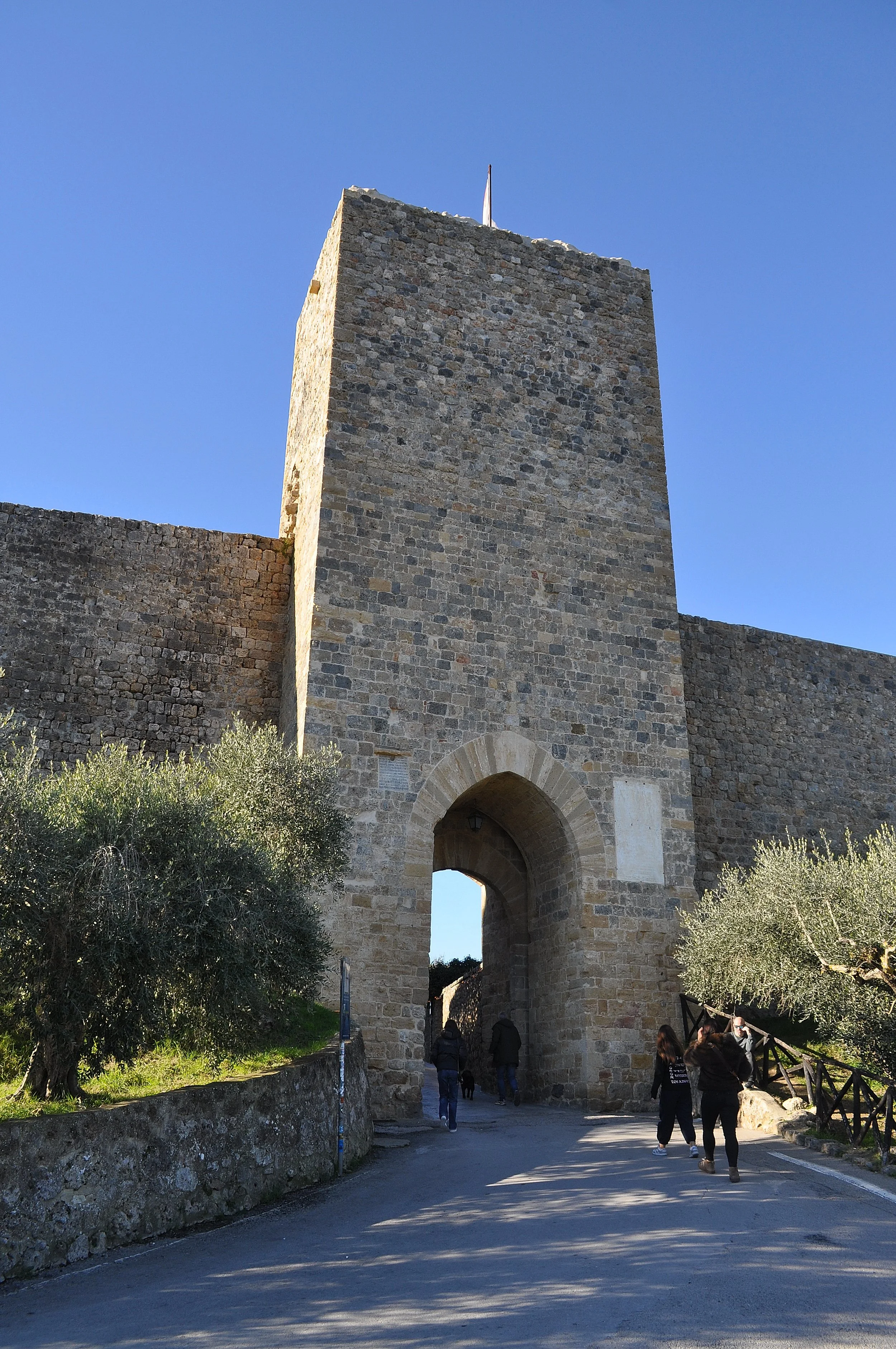
Piero: crossing them means leaving the present outside.
Angela: it’s a threshold, not just physical.
Piero: inside, even time changes.
Piazza Roma and the Church of Santa Maria Assunta
Angela: the medieval village develops along a single street connecting the two gates and naturally leading to Piazza Roma. the square is irregular, slightly sloped, authentic.
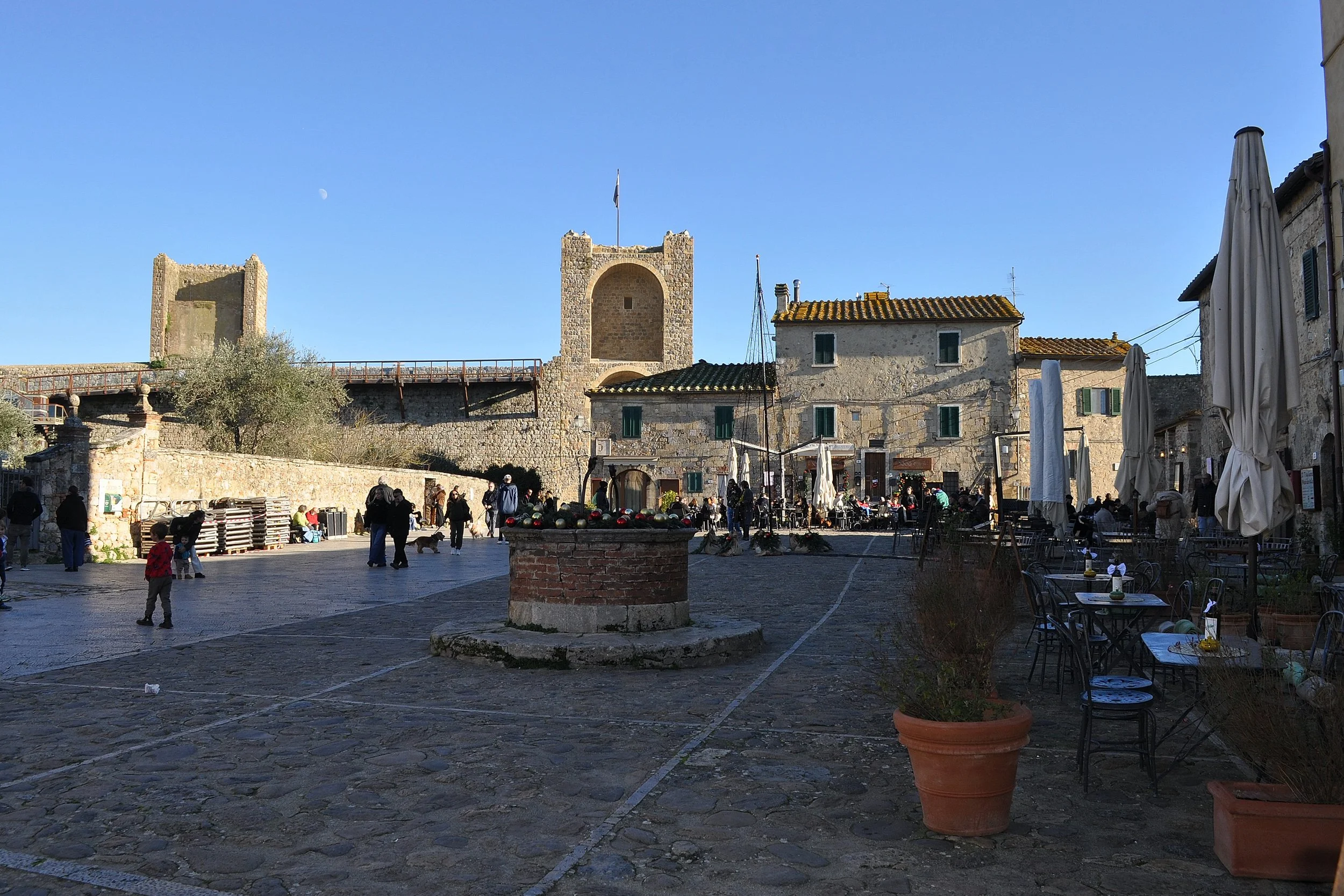
Piero: here, there is nothing built to please tourists, except for a few bars and souvenir shops.
Angela: and that’s exactly what works.
Piero: Piazza Roma is overlooked by the Church of Santa Maria Assunta. a simple stone façade, a single-nave interior. a sober church, consistent with a community of soldiers and travelers.
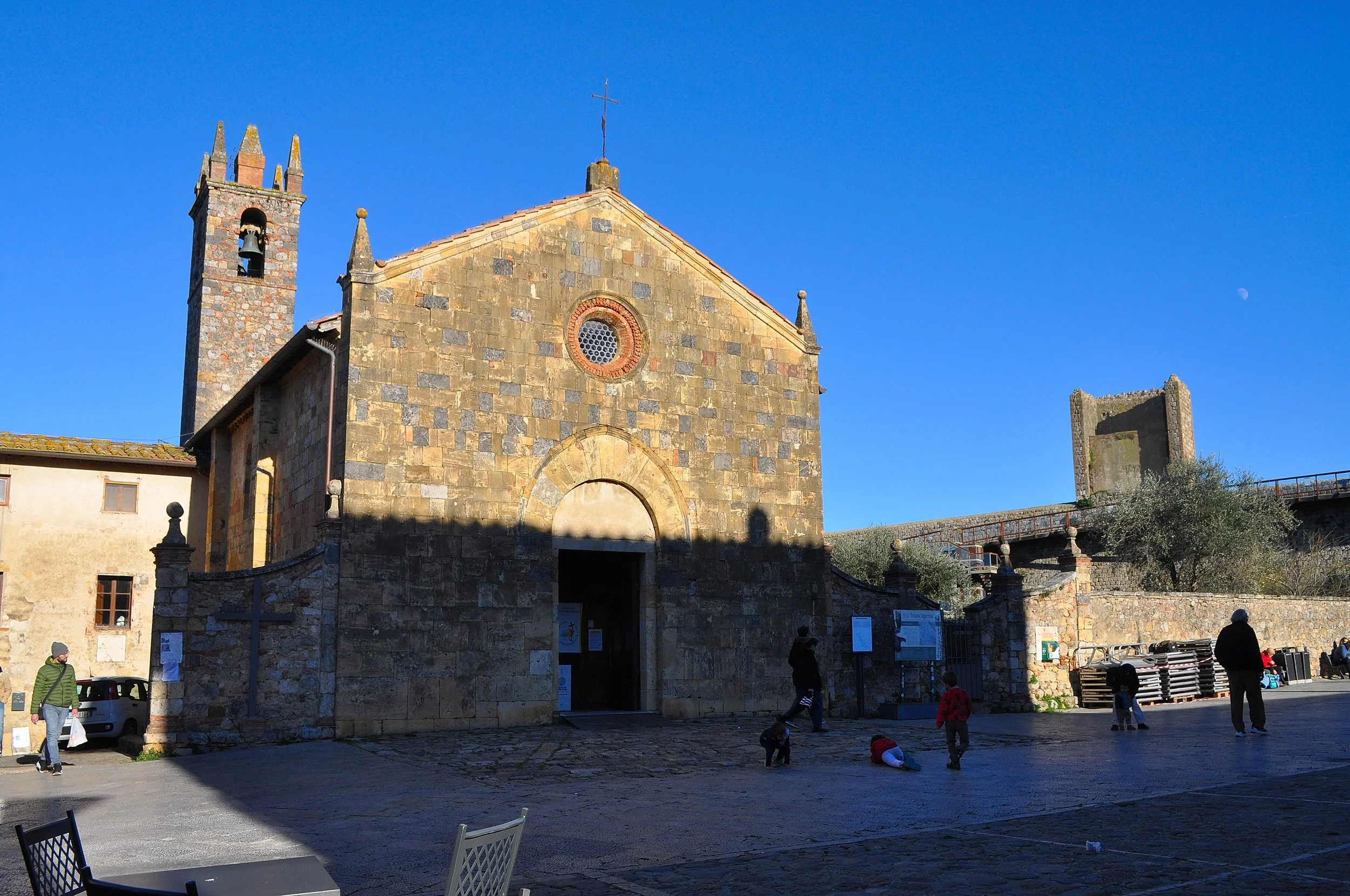
Angela: no unnecessary decorations, only what is needed.
Monteriggioni today
Piero: today, Monteriggioni is tiny, but alive. a few houses, shops, and well-kept restaurants.
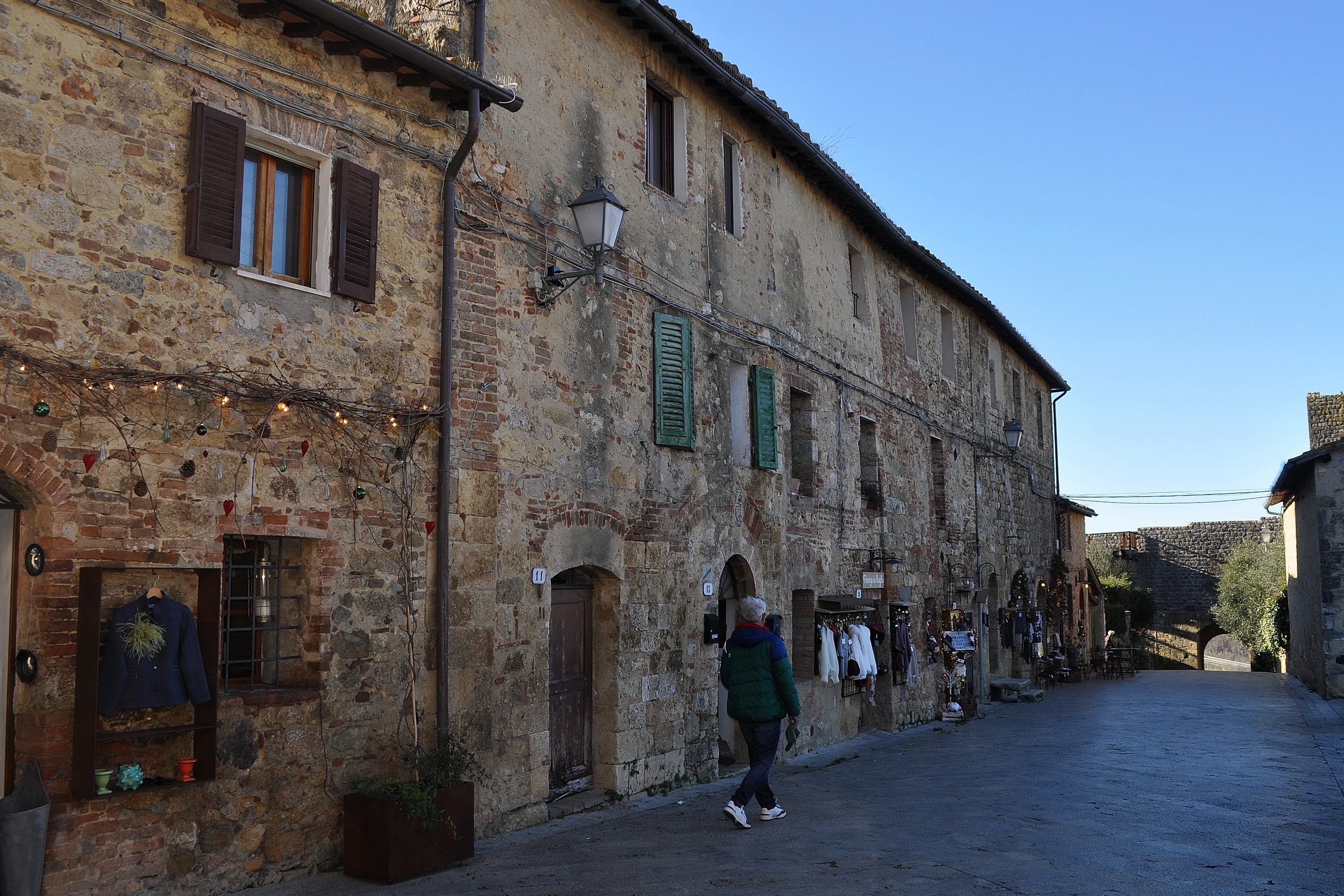
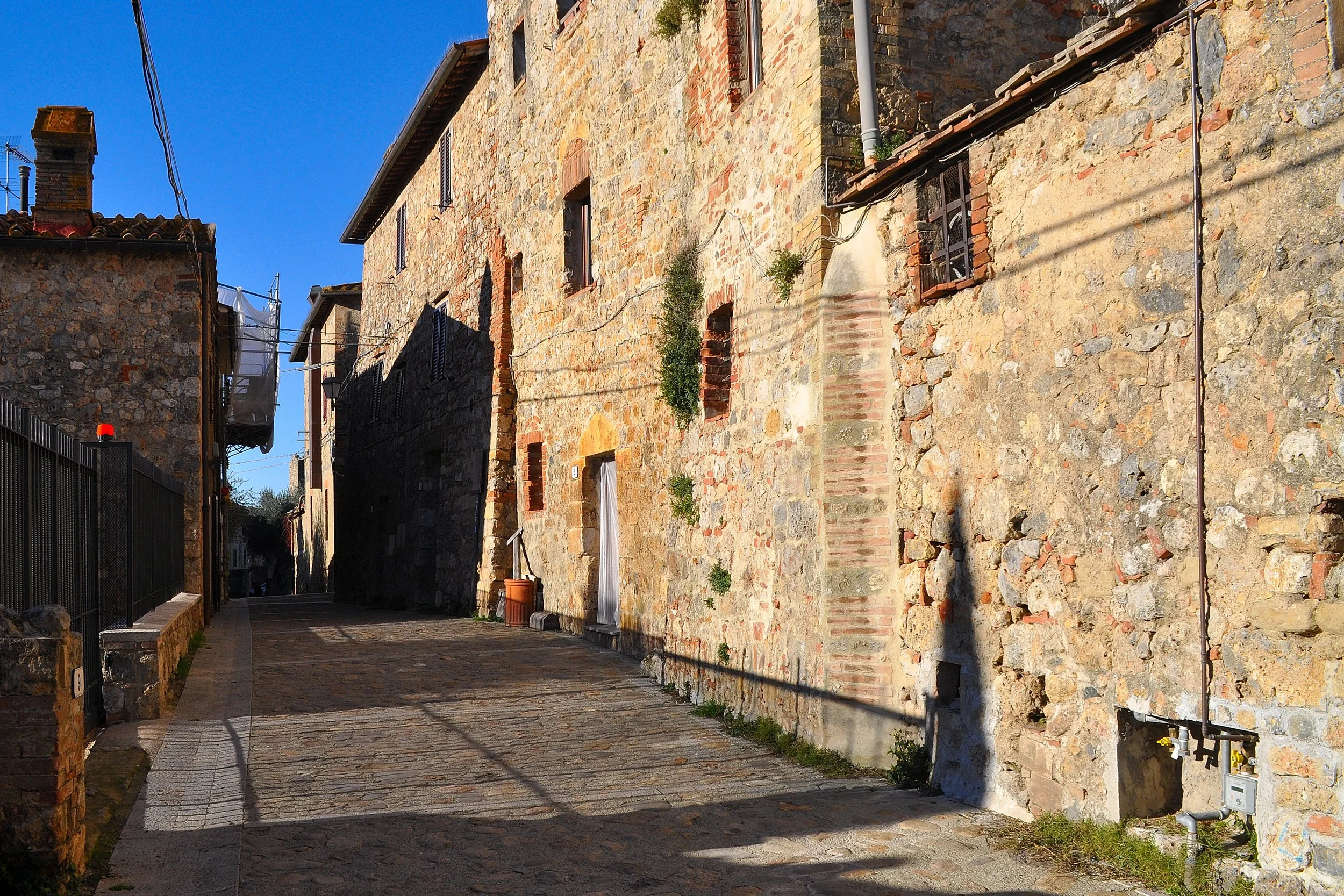
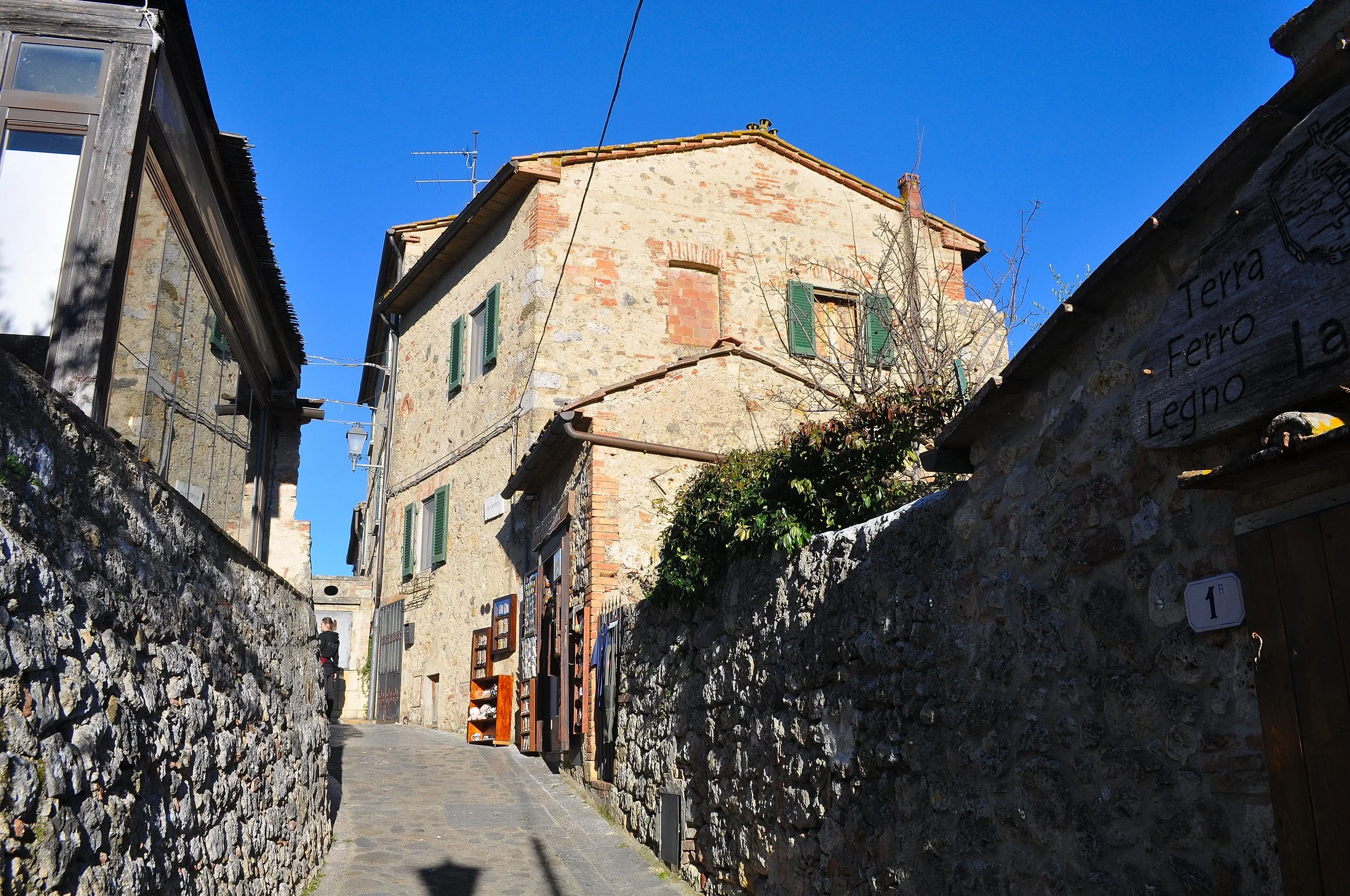
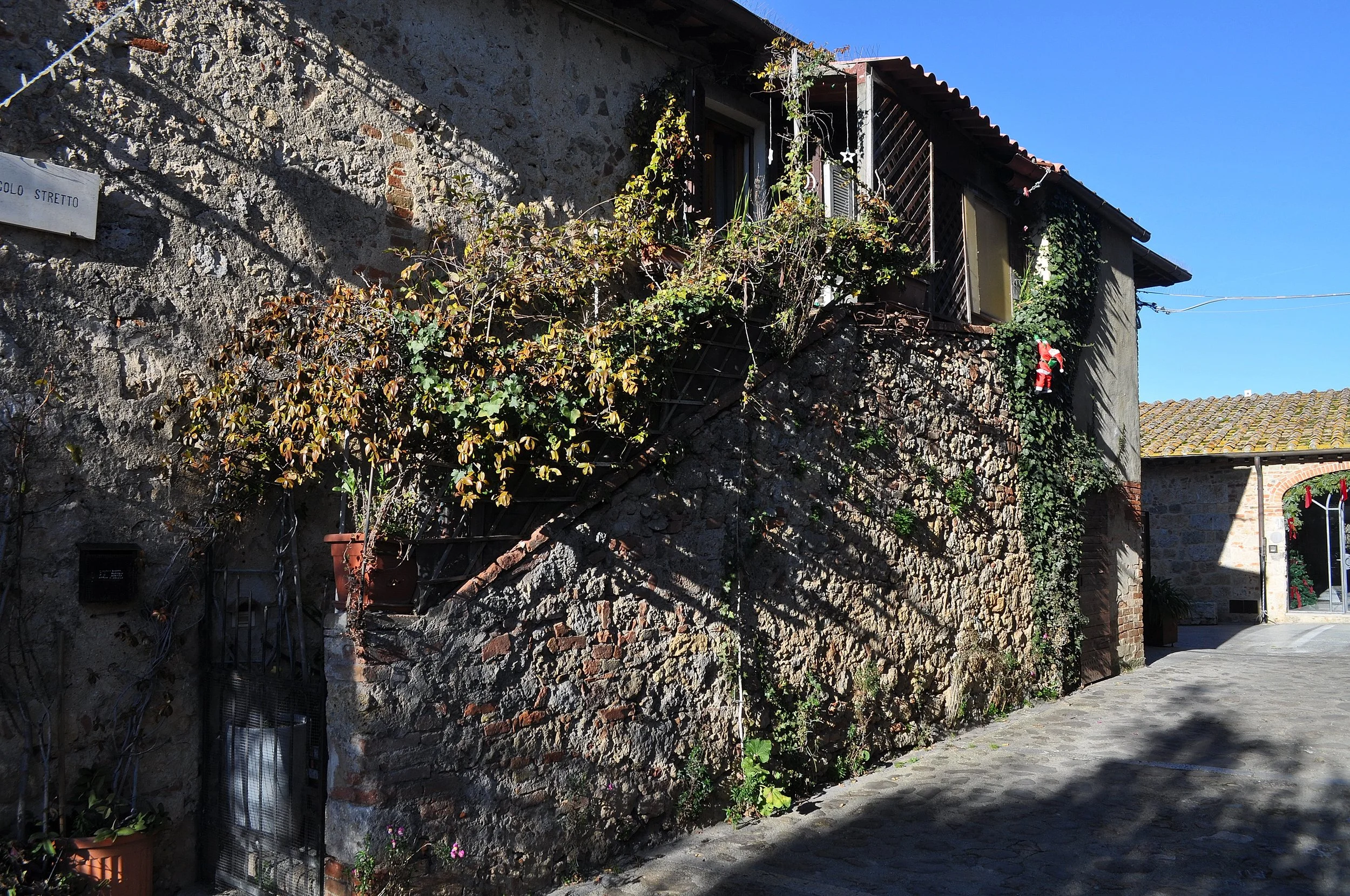
Angela: here, you don’t rush: you pause.
Piero: early morning or late afternoon are the best times, when silence returns as the main character.
Angela: to visit the village, an hour might be enough if you’re in a hurry. but two hours are needed if you want to truly understand and experience it.
Piero: spring and autumn are the ideal seasons. in summer, it’s better to avoid the midday hours. the walkway along the walls (if accessible) is unmissable, especially on a clear day. parking is well organized outside the walls. during summer, the medieval festival brings the village to life with historical reenactments.
Monteriggioni, a lesson in balance
Angela: let’s go get the van now.
Piero: we’re moving on, but some images stay.
Angela: Monteriggioni remains there, still. Coherent. Perfect in its balance between history, architecture, and landscape.
Piero: relive our walk in this short video.