
San Gimignano: the towers that tell time
San Gimignano told through an itinerary in the heart of medieval Tuscany, among medieval towers, the Via Francigena, the Church of Sant’Agostino, the Collegiata of Santa Maria Assunta, and the Torre Grossa. a journey through frescoes, history, landscape, and local traditions, complemented by typical flavors such as the Vernaccia di San Gimignano.
Piero: it’s time to get the van moving again and set off on a new discovery.
Angela: we stay in Tuscany, in search of another unmissable village.
Piero: leaving behind the circular walls of Monteriggioni, we move just a few kilometers away: the road rises gently through Tuscan hills, rows of vineyards and cultivated fields. on the horizon, suddenly, the towers of San Gimignano appear.
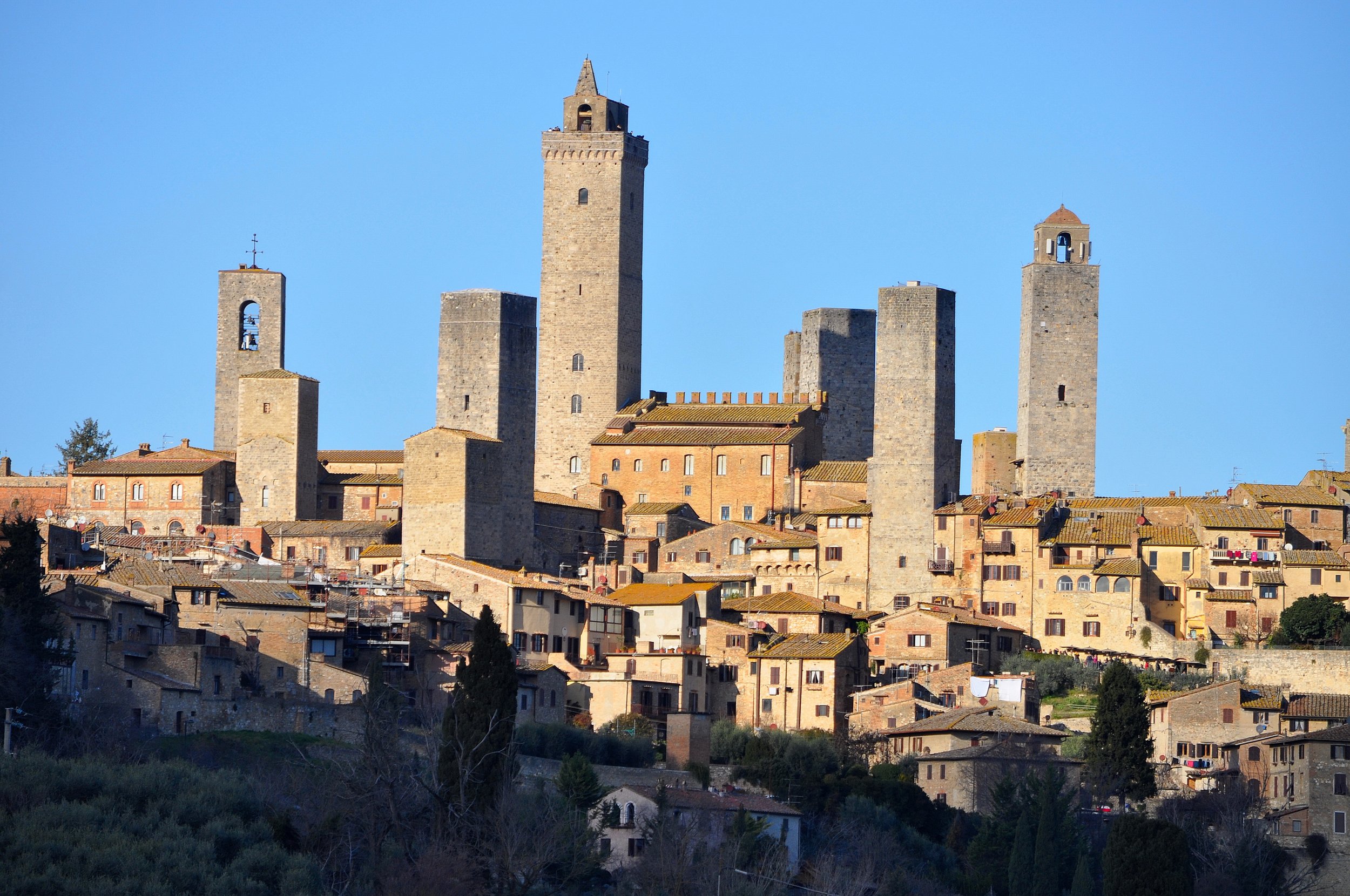
Angela: they are far away, but immediately recognizable. San Gimignano cannot be mistaken for anything else. it is a vertical medieval city, suspended between earth and sky, dominating the Val d’Elsa just as it did centuries ago. a kind of Manhattan of the Middle Ages…
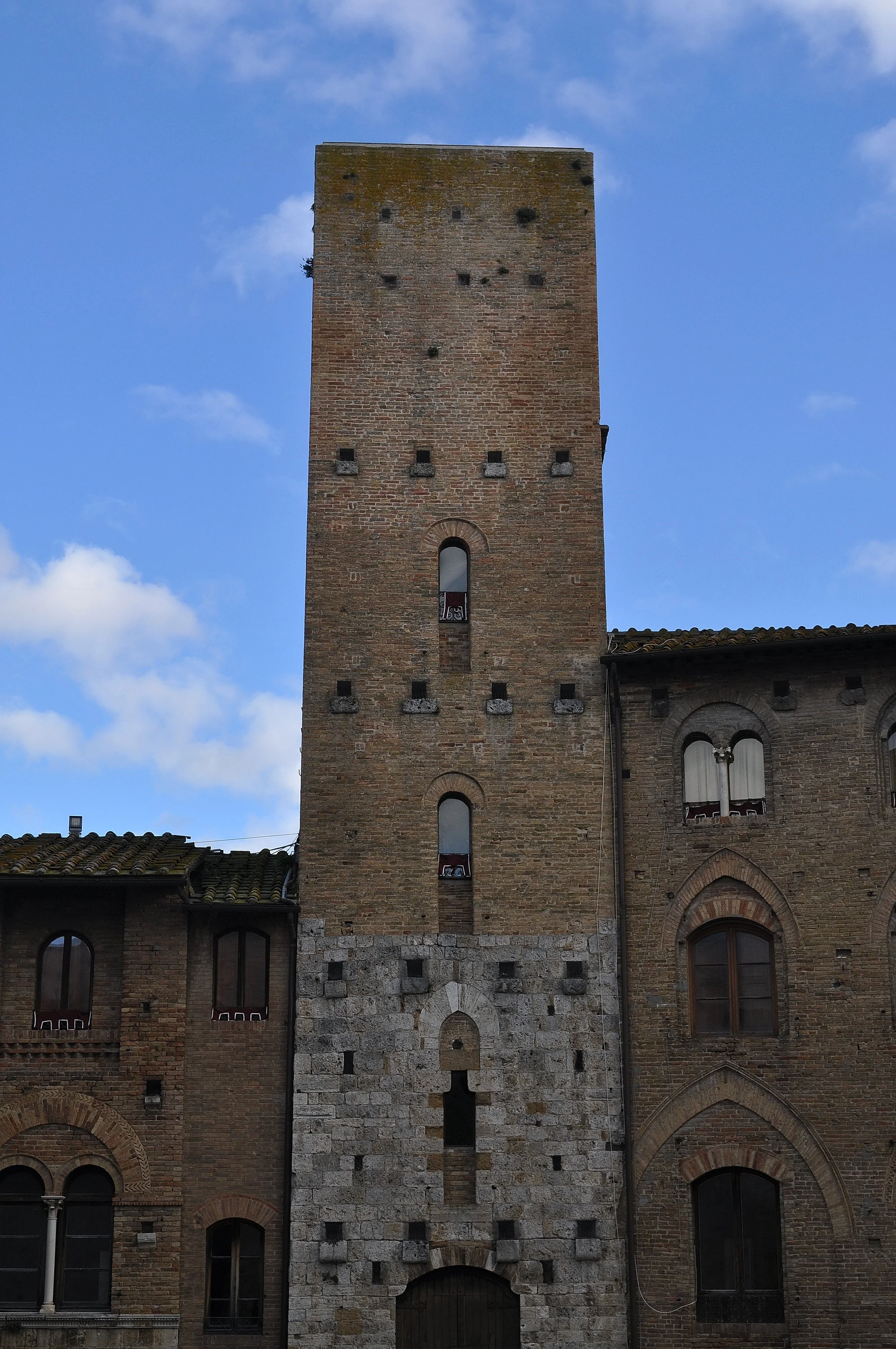
A long and layered history
Piero: San Gimignano was founded long before its towers. the hill on which it stands was already frequented in Etruscan times, when these heights were used to control the territory of the Val d’Elsa. with the Romans, the site took on a more stable role, linked to communication routes and the agricultural exploitation of the area.
Angela: but it is in the Middle Ages that everything changes: here, history accelerates.
Piero: between the 11th and 13th centuries, San Gimignano lay along one of the most vital stretches of the Via Francigena, the axis connecting Northern Europe to Rome. pilgrims, merchants, and imperial officials passed through the village every day. inns, workshops, and warehouses sprang up to serve this constant flow.
Angela: and with movement comes wealth.
Piero: exactly. a wealth that did not remain abstract, but translated into political power, institutional control, and social prestige. the great local families began to vie for dominance over the town: it was not just an armed or diplomatic struggle; it was a visual competition.
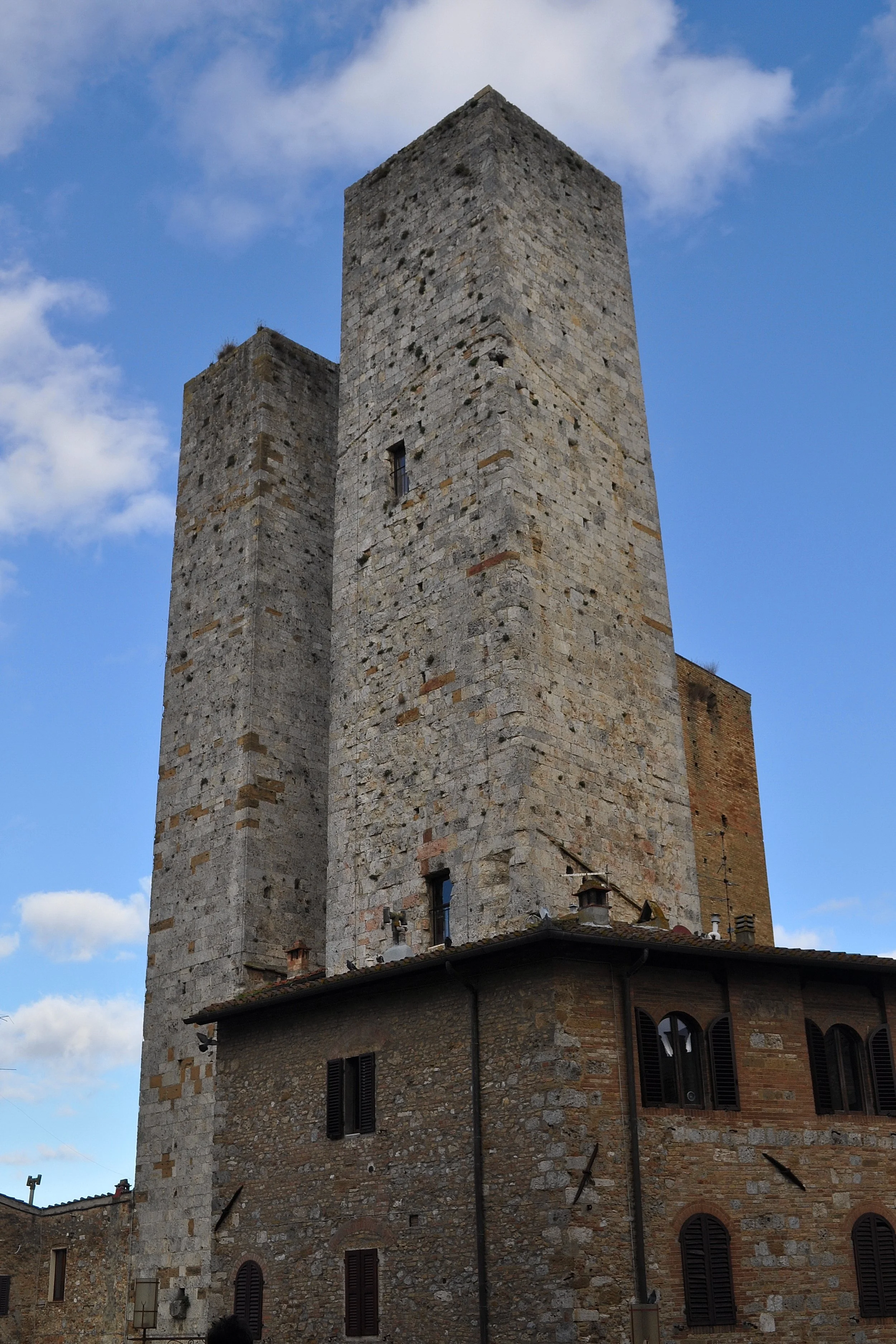
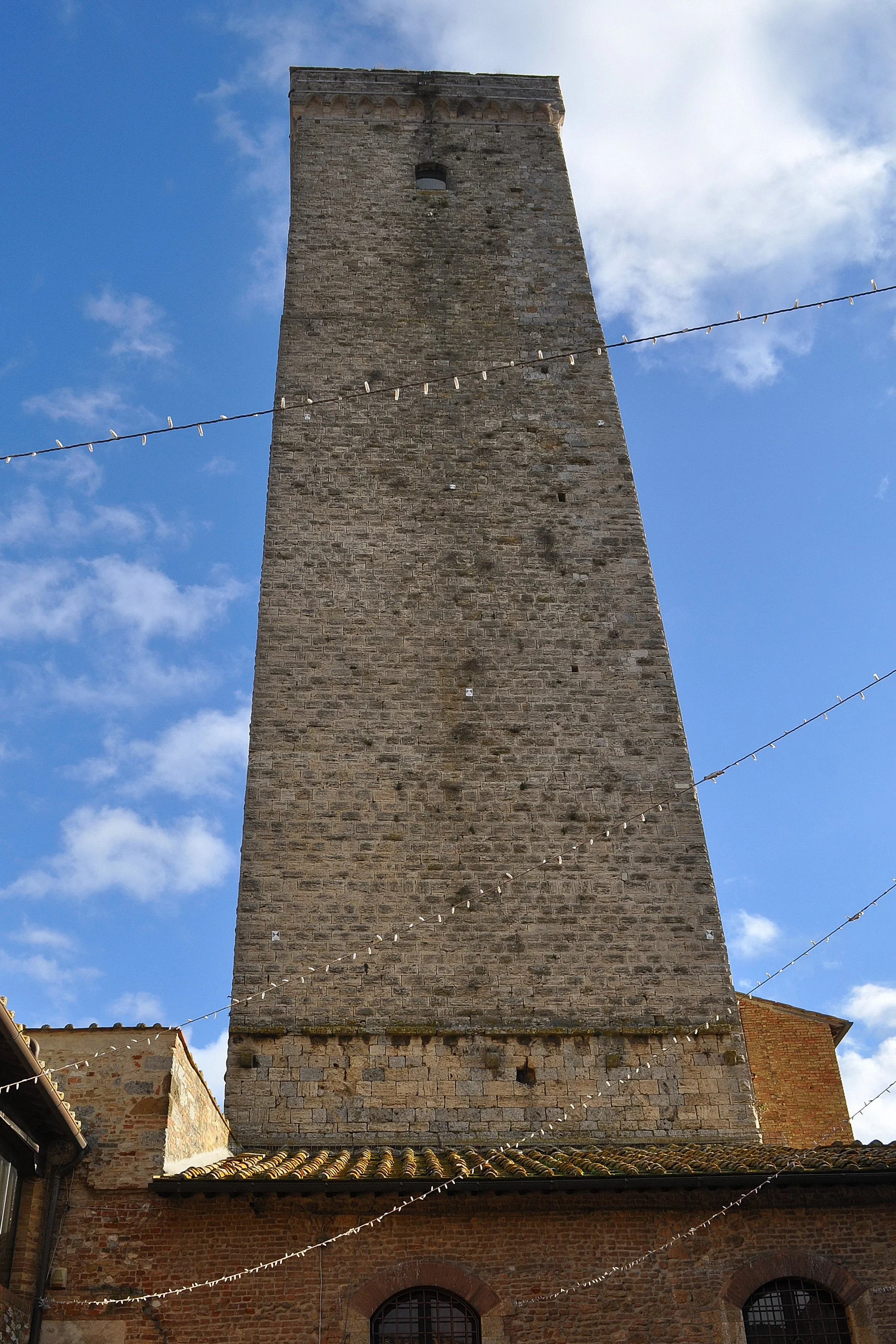
Angela: and that’s when the towers rise, as a public declaration of power and strength.
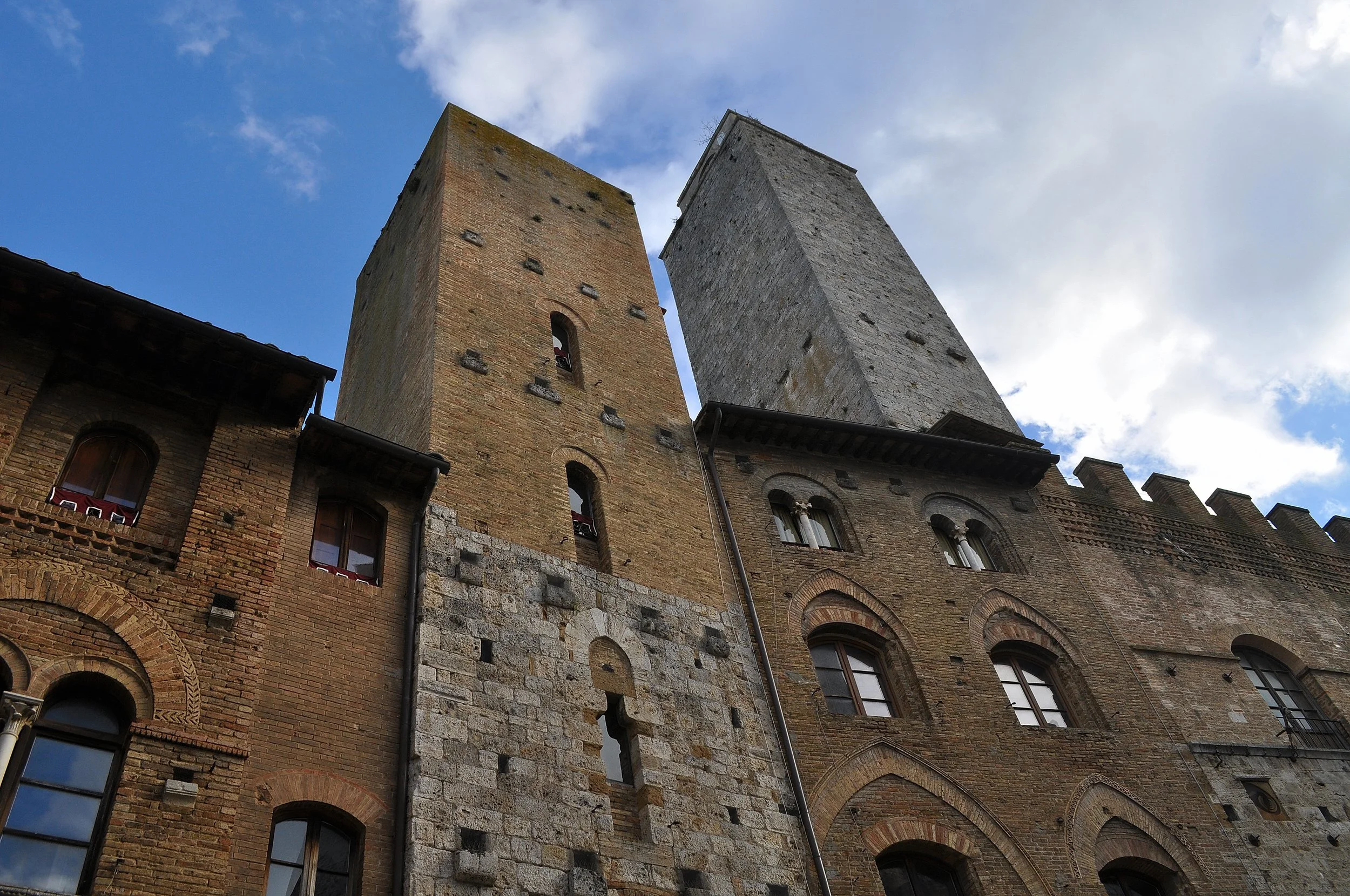
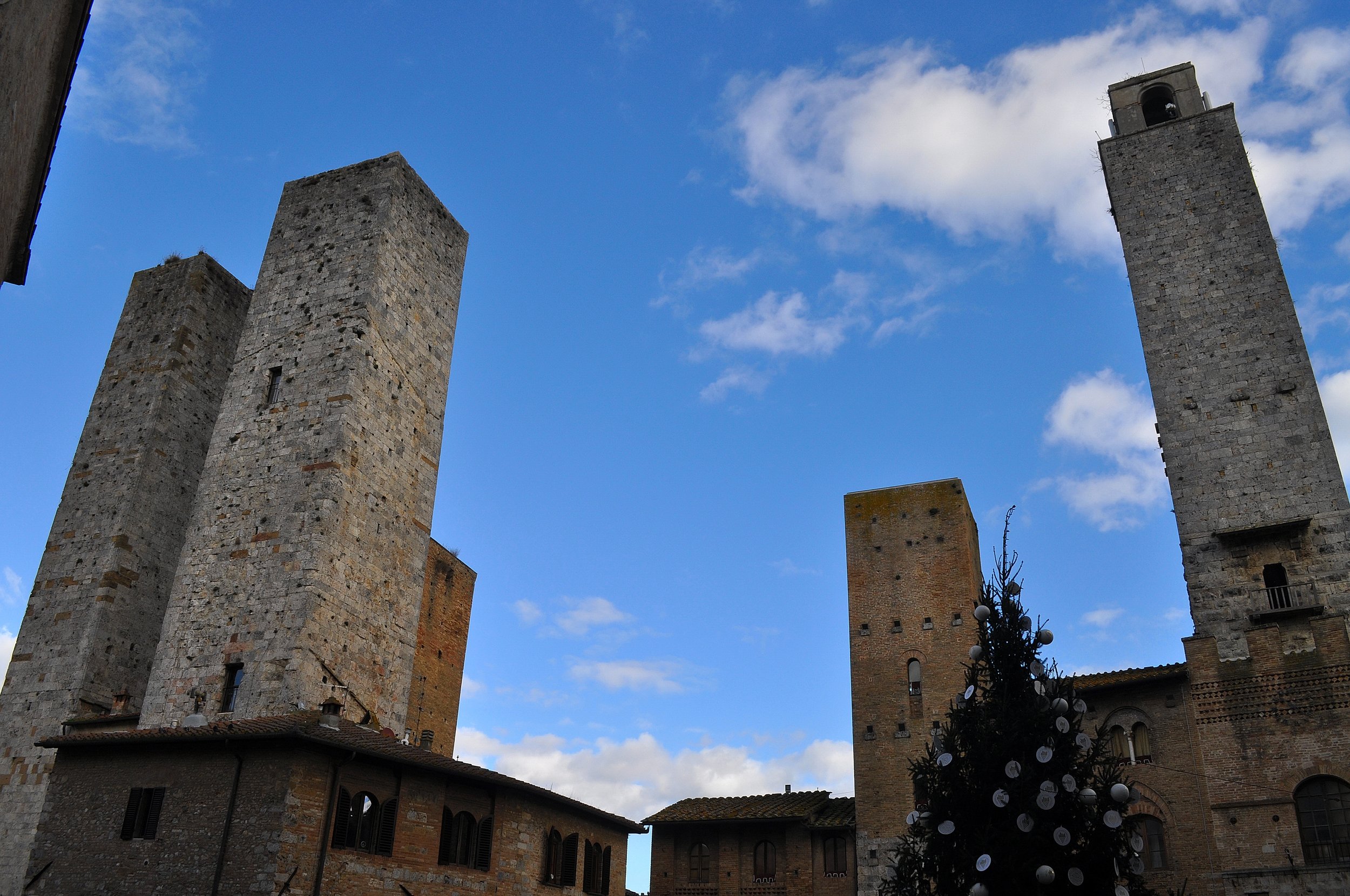
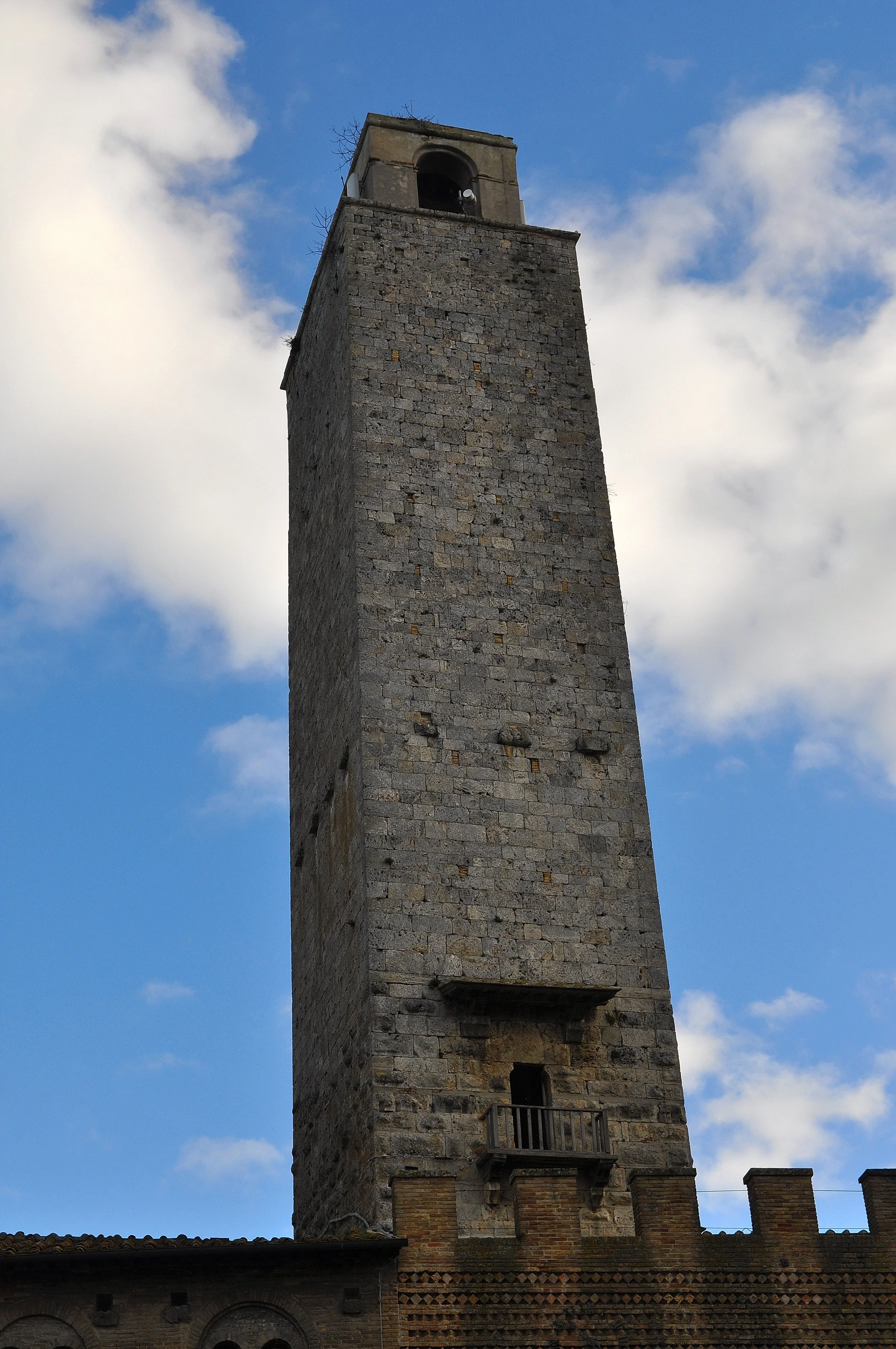
Piero: each tower represented a family: the taller it was, the clearer the message. San Gimignano grew this way, upward, turning into a vertical city. at its peak, there were more than seventy towers, an unmatched concentration in Tuscany.
Angela: a beauty born also from conflict.
Piero: rivalries between families such as the Salvucci and the Ardinghelli shaped civic life. agreements, feuds, shifting alliances. meanwhile, the city prospered thanks to trade, agricultural production, and its strategic position.
Angela: until the crisis arrives…
Piero: the plague of 1348 struck the population hard; traffic along the Via Francigena declined, and internal struggles weakened the town even further. in 1353, San Gimignano voluntarily submitted to Florence, seeking protection and stability.
Angela: and this is where something unexpected happens.
Piero: Florence does not transform San Gimignano, and above all does not modernize it. it leaves it almost motionless. and it is precisely this forced stillness that allowed the town to reach us with its medieval layout intact.
Angela: as if time had stopped.
Piero: or had decided to slow down, letting the stone speak.
Angela: once, the towers were so numerous and tall that Florence itself imposed precise limits on their construction.
Piero: many houses still preserve parts of the original structures, incorporated into later palaces. just look up to notice them.
Discovering the village
Angela: we enter the village through Porta San Matteo, one of the main access routes opening in the city walls. we arrive immediately at the Church of Sant’Agostino, slightly set back from the main paths. it is quieter, almost intimate, as if asking us to slow down before venturing into the heart of the city.
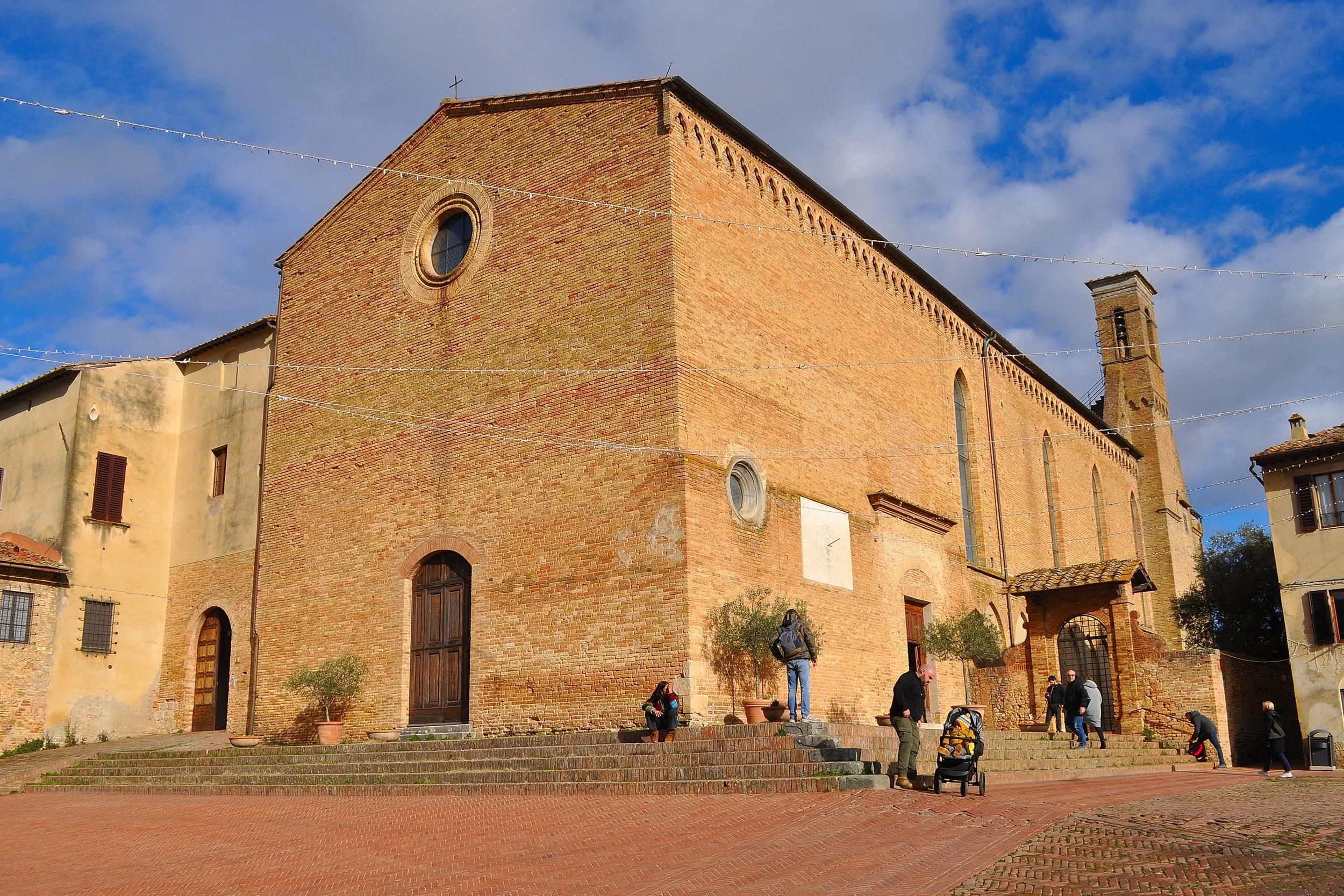
Piero: dating back to the late 13th century, the church features elements drawn from both Romanesque and Gothic architecture. on the outside it appears austere, essential, free of superfluous ornament. but once you cross the threshold, the space turns into a story. the walls are entirely covered by the fresco cycle by Benozzo Gozzoli, dedicated to the life of Saint Augustine, one of the most important pictorial complexes of the Tuscan Renaissance.
Angela: the scenes flow one after another like illustrated pages. they speak not only of faith, but also depict cities, domestic interiors, clothing, everyday gestures. it is the 15th century taking shape before our eyes.
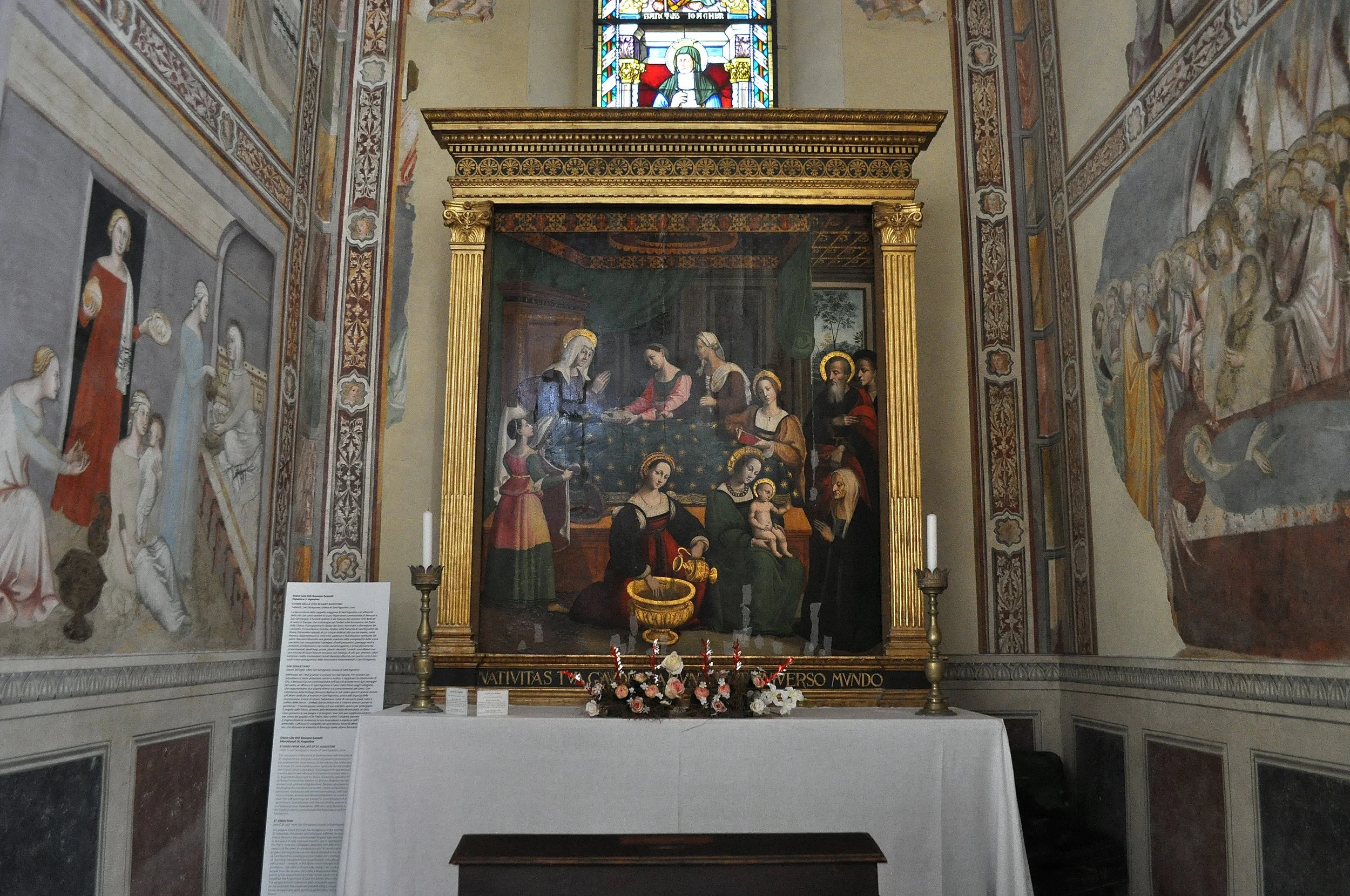
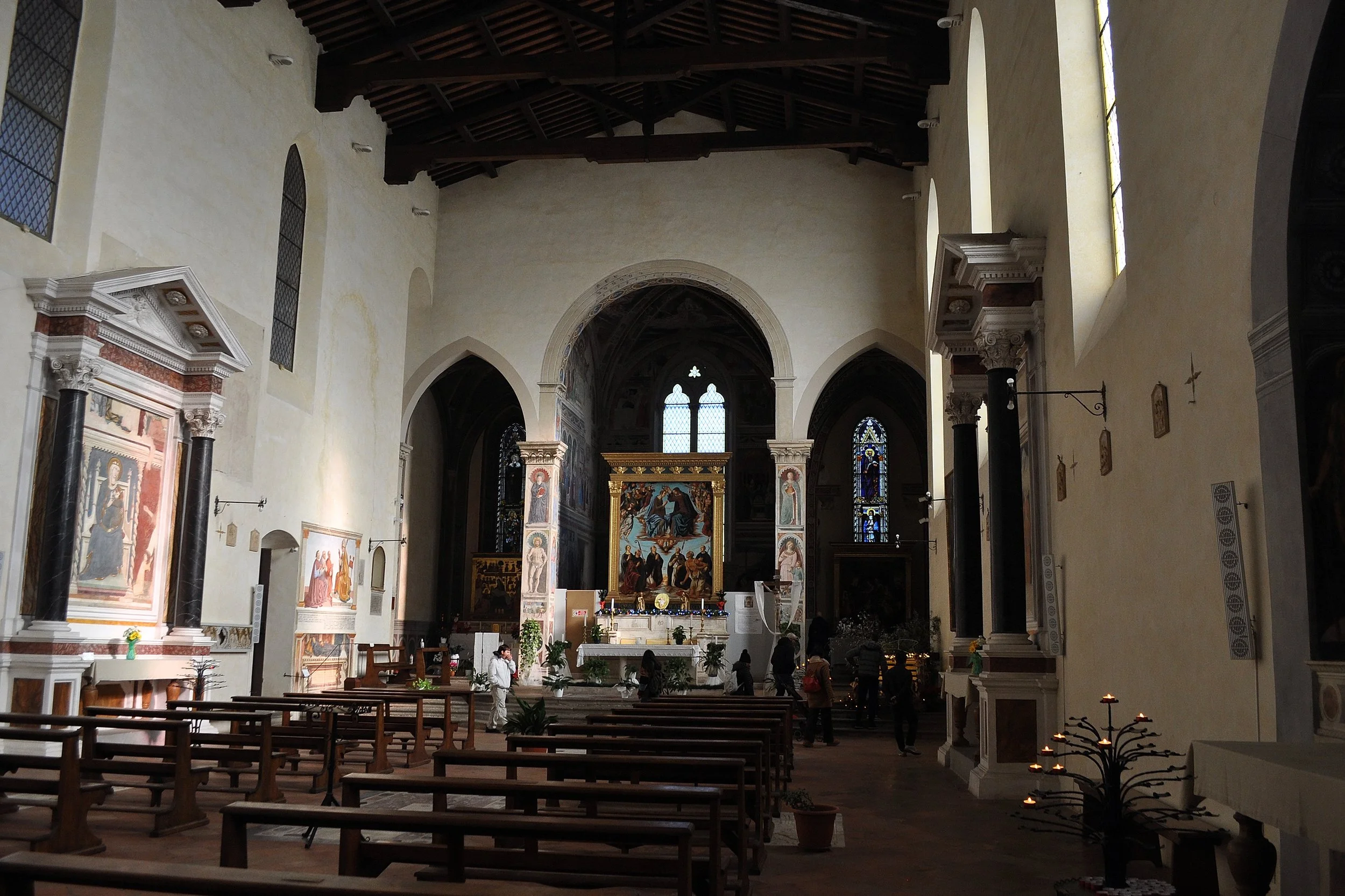
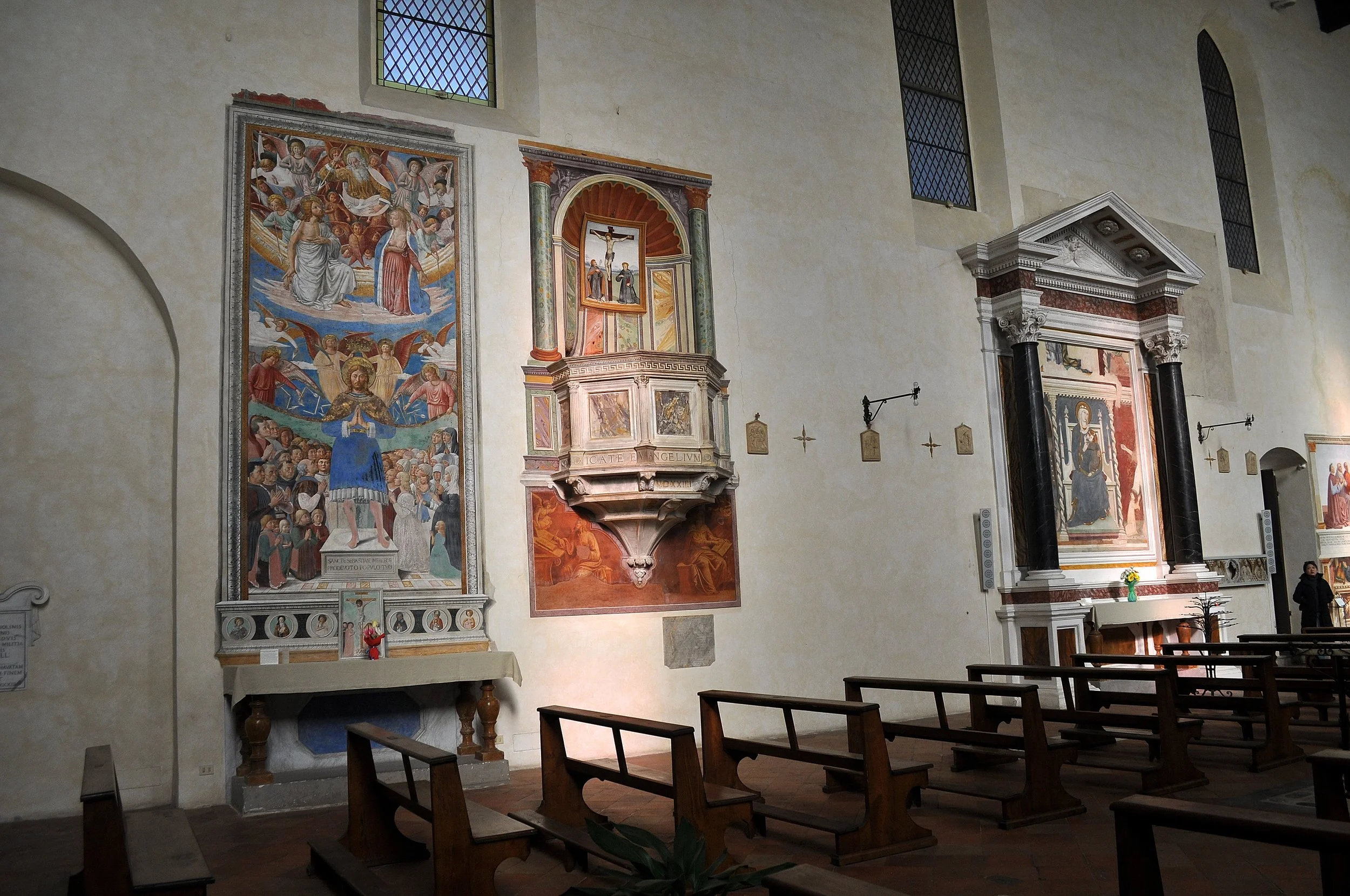
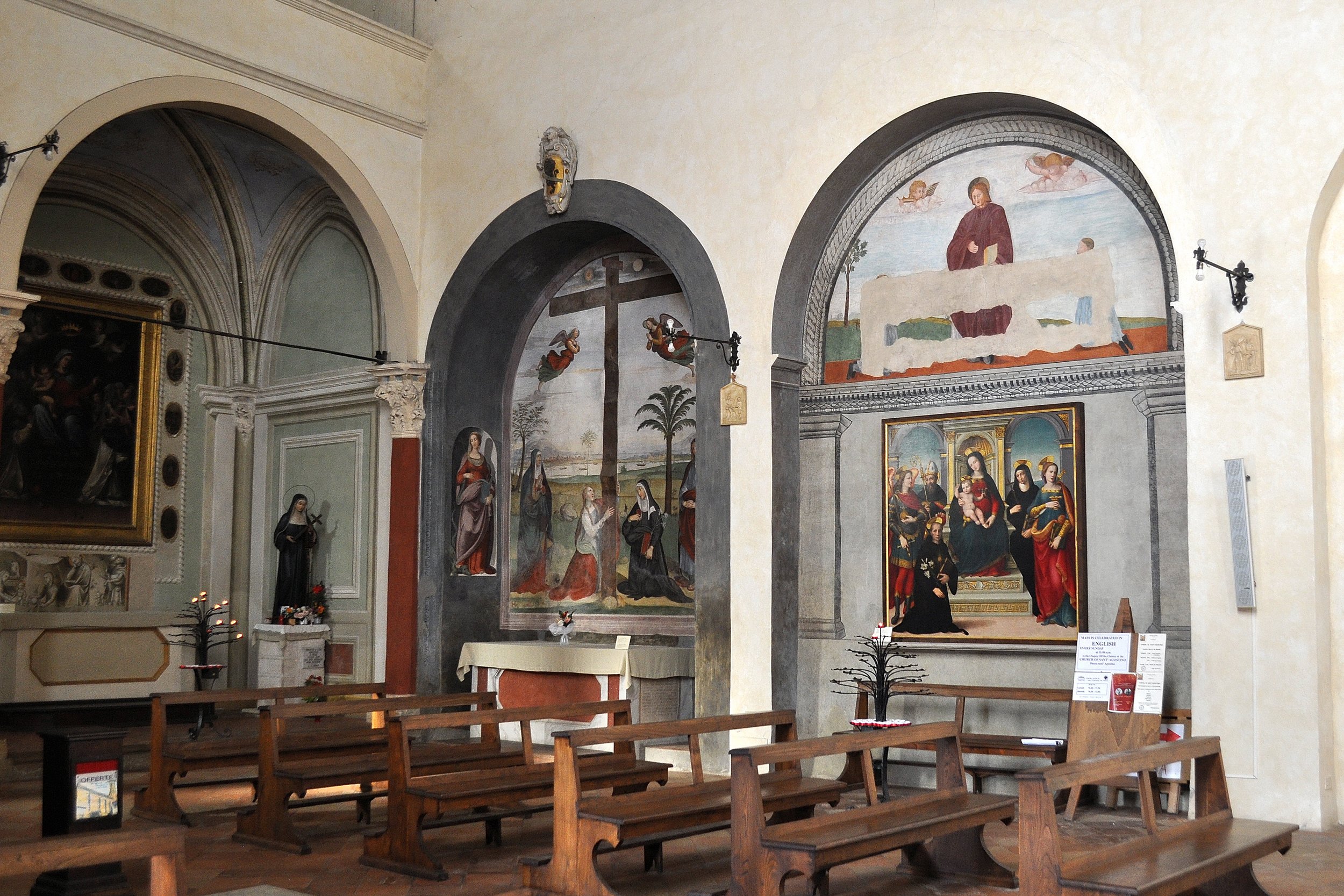
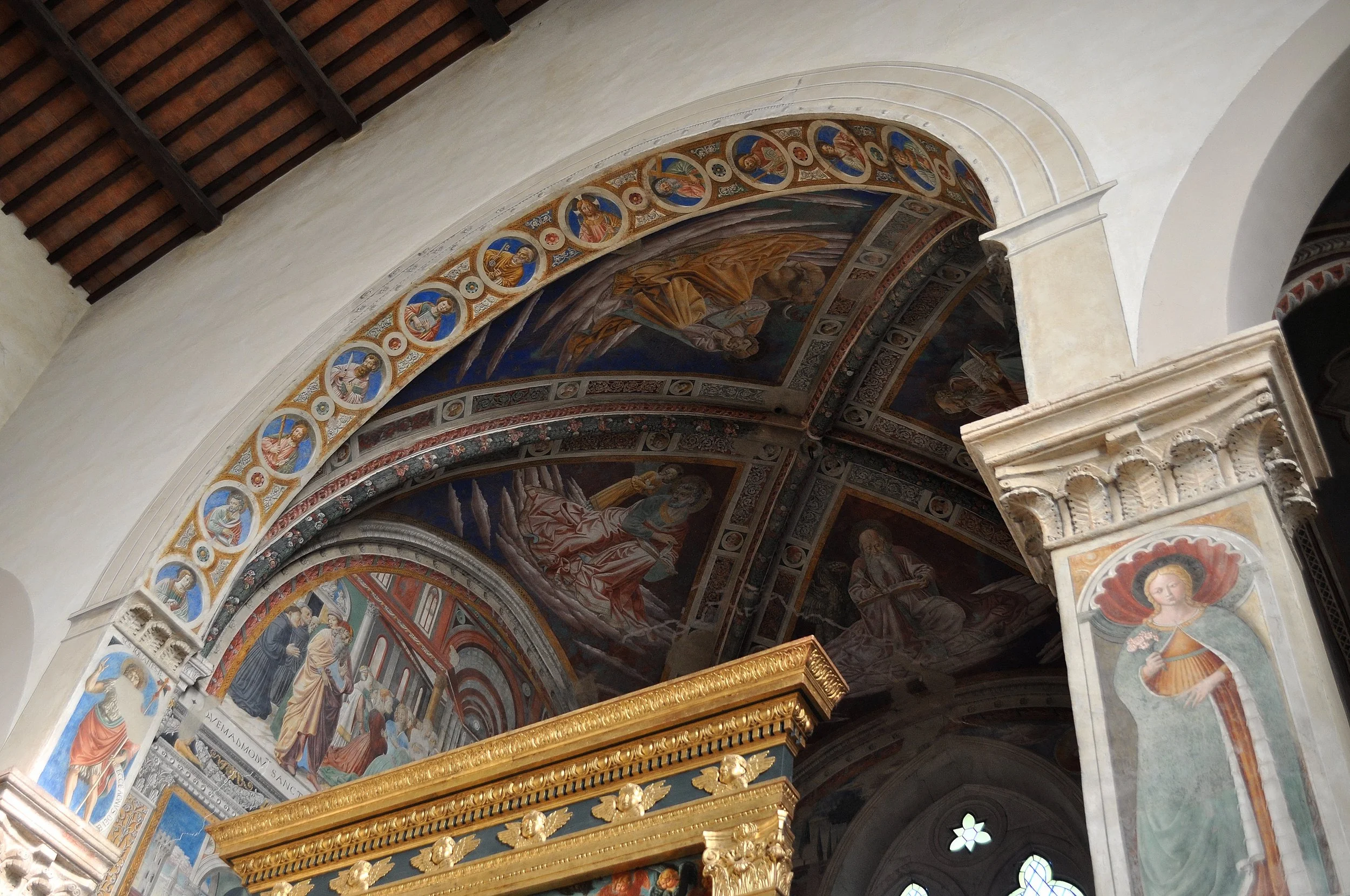
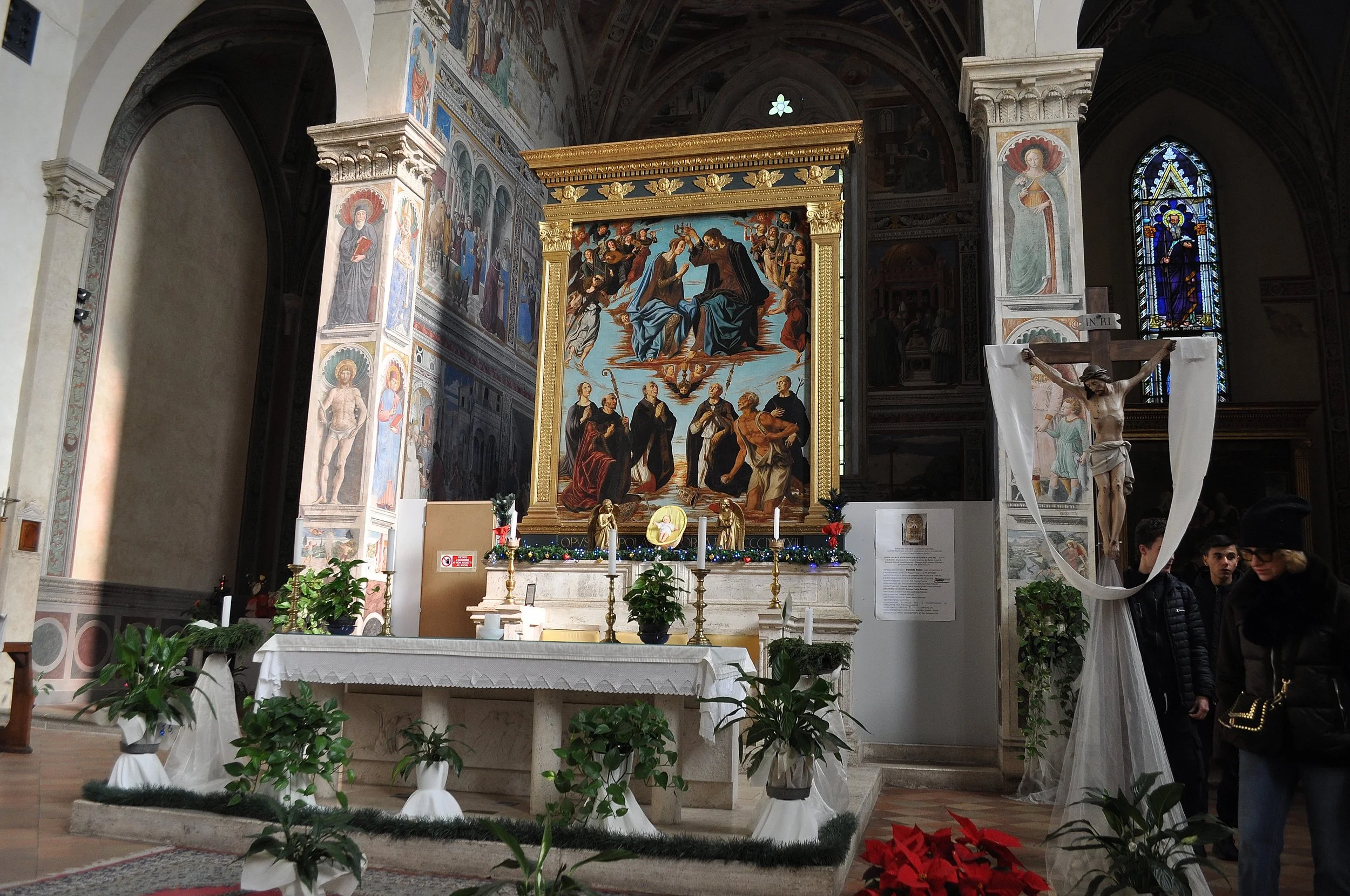
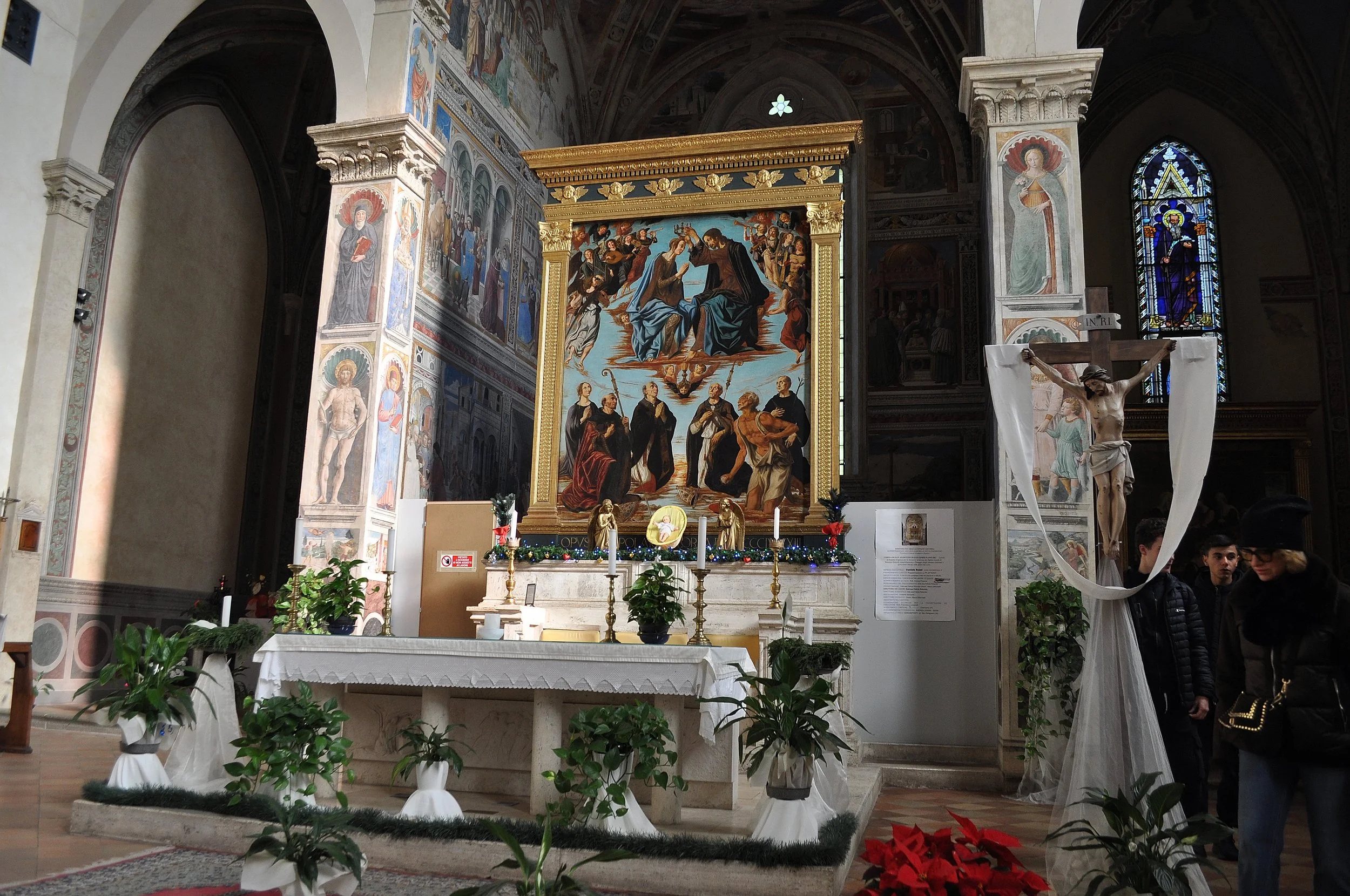
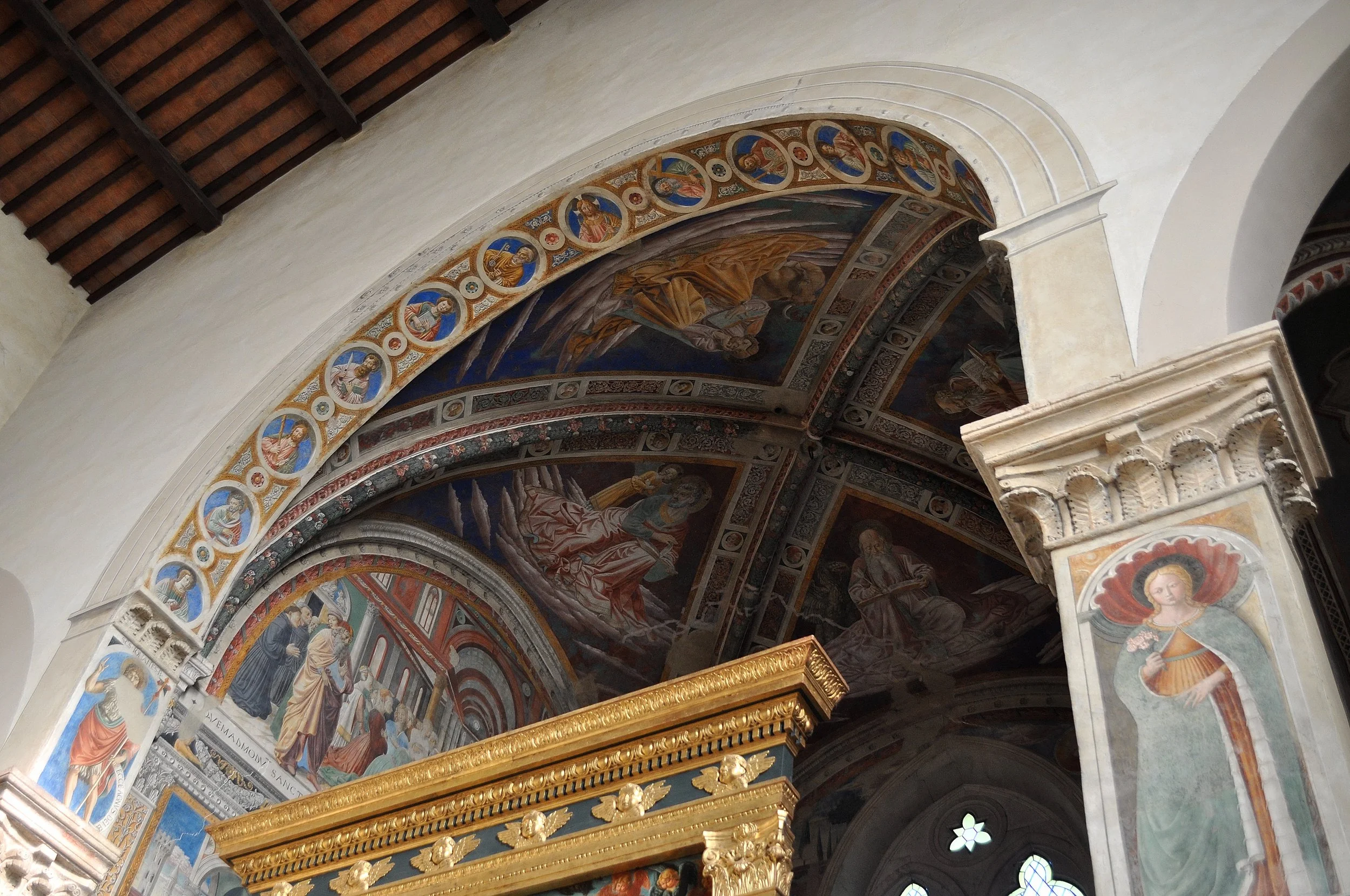
Piero: Gozzoli uses the sacred narrative to depict the real world. the faces are expressive, the architectural backgrounds evoke the cities of the time, and the details seem borrowed from everyday life. here, art is not distant; it is tangible, narrative, and accessible.
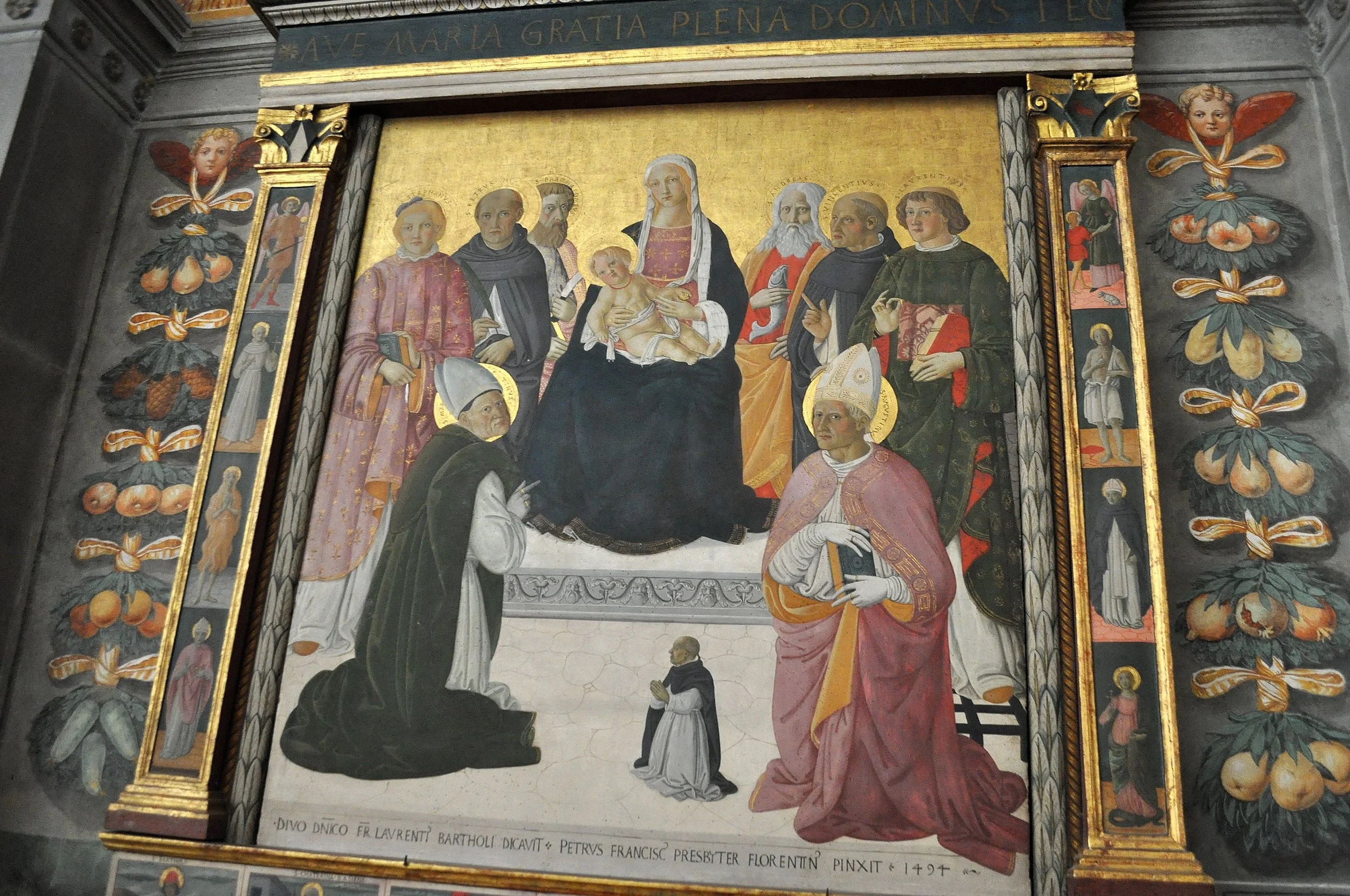
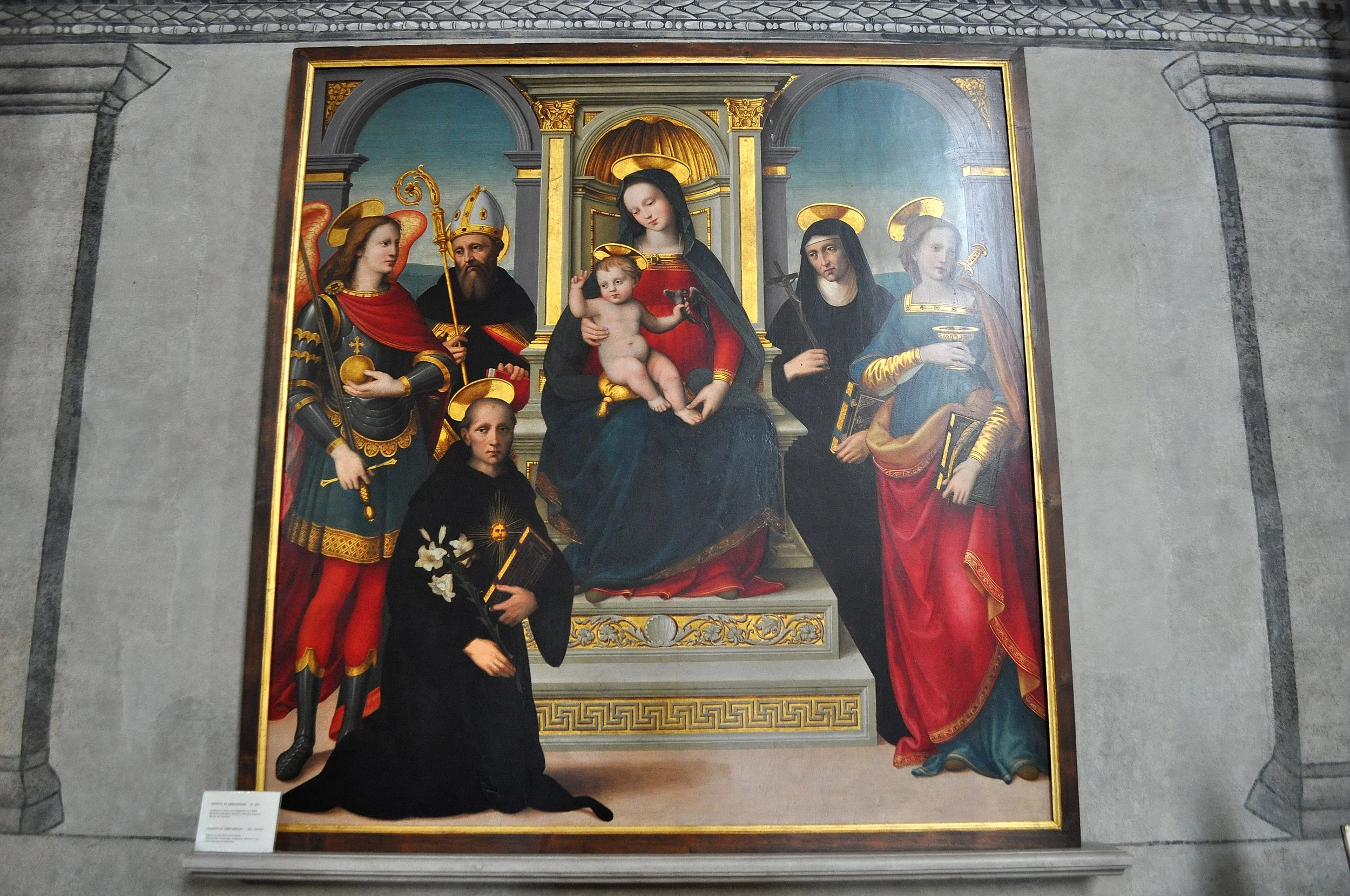
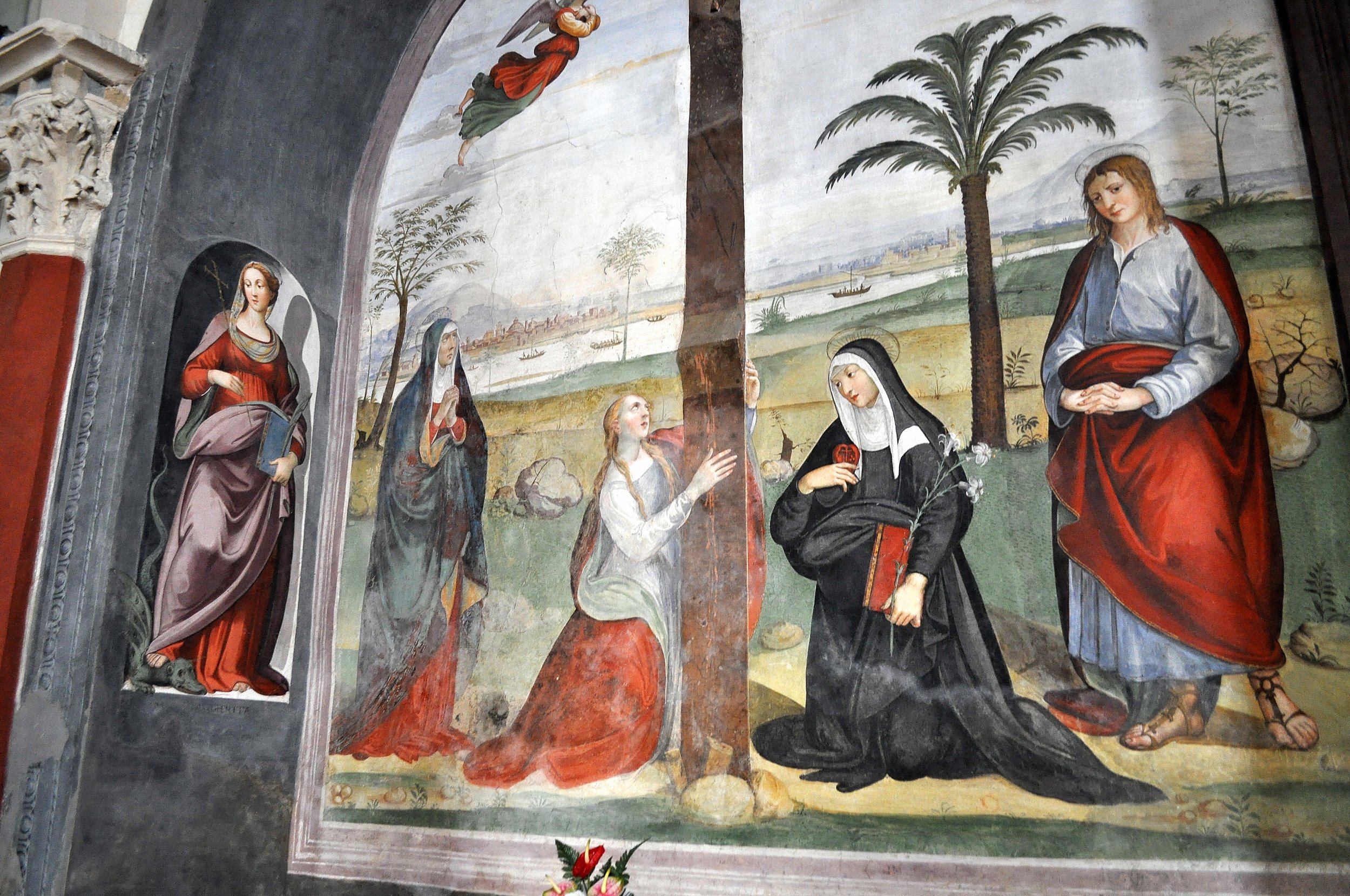
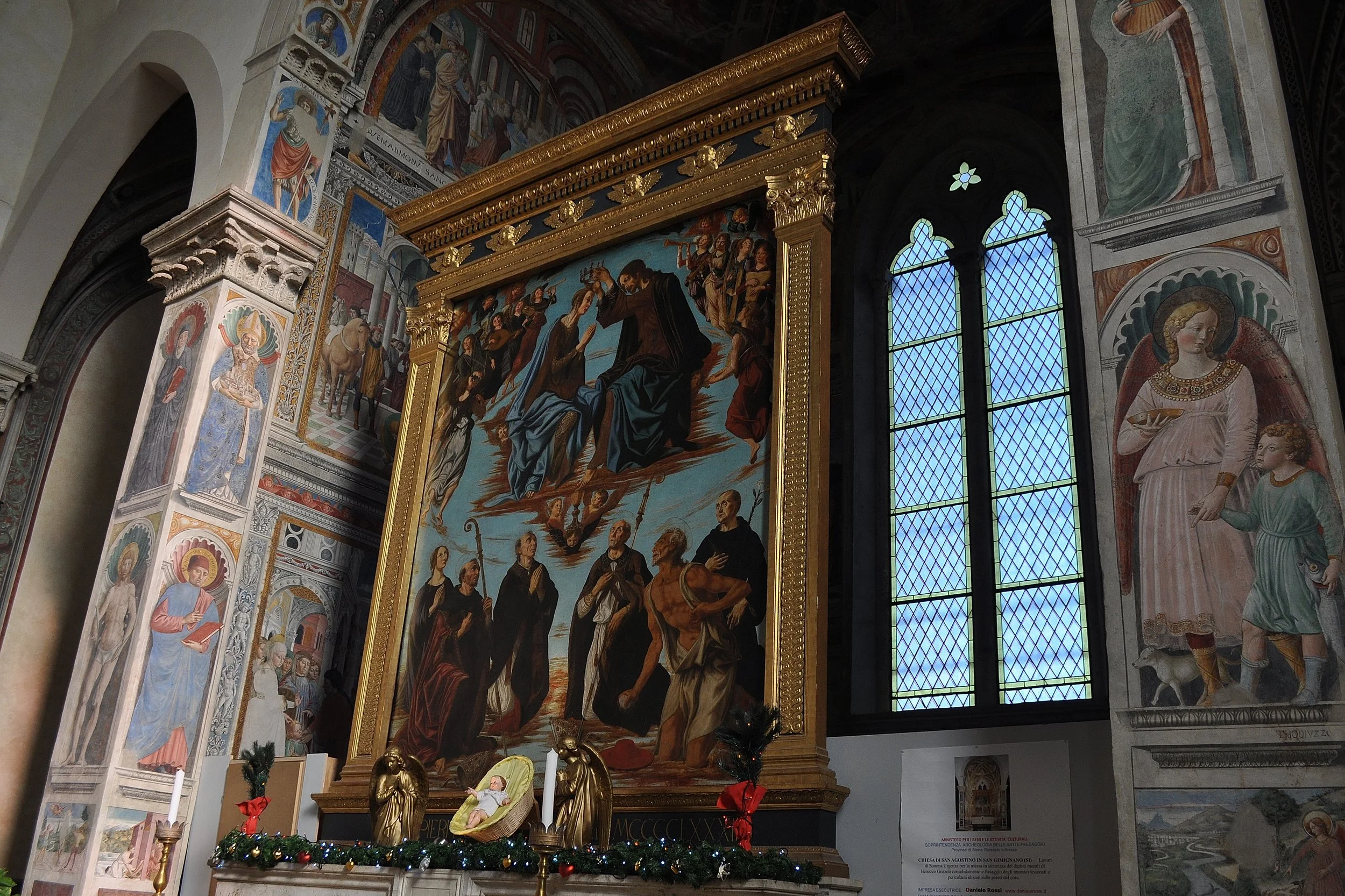
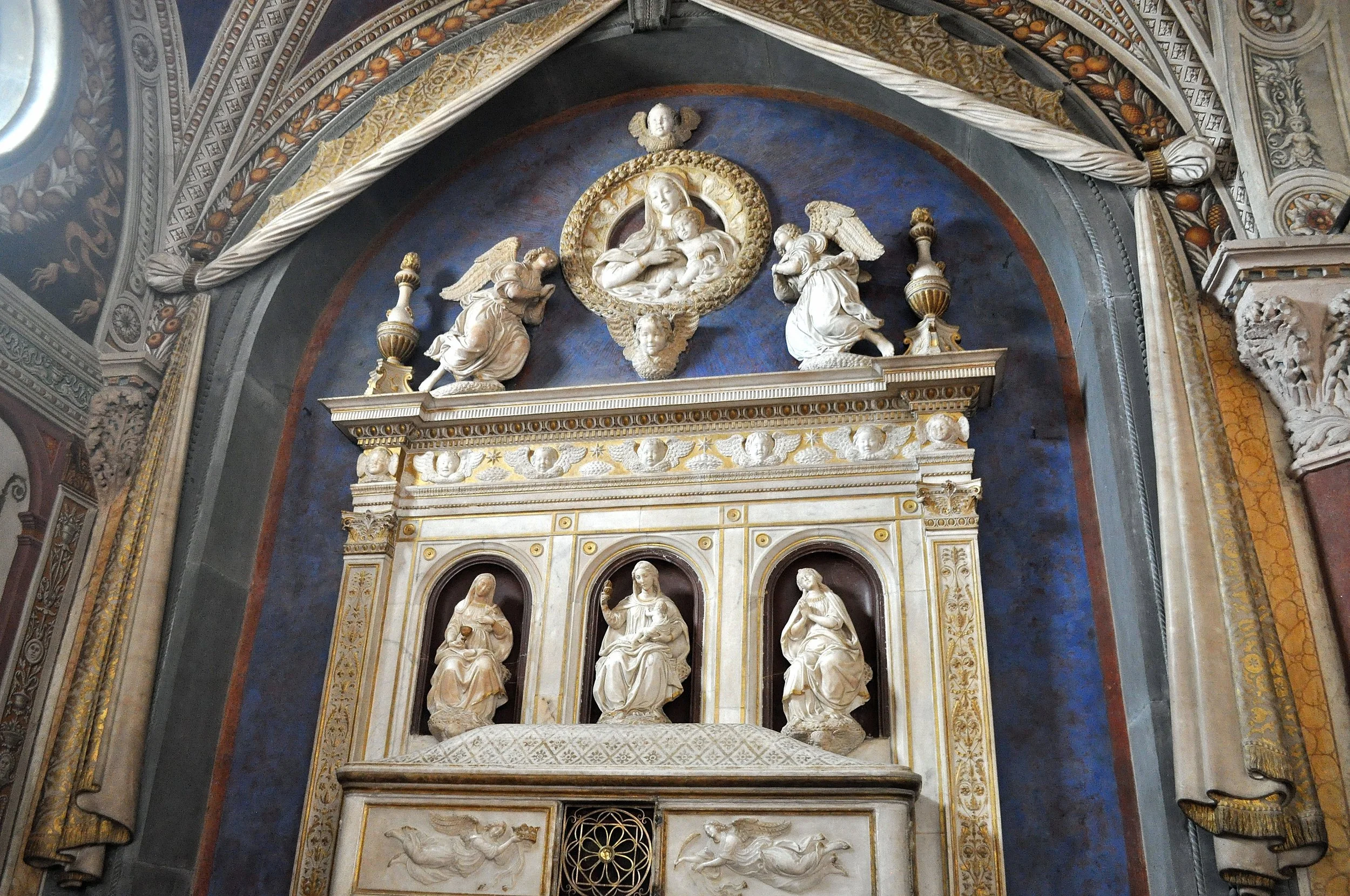
Angela: particularly interesting is the Renaissance Chapel of San Bartolo, a saint very dear to the city of San Gimignano. his remains are preserved in the white marble altar created by Benedetto da Maiano in the 15th century, decorated with the story of the saint’s miracles. the chapel retains its original flooring, made of maiolica by Andrea della Robbia, and is surrounded by frescoed walls featuring Saints Gimignano, Lucia, and Nicola on one side, and Saint Ambrose, Saint Augustine, Saint Jerome, and Saint Gregory on the other.
Angela: we continue, leaving the church, and the space suddenly opens onto Piazza Duomo, the religious and political center of San Gimignano. the square is wide, orderly, almost solemn, designed to represent the authority and power of the community.
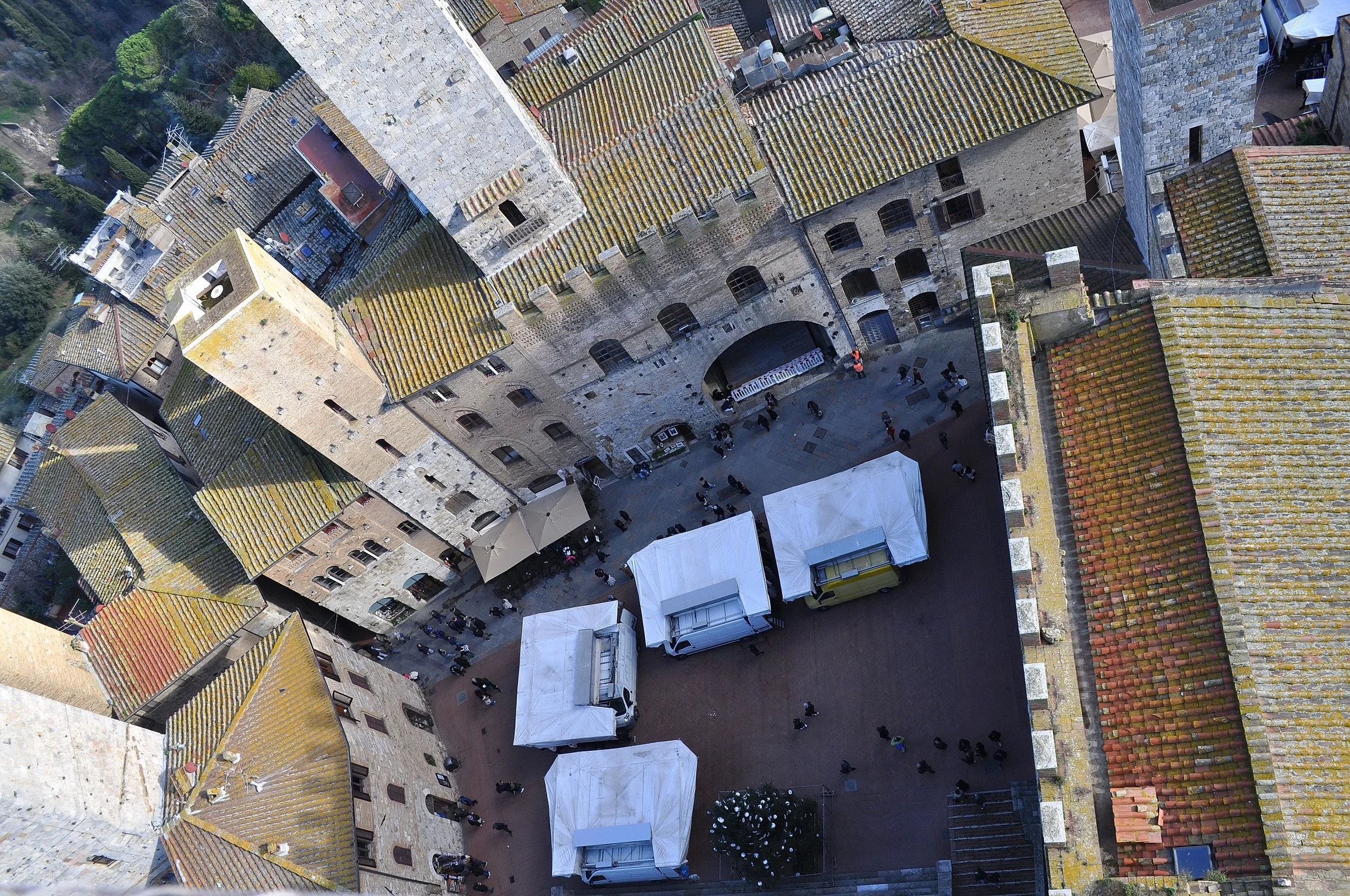
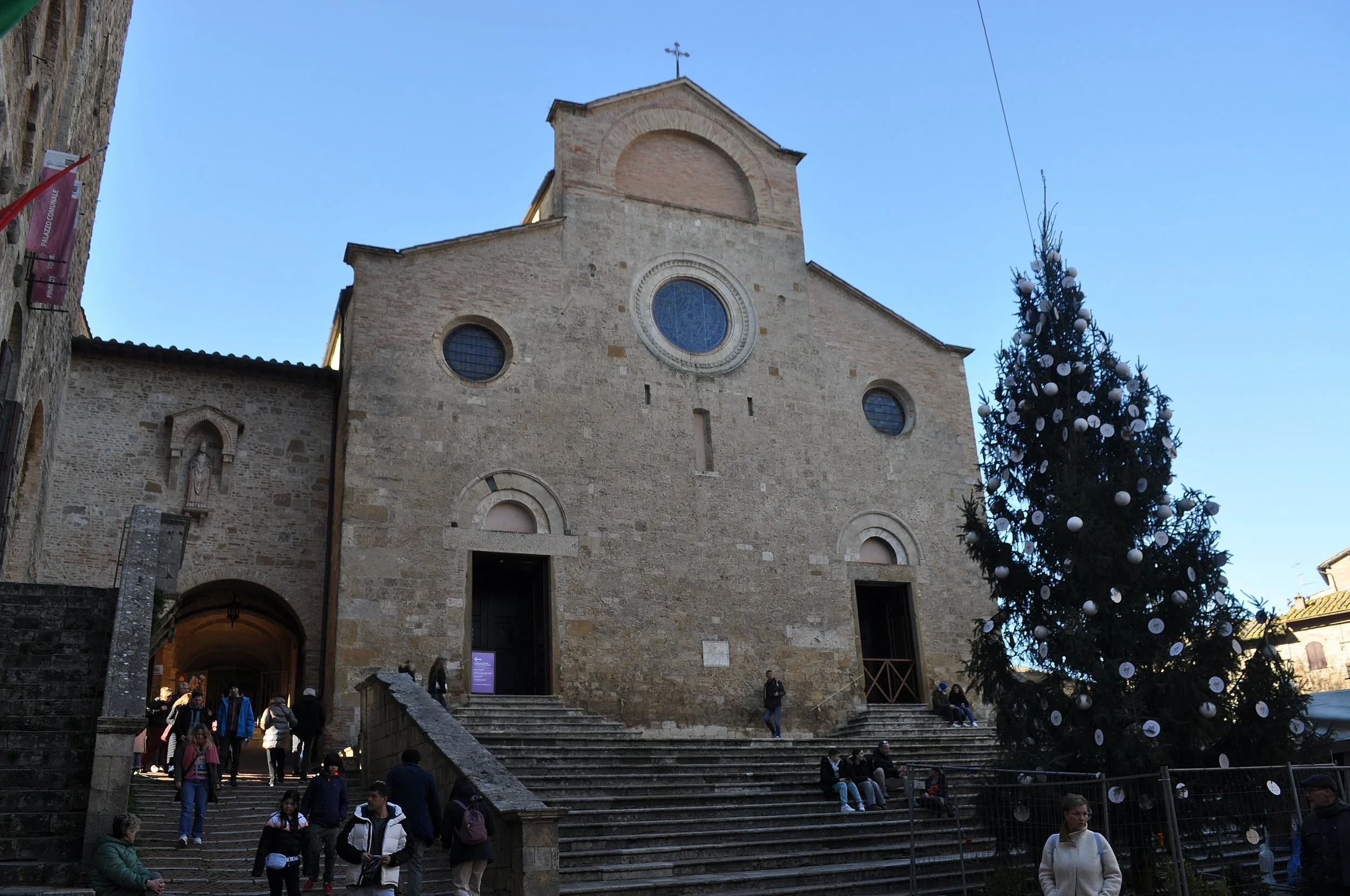
Piero: the Collegiata of Santa Maria Assunta dominates the scene with a simple façade, free of superfluous decorations. it is an intentional aesthetic, preparing visitors for what lies inside. once you cross the threshold, the true journey through time begins.
Angela: the walls are completely covered with medieval frescoes, arranged like a great illustrated Bible, designed to tell the sacred story to a largely illiterate population.
Piero: on the left wall unfold the Stories of the Old Testament. from the Creation to the story of Job, the scenes flow in a continuous sequence. the figures are solemn, the gestures essential, the colors intense. each image is clear, immediate, designed to be understood even from a distance.
Angela: opposite, the Stories of the New Testament guide the gaze from the Nativity to the Resurrection. here, the story becomes more human, closer to the faithful. the faces express pain, hope, expectation.
Piero: on the counter-façade dominates the Last Judgment. Christ the judge at the center, the blessed welcomed into Paradise, the damned overwhelmed by the torments of Hell. it is a powerful, direct image, free of ambiguity. a moral warning that spoke to everyone, without the need for words.
Angela: here, art is not mere decoration: it was teaching, storytelling, faith. a visual language capable of guiding, admonishing, and consoling at the same time.
Piero: leaving the Collegiata, it is time to climb. the Torre Grossa, next to the Palazzo Comunale, is the tallest in San Gimignano and also the most symbolic. the internal staircase is narrow but not too tight, the steps worn by time. the climb is slow, almost meditative.
Angela: as we climb, the city gradually recedes. the sounds fade, the view shifts.
Piero: reaching the top, just enough time to conquer the vertigo, everything becomes clear. the medieval towers rise from the rooftops like stone needles. the walls, the closely packed houses, the compact urban layout tell the story of a city designed to defend itself and maintain control.
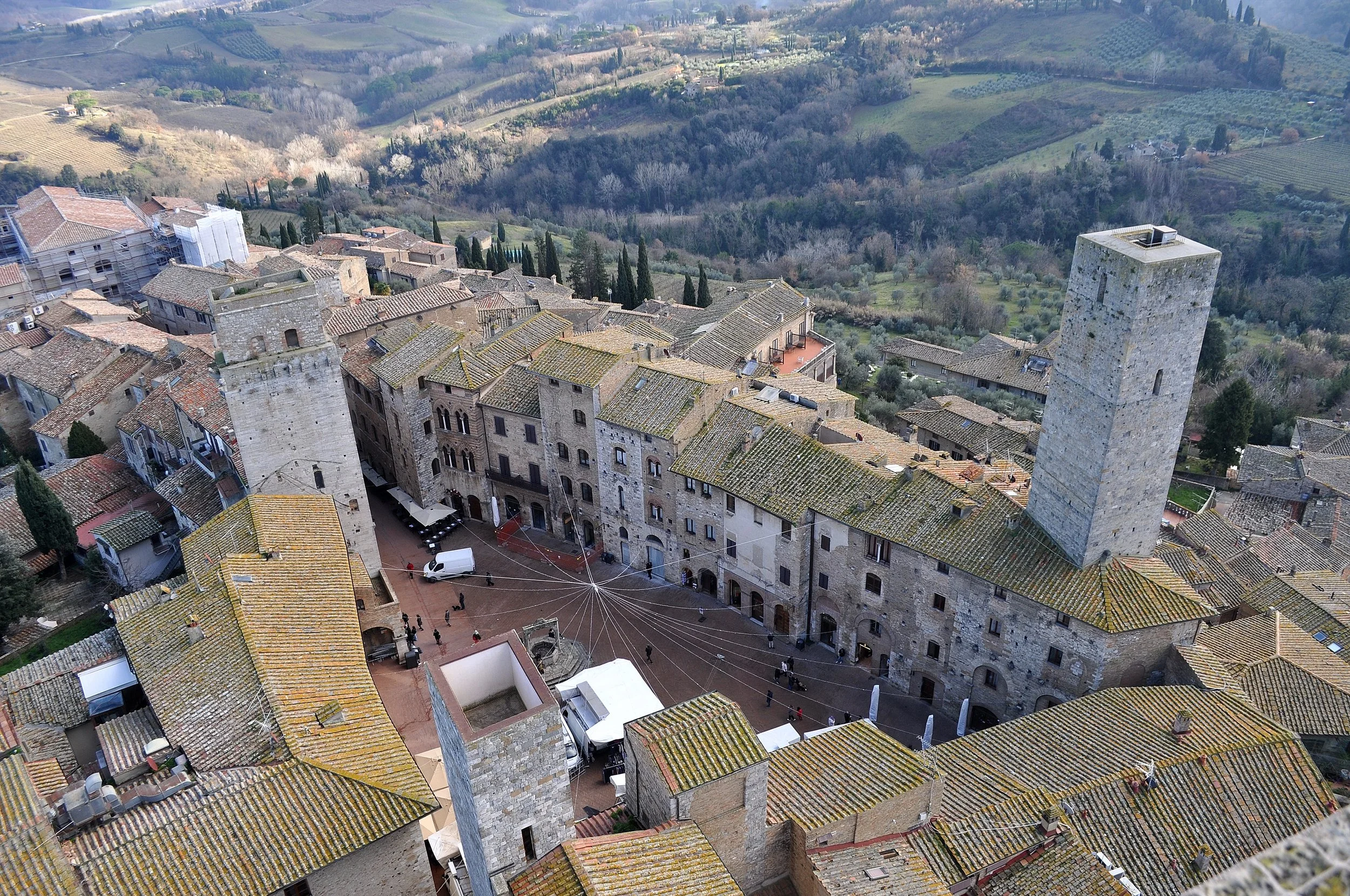
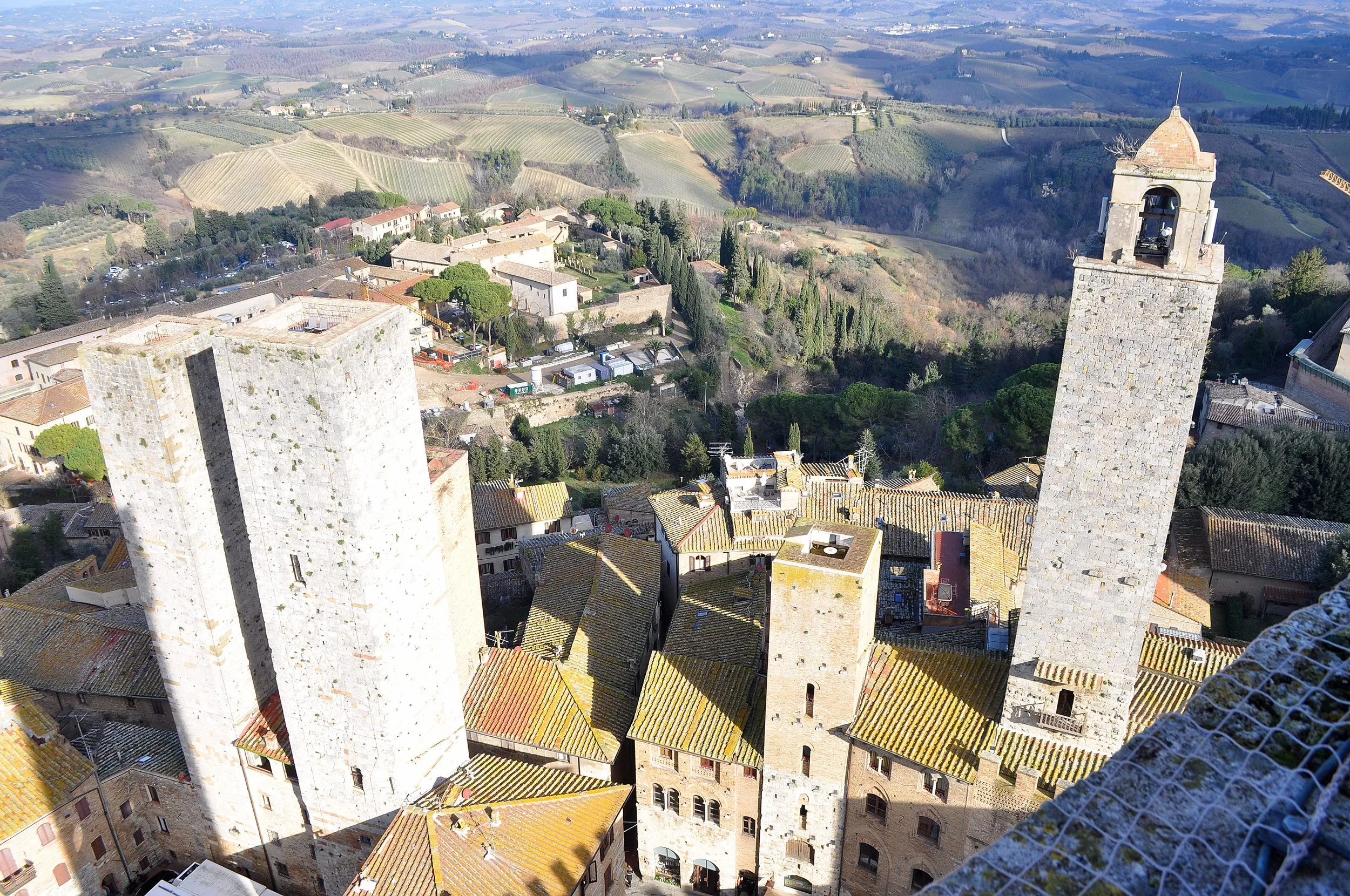
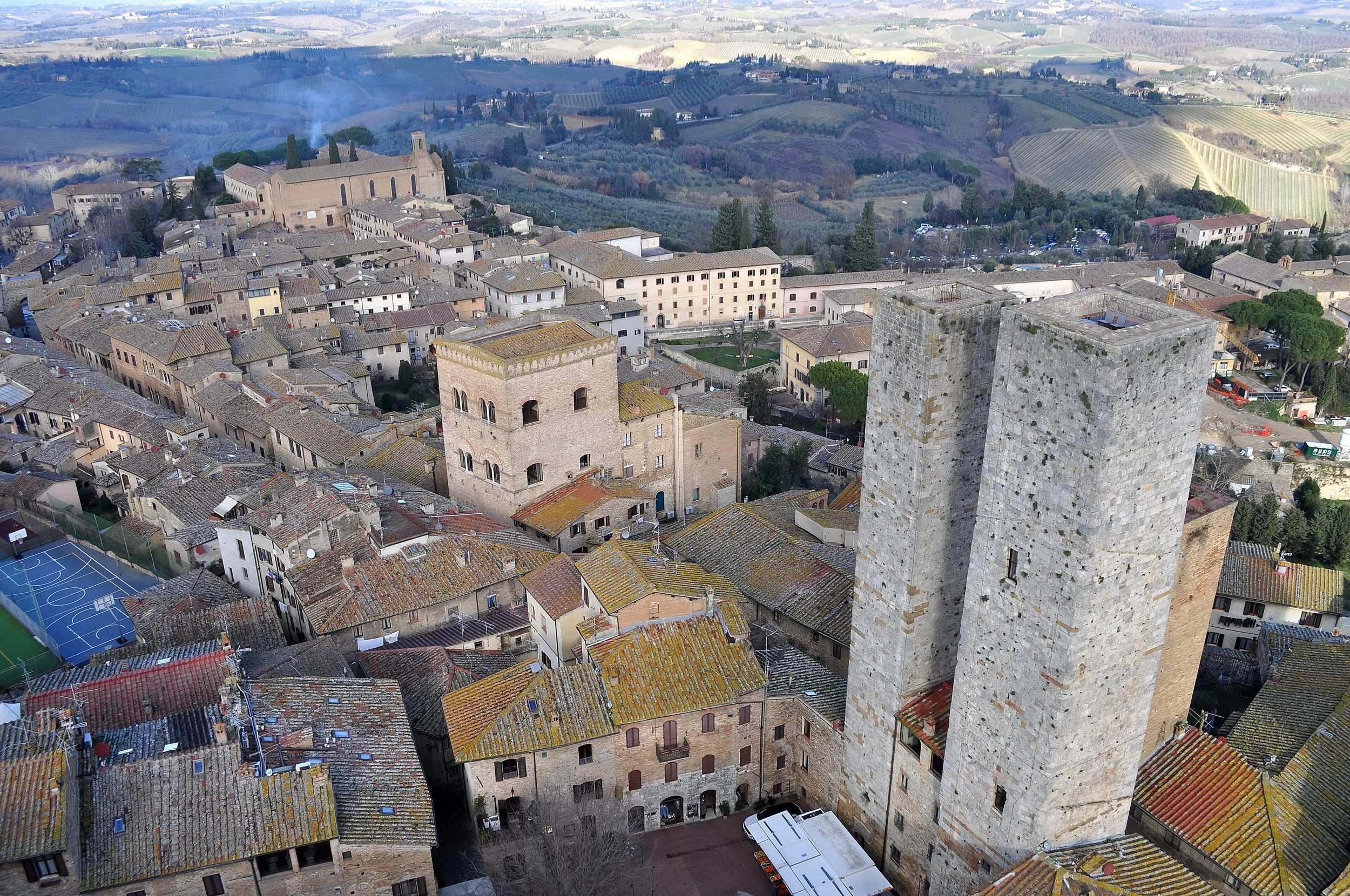
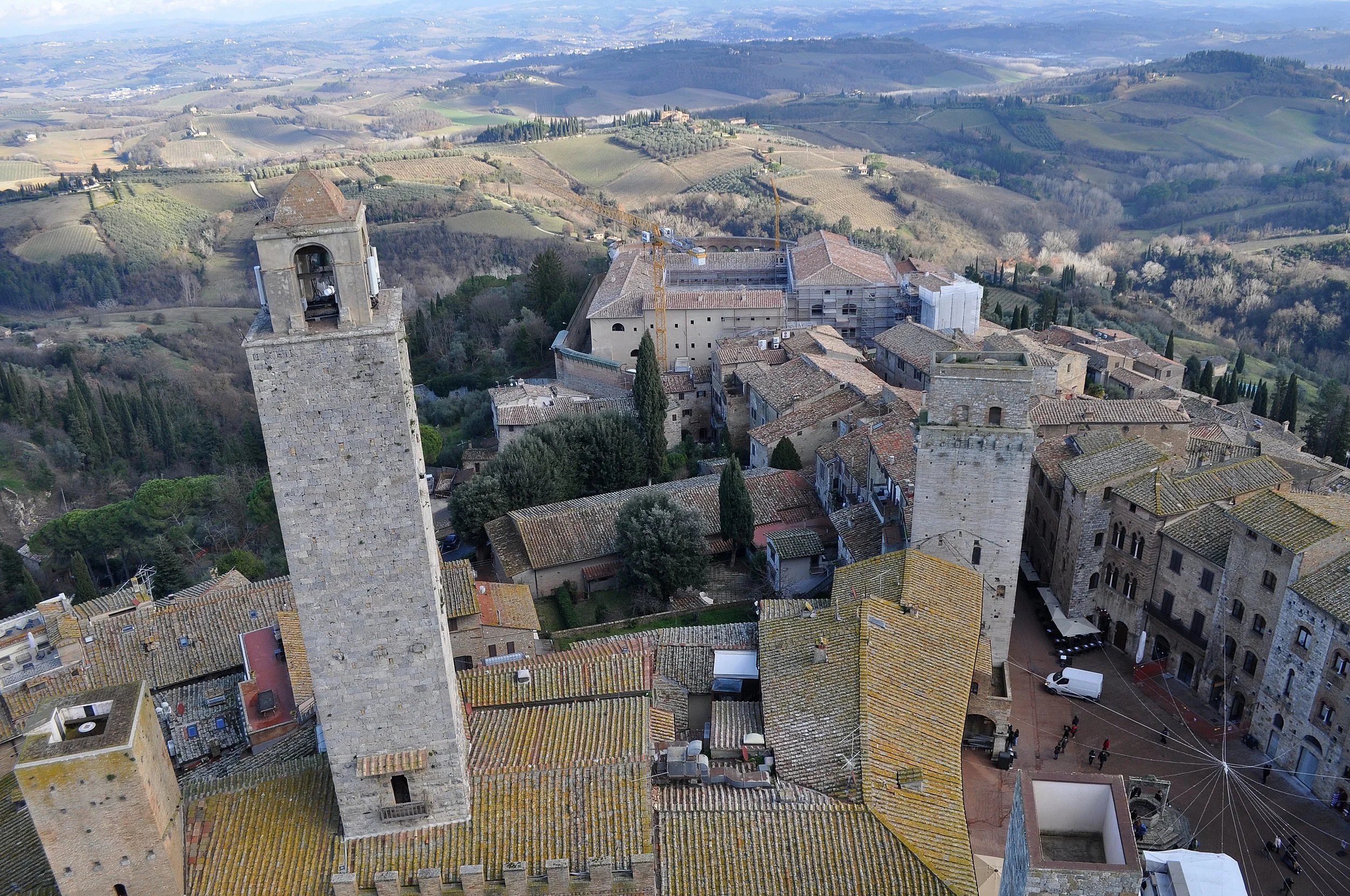
Angela: all around, the Tuscan countryside unfolds without boundaries. gentle hills, neat vineyards, white roads connecting farms and villages.
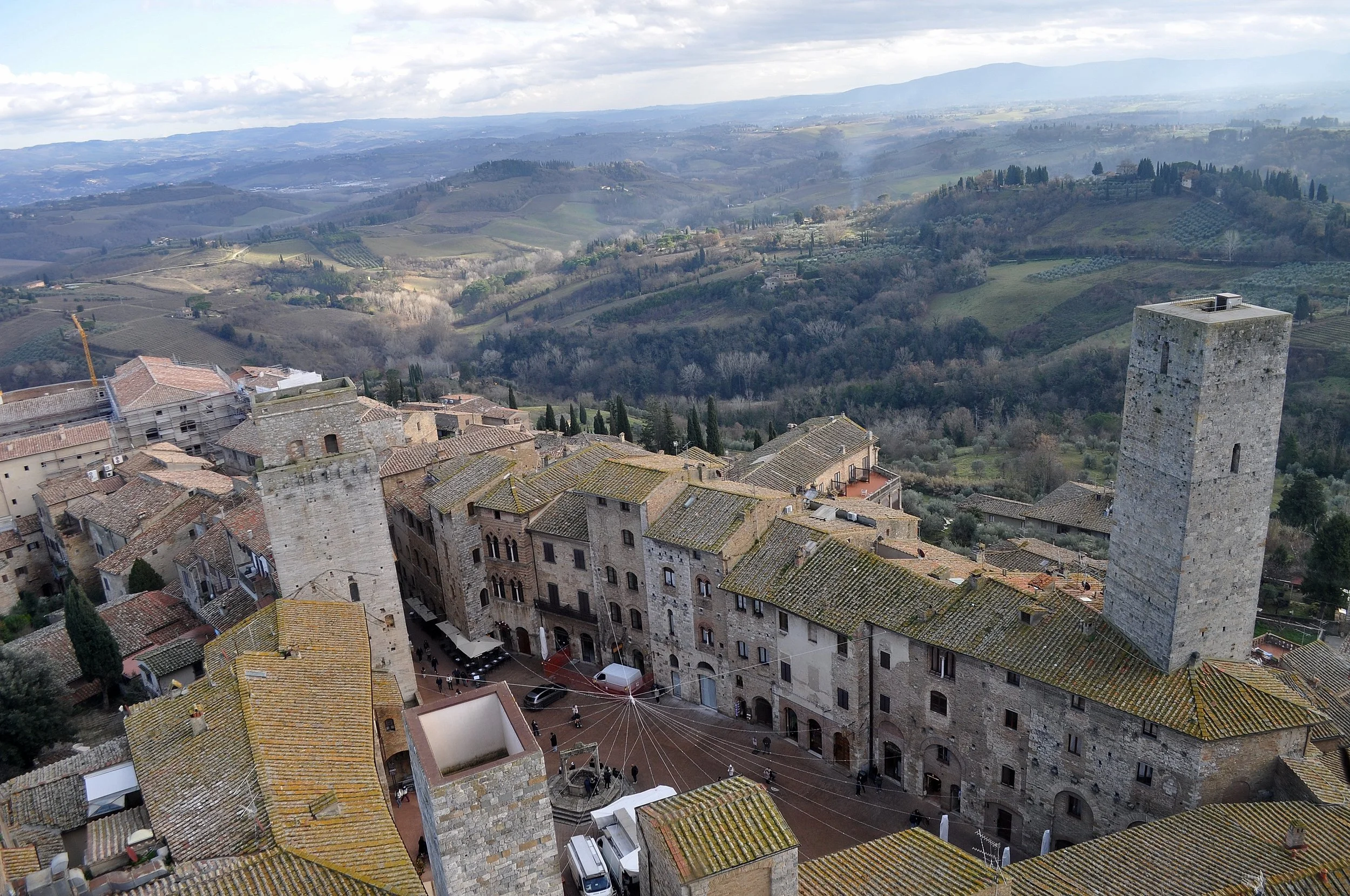
Piero: from up here, San Gimignano stops being merely beautiful. it becomes understandable: its position, its role, its ambition can be read in the landscape.
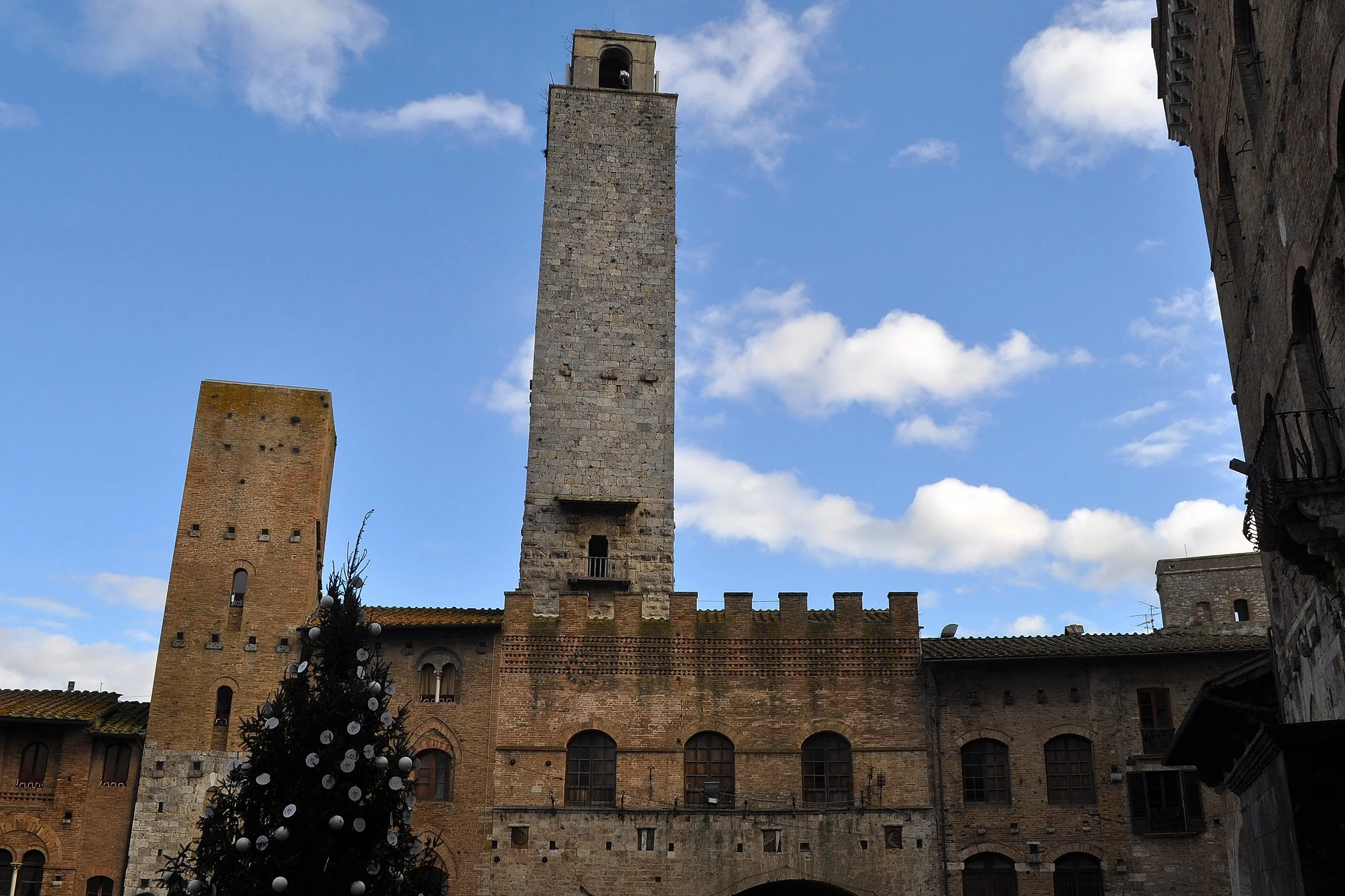
Angela: descending, we return to the heart of daily life: Piazza della Cisterna appears suddenly, intimate, irregular, authentic.
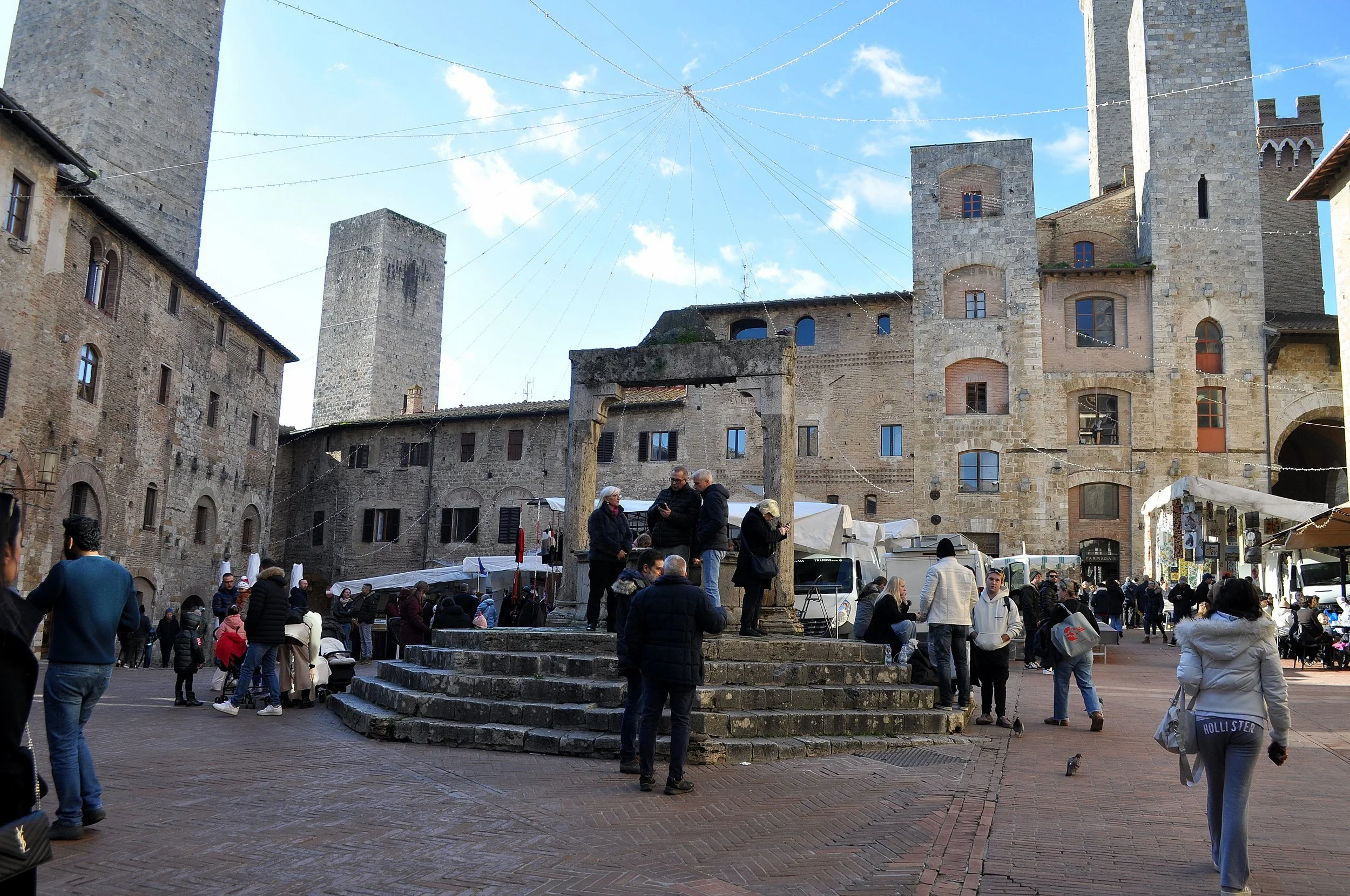
Piero: the medieval cistern at the center reminds us how essential water was for the city’s survival. around it, the noble palaces and towers tell centuries of meetings, exchanges, and markets.
Angela: it is a square that does not need explaining. just stop, sit, observe.
Piero: here, San Gimignano is not a monument. it is a lived space.
San Gimignano to taste
Angela: after so much history, it’s time to savor the territory.
Piero: the Vernaccia di San Gimignano, one of the oldest white wines in Italy, is produced right on these hills. fresh, mineral, it pairs perfectly with the local cuisine.
Angela: Tuscan soups, cured meats, cheeses, simple bread. Flavors that do not seek special effects, but tell of a peasant tradition still alive today.
Piero: and then the artisan gelato, famous worldwide. here it becomes a natural pause, almost a ritual, between one climb and one descent.
Goodbye San Gimignano
Piero: San Gimignano is not a village to rush through. it is a place that asks for time.
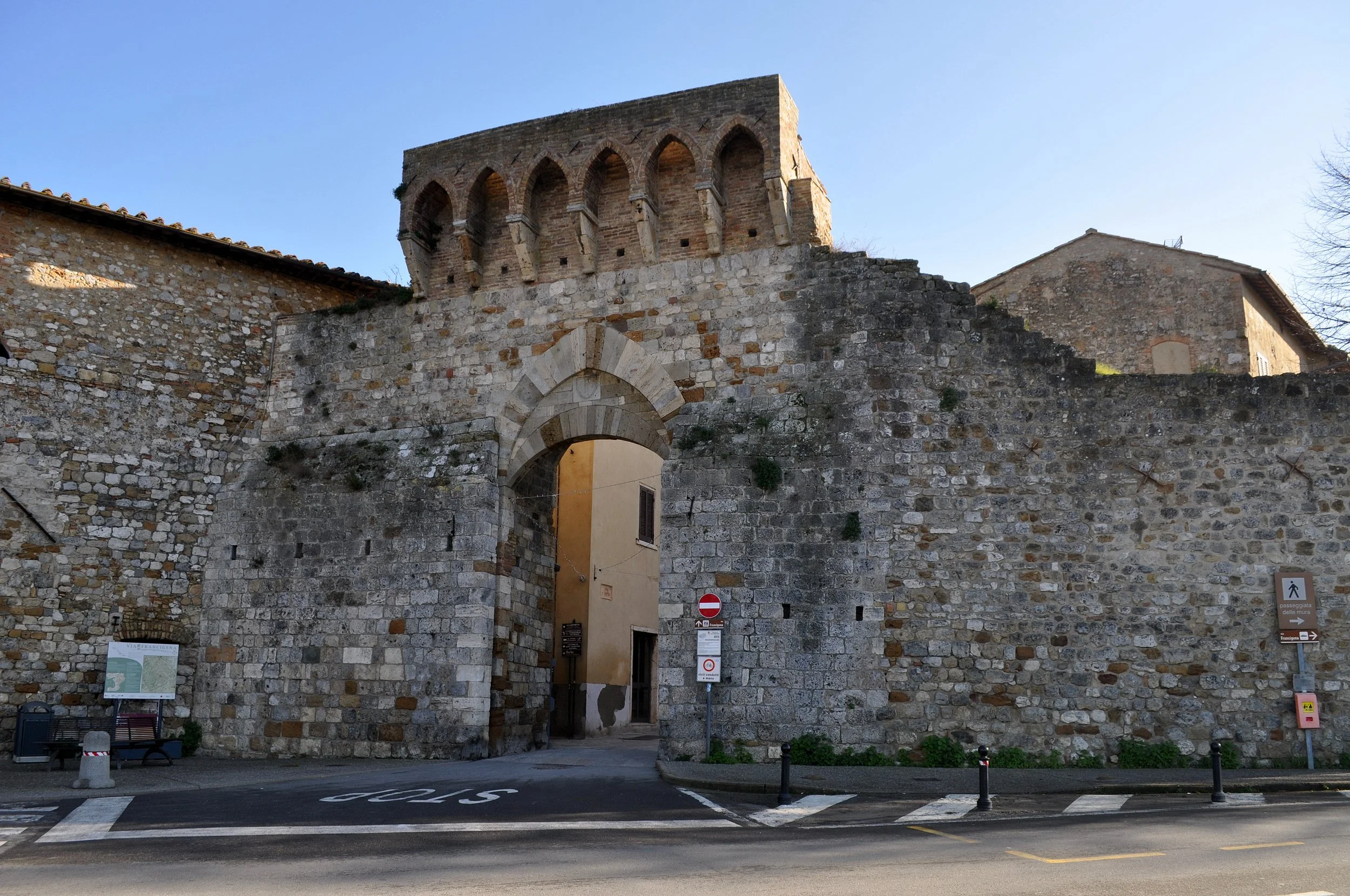
Angela: here, every stone speaks of power, faith, fear, pride, but also of harmony with the landscape.
Piero: the towers, at sunset, stop challenging the sky. they merge with the light, becoming part of the horizon.
Angela: and as the day ends, San Gimignano remains still, suspended between past and present.
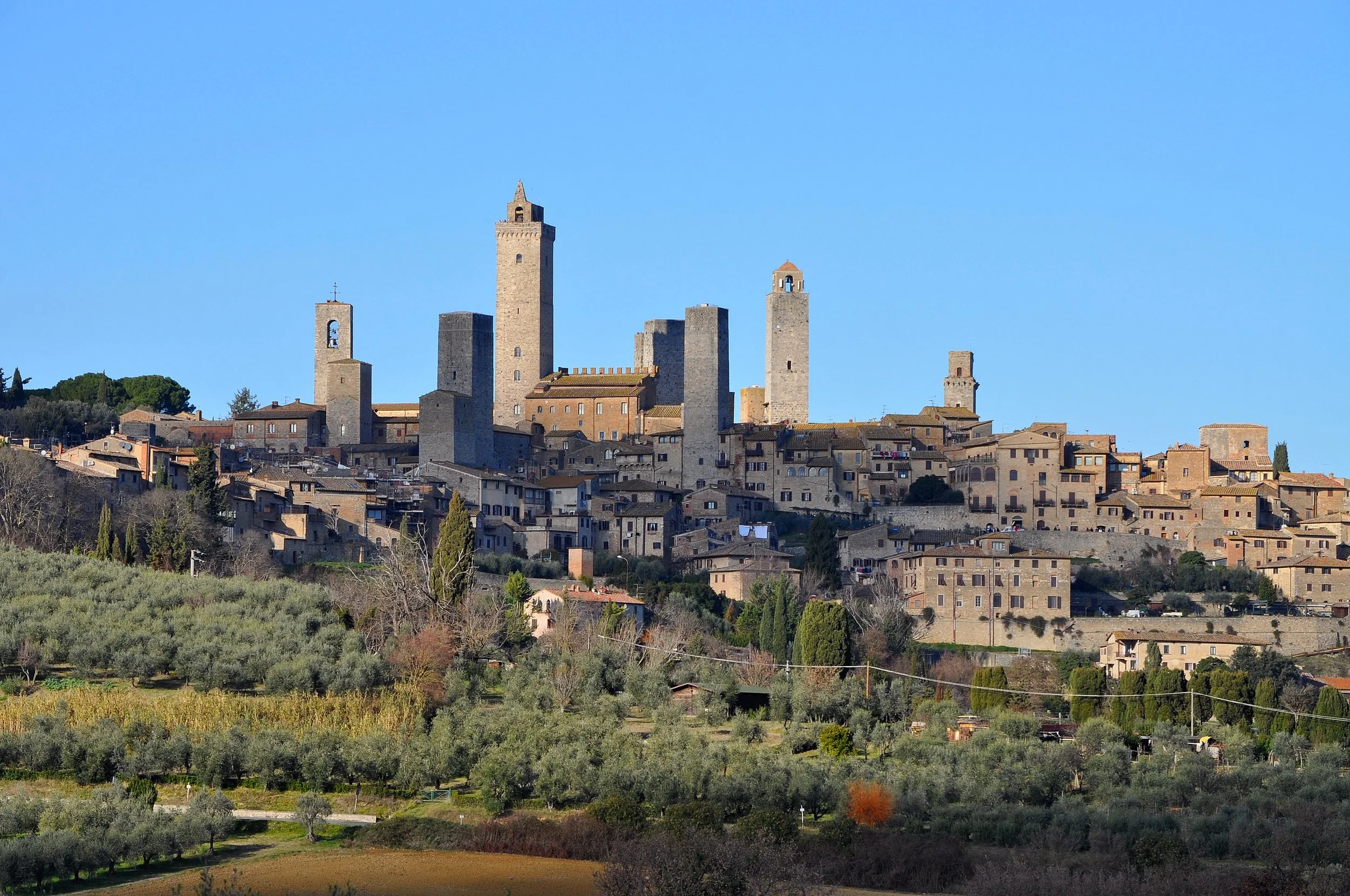
Piero: not as a memory, but as a living presence, continuing to tell its story.
Angela: watch our walk again in this video.