
The Palace of Knossos: between myth and reality
Step inside the legendary Palace of Knossos, the most famous archaeological site in Crete and the heart of the Minoan civilization. Discover the myths of King Minos, the Labyrinth and the Minotaur while exploring ancient frescoes, the Throne Room and remarkable architecture. Join us on an unforgettable journey through history, archaeology and Greek mythology.
Piero: we simply can't begin our visit anywhere else but the Palace of Knossos. We are standing before the most famous archaeological site in all of Crete and, quite possibly, the most evocative in the entire eastern Mediterranean.
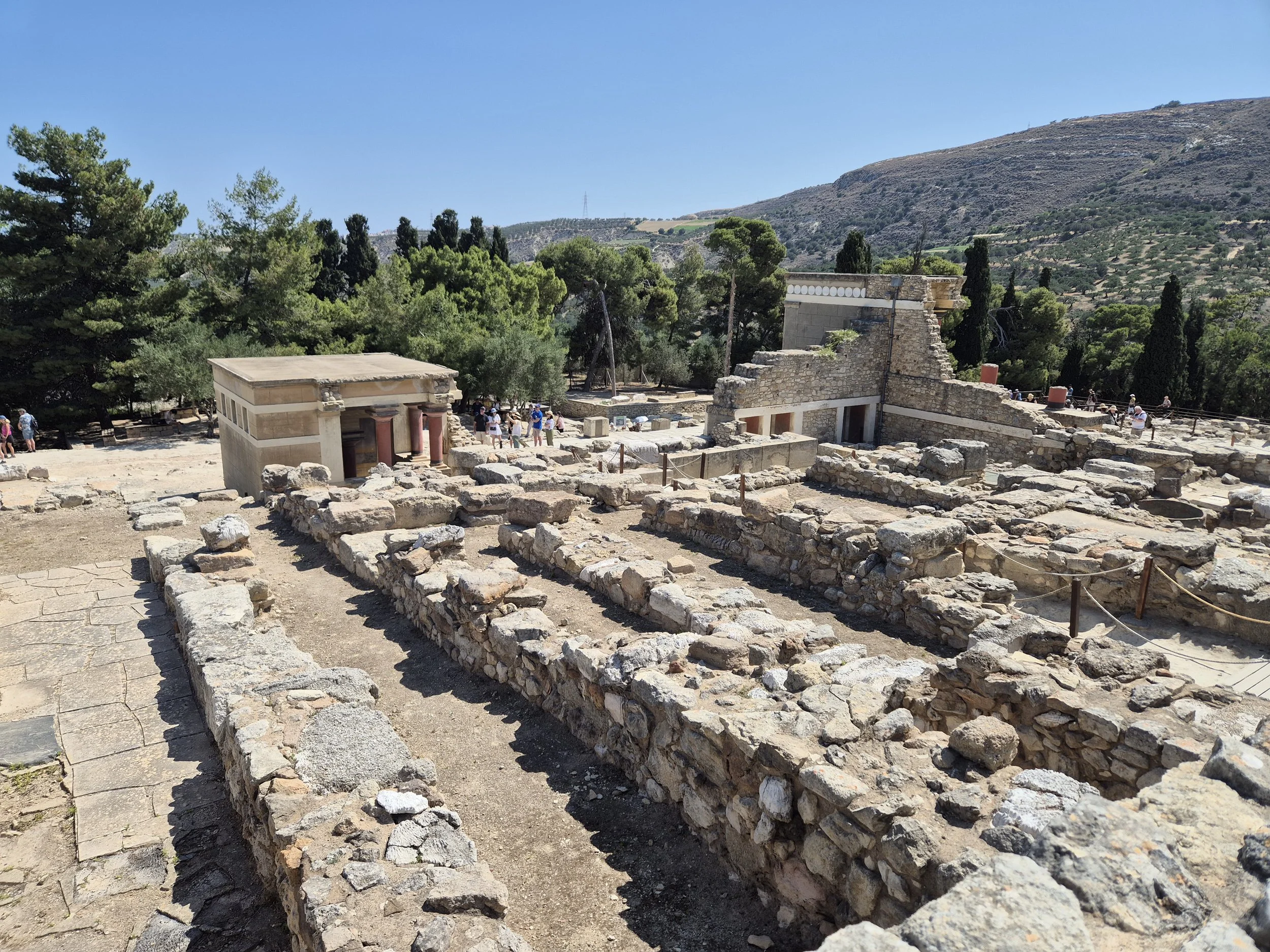
Angela: as soon as you step inside, you realise this is no ordinary palace. It is a living organism, a maze of corridors, staircases, columns, chambers, storerooms, and frescoes. A place that, even after thousands of years, still has the power to bewilder... and to enchant.
Piero: did you know that, according to legend, this palace was ruled by King Minos?
Angela: of course! The son of Zeus, who became king of Crete and guardian of law and order. A ruler who was both feared and respected, renowned as a wise and powerful judge. His story is the thread that weaves together myth and history here at Knossos.
Piero: the palace was first discovered in 1878, thanks to the Cretan archaeologist Minos Kalokairinos. But it was the English archaeologist Sir Arthur Evans who, in 1900, began the extensive excavations and brought the magnificence of this extraordinary complex back to the world's attention.
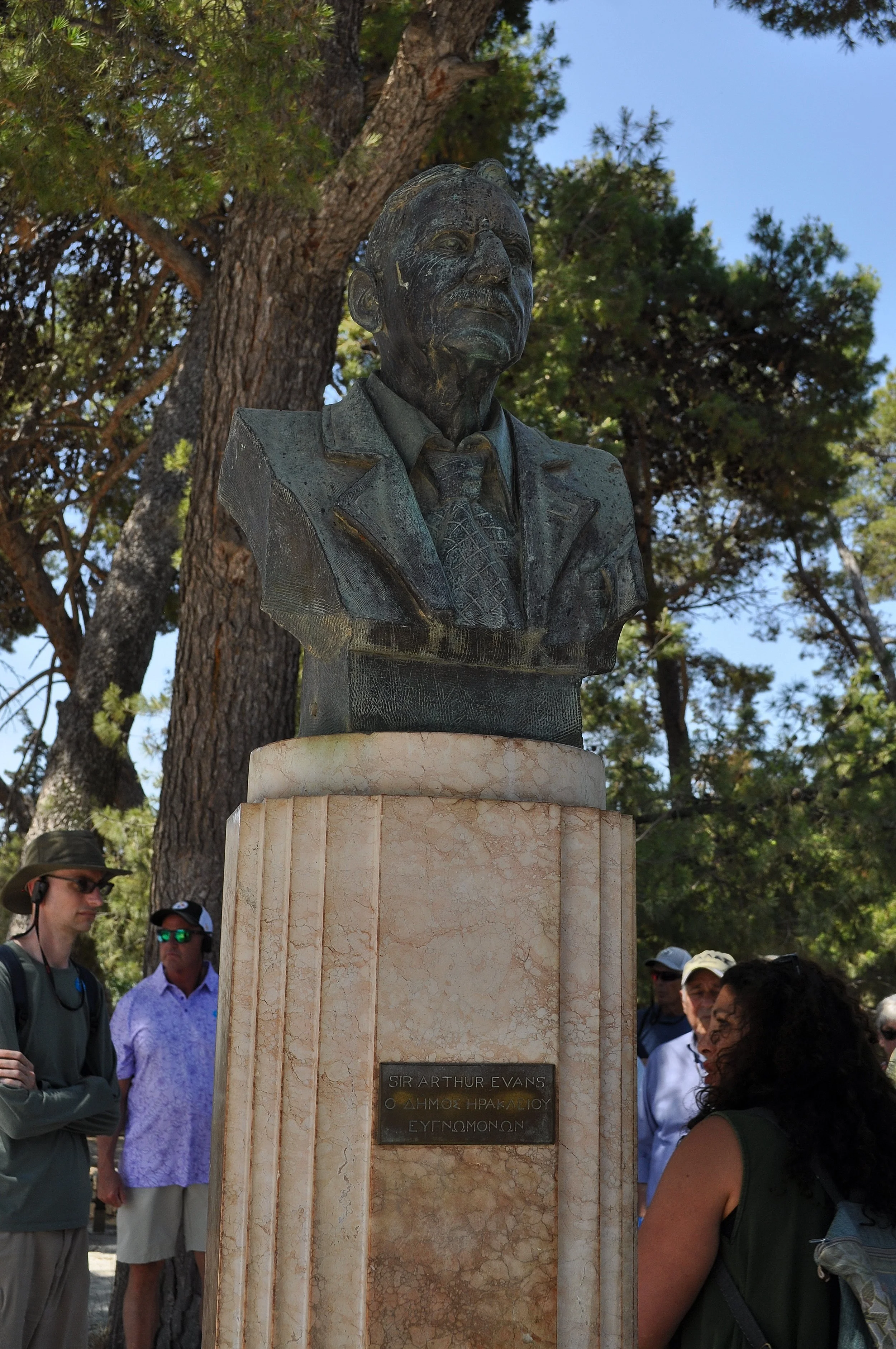
Angela: and it also sparked a great deal of controversy. Because Evans didn't just excavate the site—he reconstructed it, perhaps a little too enthusiastically. He used concrete, repainted walls, and recreated missing sections according to his own interpretation. So, what we see today is, at least in part, an idealised reconstruction.
Piero: and that, in my very humble opinion, takes away a little of this place's magic. It leaves less room for the imagination, which has always been an essential part of the experience whenever we visit an archaeological site. The palace once covered an area of more than 14,000 square metres. It contained over 1,000 rooms, spread across several levels and connected by staircases and courtyards. It wasn't just a royal residence—it was the political, religious, and administrative centre of the Minoan world.
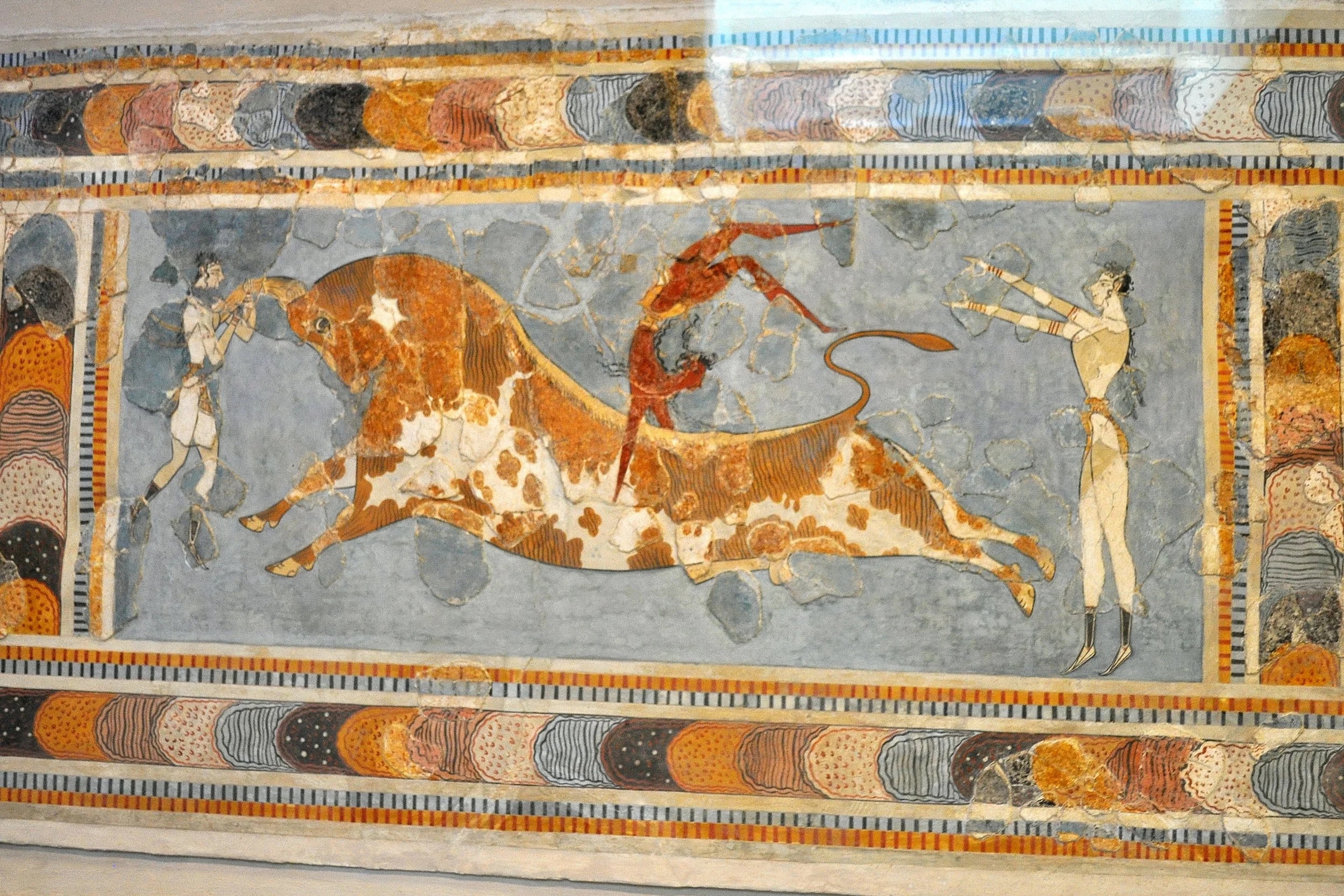
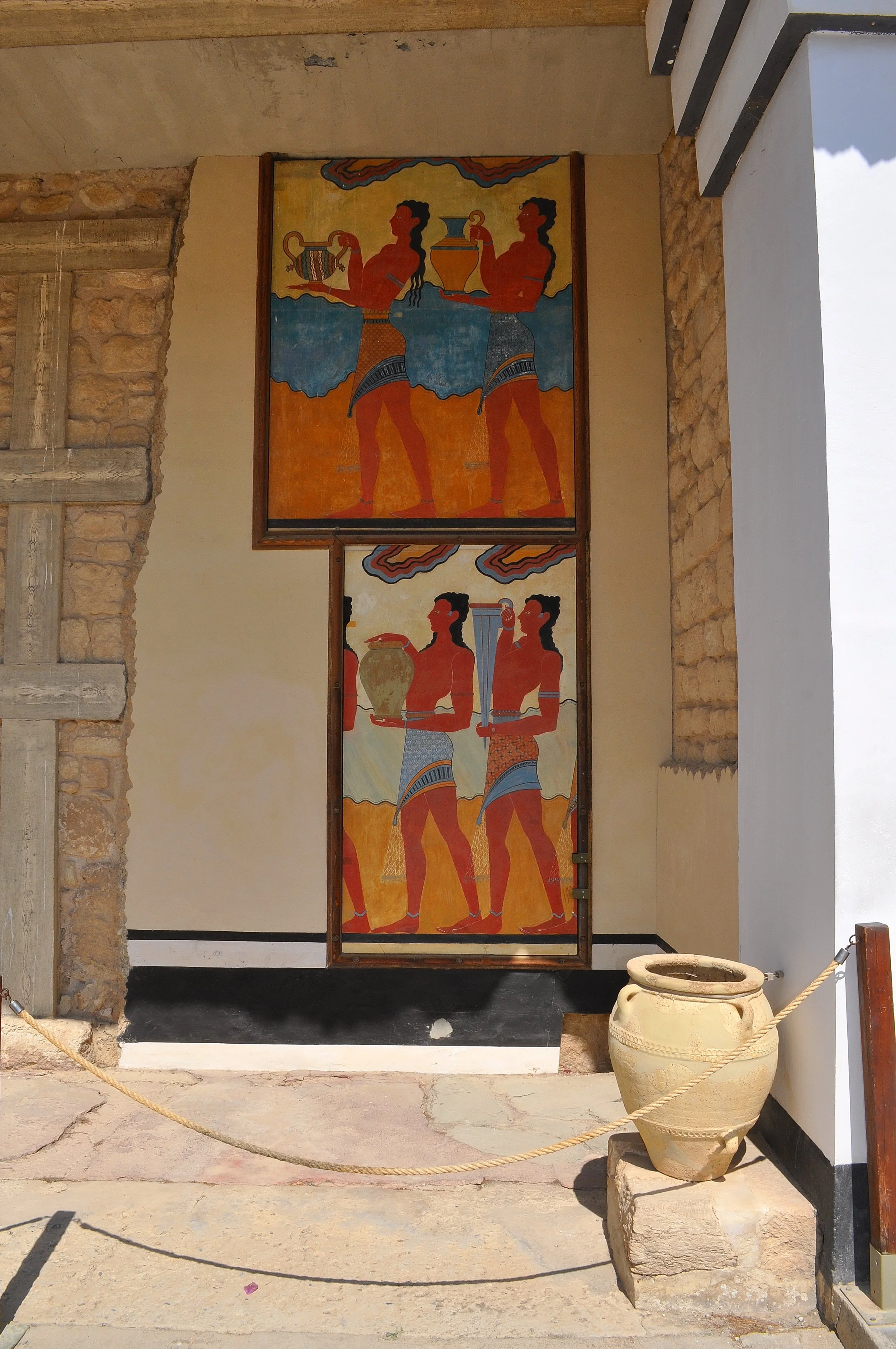
Angela: here you'll find storerooms for grain and olive oil, ceremonial chambers, workshops, and ingenious light wells. And then there are the frescoes... everywhere. The most famous is the Bull-Leaping Fresco, showing a young acrobat grasping a bull by the horns and soaring gracefully over its back in what looks almost like a dance.
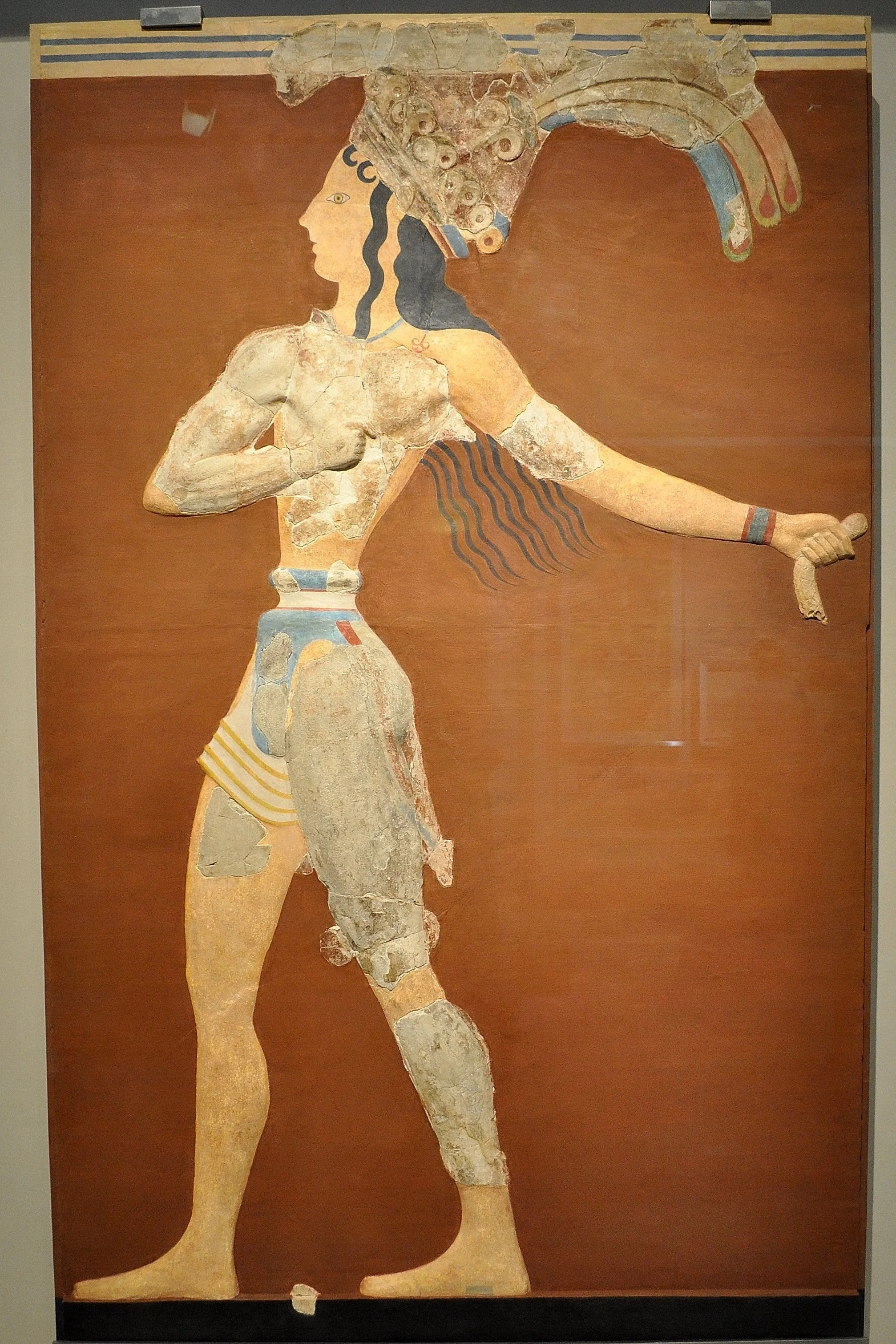
Piero: and then there's the Prince of the Lilies, striding forward with unmistakable confidence. The Procession Fresco, with its flowing robes. The women with bare bodices and carefully lined eyes. It is a world full of colour, movement, and refinement. It doesn't feel ancient... it feels as if it's still alive.
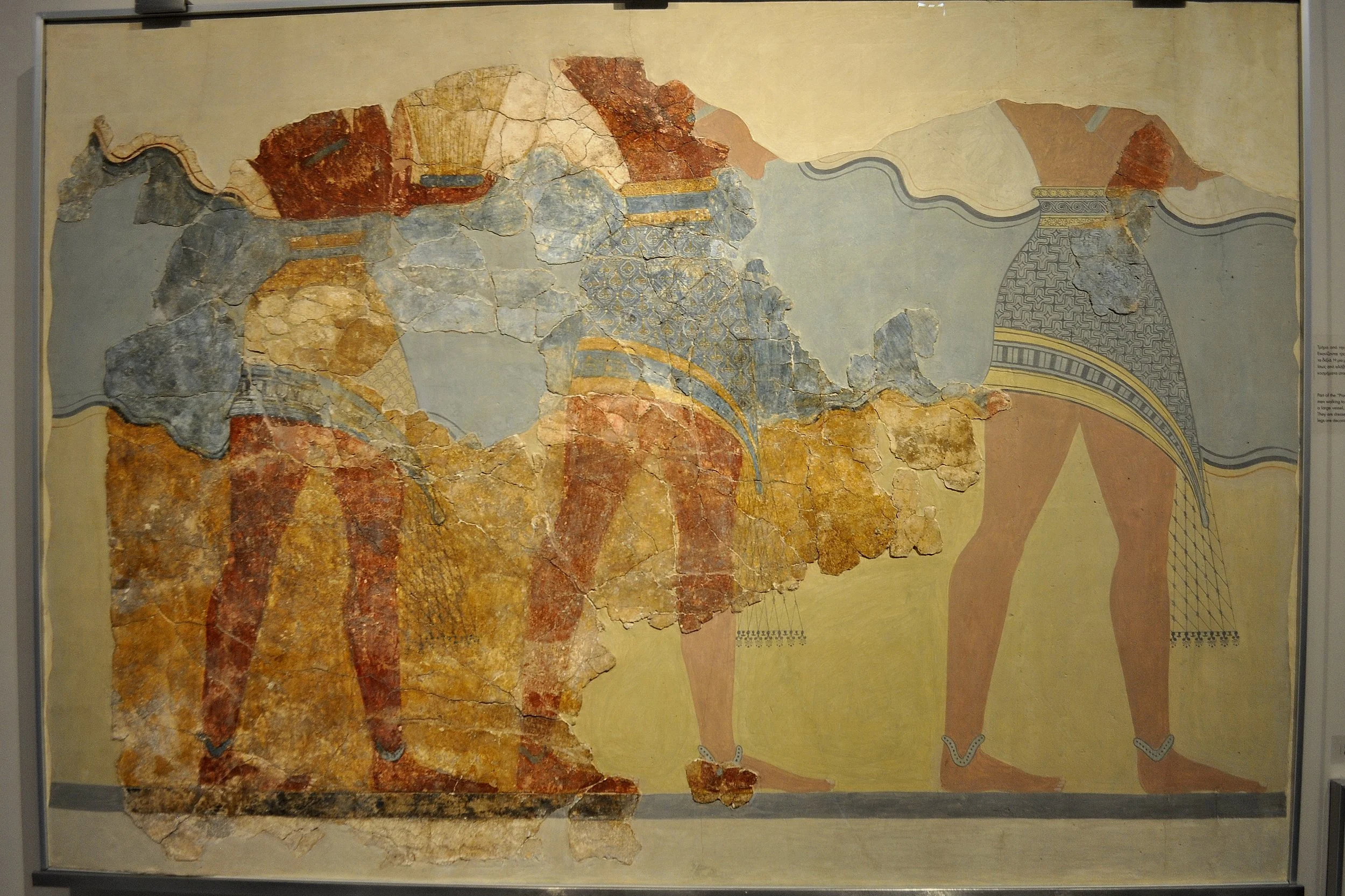
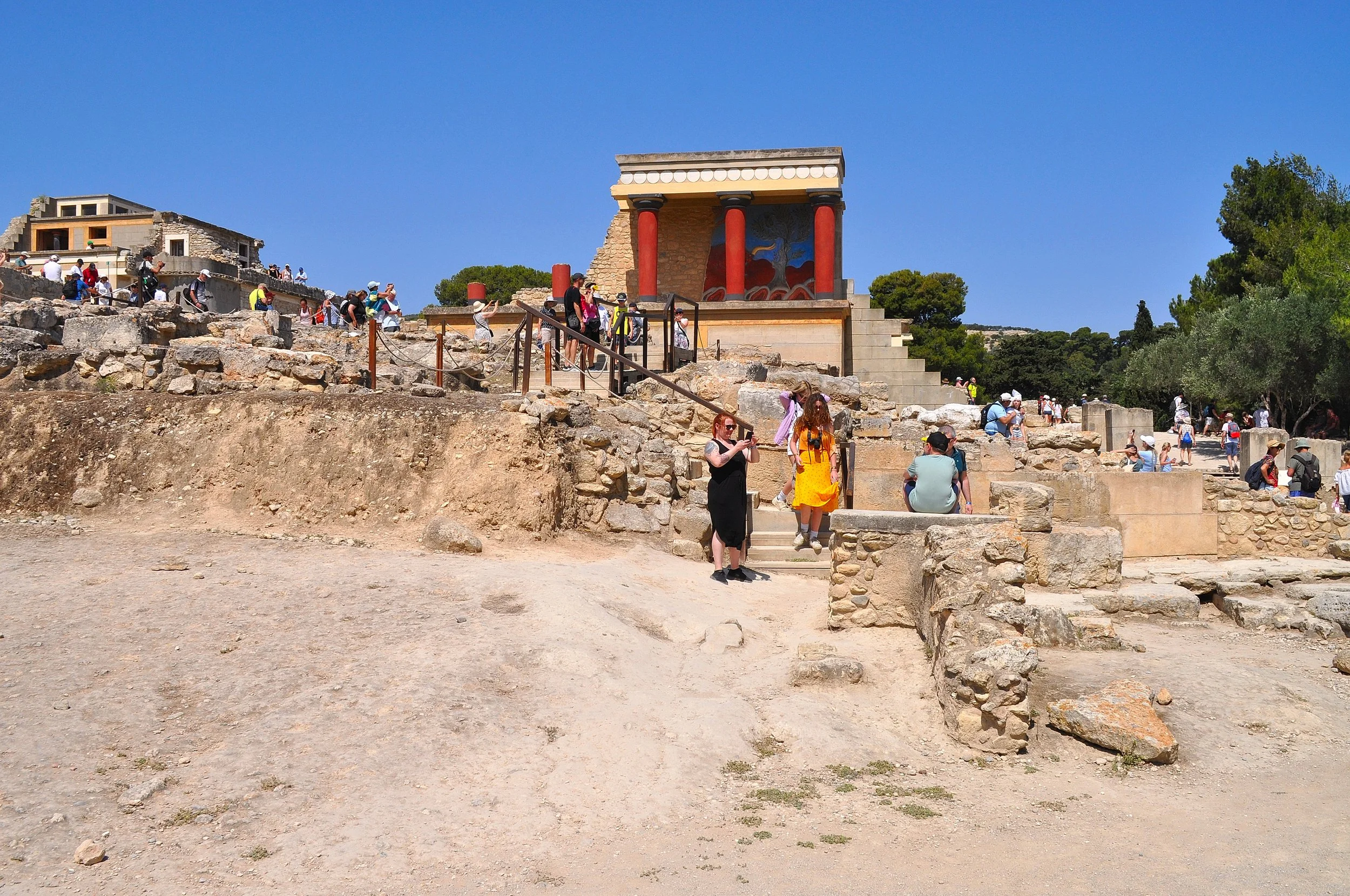
Angela: and the colour isn't confined to the walls. Just look at the columns: painted red and black, slender, and the exact opposite of Greek columns. They are wider at the top and narrower at the base — a unique feature of Minoan architecture.
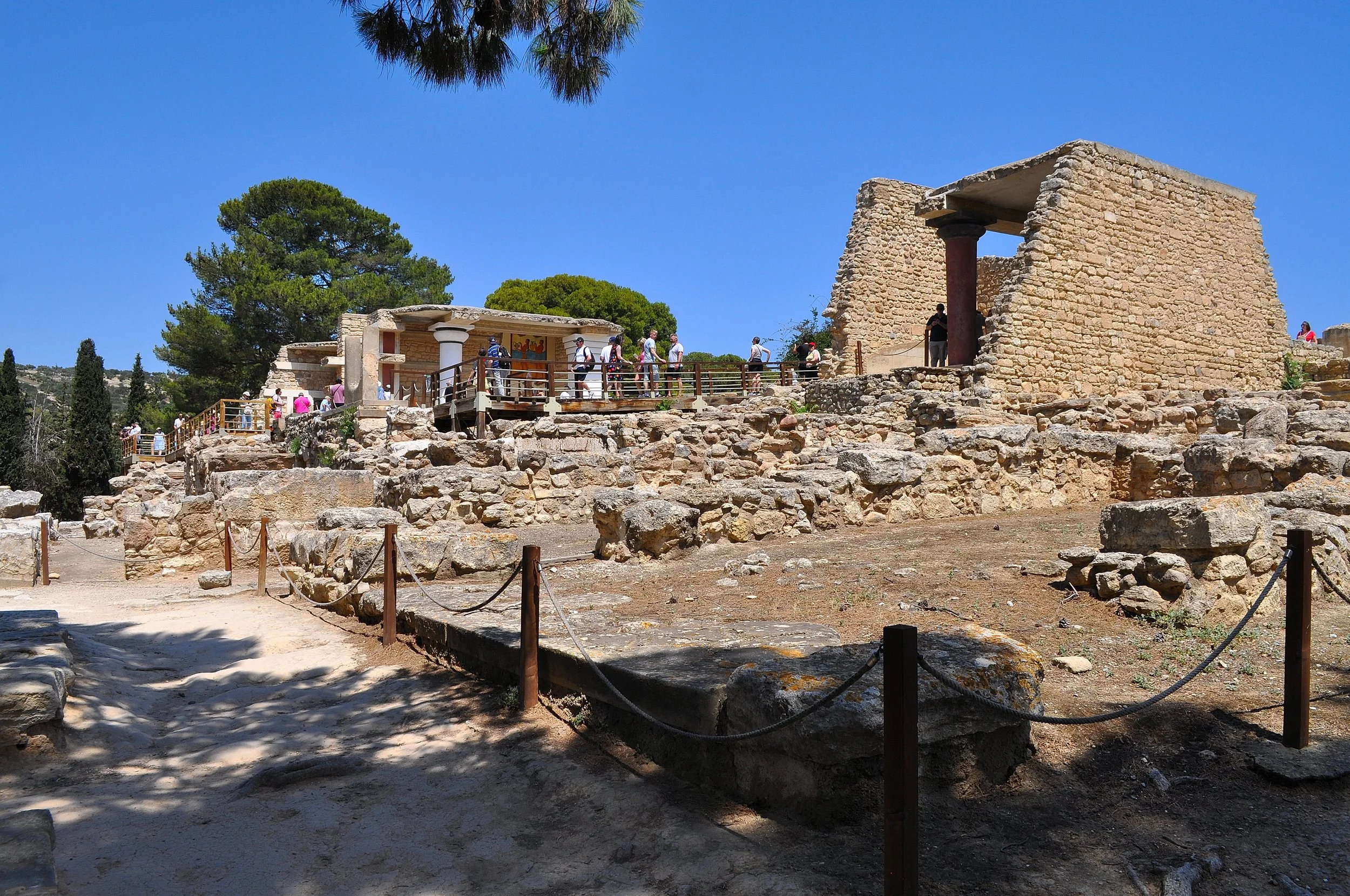


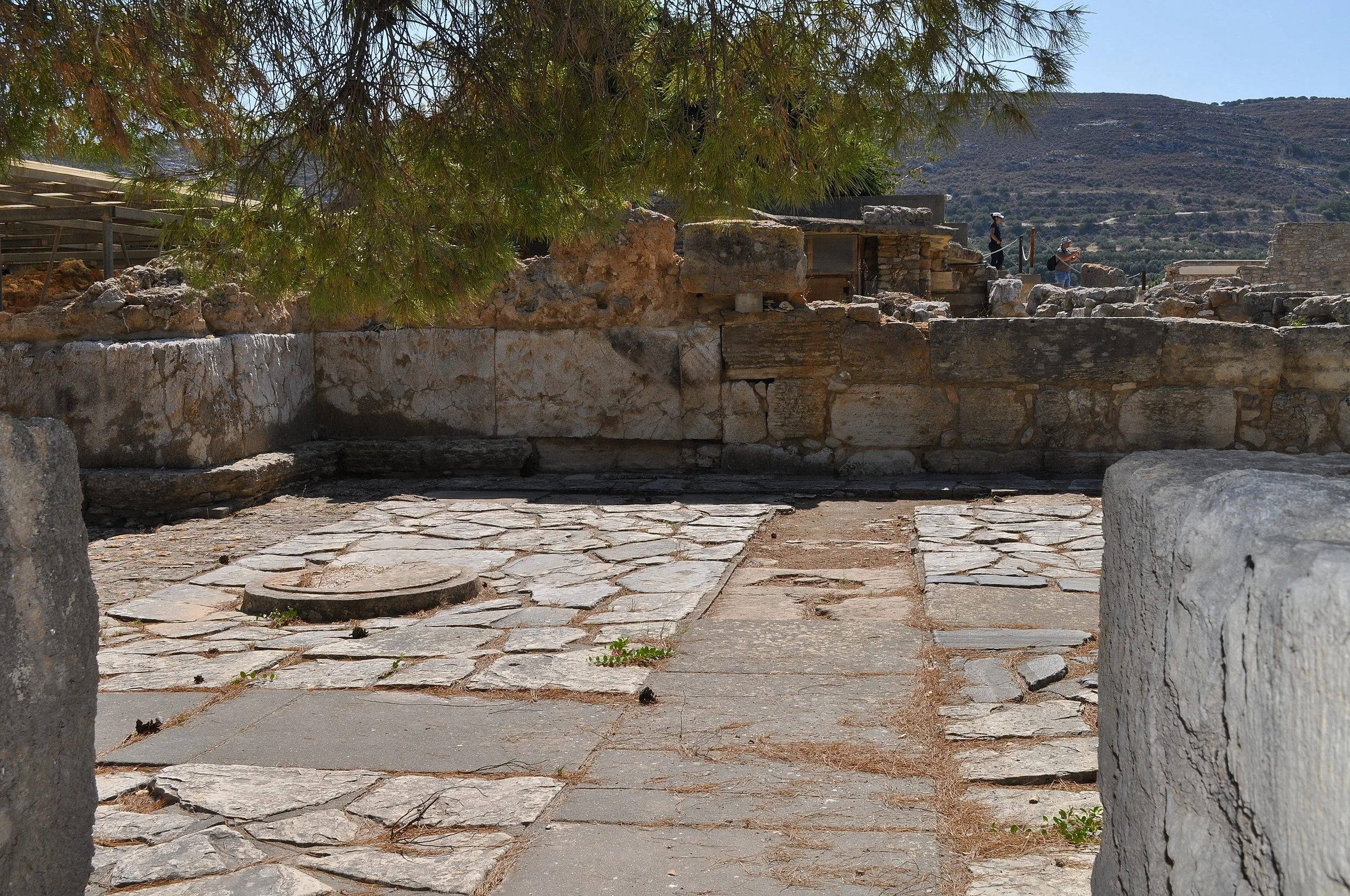


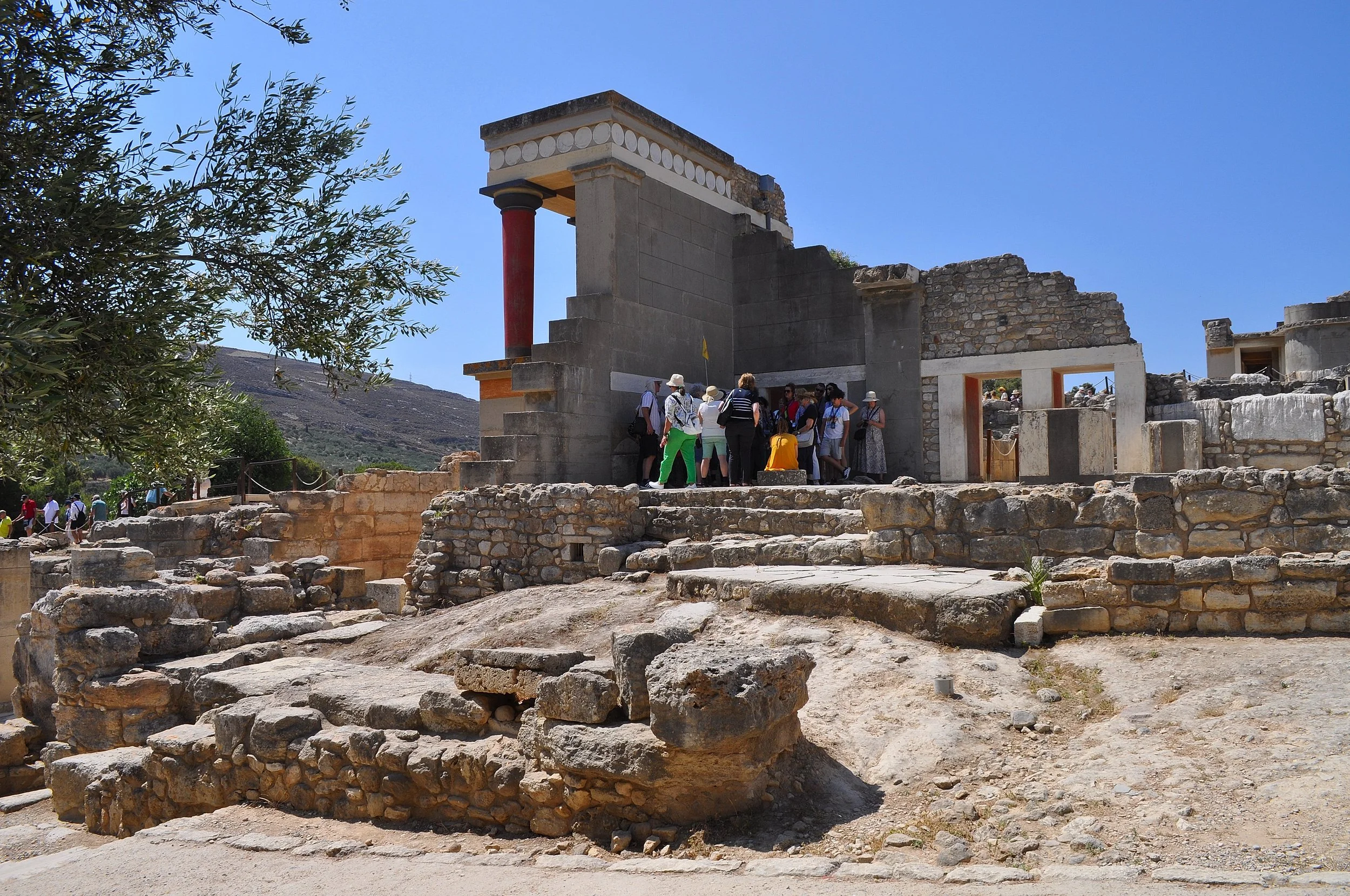


Piero: one of the palace's most famous rooms is the Throne Room. Here you'll find the alabaster throne, set against the wall and flanked by stone benches. The walls are decorated with frescoes depicting griffins—mythical creatures with the body of a lion and the head of an eagle. This room, too, has been heavily reconstructed. If you want to visit it, be prepared for long queues under the Cretan sun.
Angela: we don't actually know whether that throne belonged to a king. It may have been used by a high priest, or perhaps even by a queen. Many clues suggest that women held central roles in Minoan society, particularly in religious life.
Piero: walking through these halls, it's impossible not to think of the myths: King Minos, the Minotaur, Ariadne's thread, and the Labyrinth built by Daedalus. Reality may have been different, but these stories were born here. Knossos inspired them... and still keeps them alive today.
Angela: and even if we set mythology aside, the impact is very real. You're walking through rooms that are thousands of years old, yet remarkably modern in their design. There are natural ventilation systems, drainage channels, and light wells. The Minoans didn't just build—they planned.

Piero: and then there's its location. Knossos is not by the sea, but in a fertile area near the Kairatos River. A strategic position that allowed it to control the surrounding valley while remaining protected from the threat of attacks arriving by sea.
Angela: by the end of the visit, one thing becomes clear: Knossos was far more than just a palace. It was an entire world—a symbolic, spiritual, urban, and administrative microcosm. The beating heart of a civilization that has left an everlasting legacy.
Piero: and every time you cross its thresholds, it feels as though you're standing somewhere between history and myth. Knossos is the place where the past stubbornly refuses to fade away. Relive the entire experience in this video:
Angela: one piece of advice: visit Knossos early in the morning. Not only does it get extremely hot, but it also becomes very crowded. Remember, it's the most famous archaeological site in Crete, so it's very common to encounter large groups of visitors arriving from cruise ships.
Piero: it's always worth buying your tickets online in advance to avoid the long queues. And although it comes at an extra cost, we highly recommend hiring a local guide — you'll usually find several available at the entrance.
Phaistos: the palace of silence and light
Explore the fascinating Palace of Phaistos, one of the most important archaeological sites in Crete. Unlike Knossos, this ancient Minoan palace reveals its beauty through untouched stones, breathtaking landscapes and mysterious discoveries like the Phaistos Disc. Join us through courtyards, royal halls and thousands of years of history in the heart of the Messara Plain.
Angela: after Knossos, I thought no other Minoan palace could impress me in quite the same way. But Phaistos is different. And perhaps that's exactly what makes it even more fascinating.
Piero: here, there are no reconstructions, no repainted columns, no recreated frescoes. Just bare stone, sunshine, the wind, and a breathtaking view stretching across the Messara Plain all the way to Mount Ida, the island's sacred mountain.
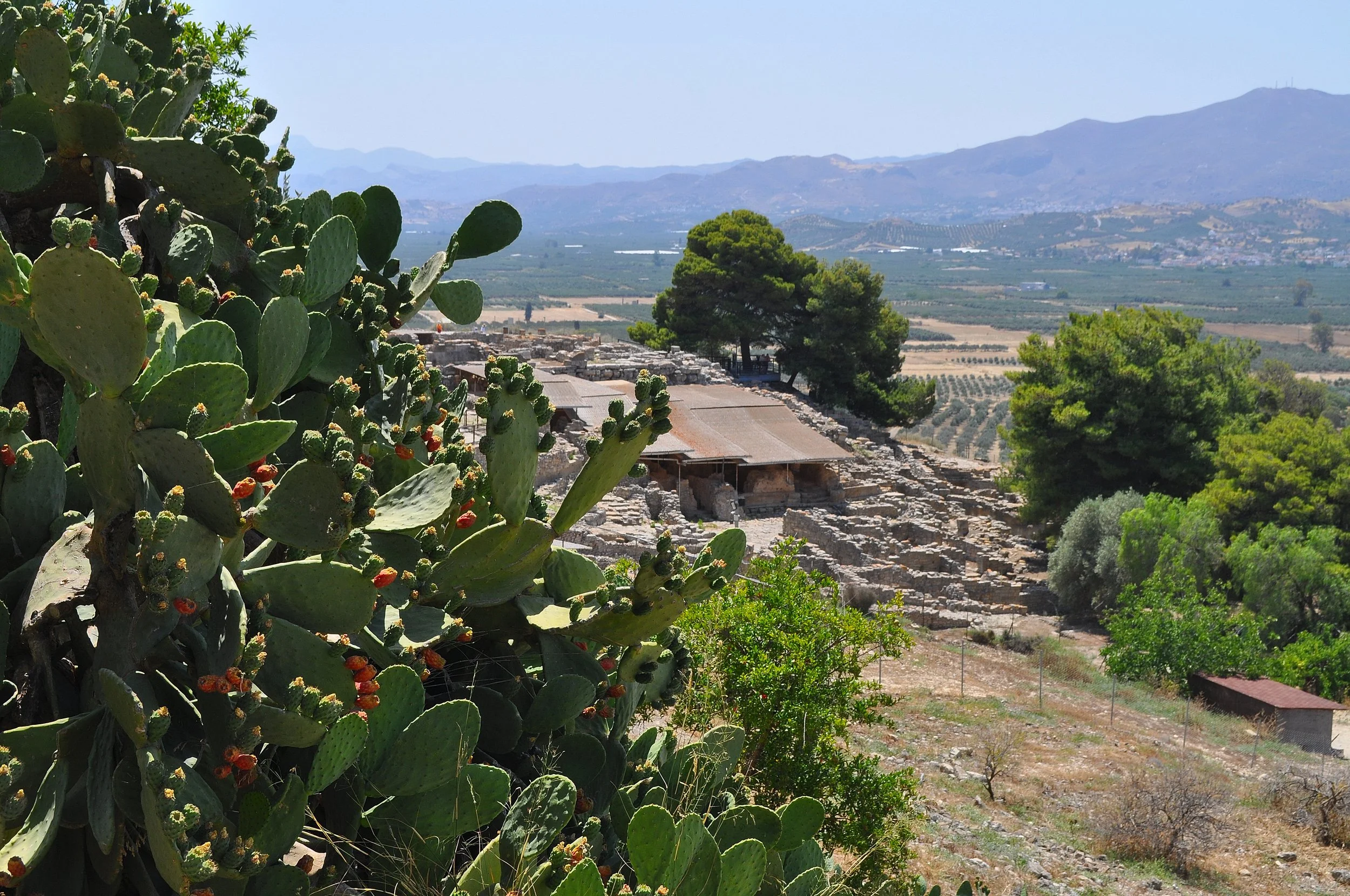
Angela: and that's exactly what gives it such power. Knossos is a spectacle. Phaistos is poetry.
Piero: according to legend, this was the kingdom of Rhadamanthus, the brother of King Minos, renowned as a wise and just ruler. In many ways, the palace reflects his character: less theatrical than Knossos, more restrained, more understated... but no less magnificent.
Angela: the first palace was built around 1900 BC, but it was destroyed by a powerful earthquake. The second one—the one we see today—dates back to around 1700 BC, although it too suffered repeated damage from earthquakes and fires. Yet the Minoans always rebuilt it.
Piero: and they did so with remarkable intelligence. The site was carefully chosen: perched on top of a hill overlooking the valley, taking full advantage of the natural slopes rather than fighting against them. The palace extends across several levels, blending harmoniously with the landscape.
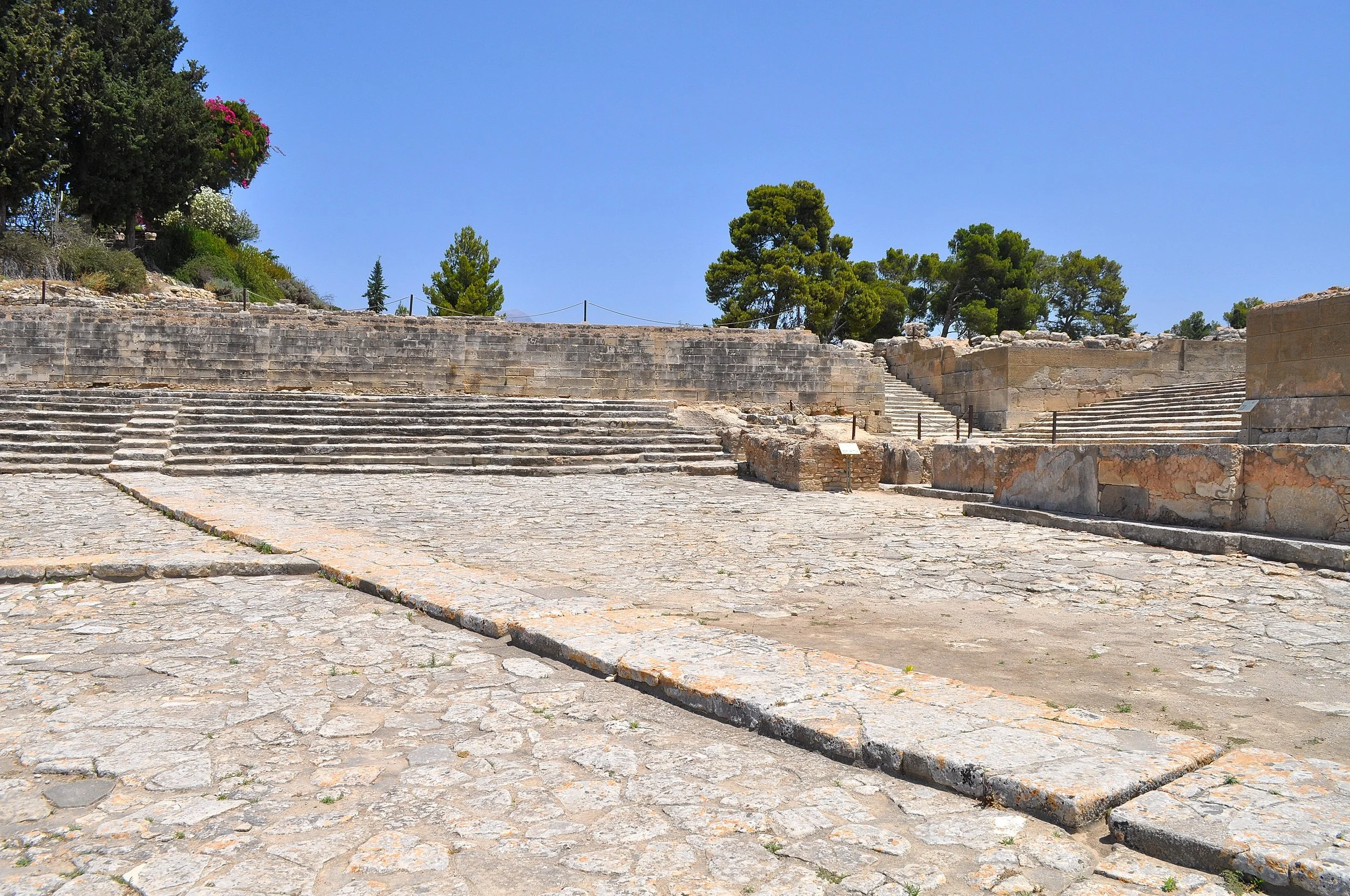
Angela: the ceremonial ramp leading to the entrance is still impressive today. It is wide, gently sloping, and lined with massive stone blocks. From there, you enter the great Central Court, a large rectangular space surrounded by columns and stepped terraces, where public ceremonies, ritual dances, and political gatherings were likely held.


Piero: the Central Court is the backbone of the entire complex. Just as at Knossos, it is the heart around which the storerooms, residential quarters, workshops, and storage areas are arranged. But here, the rhythm of the spaces feels different: more open, less labyrinthine. The layout is clearer, more orderly, and remarkably rational.


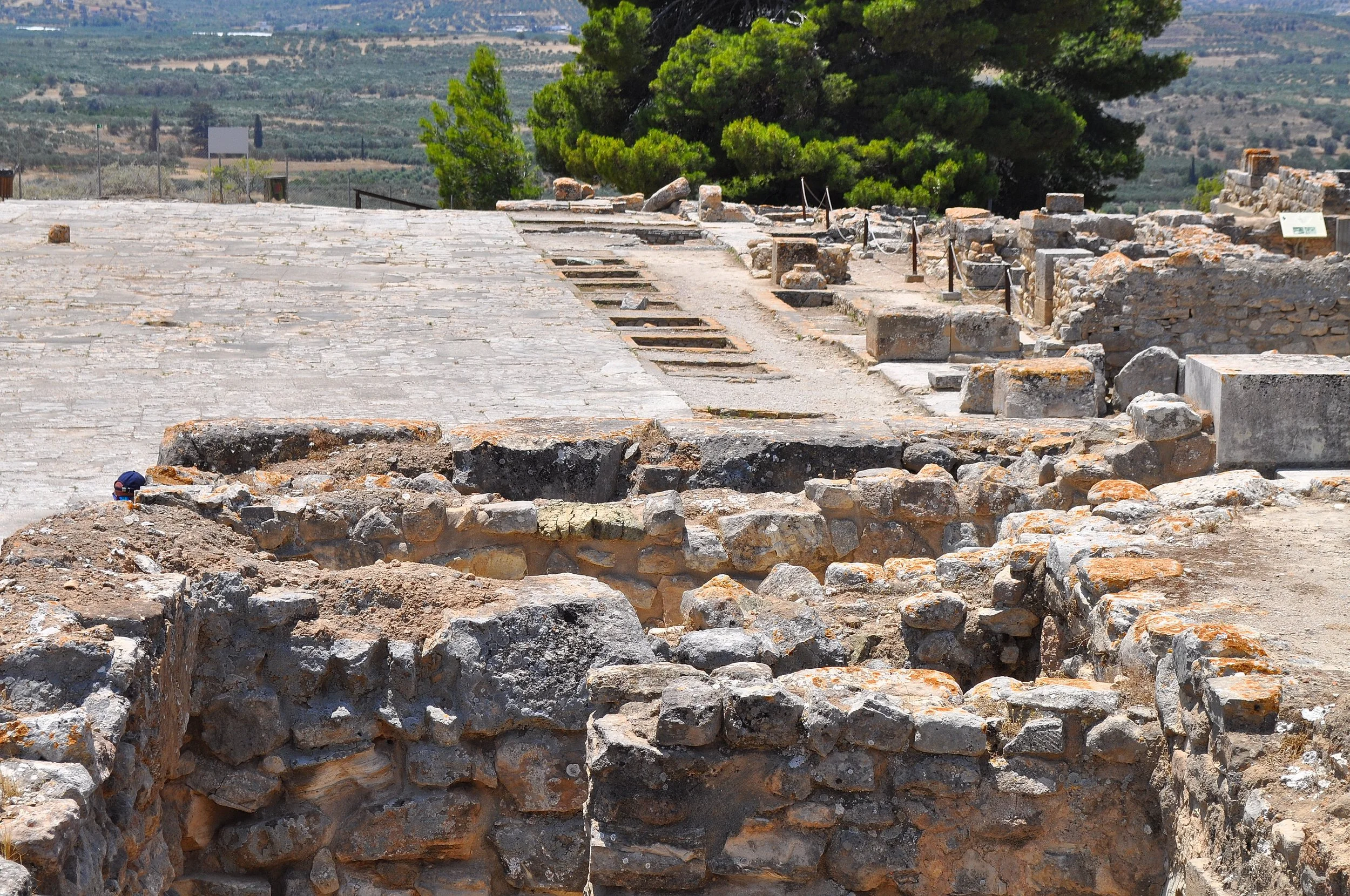
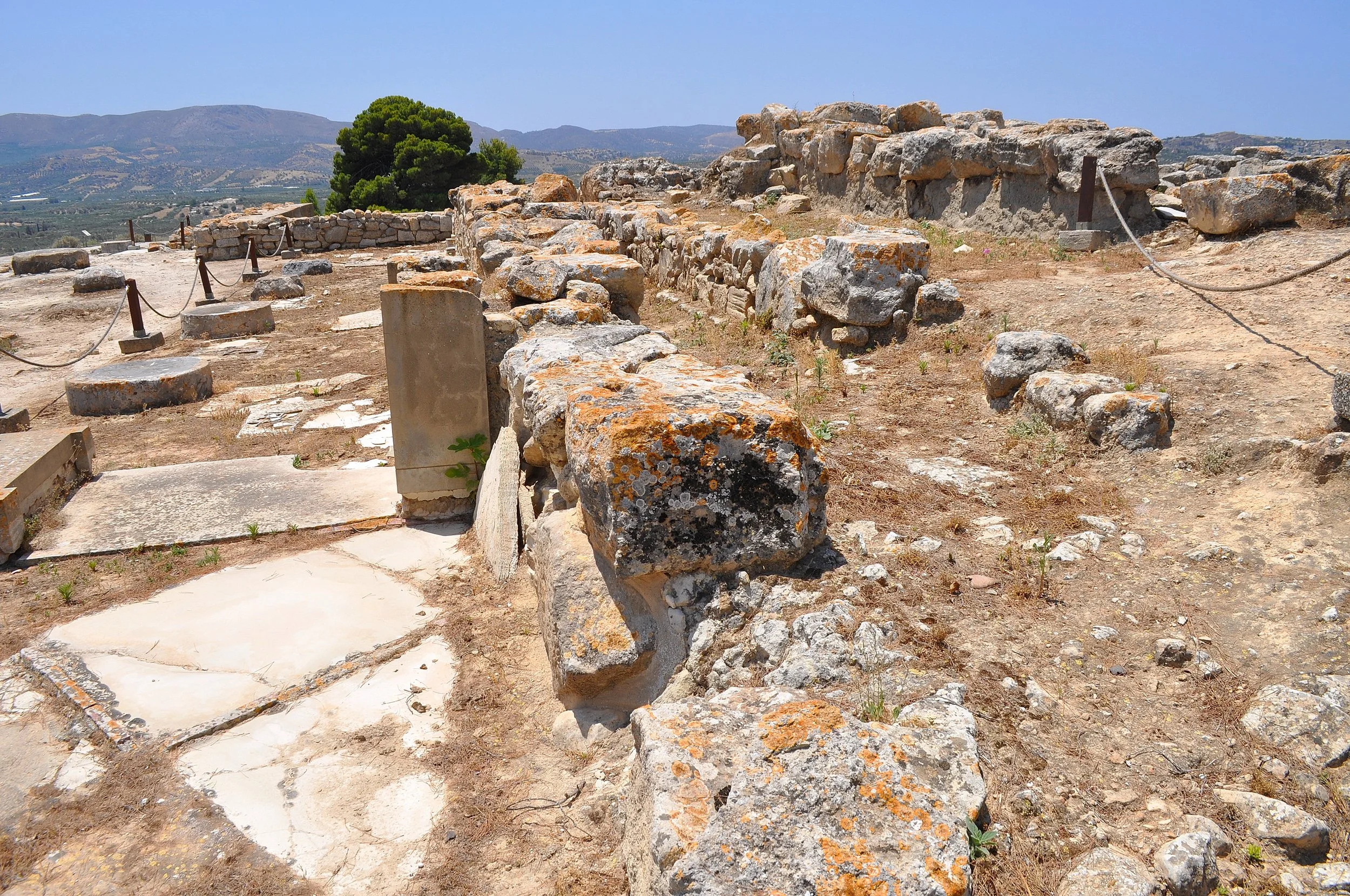
Angela: and that makes the visit almost meditative. You move through open and shaded spaces, along broad staircases and across platforms that feel like natural terraces. Some rooms still preserve their marble thresholds, the bases of the columns, and even the door sockets carved into the thresholds where the wooden doors once pivoted.
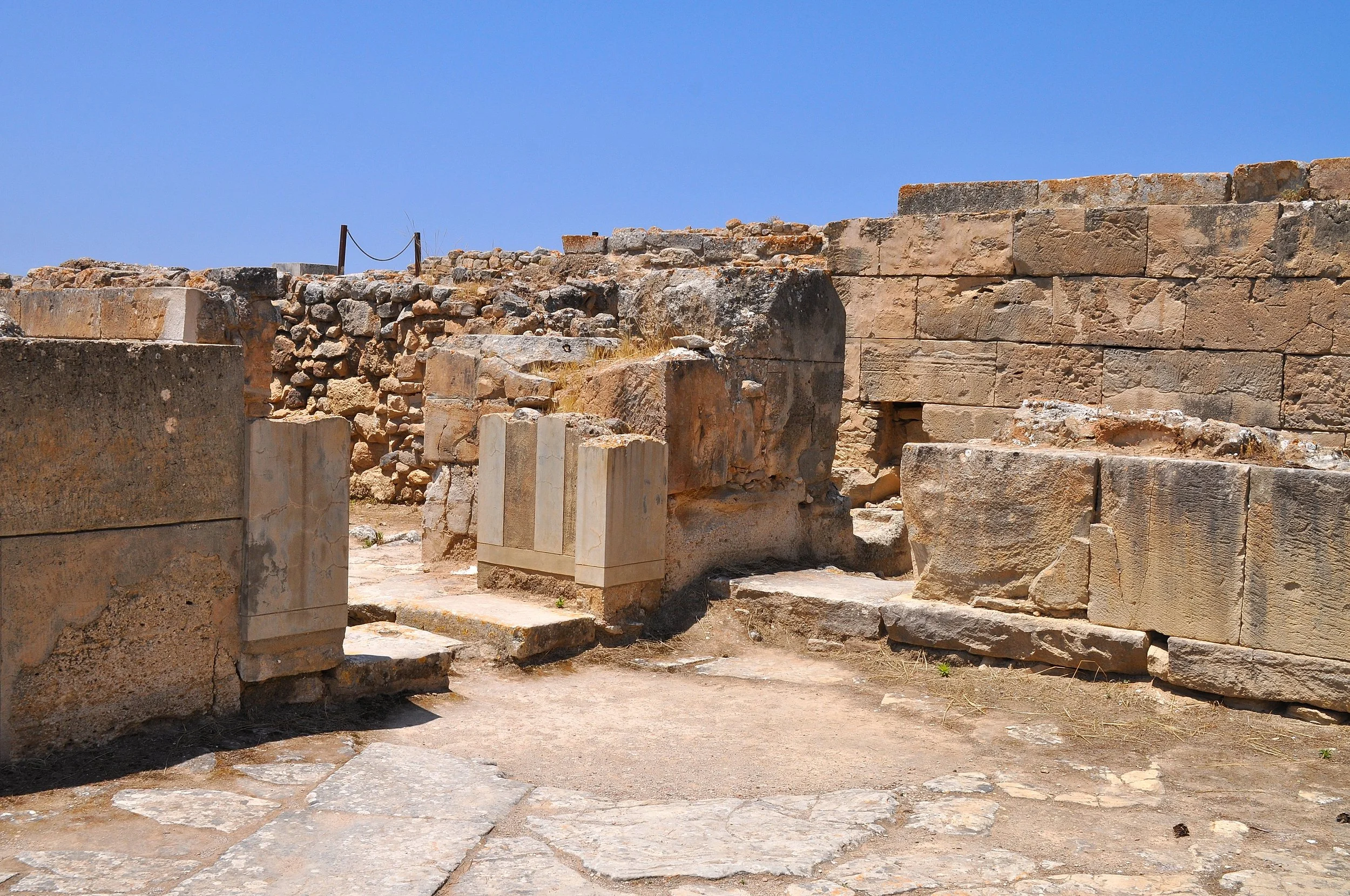
Piero: one of the most evocative spaces is the royal megaron, probably a ceremonial hall, with its gypsum floor and the surviving traces of wall paintings.
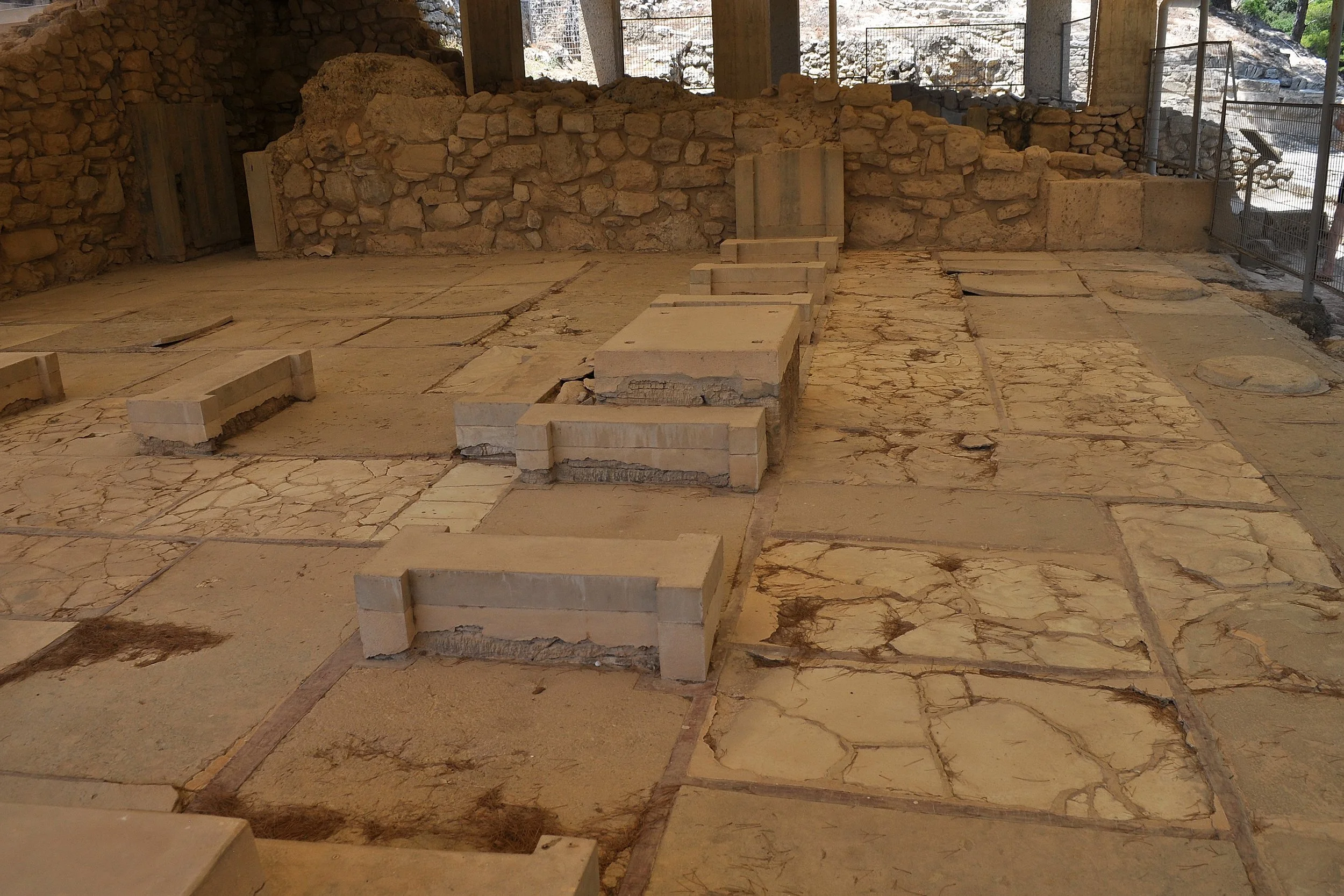


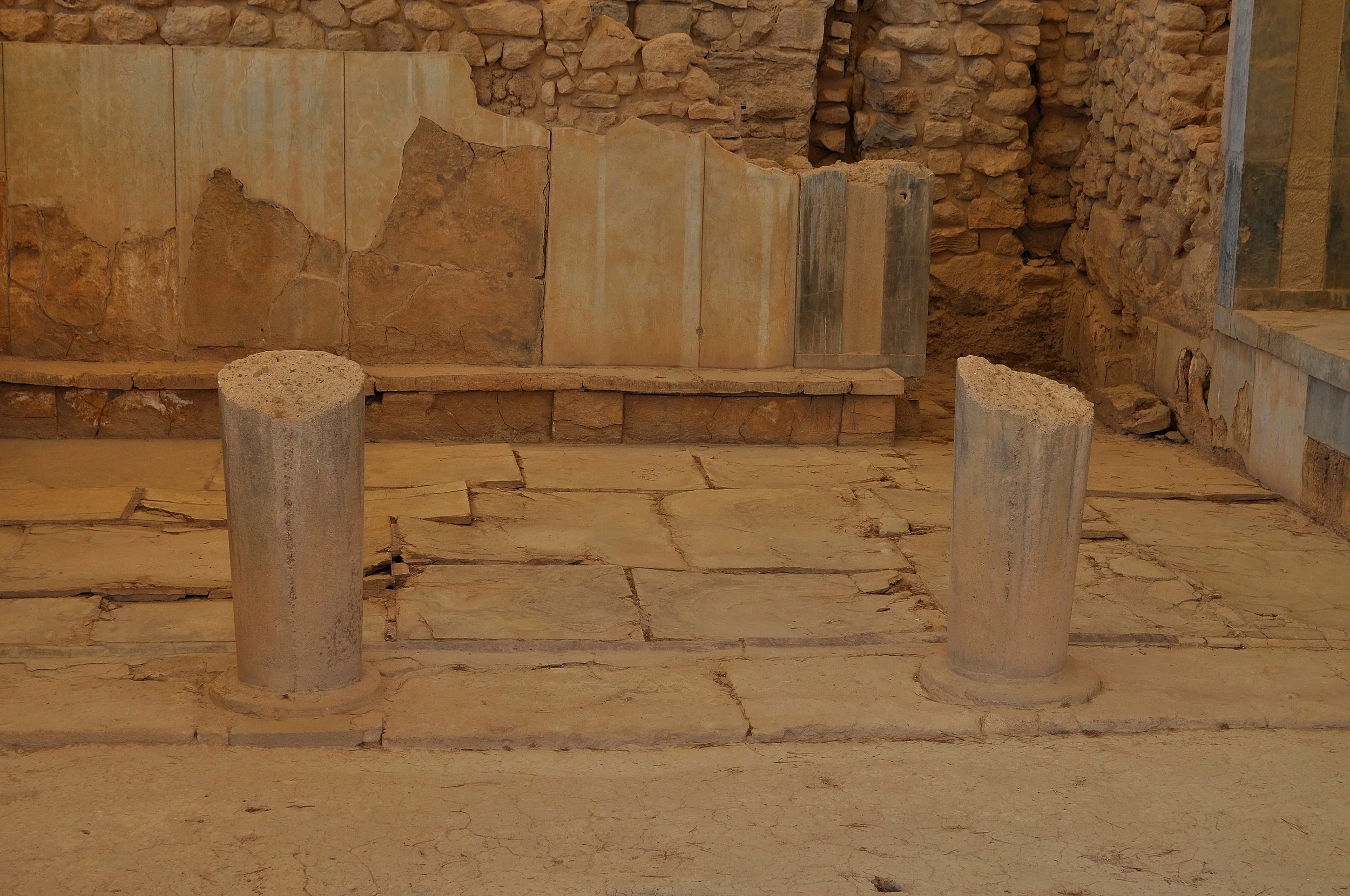
Angela: but there is also the western quarter, where the administrative offices were located, and the archive, where the remains of clay tablets have been discovered.

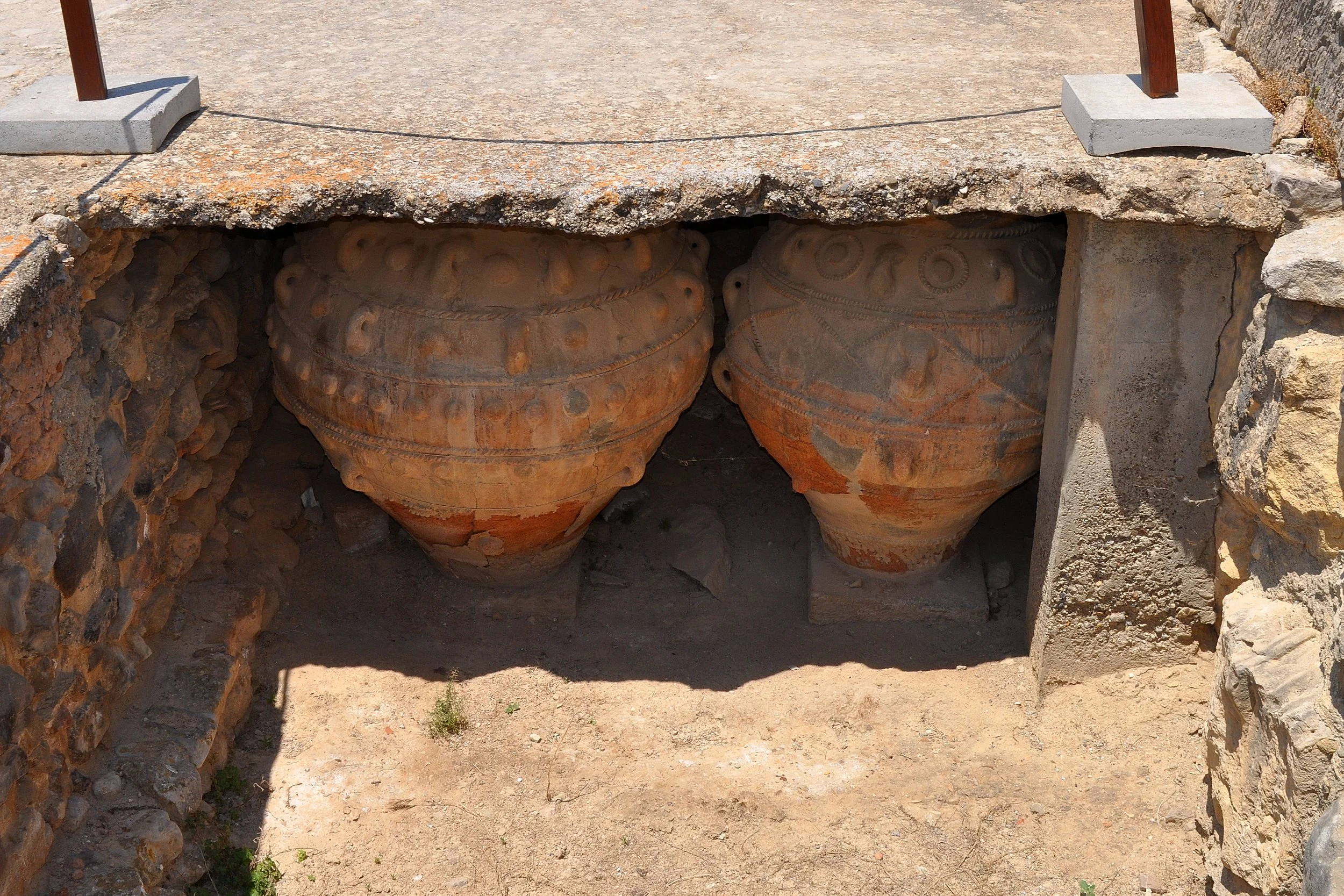
Piero: in the southern sector you'll find the storerooms, with enormous pithoi — the great terracotta storage jars — still standing in their original rectangular floor recesses. Some even preserve traces of what they once contained: olive oil, grain, wine, and legumes. This was the economic heart of the palace.
Angela: and let's not forget the southern staircase, one of the largest examples of Minoan architecture. Its six broad, shallow steps create what looks almost like an open-air theatre. Some archaeologists believe this space was used for religious ceremonies or public gatherings.
Piero: the most mysterious spot, however, is where the famous Phaistos Disc was discovered in 1908. It is a circular clay disc bearing 241 symbols arranged in a spiral and impressed using individual stamps. To this day, no one knows exactly what it means. It could be a prayer, a message, or even a game. Whatever its purpose, the disc has become the ultimate symbol of the Minoan civilization: sophisticated, enigmatic, and endlessly fascinating. We'll take a closer look at it later...

Angela: and then there is the view. The light changes hour by hour, sliding across the stones and shaping the shadows. In front of you lies the fertile plain, dotted with olive trees and vineyards. Behind you, the mountains. And all around... silence.
Piero: a silence filled with memories. Phaistos is the most intimate side of Crete: it doesn't shout, it whispers. It doesn't impose itself, it simply remains. It is the palace that speaks only to those who know how to listen.
Angela: here too, the advice is to visit in the early morning hours, because it gets extremely hot and there are very few shaded areas where you can escape the sun.
Piero: precisely for this reason, it's better to plan visits to the two Minoan palaces on separate days.