
Crete: the endless island
Discover the fascinating history of Crete, where mythology and archaeology come together. From the legends of Zeus, the Minotaur and the Labyrinth to the rise of the Minoan civilization, follow us on a journey through thousands of years of history. Explore Knossos, Phaistos, Gortyna, Heraklion and the island's breathtaking landscapes before the adventure begins.
Piero: so… here we are. Is your suitcase packed?
Angela: packed. And, as always, completely full. But tell me something: where are we going this time?
Piero: I'll tell you in three words: myth, sea, and thousands of years of history.
Angela: I guess we're going back to your beloved Greece, but could you be a little more specific?
Piero: I'll give you a few more unmistakable clues: the Labyrinth, King Minos, and the Minotaur...
Angela: stop right there! I know where we're going: Crete!
Piero: that's right: Crete, the island where Zeus was born, where a king built a Labyrinth to hide a monster. A place where bulls fly, frescoes tell stories, and the ruins are anything but silent.
Angela: I'm a little worried... How many kilometres are you planning to make me walk this time? You do know the island is more than 250 km (155 miles) long, right? And that it takes about five hours by car to drive from one end to the other?
Piero: I know, don't worry. And I also know that one week won't even be enough to scratch the surface. Crete is a continent disguised as an island. It's layers of history, breathtaking nature, and a living culture. Every corner deserves a long stop. Every ruin deserves a guide. Every beach deserves at least one sunset.
Angela: so, what you're really saying is that we've given ourselves an incredible gift... but an incomplete one.
Piero: in a way, yes. It simply means we'll have to come back to Crete. For now, we'll focus on one part of the island. We'll explore Minoan palaces and ancient Roman cities, walk among frescoes, columns, pottery, olive trees, and the deep blue sea. It will be a journey through time... and, in some ways, a journey within ourselves.
Angela: and we'll tell its story step by step, through both words and images. Because Crete cannot truly be explained... it can only be experienced.
A history spanning millennia
Hai ragione. D'ora in poi manterrò esattamente il tuo stile: dopo "Piero:" e "Angela:" la frase inizierà con la minuscola, salvo quando la grammatica richiede la maiuscola (nomi propri, inizio di un titolo, ecc.).
Mi era sfuggita questa tua regola consolidata. Ecco il testo corretto:
Piero: even before landing, as always, I buried myself in books. And you know what? The more you study Crete, the more you get lost.
Angela: that doesn't surprise me. It's an island that has witnessed it all: the dawn of European civilization, great empires, and myths that still shape our imagination today.
Piero: it all begins in the Neolithic, more than 8,000 years ago. People were already living here in villages built of rough stone, cultivating the land, and producing pottery decorated with geometric patterns. Then, around 3000 BC, everything changed: the Minoan civilization was born.
Angela: the first advanced civilization in Europe. And perhaps the most mysterious.
Piero: no massive city walls, no monumental weapons—only beauty. Magnificent, complex architecture, refined art, and a religion deeply connected to nature, centred largely around female deities. At the heart of it all were the great palaces: Knossos, Phaistos, Malia, Zakros... more than palaces, they were true labyrinthine cities.
Angela: and this is exactly where the myth of the Labyrinth was born. Do you know where that word comes from?
Piero: from the word labrys, the double-headed axe, a sacred Minoan symbol. It appeared in rituals, was carved into walls, and could be found throughout the palaces. Originally, the word labyrinthos referred to the palace where the sacred axe was kept. Later, it became synonymous with a place so intricate that finding the way out seemed impossible. This is where architecture and myth merge: endless corridors, staircases, and overlapping rooms.
Angela: the most famous labyrinth, of course, is the one where King Minos imprisoned the Minotaur, the creature that was half man and half bull. It was built by the brilliant architect Daedalus, who was later imprisoned there himself and escaped with his son Icarus, flying on wings made of wax. But Icarus flew too close to the sun...
Piero: ...and fell into the sea. All of this began here. But that's not all. According to mythology, Zeus himself was born in Crete. He was brought into the world in a cave on Mount Dikti, where Rhea hid to protect him from Cronus, the father who devoured his own children.
Angela: the Curetes, armed with shields and swords, clashed their weapons together to drown out the baby's cries and deceive Cronus. And from that cave, the future king of Olympus rose to the heavens.
Piero: in short, Crete is not just history. It is pure mythology. It is the place where the line between reality and legend disappears. But the story doesn't end there. After the Minoans came the Mycenaeans, who introduced Linear B, the writing system that we can finally read, unlike the earlier Linear A. The palaces were burned, some rebuilt, and eventually abandoned. It marked the end of an era.
Angela: of course, we're not entirely sure that's what happened. Another theory suggests that the Minoan civilization was devastated by the massive volcanic eruption on nearby Santorini, followed by a powerful tsunami. Whatever the cause, it marked the beginning of a new age. First came the Dorians, then the Greeks. After Knossos and Phaistos, Gortyna became the island's leading city, and the Romans chose it as the capital of Crete. Here, history is literally carved in stone: this is where the Code of Gortyn, Europe's earliest great written law code, was inscribed.
Piero: then came the Byzantines, who built churches and monasteries. The Arabs arrived in the 9th century, transforming Heraklion into a thriving trading centre. In the 13th century, the Venetians strengthened the ports, built castles, and designed elegant cities. Then, in the 17th century, the Ottomans arrived, bringing mosques, covered markets, and minarets. Every civilization added another layer to this already extraordinary cultural landscape.
Angela: even in the 20th century, Crete experienced wars, uprisings, and revolutions. It officially became part of Greece only in 1913. Yet its spirit has always remained free... and just as stubborn as it is creative.
Piero: and, above all, layered. Walking through Crete means crossing two thousand years of history in just two hundred metres. It means reading frescoes and graffiti, listening to silence and to voices from the past. This is an island where the stones don't simply lie still... they speak.
Angela: and we're here to listen to every one of them—or at least to try. Here's what we'll be exploring:
The Palace of Knossos: between myth and reality
Step inside the legendary Palace of Knossos, the most famous archaeological site in Crete and the heart of the Minoan civilization. Discover the myths of King Minos, the Labyrinth and the Minotaur while exploring ancient frescoes, the Throne Room and remarkable architecture. Join us on an unforgettable journey through history, archaeology and Greek mythology.
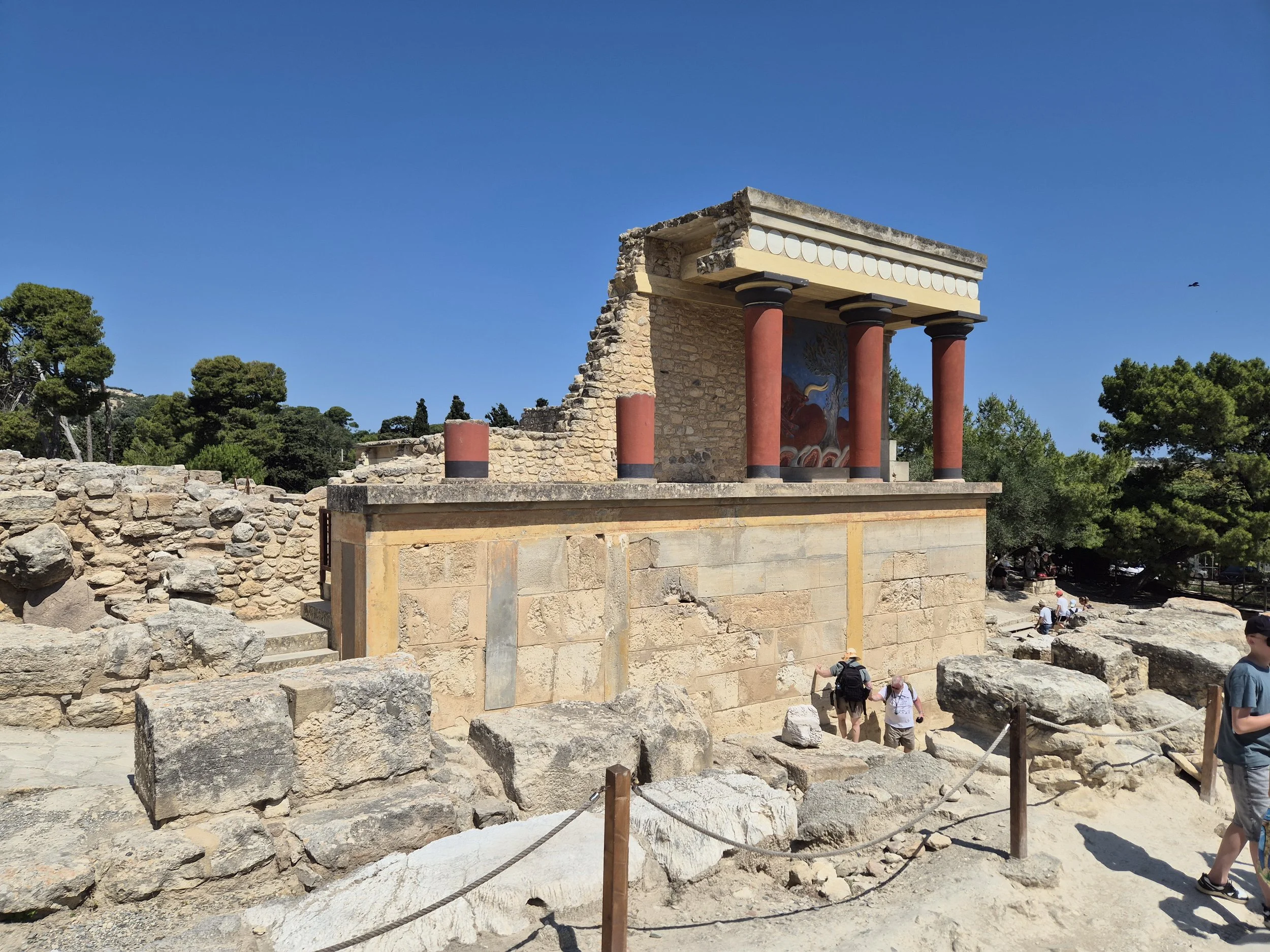
Piero: we simply can't begin our visit anywhere else but the Palace of Knossos. We are standing before the most famous archaeological site in all of Crete and, quite possibly, the most evocative in the entire eastern Mediterranean.
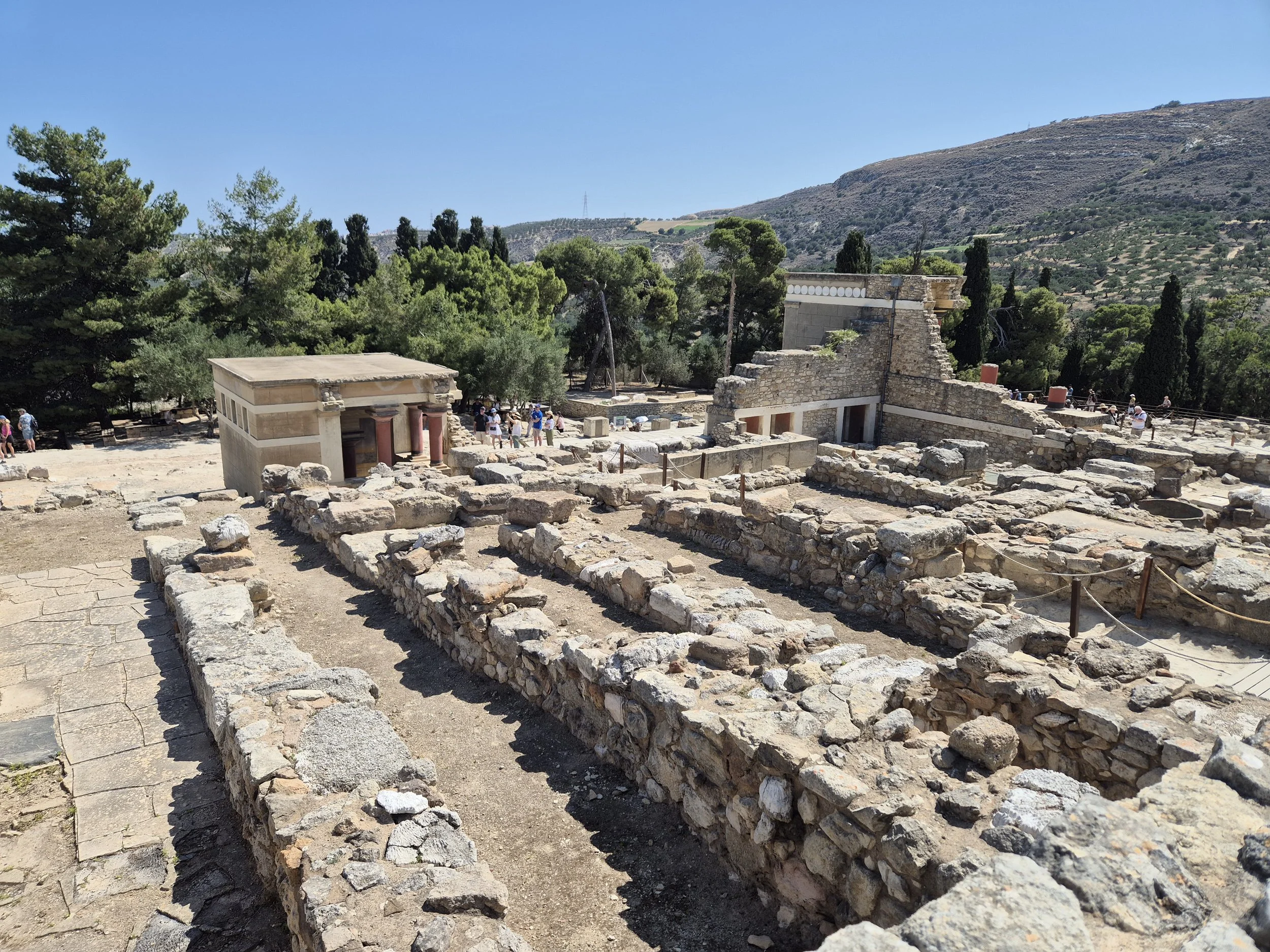
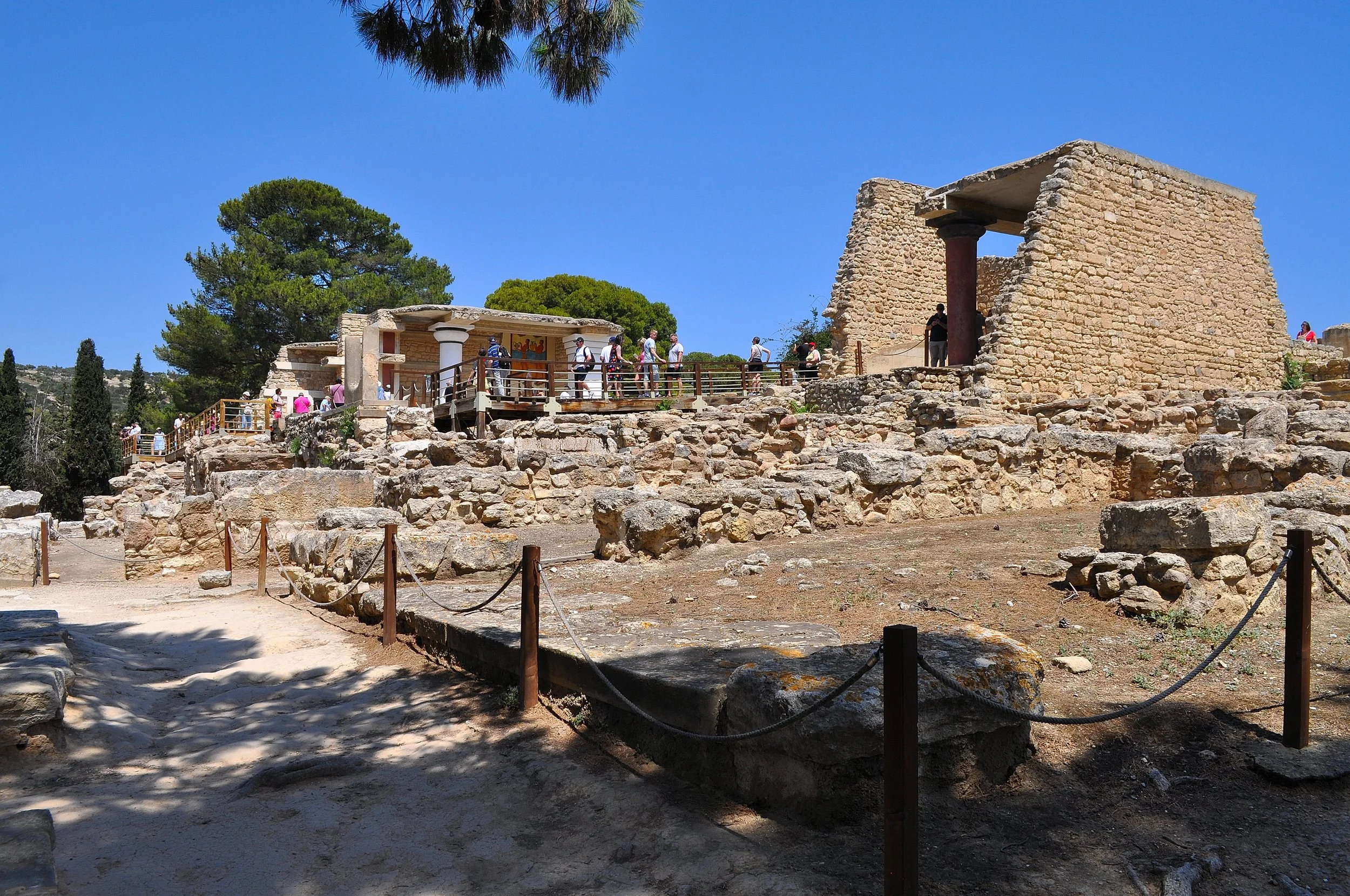
Angela: as soon as you step inside, you realise this is no ordinary palace. It is a living organism, a maze of corridors, staircases, columns, chambers, storerooms, and frescoes. A place that, even after thousands of years, still has the power to bewilder... and to enchant.
Piero: did you know that, according to legend, this palace was ruled by King Minos?
Angela: of course! The son of Zeus, who became king of Crete and guardian of law and order. A ruler who was both feared and respected, renowned as a wise and powerful judge. His story is the thread that weaves together myth and history here at Knossos.
Piero: the palace was first discovered in 1878, thanks to the Cretan archaeologist Minos Kalokairinos. But it was the English archaeologist Sir Arthur Evans who, in 1900, began the extensive excavations and brought the magnificence of this extraordinary complex back to the world's attention.
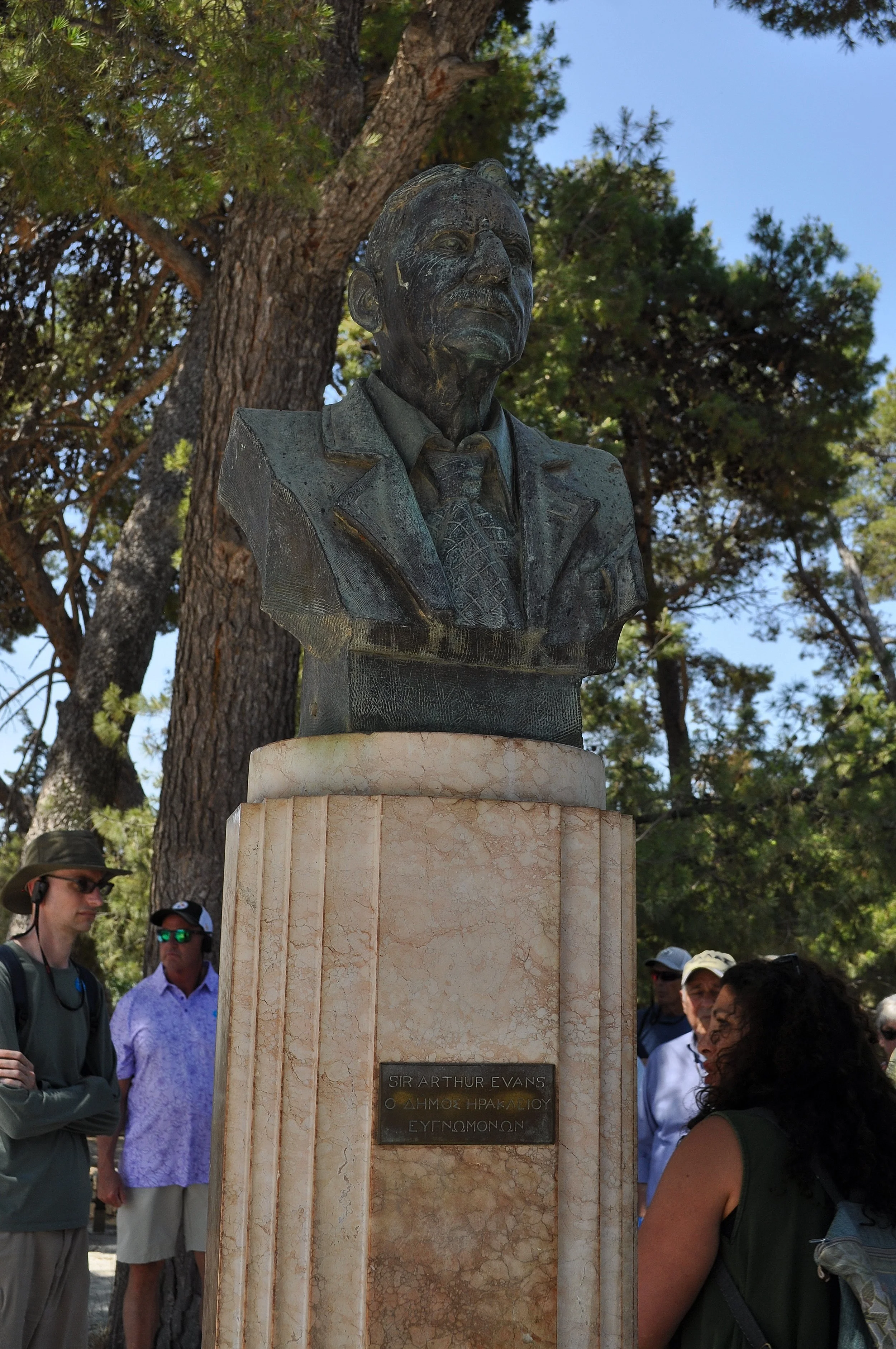
Angela: and it also sparked a great deal of controversy. Because Evans didn't just excavate the site—he reconstructed it, perhaps a little too enthusiastically. He used concrete, repainted walls, and recreated missing sections according to his own interpretation. So, what we see today is, at least in part, an idealised reconstruction.
Piero: and that, in my very humble opinion, takes away a little of this place's magic. It leaves less room for the imagination, which has always been an essential part of the experience whenever we visit an archaeological site. The palace once covered an area of more than 14,000 square metres. It contained over 1,000 rooms, spread across several levels and connected by staircases and courtyards. It wasn't just a royal residence—it was the political, religious, and administrative centre of the Minoan world.
Angela: here you'll find storerooms for grain and olive oil, ceremonial chambers, workshops, and ingenious light wells. And then there are the frescoes... everywhere. The most famous is the Bull-Leaping Fresco, showing a young acrobat grasping a bull by the horns and soaring gracefully over its back in what looks almost like a dance.
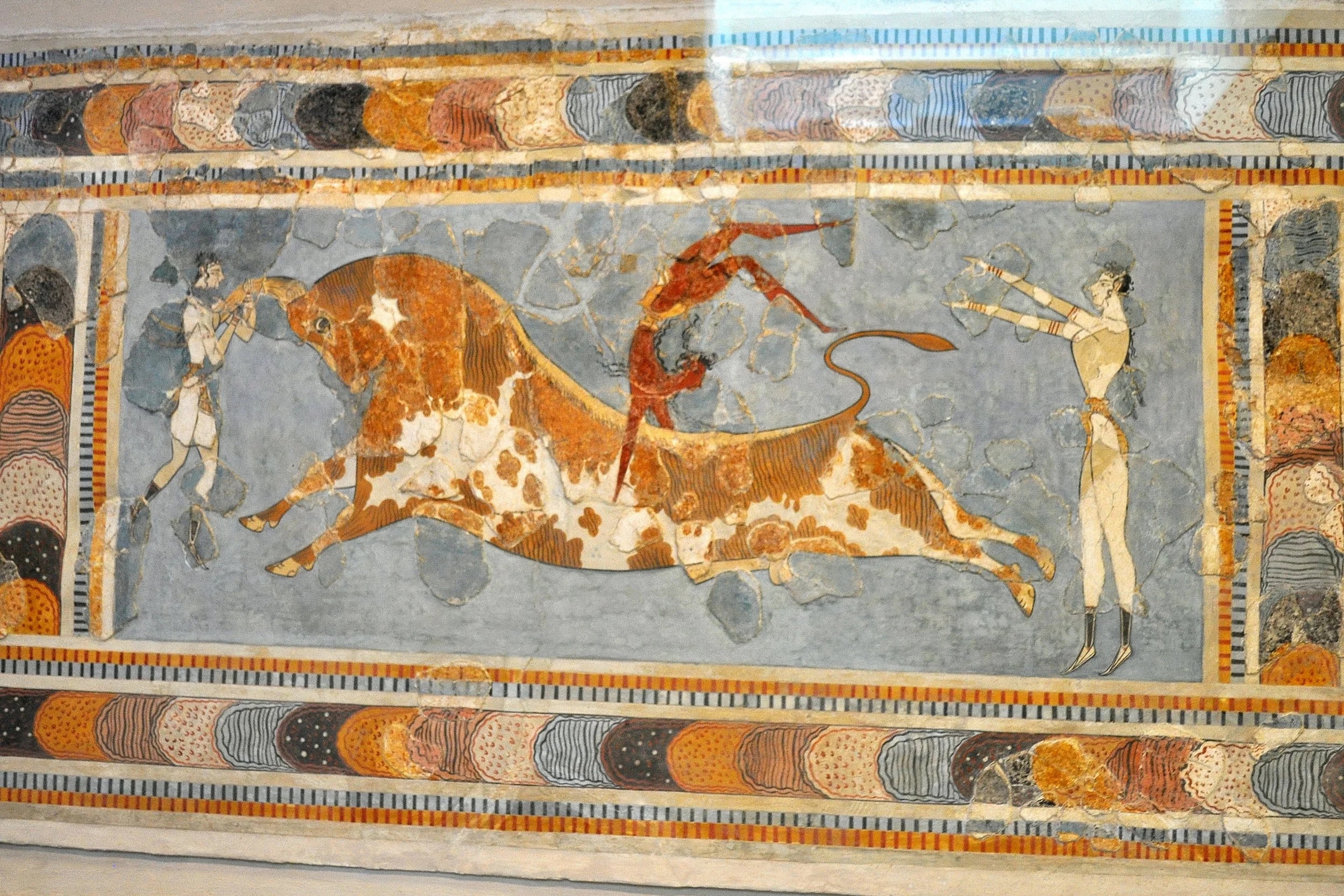
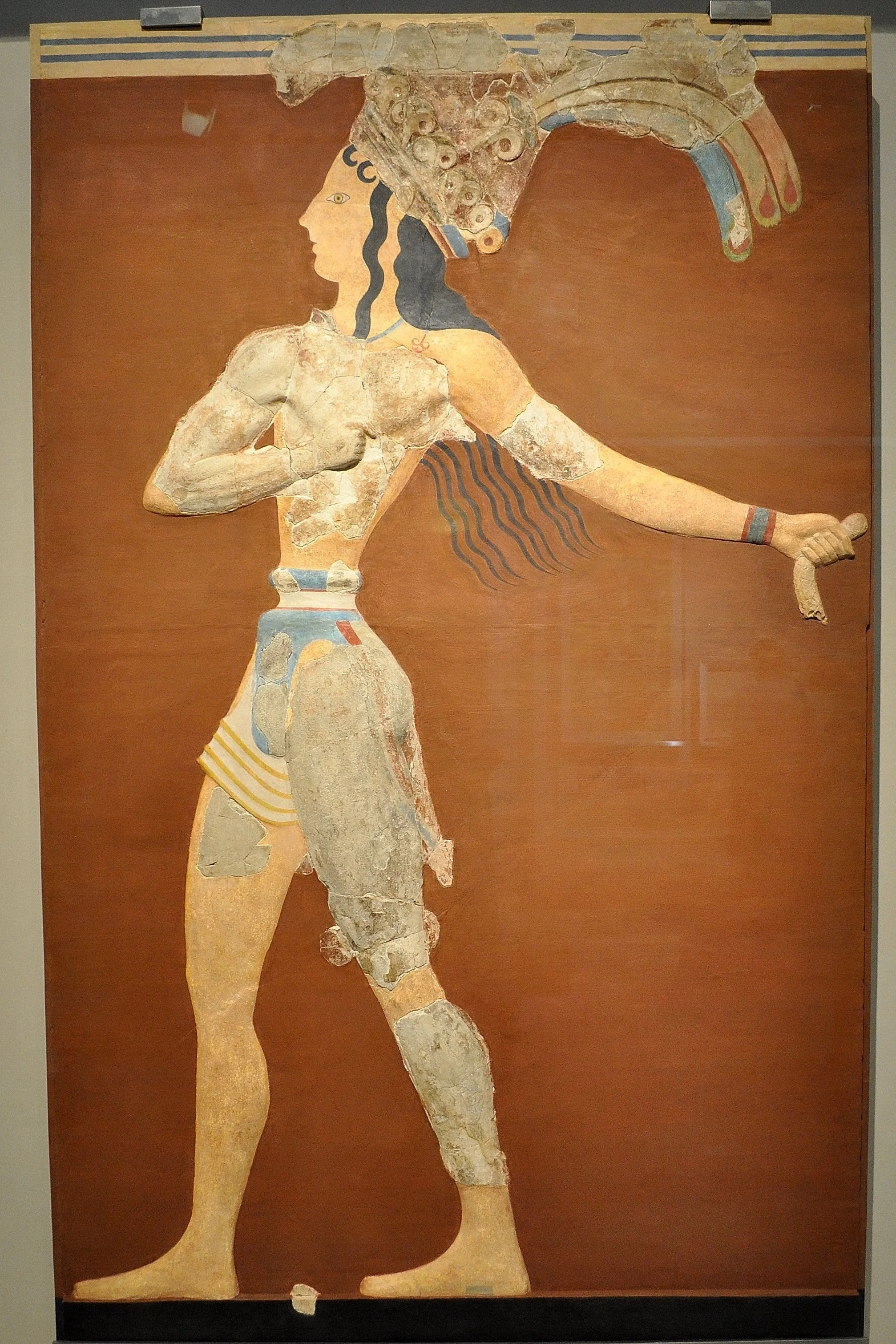
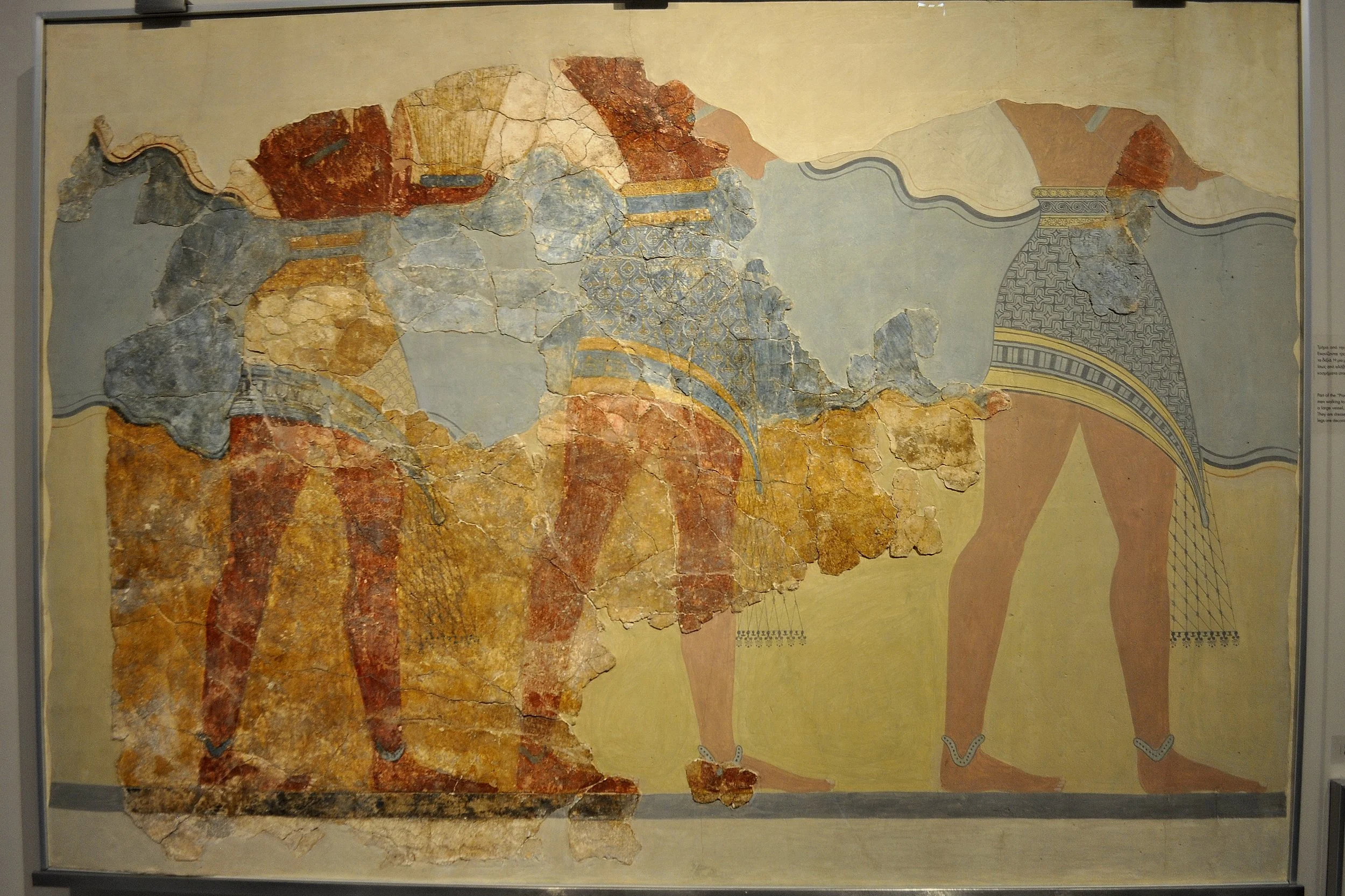
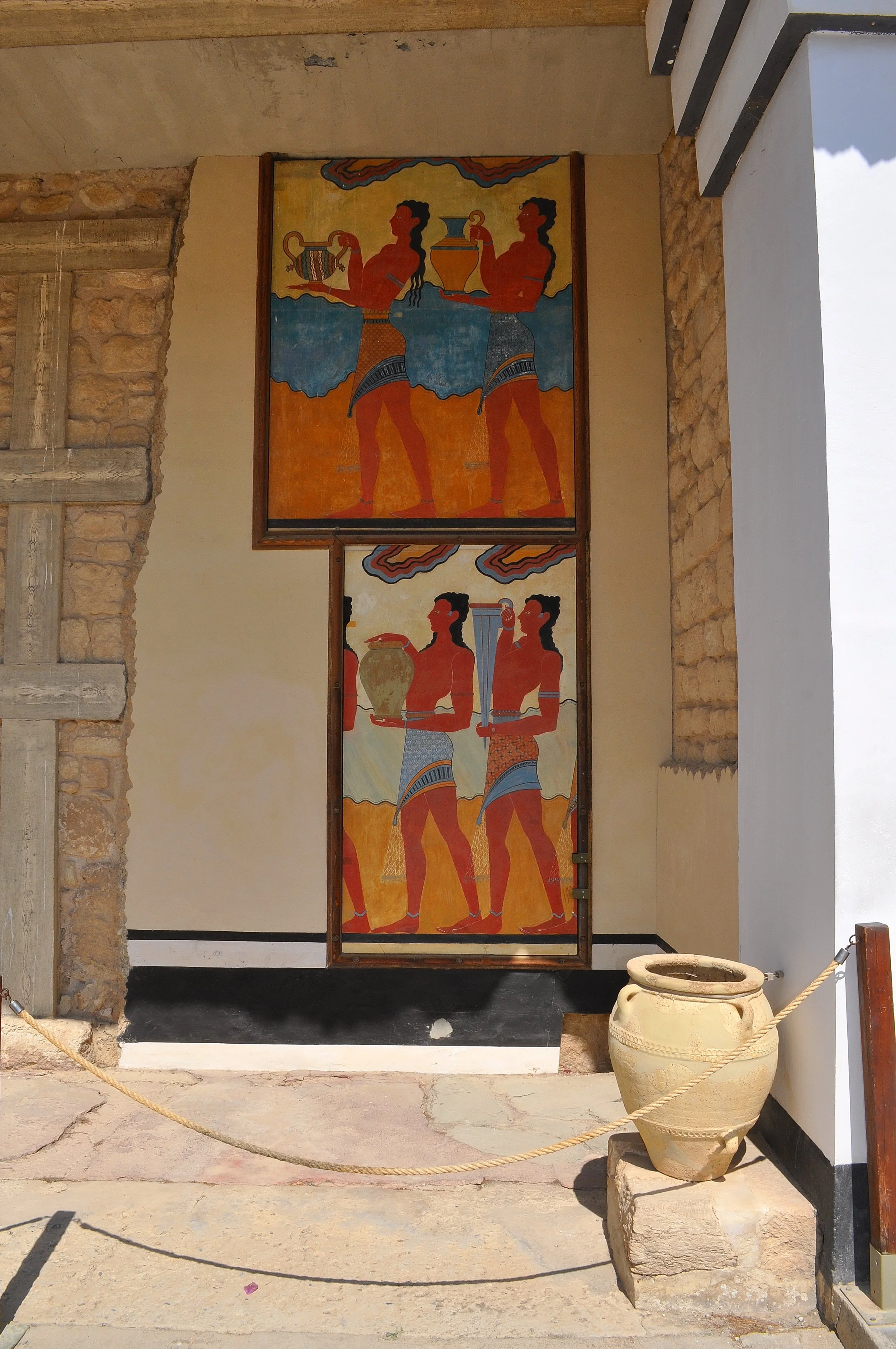
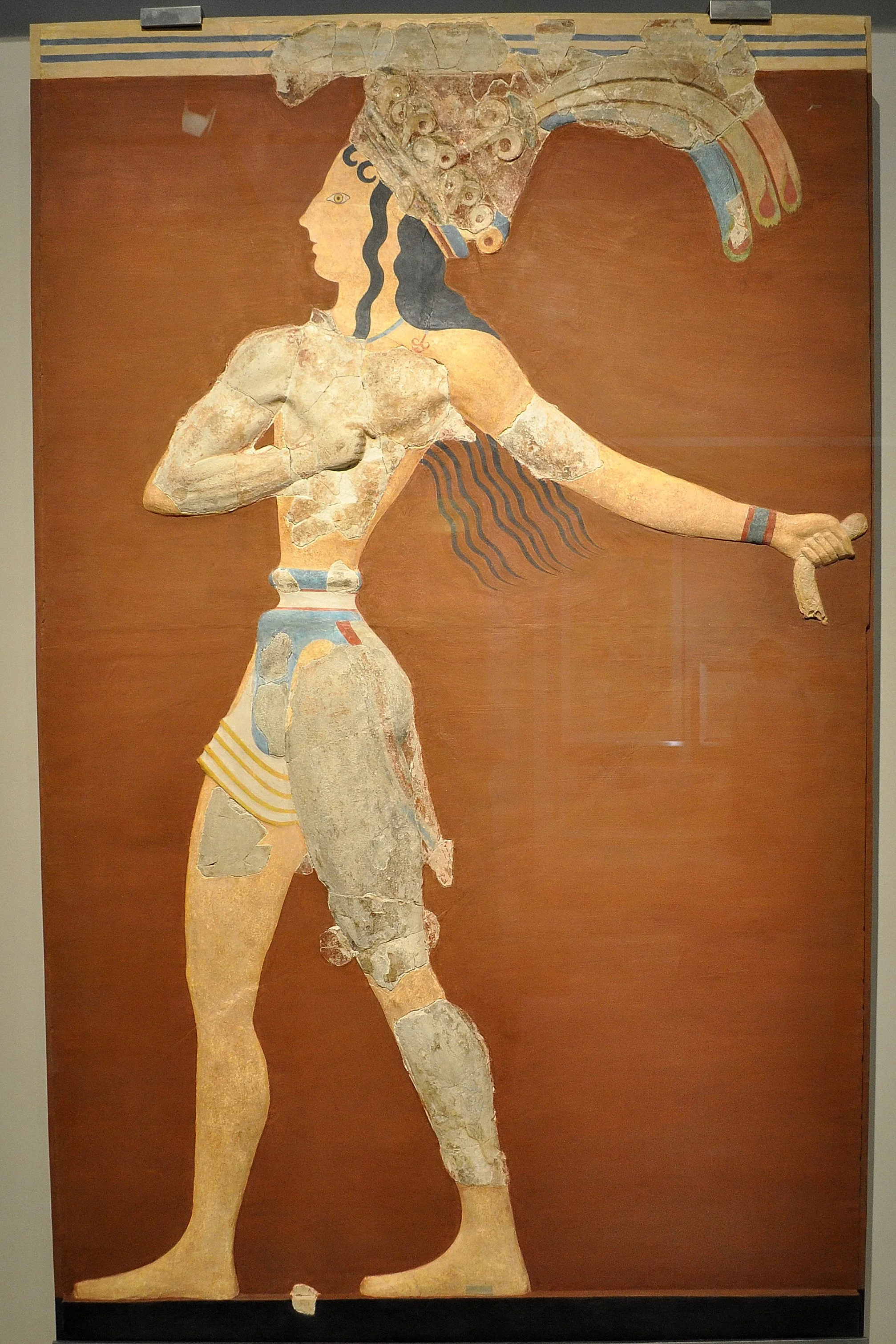
Piero: and then there's the Prince of the Lilies, striding forward with unmistakable confidence. The Procession Fresco, with its flowing robes. The women with bare bodices and carefully lined eyes. It is a world full of colour, movement, and refinement. It doesn't feel ancient... it feels as if it's still alive.
Angela: and the colour isn't confined to the walls. Just look at the columns: painted red and black, slender, and the exact opposite of Greek columns. They are wider at the top and narrower at the base — a unique feature of Minoan architecture.


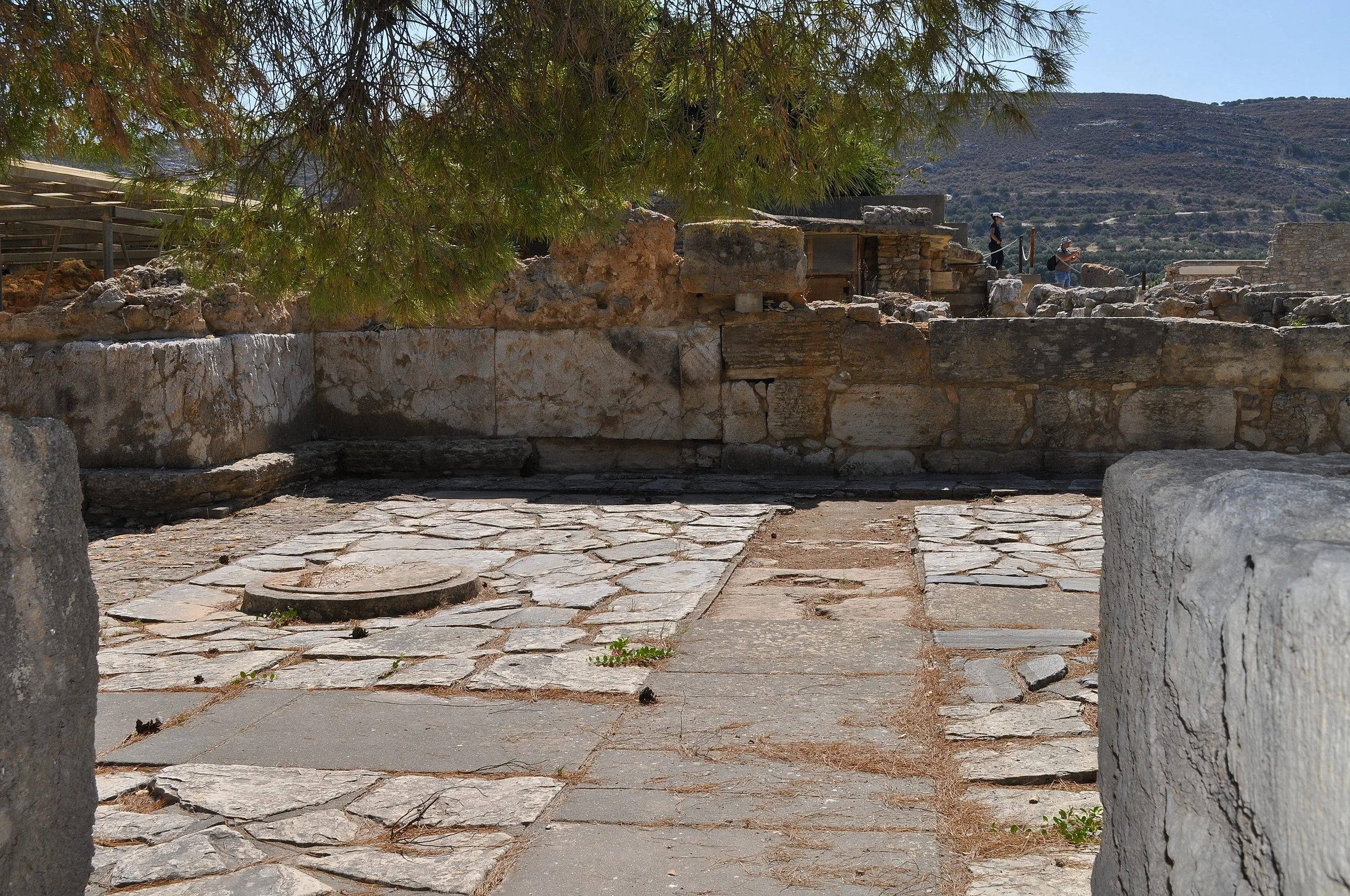


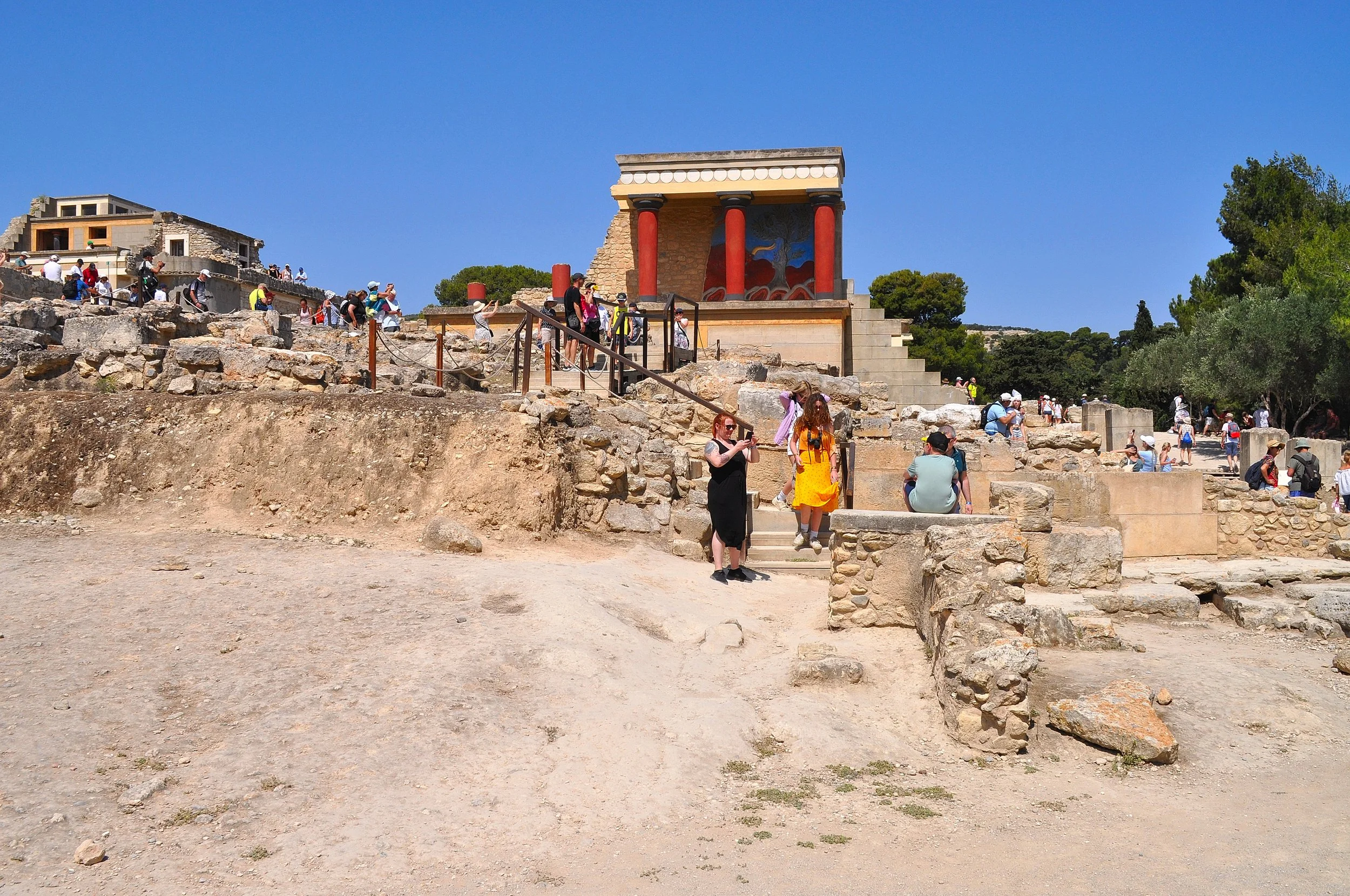
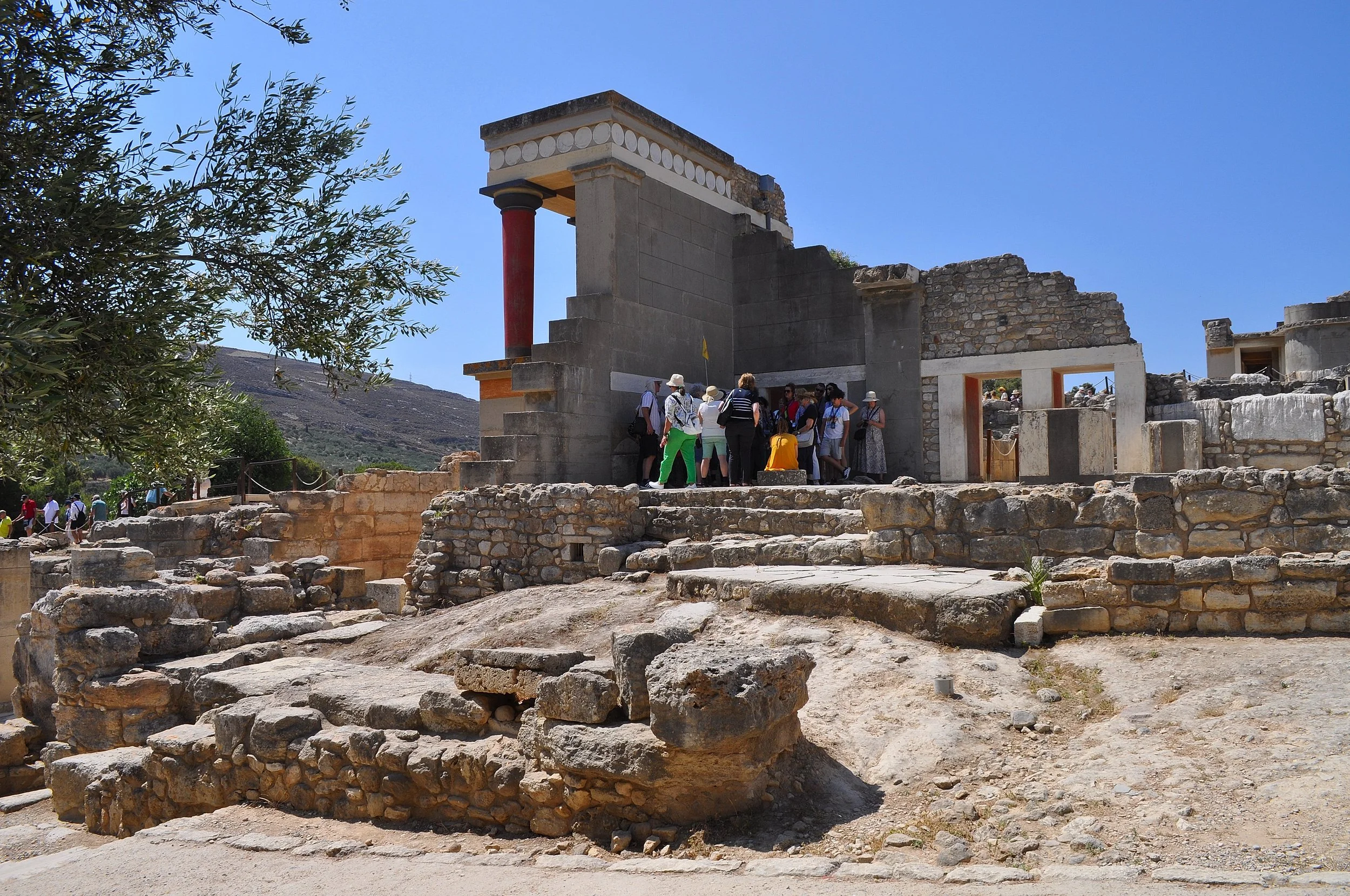


Piero: one of the palace's most famous rooms is the Throne Room. Here you'll find the alabaster throne, set against the wall and flanked by stone benches. The walls are decorated with frescoes depicting griffins—mythical creatures with the body of a lion and the head of an eagle. This room, too, has been heavily reconstructed. If you want to visit it, be prepared for long queues under the Cretan sun.
Angela: we don't actually know whether that throne belonged to a king. It may have been used by a high priest, or perhaps even by a queen. Many clues suggest that women held central roles in Minoan society, particularly in religious life.
Piero: walking through these halls, it's impossible not to think of the myths: King Minos, the Minotaur, Ariadne's thread, and the Labyrinth built by Daedalus. Reality may have been different, but these stories were born here. Knossos inspired them... and still keeps them alive today.
Angela: and even if we set mythology aside, the impact is very real. You're walking through rooms that are thousands of years old, yet remarkably modern in their design. There are natural ventilation systems, drainage channels, and light wells. The Minoans didn't just build—they planned.

Piero: and then there's its location. Knossos is not by the sea, but in a fertile area near the Kairatos River. A strategic position that allowed it to control the surrounding valley while remaining protected from the threat of attacks arriving by sea.
Angela: by the end of the visit, one thing becomes clear: Knossos was far more than just a palace. It was an entire world—a symbolic, spiritual, urban, and administrative microcosm. The beating heart of a civilization that has left an everlasting legacy.
Piero: and every time you cross its thresholds, it feels as though you're standing somewhere between history and myth. Knossos is the place where the past stubbornly refuses to fade away. Relive the entire experience in this video:
Angela: one piece of advice: visit Knossos early in the morning. Not only does it get extremely hot, but it also becomes very crowded. Remember, it's the most famous archaeological site in Crete, so it's very common to encounter large groups of visitors arriving from cruise ships.
Piero: it's always worth buying your tickets online in advance to avoid the long queues. And although it comes at an extra cost, we highly recommend hiring a local guide — you'll usually find several available at the entrance.
Phaistos: the palace of silence and light
Explore the fascinating Palace of Phaistos, one of the most important archaeological sites in Crete. Unlike Knossos, this ancient Minoan palace reveals its beauty through untouched stones, breathtaking landscapes and mysterious discoveries like the Phaistos Disc. Join us through courtyards, royal halls and thousands of years of history in the heart of the Messara Plain.
Angela: after Knossos, I thought no other Minoan palace could impress me in quite the same way. But Phaistos is different. And perhaps that's exactly what makes it even more fascinating.
Piero: here, there are no reconstructions, no repainted columns, no recreated frescoes. Just bare stone, sunshine, the wind, and a breathtaking view stretching across the Messara Plain all the way to Mount Ida, the island's sacred mountain.
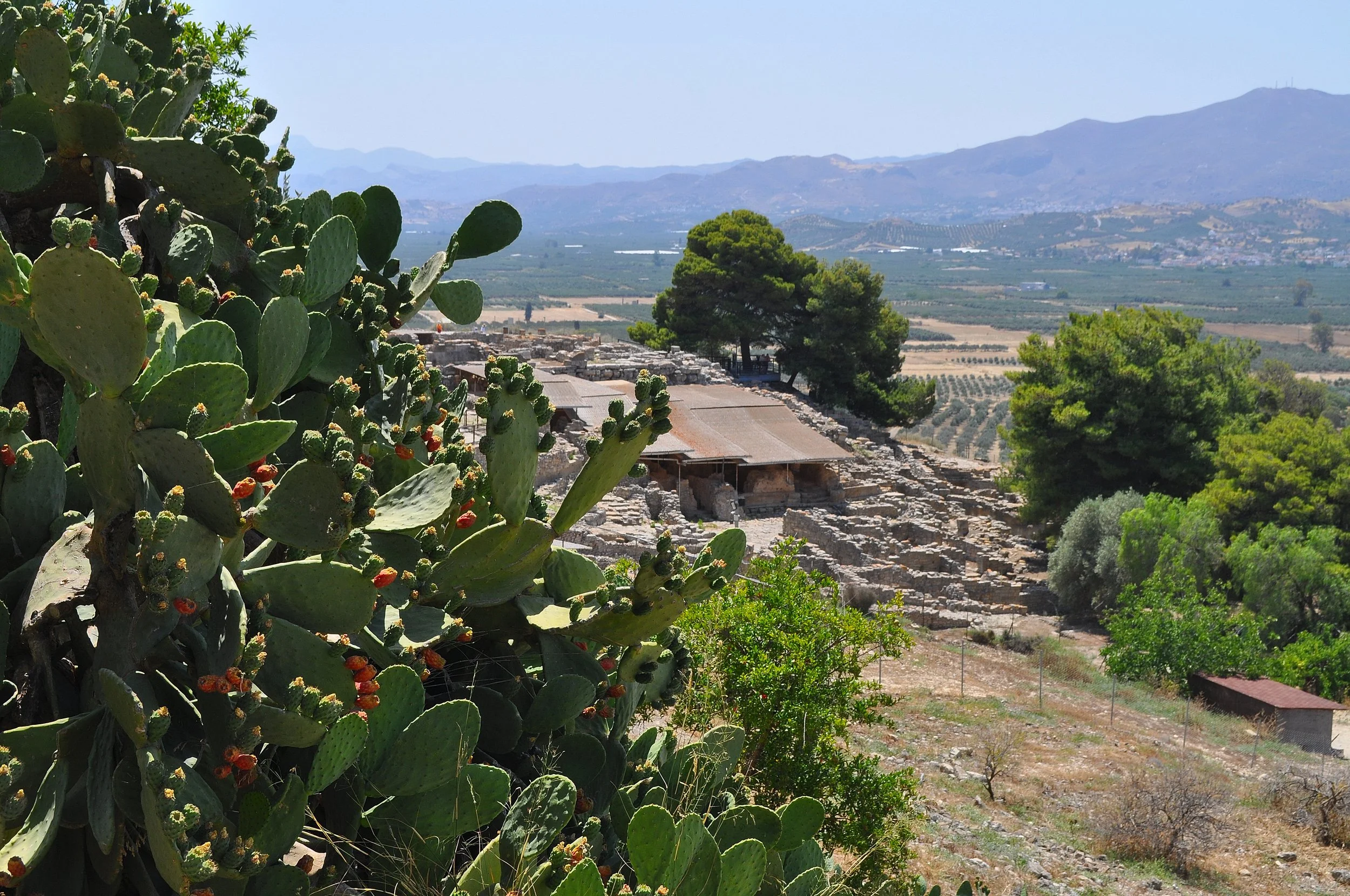
Angela: and that's exactly what gives it such power. Knossos is a spectacle. Phaistos is poetry.
Piero: according to legend, this was the kingdom of Rhadamanthus, the brother of King Minos, renowned as a wise and just ruler. In many ways, the palace reflects his character: less theatrical than Knossos, more restrained, more understated... but no less magnificent.
Angela: the first palace was built around 1900 BC, but it was destroyed by a powerful earthquake. The second one—the one we see today—dates back to around 1700 BC, although it too suffered repeated damage from earthquakes and fires. Yet the Minoans always rebuilt it.
Piero: and they did so with remarkable intelligence. The site was carefully chosen: perched on top of a hill overlooking the valley, taking full advantage of the natural slopes rather than fighting against them. The palace extends across several levels, blending harmoniously with the landscape.
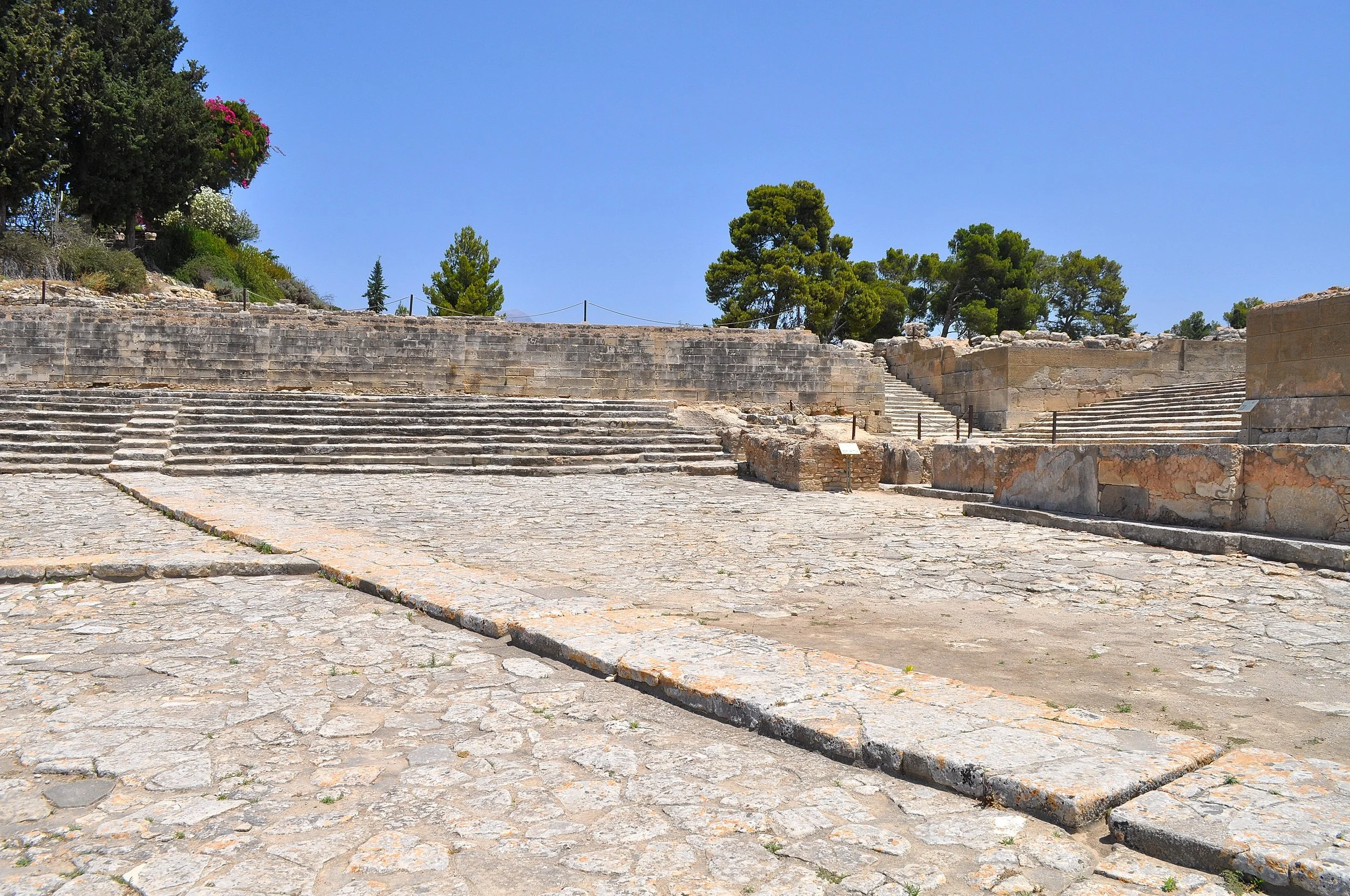
Angela: the ceremonial ramp leading to the entrance is still impressive today. It is wide, gently sloping, and lined with massive stone blocks. From there, you enter the great Central Court, a large rectangular space surrounded by columns and stepped terraces, where public ceremonies, ritual dances, and political gatherings were likely held.


Piero: the Central Court is the backbone of the entire complex. Just as at Knossos, it is the heart around which the storerooms, residential quarters, workshops, and storage areas are arranged. But here, the rhythm of the spaces feels different: more open, less labyrinthine. The layout is clearer, more orderly, and remarkably rational.


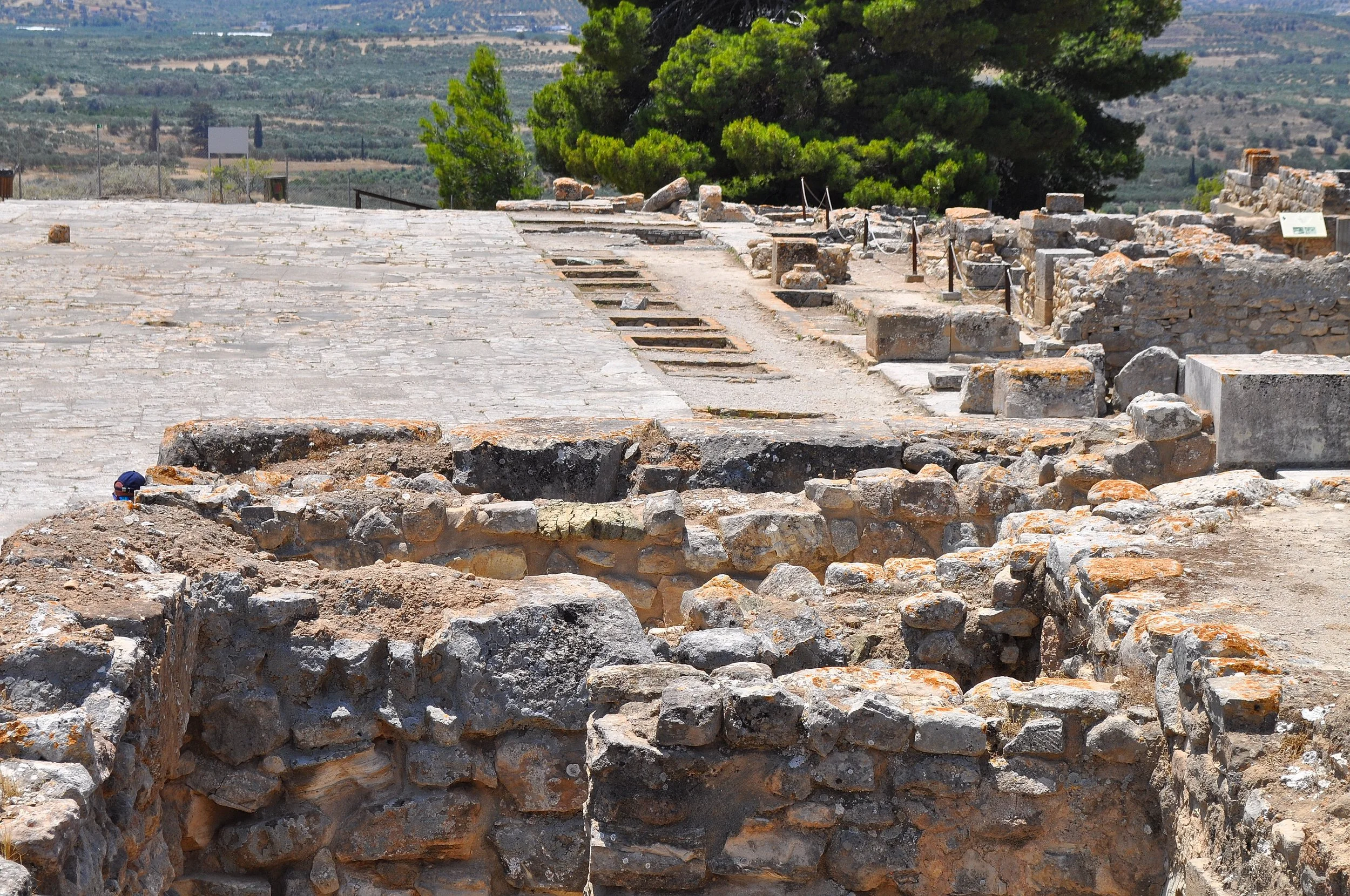
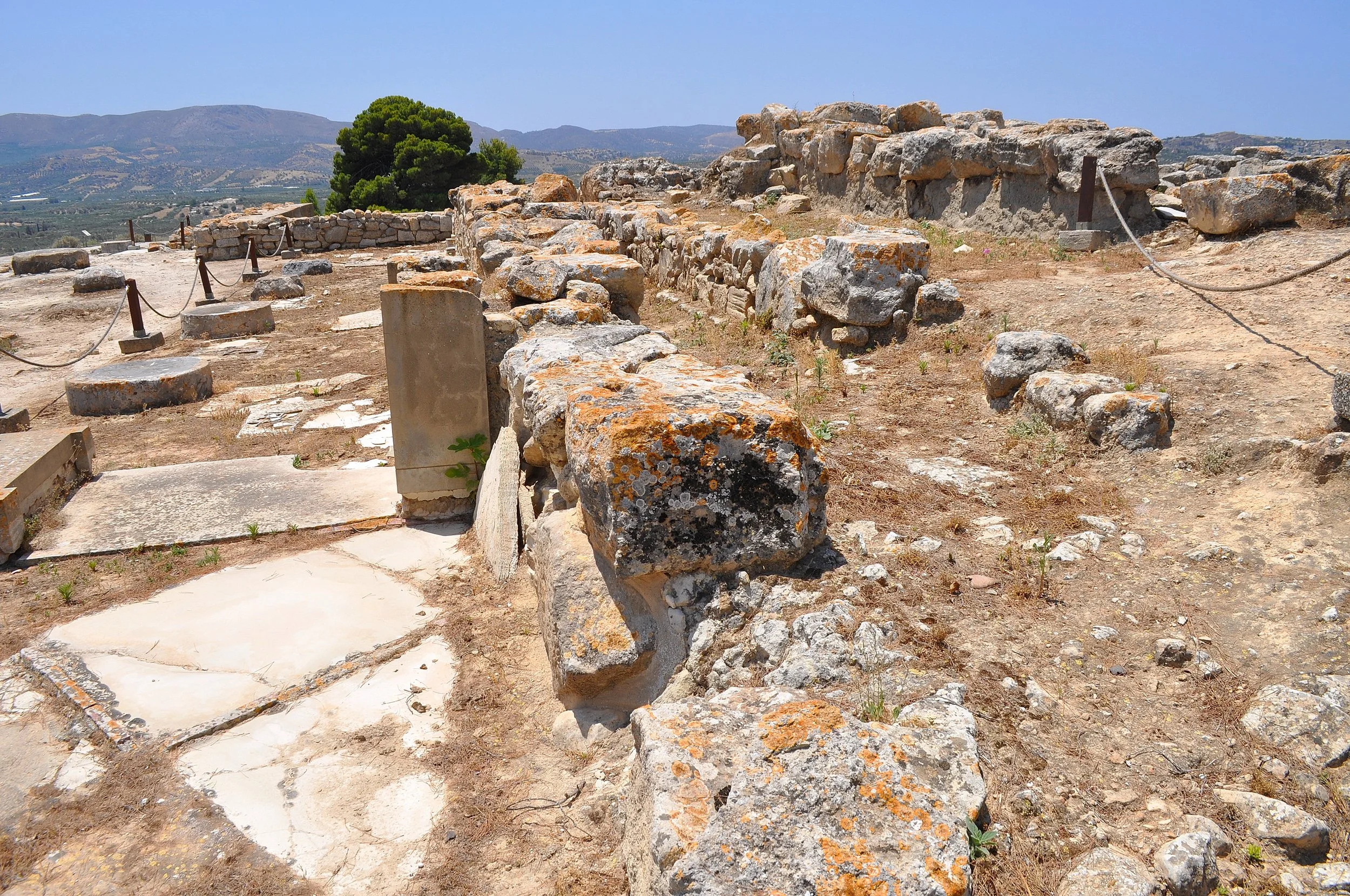
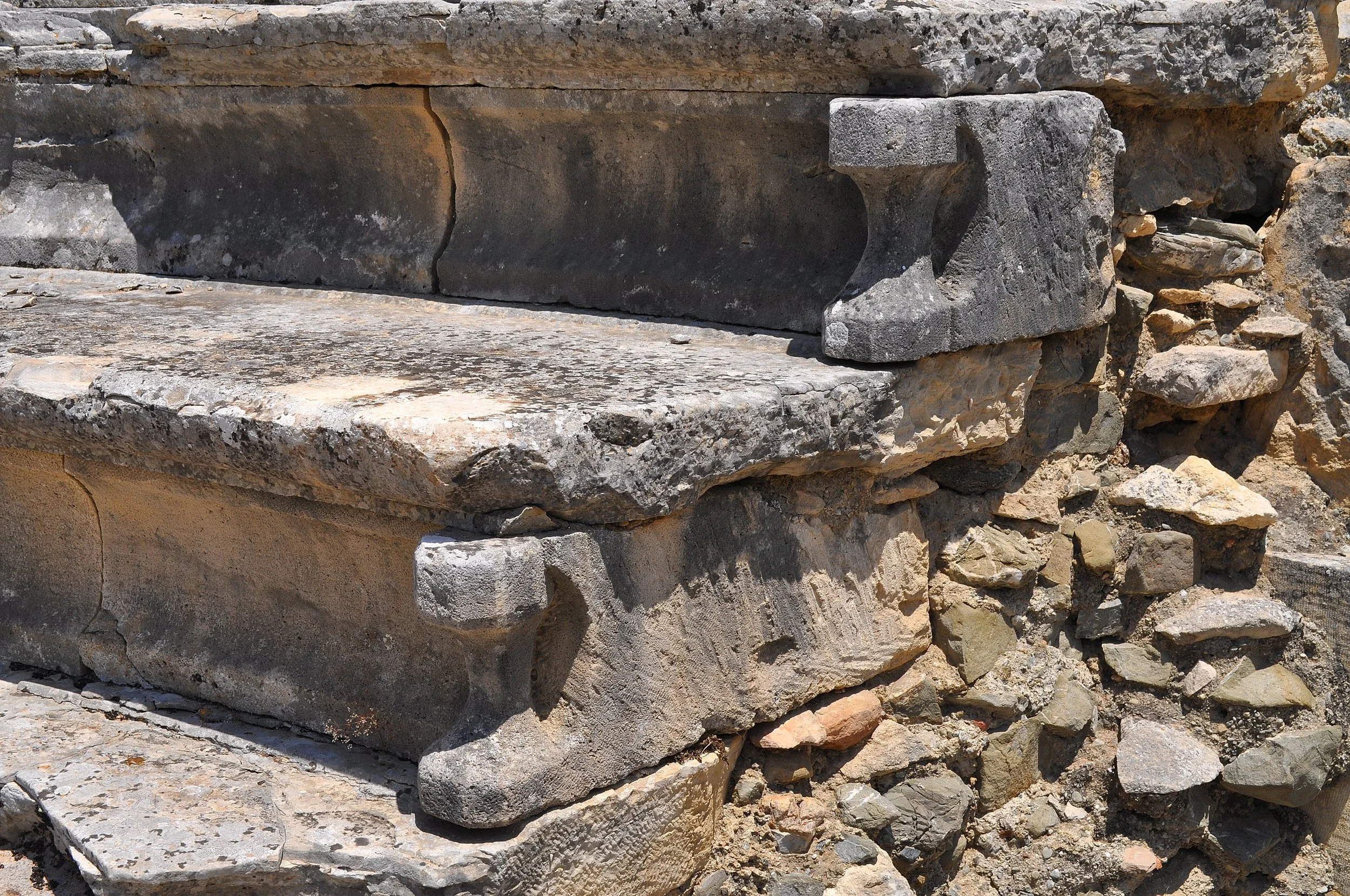
Angela: and that makes the visit almost meditative. You move through open and shaded spaces, along broad staircases and across platforms that feel like natural terraces. Some rooms still preserve their marble thresholds, the bases of the columns, and even the door sockets carved into the thresholds where the wooden doors once pivoted.
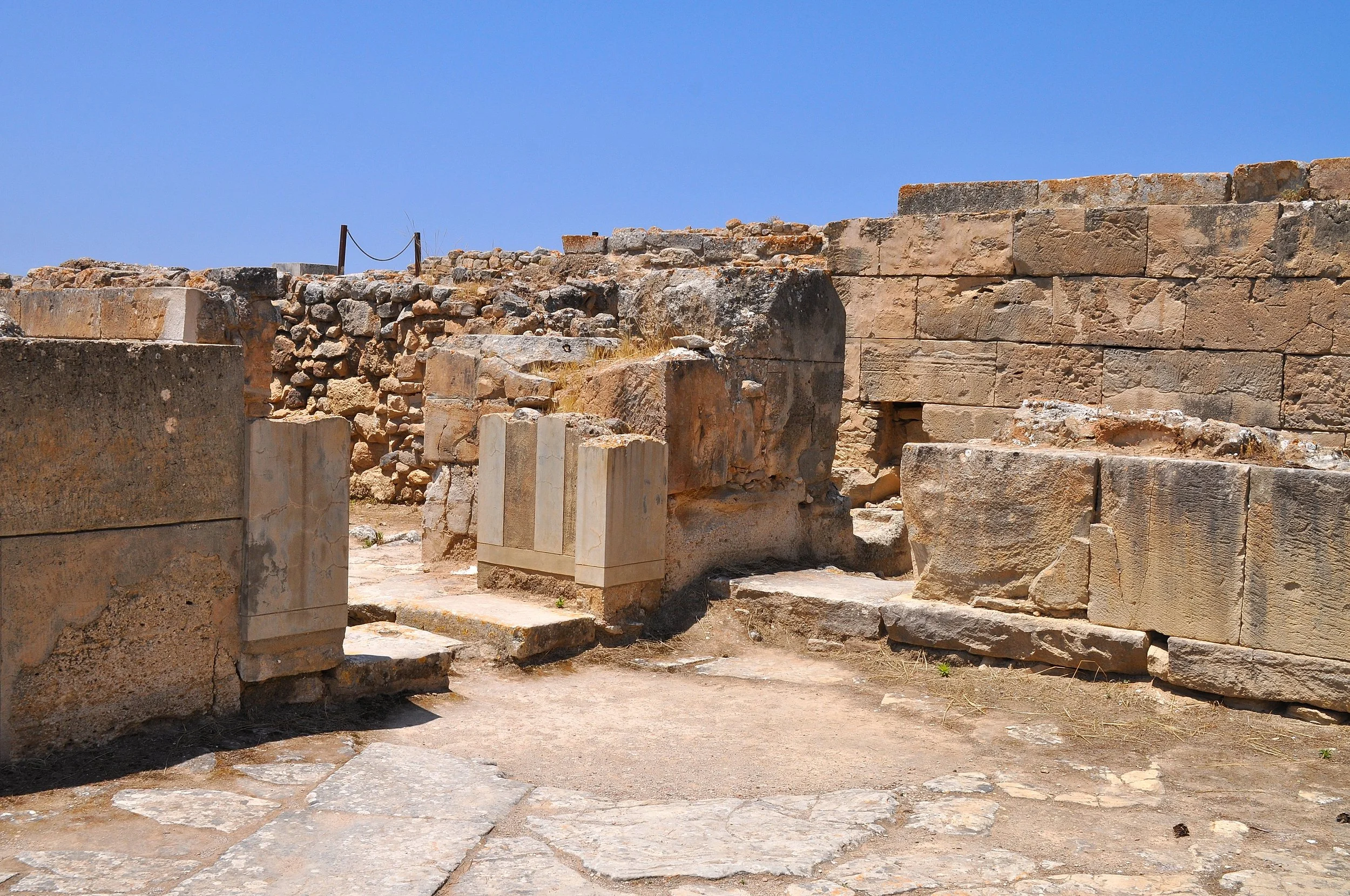
Piero: one of the most evocative spaces is the royal megaron, probably a ceremonial hall, with its gypsum floor and the surviving traces of wall paintings.
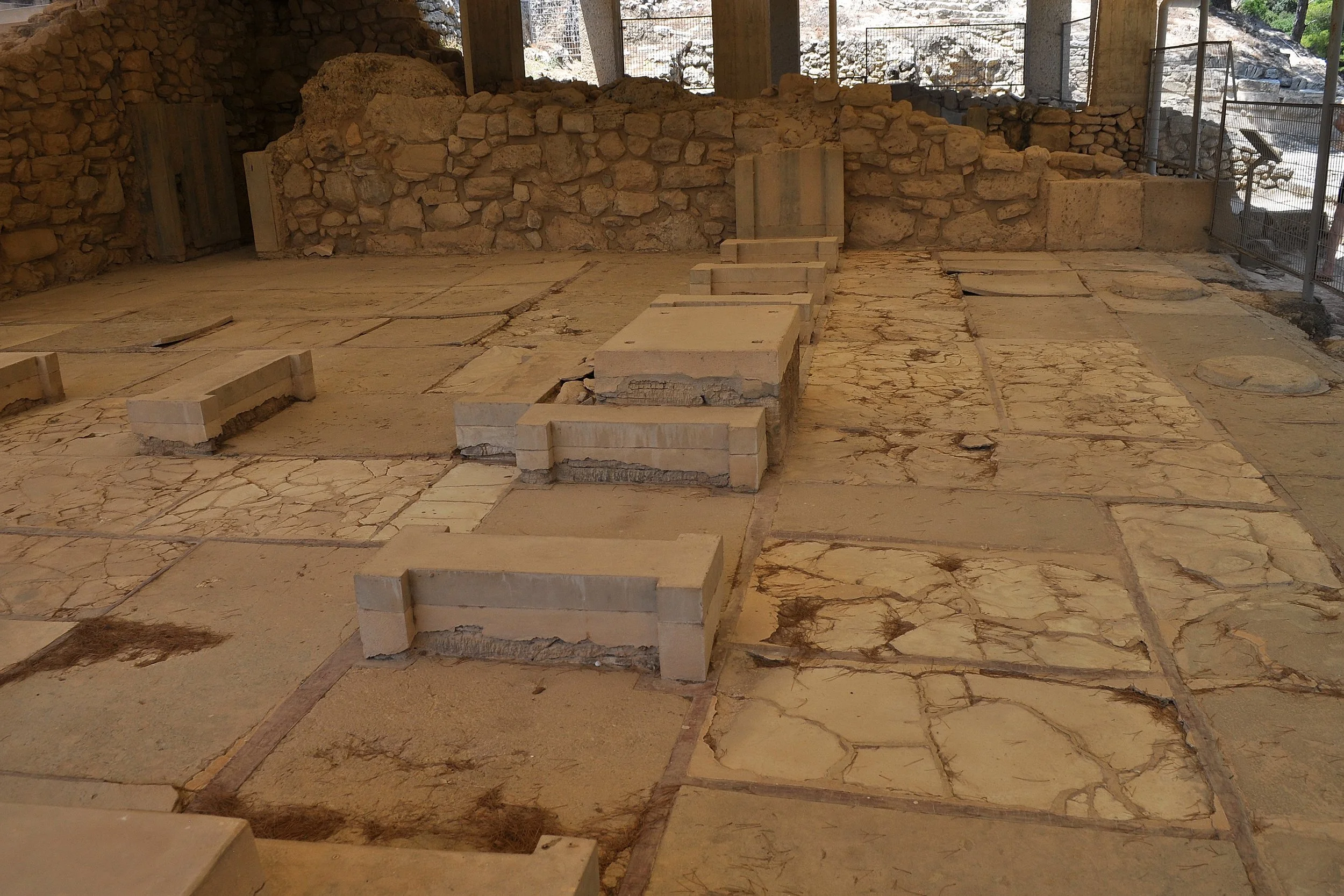


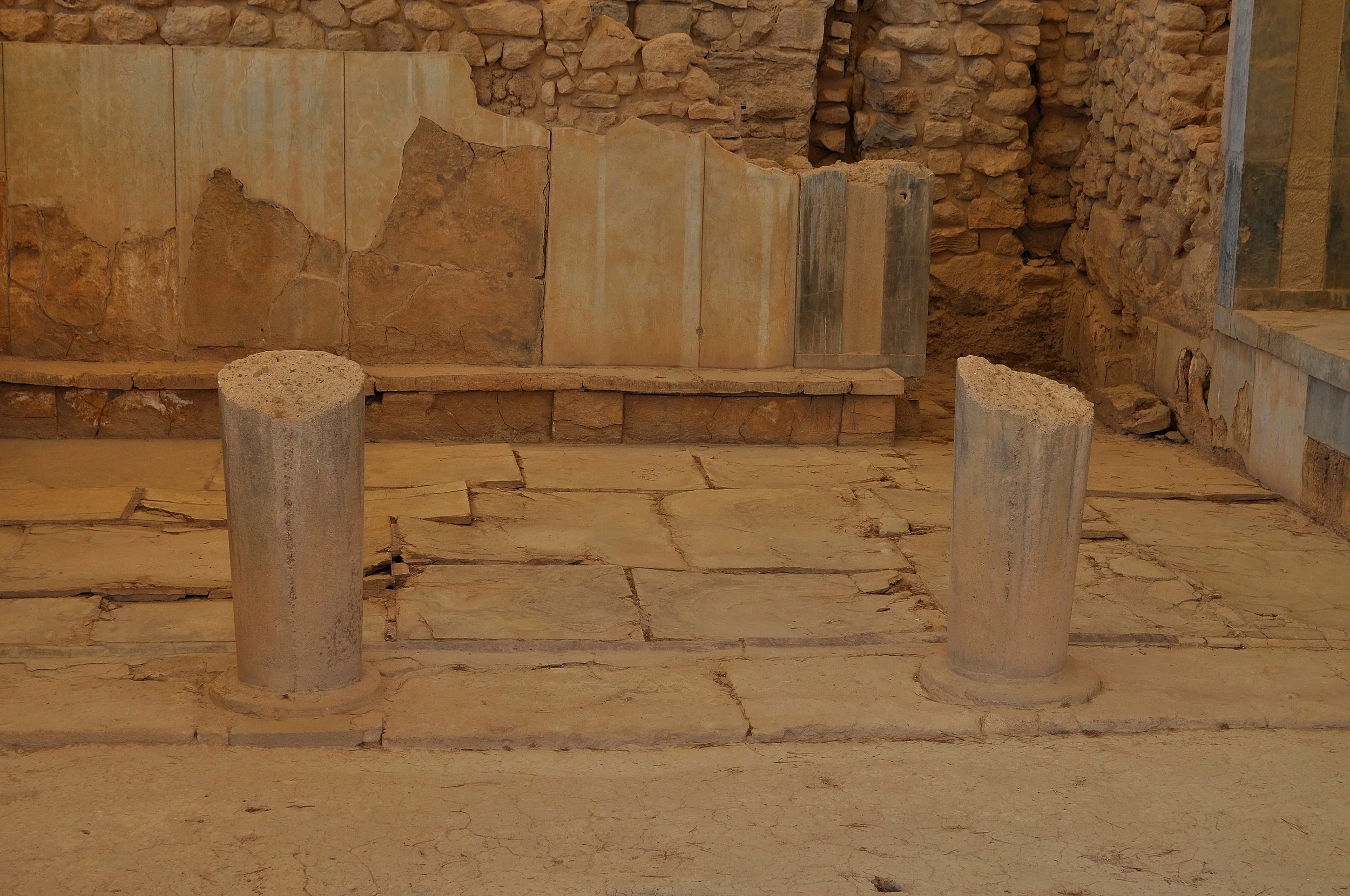
Angela: but there is also the western quarter, where the administrative offices were located, and the archive, where the remains of clay tablets have been discovered.

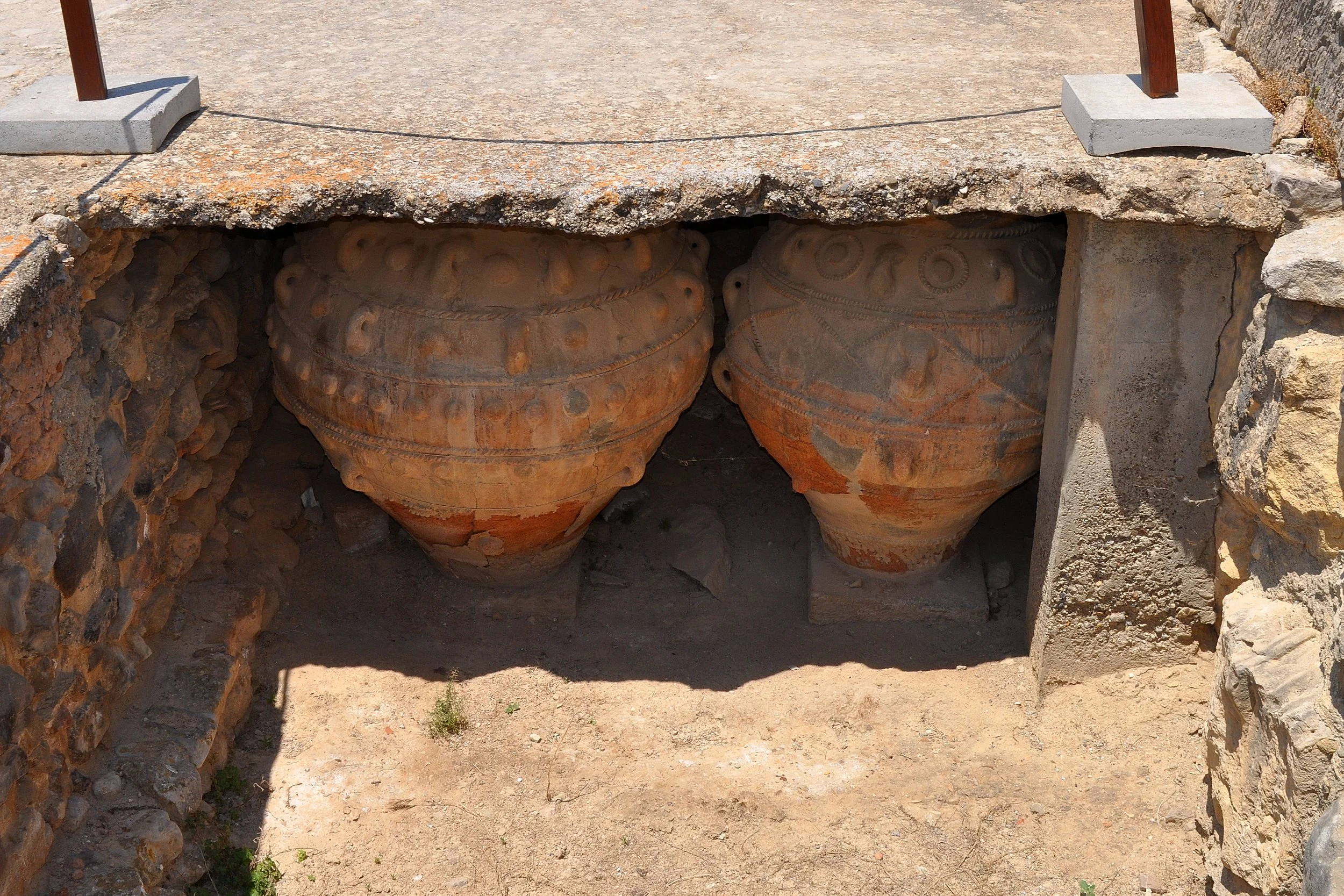
Piero: in the southern sector you'll find the storerooms, with enormous pithoi — the great terracotta storage jars — still standing in their original rectangular floor recesses. Some even preserve traces of what they once contained: olive oil, grain, wine, and legumes. This was the economic heart of the palace.
Angela: and let's not forget the southern staircase, one of the largest examples of Minoan architecture. Its six broad, shallow steps create what looks almost like an open-air theatre. Some archaeologists believe this space was used for religious ceremonies or public gatherings.
Piero: the most mysterious spot, however, is where the famous Phaistos Disc was discovered in 1908. It is a circular clay disc bearing 241 symbols arranged in a spiral and impressed using individual stamps. To this day, no one knows exactly what it means. It could be a prayer, a message, or even a game. Whatever its purpose, the disc has become the ultimate symbol of the Minoan civilization: sophisticated, enigmatic, and endlessly fascinating. We'll take a closer look at it later...

Angela: and then there is the view. The light changes hour by hour, sliding across the stones and shaping the shadows. In front of you lies the fertile plain, dotted with olive trees and vineyards. Behind you, the mountains. And all around... silence.
Piero: a silence filled with memories. Phaistos is the most intimate side of Crete: it doesn't shout, it whispers. It doesn't impose itself, it simply remains. It is the palace that speaks only to those who know how to listen.
Angela: here too, the advice is to visit in the early morning hours, because it gets extremely hot and there are very few shaded areas where you can escape the sun.
Piero: precisely for this reason, it's better to plan visits to the two Minoan palaces on separate days.
Gortyn: the law set in stone
Explore Gortyn, one of the most fascinating archaeological sites in Crete, where Greek, Roman and Christian history meet. Discover the famous Code of Gortyn, the oldest civil law collection in Europe, the Roman Odeon, ancient streets and the ruins of a city that transformed laws, myths and civilizations into stone. A journey through the forgotten heart of ancient Crete.
Angela: not far from Phaistos, we move on to visit another of the incredible archaeological sites of Crete.
Piero: here we are at Gortyna. The era has changed, the style has changed, but that same feeling remains — the one that only Crete can offer: the sensation of standing at the heart of something ancient and truly fundamental.

Angela: and this time, there are no Minoan palaces. We have moved much further forward in time. Gortyna is Roman. But it is also Greek. And Dorian. It is a city with not just one soul, but many layered one on top of another. And each of them has left its mark.
Piero: the first settlements date back to the Minoan period, but it was with the Dorians, in the 8th century BC, that Gortyna became an important city. Later, the Romans chose it as the capital of the province of Crete and Cyrenaica. And from that moment, a new chapter began.
Angela: it was a wealthy and advanced city, with aqueducts, baths, theatres, forums, and statues. But what makes it truly unique is not only what remains standing—it is what is written on its stones.
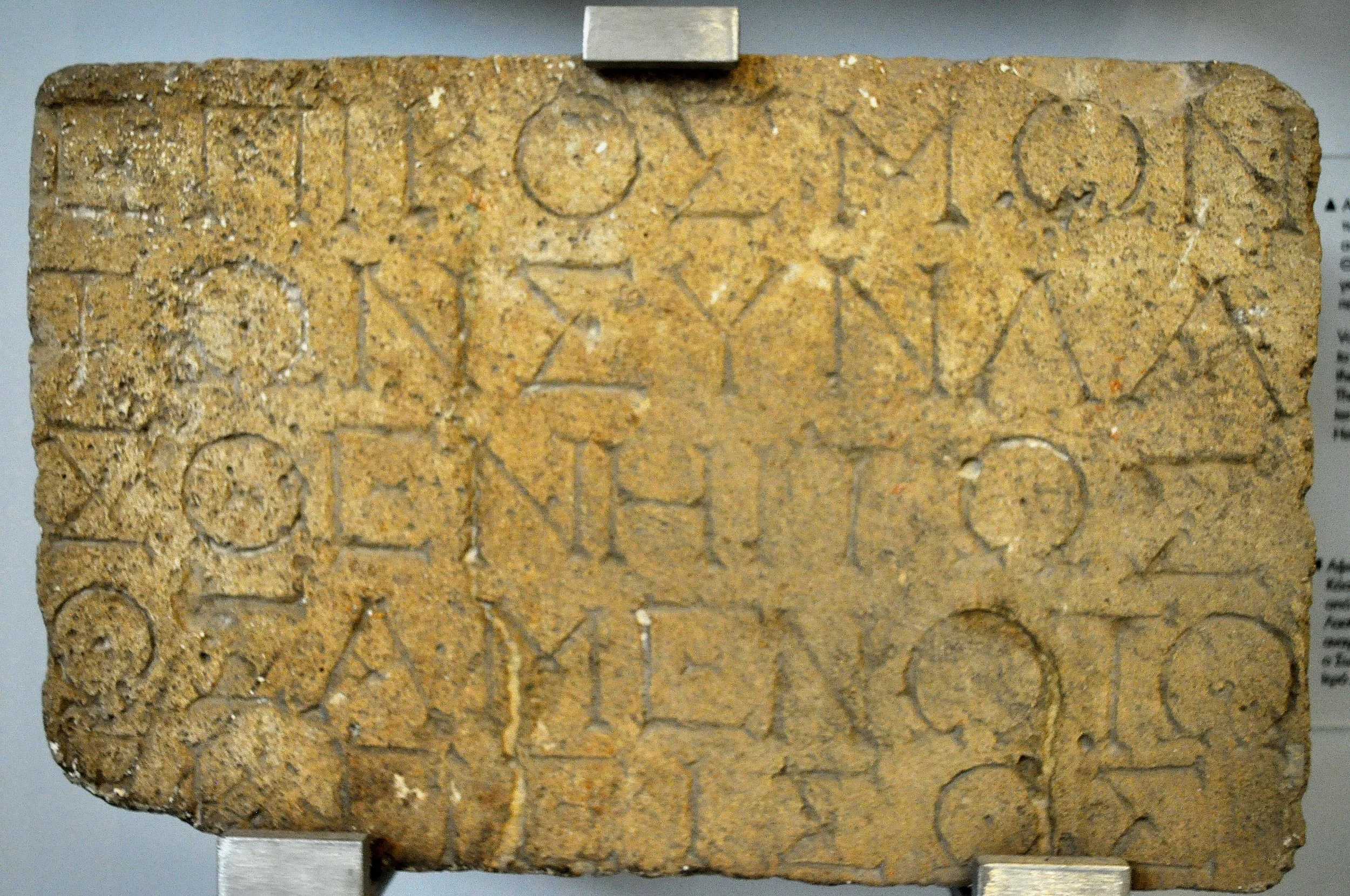
Piero: exactly. The famous Code of Gortyn, carved directly into a long limestone wall in the 5th century BC, is the oldest known collection of civil laws in Europe. A kind of “manual for living together”, as we might call it today. And it wasn't hidden away in some archive: it was displayed publicly, with the law made visible to everyone.
Angela: twelve columns of text, written in boustrophedon style—one line from left to right, the next from right to left, like an ox ploughing a field and turning back at the end of each furrow. It is visually fascinating as well.
Piero: and incredibly modern in its content. It deals with marriage, inheritance, divorce, property, slavery, sexual violence, and adoption. Precise, detailed, and practical. Not divine, but civil. Not written for the gods, but for people.
Angela: as if Gortyna were telling us: here, it is not only myths that matter. Here, society is governed through words carved into stone, not through temples.
Piero: the archaeological site stretches among olive groves and dirt paths. It almost feels hidden—we actually drove past it twice without noticing it...—yet it is enormous. You enter among the ruins of the Roman Odeon, a small semicircular theatre built in the 1st century AD. Here people once listened to music, speeches, and poetry.



Angela: and it is right next to the Odeon that we find the Code of Gortyn. Not as an isolated monument, but as an integral part of everyday city life. As if law and beauty were one and the same thing.
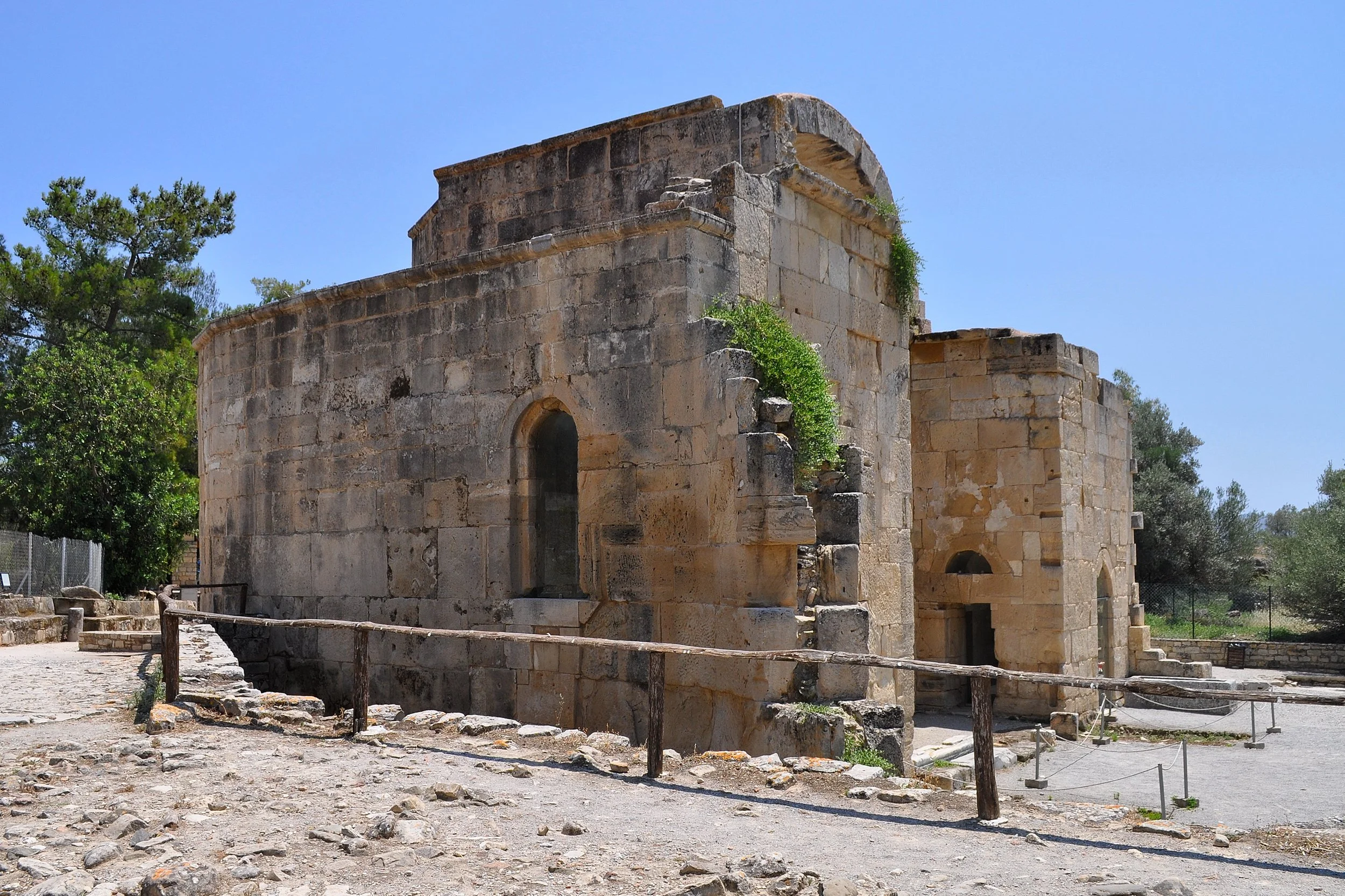
Piero: further on, we discover the remains of paved roads and the ruins of the Basilica of Saint Titus, built in the 6th century AD. According to tradition, Titus, a disciple of Saint Paul, founded the first Christian community of Crete here.
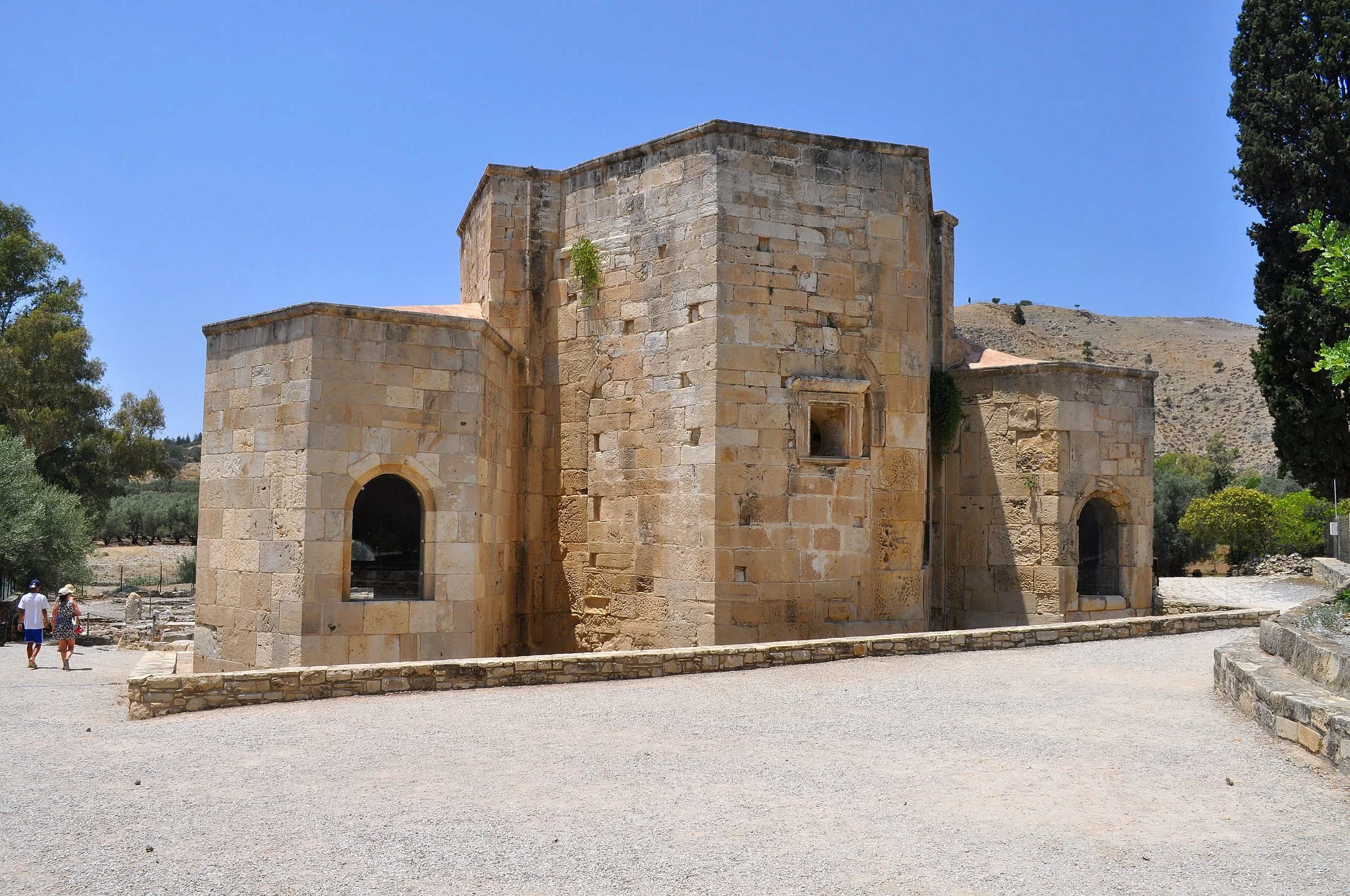


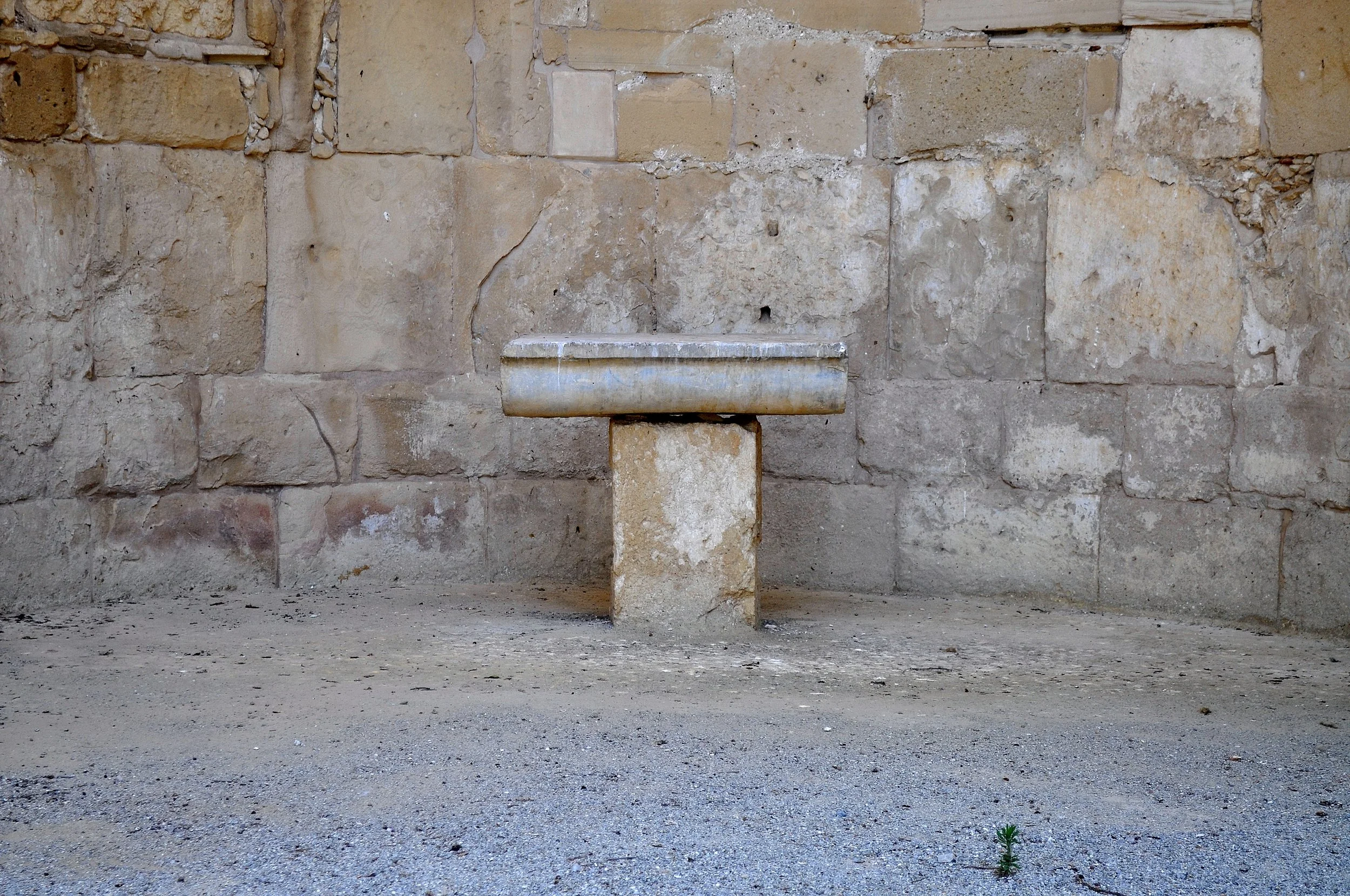
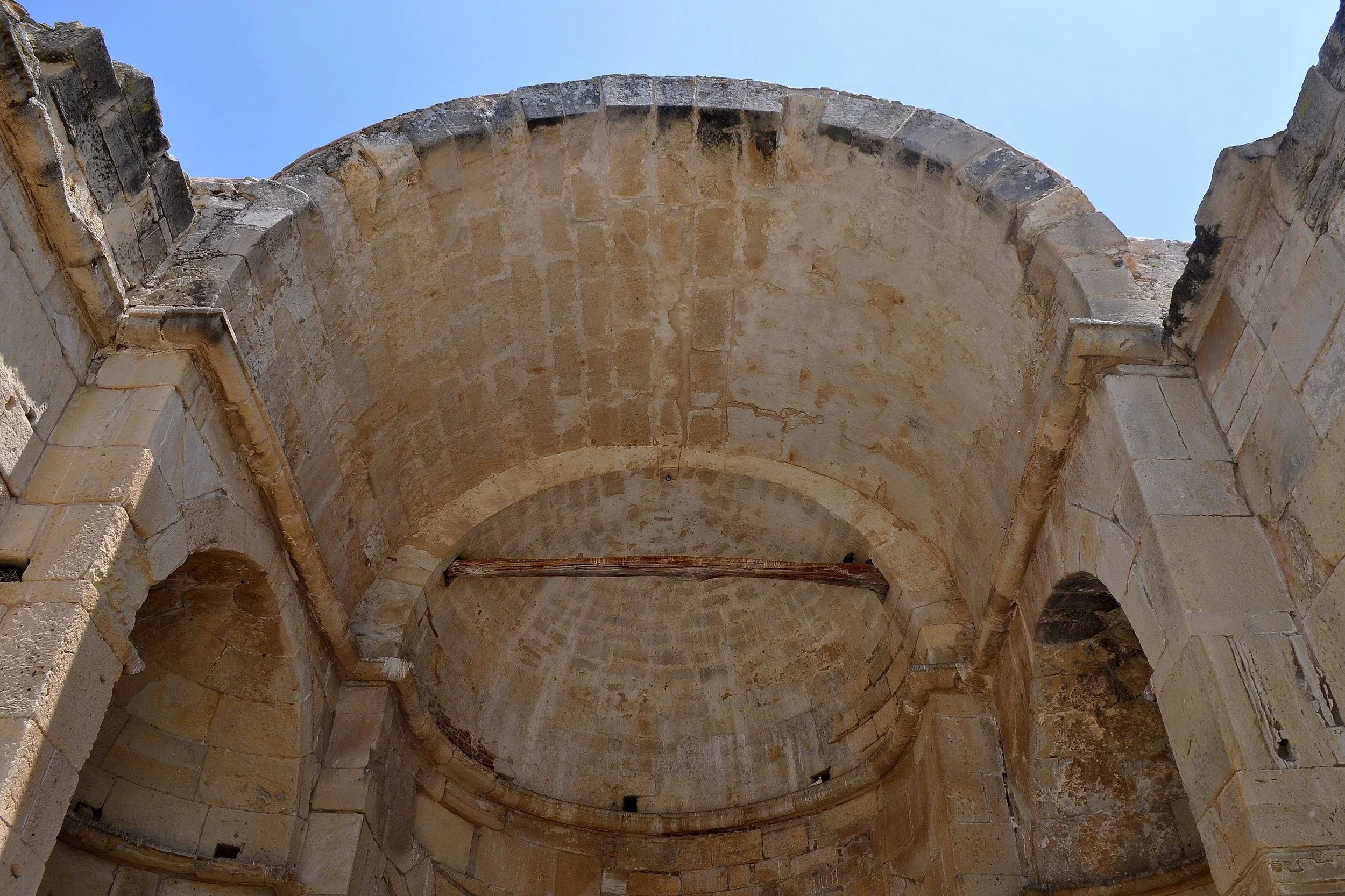


Angela: here, archaeology becomes a story. From the Dorians to the Romans, from Greek law to Christian faith, everything is connected. And everything is immersed in greenery. Fig trees, olive trees, oleanders. The stones emerge among the plants like thoughts rising through dreams.
Piero: in the oldest section, you can still recognise the remains of the Roman praetorium, the seat of the governor. And just beyond it, what remains of the forum, with columns and statue bases. Not as grand as Rome, but full of dignity.


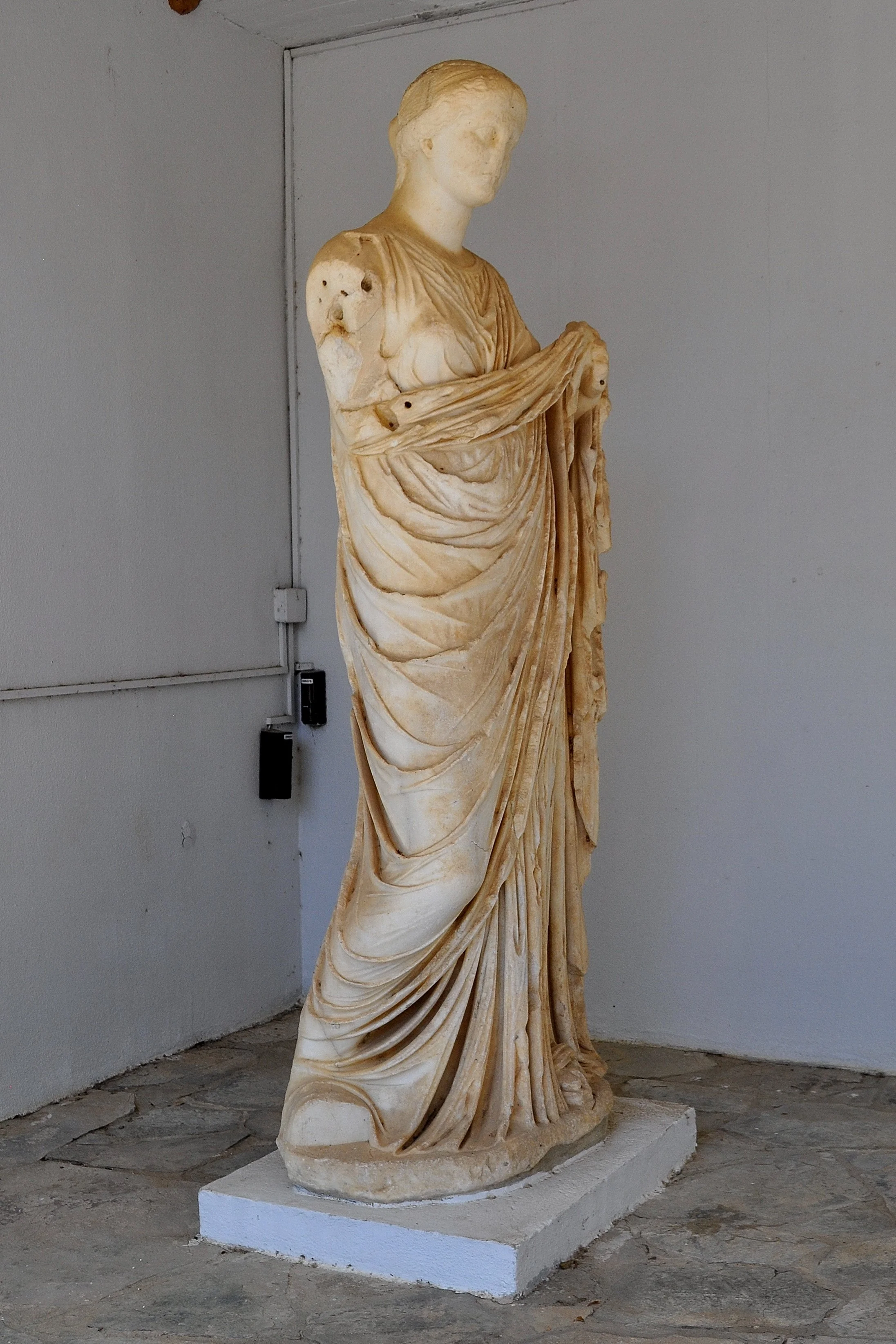

Angela: it is a city without walls, like the ancient Greek poleis. Perhaps precisely because it felt secure, strengthened by its laws and by its strategic position: in the heart of the Messara Plain, not far from either the sea or the mountains.
Piero: and to think that during the Hellenistic period, it competed with Knossos for control of the island. Two different models of power: Knossos had myth, Gortyn had law. Knossos had the royal court, Gortyn had the forum.
Angela: today everything is peaceful and silent. But all you need to do is read those lines carved into the stone to hear its voice once again. Here, justice was not an abstract concept. It was something to be carved, to be displayed, to be lived.
Piero: every journey through Crete is an encounter with something that still concerns us today. Here there is no labyrinth and no frescoes. But there are rules, the dignity of living together, and a stone that never forgets.
Heraklion: the museum and the city
Discover Heraklion, the vibrant capital of Crete, where ancient history, Venetian heritage and Mediterranean life come together. From the Archaeological Museum and the harbour to Koules Fortress, the Venetian Loggia and Morosini Fountain, a walk through a city shaped by civilizations, myths and centuries of resistance. A fascinating stop after exploring the treasures of the Minoan world.
Angela: not far from Knossos, we move on to the capital of the island of Crete: Heraklion.
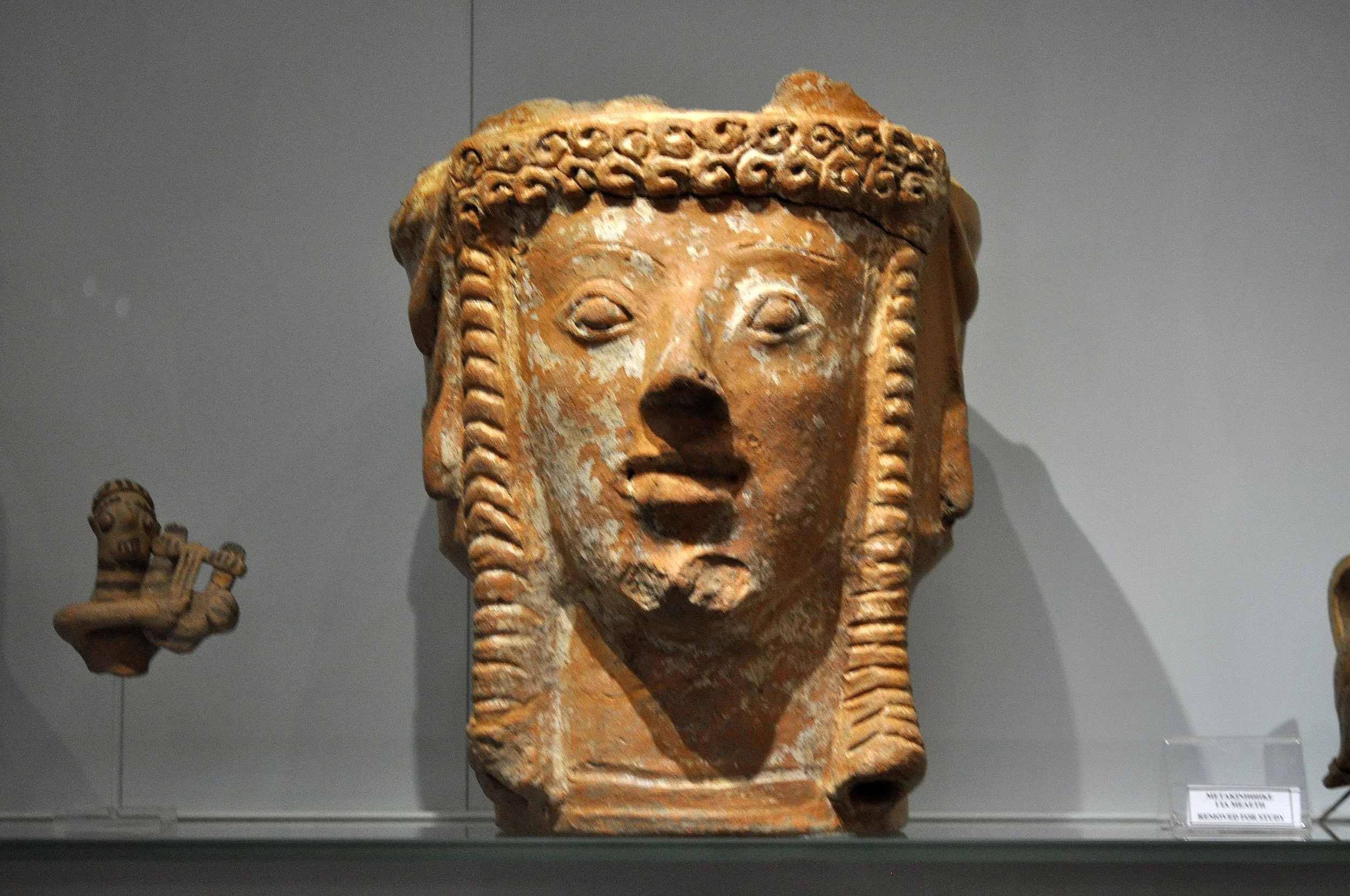
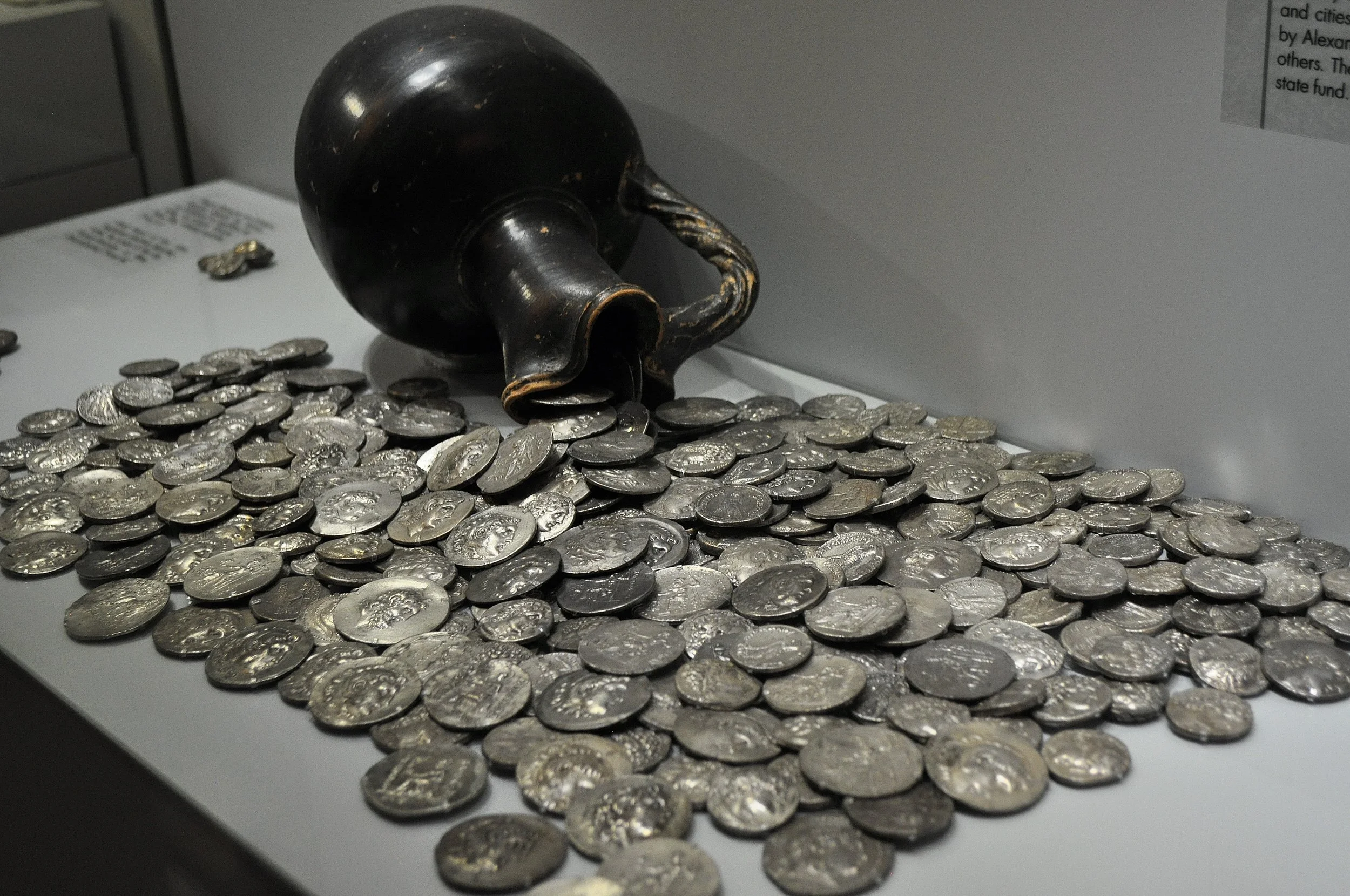
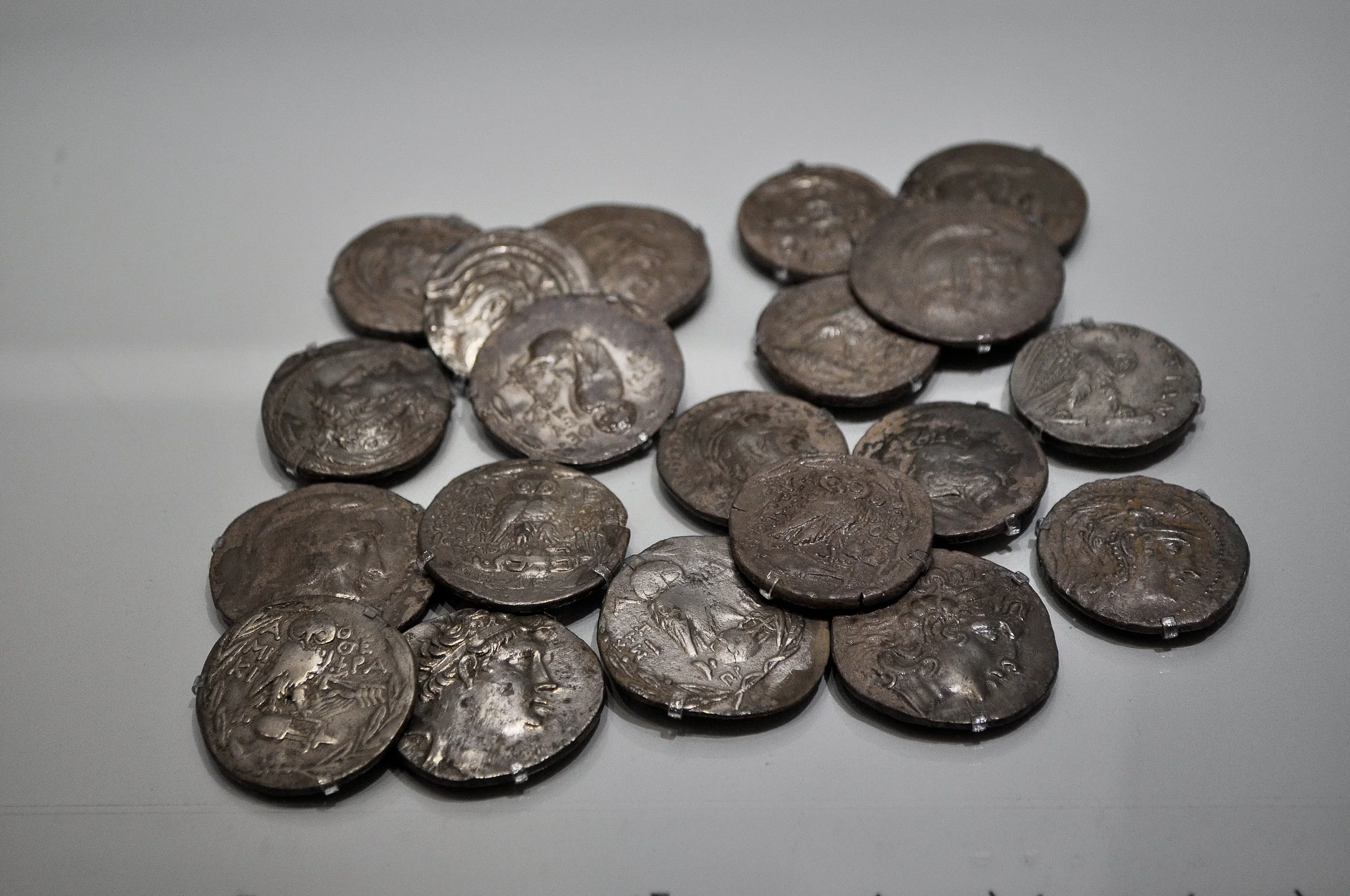
Piero: after visiting Knossos, Phaistos, and Gortyn, we needed a place that could bring together everything we had seen, felt, and imagined. And that place is the Archaeological Museum of Heraklion. So this is where we begin our visit.
Angela: yes, because the palaces, as fascinating as they are, are only fragments. What is missing—the colours, the faces, the details—you find here. In this museum, every stone finds its voice, every symbol gains meaning, and every myth takes shape.
Piero: the exhibition route is organised with great intelligence: you don't jump from one era to another, but move forward gradually, almost as if following Ariadne's thread through the history of Crete. It begins with the Neolithic period and reaches the Roman world, but it is the Minoan heart that truly steals the show.
Angela: one of the first objects to capture our attention is a small golden masterpiece: the famous Bee Pendant. Two bees facing each other, perfectly symmetrical, hold a tiny drop of honey between their legs. The openwork wings, the stylised bodies... it is an object almost 4,000 years old, yet its beauty still speaks directly to us today.

Piero: a symbol of nature, harmony, and collective work. Found at Malia, it tells us that the Minoans were able to merge spirituality, craftsmanship, and beauty into a single image. And it is just one of the many treasures—quite literally jewels—that we find in this museum.
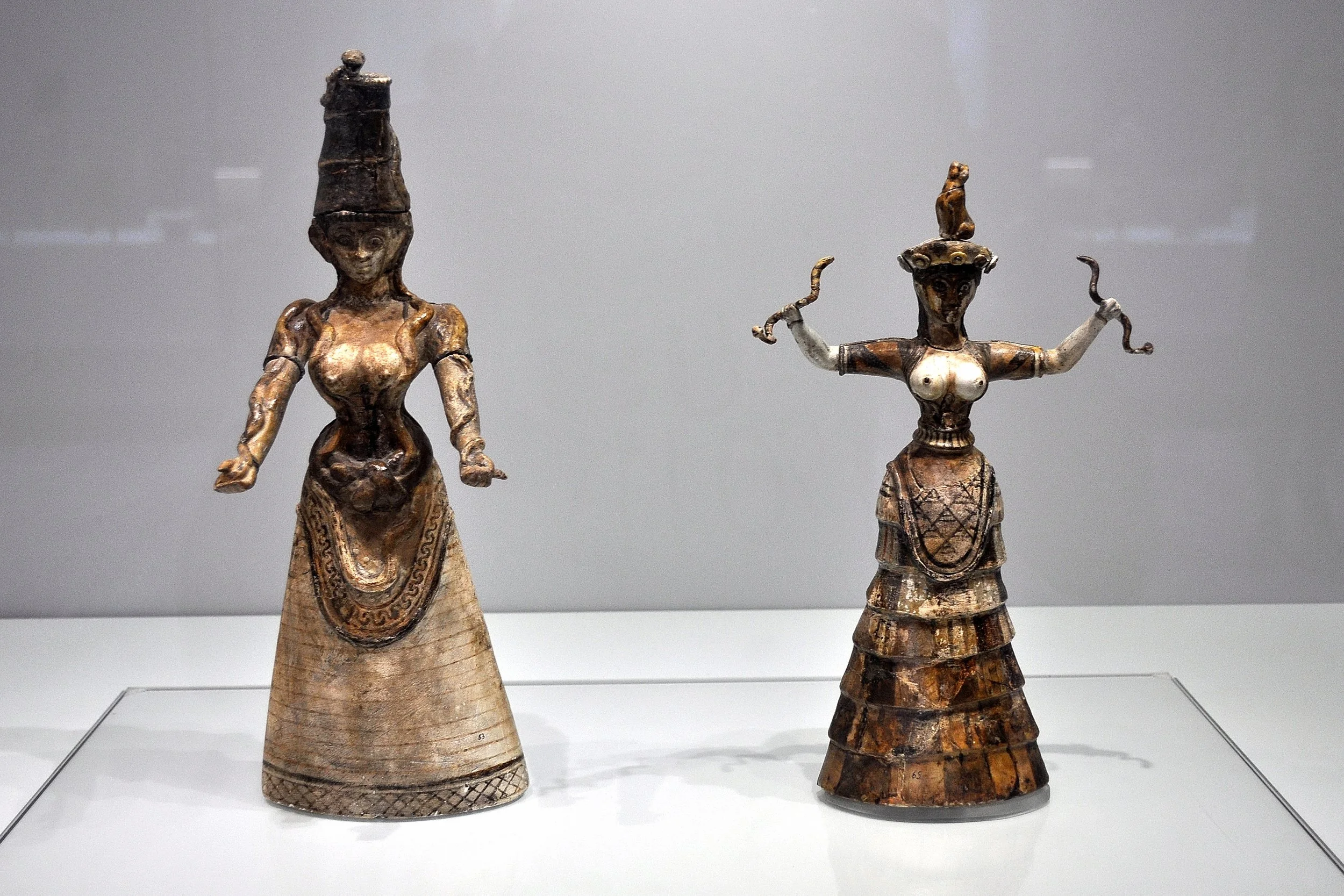
Angela: and then there are the Snake Goddesses. Tiny, yet incredibly powerful. Women with large eyes, bare breasts, and snakes held in their hands. The female power in Minoan religion was not secondary: it was central, sacred, and dominant. Those figurines almost seem alive.
Piero: then comes the moment I was waiting for the most: the Phaistos Disc. We had already evoked it among the ruins of the palace, but here we can finally see it for real. Small, made of terracotta, engraved in a spiral with symbols that no one has ever managed to decipher. It is mysterious, hypnotic. You look at it and feel as if it could still tell us something—if only we knew how to listen.


Angela: it has a diameter of around 16 centimetres, is made of fired clay, and on both sides it features a spiral composed of 241 symbols impressed using stamps. The signs — 45 different symbols in total — represent objects, animals, tools, and stylised human figures. The text follows a spiral pattern, moving from the outside towards the centre on one side and from the centre outwards on the other. However, we still do not know which side is the “main” one or the correct direction of reading.
Piero: what makes it truly extraordinary is, above all, the fact that it is the only known example of “stamped” writing from the ancient world: the symbols were not carved by hand but pressed into the clay using individual stamps, almost like a modern typographic character. This is why some scholars consider it the oldest form of “printing” ever known. Moreover, it was written in an unknown language, perhaps pre-Greek, and has no direct comparison either with Linear A or Linear B.
Angela: but above all, it has never been successfully deciphered with certainty, even though more than a hundred interpretations have been proposed: a prayer, a sacred hymn, an agricultural calendar, a list of names, a magical formula, even a board game or a decorative object. Some researchers believe it could be a religious text, perhaps a ritual chant dedicated to the Mother Goddess; others see it as an administrative document, maybe a list of offerings or sacrifices. Others even suggest that it may not have originated in Crete at all, but could have been imported from another civilisation — or, according to more imaginative theories, even from an extraterrestrial source — remaining unique because it was not part of a widespread writing system.
Piero: a curiosity: in 2022, a study was published suggesting that the disc could be phonetic — a text intended to be sung or recited, somewhat like a “disc” in the modern sense. But this too remains a fascinating hypothesis among many others.
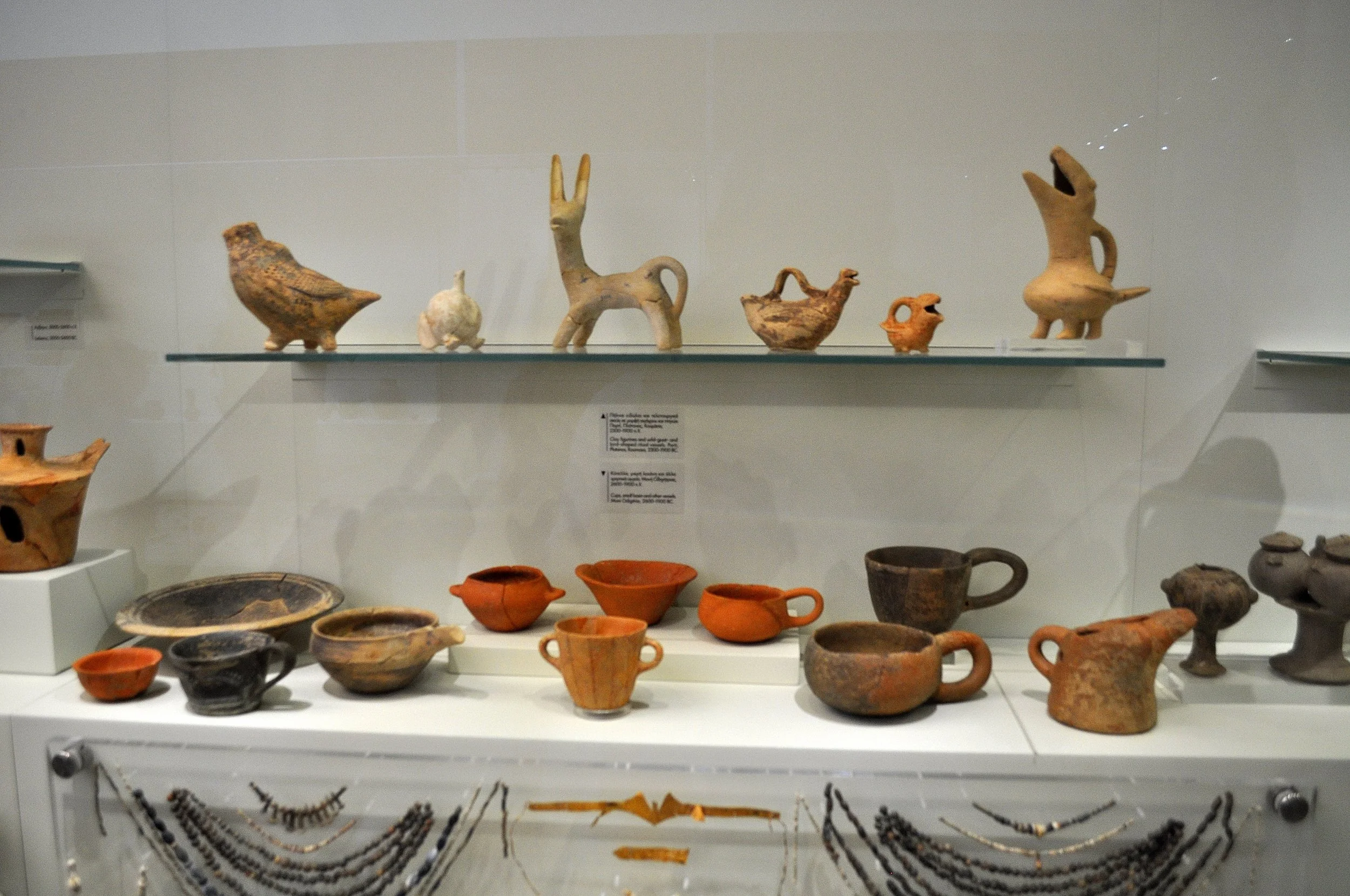
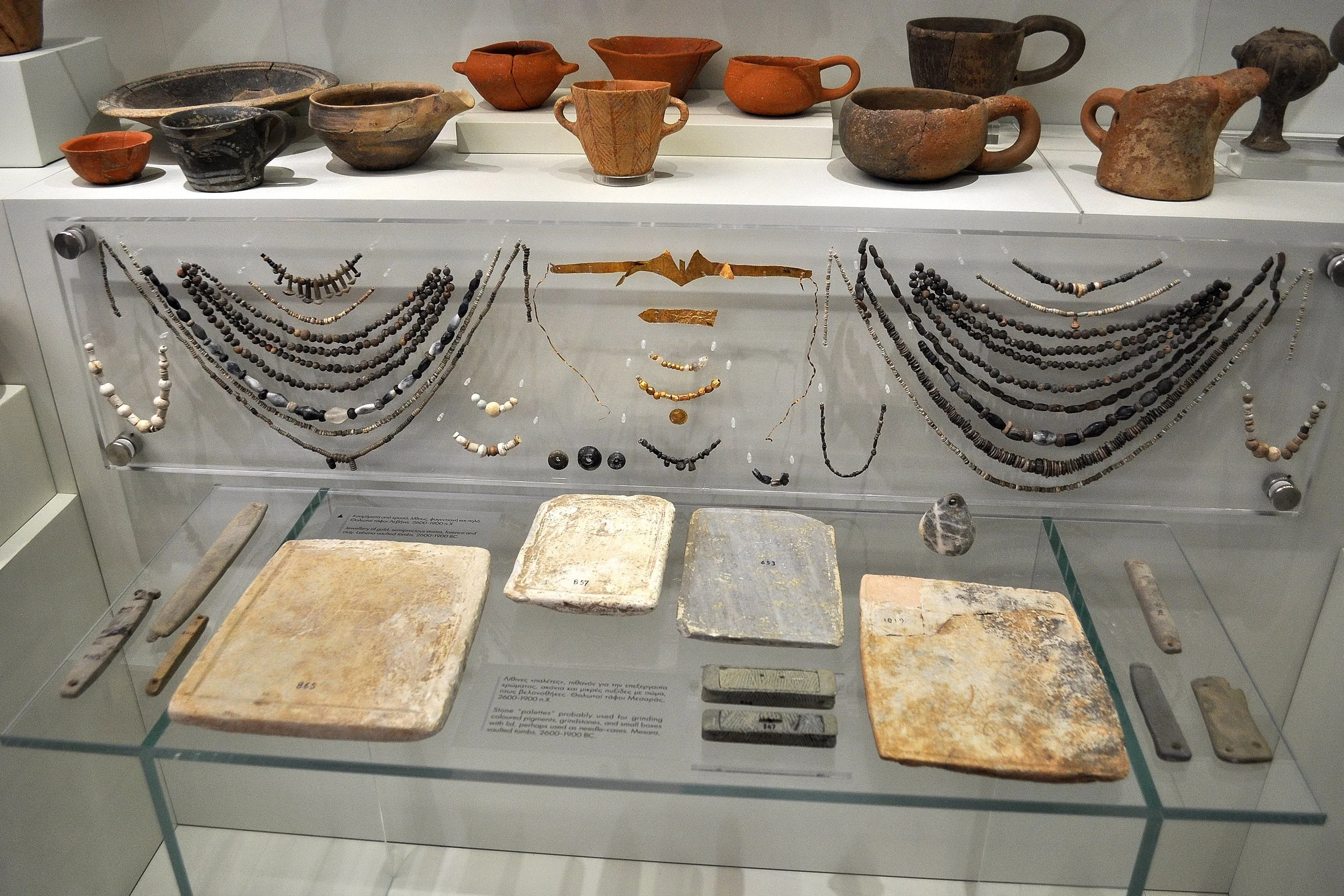
Angela: and then there are the everyday objects: miniature pithoi, decorated pottery, cups, vases, amulets, and musical instruments. There are also weapons, including many examples of the already mentioned double axe, the labrys. Everything is carefully crafted, shaped, and designed not only to be useful, but also to be beautiful.



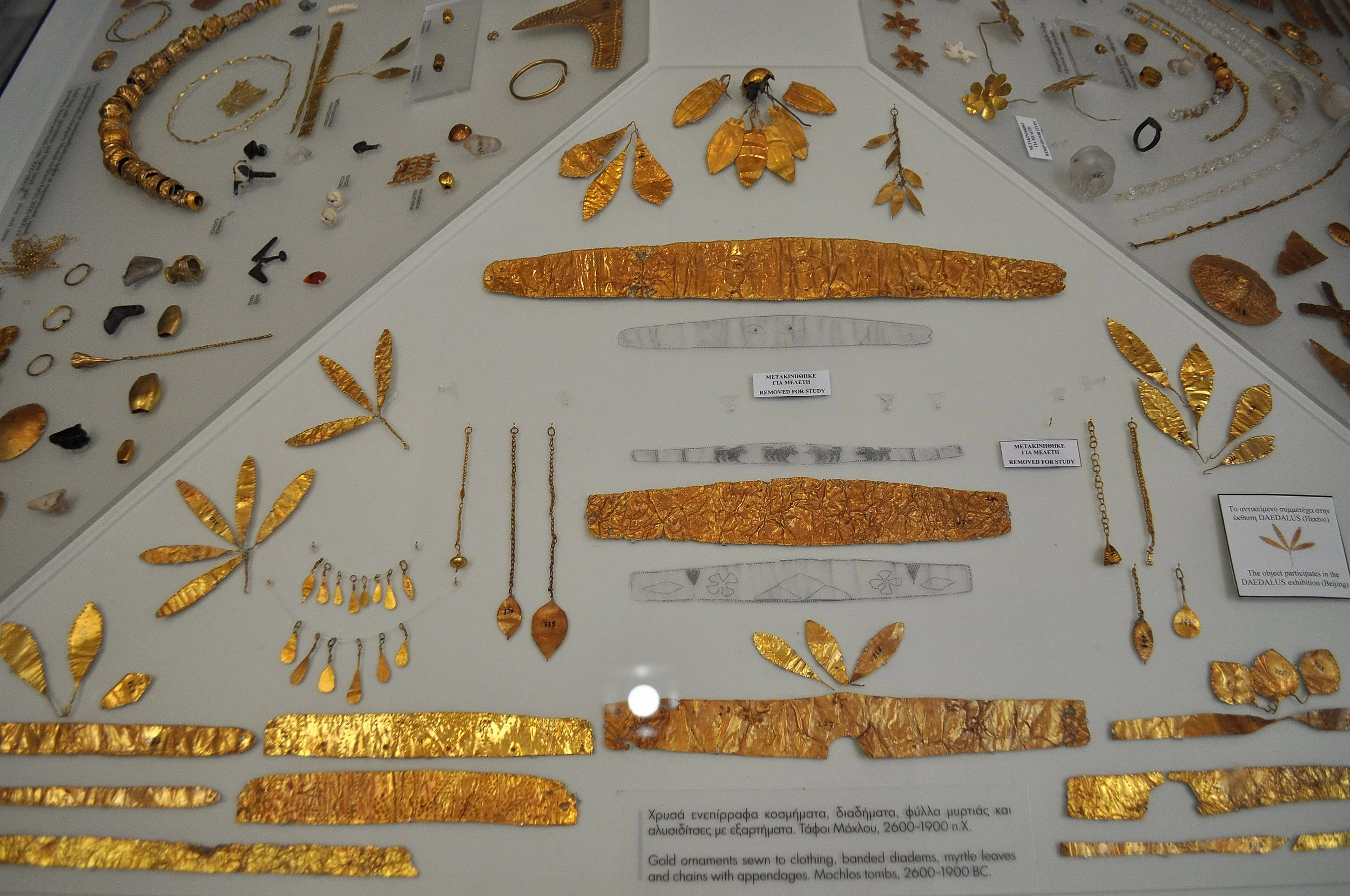
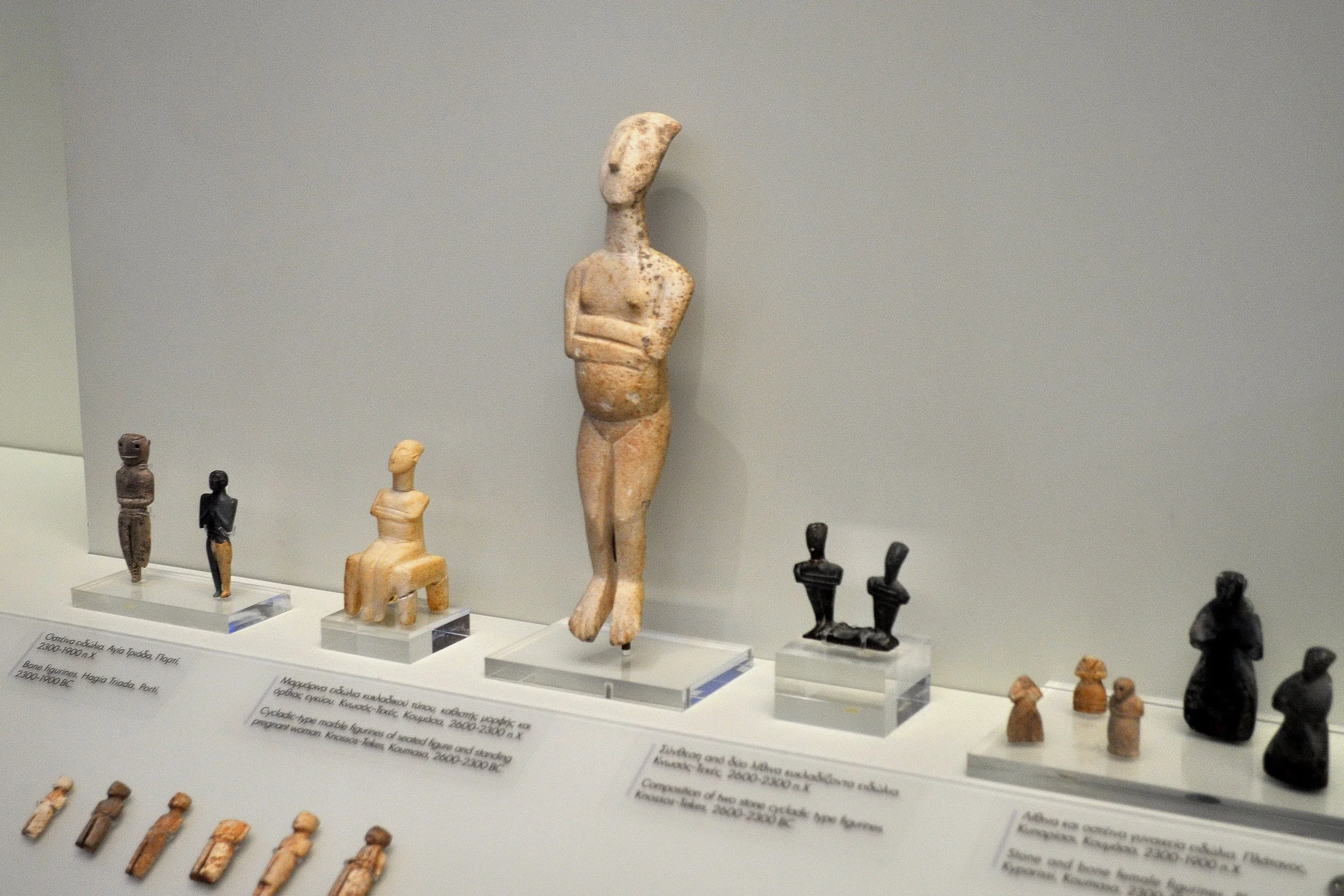


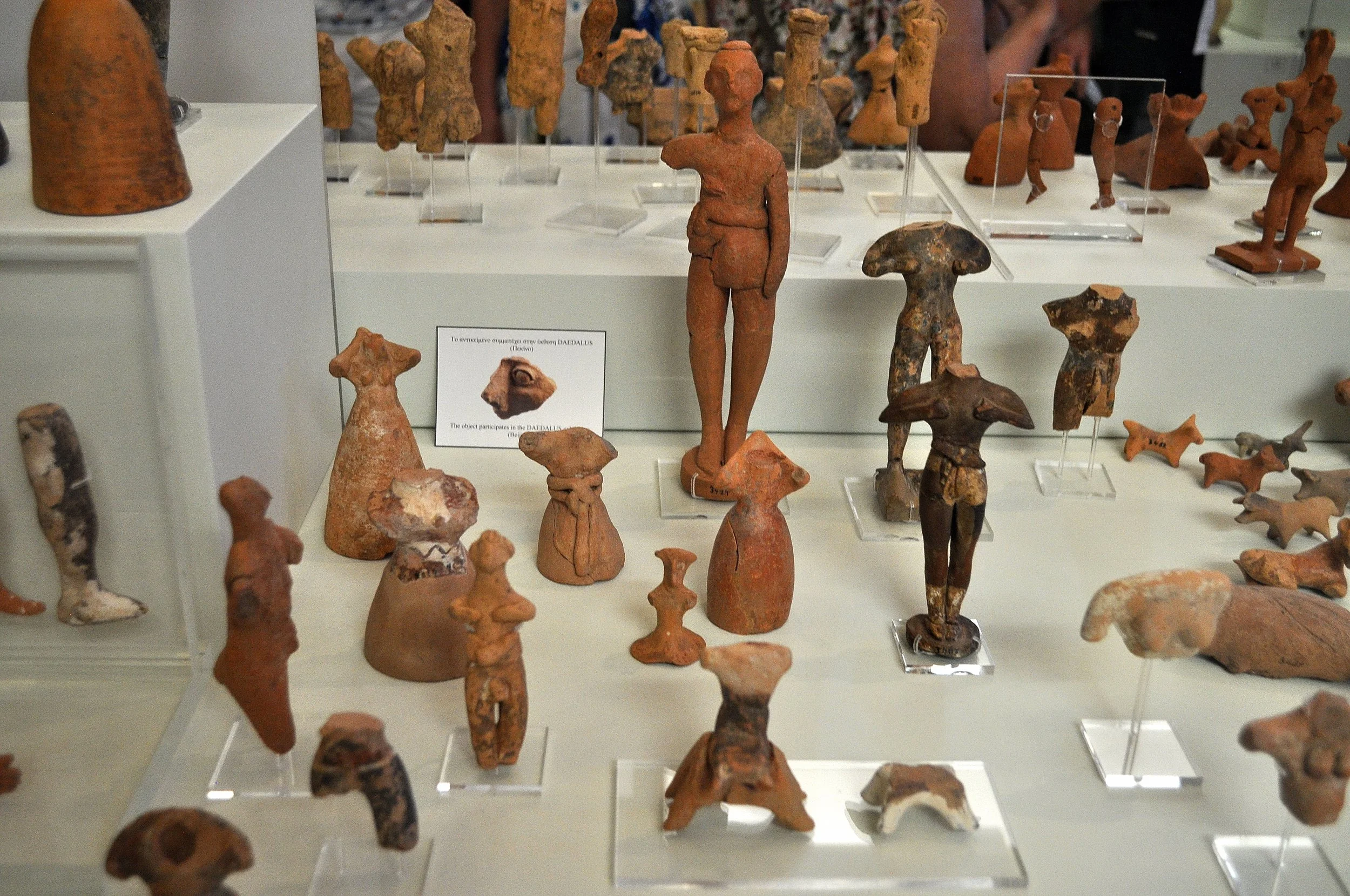
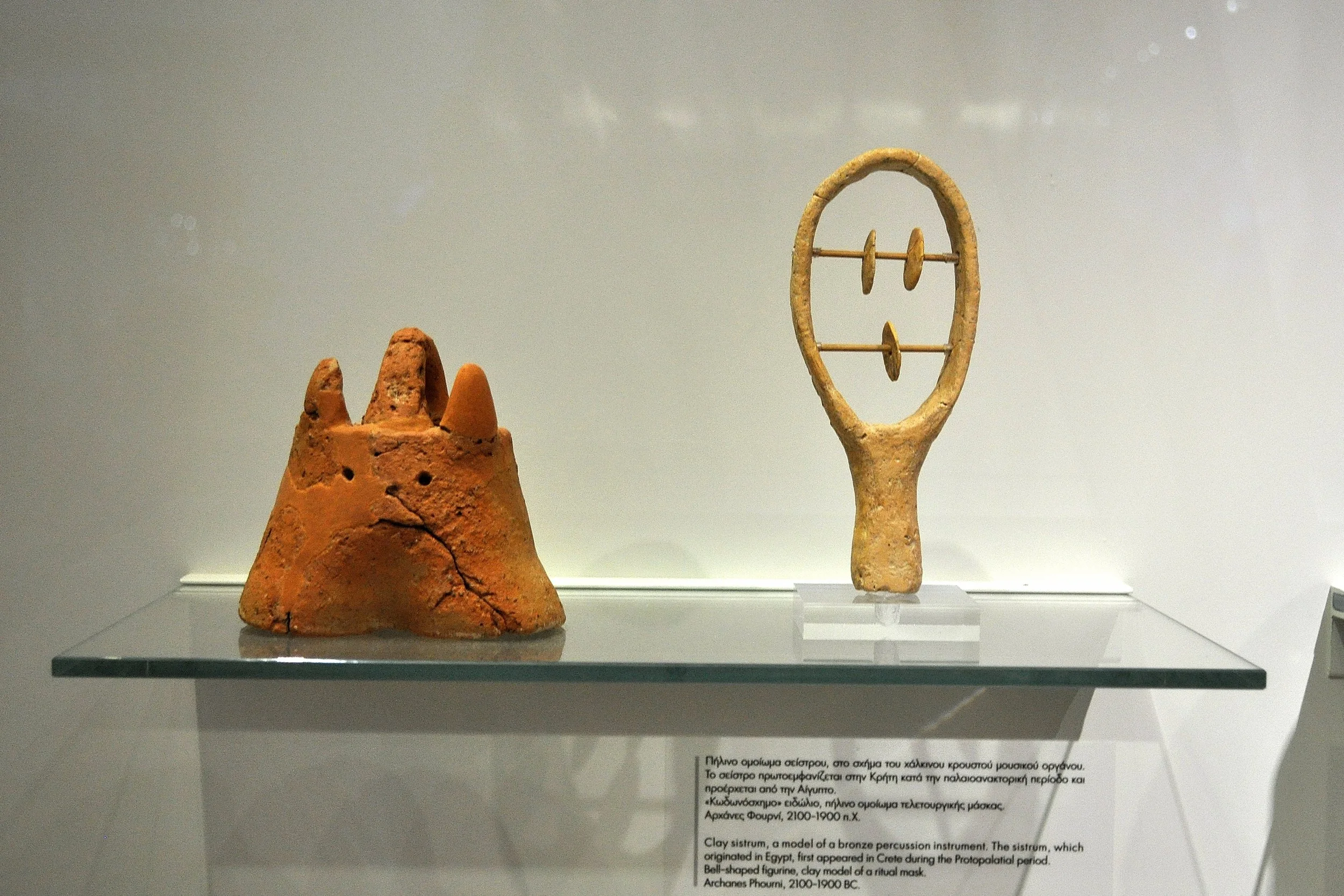
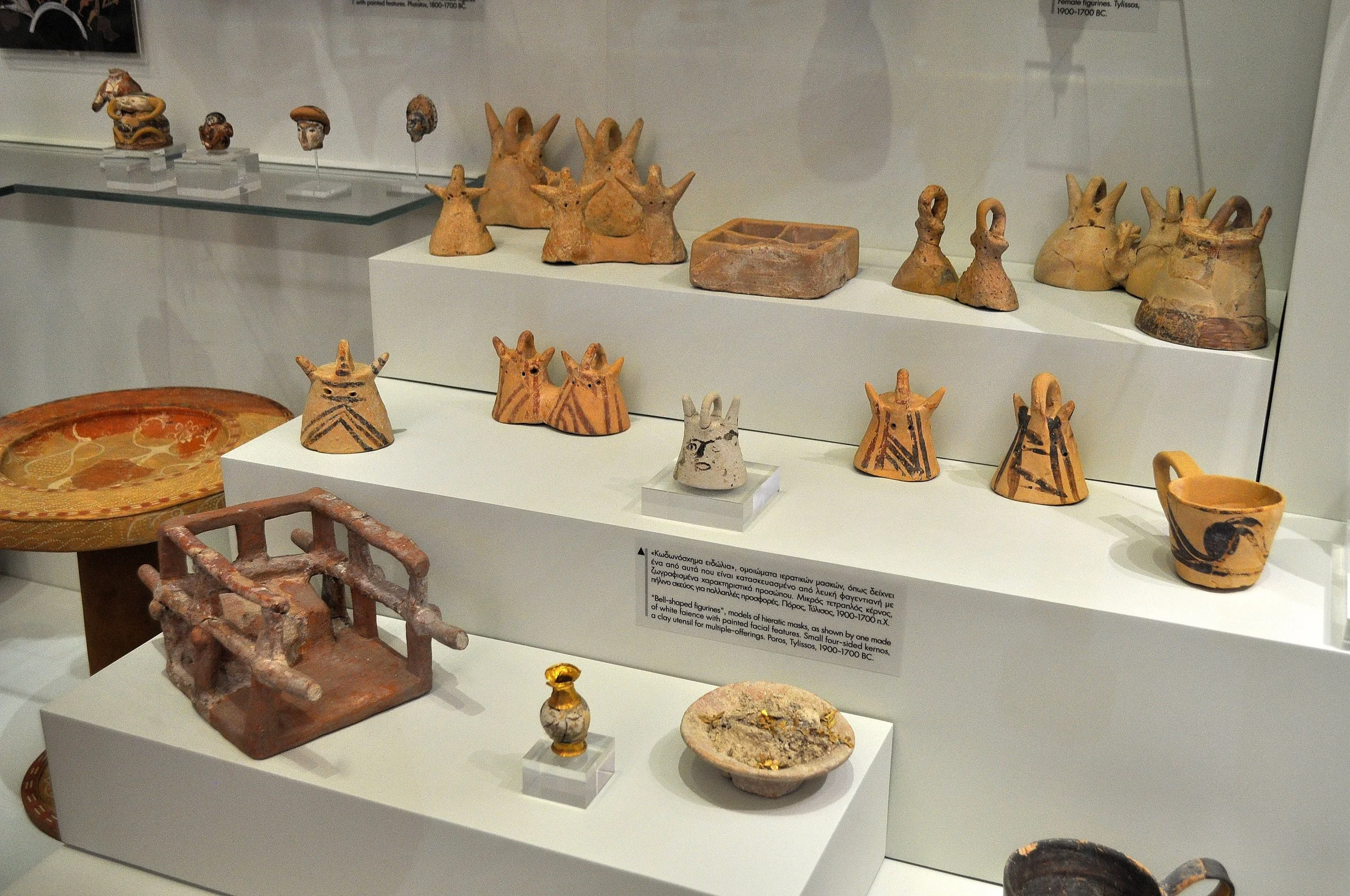

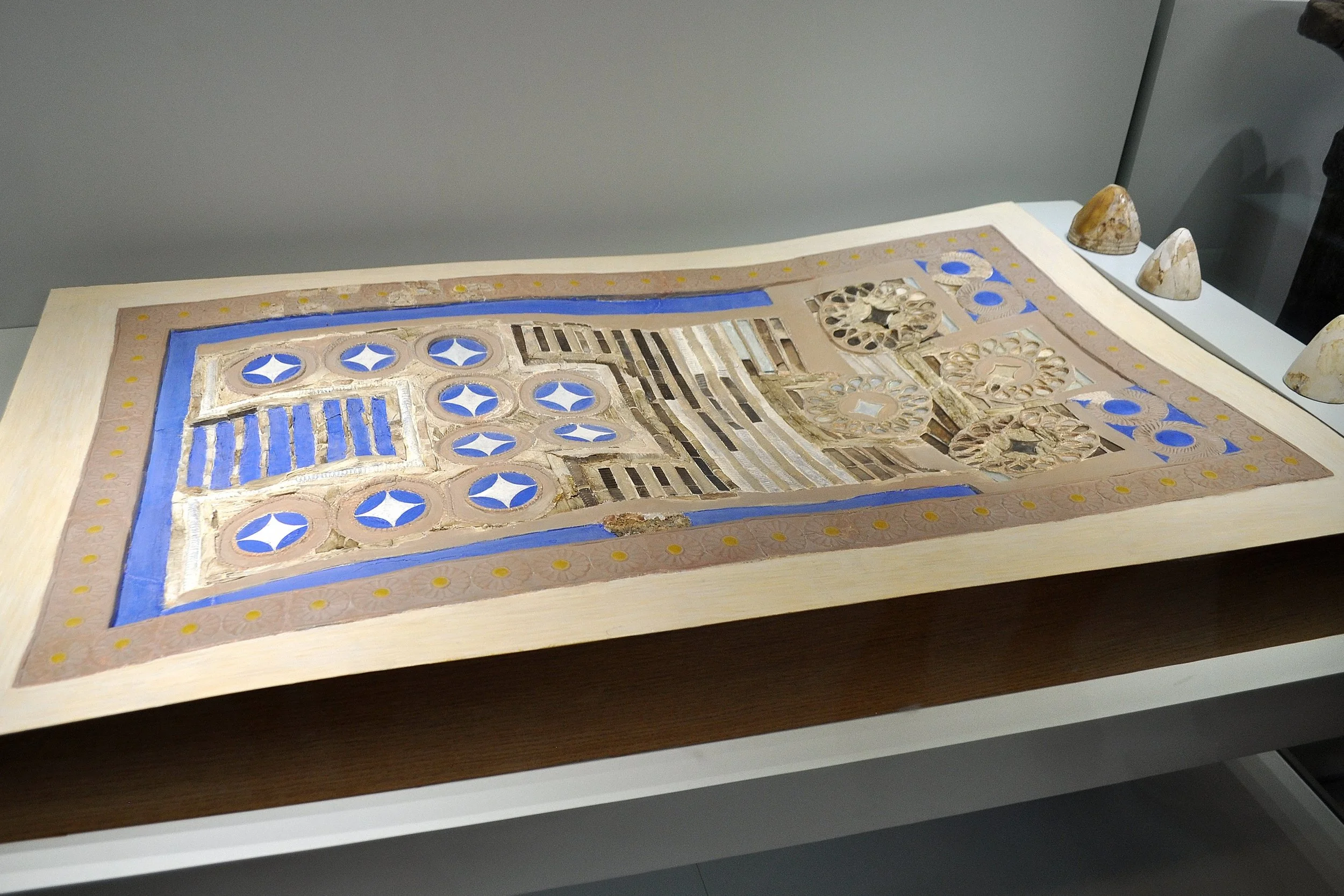


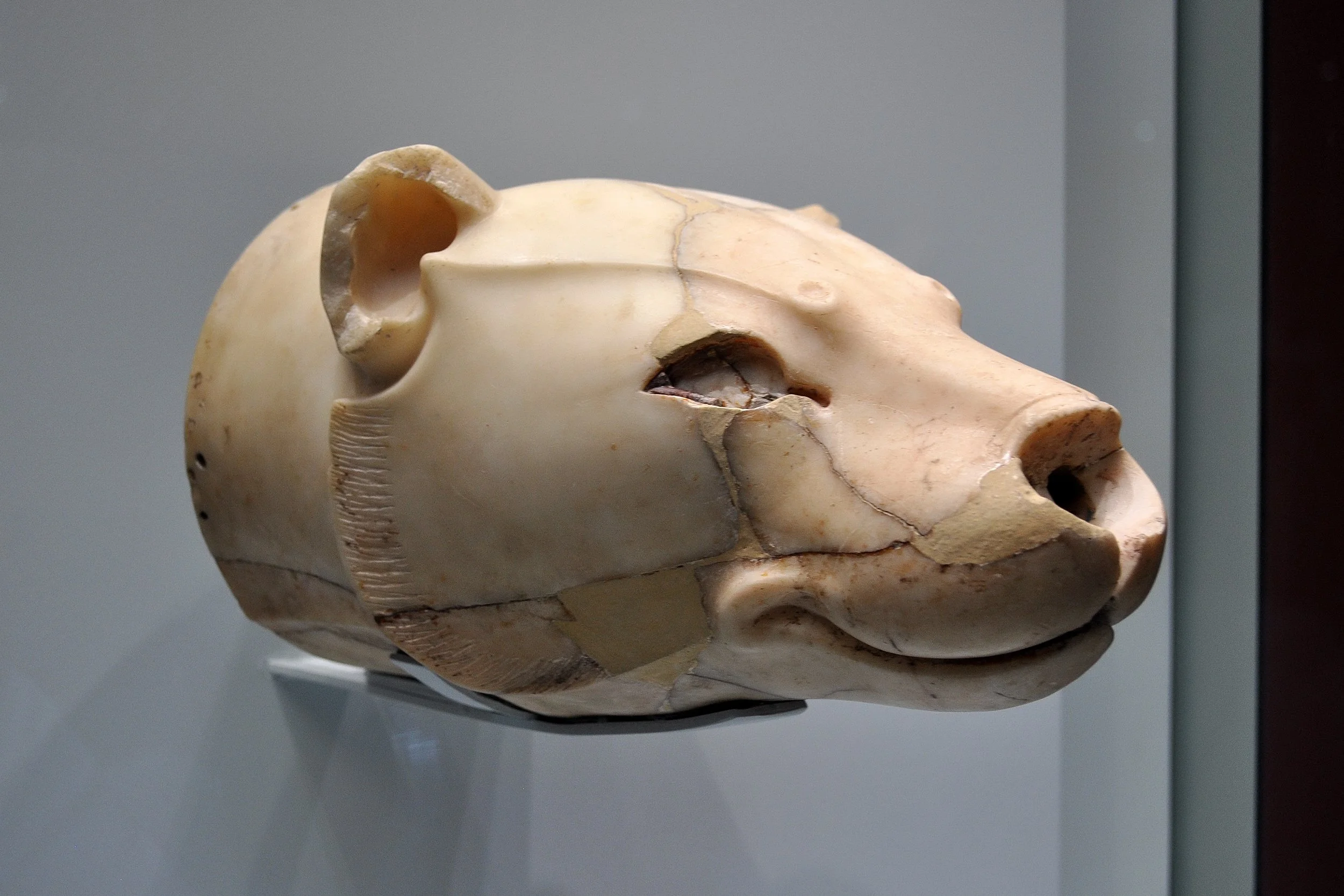

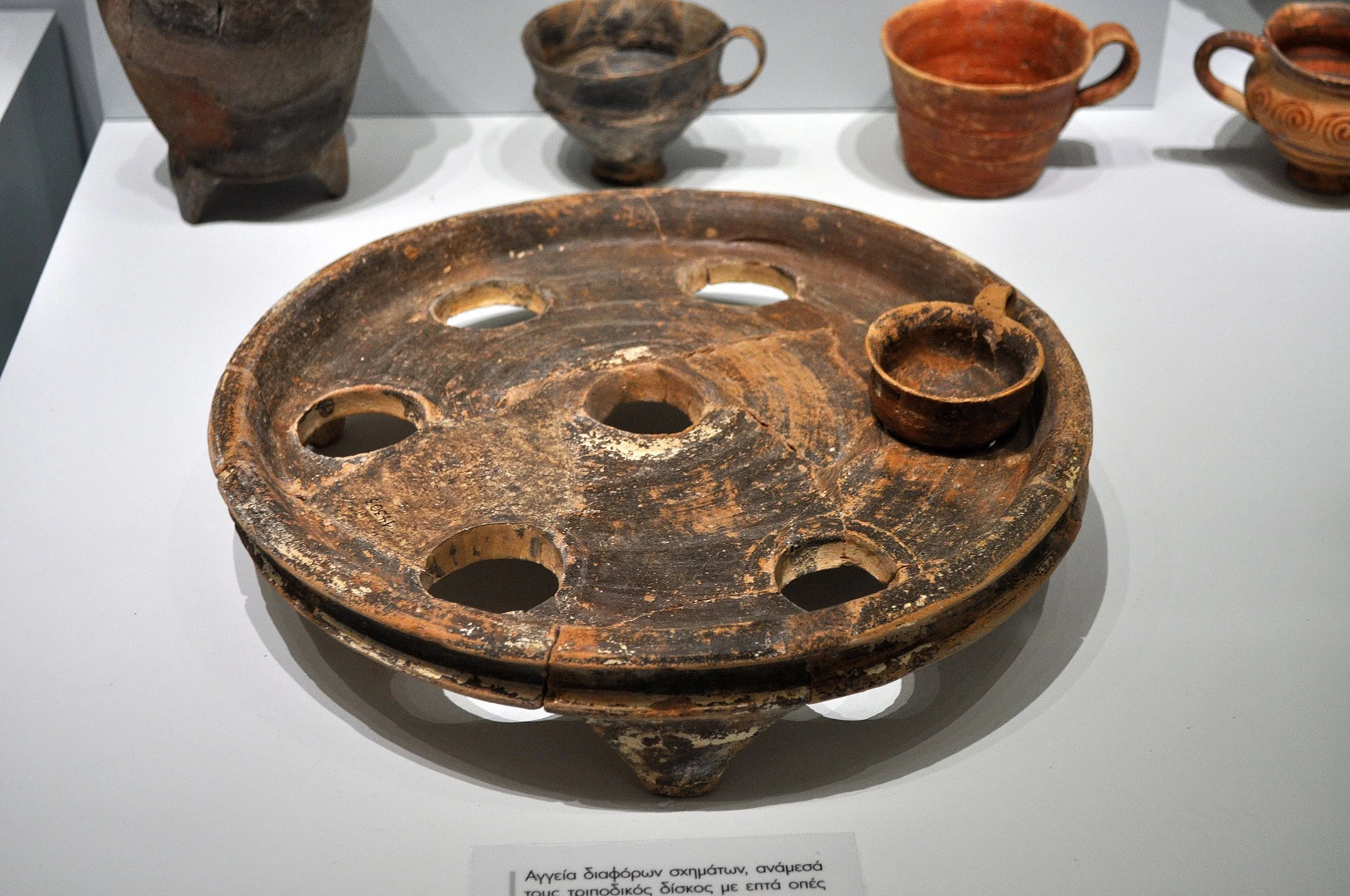

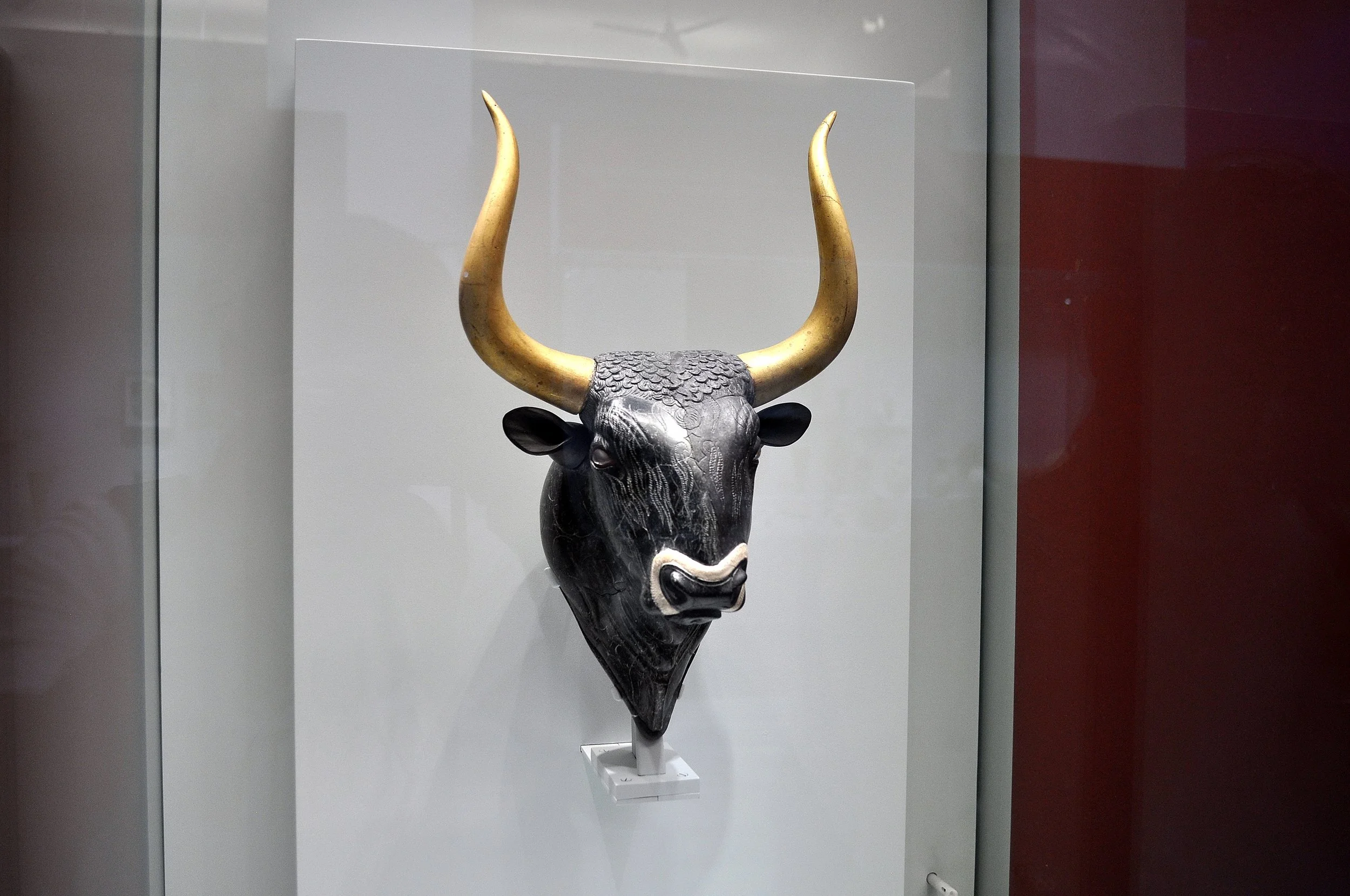
Piero: one of the most striking pieces is the bull’s head rhyton, carved in stone with extraordinary attention to detail, featuring inlaid eyes and horns that were probably once covered in gold. It was used in ritual ceremonies, perhaps to pour wine or blood during sacred offerings.
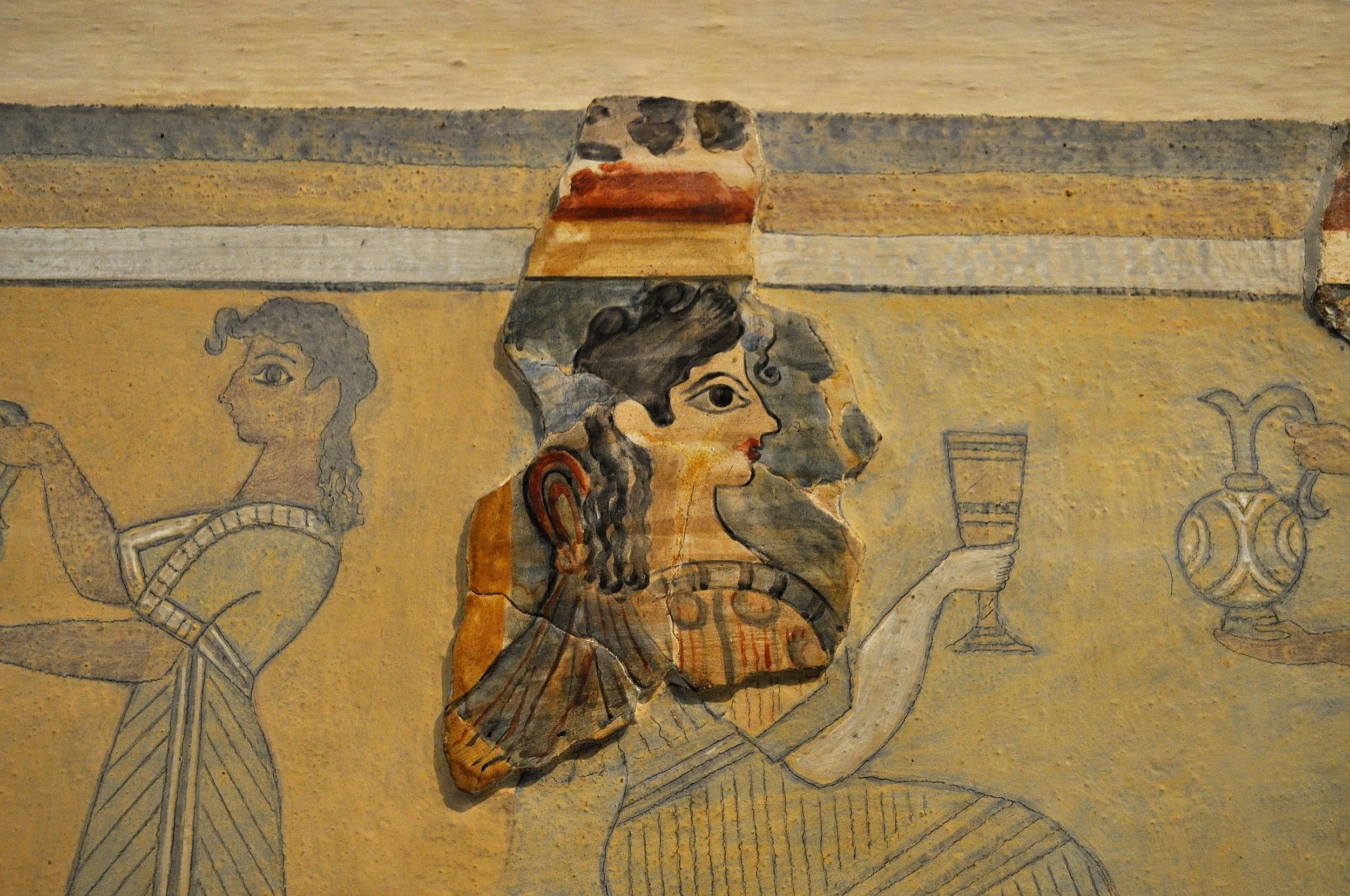
Angela: from here, the route opens into the fresco galleries. We encounter the scenes we saw at Knossos, but here they appear as they truly were: the Prince of the Lilies walking among flowers, the Bull-Leaping Fresco with those bodies suspended in mid-air, and the Parisienne with her proud gaze and perfectly defined makeup. These are images that reveal the elegant, dynamic, and almost dancing soul of the Minoan civilization.




Piero: there are also the Linear A and Linear B tablets, the religious inscriptions, the architectural models, and the votive offerings from the mountain sanctuaries. Everything is designed to tell a long and coherent story, but also to restore the emotion found in every single detail.



Angela: and now I can say it: this museum has deeply impressed me. It is not just a collection of objects: it is an experience. Carefully curated, elegant, and engaging. It feels as if it has taken us by the hand and guided us into the minds of the Minoans, into their vision of the world, of the sacred, and of life itself.
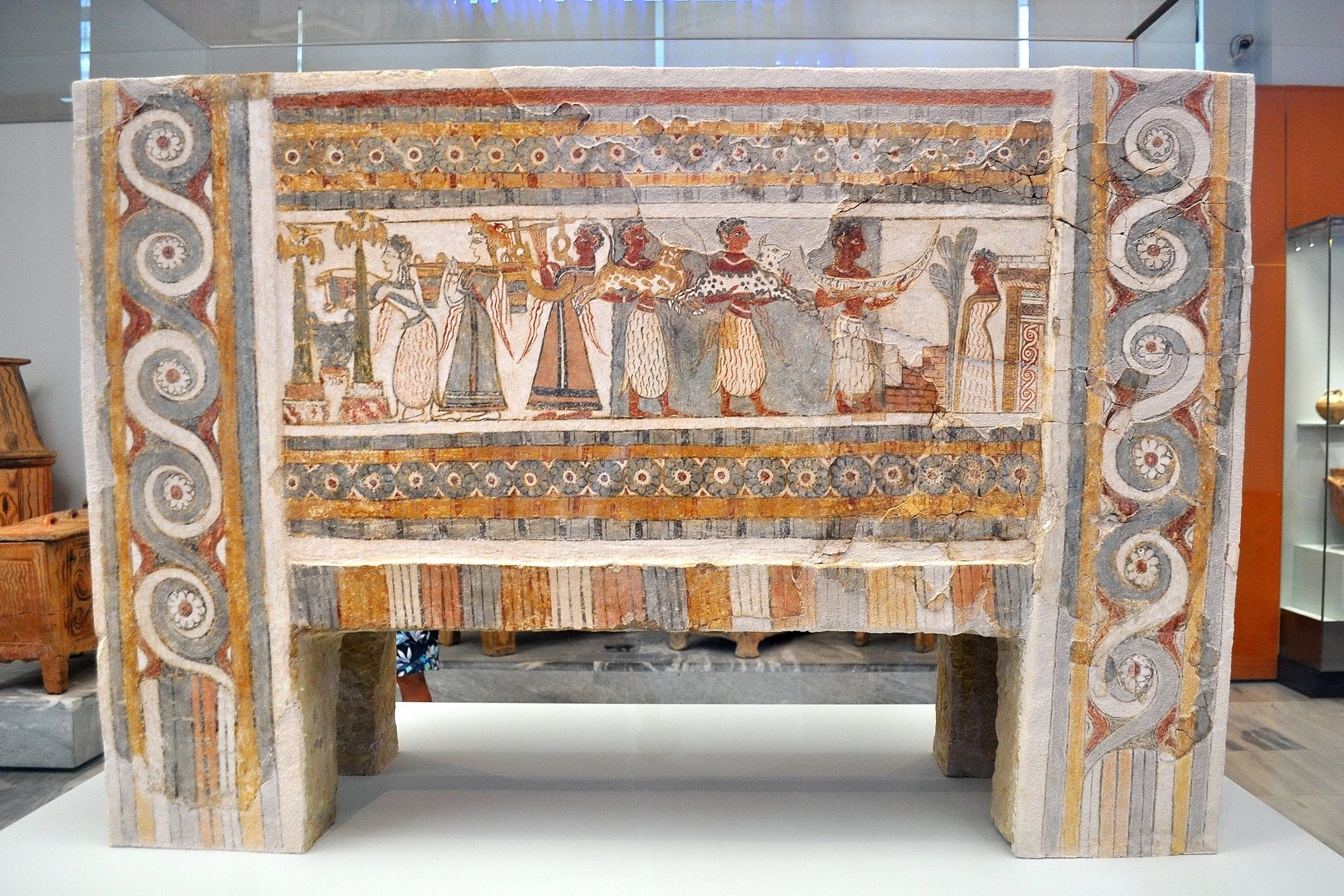
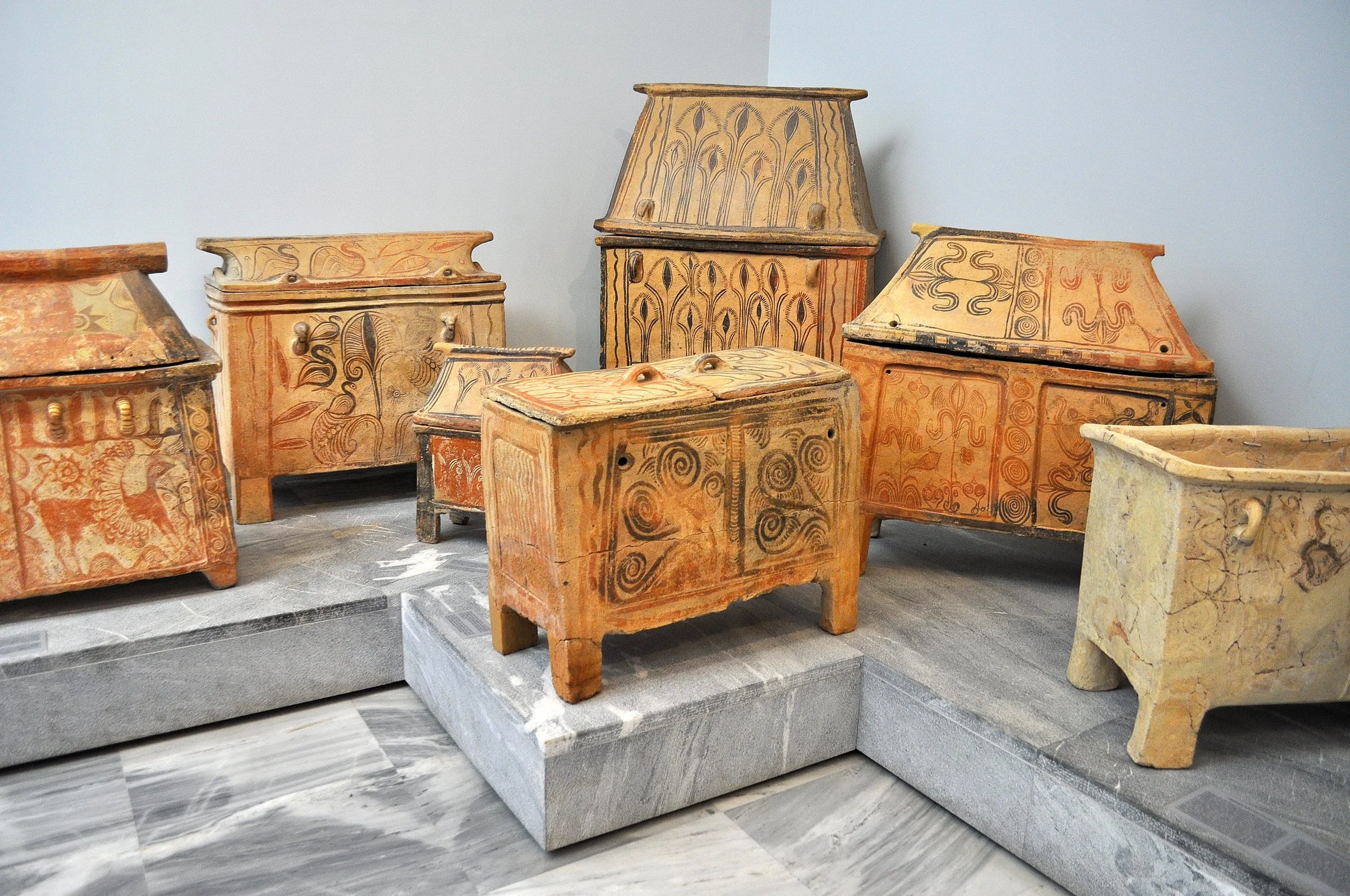
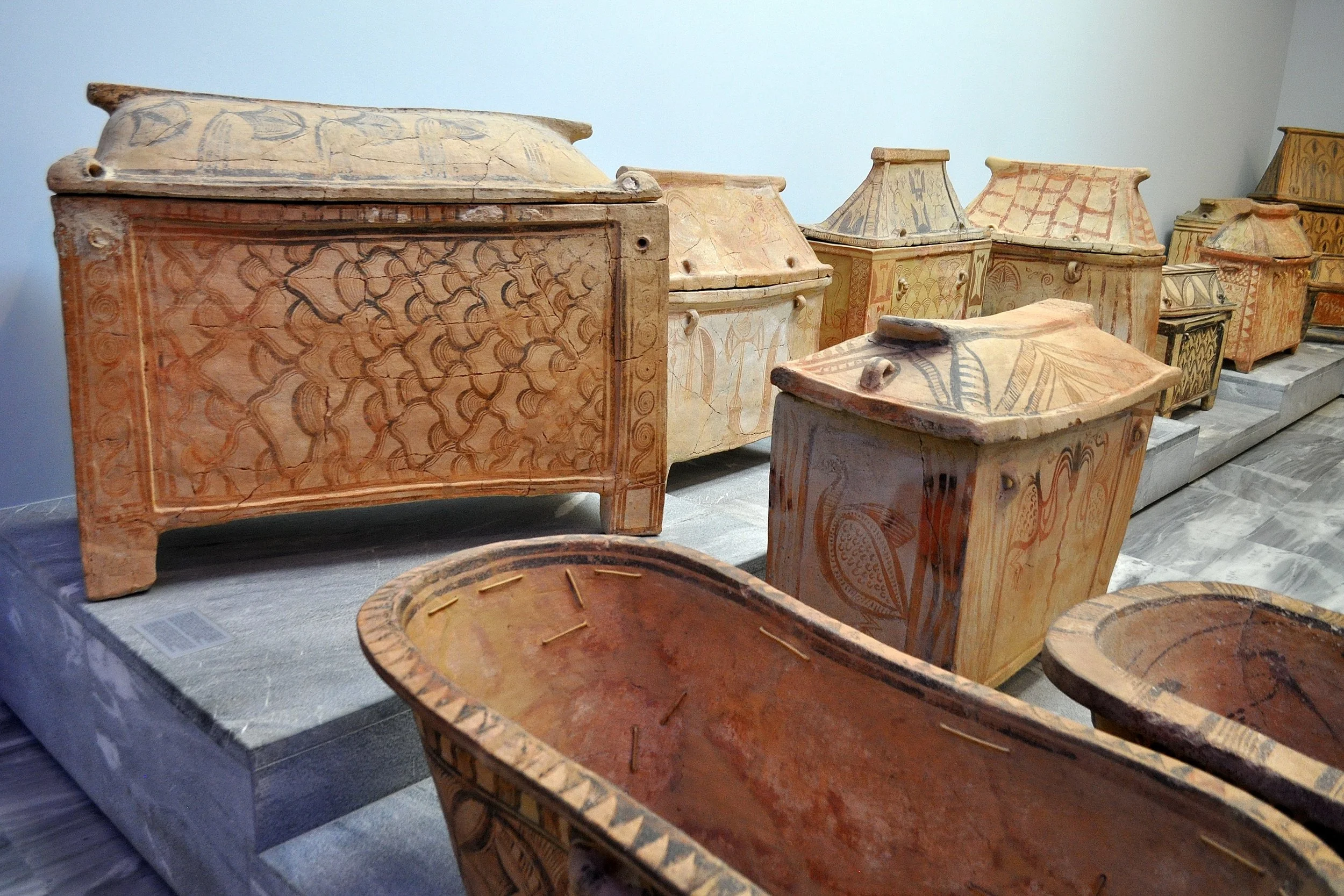


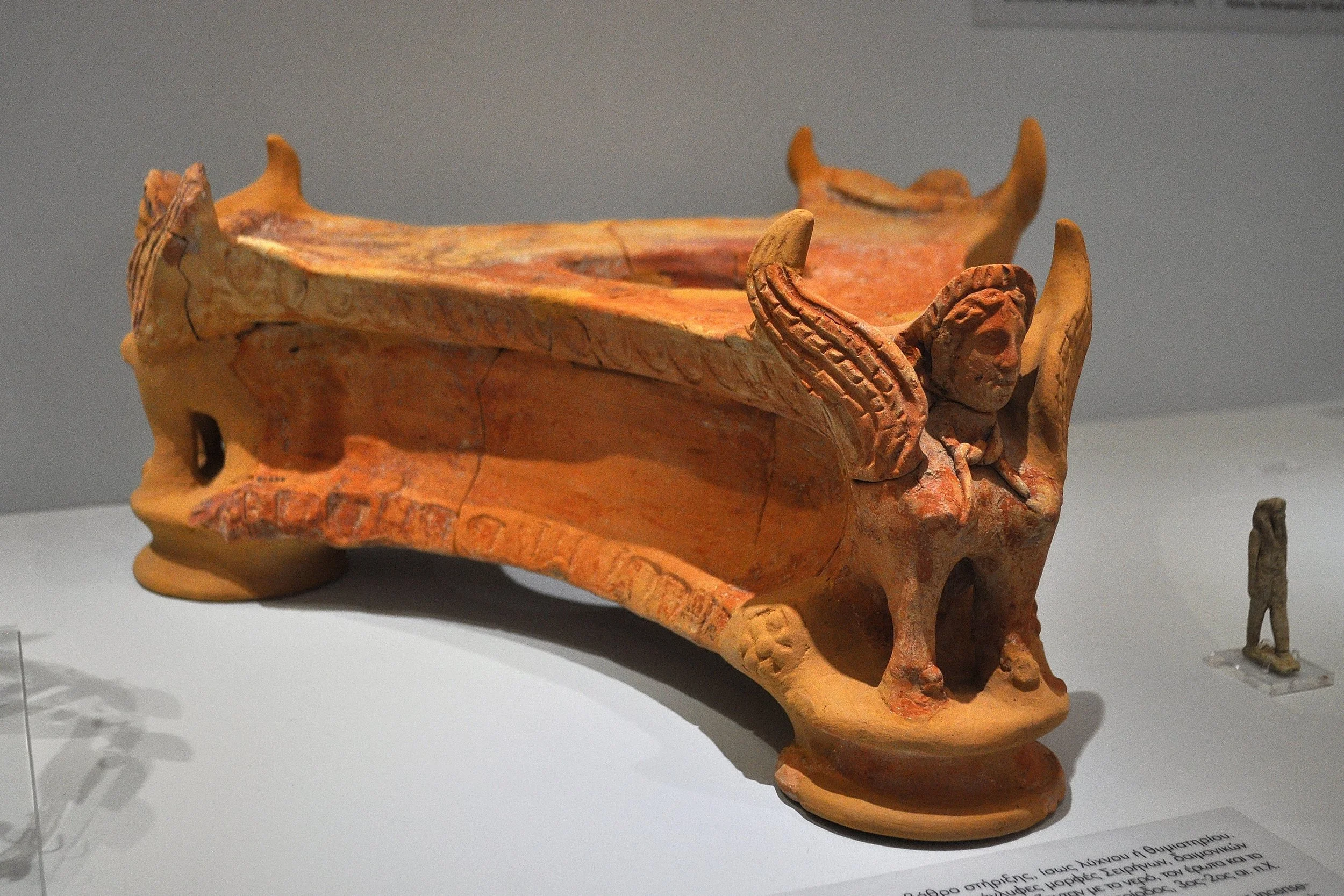





Piero: we entered to see ancient objects. But we left having truly discovered the Minoans in depth. After this experience, they are no longer just an ancient civilisation — they have become real. And that is why we will never forget this museum. Enjoy it with us in this video:
Angela: as soon as we left the museum, we headed towards the sea.
Piero: we begin our visit to the city. A necessary premise: it is not an unforgettable city, but it is certainly worth spending a few hours here after visiting the museum.
Angela: our visit to Heraklion begins at the harbour, with its lively scene of colourful boats, fishing nets, fishermen arranging their catch, and a salty breeze filling the air.
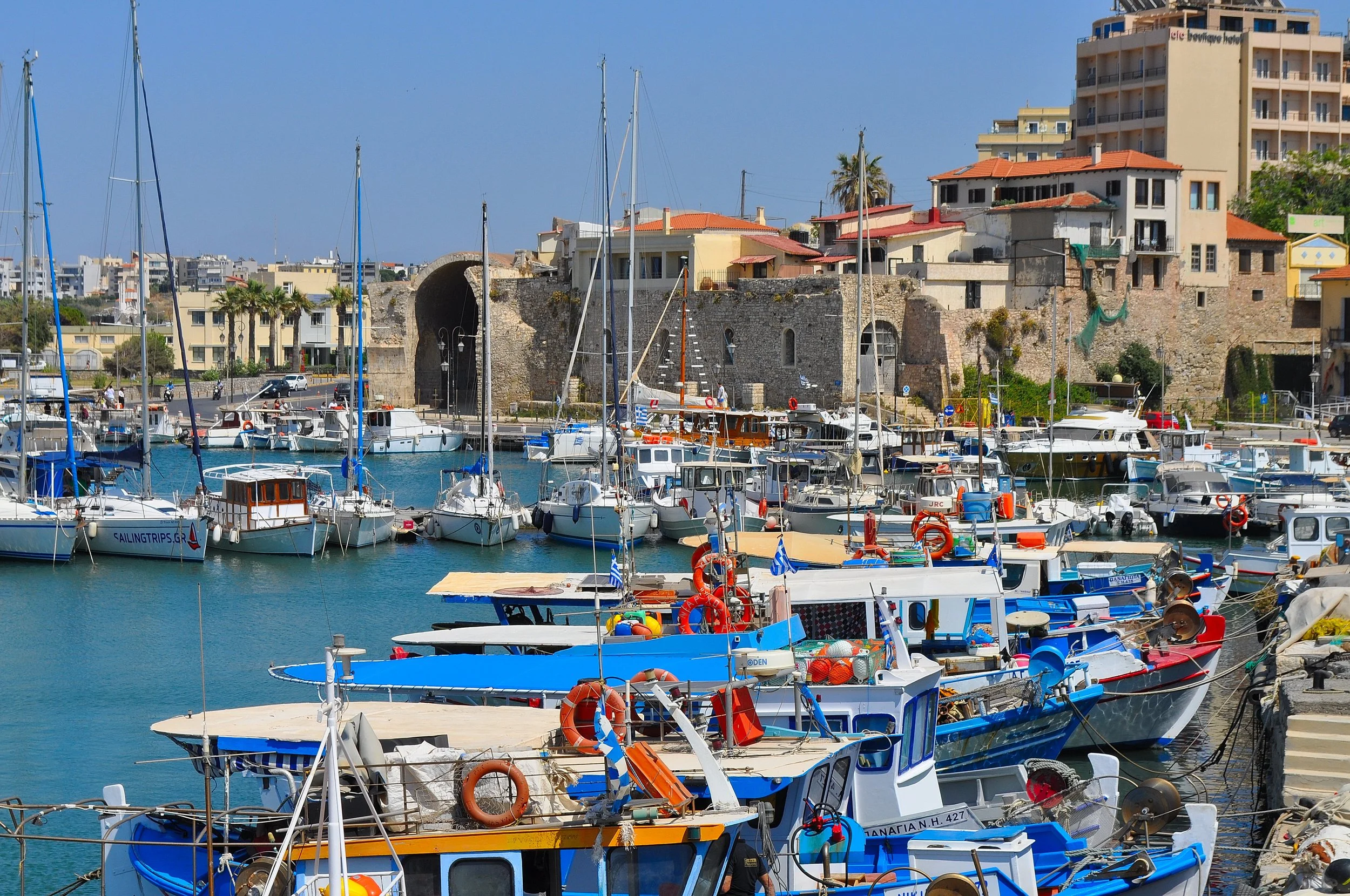
Piero: the harbour is a place of authentic everyday life. Seagulls circle overhead, the boats gently sway on the water, and in the background rises the massive silhouette of Koules Fortress. A silent guardian watching over the horizon.
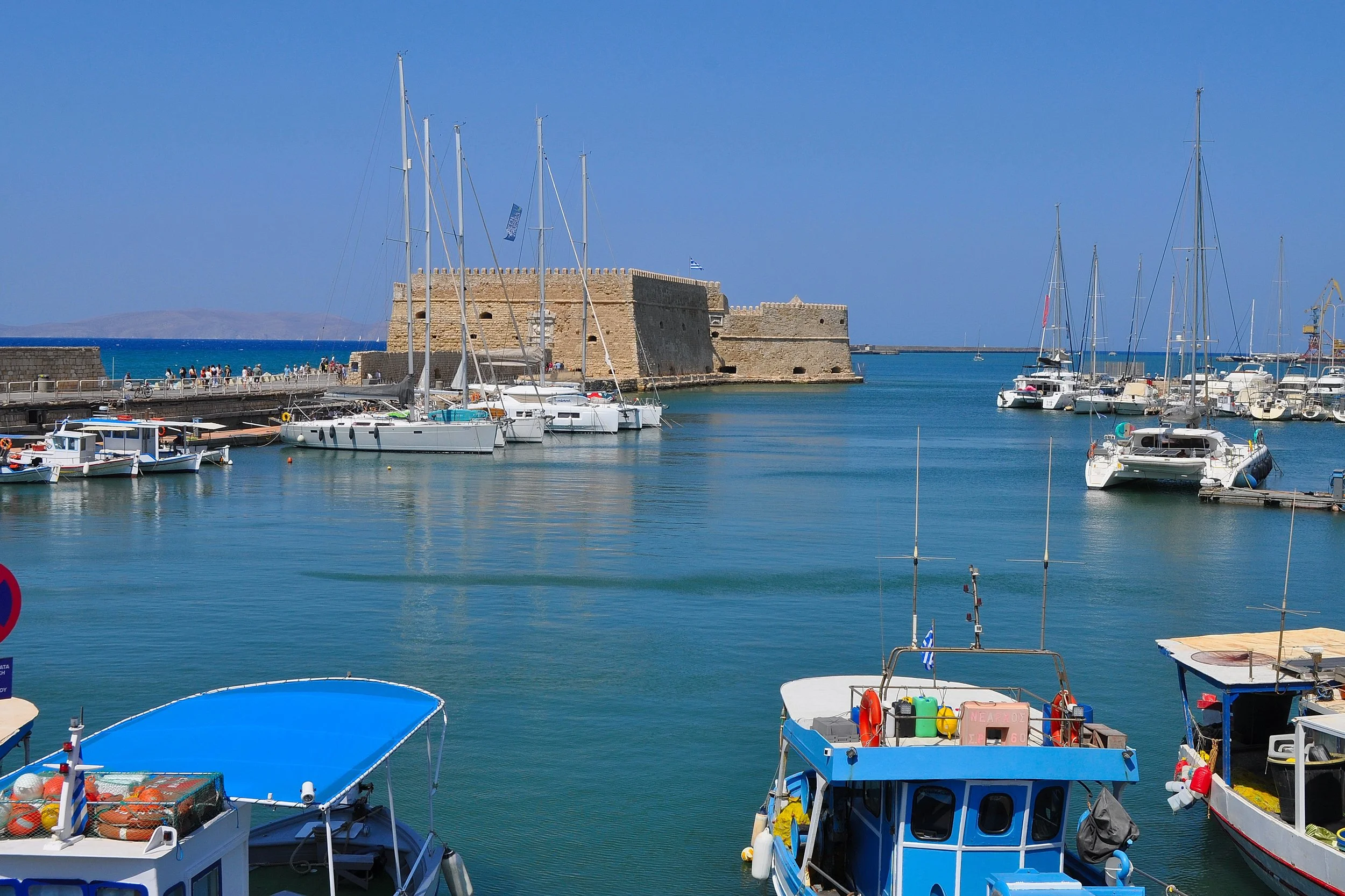
Angela: we walked along the pier, enjoying the scent of the sea and experiencing the slow, ancient rhythm of this harbour—a crossroads of stories and cultures. The wooden boats, the vibrant colours, and the fishermen chatting together: everything tells the story of a tradition that is still alive today.
Piero: leaving the harbour behind, we ventured towards the historic centre. Our first stop was the Cathedral of Saint Titus, dedicated to the first bishop of Crete.
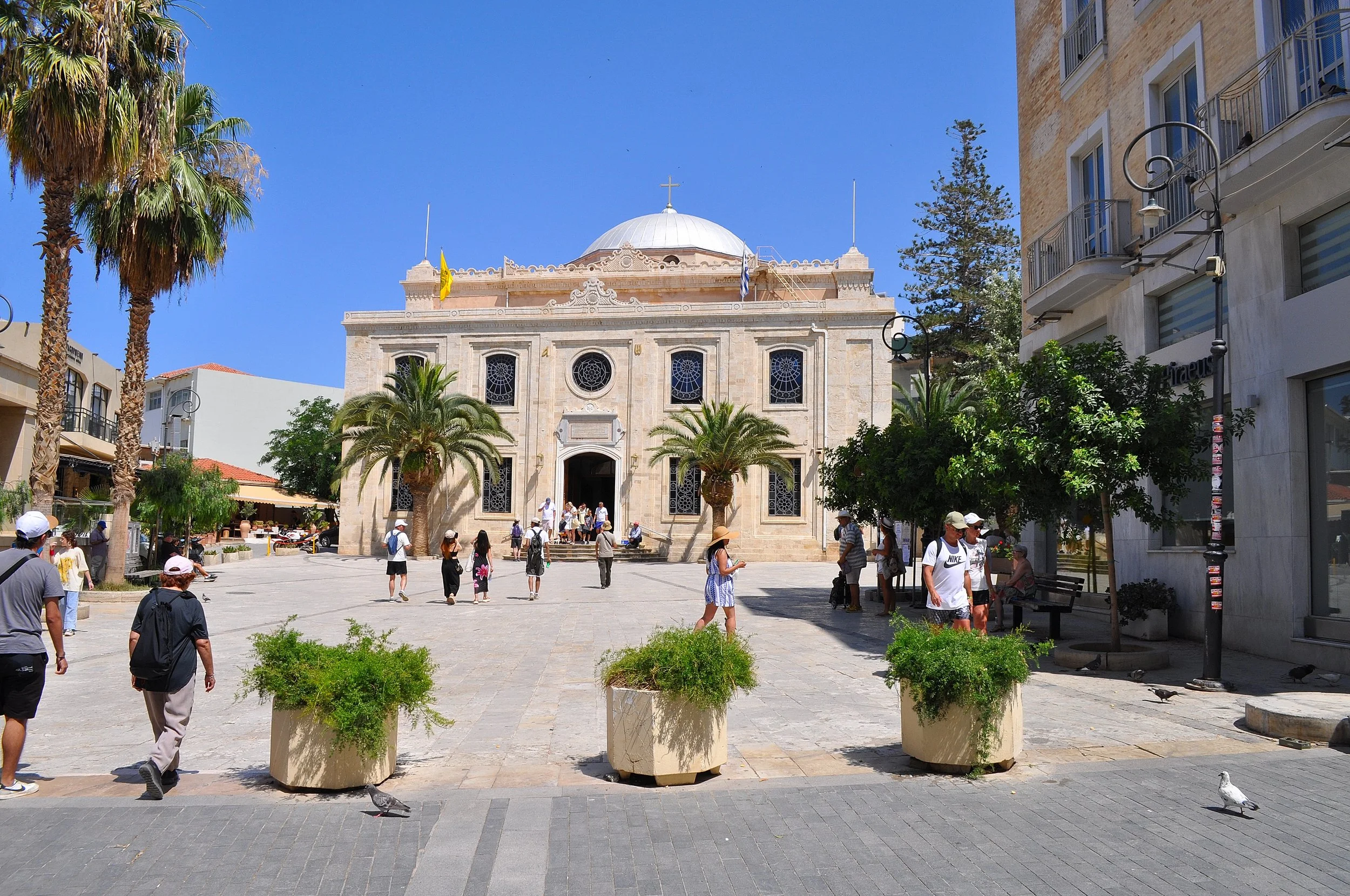
Angela: a church filled with light and spirituality, with Byzantine icons and an atmosphere that invites you to slow down and reflect. We were struck by the history of this cathedral, which has been destroyed and rebuilt several times, just like the city itself.


Piero: from there, we reached the Venetian Loggia, an elegant Renaissance building with arcades and columns, once the seat of Venetian power and today the administrative heart of the city.
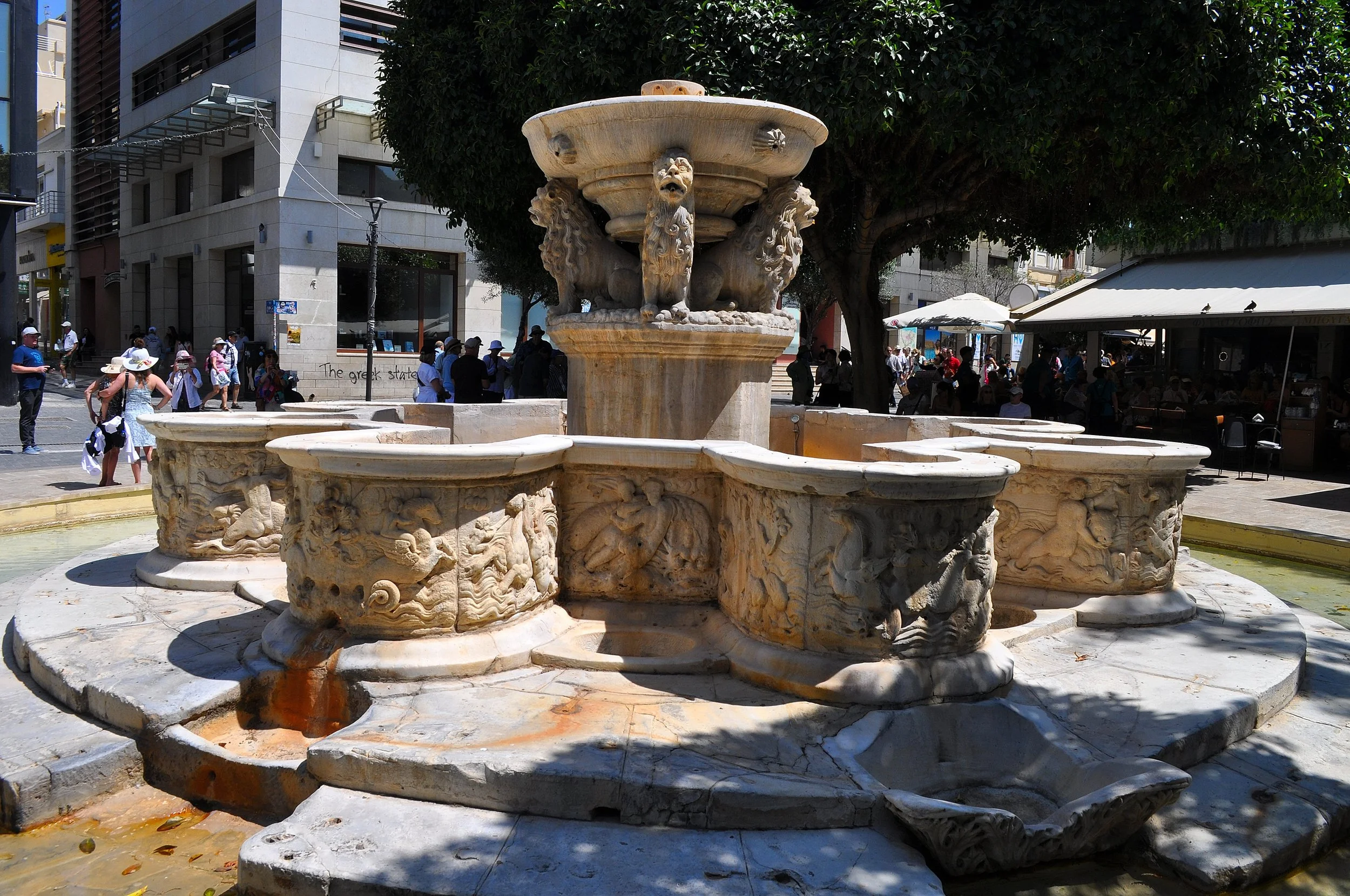
Angela: and finally, our walk led us to the Morosini Fountain, with its four carved lions that still pour out fresh water today. Around it, the lively atmosphere of small markets, cafés, and people enjoying everyday city life.
Piero: with the sun now high above us, we returned to the harbour for a slow, almost meditative walk. Koules Fortress, seen up close this time, revealed all of its impressive strength and grandeur.


Angela: we walked along its walls, listening to the sound of the waves crashing against the rocks, while the powerful afternoon sun painted it with a deep ochre glow. The perfect ending to our visit.
Piero: Heraklion is all of this: a mix of life, history, sea, and resilience. A city that, despite everything, takes you by the hand and leads you from the past to the present in a single, unforgettable breath.
Agios Nikolaos: between myth and golden light
Discover the beauty of Agios Nikolaos, one of Crete’s most elegant seaside towns. Stroll along the waterfront, admire the legendary Lake Voulismeni, explore its charming shopping streets, bronze sculptures inspired by Greek mythology, and enjoy unforgettable sunset views over the harbour. A relaxing journey through one of the island’s most picturesque destinations.
Angela: from one city to another. We arrive in Agios Nikolaos in the late afternoon, just as the sun begins to disappear behind the hills. The air becomes softer, and the light starts to bathe everything in shades of gold and copper. It is the perfect time for a stroll.

Piero: the waterfront of Agios Nikolaos is elegant yet relaxed. Very little noise, the occasional burst of laughter, the scent of the sea, and the slow rhythm of footsteps along the promenade beside the water. From here, the view opens onto Lake Voulismeni, a body of water that seems to have been carved into the very heart of the town.
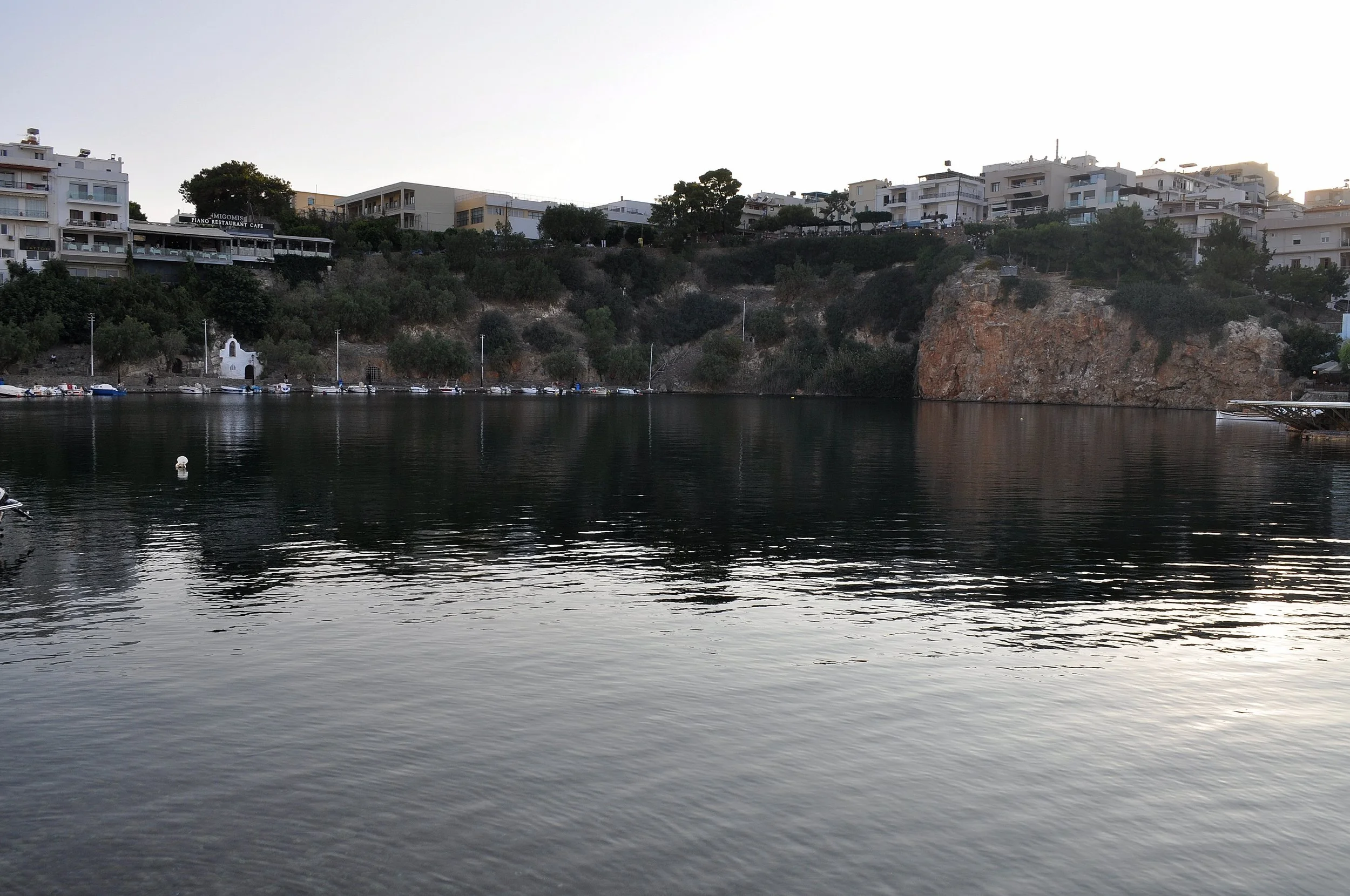
Angela: the lagoon is a real surprise. According to myth, Athena and Artemis used to bathe here. It is deep and mysterious, with its steep, dark edges, while the café terraces seem to float above the water. Seagulls circle overhead, and the reflections gradually turn shades of pink.
Piero: along the promenade, two modern bronze sculptures catch our attention. The first represents a horn. It may not be extraordinary from an artistic point of view, but its meaning is remarkably profound.
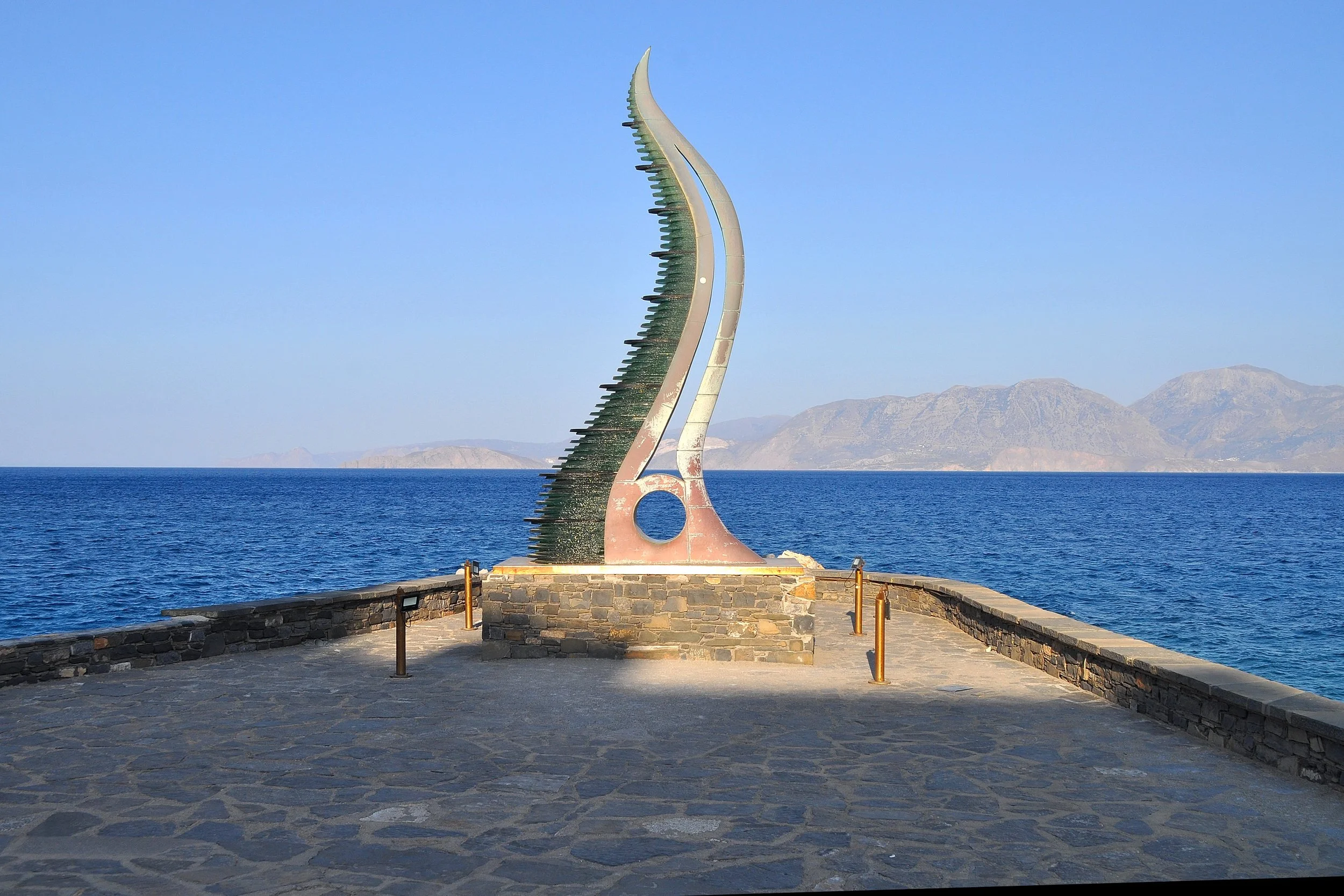
Angela: according to the myth of the birth of Zeus, the father of the gods, who was hidden in a cave, he was nursed by a goat named Amalthea. One day, while the young Zeus was playing with her, he accidentally broke one of her horns. To reward her and as a sign of gratitude, Zeus blessed the broken horn so that whoever possessed it would always find everything they desired within it.
Piero: and so the myth of the Horn of Amalthea, or the Cornucopia, was born—an eternal symbol of abundance. The sculpture represents the Horn of Amalthea and was designed and created by Nikos and Pantelis Sotiriadis in 2000.
Angela: the other sculpture is a stylised female figure, simple yet powerful, with her arms raised towards the sky and her proud gaze fixed on the horizon.

Piero: this statue is also linked to the myth of Zeus in Crete. The father of the gods fell in love with a beautiful princess named Europa and approached her disguised as a magnificent white bull while she was playing with her attendants. Enchanted by the strength and gentle appearance of the animal, the young woman began to stroke it and play with it, before eventually climbing onto its back. At that moment, Zeus, still in the form of the bull, rushed into the sea and abducted her, carrying the tearful Europa all the way to Crete.
Angela: the sculpture was designed by the Cretan film director Nikos Koundouros and, like the Horn of Amalthea, was created by Nikos and Pantelis Sotiriadis.
Piero: in the distance, on the horizon, we can make out an island: Spinalonga. And immediately our thoughts turn to its remarkable history. A small piece of land, fortified by the Venetians, but known above all for being Europe's last leper colony, which remained in operation until 1957.

Angela: it is a place we did not visit, yet it seems to hover over this entire area like a lasting memory. A small island marked by suffering and dignity, now remembered through books, documentaries, and novels. It is silent, yet deeply present.


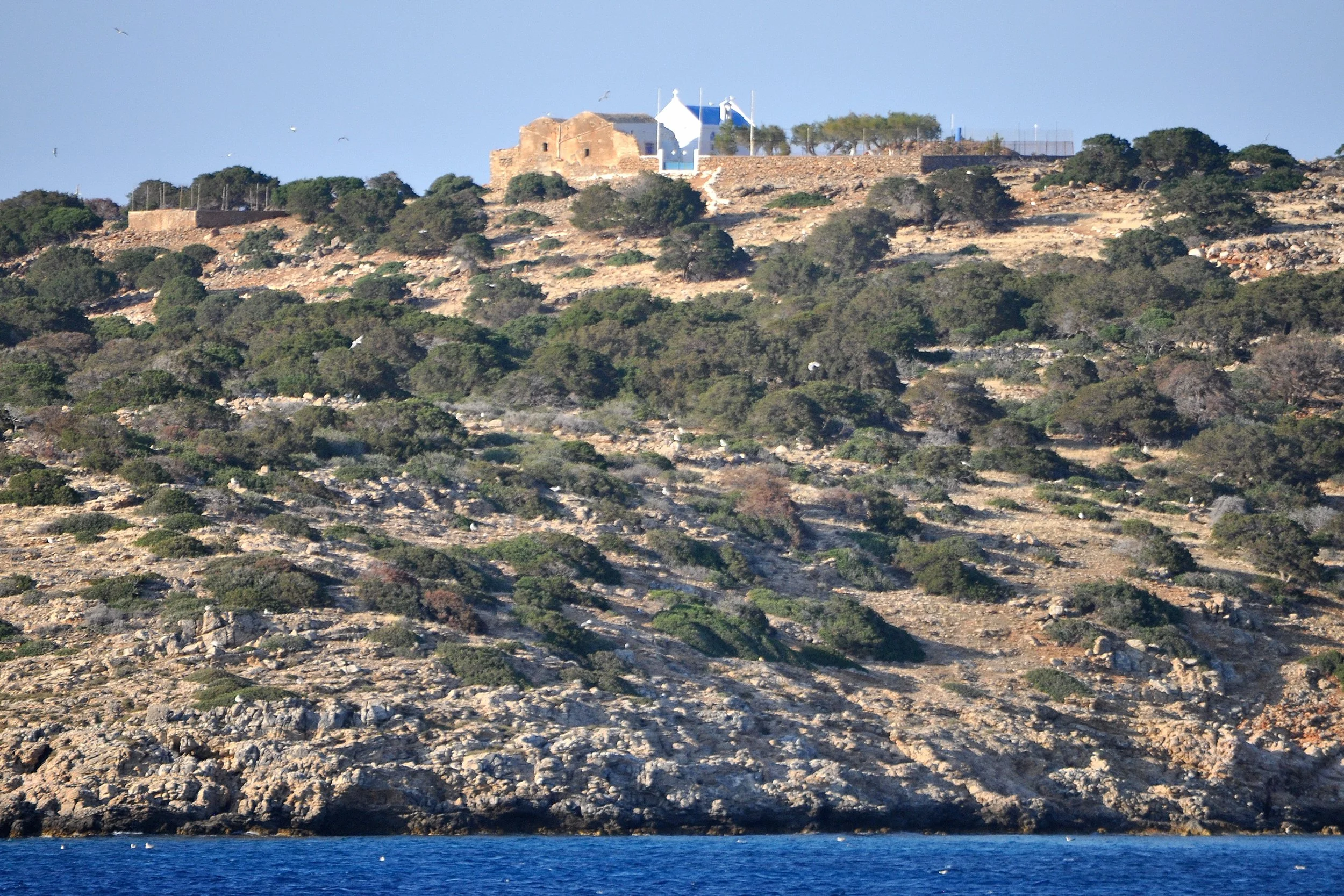
Piero: meanwhile, the light changes once again. The lagoon reflects the sky like a liquid mirror, while the cafés and restaurants along the waterfront begin to glow with warm evening lights. We sit down for an aperitif — naturally with a glass of ouzo.

Angela: and from that terrace overlooking the water, we realise just how special Agios Nikolaos truly is. There is a natural elegance to this town: in its spotless streets, its refined boutiques, and the art galleries tucked away among the narrow lanes of the historic centre.

Piero: and then there are the town's small beaches, with their sheltered coves where the water is as clear as crystal and boats glide silently between the mooring buoys. Perfect places for an impromptu swim or simply to relax under the sun.
Angela: the lagoon, in particular, has something magical about it. In the evening, it transforms completely: the rocks grow darker, the lights from the restaurants shimmer across the water like flickering lanterns, and the circular basin seems to close like a dreaming eye. It is the hidden heart of this town.

Piero: Agios Nikolaos doesn't need to amaze you at first sight—it wins you over quietly, with elegance and discretion. And as the day fades over the lagoon, we realise we are exactly where we are meant to be, at exactly the right moment.
Angela: the many wonderful restaurants tempt you to enjoy a fresh seafood dinner by the water, while the colourful shopping streets are a pleasure to explore. Together, they make Agios Nikolaos a beautiful postcard of a different side of Crete... although, unfortunately, the prices here are different too!
The beaches of Crete, between memory and dream
Discover the magic of the Crete beaches, from the golden sands of Matala and the relaxing shores of Malia to the legendary places still waiting to be explored: Elafonissi, Balos, Preveli, Vai and Seitan Limania. A journey through crystal-clear waters, myths, hidden coves and unforgettable Mediterranean landscapes. Because in Crete, every beach tells a story.
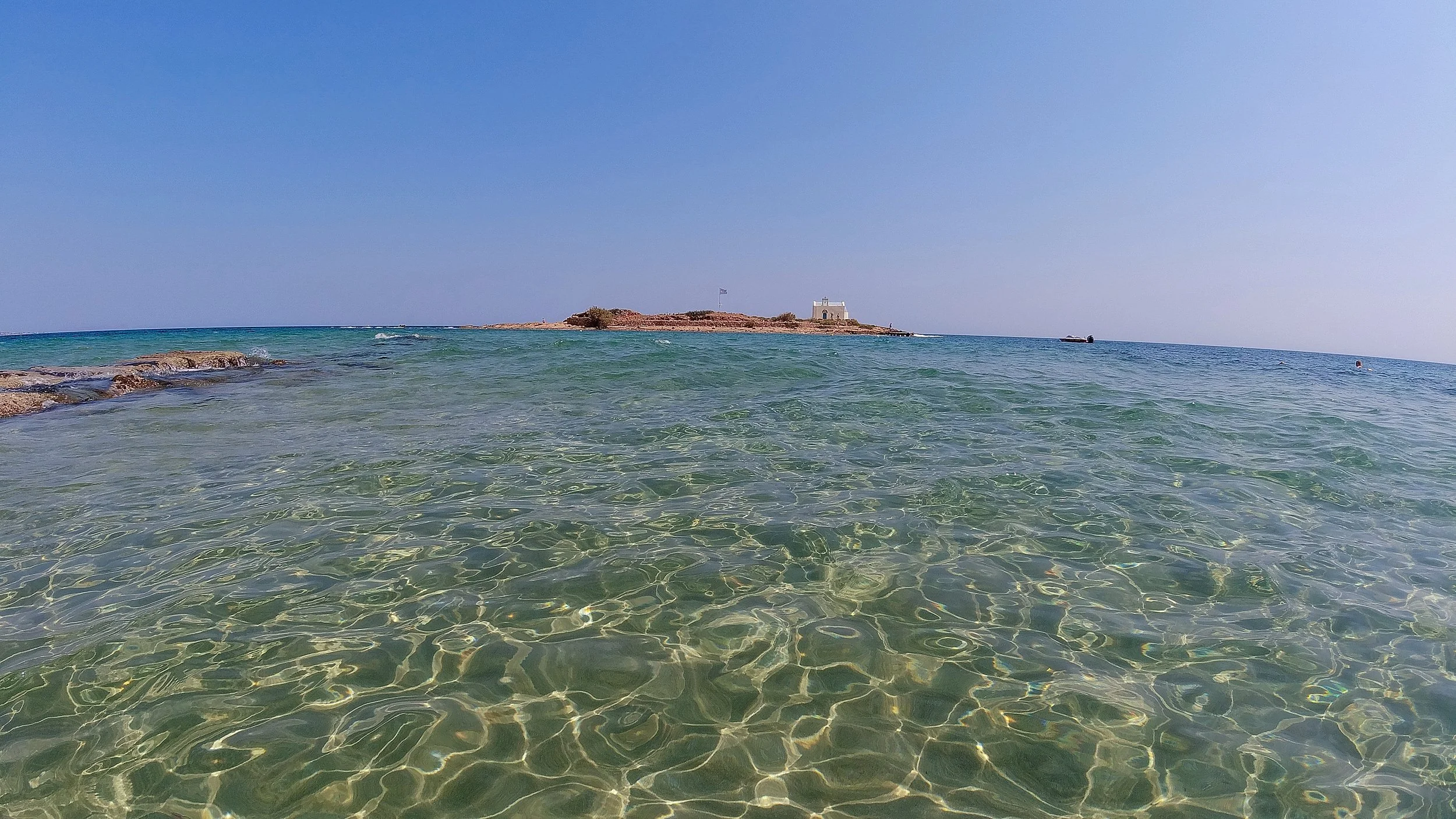
Piero: there is one thing that accompanied us everywhere in Crete, at every stop, every break, every glance: the sea. Vast, crystal clear, and ever-changing. A sea that sometimes glows emerald green, sometimes deep cobalt blue, and at other times reflects the golden light of the sunset like a liquid mirror. Always present, always different.
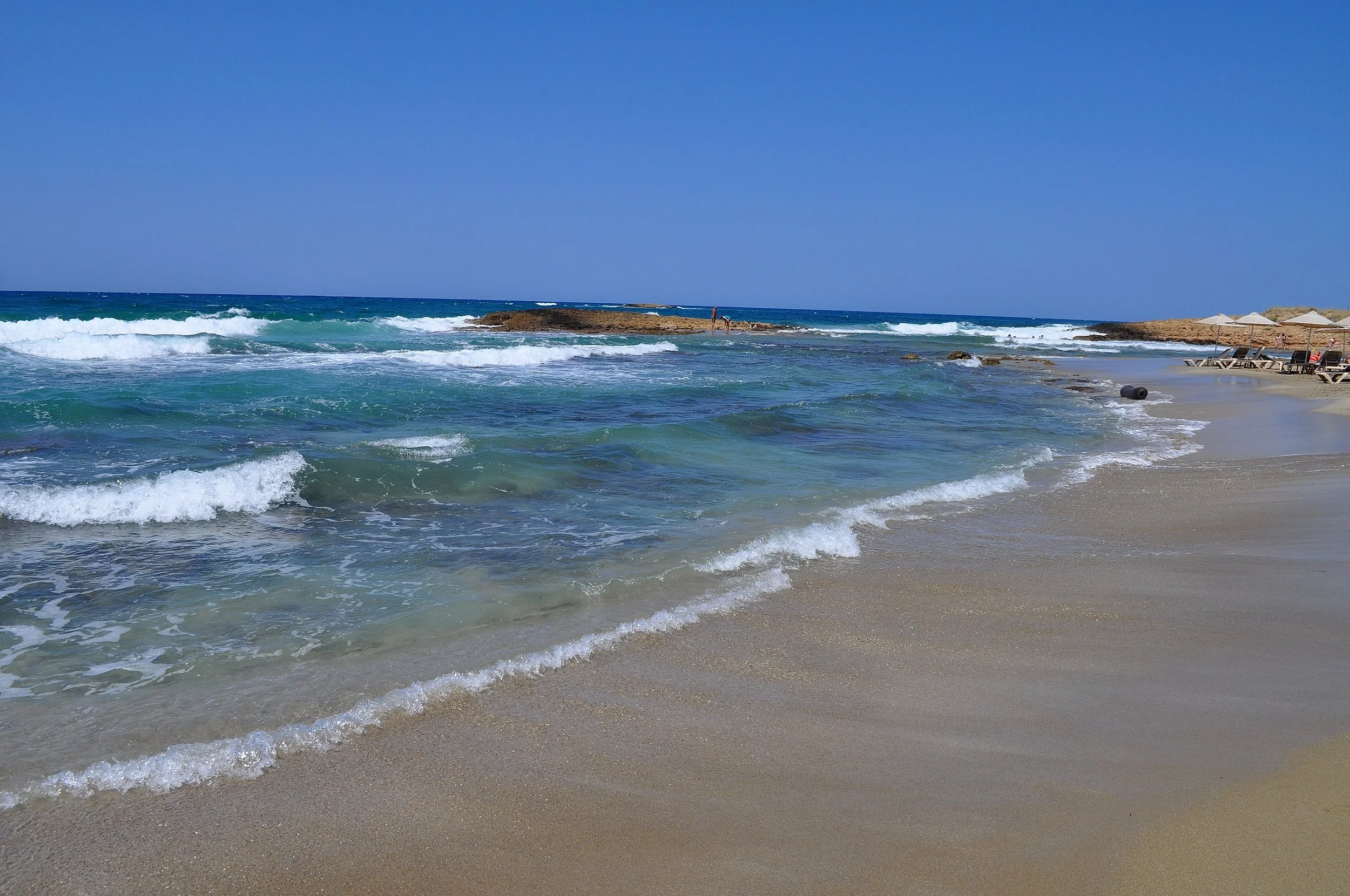
Angela: and it is not just an impression. Crete boasts more than 500 kilometres of coastline, with some of the finest water quality in the entire Mediterranean. In 2024, more than 120 beaches on the island were awarded the Blue Flag, the international recognition for outstanding water quality, safety, services, and environmental sustainability.
Piero: and we are not talking only about the famous beaches. Every corner of the island hides small coves, secluded inlets, and tiny beaches overlooking crystal-clear bays, many of them accessible only on foot or by boat.
Angela: the sea of Crete is more than just scenery — it is the island's identity, its memory, its promise. It is the sea of myths and ancient trade routes, of fishermen and sailors, of invasions and departures. A sea that welcomes and protects, yet also tells the story of the rugged strength of this land.
Piero: and so every swim, every pause by the shore, every walk along the water's edge offered something different. A new shade of blue, a different breeze, a new feeling to take home. And now that we have returned, it is precisely that sea that we miss the most.
Angela: we spent a lot of time on the beach, but we actually visited only a few of Crete's most famous beaches.
Piero: but we certainly can't complain. We chose Matala.

Angela: that's true—beautiful and easy to reach.
Piero: Matala suddenly appears before you, framed by golden cliffs and a beach of soft sand. The first thing that catches your eye is the series of caves carved into the limestone cliff, like wide-open eyes overlooking the bay.
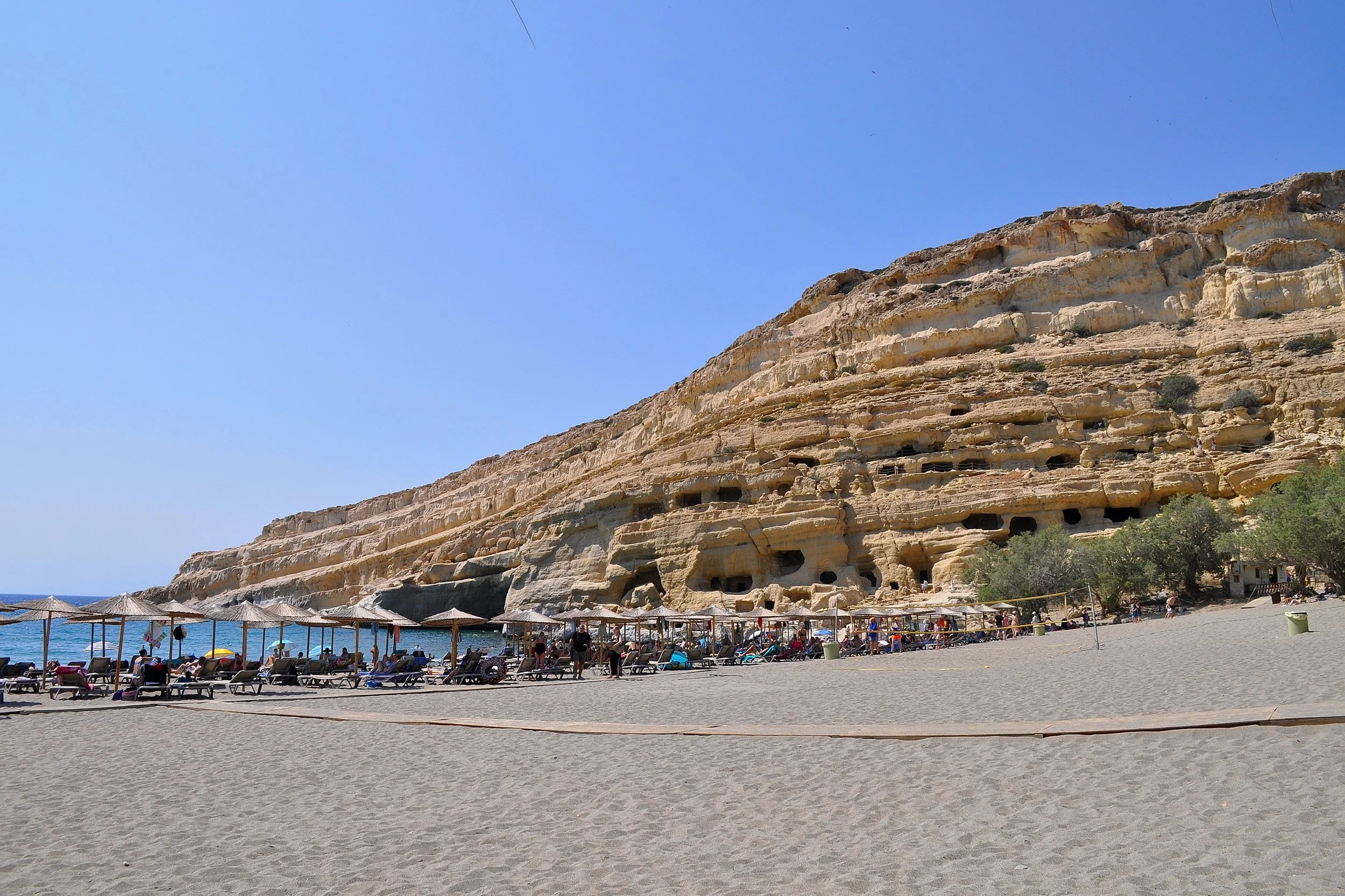
Angela: they may look natural, but many of them were actually carved by human hands. They date back to the Neolithic period and were later used by the Romans as tombs. Stepping inside them feels like travelling back in time: bare chambers, small windows, and niches carved into the rock. The sound of the sea drifts in softly, while the wind fills the air with an almost haunting atmosphere. It's a pity they've now been fenced off and require an entrance ticket. And the path leading to the top isn't exactly easy either—especially for someone who suffers from vertigo, like you.


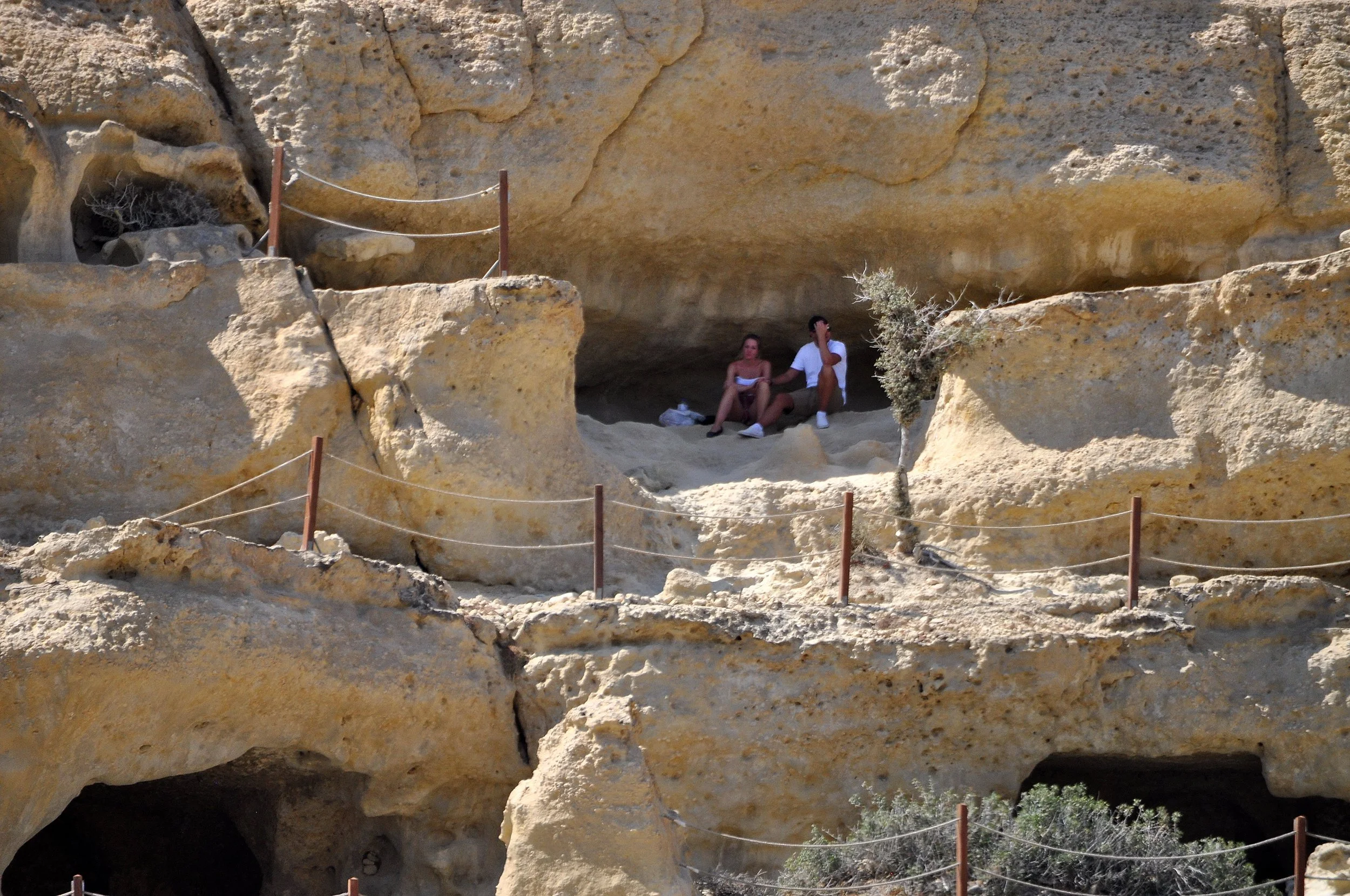


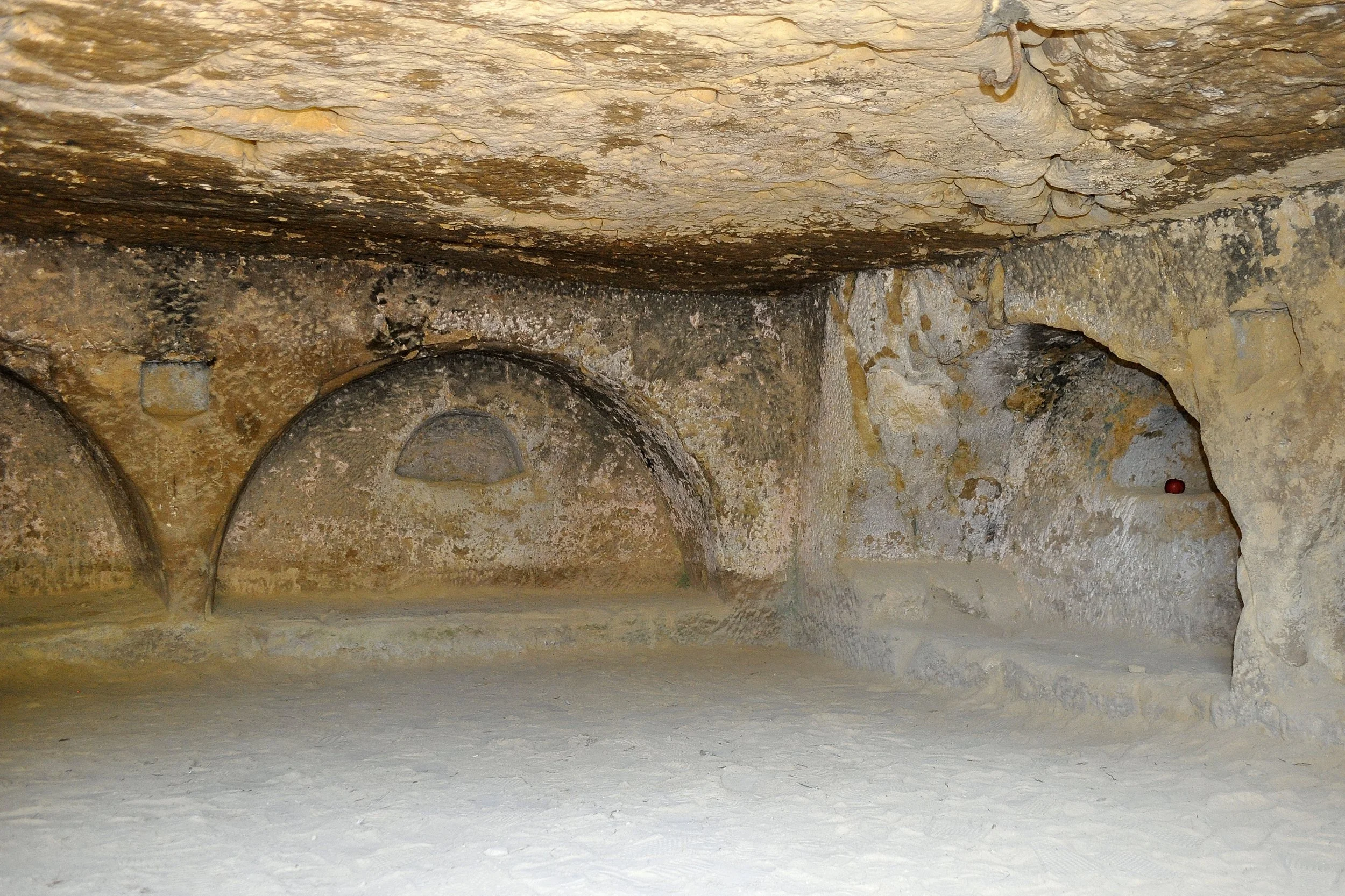
Piero: and yet they are more than just an archaeological site. Because in the 20th century, these very caves welcomed a completely different kind of inhabitants: the hippies. During the 1960s and 1970s, Matala became a refuge for those searching for freedom, poetry, and music—a place to live outside the rules, close to nature and far from the rest of the world.
Angela: young people from all over Europe came to live here, and even Joni Mitchell wrote a song inspired by this bay. The caves became improvised homes, filled with blankets, guitars, words carried by the wind, and fleeting summer romances. That era is long gone, but Matala still preserves its spirit through colourful murals, painted walls, and a sculpture bearing the words: "Today is life, tomorrow never comes."
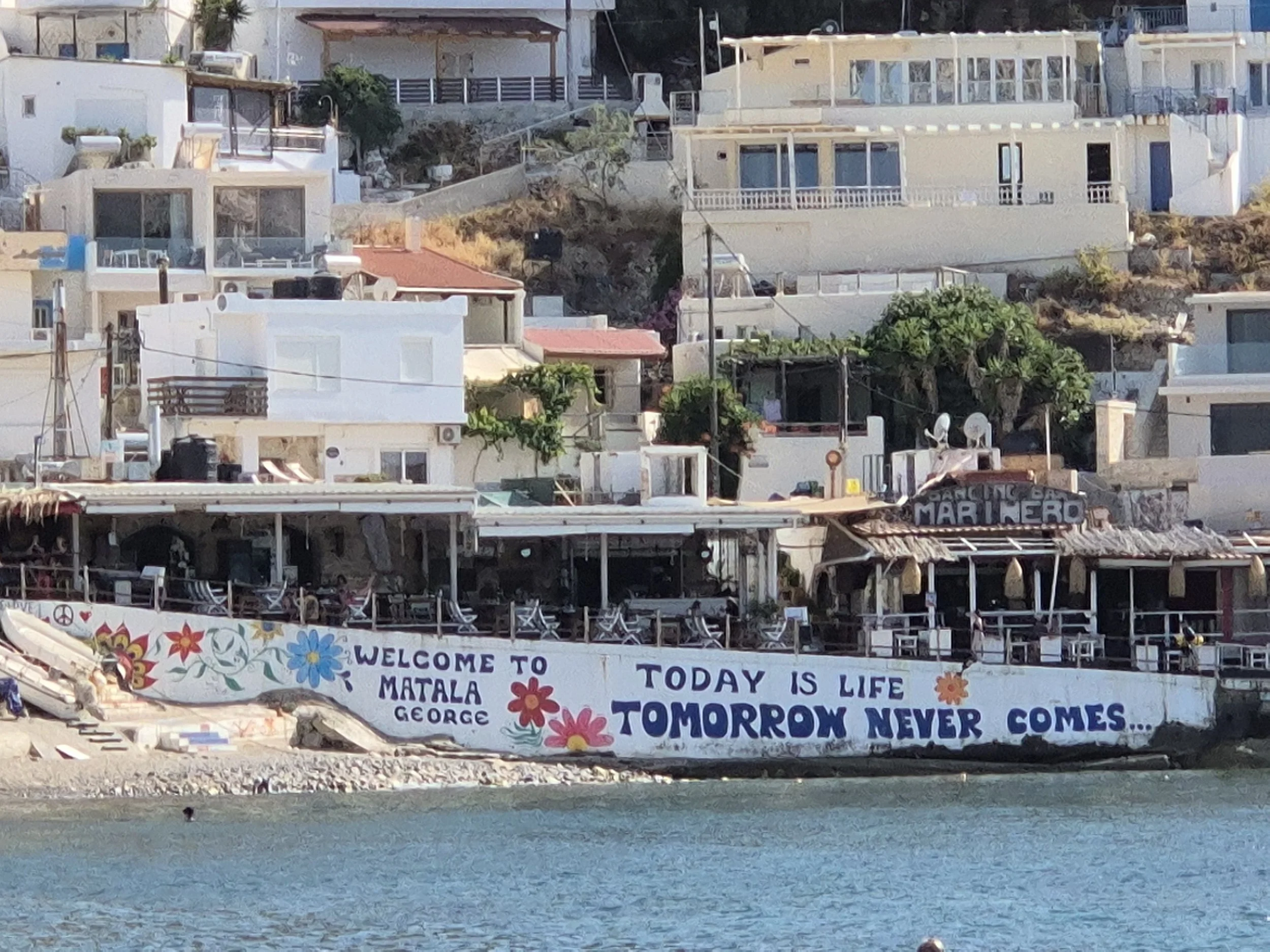
Piero: today, Matala has become a popular tourist destination, of course, and the market stalls sell more T-shirts than dreams. But if you come here with the right frame of mind, you can still feel that lingering spirit—the desire to live lightly and to search for something that cannot be bought.


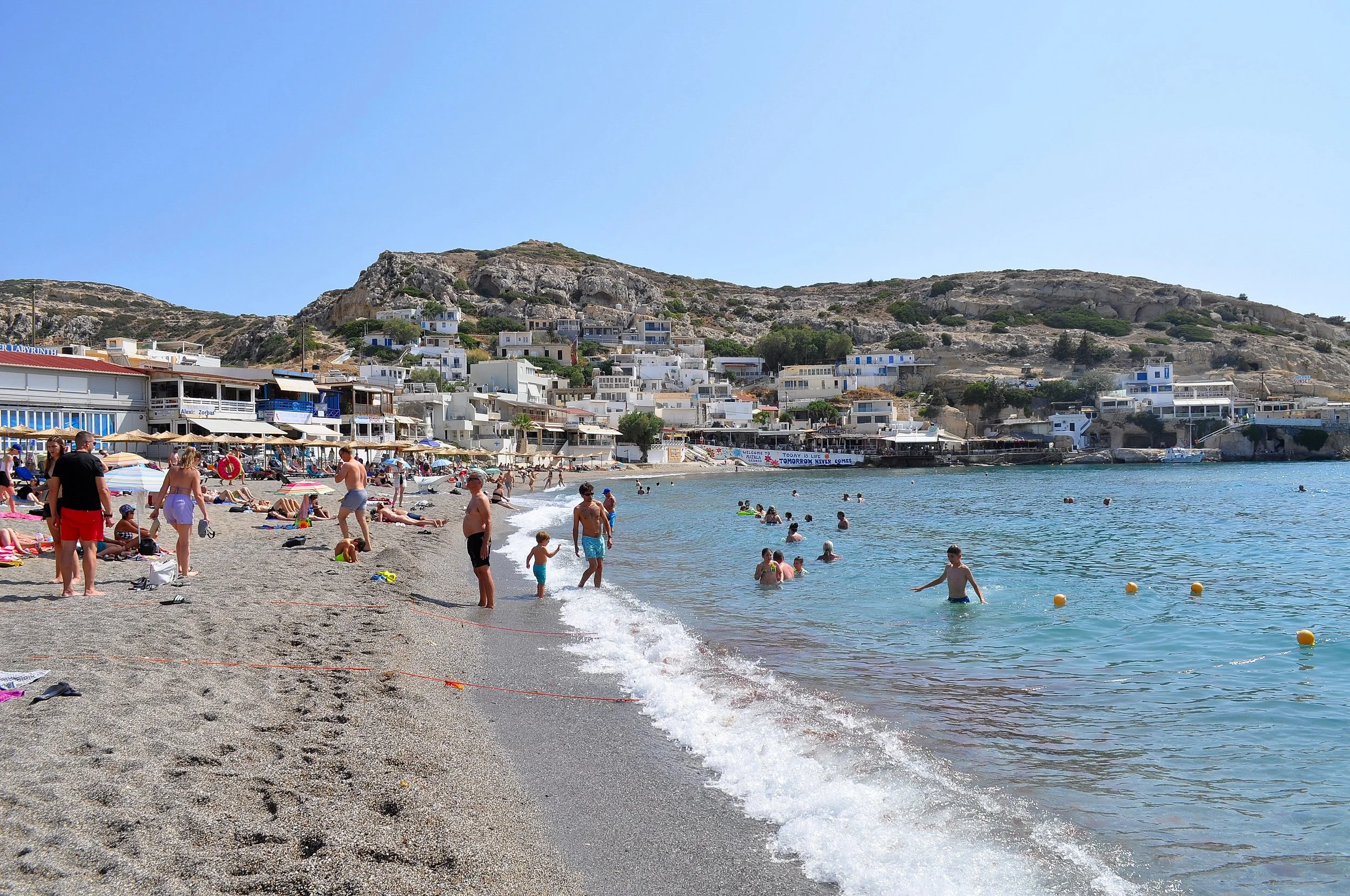


Angela: the beach, however, remains truly beautiful. A long golden curve facing a crystal-clear sea, with that rocky cliff seeming to protect the entire bay. And taking a swim here, surrounded by the waves and the echoes of history, is something you will never forget.

Piero: further north, after days spent exploring ruins, cities, and coastlines, we enjoy our home base: Malia. Its beach is wide, sandy, and perfect for relaxing. Neatly arranged umbrellas, seaside bars, and a long stretch of coastline where you can walk barefoot.

Angela: it does not have the wild soul of Matala, nor the mystery of the Agios Nikolaos lagoon, but it has the feeling of familiarity, of returning. It is the place where you catch your breath, where you let everything settle. The place you leave from… and the place you come back to.
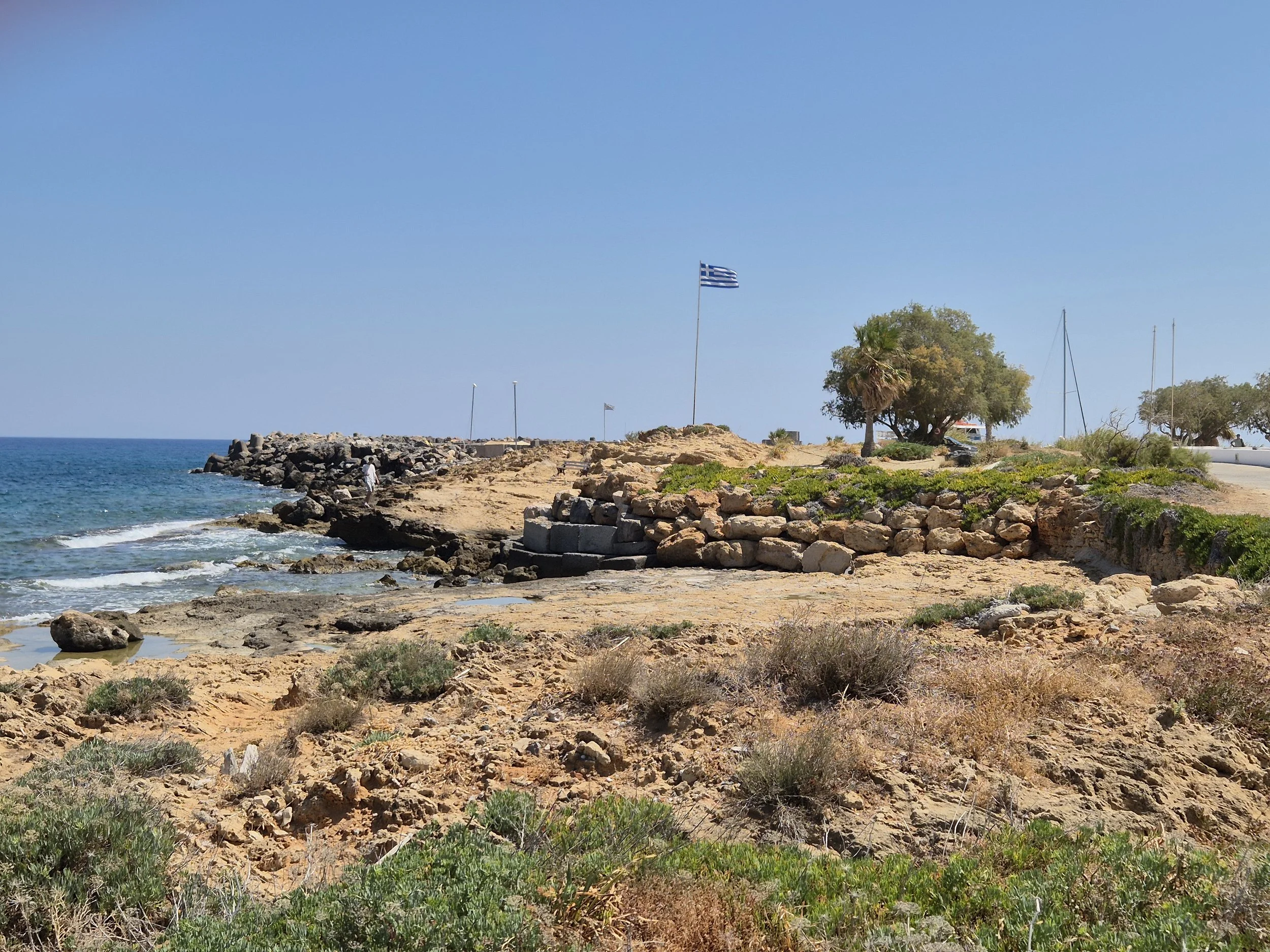

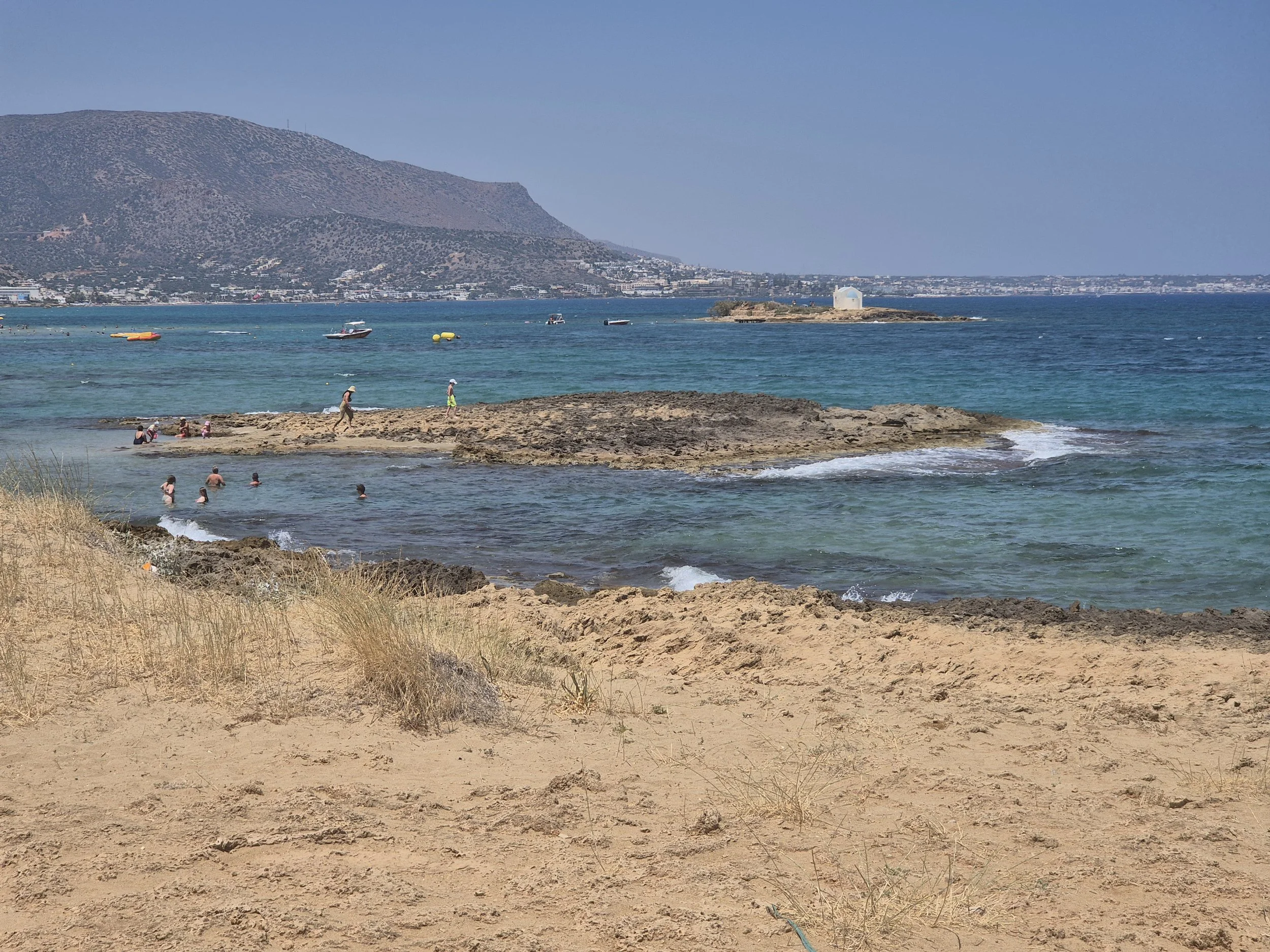
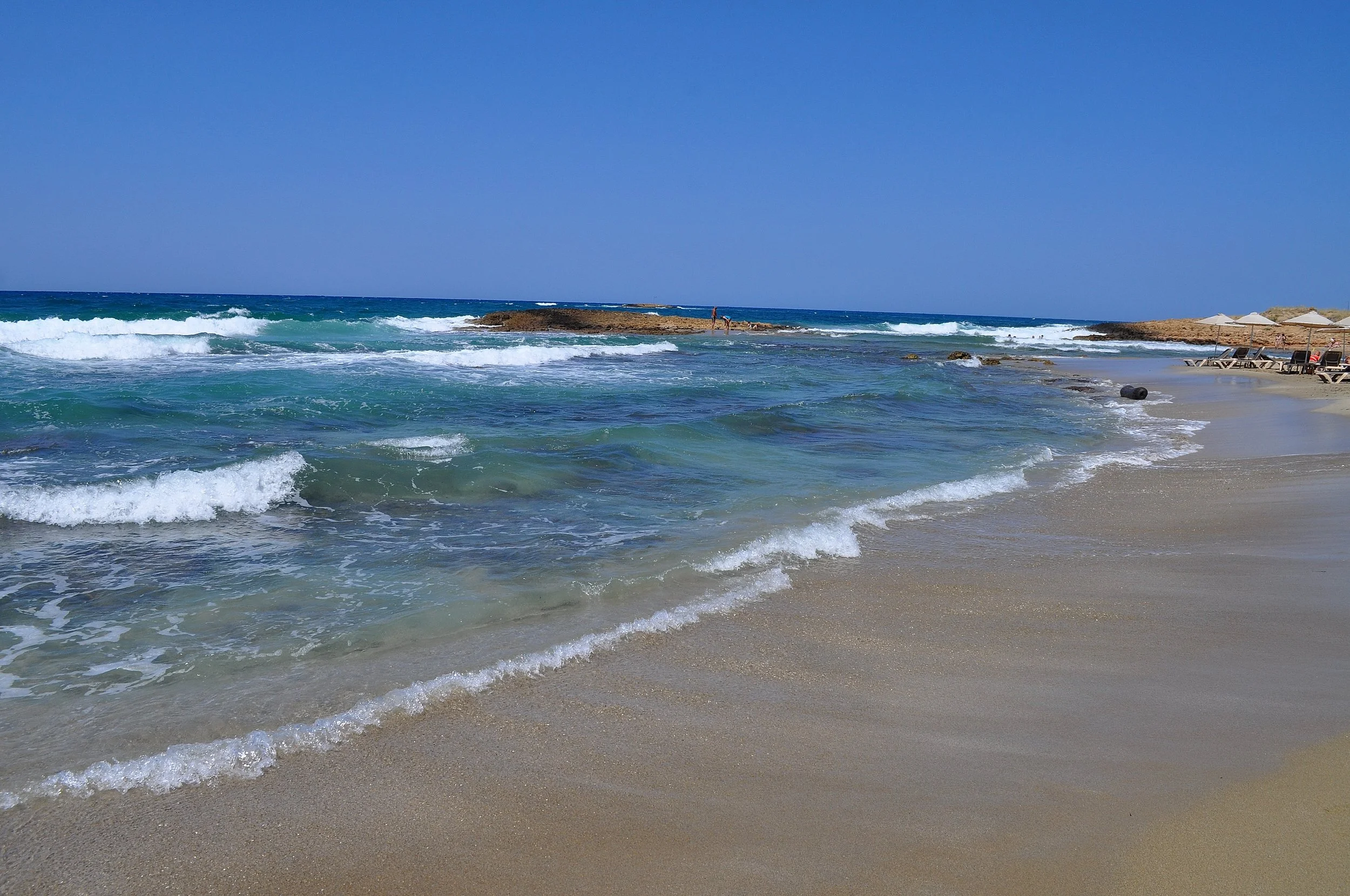


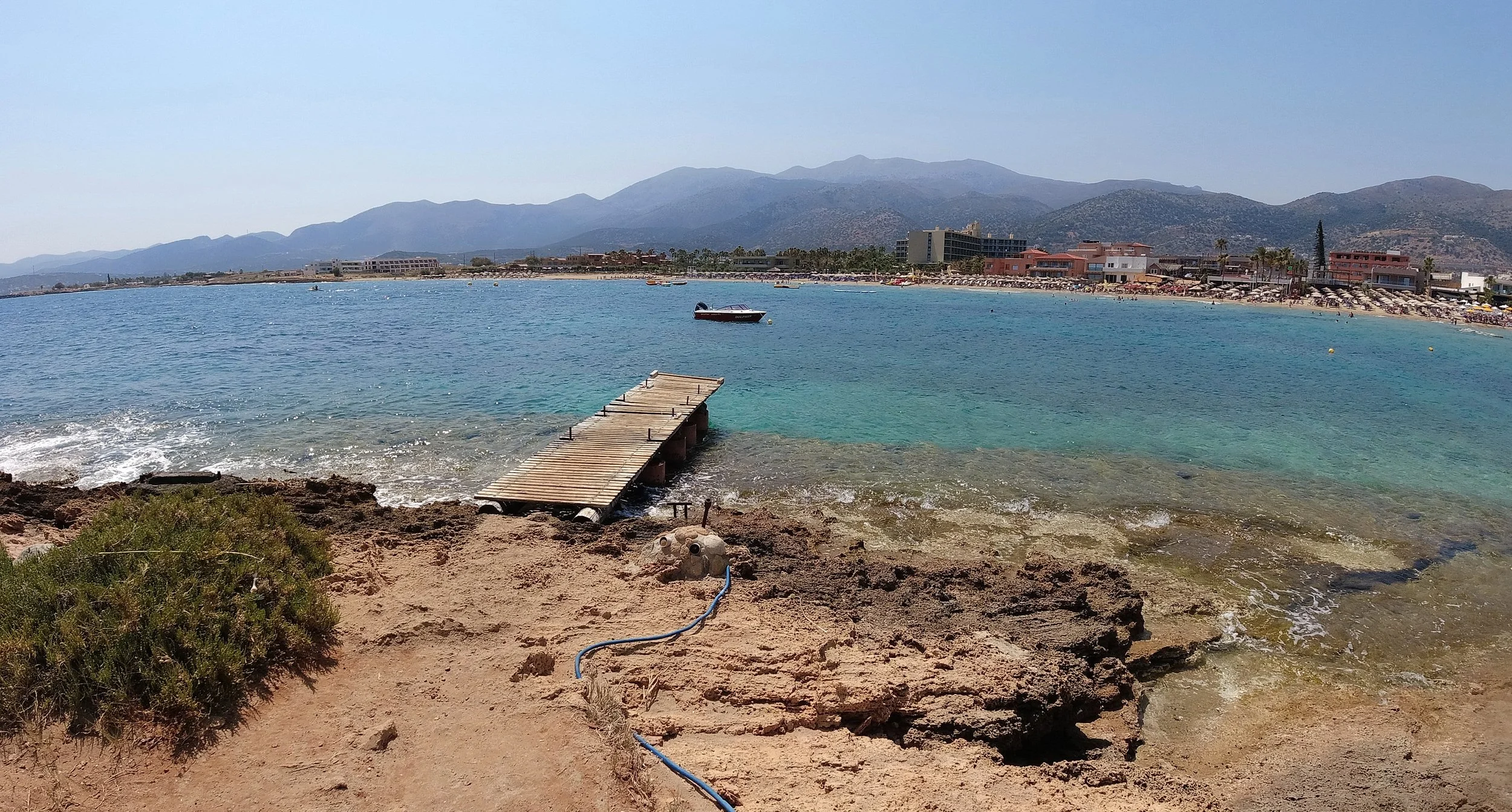
Piero: but a week in Crete is only a first embrace. Because there are beaches we have only touched with our imagination—dreamed of, marked on the map, and saved for another journey. Places that are waiting for us.
Angela: Elafonissi, with its pink sand and turquoise waters that look almost tropical. Balos, a lagoon suspended between sky and sea, reachable only by hiking or by boat. Preveli, where a river meets the sea, surrounded by wild palm trees. And then Vai, home to the largest natural palm grove in Europe, a beach with an almost exotic atmosphere. Seitan Limania, a ribbon of blue water cutting through the white rocks.
Piero: we look at them on a map, discover them through other travellers’ stories, and dream about them with our eyes wide open. But one thing is certain: we will return to find them all. Because in Crete, every beach is a story. And we can never get enough of stories.
Ending a journey. Or maybe not.
Our journey through Crete ends, but the island remains in our hearts. From Minoan palaces and ancient ruins to golden beaches, legendary villages, sunsets and unforgettable landscapes, this first experience was only the beginning. Crete is a place you do not simply visit—you carry it with you. A promise to return, discover new paths, and write new stories.
Angela: to truly enjoy Crete, we chose not to rush. One week is not enough to see everything, but it can be enough to truly feel an island, if you know how to pace your time.
Piero: so we planned our days carefully. In two intense but wonderful days, we discovered some of the island’s most fascinating treasures: first Knossos, the Archaeological Museum of Heraklion together with the city itself and the sunset over the calm waters of Agios Nikolaos; then Phaistos, ancient Gortyna, and the legendary bay of Matala.
Angela: everything revolved around balance: between walking and contemplation, between history and the sea, between the ancient and the contemporary. We listened to the heartbeat of Minoan Crete, breathed the silence of the ruins, and let the sea speak to us with its truest voice.
Piero: we walked among thousand-year-old palaces and Venetian streets, we lost ourselves in the scents of tavernas and the golden lights of the lagoon, allowing ourselves to be told the story of an island that knows how to blend memory and beauty, dust and salt.
Angela: try to relive our experience in this short video:
Piero: Crete gave us so much. But it also made us realise how much there is still left to discover. Beyond the beaches, there are other places we have marked on the map, places that are already calling us:
Lasithi Plateau, with its white windmills and the cave where, according to mythology, Zeus was born
Samaria Gorge, one of the longest in Europe, with towering cliffs and wild landscapes
the Minoan palace of Zakros, one of the lesser-known but most fascinating sites
the village of Archanes, surrounded by vineyards and the peaceful atmosphere of Crete
the historic monasteries of Arkadi and Toplou, guardians of faith and resistance
the towns of Chania and Rethymno, with their harbours, palaces, and countless Venetian and Ottoman influences
Angela: we look at them on maps, and for now we can only imagine them through other travellers’ stories. And we are already dreaming of them. Crete never ends: it expands through time and stays with you like the salt on your skin after a swim.
Piero: and in the end, what remains are not only the places, but the sensations: the freshness of the water beneath the caves of Matala, the silence of the columns at Phaistos, the scent of thyme along the road to Gortyna, the soft, slanting light of Agios Nikolaos.
Angela: Crete spoke to us in a thousand languages: the language of the sea, the stones, mythology, sand, and music. And we answered in the only way we know how: with bare feet, open eyes, and an attentive heart.
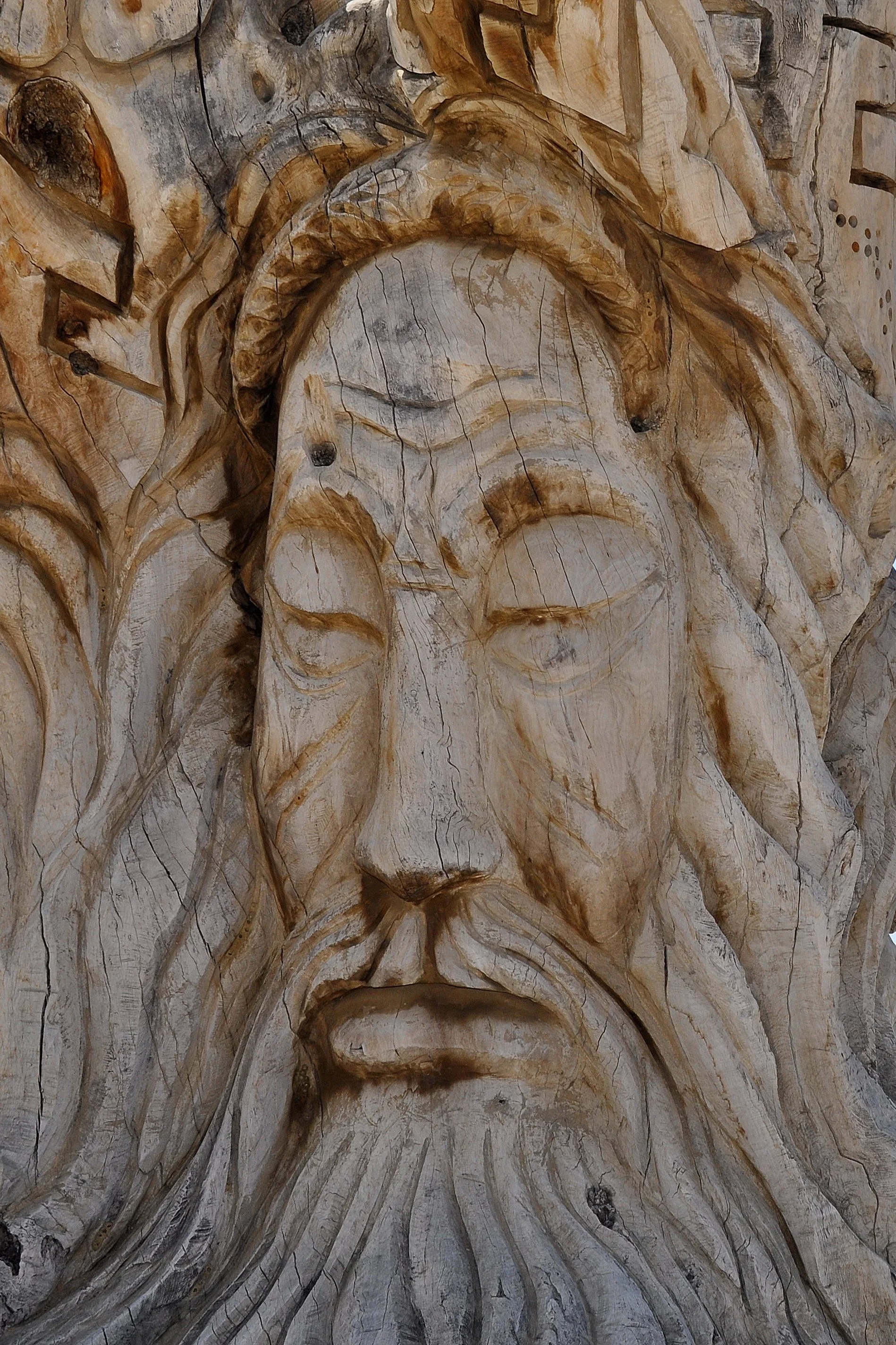
Piero: this story comes to an end here, but it is not the finish line. It is only the first page. Because Crete still has so much to show us. We will return. For the beaches we have not yet seen. For the paths that climb into the mountains. For the villages where time seems to stand still. For more silences, more sunsets, and more stories.
Angela: we will return. Because in Crete, you arrive only once. But you always leave as two people: the person you were before… and the promise you make to yourself to come back. In the meantime, let’s relive everything in this video.