Heraklion: the museum and the city
Angela: not far from Knossos, we move on to the capital of the island of Crete: Heraklion.
Piero: after visiting Knossos, Phaistos, and Gortyn, we needed a place that could bring together everything we had seen, felt, and imagined. And that place is the Archaeological Museum of Heraklion. So this is where we begin our visit.
Angela: yes, because the palaces, as fascinating as they are, are only fragments. What is missing—the colours, the faces, the details—you find here. In this museum, every stone finds its voice, every symbol gains meaning, and every myth takes shape.
Piero: the exhibition route is organised with great intelligence: you don't jump from one era to another, but move forward gradually, almost as if following Ariadne's thread through the history of Crete. It begins with the Neolithic period and reaches the Roman world, but it is the Minoan heart that truly steals the show.
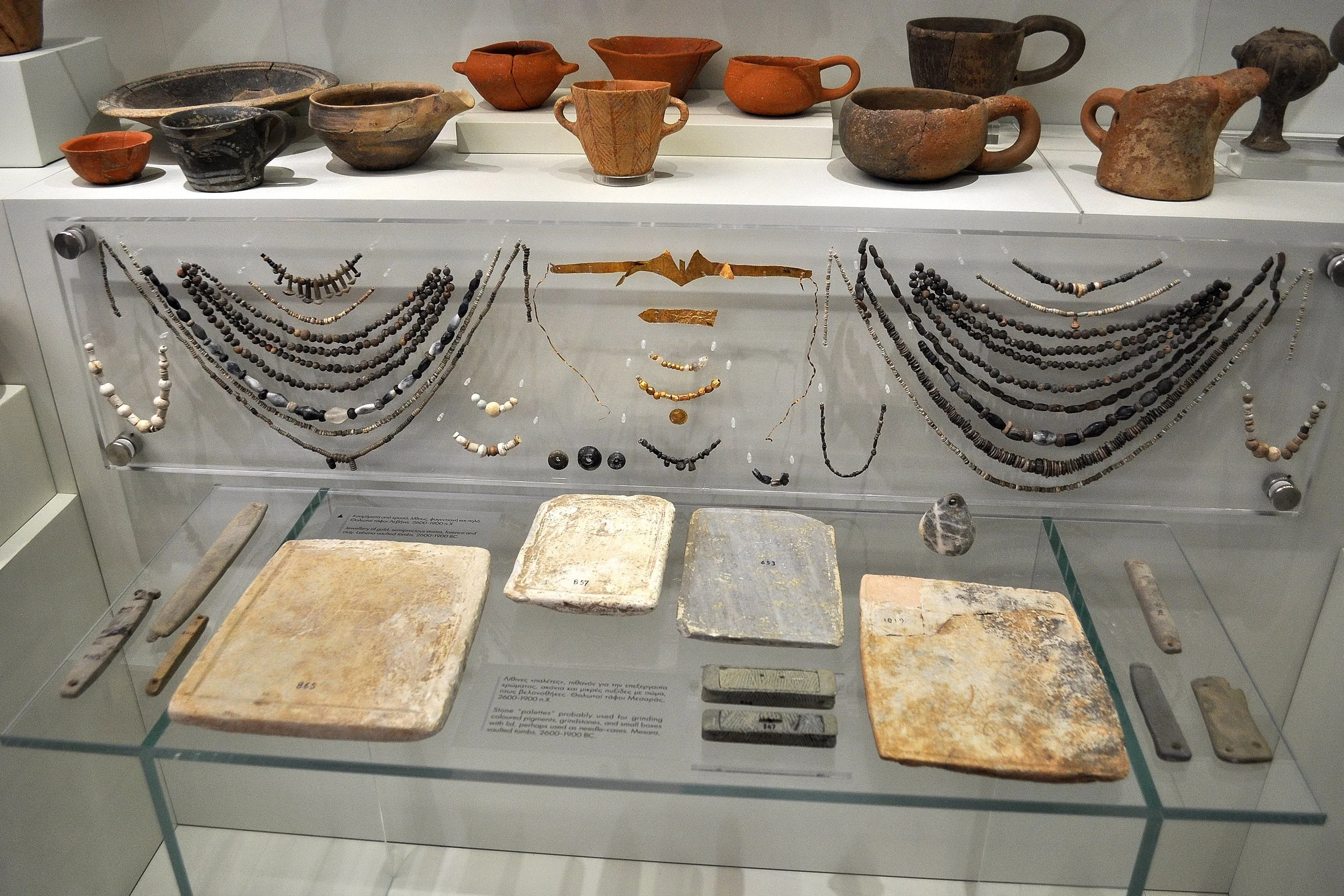
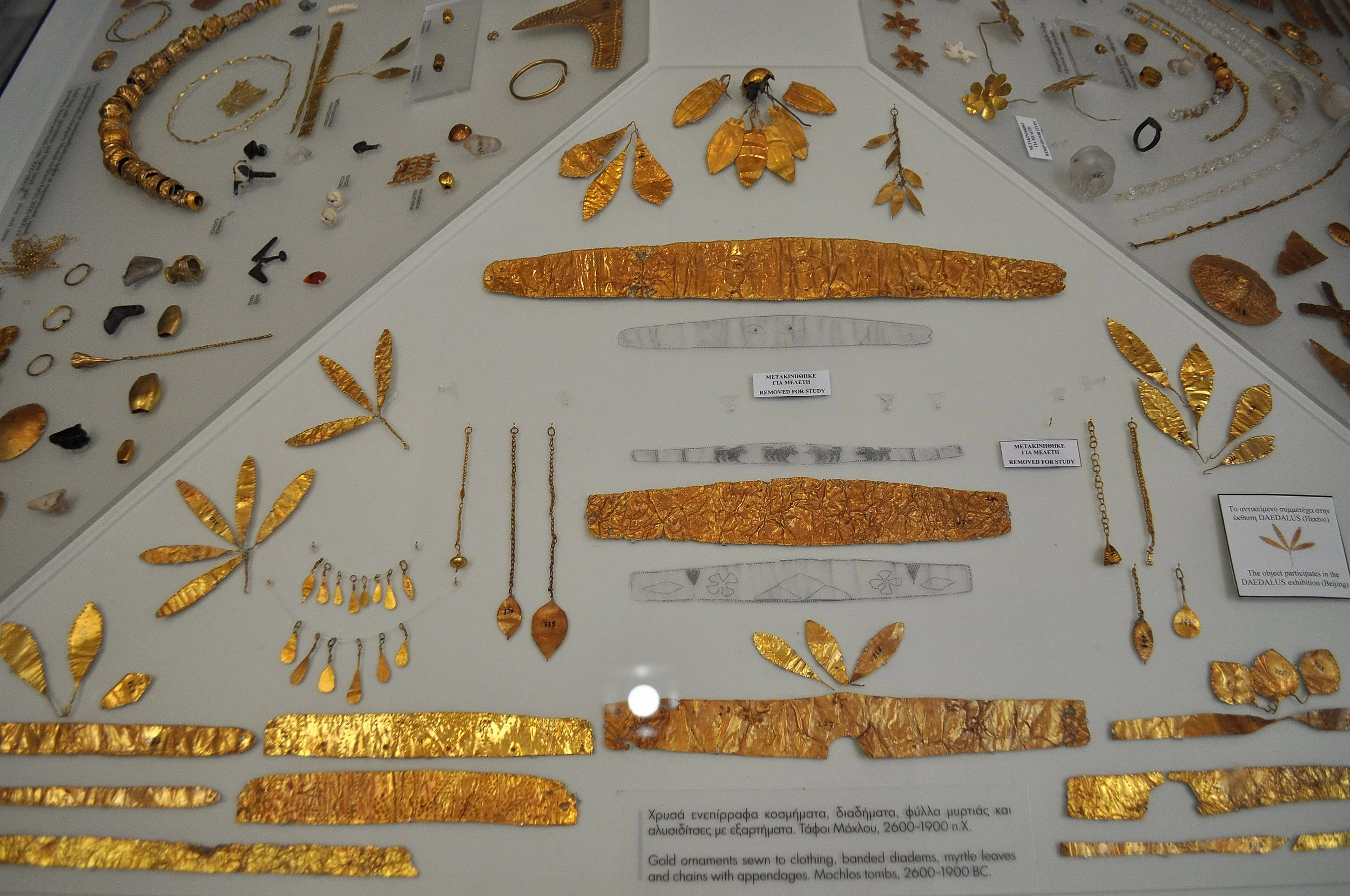
Angela: one of the first objects to capture our attention is a small golden masterpiece: the famous Bee Pendant. Two bees facing each other, perfectly symmetrical, hold a tiny drop of honey between their legs. The openwork wings, the stylised bodies... it is an object almost 4,000 years old, yet its beauty still speaks directly to us today.

Piero: a symbol of nature, harmony, and collective work. Found at Malia, it tells us that the Minoans were able to merge spirituality, craftsmanship, and beauty into a single image. And it is just one of the many treasures—quite literally jewels—that we find in this museum.
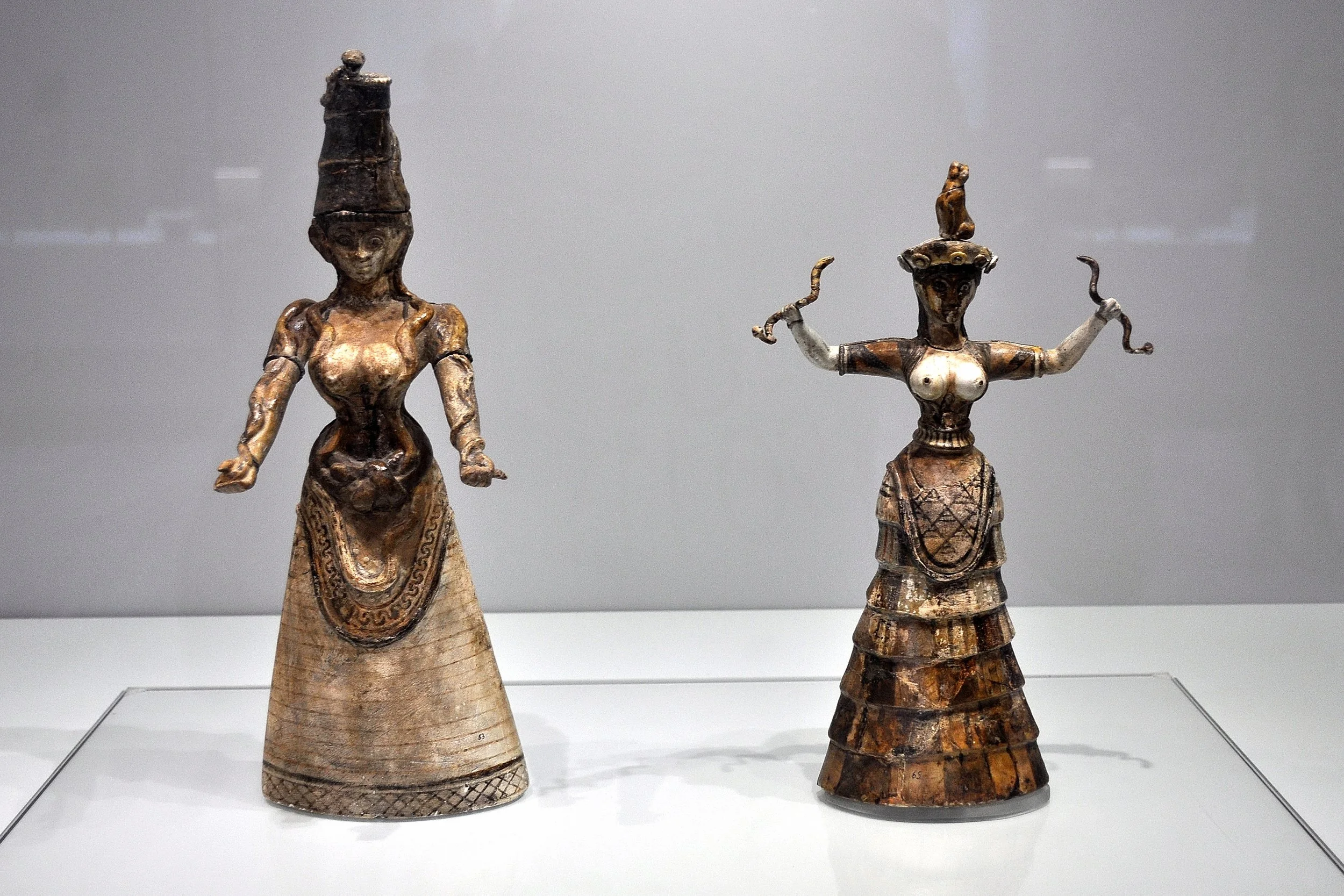
Angela: and then there are the Snake Goddesses. Tiny, yet incredibly powerful. Women with large eyes, bare breasts, and snakes held in their hands. The female power in Minoan religion was not secondary: it was central, sacred, and dominant. Those figurines almost seem alive.
Piero: then comes the moment I was waiting for the most: the Phaistos Disc. We had already evoked it among the ruins of the palace, but here we can finally see it for real. Small, made of terracotta, engraved in a spiral with symbols that no one has ever managed to decipher. It is mysterious, hypnotic. You look at it and feel as if it could still tell us something—if only we knew how to listen.


Angela: it has a diameter of around 16 centimetres, is made of fired clay, and on both sides it features a spiral composed of 241 symbols impressed using stamps. The signs — 45 different symbols in total — represent objects, animals, tools, and stylised human figures. The text follows a spiral pattern, moving from the outside towards the centre on one side and from the centre outwards on the other. However, we still do not know which side is the “main” one or the correct direction of reading.
Piero: what makes it truly extraordinary is, above all, the fact that it is the only known example of “stamped” writing from the ancient world: the symbols were not carved by hand but pressed into the clay using individual stamps, almost like a modern typographic character. This is why some scholars consider it the oldest form of “printing” ever known. Moreover, it was written in an unknown language, perhaps pre-Greek, and has no direct comparison either with Linear A or Linear B.
Angela: but above all, it has never been successfully deciphered with certainty, even though more than a hundred interpretations have been proposed: a prayer, a sacred hymn, an agricultural calendar, a list of names, a magical formula, even a board game or a decorative object. Some researchers believe it could be a religious text, perhaps a ritual chant dedicated to the Mother Goddess; others see it as an administrative document, maybe a list of offerings or sacrifices. Others even suggest that it may not have originated in Crete at all, but could have been imported from another civilisation — or, according to more imaginative theories, even from an extraterrestrial source — remaining unique because it was not part of a widespread writing system.
Piero: a curiosity: in 2022, a study was published suggesting that the disc could be phonetic — a text intended to be sung or recited, somewhat like a “disc” in the modern sense. But this too remains a fascinating hypothesis among many others.
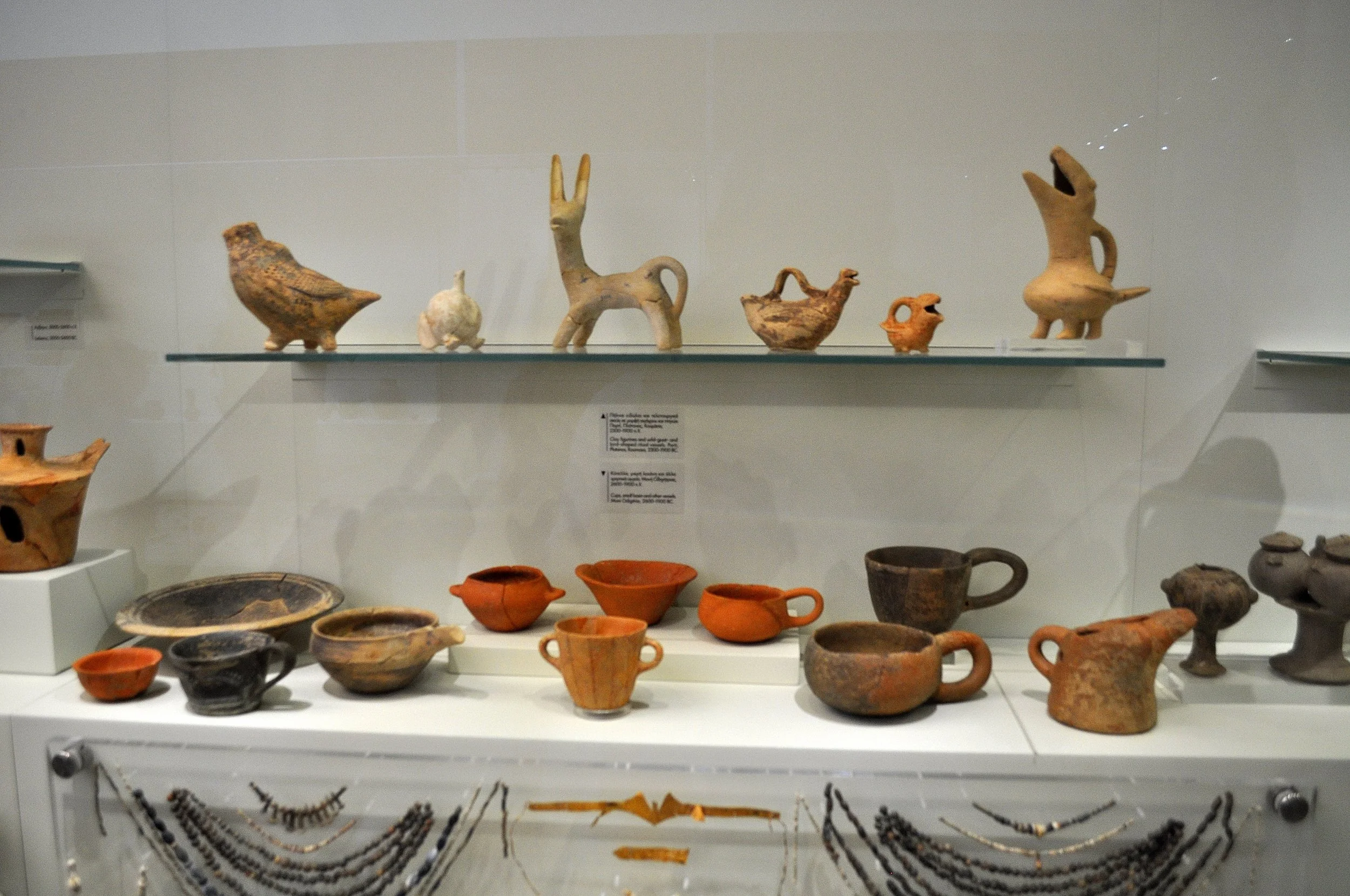
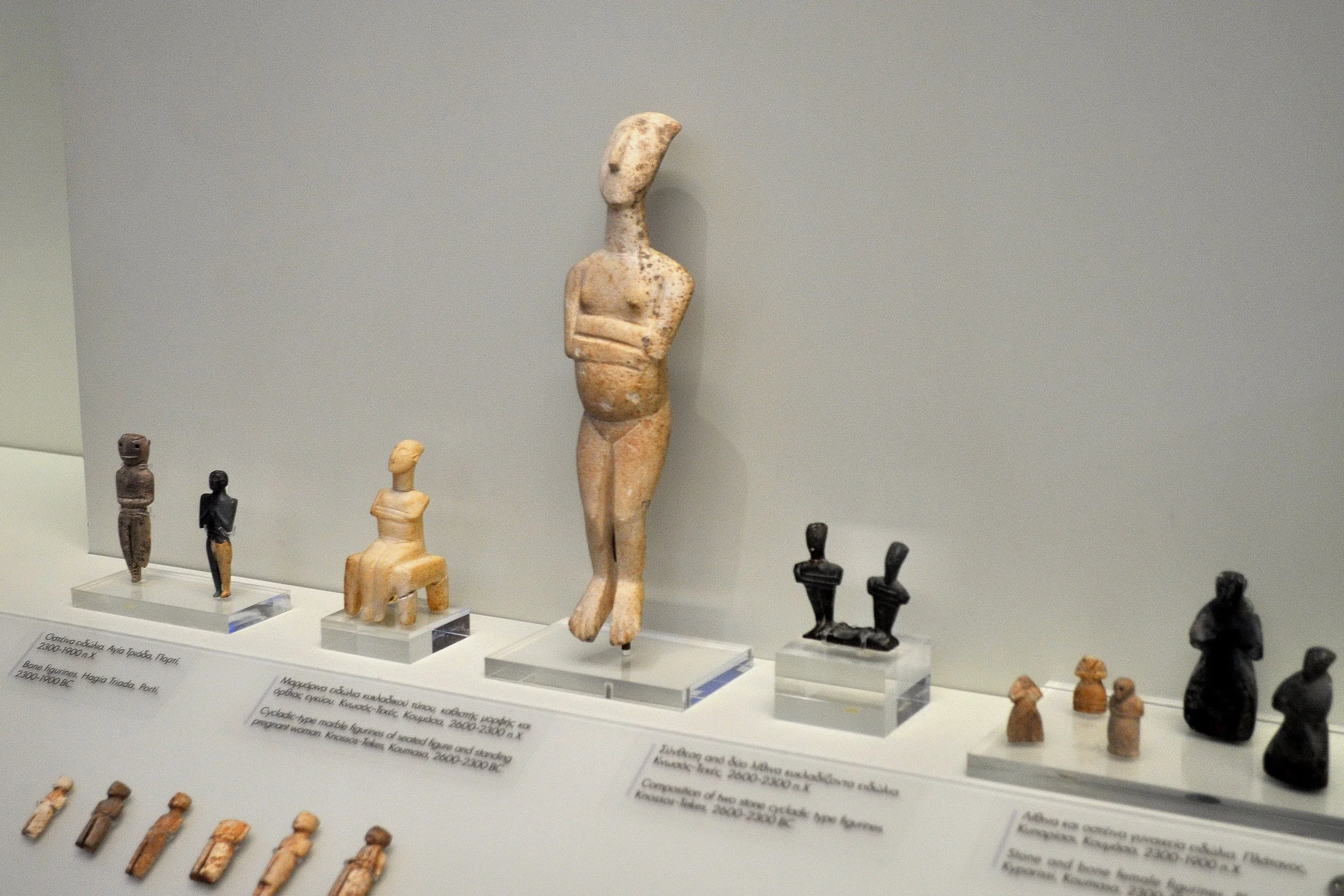
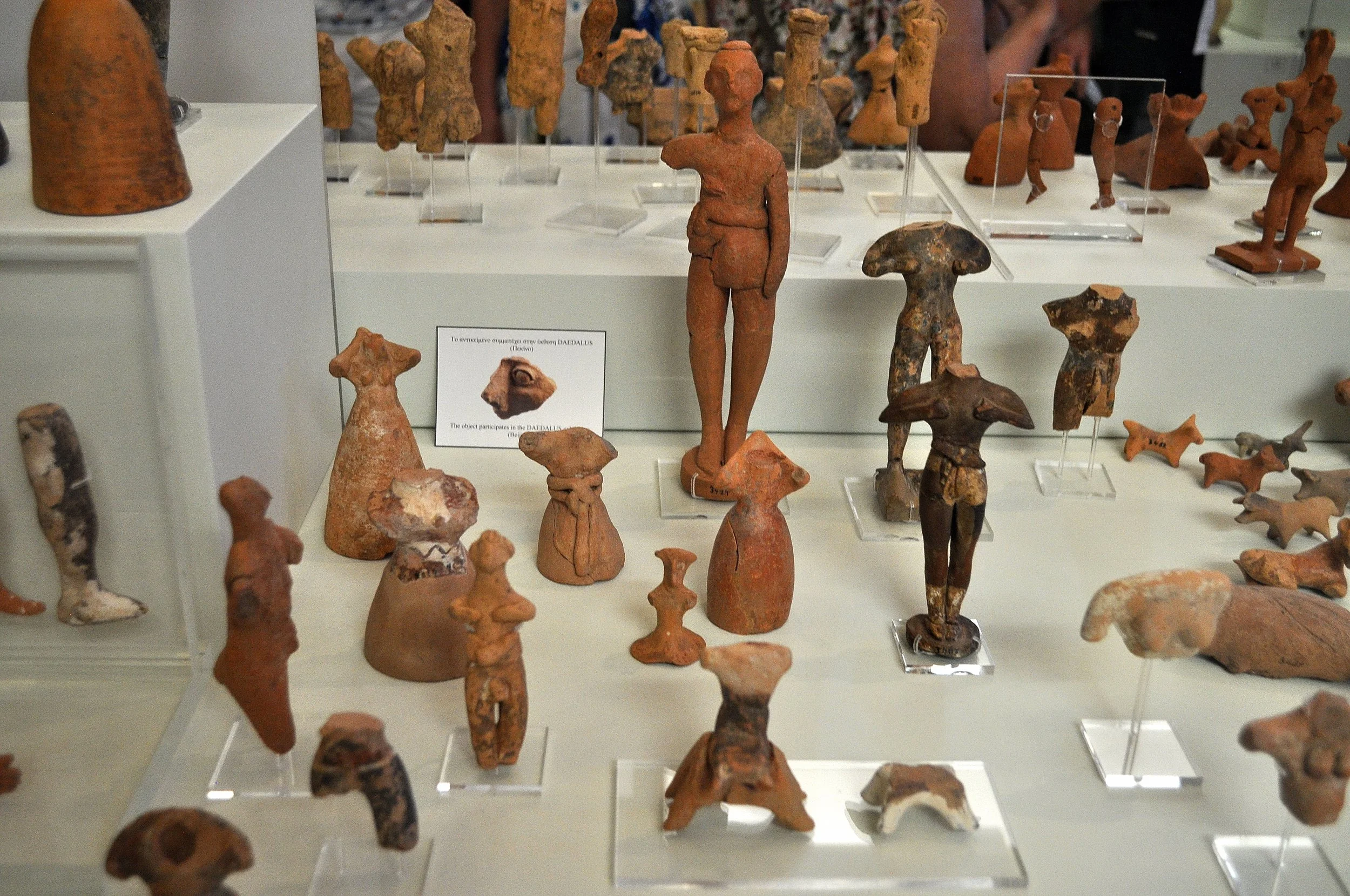
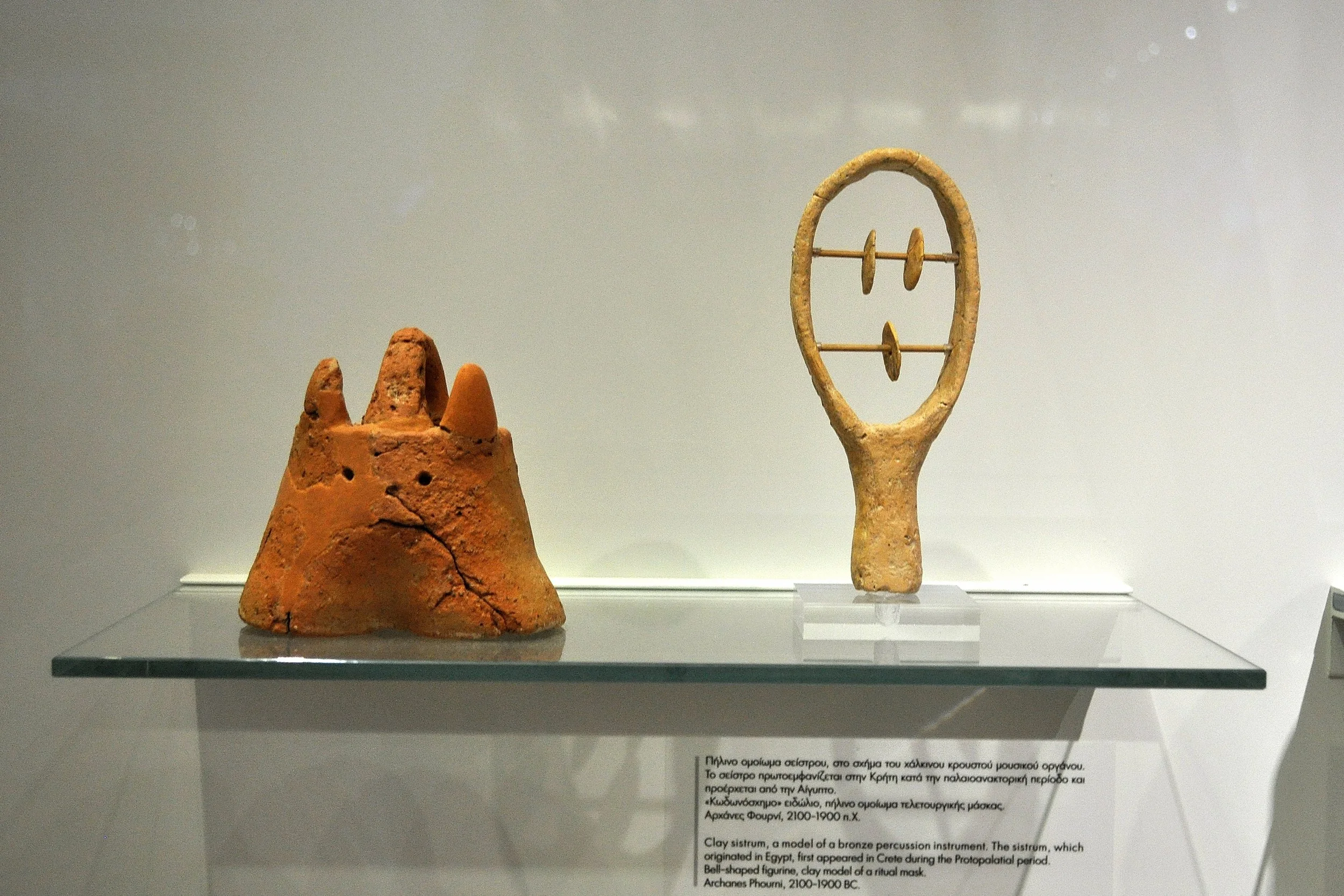
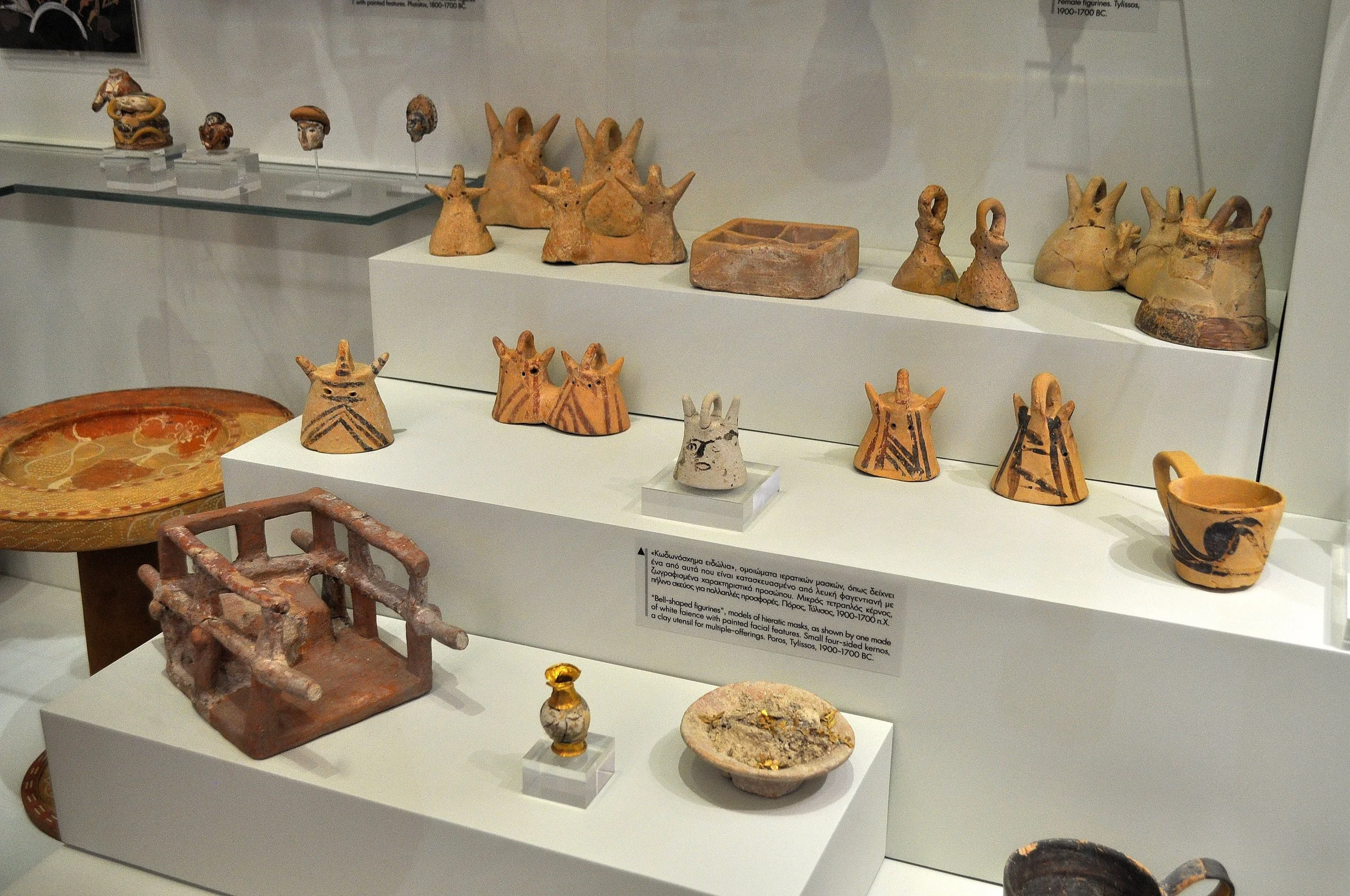
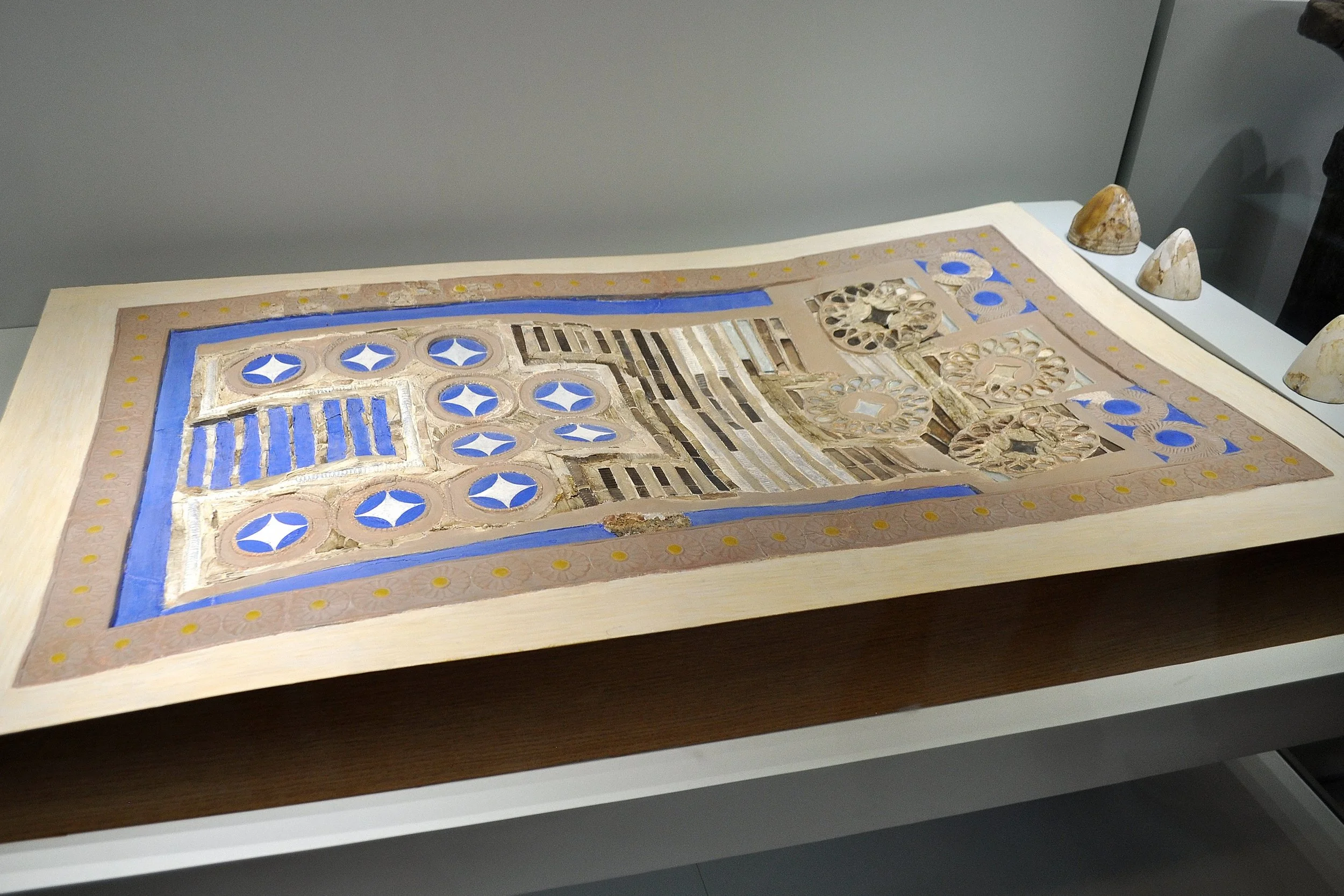
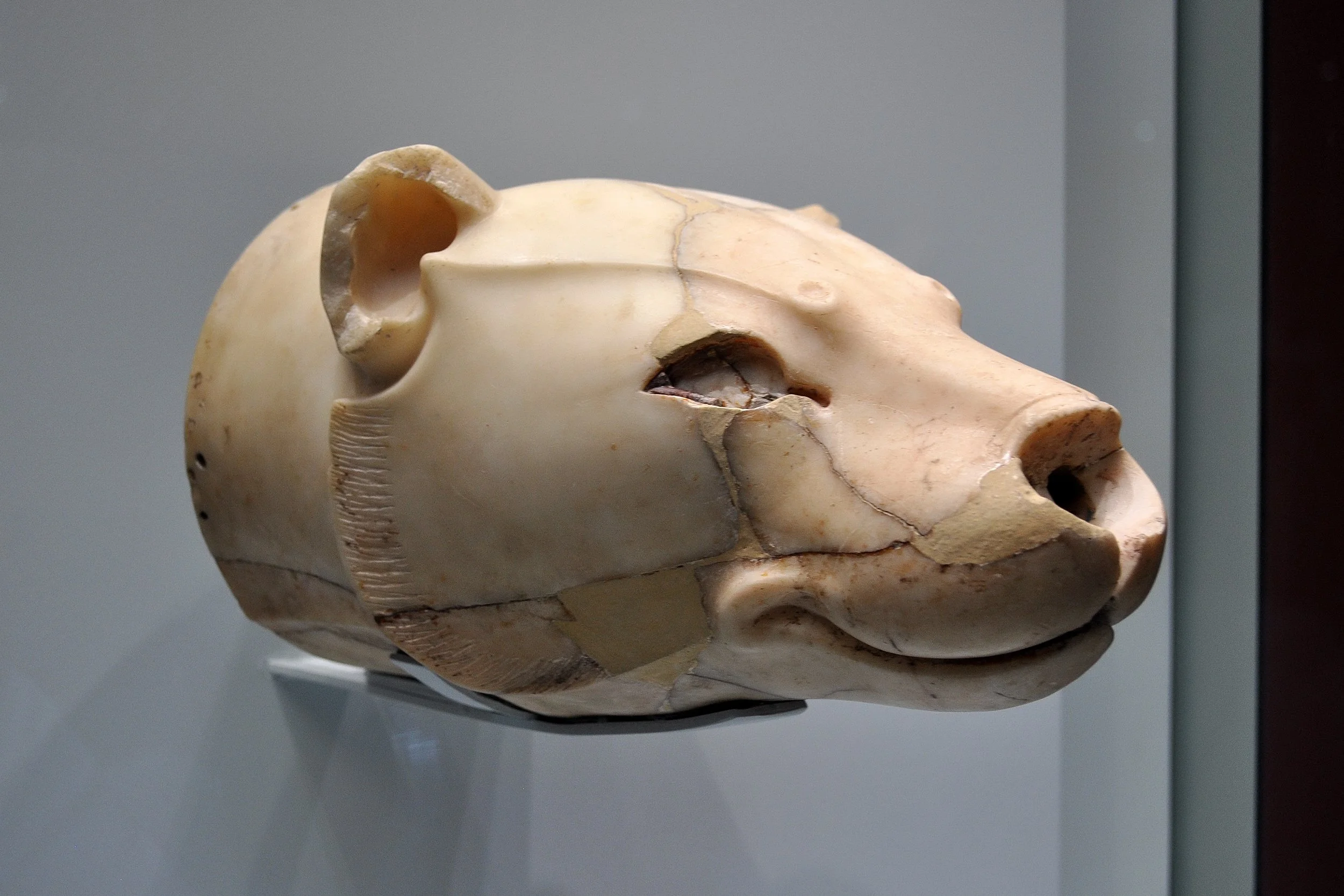
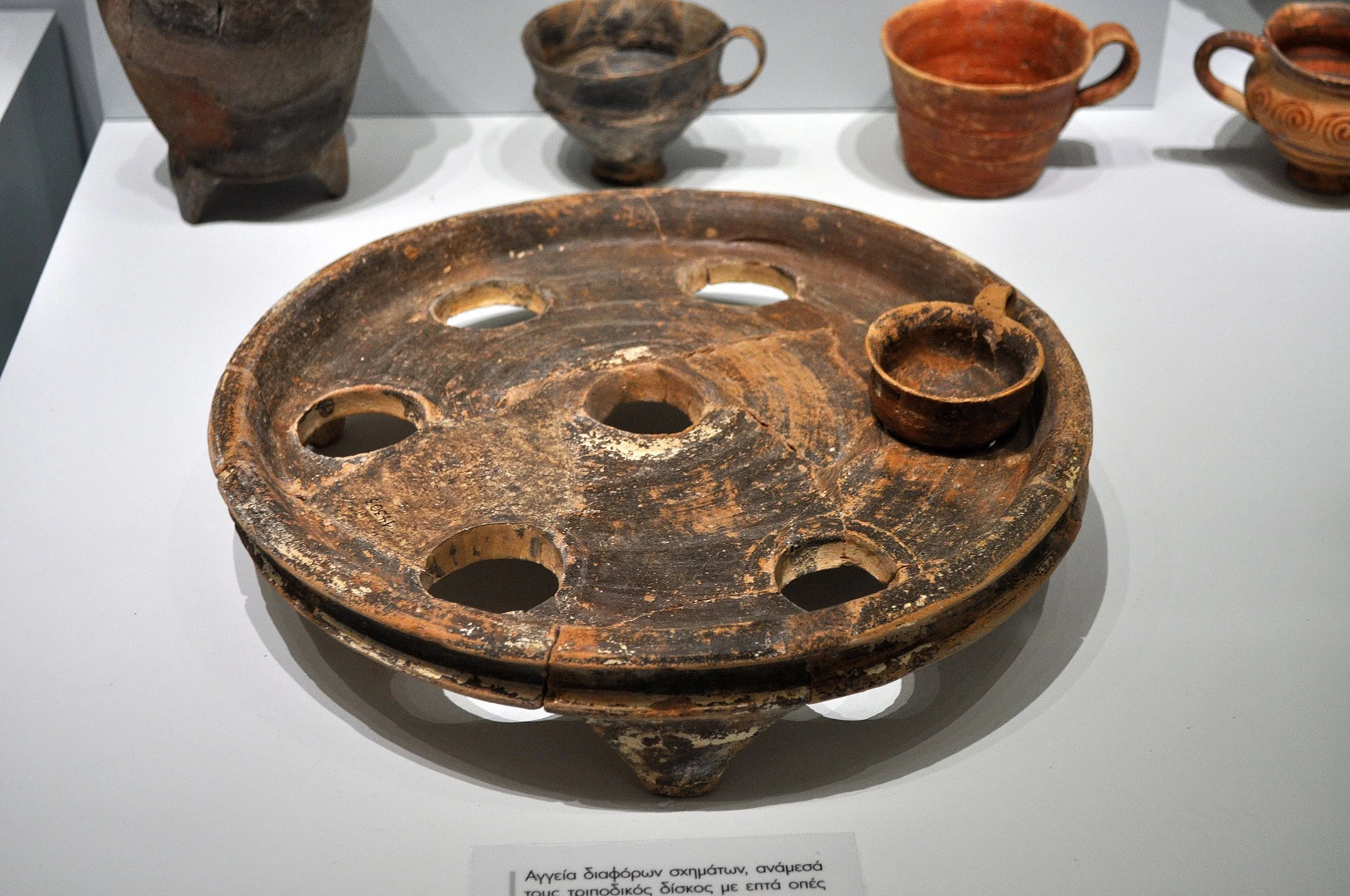
Angela: and then there are the everyday objects: miniature pithoi, decorated pottery, cups, vases, amulets, and musical instruments. There are also weapons, including many examples of the already mentioned double axe, the labrys. Everything is carefully crafted, shaped, and designed not only to be useful, but also to be beautiful.










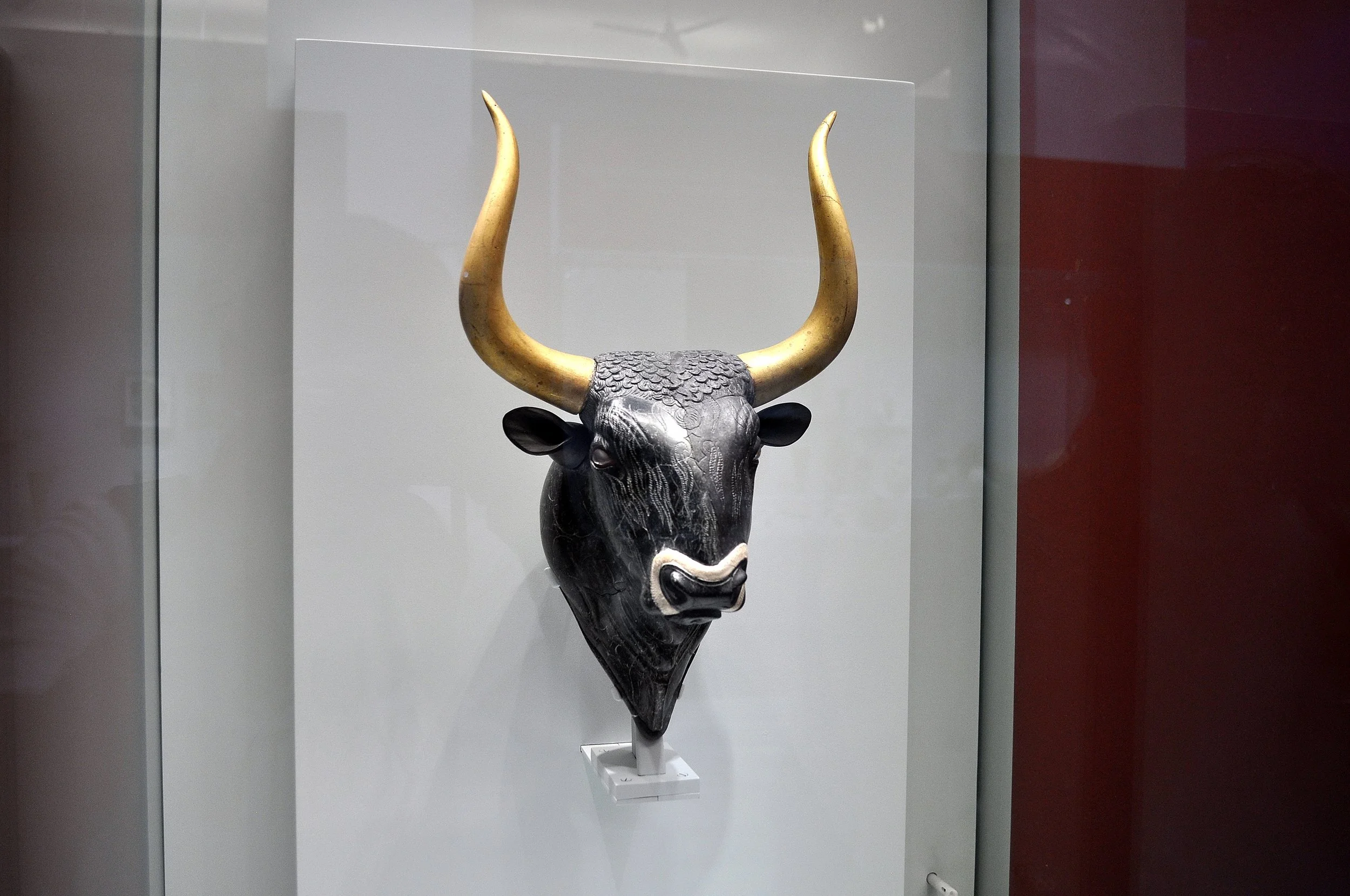
Piero: one of the most striking pieces is the bull’s head rhyton, carved in stone with extraordinary attention to detail, featuring inlaid eyes and horns that were probably once covered in gold. It was used in ritual ceremonies, perhaps to pour wine or blood during sacred offerings.
Angela: from here, the route opens into the fresco galleries. We encounter the scenes we saw at Knossos, but here they appear as they truly were: the Prince of the Lilies walking among flowers, the Bull-Leaping Fresco with those bodies suspended in mid-air, and the Parisienne with her proud gaze and perfectly defined makeup. These are images that reveal the elegant, dynamic, and almost dancing soul of the Minoan civilization.


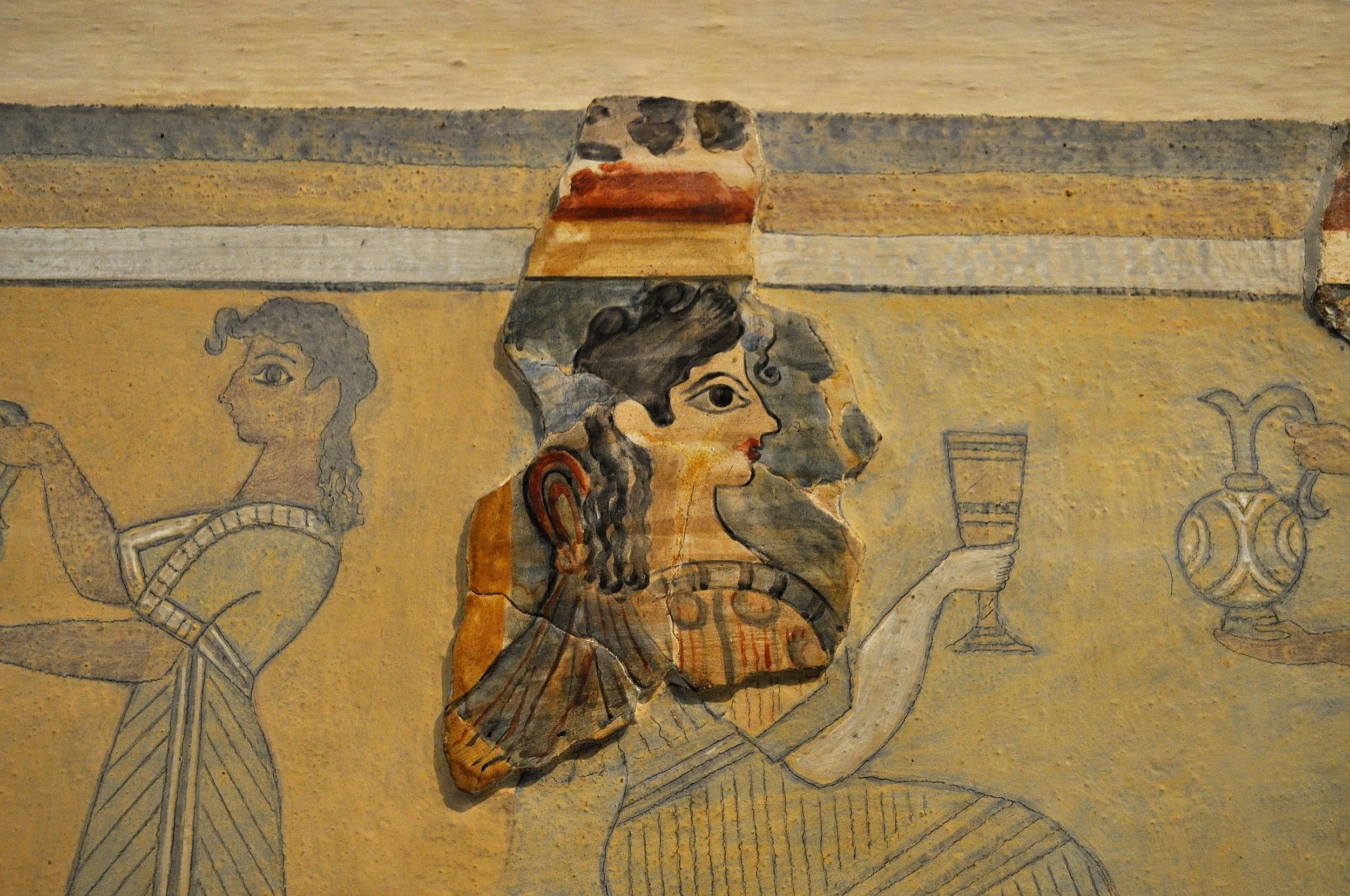


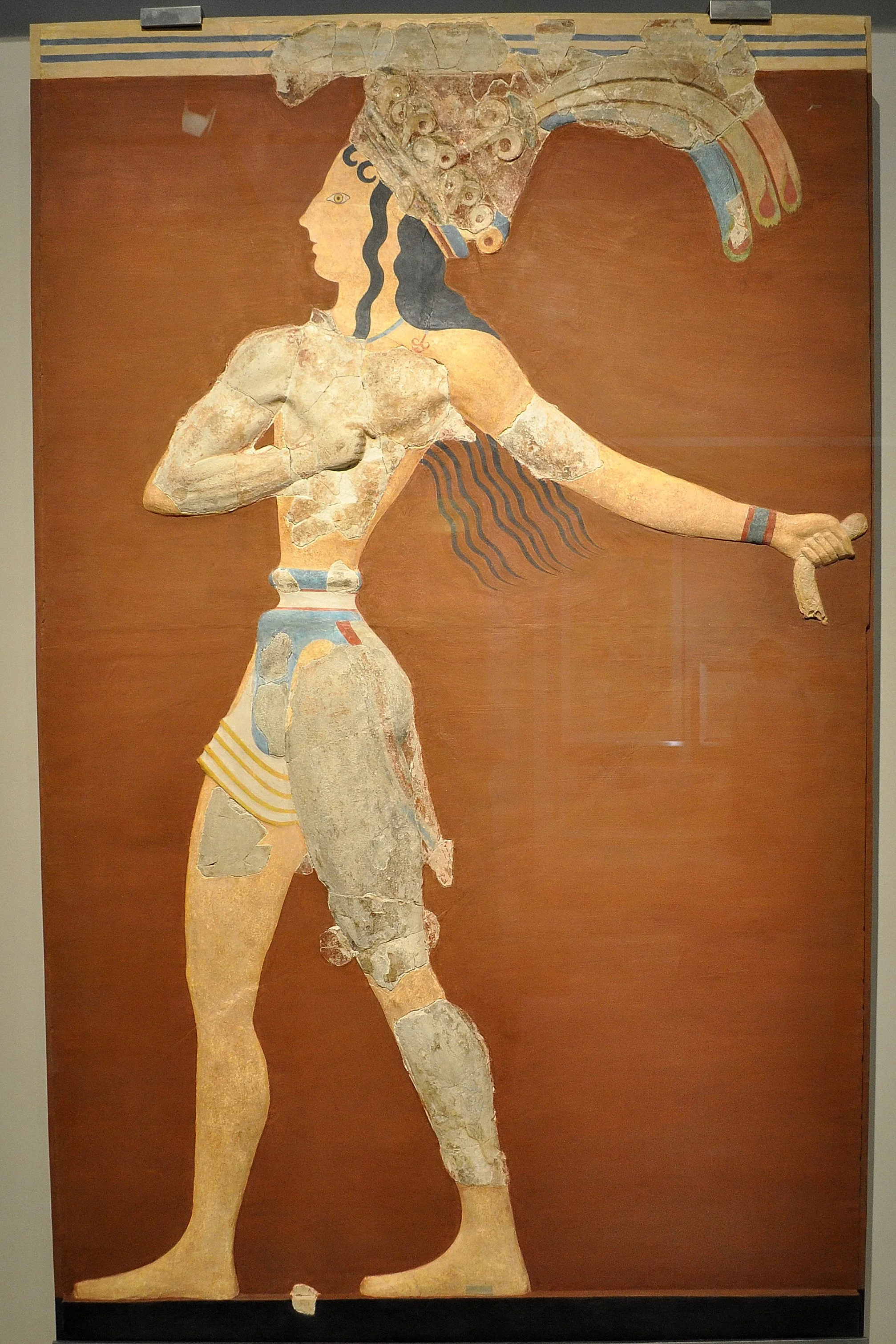
Piero: there are also the Linear A and Linear B tablets, the religious inscriptions, the architectural models, and the votive offerings from the mountain sanctuaries. Everything is designed to tell a long and coherent story, but also to restore the emotion found in every single detail.


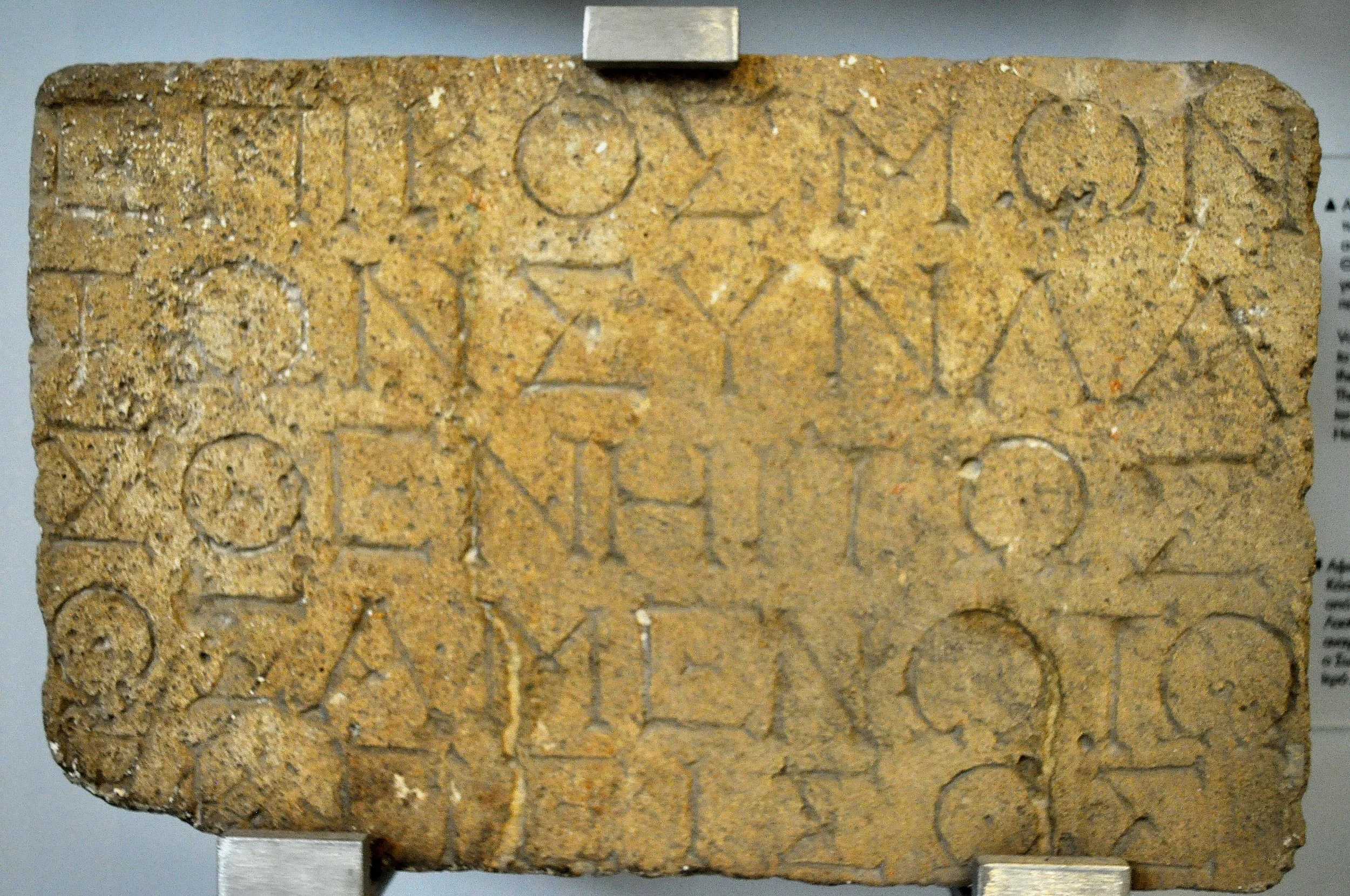

Angela: and now I can say it: this museum has deeply impressed me. It is not just a collection of objects: it is an experience. Carefully curated, elegant, and engaging. It feels as if it has taken us by the hand and guided us into the minds of the Minoans, into their vision of the world, of the sacred, and of life itself.
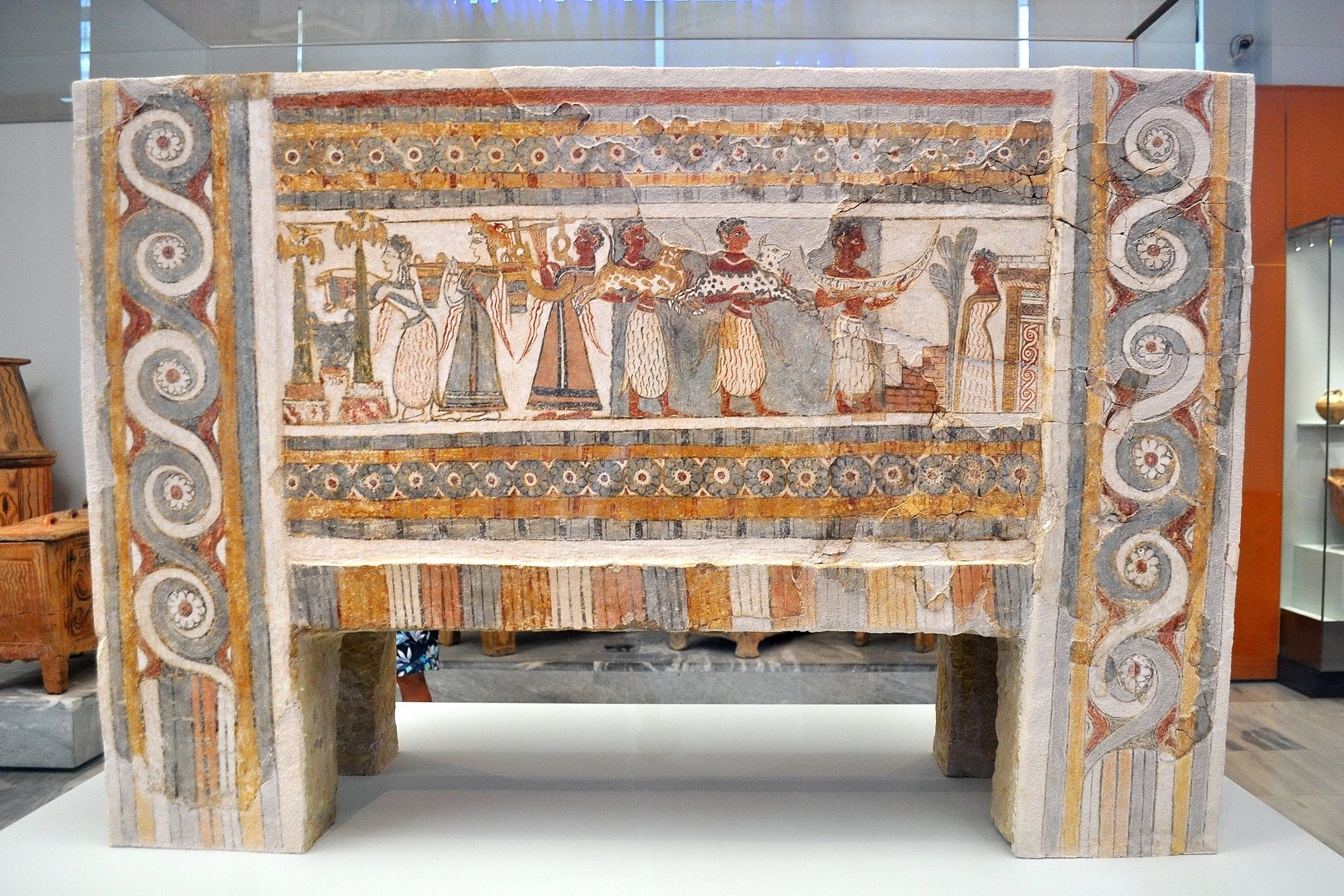
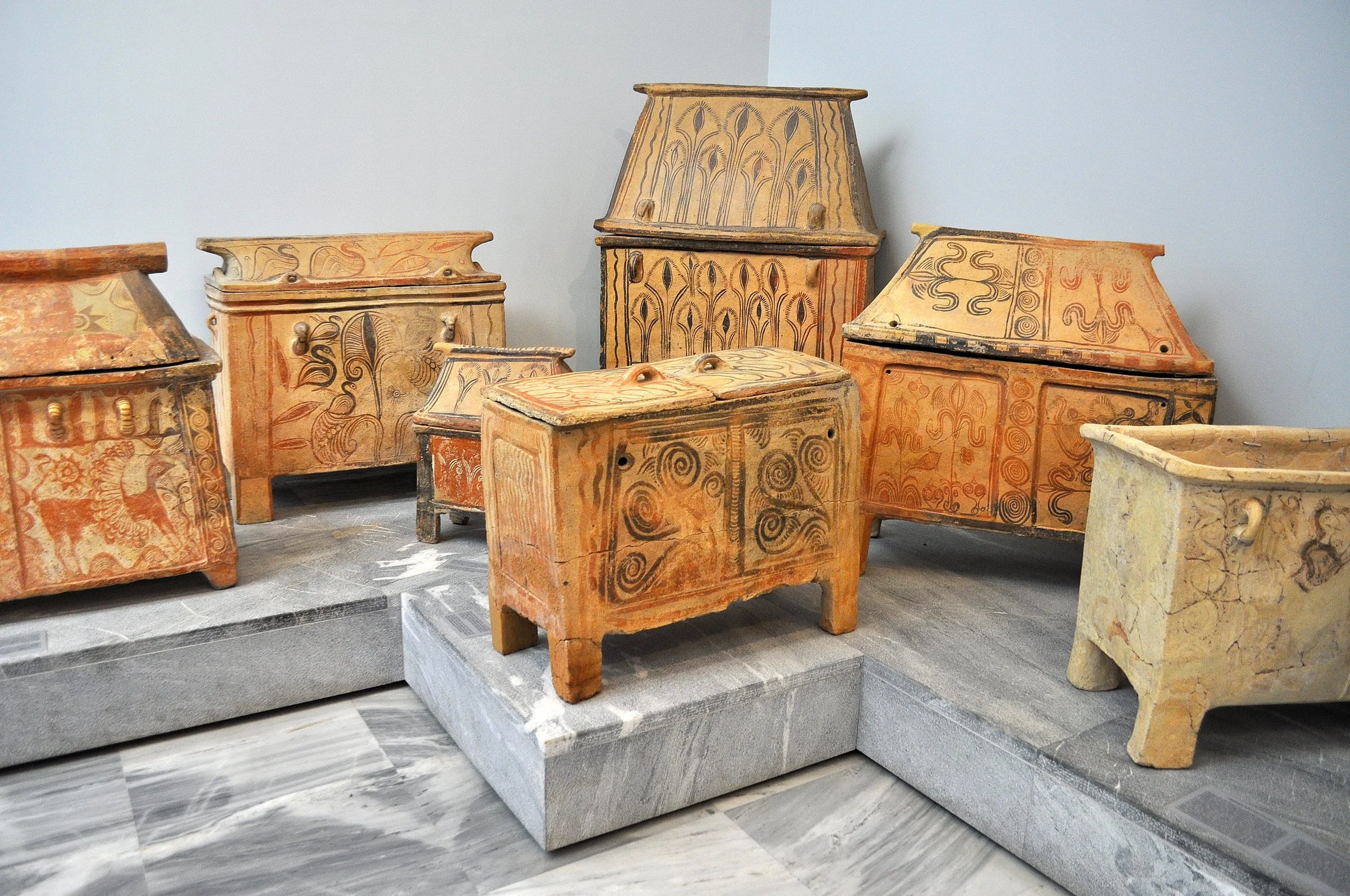
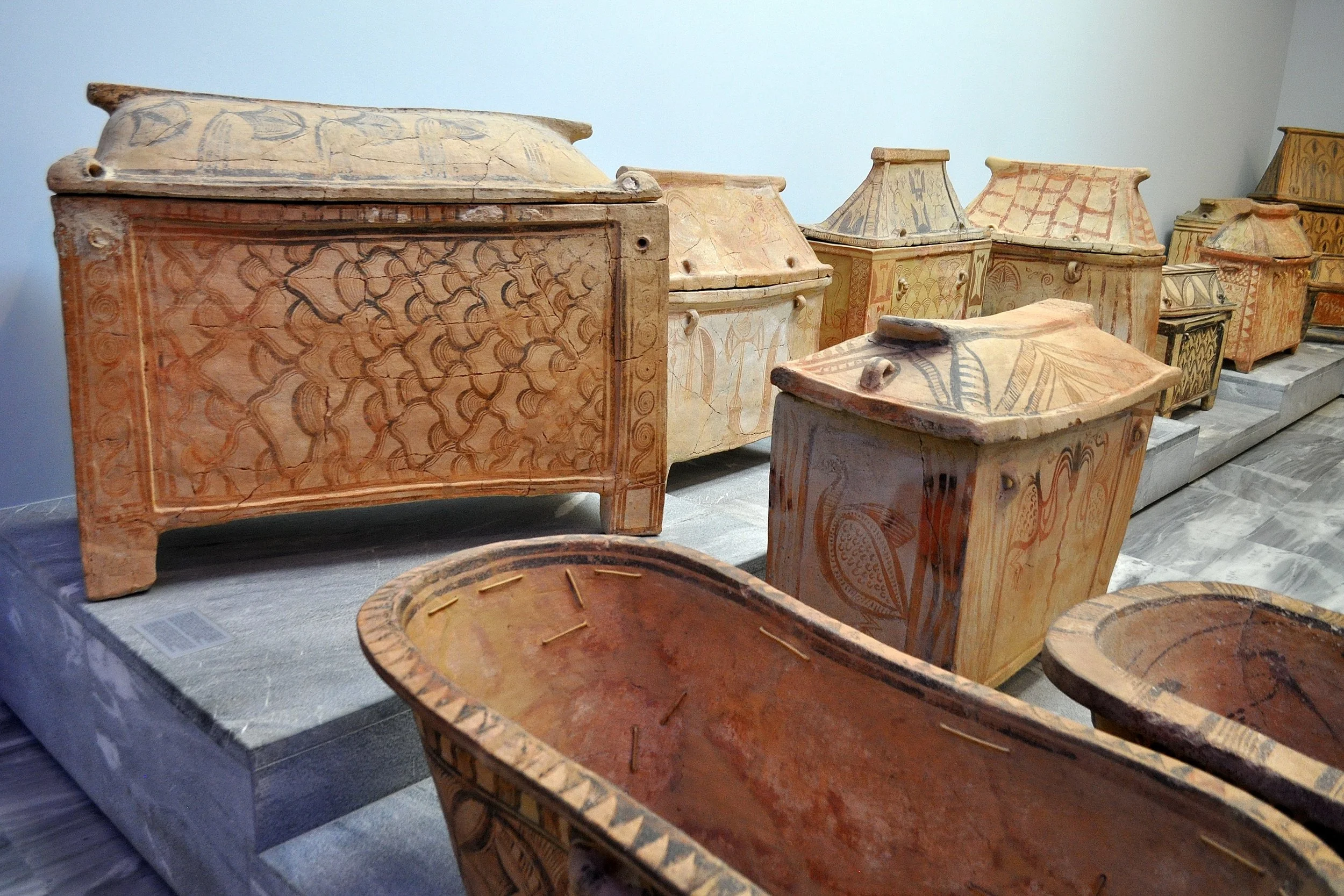


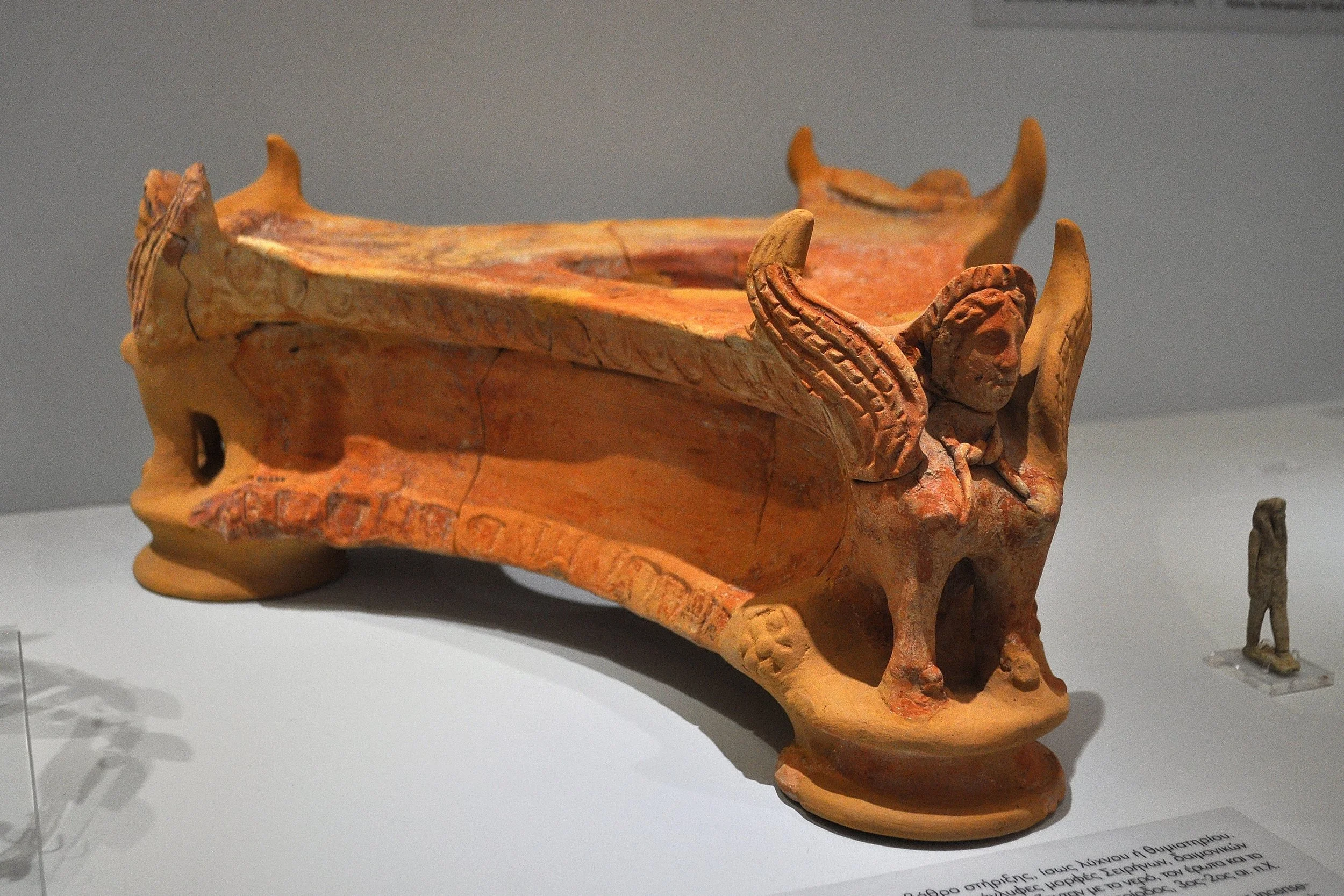

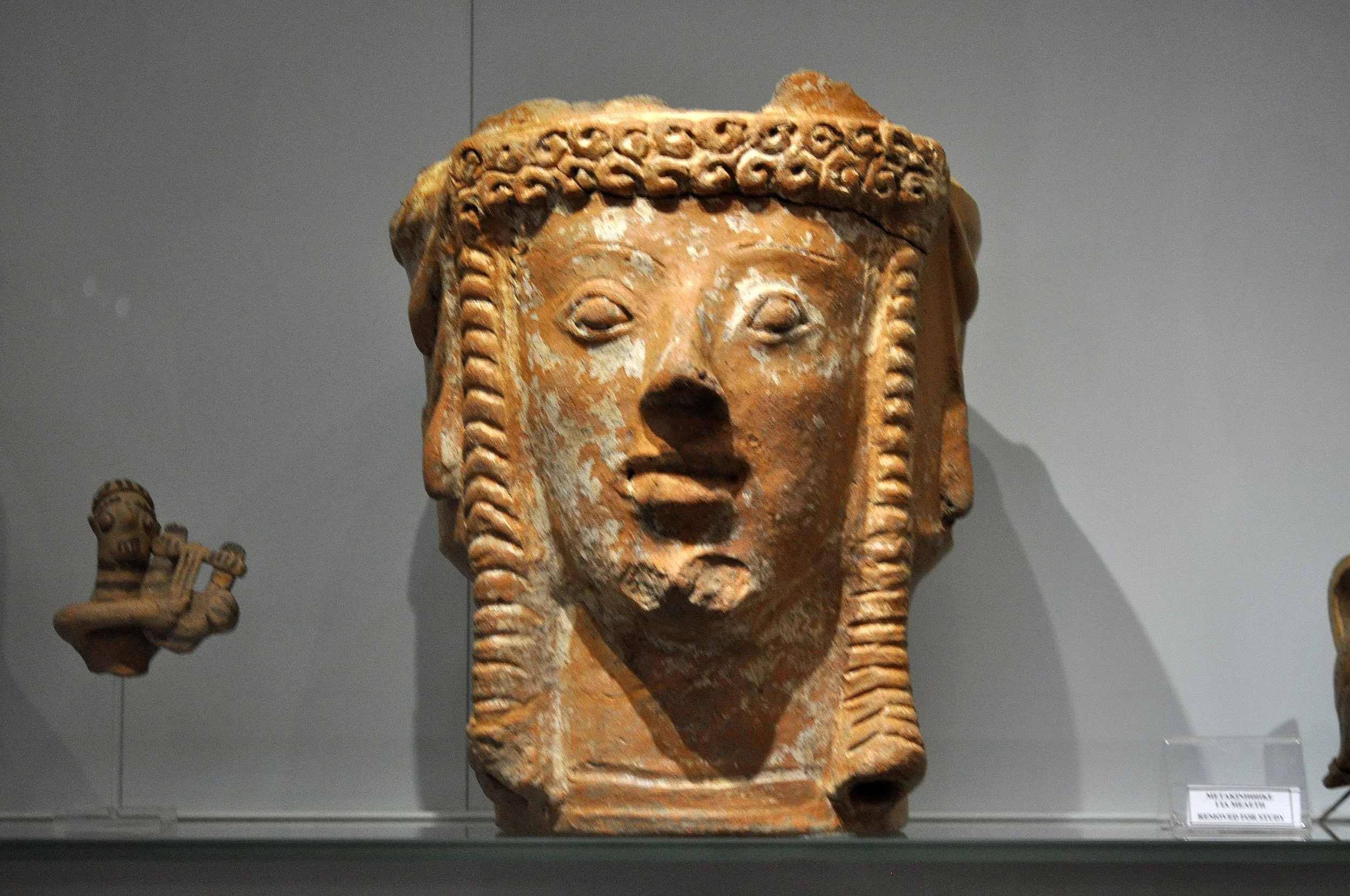


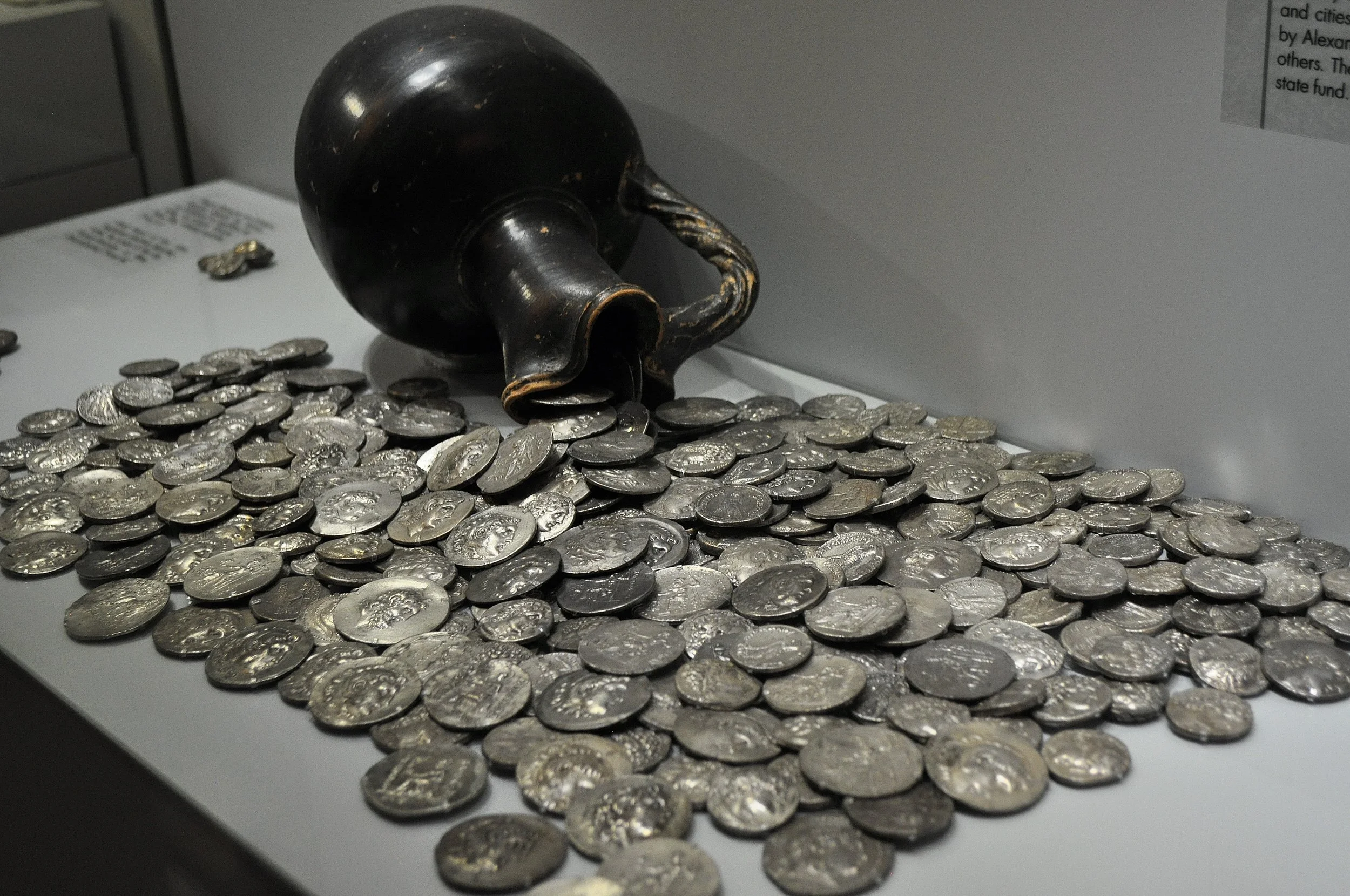
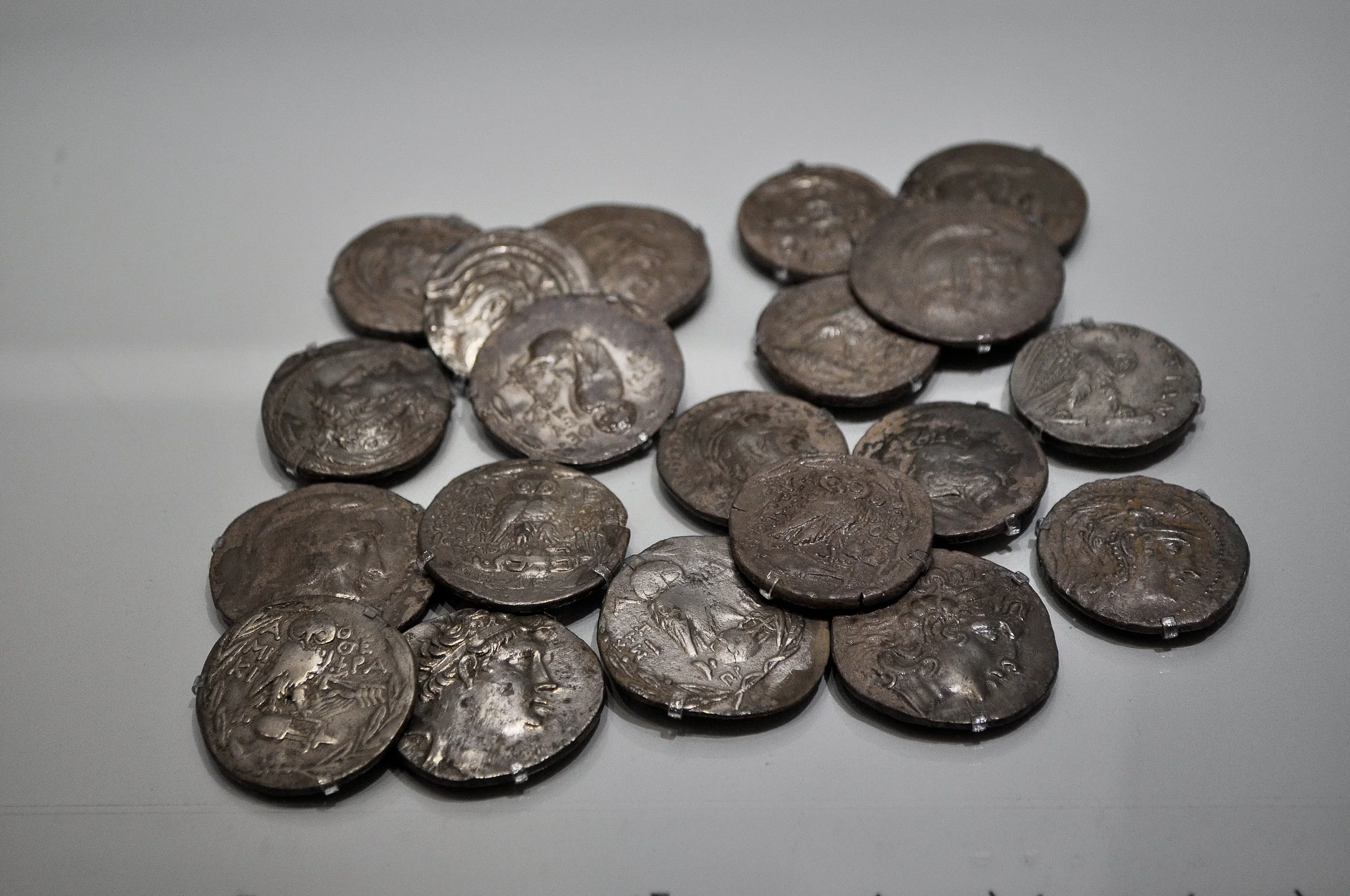


Piero: we entered to see ancient objects. But we left having truly discovered the Minoans in depth. After this experience, they are no longer just an ancient civilisation — they have become real. And that is why we will never forget this museum. Enjoy it with us in this video:
Angela: as soon as we left the museum, we headed towards the sea.
Piero: we begin our visit to the city. A necessary premise: it is not an unforgettable city, but it is certainly worth spending a few hours here after visiting the museum.
Angela: our visit to Heraklion begins at the harbour, with its lively scene of colourful boats, fishing nets, fishermen arranging their catch, and a salty breeze filling the air.
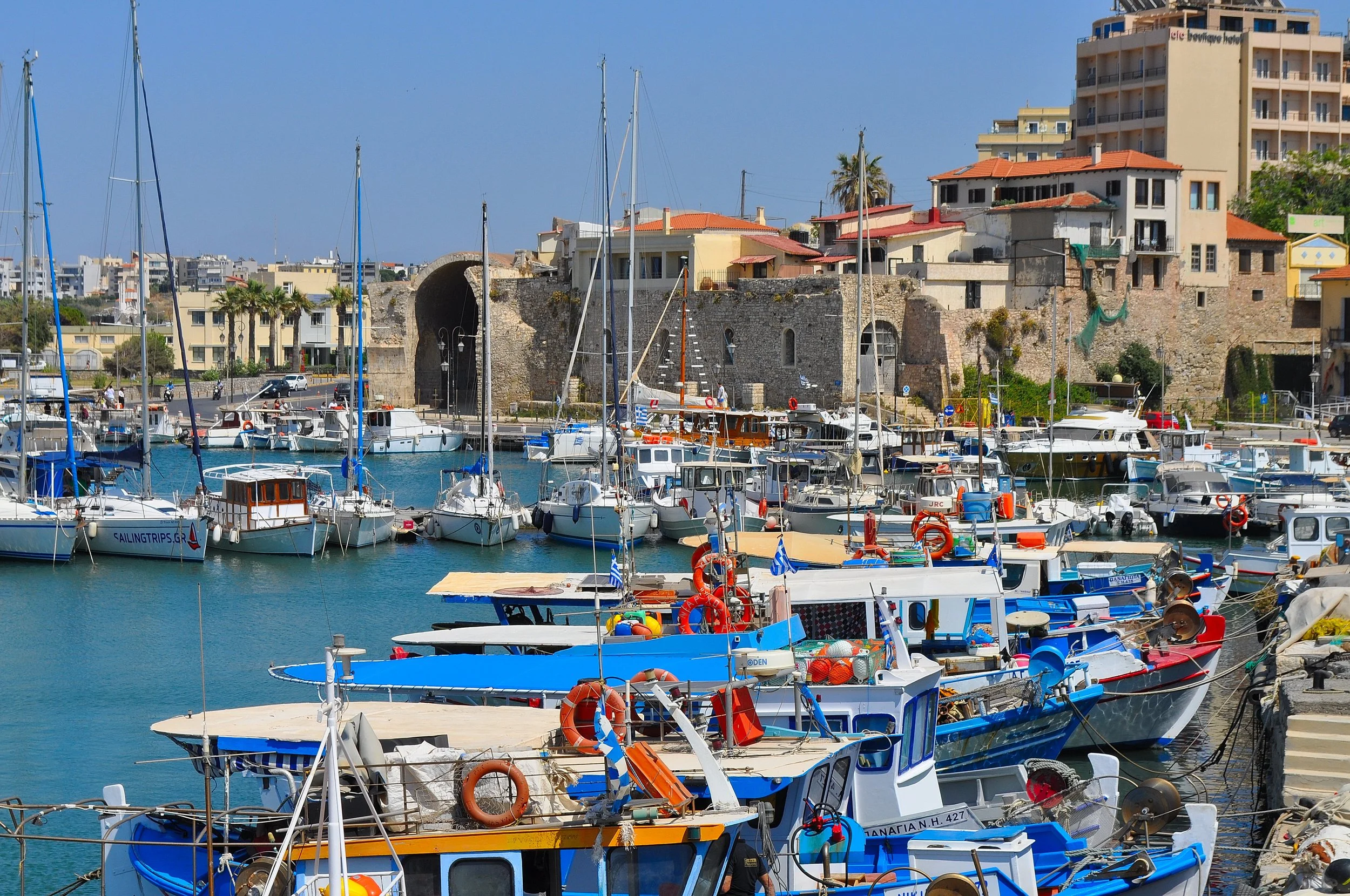
Piero: the harbour is a place of authentic everyday life. Seagulls circle overhead, the boats gently sway on the water, and in the background rises the massive silhouette of Koules Fortress. A silent guardian watching over the horizon.
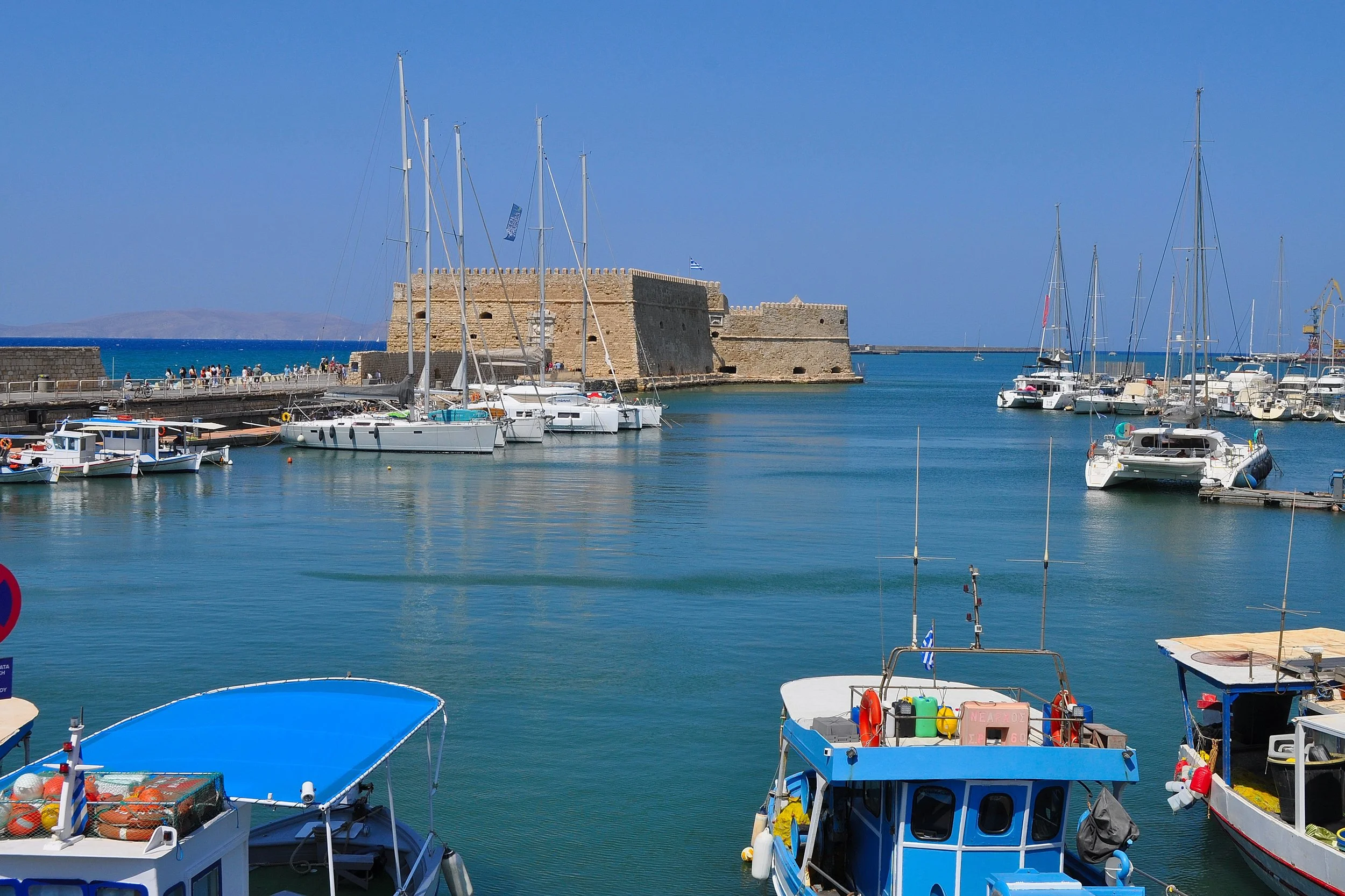
Angela: we walked along the pier, enjoying the scent of the sea and experiencing the slow, ancient rhythm of this harbour—a crossroads of stories and cultures. The wooden boats, the vibrant colours, and the fishermen chatting together: everything tells the story of a tradition that is still alive today.
Piero: leaving the harbour behind, we ventured towards the historic centre. Our first stop was the Cathedral of Saint Titus, dedicated to the first bishop of Crete.
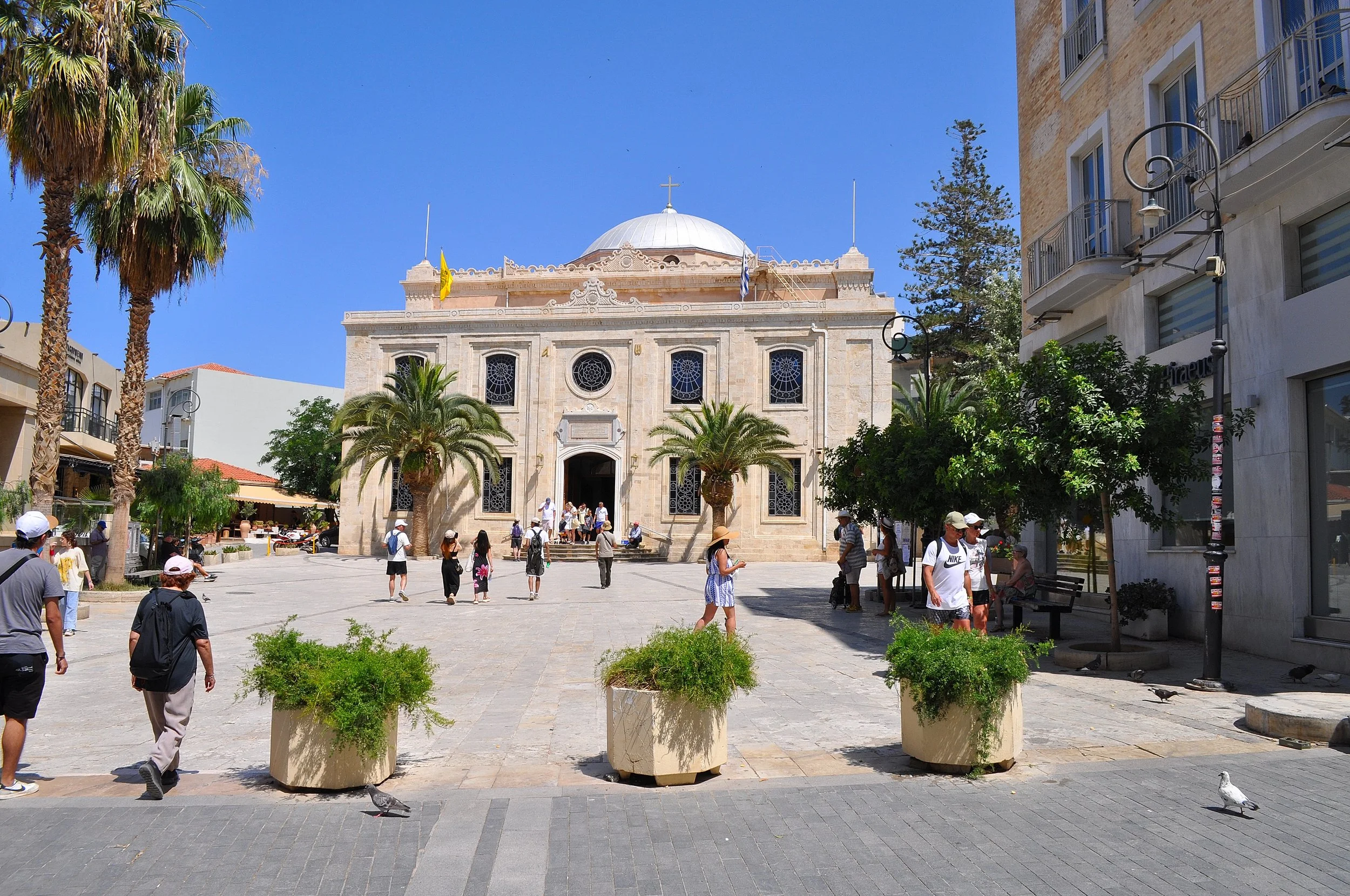
Angela: a church filled with light and spirituality, with Byzantine icons and an atmosphere that invites you to slow down and reflect. We were struck by the history of this cathedral, which has been destroyed and rebuilt several times, just like the city itself.


Piero: from there, we reached the Venetian Loggia, an elegant Renaissance building with arcades and columns, once the seat of Venetian power and today the administrative heart of the city.
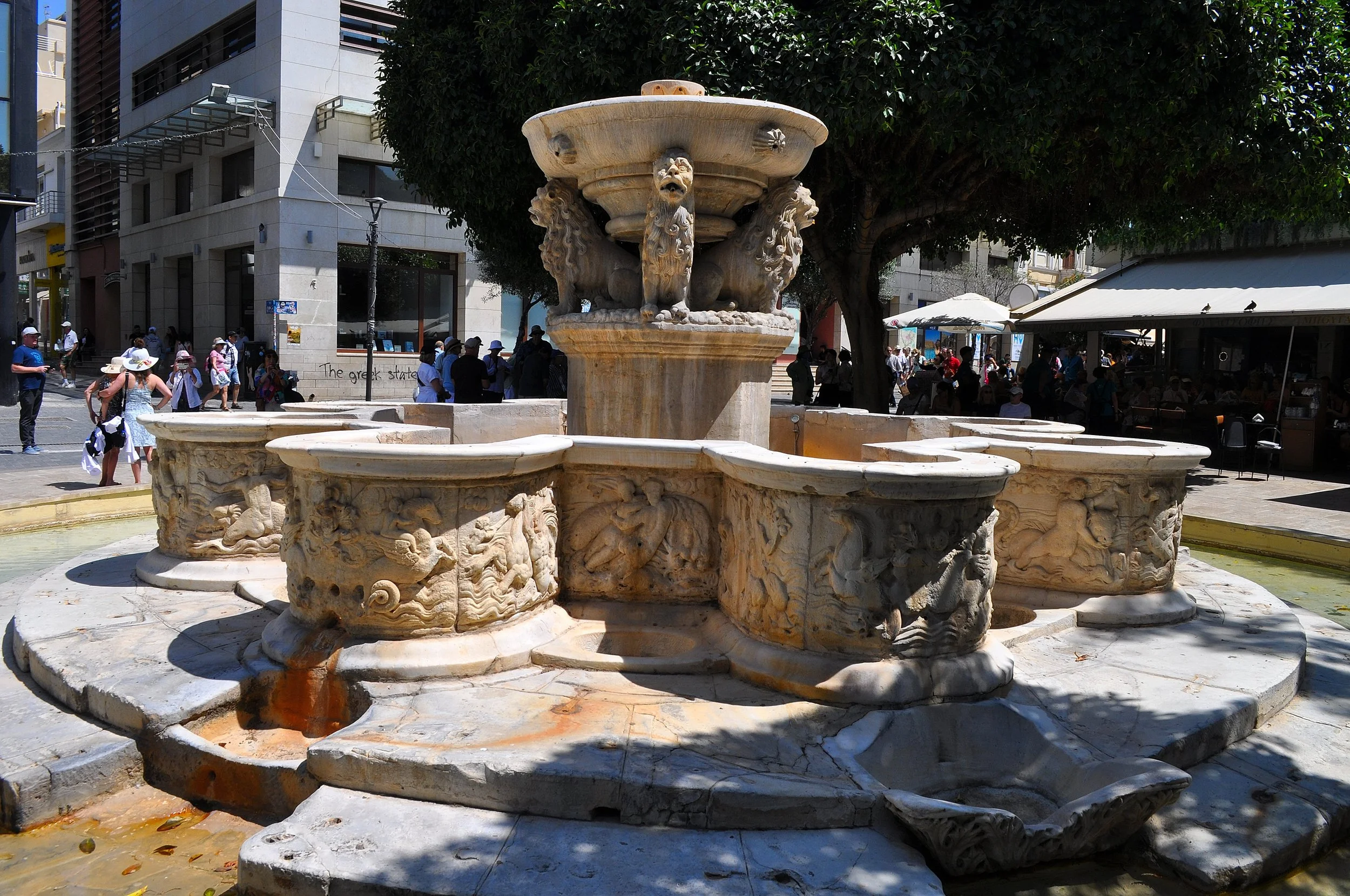
Angela: and finally, our walk led us to the Morosini Fountain, with its four carved lions that still pour out fresh water today. Around it, the lively atmosphere of small markets, cafés, and people enjoying everyday city life.
Piero: with the sun now high above us, we returned to the harbour for a slow, almost meditative walk. Koules Fortress, seen up close this time, revealed all of its impressive strength and grandeur.


Angela: we walked along its walls, listening to the sound of the waves crashing against the rocks, while the powerful afternoon sun painted it with a deep ochre glow. The perfect ending to our visit.
Piero: Heraklion is all of this: a mix of life, history, sea, and resilience. A city that, despite everything, takes you by the hand and leads you from the past to the present in a single, unforgettable breath.