The beaches of Crete, between memory and dream
Piero: there is one thing that accompanied us everywhere in Crete, at every stop, every break, every glance: the sea. Vast, crystal clear, and ever-changing. A sea that sometimes glows emerald green, sometimes deep cobalt blue, and at other times reflects the golden light of the sunset like a liquid mirror. Always present, always different.
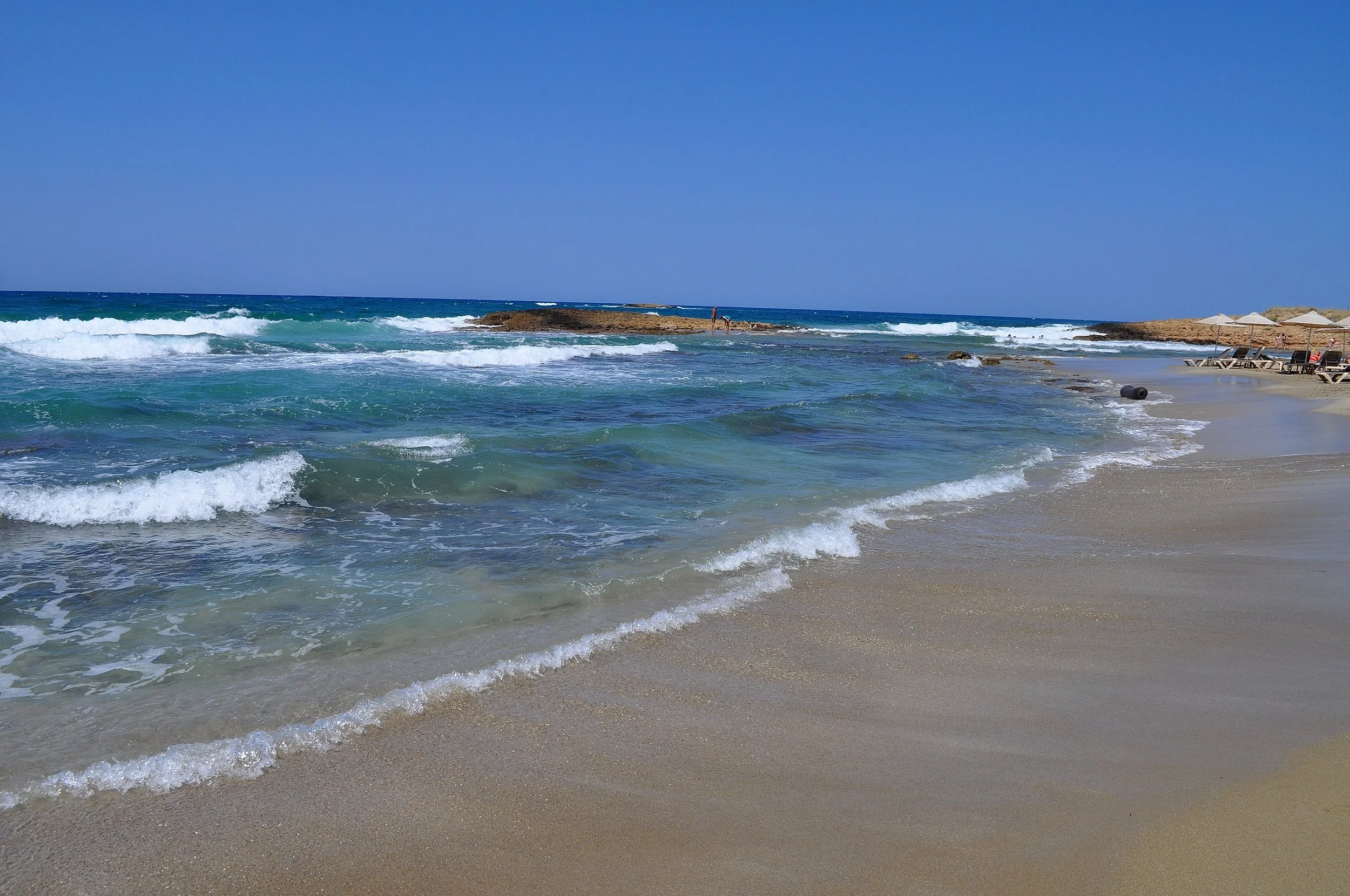
Angela: and it is not just an impression. Crete boasts more than 500 kilometres of coastline, with some of the finest water quality in the entire Mediterranean. In 2024, more than 120 beaches on the island were awarded the Blue Flag, the international recognition for outstanding water quality, safety, services, and environmental sustainability.
Piero: and we are not talking only about the famous beaches. Every corner of the island hides small coves, secluded inlets, and tiny beaches overlooking crystal-clear bays, many of them accessible only on foot or by boat.
Angela: the sea of Crete is more than just scenery — it is the island's identity, its memory, its promise. It is the sea of myths and ancient trade routes, of fishermen and sailors, of invasions and departures. A sea that welcomes and protects, yet also tells the story of the rugged strength of this land.
Piero: and so every swim, every pause by the shore, every walk along the water's edge offered something different. A new shade of blue, a different breeze, a new feeling to take home. And now that we have returned, it is precisely that sea that we miss the most.
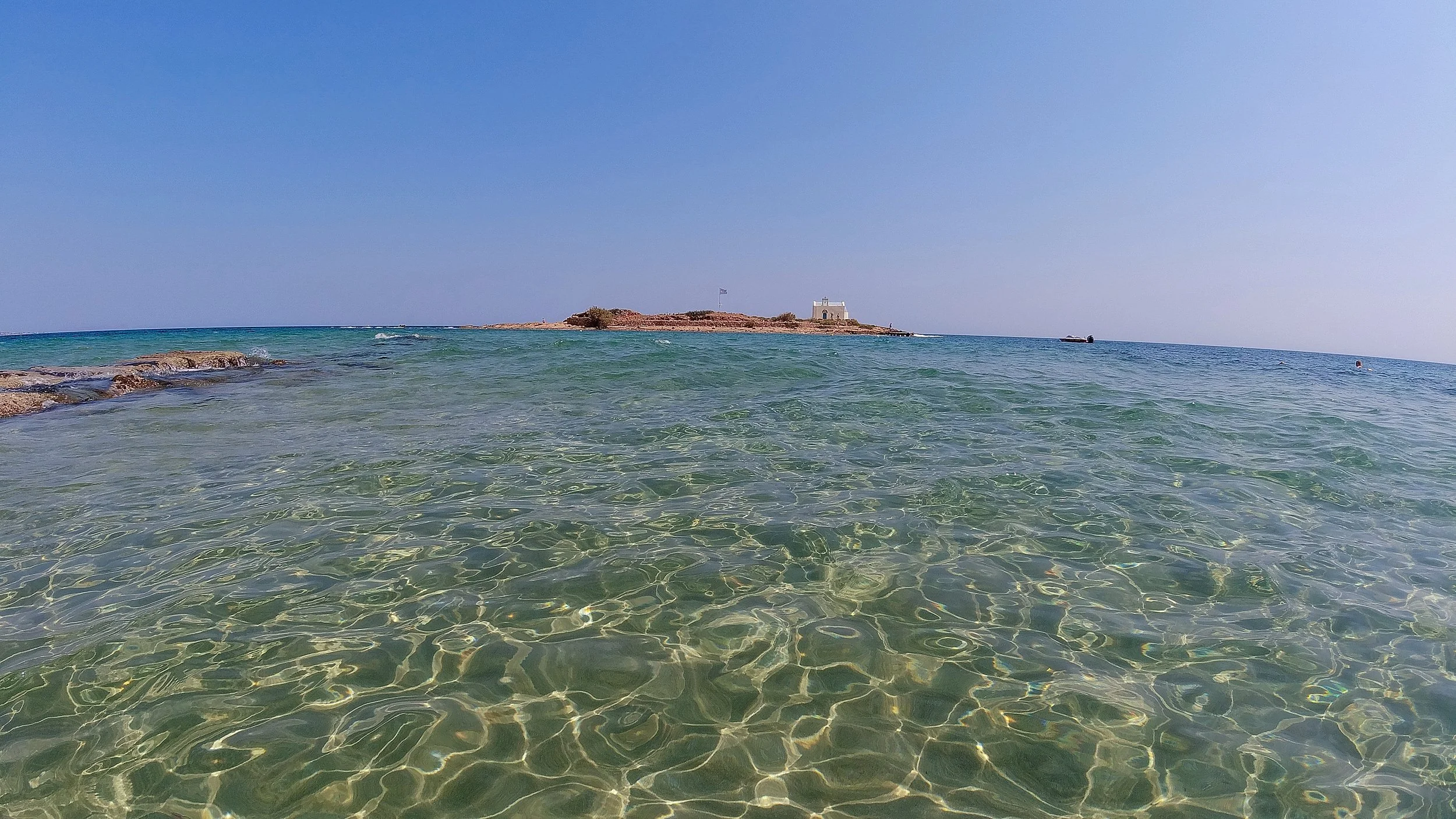
Angela: we spent a lot of time on the beach, but we actually visited only a few of Crete's most famous beaches.
Piero: but we certainly can't complain. We chose Matala.

Angela: that's true—beautiful and easy to reach.
Piero: Matala suddenly appears before you, framed by golden cliffs and a beach of soft sand. The first thing that catches your eye is the series of caves carved into the limestone cliff, like wide-open eyes overlooking the bay.
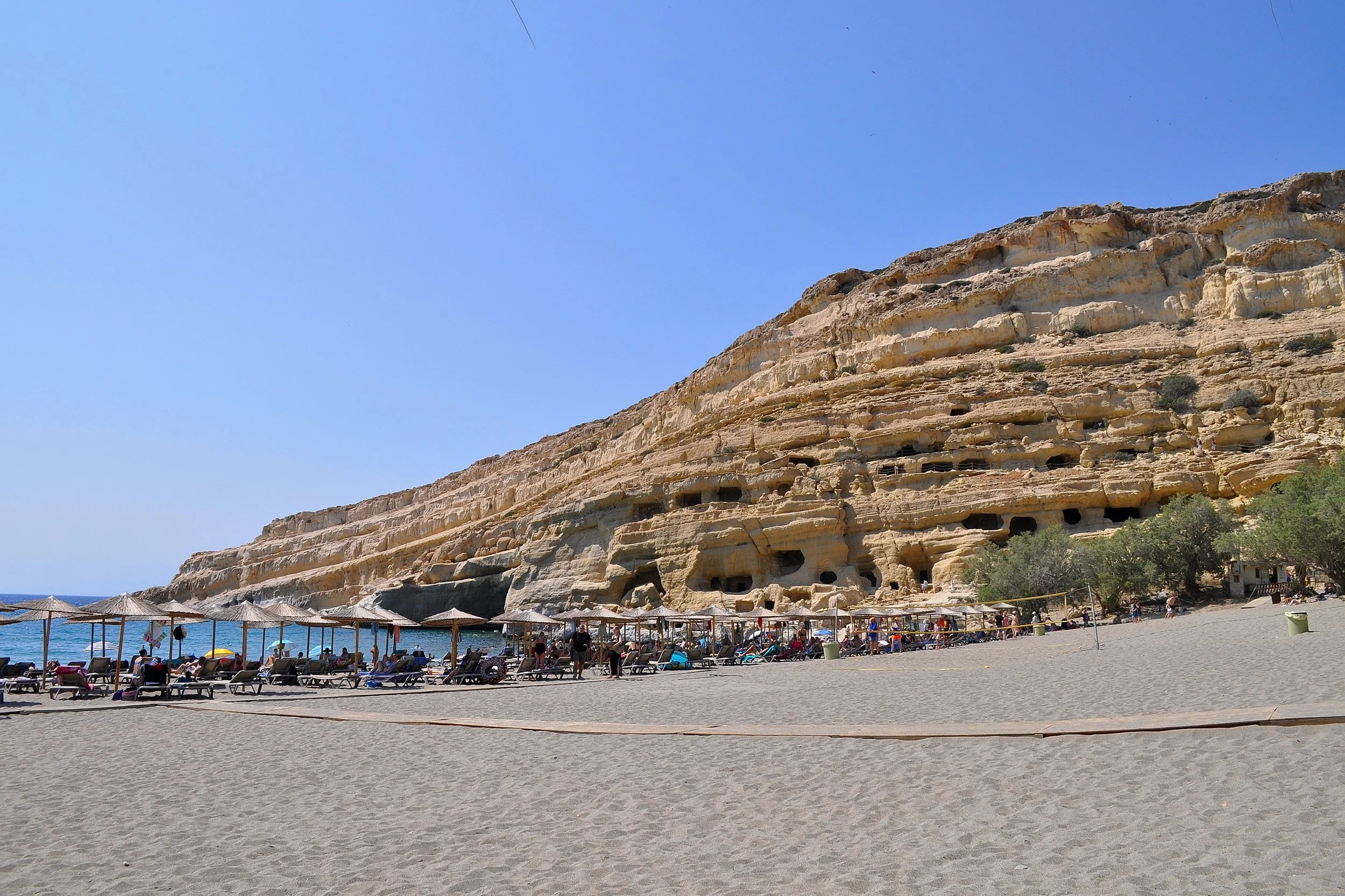
Angela: they may look natural, but many of them were actually carved by human hands. They date back to the Neolithic period and were later used by the Romans as tombs. Stepping inside them feels like travelling back in time: bare chambers, small windows, and niches carved into the rock. The sound of the sea drifts in softly, while the wind fills the air with an almost haunting atmosphere. It's a pity they've now been fenced off and require an entrance ticket. And the path leading to the top isn't exactly easy either—especially for someone who suffers from vertigo, like you.


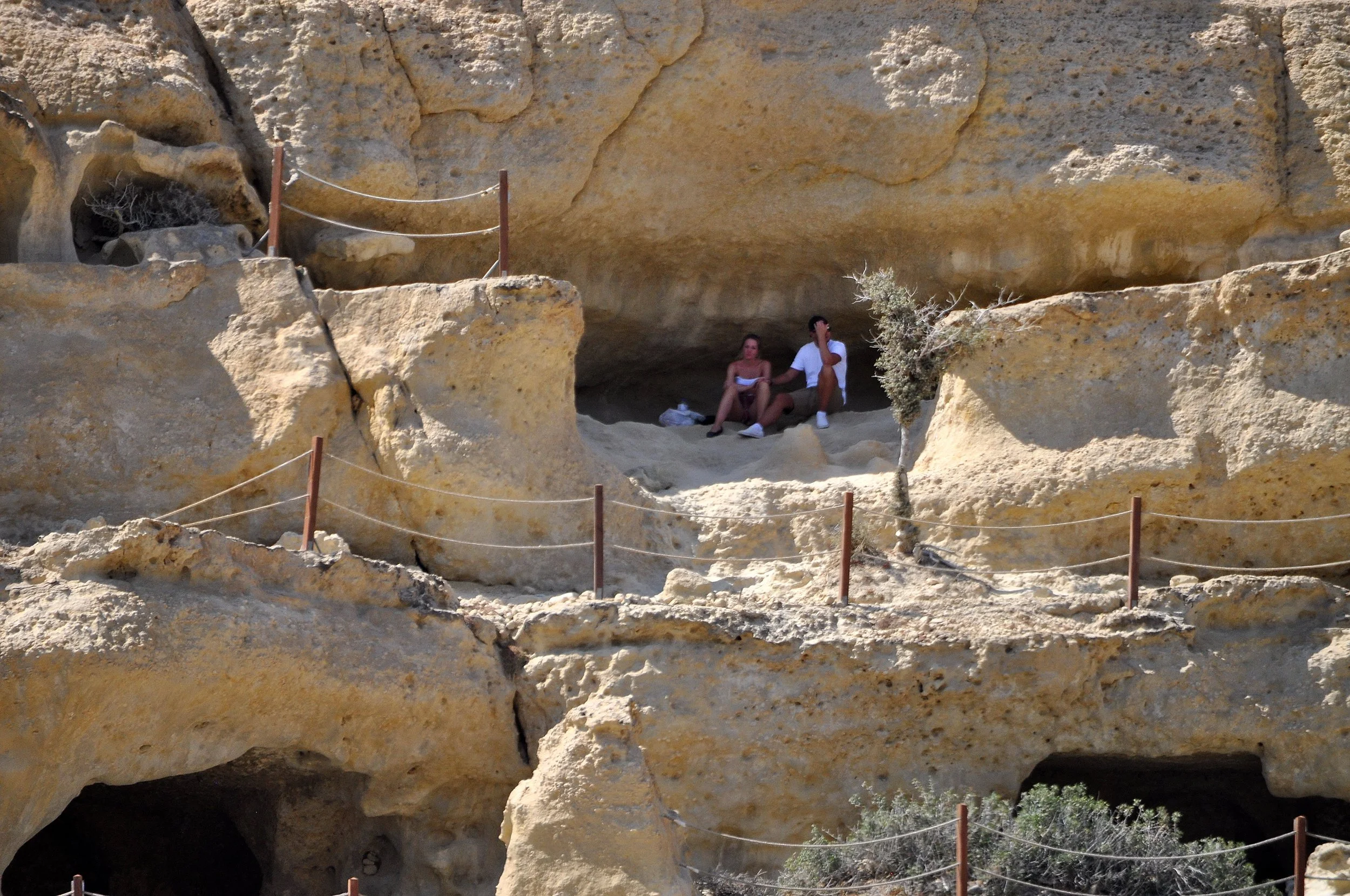


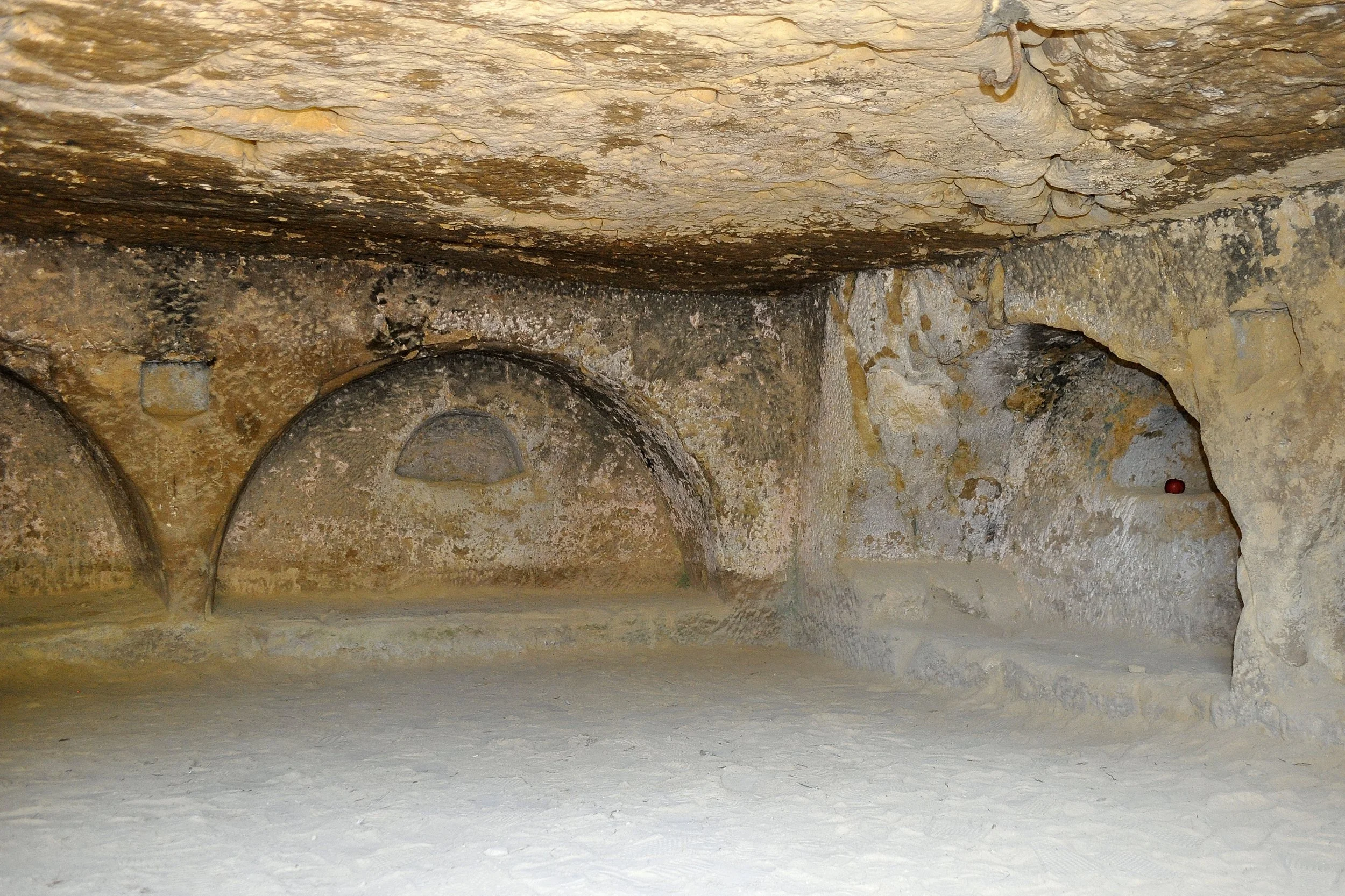
Piero: and yet they are more than just an archaeological site. Because in the 20th century, these very caves welcomed a completely different kind of inhabitants: the hippies. During the 1960s and 1970s, Matala became a refuge for those searching for freedom, poetry, and music—a place to live outside the rules, close to nature and far from the rest of the world.
Angela: young people from all over Europe came to live here, and even Joni Mitchell wrote a song inspired by this bay. The caves became improvised homes, filled with blankets, guitars, words carried by the wind, and fleeting summer romances. That era is long gone, but Matala still preserves its spirit through colourful murals, painted walls, and a sculpture bearing the words: "Today is life, tomorrow never comes."
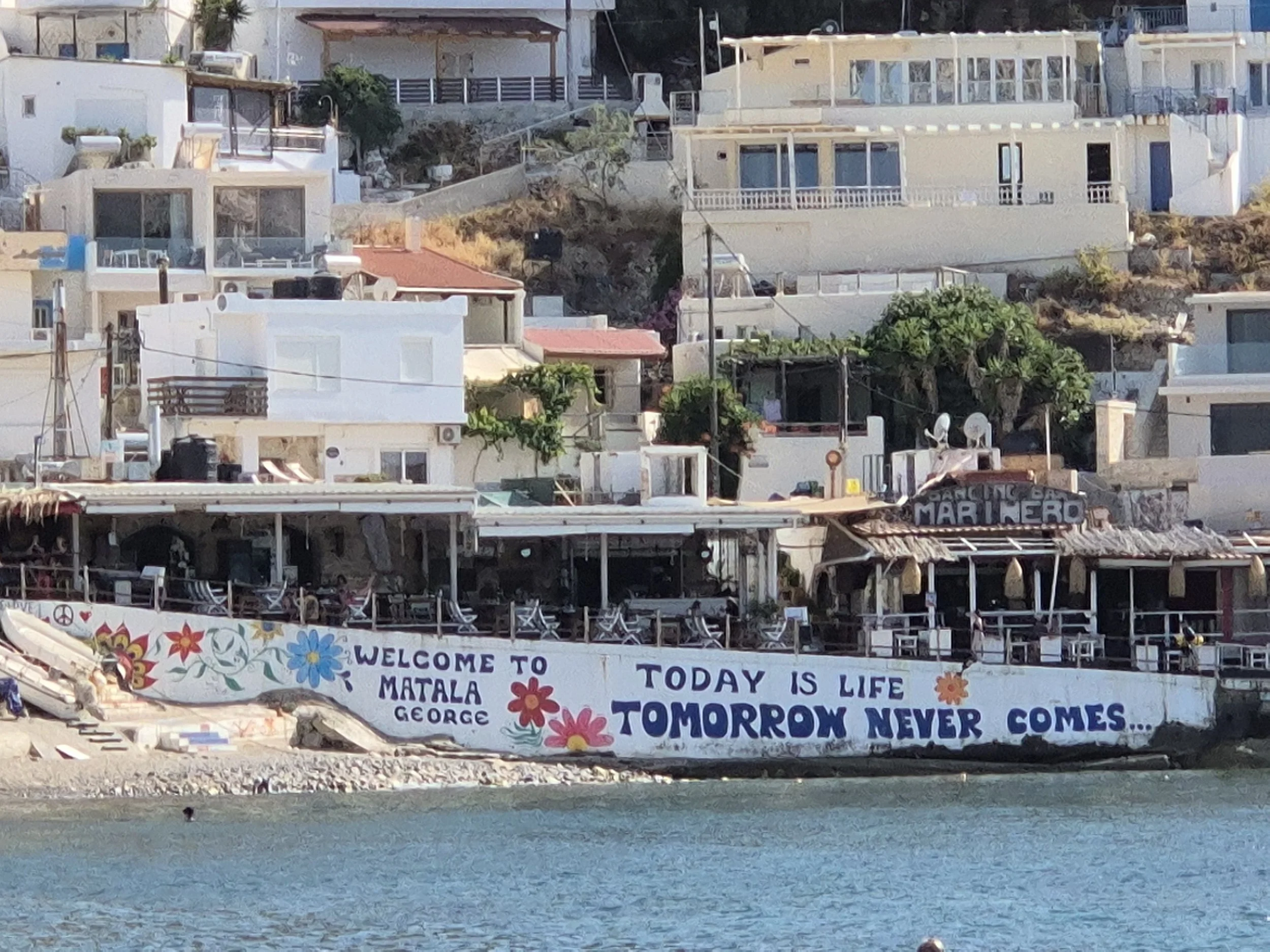
Piero: today, Matala has become a popular tourist destination, of course, and the market stalls sell more T-shirts than dreams. But if you come here with the right frame of mind, you can still feel that lingering spirit—the desire to live lightly and to search for something that cannot be bought.


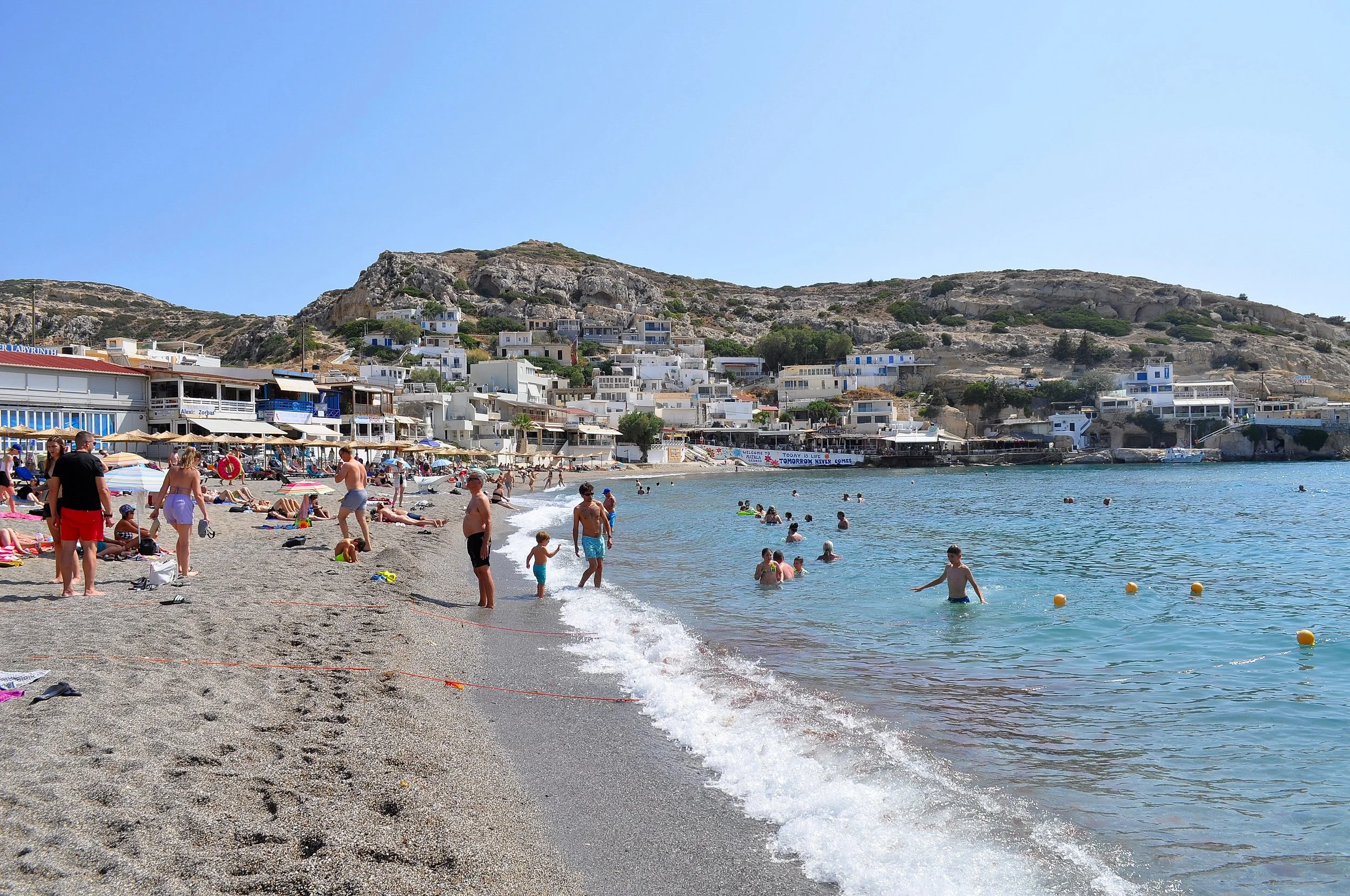


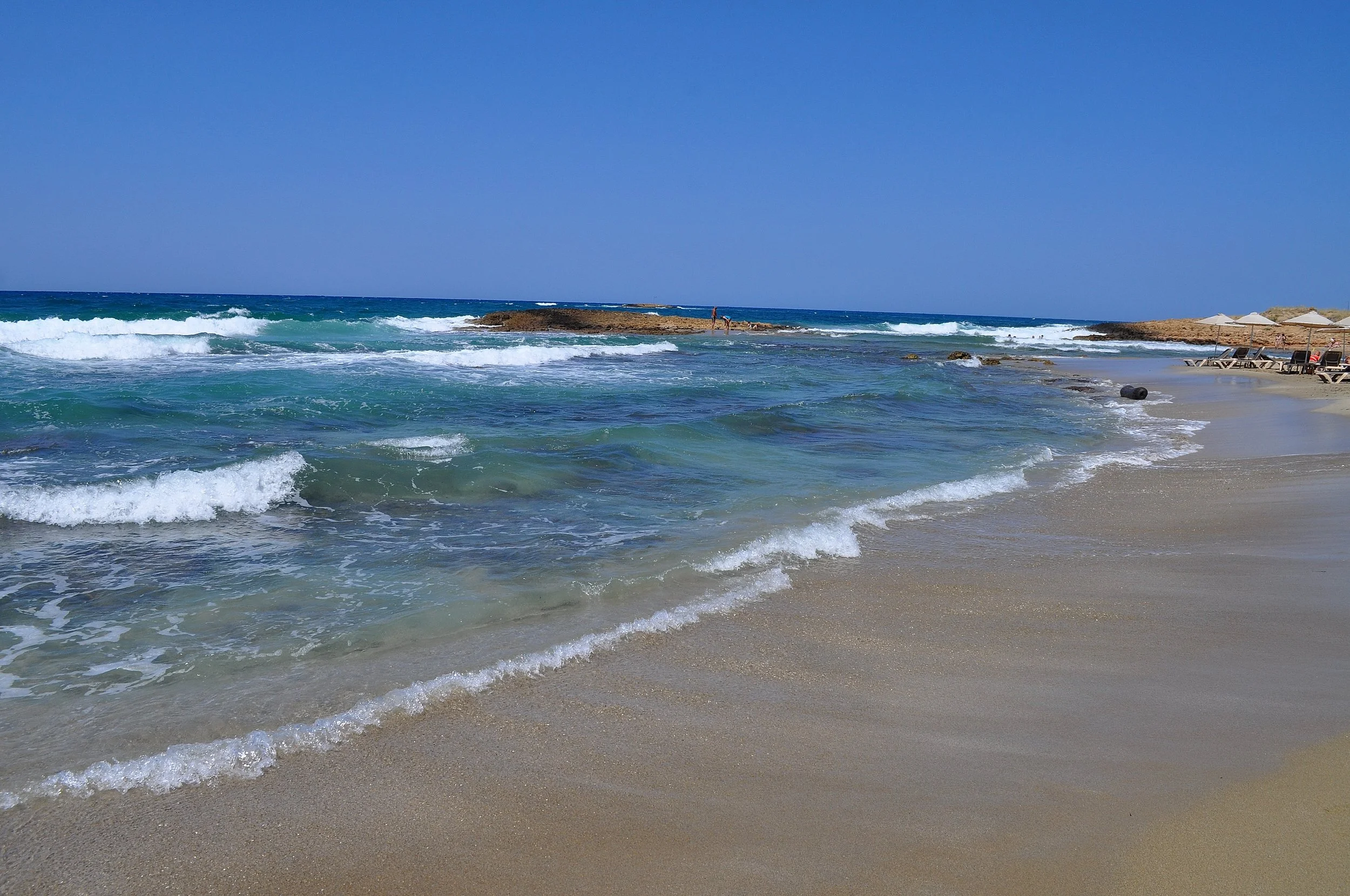
Angela: the beach, however, remains truly beautiful. A long golden curve facing a crystal-clear sea, with that rocky cliff seeming to protect the entire bay. And taking a swim here, surrounded by the waves and the echoes of history, is something you will never forget.

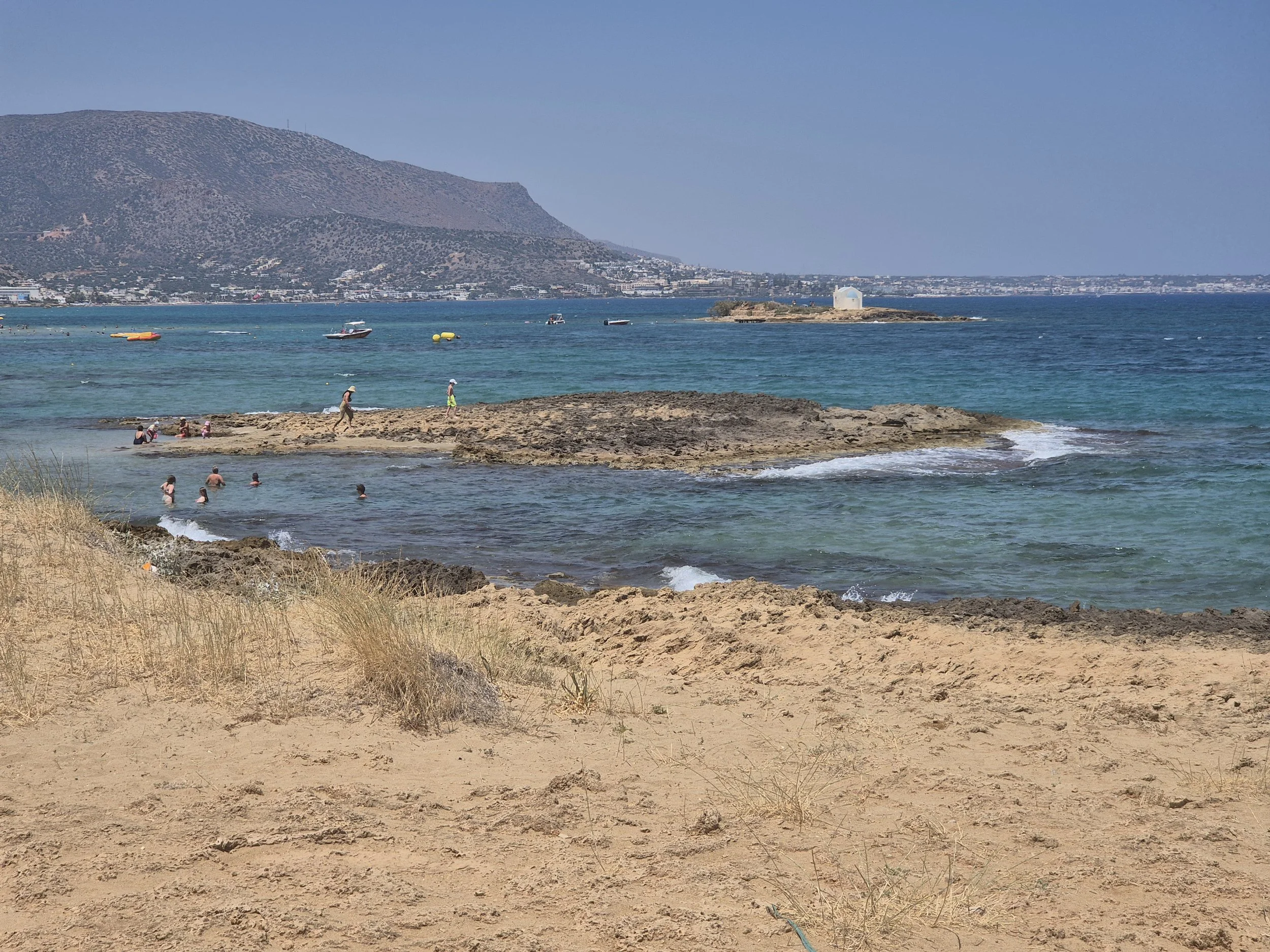
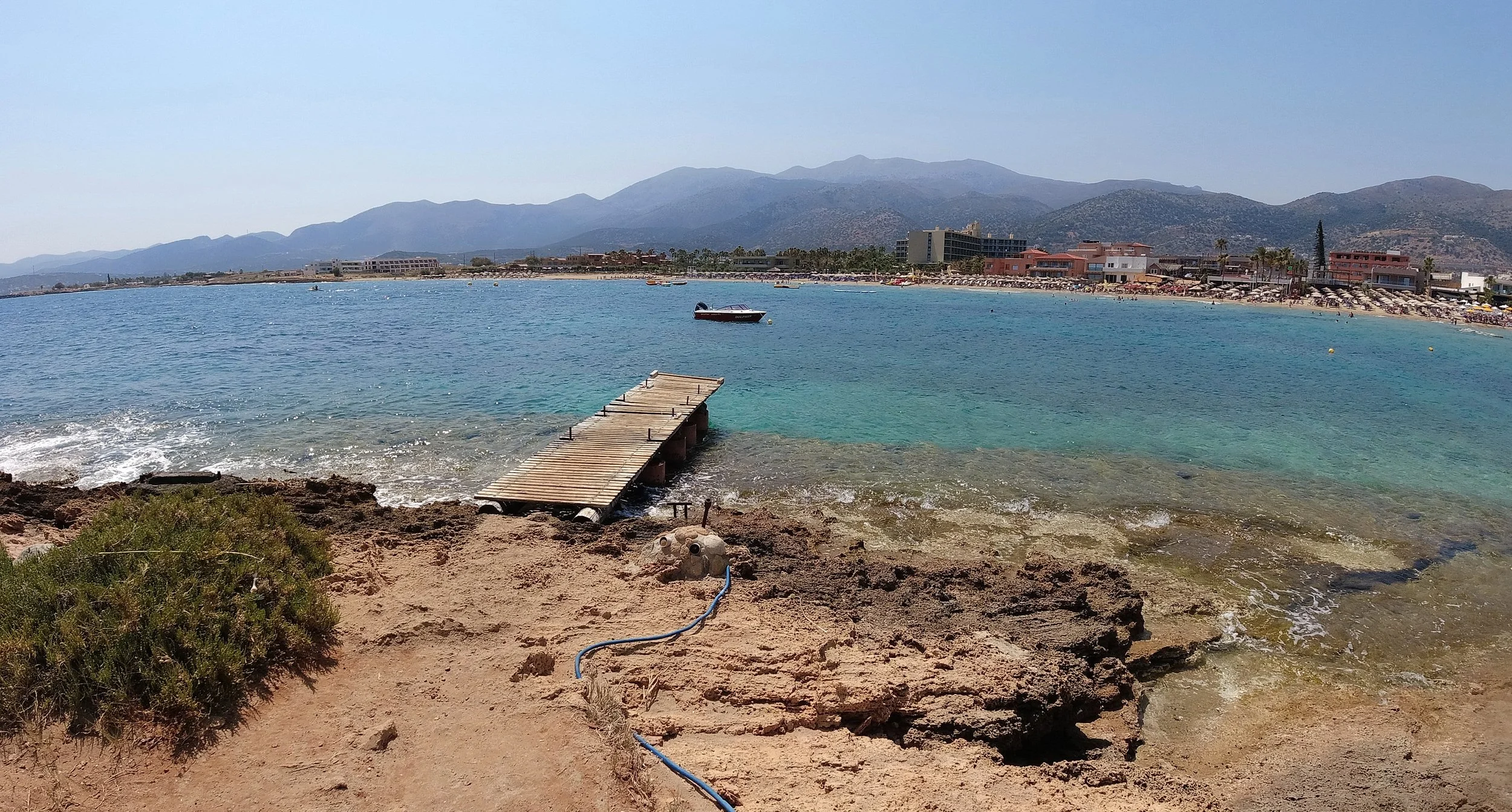
Piero: further north, after days spent exploring ruins, cities, and coastlines, we enjoy our home base: Malia. Its beach is wide, sandy, and perfect for relaxing. Neatly arranged umbrellas, seaside bars, and a long stretch of coastline where you can walk barefoot.

Angela: it does not have the wild soul of Matala, nor the mystery of the Agios Nikolaos lagoon, but it has the feeling of familiarity, of returning. It is the place where you catch your breath, where you let everything settle. The place you leave from… and the place you come back to.
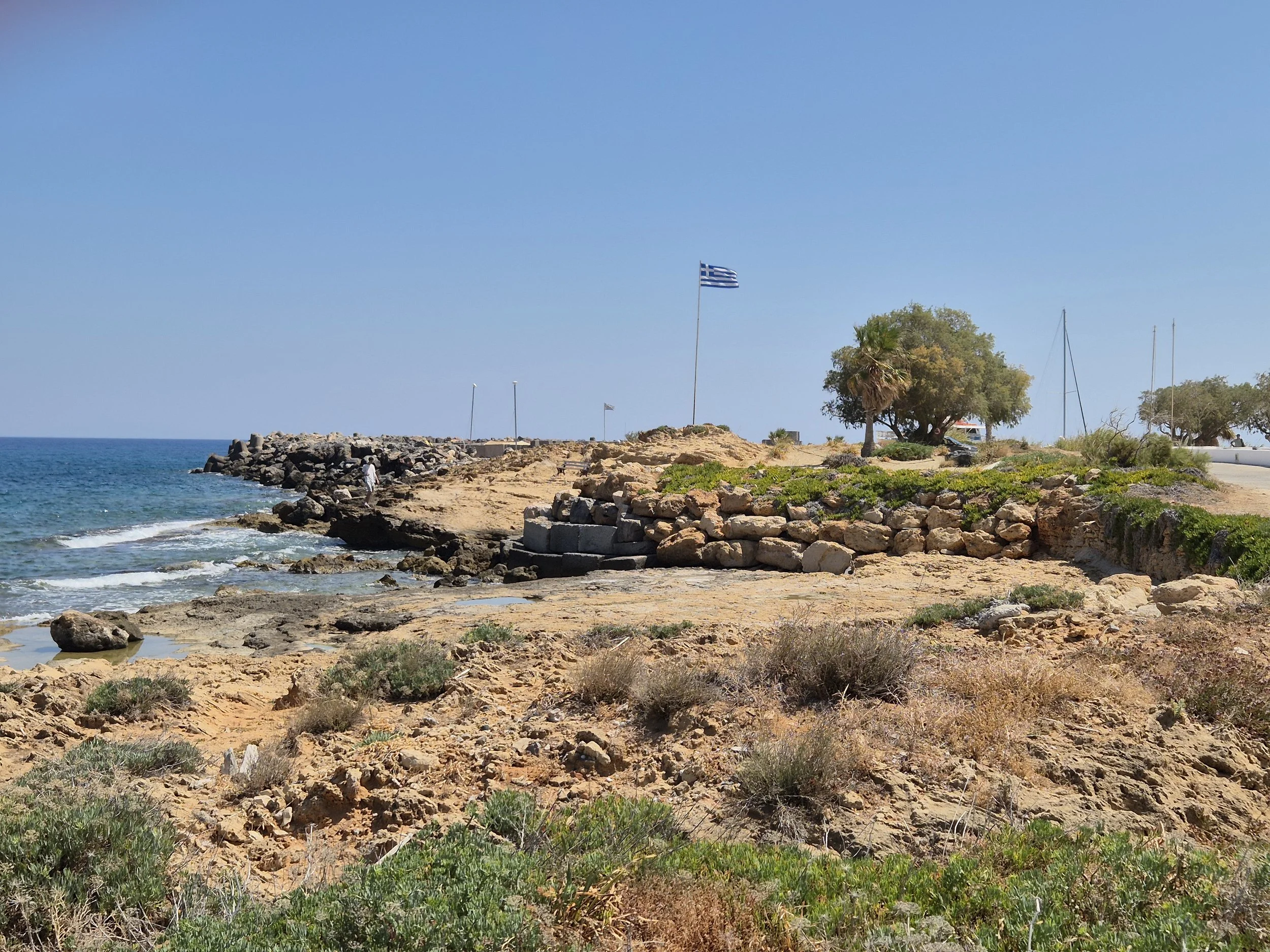



Piero: but a week in Crete is only a first embrace. Because there are beaches we have only touched with our imagination—dreamed of, marked on the map, and saved for another journey. Places that are waiting for us.
Angela: Elafonissi, with its pink sand and turquoise waters that look almost tropical. Balos, a lagoon suspended between sky and sea, reachable only by hiking or by boat. Preveli, where a river meets the sea, surrounded by wild palm trees. And then Vai, home to the largest natural palm grove in Europe, a beach with an almost exotic atmosphere. Seitan Limania, a ribbon of blue water cutting through the white rocks.
Piero: we look at them on a map, discover them through other travellers’ stories, and dream about them with our eyes wide open. But one thing is certain: we will return to find them all. Because in Crete, every beach is a story. And we can never get enough of stories.