
Marsa Alam: our adventure in the heart of the Red Sea
Marsa Alam is the perfect destination for those dreaming of the Red Sea, relaxation and untouched nature. We leave our beloved van behind and fly to Egypt to discover a surprising land of crystal-clear waters, coral reefs, desert landscapes and the incredible history of Luxor. A complete travel experience, with everything you need to know before leaving.
Piero: ogni nostro viaggio inizia sempre allo stesso modo: una cartina aperta sul tavolo, qualche guida da sfogliare e tanta voglia di partire. Questa volta, però, c'è una grande novità.
Angela: niente van e niente spostamenti da organizzare?
Piero: esatto! Per una volta abbiamo lasciato il nostro amato van. Dopo tanti viaggi on the road ci siamo concessi qualcosa di completamente diverso: uno zaino, una valigia e un volo diretto verso il sole dell'Egitto.
Angela: devo confessare che non mi dispiace per niente. Ogni tanto è bello salire su un aereo, atterrare dopo poche ore e trovarsi davanti un mare che sembra uscito da una cartolina.
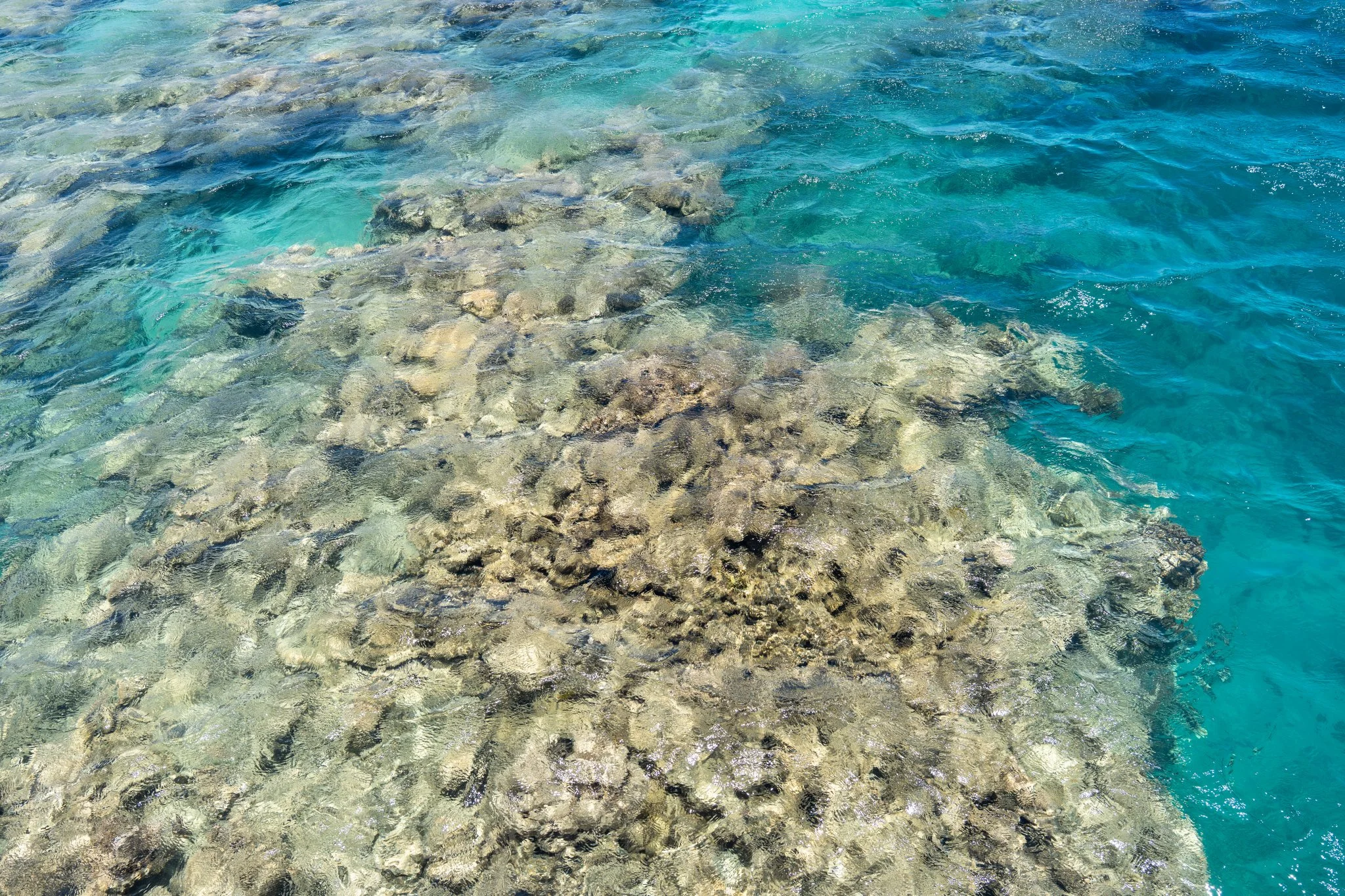
Piero: la meta scelta è stata Marsa Alam, una località che negli ultimi anni è diventata uno dei punti di riferimento per chi ama il Mar Rosso, lo snorkeling e la spettacolare barriera corallina.
Angela: non mi sembra vero che una volta tanto partiamo con l'idea di vivere una vacanza fatta solo di relax, lettini e ombrelloni.
Piero: l'idea è quella, ma non poniamoci limiti...
Angela: vogliamo sicuramente rilassarci, perché ogni tanto fa bene anche spegnere il cervello, ma conosciamo entrambi un piccolo problema...
Piero: che dopo qualche ora fermi in spiaggia iniziamo già a chiederci cosa ci sia oltre l'orizzonte!
Angela: e questo mi entusiasma sicuramente ma mi preoccupa un pò, visto che stiamo andando in una terra ricca di storia e paesaggi mozzafiato.
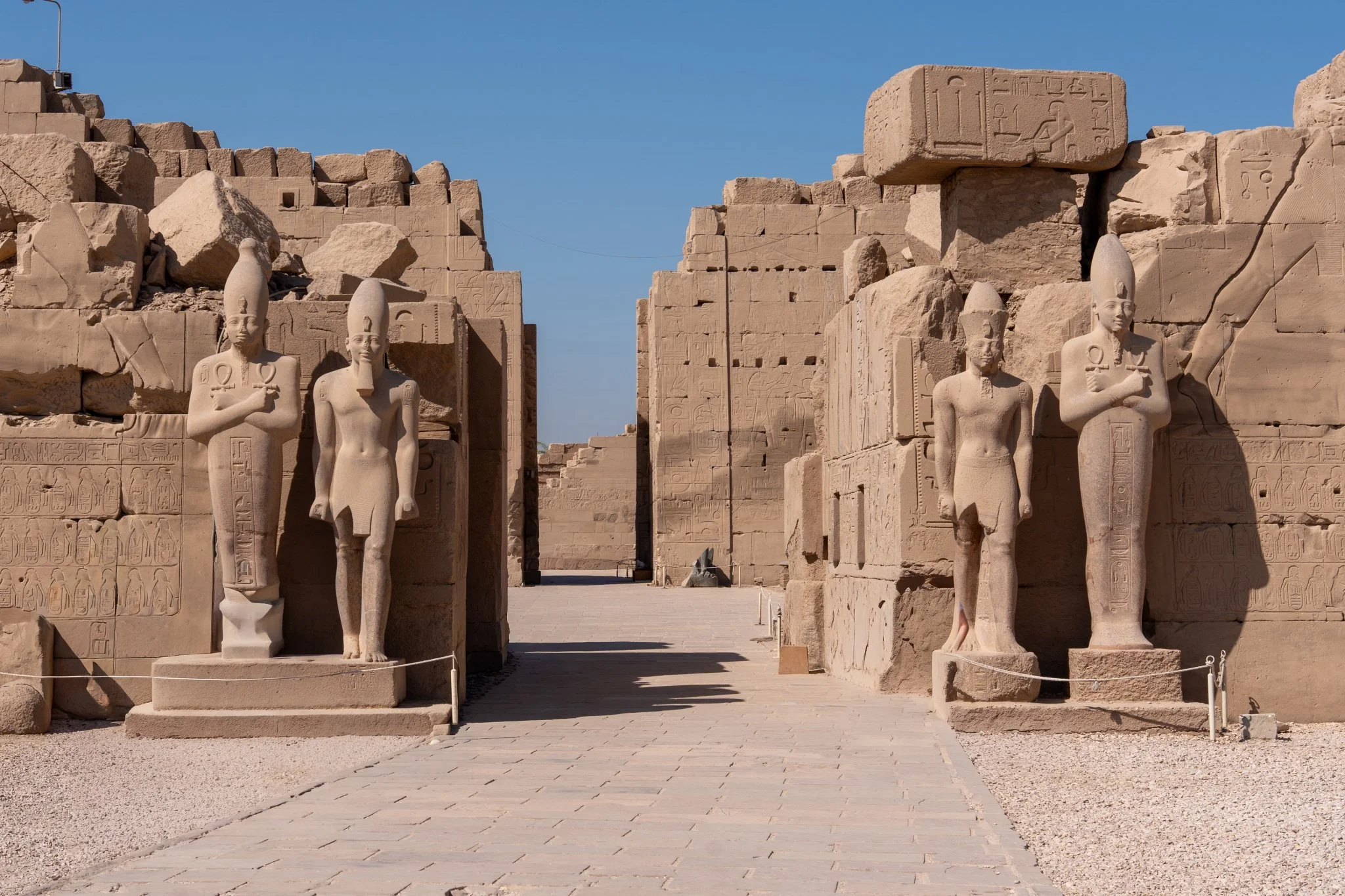
Piero: I won’t reveal anything yet, but I already have something in mind…
Angela: I’ll pretend I didn’t understand and start packing my suitcase. Do we need anything special? Do I have to do something to enter Egypt?
Piero: fortunately, not much. For Italian citizens, it is enough to have a passport with adequate remaining validity, or alternatively an identity card valid for international travel, accompanied by two passport photos if you enter using that document. We chose to travel with our passports: it’s the simplest option.
Angela: and then there is the tourist visa, which is mandatory.
Piero: it can be purchased directly on arrival at the airport, before passport control. The cost is around 25 US dollars and it is valid for thirty days. If you book a package holiday with a tour operator, the procedure is often handled directly by the organisation.
Angela: should we exchange our euros?
Piero: the official currency is the Egyptian pound, but in resorts and during many excursions, euros and especially US dollars are widely accepted. We brought some cash for tips and small purchases, while for everything else we paid without any particular problems.
Angela: when it comes to tips, it is better to always have some small notes and coins. In Egypt, tipping is part of the local culture, and it is common to leave something for waiters, drivers, guides, or resort staff. We should be prepared, because requests for tips will be frequent…
Piero: another aspect not to underestimate is the phone. Before leaving, we checked everything carefully because European roaming does not apply in Egypt.
Angela: the alternatives are a eSIM or a specific package from our mobile operator to extend data and phone coverage in Egypt. This way, as soon as we landed, we already had a data connection without having to look for a local SIM card. A really convenient solution, especially for using maps, sending messages, and sharing some travel photos. Without these precautions, phone usage can become expensive and limited to the resort’s Wi-Fi.
Piero: the heat should also not be underestimated, even though the wind, sea breeze, and low humidity can make it seem less intense. Especially during the summer months, temperatures can become extremely high. Between walks, swimming, and the many activities offered by the resorts, it is easy to become dehydrated without even realising it.
Angela: that’s why the obvious advice is to drink frequently and, above all, to pack some electrolyte supplements.
Piero: another important precaution concerns water. We always used only bottled water, avoiding tap water and paying attention to ice and raw foods as well.
Angela: and we should also be careful about temperature changes: you go from around 40°C outside to heavily air-conditioned halls, restaurants, and buses, where the temperature is often set very low.
Piero: let’s say it clearly: stomach problems are always around the corner. And you know something about that…
Angela: so it is better to be prepared, bringing the medicines we normally use for these situations, along with probiotics and everything needed to deal with possible problems without having to search for them once there.
Piero: in more delicate cases, almost all resorts have a small medical clinic on site, ready to provide assistance if needed.
Angela: before leaving, however, always check your travel health insurance carefully. A visit or treatment can solve the problem quickly, but without proper coverage, the bill could be anything but pleasant.
Piero: last detail, but always useful: electrical sockets.
Angela: great news! Most hotels in Marsa Alam use the same Type C and Type F sockets that we use in Italy, so we didn’t need any adapter.
Piero: in short, careful but simple preparation. A few document checks, the suitcase ready, and a great desire to dive into the blue waters of the Red Sea.
Angela: and now that everything is ready… we can finally take off. Four hours of flight, just a little waiting time at the airport, a transfer of about one hour, and we’ll finally be on the beach!
The charm of the Red Sea: beaches, coral reefs, and marine life
Discover the stunning beaches of Marsa Alam, where the desert meets the crystal-clear waters of the Red Sea. Explore vibrant coral reefs, colourful tropical fish, and incredible marine life accessible directly from the resort jetties. Find out why Marsa Alam is one of the world's top destinations for snorkeling and diving.
Piero: if I had to describe Marsa Alam with a single image, I would choose, without hesitation, a tongue of desert stretching into the Red Sea.
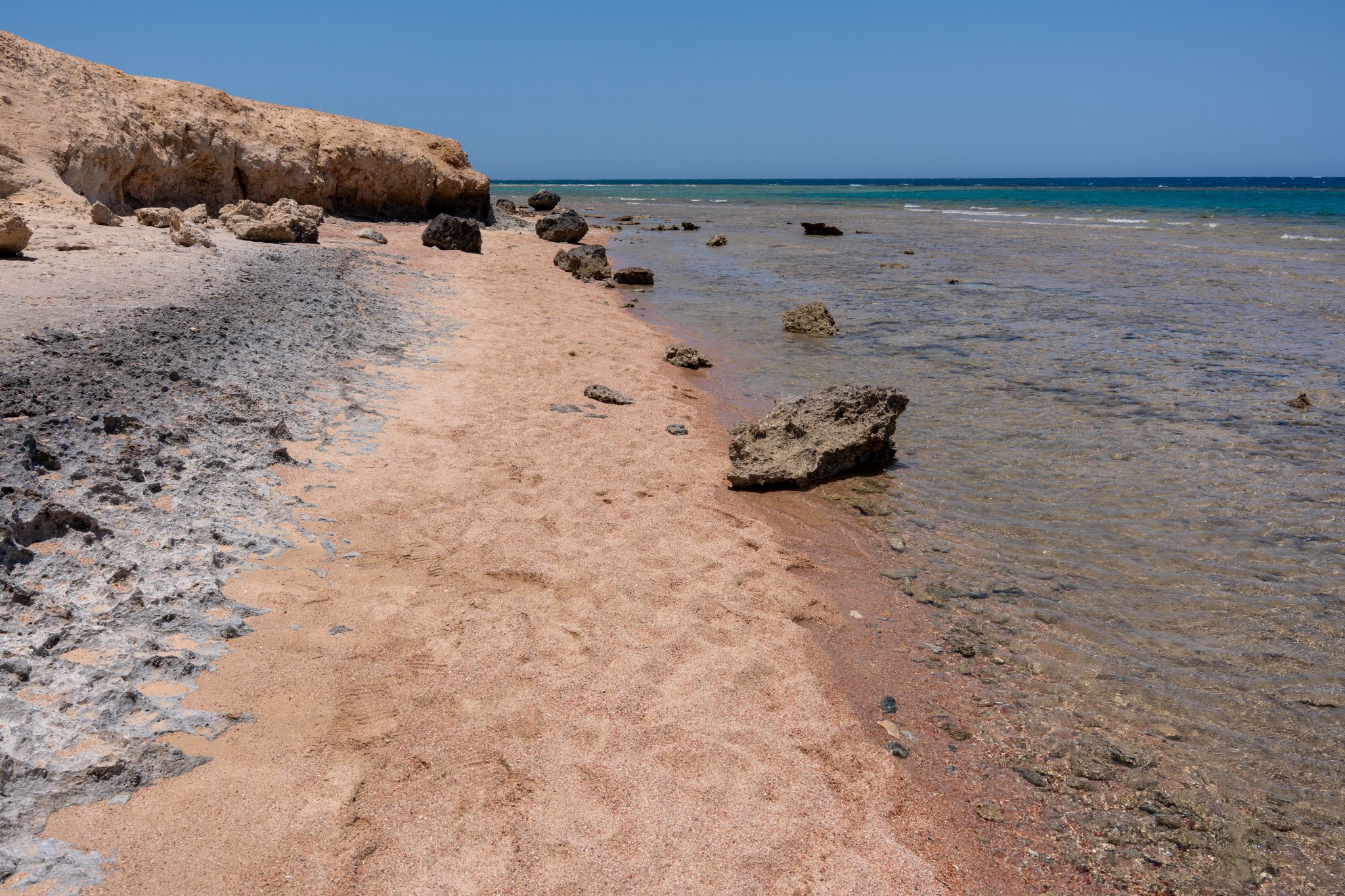
Angela: it was also the reason why we found ourselves taking long walks every day. Not to reach a particular destination, but simply to enjoy a landscape that constantly changed with the light.
Piero: the contrast is truly breathtaking. Behind us lie the rugged desert mountains; in front of us, the Red Sea, with incredible shades shifting from turquoise to the deepest blue, and even emerald green.
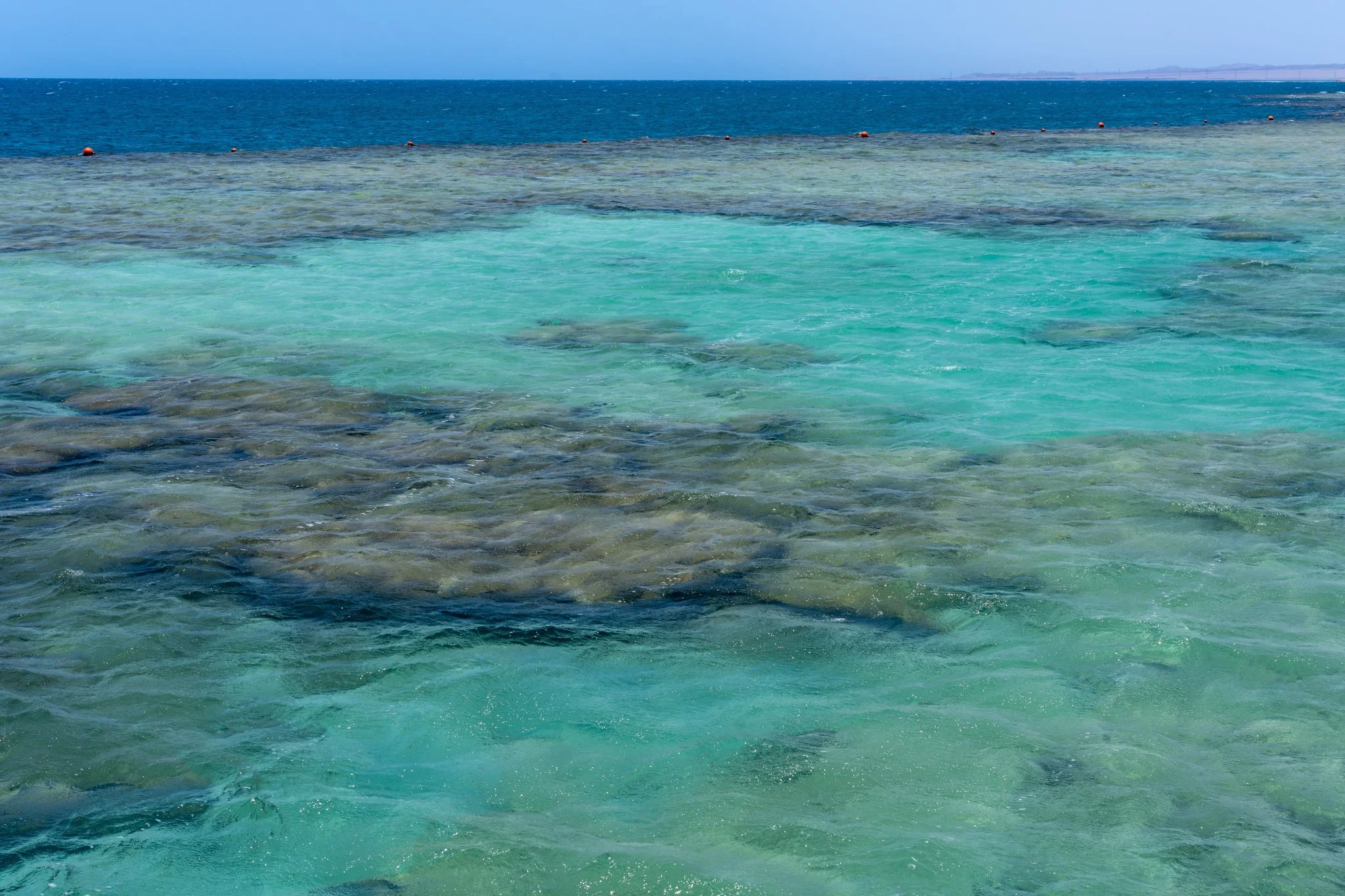
Angela: it was impossible not to stop every few minutes to take a photo. The golden sand, the small coves, the wind-shaped rocks, and the incredibly crystal-clear water all seemed as if they had been created especially to be photographed.
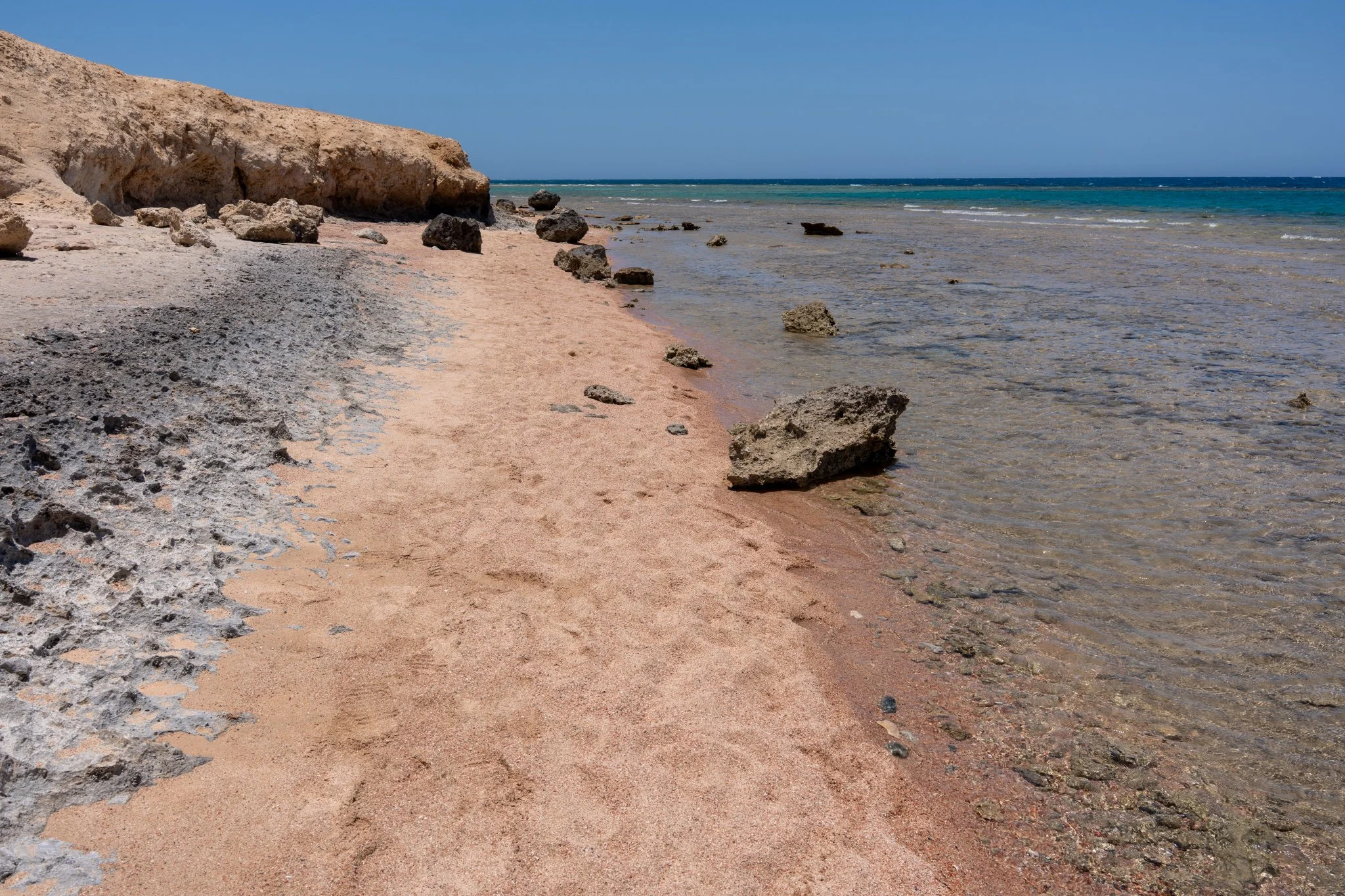
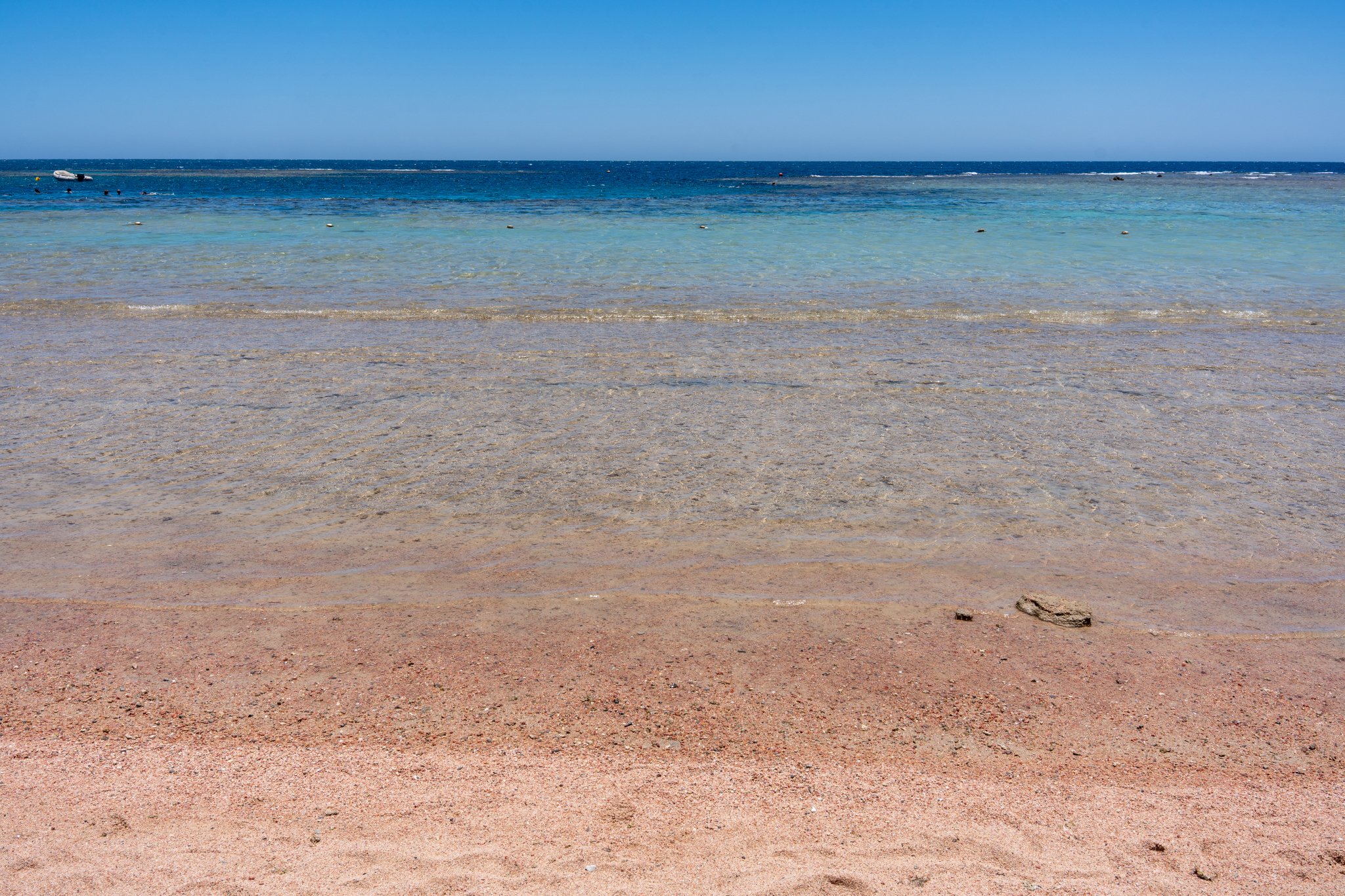
Piero: one of the things that impressed us the most was the peace and quiet, broken only by the sound of the wind. Even after walking for kilometres, we often came across very few people.
Angela: here, nature is still the true star of the show.
Piero: but all you have to do is look out towards the sea to realise that the greatest wonders lie just beneath the surface.
Angela: almost every resort in Marsa Alam has a long jetty extending over the reef. At first, we thought they were simply a convenient way to get into the water…
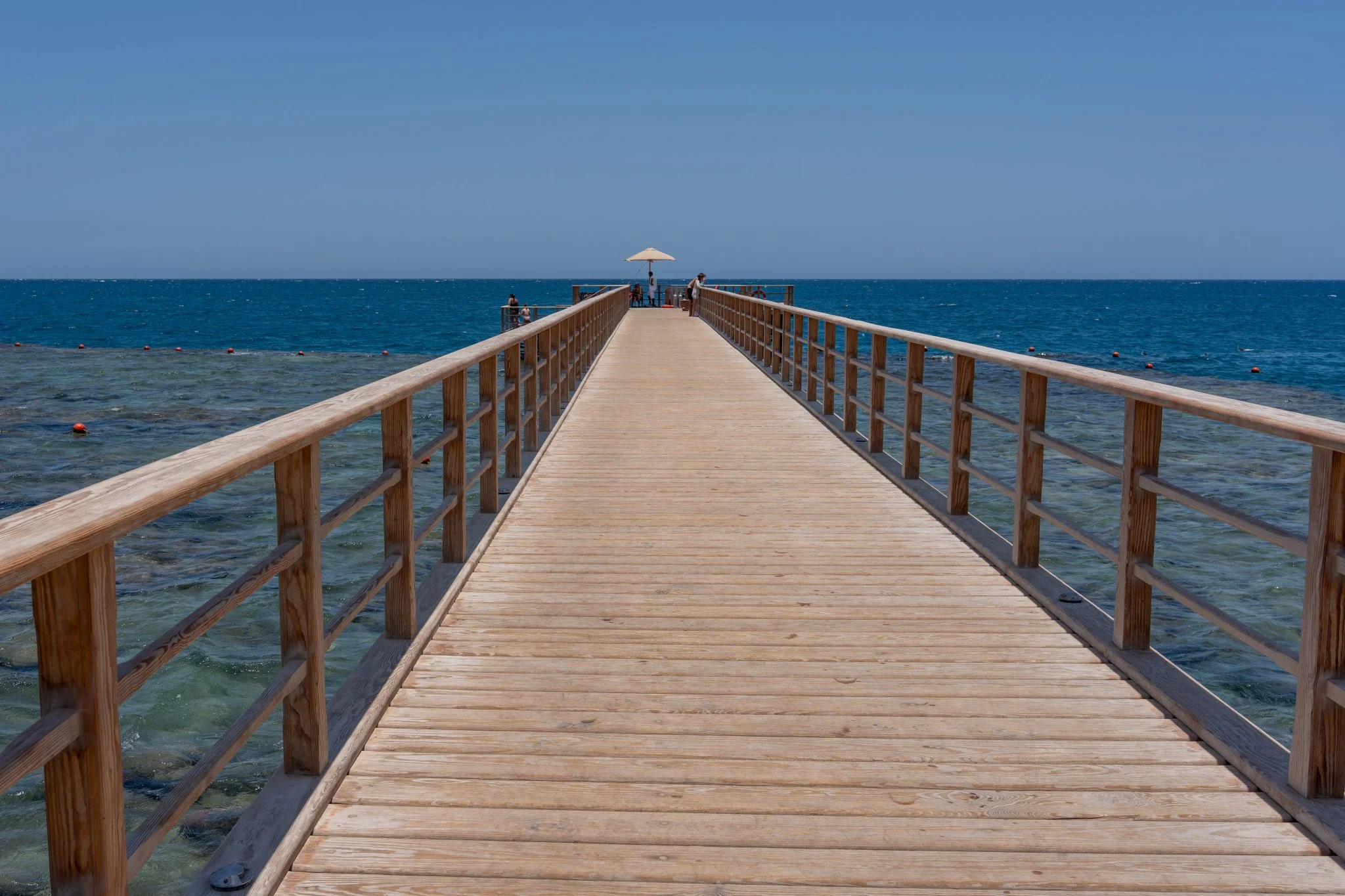
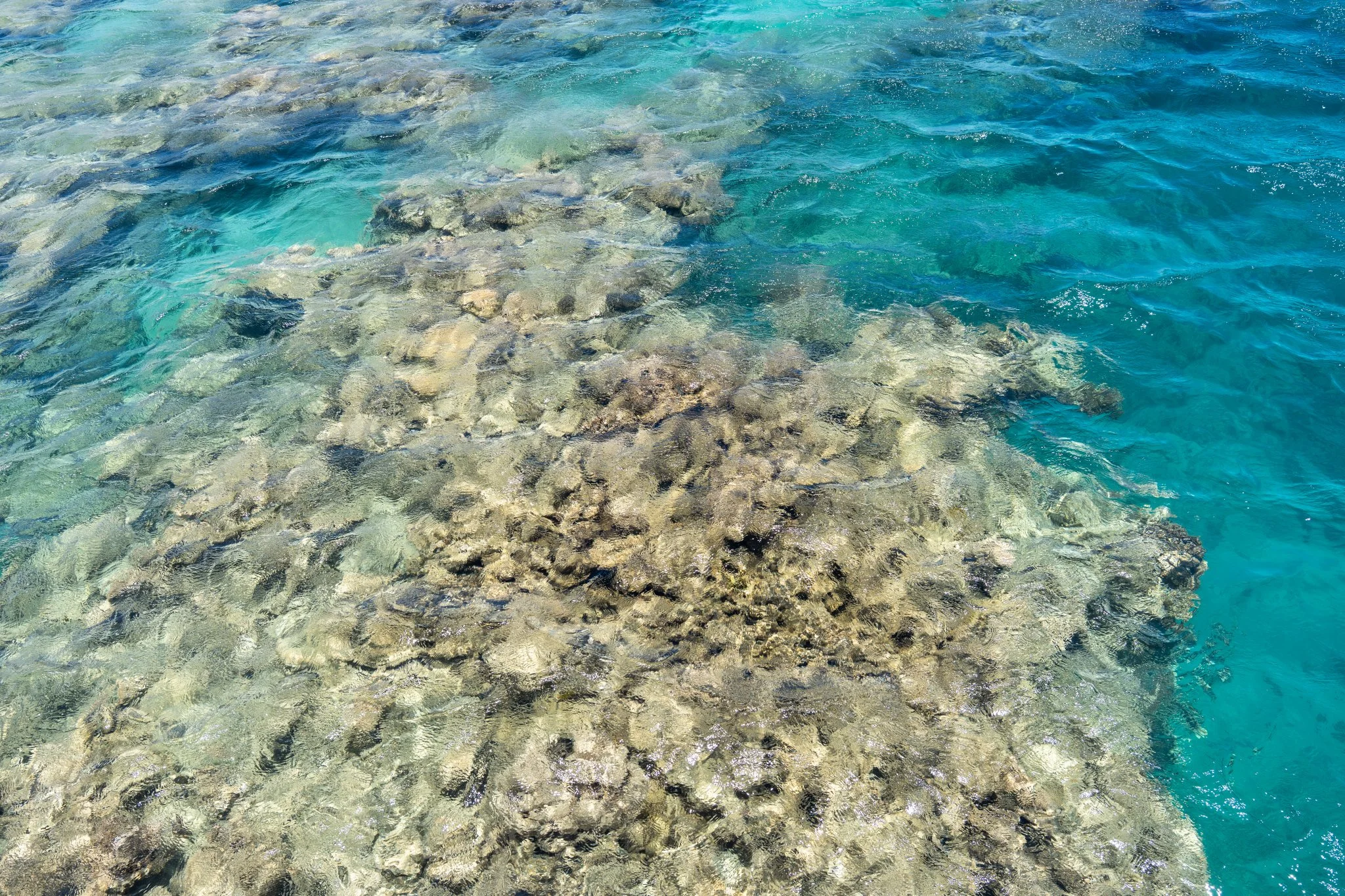
Piero: …then we realised they are essential. The coral reef begins just a short distance from the shore, and walking across it would damage an extremely fragile ecosystem.
Angela: but once you reach the end of the jetty, an entirely different world opens up before you.
Piero: all you need is a mask and snorkel to find yourself surrounded by one of the most beautiful coral reefs on Earth. Now, come and dive in with us in this short video!
Angela: you don't need to be an experienced diver. Even with simple snorkelling, you can admire corals of the most extraordinary shapes and hundreds of tropical fish swimming peacefully just a few metres below the surface.
Piero: we spotted butterflyfish, parrotfish, surgeonfish, colourful clownfish hiding among the anemones and, with a little luck, even large schools of trevallies and barracudas patrolling the reef. We also came across a few small rays close to the shore.
Angela: every time we entered the water felt different from the last. Just a few metres were enough to reveal completely new underwater landscapes, making it almost impossible to take our eyes off the reef.
Piero: one of our dreams was to swim with sea turtles and perhaps even encounter the shy dugong, better known as the "sea cow."
Angela: unfortunately, we weren't that lucky. Both species live in the waters around Marsa Alam, especially near Abu Dabbab and Marsa Mubarak, but to improve your chances of seeing them, it is often necessary to join a dedicated excursion.
Piero: and, it has to be said, those excursions are not always inexpensive. Before booking, we recommend comparing different operators and checking carefully what is included in the price.
Angela: even without these unforgettable encounters, the coral reef gave us incredible emotions. It's one of those places that never stops amazing you every time you put your head beneath the surface.
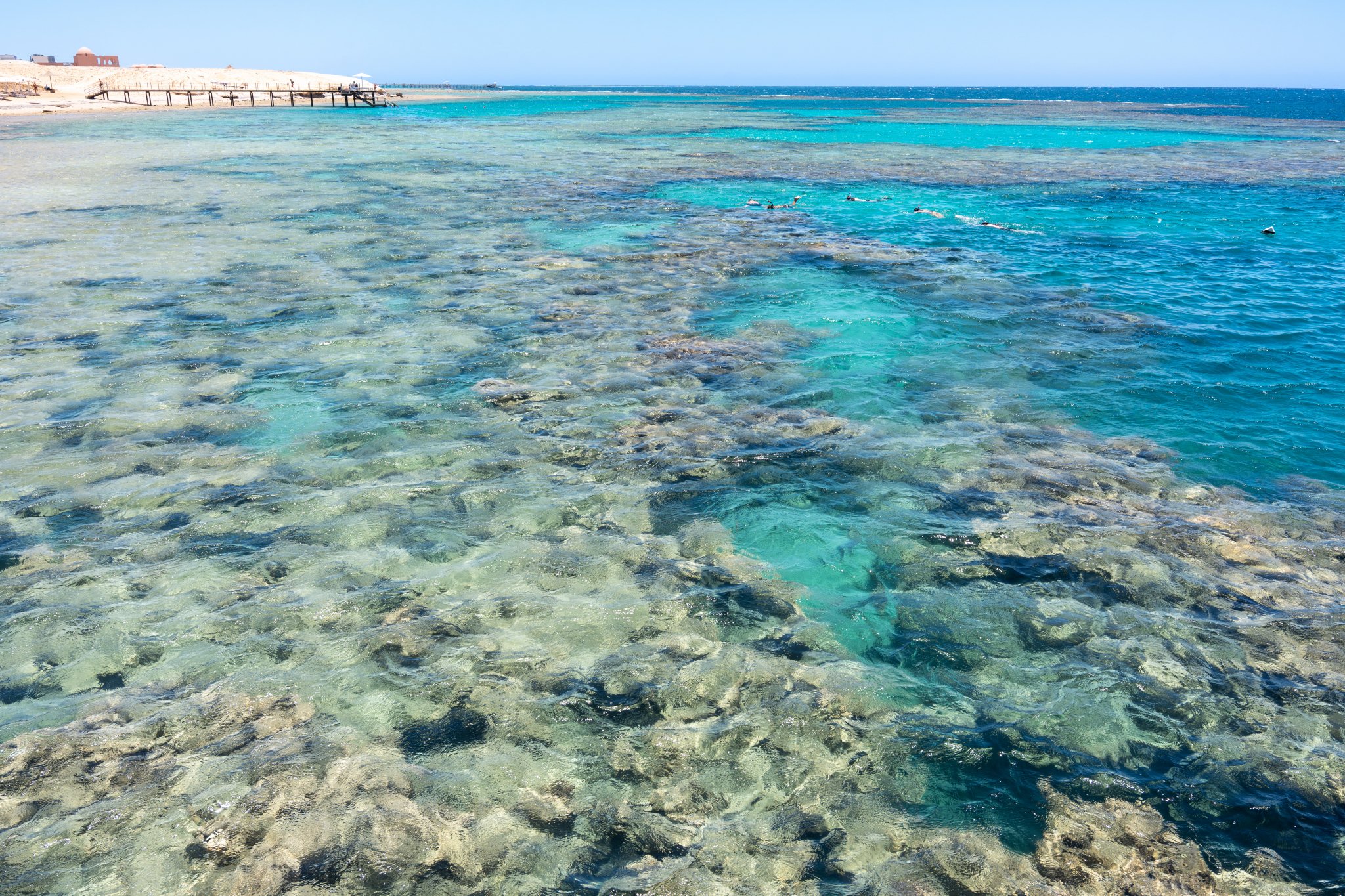
Piero: and perhaps that is the true magic of the Red Sea: you never know what wonder is waiting for you behind the next coral.
Quad biking in the Marsa Alam desert: the magic of sunset among the mountains
Join us on a quad adventure in the desert of Marsa Alam, far from the beaches of the Red Sea. We ride through rocky landscapes and red mountains, discover a camel-shaped rock formation, admire a breathtaking sunset and experience the magic of a star-filled sky away from light pollution. A journey into the silence and beauty of the Egyptian desert, ending with traditional karkadè at a Bedouin camp.
Angela: we had promised ourselves before leaving: we would spend a few days doing absolutely nothing but relaxing...
Piero: …but we know all too well how that story ends.
Angela: after a few days enjoying the beach and the Red Sea, the urge to discover something new started to grow.
Piero: without overdoing it, though. We were looking for an excursion that was simple, fun, and would let us experience a completely different side of Marsa Alam.
Angela: so we chose a quad bike adventure through the desert.
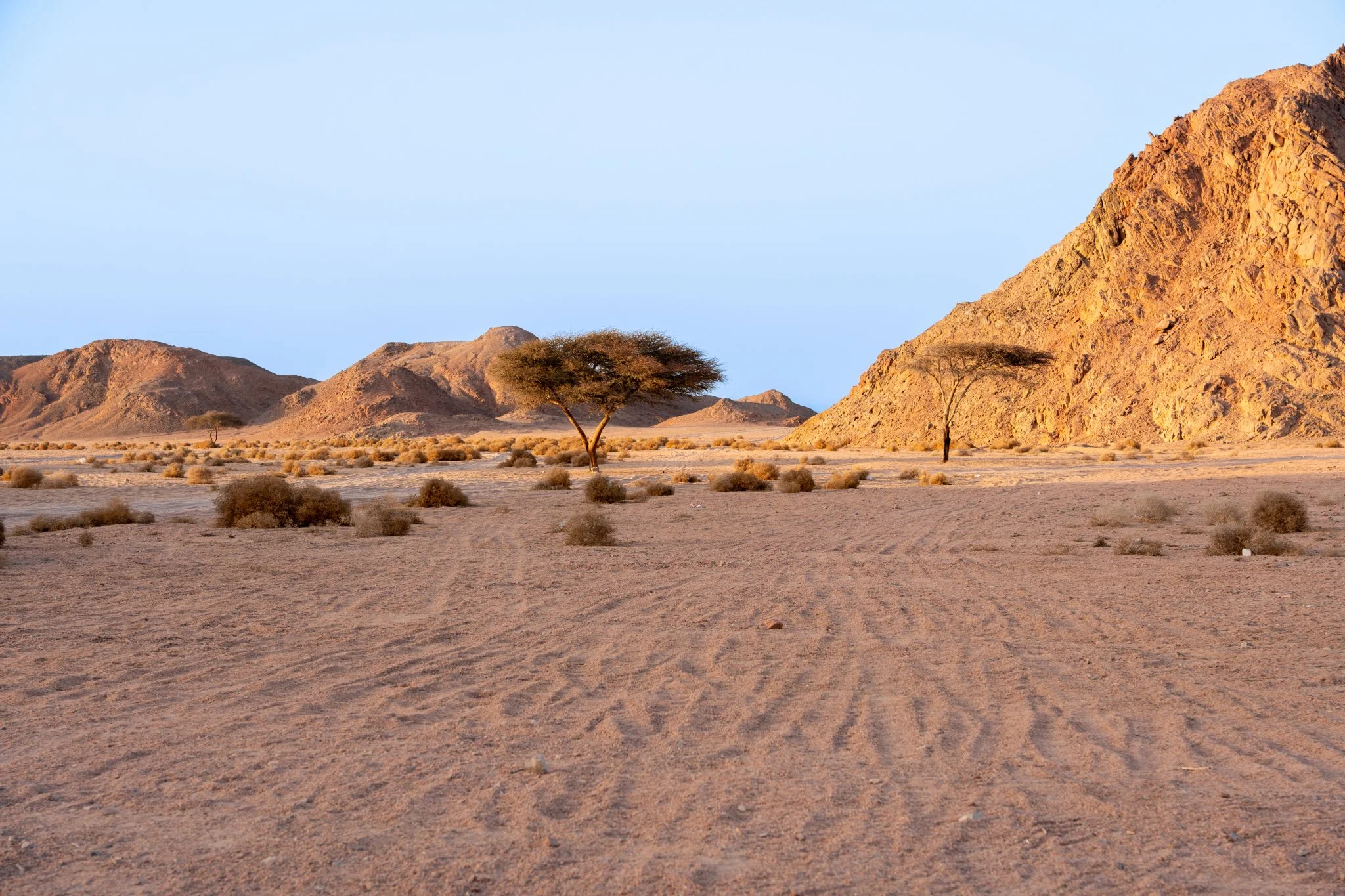
Piero: it's absolutely worth it. The price is quite reasonable, and it gives us the chance to discover the true soul of this extraordinary landscape.
Angela: we decide to leave in the late afternoon, so that we reach the heart of the desert during the most beautiful hours of the day.
Piero: we'll be covered in dust, so leave your fancy clothes behind. Wear comfortable shoes and, above all, bring sunglasses and a headscarf or bandana to protect your head, mouth, and nose. With these simple precautions, we're ready to set off.
Angela: even during the ride, the scenery changes completely. The deep blue of the Red Sea gradually gives way to an endless landscape of rock, sand, and mountains glowing with incredible shades of red.
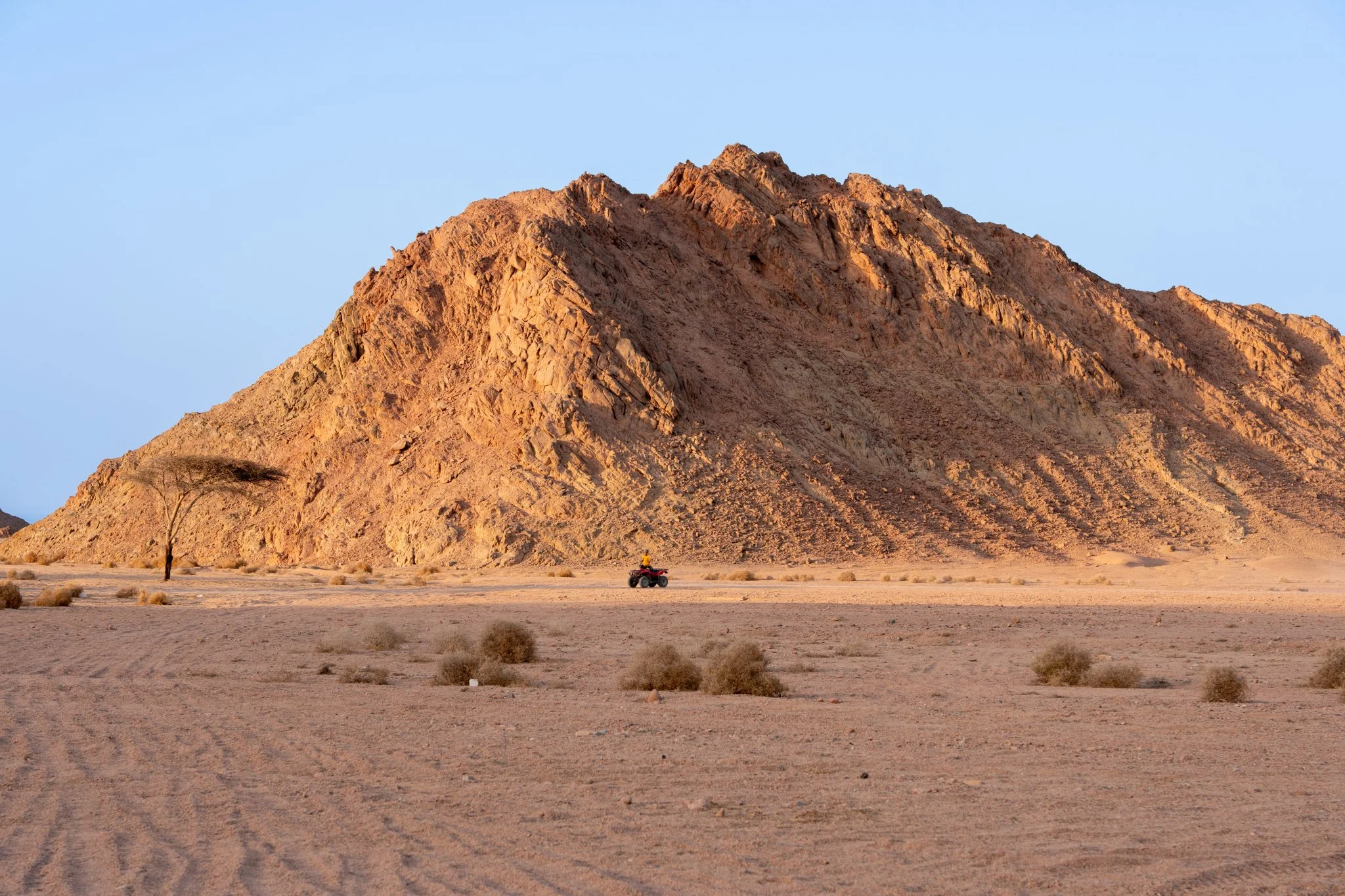
Piero: riding the quad is an incredible experience. The tracks are easy, perfect even for first-timers, and they give you that wonderful sense of freedom that only vast open landscapes can offer.
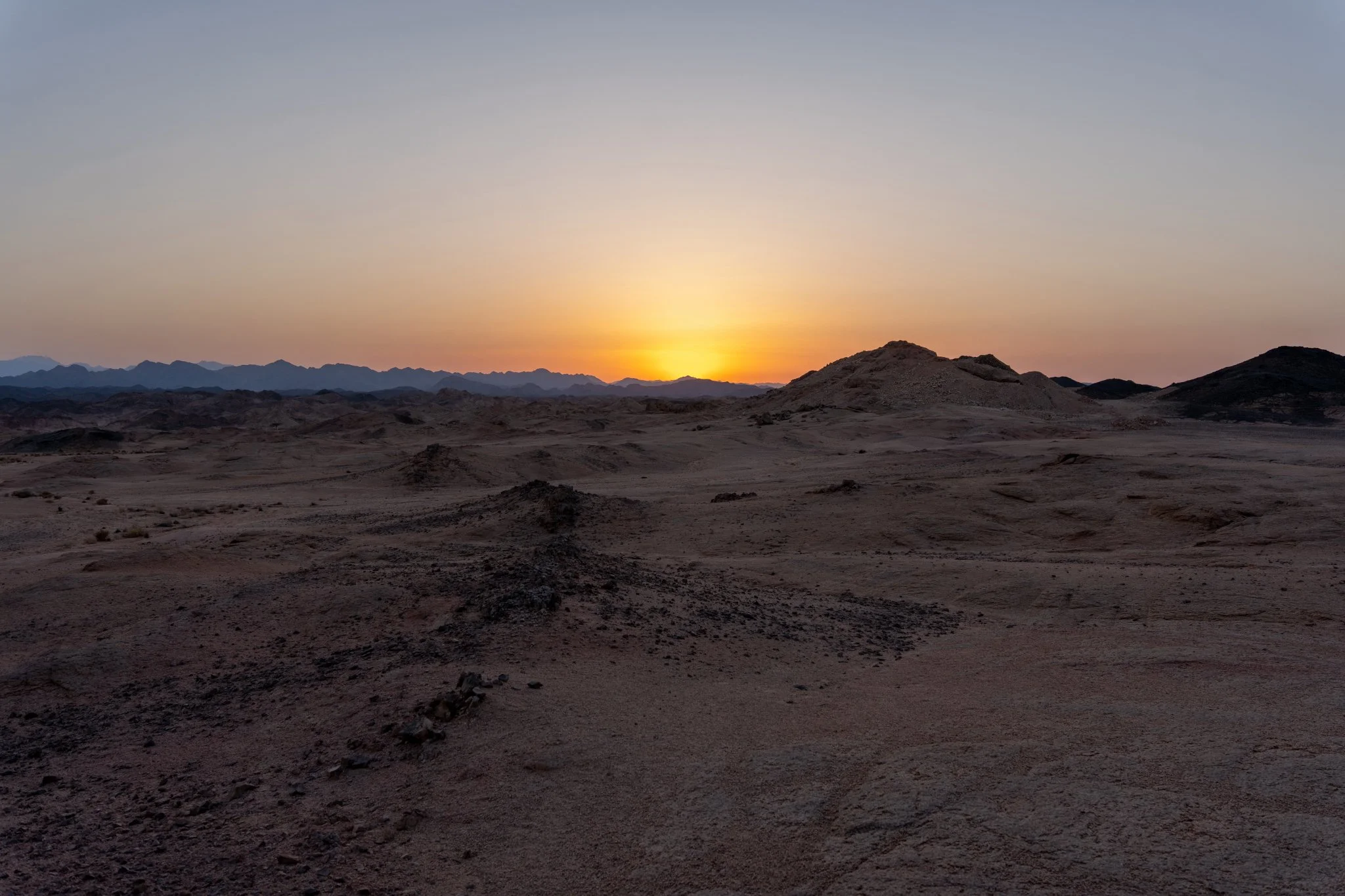
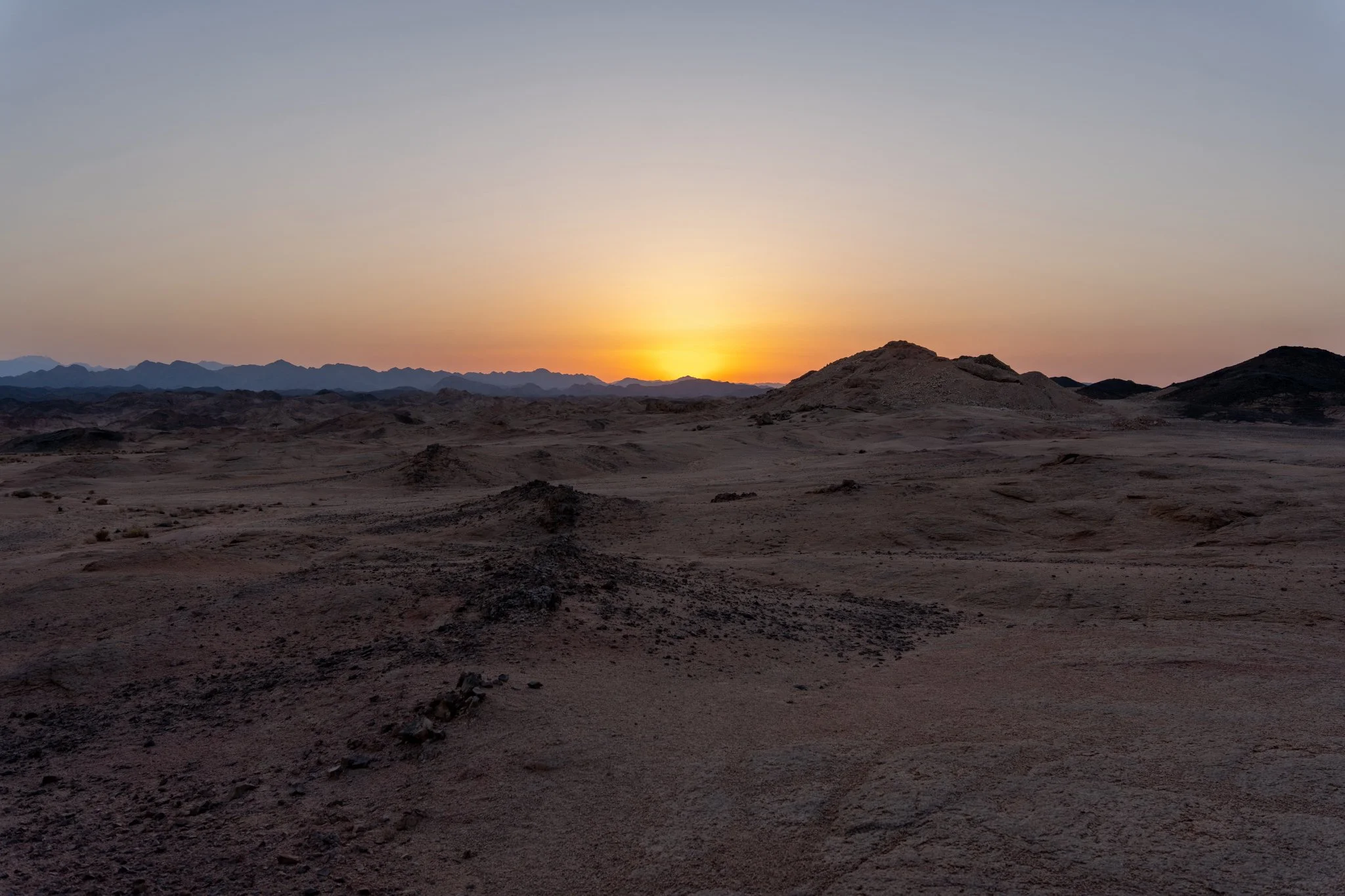
Angela: then, at one point, we stopped. The sun was slowly sinking behind the mountains.
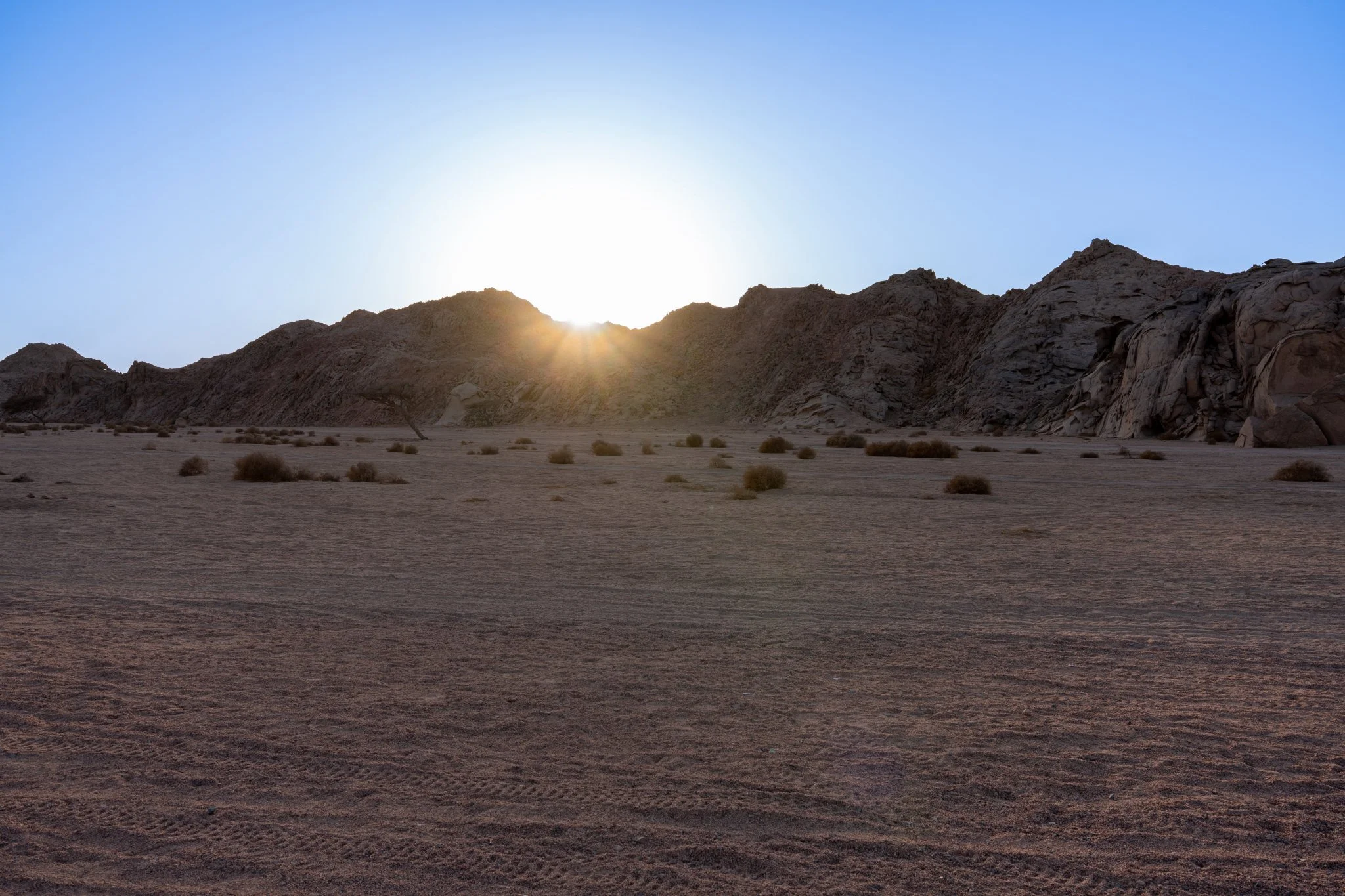
Piero: it was one of those moments when you simply stop talking. The sky changed colour minute by minute, shifting from golden yellow to deep orange and finally to an intense crimson, while the mountains seemed to catch fire beneath the last rays of sunlight.
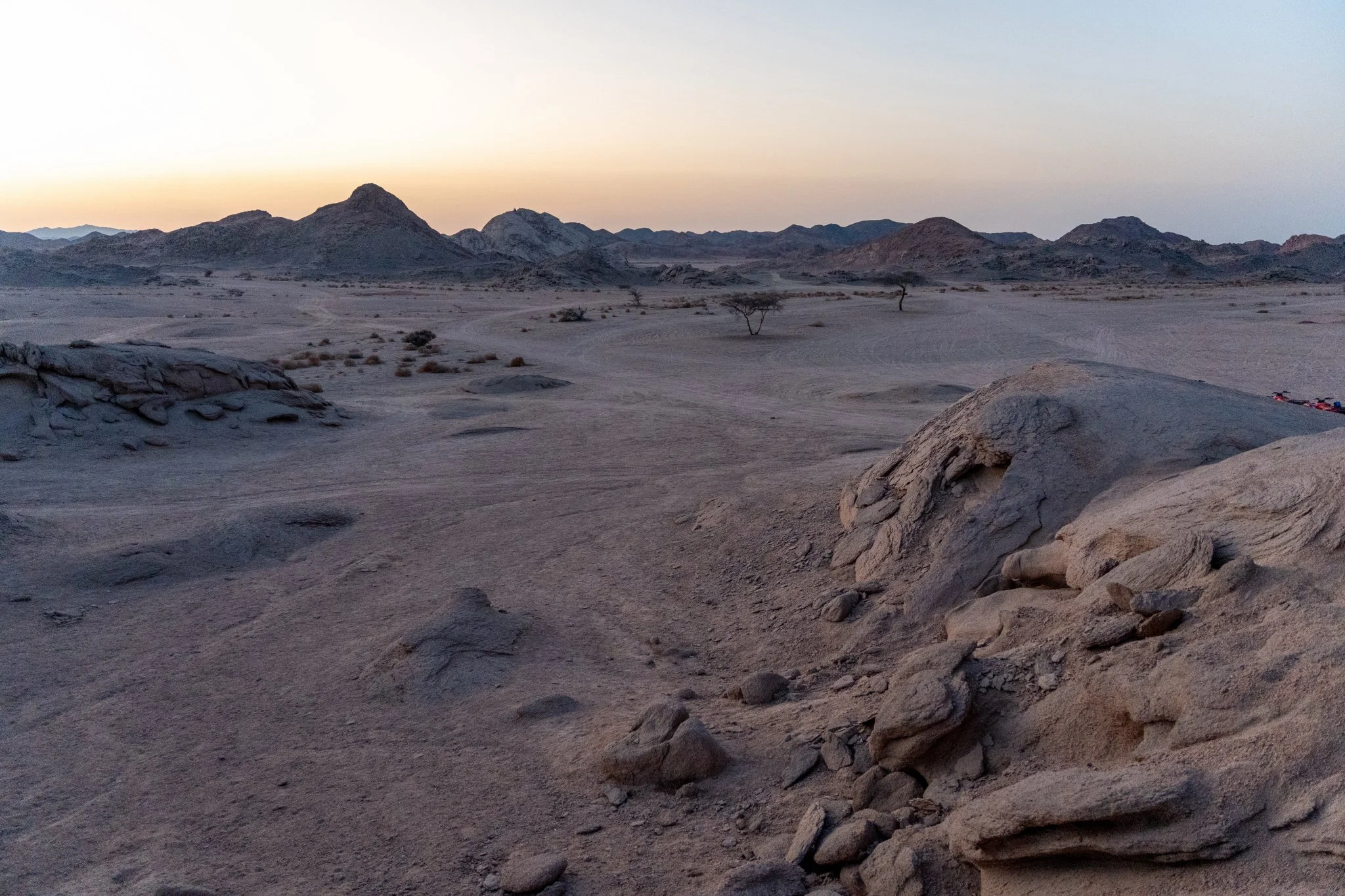
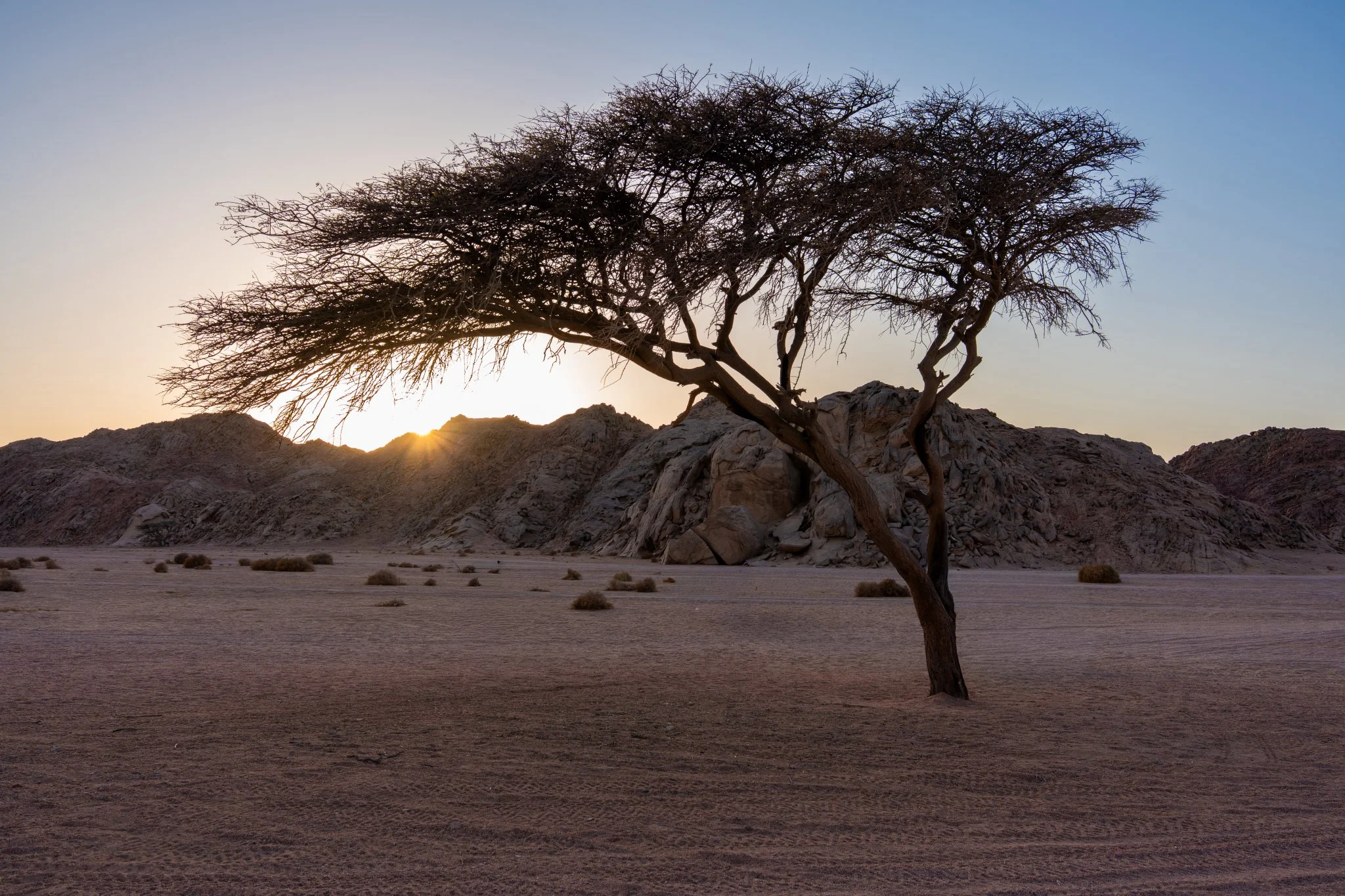
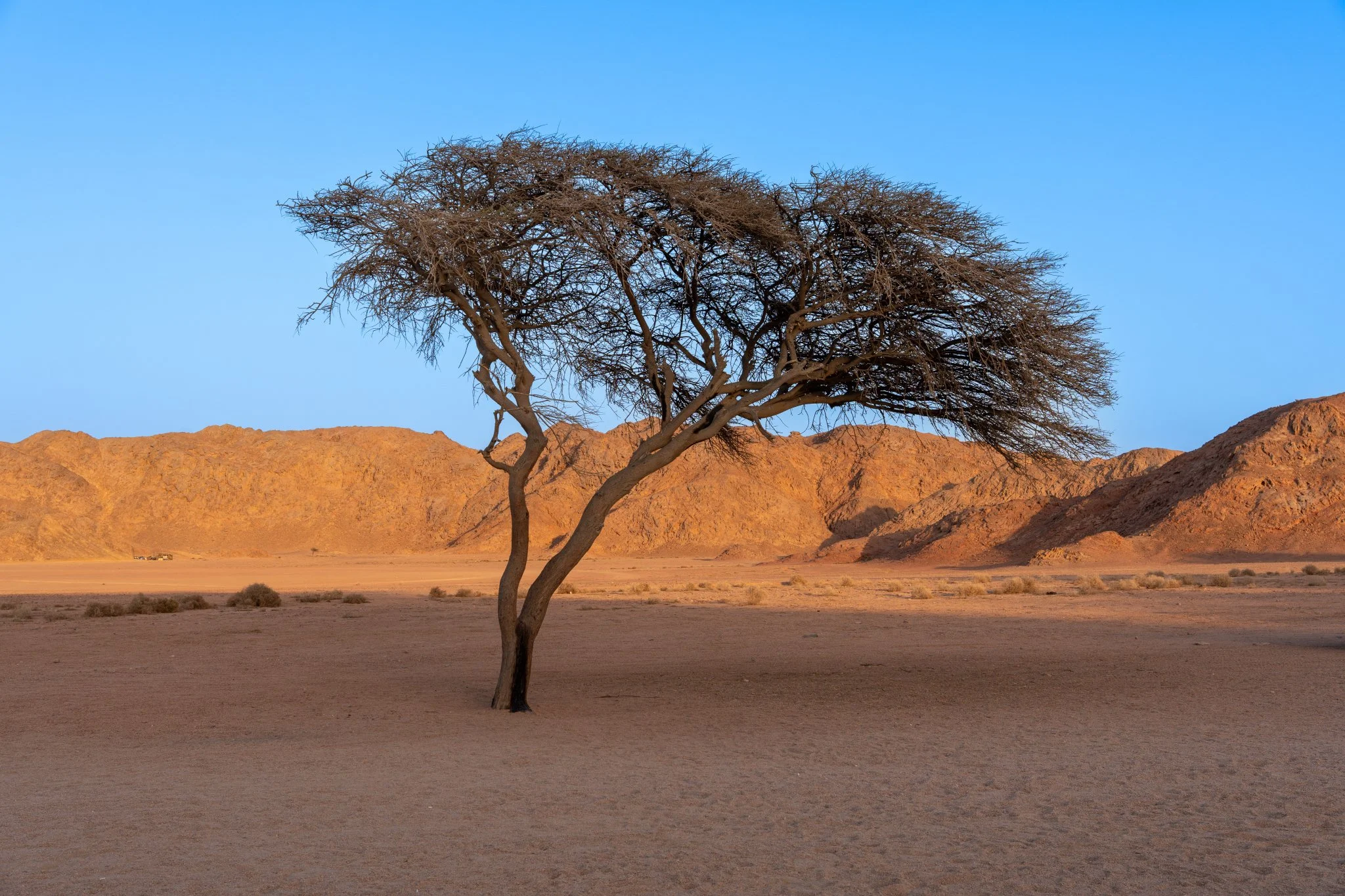
Angela: along the way, we also came across a few solitary acacia trees. Seeing them thrive in such a harsh environment makes you realise how nature always finds a way to adapt and survive.
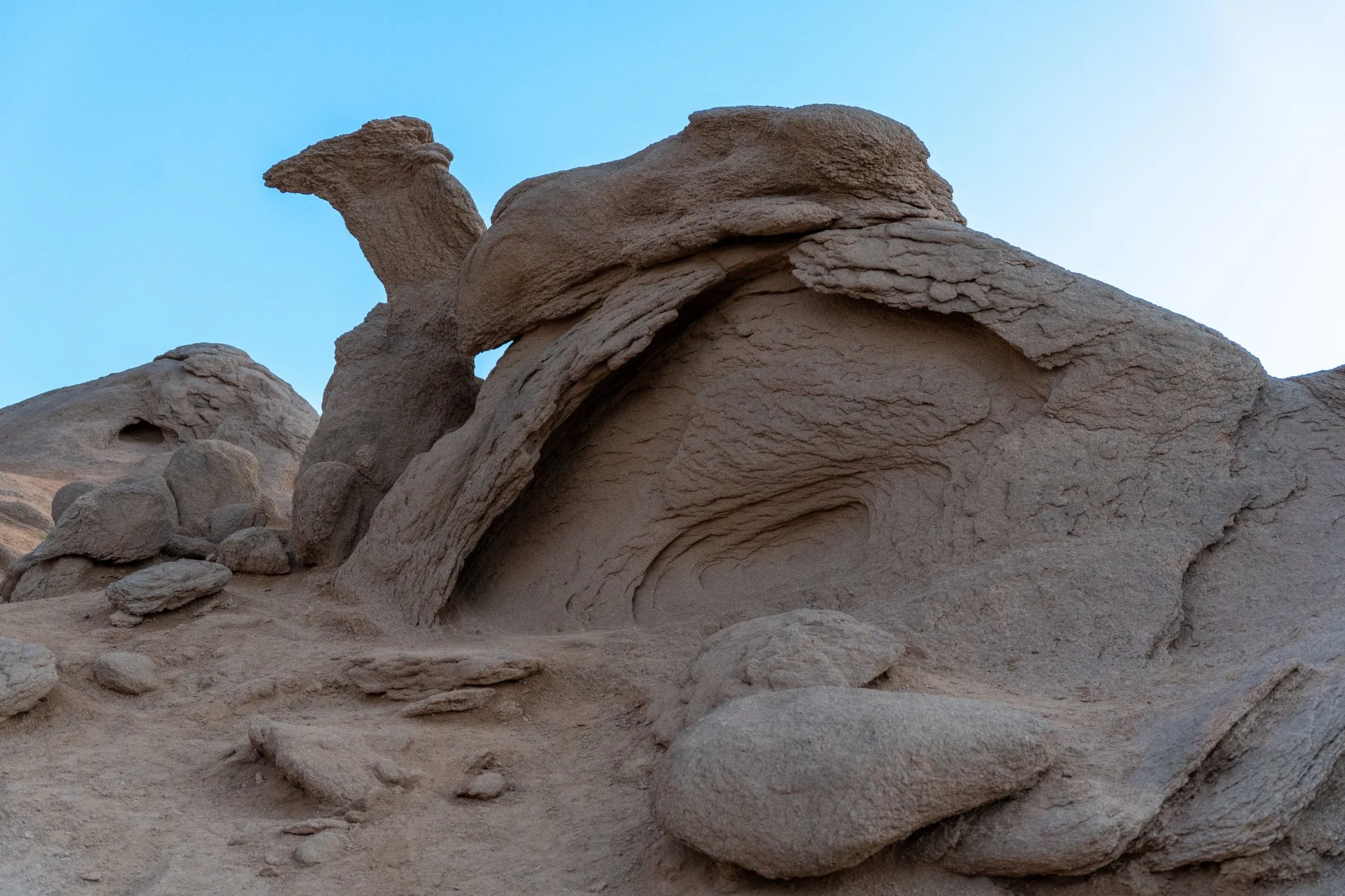
Piero: and then came a surprise we were not expecting.
Angela: a gigantic rock formation that bears an astonishing resemblance to the silhouette of a dromedary. Our guide gave us plenty of time to photograph it from every angle, and after just a few seconds of looking at it, imagination gives way to certainty.
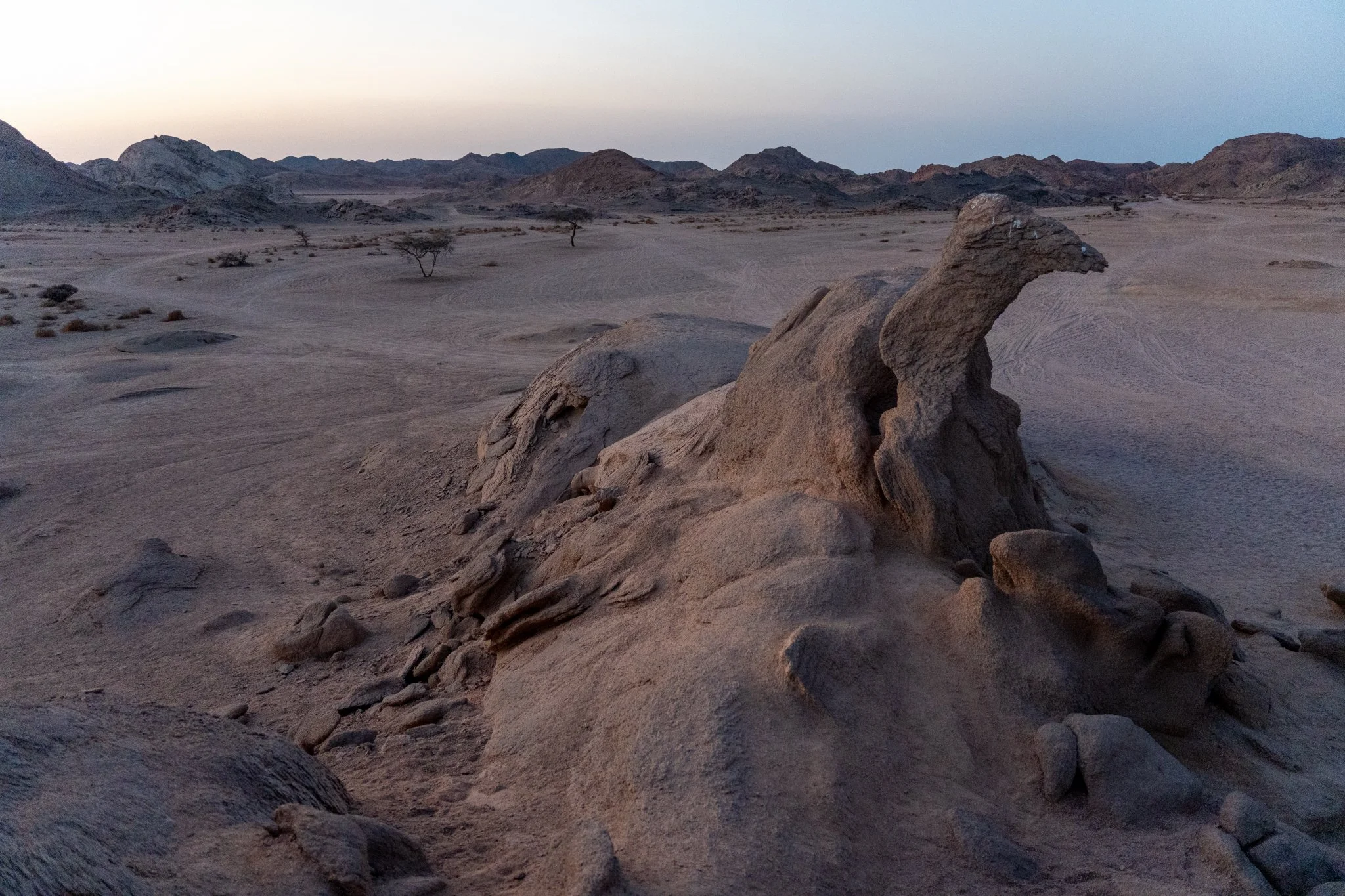
Piero: by the time the sun had completely disappeared, we thought the excursion was over.
Angela: instead, the most emotional moment of the entire experience was just about to begin.
Piero: far away from the lights of the resorts and the towns, the desert sky transformed into an immense canopy of stars.
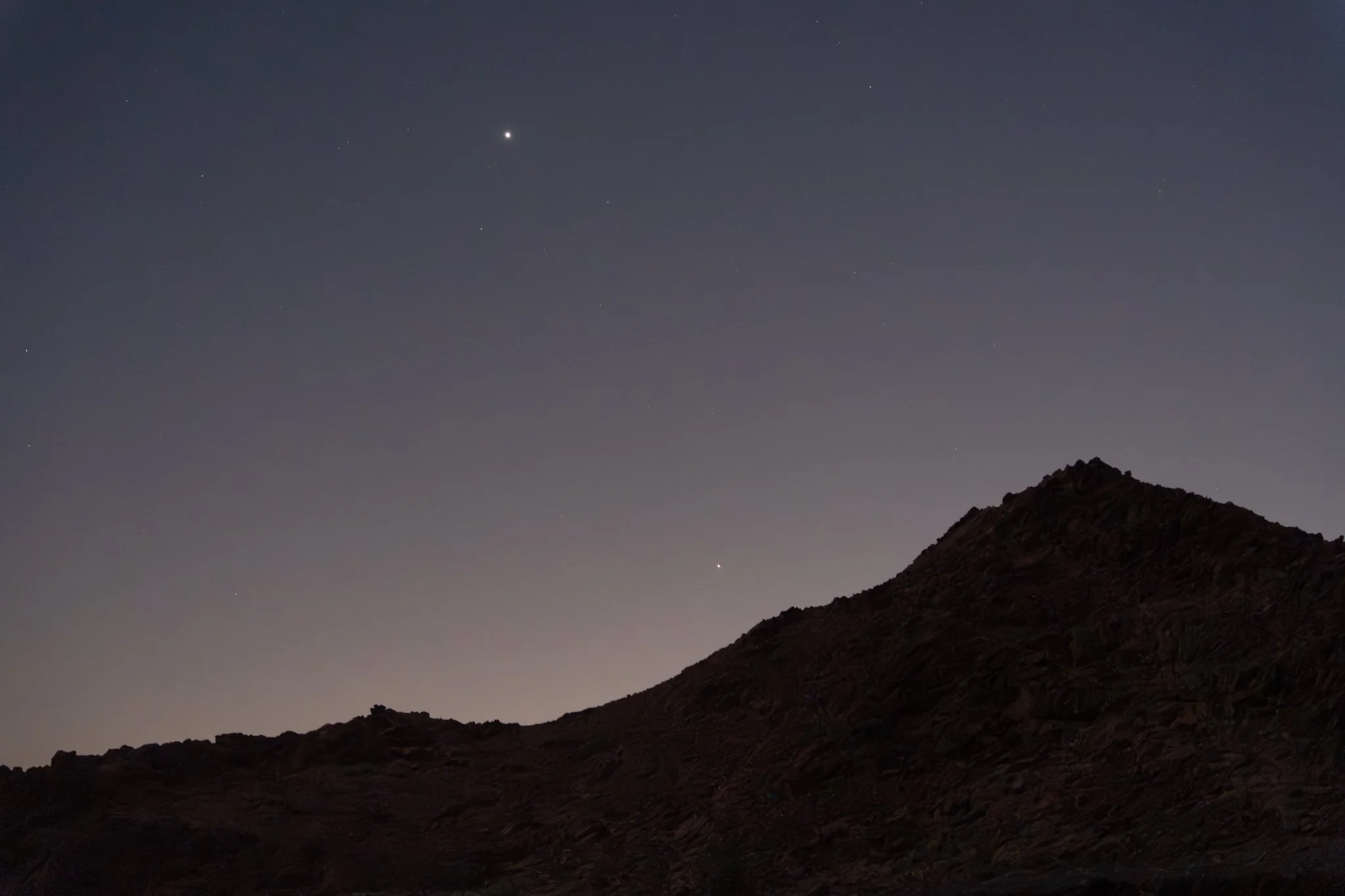
Angela: with almost no light pollution, the stars seemed to multiply before our eyes. It was difficult to look away from the sky.
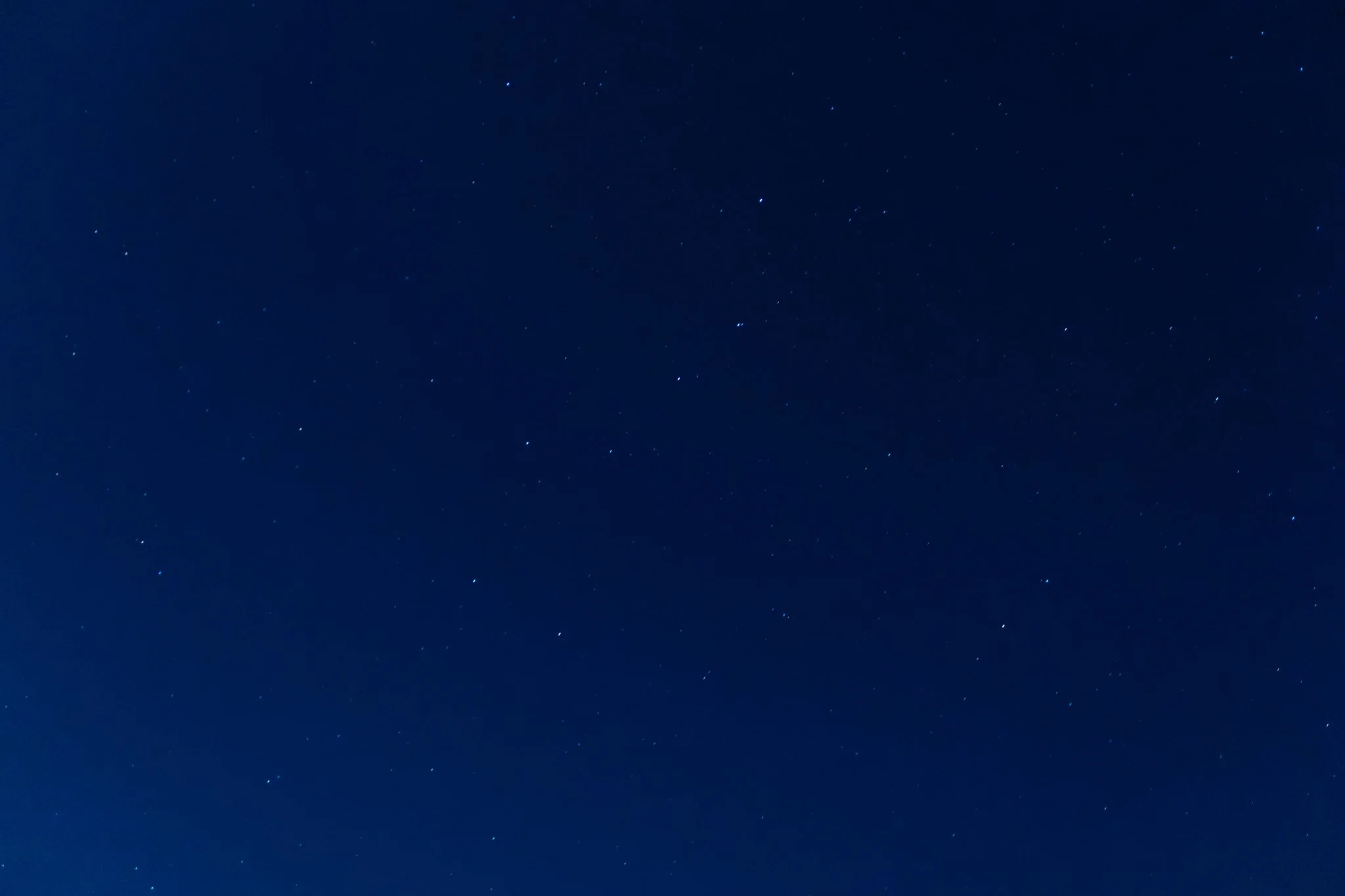
Piero: it is incredible how you only realise how many stars exist when you find yourself in a place this isolated.
Angela: the wonder of the sky, however, contrasts with the lack of authenticity of the Bedouin camp where we stopped.
Piero: still, sitting there peacefully, we enjoyed an excellent karkadè, the traditional drink made from hibiscus flowers, with a fresh and slightly tangy flavour.
Angela: it was the perfect way to end an evening that was truly different from the usual.
Piero: if you are looking for an excursion that does not take up an entire day but allows you to discover a lesser-known side of Marsa Alam, the sunset desert quad tour is an experience we can recommend without hesitation. Come and join us on this adventure in this short video.
From Marsa Alam to Luxor: a journey into the heart of Egypt's history
From Marsa Alam to Luxor in a single day: an unforgettable journey through ancient Thebes, the cradle of Egyptian civilization. From the magnificent Temple of Karnak to the legendary Valley of the Kings, from the elegant Temple of Hatshepsut to the imposing Colossi of Memnon, we retrace the history of the pharaohs among extraordinary monuments, millennia-old tombs, and the timeless fascination of Ancient Egypt.
Angela: may I point something out?
Piero: of course, go ahead.
Angela: it's strange to hear you talk so little about history. I've known you long enough to know that whenever you set foot in a place with a story to tell, you always end up getting lost in books, documentaries, and historical reconstructions. And yet we're in Egypt, one of the cradles of civilization, and so far you've mostly talked about the Red Sea, the desert, and the coral reef.
Piero: you're right... but there was a reason for that.
Angela: let's hear it...
Piero: because I was waiting for this day.
Angela: I thought so.
Piero: if there was one dream I wanted to fulfill during this vacation, it was this: reaching Luxor, the ancient city of Thebes. To me, the Red Sea was just the backdrop. Beautiful, of course, but my real goal was to arrive at the place that, more than any other, tells the story of the greatness of Ancient Egypt.
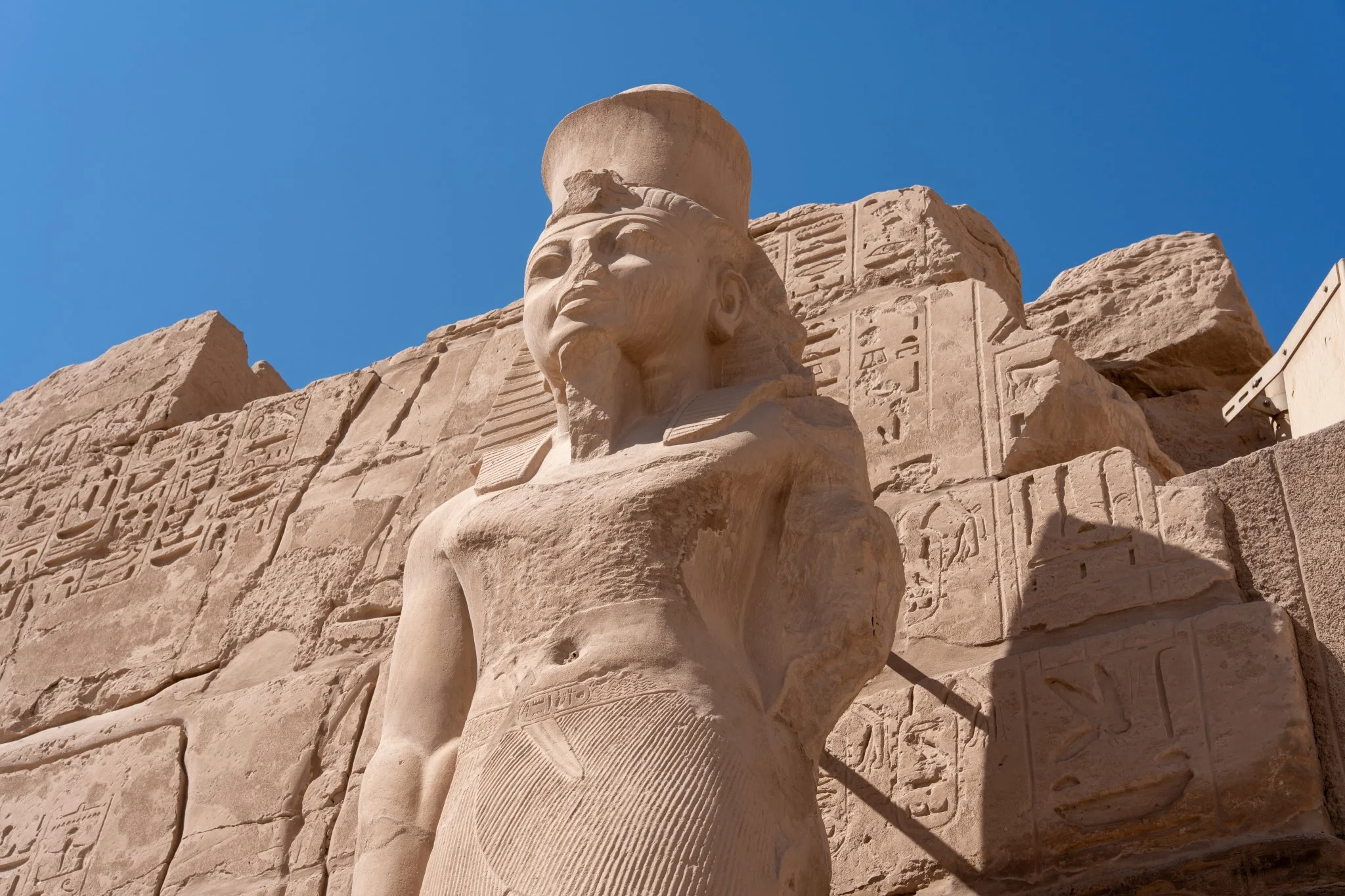
Angela: in fact, I noticed you spent several evenings in front of your computer watching documentaries before we left.
Piero: because I didn't want to rely on the first excursion offered by the resort. I was looking for something different: a well-organized tour, carefully planned, and above all a knowledgeable guide who could truly explain the history of these places.
Angela: and after quite a bit of research, you found it.
Piero: yes. We booked a small van (something we simply can't do without...) that would pick us up right in front of the resort. It was a long journey, but far more comfortable than traveling on one of the large organized coaches.
Angela: the only downside was the alarm clock... at 1:00 a.m.
Piero: that's something I'll never forget. So, by 2:00 a.m., we were already on the road.
Angela: while everyone else was asleep, we were driving along silent roads. Just a few minutes after leaving the coast, the landscape changed completely. The lights of the resorts disappeared, and before us stretched the Eastern Desert. Outside the window, everything was pitch black. Every now and then we passed a truck, a checkpoint, and very little else.
Piero: it's hard to imagine that, for thousands of years, caravans loaded with gold, granite, alabaster, and precious stones crossed that seemingly endless desert on their way to the Nile.
Angela: after a few hours, the sky slowly began to brighten. It was one of the most beautiful moments of the journey. The mountains gradually turned red, the desert lit up with golden shades, and we realized we were almost there.
Piero: at around 8:00 a.m., we finally arrived. In front of us stood Luxor.
Angela: or rather, Thebes. It's time to explain why this city is so special.
Piero: because there is probably no other place in the world where so much history is concentrated in a single location. When we think of Egypt, our minds immediately jump to the Pyramids of Giza, the Great Sphinx, or Tutankhamun. But the truth is that, for centuries, the political, religious, and cultural heart of Ancient Egypt beat right here, on the banks of the Nile.
Angela: and it all began long before the most famous pharaohs.
Piero: the first human communities developed along the Nile more than 5,000 years ago. Without this river, Egypt would have been nothing more than an immense desert. Every summer, its floods deposited a layer of incredibly fertile silt, making it possible to grow grain, flax, vegetables, and fruit in an otherwise hostile environment. It was the Nile that made the birth of one of the most advanced civilizations in history possible.
Angela: so when was Egypt actually born?
Piero: historians generally date the birth of the Egyptian state to around 3100 BC, when King Narmer, identified by many as the legendary Menes, united Upper Egypt, in the south, with Lower Egypt, in the vast Nile Delta. From that moment began a history that would last for more than 3,000 years.
Angela: that's an incredibly long time.
Piero: it really is. To put it into perspective, more time passed between the construction of the Pyramids of Giza and the birth of Cleopatra than between Cleopatra and us today.
Angela: I'd never thought about it like that.
Piero: Ancient Egypt is traditionally divided into three great periods. The Old Kingdom, the age of the great pyramids. The Middle Kingdom, marked by a major reorganization of the state. And finally the New Kingdom, considered the golden age of Egyptian civilization. It was during the New Kingdom that Thebes became the most important city in the country.
Angela: why here?
Piero: for two reasons: one political and the other religious. From here ruled some of the greatest pharaohs in history: Hatshepsut, Thutmose III, Amenhotep III, Akhenaten, Tutankhamun, Seti I, and above all Ramesses II, probably the most famous pharaoh of all time. But Thebes was above all the city of the god Amun, who later merged with the sun god Ra, becoming Amun-Ra, the king of the gods. Every military victory, every conquest, and every new temple was dedicated to him. And it was here that the pharaohs invested immense wealth over the centuries to build, expand, and embellish what is still today the largest religious complex ever built by mankind.
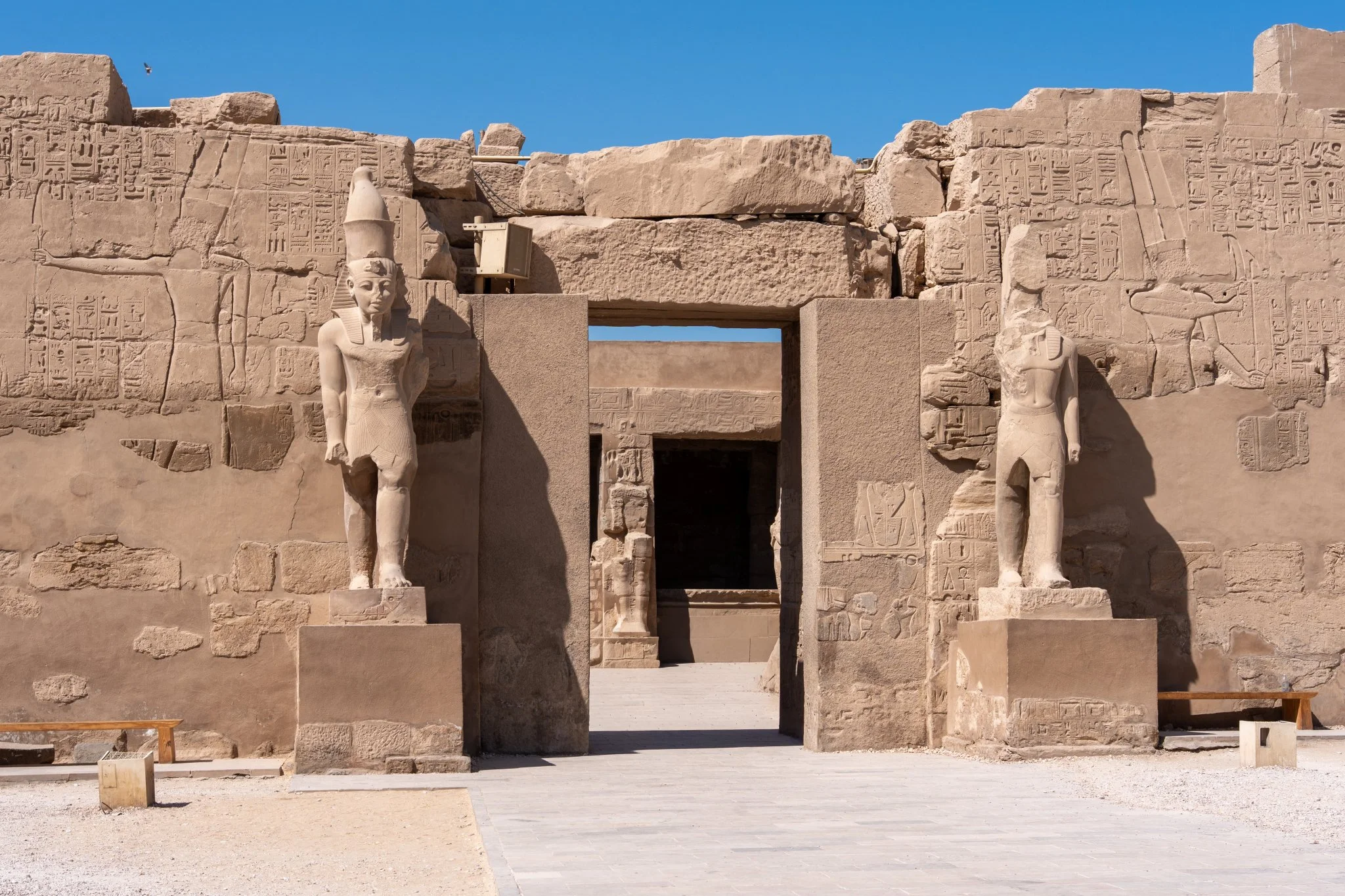
Angela: the Temple of Karnak.
Piero: exactly. But before we step inside, there's something else we need to understand. The ancient Egyptians did not see the Nile simply as a river. They saw it as the line separating two worlds. The eastern bank, where the sun rises every morning, symbolized life. This is where the great temples dedicated to the gods and the palaces of the pharaohs were built. The western bank, where the sun sets, was associated with death and rebirth. That is why all the great necropolises, including the famous Valley of the Kings, are located on the west bank.
Angela: it's incredible how every decision was linked to such a precise religious belief.
Piero: in Ancient Egypt, nothing was left to chance. Every building, every statue, every astronomical alignment had a symbolic meaning. Even the shape of the columns was inspired by the papyrus plants and lotus flowers growing along the Nile, while the walls depicted military victories, religious ceremonies, and offerings to the gods.
Angela: and what happened next?
Piero: like all great civilizations, Egypt gradually began to lose its strength. After the New Kingdom came invasions, dynastic wars, and foreign rule. First the Assyrians, then the Persians, and finally, in 332 BC, Alexander the Great arrived and was welcomed as a liberator. After his death, power passed to the Ptolemaic dynasty, of Greek origin, whose last ruler was Cleopatra VII. With her death in 30 BC, Egypt became a province of the Roman Empire. Later came the Byzantines, followed in the 7th century by the Arab conquest, which profoundly transformed the country's language, religion, and culture.
Angela: and what about modern Egypt?
Piero: after centuries of Ottoman and British rule, the country gradually gained its independence during the 20th century. In 1952, the revolution led by the Free Officers brought the monarchy to an end, giving birth to the modern Arab Republic of Egypt, the country we know today, which has also experienced difficult times in recent history. Today it is one of the most important nations in the Middle East and Africa, and it continues to safeguard an archaeological heritage unlike any other.
Angela: and to think... this is only the introduction.
Piero: because the best was yet to come. It's time to approach the immense walls of the Temple of Karnak.
The Temple of Karnak
Angela: no photograph, no documentary and no book can prepare you for what it feels like when you see it appear before your eyes for the very first time.
Piero: I stood there completely still. Our guide had already begun explaining the itinerary for the visit, but I was already lost in the moment, my eyes fixed upward, without saying a single word, simply taking it all in and capturing those unforgettable images in my mind.
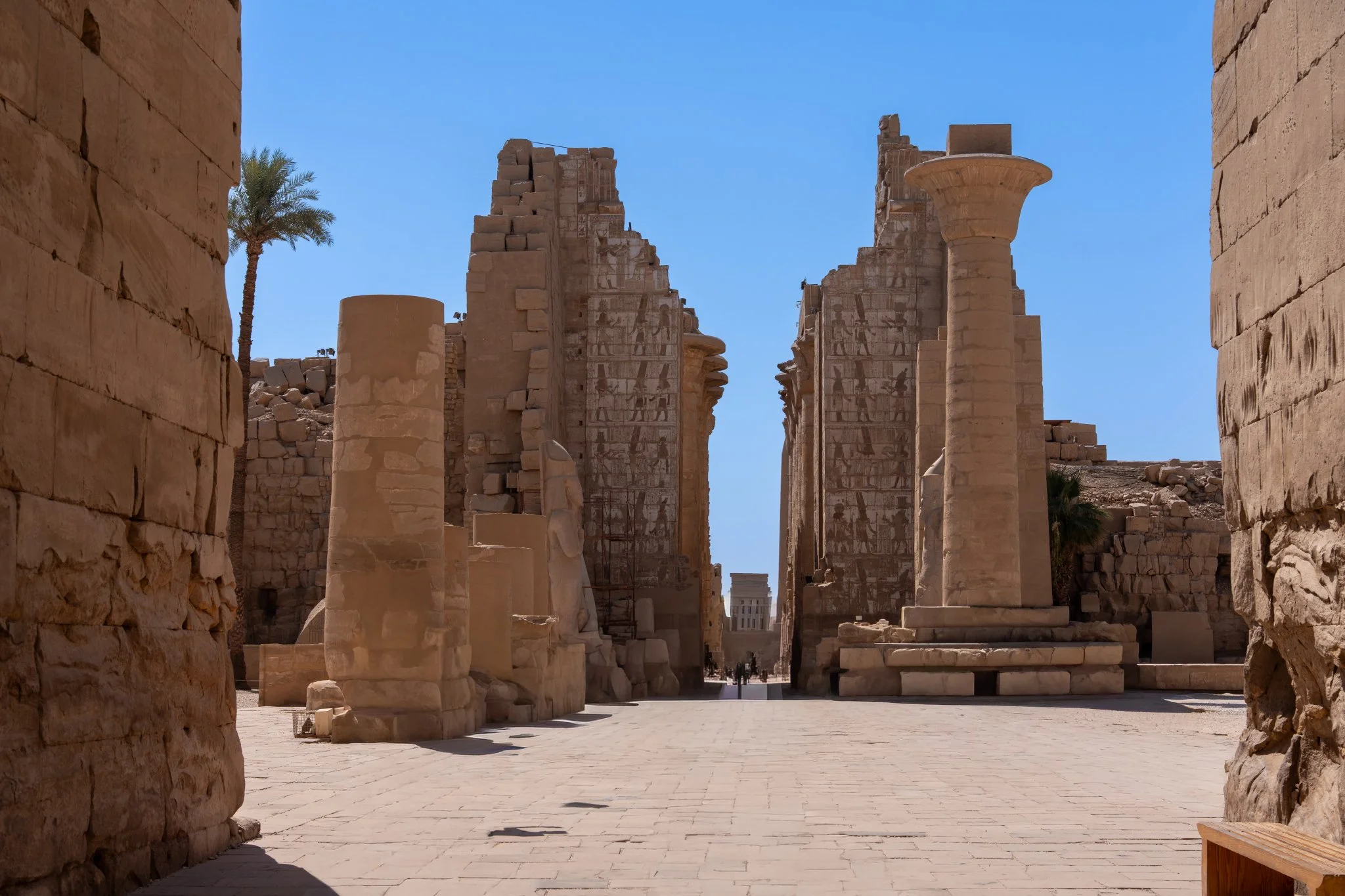
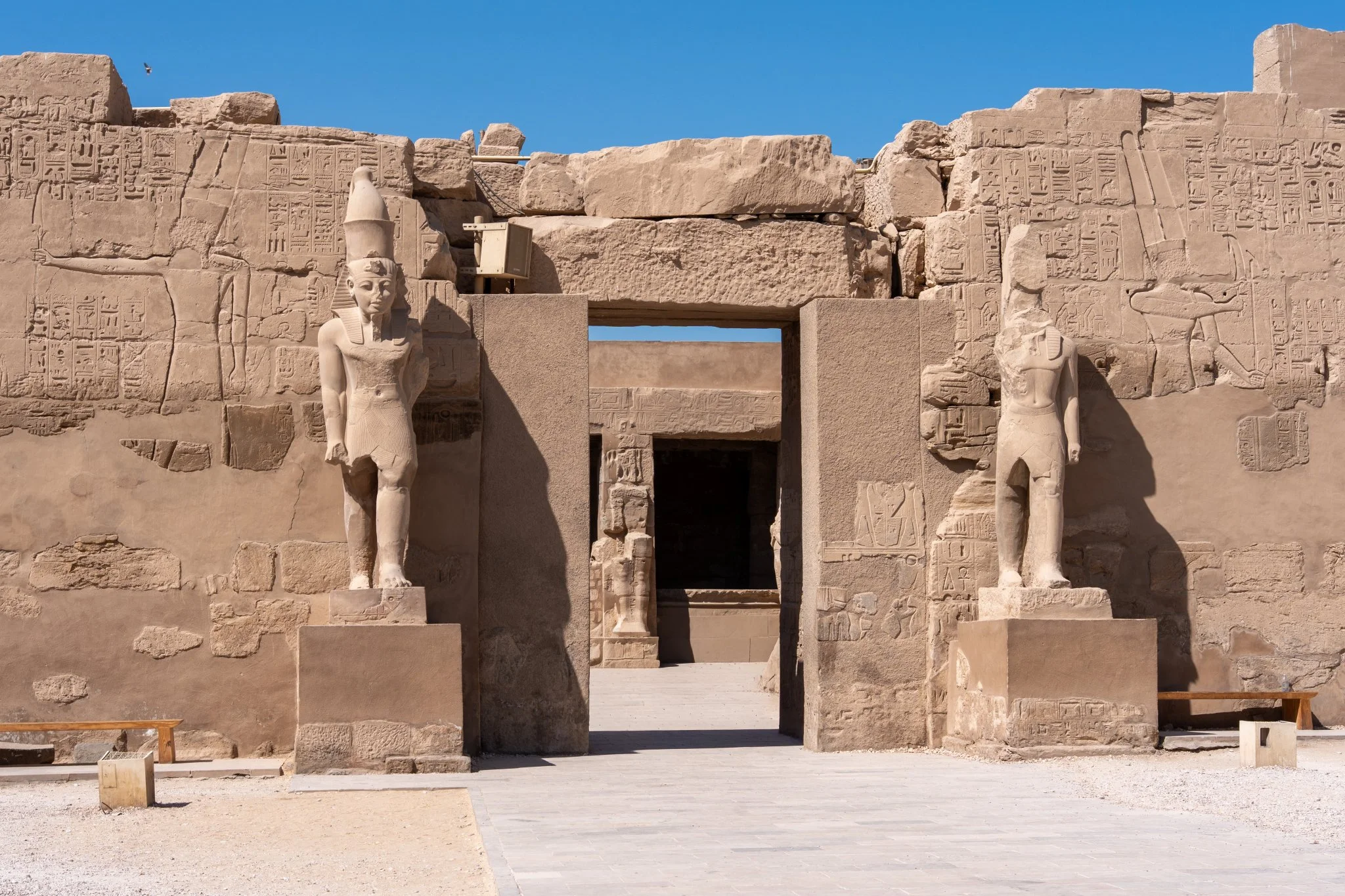
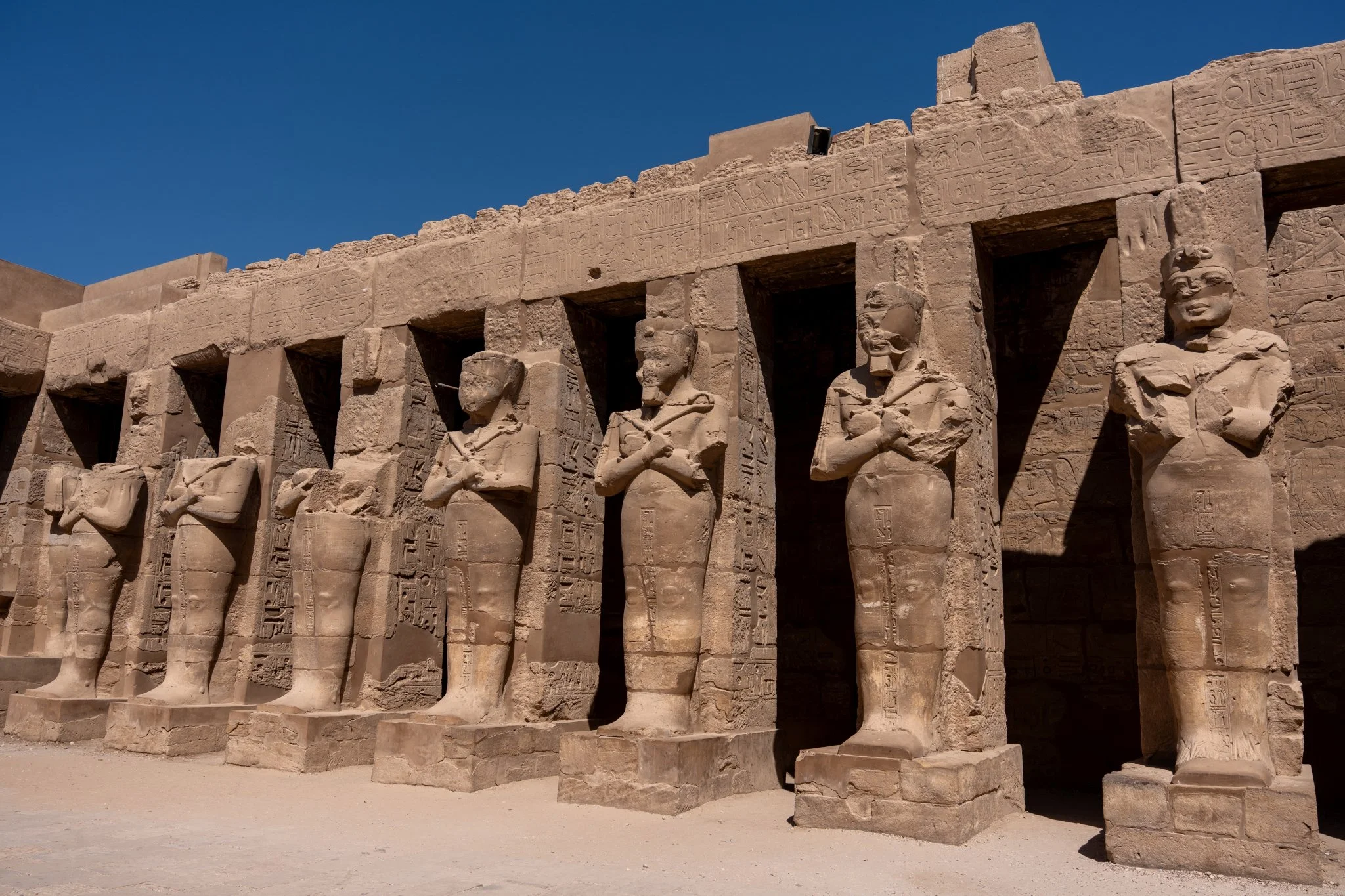
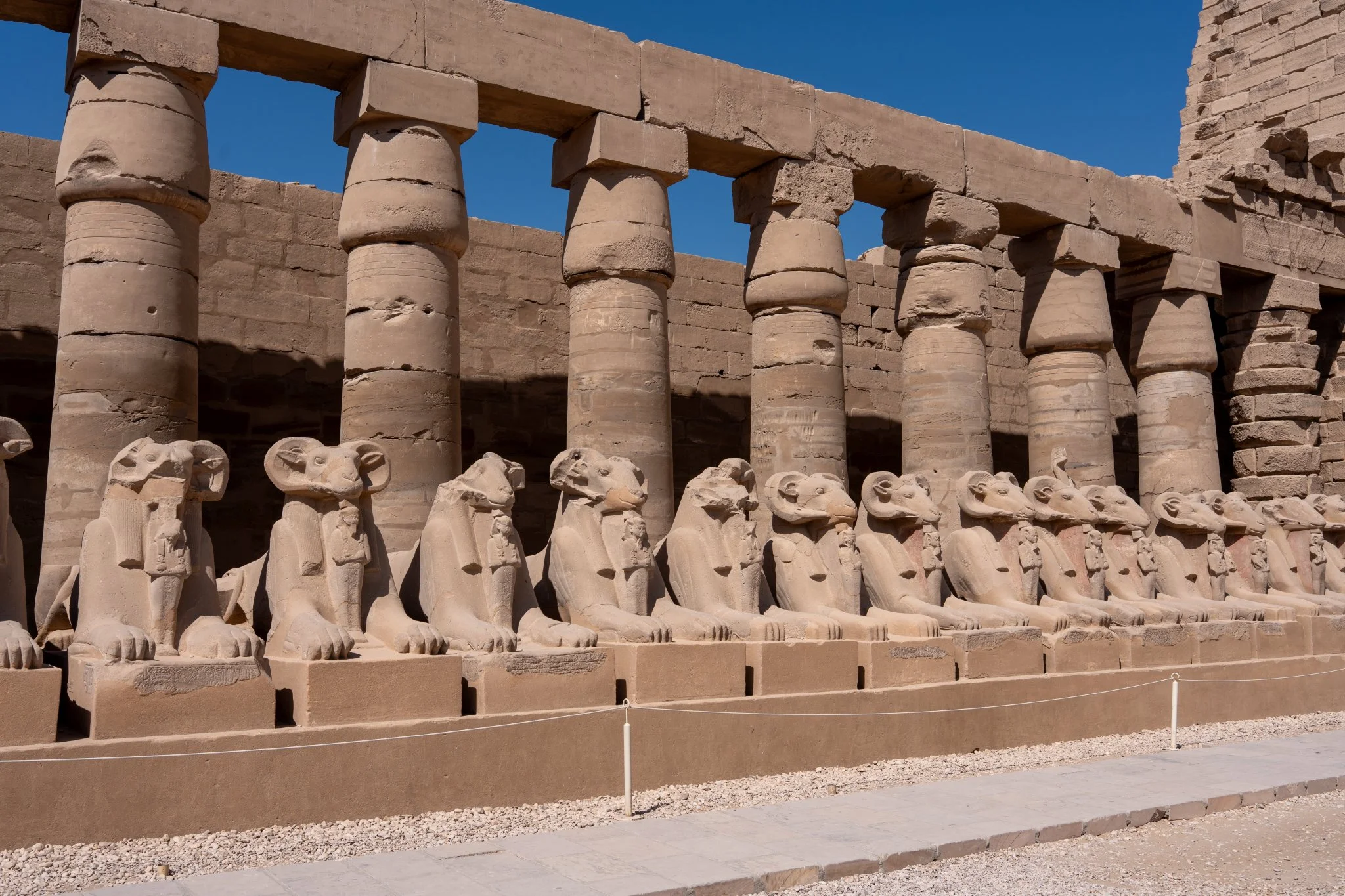
Angela: because the Temple of Karnak is not simply a temple. It's an entire sacred city. The whole complex covers more than 100 hectares, an area larger than that of many historic Italian town centers. To put it into perspective, it would take more than 100 football fields to contain it.
Angela: and the incredible thing is that what we can visit today represents only a fraction of the original complex.
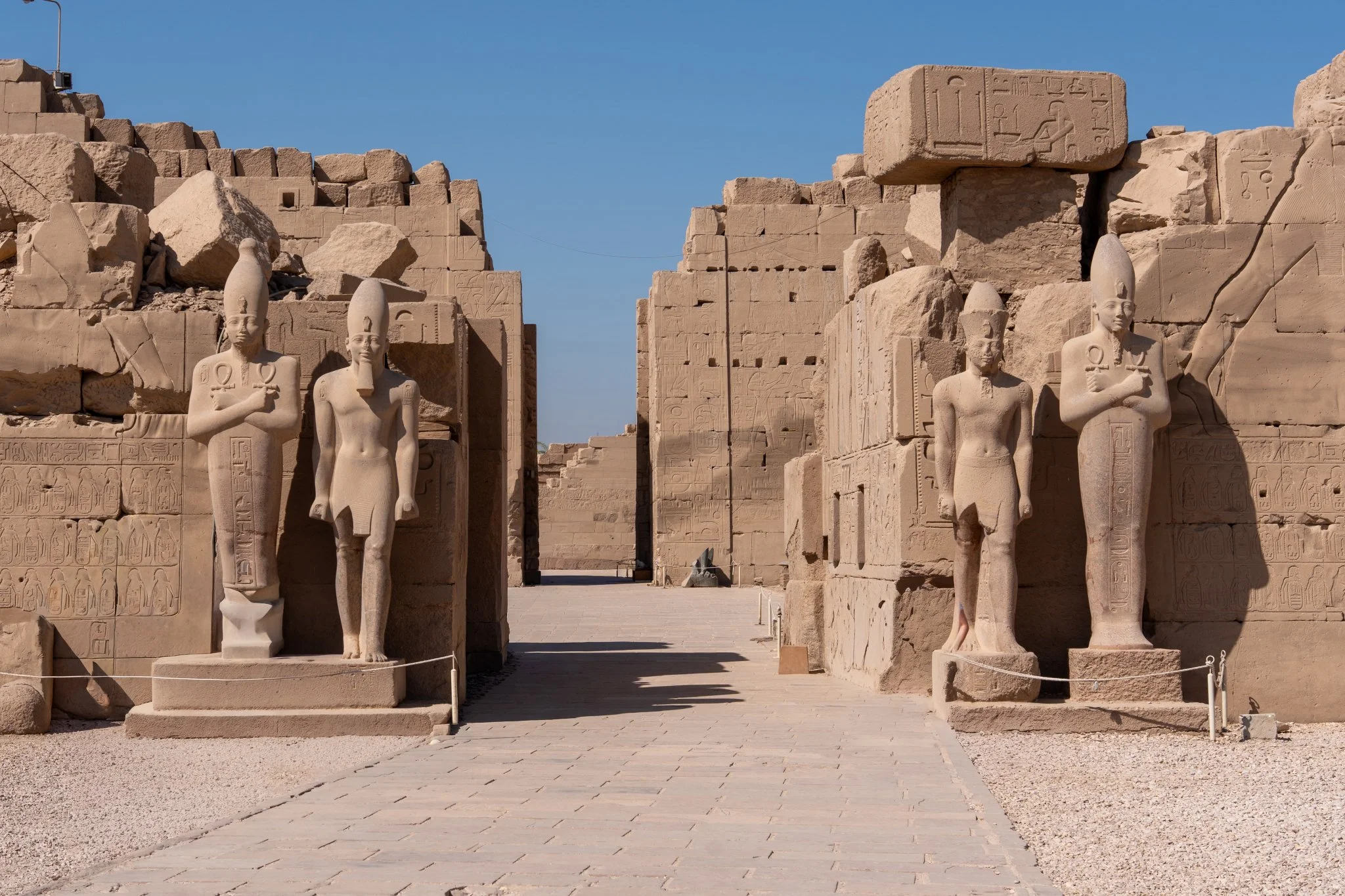
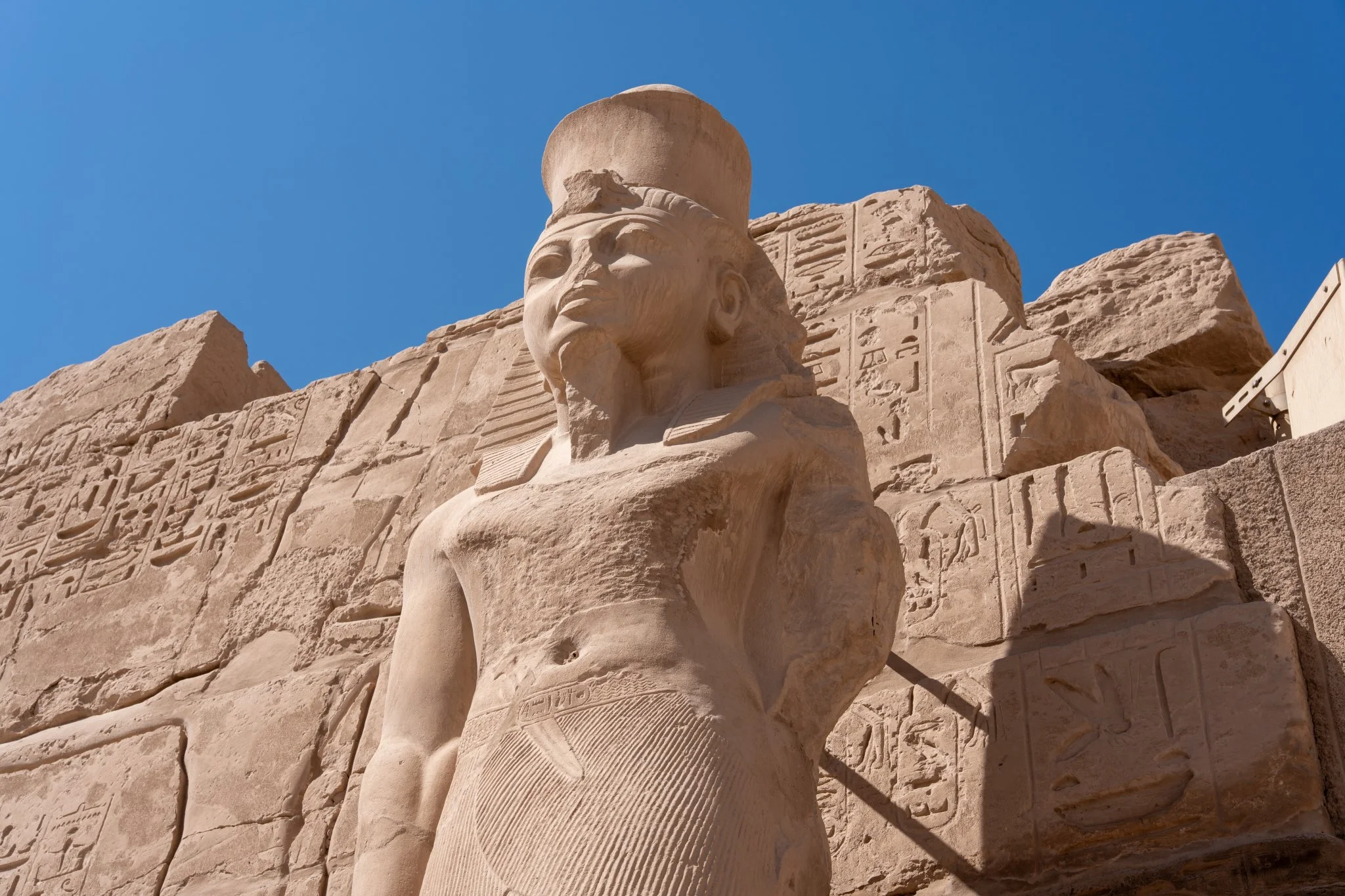
Piero: for more than 2,000 years, almost every pharaoh left his mark here. They didn't simply restore what already existed; they built new monumental pylons, erected obelisks, expanded courtyards, carved gigantic statues, and had their achievements engraved on the walls. It was the best way to demonstrate their greatness, both to the gods and to their people.
Angela: what we now call the Temple of Karnak was actually an enormous complex of religious buildings. The main sanctuary was dedicated to Amun-Ra, the most revered god during the New Kingdom, but there were also temples dedicated to his wife Mut and their son Khonsu. Together, they formed what Egyptologists call the Theban Triad.
Piero: everything was connected, even the Luxor Temple, located about three kilometers to the south. Linking the two complexes was the famous Avenue of the Sphinxes, a ceremonial road stretching for nearly three kilometers, lined with hundreds of sphinxes. During the Opet Festival, one of the most important religious celebrations in Ancient Egypt, the sacred statues of the gods were carried along this avenue in magnificent processions accompanied by music, offerings, and religious ceremonies.
Angela: unfortunately, we didn't have the chance to visit the Luxor Temple.
Piero: time is limited on a day trip, and you have to make choices. But simply knowing that these two temples were connected by a sacred avenue gives you an idea of just how magnificent this city once was.
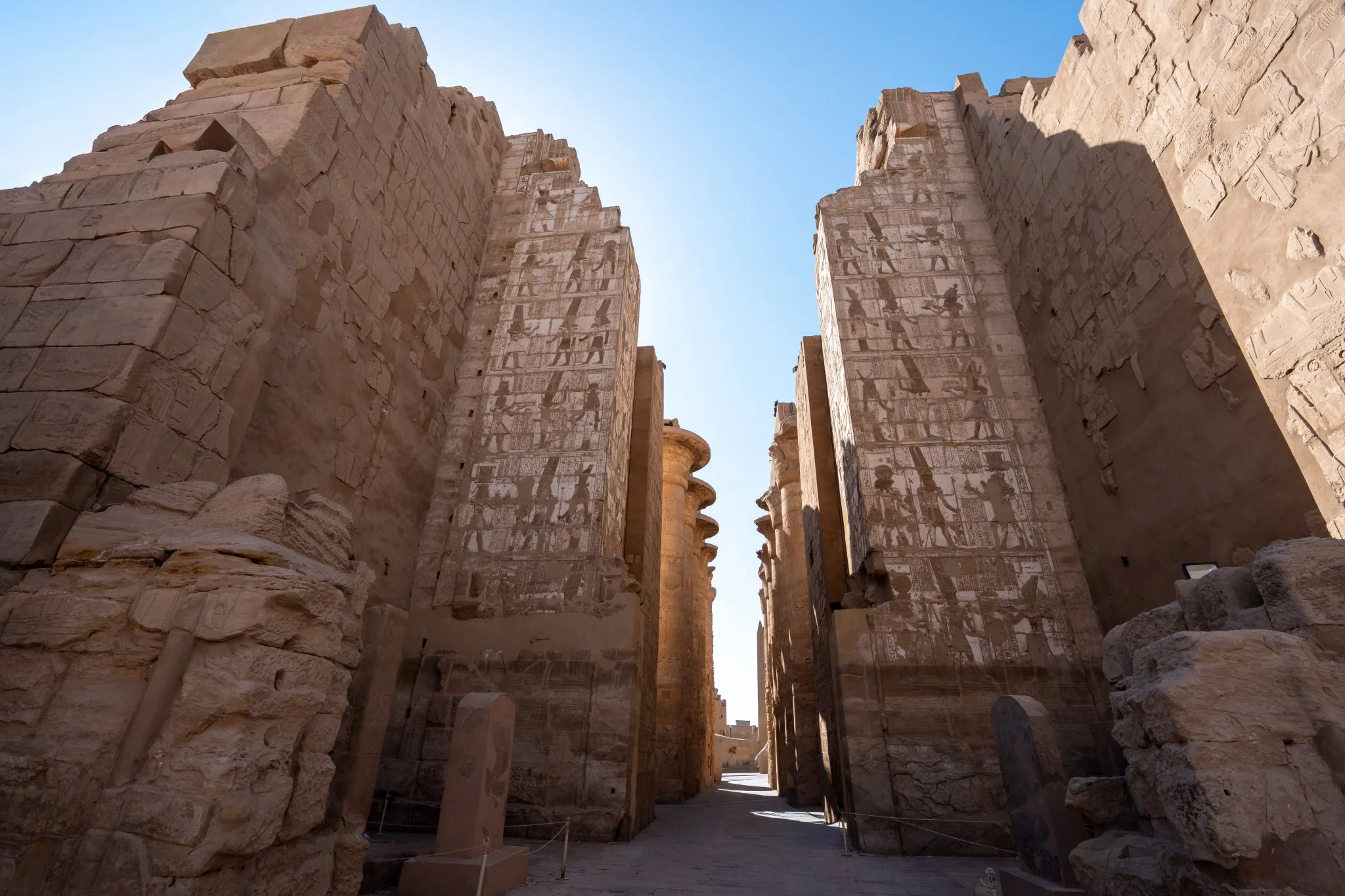
Angela: standing before a temple of this scale, the first feeling is how incredibly small you are. The enormous First Pylon, rising more than 40 meters high, looks almost like a sheer cliff carved by human hands. Walking through it feels like stepping into another era.
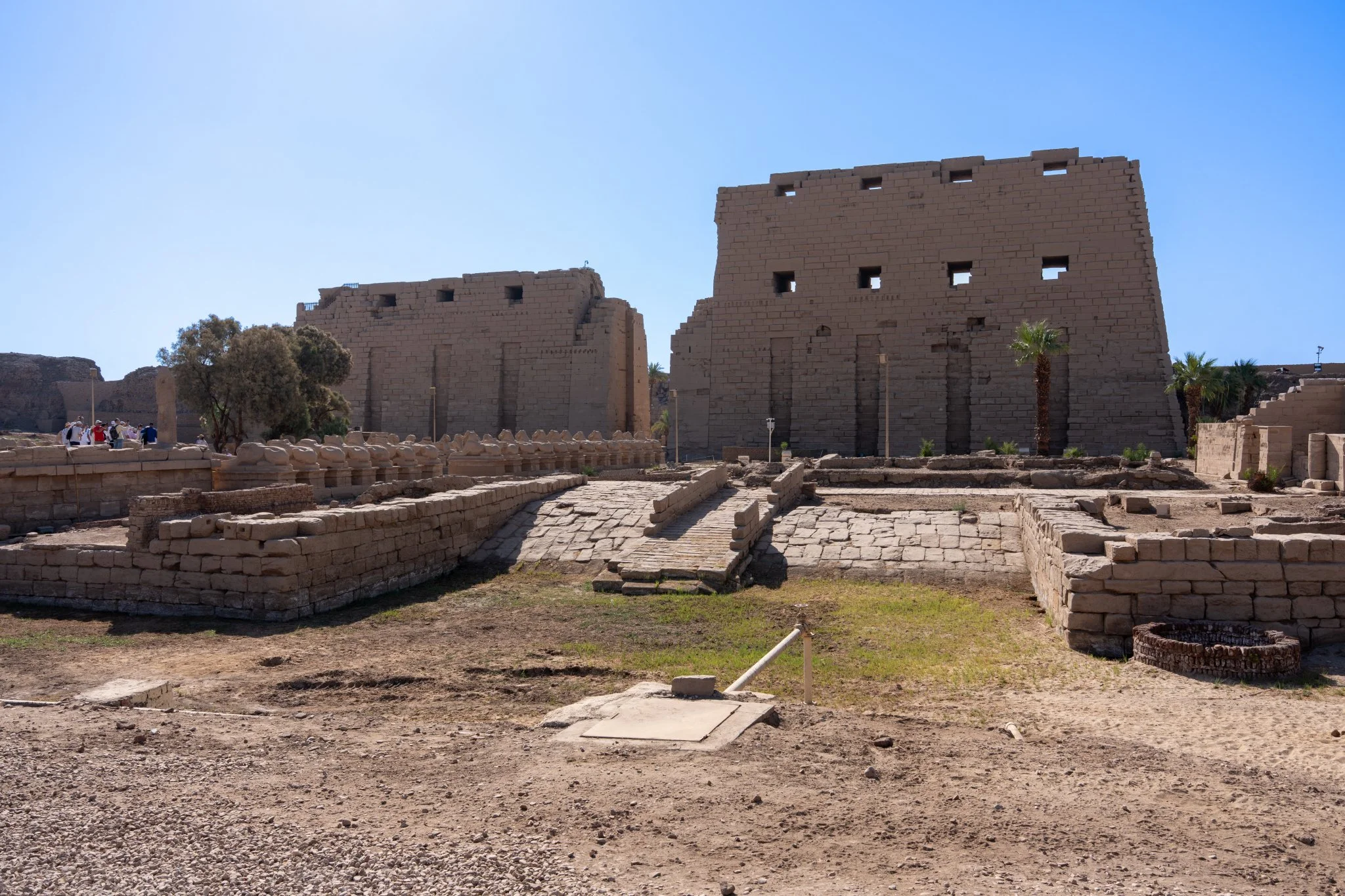
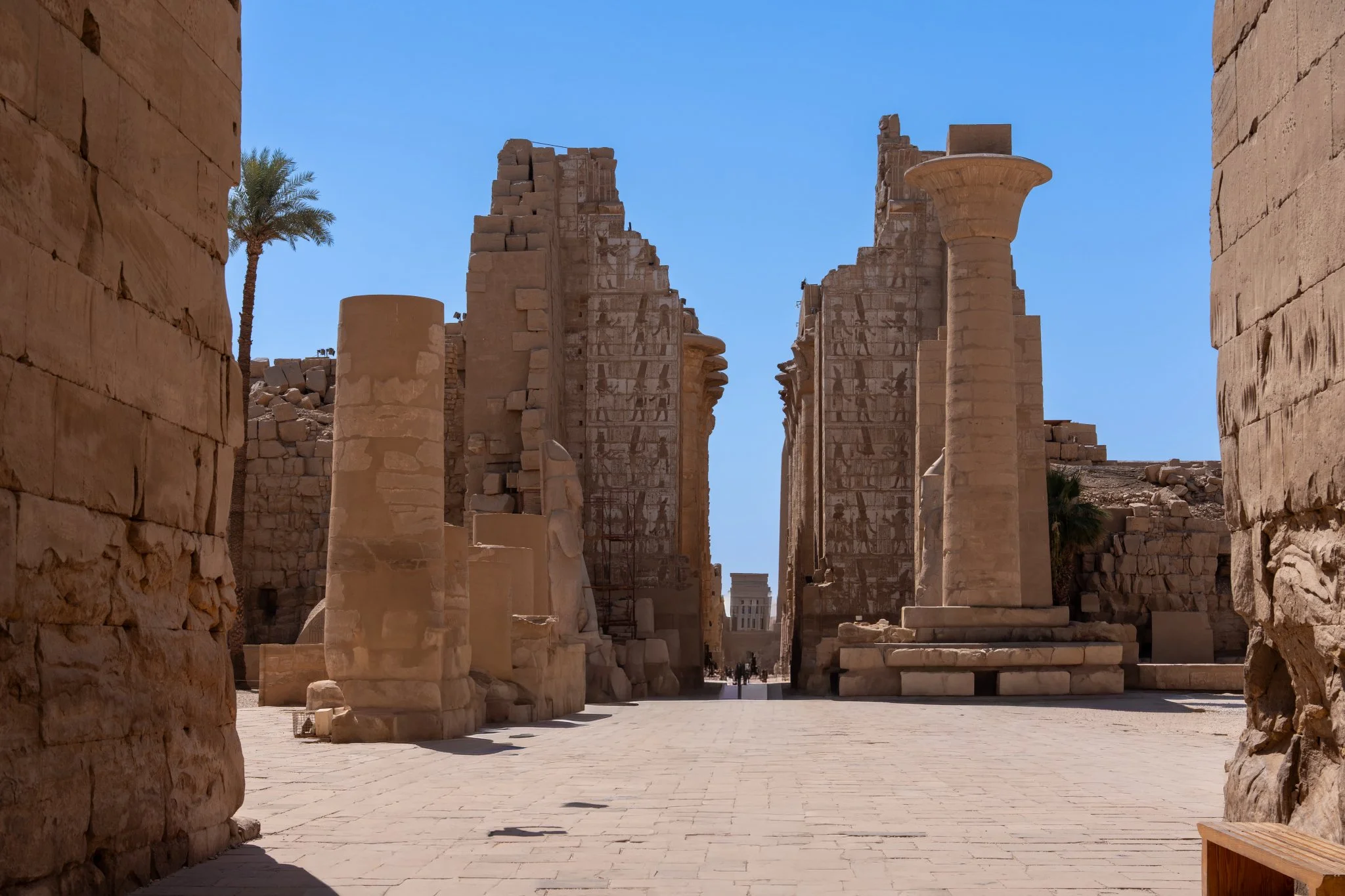
Piero: but the real masterpiece was waiting just a little farther ahead: the legendary Great Hypostyle Hall. An immense space, almost like a cathedral built for giants.
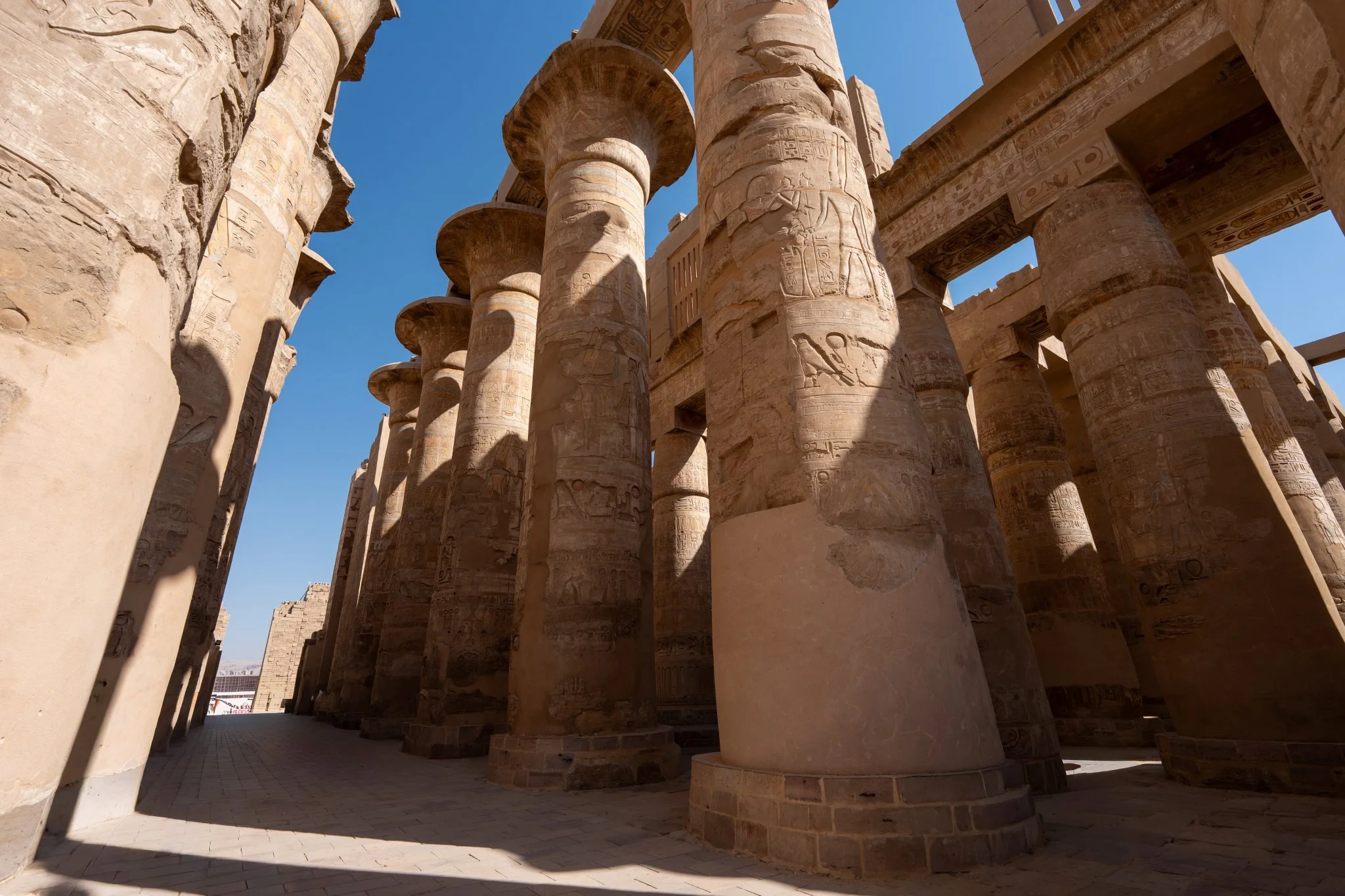
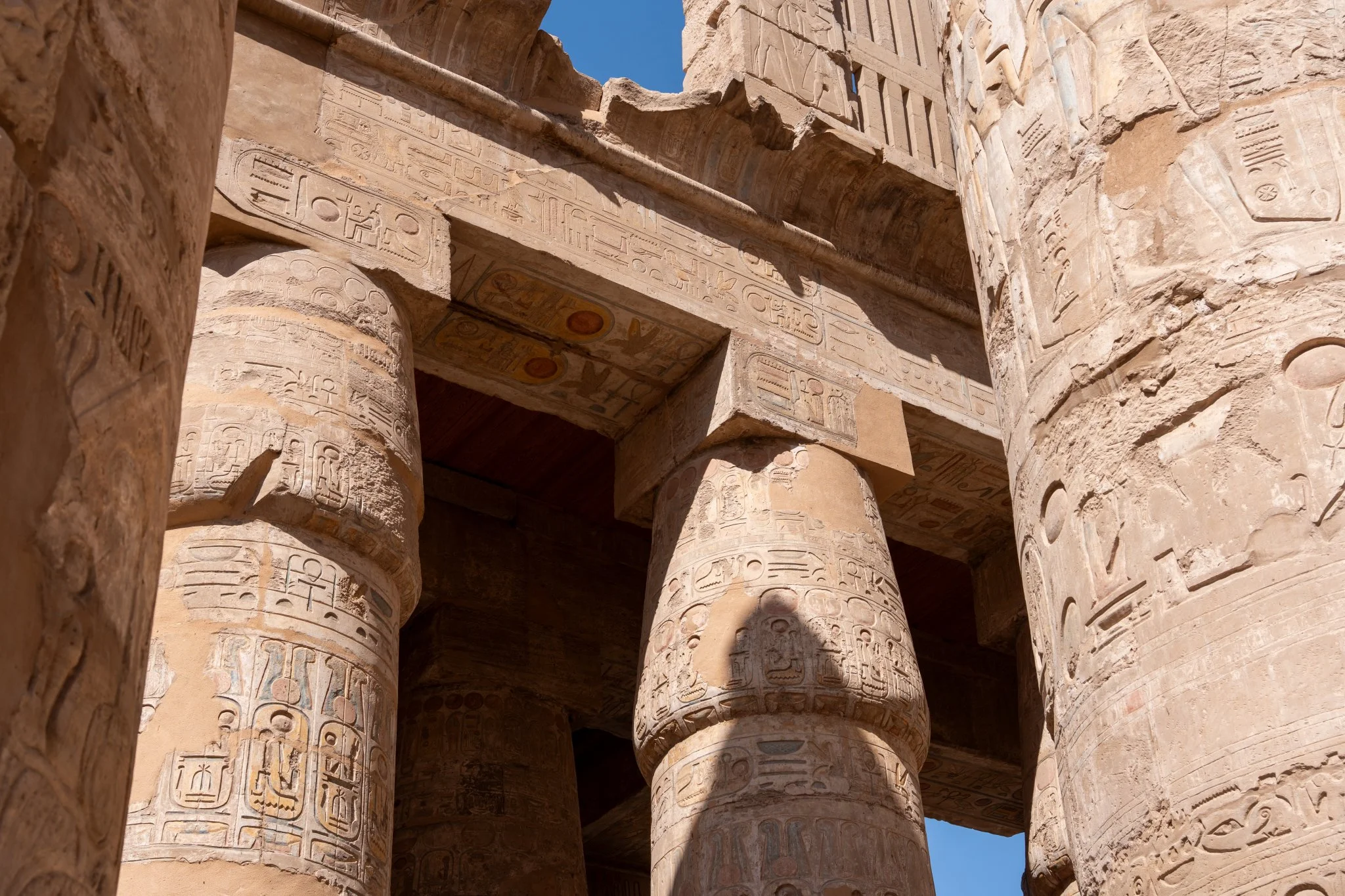
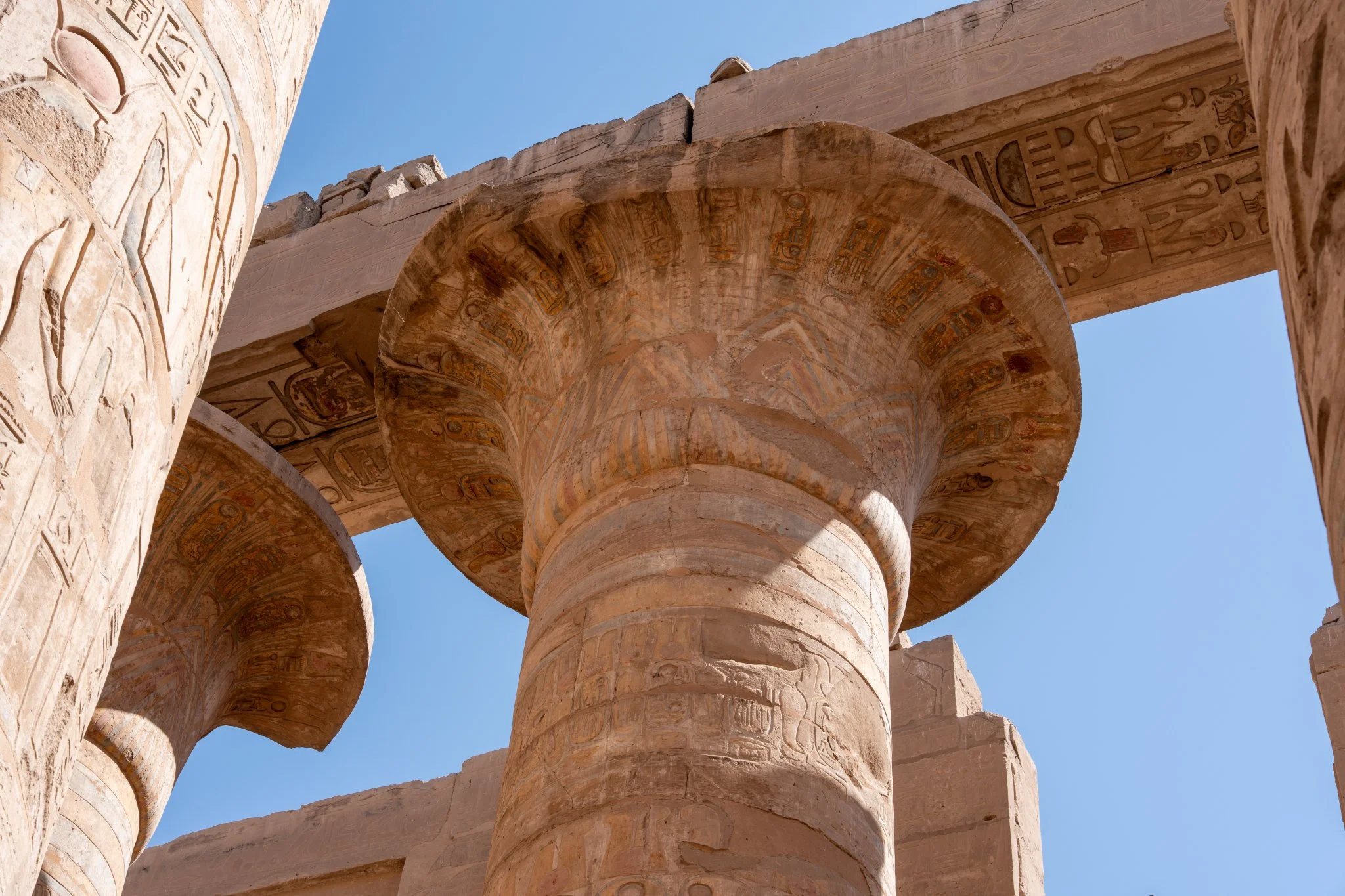
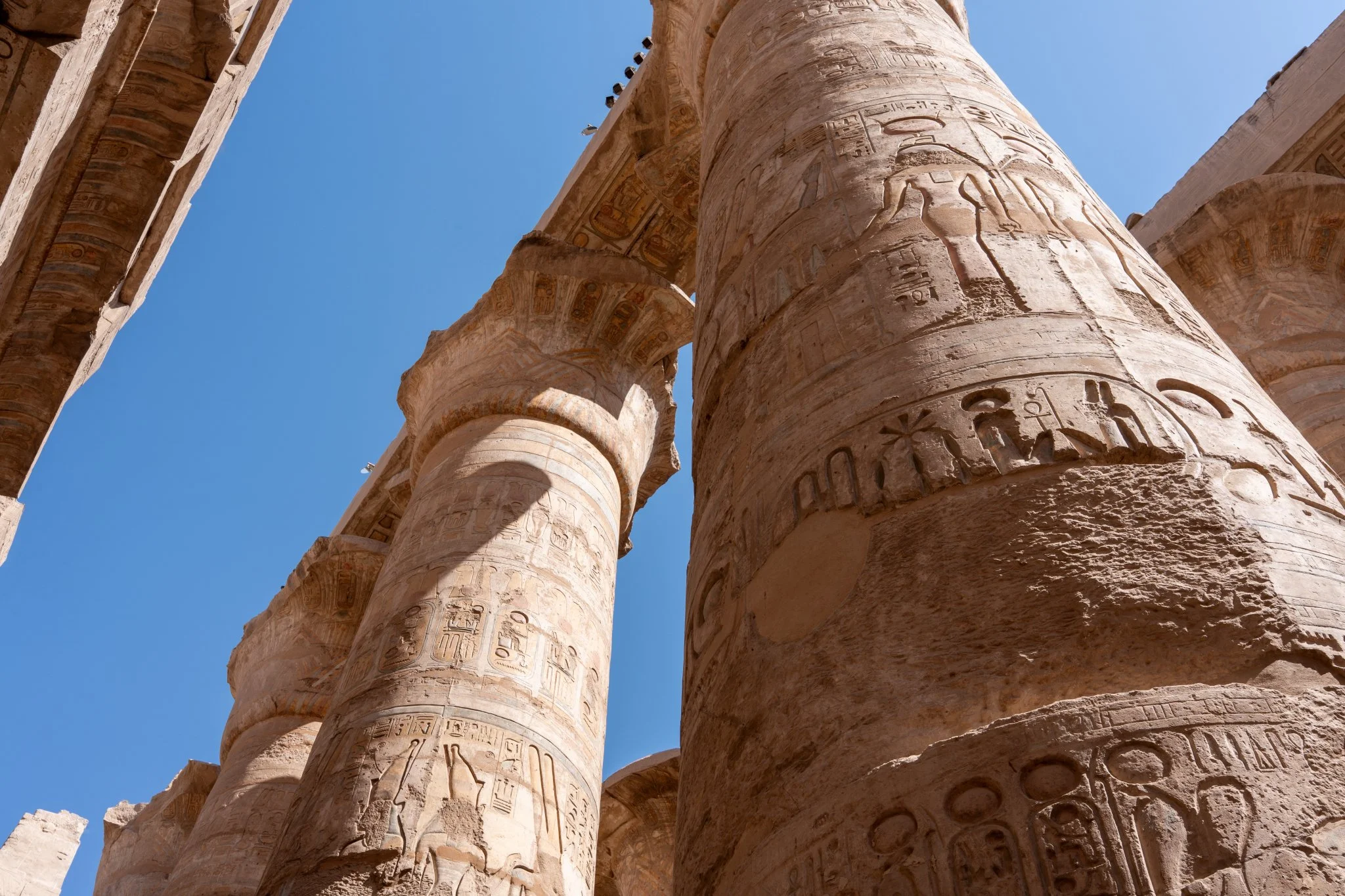
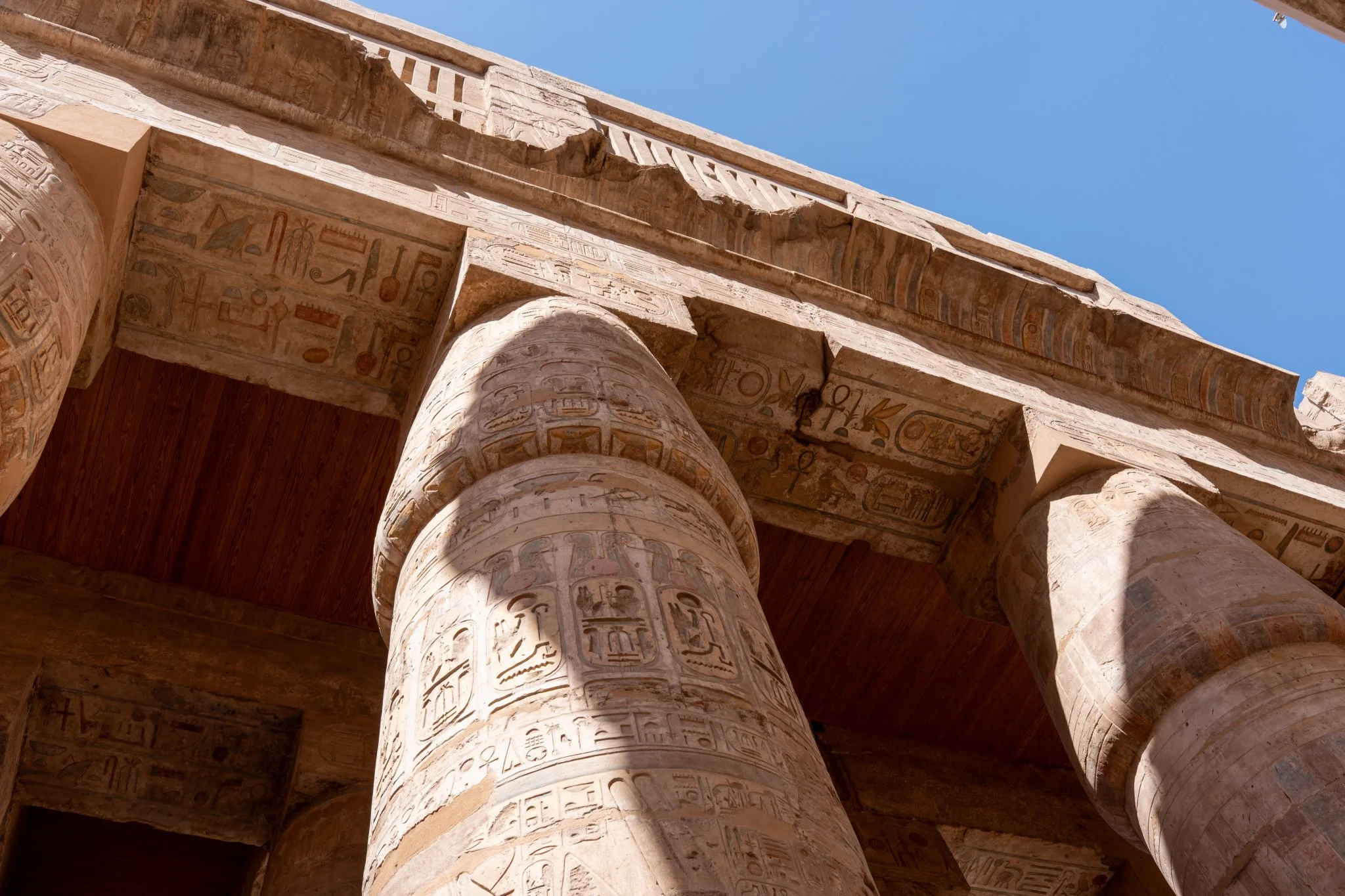
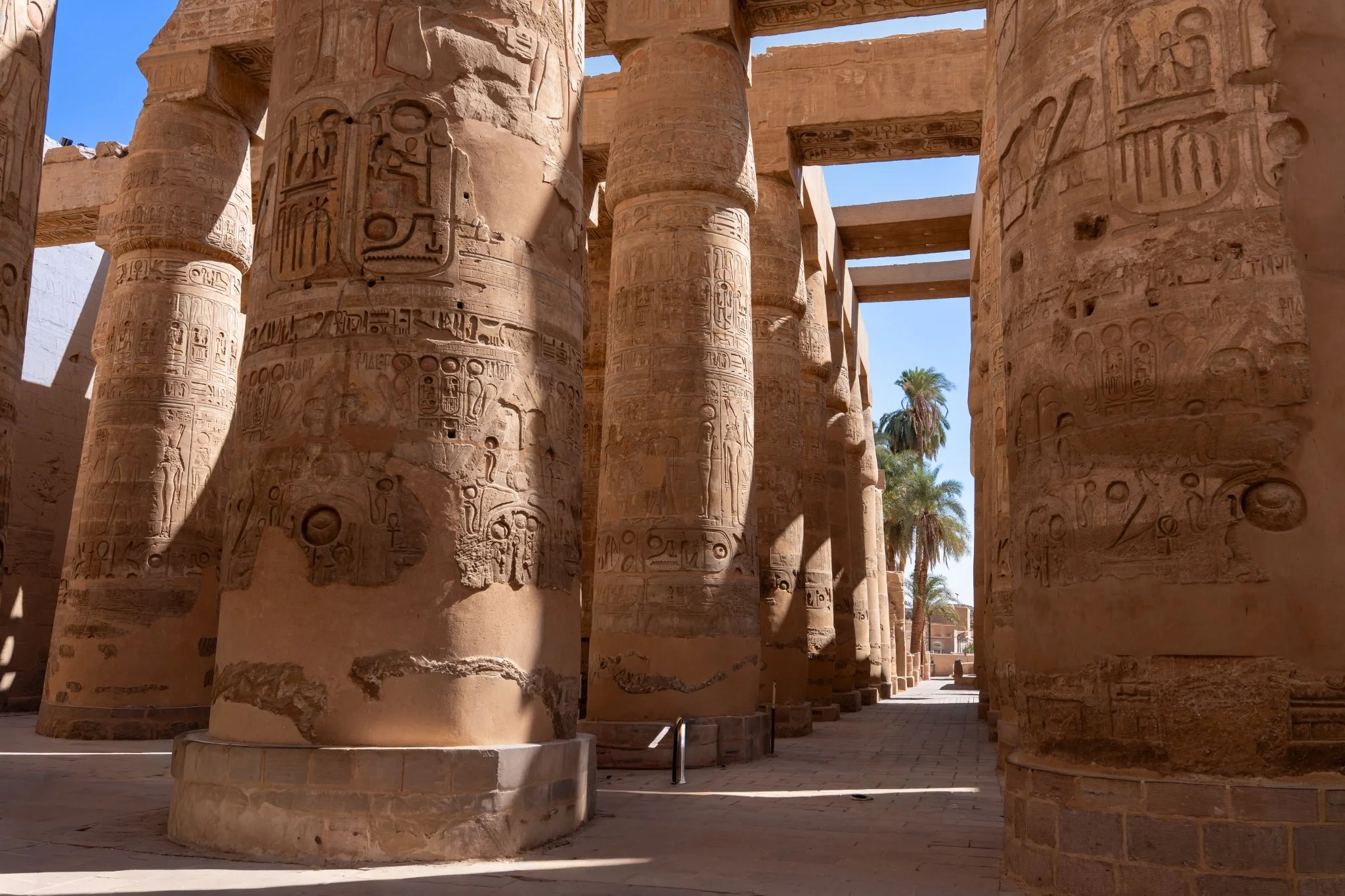
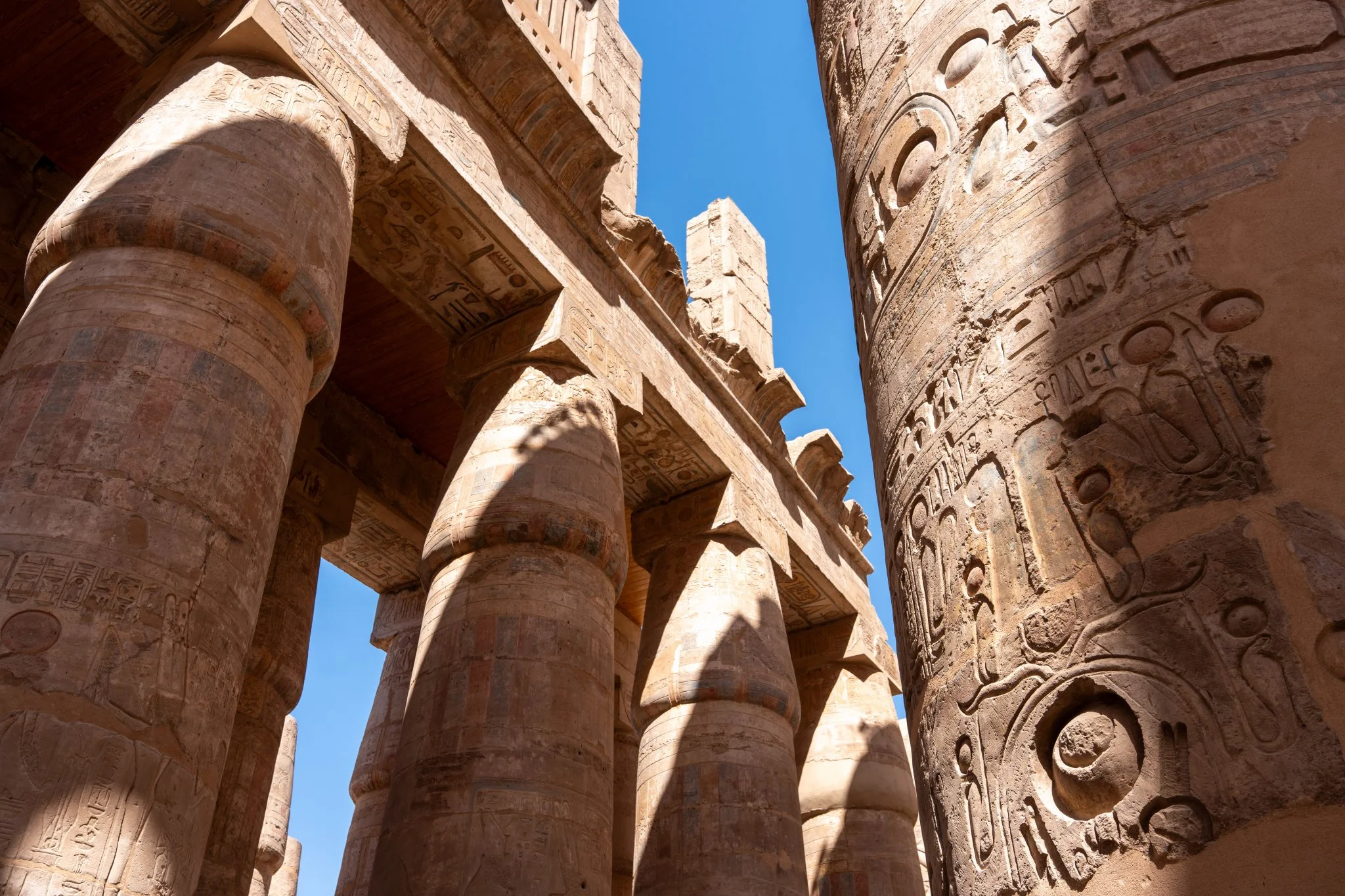
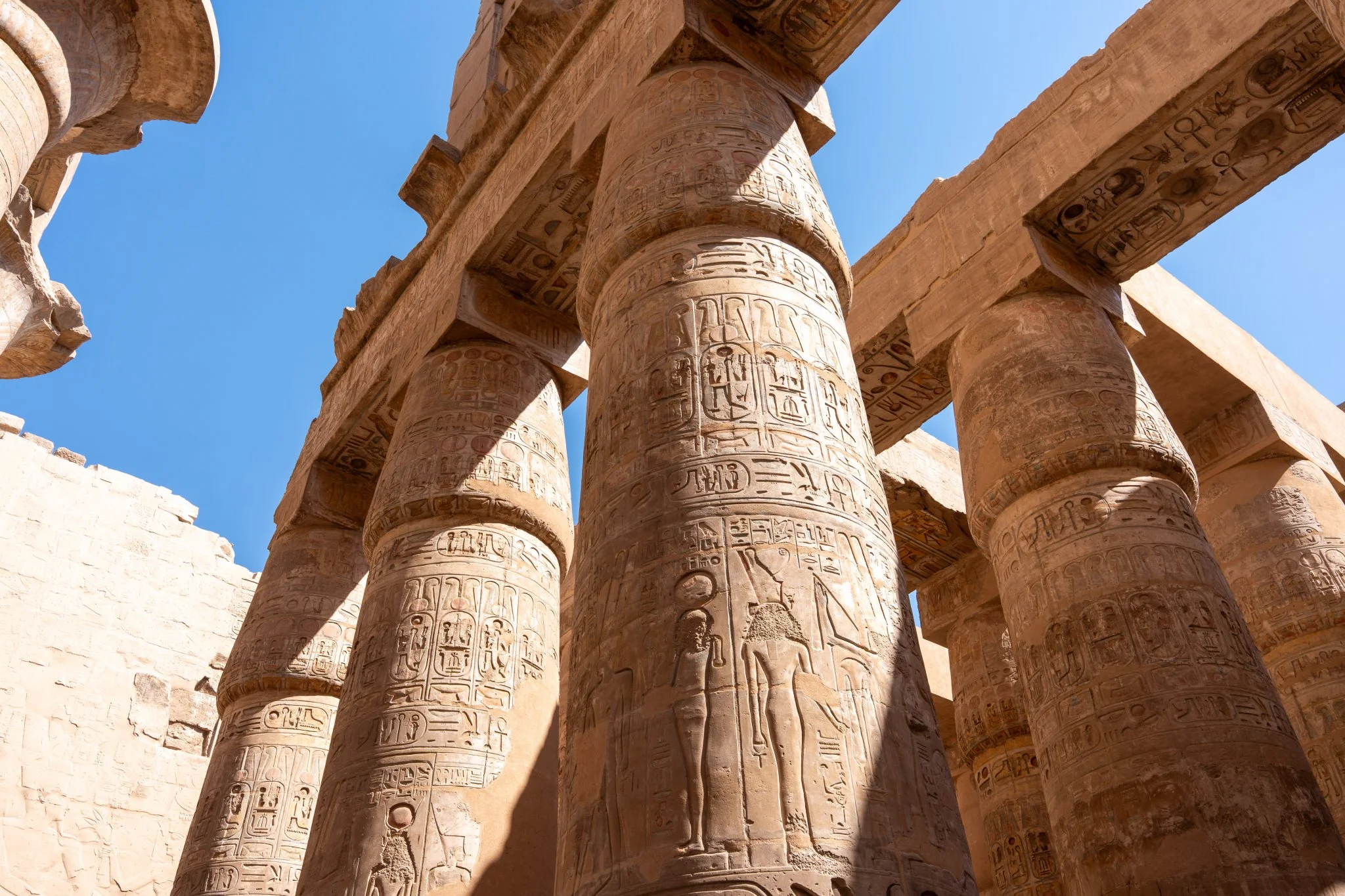
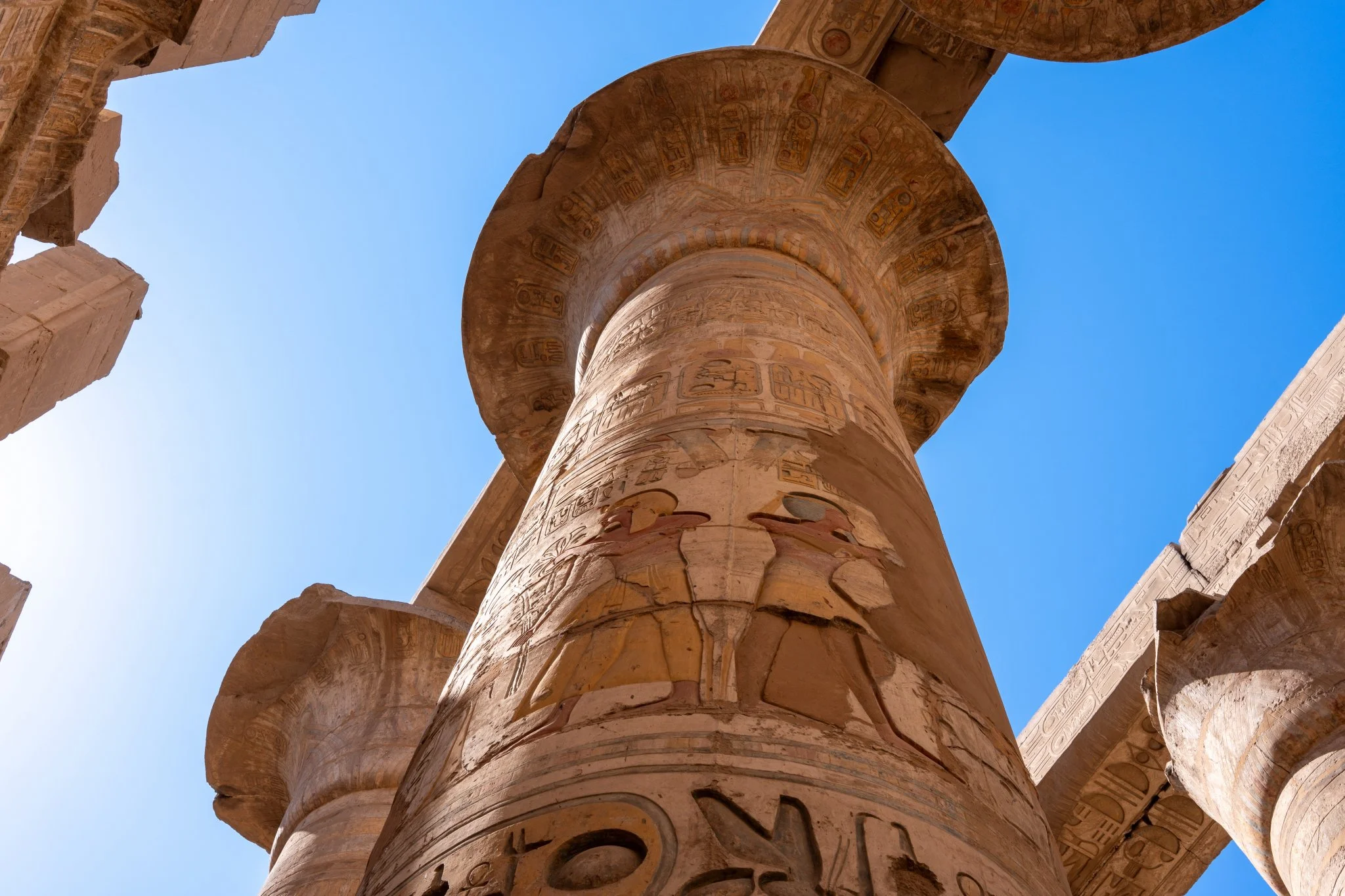
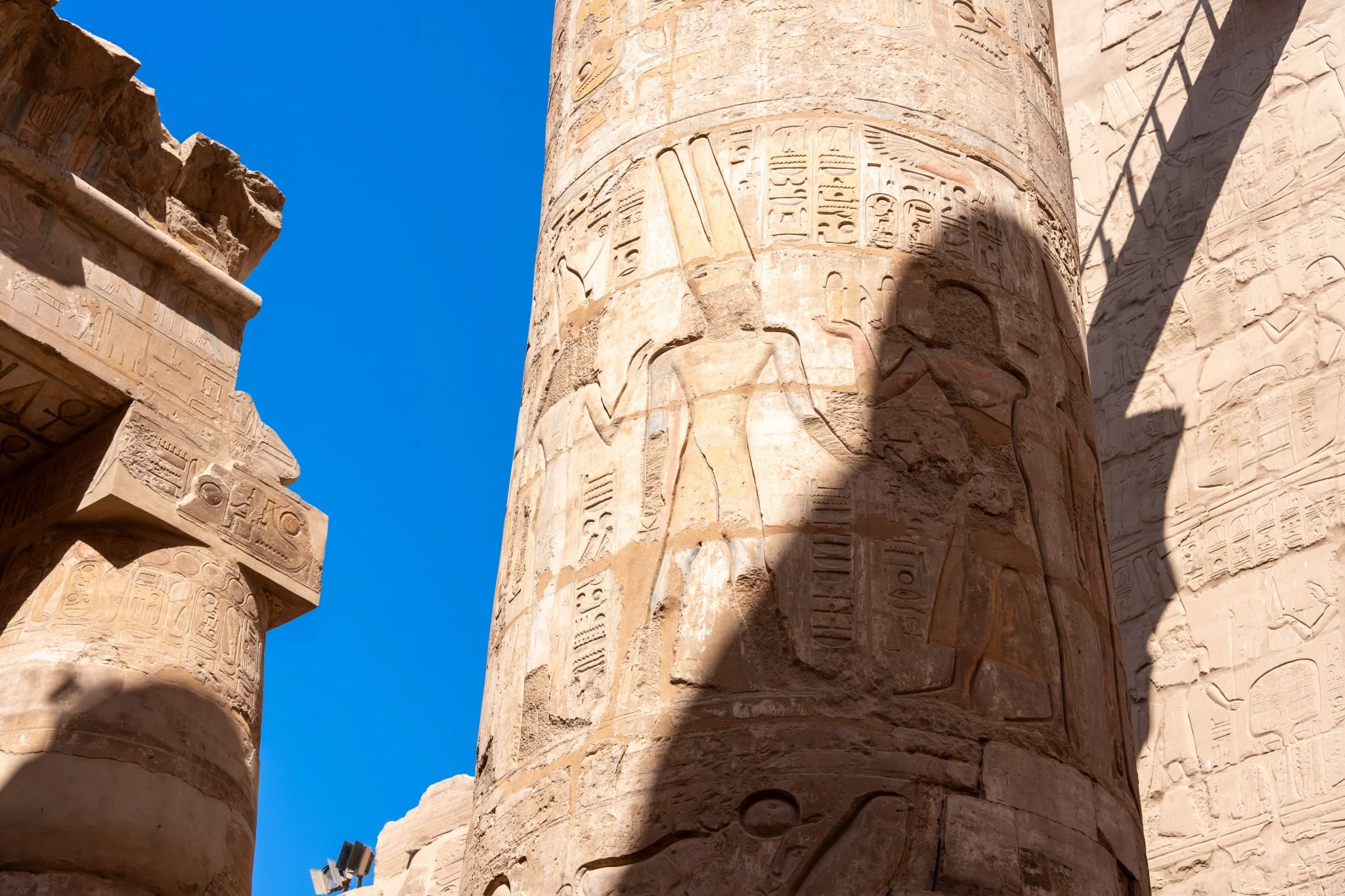
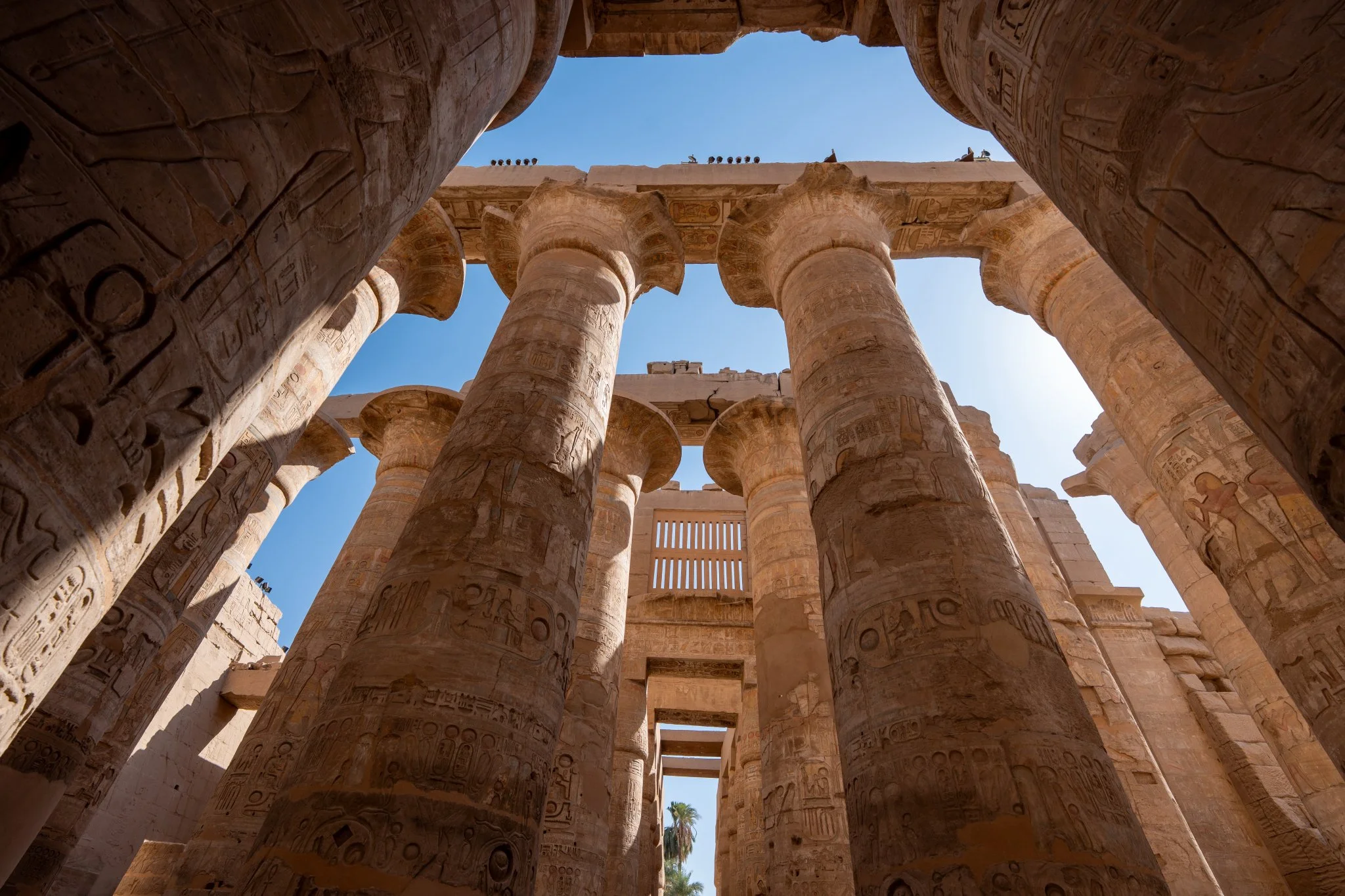
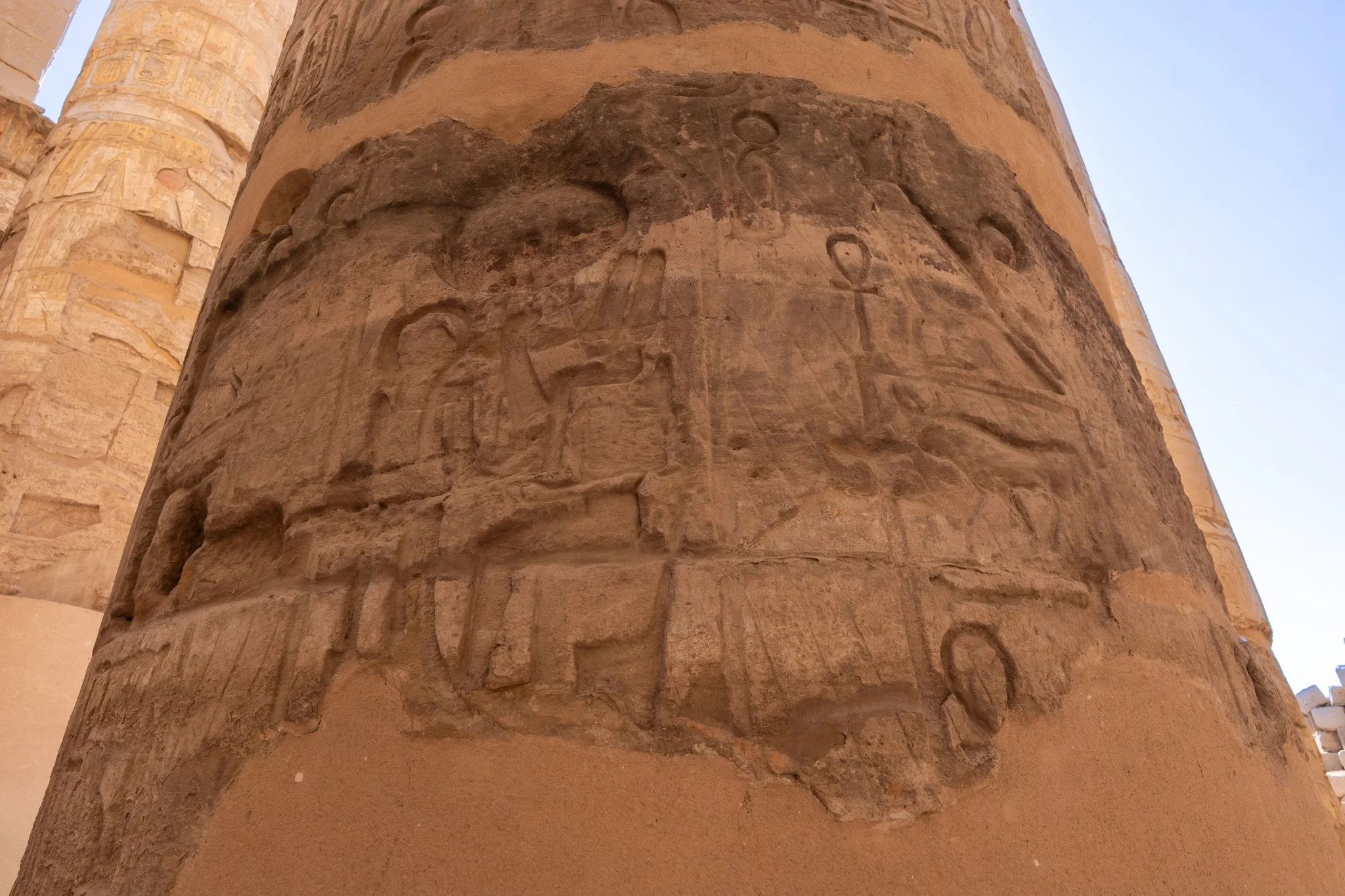
Angela: before us stood 134 gigantic columns, arranged in 16 perfectly aligned rows. The 12 central columns rise to almost 23 meters in height, each with a circumference of more than 10 meters. It would take at least six people to wrap their arms around a single one.
Piero: the ancient architects planned every detail. Anyone entering the hall was meant to feel the overwhelming greatness of the god Amun and, in turn, the immense power of the pharaoh who had commissioned the monument, leaving them feeling truly insignificant. It was as much a form of political propaganda as it was an expression of religious devotion.
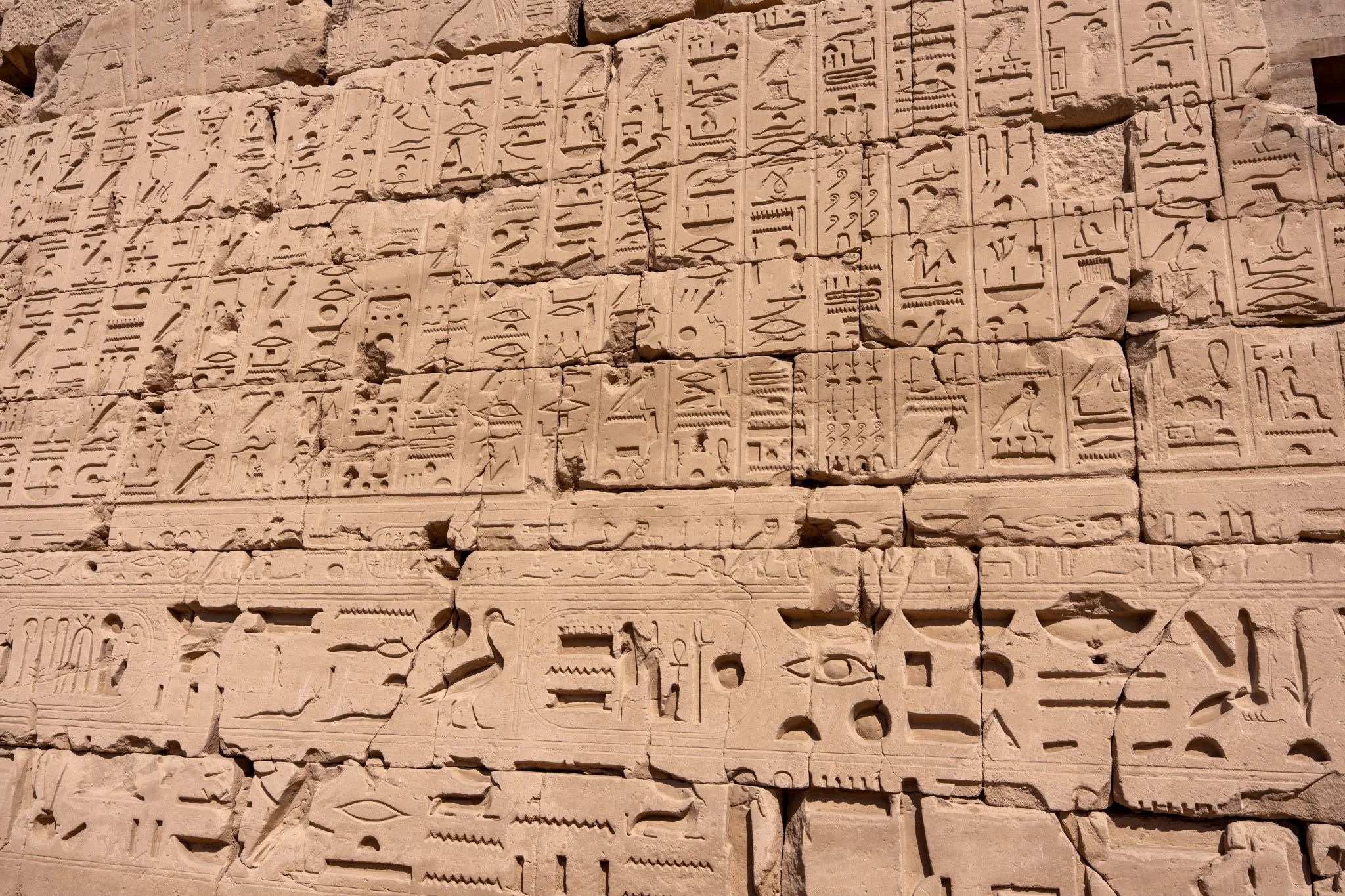
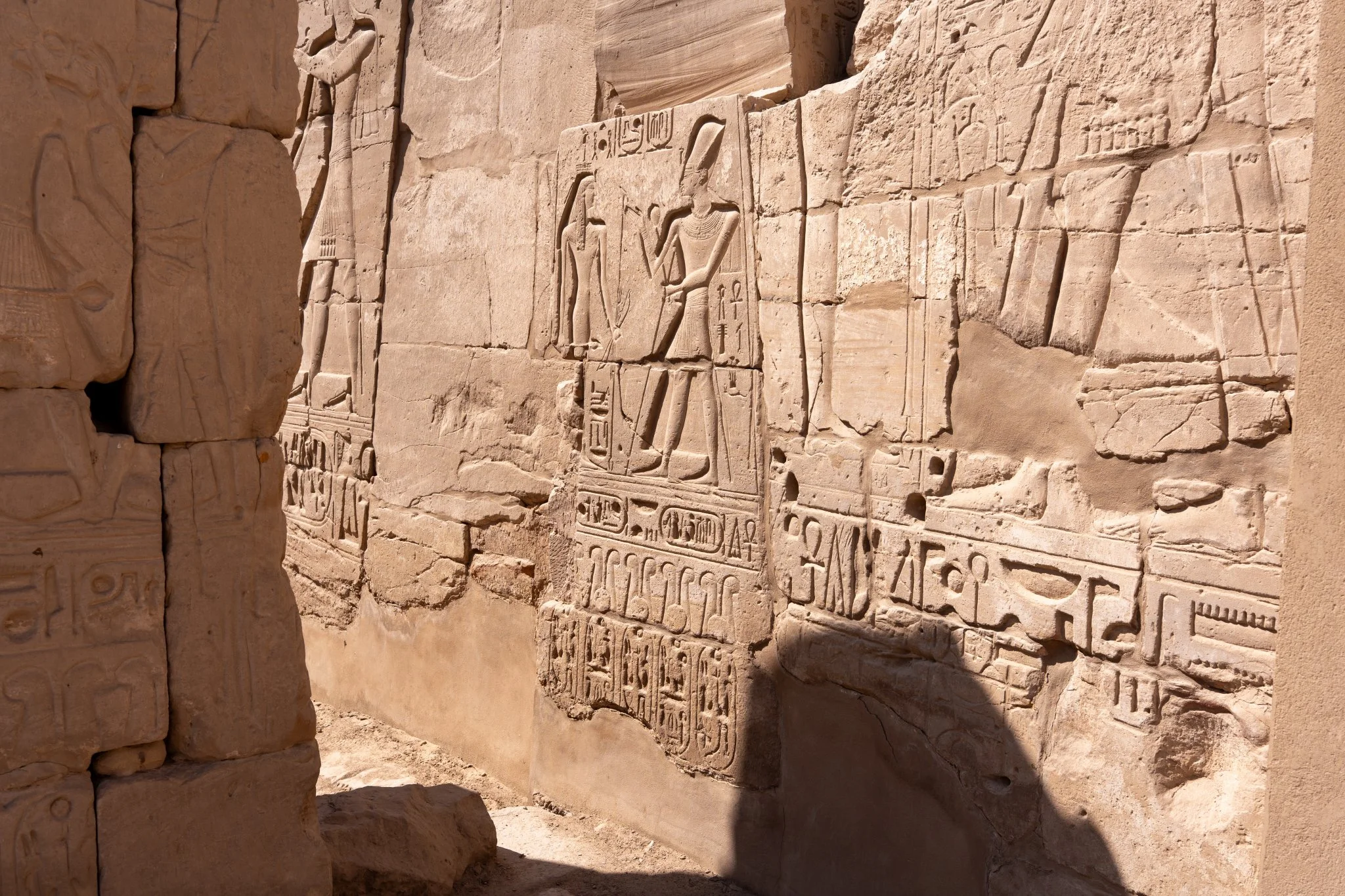
Angela: every column is completely covered with carvings. Everywhere you look, there are hieroglyphs, scenes of offerings, processions, battles, rituals, and depictions of the gods. Every single inch tells a story. And it's astonishing to think that, after more than 3,000 years, many of the original colors are still visible.
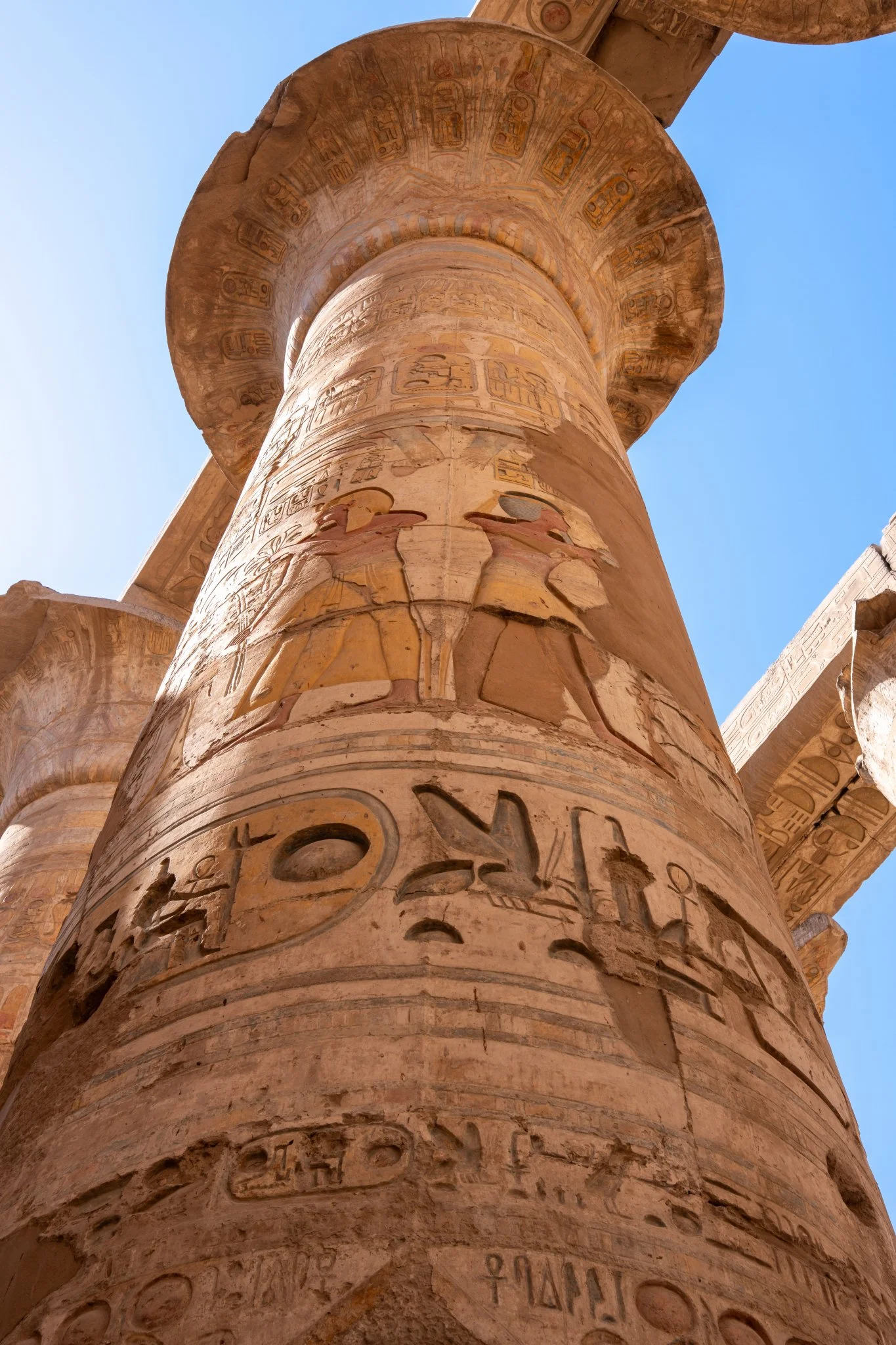
Piero: shades of color that time has never managed to erase completely.
Angela: it's a feeling that's difficult to describe. In museums, we're used to seeing statues displayed on their own, but here everything still stands in its original setting. You walk through the very same places where Ramesses II, Seti I, Hatshepsut, priests, scribes, and thousands of pilgrims once walked. For a few moments, you truly have the impression that history is still alive.
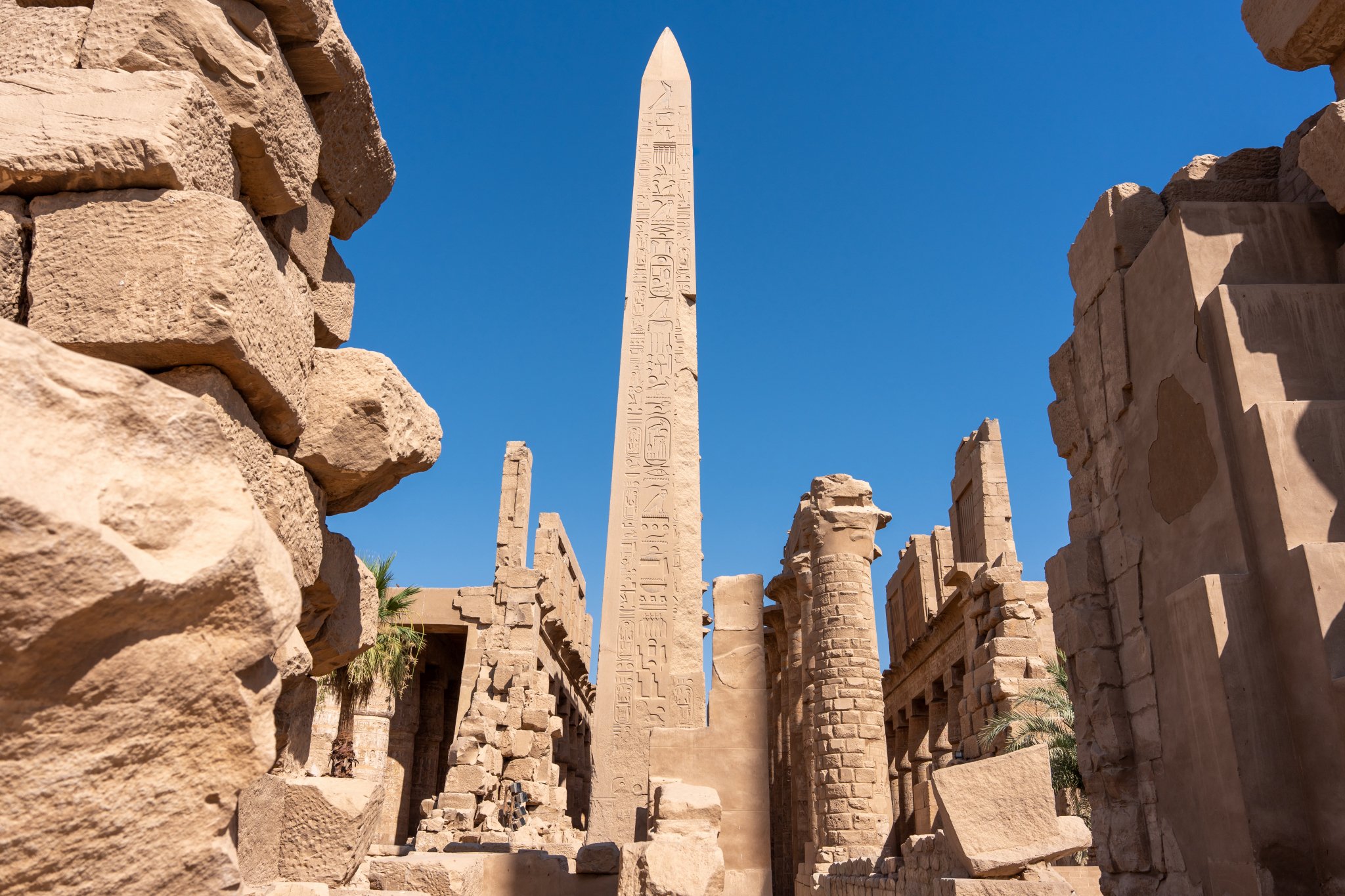
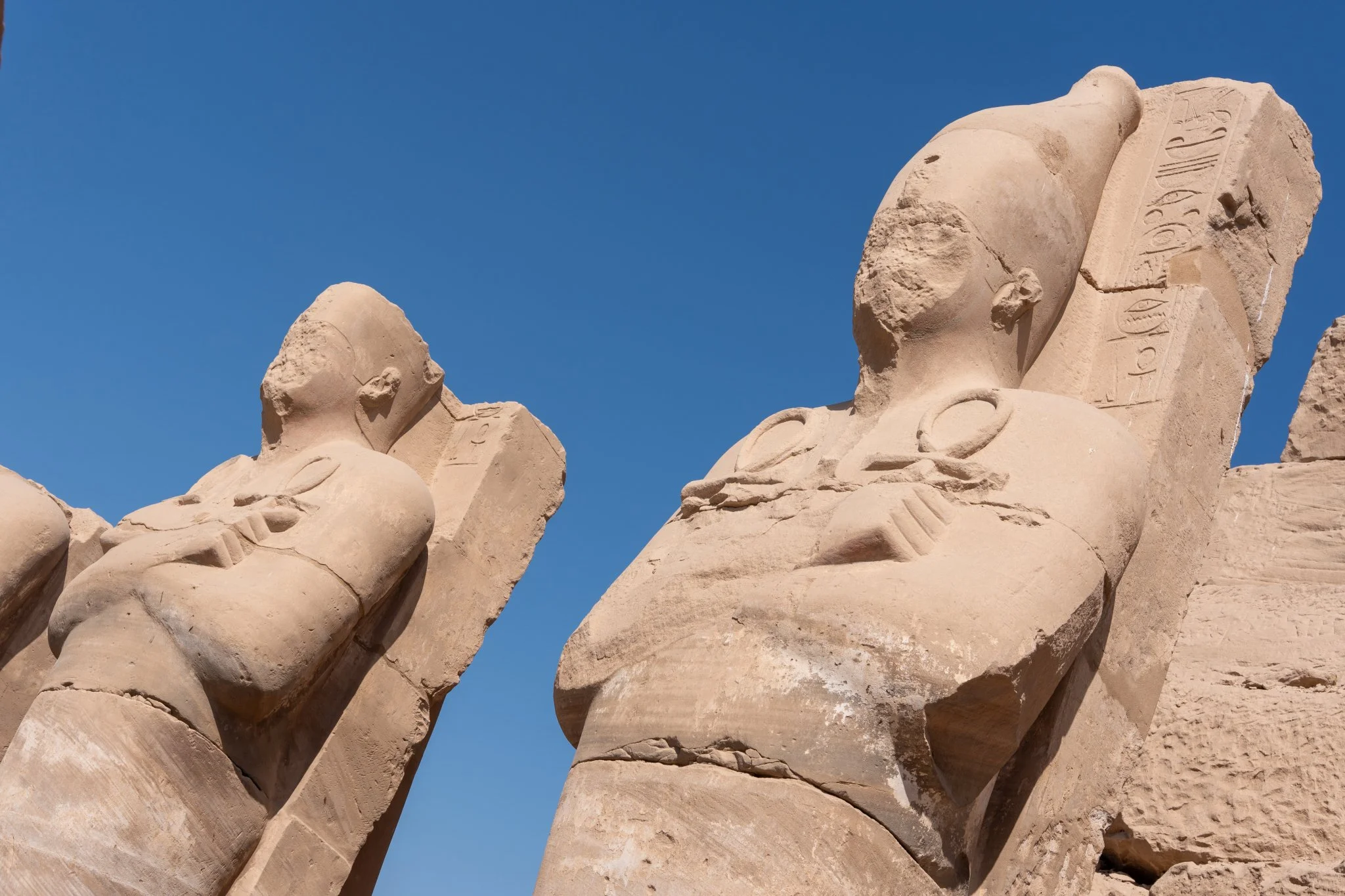
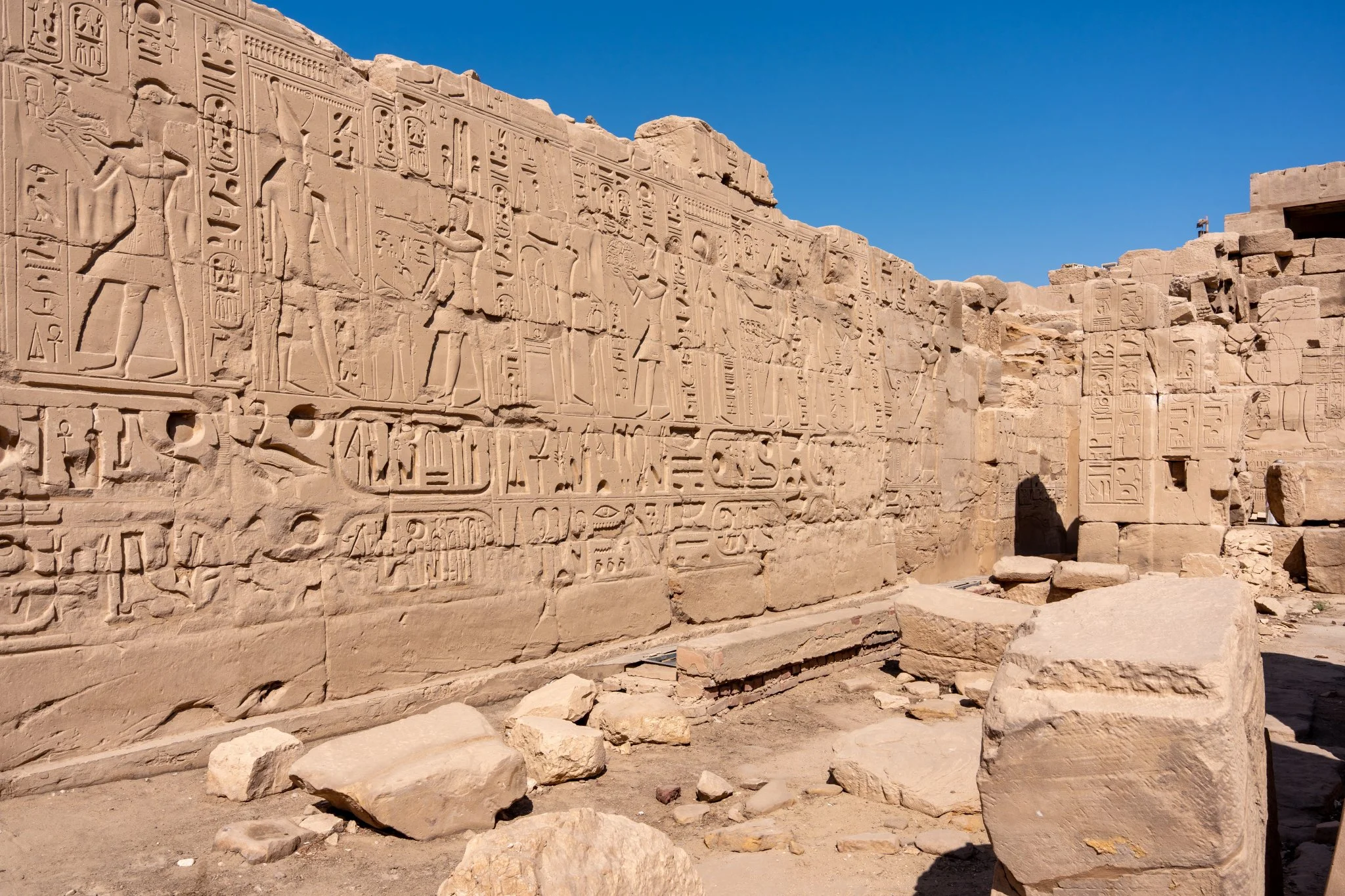
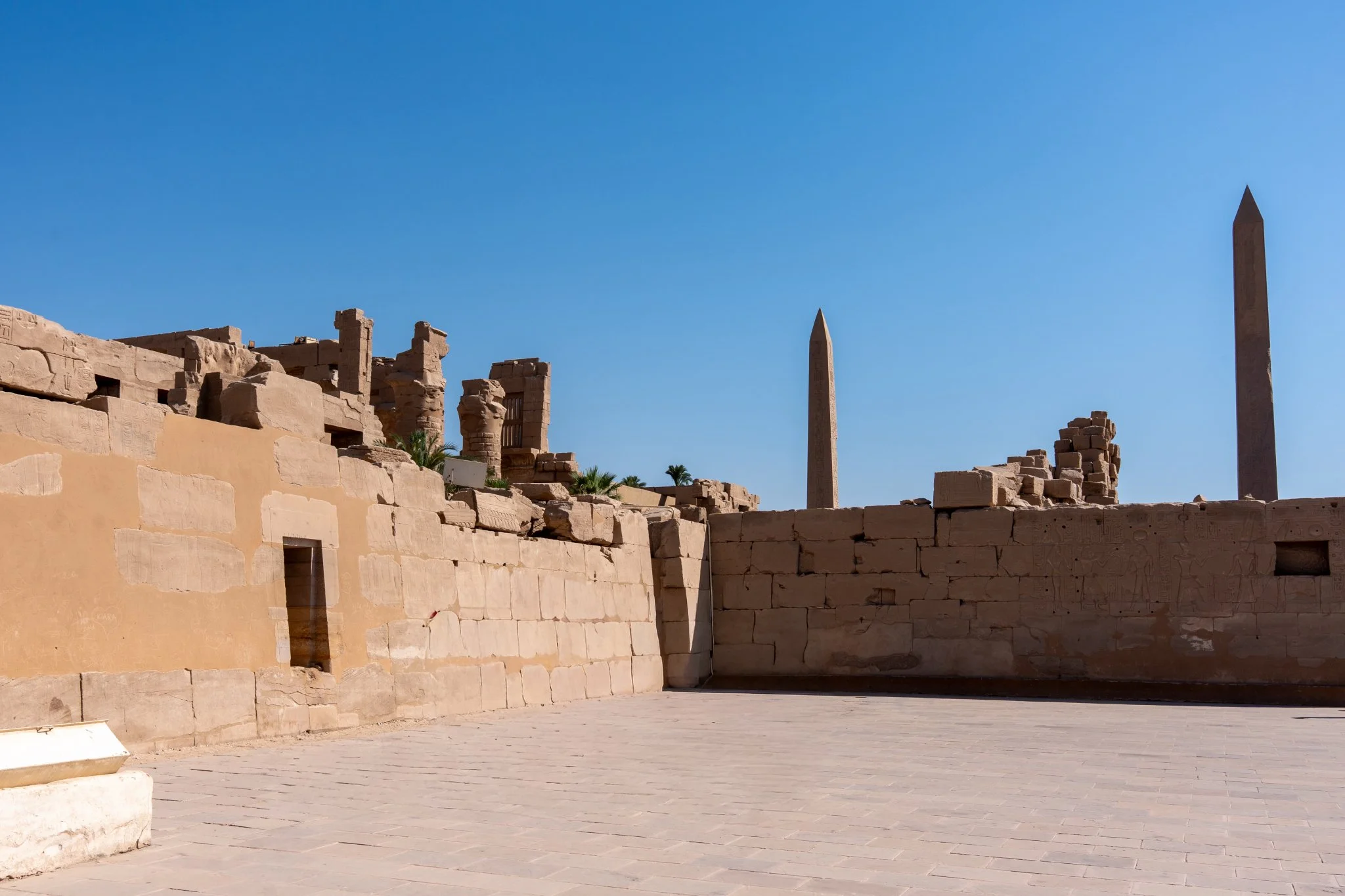
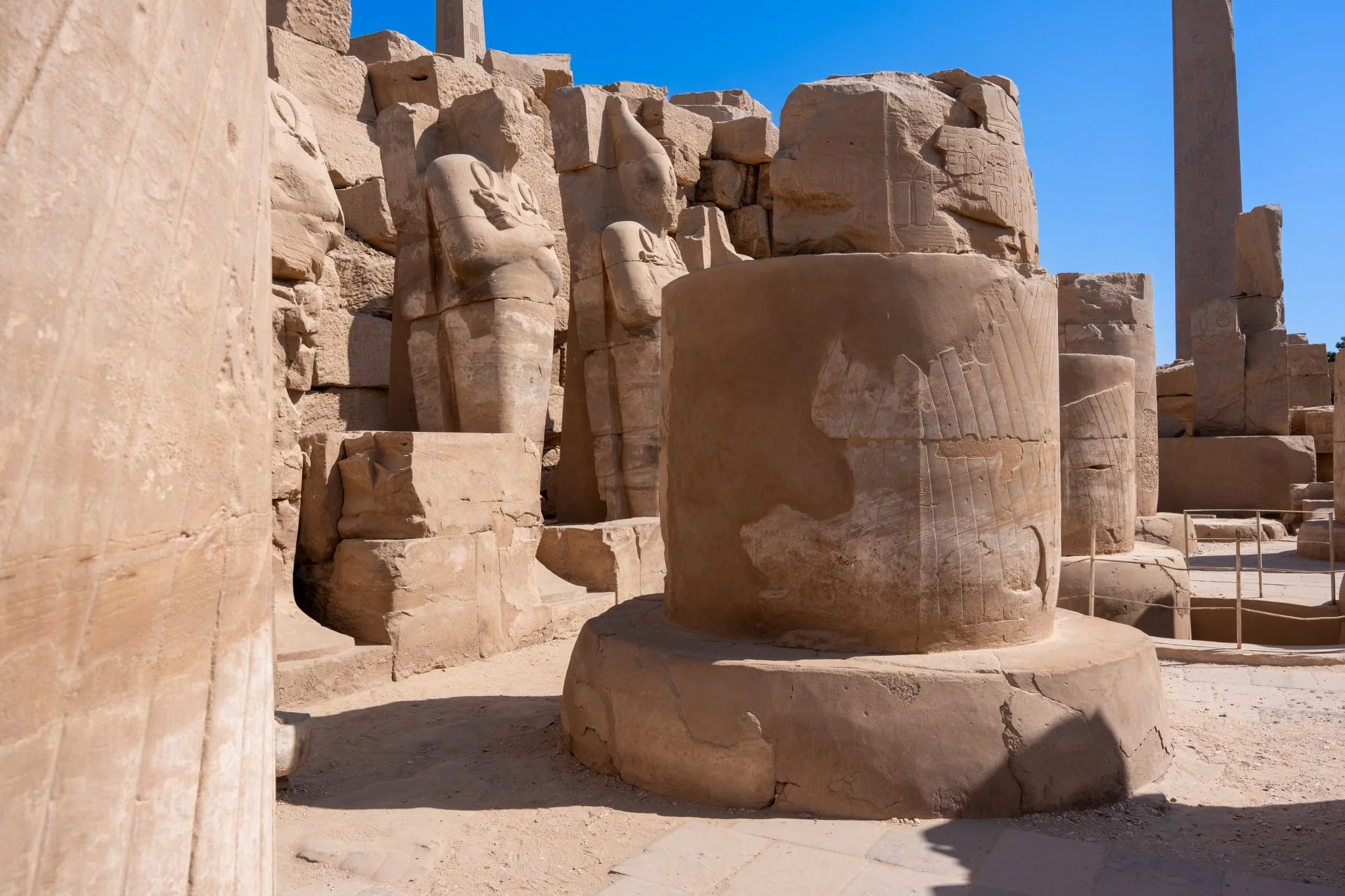
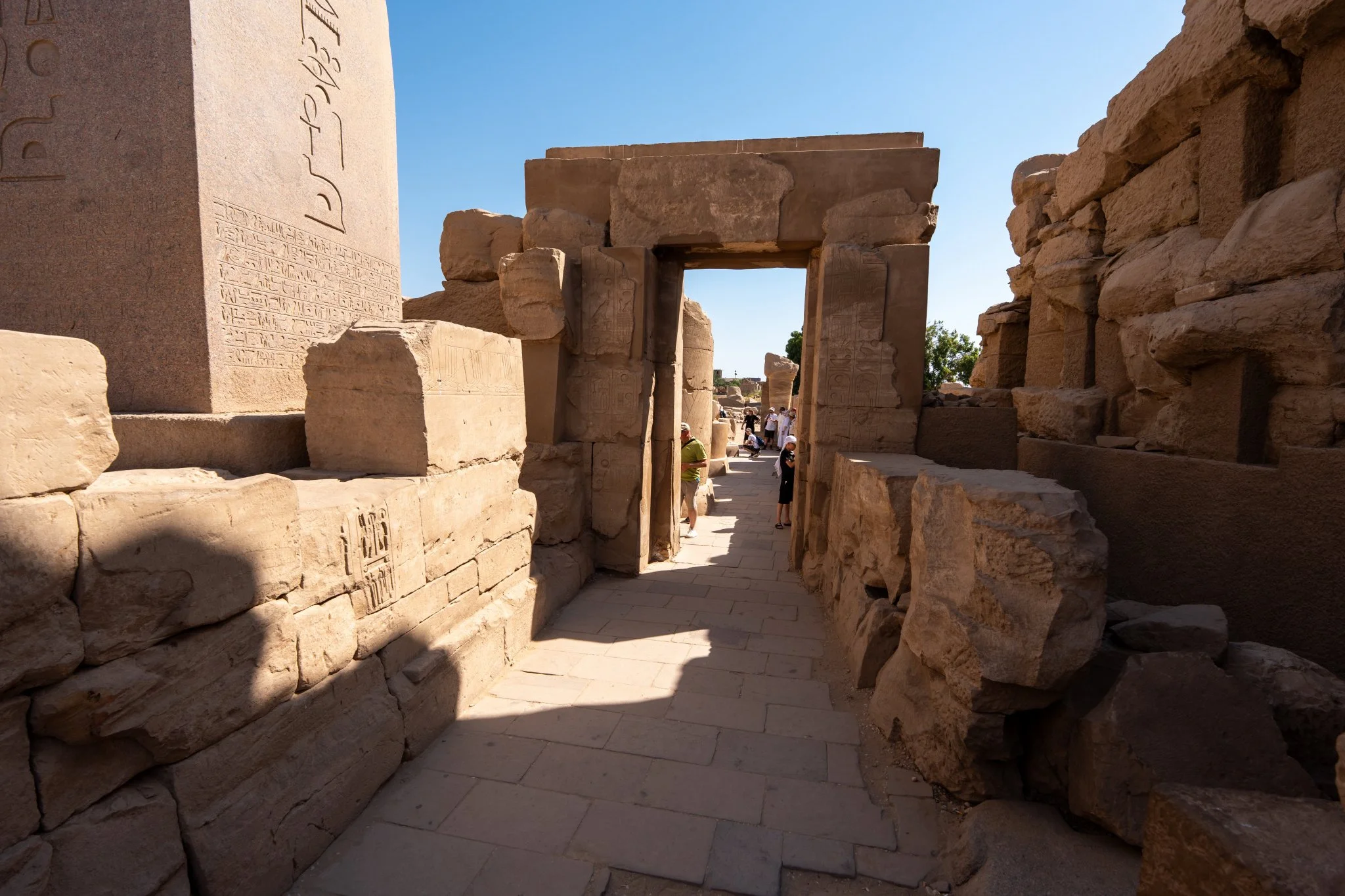
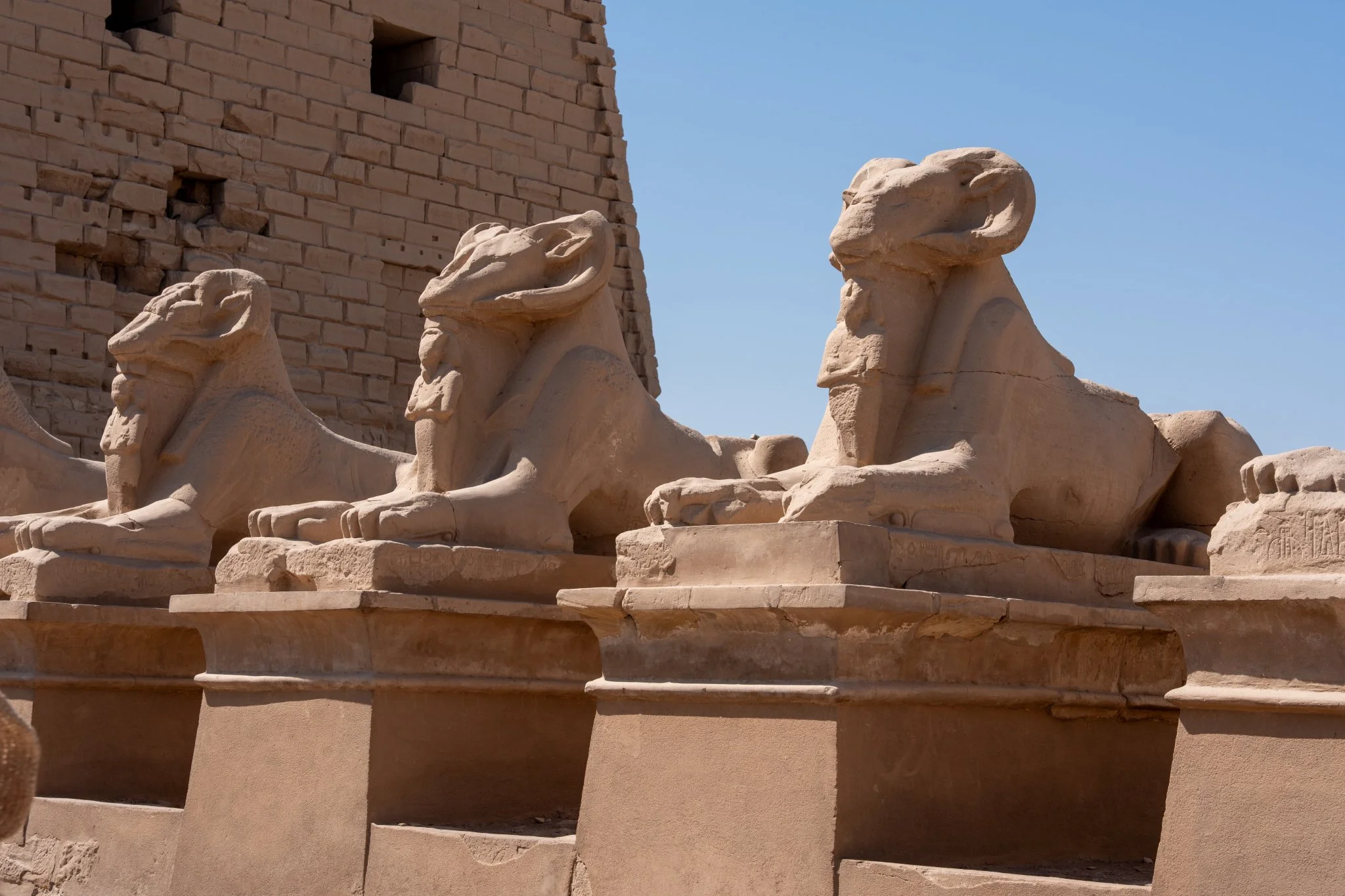
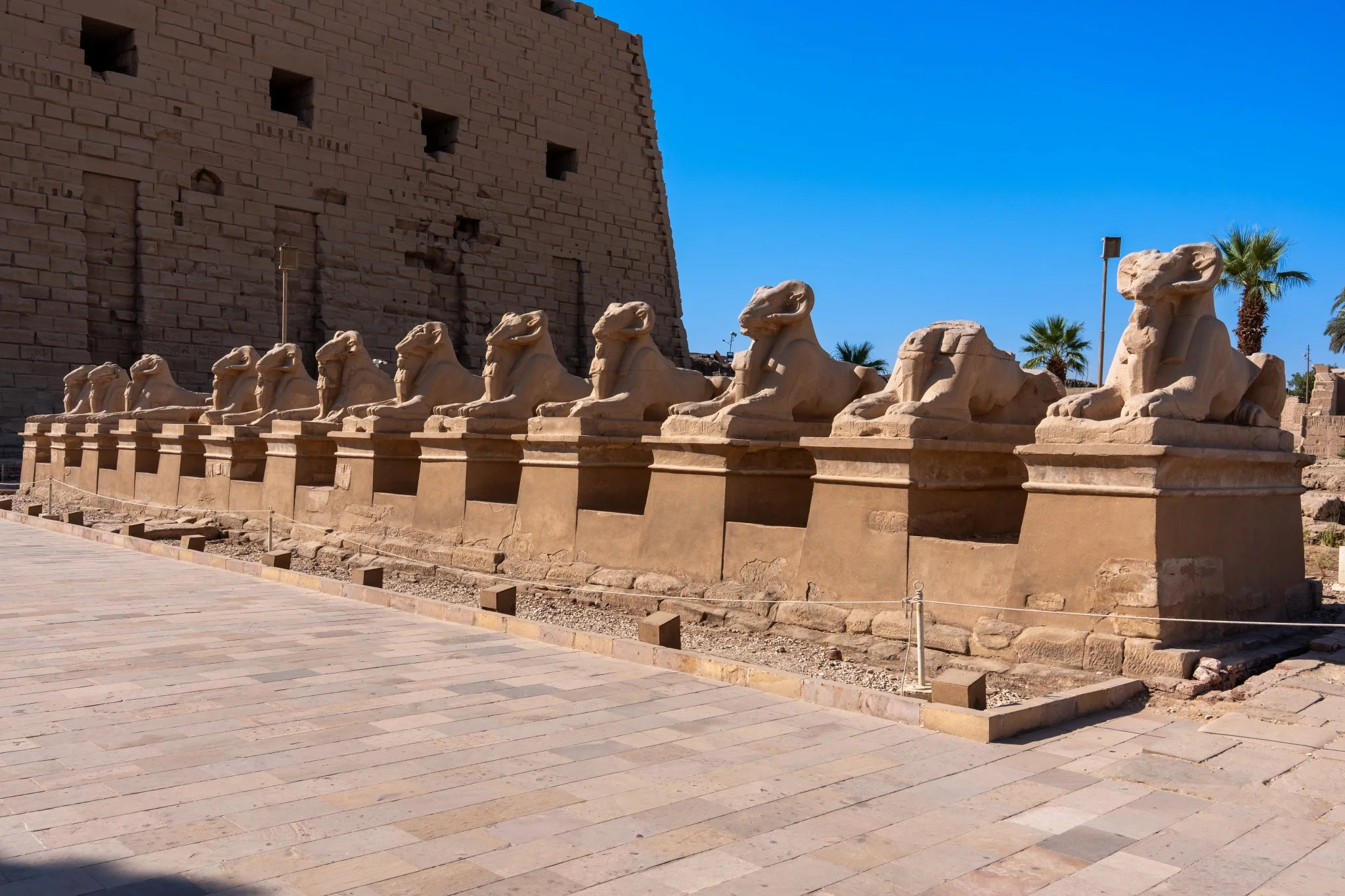
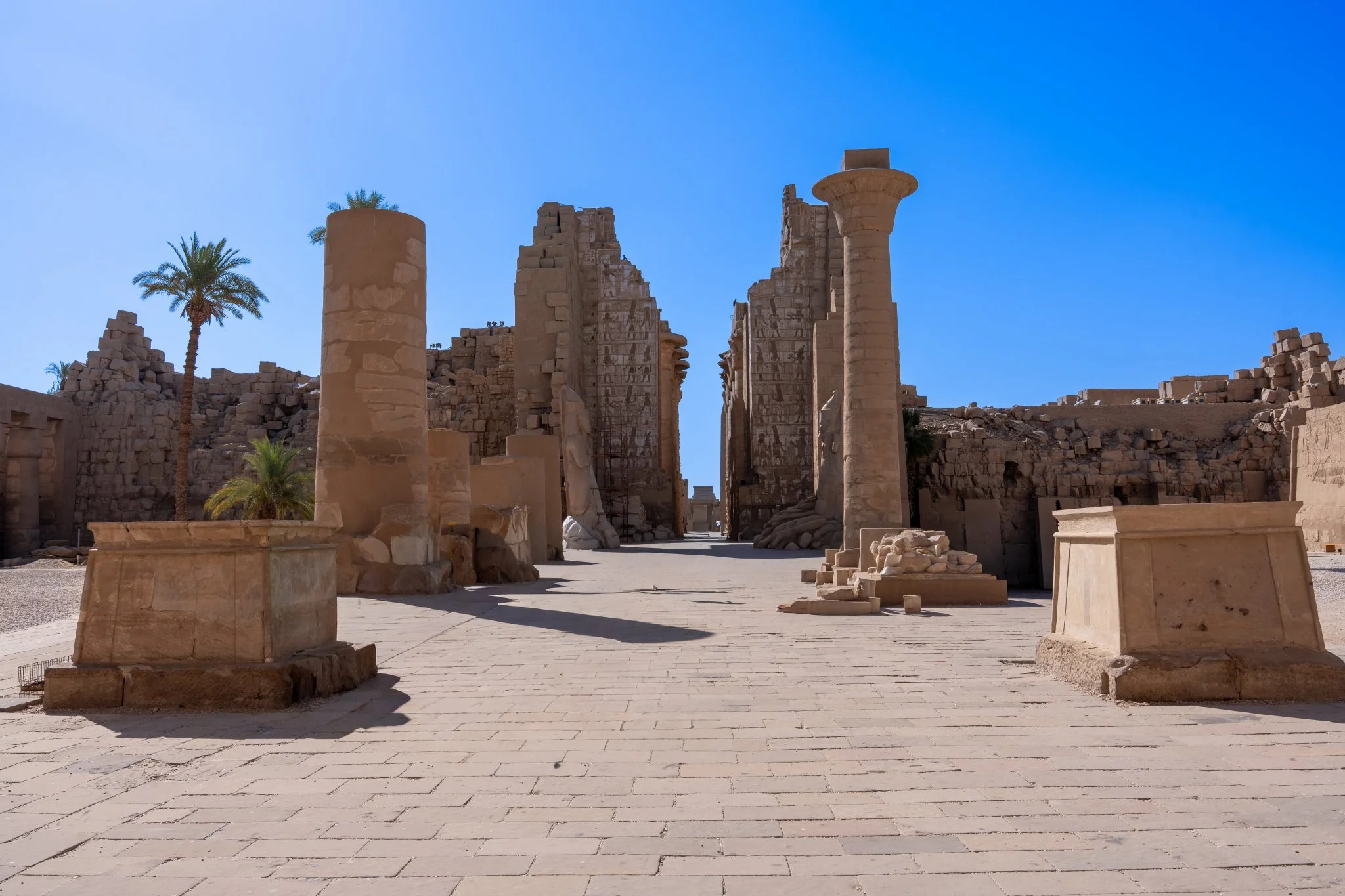
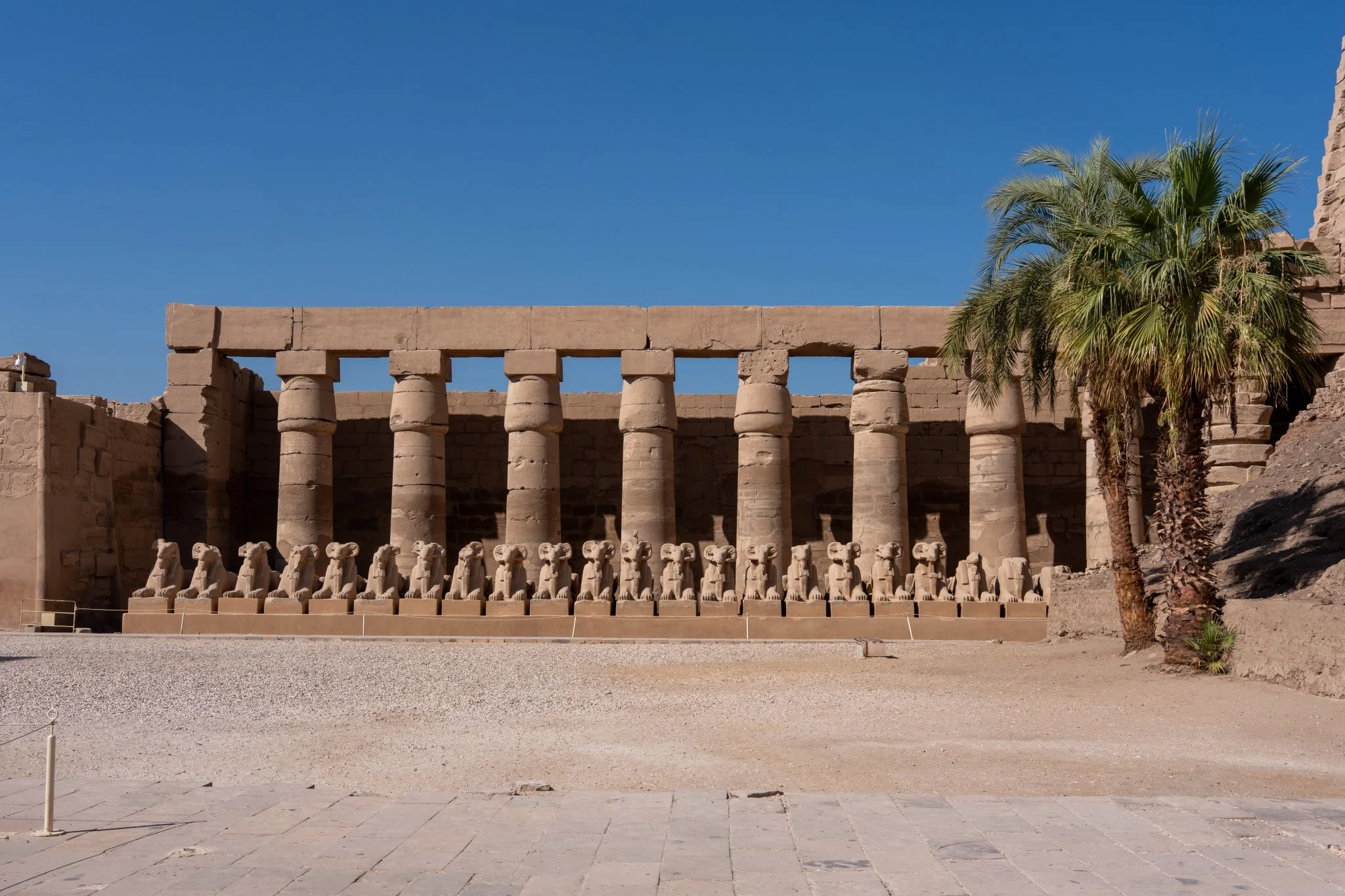
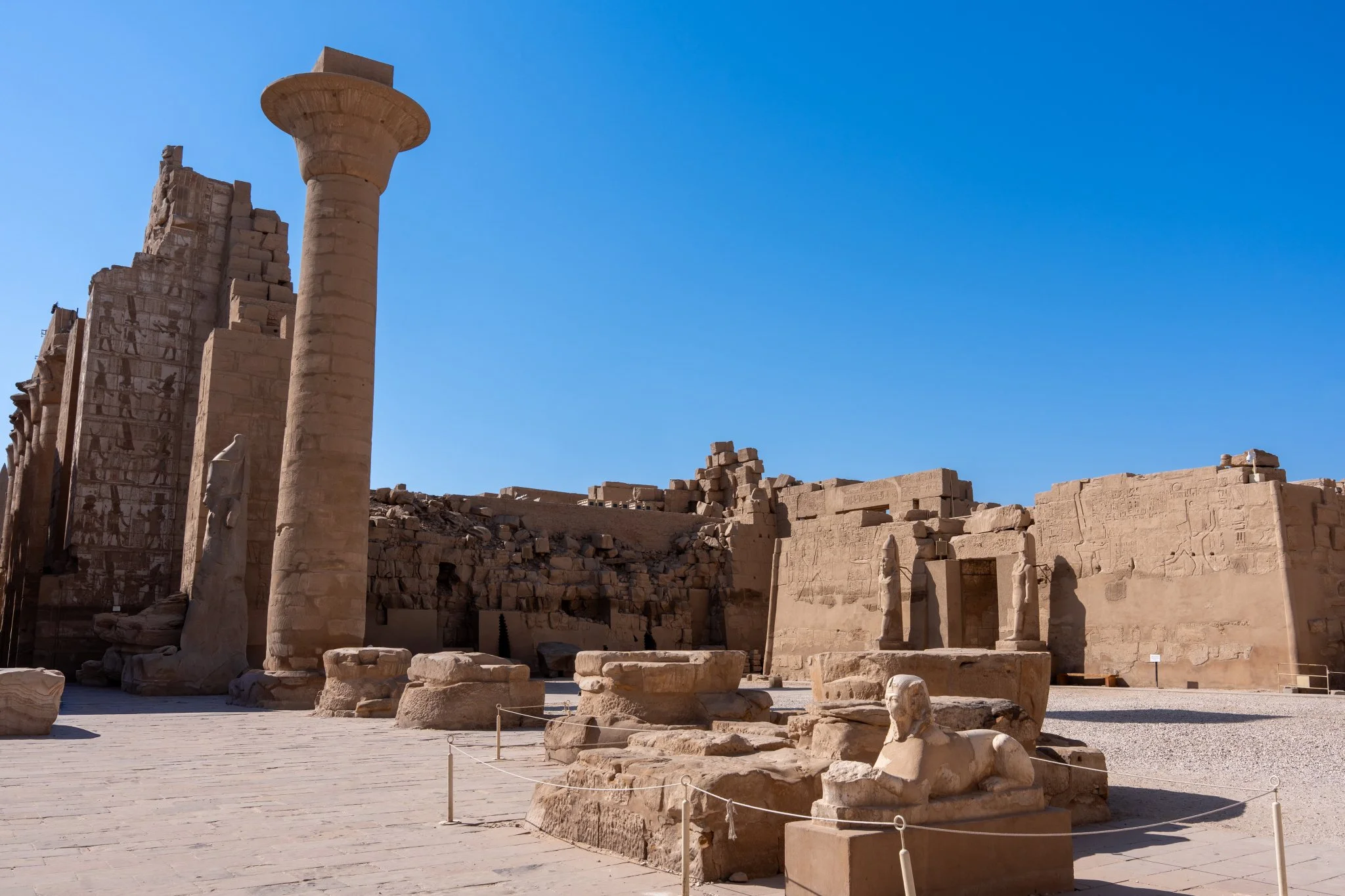
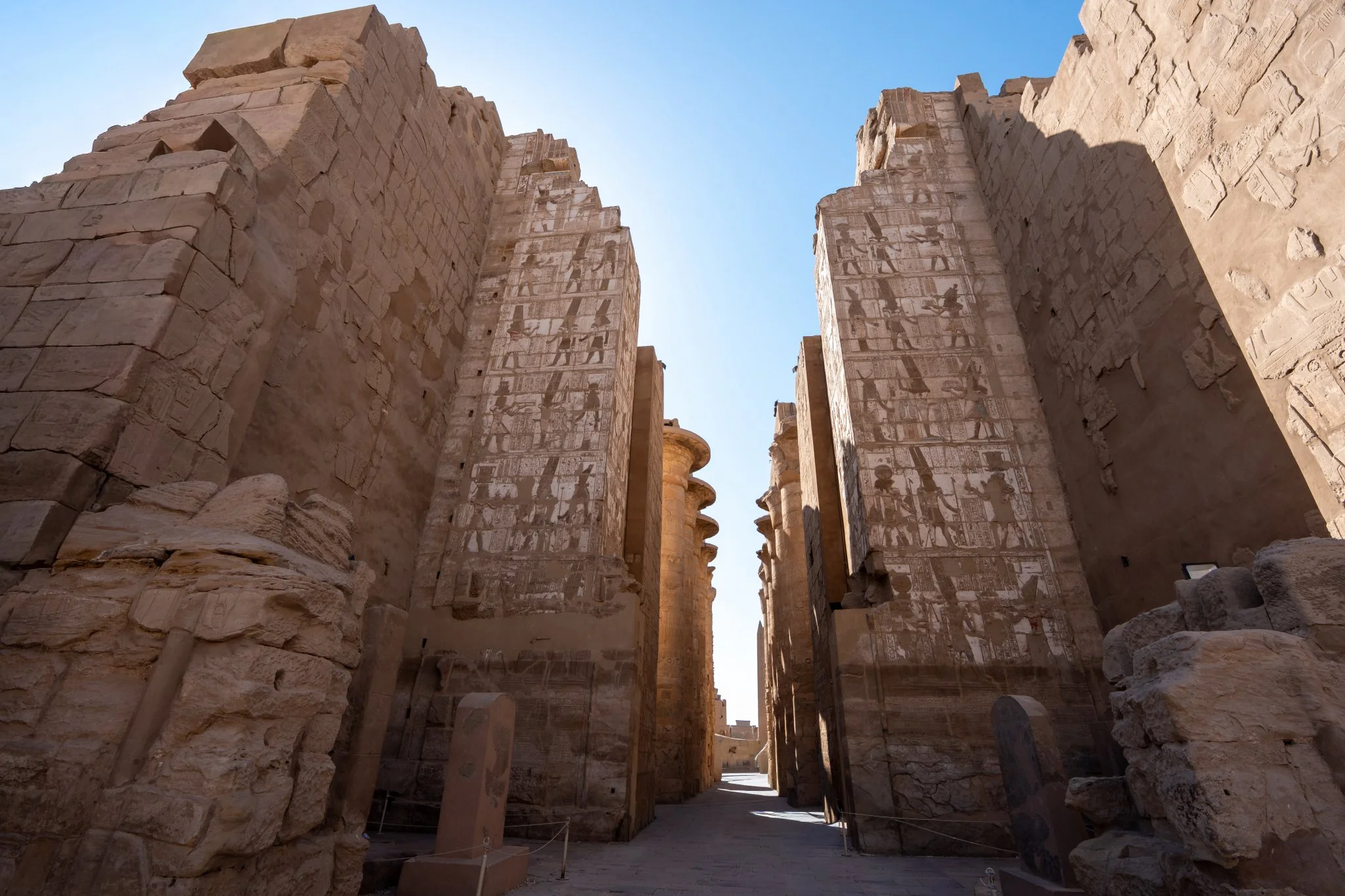
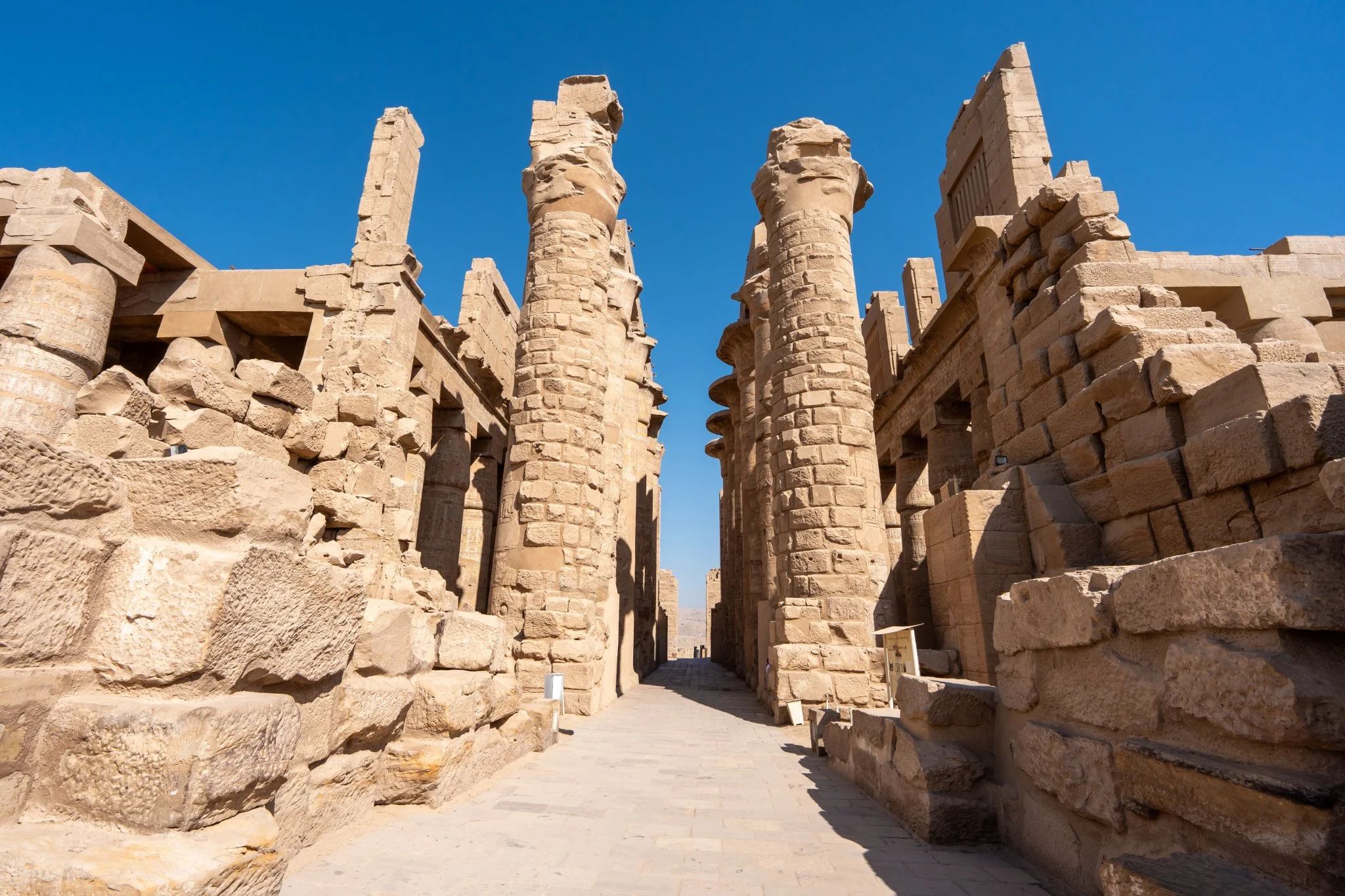
Piero: one of the monuments I was most eager to see was the Obelisk of Hatshepsut, the female pharaoh we'll talk about later. Standing at nearly 30 meters tall, it is one of the best-preserved ancient obelisks in the world. Just imagine: it was carved from a single block of pink granite quarried at Aswan, then transported all the way here using the technology of the time and an understanding of engineering that continues to amaze archaeologists and, of course, us as well.
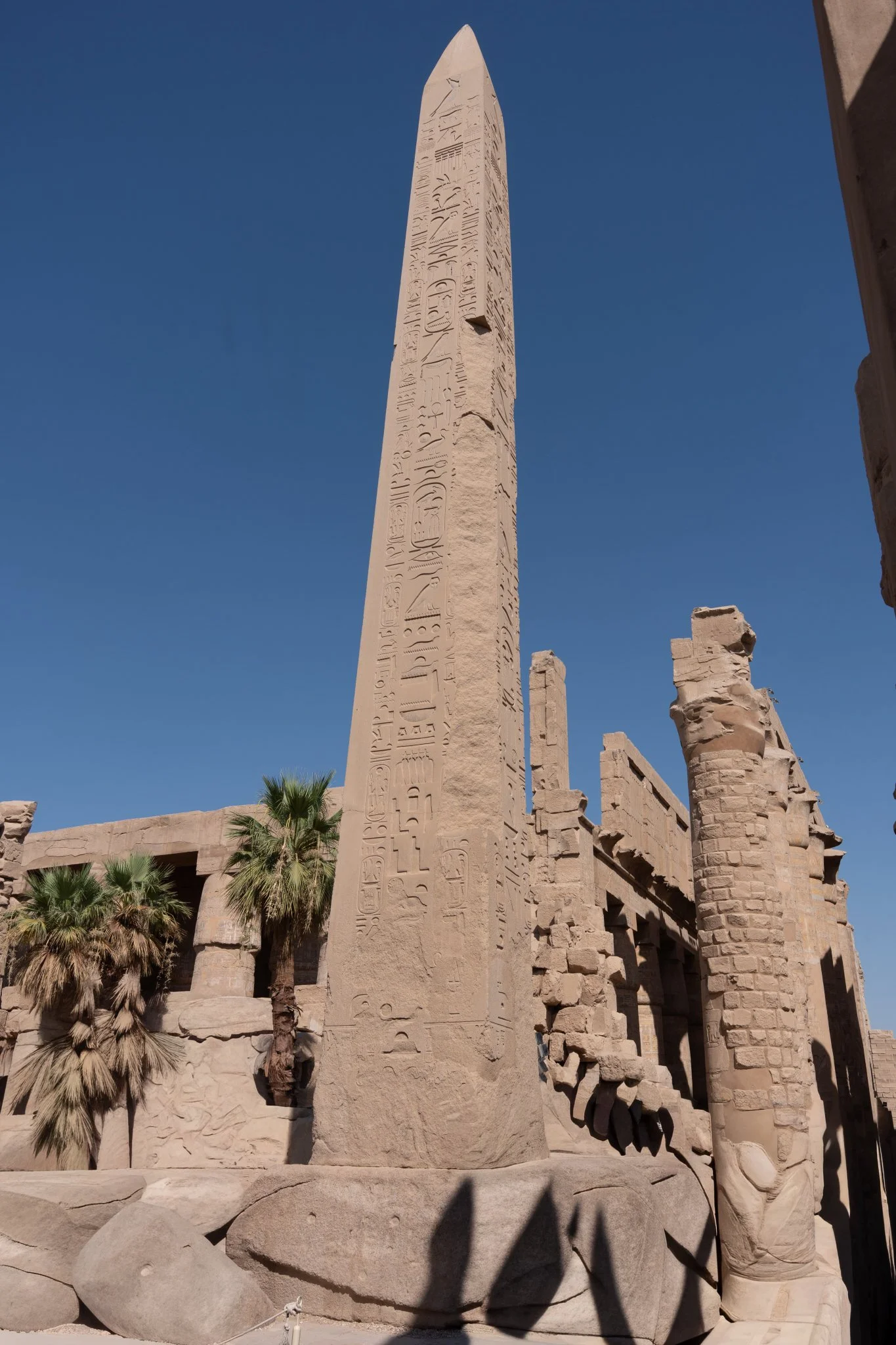
Angela: it's quite remarkable to think that this wasn't the only obelisk standing at Karnak.
Piero: not at all. Over the centuries, the great Temple of Karnak was home to dozens of them. Today, only a few remain, because many others embarked on a long journey. The twin obelisk of Hatshepsut's Obelisk, also commissioned by the queen-pharaoh, collapsed in ancient times, and today only its remains can be seen within the complex. The Obelisk of Thutmose I, on the other hand, is still standing not far away. Other famous obelisks from the temples of Thebes and Ancient Egypt were relocated over the centuries: the Luxor Obelisk now dominates Place de la Concorde in Paris; several pharaonic obelisks were brought to Rome during the Roman Empire; while others can be found in London, Istanbul, and even New York. It's fascinating to come across them around the world, but seeing them here, in the very place where they were carved more than 3,000 years ago, truly helps you understand their purpose: enormous granite rays reaching toward the sky, dedicated to the god Amun-Ra and symbolizing the power of the pharaohs.
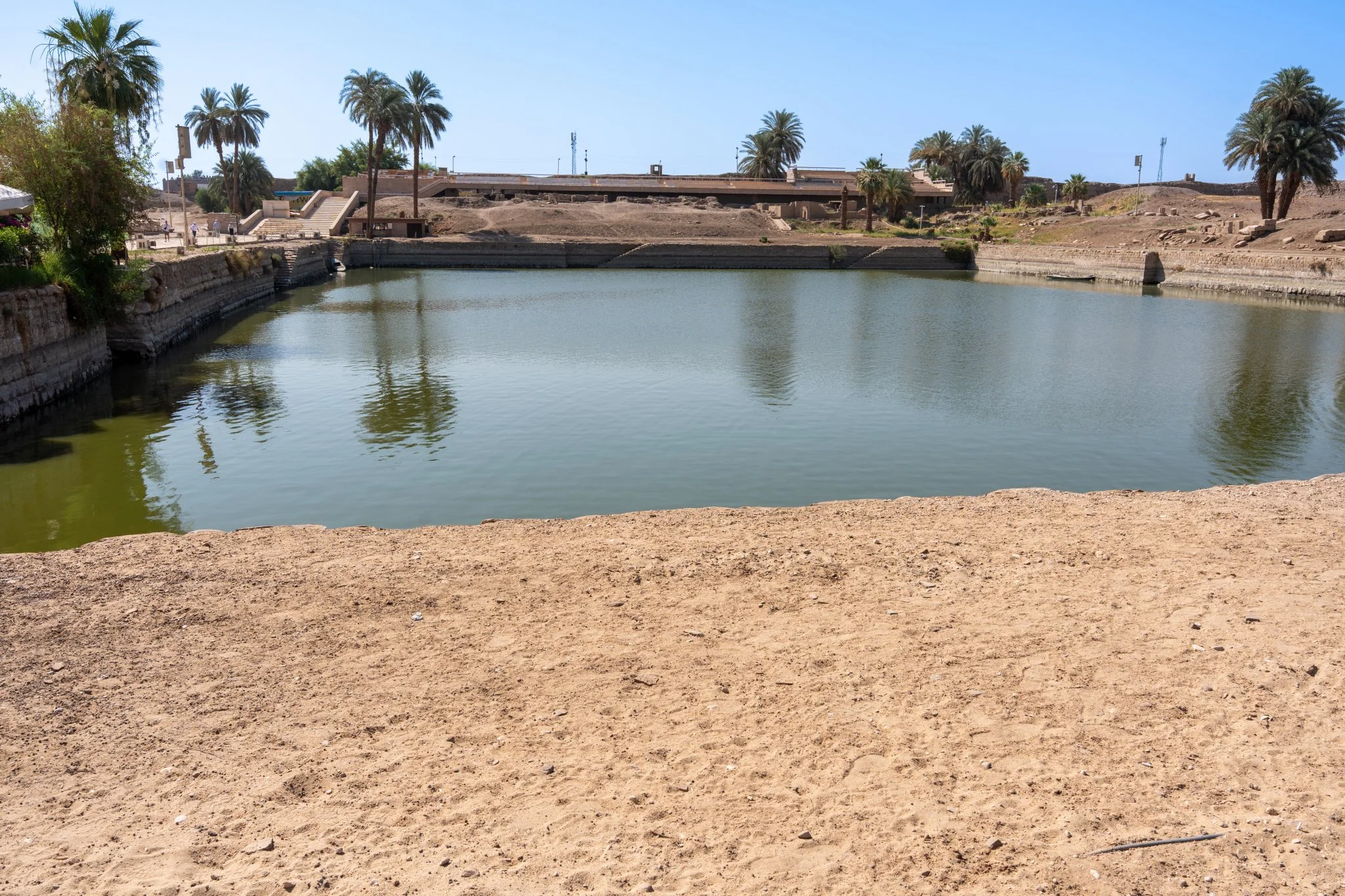
Angela: we were also deeply impressed by the Sacred Lake. It wasn't just a body of water. It was where the priests performed their ritual ablutions before religious ceremonies. The water symbolized purity and renewal, and it was supplied directly from the Nile through a sophisticated system of underground canals.
Piero: before leaving, we couldn't miss walking around the great Sacred Scarab of Karnak. According to tradition, it brings good luck: some people walk around it once for good fortune, others three times to make a wish, and some even seven times in the hope of welcoming a child or celebrating a marriage.
Angela: just to be safe, we followed the tradition ourselves. Whether the scarab, a symbol of rebirth and good fortune in Ancient Egypt, truly has any special power, we don't know... but in a place like Karnak, it's wonderful to let yourself be carried away by these timeless legends.
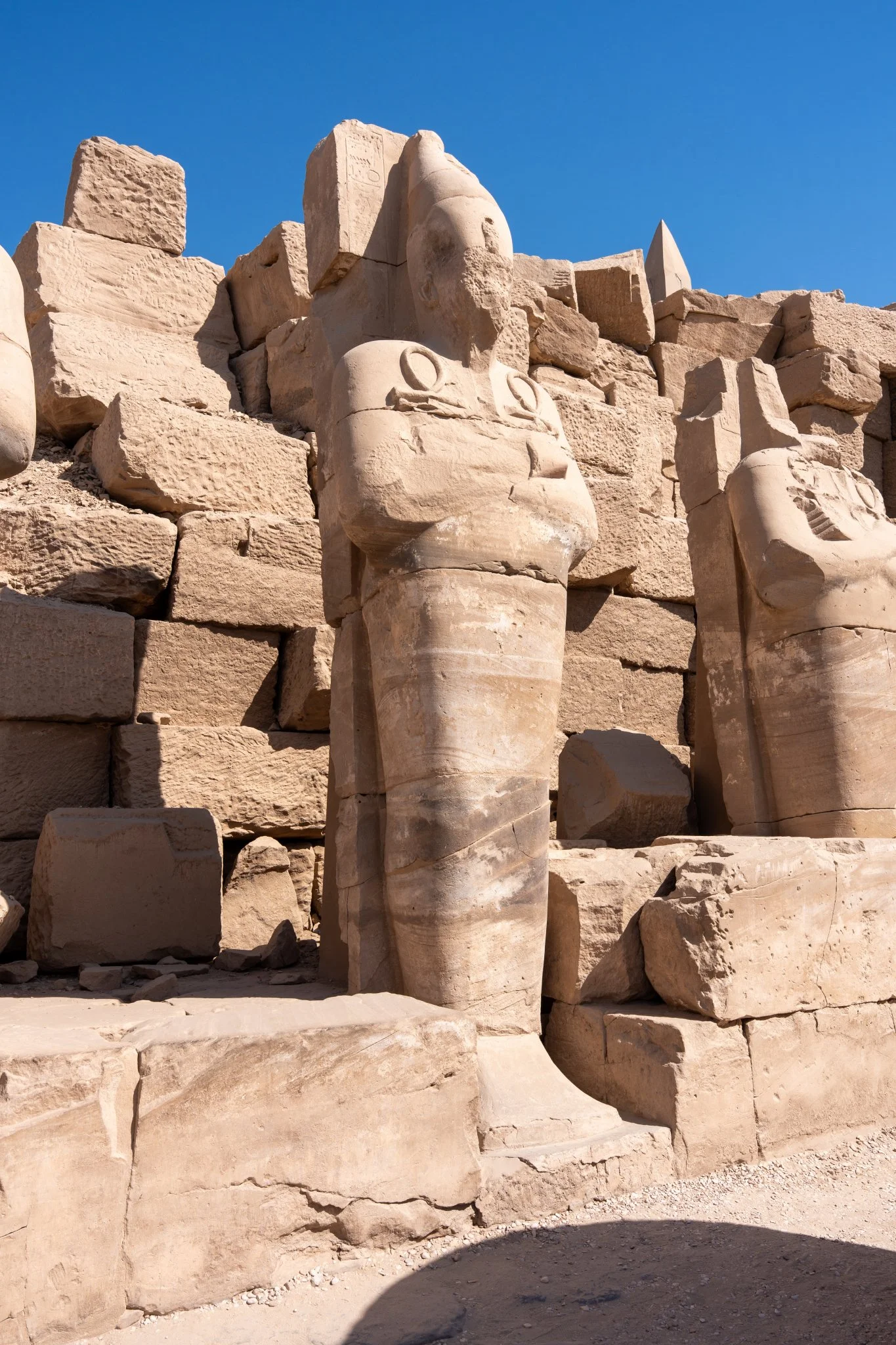
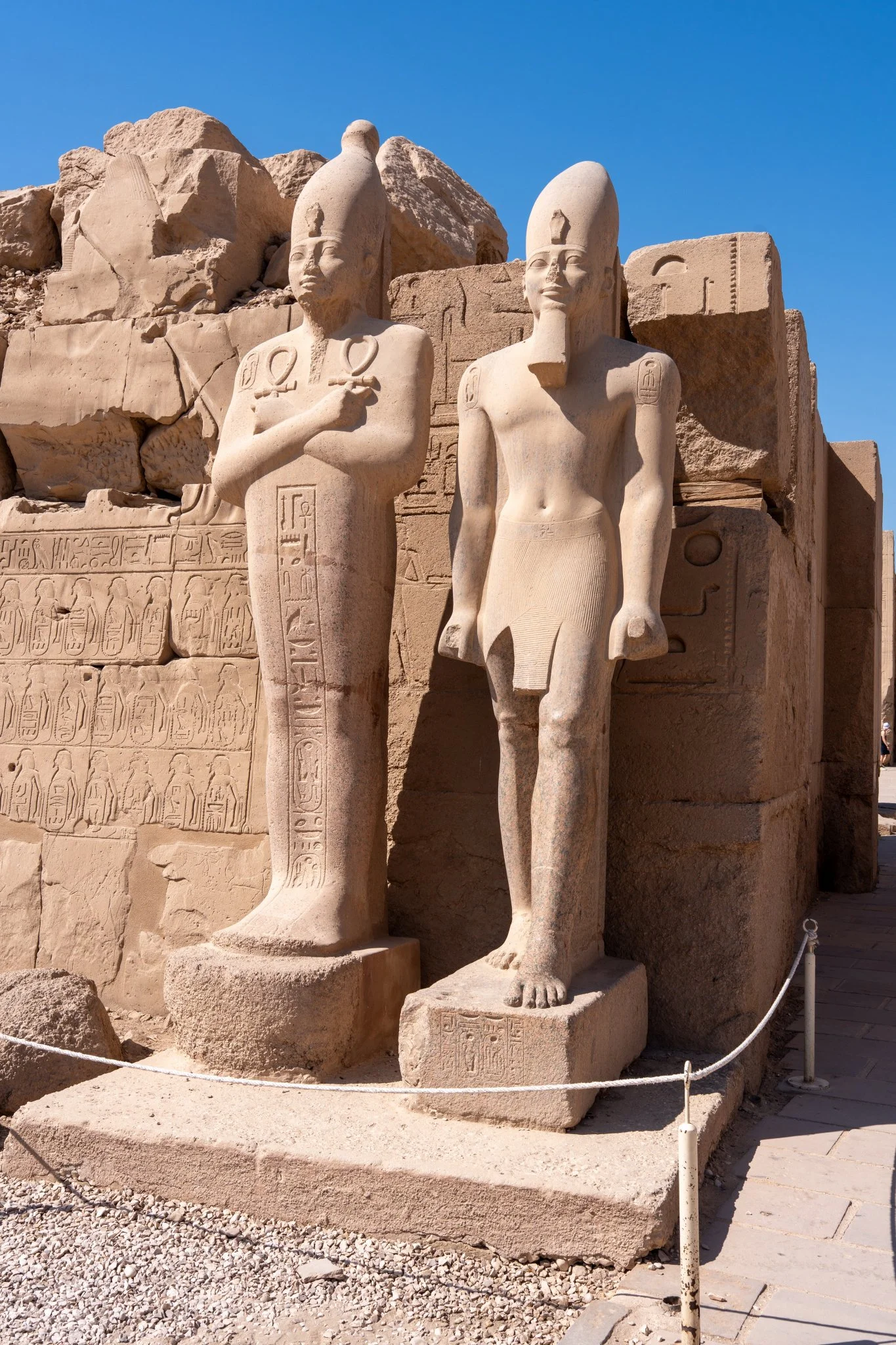
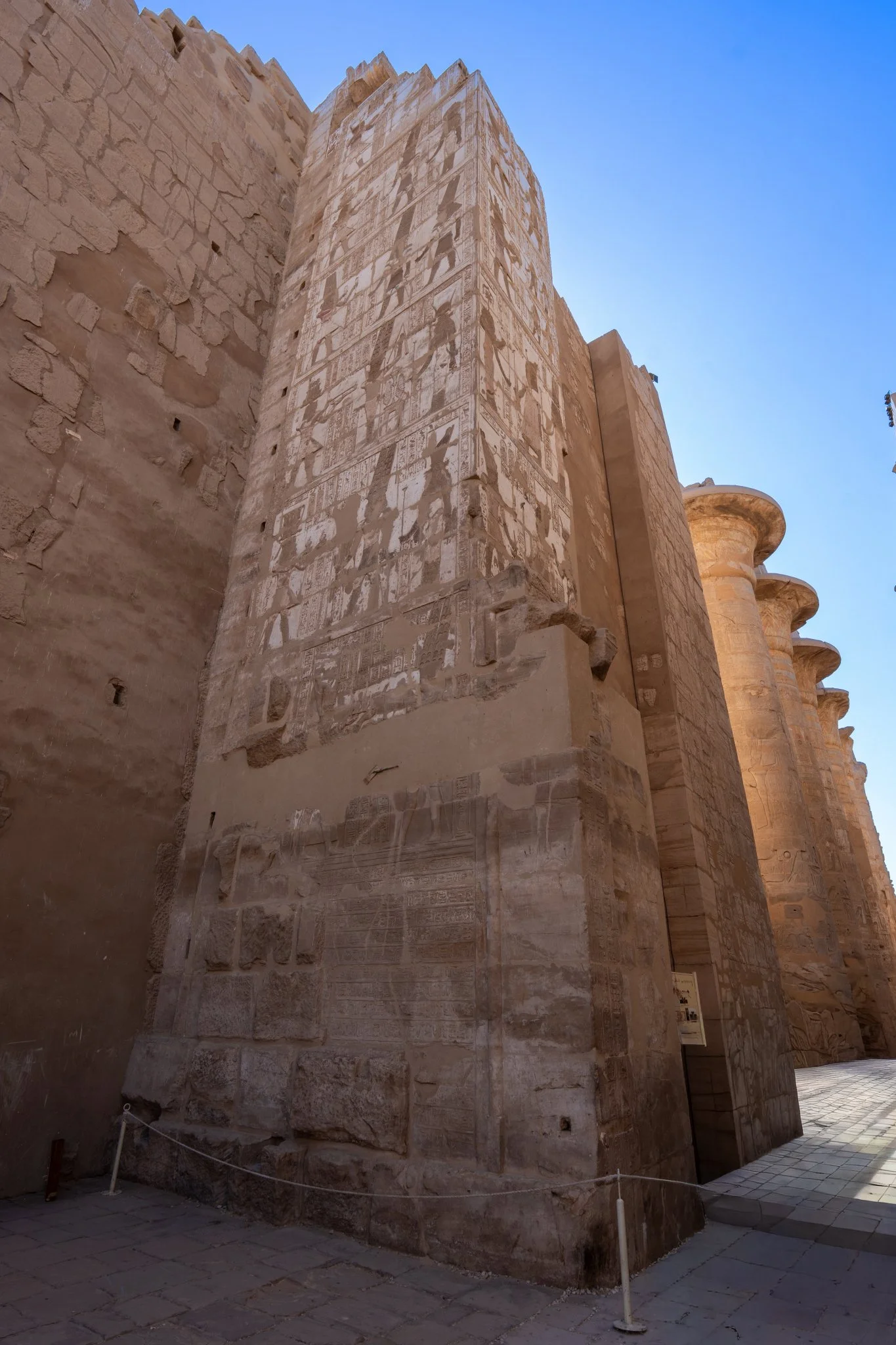
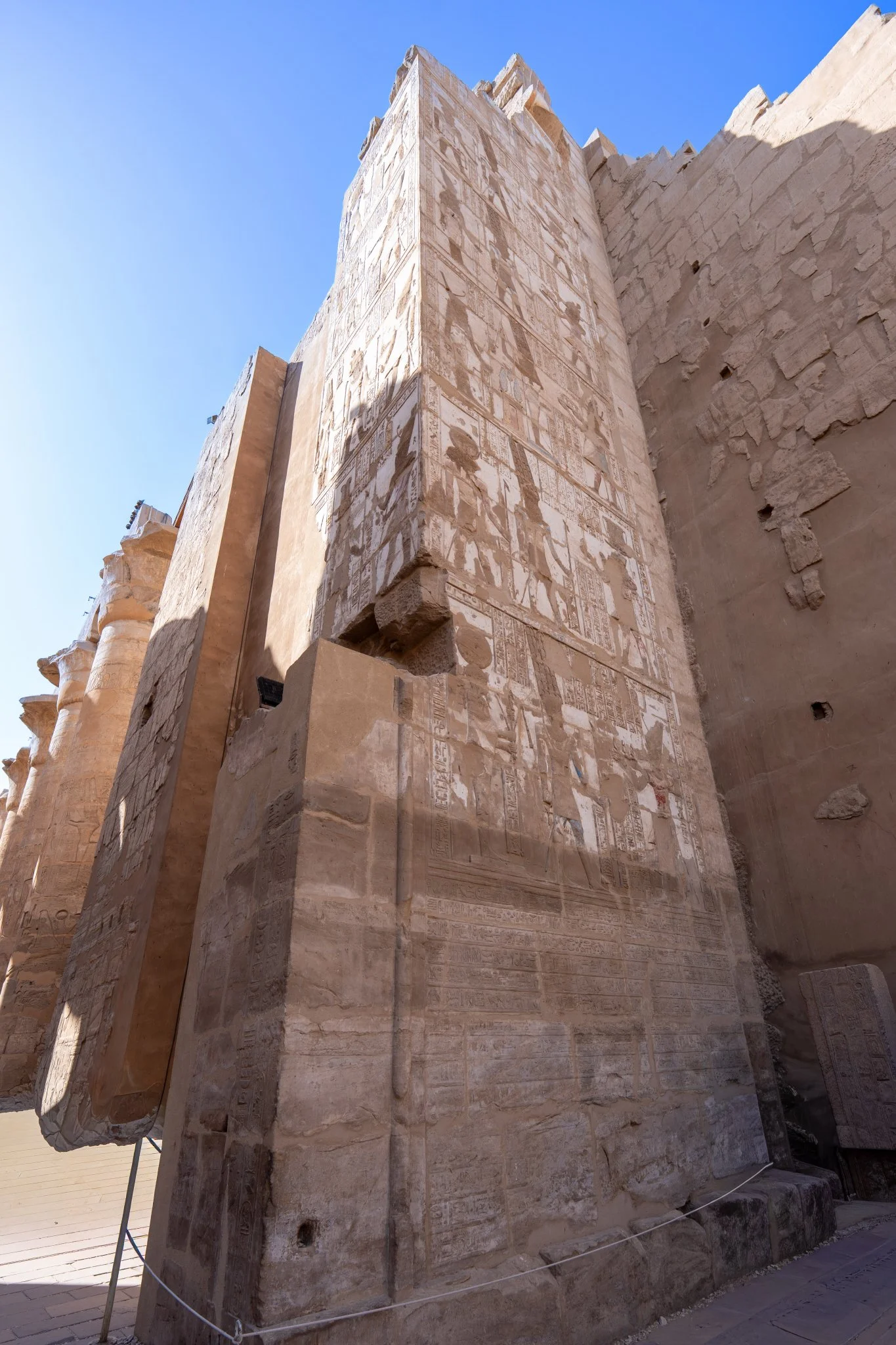
Piero: as we walked out of the Temple of Karnak, I kept turning back because we had just visited one of the most extraordinary places ever built by humankind. Come and take a walk with us through this short video.
Angela: but the day was far from over. After visiting the place where the gods were believed to dwell, we were about to head to the place where the pharaohs found their eternal rest. We would cross the Nile, as the legendary Valley of the Kings awaited us.
The Valley of the Kings
Piero: after spending hours among the desert and the monuments of ancient Thebes, crossing the Nile makes you truly understand why this civilization was born right here.
Angela: surrounding this magnificent green ribbon that flows through Egypt are cultivated fields, date palms, small villages, and irrigation canals.
Piero: move just a few hundred meters away from the river, and you're surrounded by nothingness once again. For thousands of years, it has been the Nile that has made life possible in this part of the world. It's no coincidence that the Greek historian Herodotus wrote, "Egypt is the gift of the Nile."
Angela: before us lay a silent valley, surrounded by ochre-colored mountains.
Piero: a seemingly barren landscape that conceals one of the most important archaeological sites in the world: the legendary Valley of the Kings.
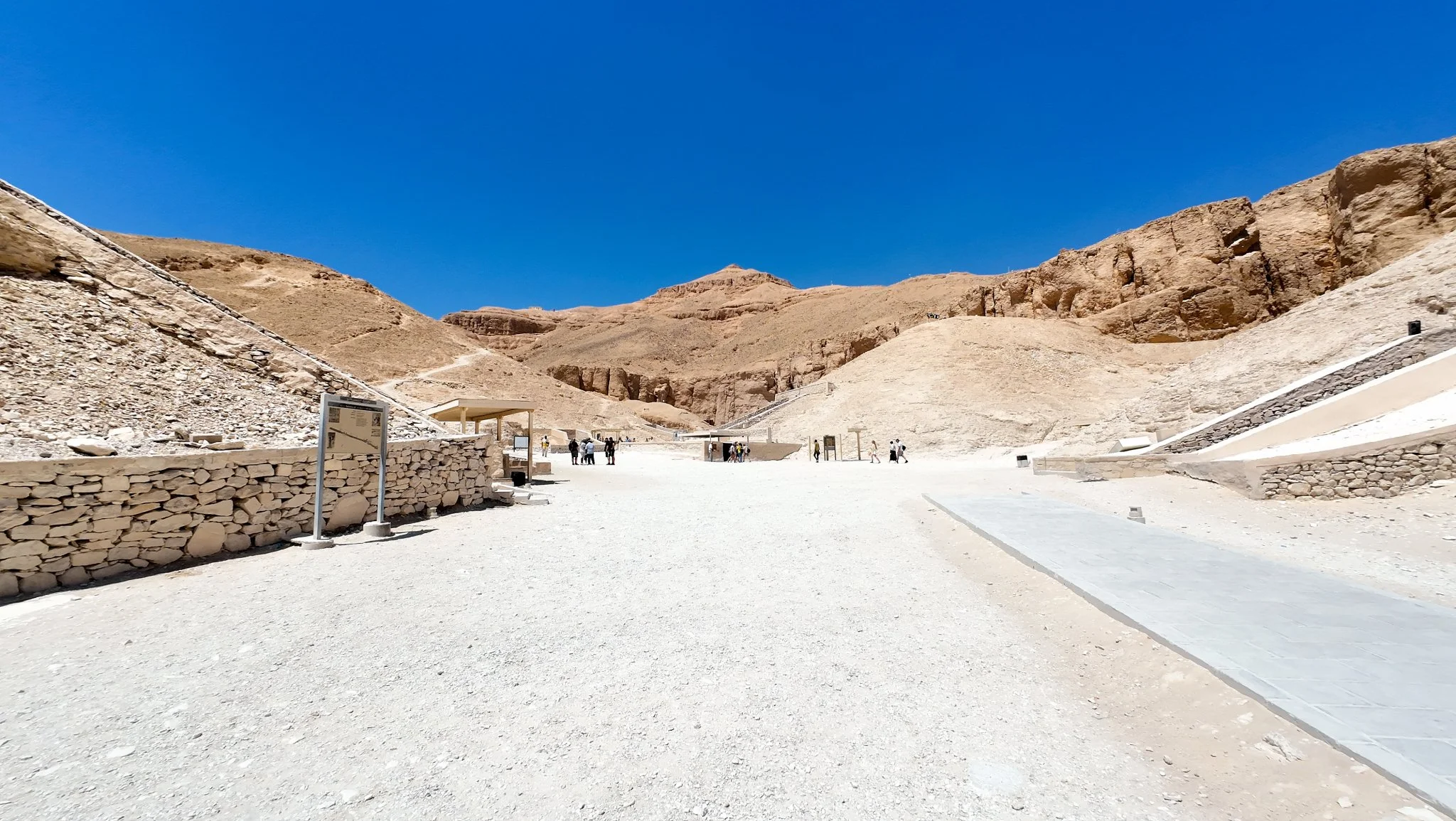
Angela: from the photographs, I had imagined it completely differently. I expected to find an immense necropolis filled with temples, statues, and monuments.
Piero: in reality, at first glance, there's almost nothing here — just mountains. And that's precisely its greatest strength.
Angela: these are the mountains that have guarded the greatest secret of Ancient Egypt.
Piero: once again, ancient Egyptian religion helps us understand why the pharaohs chose to be buried here. During the Old Kingdom, rulers were laid to rest inside the great pyramids. They were extraordinary monuments, but they had one major flaw: they could be seen from miles away, making them irresistible targets for grave robbers and looters. Despite elaborate security measures, almost all of them were plundered in ancient times.
Angela: with the beginning of the New Kingdom, the pharaohs decided to separate the place of celebration from the place of burial. The great temples, such as Karnak and the Luxor Temple, would remain clearly visible, while the tombs would be carefully hidden.
Piero: and what better place than an isolated valley, surrounded by mountains and easy to guard?
Angela: there's one detail that immediately caught my attention — the mountain itself.
Piero: its modern name is el-Qurn, which in Arabic means "the Horn," and its shape bears an astonishing resemblance to a natural pyramid.
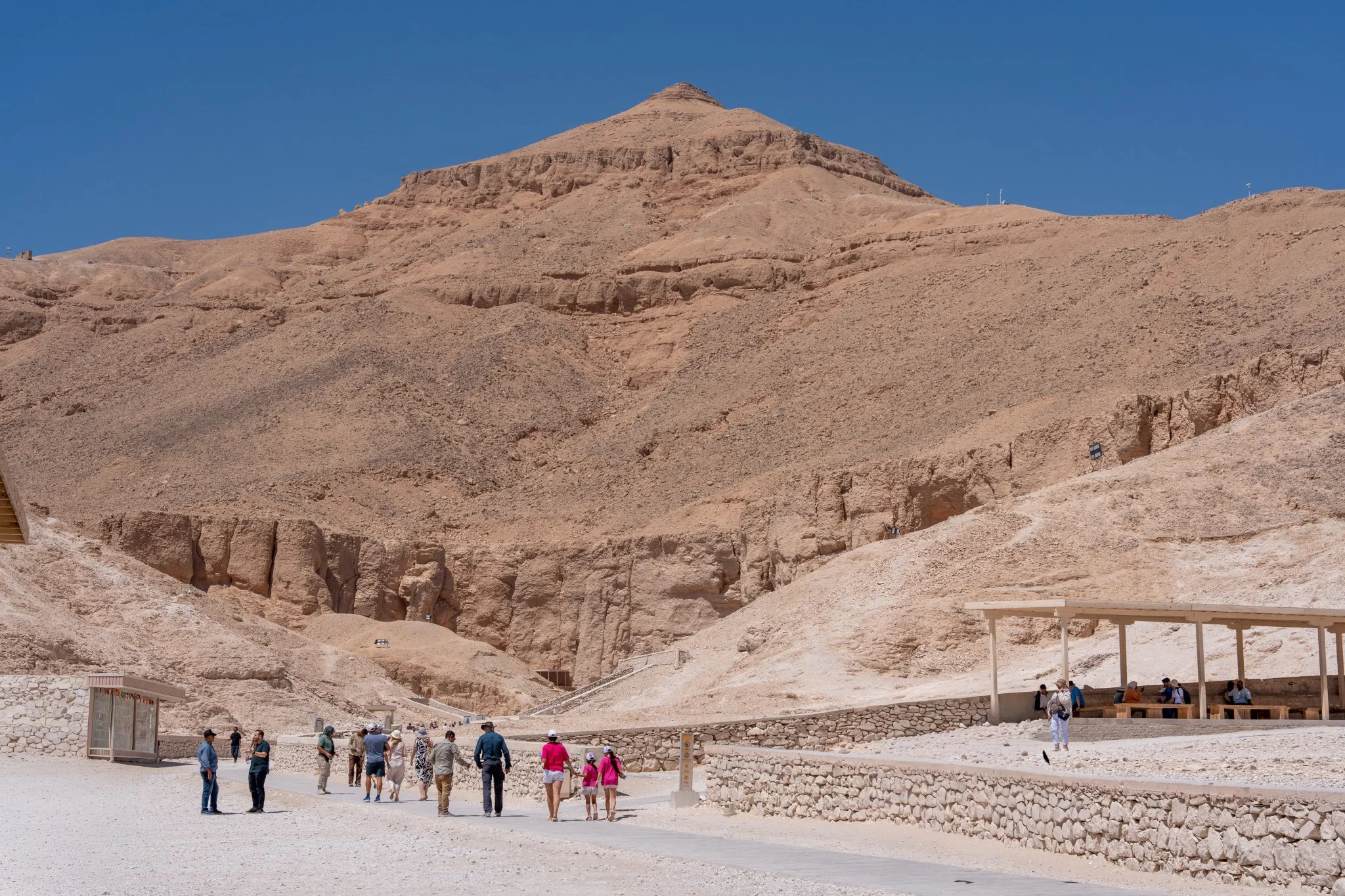
Angela: it's hard to believe that it was merely a coincidence. Many Egyptologists believe that this mountain played a crucial role in the choice of the site.
Piero: so the pharaohs gave up the man-made pyramids, yet they continued to be protected by a gigantic natural pyramid.
Angela: today, more than 60 tombs have been discovered in this area, although not all of them belonged to pharaohs. Some were built for queens, princes, or other people of exceptionally high rank. Every new discovery is assigned a sequential code — for example KV2, KV9, or KV62 — where "KV" simply stands for King's Valley.
Piero: however, only about ten tombs are currently open to visitors. We visited five of them: three included in the entrance ticket and two requiring an additional fee—a choice we absolutely recommend. We were lucky because, perhaps due to the heat, there were very few visitors, allowing us to enjoy the experience to the fullest.
The Tomb of Ramesses IV(KV2)
Angela: it was the first tomb we visited.
Piero: and probably the one that gave us a glimpse of what awaited us in the others. The descent toward the burial chamber is, in itself, an unforgettable experience. You walk through long corridors carved directly into the mountain.
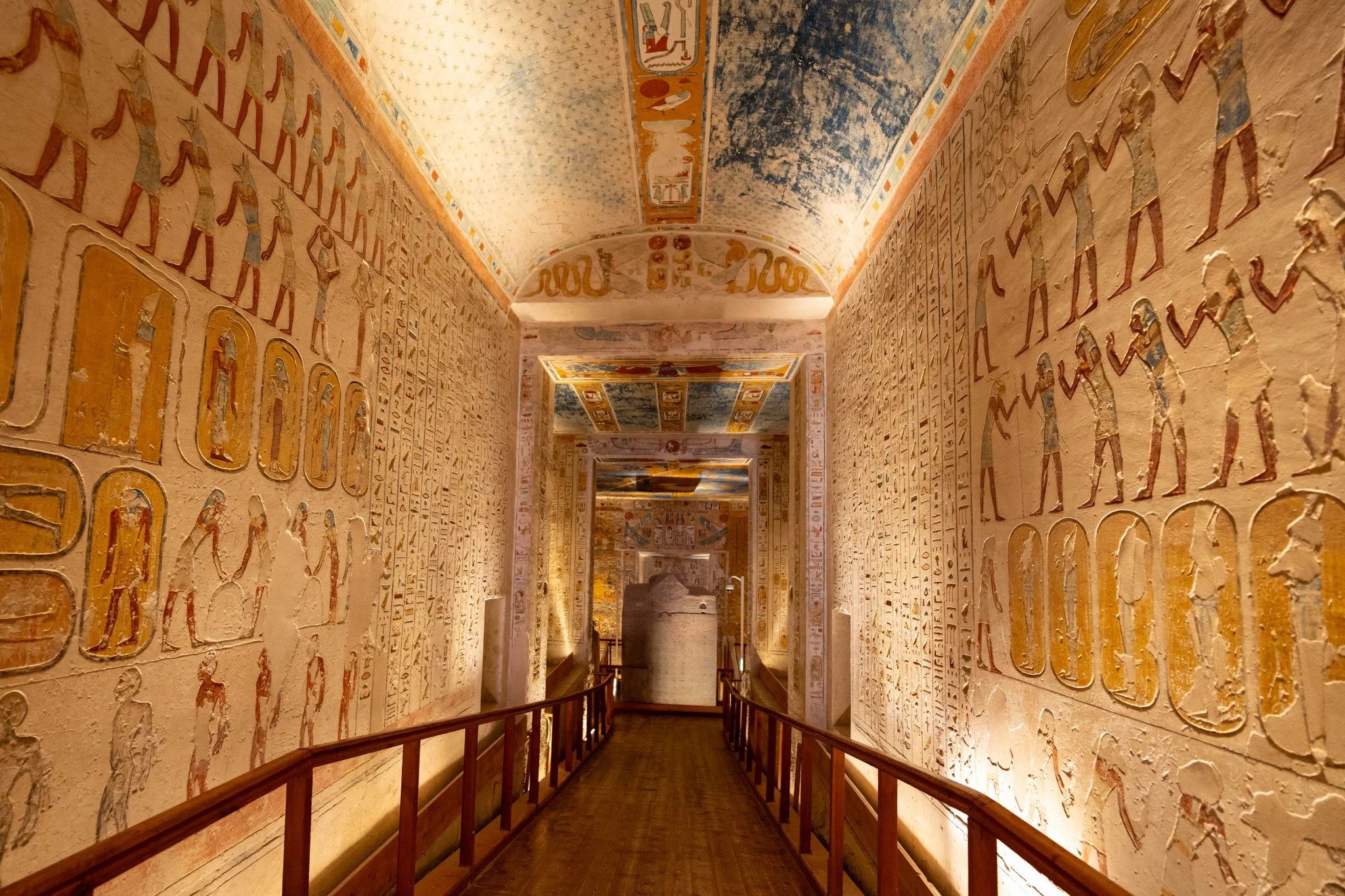
Angela: every wall is completely covered with hieroglyphs and religious scenes. There isn't a single inch left undecorated.
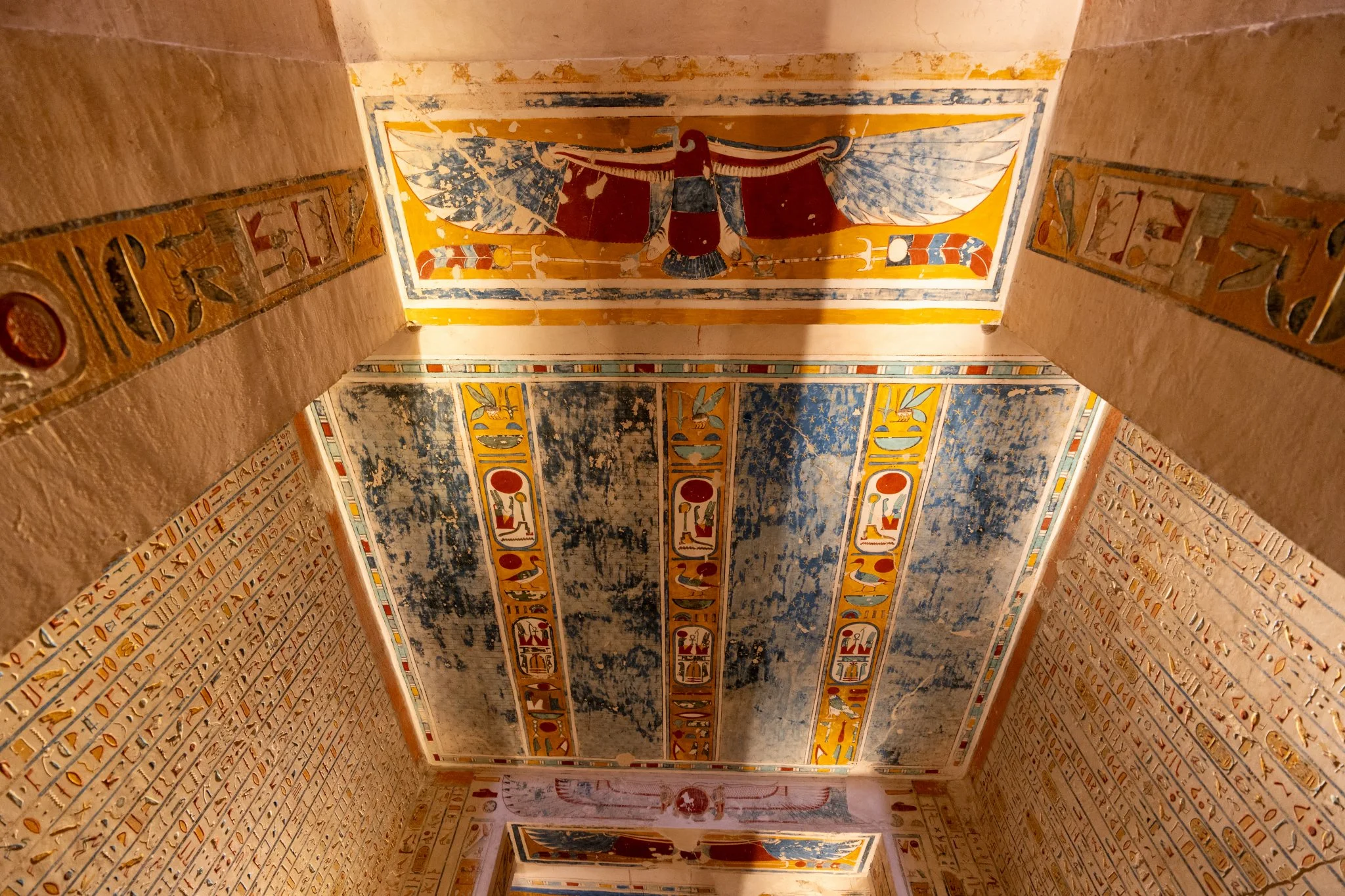
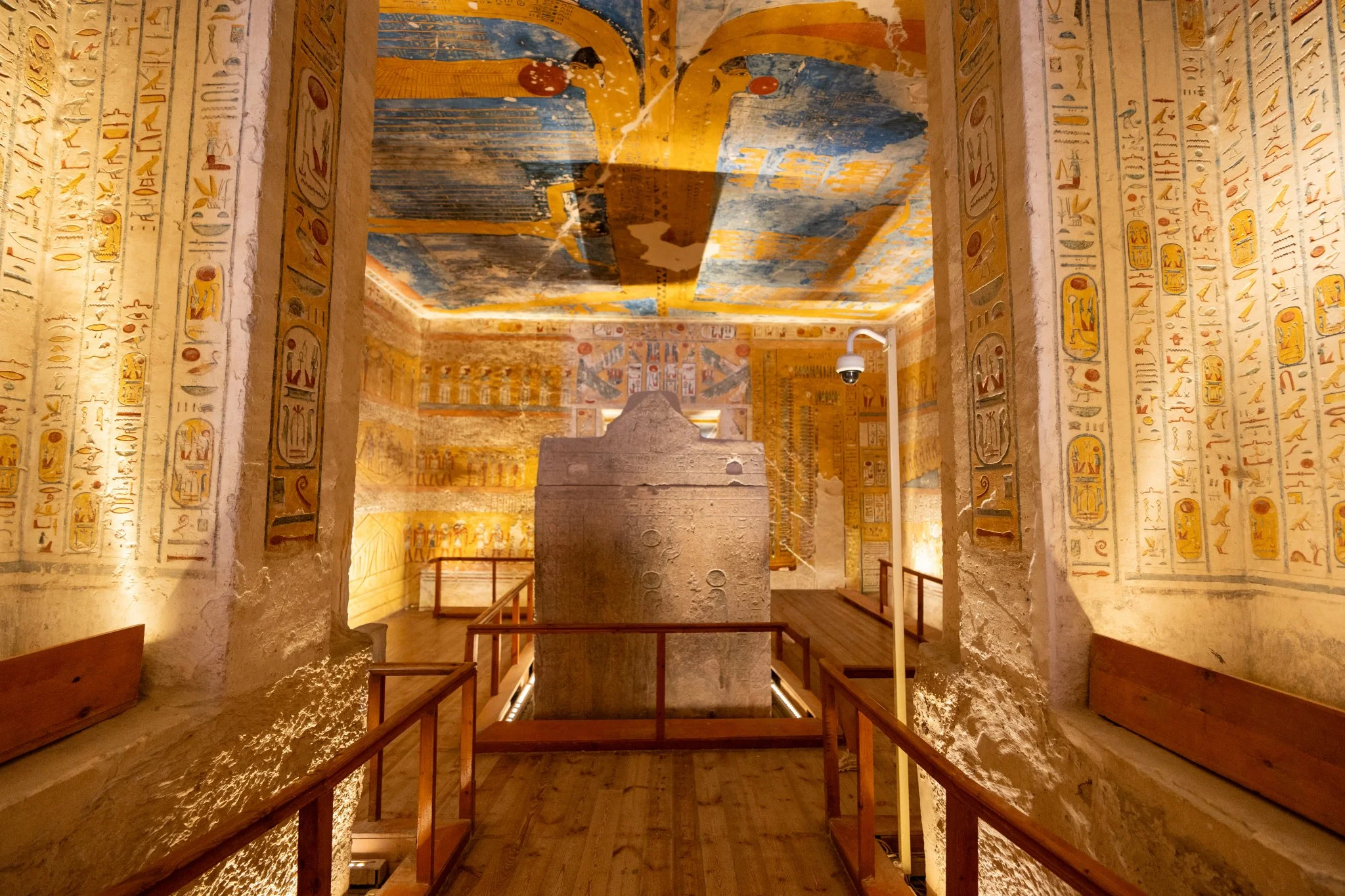
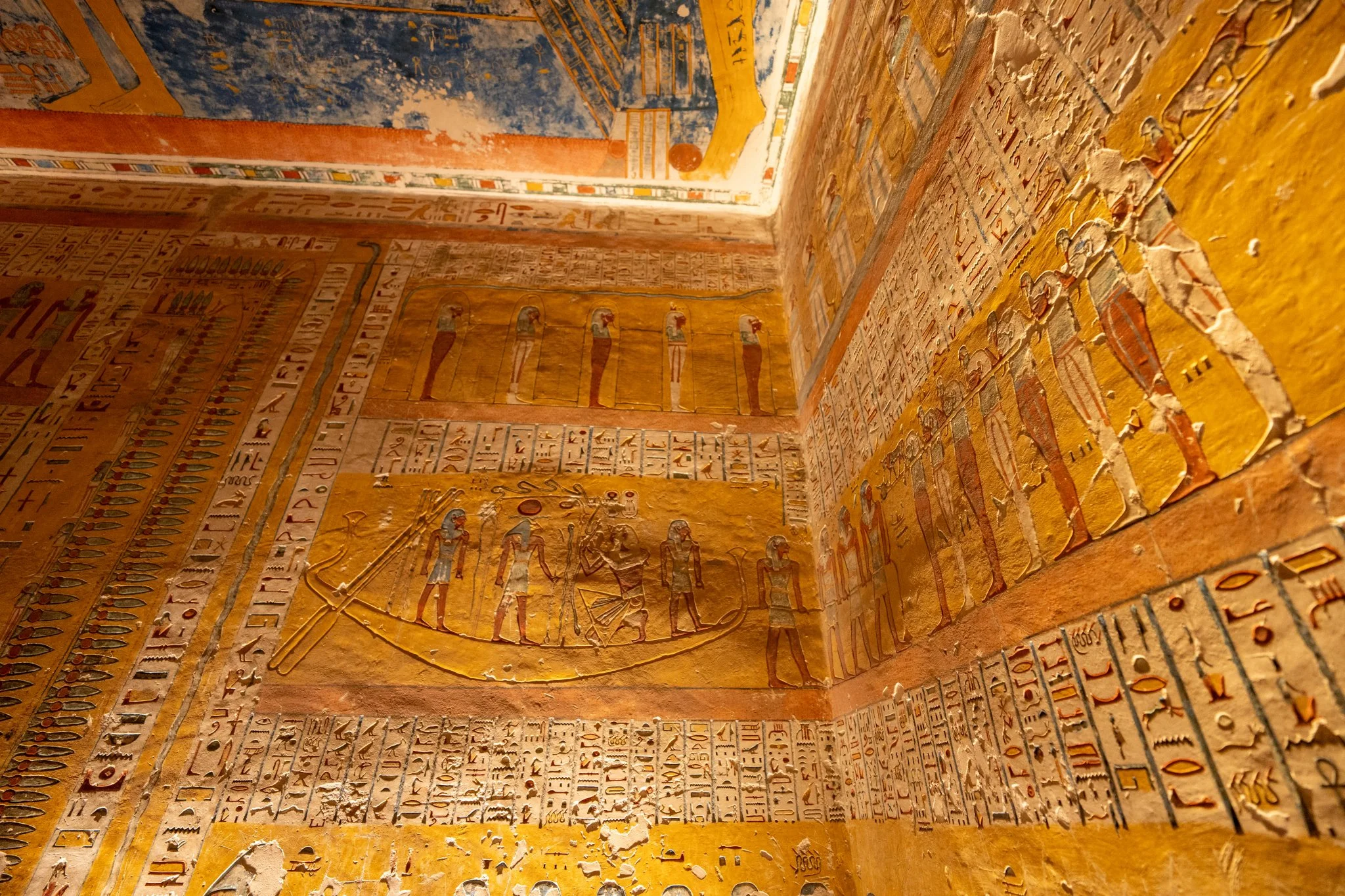
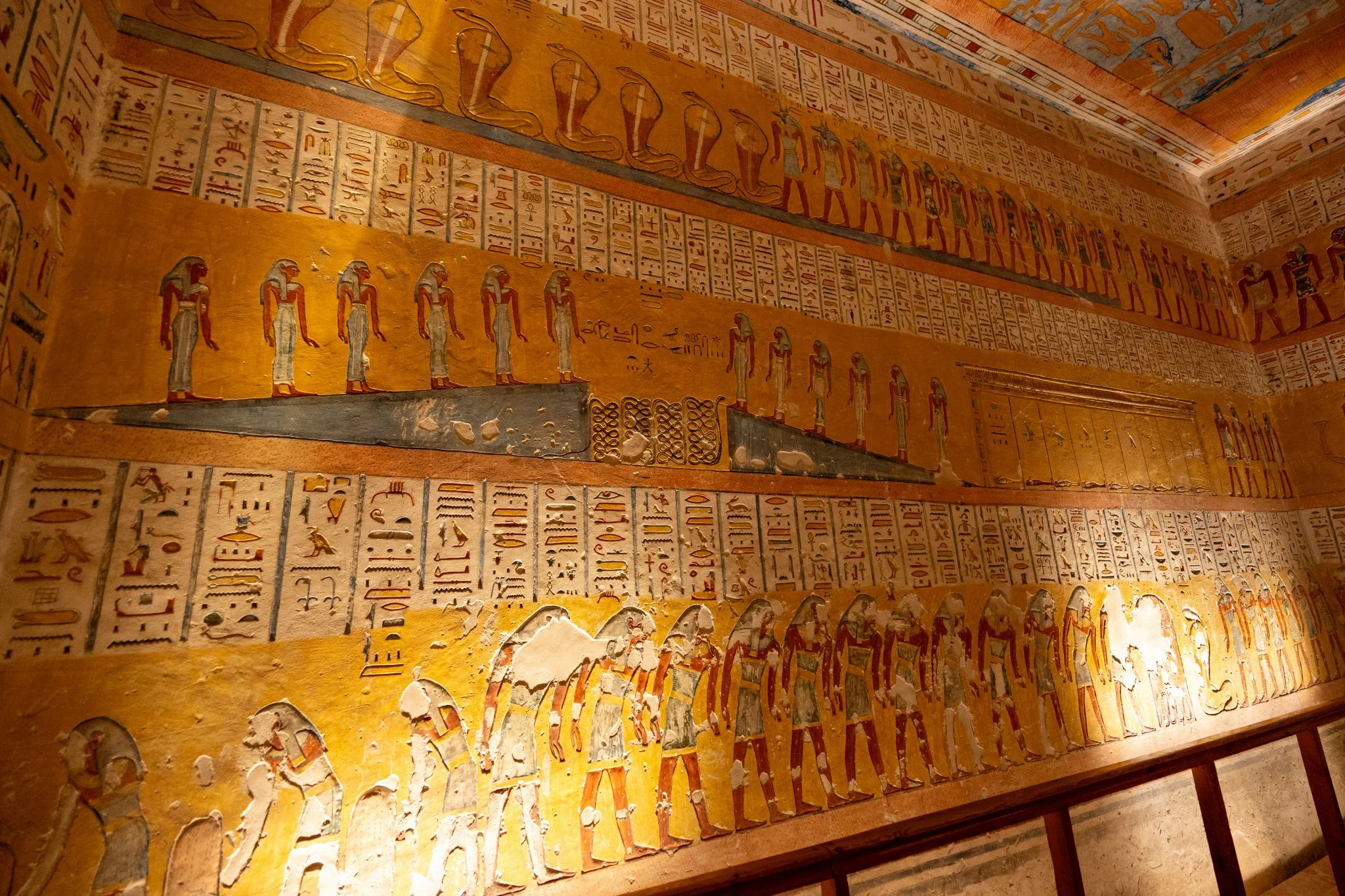
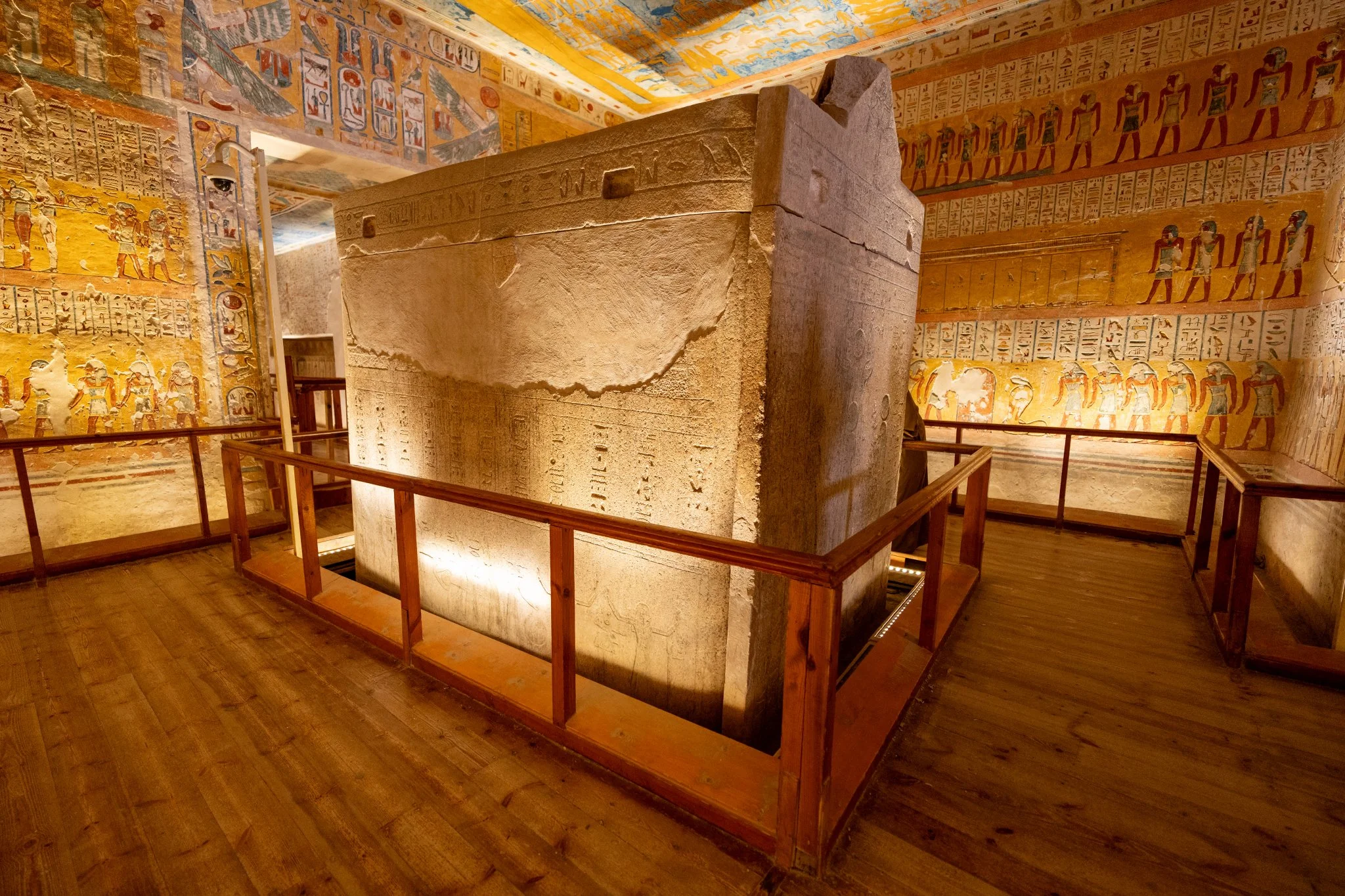
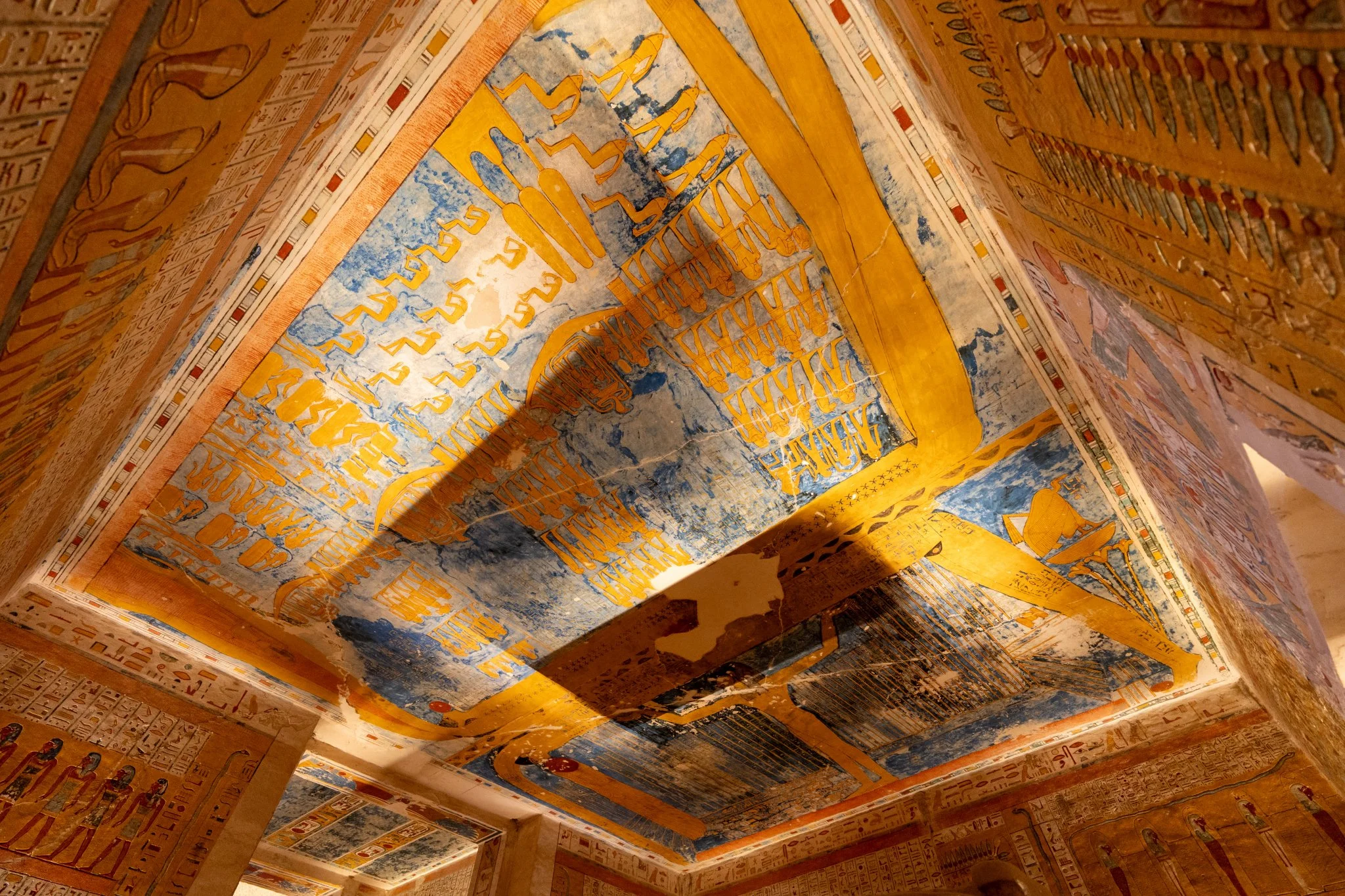
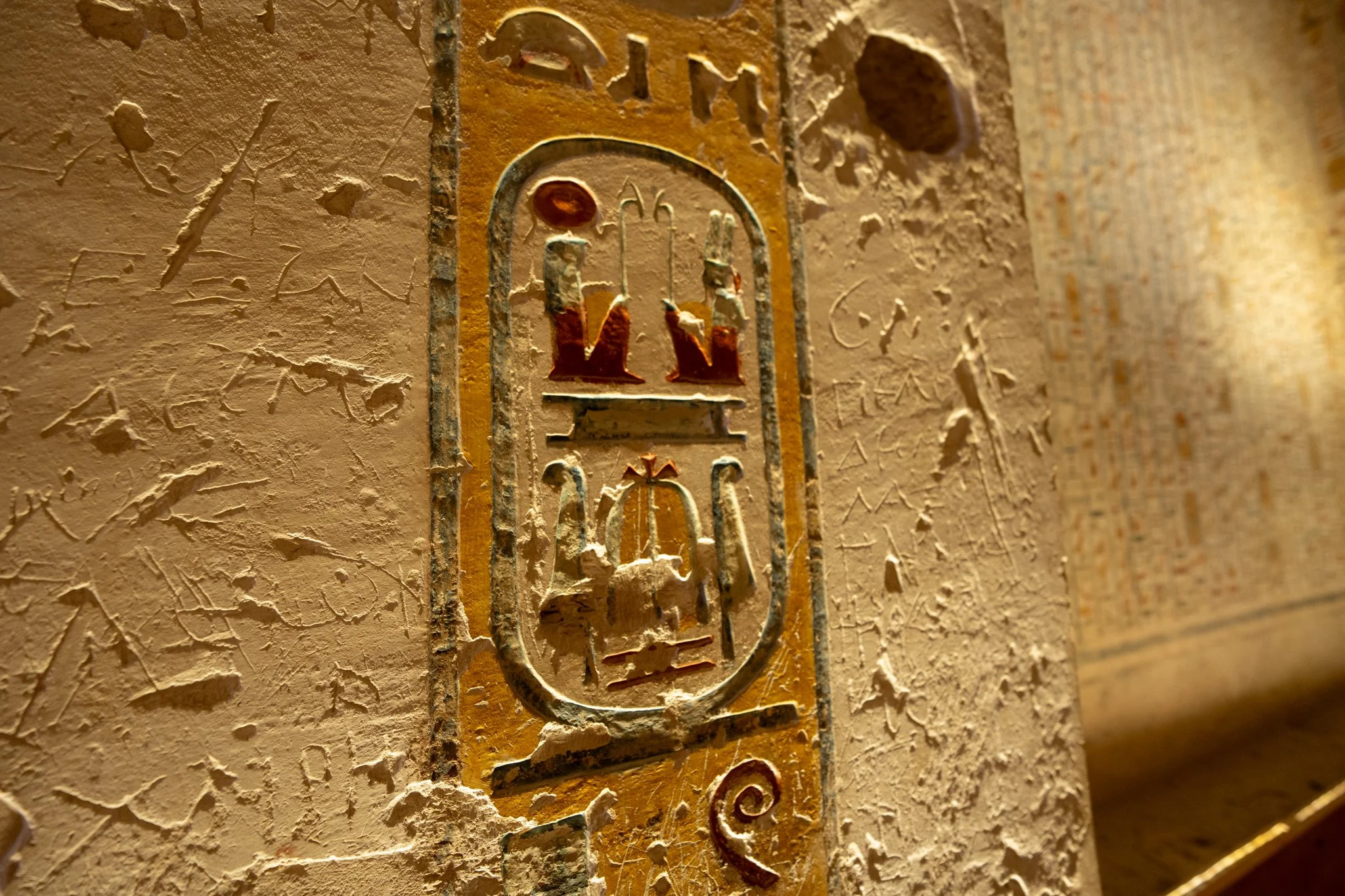
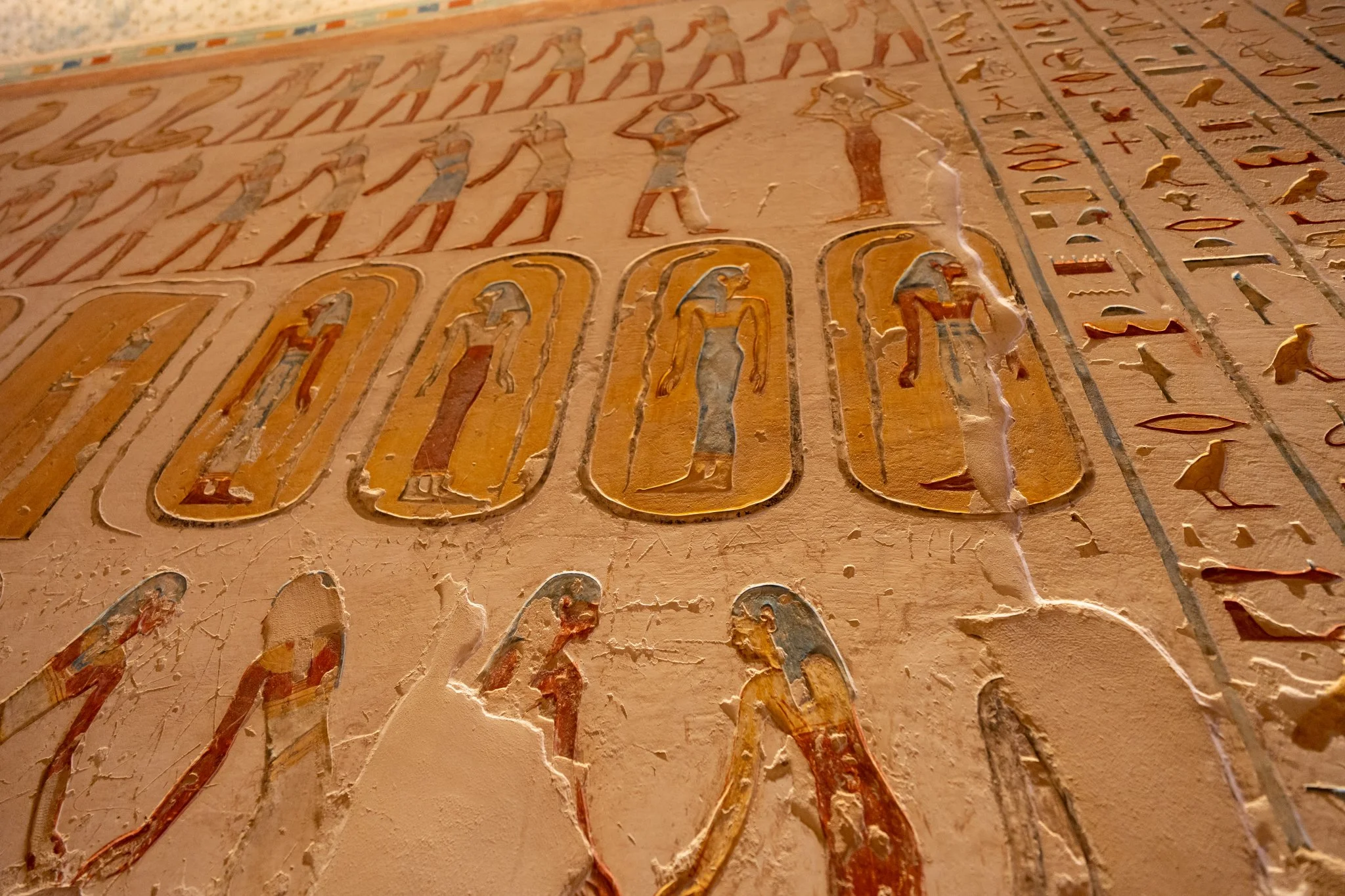
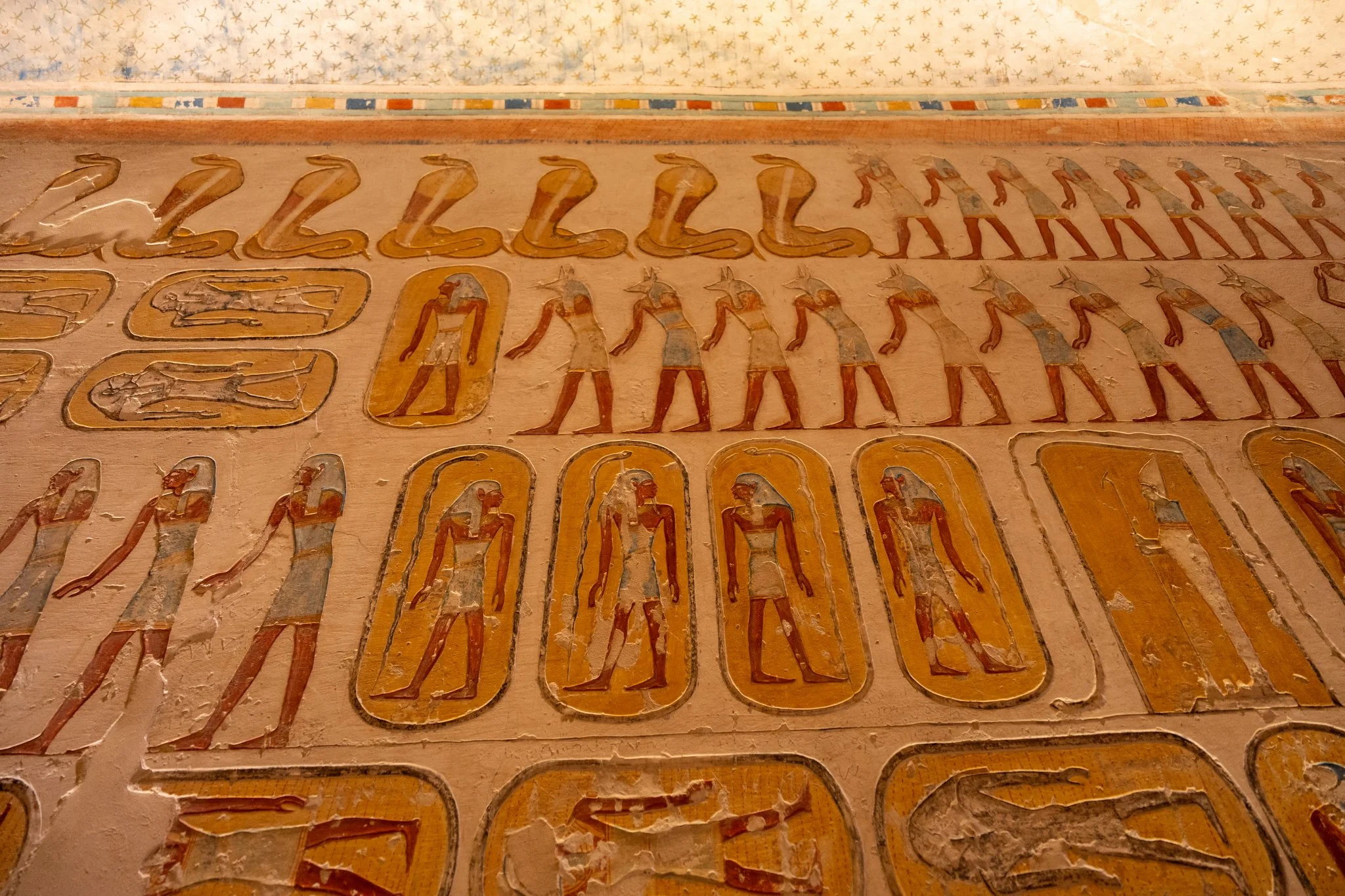
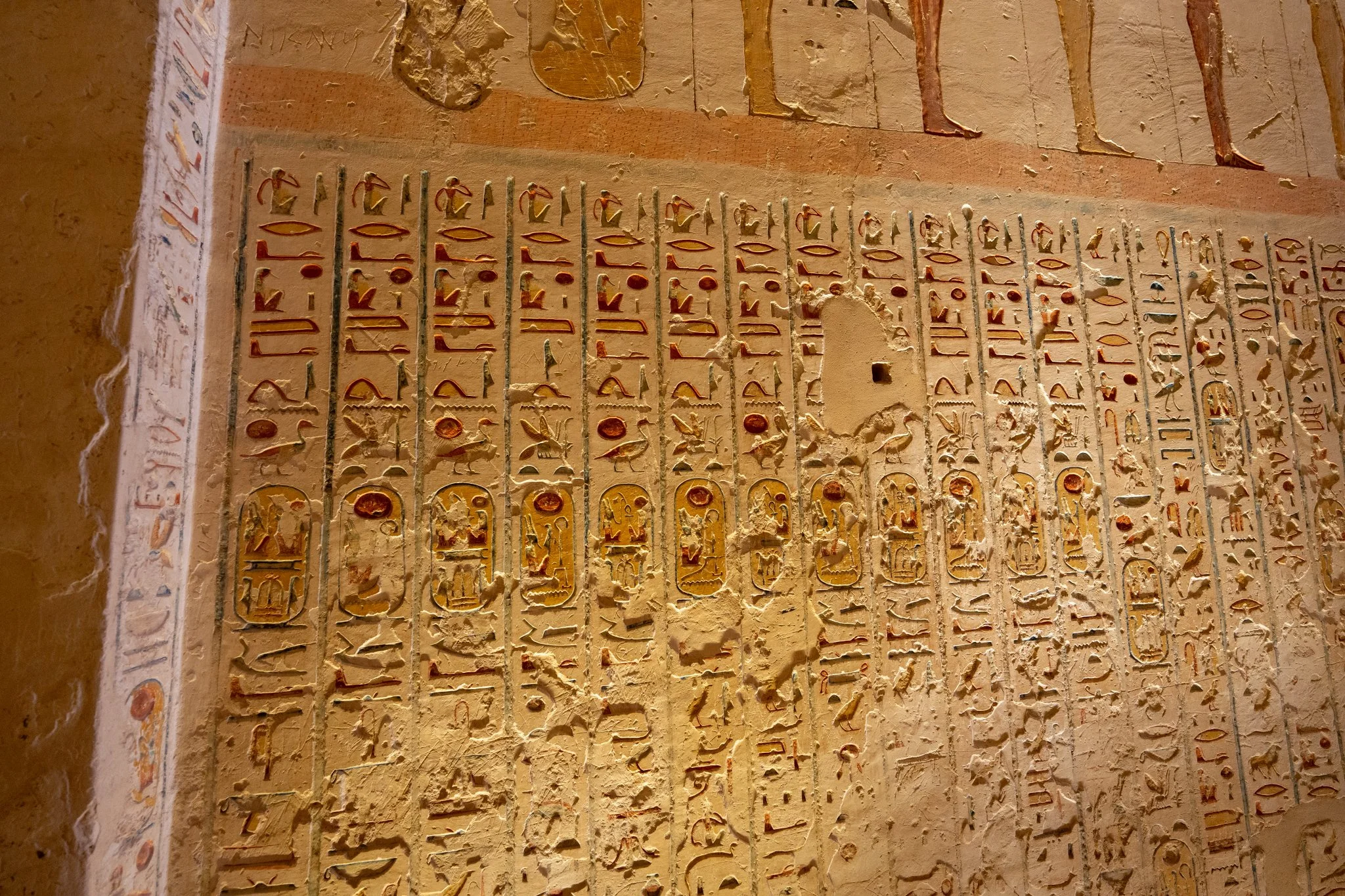
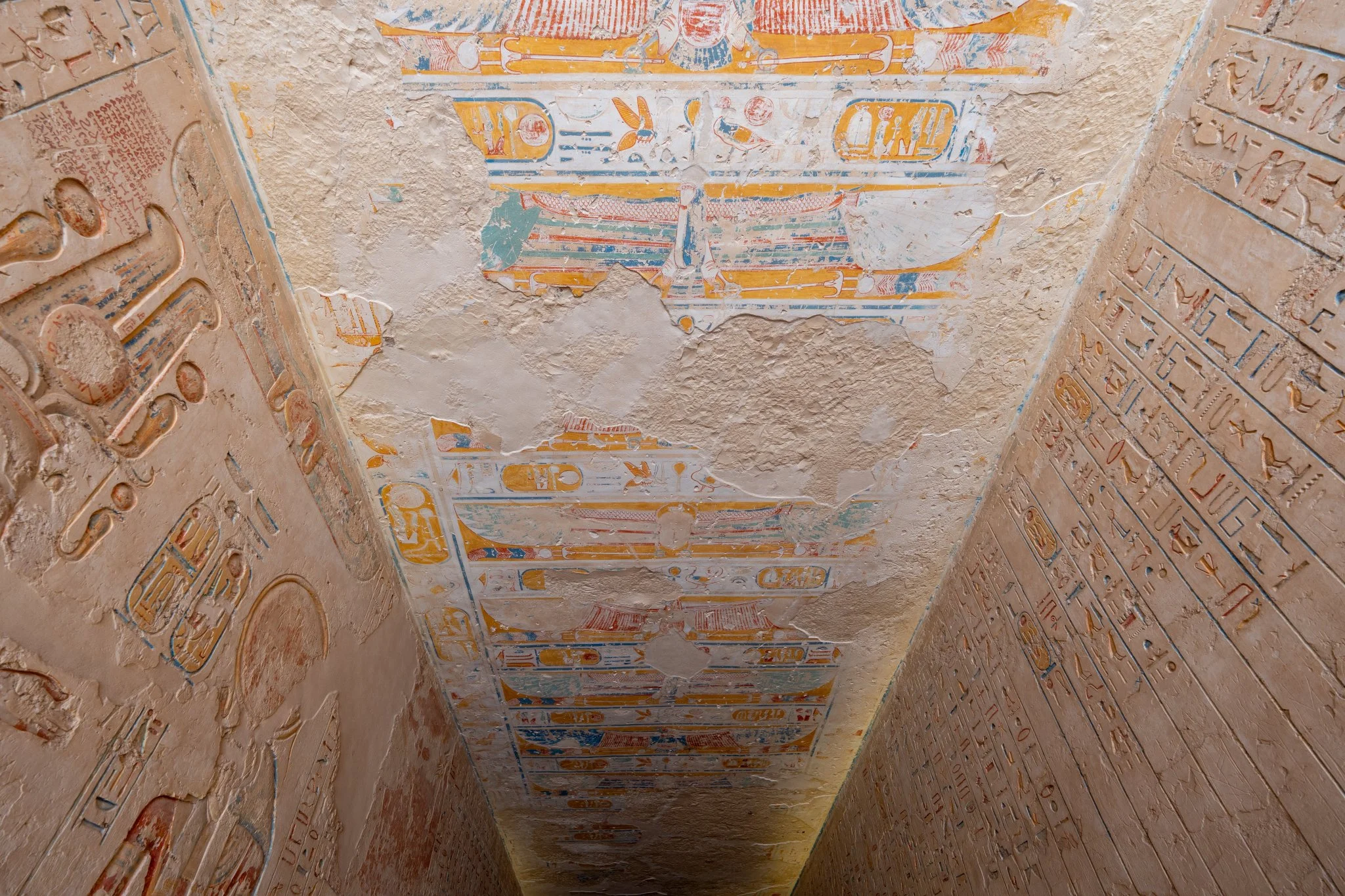
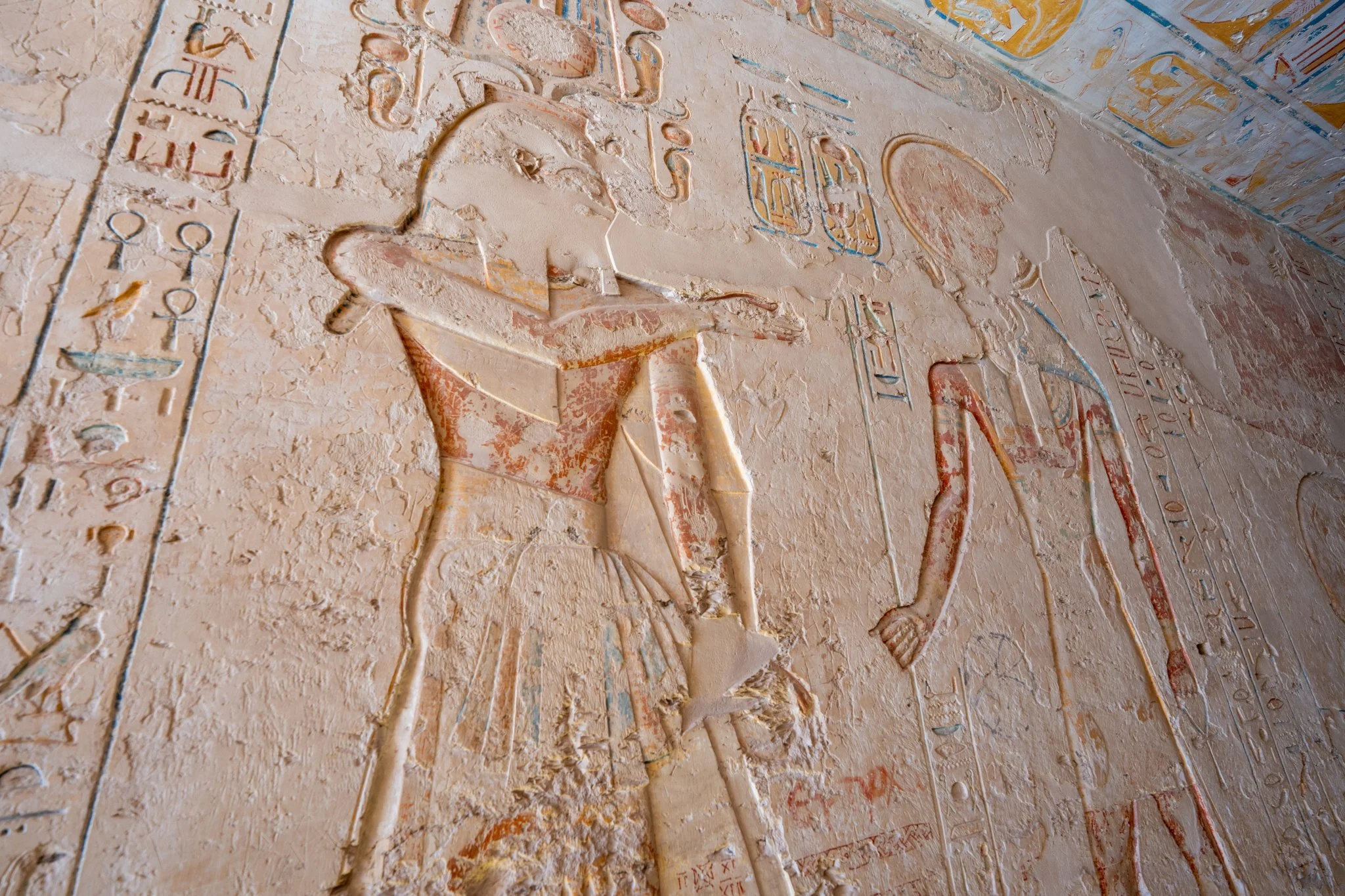
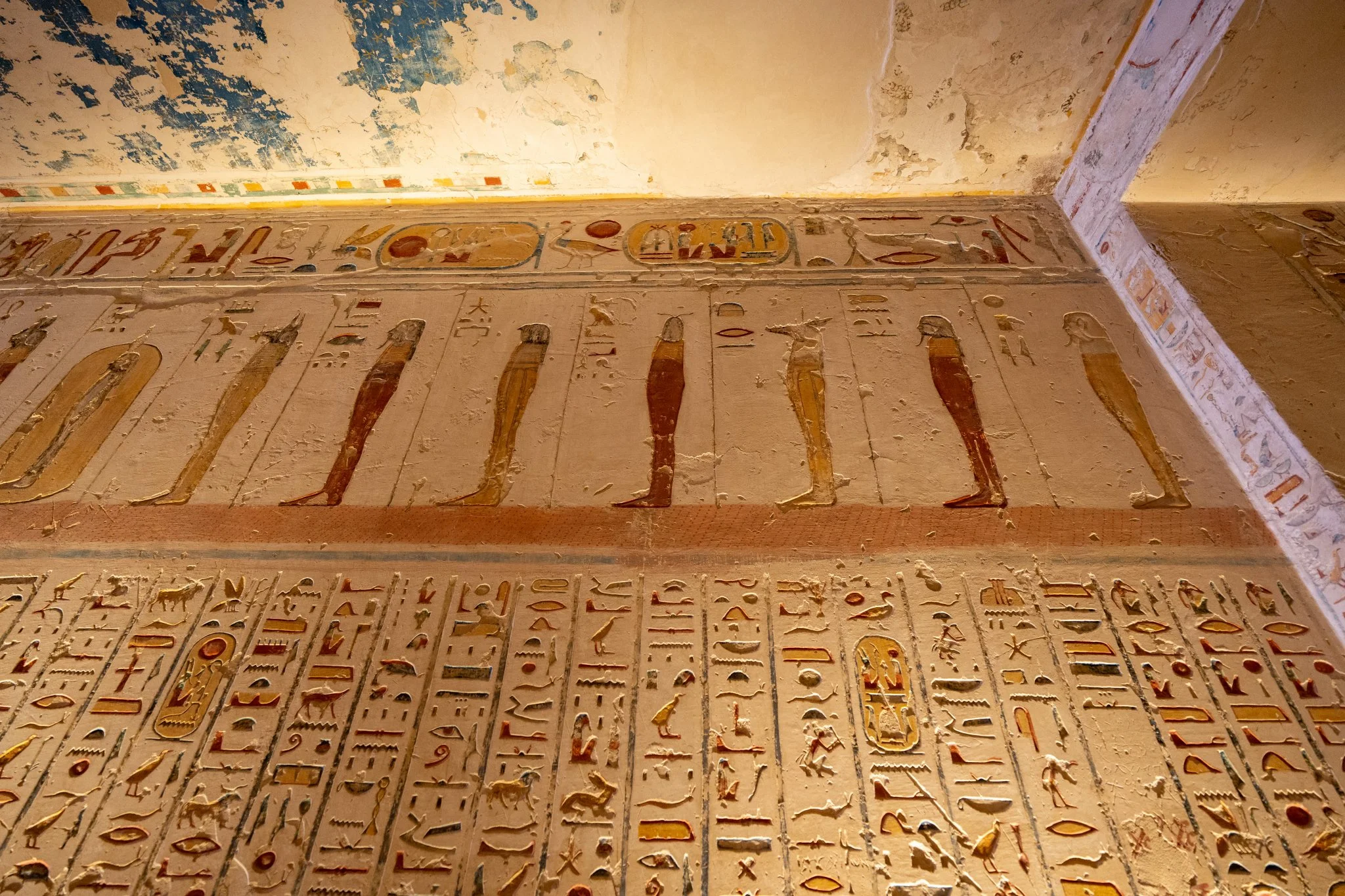
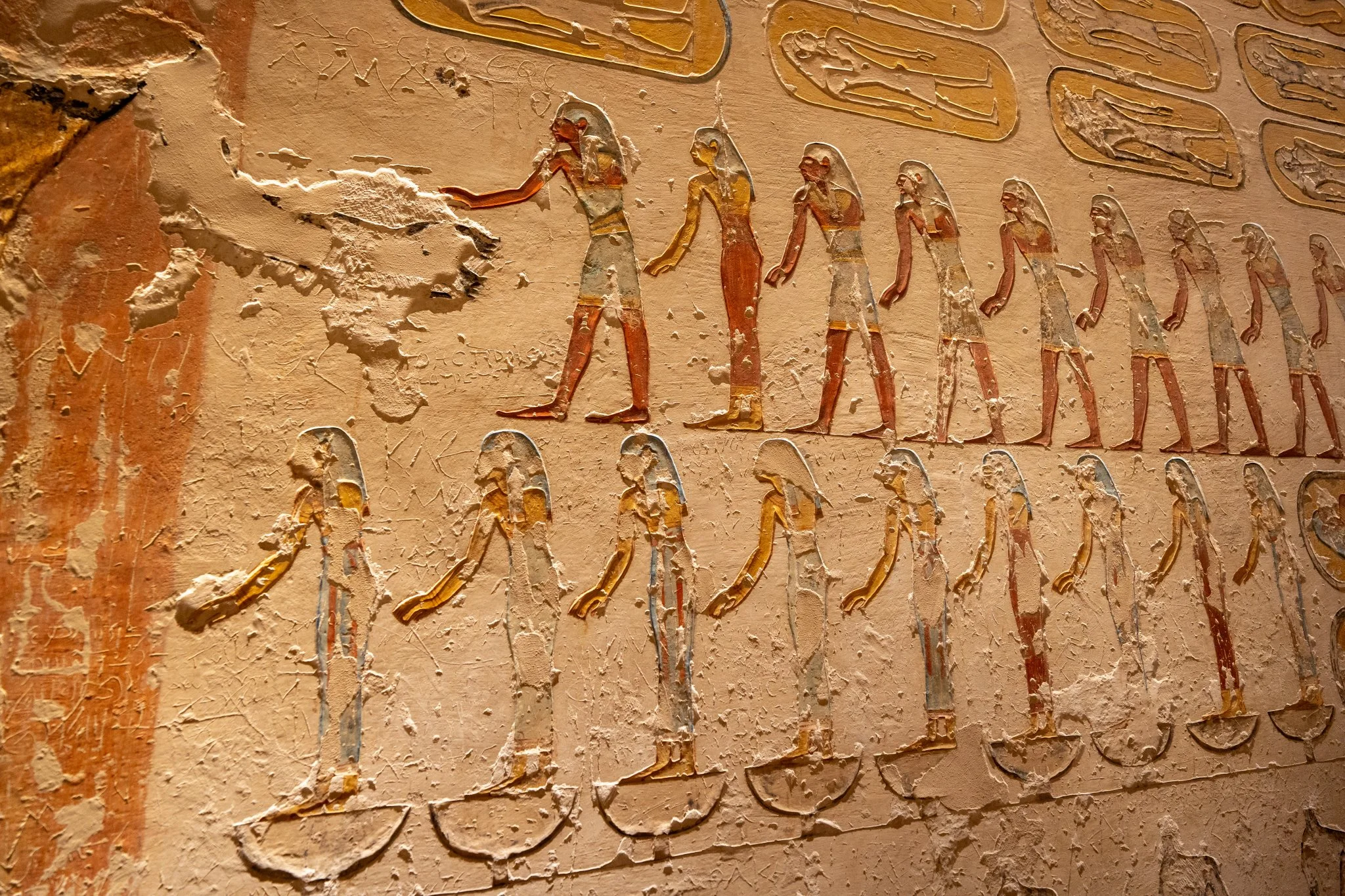
Piero: the colors are simply incredible. What amazed me most is that, after more than 3,000 years, you can still clearly distinguish the yellow, blue, red, and green. It's thanks to the valley's extremely dry climate, which has preserved these paintings that would have disappeared centuries ago almost anywhere else.
Angela: the decorations depict the pharaoh's journey through the afterlife, drawing mainly from the Book of Gates and the Book of Caverns—sacred texts describing the Sun's nightly journey through the underworld and the rebirth of the pharaoh alongside the deity.
The Tomb of Ramesses IX(KV6)
Piero: if the first tomb had impressed us, this one left us absolutely speechless.
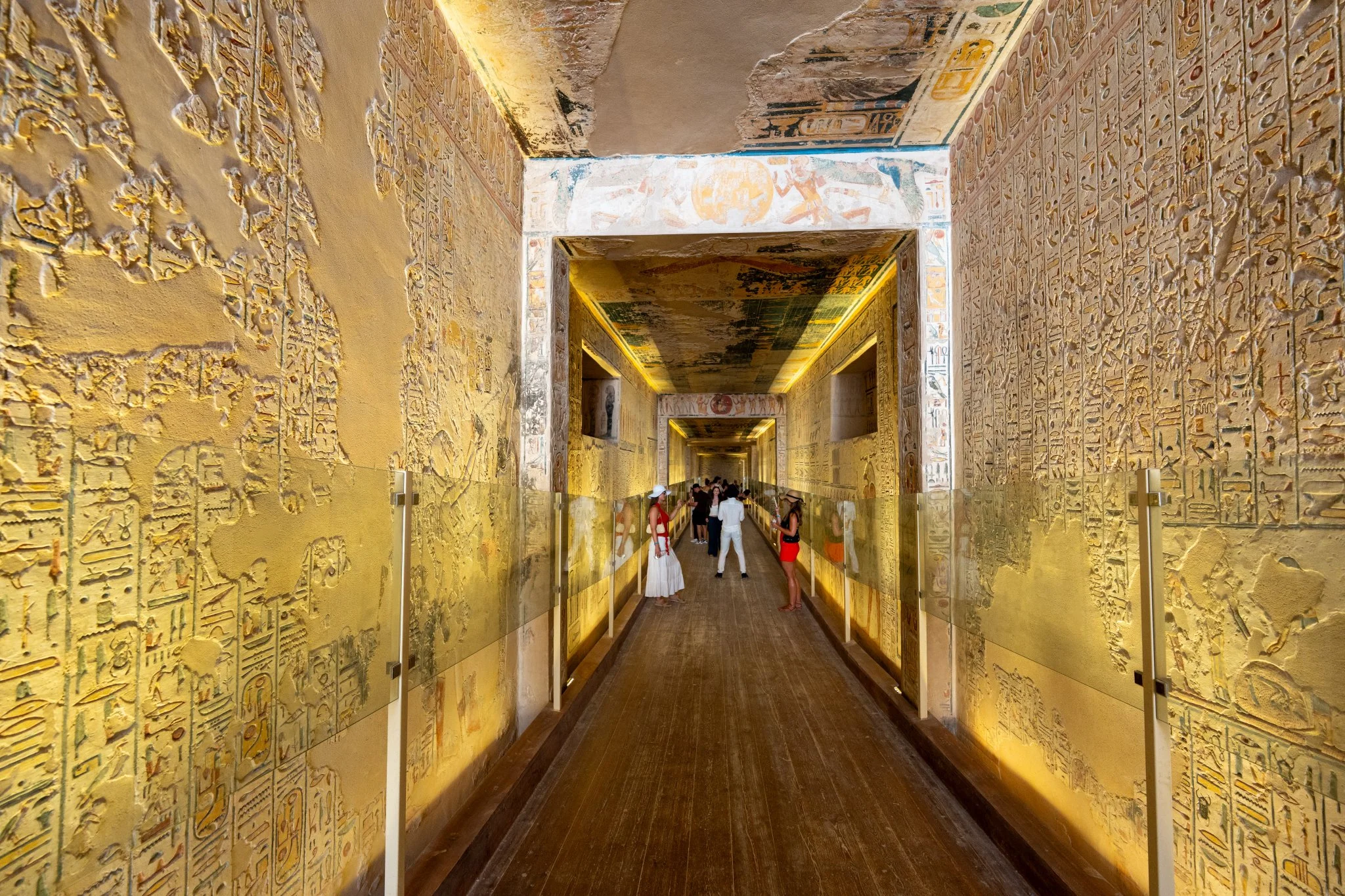
Angela: it's one of the largest and best-preserved tombs in the entire Valley of the Kings. Stretching for more than 100 meters, it features magnificent astronomical ceilings, walls covered with deities, and scenes that look as if they were painted only a few years ago.
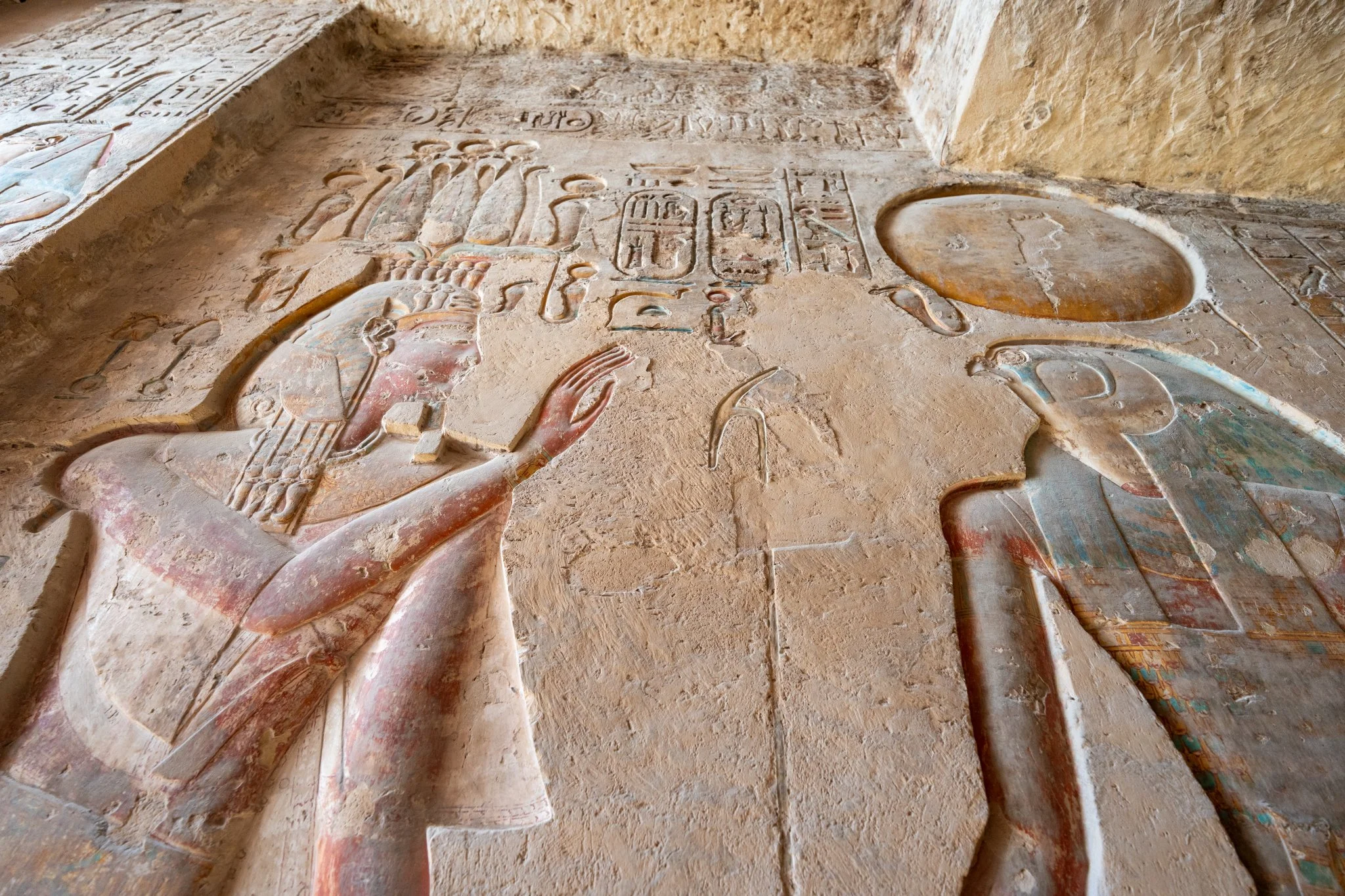
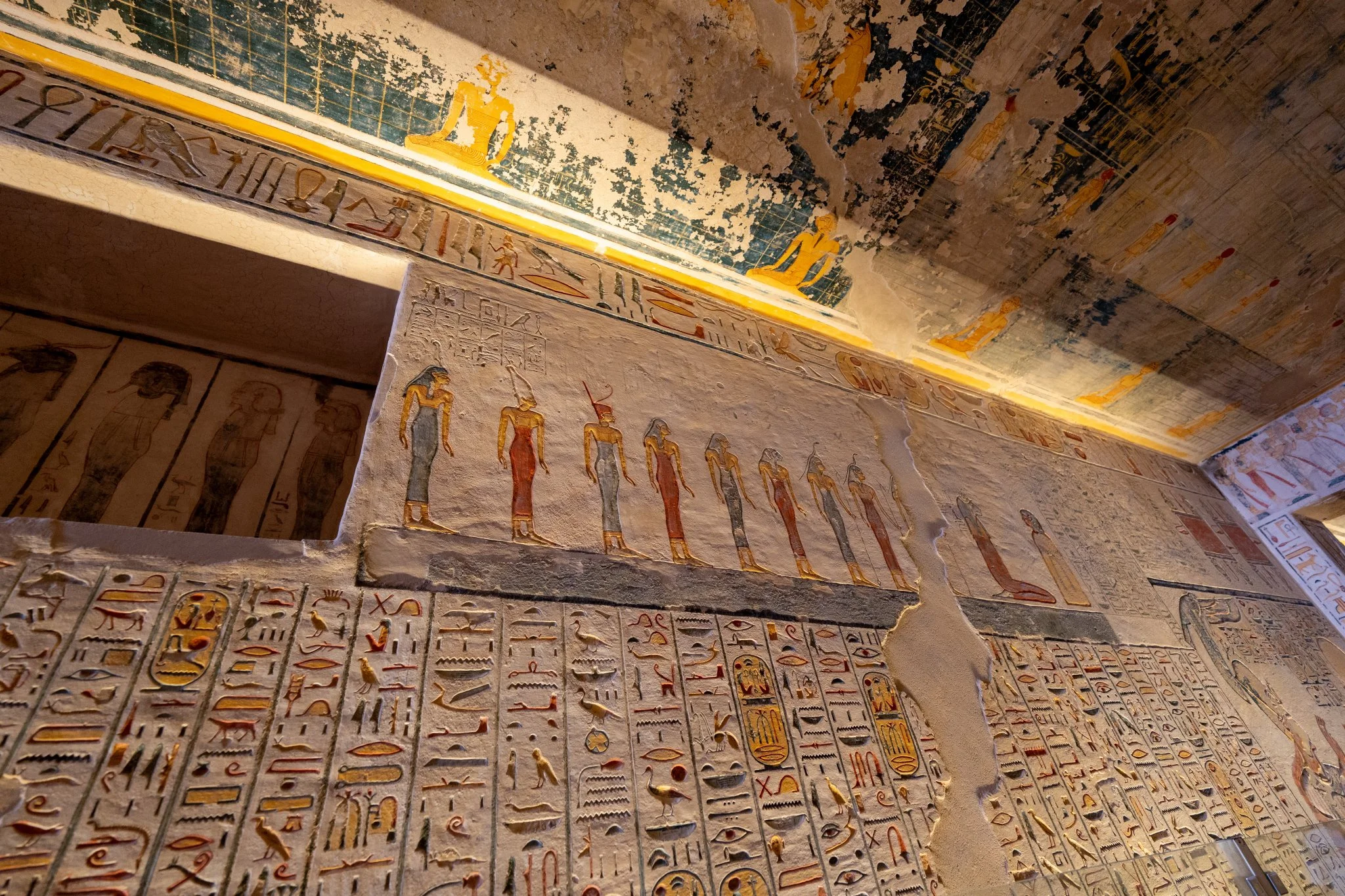
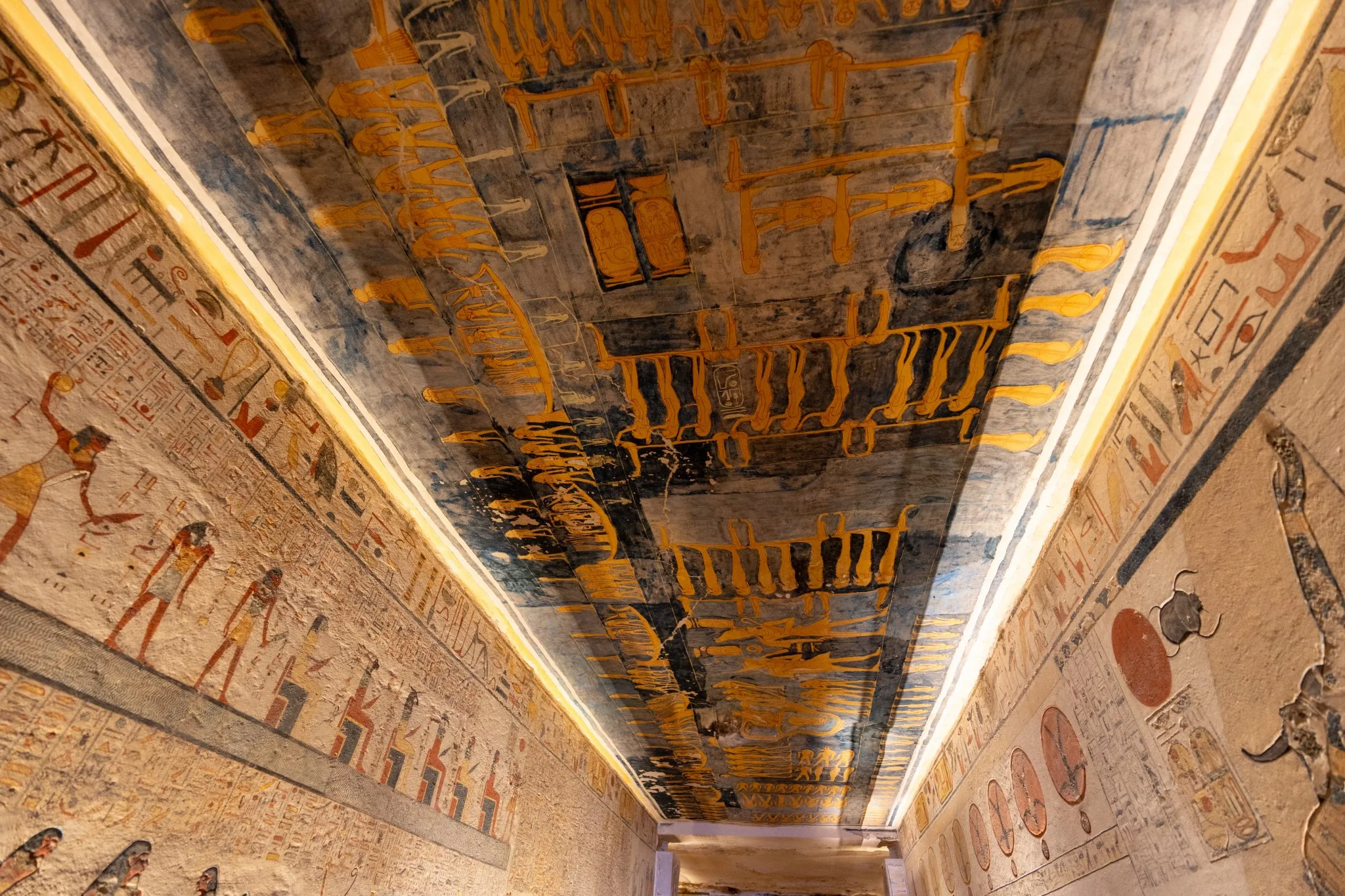
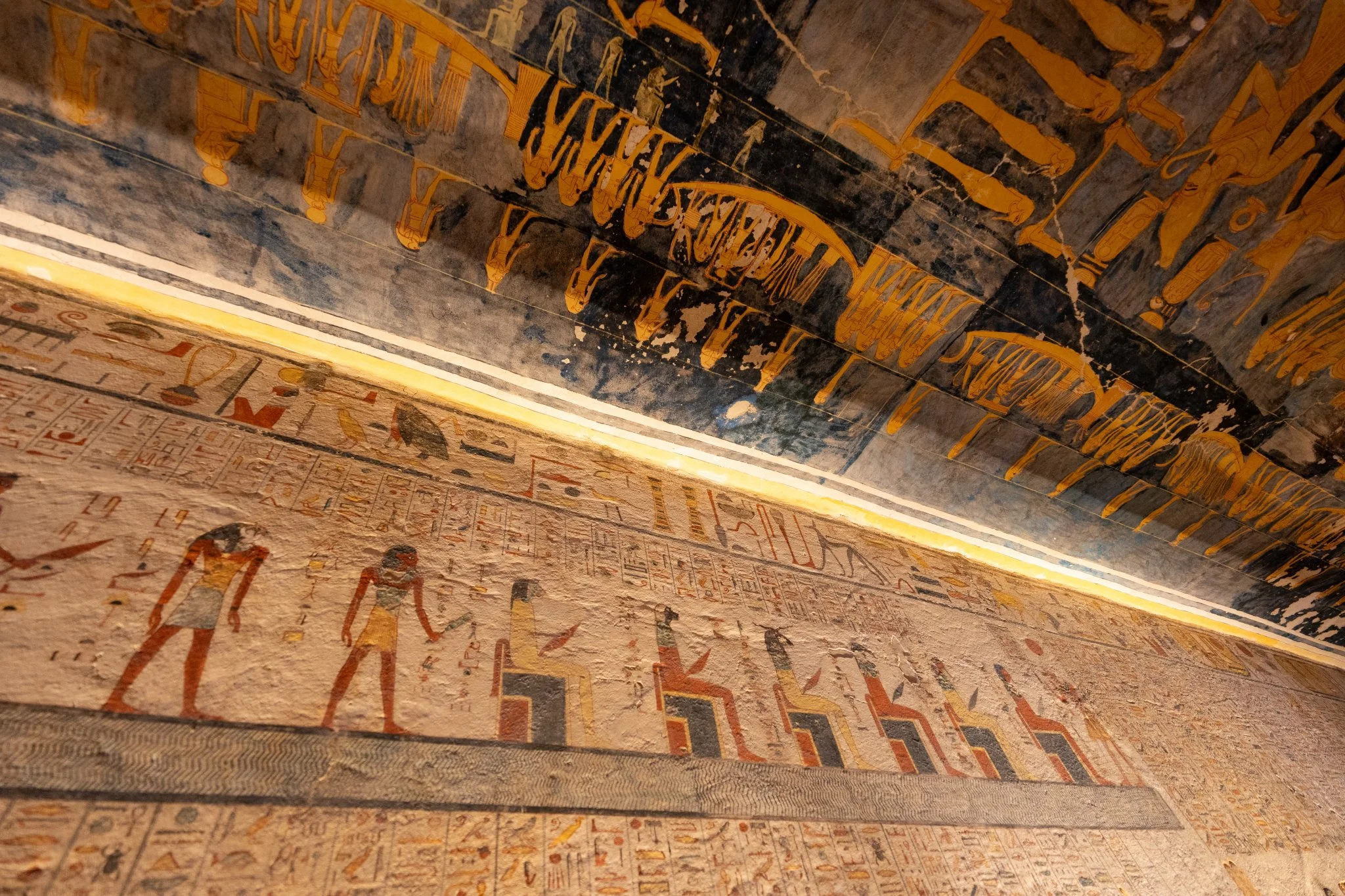
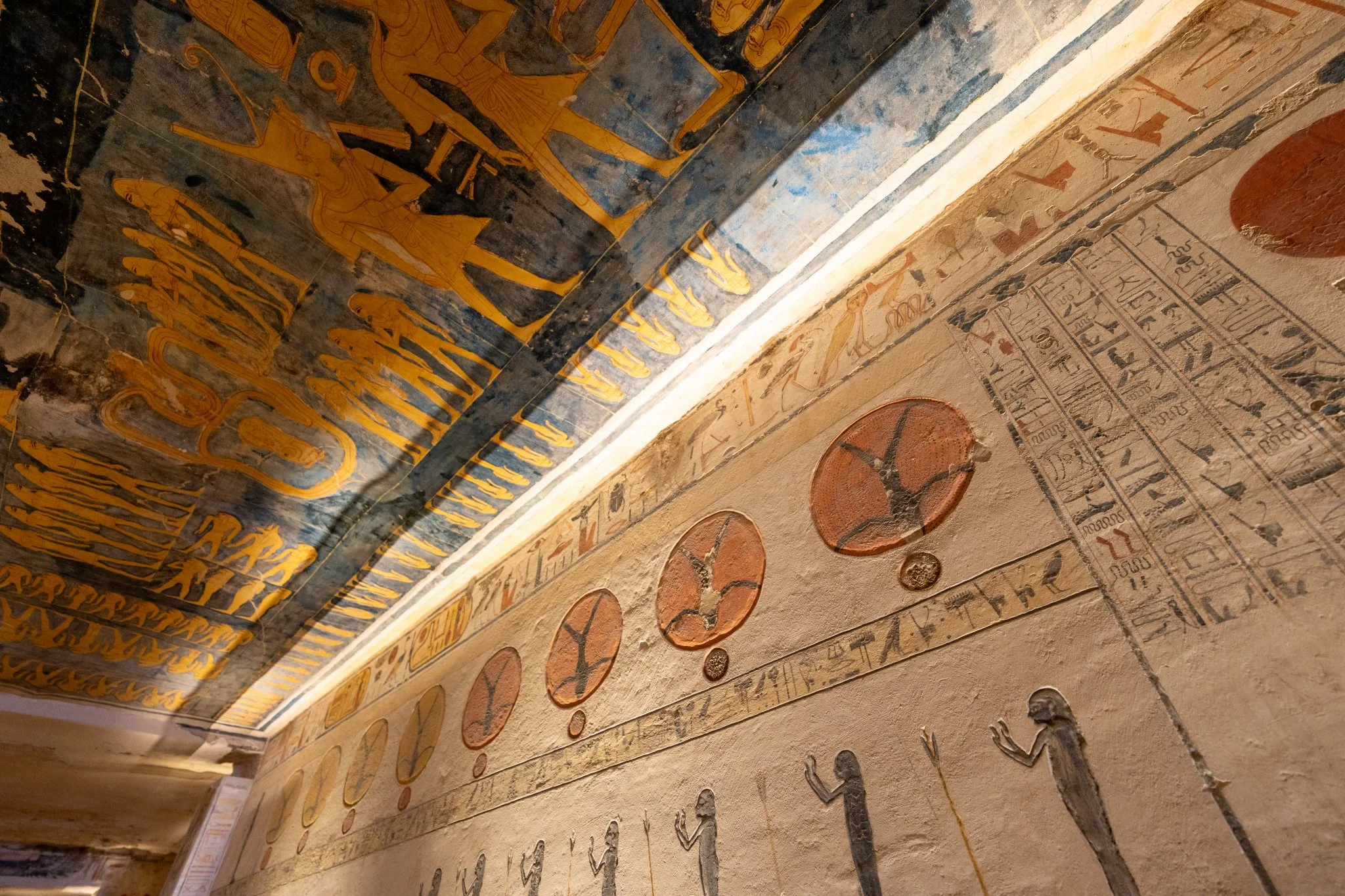
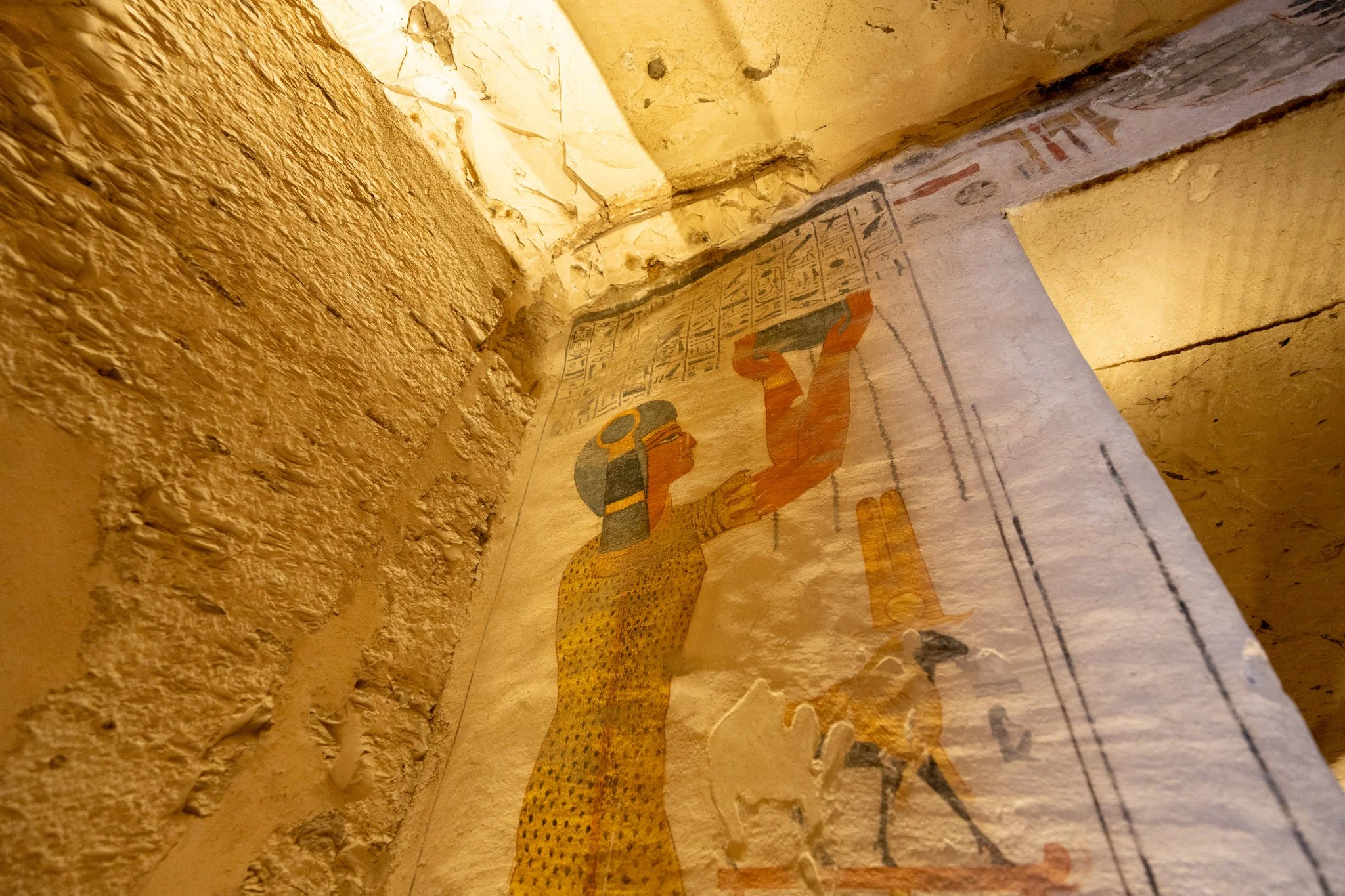
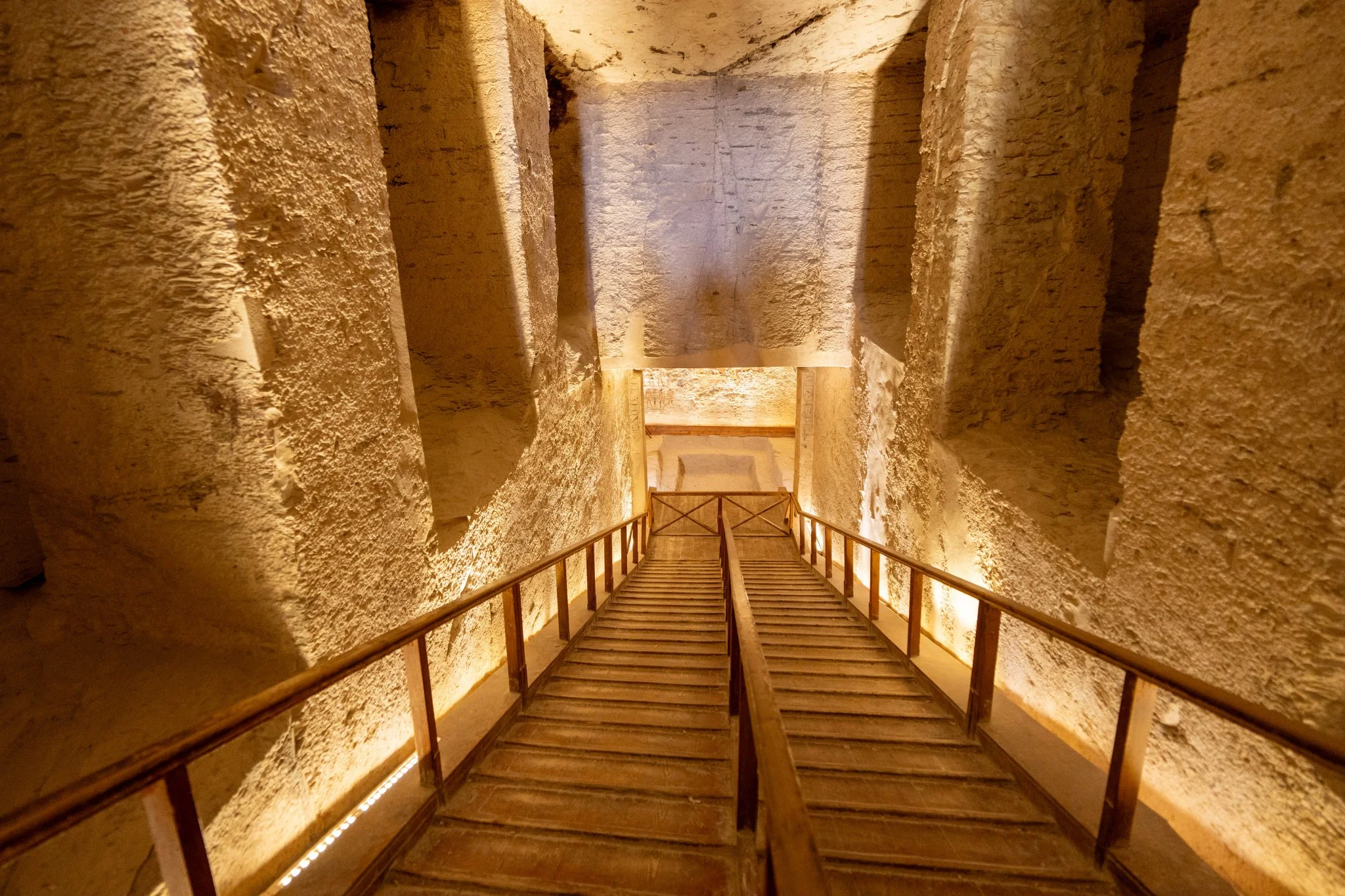
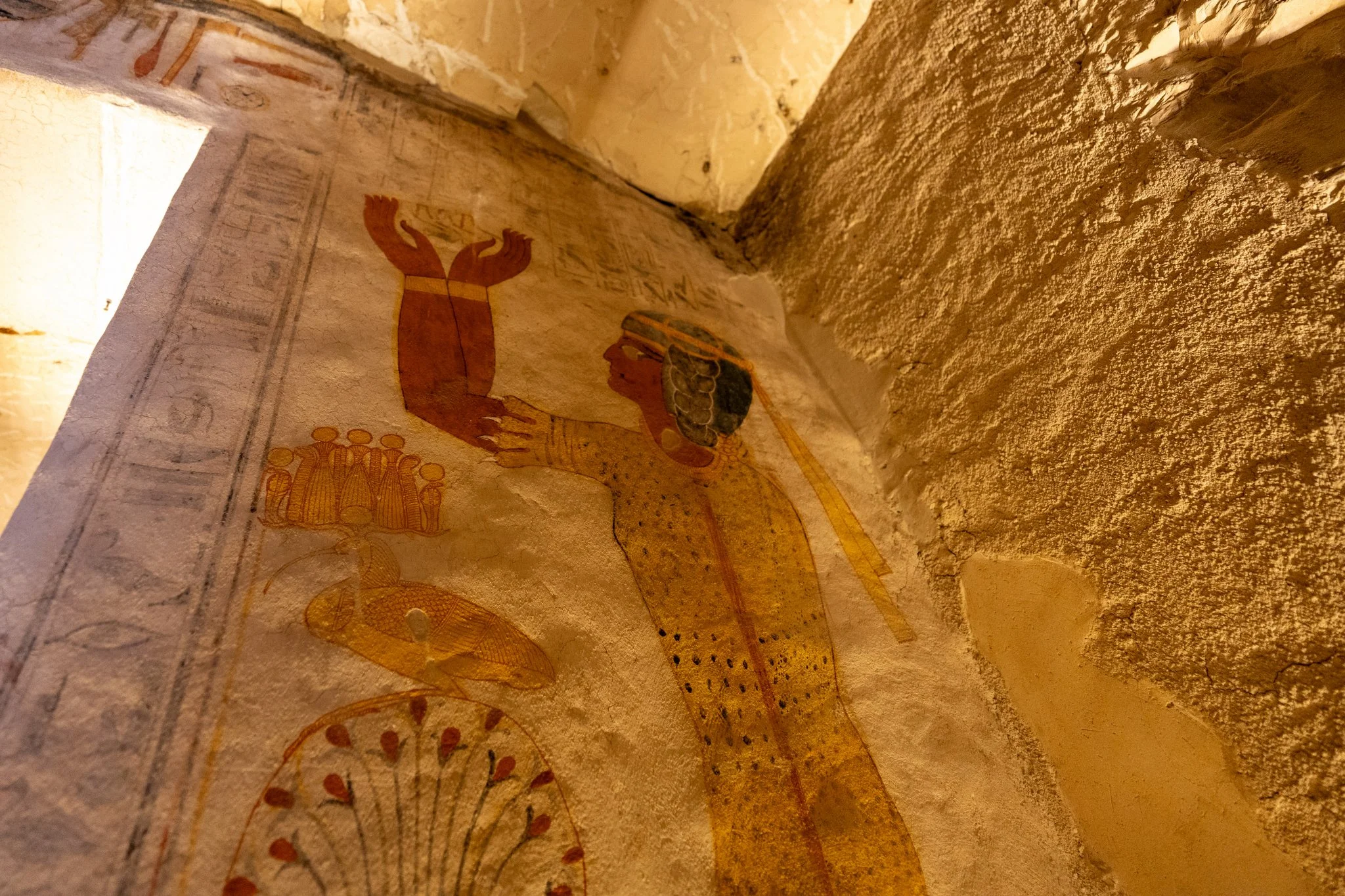
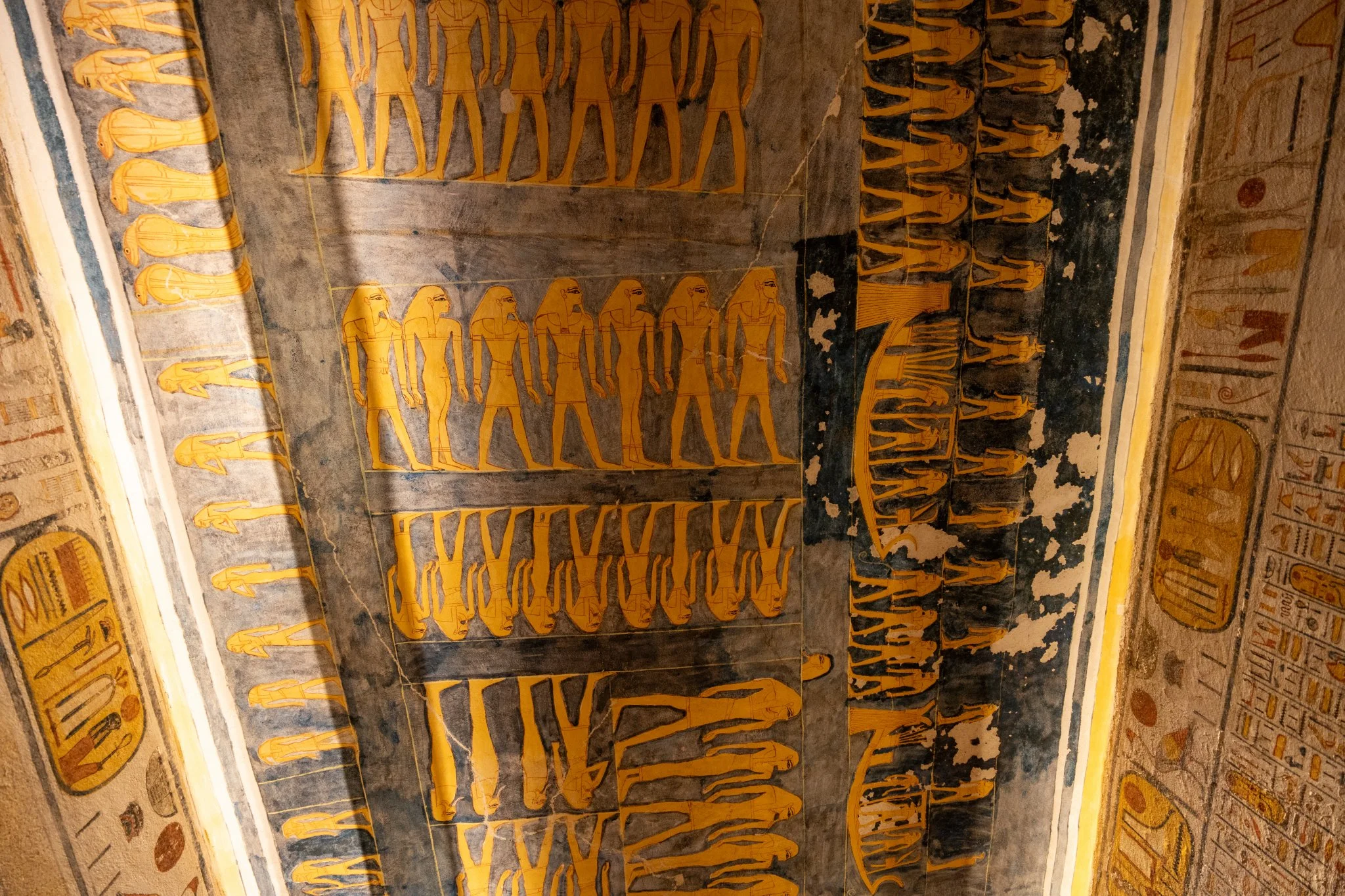
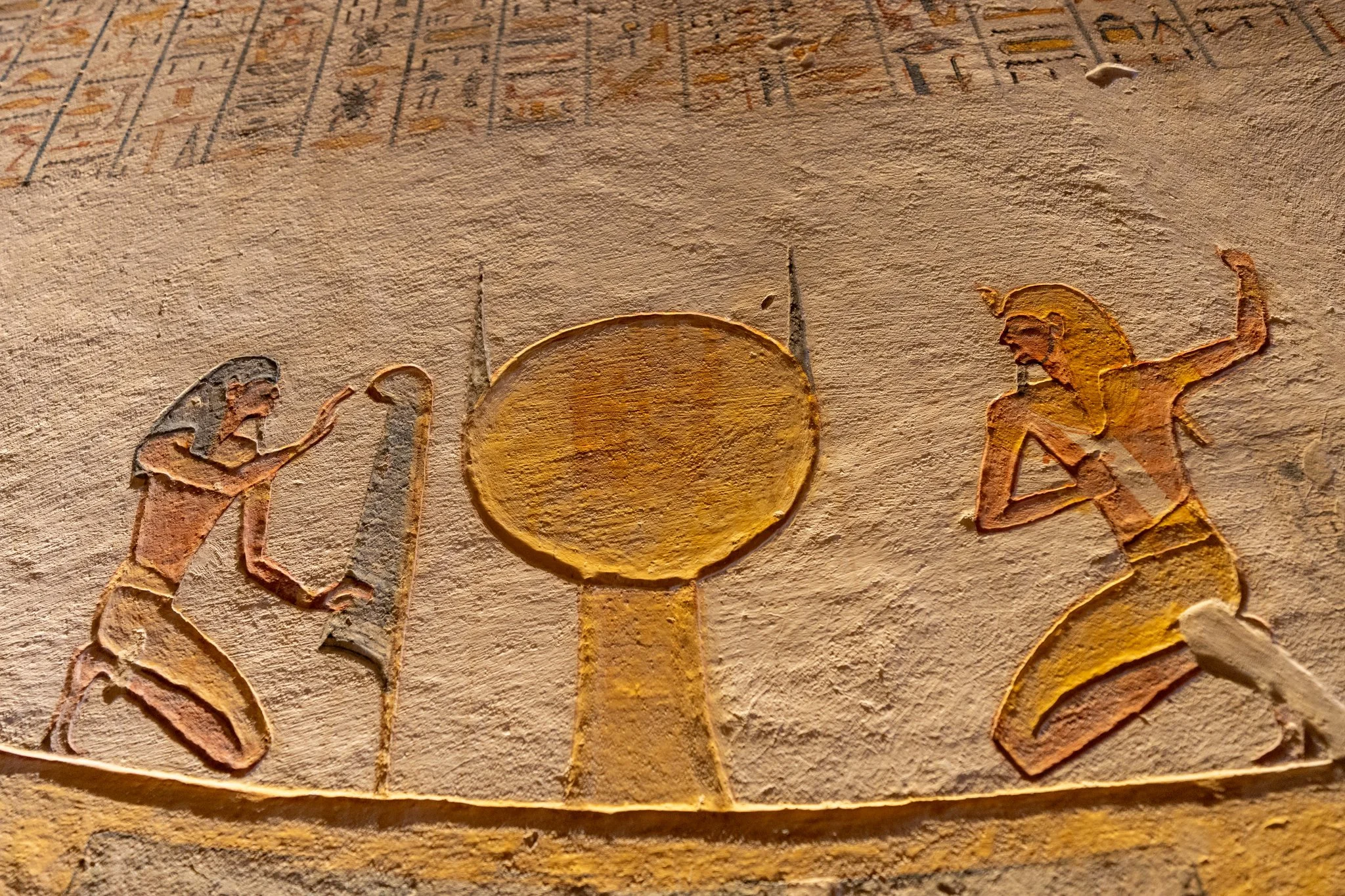
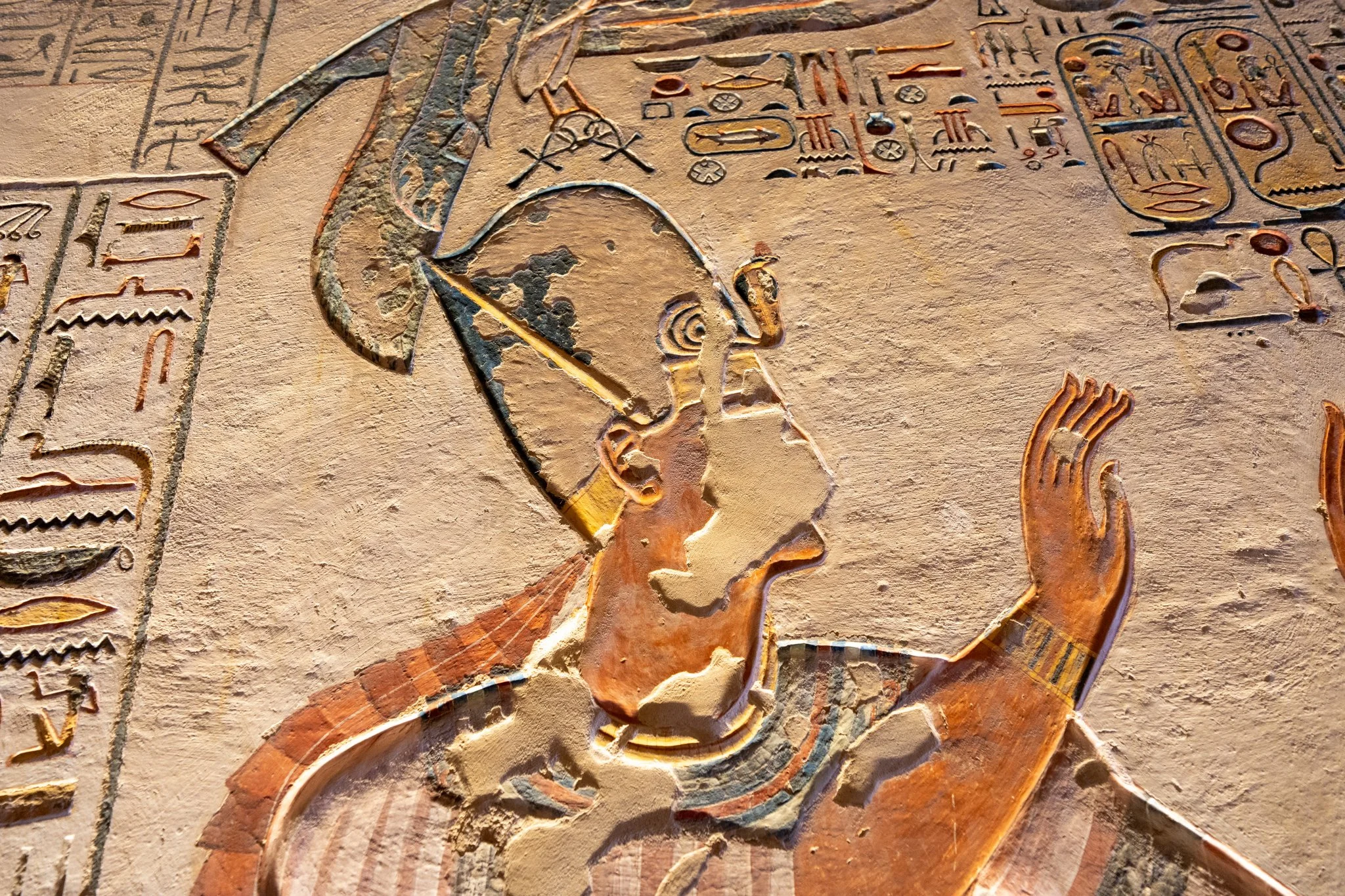
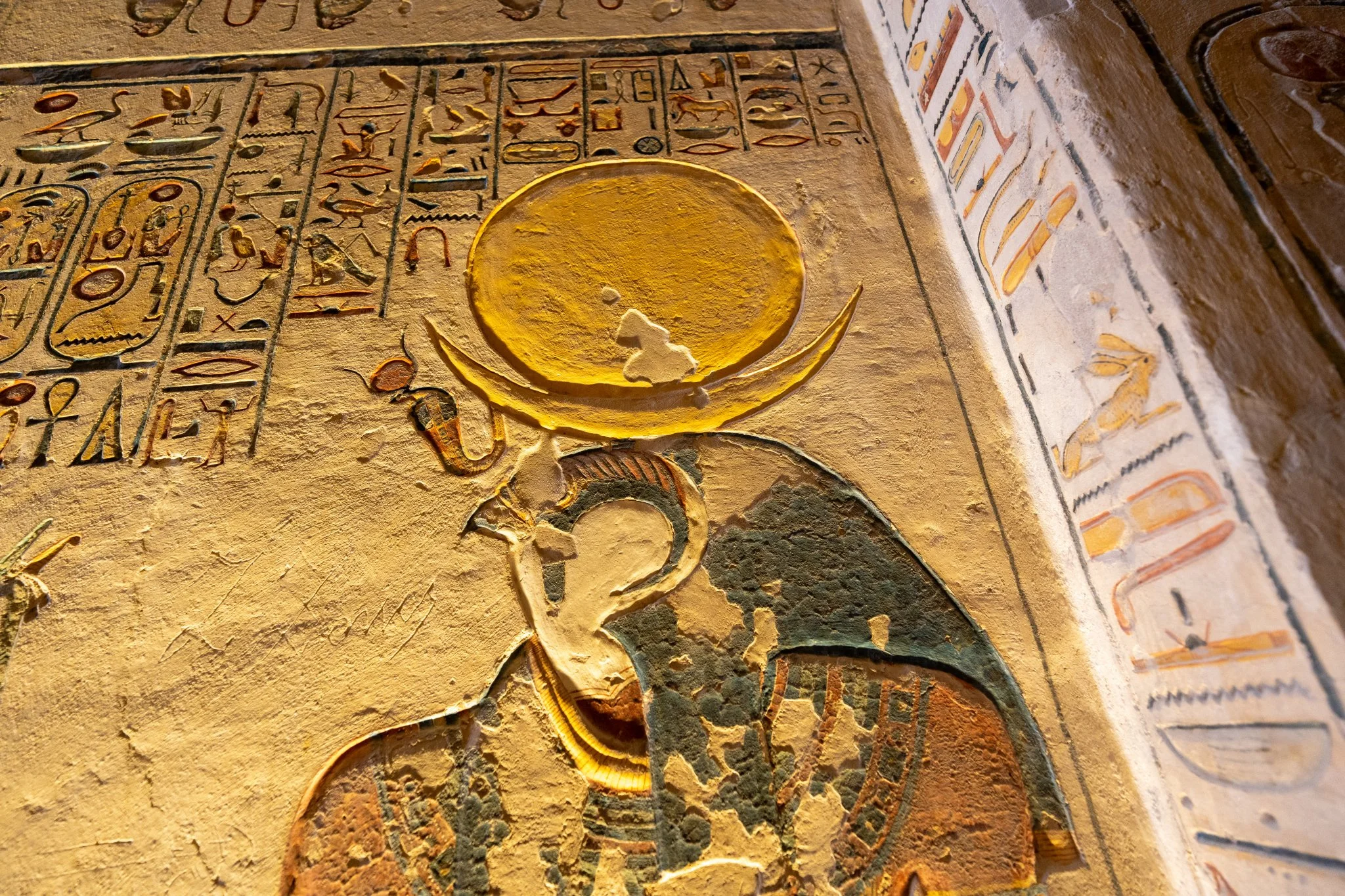
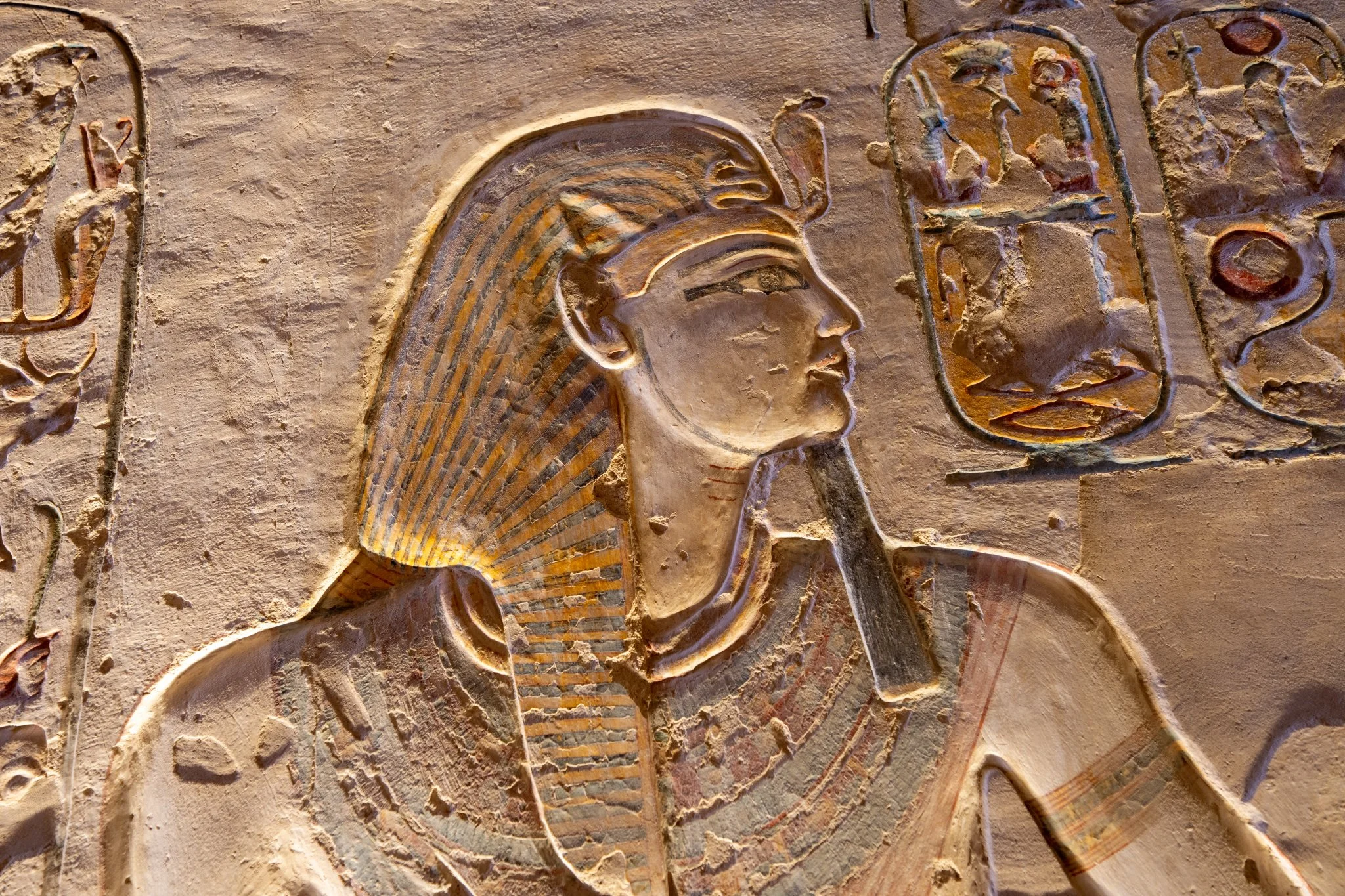
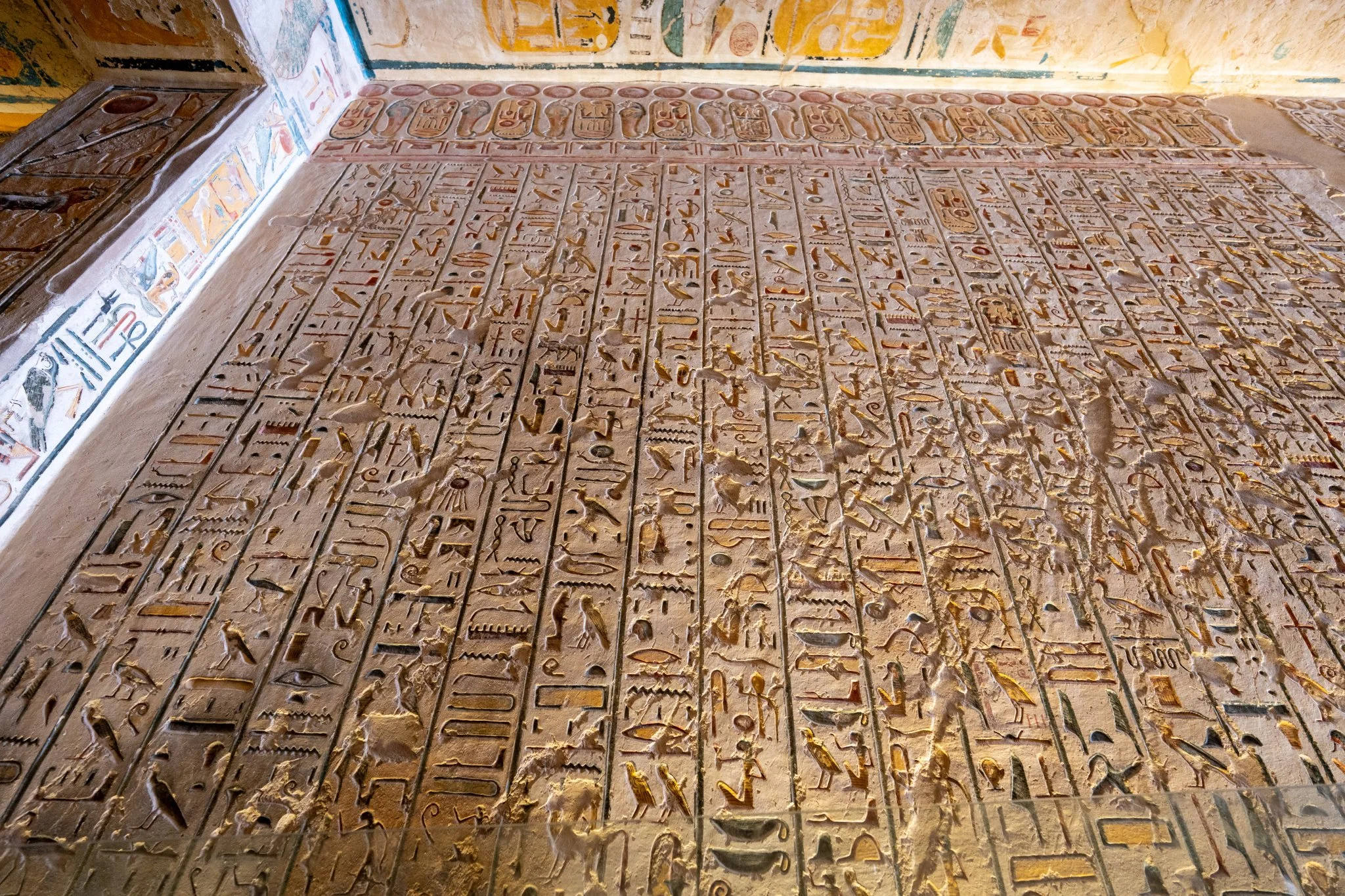
Piero: the ceiling is truly spectacular. It looks just like a star-filled sky.
Angela: the ancient Egyptians attached enormous importance to the sky. The stars symbolized eternity, and after death, the pharaoh was believed to become one of them.
The Tomb of Ramesses III (KV11)
Piero: probably because it's one of the brightest tombs in the entire Valley of the Kings.
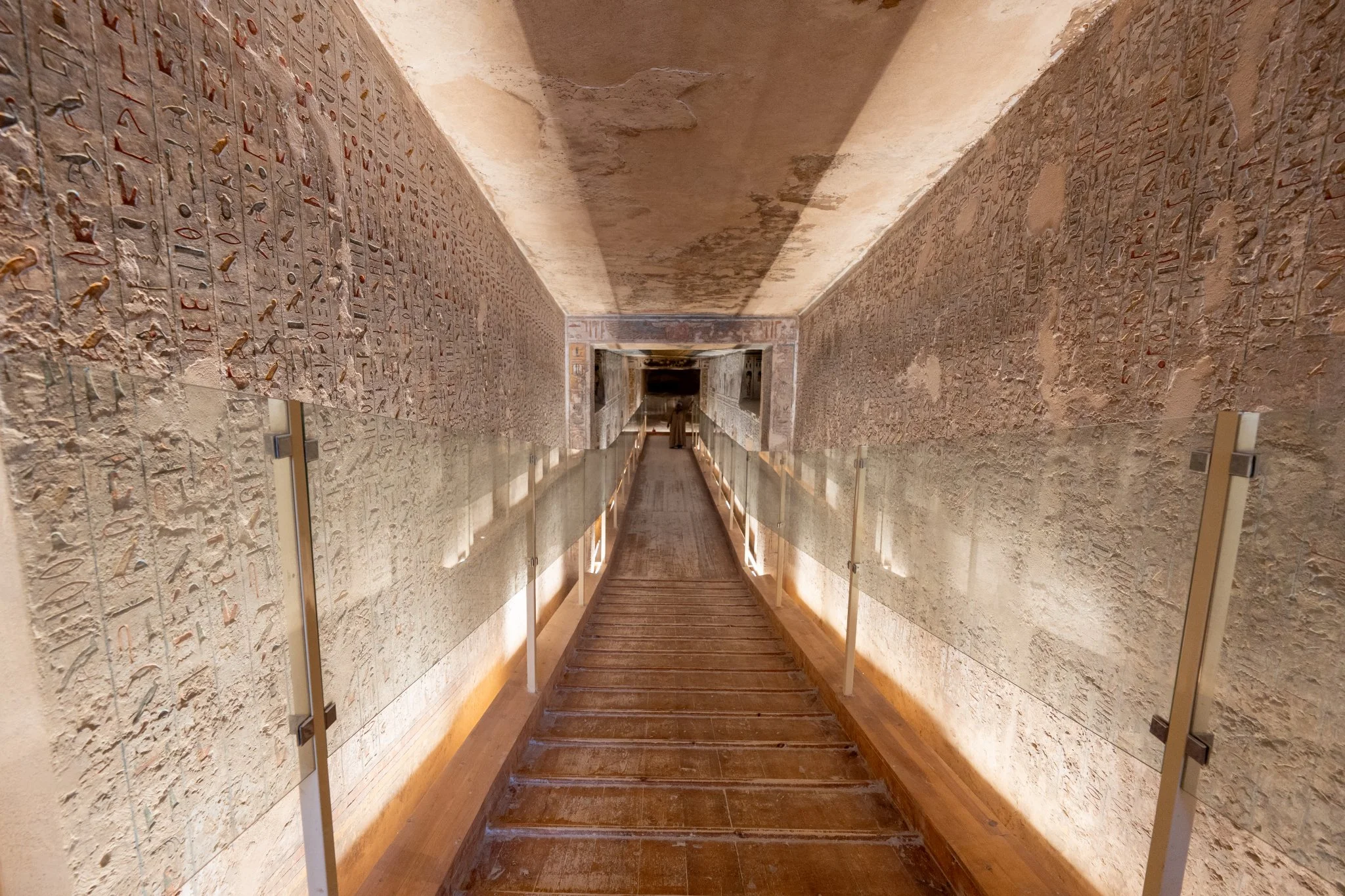
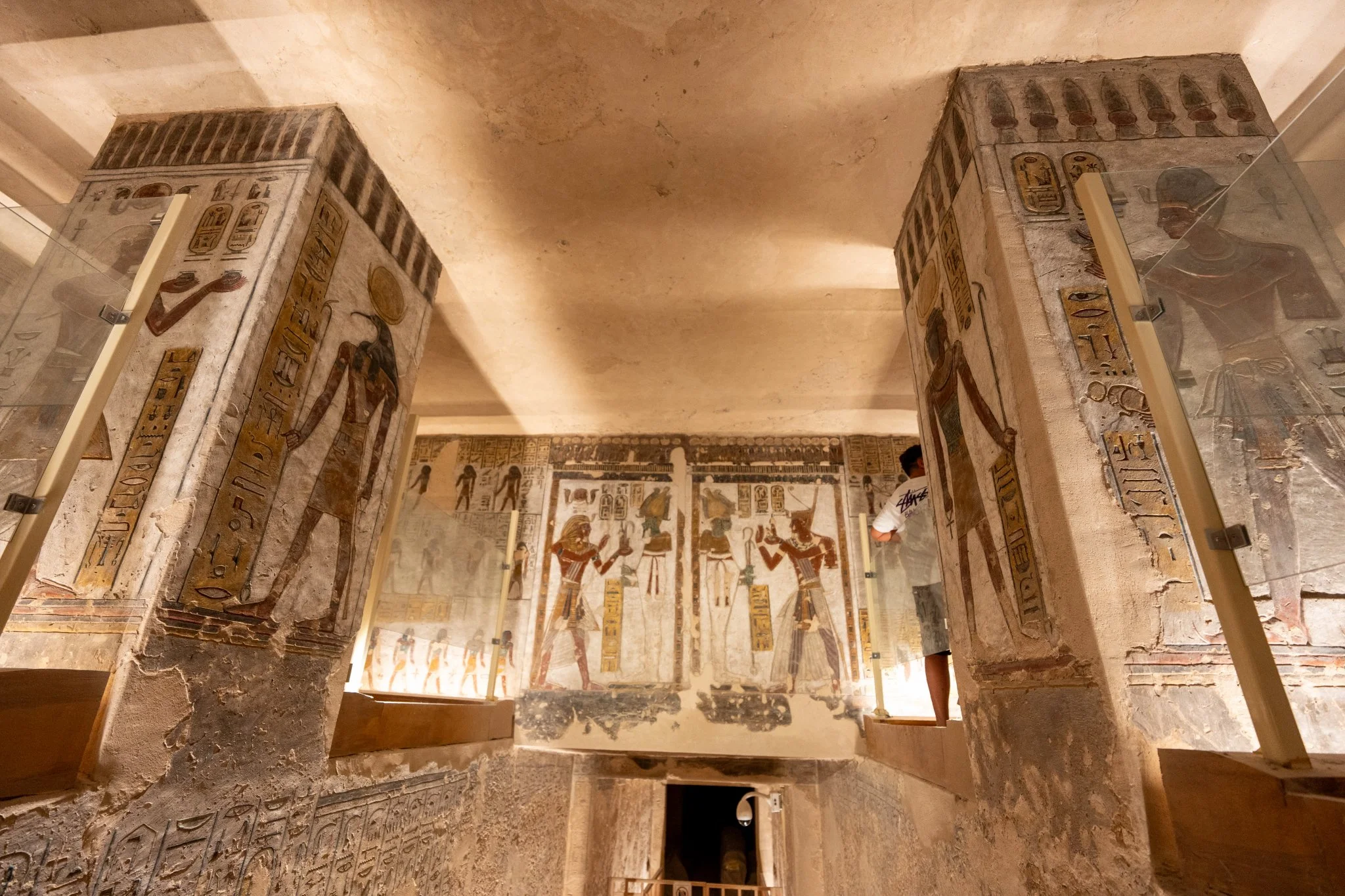
Angela: the walls are covered with religious texts and beautifully preserved figures, all still perfectly legible.
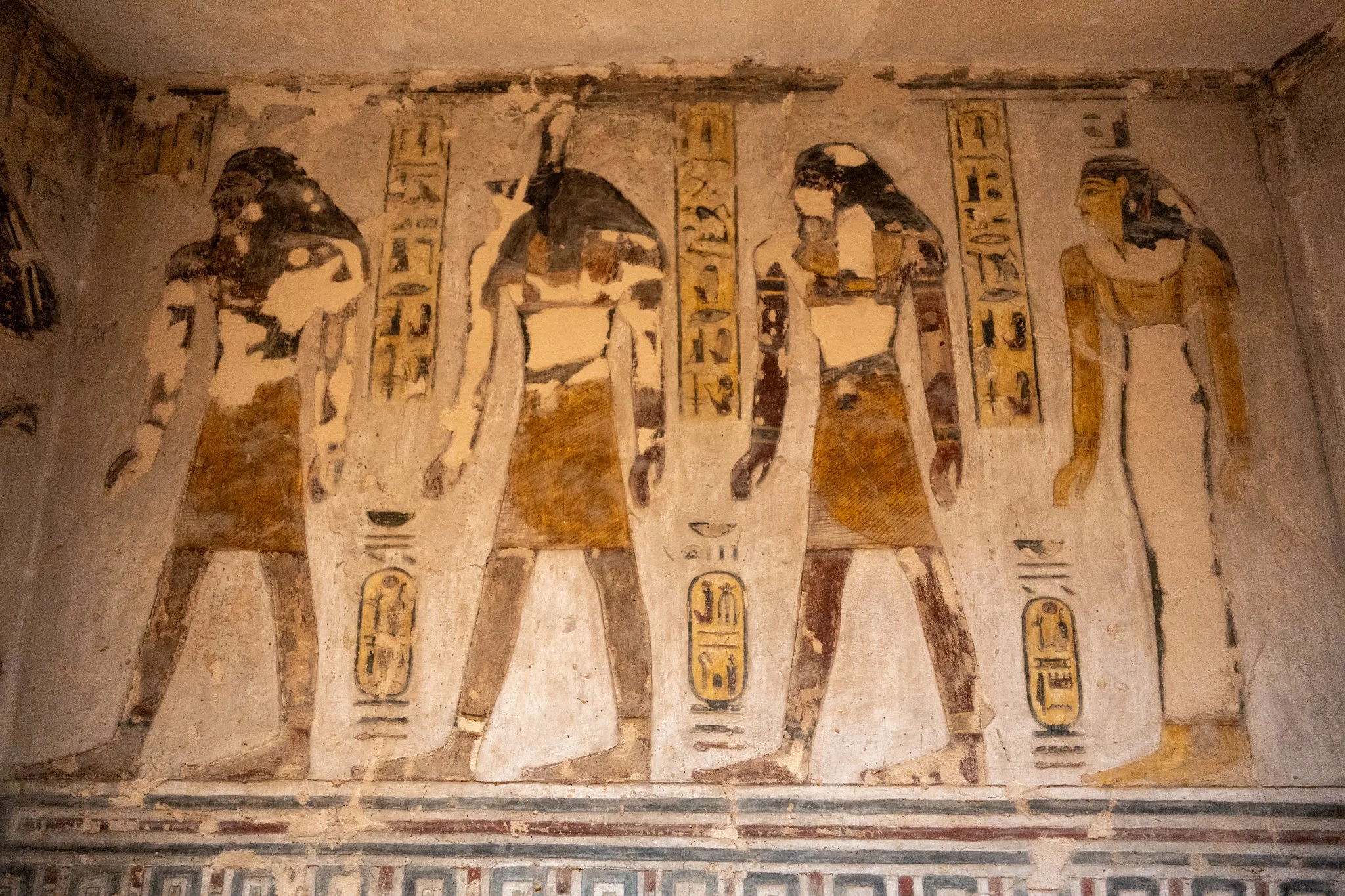
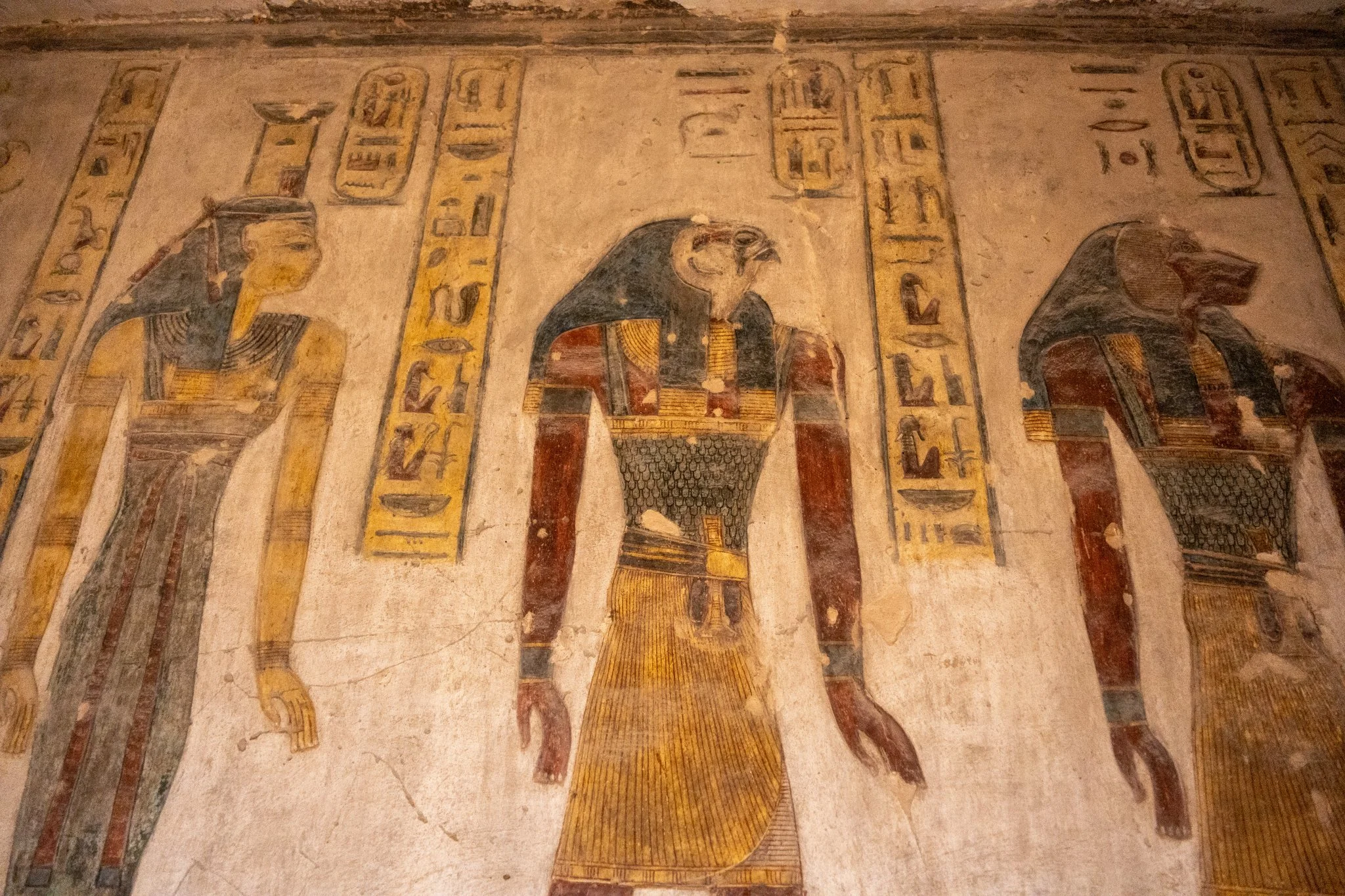
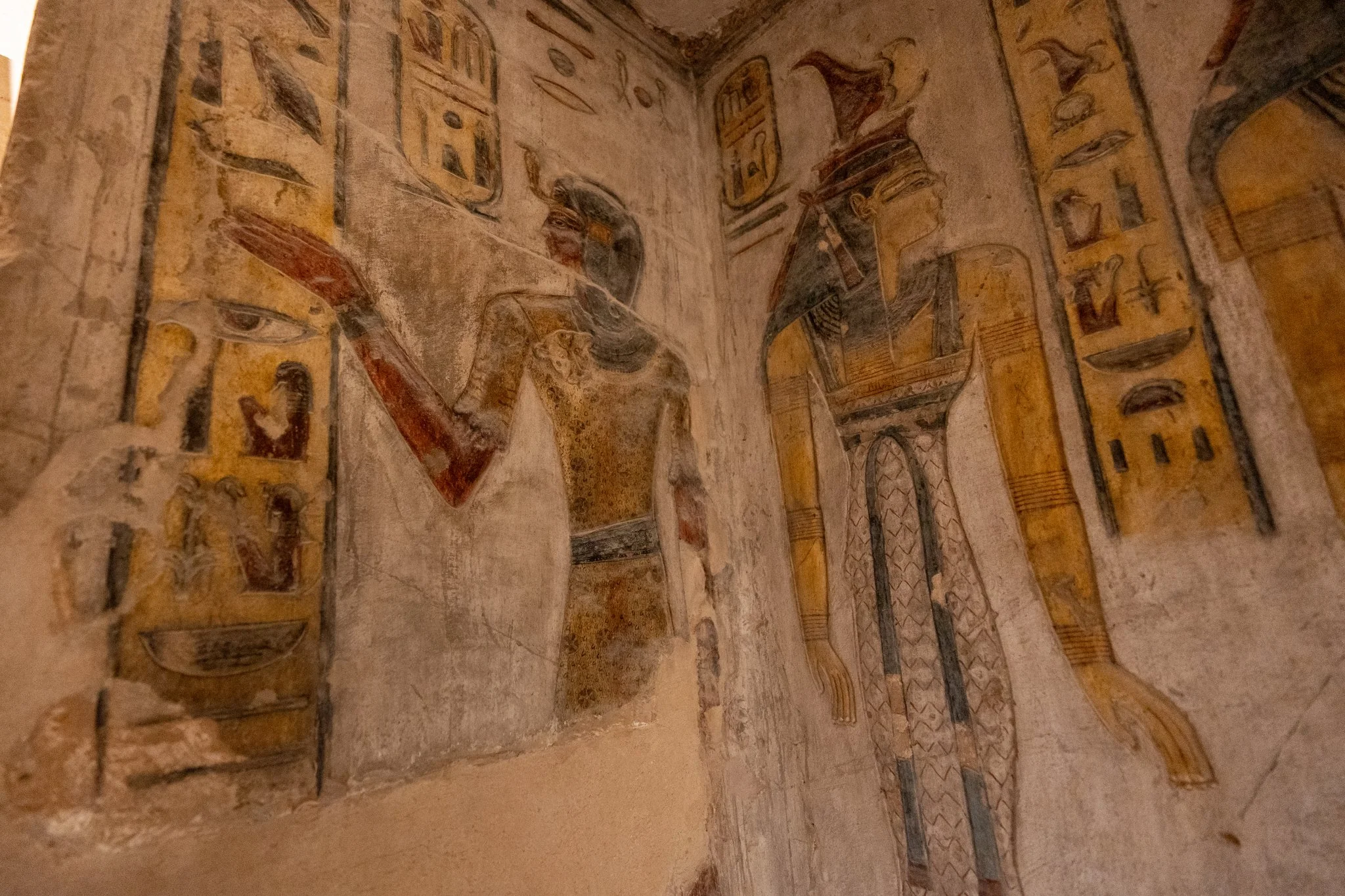
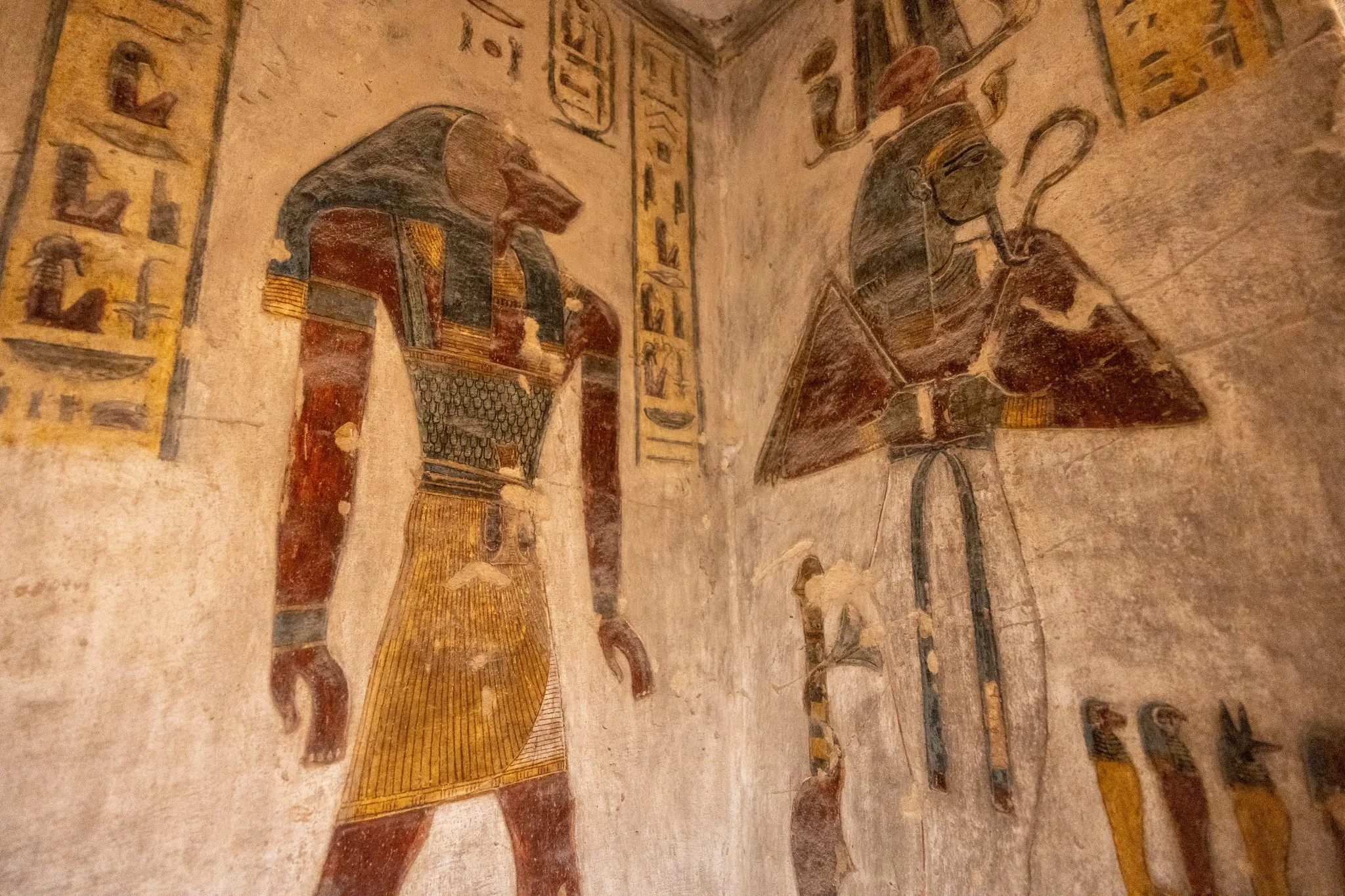
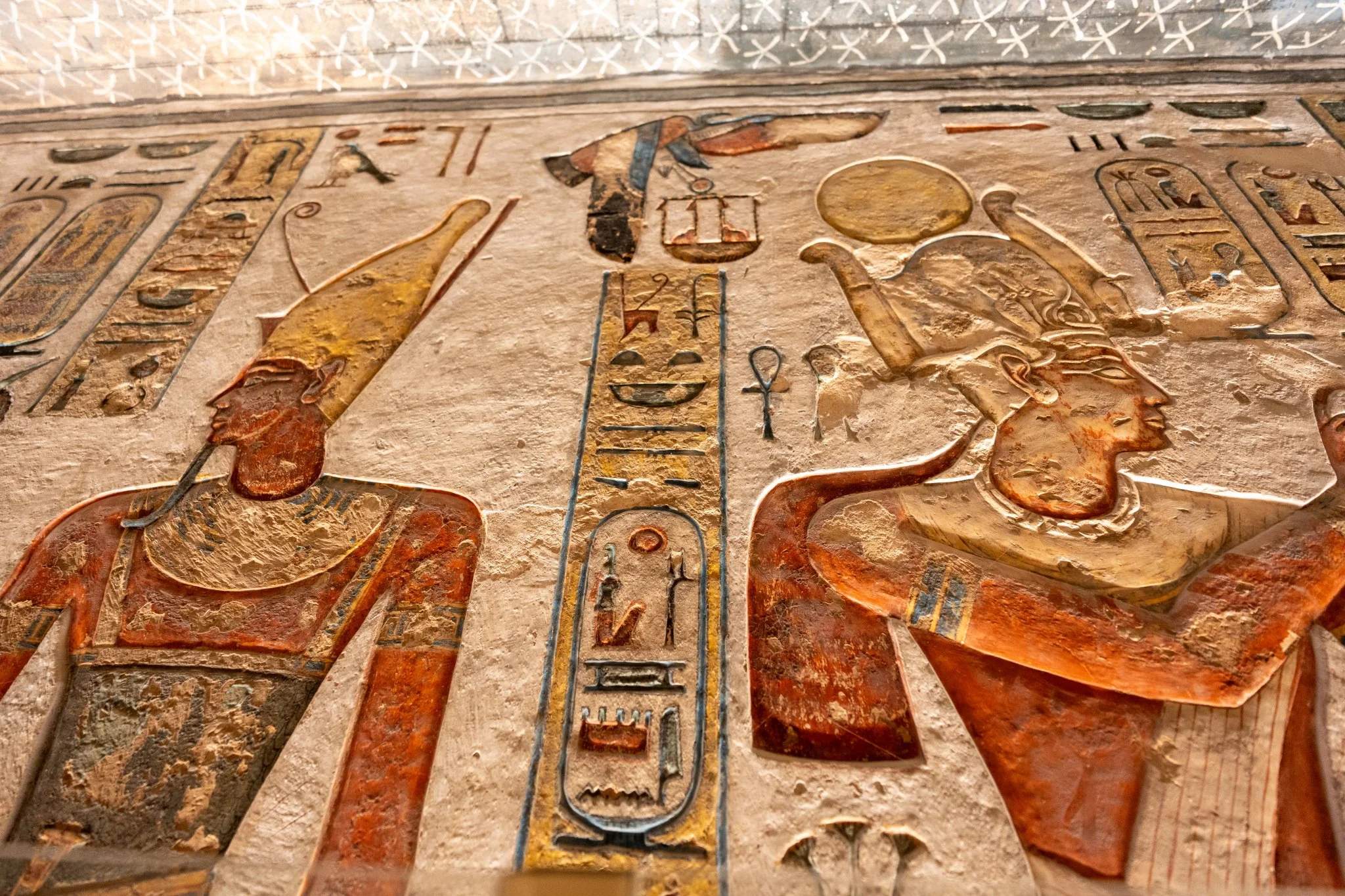
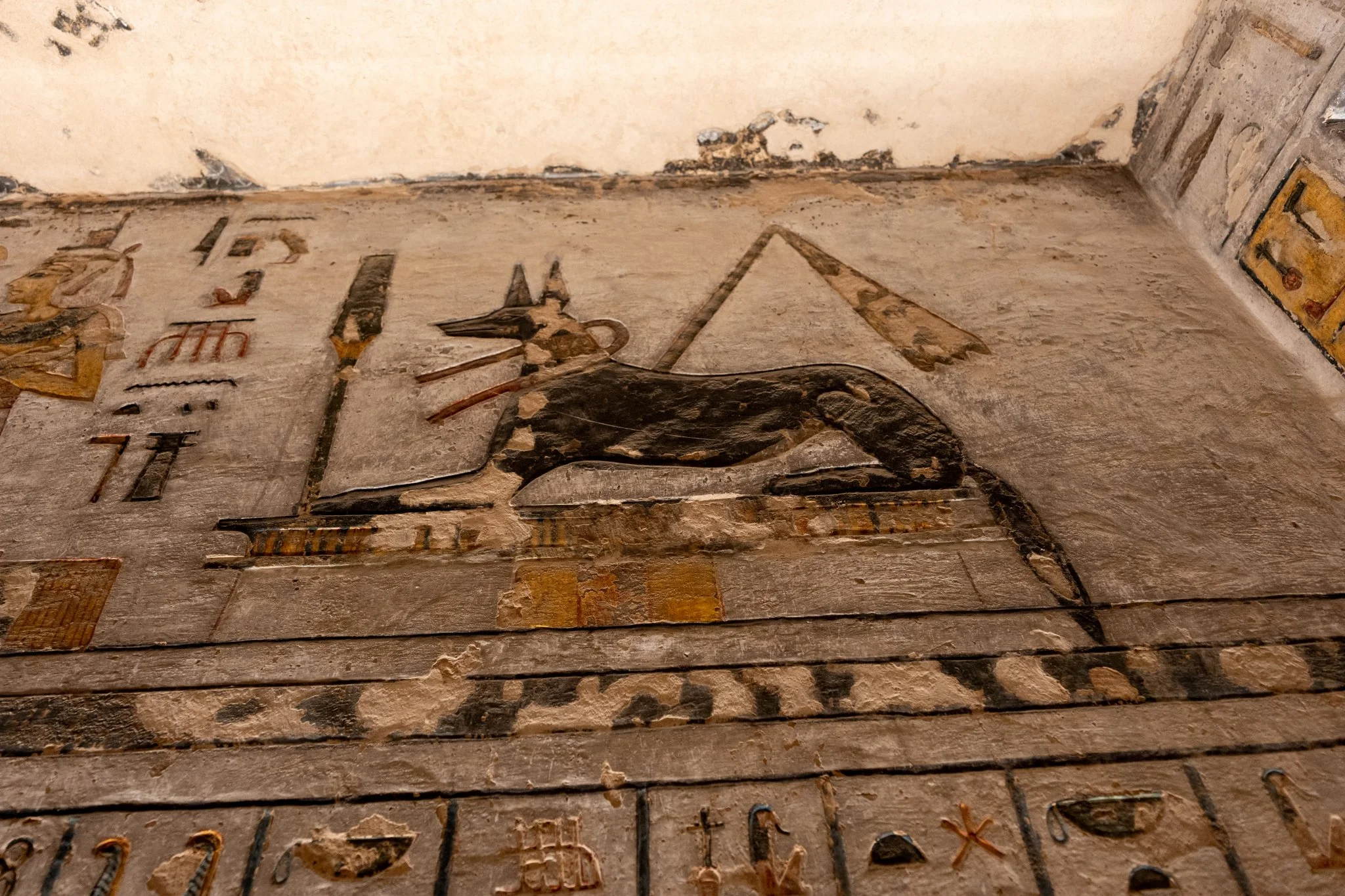
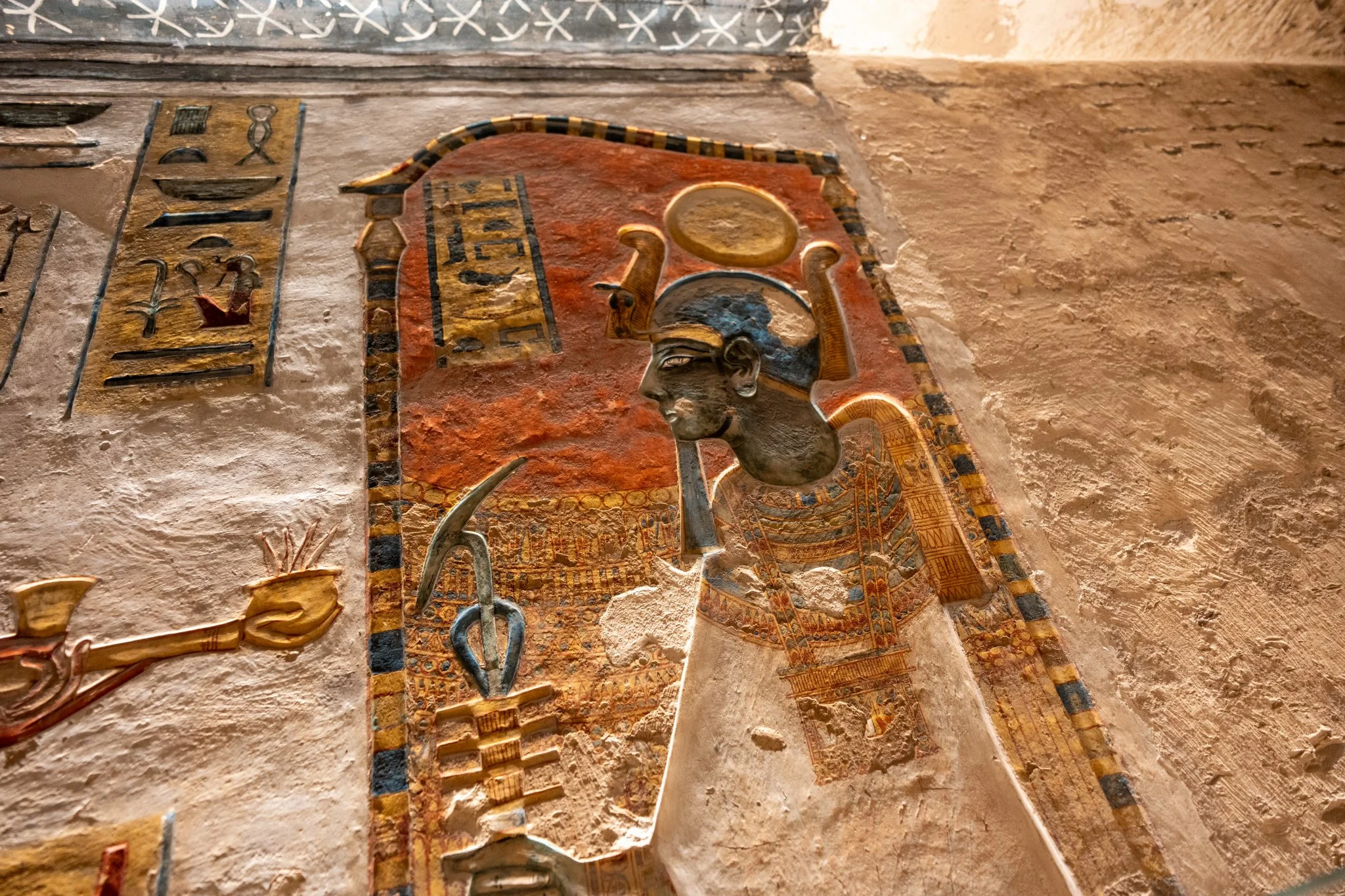
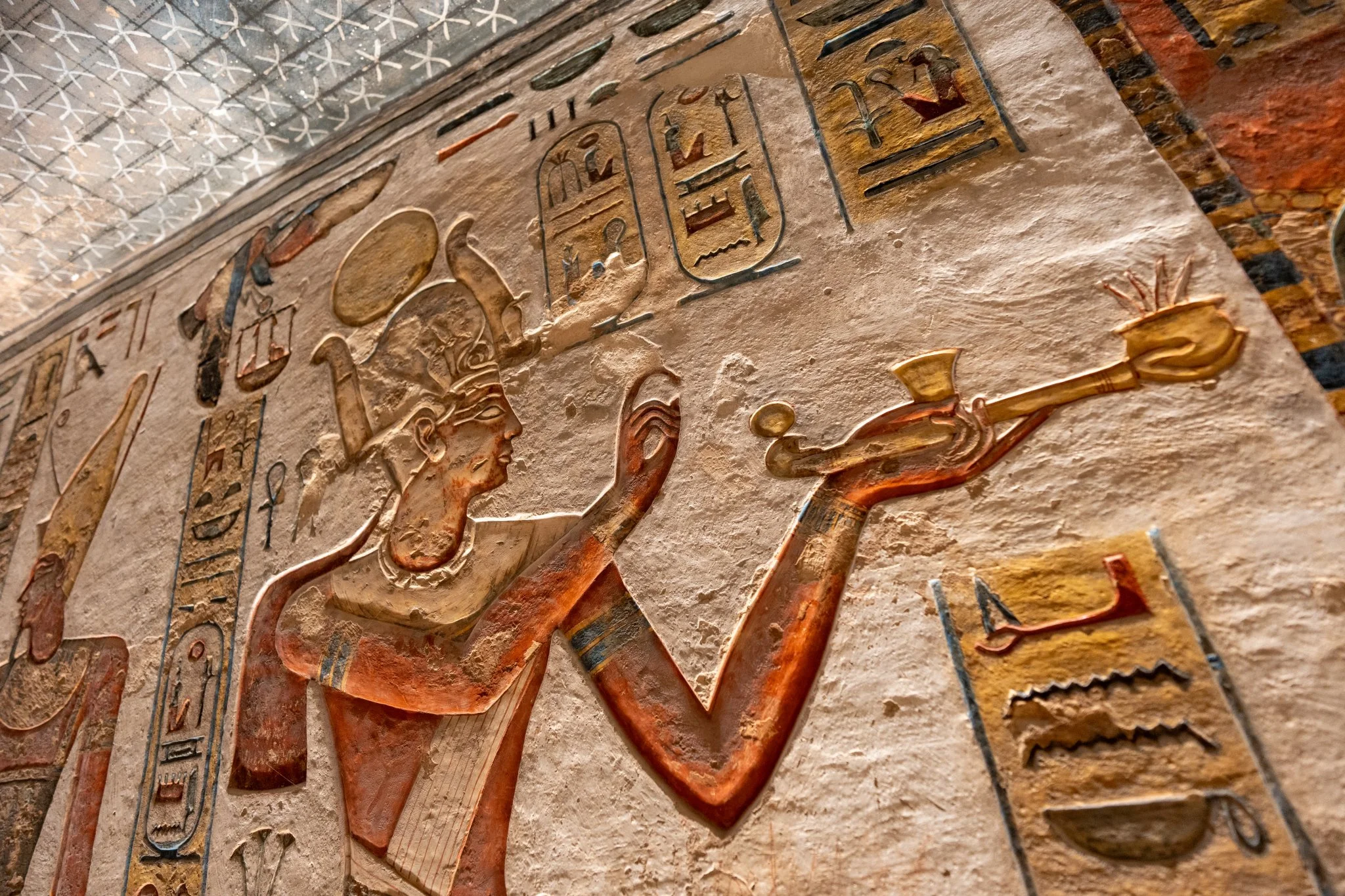
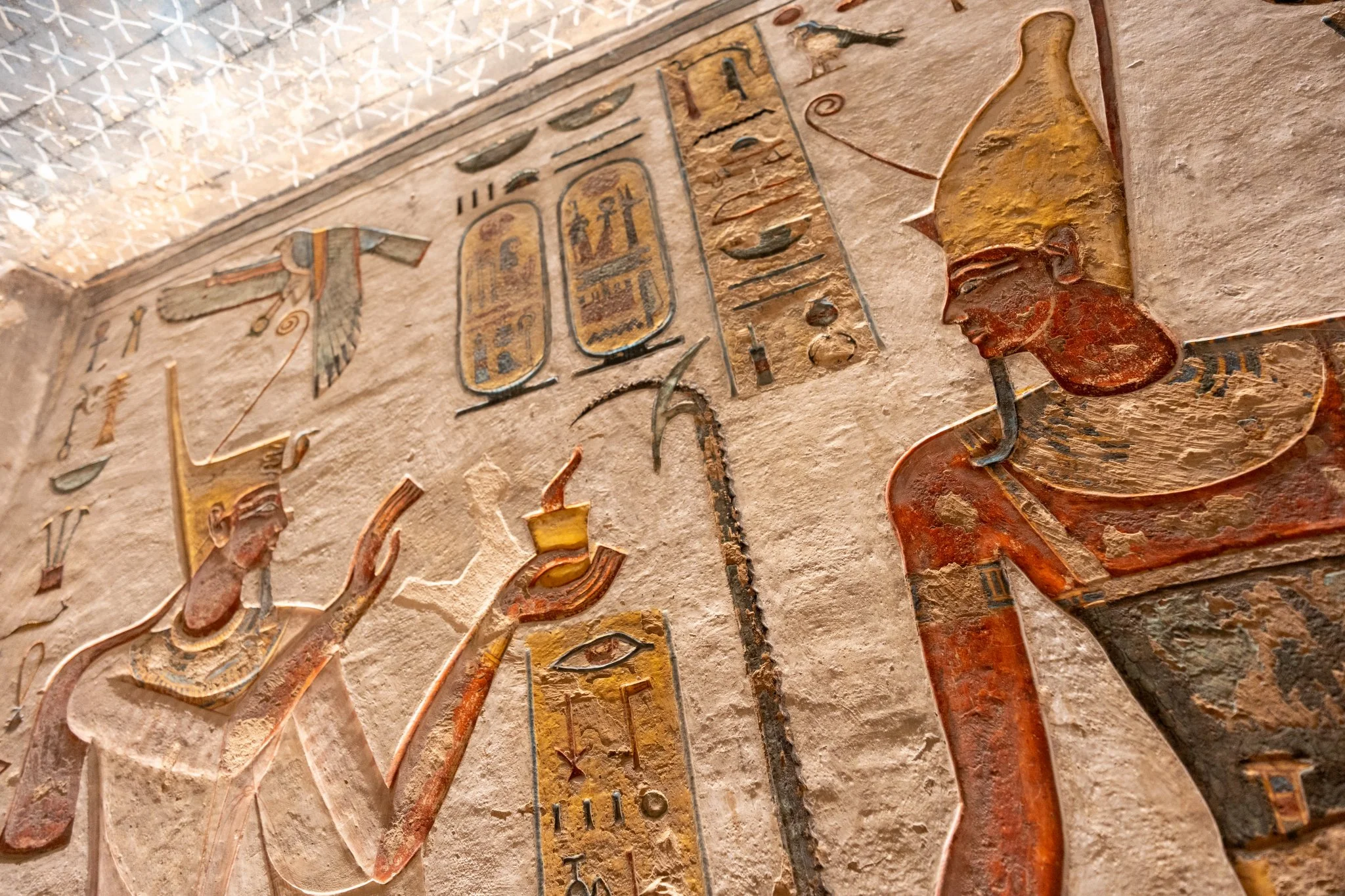
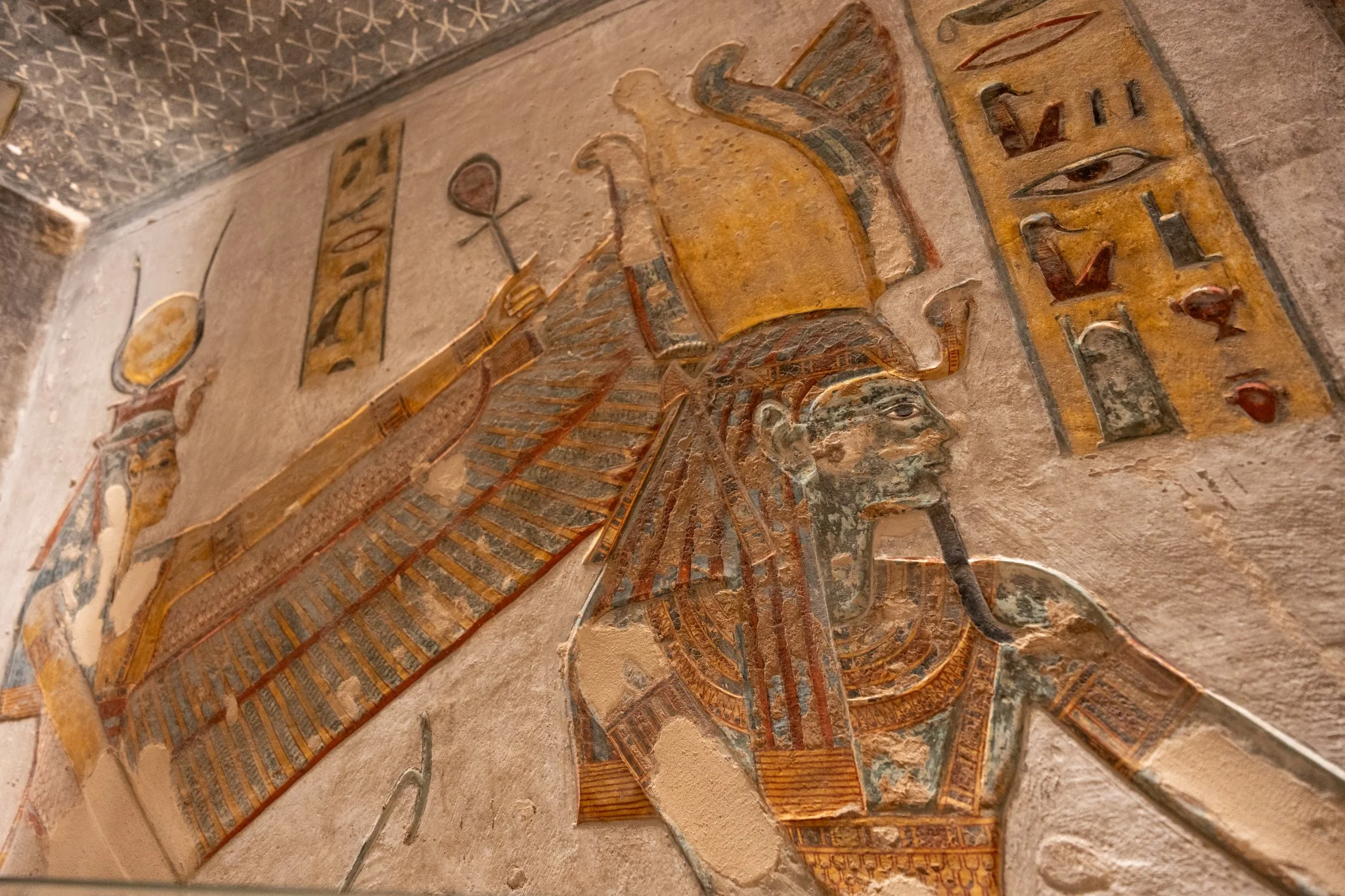
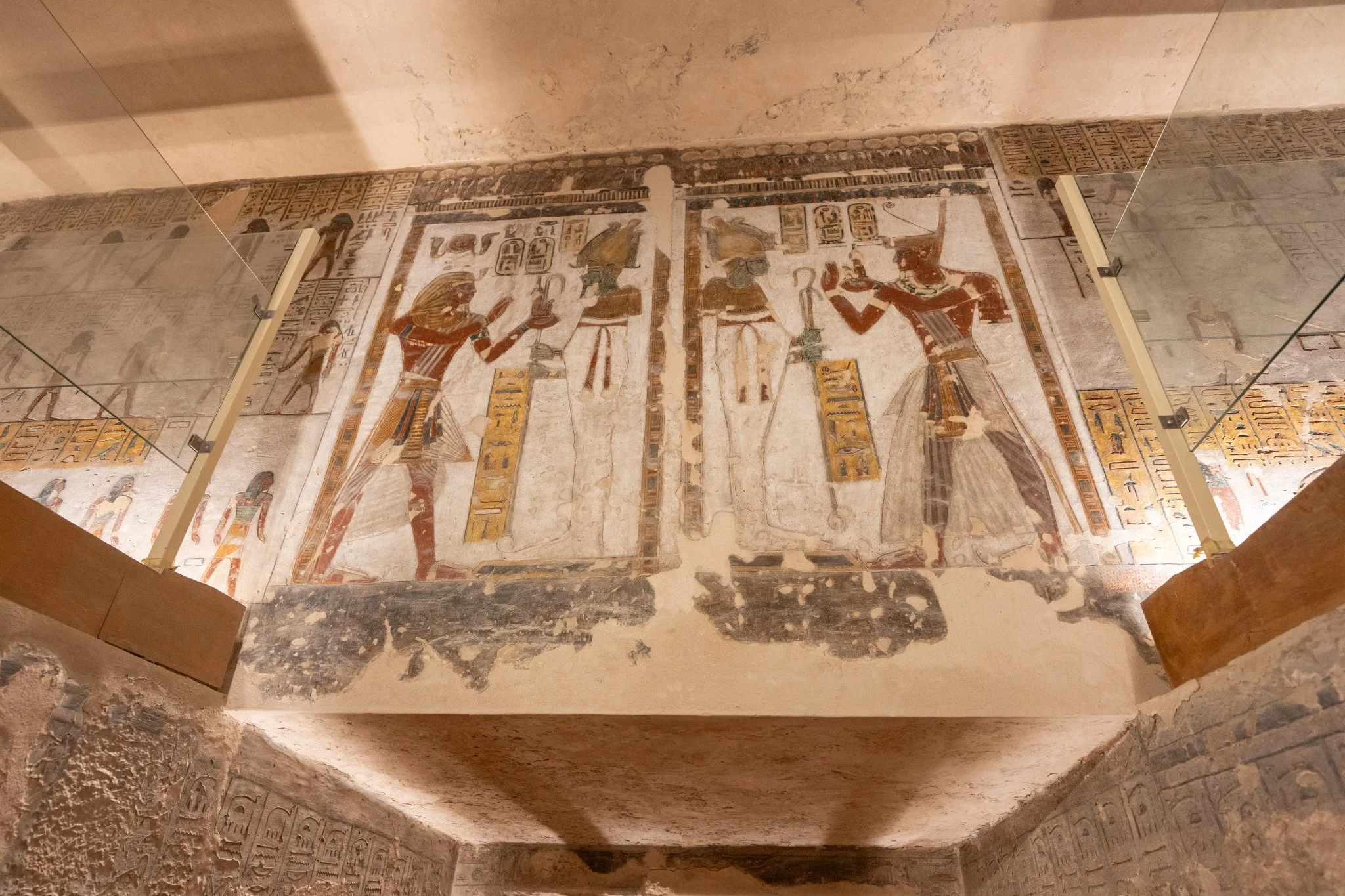
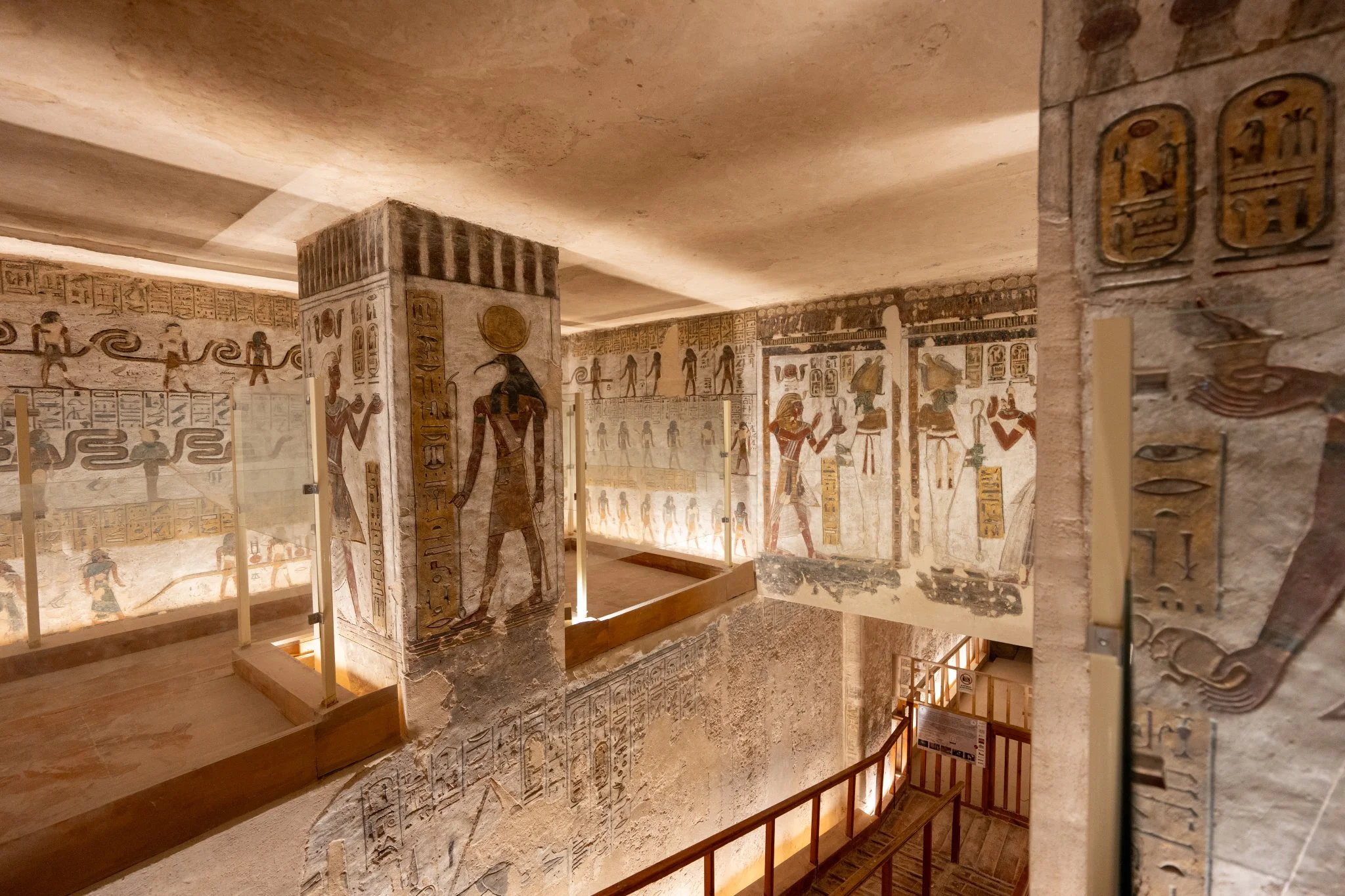
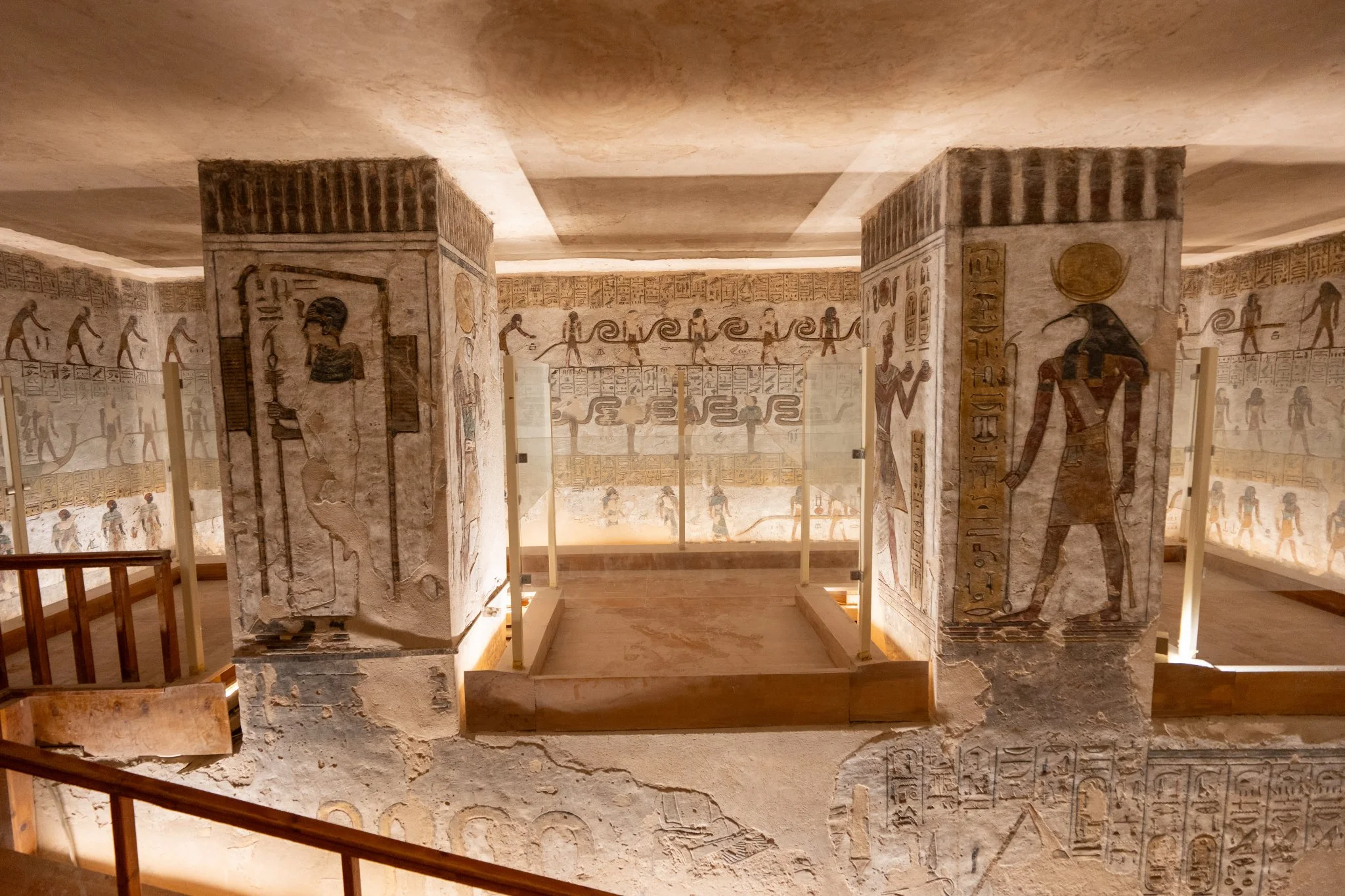
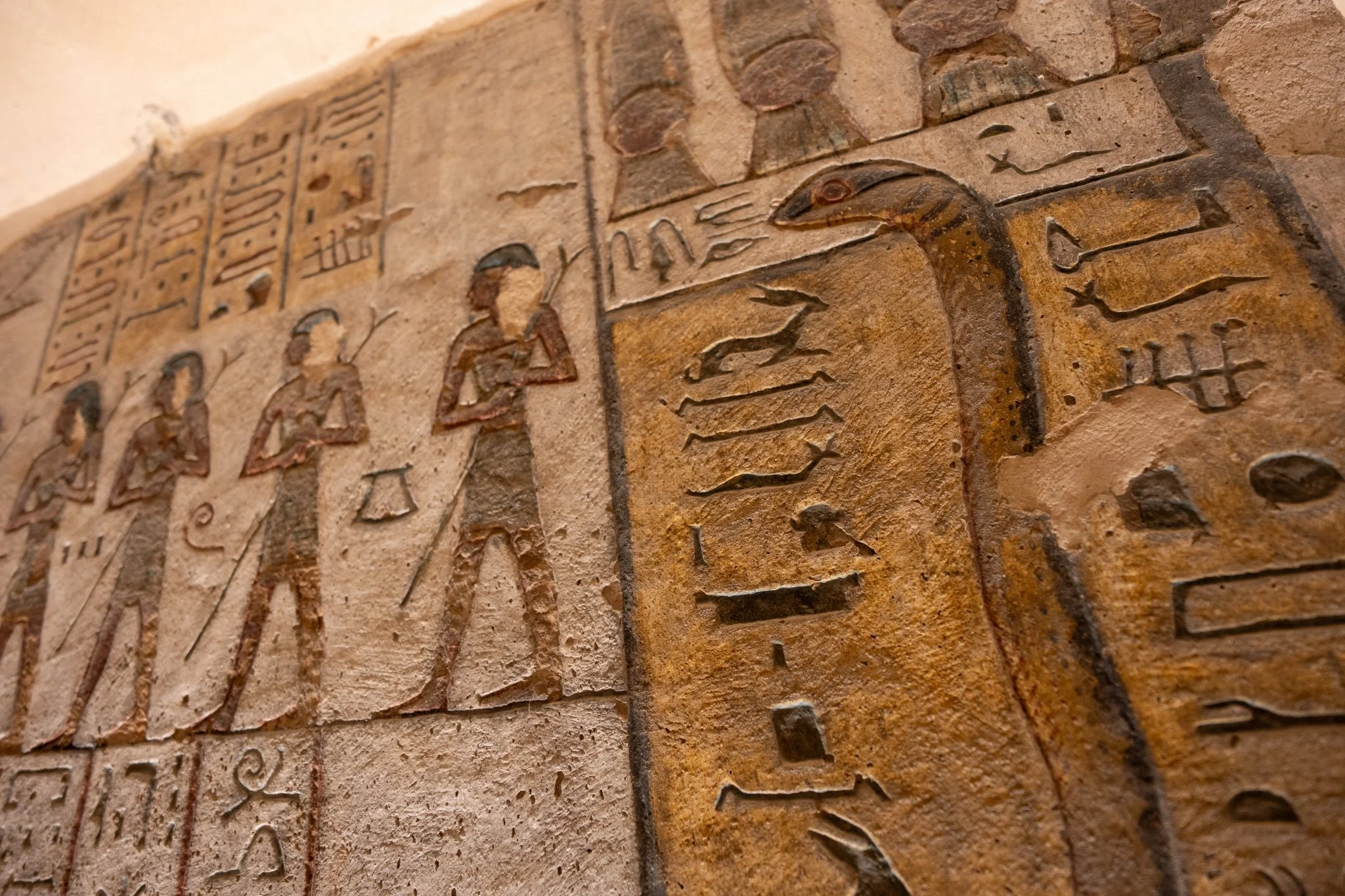
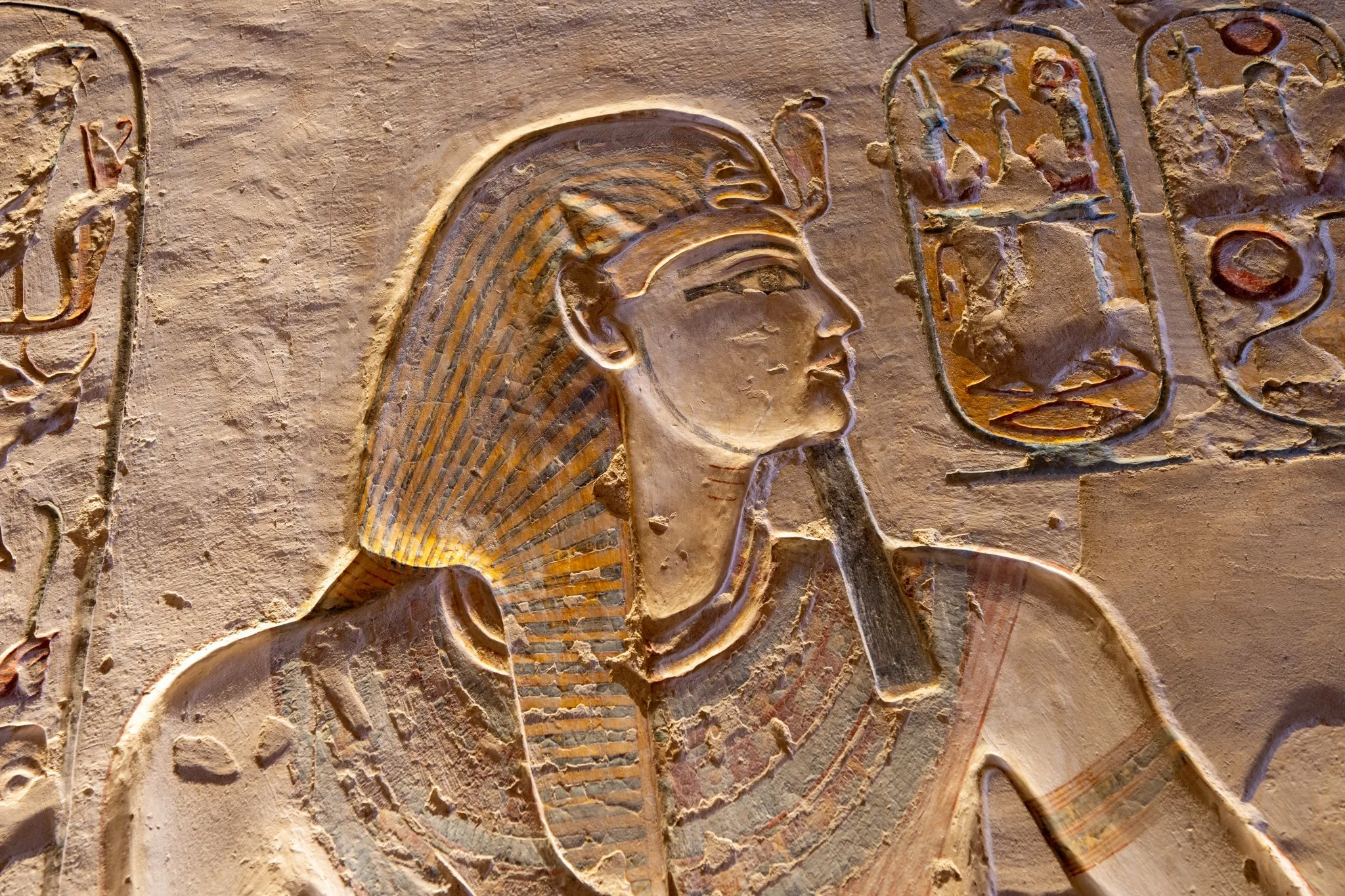
Piero: one particularly fascinating detail is that the human figures are almost always depicted in profile, while the eye is shown from the front.
Angela: it wasn't an artistic mistake, but a deliberate choice.
Piero: the ancient Egyptians wanted to represent every part of the human body from its most recognizable and ideal angle. Their art wasn't meant to be realistic—it was meant to be perfect.
The Tomb of Tutankhamun (KV62)
Angela: we've finally reached the most famous tomb of them all.
Piero: many visitors expect it to be the most spectacular tomb in the Valley of the Kings. In reality, it's one of the smallest, but its importance has nothing to do with its size—it lies in its extraordinary history.
Angela: this is the only royal tomb that was discovered almost completely intact.
Piero: on November 4, 1922, the British archaeologist Howard Carter discovered a series of steps hidden beneath the sand. A few days later, he succeeded in opening a sealed doorway. When his patron, Lord Carnarvon, asked whether he could see anything, Carter uttered one of the most famous sentences in the history of archaeology: "Yes... wonderful things." For the first time, an almost untouched royal tomb had been discovered, containing more than 5,000 artifacts: the famous sarcophagus, the gold funerary mask, chariots, weapons, furniture, and jewelry.
Angela: an unprecedented treasure.
Piero: today, almost all of these artifacts are preserved in the Grand Egyptian Museum in Cairo.
Angela: and, of course, no story about the discovery of the tomb would be complete without mentioning the legend of the Curse of Tutankhamun.
Piero: it's a story that continues to inspire books and films even today. After the tomb was opened, several members of the expedition died in the following years, beginning with Lord Carnarvon, the expedition's financier, who passed away just a few months later from an infection caused by a mosquito bite. The newspapers of the time turned those coincidences into the supposed curse of anyone who dared disturb the eternal rest of the young pharaoh.
Angela: in reality, no inscription referring to a curse has ever been found at the entrance to the tomb, and modern studies attribute those deaths to entirely natural causes. Howard Carter himself, the first person to enter the burial chamber, lived for more than 16 years afterward.
Piero: the tomb still preserves its magnificent wall paintings, as well as the outer quartzite sarcophagus, the only one that remains in its original place.
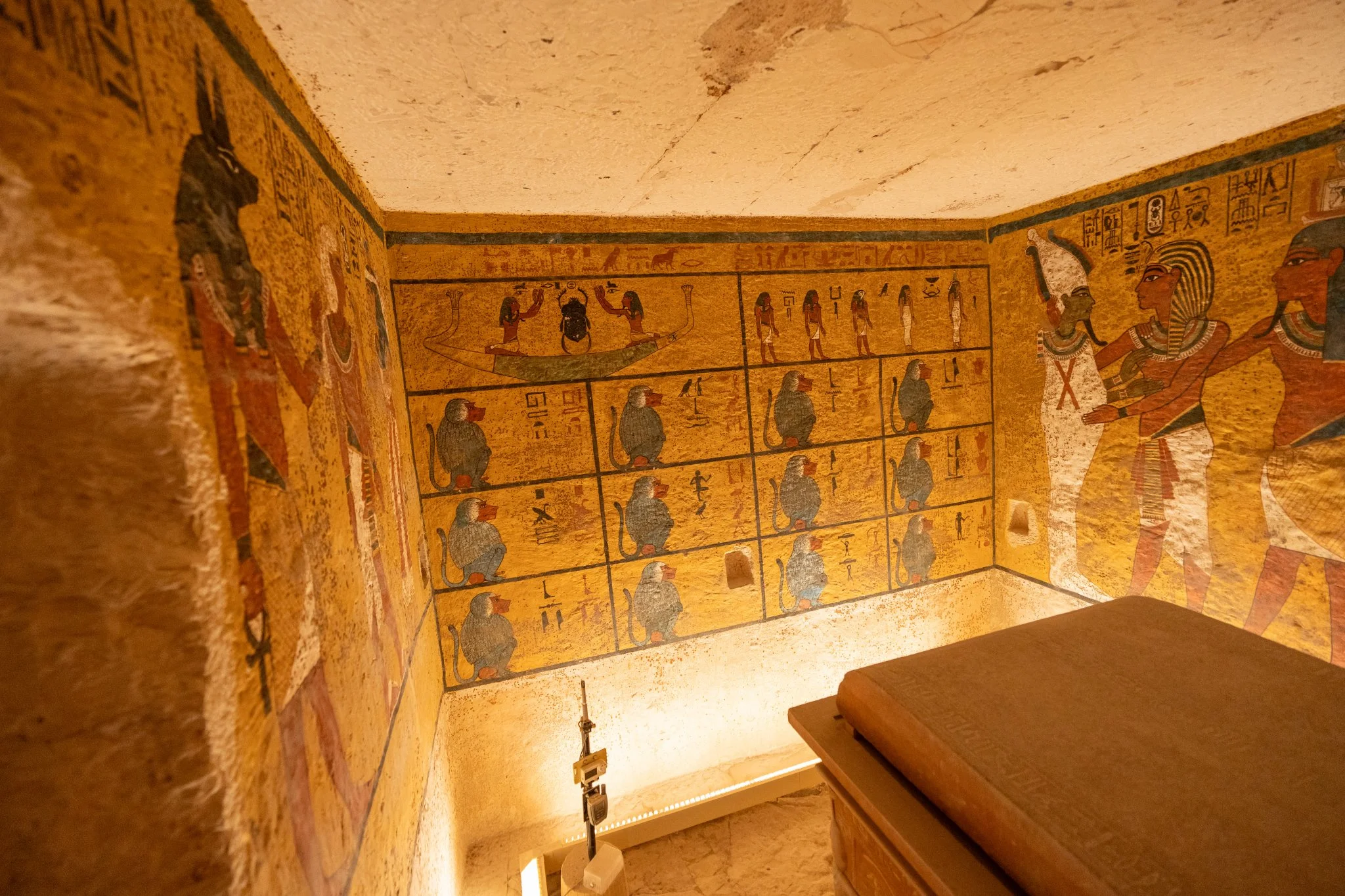
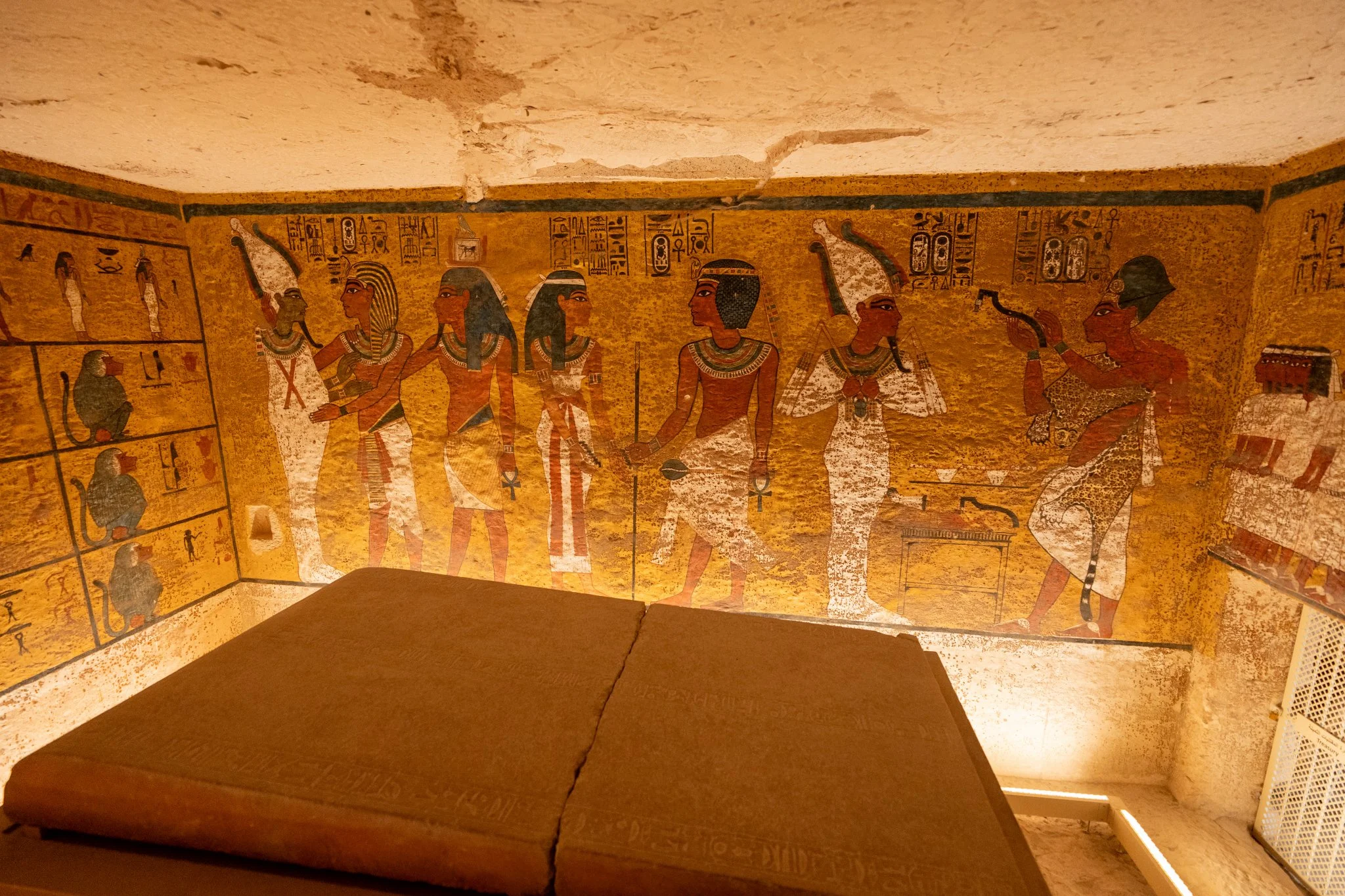
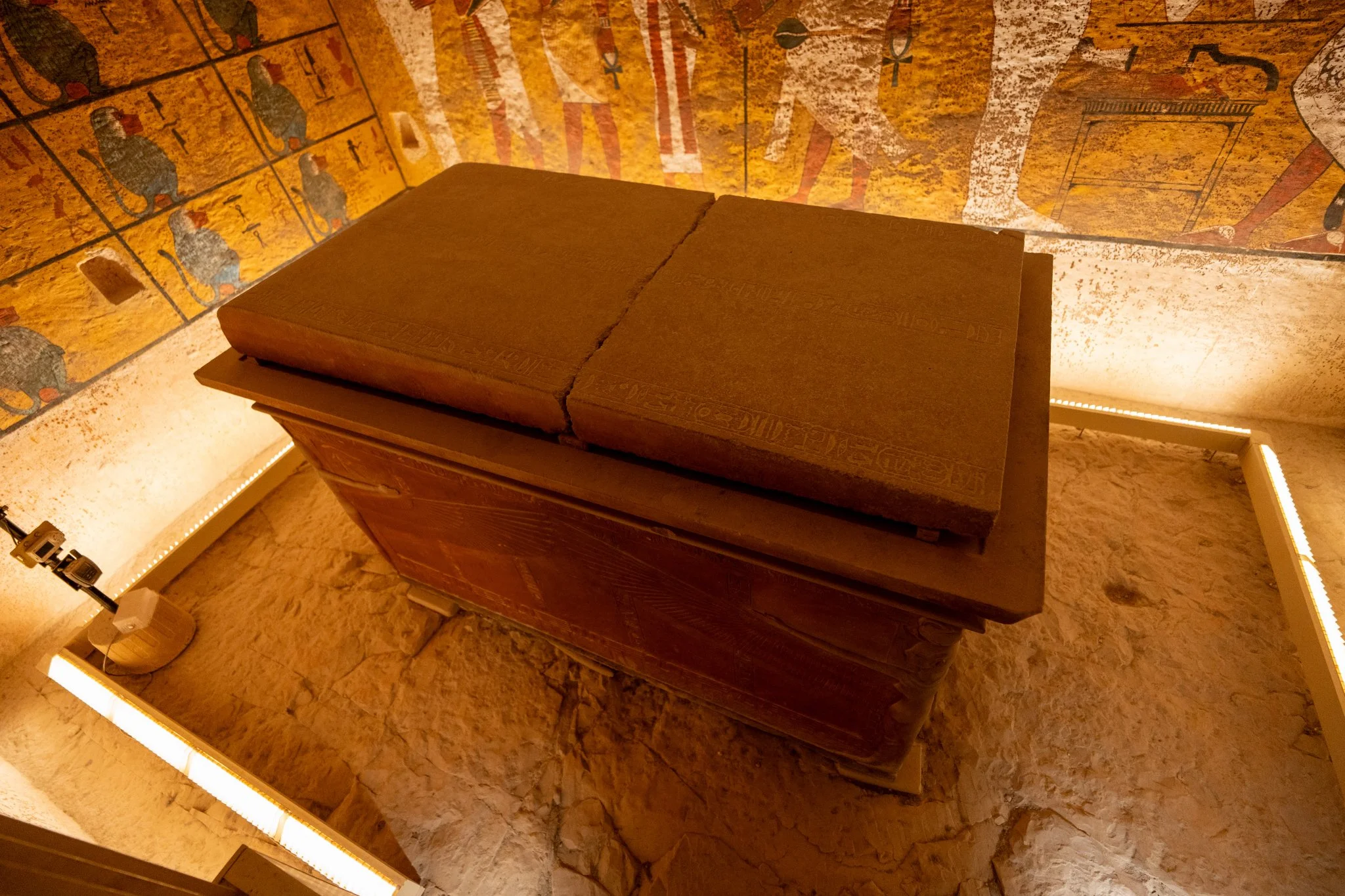
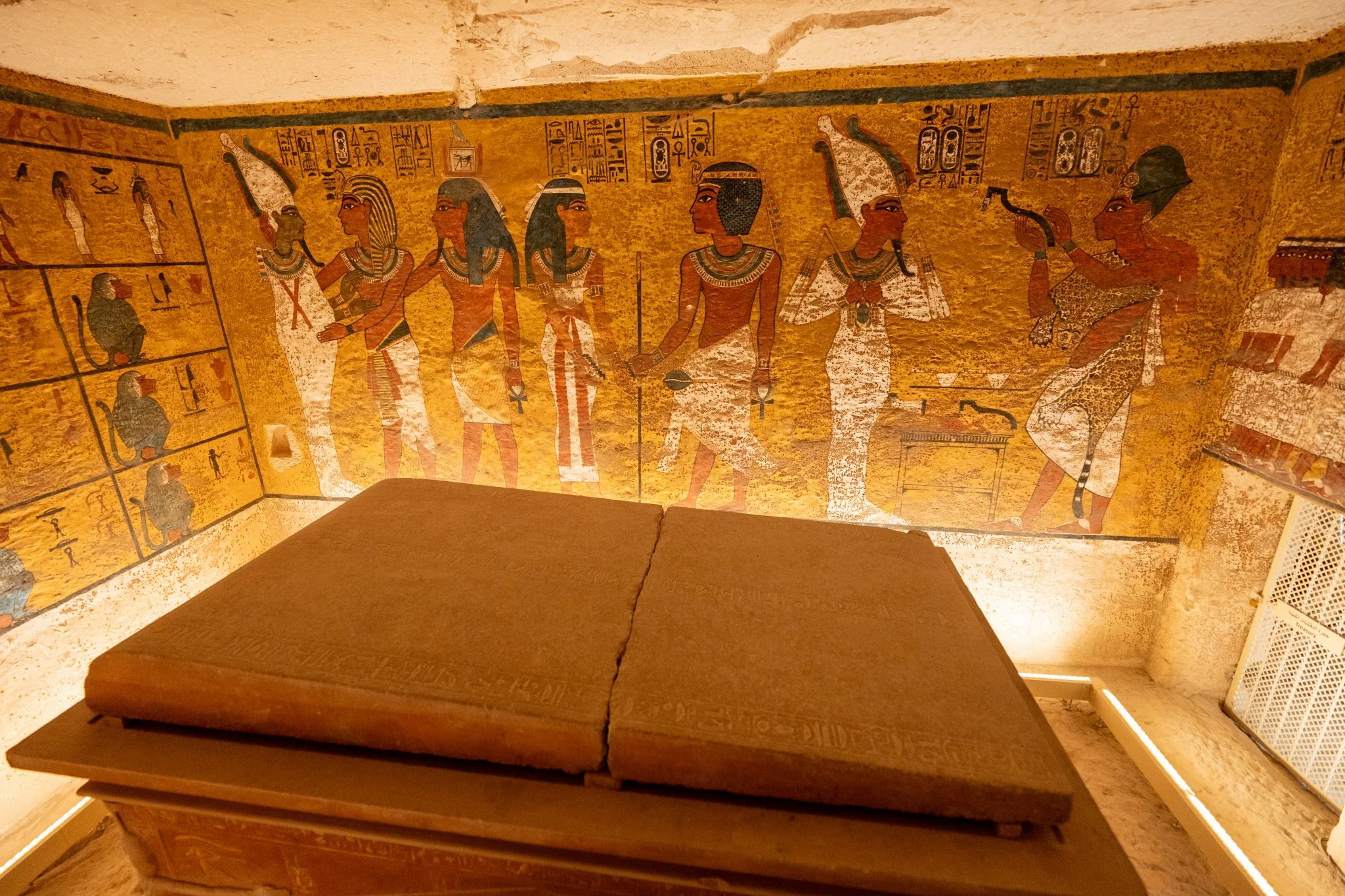
Angela: but above all, Tutankhamun's mummy is still here, preserved inside a climate-controlled display case.
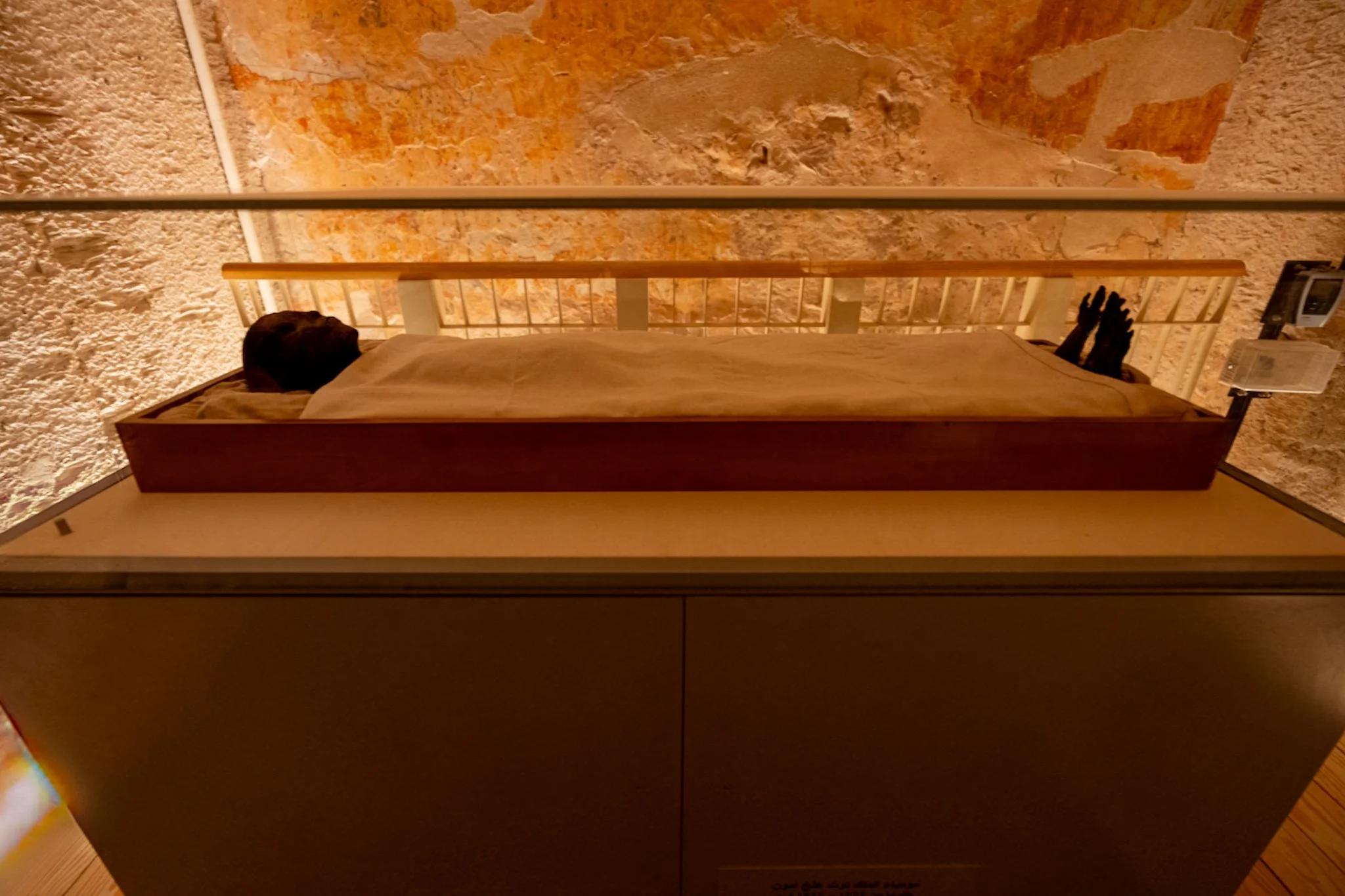
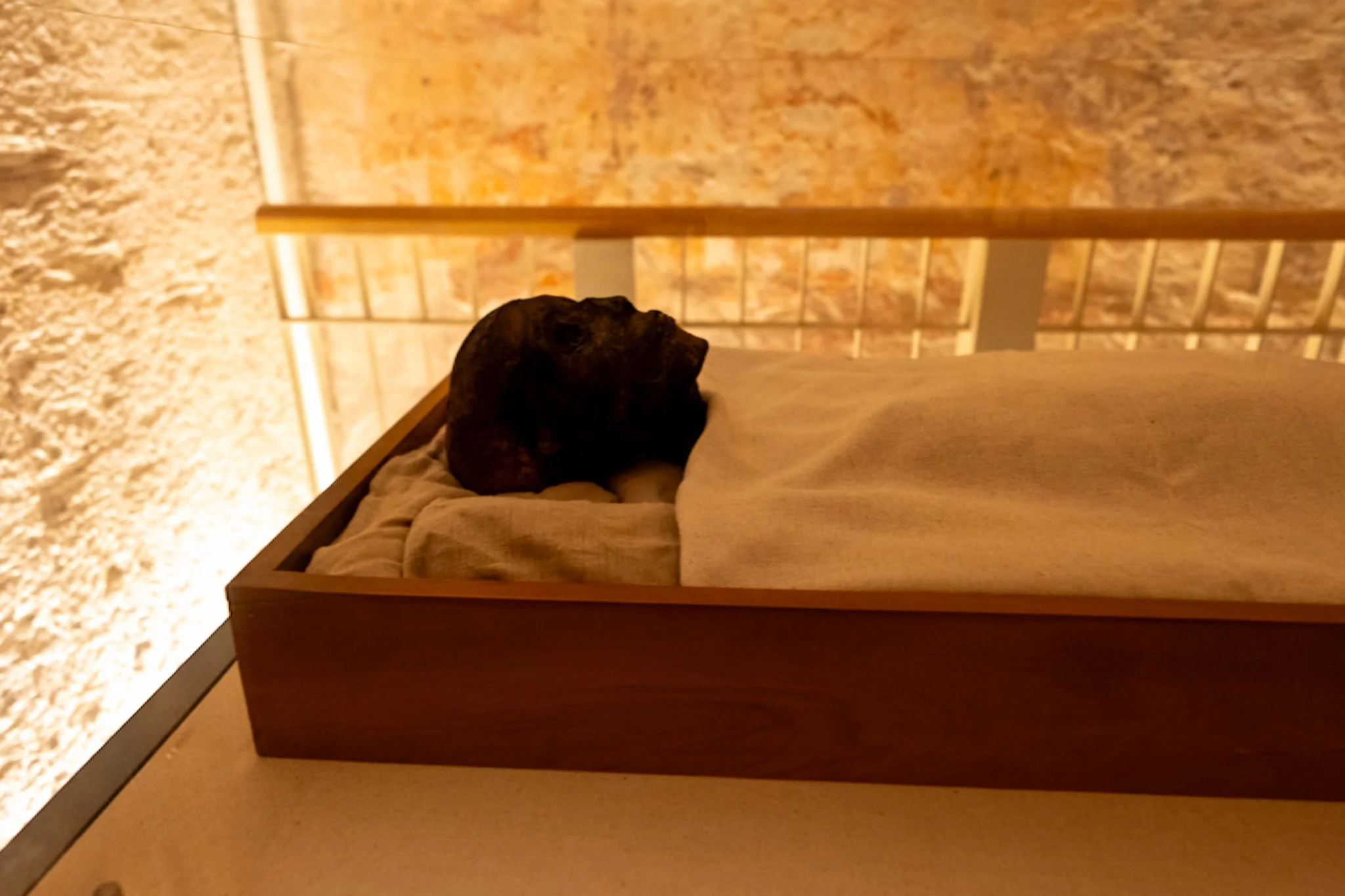
Piero: you have to admit that, when you find yourself standing before Tutankhamun's mummy, surrounded by the silence of that small burial chamber, it's impossible not to feel that a hint of mystery still lingers in the air today.
The Tomb of Ramesses V and Ramesses VI (KV9)
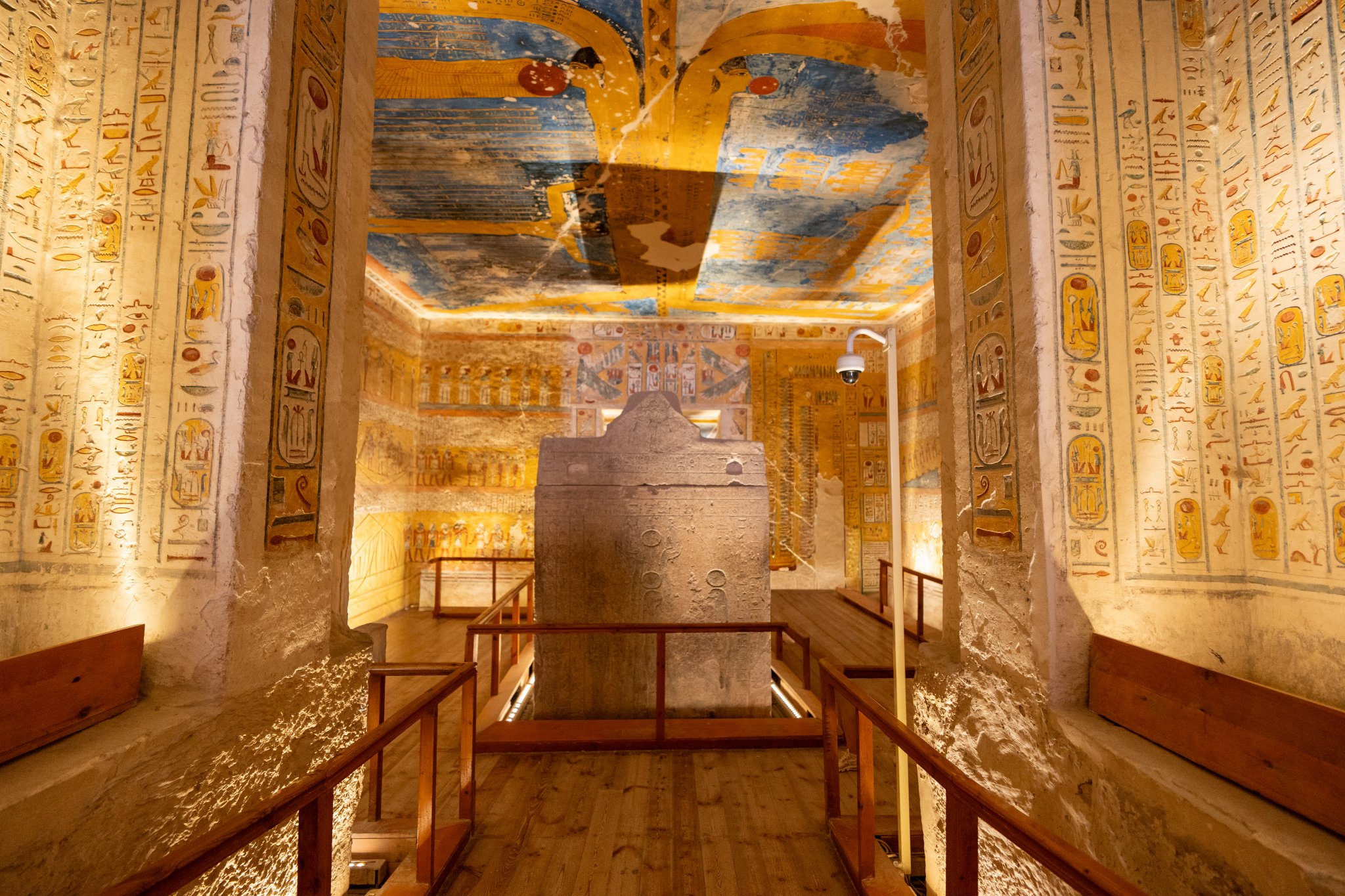
Angela: visiting this tomb is absolutely worth the cost of the additional ticket. It's one of the most spectacular tombs in the entire Valley of the Kings.
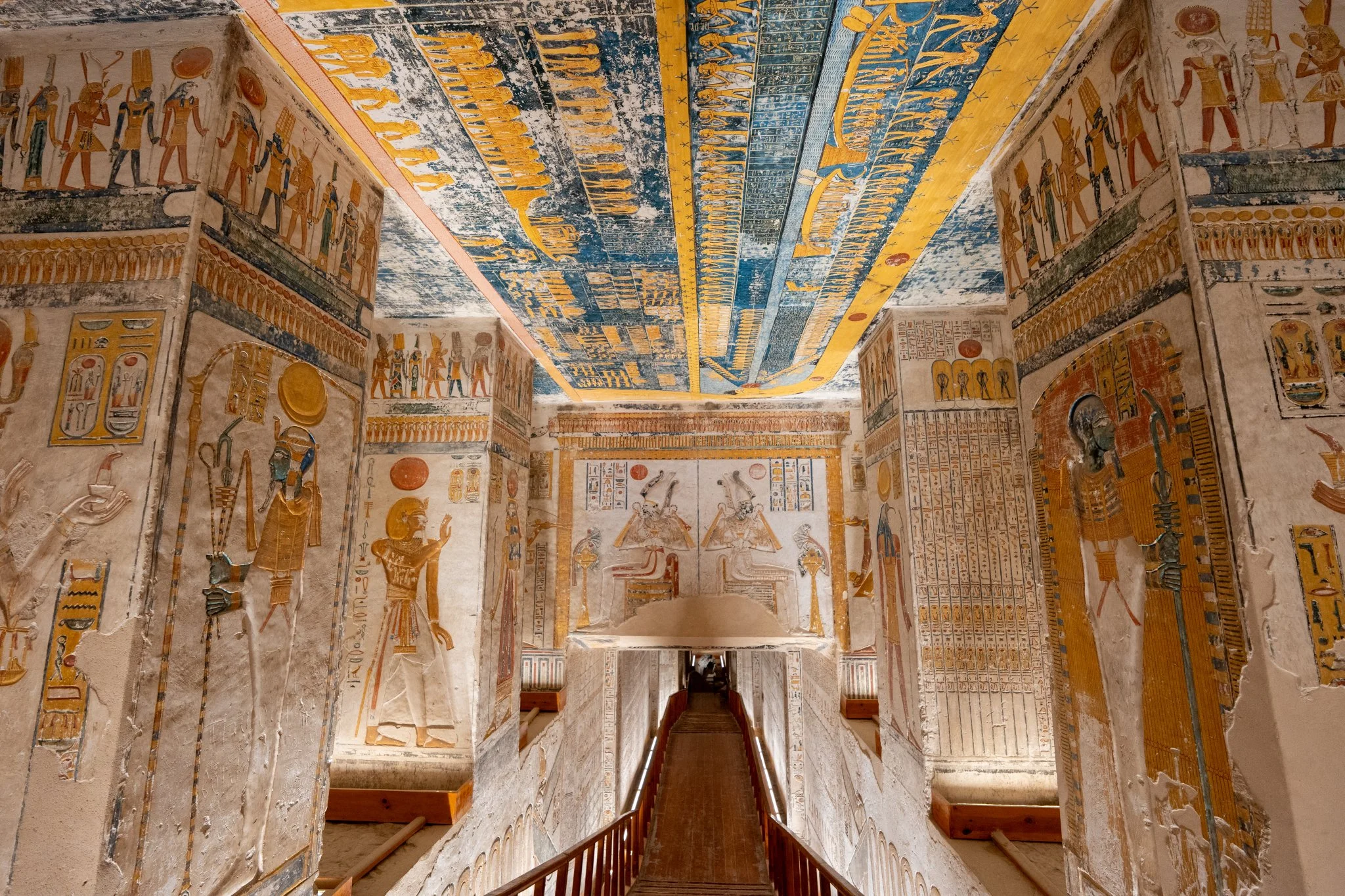
Piero: the walls resemble an illustrated book. Every chamber tells a different chapter of the journey toward eternity.
Angela: but the most breathtaking moment comes when you look up. The ceiling of the burial chamber is entirely decorated with the Book of the Day and the Book of the Night.
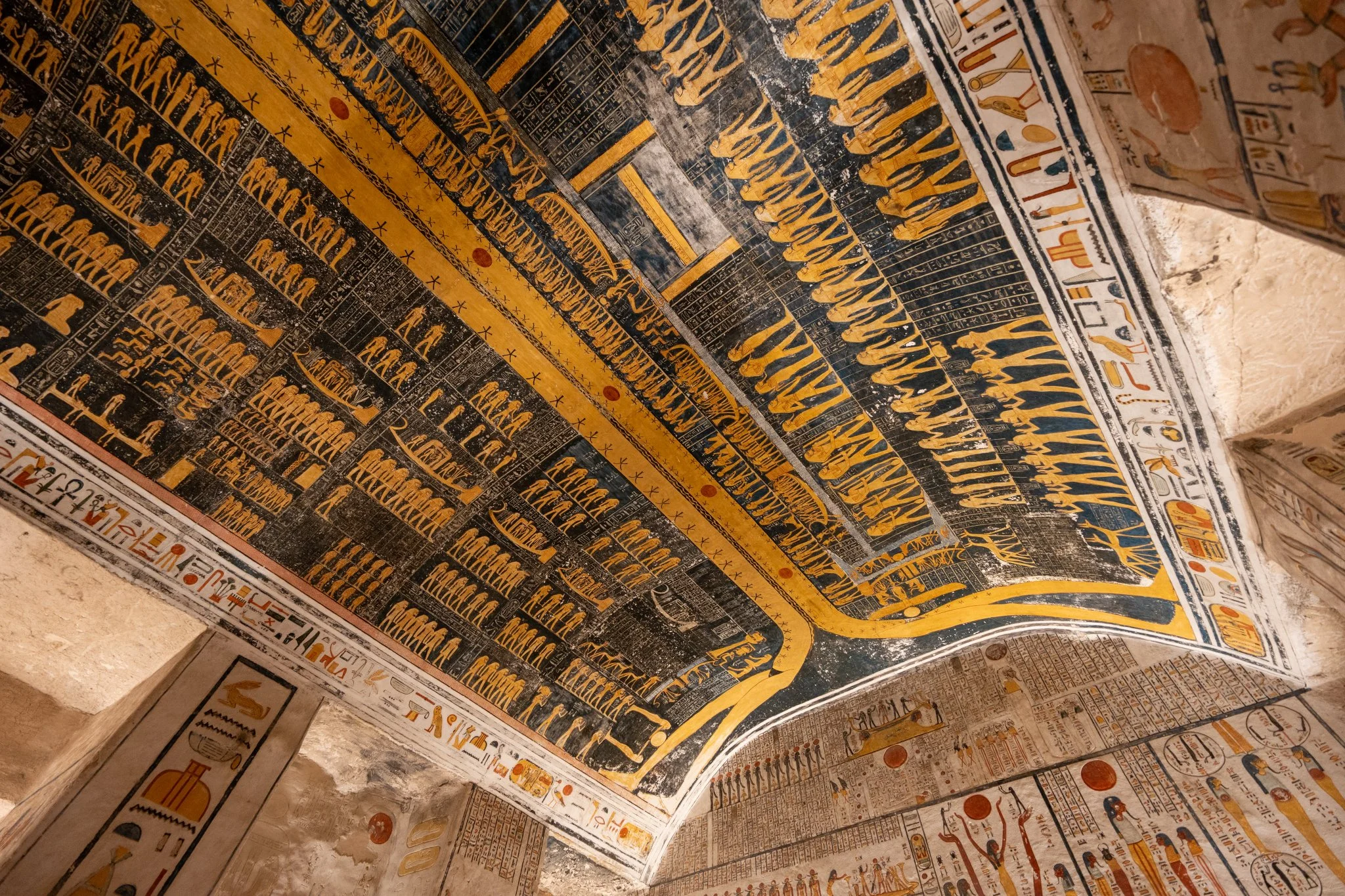
Piero: it's an enormous astronomical representation in which the goddess Nut receives the Sun at sunset, only to give birth to it again every morning. It is one of the absolute masterpieces of ancient Egyptian art.
Angela: and then there are the remains of the sarcophagi... everything here is truly awe-inspiring.
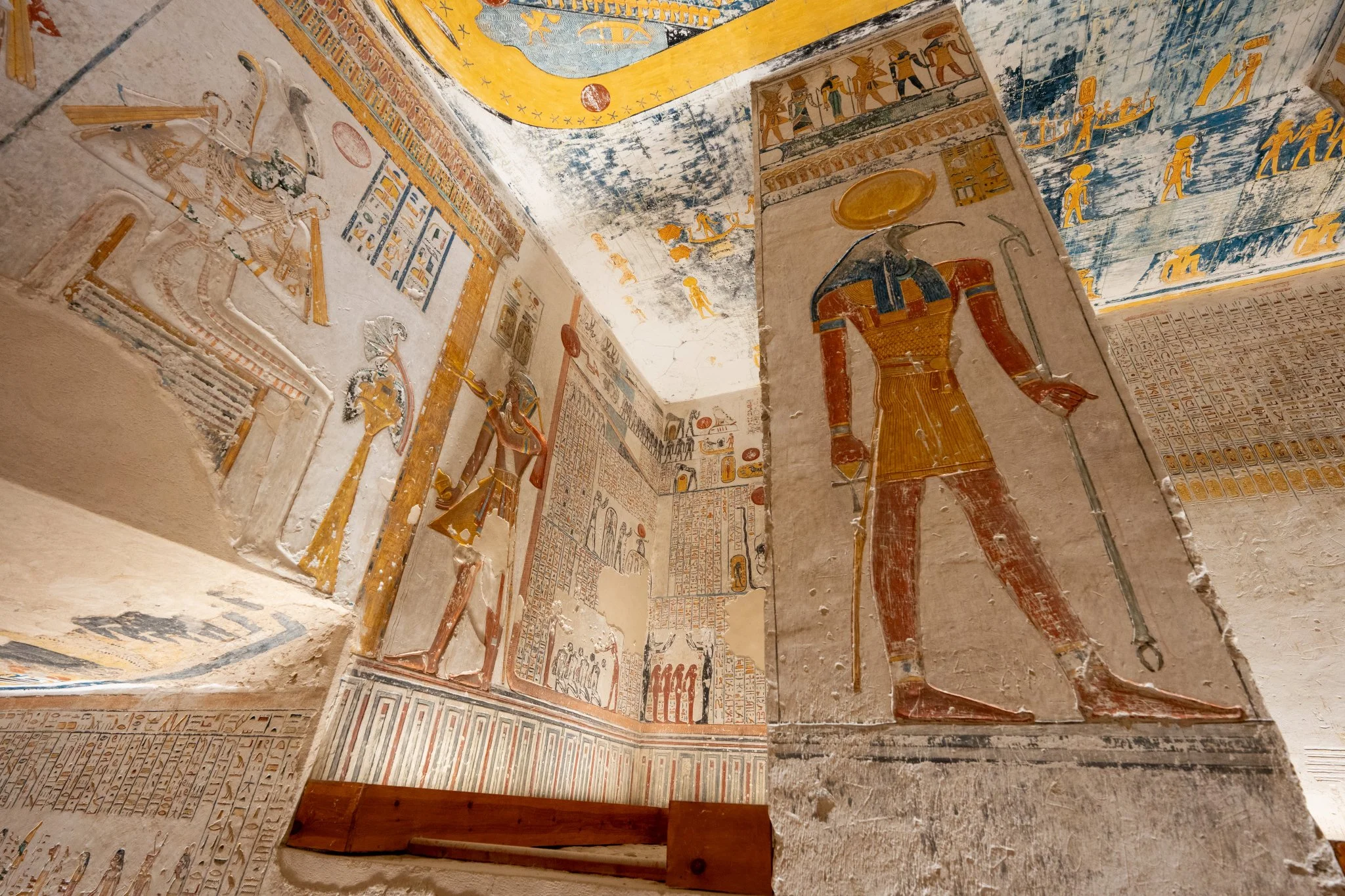
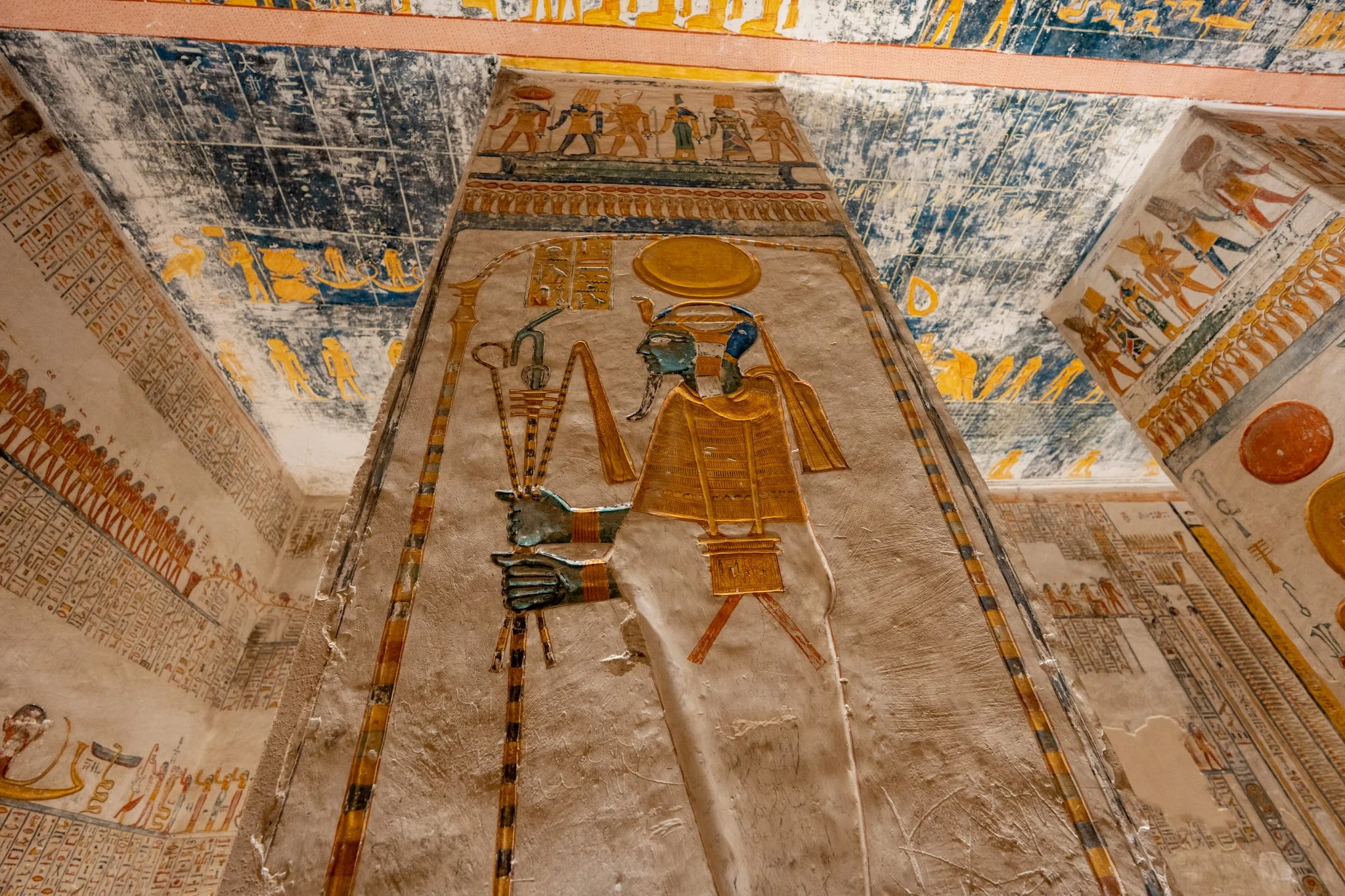
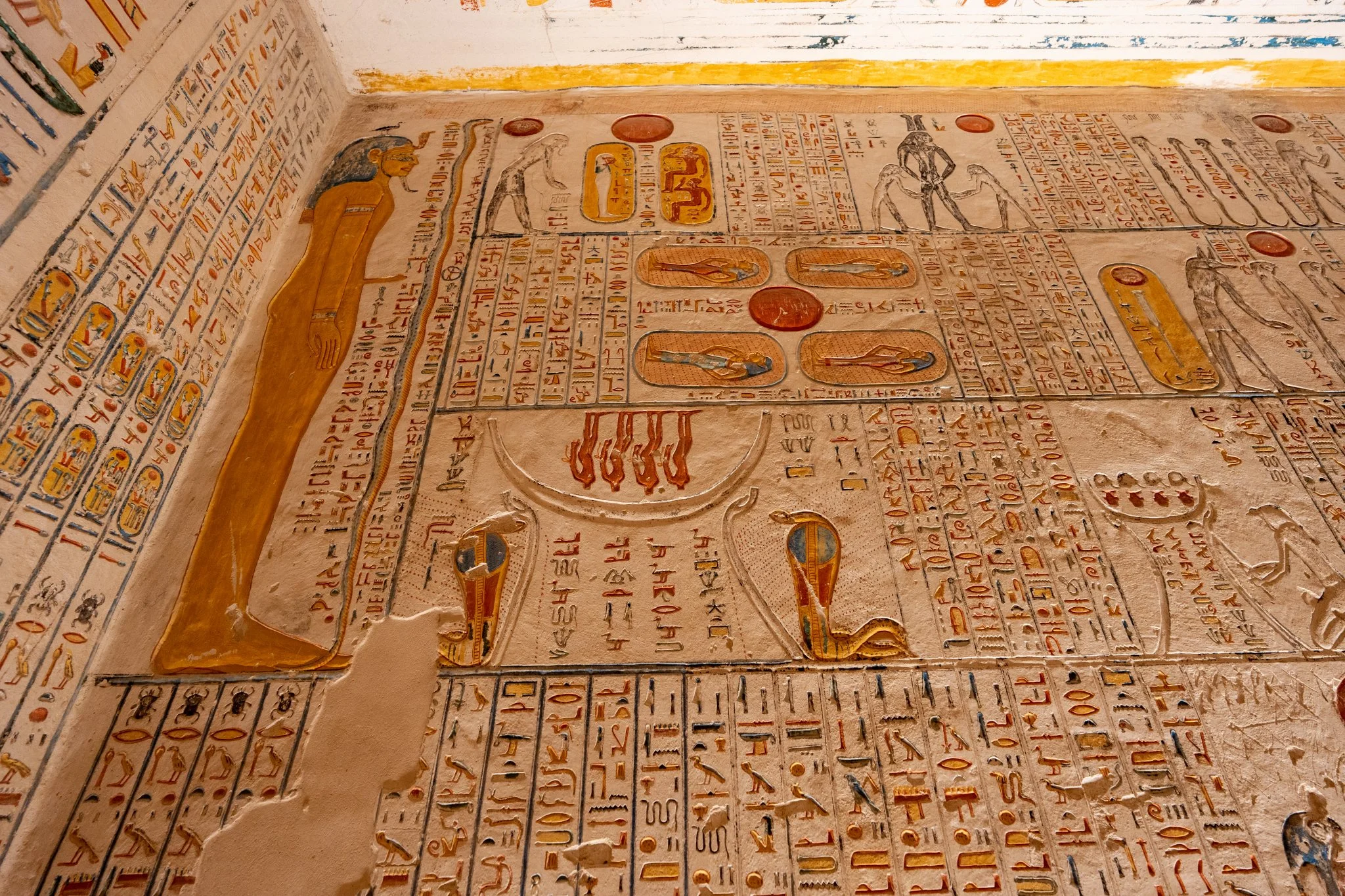
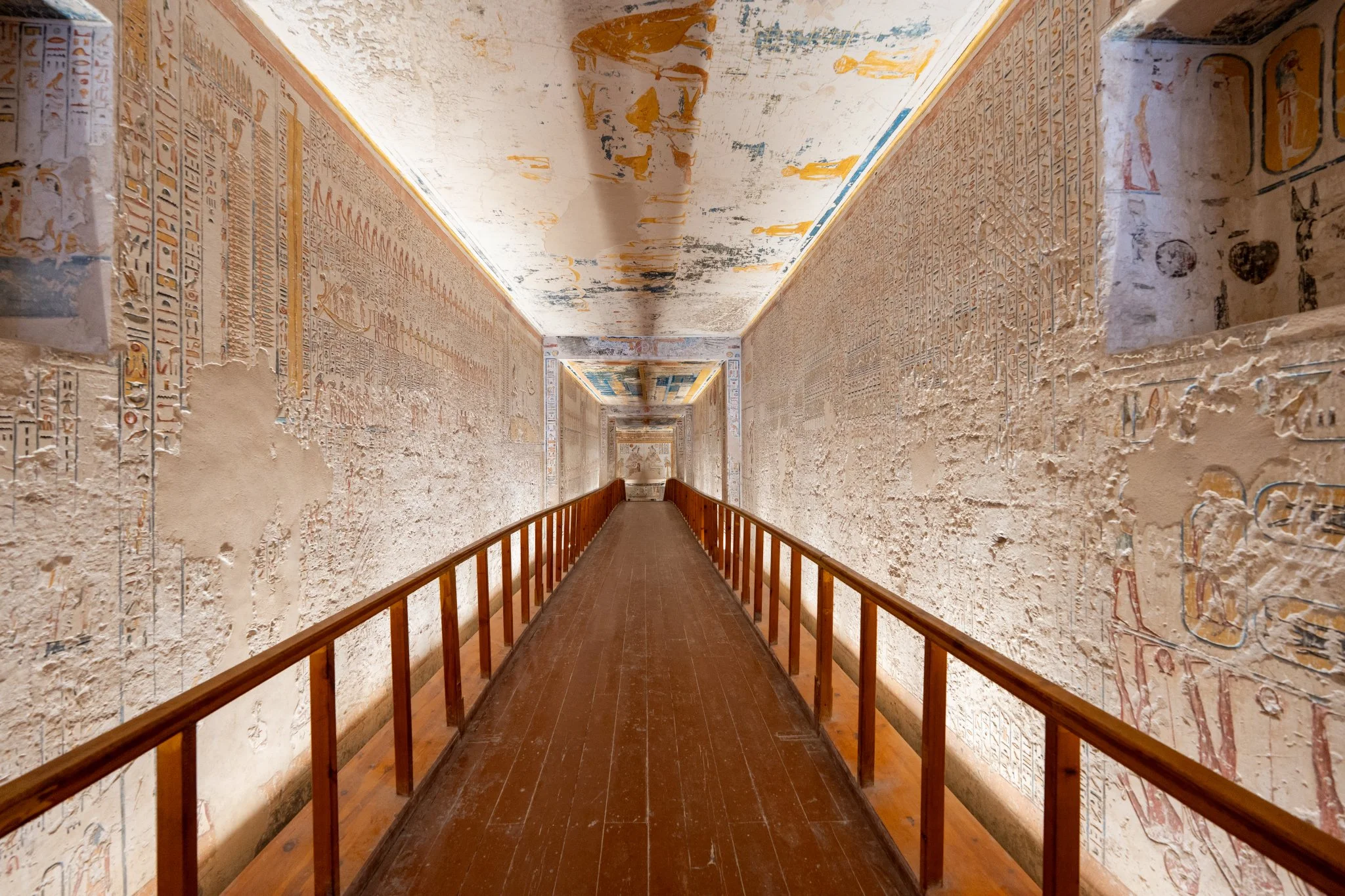
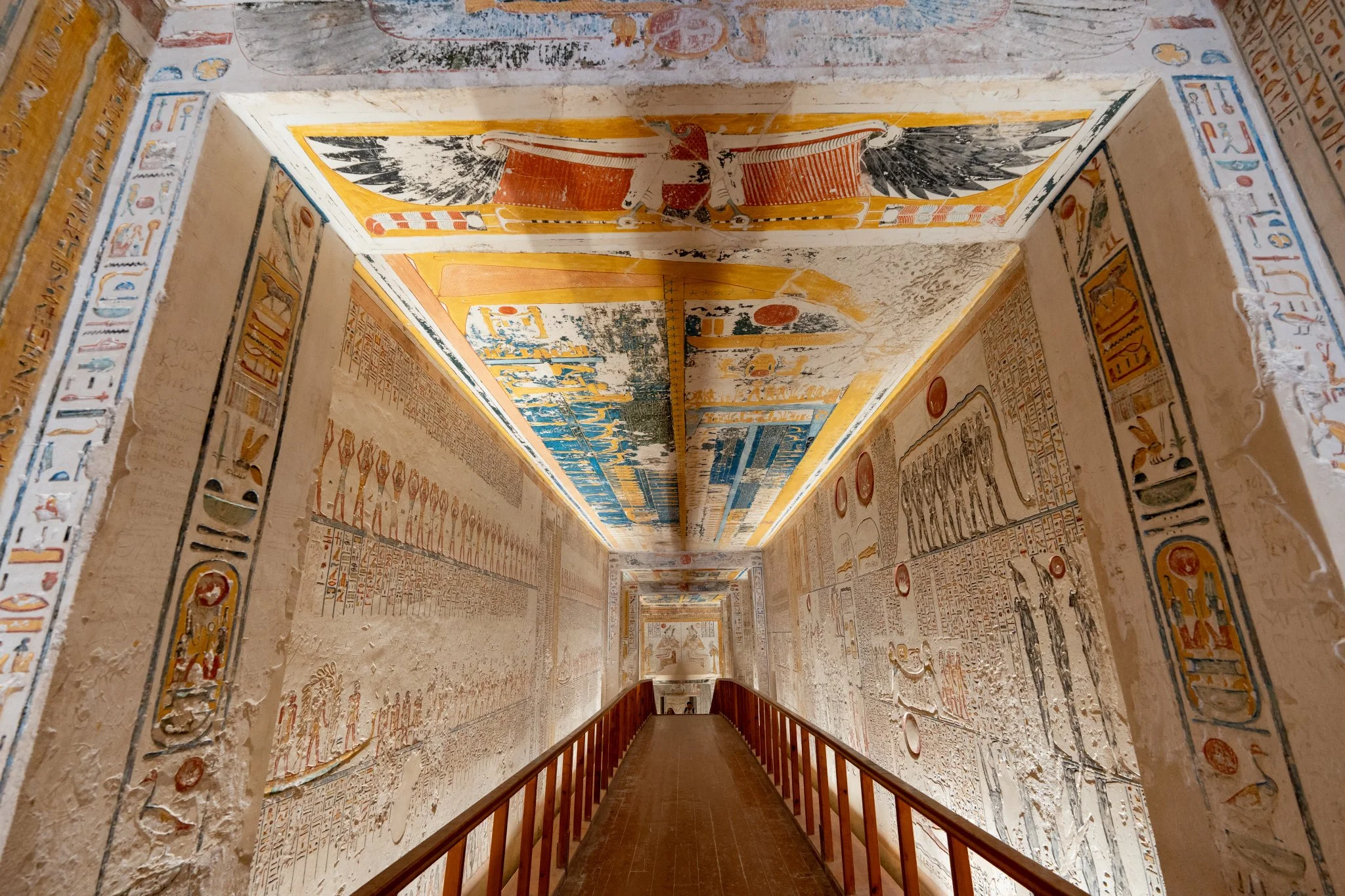
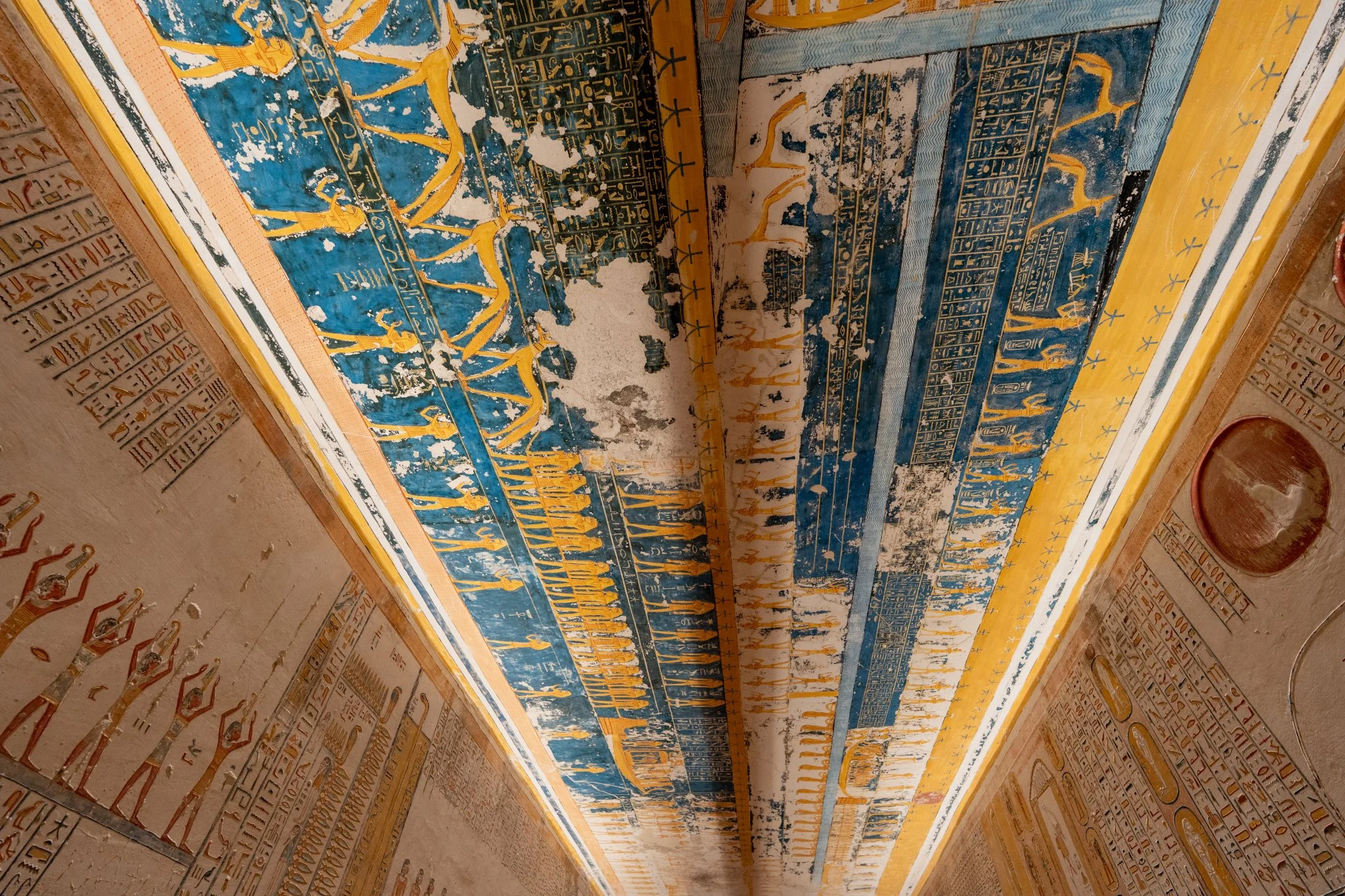
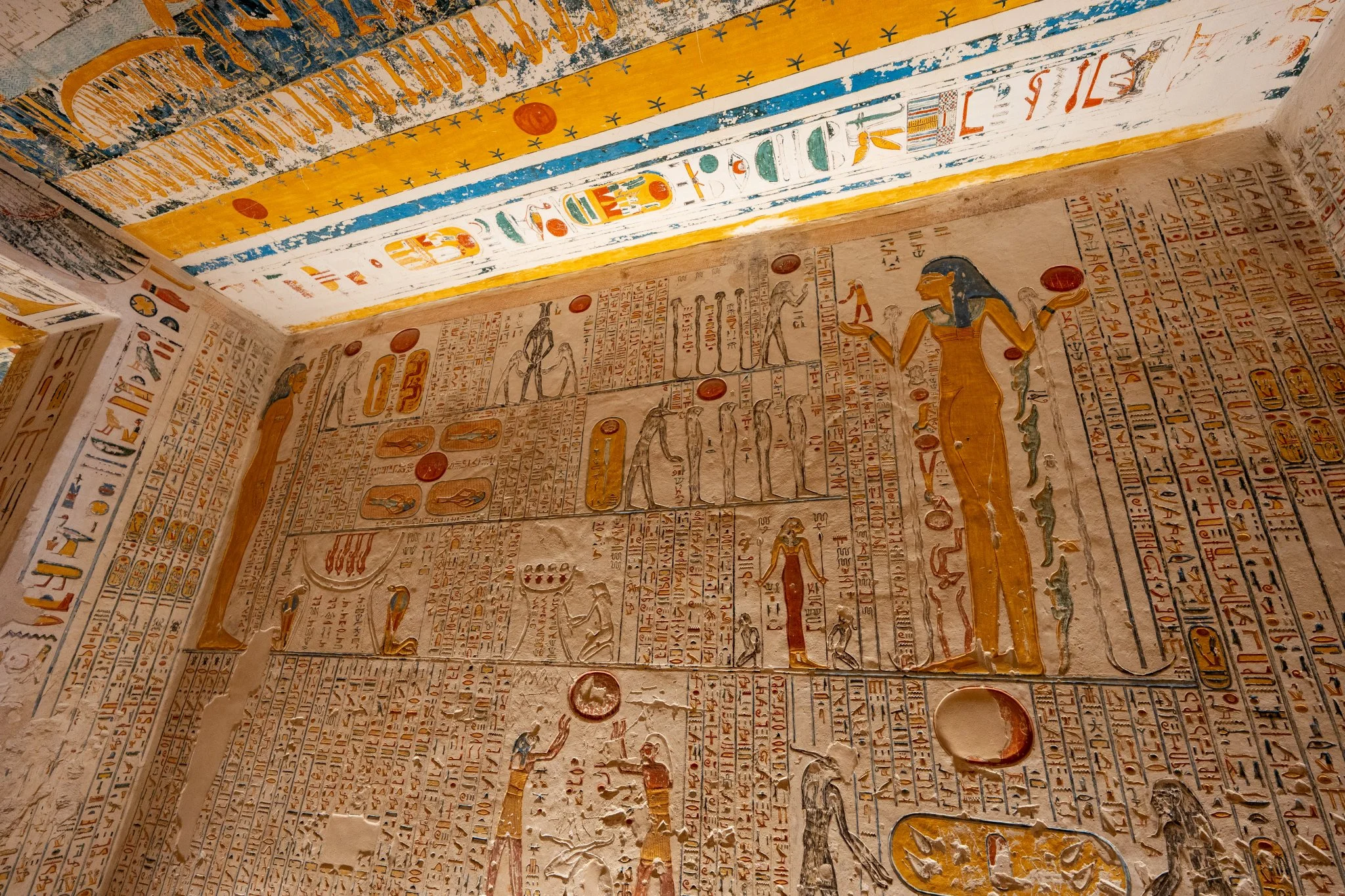
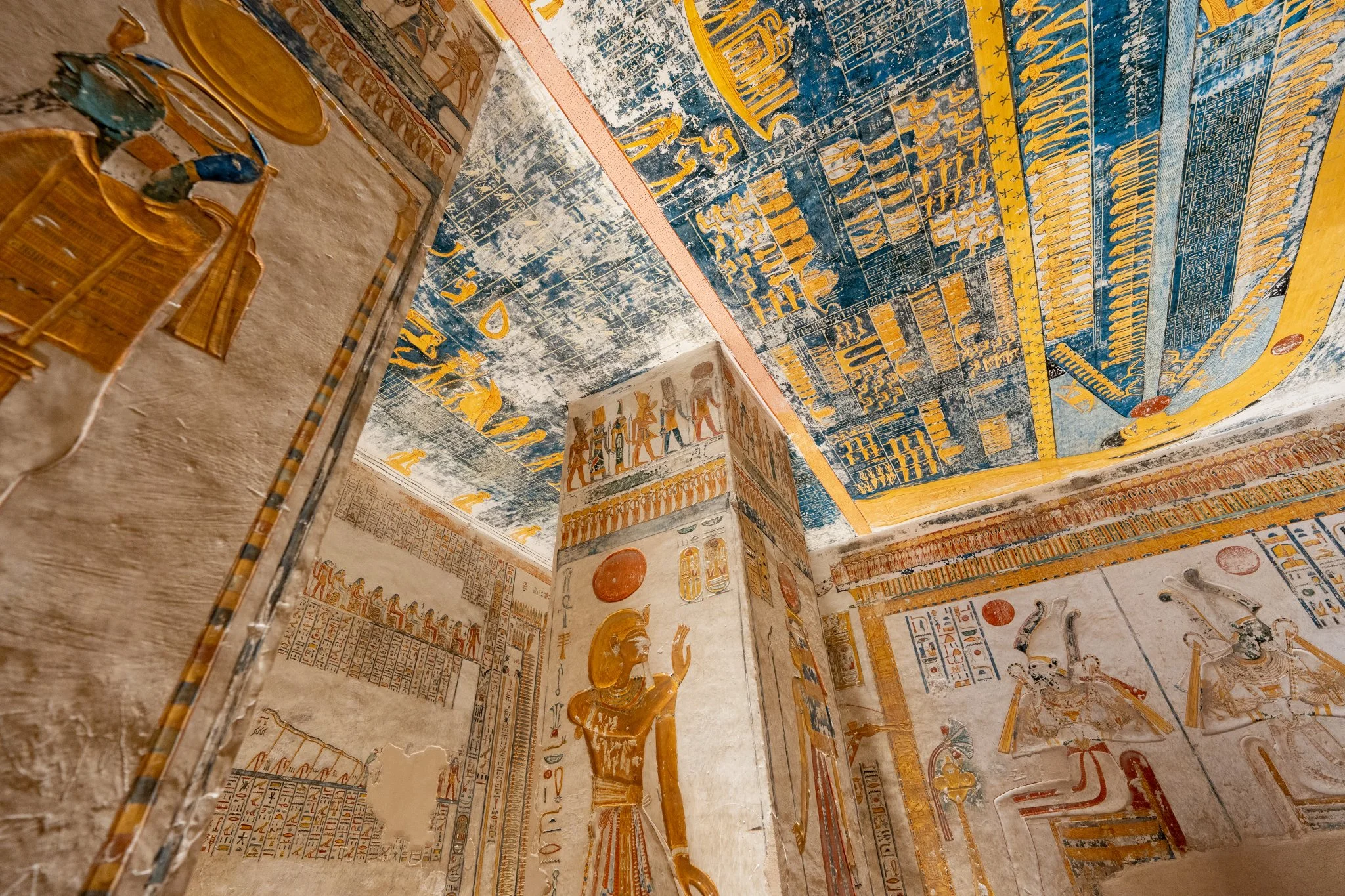
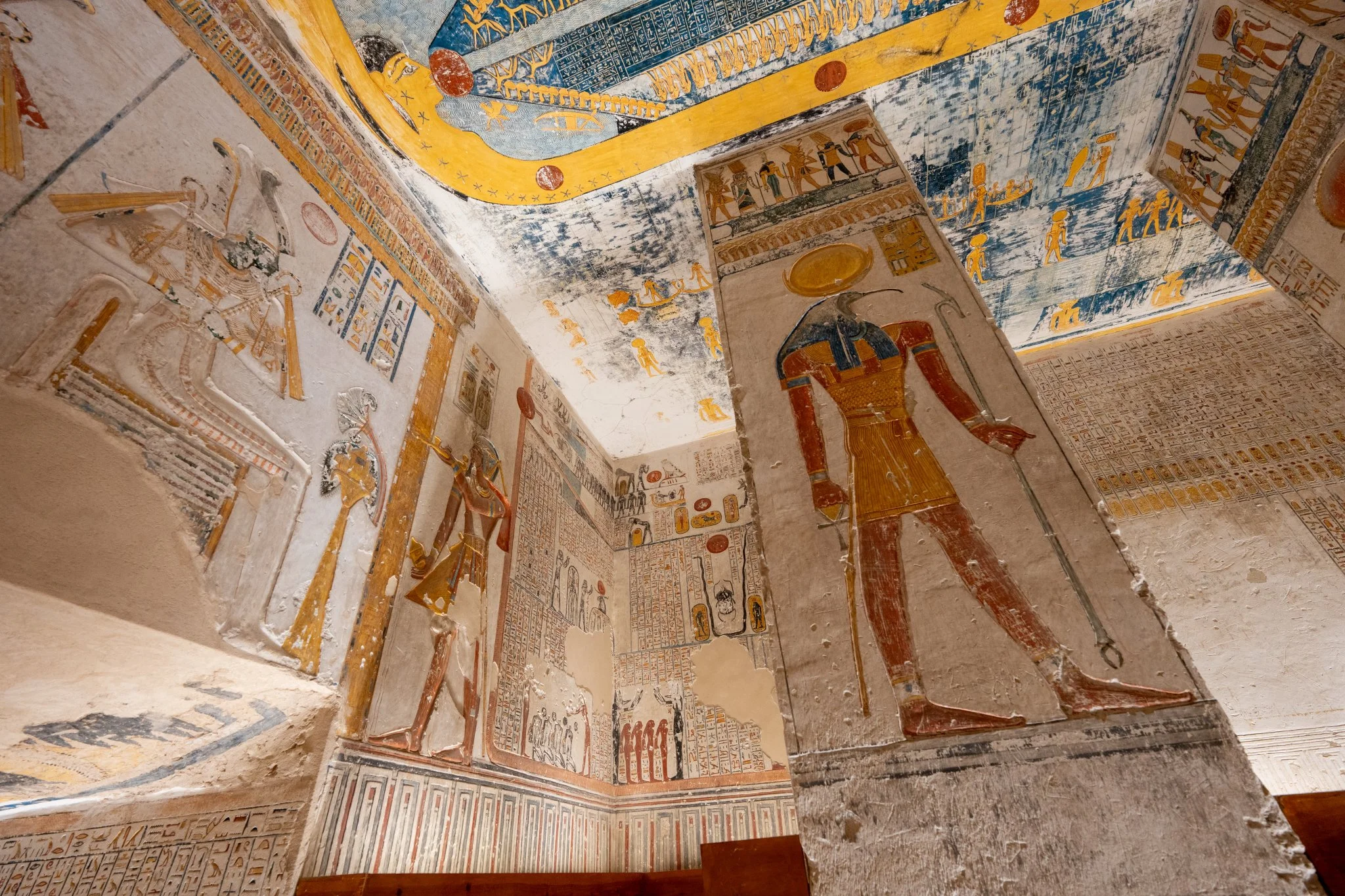
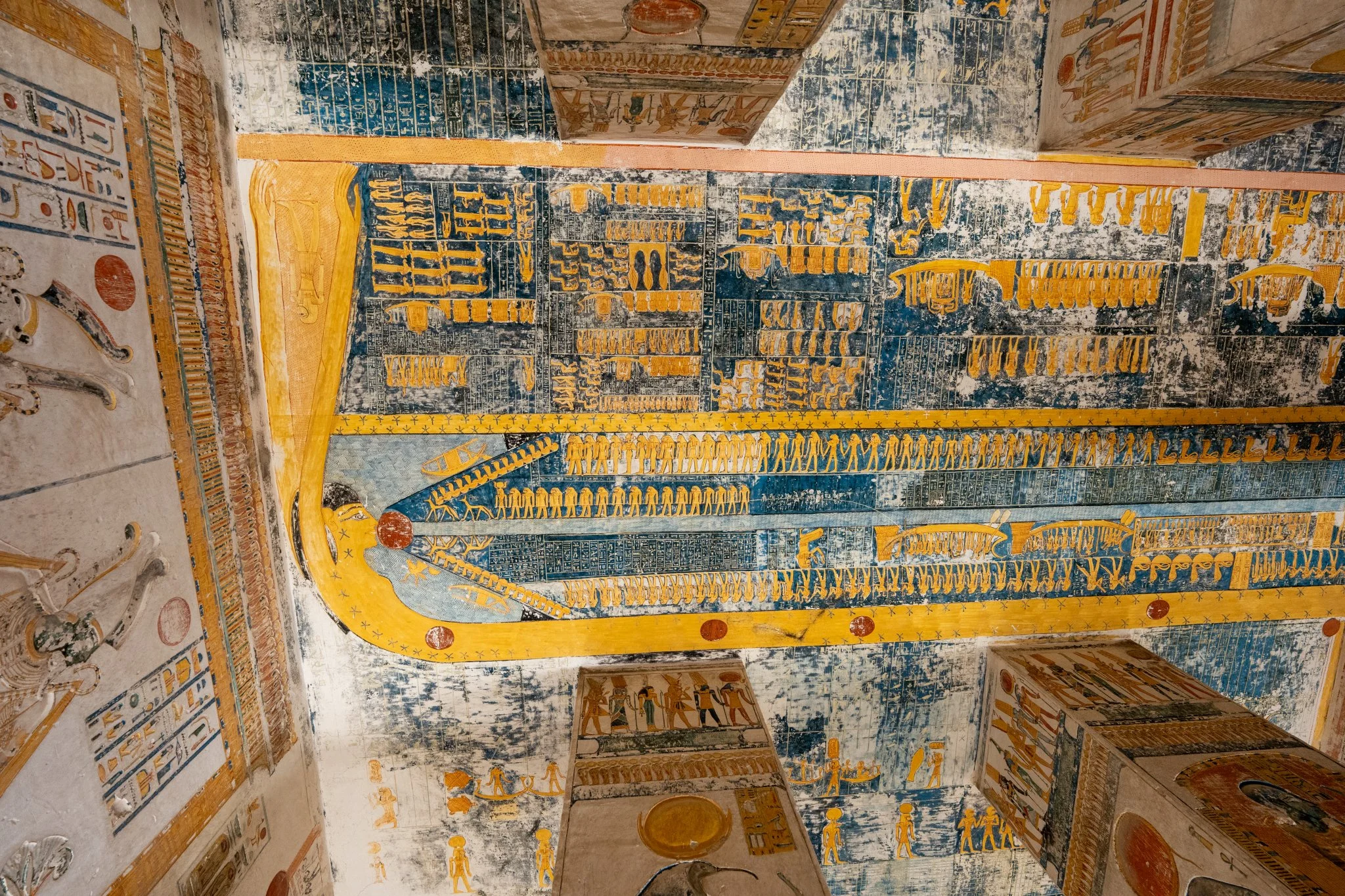
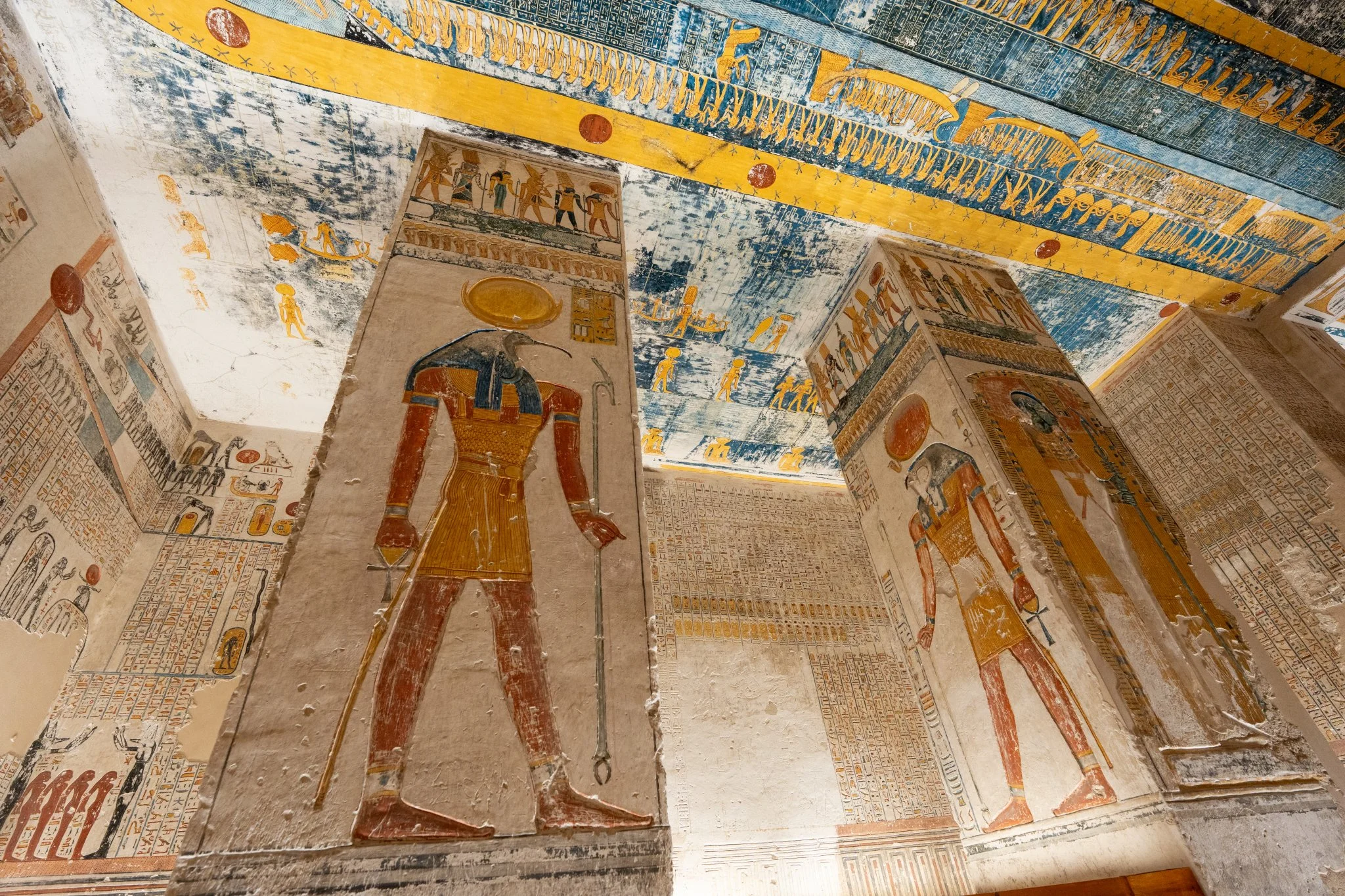
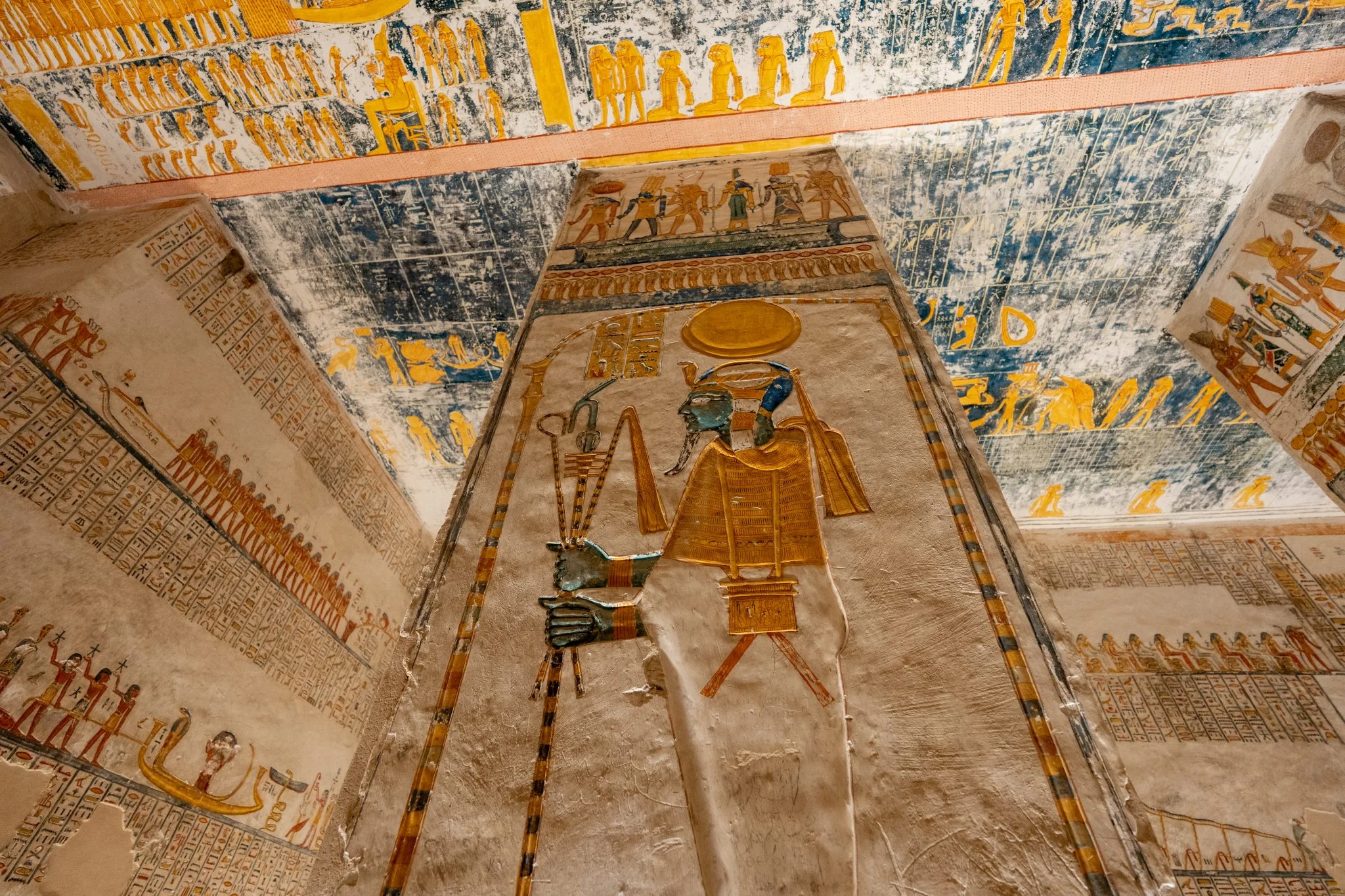
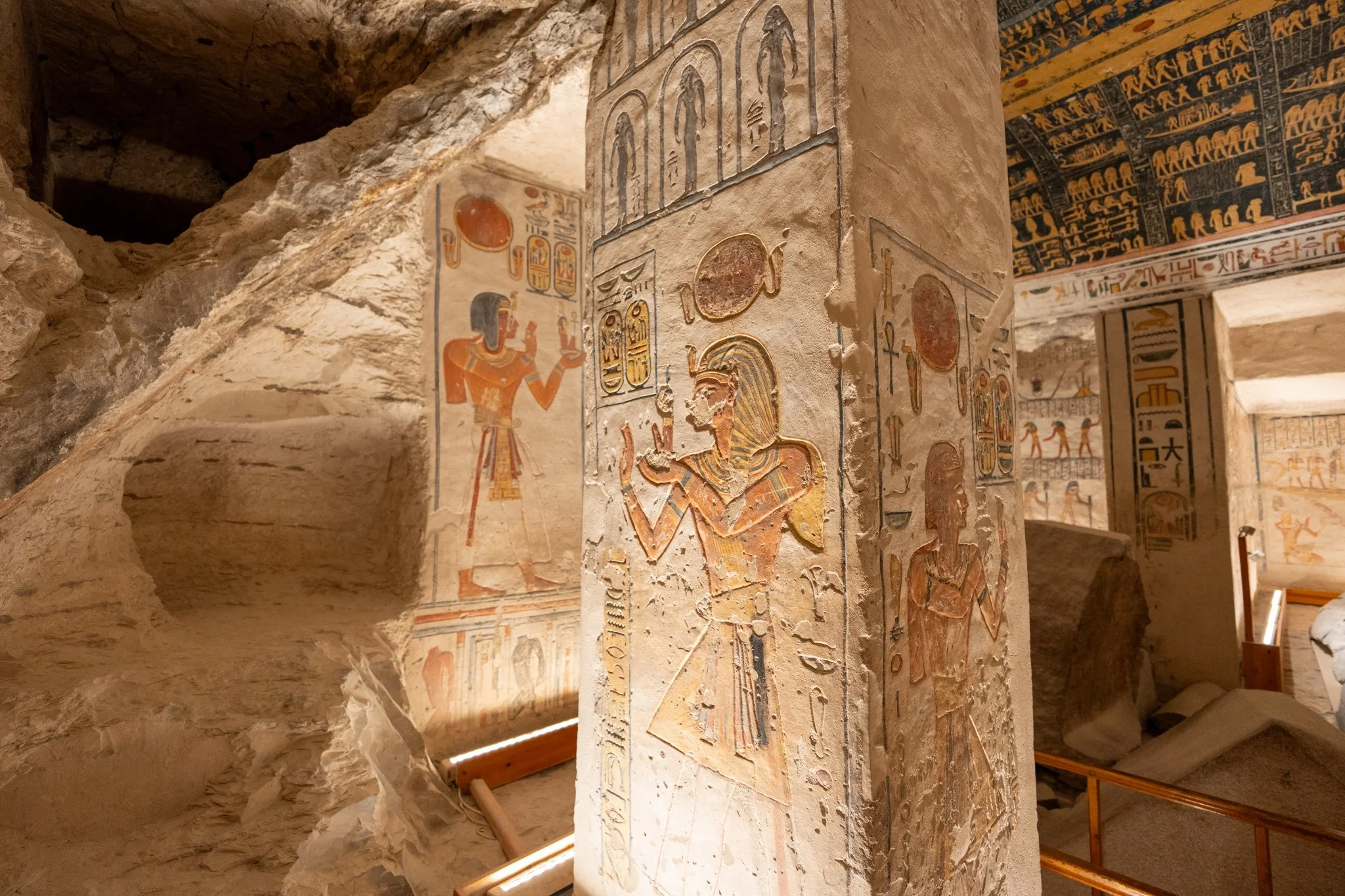
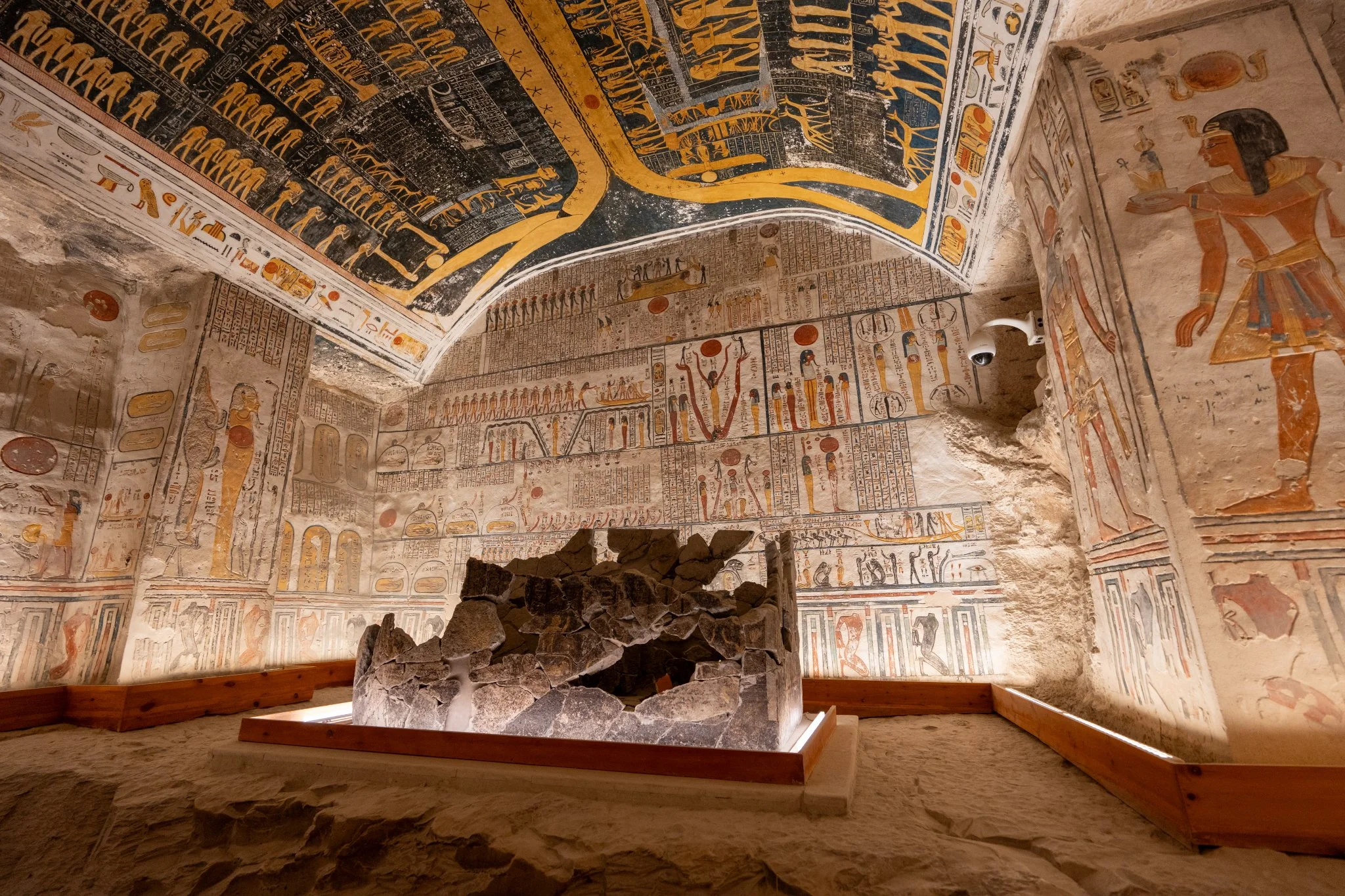
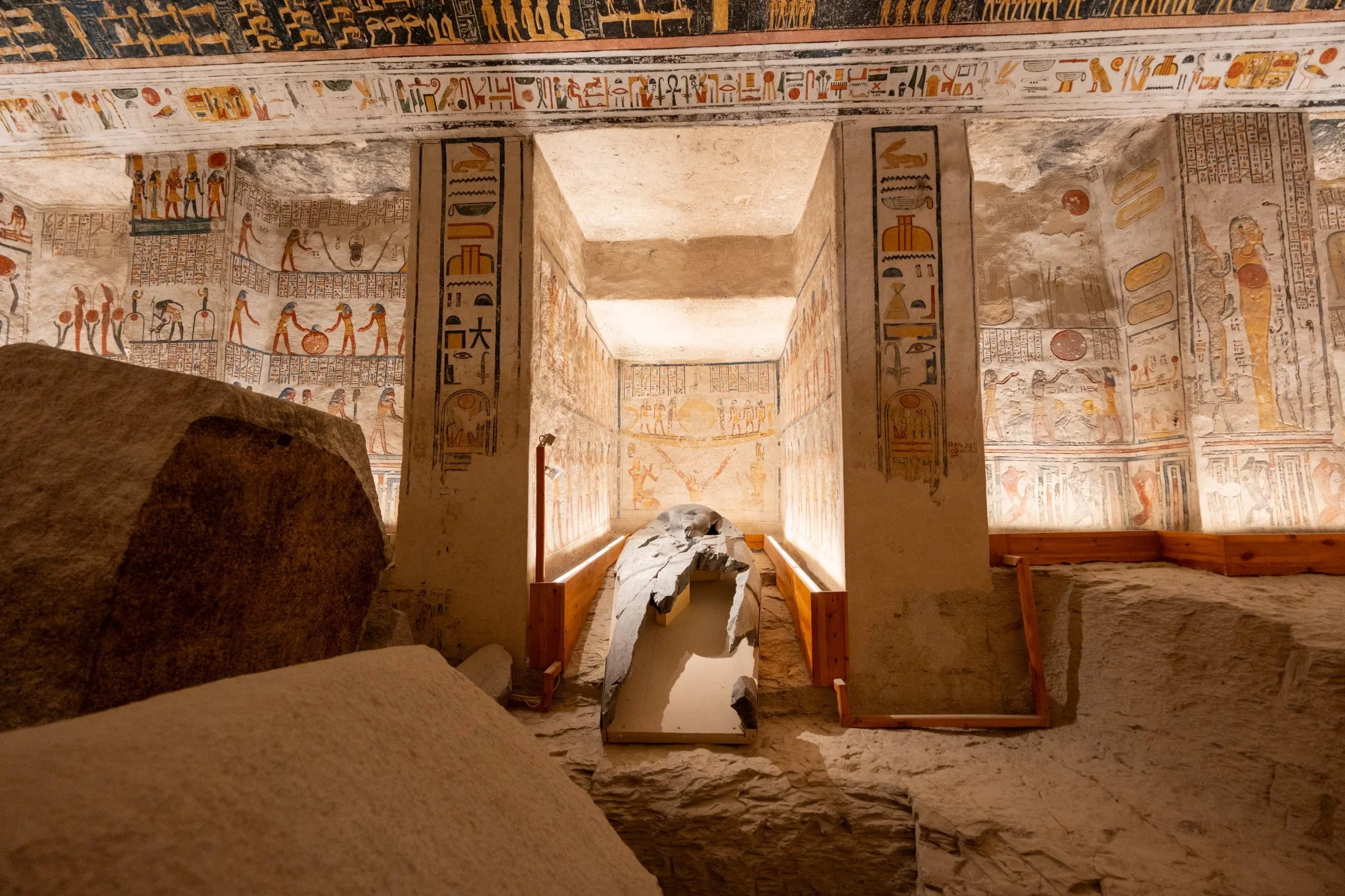
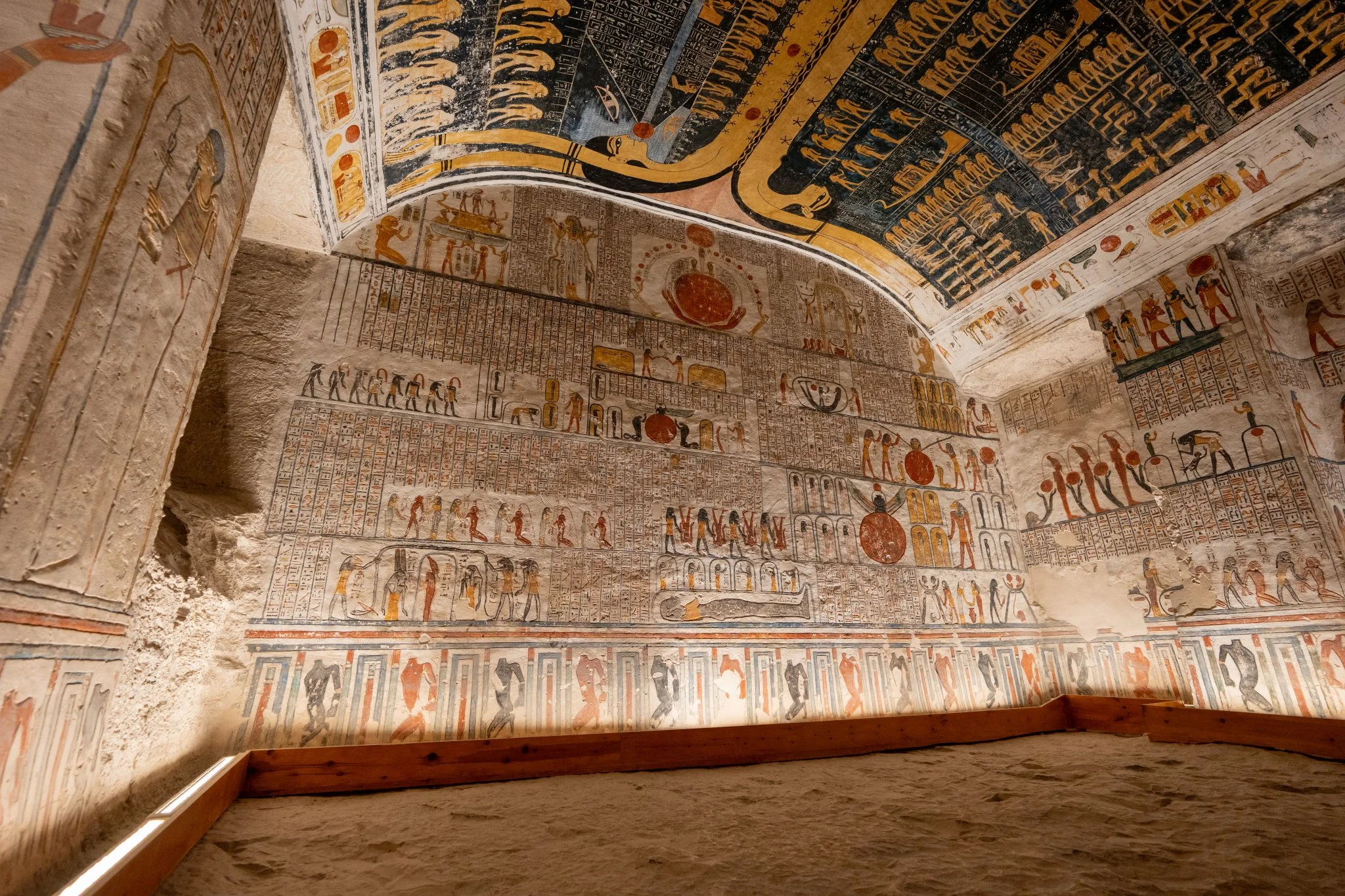
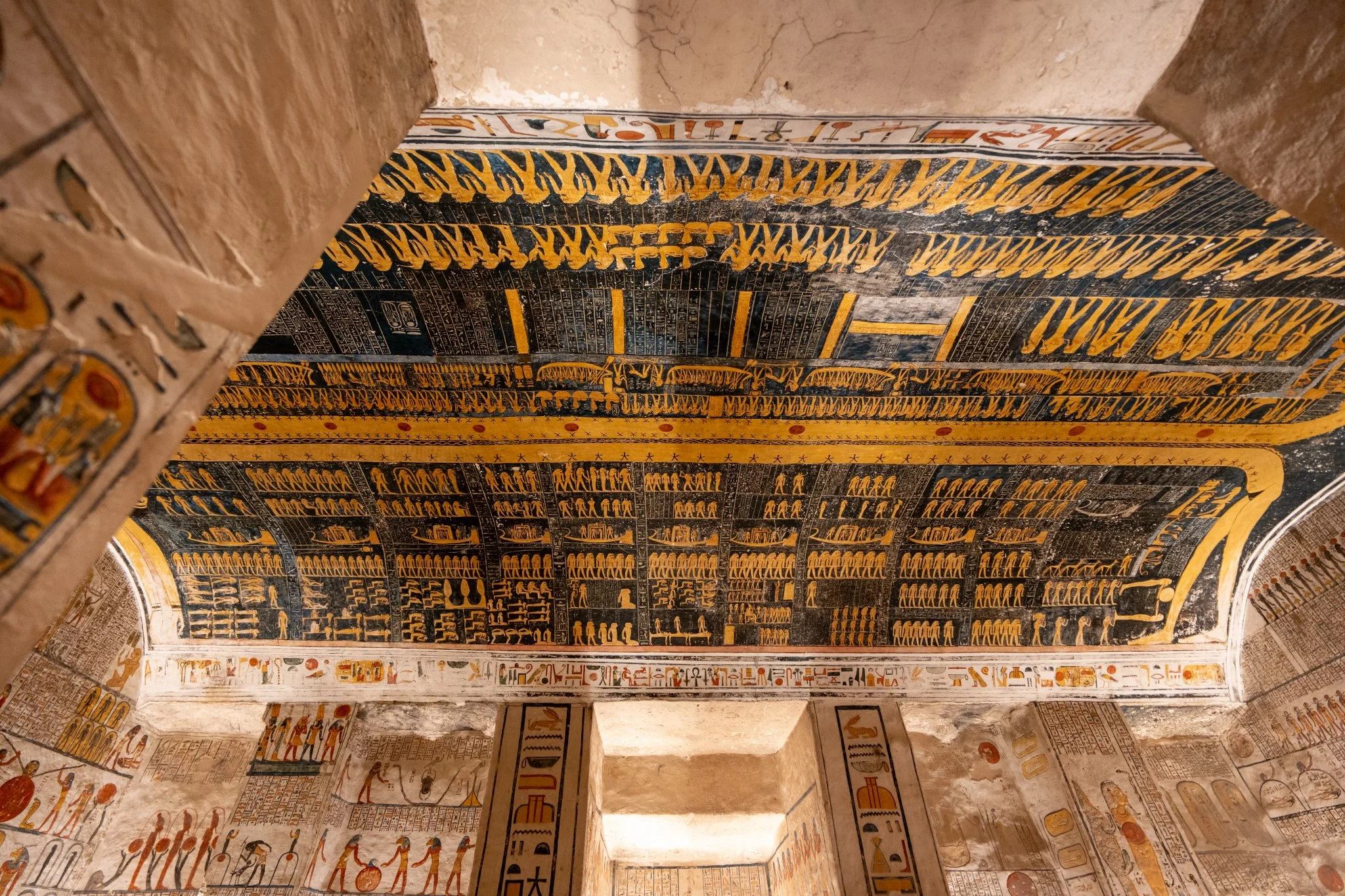
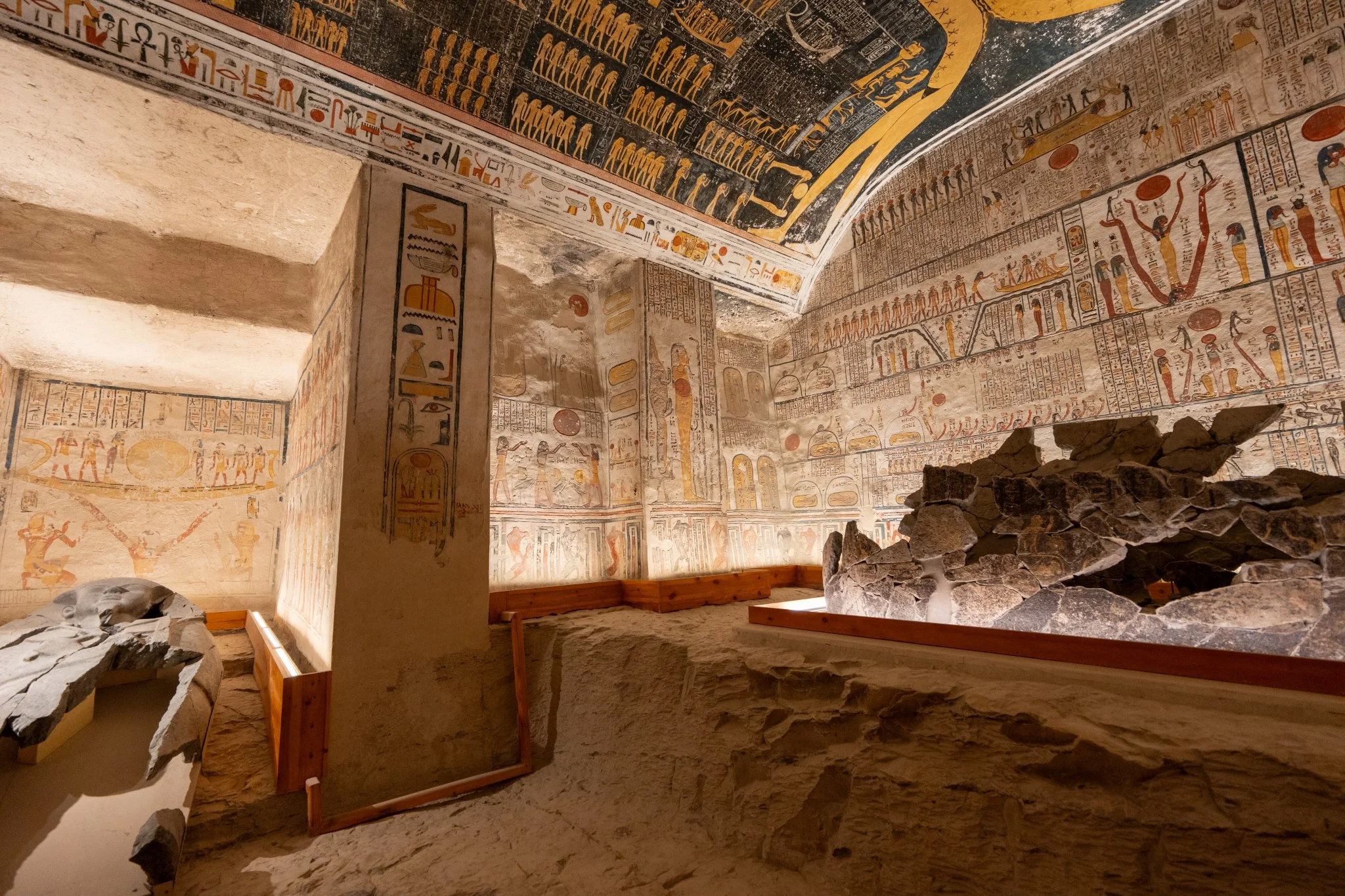
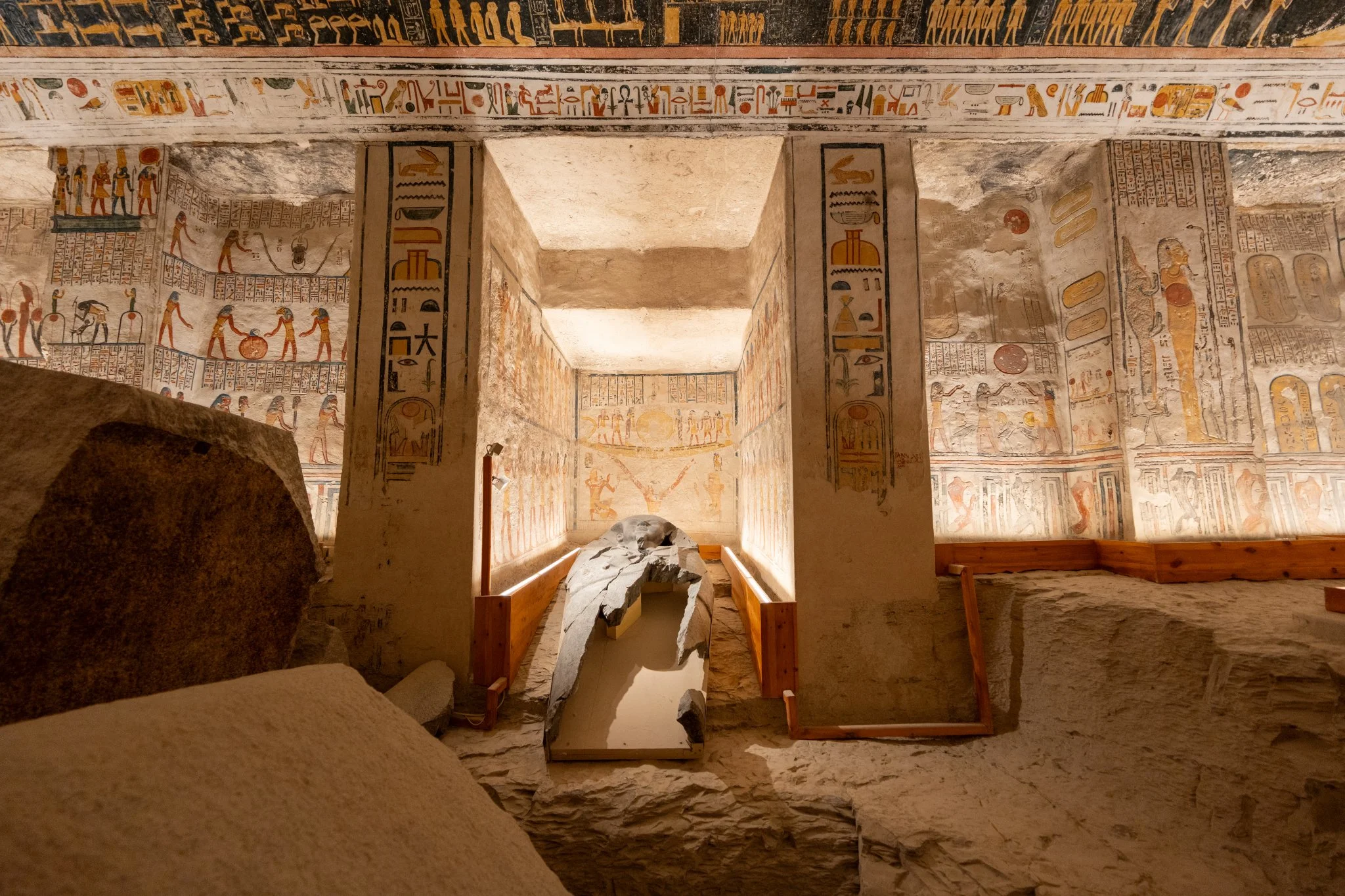
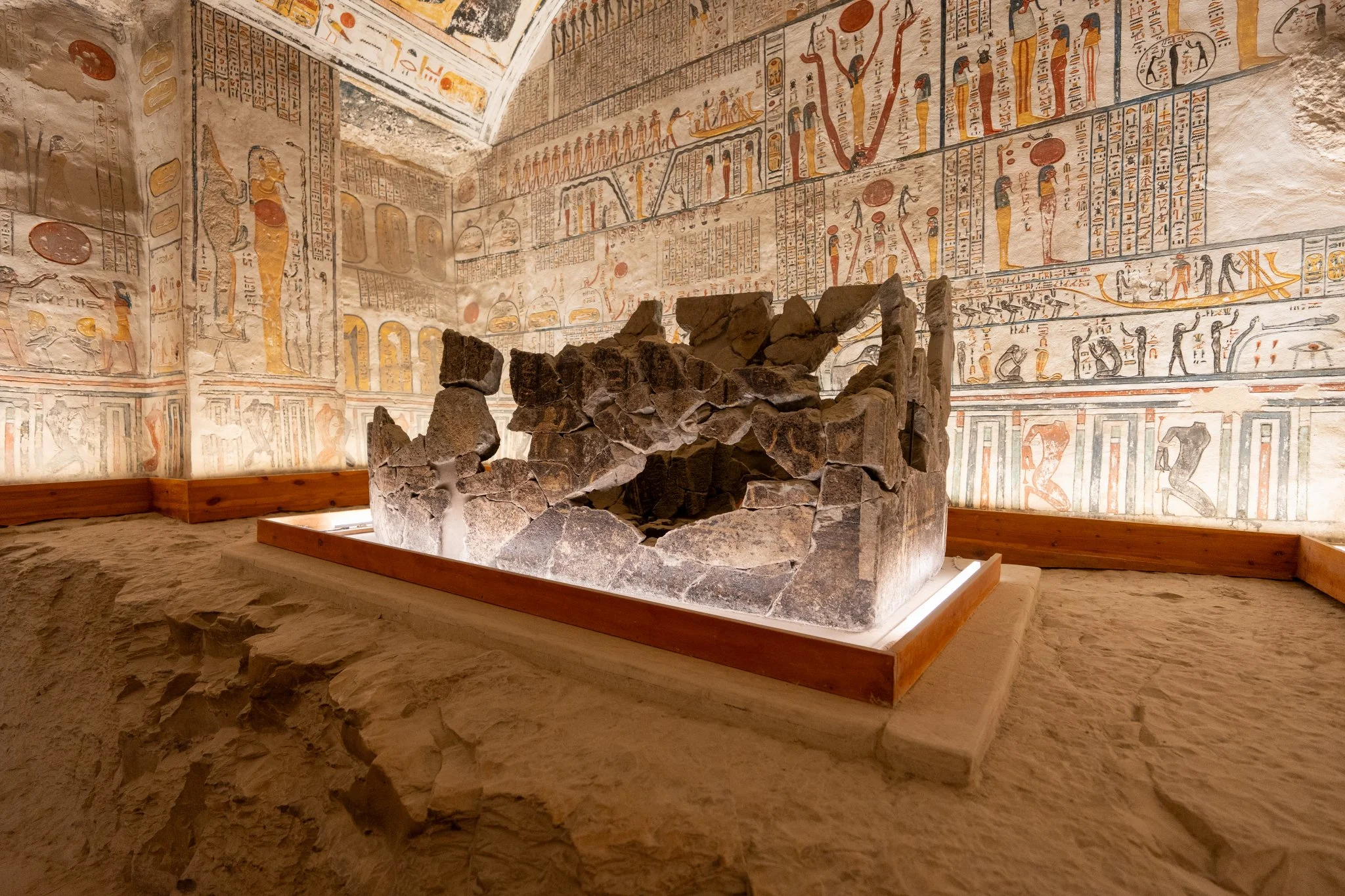
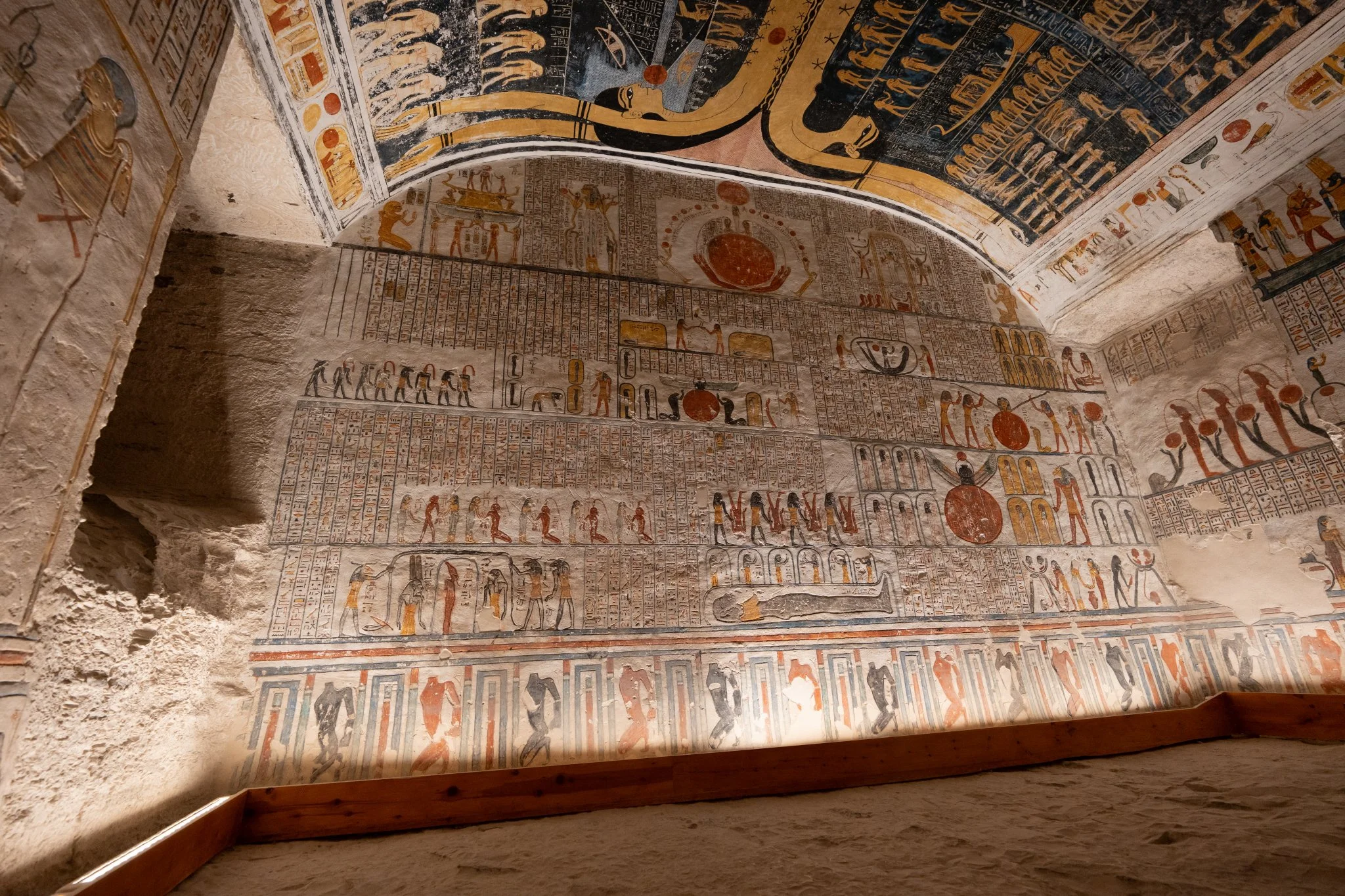
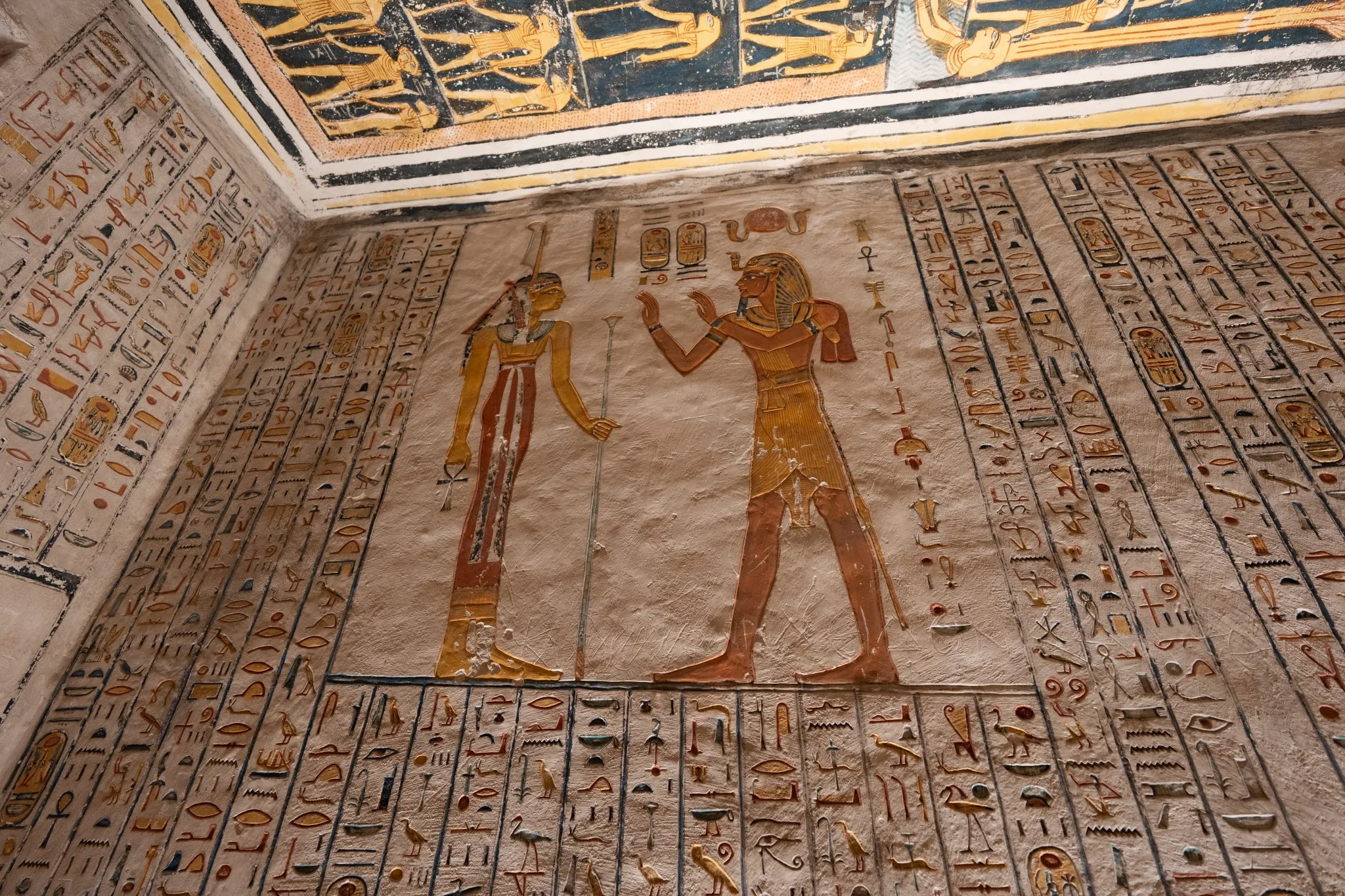
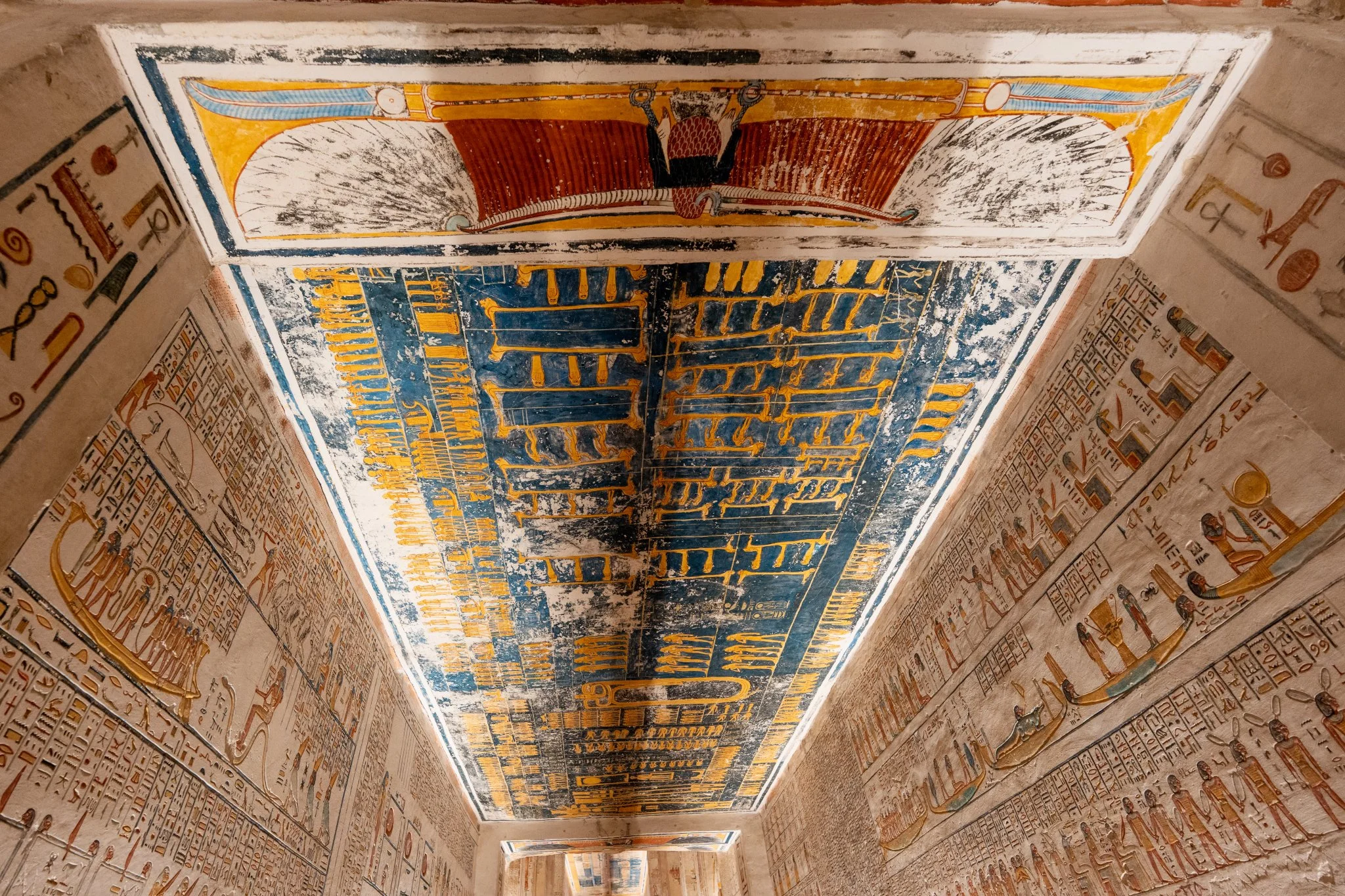
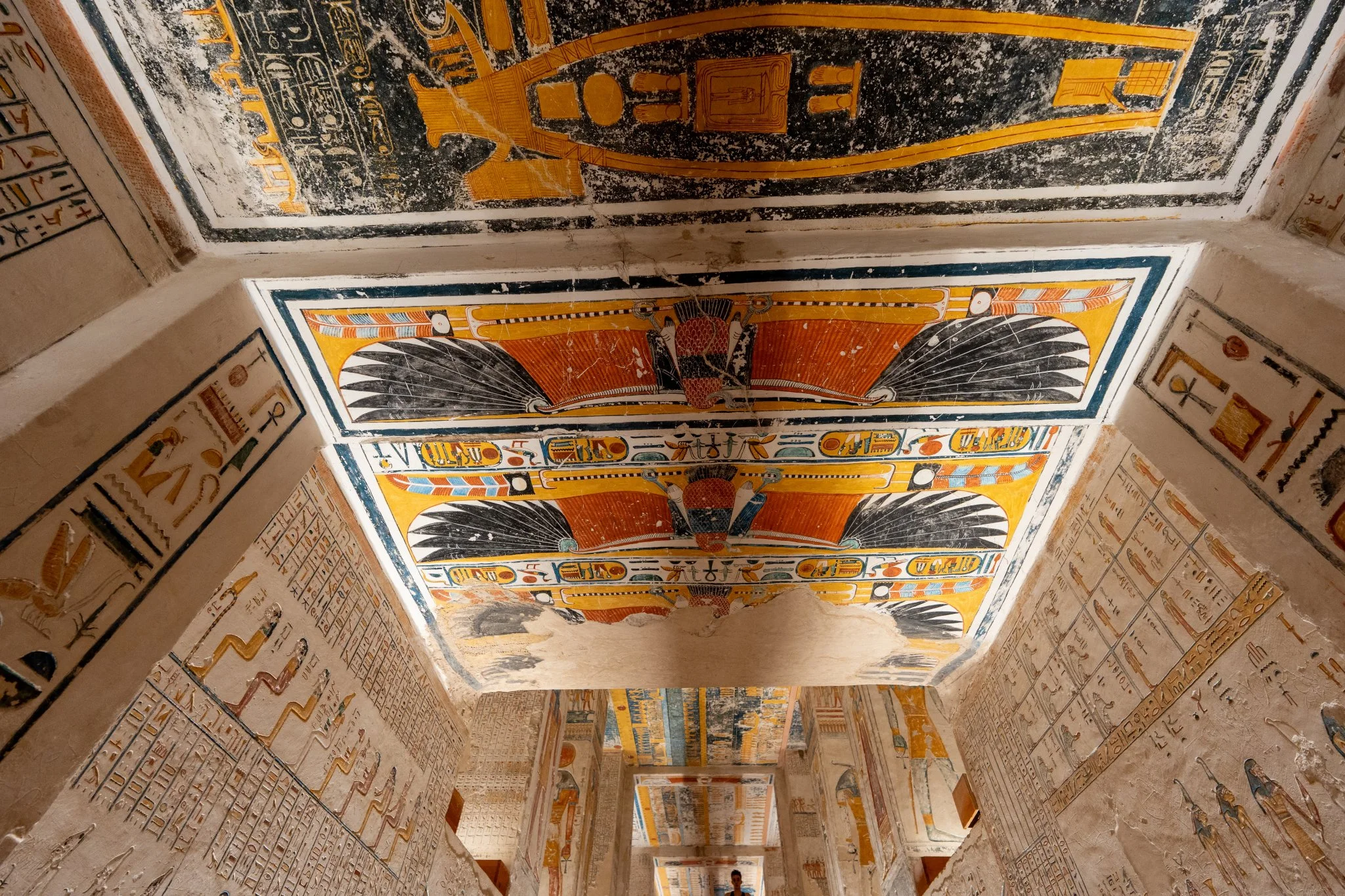
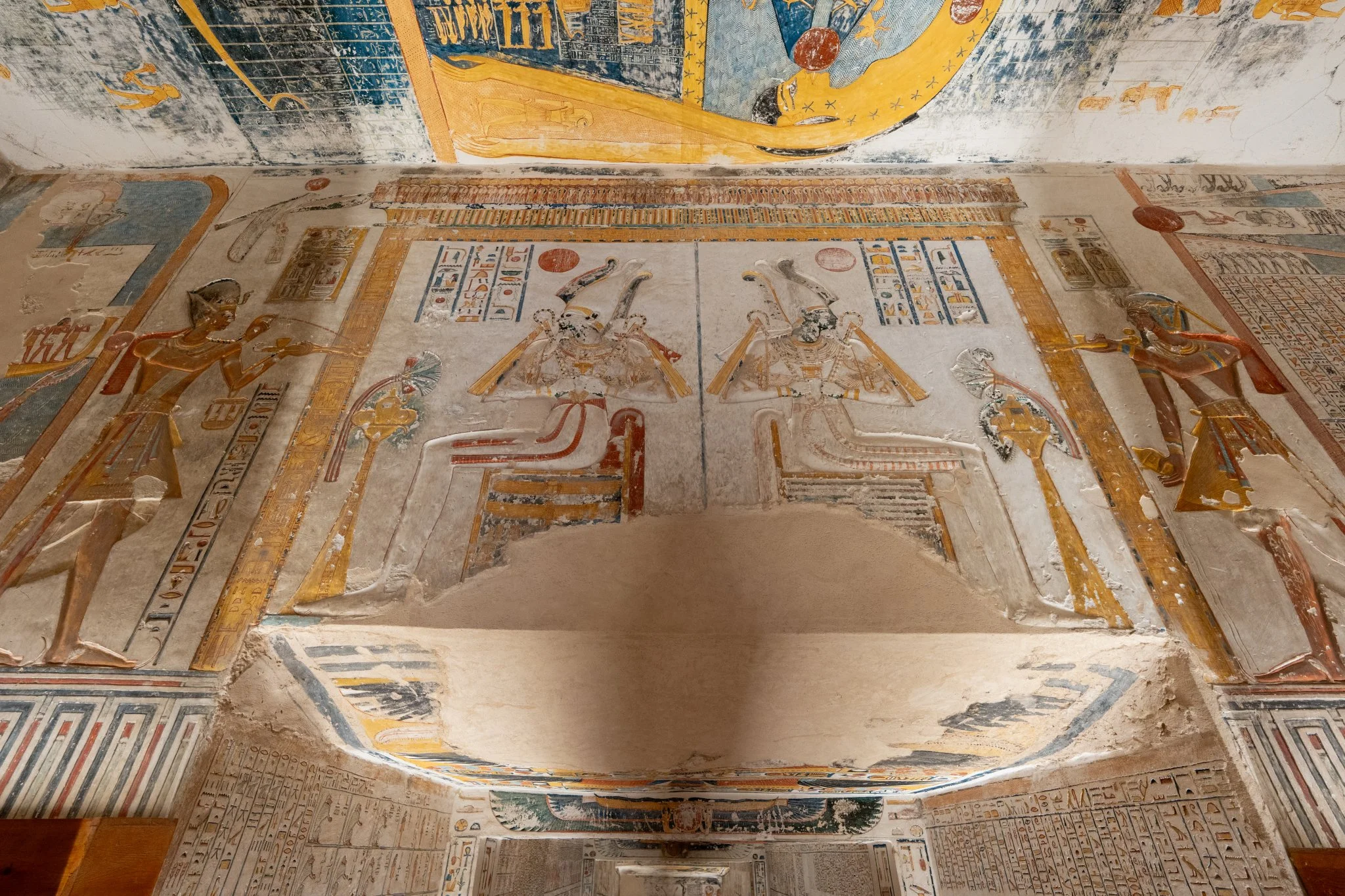
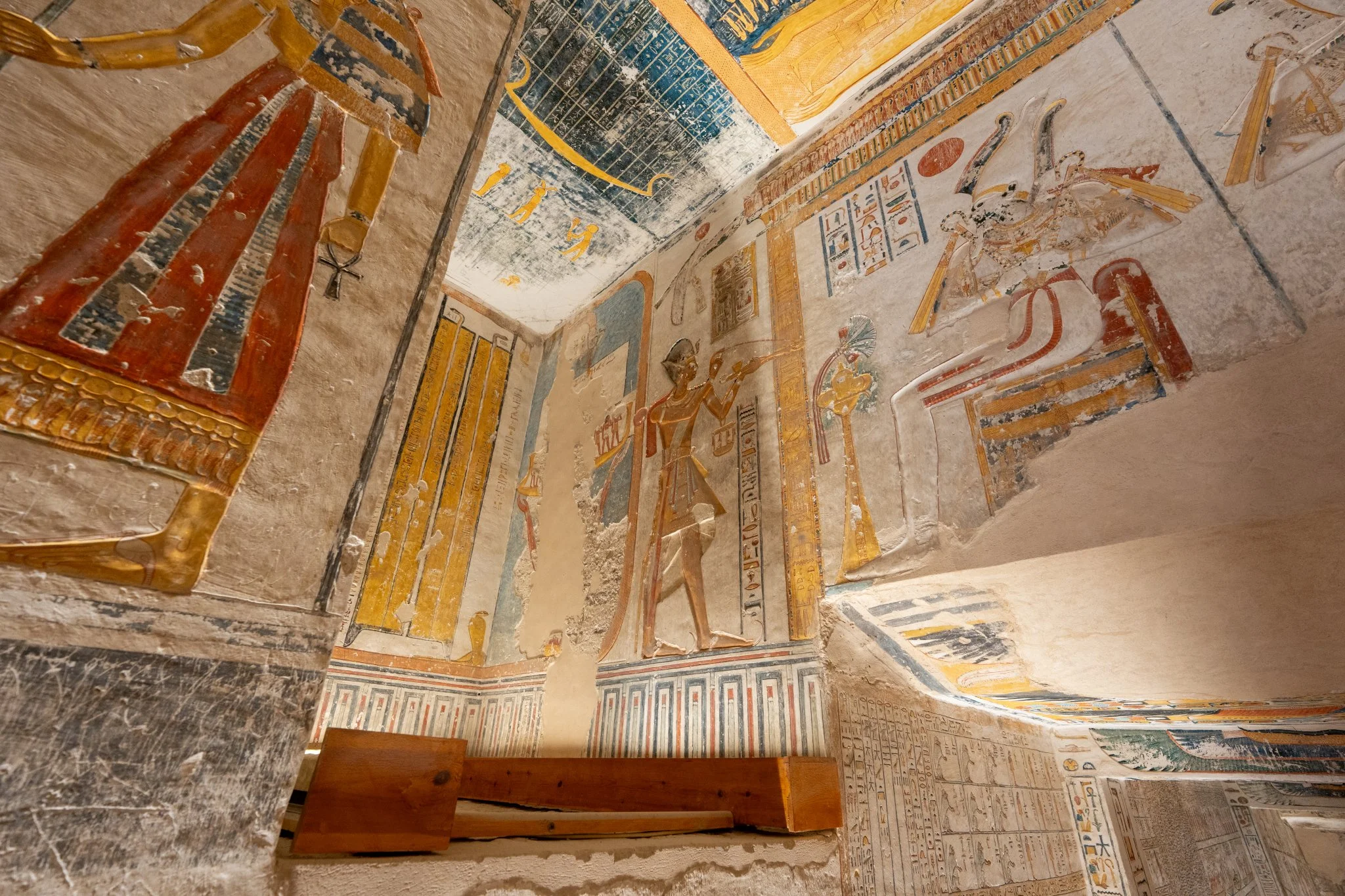
Piero: that's the feeling you take with you as you leave the Valley of the Kings: the ancient Egyptians didn't build tombs—they created works of art, bridges leading toward eternity.
Angela: for them, death was not an end, but simply the beginning of another journey. And perhaps that's why, after more than 3,000 years, these places still have the power to move millions of visitors from every corner of the world. Come and experience these emotions with us in this short video.
Piero: and, incredibly, our day was still far from over. Now it's time to discover the monument dedicated to one of the most extraordinary figures in the entire history of Ancient Egypt: the female pharaoh Hatshepsut.
The Temple of Hatshepsut: the woman who dared to become pharaoh
Angela: after leaving the Valley of the Kings, just a few minutes down the road, our van stopped in front of a completely different sight.
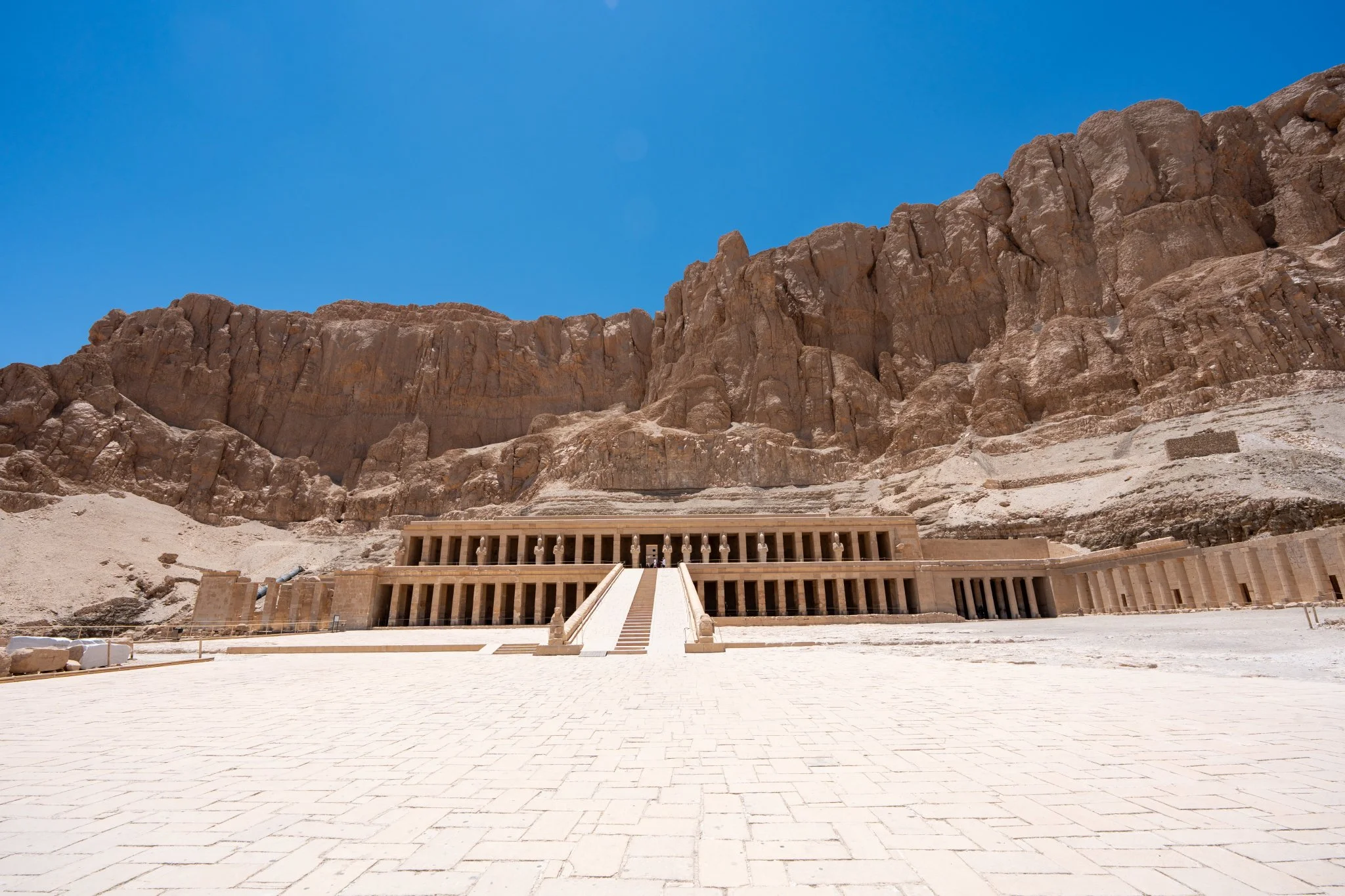
Piero: the Temple of Hatshepsut is unlike any other monument in Ancient Egypt. It doesn't have the monumental pylons of Karnak, the mysterious atmosphere of the Valley of the Kings, or the overwhelming grandeur of the temples built by Ramesses II.
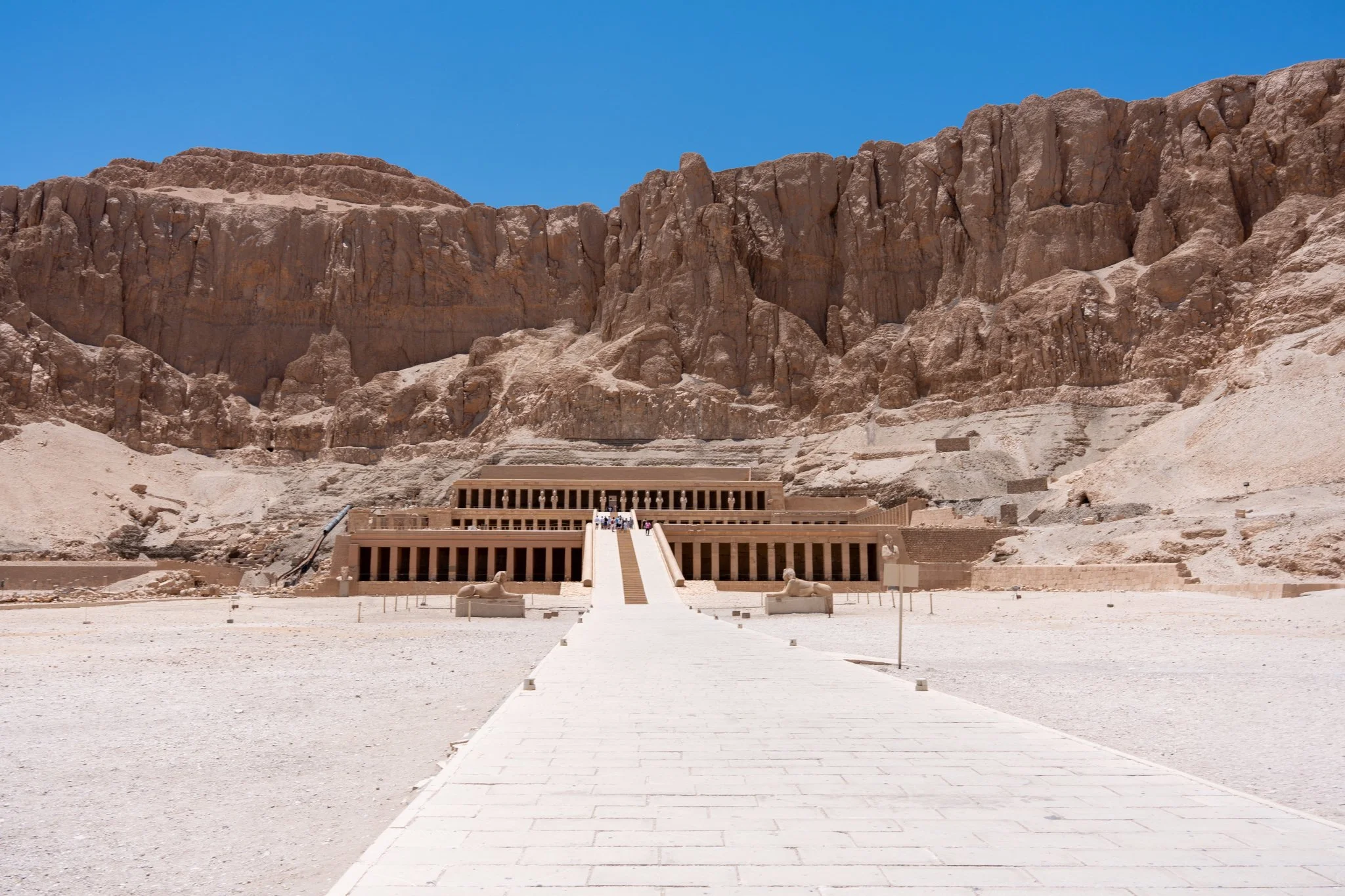
Angela: it almost seems to emerge from the mountain itself.
Piero: the Temple of Hatshepsut was built at the foot of the imposing cliffs of Deir el-Bahari, using the natural rock face as though it were an integral part of the temple itself.
Angela: three magnificent terraces, connected by long central ramps, create a masterpiece of extraordinary elegance. The complex also includes the tombs of this remarkable queen-pharaoh and her mother.
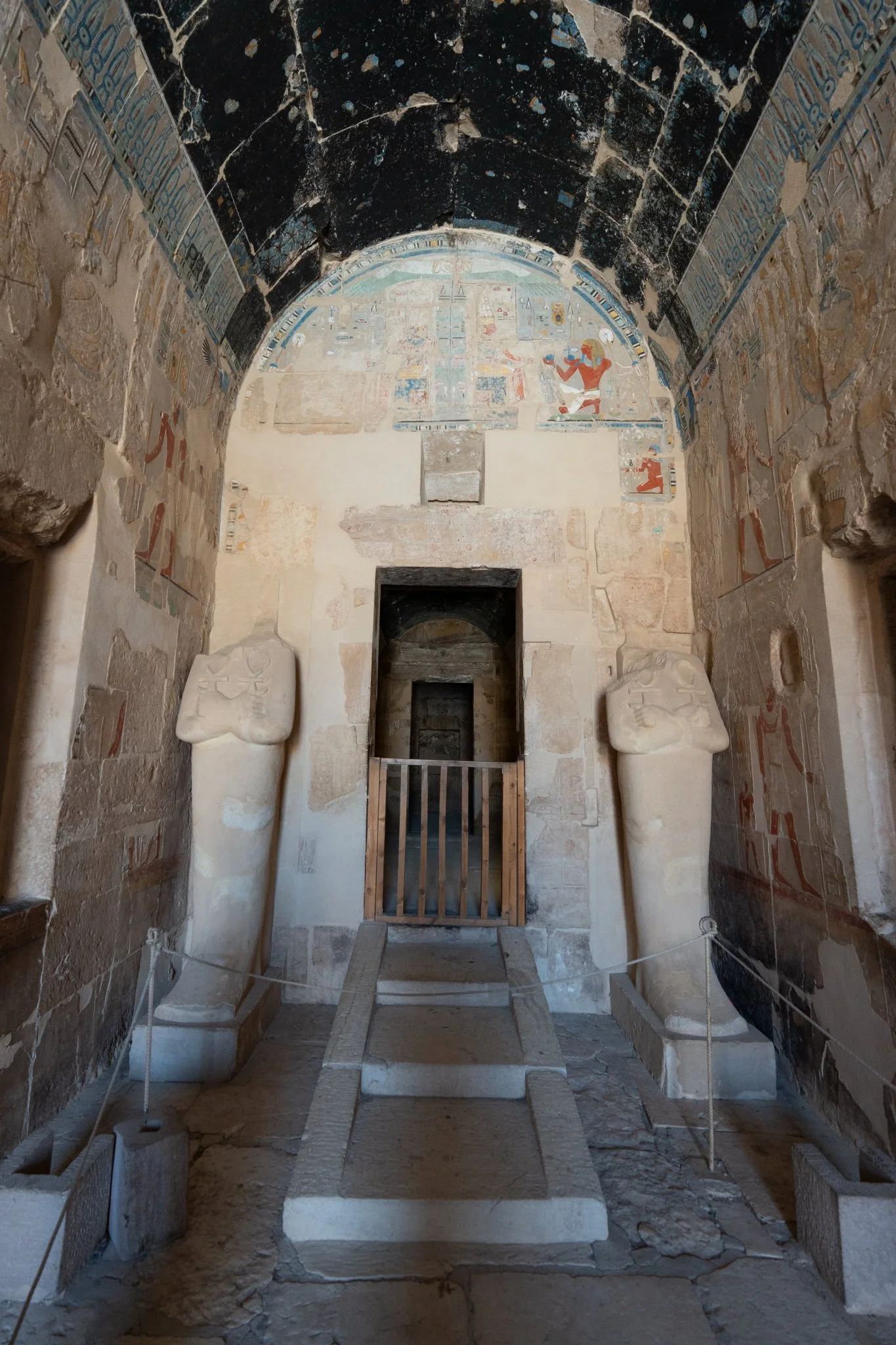
Piero: even today, it is regarded as one of the absolute masterpieces of ancient Egyptian architecture. It's true that much of it has been reconstructed, but it remains utterly fascinating and is undoubtedly one of the iconic highlights of our visit.
Angela: but who was Hatshepsut, really?
Piero: without question, she was one of the most fascinating figures in the entire history of Egypt. The daughter of Pharaoh Thutmose I, she married her half-brother Thutmose II, as was often the custom within the royal family to preserve the continuity of the dynasty. When her husband died, the heir to the throne, Thutmose III, was still too young to rule, so Hatshepsut initially became regent.
Angela: after a few years, she no longer limited herself to governing on behalf of the young king. Instead, she proclaimed herself Pharaoh in her own right—an extraordinary decision in a society where political power had traditionally been reserved for men.
Piero: to legitimize her rule, she turned to religion, creating an extraordinary account of her divine birth, carved into the walls of her temples. According to this tradition, the god Amun took the form of her father, Thutmose I, to unite with Queen Ahmose, Hatshepsut's mother. In this way, the future ruler was not merely the daughter of a pharaoh, but the direct descendant of the god Amun, chosen by the gods themselves to rule Egypt.
Angela: so her right to the throne came directly from divine will.
Piero: it wasn't simply a clever piece of propaganda. It was an extraordinarily powerful message to both the people and the priesthood: if Amun himself had brought her into the world and chosen her to rule, opposing her reign would have meant opposing the will of the gods. It was thanks in large part to this brilliant religious narrative that Hatshepsut was able to reign for more than 20 years, ushering in one of the most prosperous and peaceful periods in the history of Ancient Egypt.
Angela: what intrigued me most was the way she was portrayed.
Piero: because she had to convince both the people and, above all, the powerful priesthood that her authority was legitimate. That's why, in statues and reliefs, she is depicted with all the traditional attributes of a pharaoh: she wears the royal headdress, the ceremonial false beard, and the male royal garments. Yet many of the inscriptions continue to refer to her using the feminine gender. It's as if she had created an entirely new identity, poised between tradition and revolution.
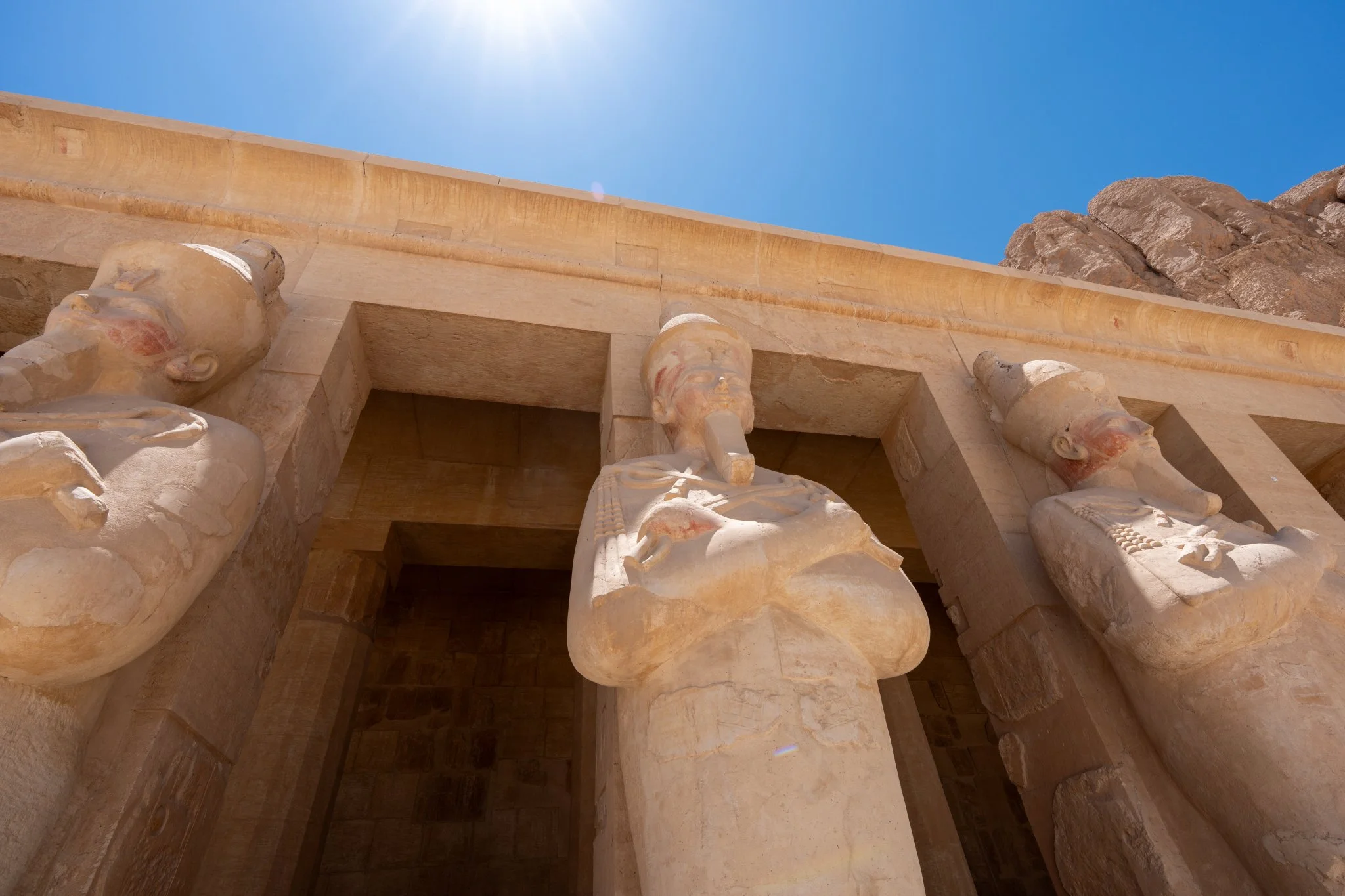
Angela: she certainly isn't remembered for her military campaigns because, rather than expanding Egypt's territory through war, she chose to strengthen its trade and commerce.
Piero: the most famous example is the expedition to the mysterious Land of Punt, probably located in present-day Eritrea and Somalia. From there came gold, ebony, ivory, exotic animals, and even frankincense trees, which were transplanted into the gardens of the temples. The walls of the Temple of Hatshepsut still recount this extraordinary trading expedition today, with an astonishing level of detail.
Angela: unfortunately, her story didn't have a happy ending.
Piero: after her death, Thutmose III, now an adult, firmly consolidated his power. For many years, historians believed that he sought revenge by erasing every trace of his stepmother. Today, scholars think the story is more complex, but the outcome remains the same.
Angela: many of Hatshepsut's statues were destroyed, her cartouches were chiseled away, and her images deliberately erased. The goal was to remove her from collective memory, as if she had never existed.
Piero: do you remember the magnificent Obelisk of Hatshepsut we admired just a few hours earlier? Well, there's a fascinating detail that many visitors overlook: the lower part is noticeably lighter in color.
Angela: when Thutmose III decided to diminish the memory of the queen, he didn't demolish that enormous obelisk—the priests strongly opposed such an act. Instead, he ordered it to be enclosed within a stone wall, which concealed much of its height. Ironically, that very wall protected the stone beneath it, preserving its original color.
Piero: as a result, the queen's name was almost hidden from the eyes of anyone entering the sanctuary. It was a compromise between political necessity and religious respect, and the difference in color still reveals the traces of that remarkable form of ancient damnatio memoriae.
Angela: much of the Temple of Hatshepsut that we admire today is the result of an extraordinarily long and meticulous reconstruction effort.
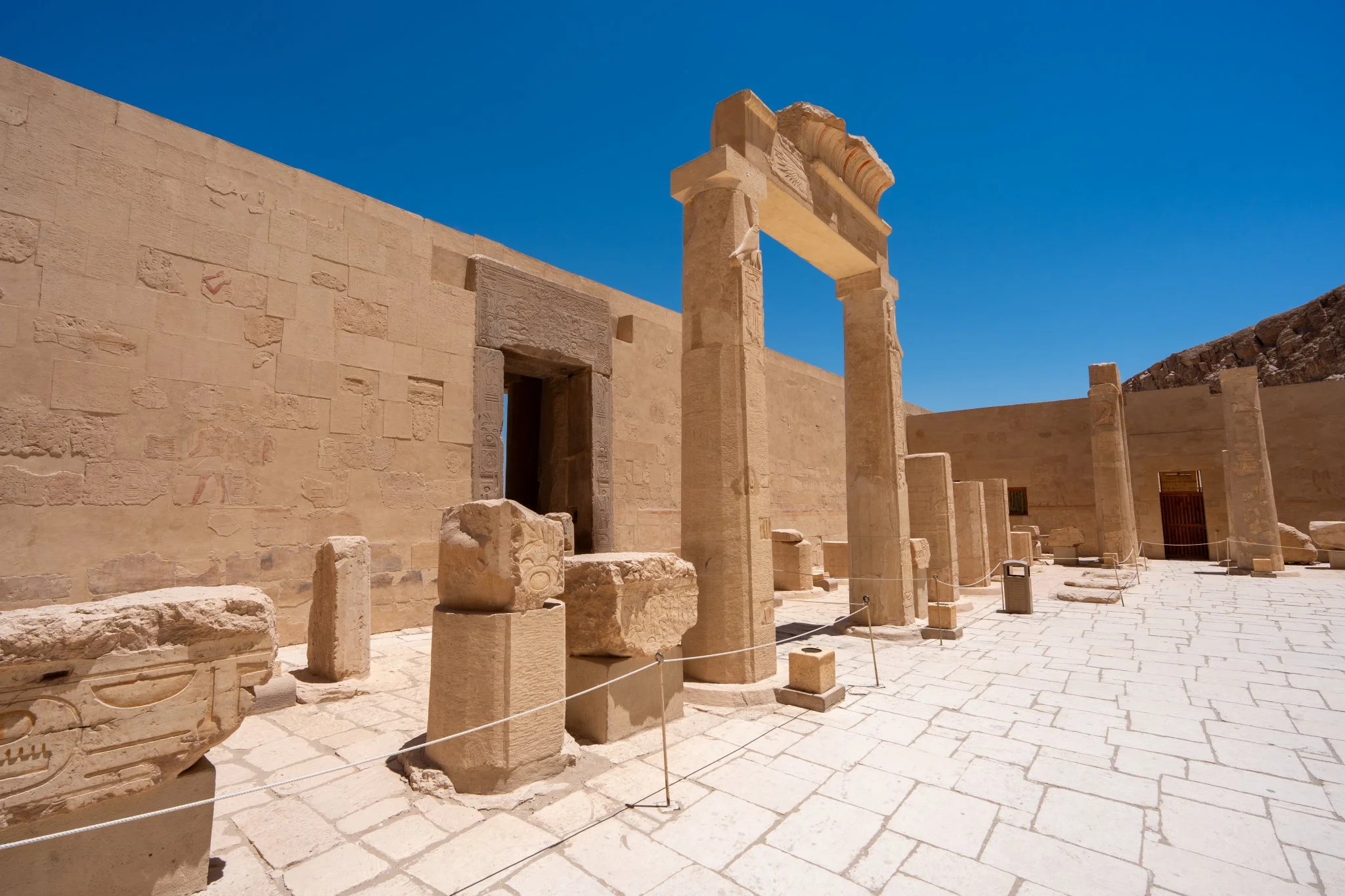
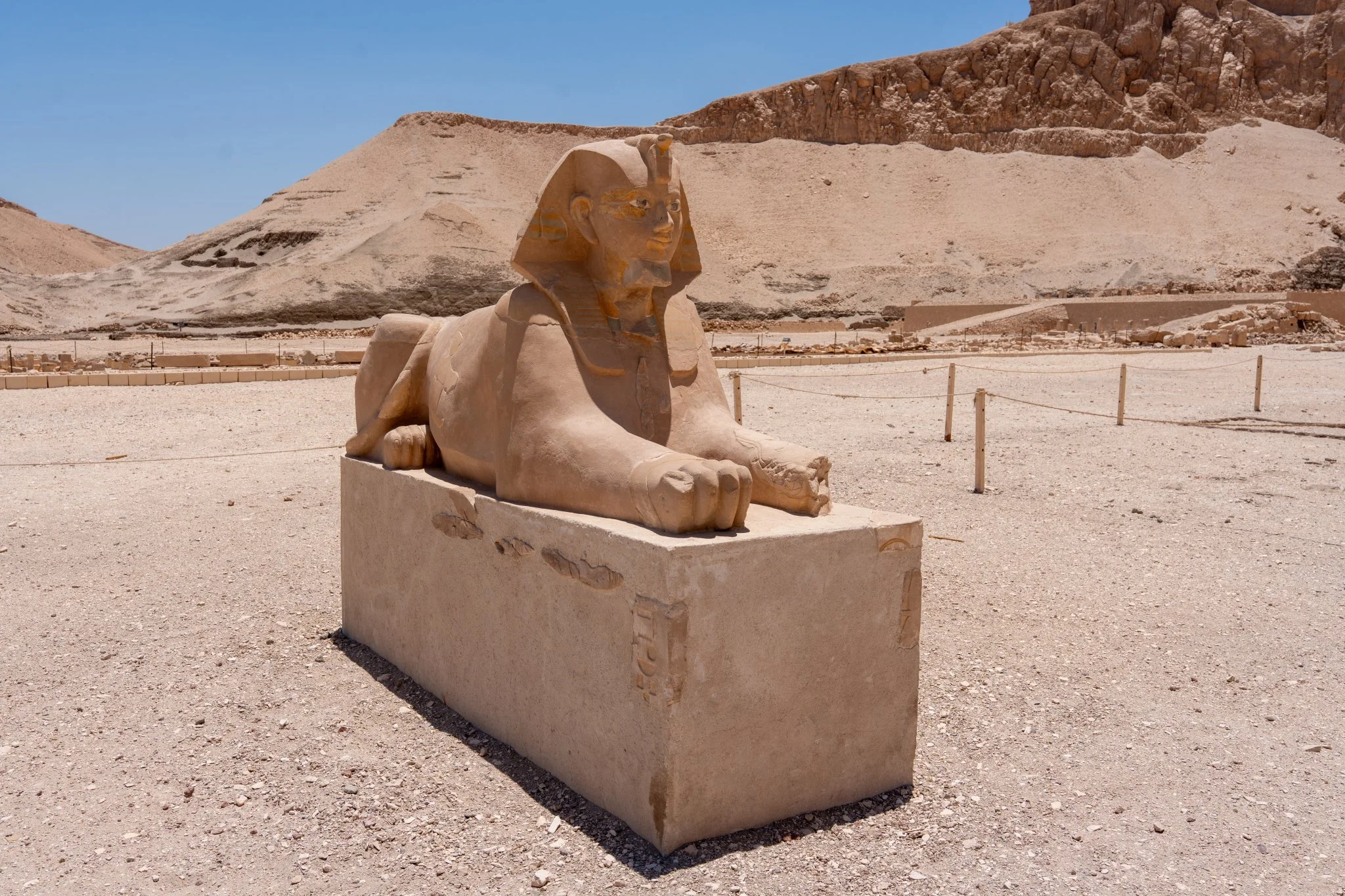
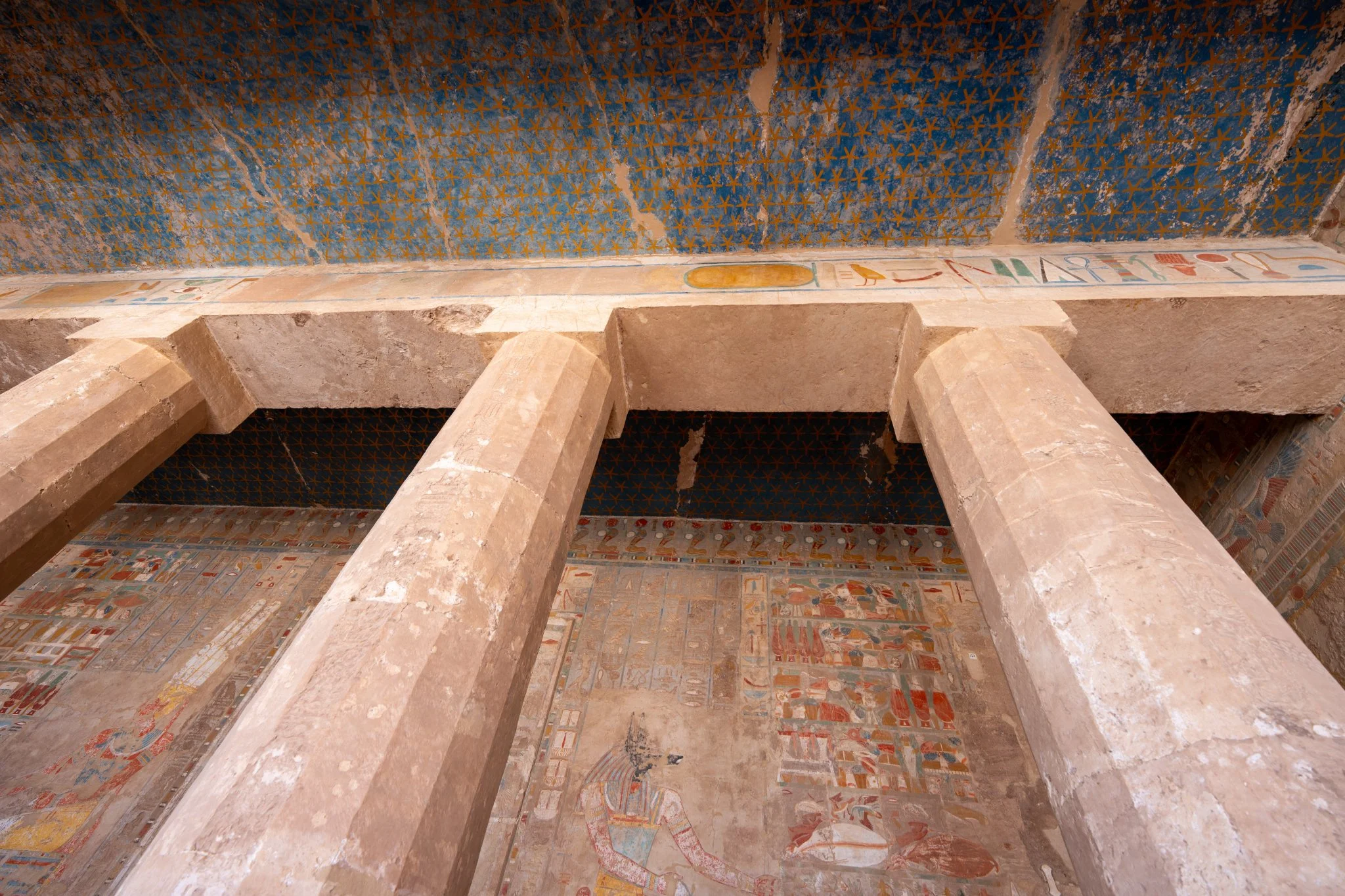
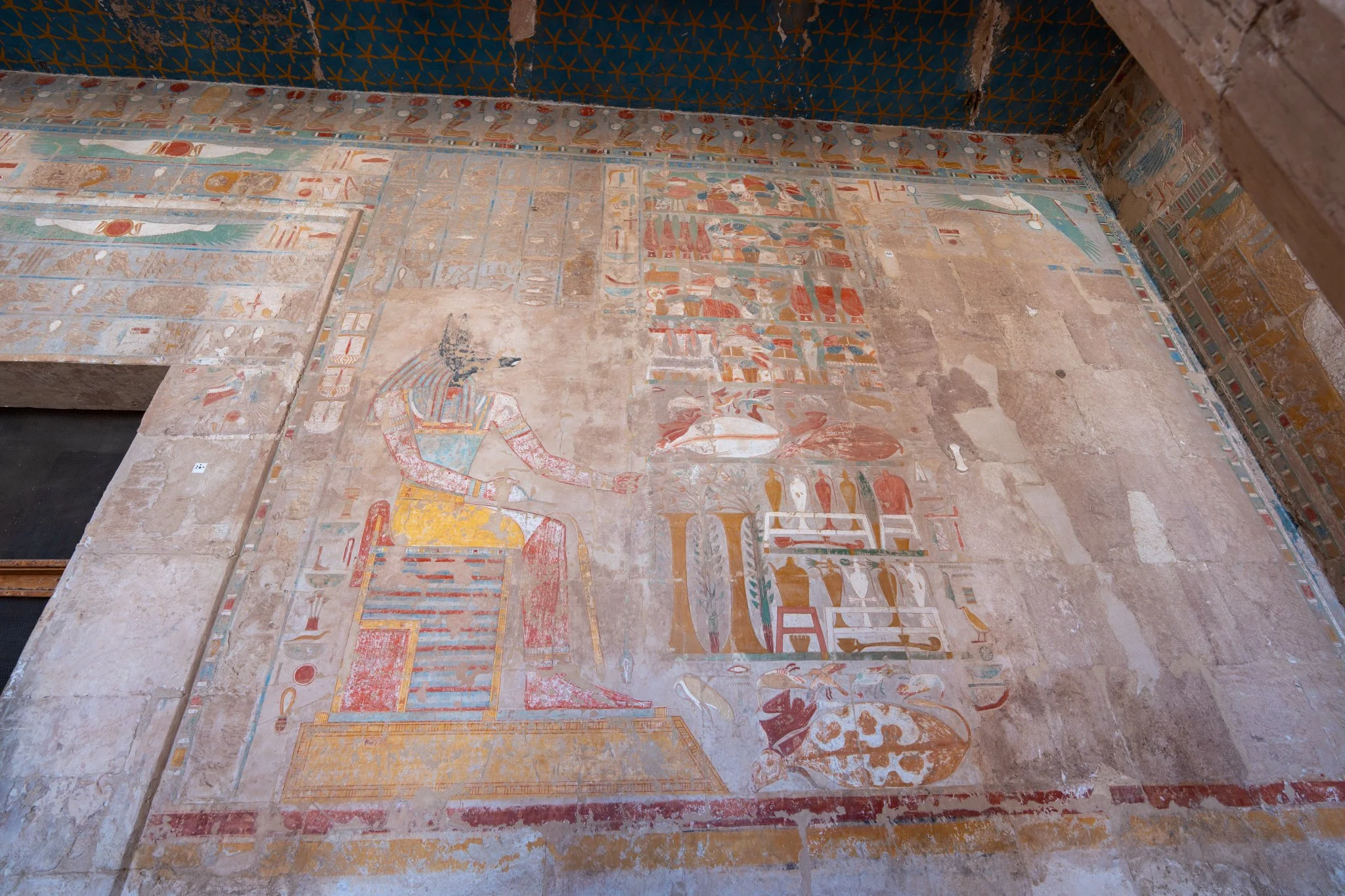
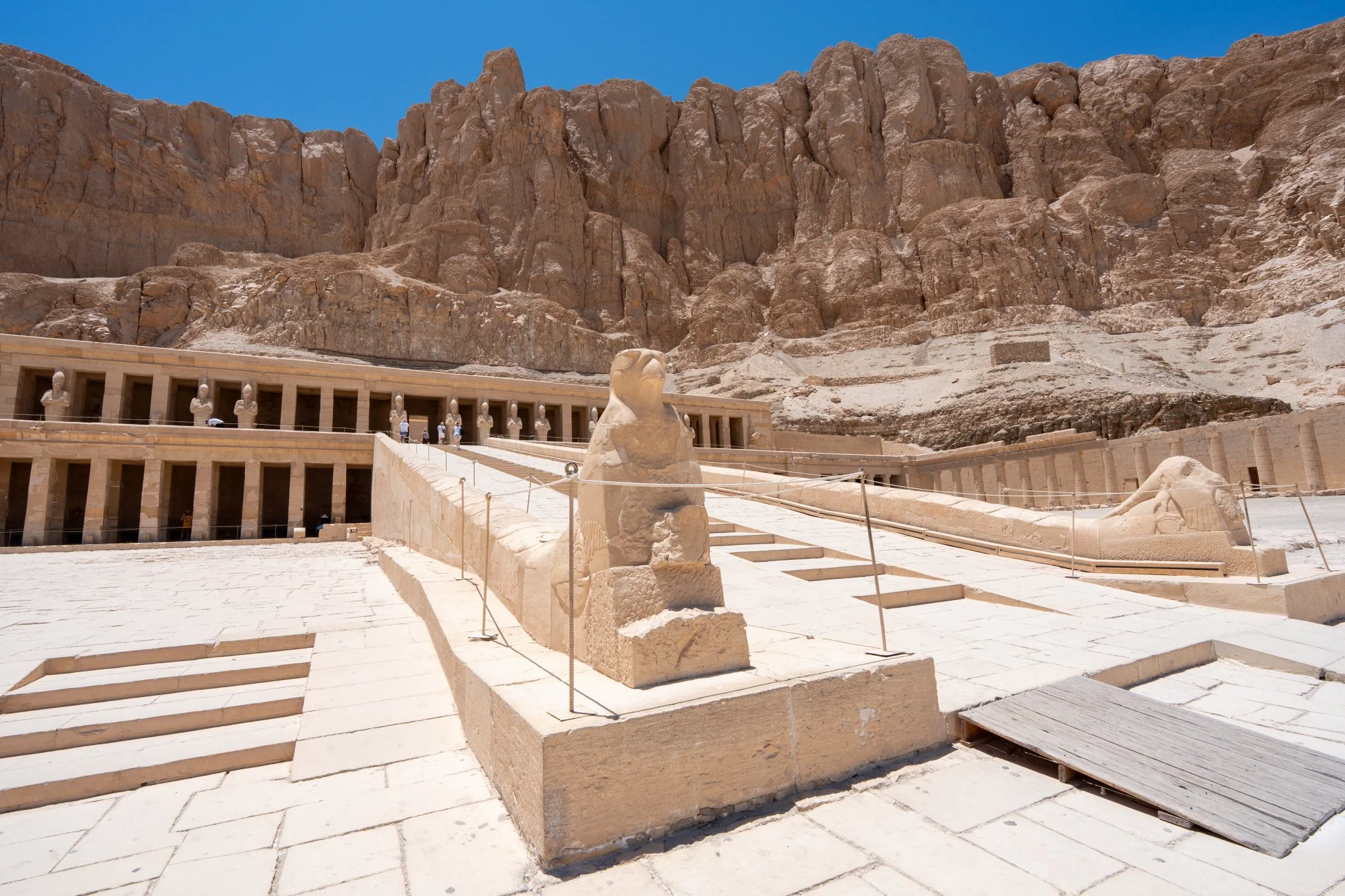
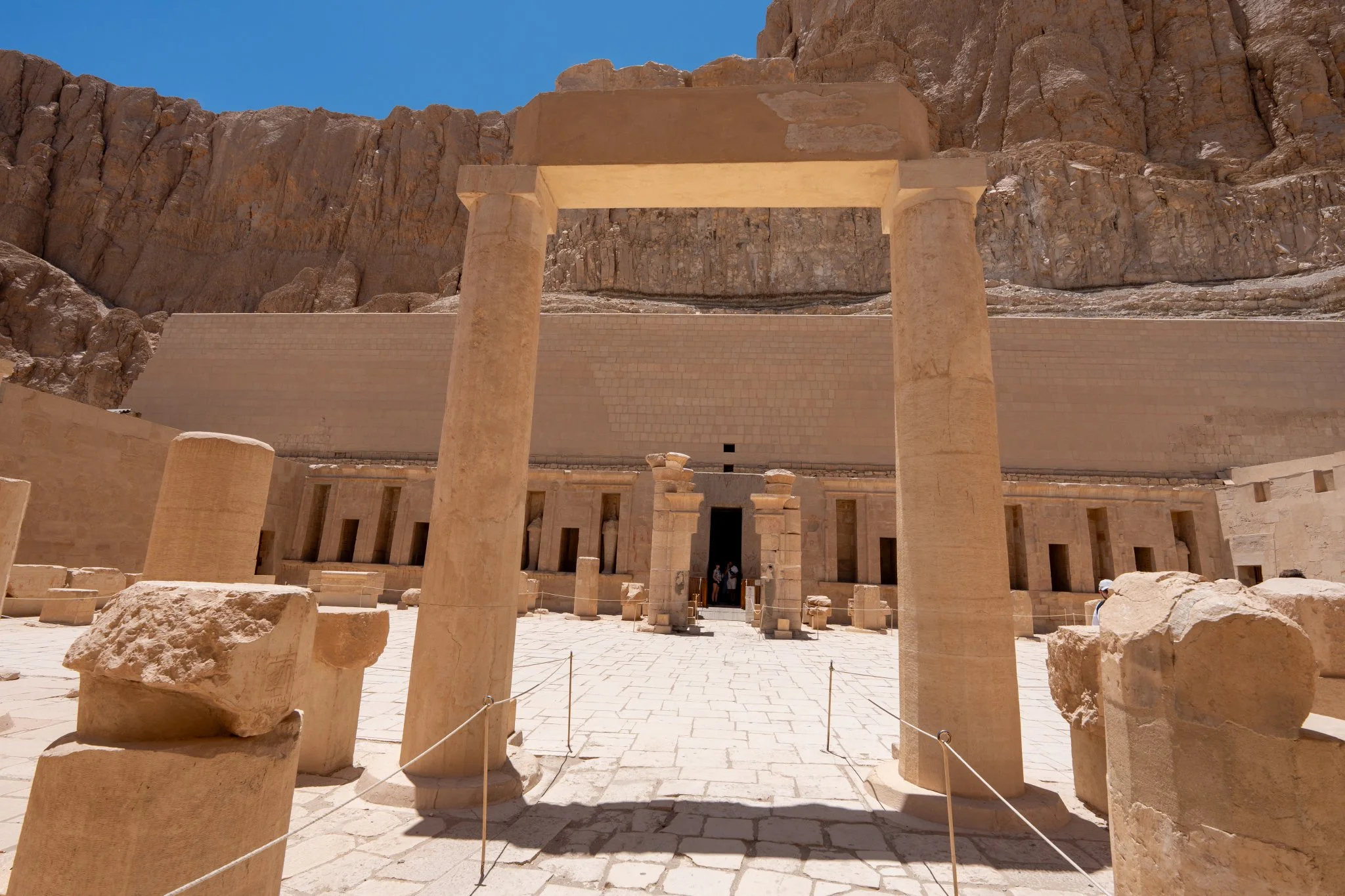
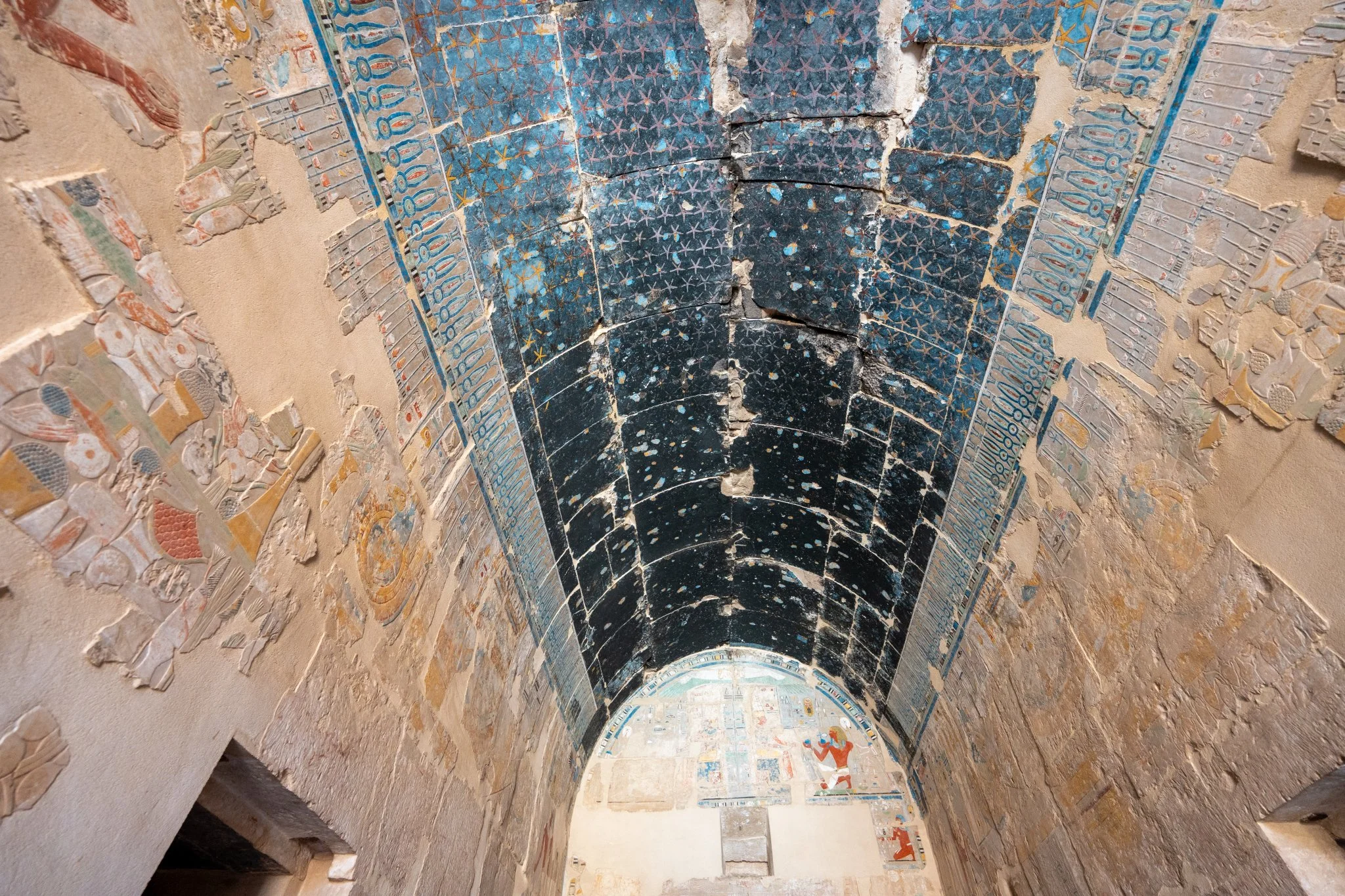
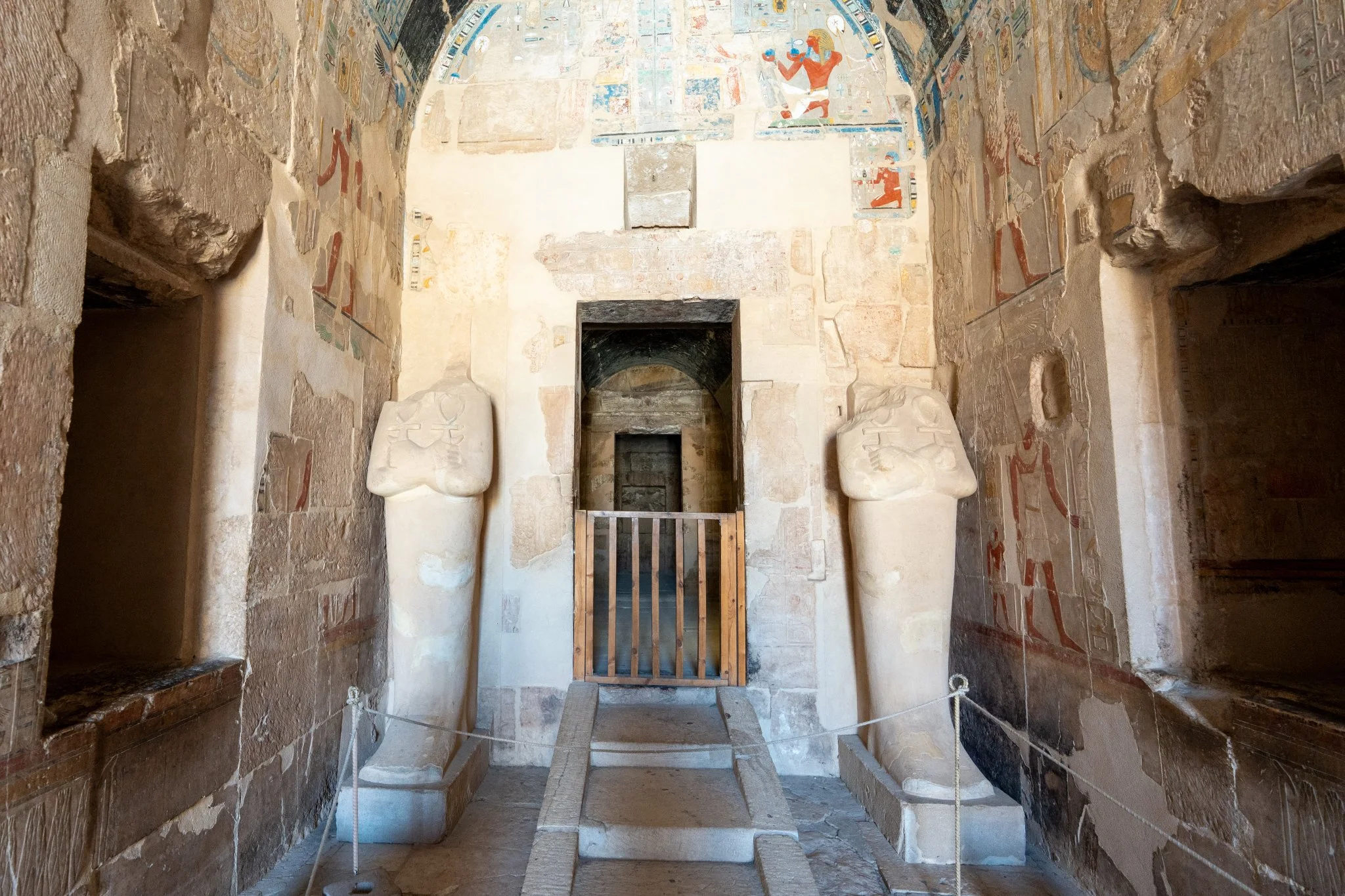
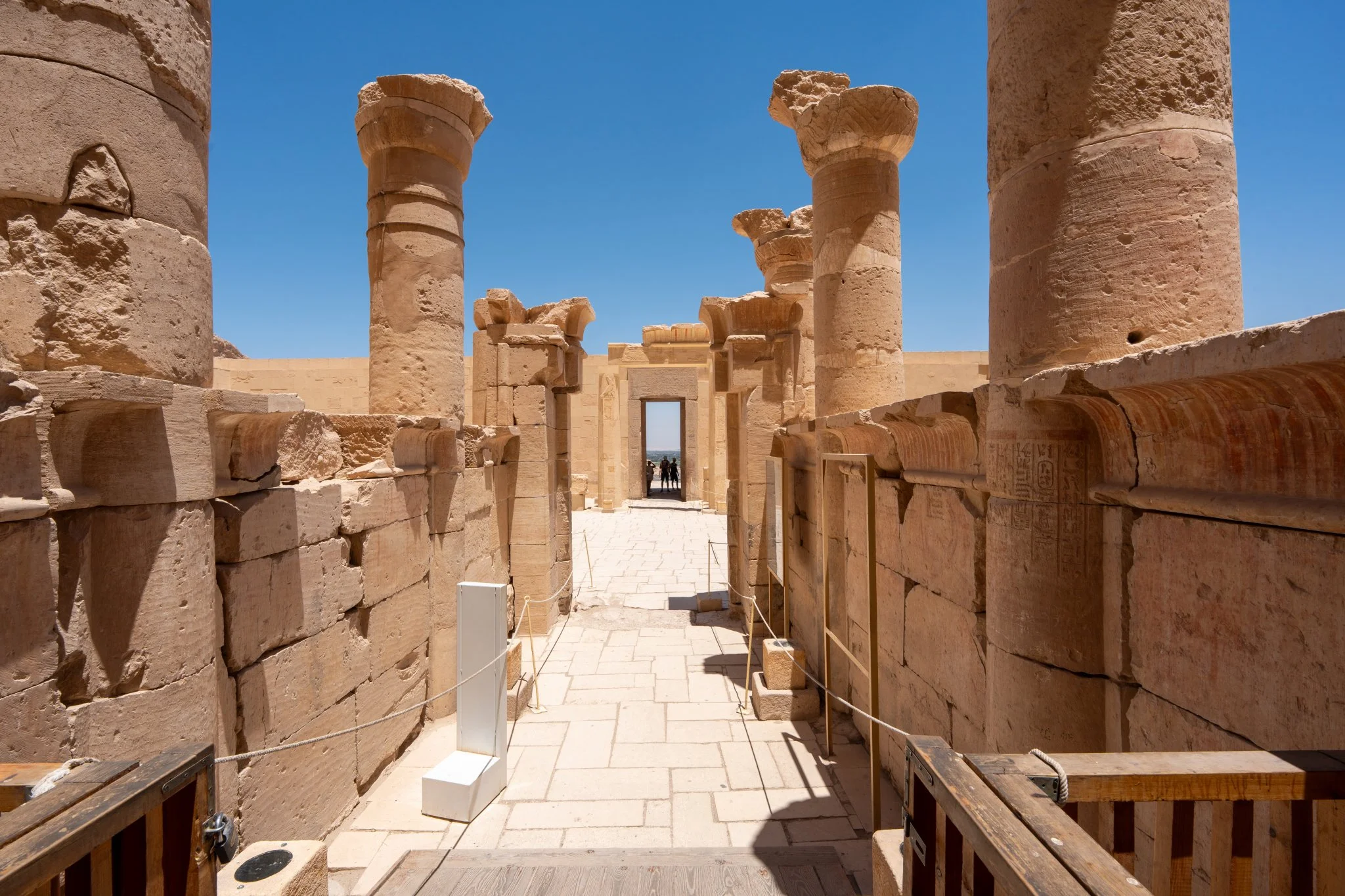
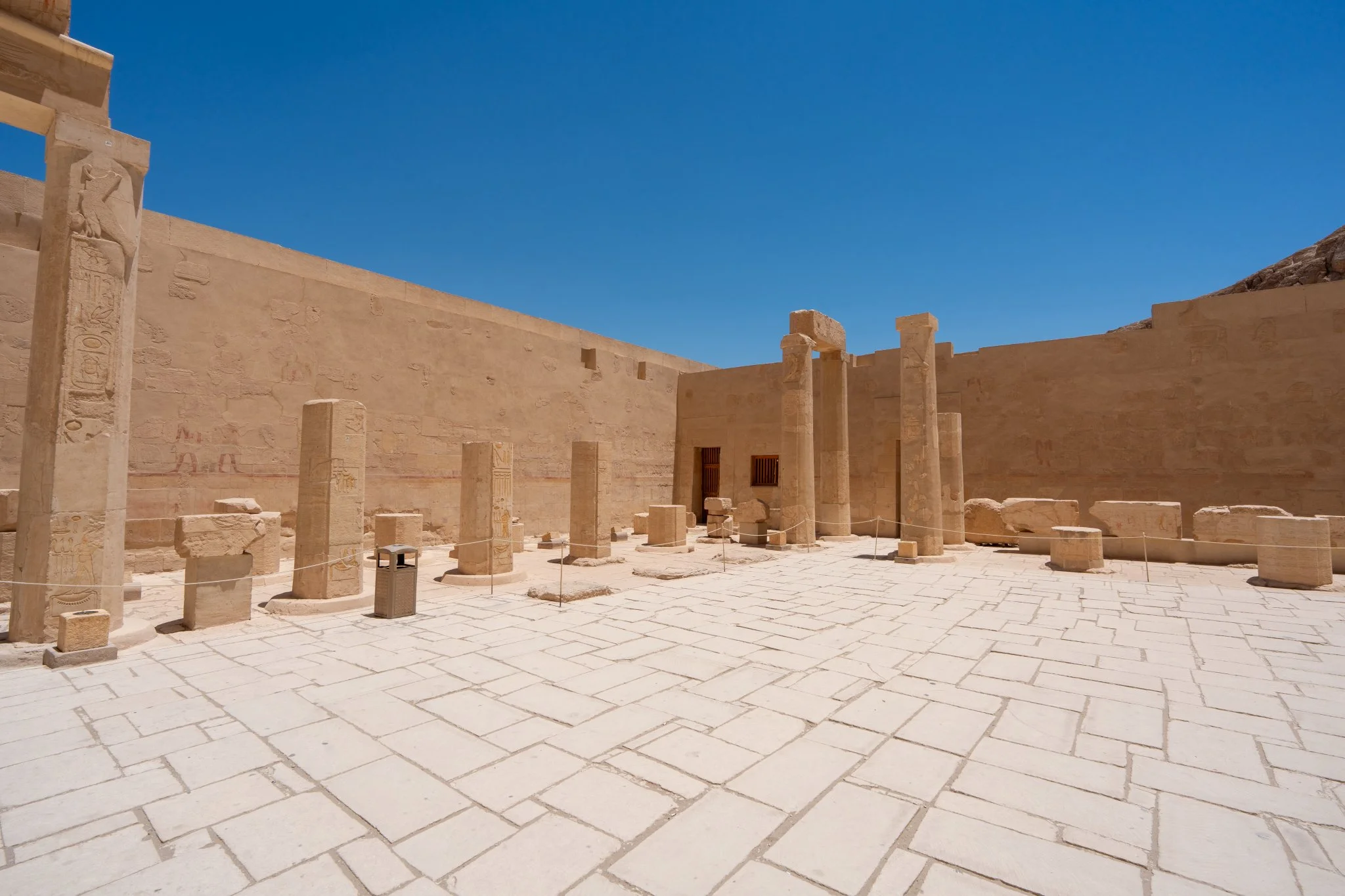
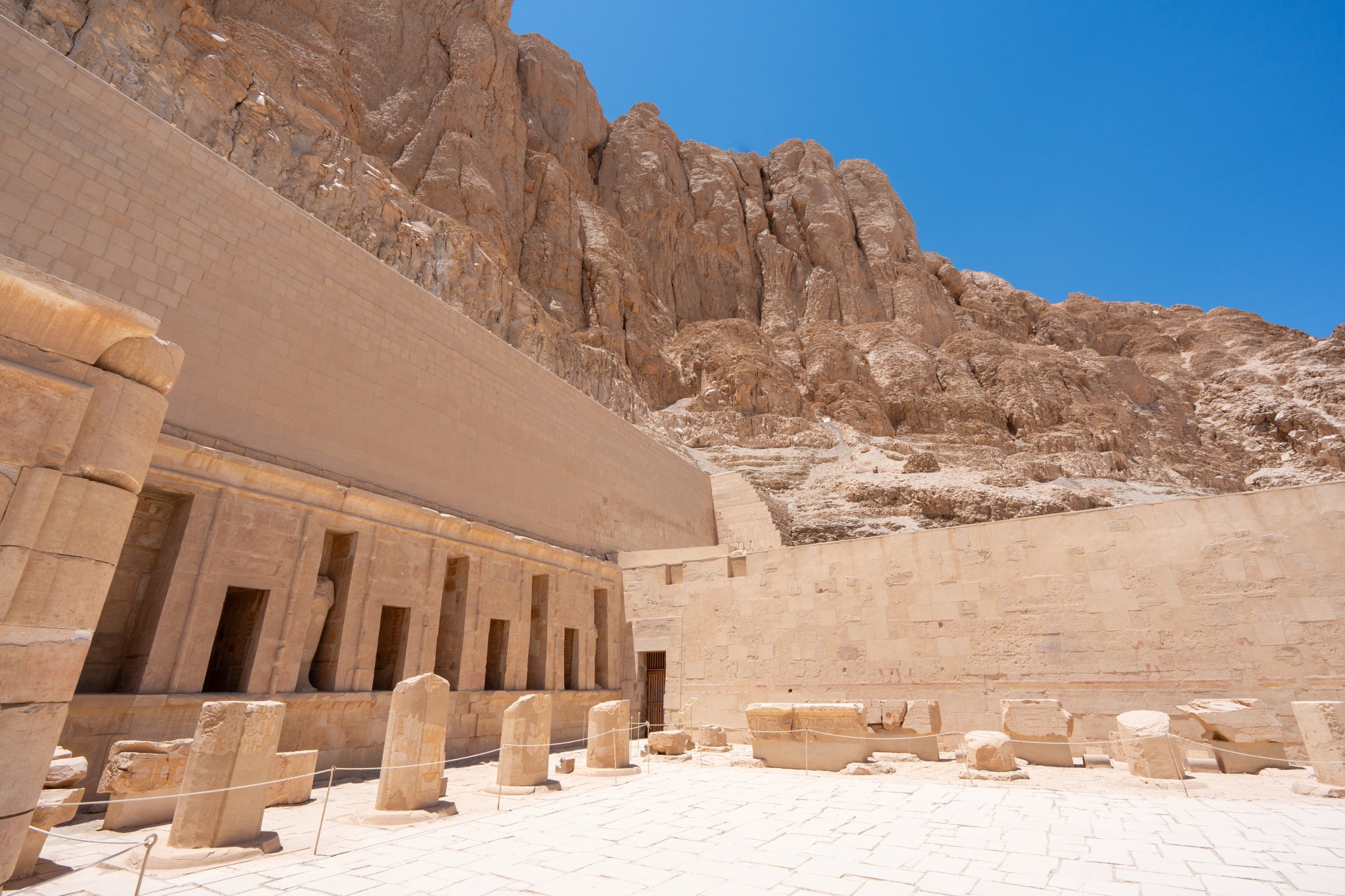
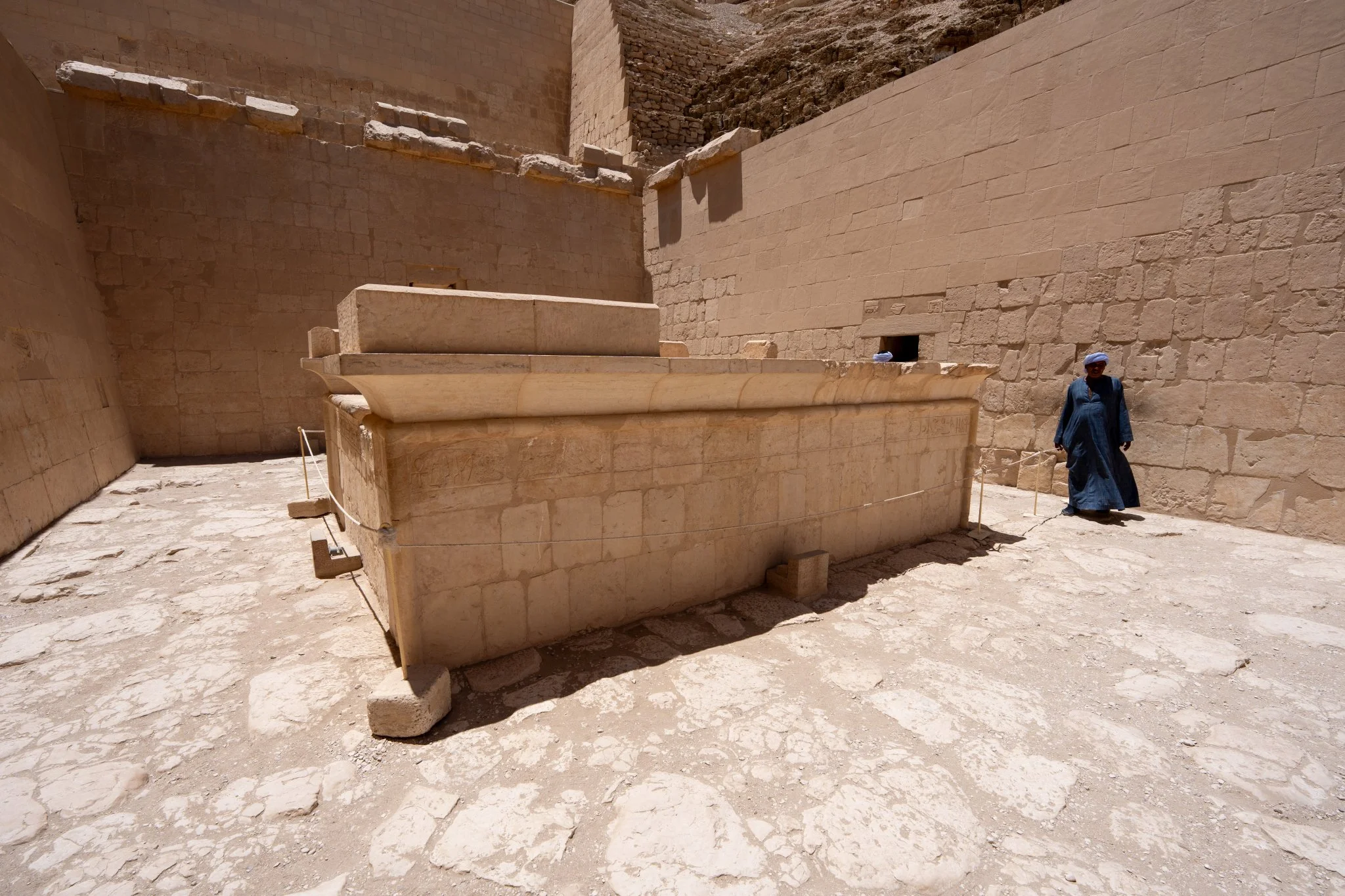
Piero: over the centuries, earthquakes, structural collapses, and above all deliberate destruction had left the temple in a very fragile condition.
Angela: it was an extraordinary feat of restoration, without which we would probably be looking at nothing more than a pile of ruins today.
Piero: perhaps that's exactly why the atmosphere feels different from Karnak or the Valley of the Kings. There, you truly feel as though you're walking through history itself, while here—even though you're standing in an extraordinary place—the hand of modern restoration is much more apparent.
Angela: it remains an unmissable stop for anyone wanting to understand the greatness of Ancient Egypt and to discover one of the most remarkable figures ever to wear the Double Crown of the pharaohs.
Piero: looking at that temple, perfectly nestled against the mountain, it's impossible not to marvel at how far ahead this civilization truly was—a civilization capable of creating monuments that, more than 3,000 years later, still tell the stories of the people who built them to anyone willing to listen. Join us on this short video as we retrace our walk through this extraordinary place.
The Colossi of Memnon: the last guardians of Thebes
Angela: the final stop of the day brought us face to face once again with the greatness of Ancient Egypt.
Piero: although, to be honest, very little remains today of the magnificent monuments that once stood here.
Angela: then, standing in the middle of the cultivated fields, almost without warning, two gigantic stone colossi suddenly appeared before us.
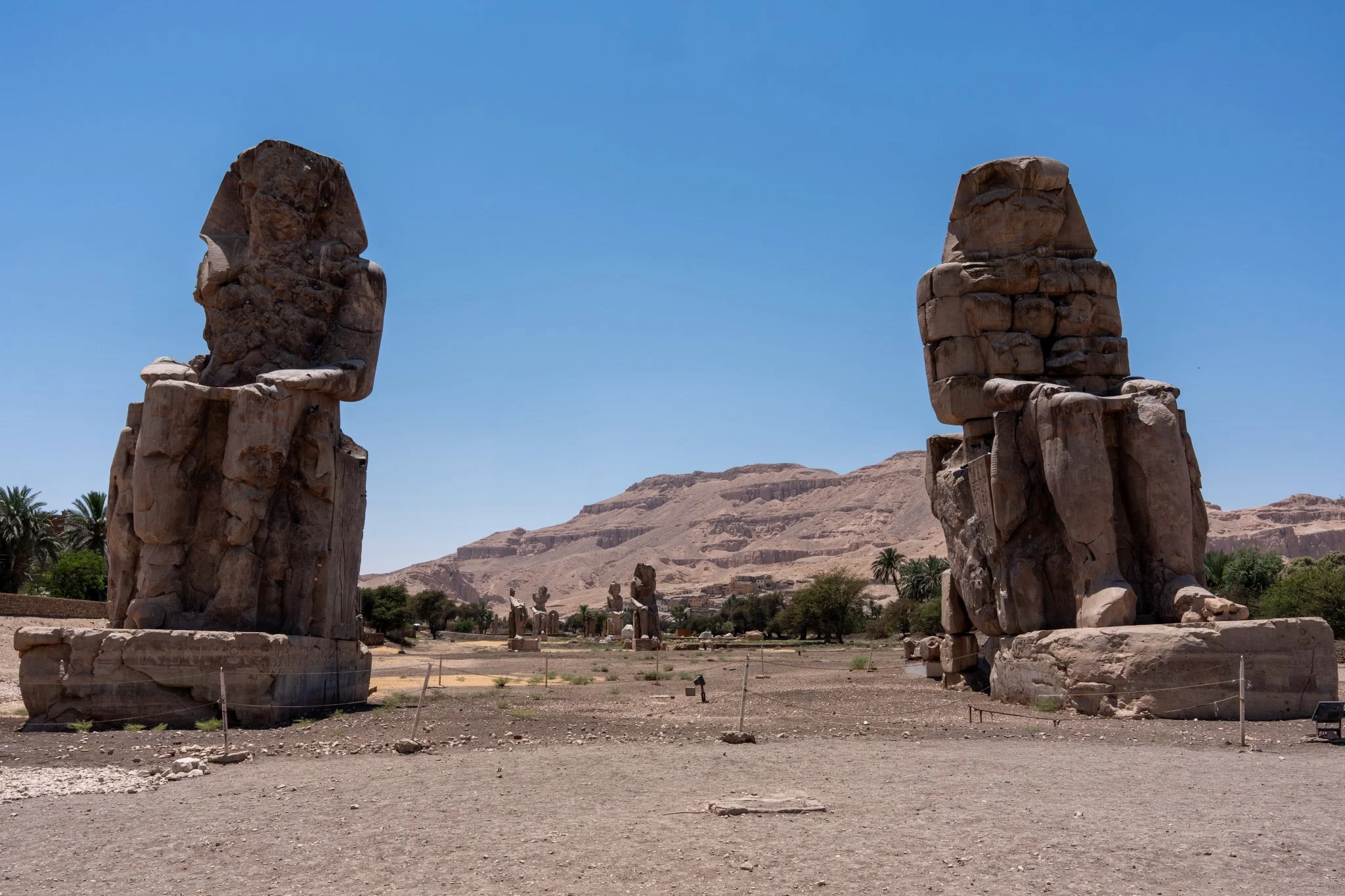
Piero: these are the famous Colossi of Memnon, standing about 18 meters tall and carved from two enormous blocks of quartzite. They depict Pharaoh Amenhotep III, one of the most powerful rulers of the New Kingdom, seated on his throne and gazing toward the rising sun.
Angela: today, they seem almost isolated in the middle of nowhere.
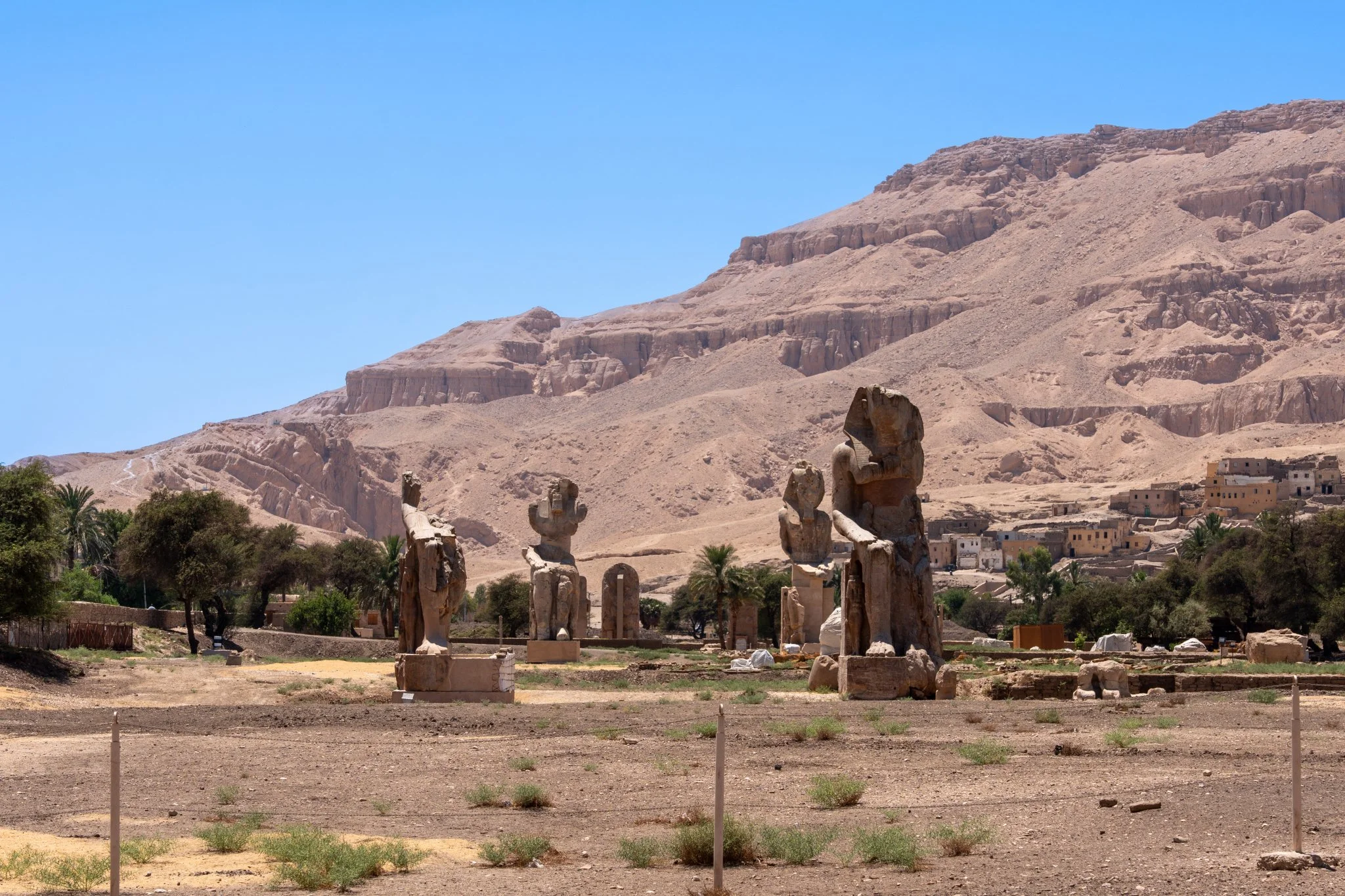
Piero: and yet, more than 3,400 years ago, they formed the monumental entrance to the magnificent Mortuary Temple of Amenhotep III, probably the largest temple ever built in Egypt. Sadly, the floods of the Nile, earthquakes, and the later reuse of its stones as building material have almost completely erased it.
Angela: and yet those two giants are still standing there.
Piero: silent, motionless, as though they were still guarding the entrance to a temple that no longer exists.
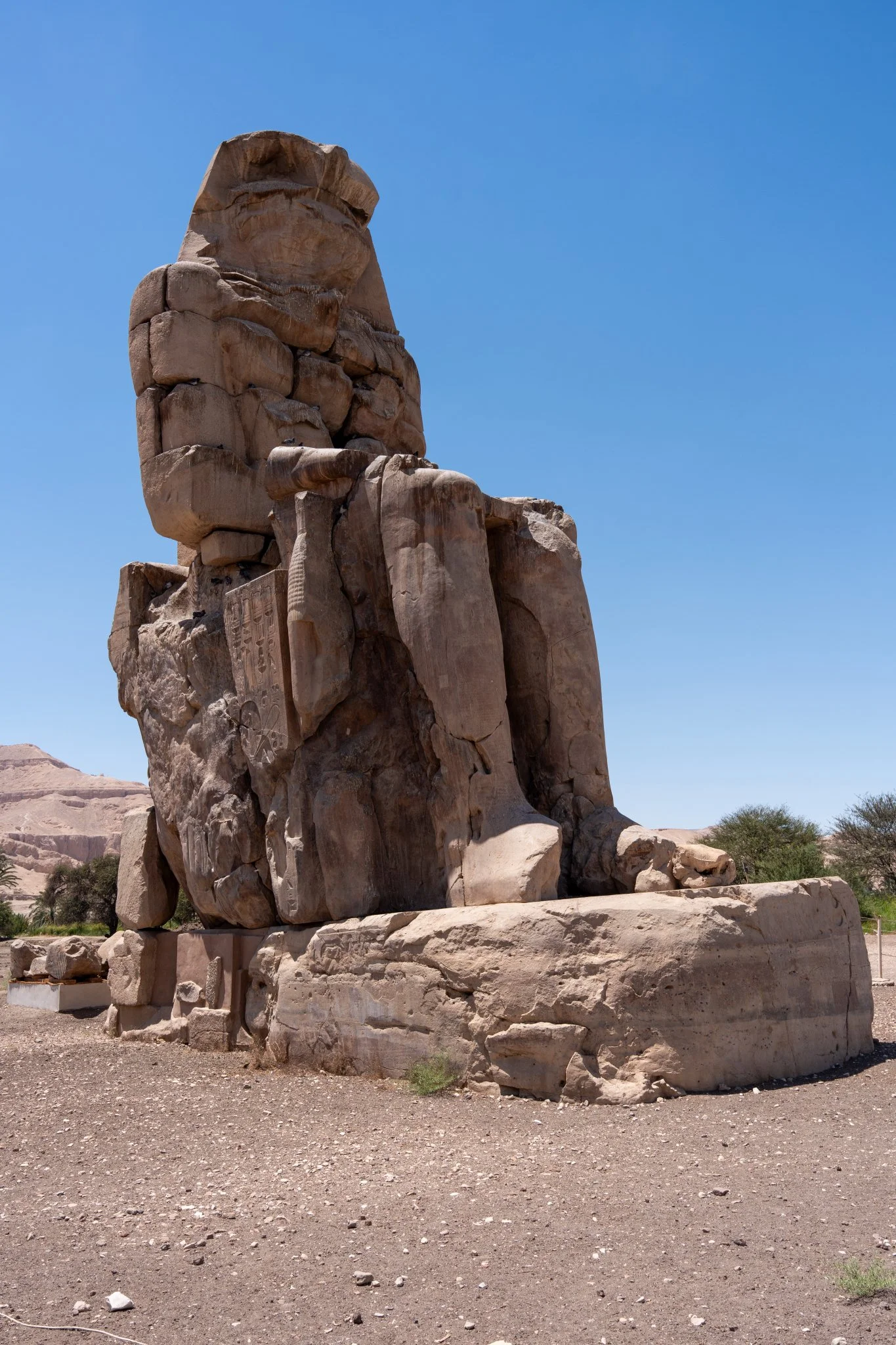
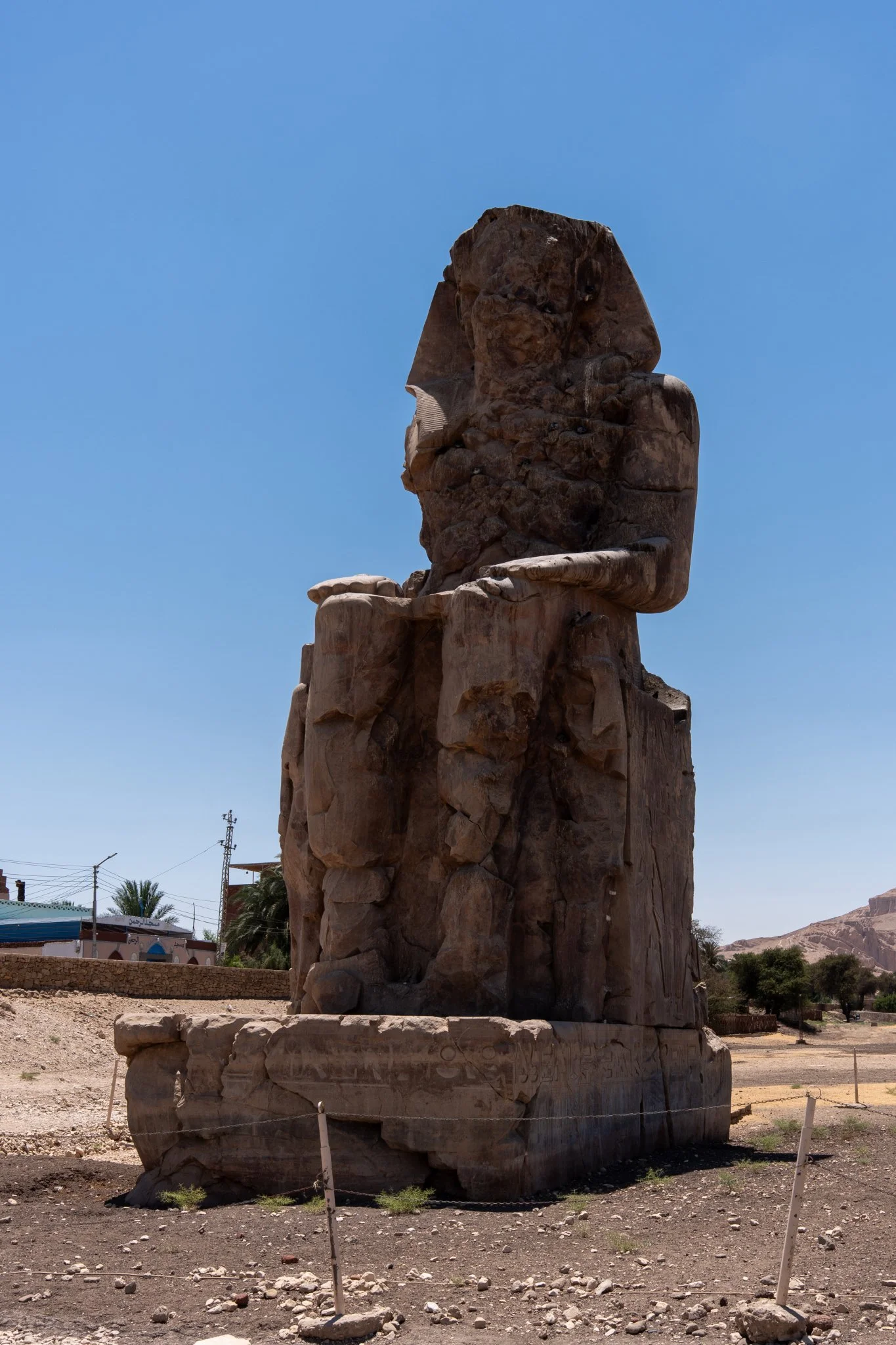
Angela: do you know why they're called the Colossi of Memnon?
Piero: it's a fascinating story. After a powerful earthquake, one of the statues began producing a mysterious sound at sunrise, most likely caused by changes in temperature that made the stone vibrate. The Greeks believed it was the greeting of Memnon, the Ethiopian hero of the Trojan War, welcoming his mother Eos, the goddess of dawn, each morning. From that moment on, the statues became known by his name, even though they have no real connection to Memnon.
Angela: it's incredible how history and legend have become so closely intertwined over the centuries.
Piero: that happens often in Egypt. Every stone seems to tell two different stories: one uncovered by archaeologists, and another passed down through the imagination of generations.
Goodbye Thebes
Angela: after so many unforgettable experiences, though, we were definitely starting to feel hungry.
Piero: absolutely. Our guide took us to a small local restaurant, far from the large hotels and the eateries designed exclusively for tourists.
Angela: it was the perfect opportunity to sample some traditional Egyptian cuisine, prepared with a simplicity that completely won us over. Vegetables, rice, freshly baked bread, grilled meat, and a variety of local specialties provided the perfect ending to an incredibly intense day.
Piero: sitting around the table, we found ourselves reflecting on everything we had experienced in just a few hours.
Angela: the Temple of Karnak, with its gigantic columns.
Piero: the Valley of the Kings, where time itself seems to have stood still.
Angela: the Temple of Hatshepsut, perfectly nestled against the mountain.
Piero: and finally, the Colossi of Memnon, the last silent witnesses to a glorious past.
Angela: the journey back was completely different from the one that had brought us there.
Piero: that morning we had been filled with expectation; by evening we were filled with memories—the kind that no photograph could ever fully capture.
Angela: it was one of those days that stays with you forever. Not only because we visited extraordinary monuments, but because we truly felt we had touched one of the most fascinating civilizations in the history of humanity.
Piero: the excursion from Marsa Alam to Luxor is worth every kilometer traveled and every hour of sleep you lose. If you're staying on the Red Sea, it's an experience we recommend without the slightest hesitation.
Angela: but a single day is simply not enough.
Piero: it allows you to admire some of the most iconic sites of Ancient Egypt, but Luxor deserves far more time. There's the Luxor Temple, the Ramesseum, Medinet Habu, the Luxor Museum, the Valley of the Queens, and many other remarkable sites that deserve to be explored in depth.
Angela: if your goal is to truly discover the heart of Ancient Egypt, the best choice is probably a Nile cruise, with Luxor as one of its main stops. Sailing along the river that gave birth to this extraordinary civilization allows you to visit the great temples at the right pace, understand the connection between the different cities, and experience, day by day, the thousands of years of history that we could only begin to touch.
Piero: the moment we walked among the columns of Karnak, crossed the corridors of the Valley of the Kings, and looked up at monuments that have defied time for more than 3,000 years will remain with us forever. Luxor is one of those places that, once you've left it behind, continues to travel with you.
Goodbye Egypt
Marsa Alam turned out to be much more than just a Red Sea holiday. Between its crystal-clear waters, the desert, unforgettable excursions, and the extraordinary legacy of Ancient Egypt, this journey left us with memories that will last a lifetime. It's an experience we wholeheartedly recommend to anyone looking for relaxation, nature, history, and the chance to discover one of the world's most fascinating countries.
Angela: we left thinking we were simply giving ourselves a few days of relaxation on the Red Sea. We are returning home with much more: the memory of an extraordinary sea, the silence of the desert, and the timeless grandeur of Ancient Egypt.
Piero: because sometimes the most unexpected journeys are the ones that leave the deepest mark. Marsa Alam was not just a holiday, but an experience made of colours, emotions, encounters, and landscapes that will remain with us for a long time.
Angela: Marsa Alam showed us that it is much more than just a seaside destination. It is the starting point for a journey filled with nature, history, and emotions that are impossible to forget. And, as always happens after a truly special trip, one certainty already accompanies us towards our next adventure: we will return to Egypt again.