Auschwitz-Birkenau: the place where history must never be forgotten
Angela: today is our last day in Kraków. There is one place we saved for the end of our trip, and it is a place that no one should miss.
Piero:Auschwitz-Birkenau is not just a tourist attraction. It is one of the most important sites of memory in Europe and the world, a visit that leaves a profound impression and helps us understand one of the most tragic chapters in human history.
Angela: if you are planning a trip to Kraków, our advice is to book this visit well in advance, especially during peak travel periods such as Easter, Christmas, or the summer season.
Piero: the best option is undoubtedly the full-day tour. Unfortunately, since we planned our trip during the Easter holidays and found most places already fully booked, we were only able to reserve the half-day visit.
Angela: personally, we would not recommend this option. The time available is very limited and does not allow you to fully explore both camps. There is never a feeling of overcrowding because visitor access is very well organized, but the tour schedules are extremely strict. The two camps are connected by a free shuttle service, and you will need at least a couple of hours to visit both sites properly.
Piero: for this reason, we had to make a difficult choice: dedicate the limited time we had exclusively to Birkenau, giving up a more in-depth visit to Auschwitz I.
Birkenau: the machinery of extermination
Angela: before entering the camp, it is worth taking a few moments to understand the history of the place we are about to visit.
Piero: the Auschwitz-Birkenau complex was established after the invasion of Poland by Nazi Germany in September 1939. Initially, Auschwitz was created in 1940 as a concentration camp, mainly intended for Polish political prisoners.
Angela: as the months passed, however, the concentration camp system expanded dramatically. The Nazi authorities identified the area of Oświęcim as a strategic location, well connected to the European railway network and therefore ideal for their purposes.
Piero: in 1941, the construction of Birkenau, also known as Auschwitz II, began. The new camp covered a vast area and was designed to accommodate tens of thousands of deportees from all parts of occupied Europe.
Angela: what had originally been established as a prison camp gradually evolved into the largest extermination center of the Nazi regime.
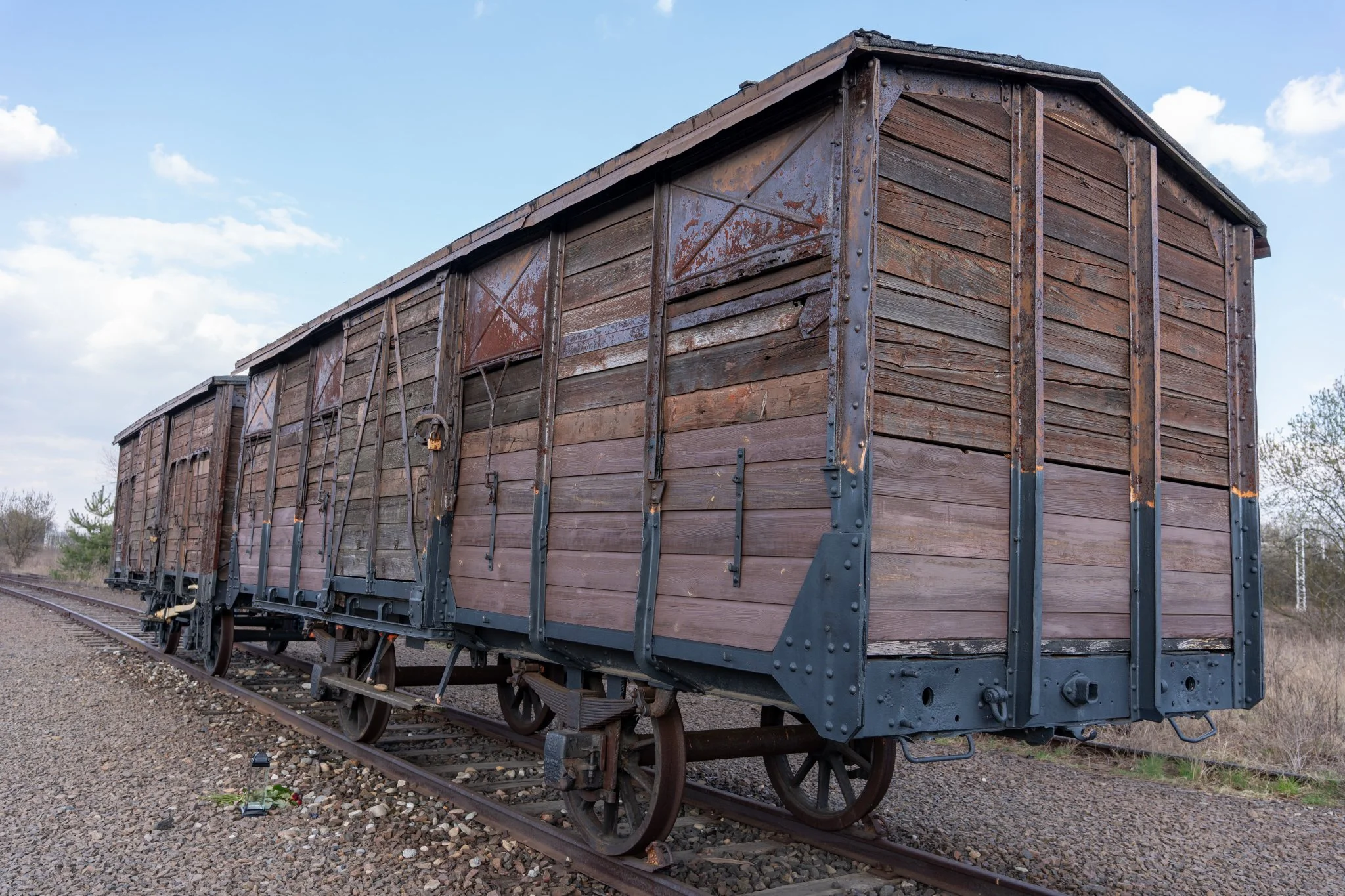
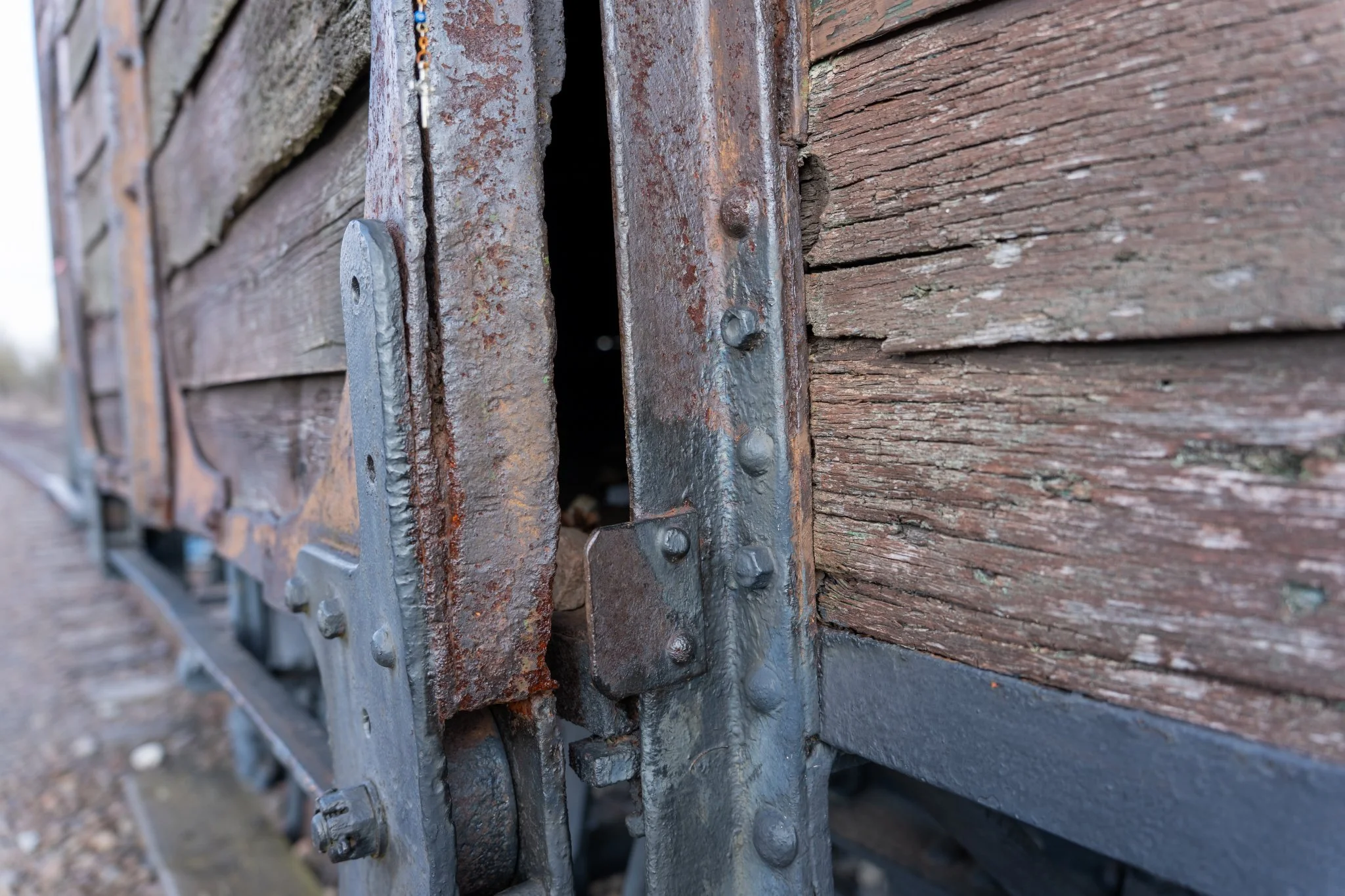
Piero: between 1942 and 1944, railway transports arrived here from Poland, Hungary, France, the Netherlands, Belgium, Greece, Italy, and many other European countries. Each train carried hundreds, sometimes thousands, of people packed into cattle cars without water, sanitation facilities, or adequate food.
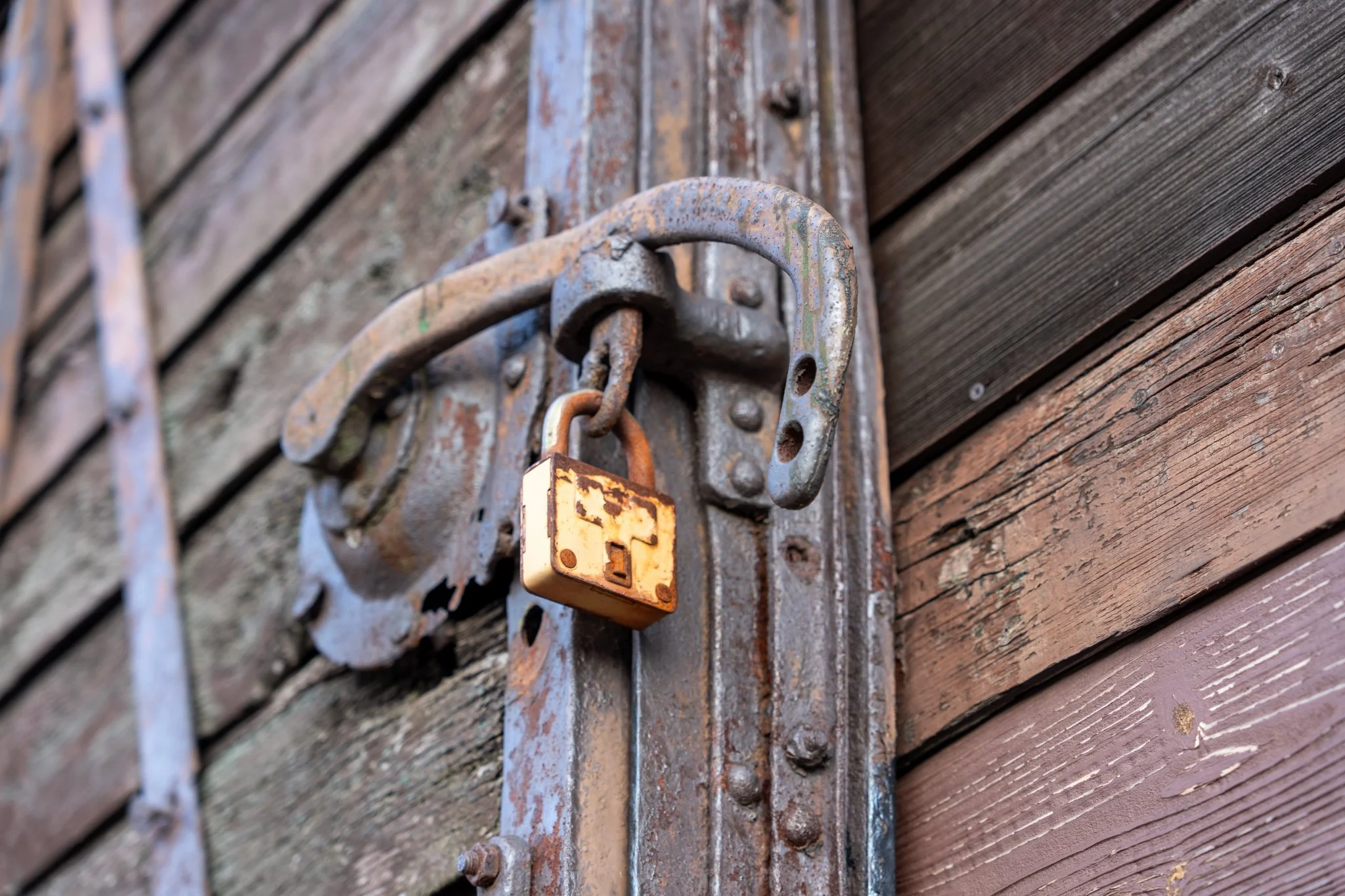
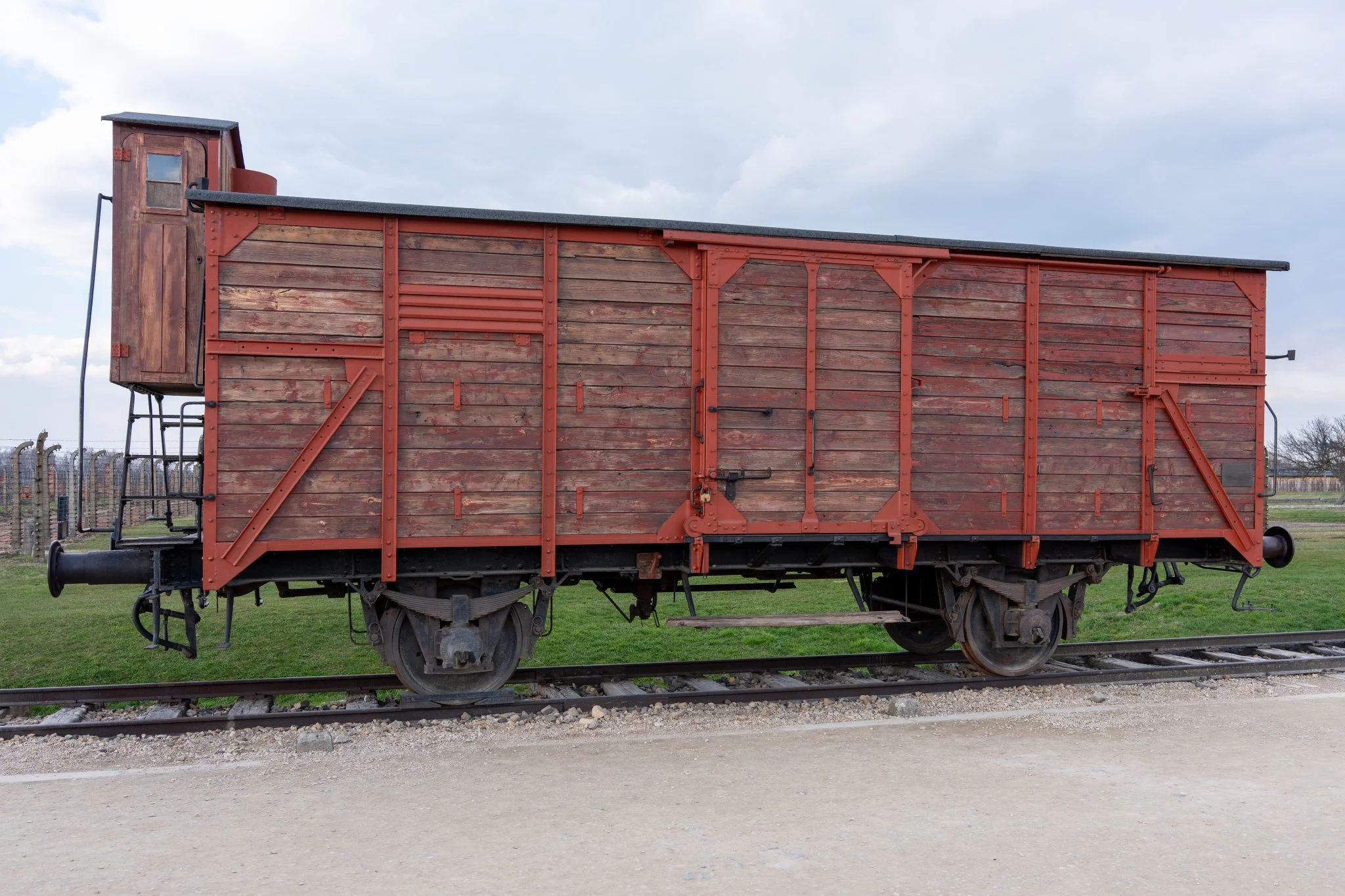
Angela: as soon as they stepped off the trains, the deportees were subjected to the so-called "selection." SS doctors decided the fate of each person within seconds.
Piero: those considered fit for forced labor were registered and assigned to the camp barracks. Children, the elderly, the sick, and most women were instead sent directly to the gas chambers.
Angela: it is estimated that more than one million people were murdered in the Auschwitz complex, the majority of them Jewish. Among the victims were also Roma, Sinti, political opponents, homosexuals, Soviet prisoners of war, and people belonging to other groups persecuted by the Nazi regime.
Piero: on January 27, 1945, the camp was liberated by the Soviet Red Army. The soldiers found thousands of survivors in desperate conditions, uncovering a reality that the world would struggle to fully comprehend.
Angela: today, Auschwitz-Birkenau is one of the most important sites of memory in the world. It represents not only the tragedy of the Jewish people, but also serves as a universal warning against hatred, racism, intolerance, and every form of dehumanization.
Walking through the silence of Birkenau
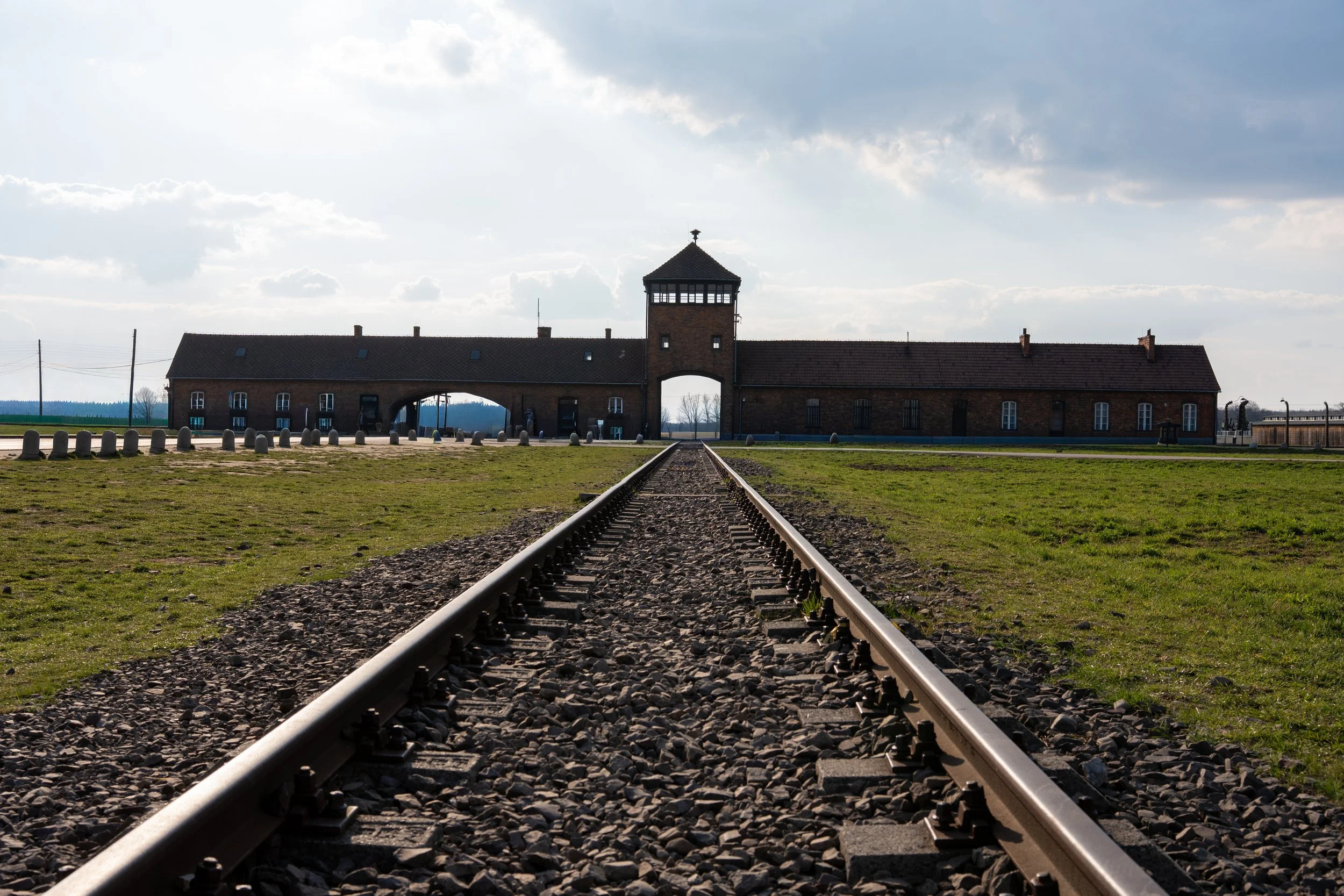
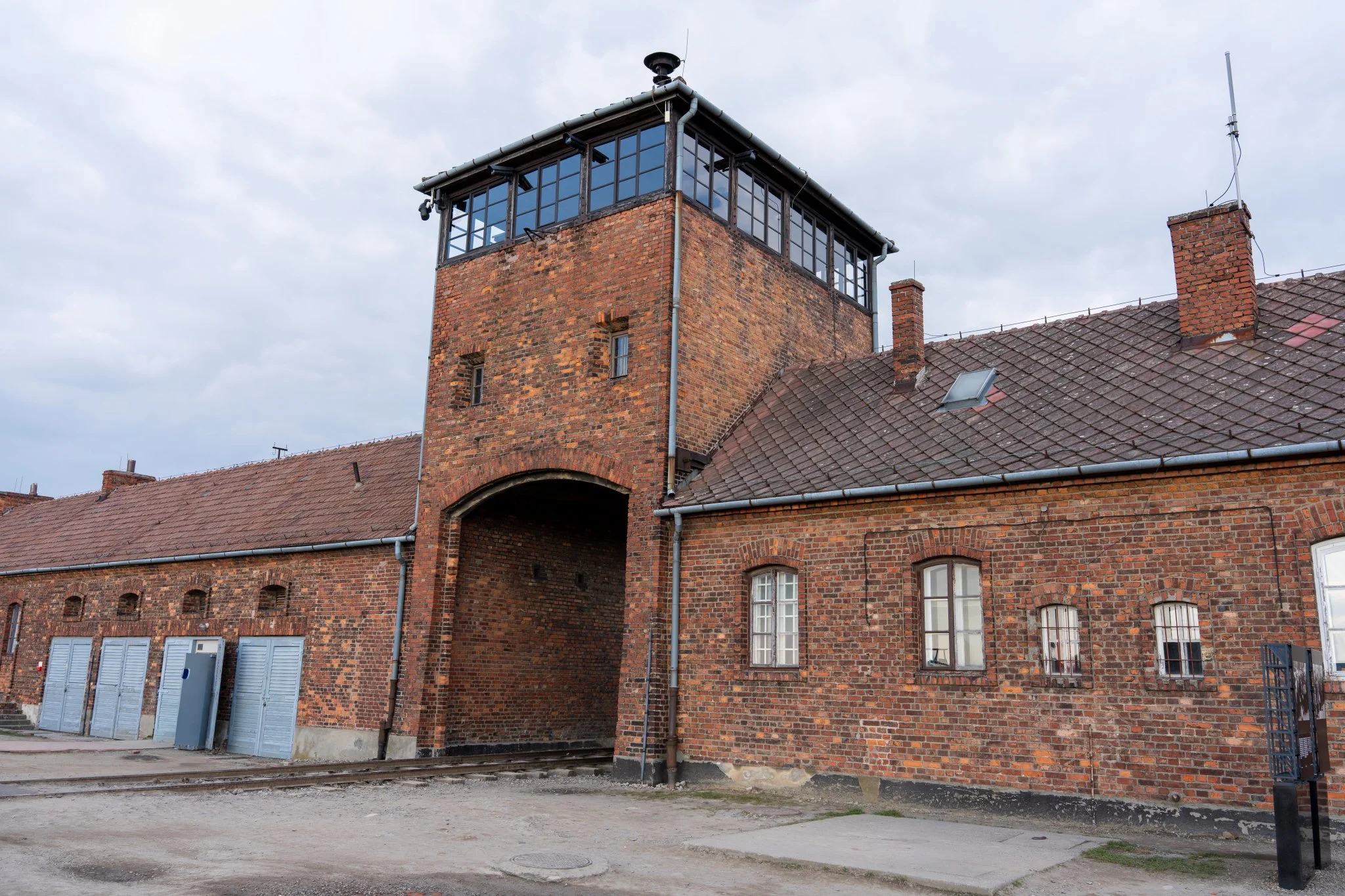
Piero: as soon as we arrive, the first image before our eyes is one we have seen countless times in documentaries and history books.
Angela: the large brick building, pierced by the railway tracks that lead directly into the heart of Birkenau.
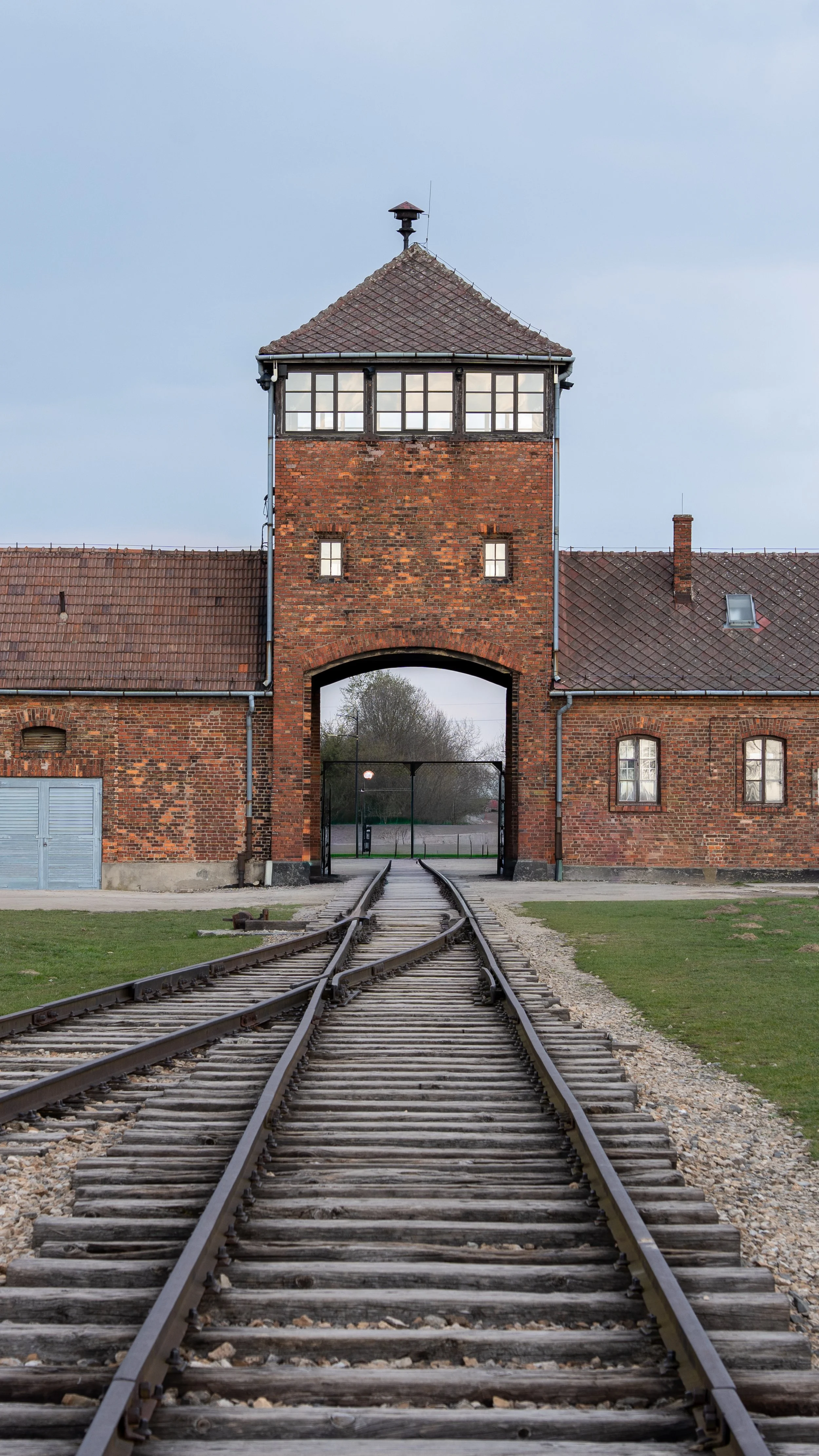
Piero: the railway tracks cut deep into the heart of the camp and seem to disappear into the horizon. It is impossible not to think of the trains filled with deportees that arrived here every day—people who often had no idea of the fate awaiting them.
Angela: we slowly cross the famous railway entrance. The silence feels almost unreal. Despite visitors coming from all over the world, the sense of respect is absolute.
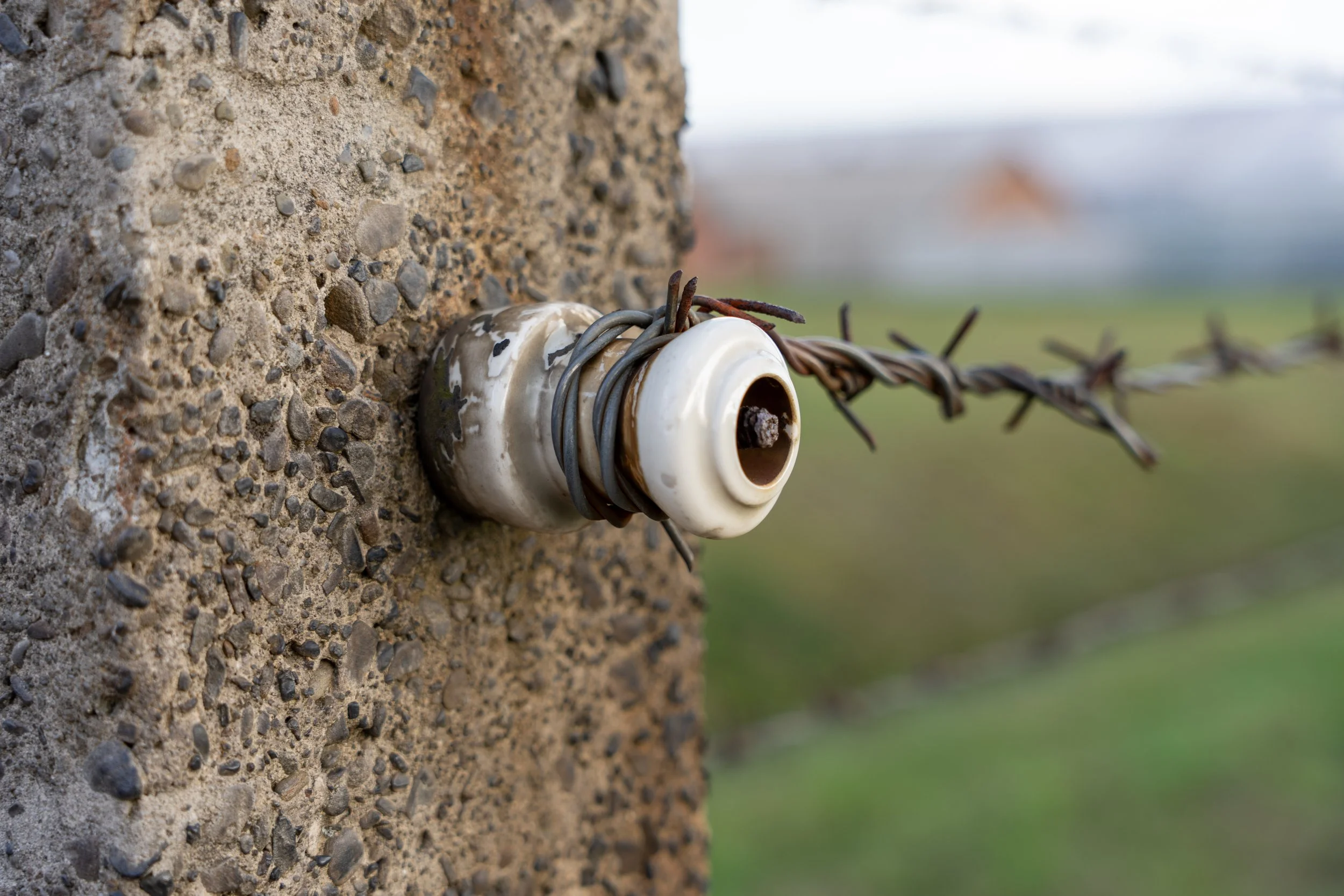
Piero: our gaze is immediately struck by the sheer vastness of Birkenau. Photographs cannot convey its true scale. Before us stretch hectares upon hectares of land, crossed by dirt roads, fences, and seemingly endless rows of barracks.
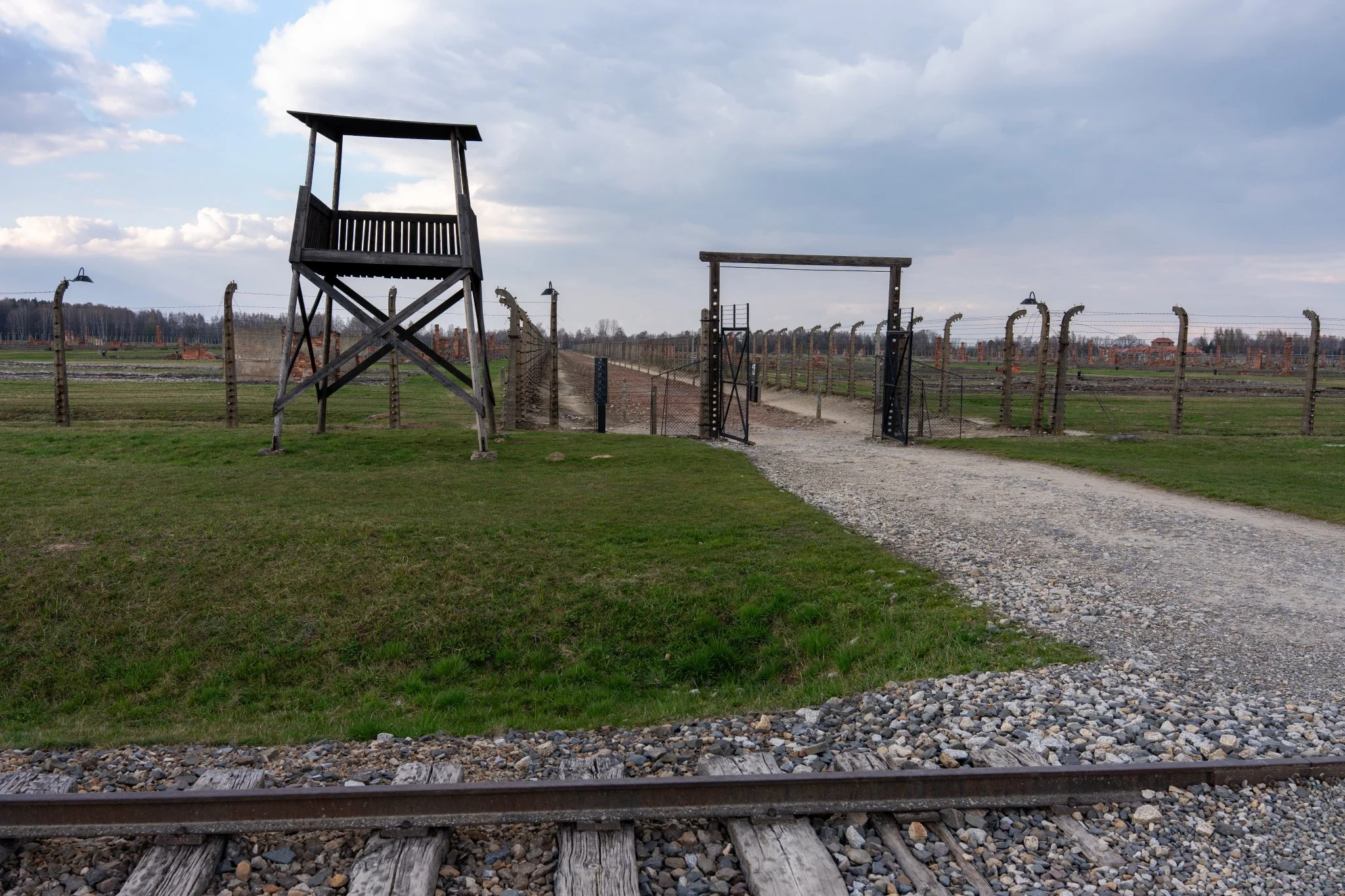
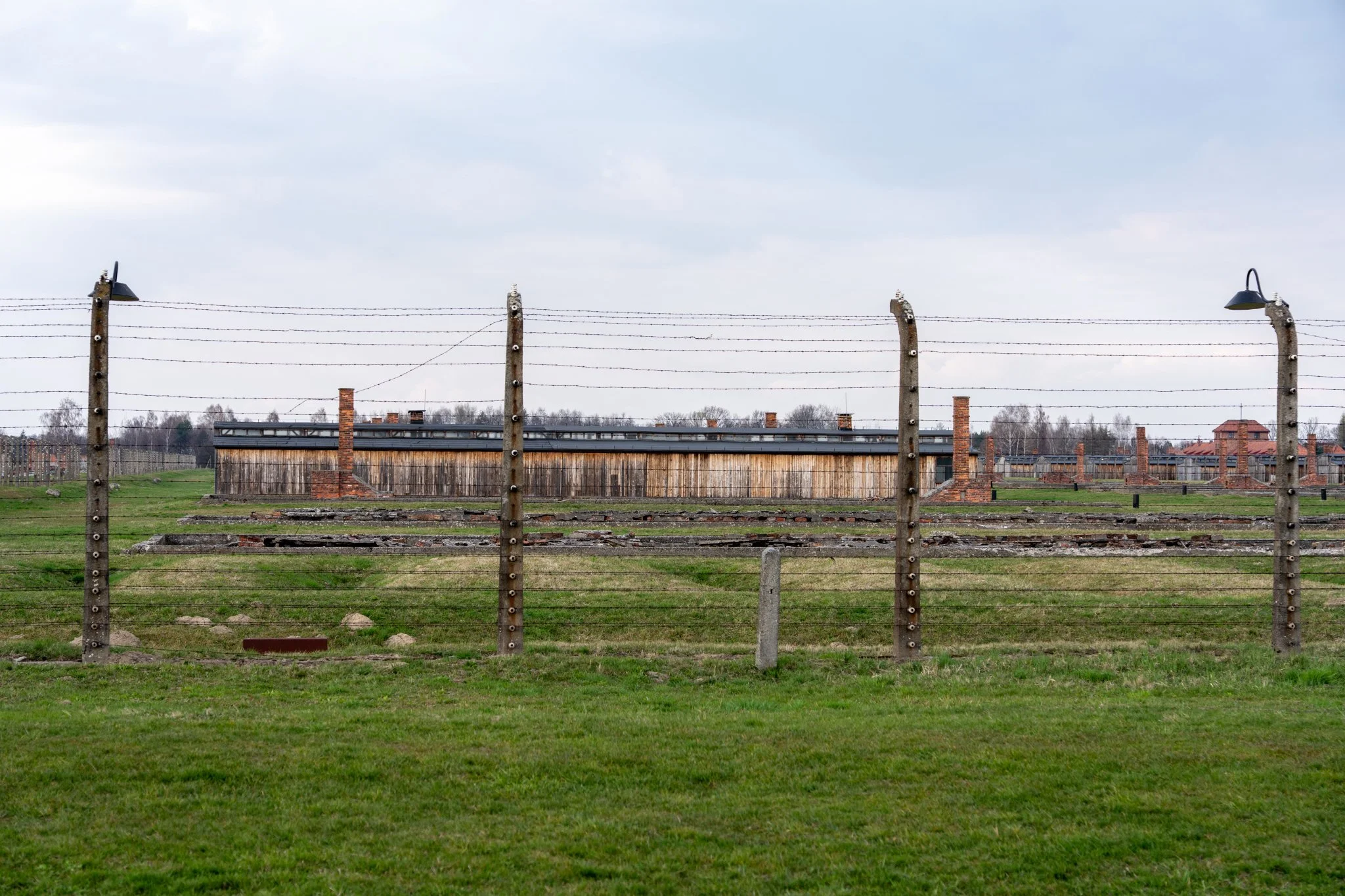
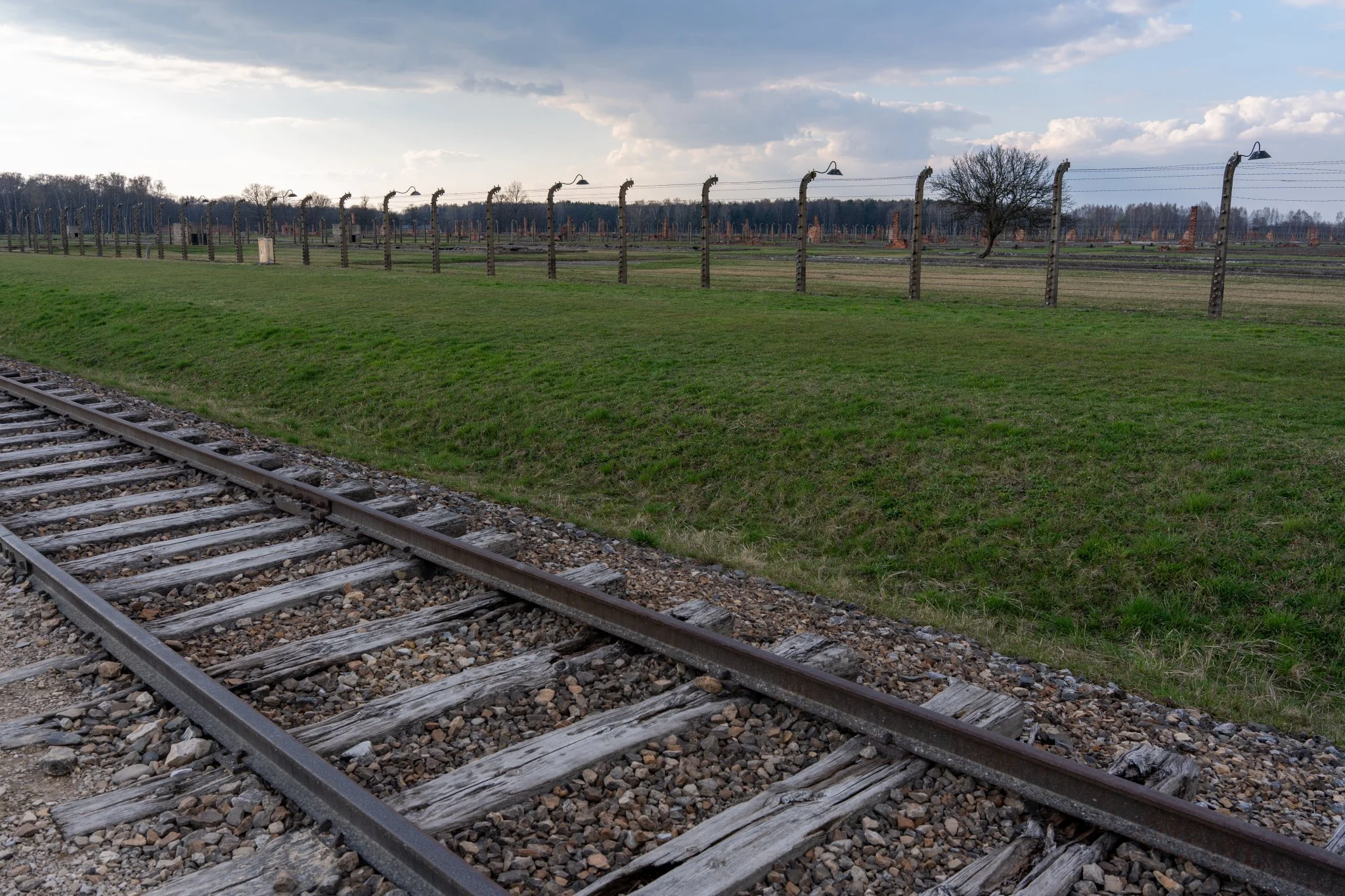
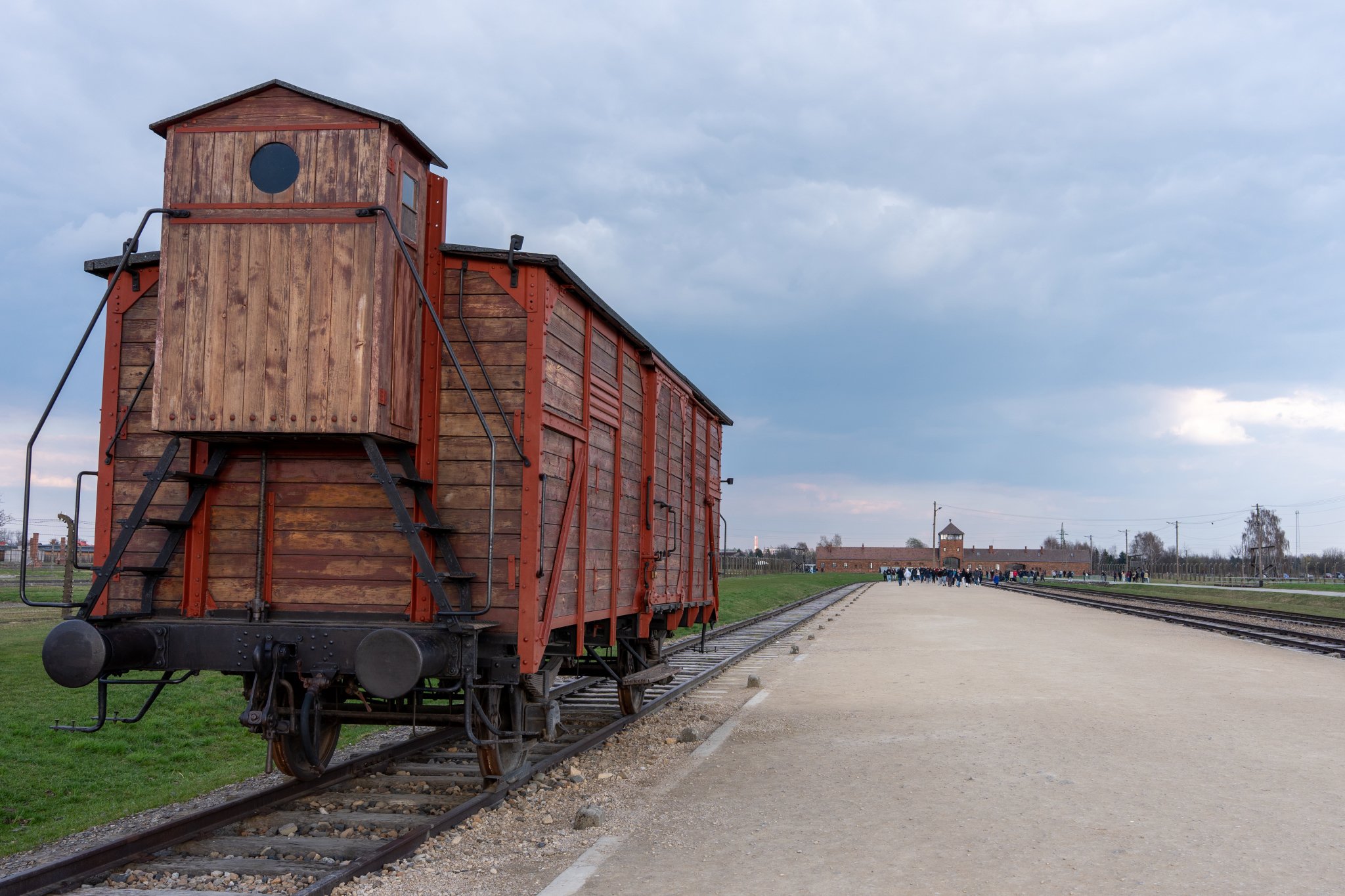
Angela: walking along the central railway tracks, we reach the selection area. It was here that thousands of families were separated in a matter of moments.
Piero: knowing that in this very place men, women, and children said goodbye to one another for the last time makes every step particularly difficult.
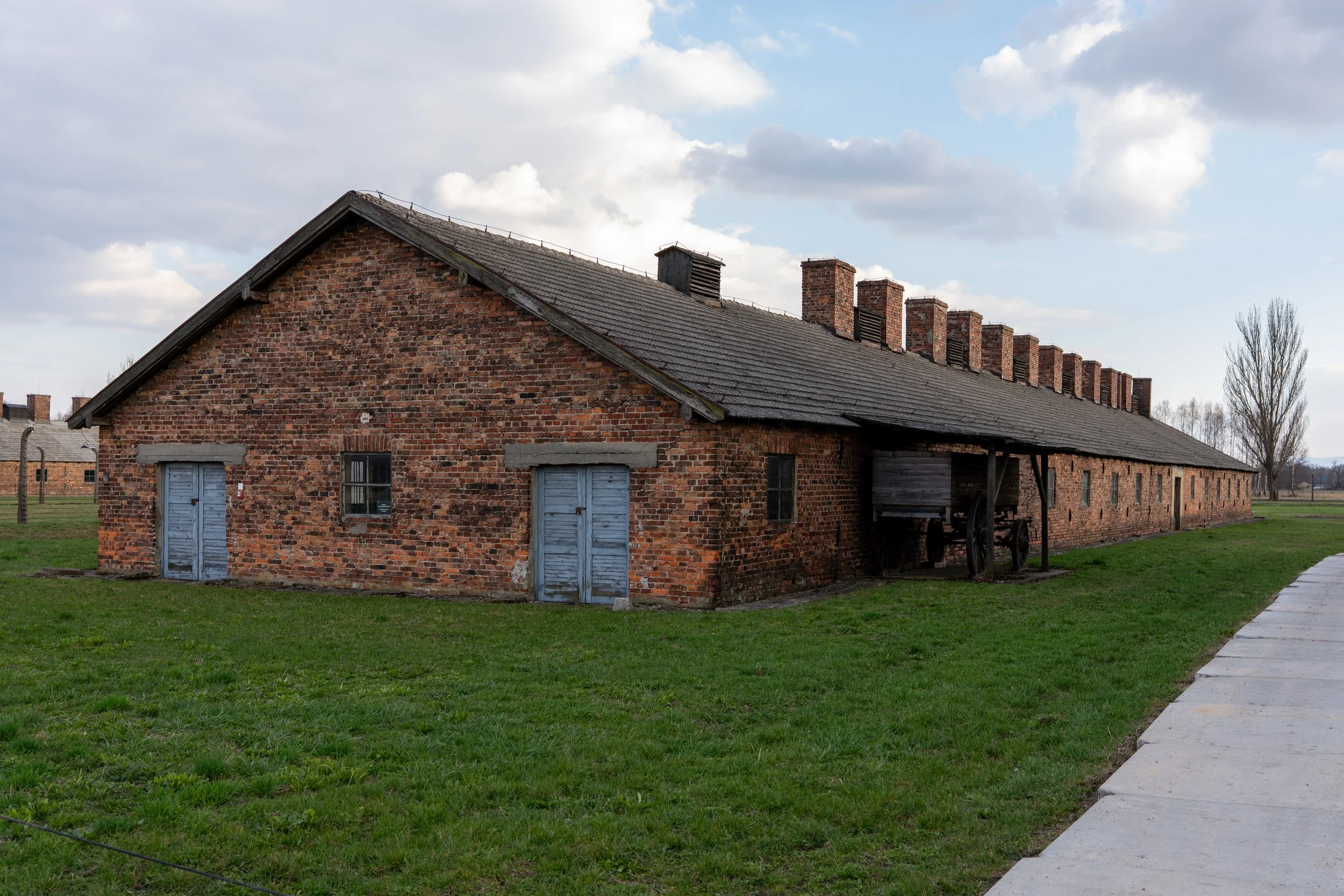
Angela: we continue towards the remaining barracks. Some are built in brick, others in wood. Many no longer exist, leaving only the chimneys rising from the ground like silent witnesses of the past.
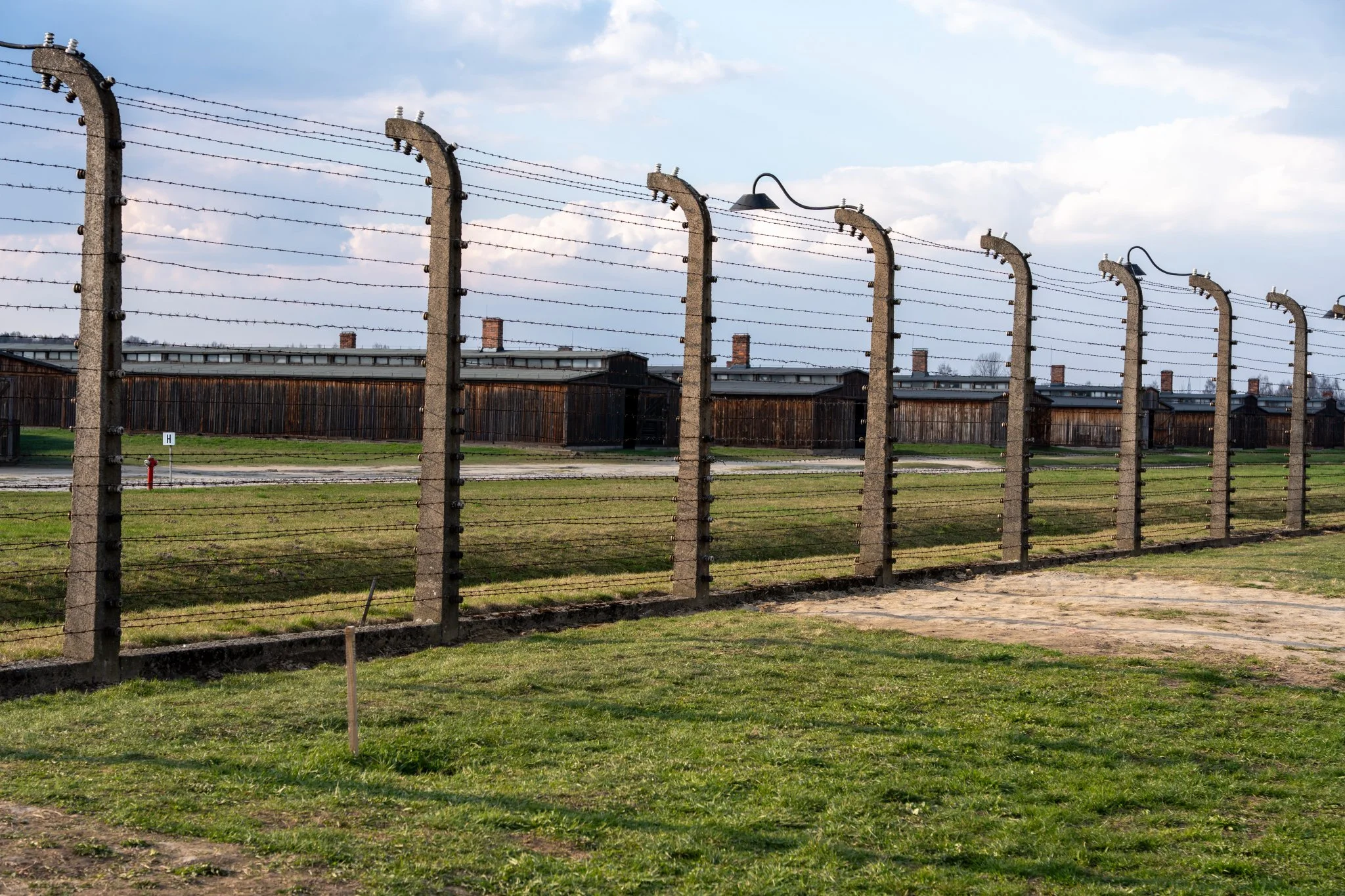
Piero: entering the preserved structures, we immediately perceive the harshness of the prisoners’ daily life. The wooden beds are narrow, stacked on top of each other, and completely devoid of any comfort. Thinking that hundreds of people sought shelter here during the harsh Polish winters is shocking.
Angela: the guide shares episodes, numbers, and testimonies. But more than words, what strikes us is what surrounds us: the spaces, the distances, and the conditions in which the deportees were forced to live.
Piero: we continue the visit to the far end of the camp. This is where the large crematoria and gas chambers once stood. Today, only ruins of concrete and brick remain, blown up by the Nazis before their retreat.
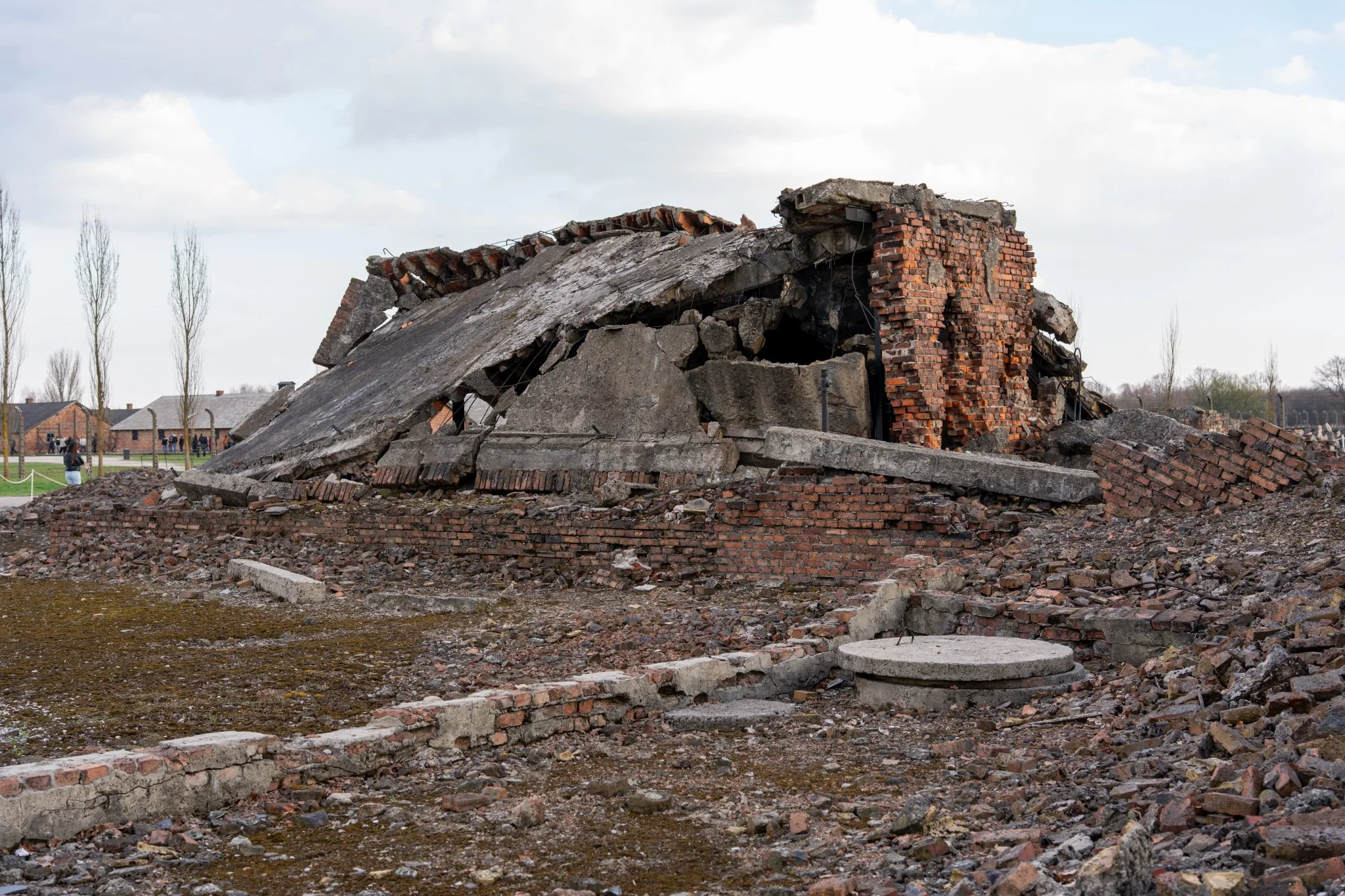
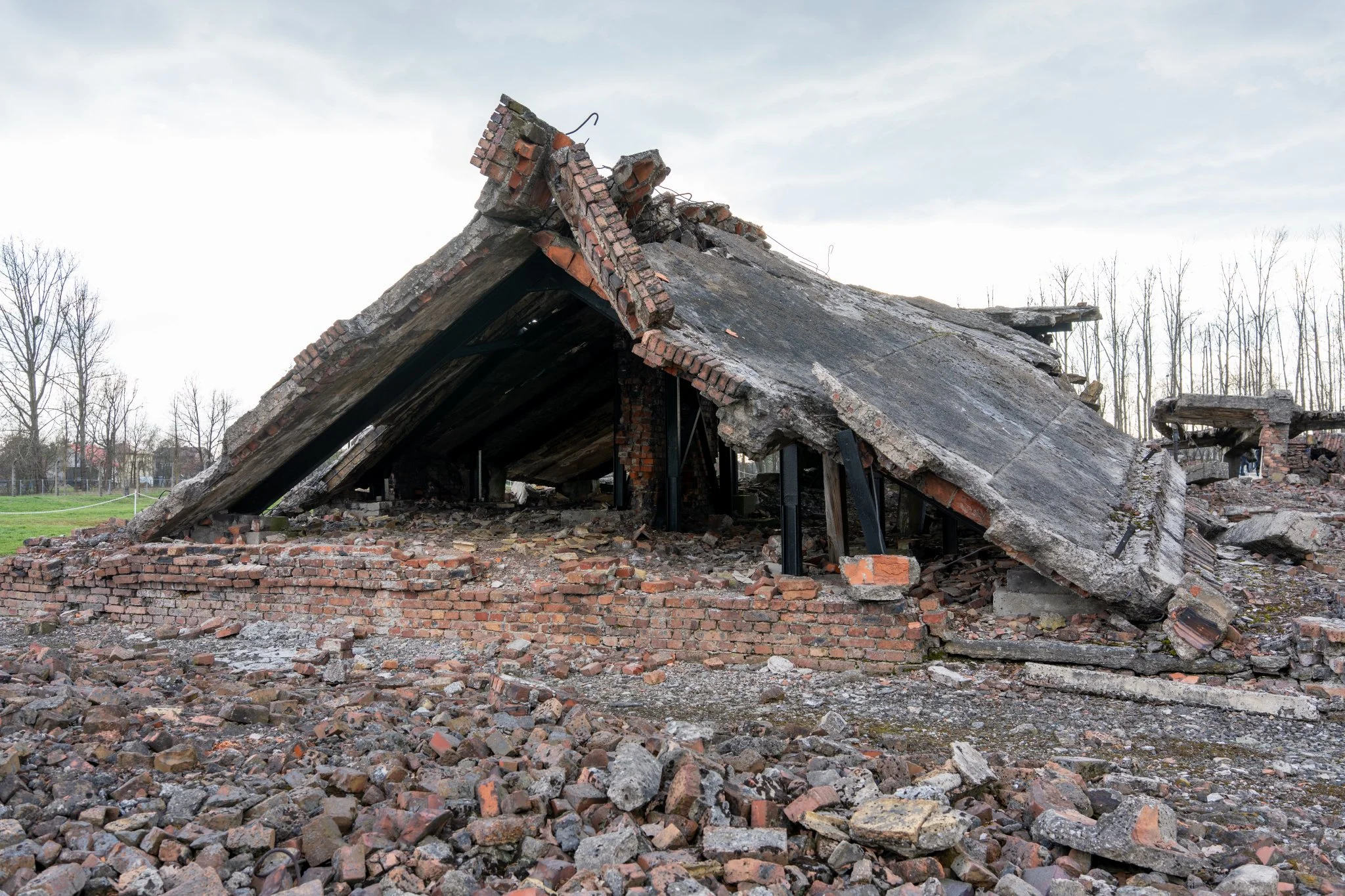
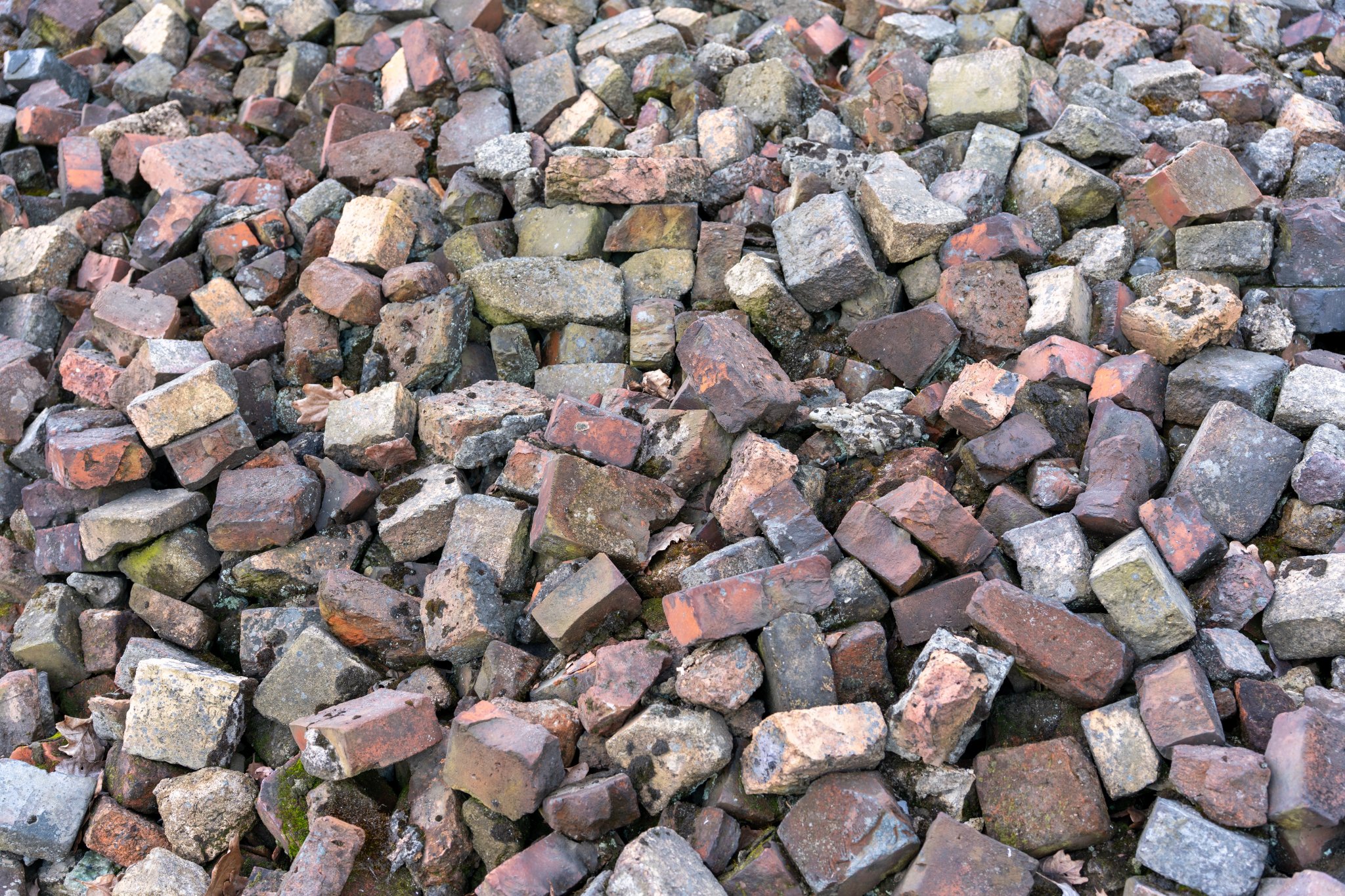
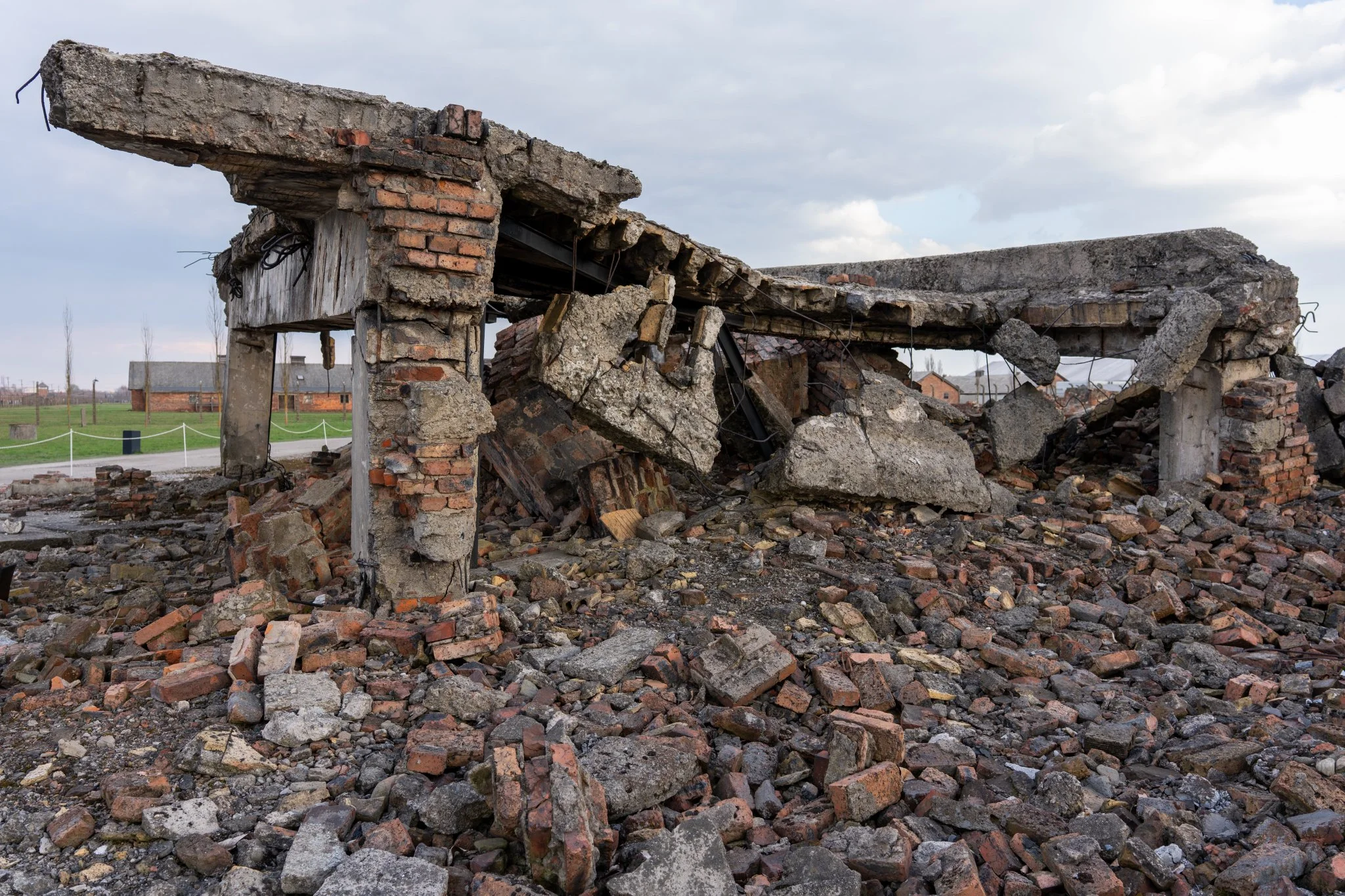
Angela: and yet those ruins carry an immense power. There is no need for any staged reconstruction. The awareness of what happened here is enough to make this place profoundly moving.
Piero: we finally reach the international monument dedicated to the victims: many plaques written in the different languages of those who perished. In front of us, the railway tracks come to a sudden end, as if history itself were stopping at that point.
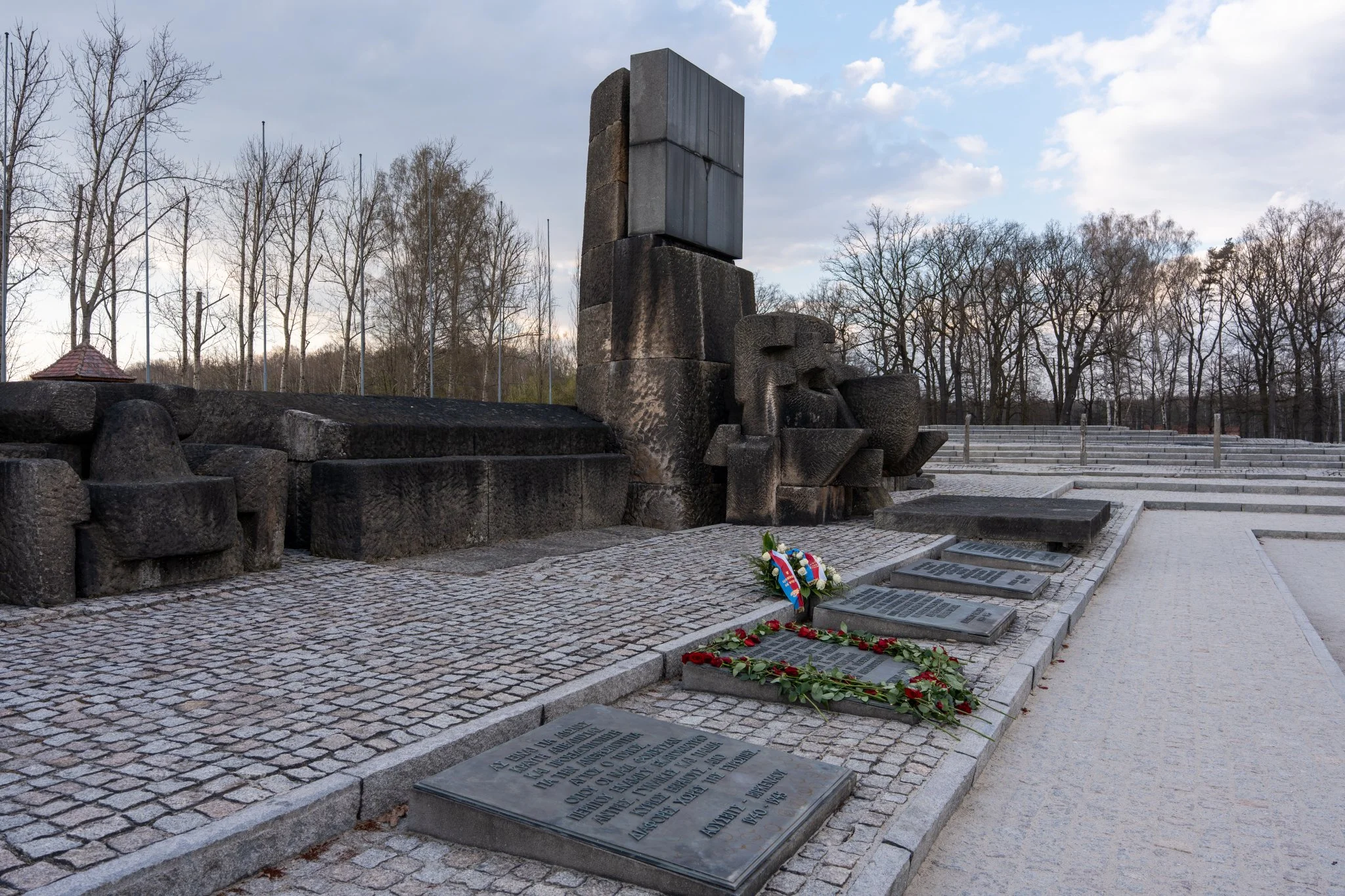
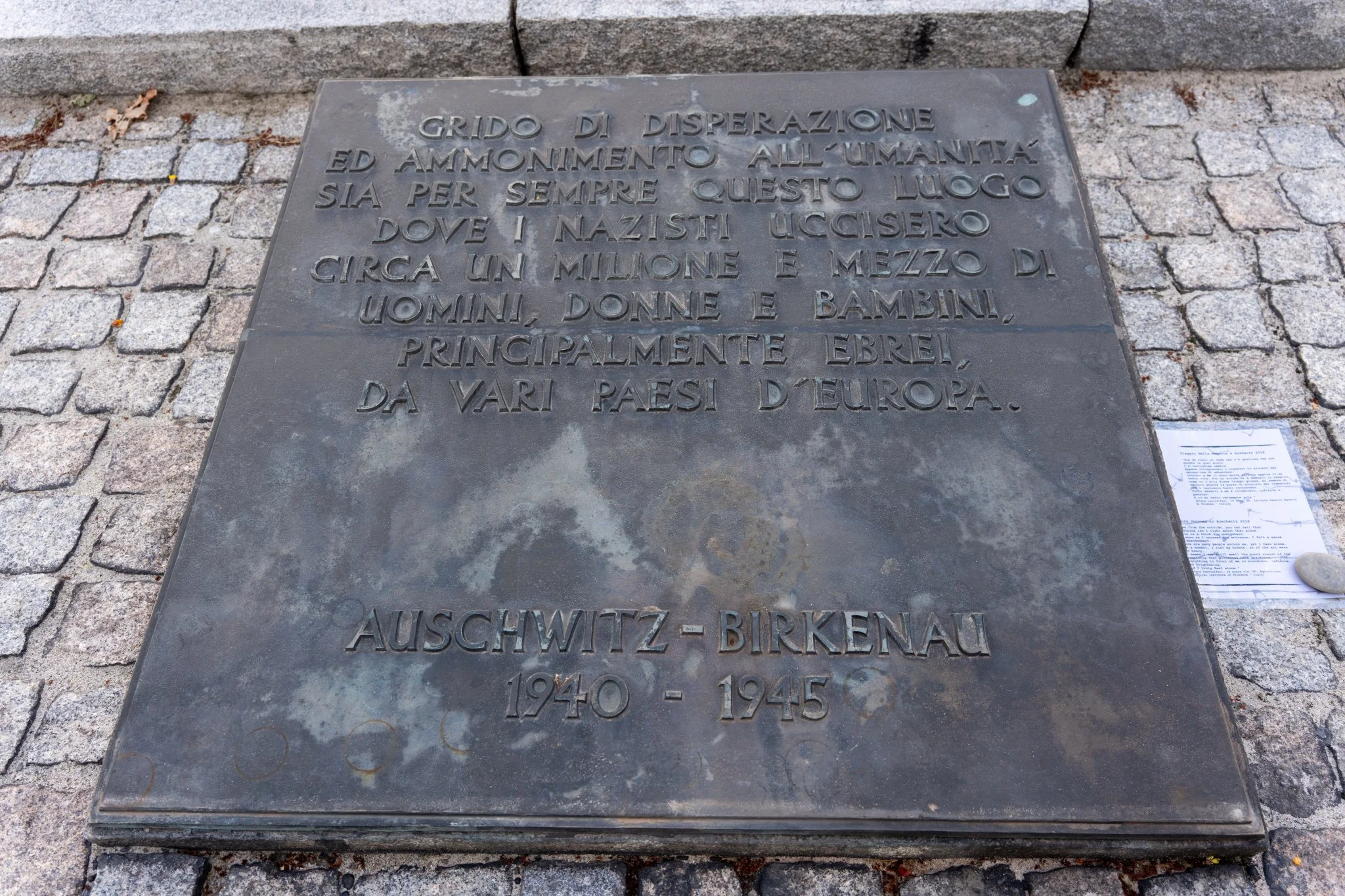
Angela: we stand in silence. The wind crosses the fields, touches the ruins, and carries the thoughts of every visitor.
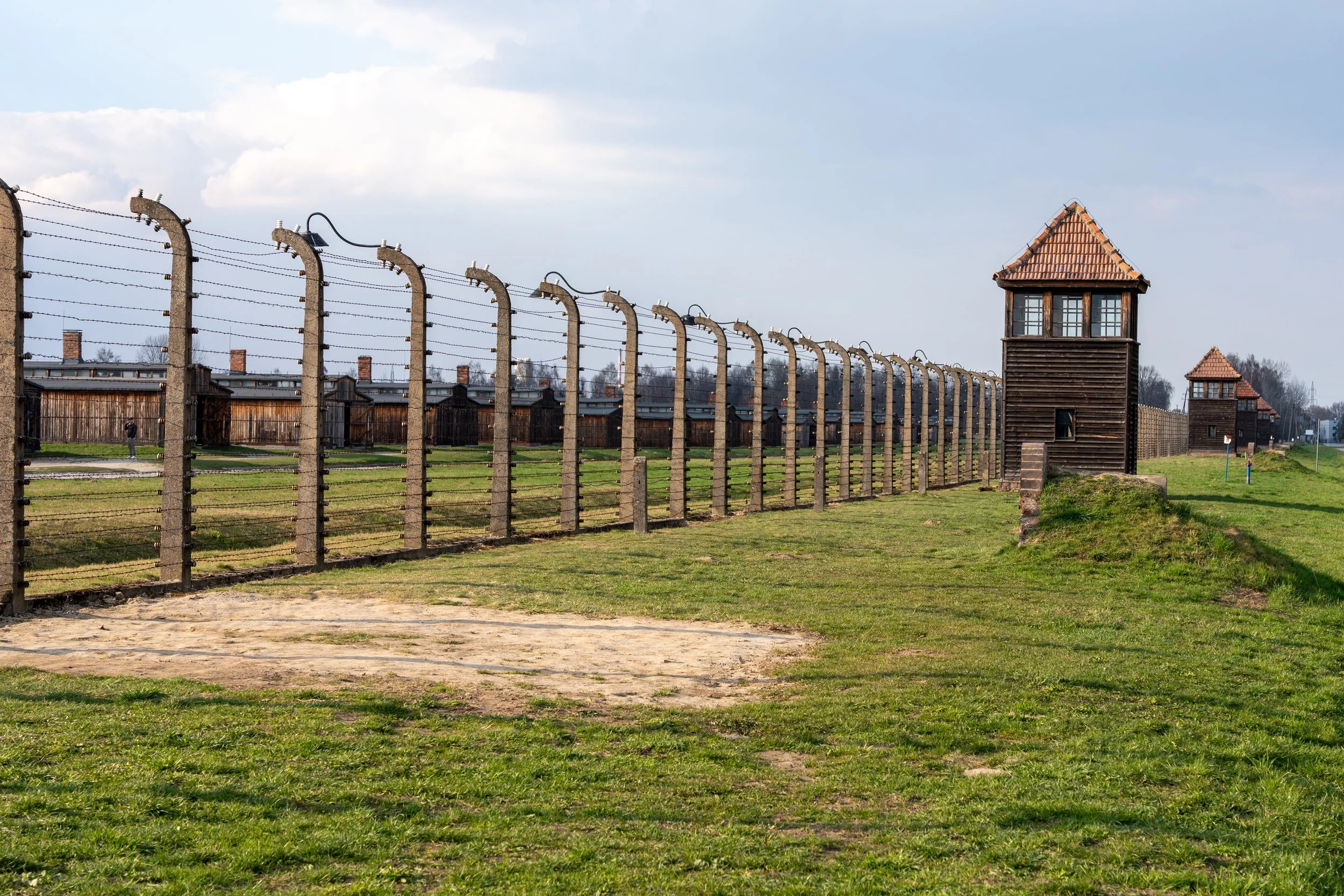
Piero: it is one of those places where time seems to slow down. Few photographs are taken, no special shots are sought. You simply observe, listen, and reflect.
Angela: when we leave Birkenau, we feel as if we have visited not only a historical site, but a page of the collective conscience of humanity.
Piero: an emotionally demanding visit, but one that everyone should experience at least once in their lifetime.
An experience that stays with you
Angela: leaving Birkenau is not easy. It is not a visit that ends as you walk out through a gate: the images, stories, and emotions continue to stay with you long after you return home.
Piero: Auschwitz-Birkenau is not a place that is beautiful in the traditional sense. It is, however, a necessary place.
Angela: necessary to remember, to understand, and to ensure that such tragedies can never happen again.
Piero: this is how our journey in Kraków comes to an end. An extraordinary city, able to showcase the very best of European culture through its historic centre, the Wawel Castle, the Kazimierz Jewish Quarter, the Wieliczka Salt Mine, and many other remarkable places.
Angela: but it is precisely this final visit that leaves us with the deepest reflection. Because travelling is not only about admiring landscapes and monuments.
Piero: it is also about learning history, preserving memory, and returning home with a greater awareness of the world around us.
Angela: and in this sense, Kraków is one of the most meaningful destinations we have ever visited.
Piero: relive our journey in this video.