Wieliczka Salt Mine: the underground city carved in salt
Piero: after exploring the historic centre of Kraków, today we are heading to one of the most extraordinary places in all of Poland: the Wieliczka Salt Mine.
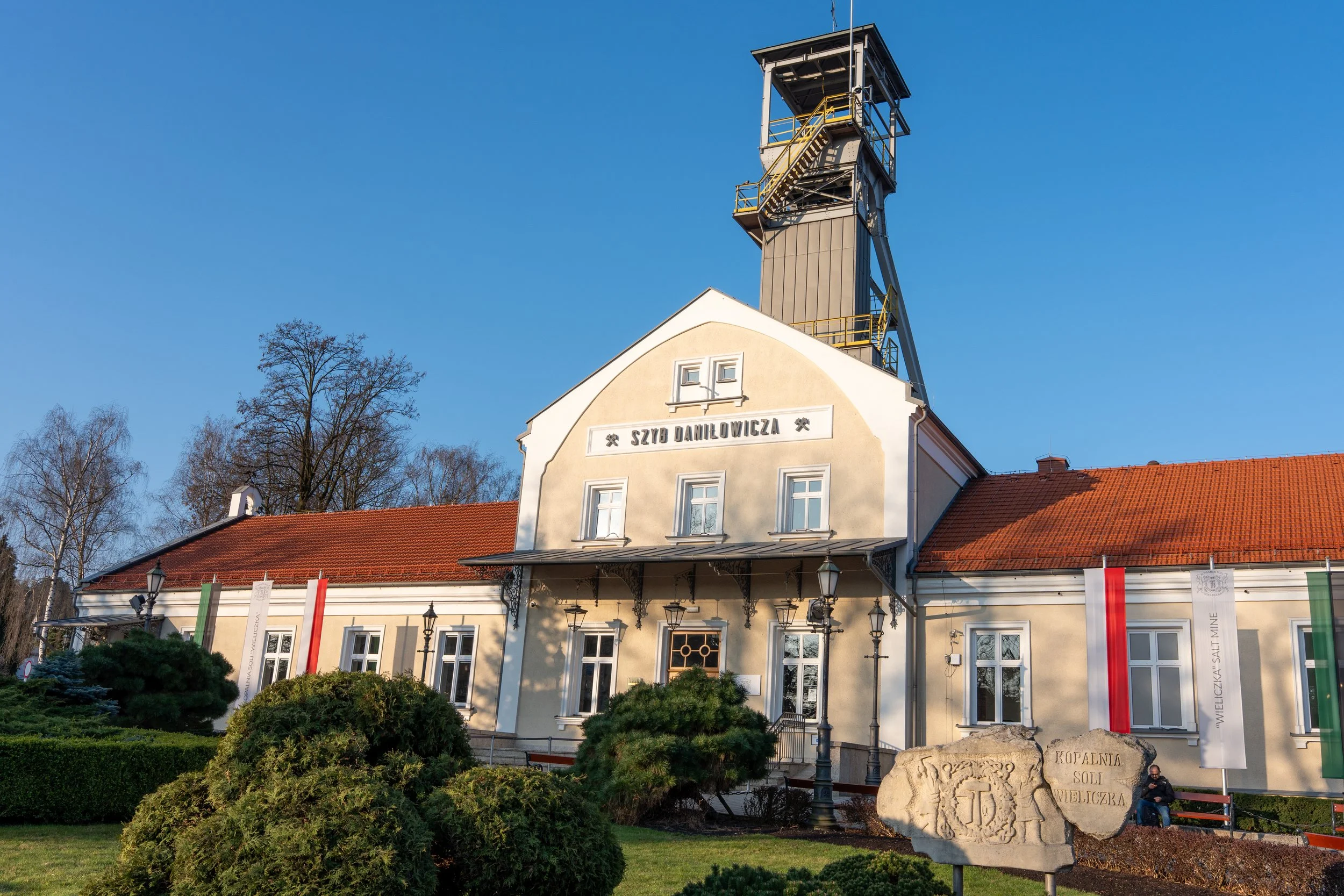
Angela: we will have to get up very early, but we made a great choice: booking the first entry of the day, at 8 a.m.!
Piero: the advice is to buy tickets online well in advance, especially during peak season. Visits are guided only, and the most requested time slots tend to sell out quickly.
Angela: when we arrived at the entrance, the sun was just beginning to light up the streets of Wieliczka, and there were still very few people around.
Piero: the advantage was huge: entering first, we were able to admire many chambers almost on our own, without groups in front of us and without waiting to take photos of the most beautiful spaces.
Angela: a real treat for you! A rare feeling in a place that welcomes millions of visitors every year.
Piero: getting here from Kraków is very easy: Wieliczka is about fifteen kilometres from the city centre and can be reached easily by train, bus, or car.
The origins of Poland’s white gold
Angela: before starting the descent, we take a step back in time, because this is not just a mine.
Piero: in fact, it is one of the oldest salt mines in the world still open to visitors. Its origins date back to the 13th century, when vast deposits of rock salt were discovered in this area.
Angela: today salt feels ordinary, but in the Middle Ages it was an extraordinary form of wealth.
Piero: it was called “white gold” and was mainly used to preserve food. It was essential for trade and represented one of the main sources of income for the Kingdom of Poland.
Angela: for centuries, the revenues from Wieliczka helped finance castles, cities, and even the University of Kraków.
Piero: imagine that generations of miners worked here for over seven hundred years. With patience and hard work, they carved hundreds of kilometres of underground tunnels, creating a unique subterranean world.
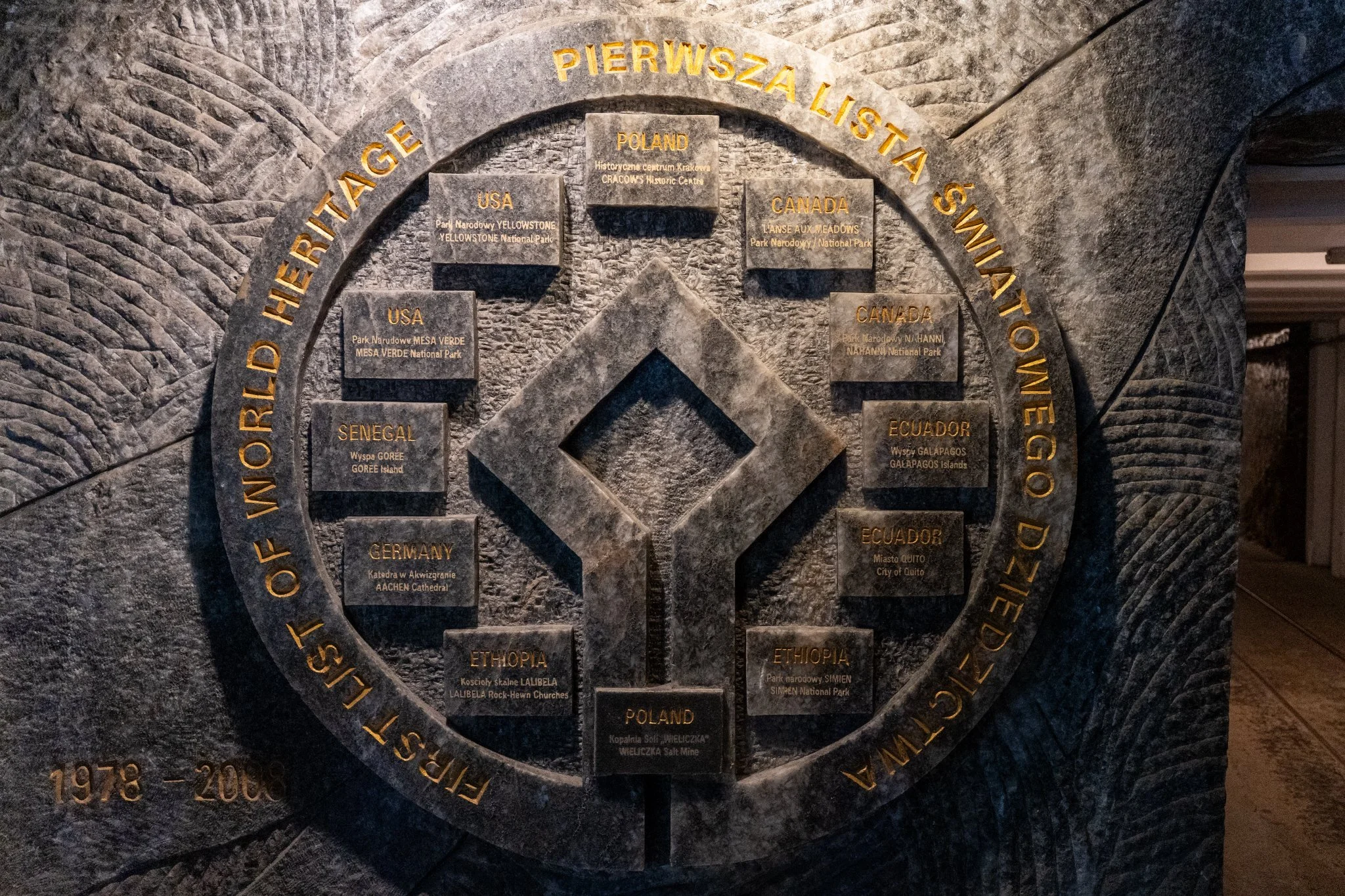
Angela: a world that today is a UNESCO World Heritage Site.
Piero: exactly. In 1978, the Wieliczka Salt Mine was inscribed among the first sites ever listed as UNESCO World Heritage, together with the historic centre of Kraków.
Into the depths of the Earth: the underground journey begins
Angela: it’s time to enter. Or rather, to go down.
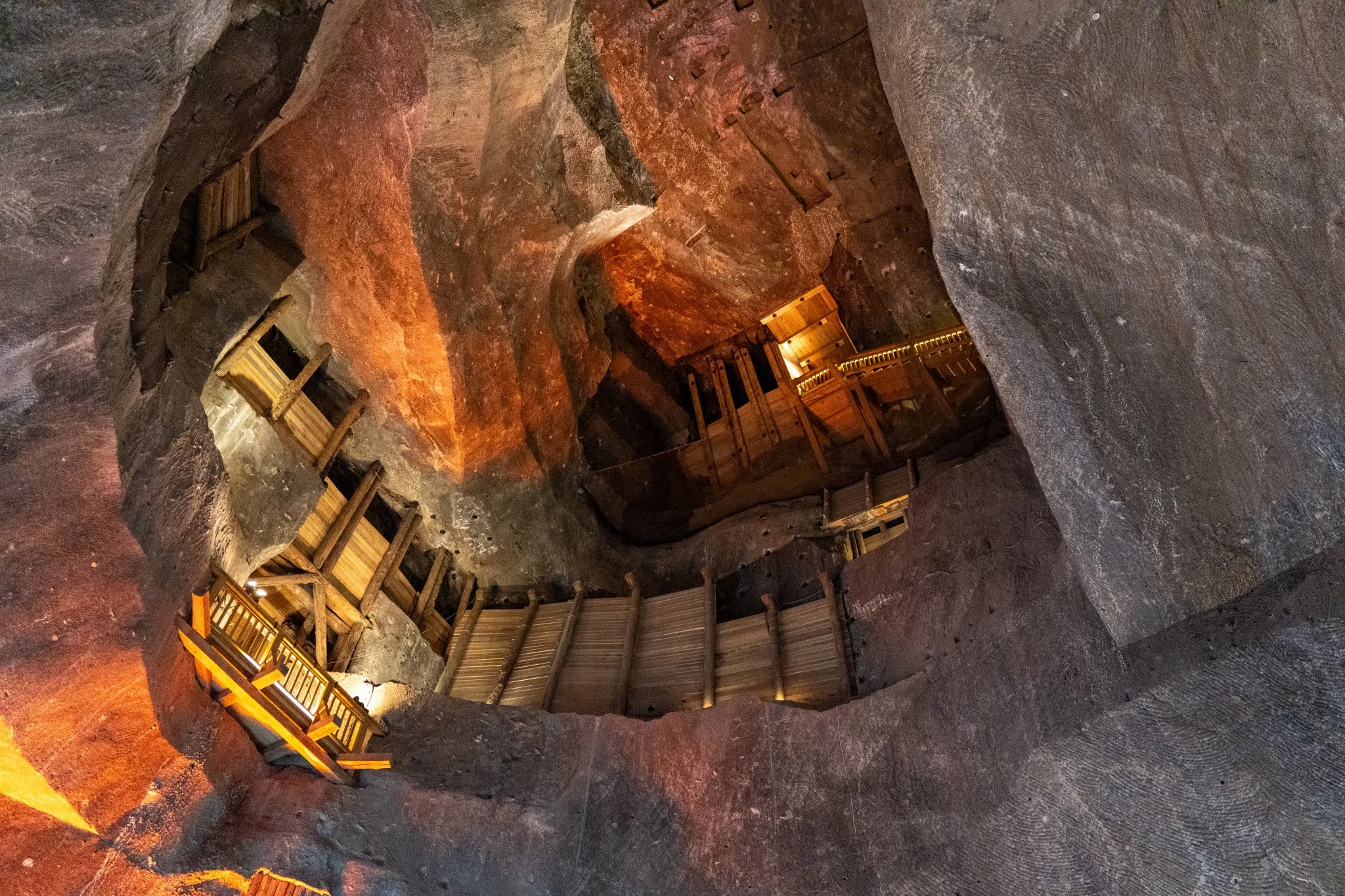
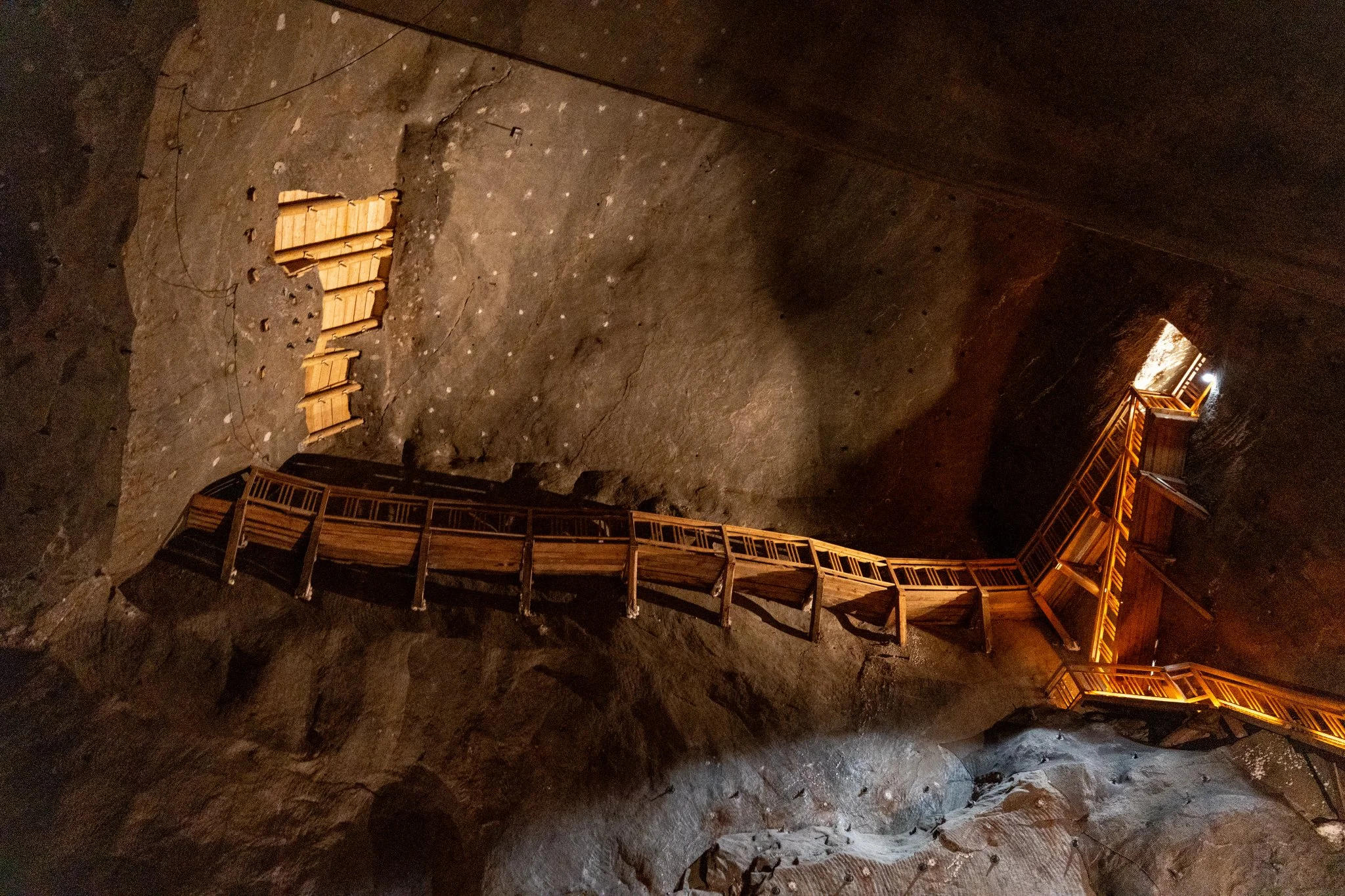
Piero: in front of us stands the Danilowicz Shaft, the historic entrance used by visitors. Our guide leads us towards a long wooden staircase that seems to disappear into the underground.
Angela: the descent is already an experience in itself. In total, the tourist route reaches a depth of about 135 metres below ground level, and to get there we face 380 steps: a significant descent, but not particularly difficult. It feels quite enjoyable, especially knowing that we will return to the surface by a comfortable lift…
Piero: step by step, natural light fades away. The sound of the city disappears completely, replaced by an almost unreal silence.
Angela: the temperature changes immediately. Down here it stays at a constant 14°C all year round. The ventilation system is perfect, and a system of doors opening and closing before and behind us keeps the air balance stable.
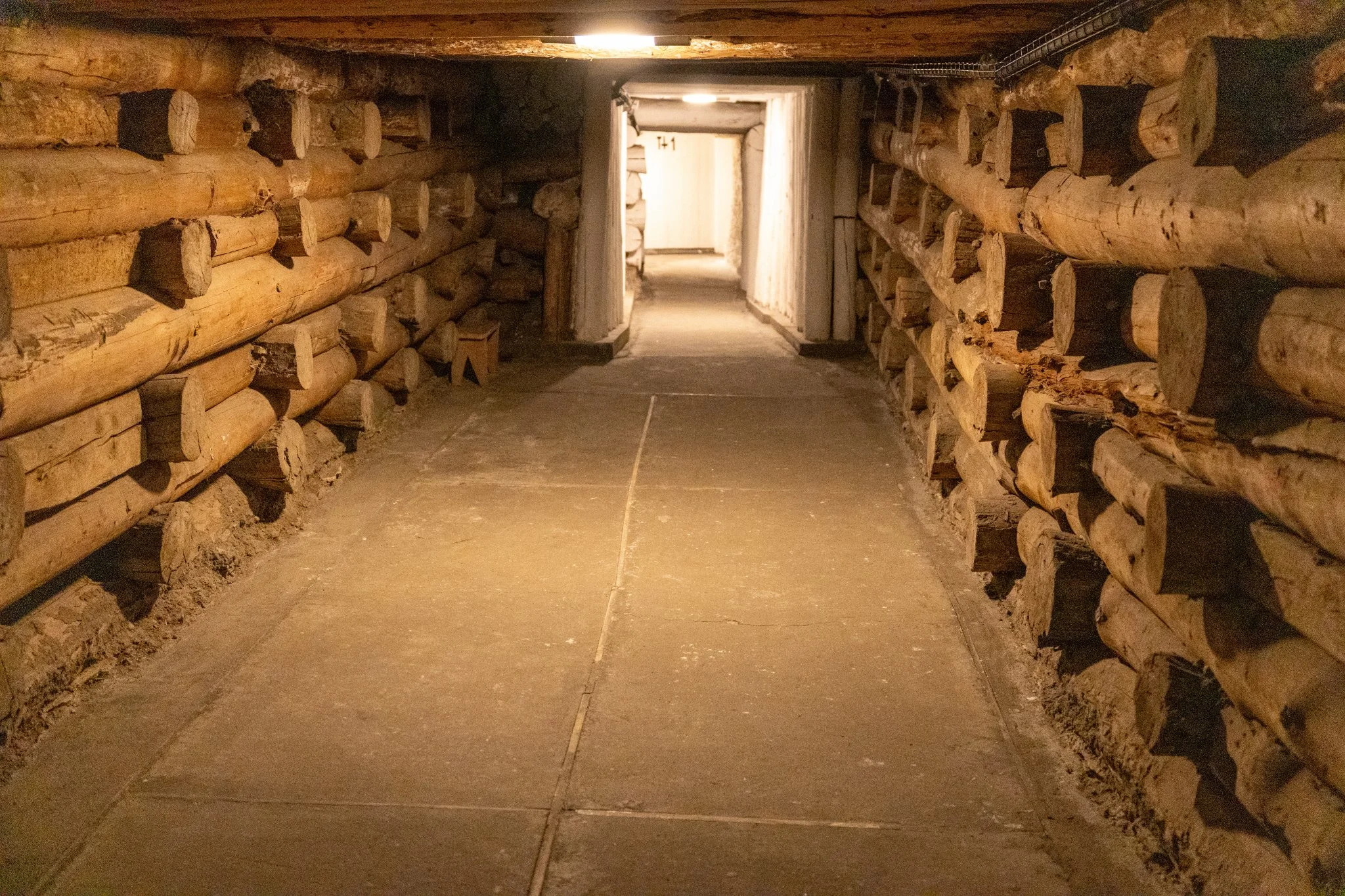
Piero: once we reach the first level, we find ourselves in an environment completely different from any other mine I have ever visited.
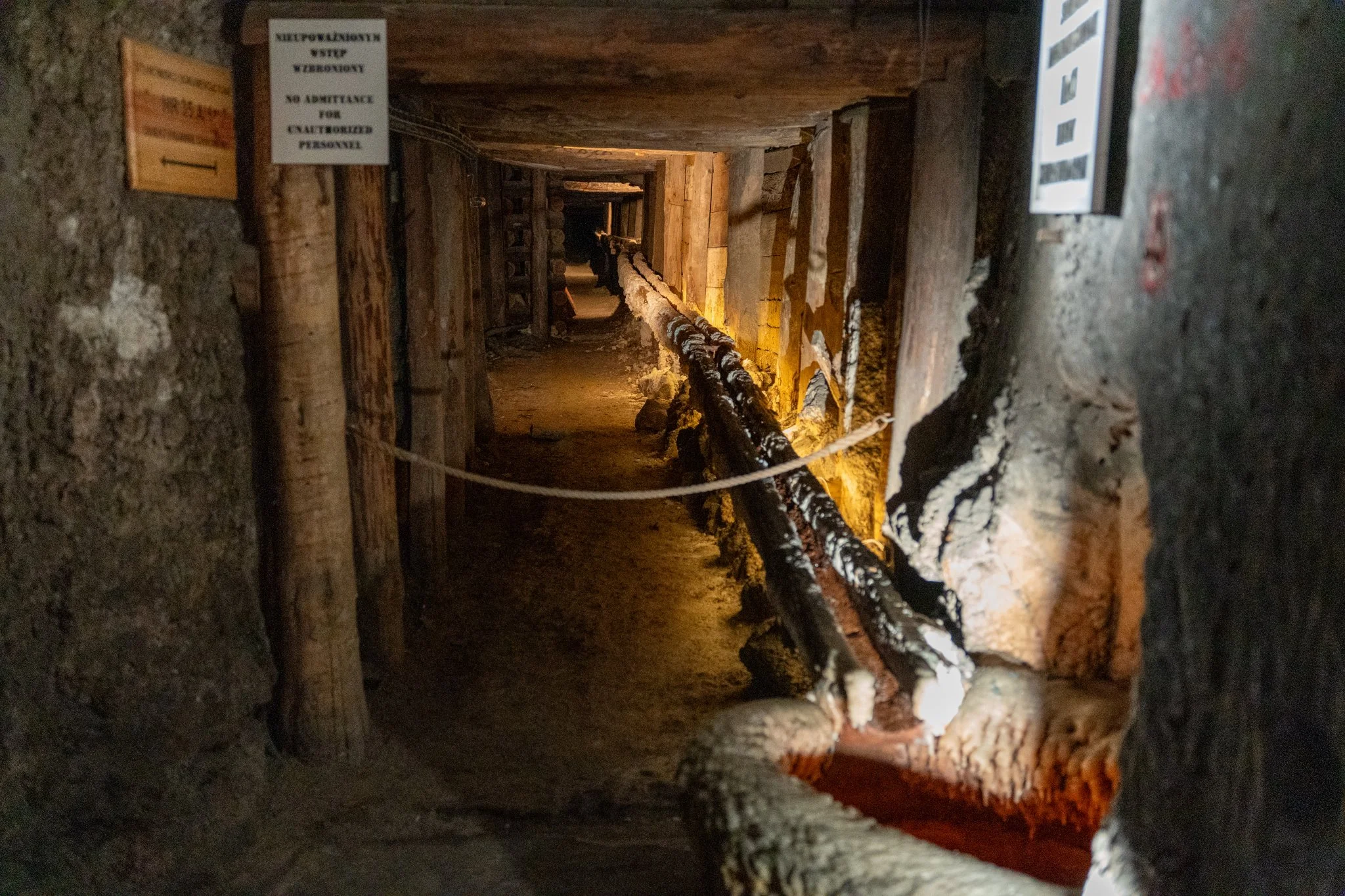
Angela: the walls show shades of grey and black, carved and shaped by centuries of mining activity, revealing the depth and complexity of this underground world.
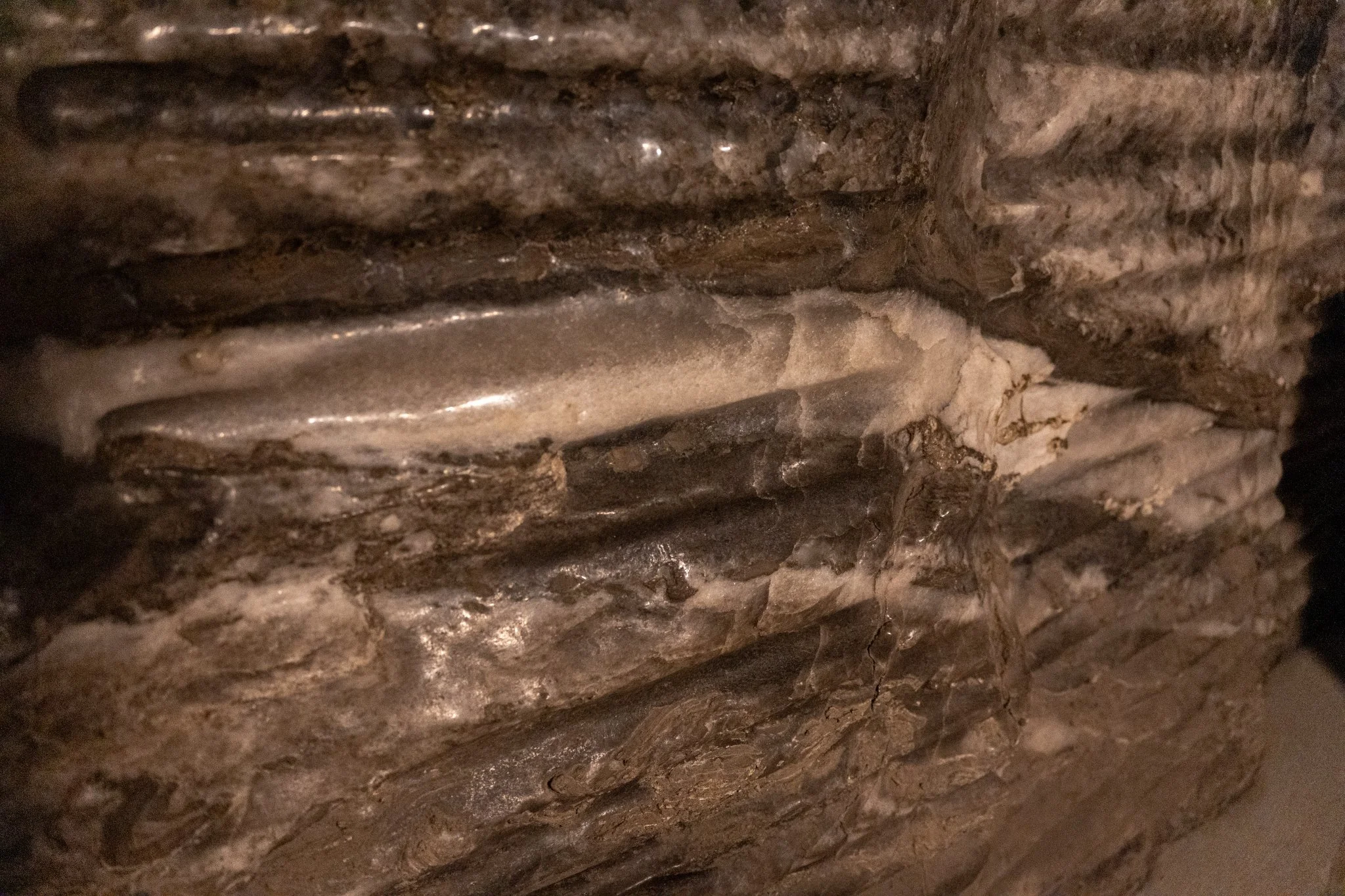
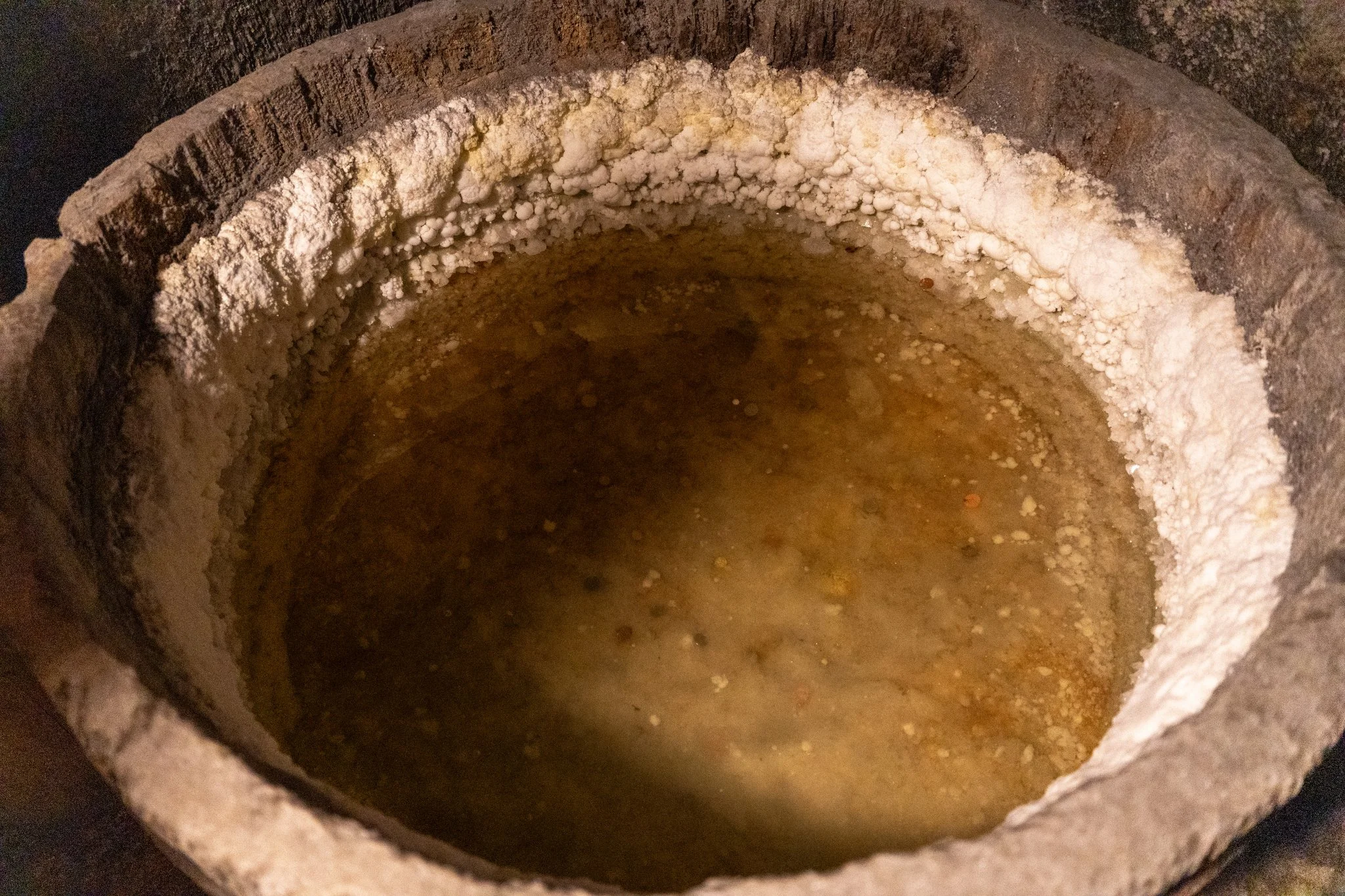
Piero: many visitors are surprised to discover that what they are looking at is not ordinary rock, but salt: by lighting up certain surfaces, you can see tiny crystals sparkling in the dim light.
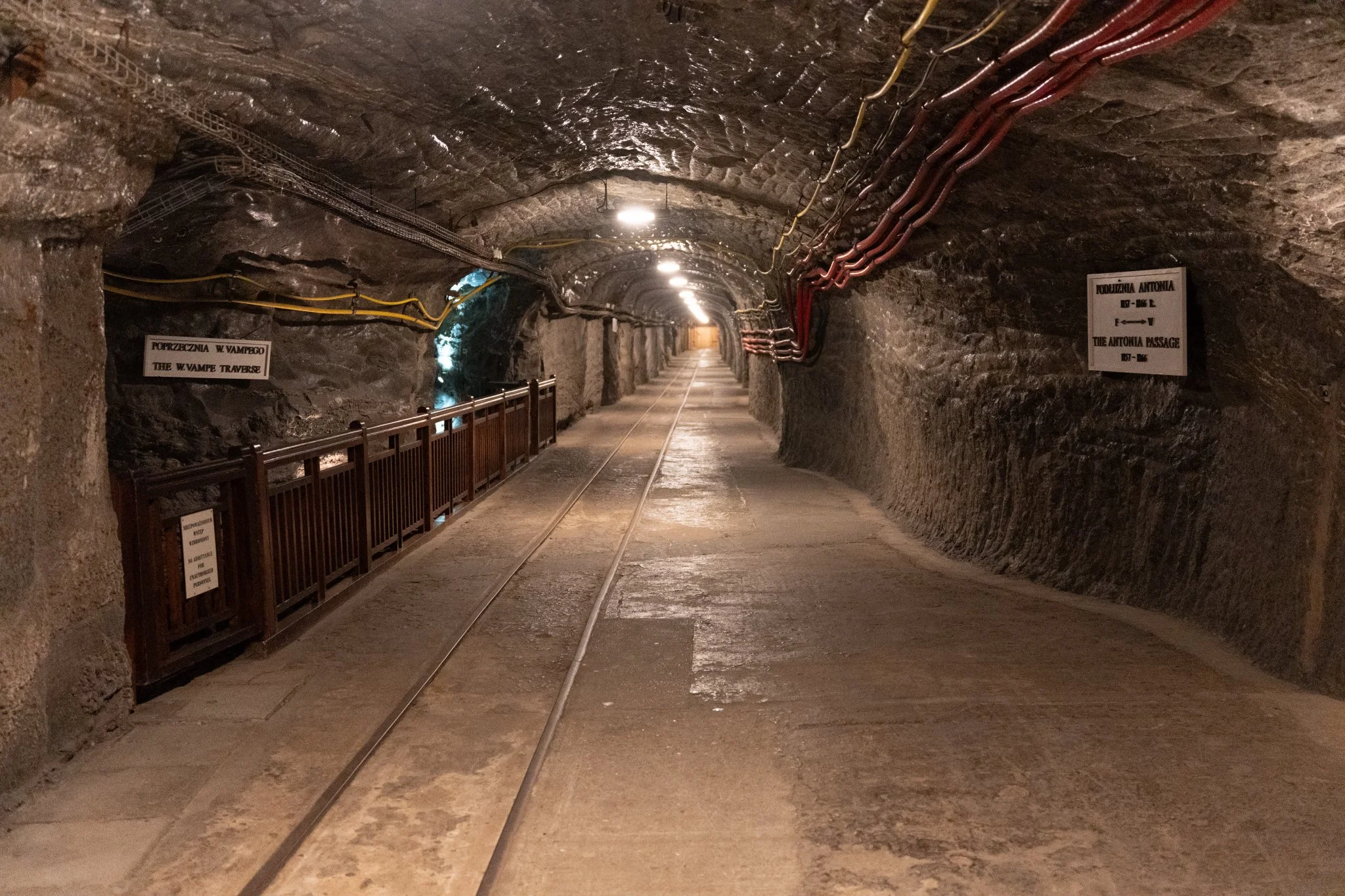
Angela: we begin to walk through underground corridors that seem to have no end. The mine is immense: over the centuries, more than 245 kilometres of tunnels have been carved across multiple underground levels.
Piero: the first major chamber we encounter is the Nicolaus Copernicus Chamber. The famous astronomer visited the mine in 1493, when he was still a student at the University of Kraków.
Angela: at the centre of the chamber stands a statue depicting him looking up at the sky, and it is incredible to think that even this sculpture was carved from salt by miner-artists.
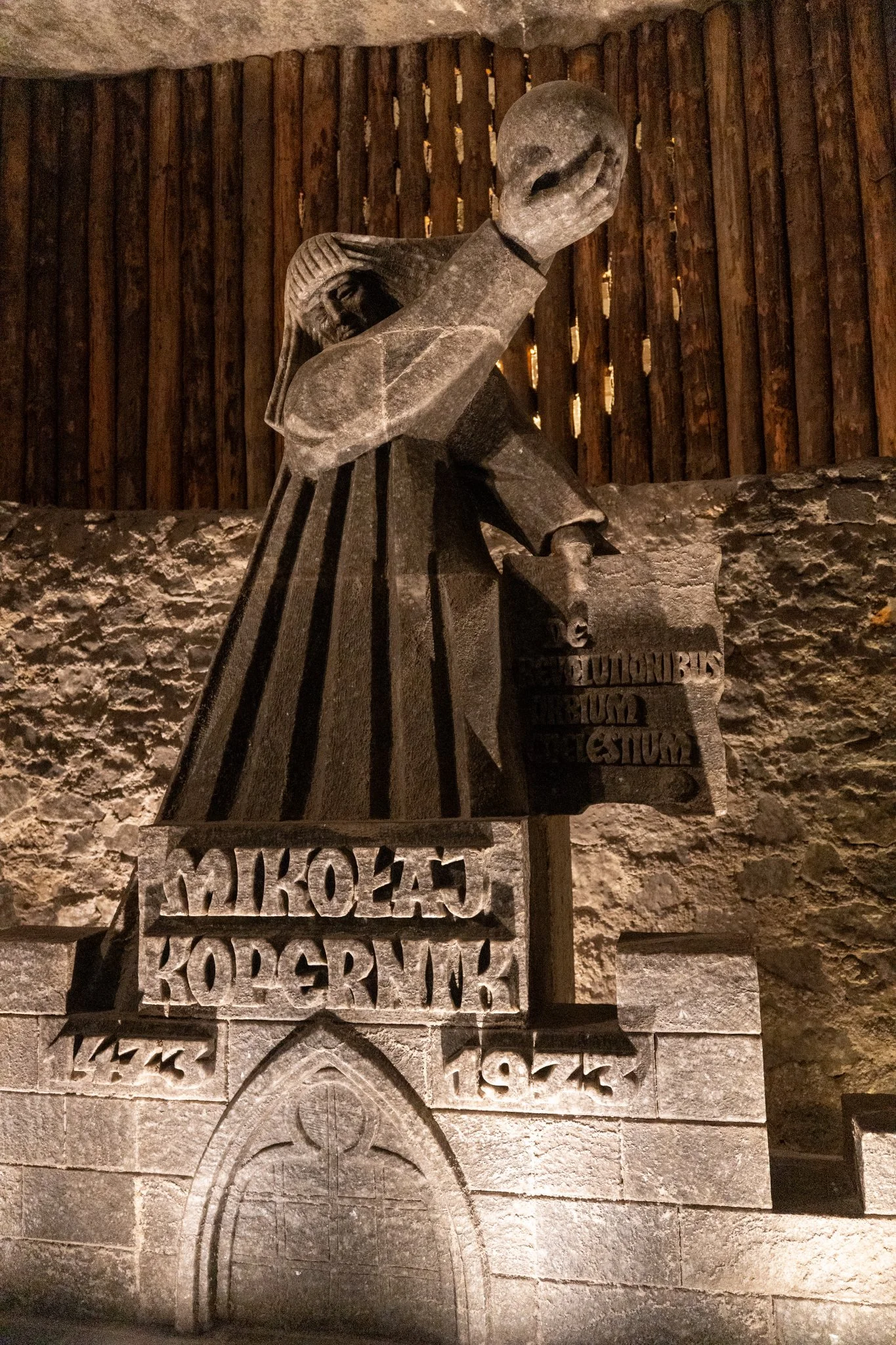
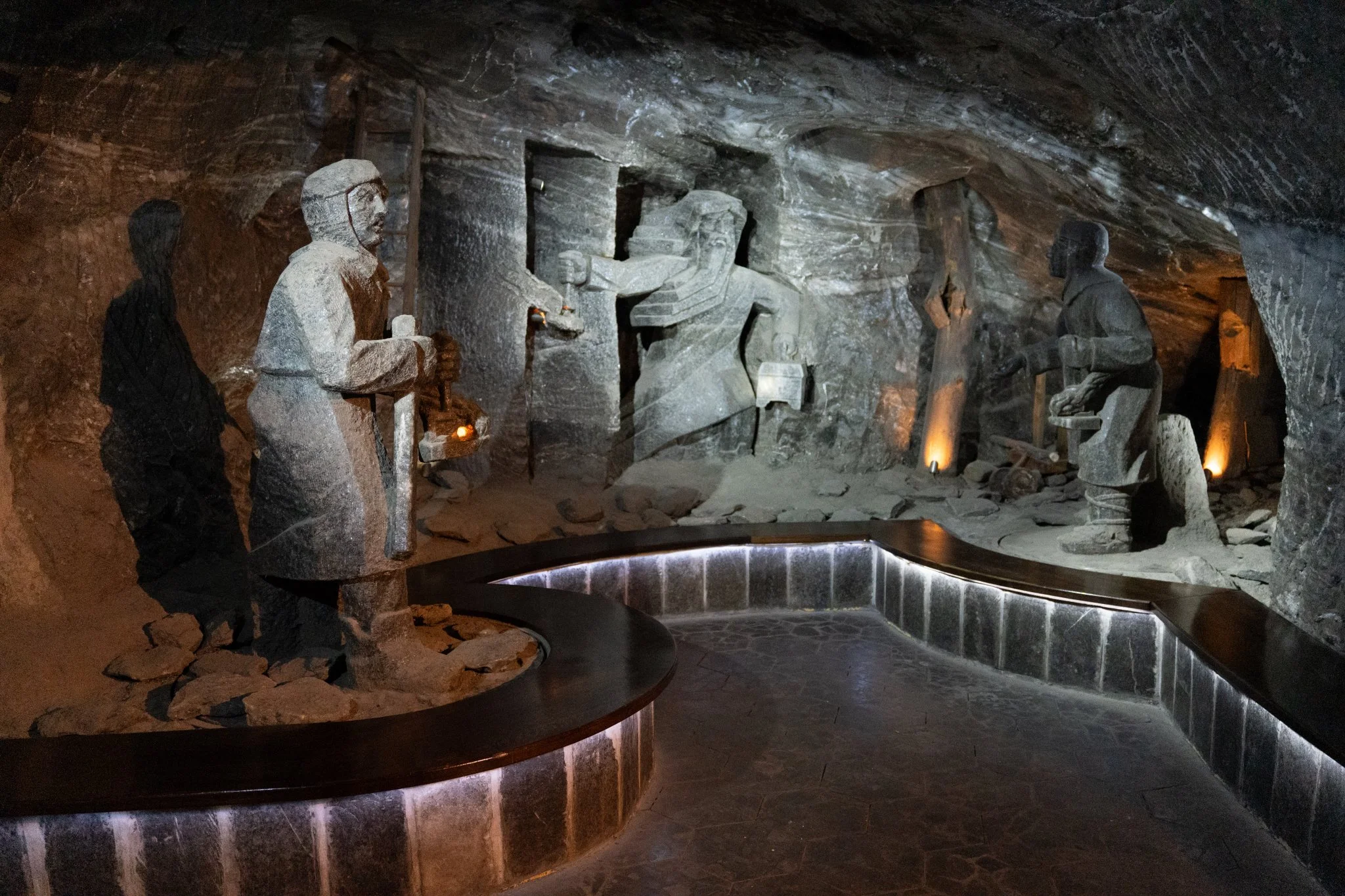
Piero: one of the most fascinating features of Wieliczka is that many of the works we see were not created by professional artists, but by the miners themselves—men who spent most of their lives underground and who, in their free time, transformed salt into art.
Angela: as we continue, we reach the Janowice Chamber. Here, our guide tells us one of the most beloved legends in Poland: the story of Saint Kinga.
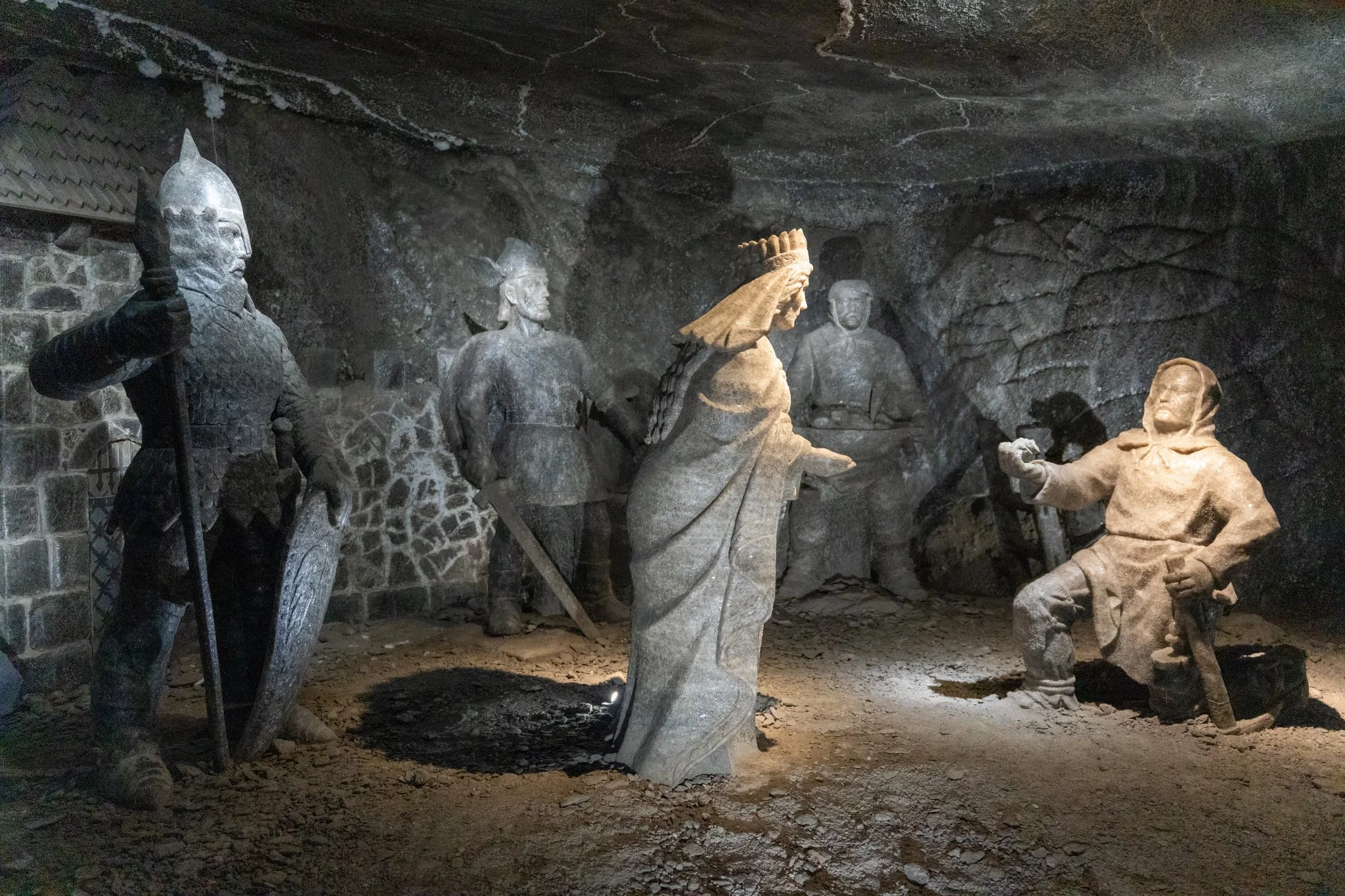
Piero: the Hungarian princess who, according to tradition, threw her ring into a salt mine in her homeland before moving to Poland.
Angela: and the ring was said to have been found right here, inside a block of salt extracted in Wieliczka. A story that forever connects the saint to the mine.
Piero: the chamber is filled with statues representing the characters of the legend.
Angela: walking through the tunnels, we constantly notice wooden beams and support structures.
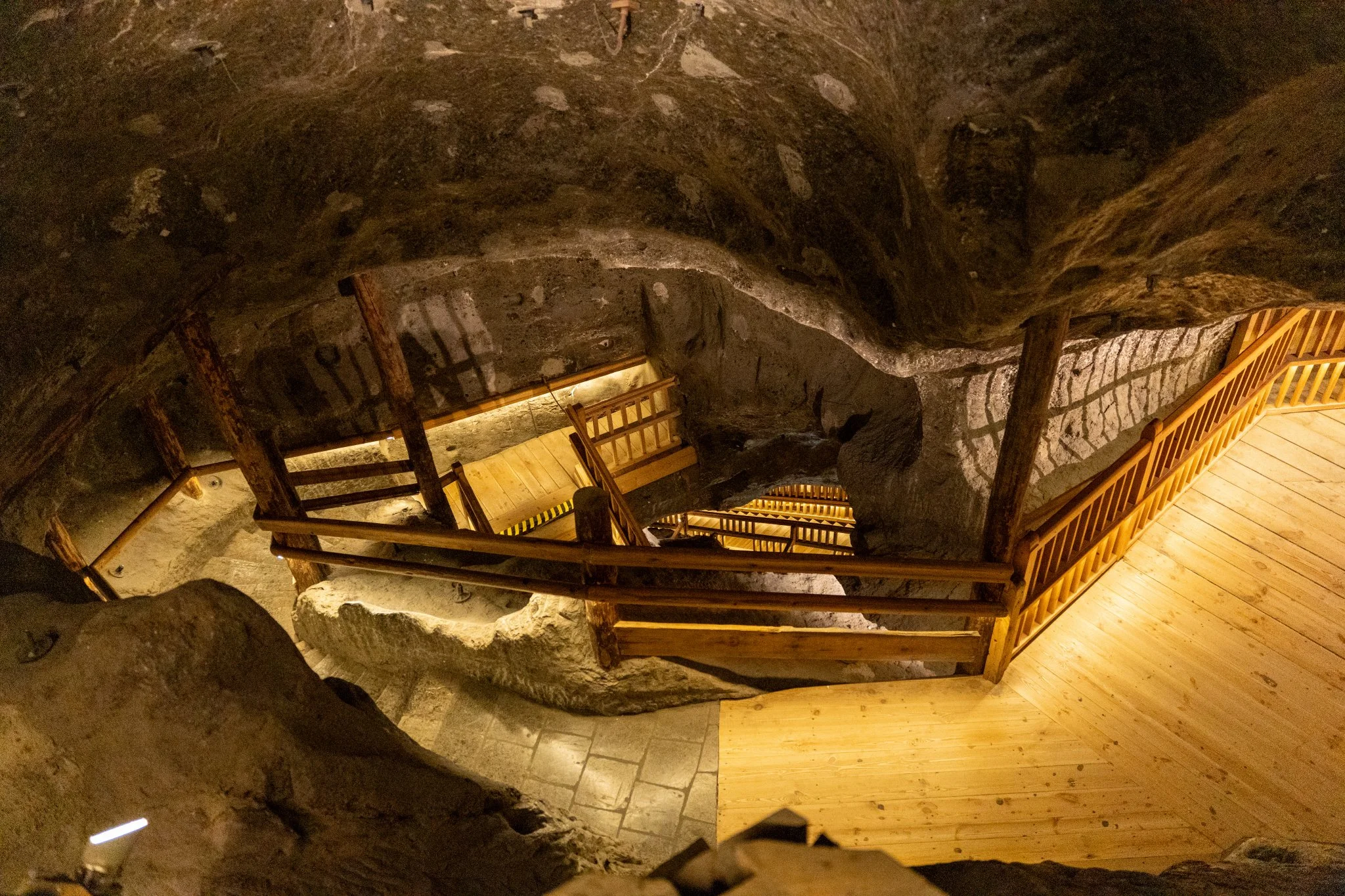
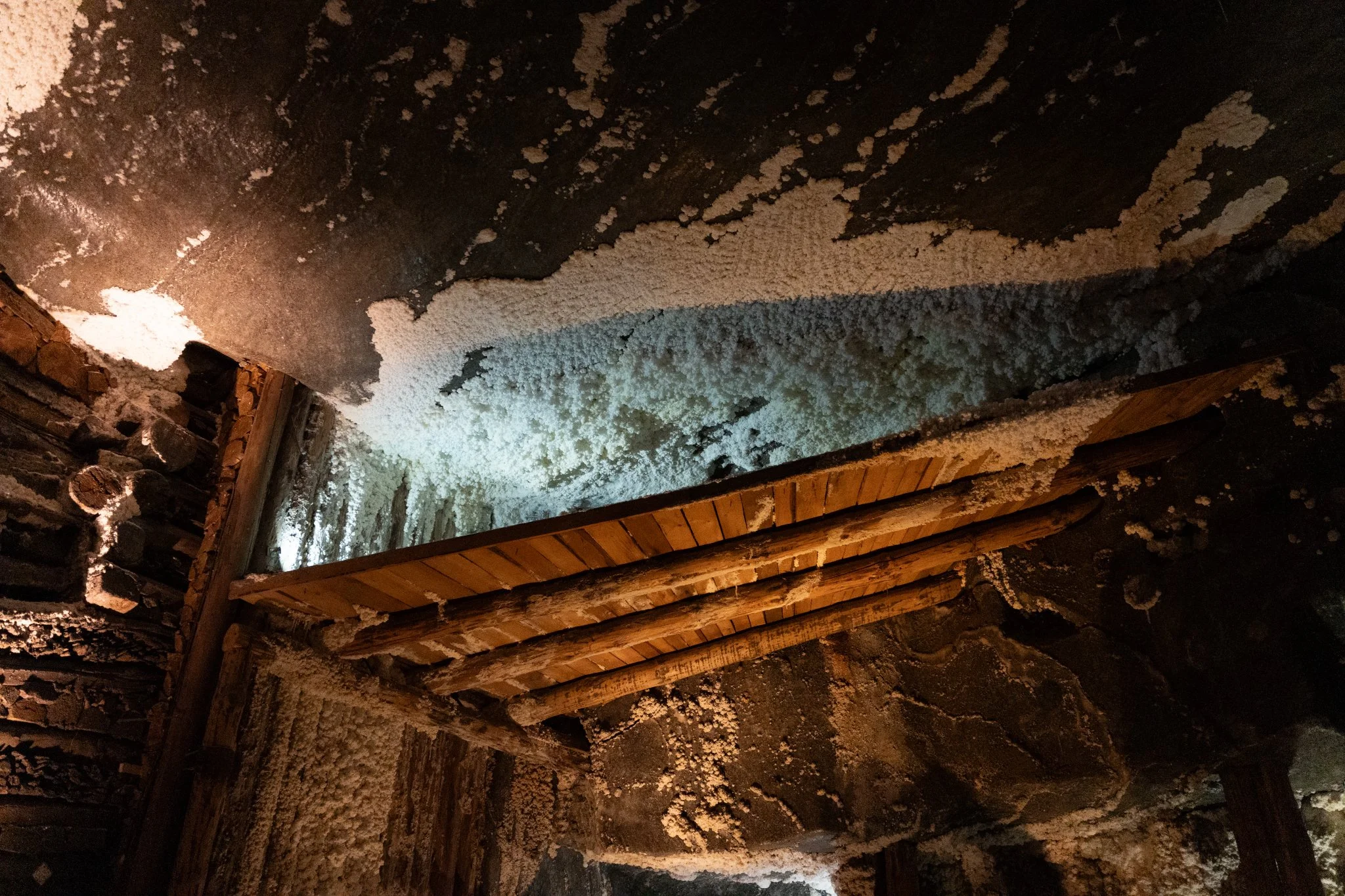
Piero: what is fascinating is that the salt has preserved these elements in an extraordinary way. Some of them are centuries old.
Angela: we then arrive at the Sielec Chamber.
Piero: here we gain a clearer understanding of the extraction techniques used in the past.
Angela: the guide shows us ancient winches, lifting systems, and machinery that relied on the power of animals.
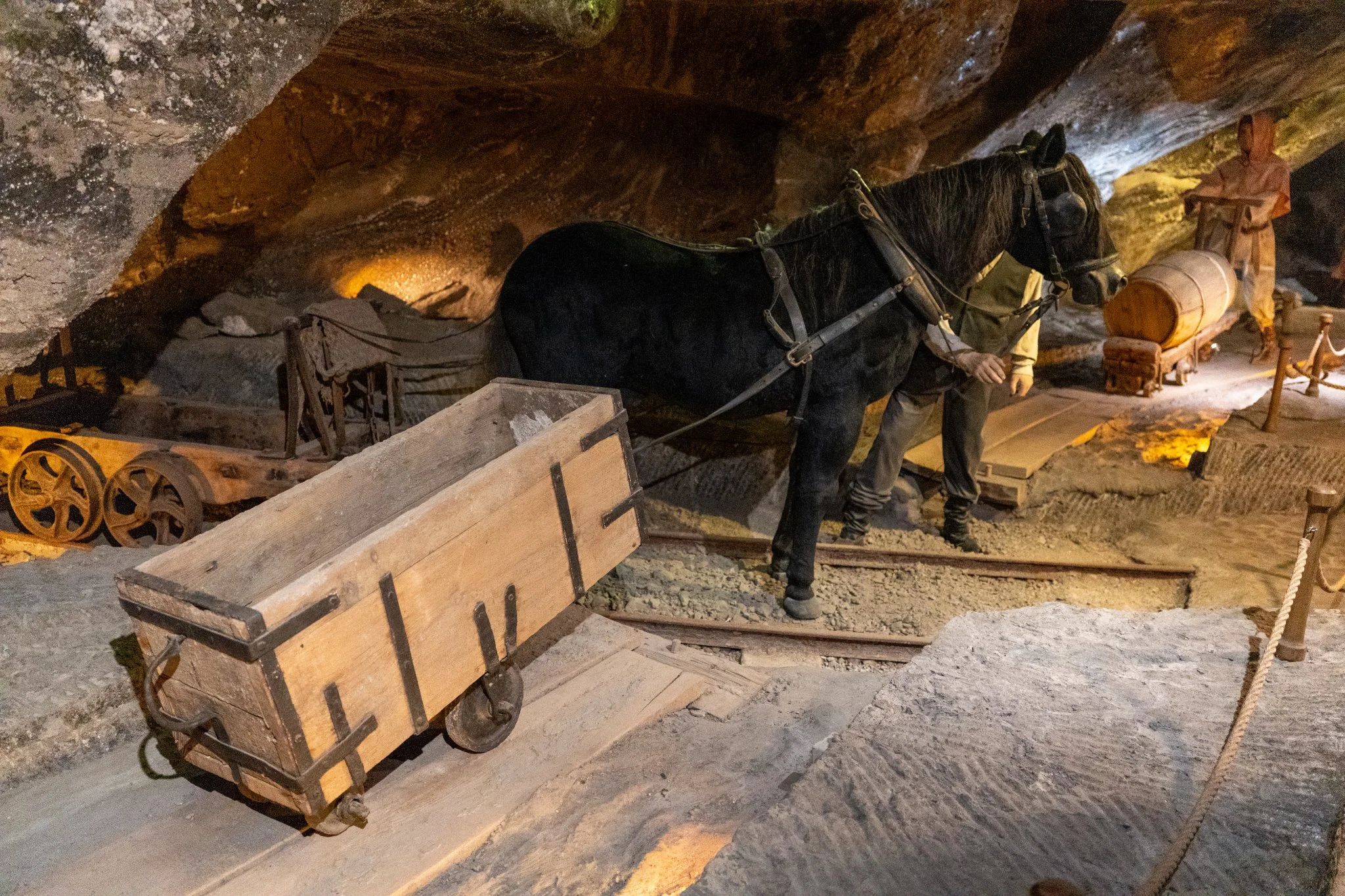
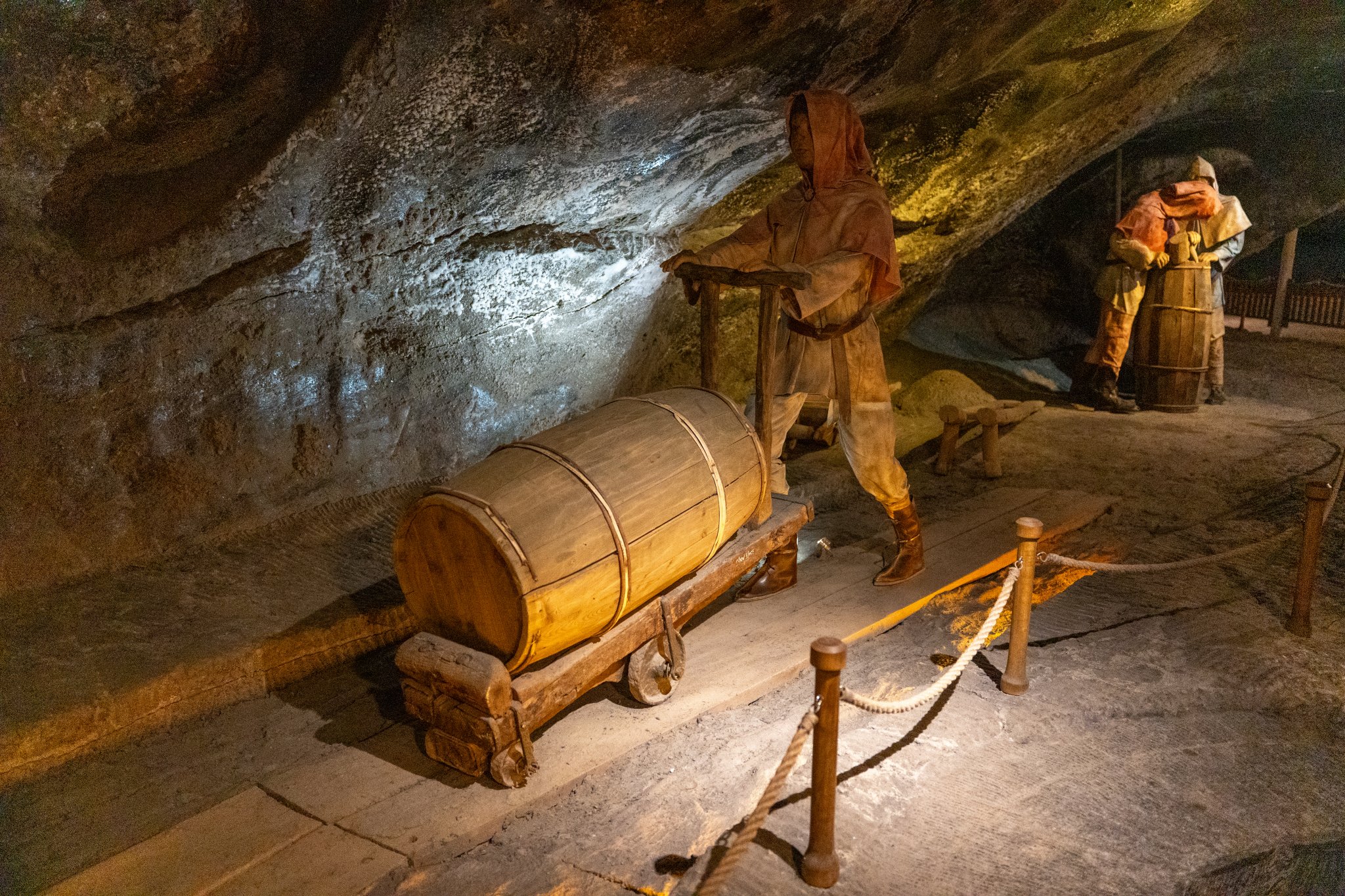
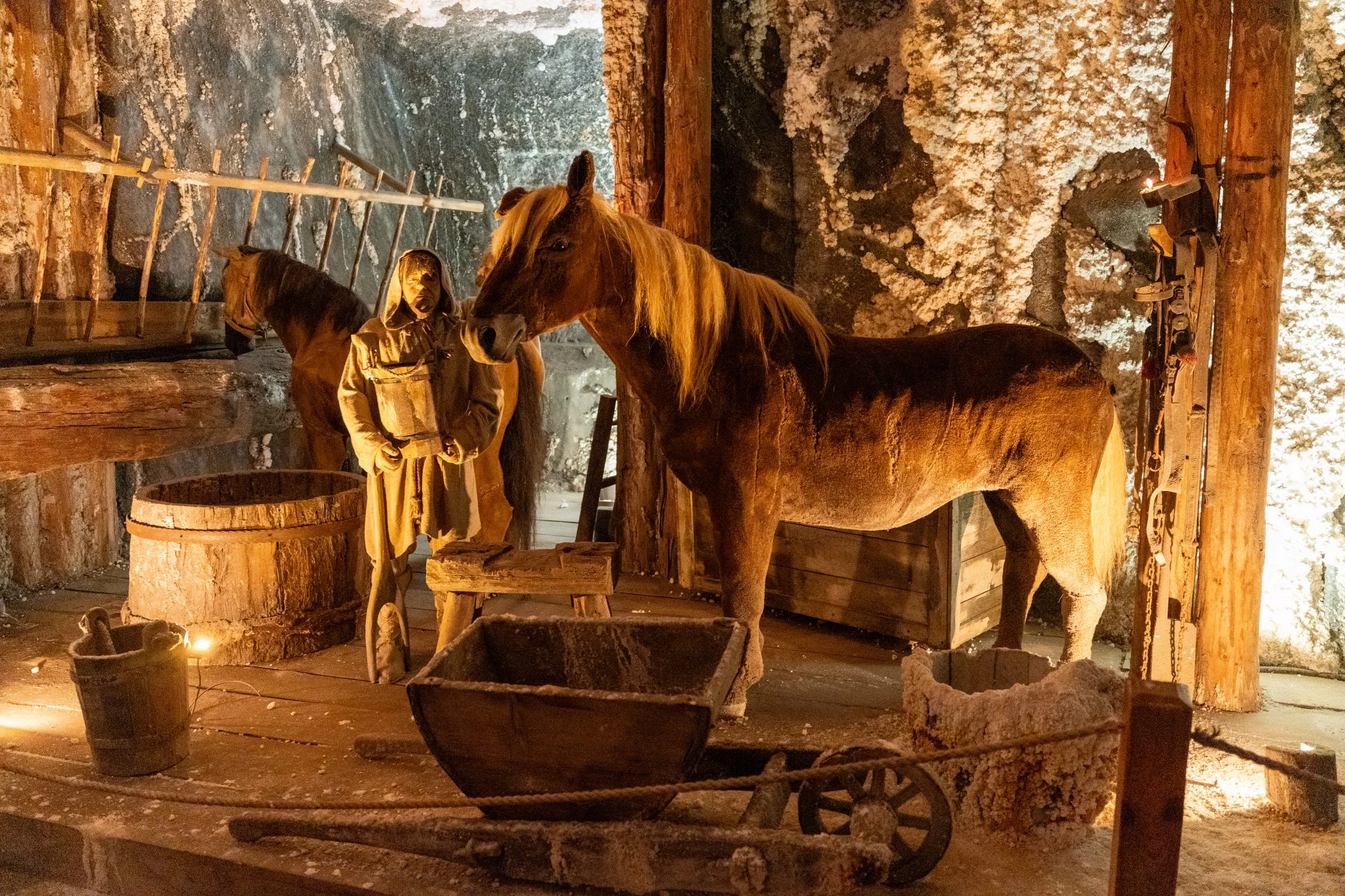
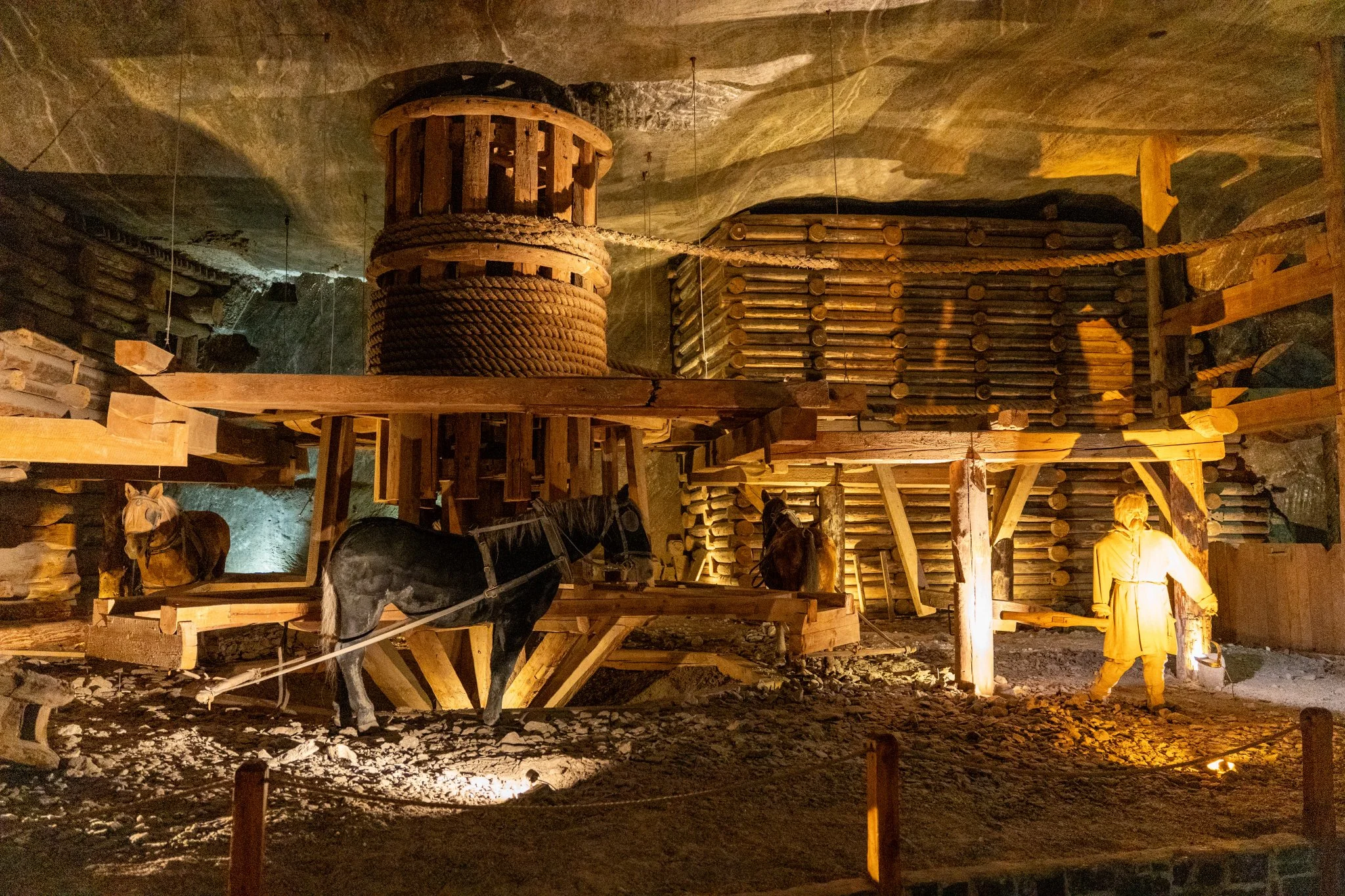
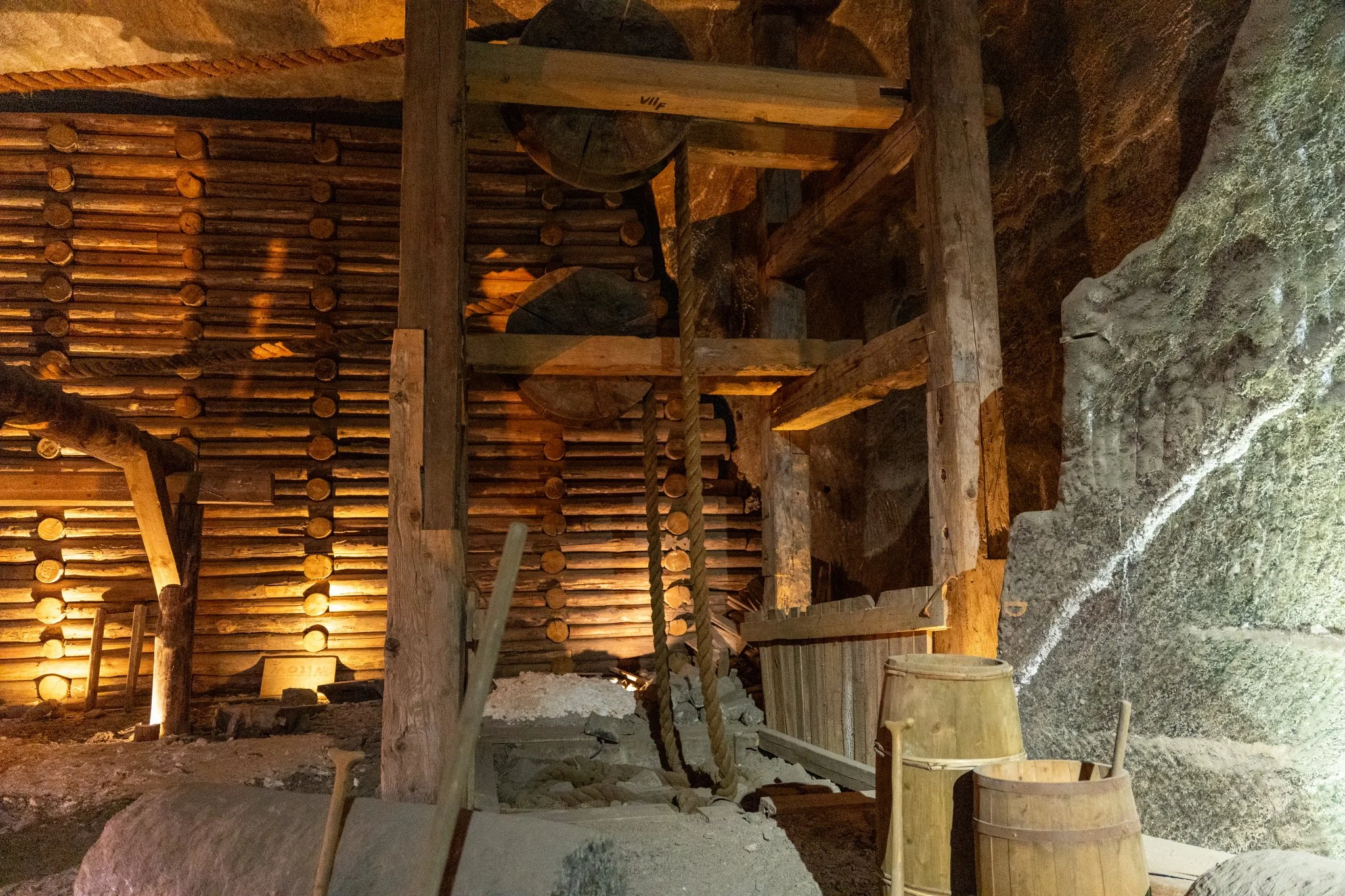
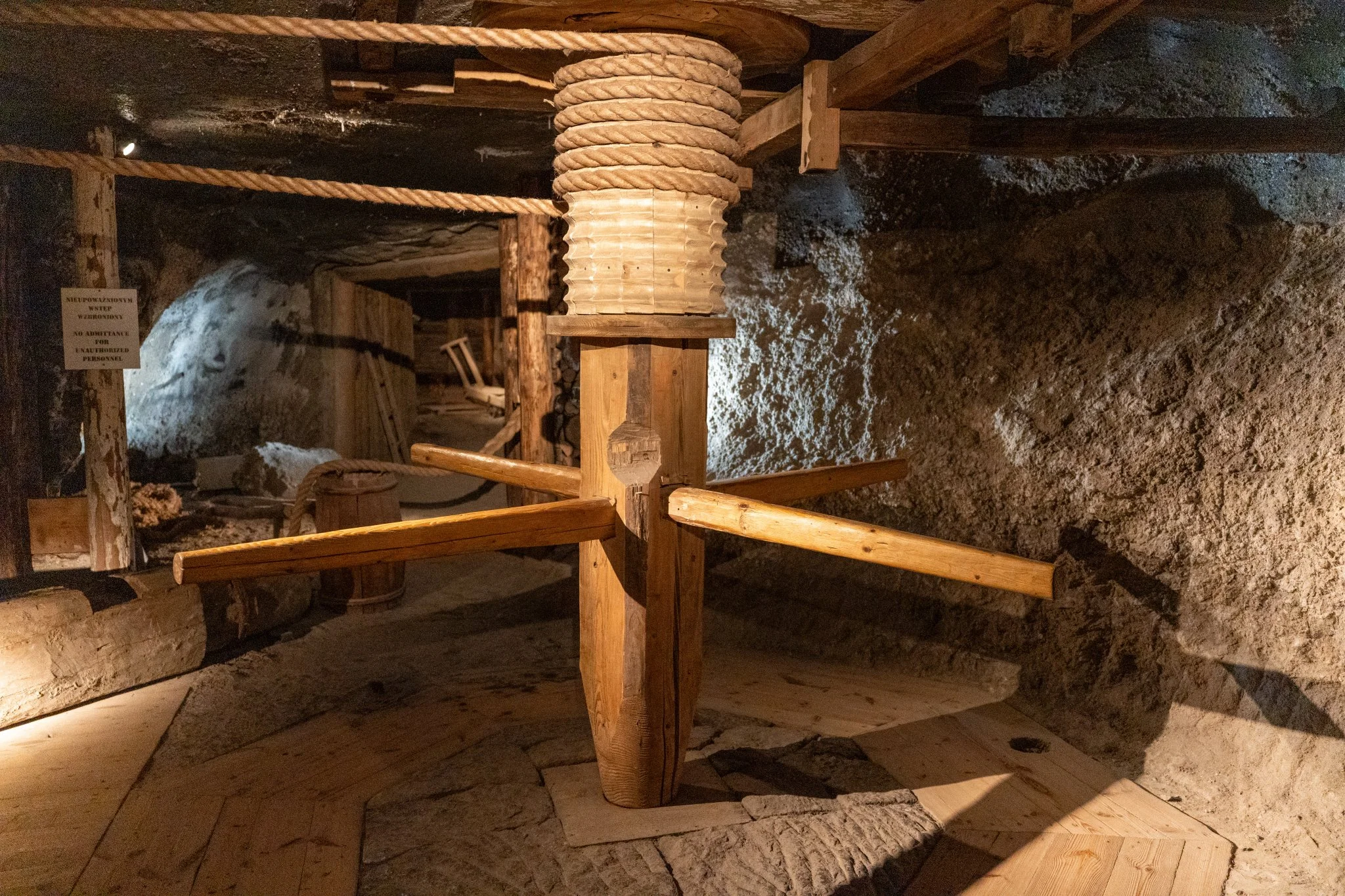
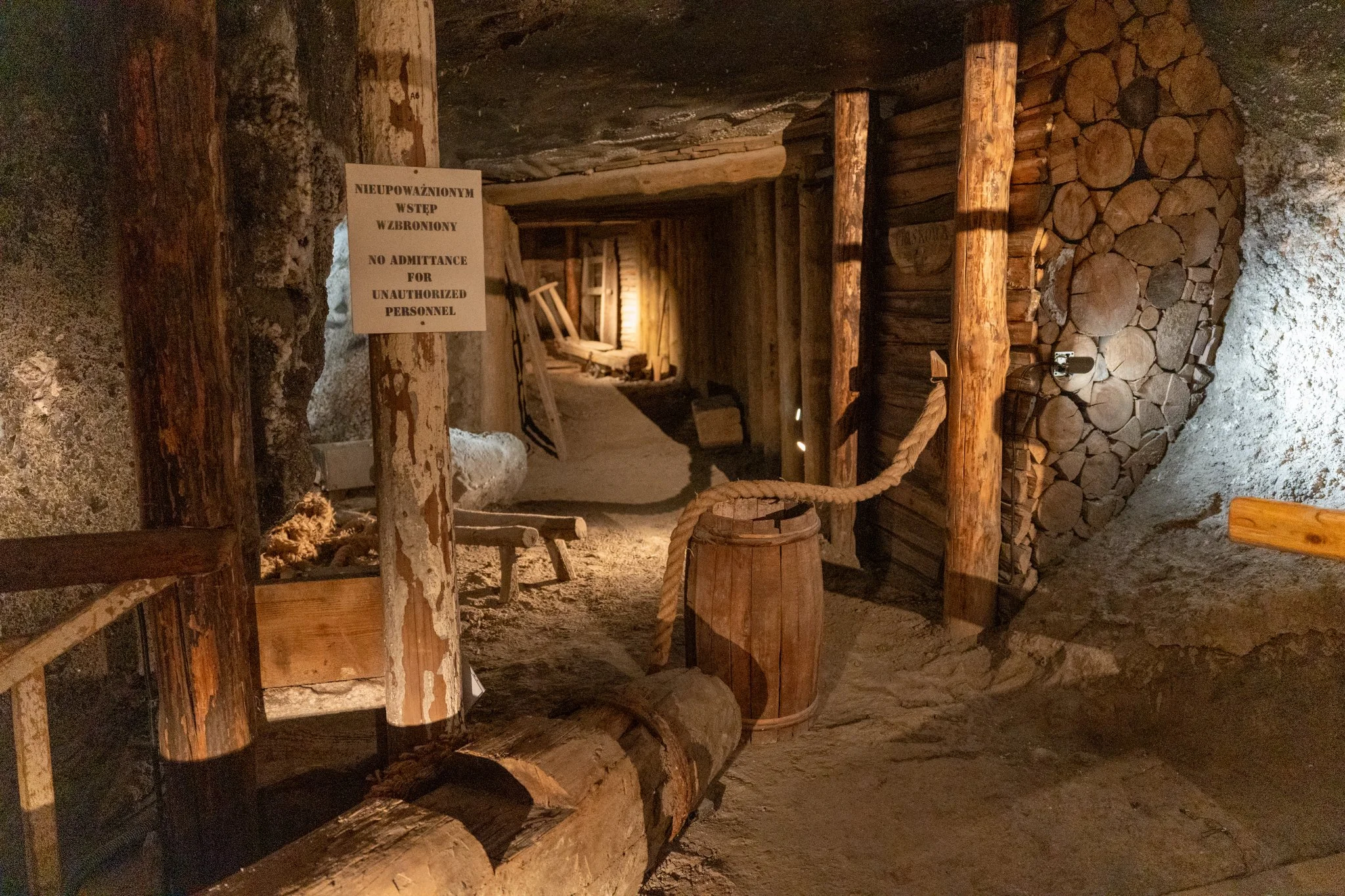
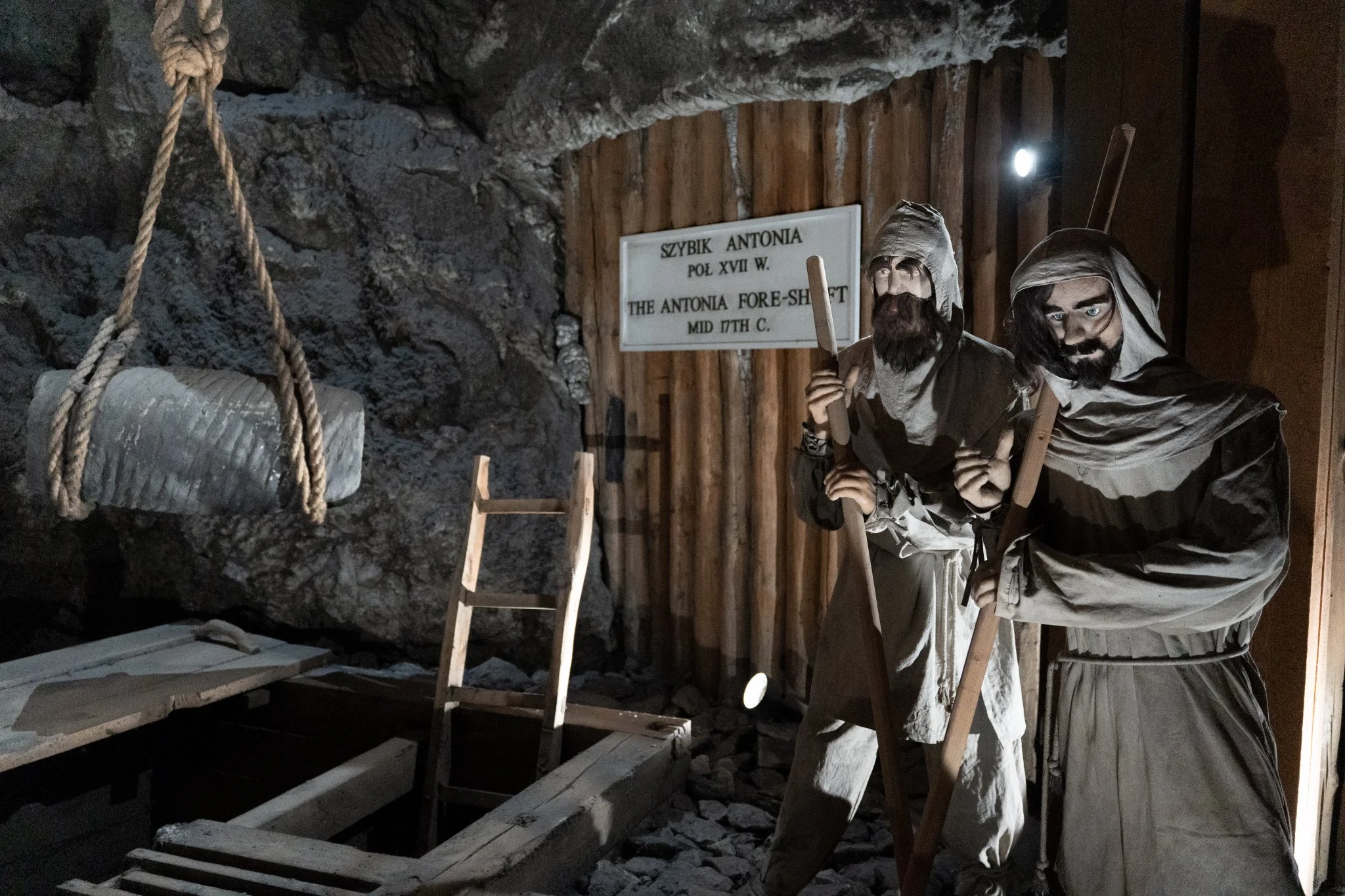
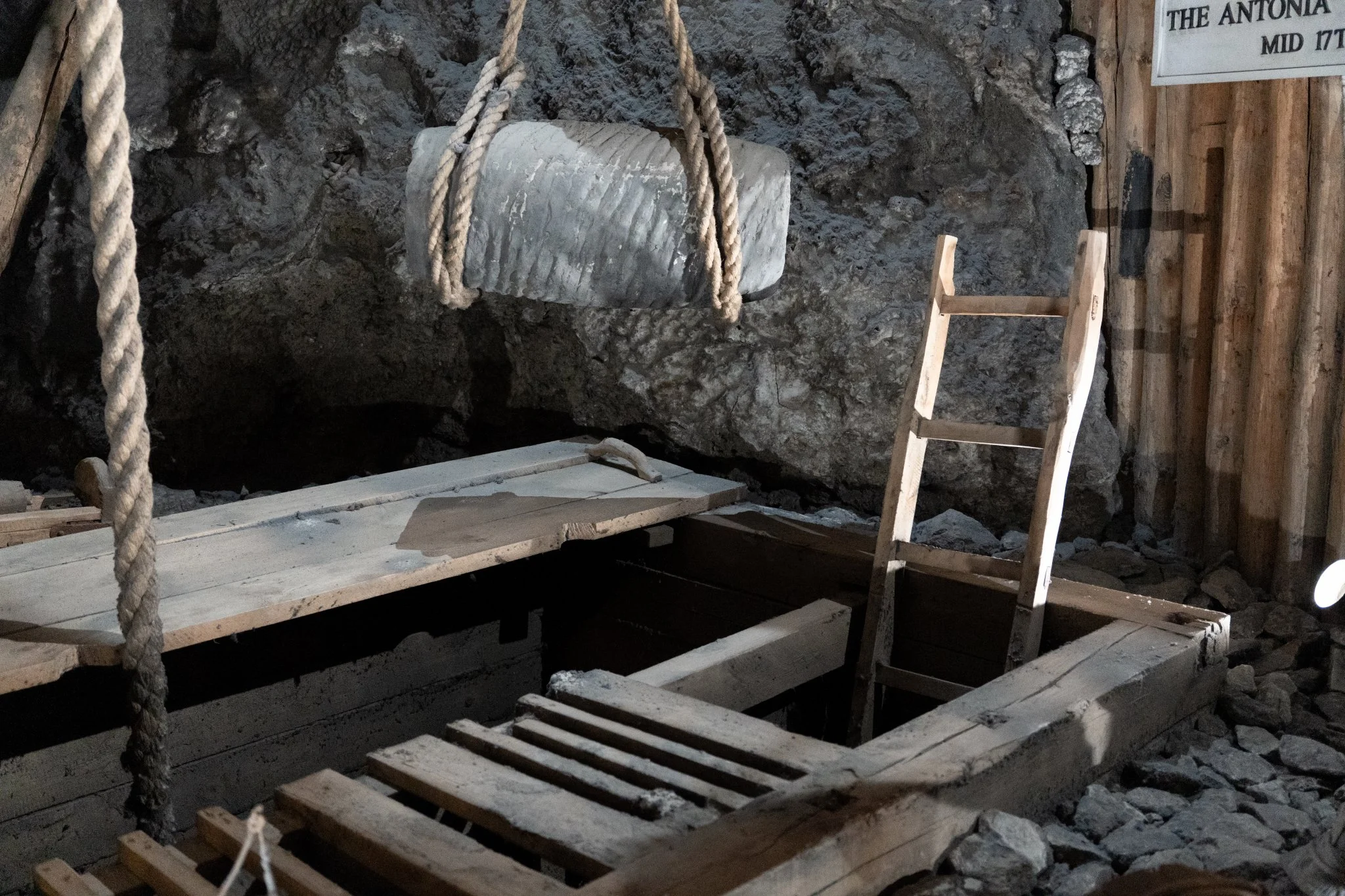
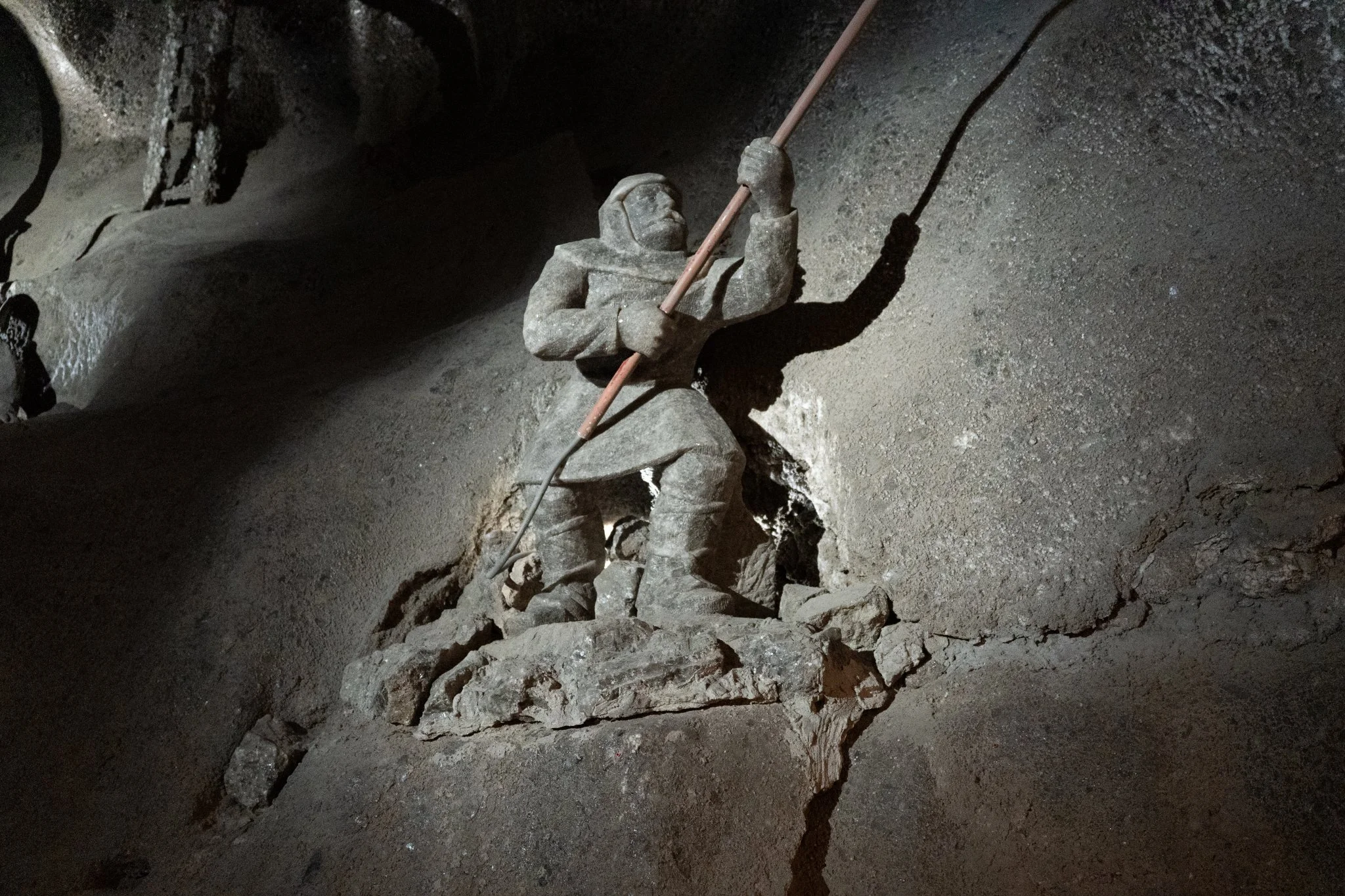
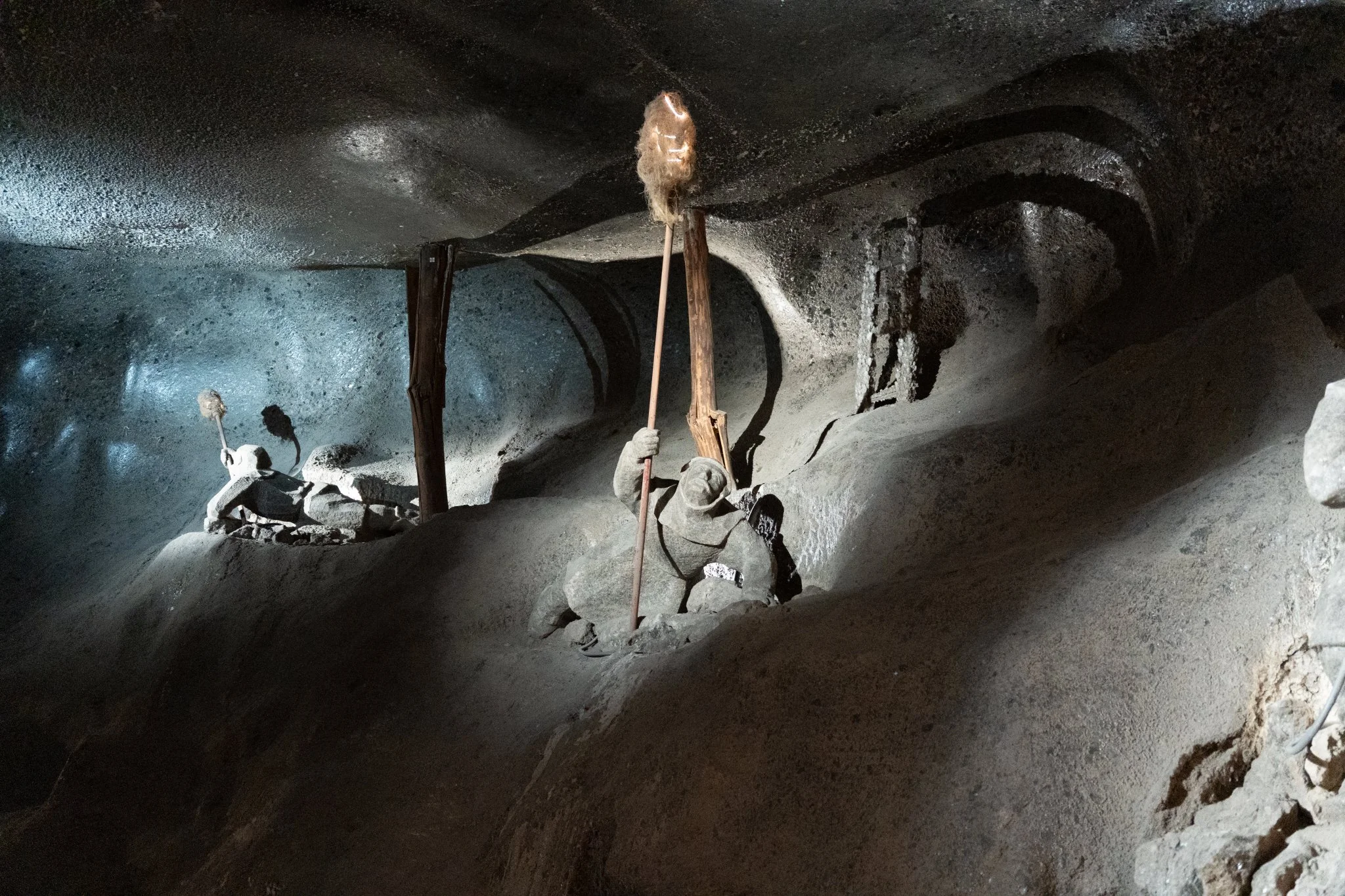
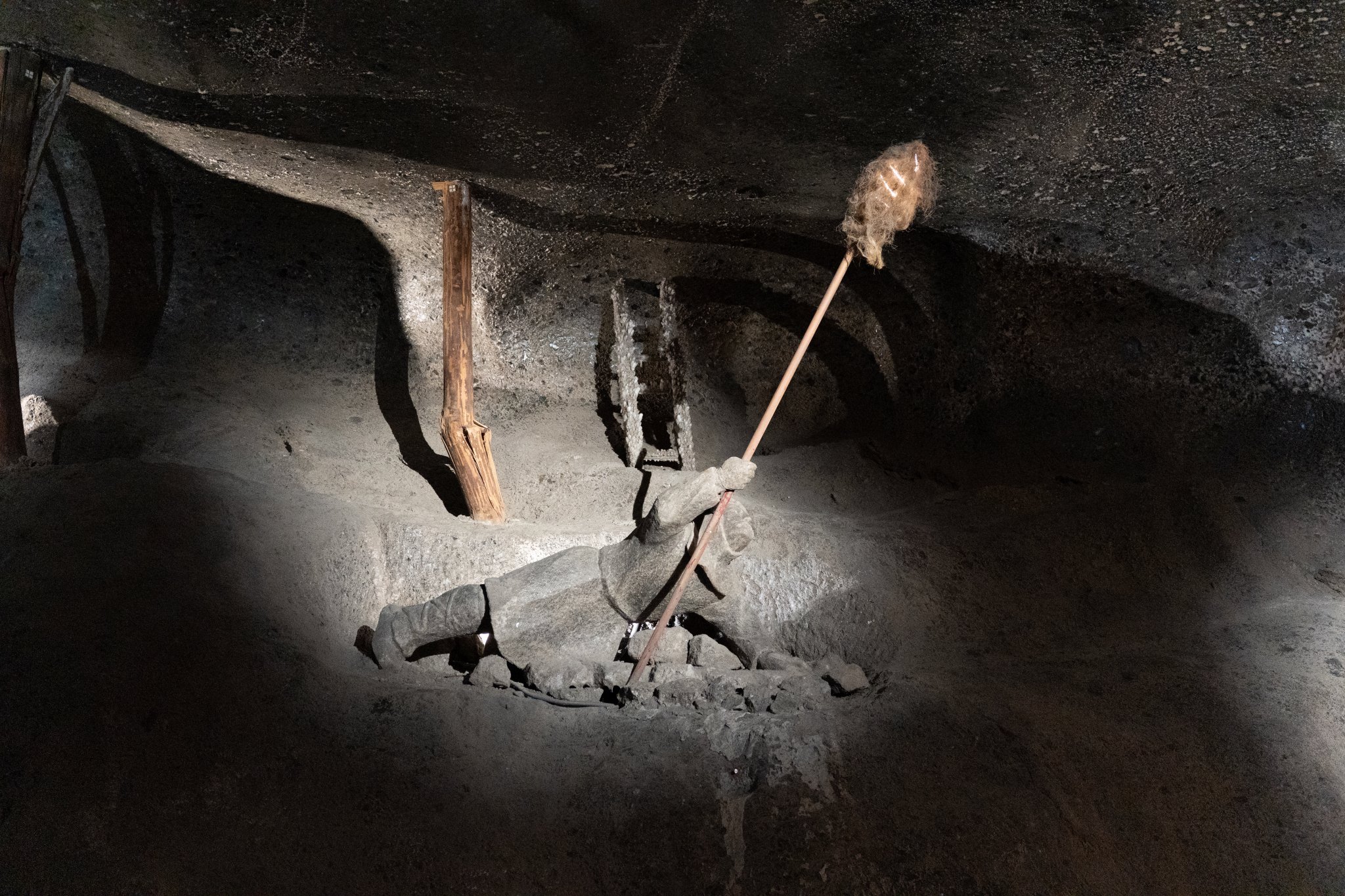
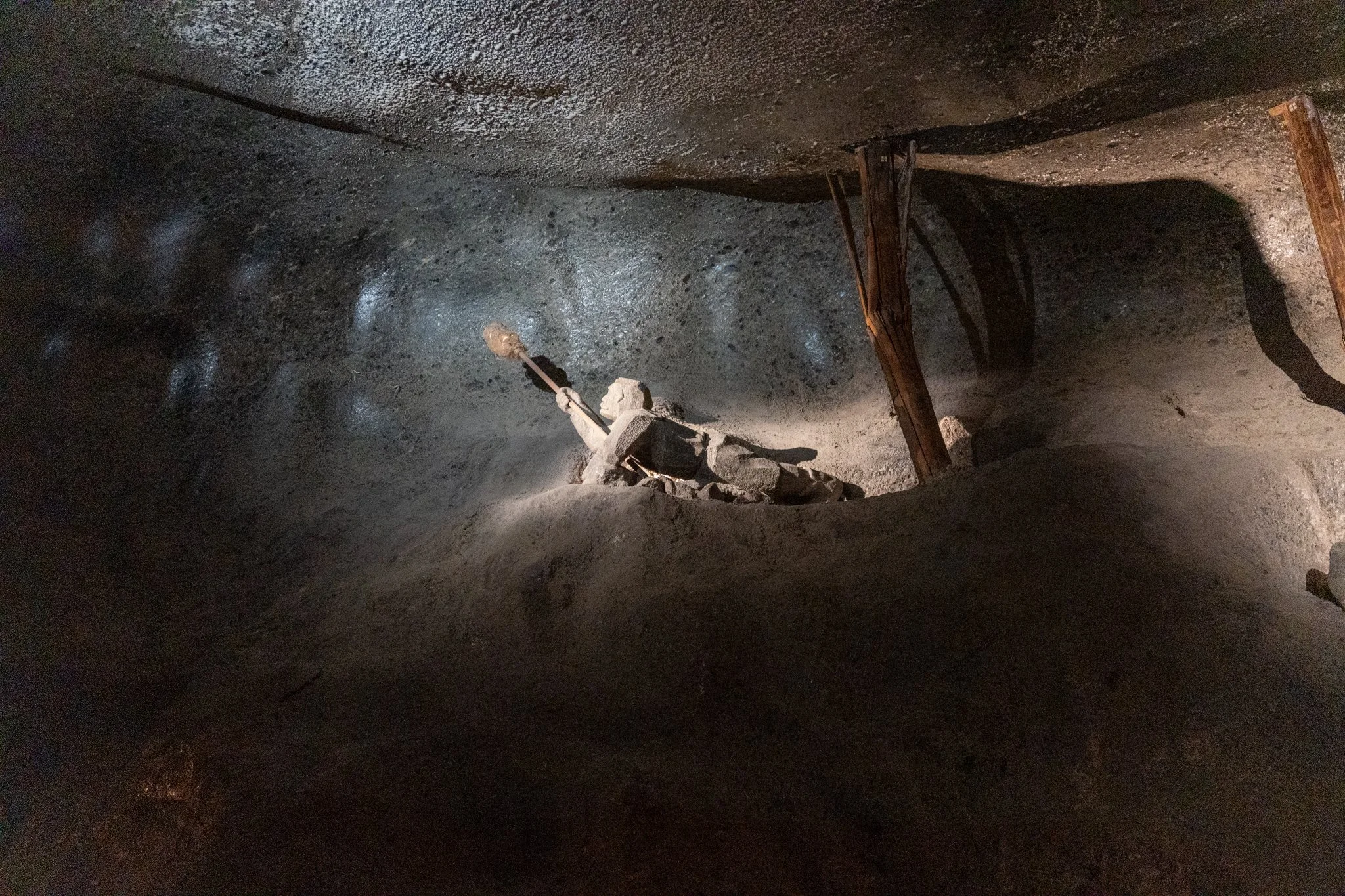
Piero: thinking about the effort required to extract thousands of tons of salt without modern technology is truly impressive.
Angela: in another chamber, we encounter a curious presence: the salt gnomes.
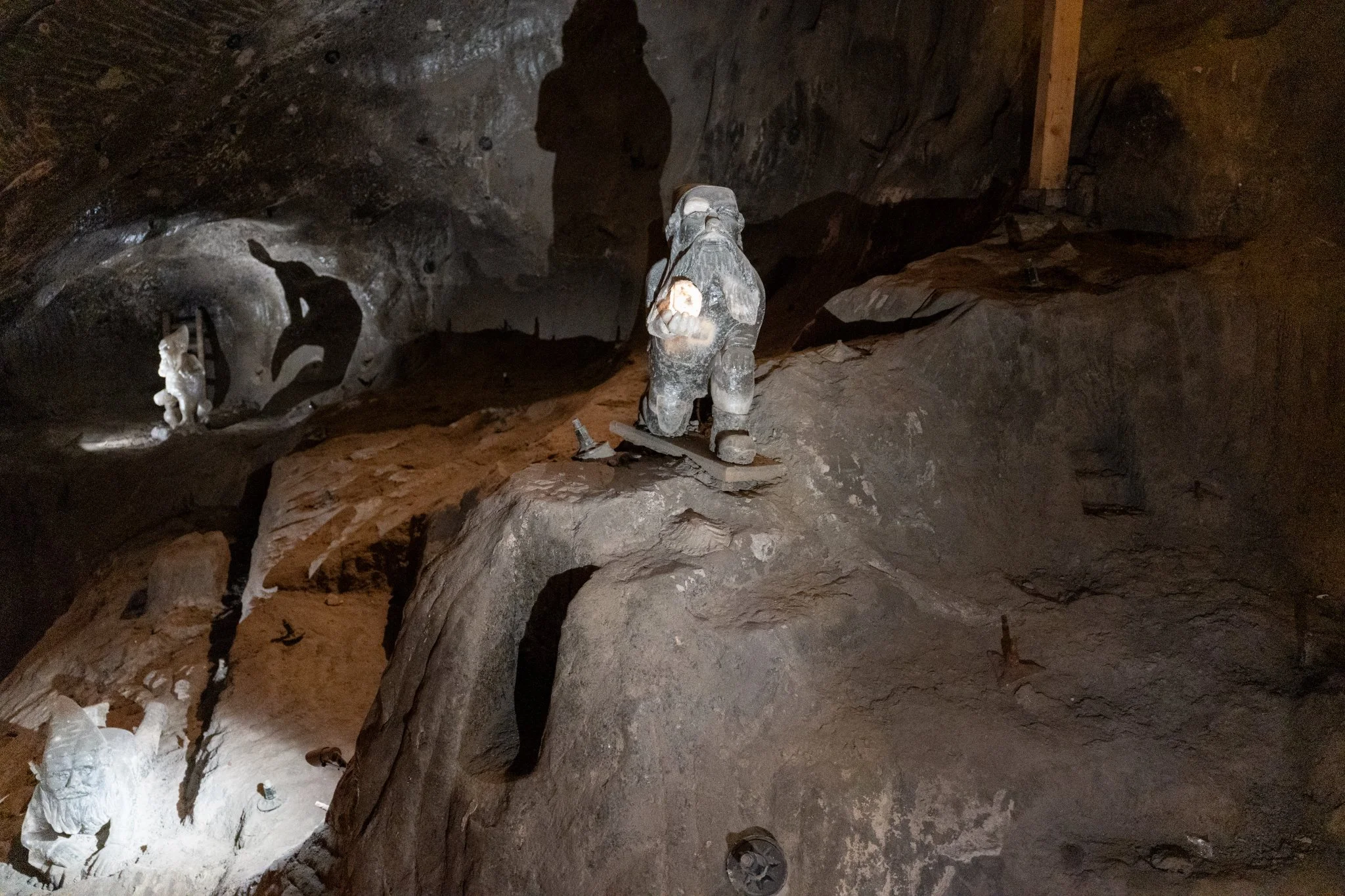
Piero: small statues that recall the legendary figures which, according to popular tradition, protected the miners during their work.
Angela: another interesting fact concerns the air inside the mine.
Piero: it is rich in microscopic salt particles, so much so that for years certain areas have been used for specific respiratory therapies.
Angela: as we continue walking, each chamber seems to surpass the previous one.
Piero: statues, bas-reliefs, underground lakes, and chambers carved entirely in salt follow one another without pause.
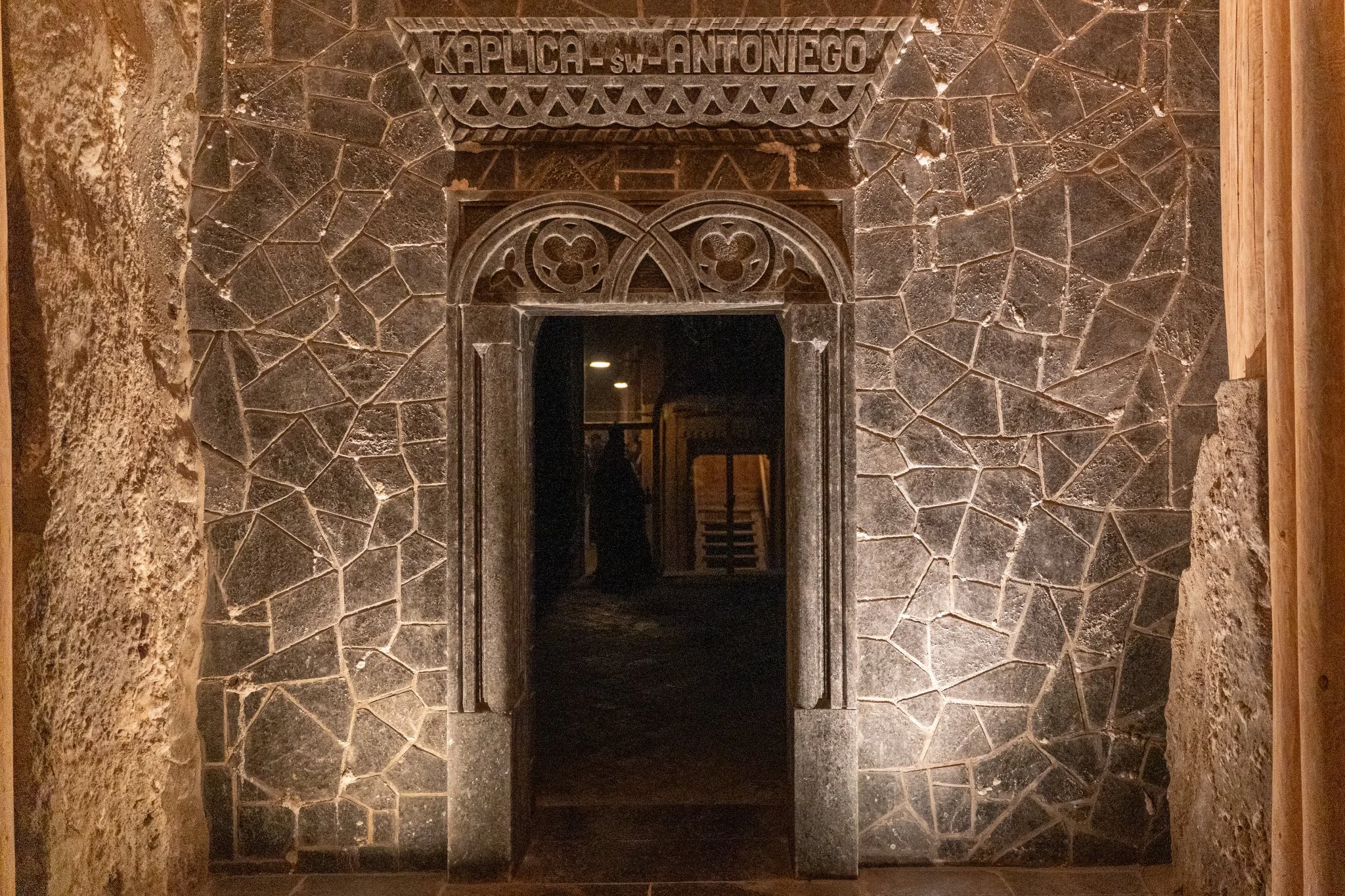
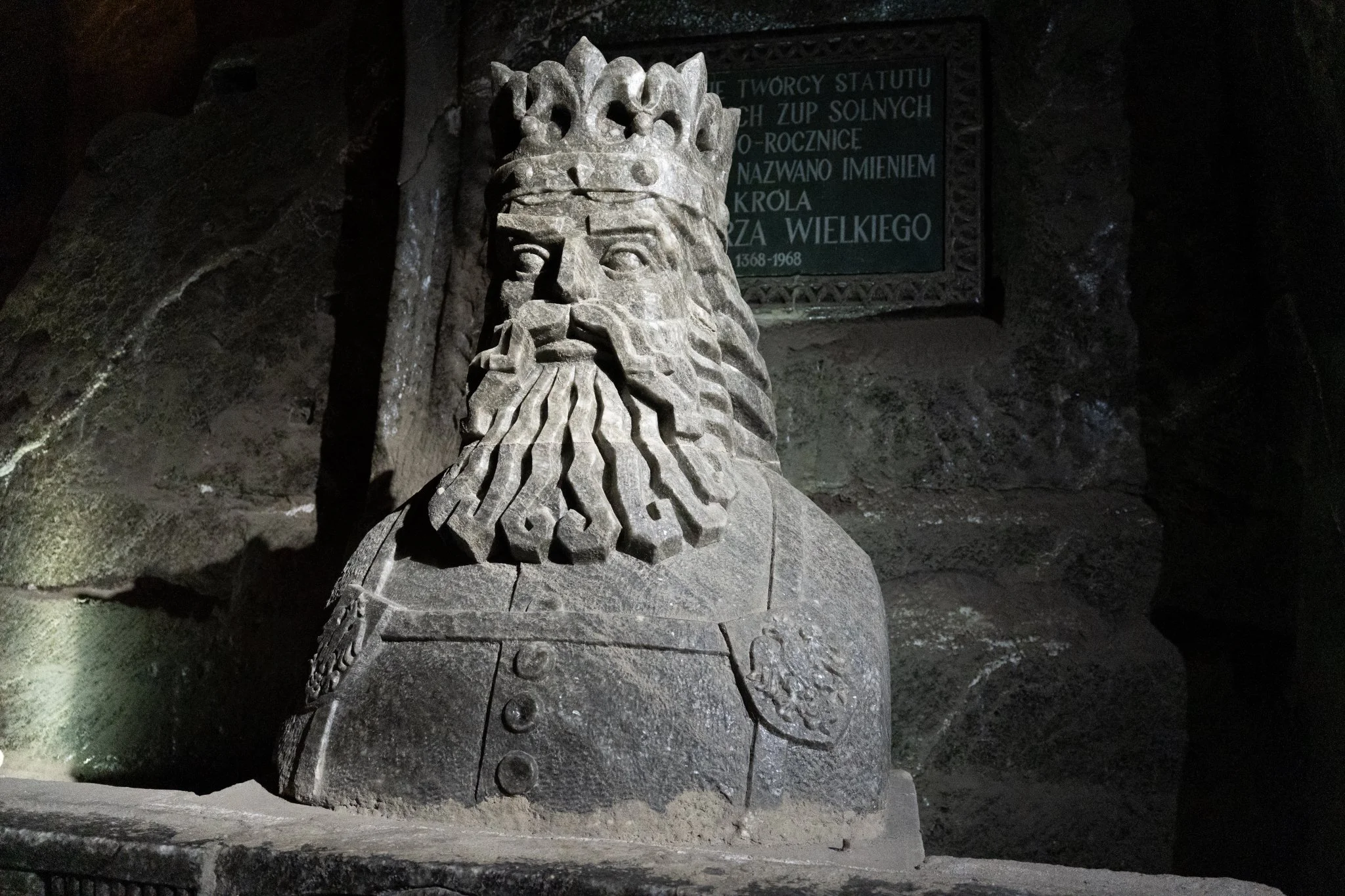
Angela: after walking through long corridors and passing through numerous extraction chambers, the guide slows down.
Piero: in front of us opens a large entrance.
Angela: it is the moment everyone has been waiting for.
Piero: we are about to enter the Chapel of Saint Kinga, the most spectacular place in the entire mine.
The Chapel of Saint Kinga: the salt Cathedral that leaves you speechless
Piero: for a few seconds, we stand still in front of such beauty. The photos we had seen before leaving do not remotely prepare you for what you feel when you step inside here.
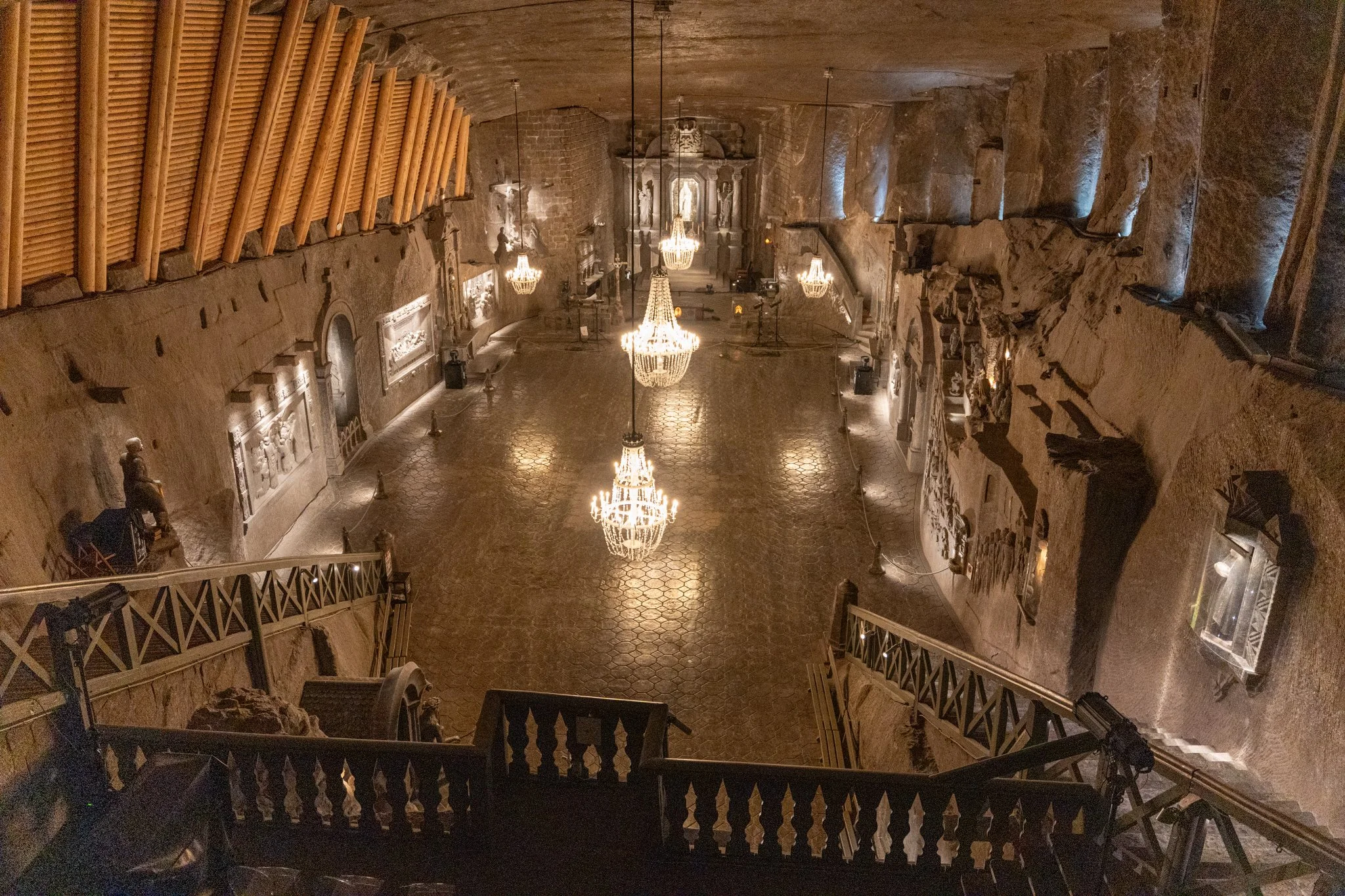
Angela: the Chapel of Saint Kinga does not feel like an underground chamber. It feels like a true salt cathedral.
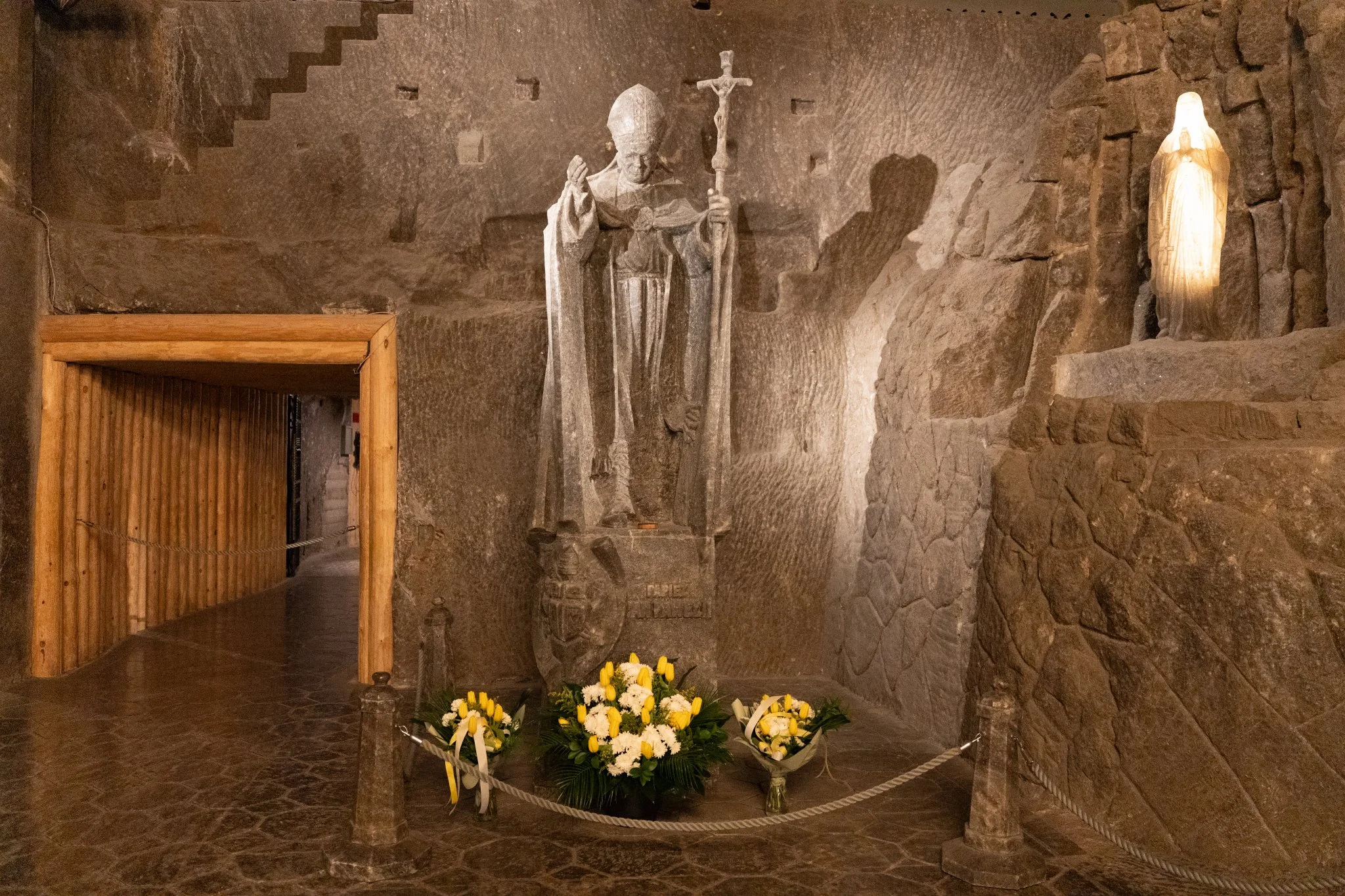
Piero: a cathedral carved entirely in salt more than one hundred metres underground, and the most incredible thing is that almost everything we see here is made of salt.
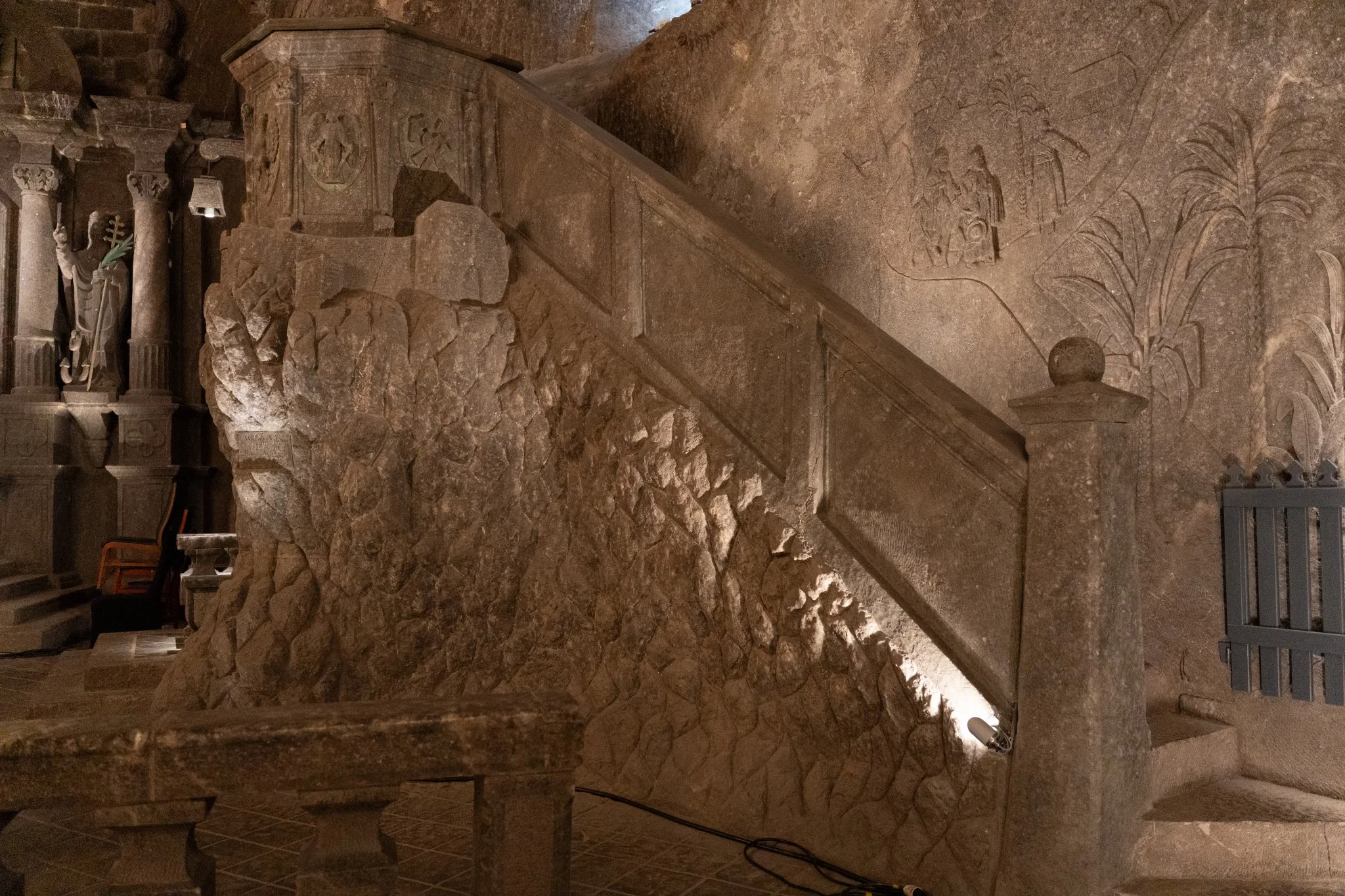
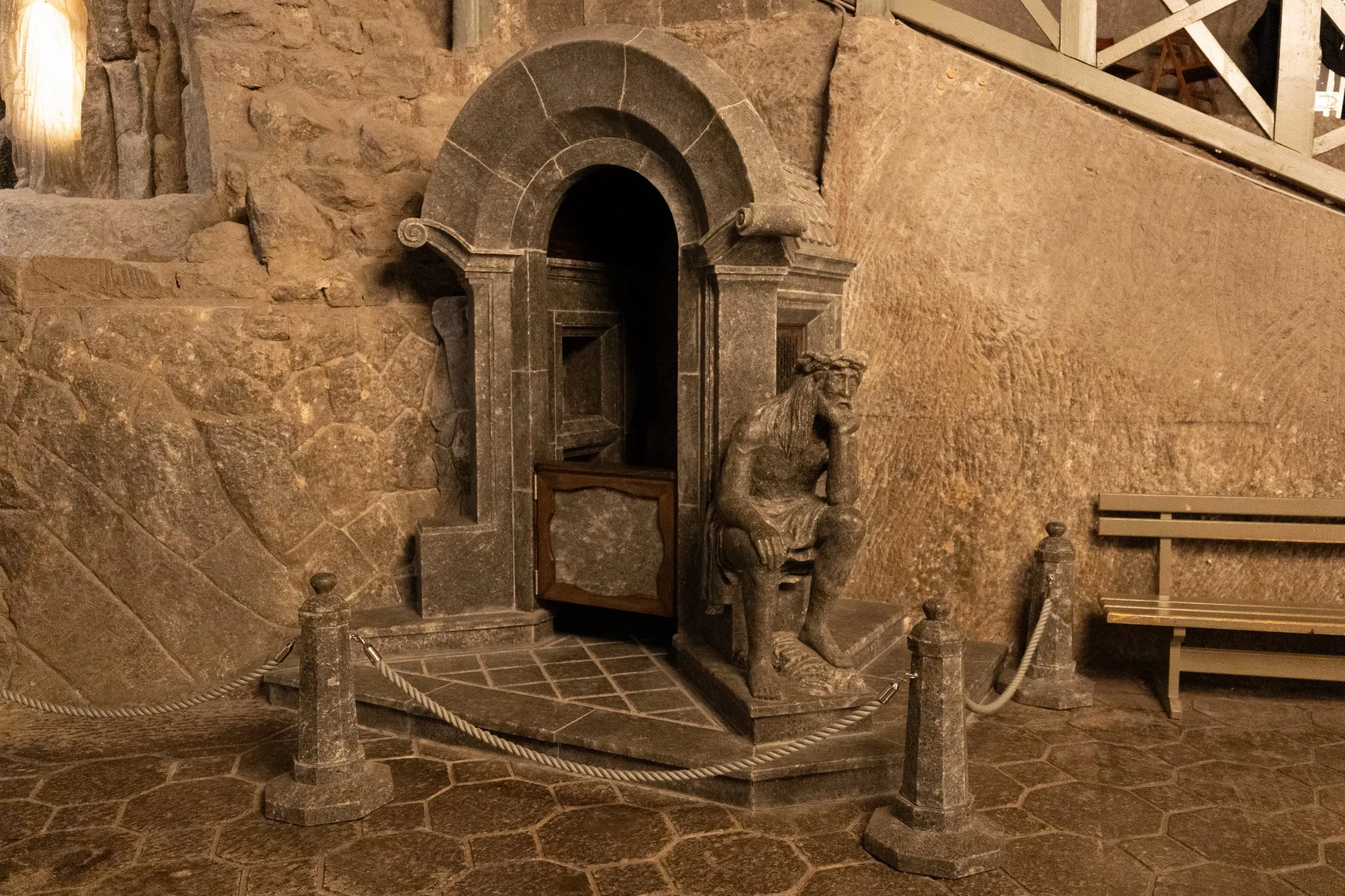
Angela: the walls are salt, the floor is salt, the altars are salt, the statues are salt: the guide keeps repeating it. Even the giant salt chandeliers hanging from the ceiling contain elements made from purified salt crystals.
Piero: the chapel measures about 54 metres in length, 18 metres in width, and 12 metres in height: impressive dimensions for a space entirely hand-carved by miners.
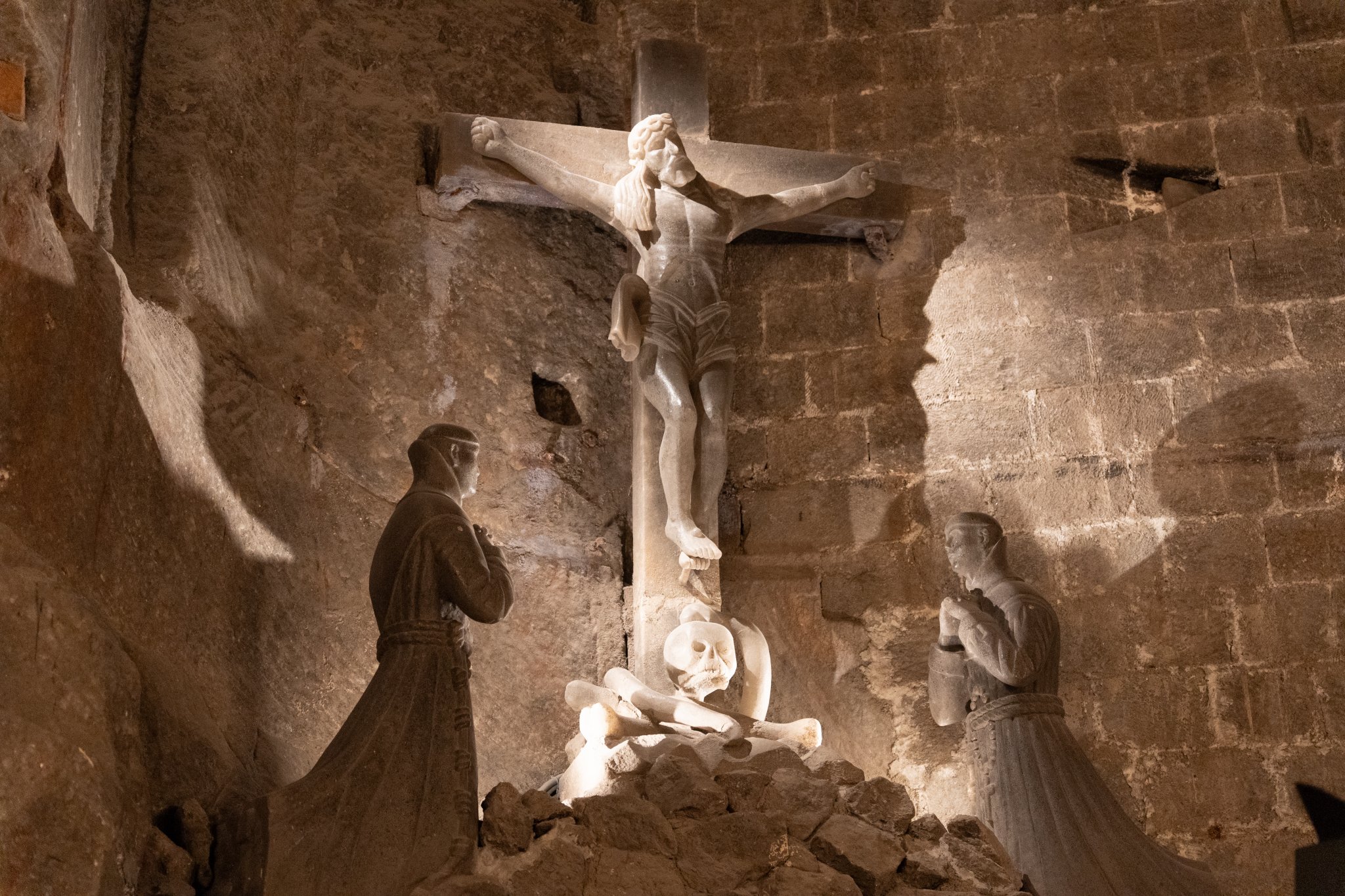
Angela: here, faith and labour merge into a single work of art. It is astonishing to think that it took decades to complete. As the guide explains, miners spent most of their lives underground and dedicated their free time to creating these extraordinary works, of which this is undoubtedly the masterpiece.
Piero: the first thing that captures my attention is the magnificent ceiling.
Angela: it is not smooth, as one might expect. It features decorations, carvings, and geometric patterns reminiscent of the vaults of great European churches.
Piero: the surfaces reflect the light in a unique way, with the salt creating shades ranging from light grey to silver, giving the space an almost unreal glow.
Angela: then our eyes are drawn to the enormous salt chandeliers.
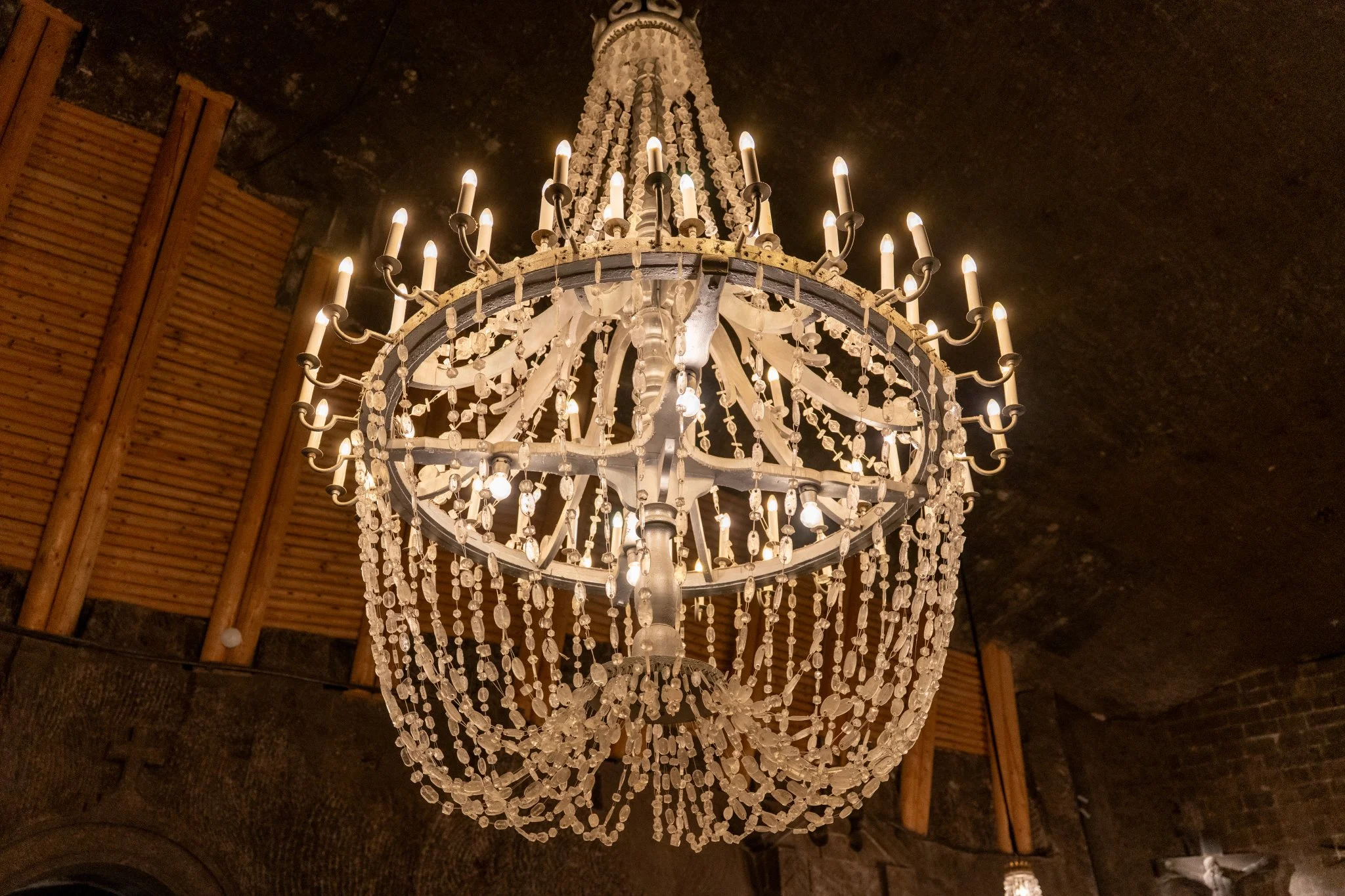
Piero: they look like crystal chandeliers from a royal palace: here too, the crystals are made from salt extracted from the mine and processed until they become almost transparent.
Angela: when the light passes through them, the entire chapel is illuminated with spectacular reflections.
Piero: in the centre of the nave, the floor deserves a moment of attention.
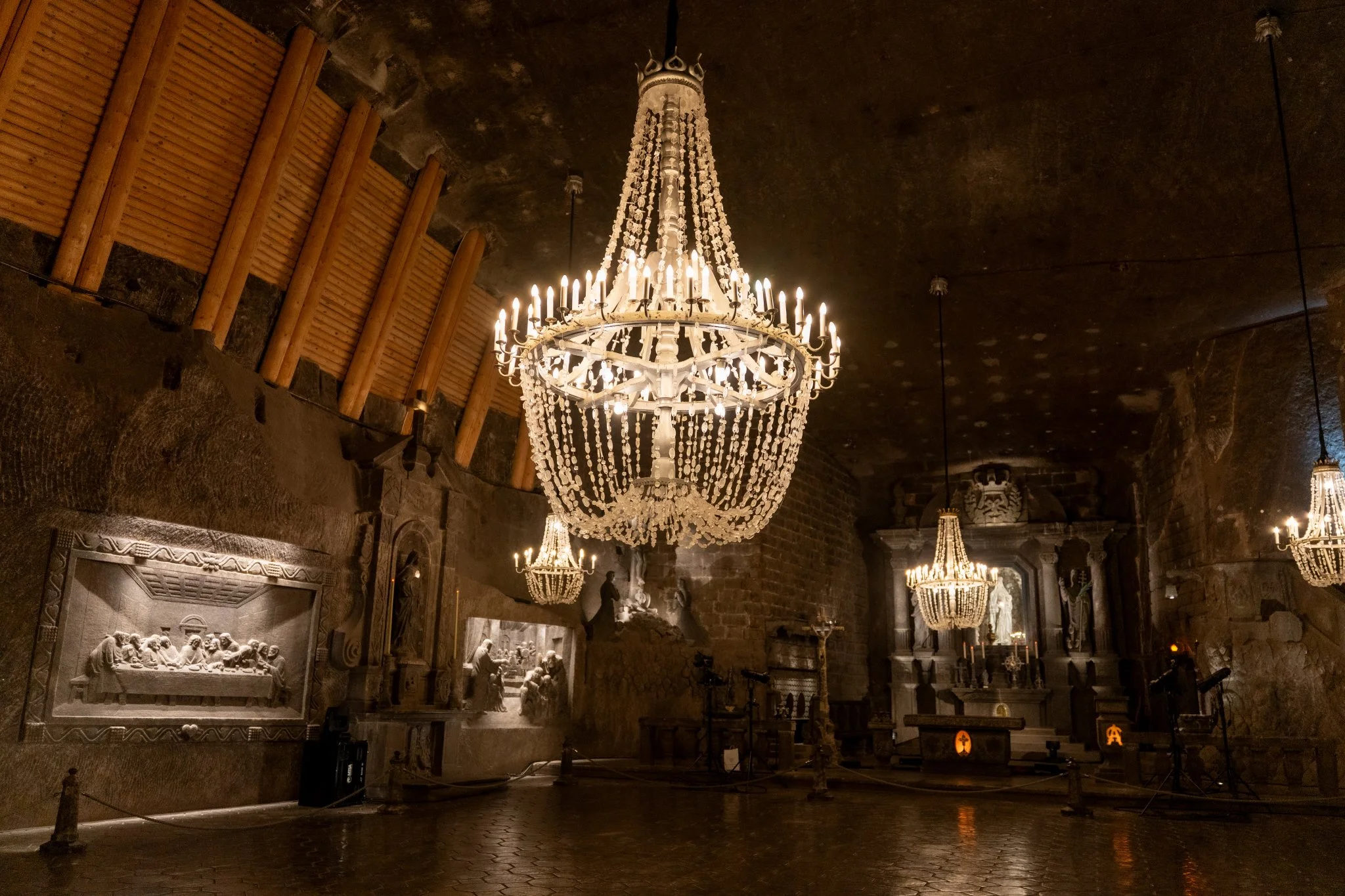
Angela: the slabs have been carved with ornamental patterns that resemble stone carpets, yet even here there is no stone—only salt, and nothing but salt.
Piero: moving towards the presbytery, we come across the main altar, elegant, harmonious, and surprisingly refined.
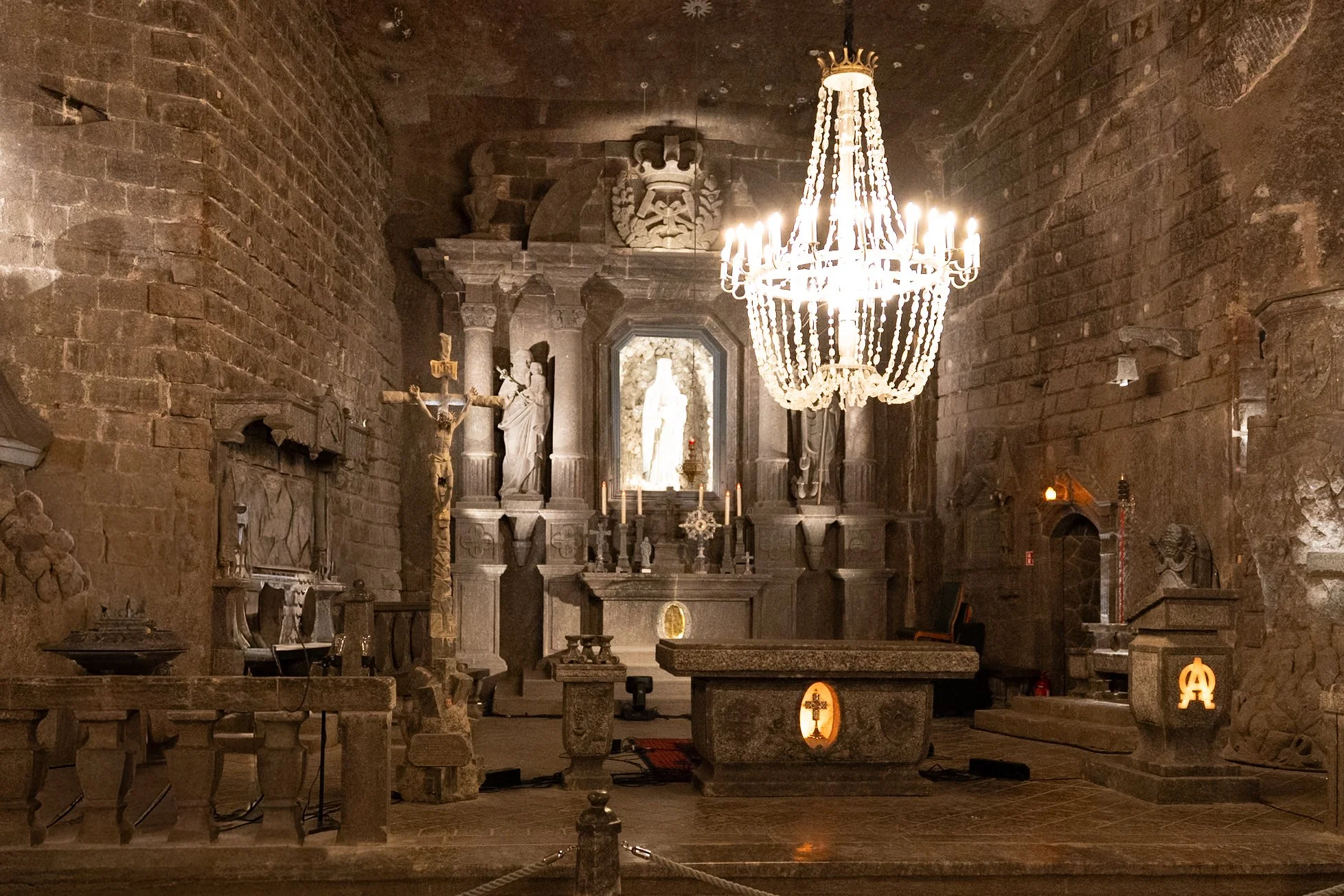
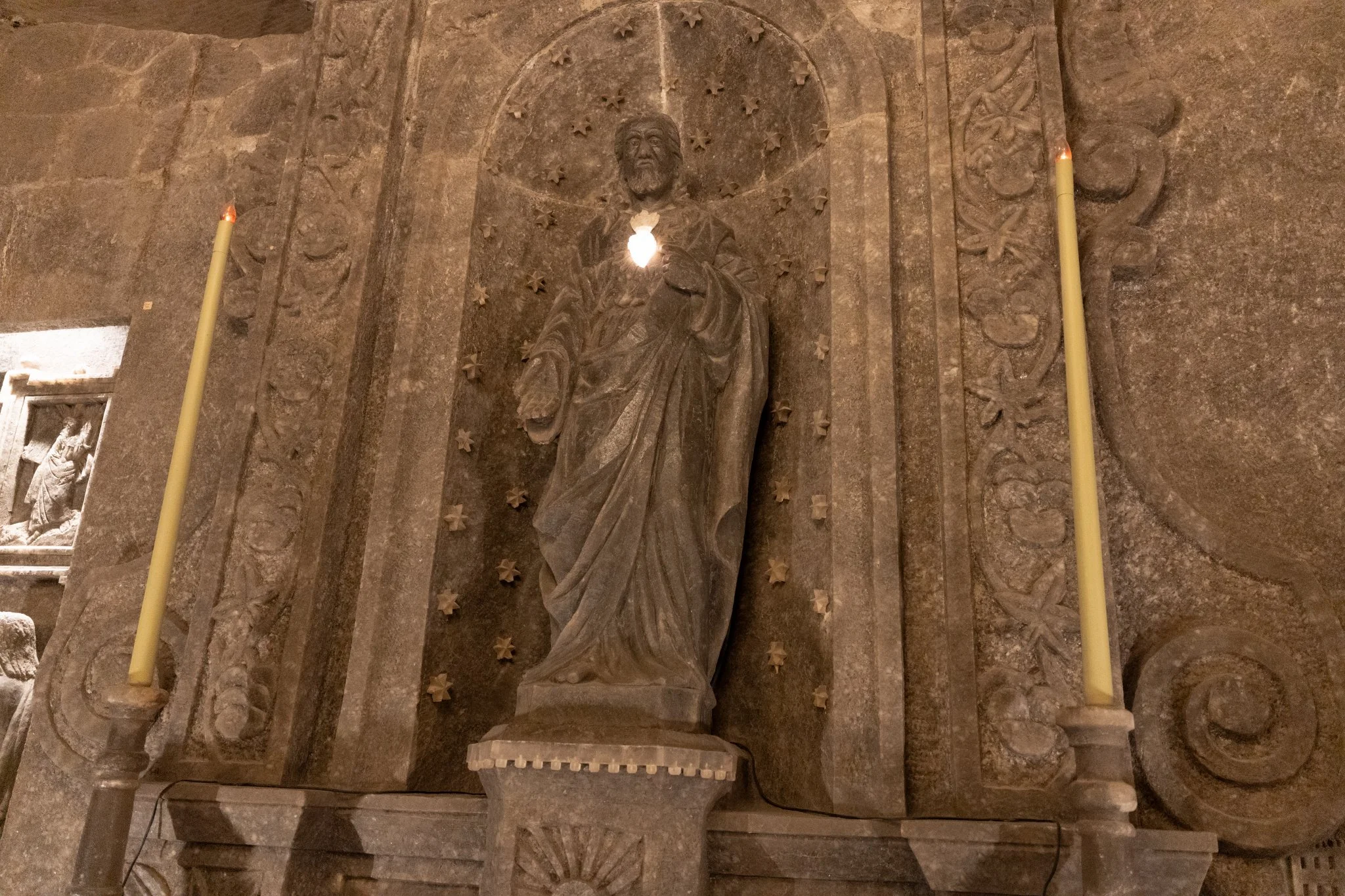
Angela: above the altar stands the figure of Saint Kinga, patron saint of the salt miners.
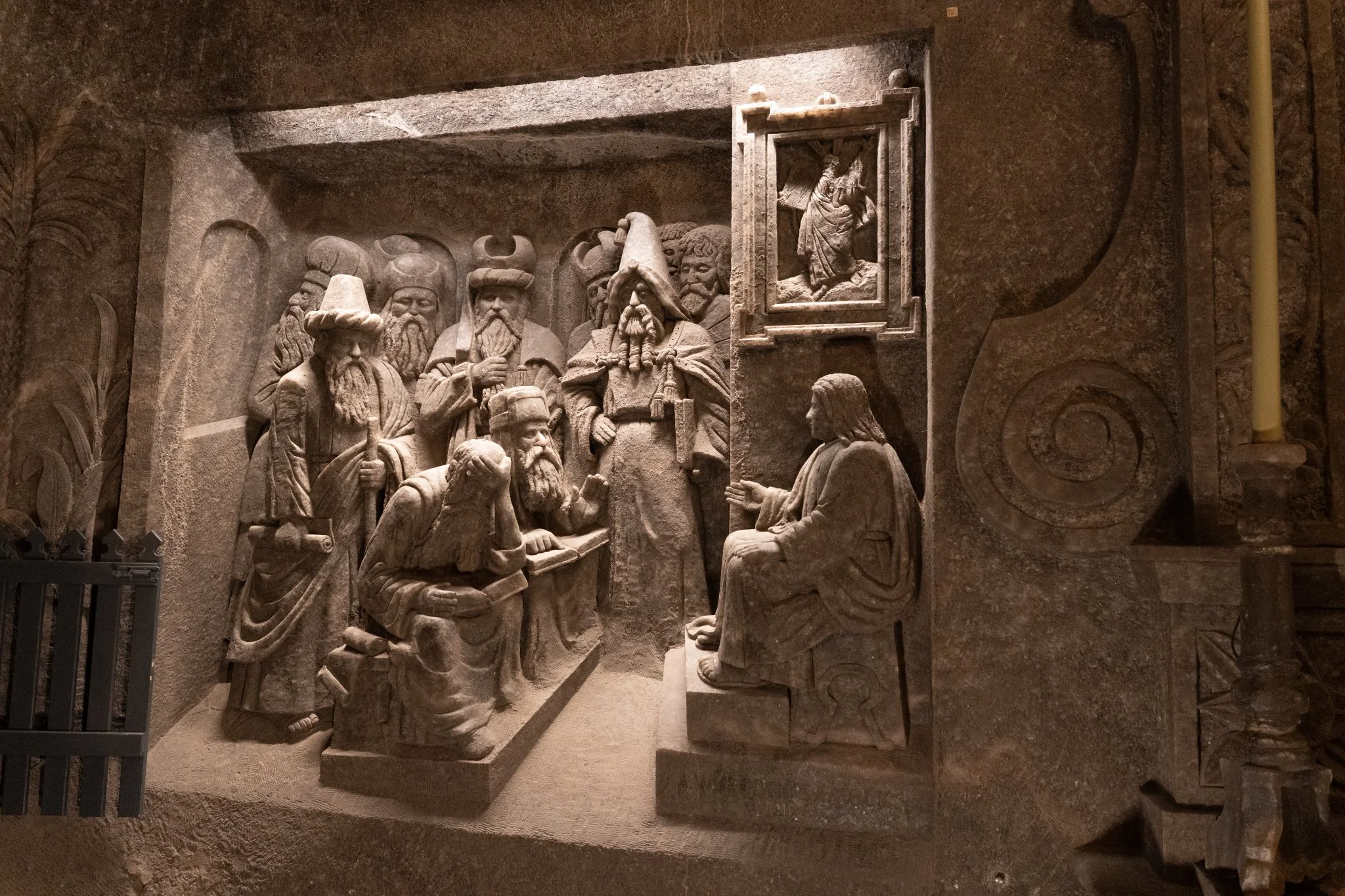
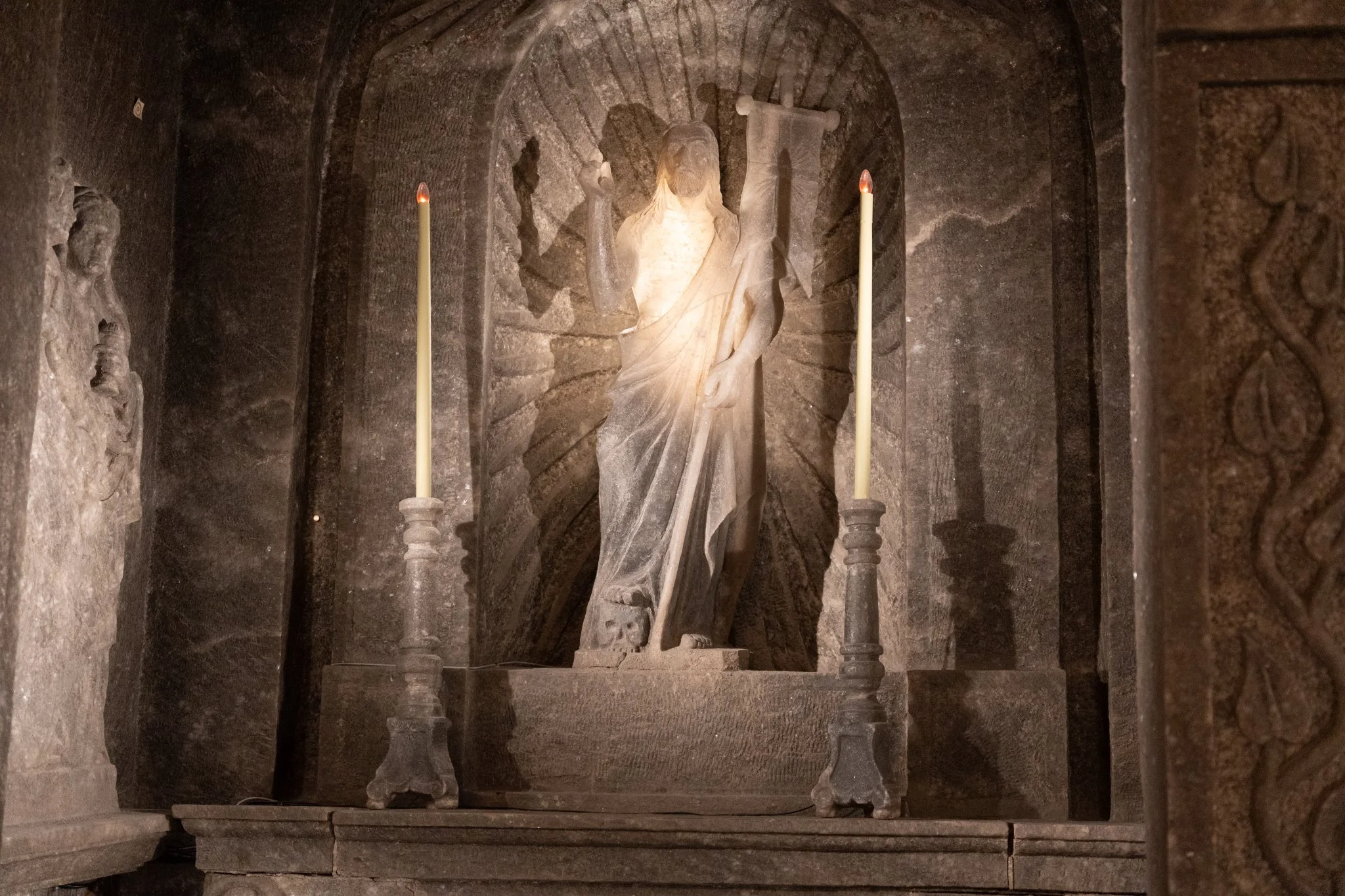
Piero: it is impossible not to notice the level of detail achieved by the sculptors: the folds of the garments, the faces, the expressions.
Angela: the absolute masterpiece of the chapel is found along one of the walls: the famous bas-relief of the Last Supper.
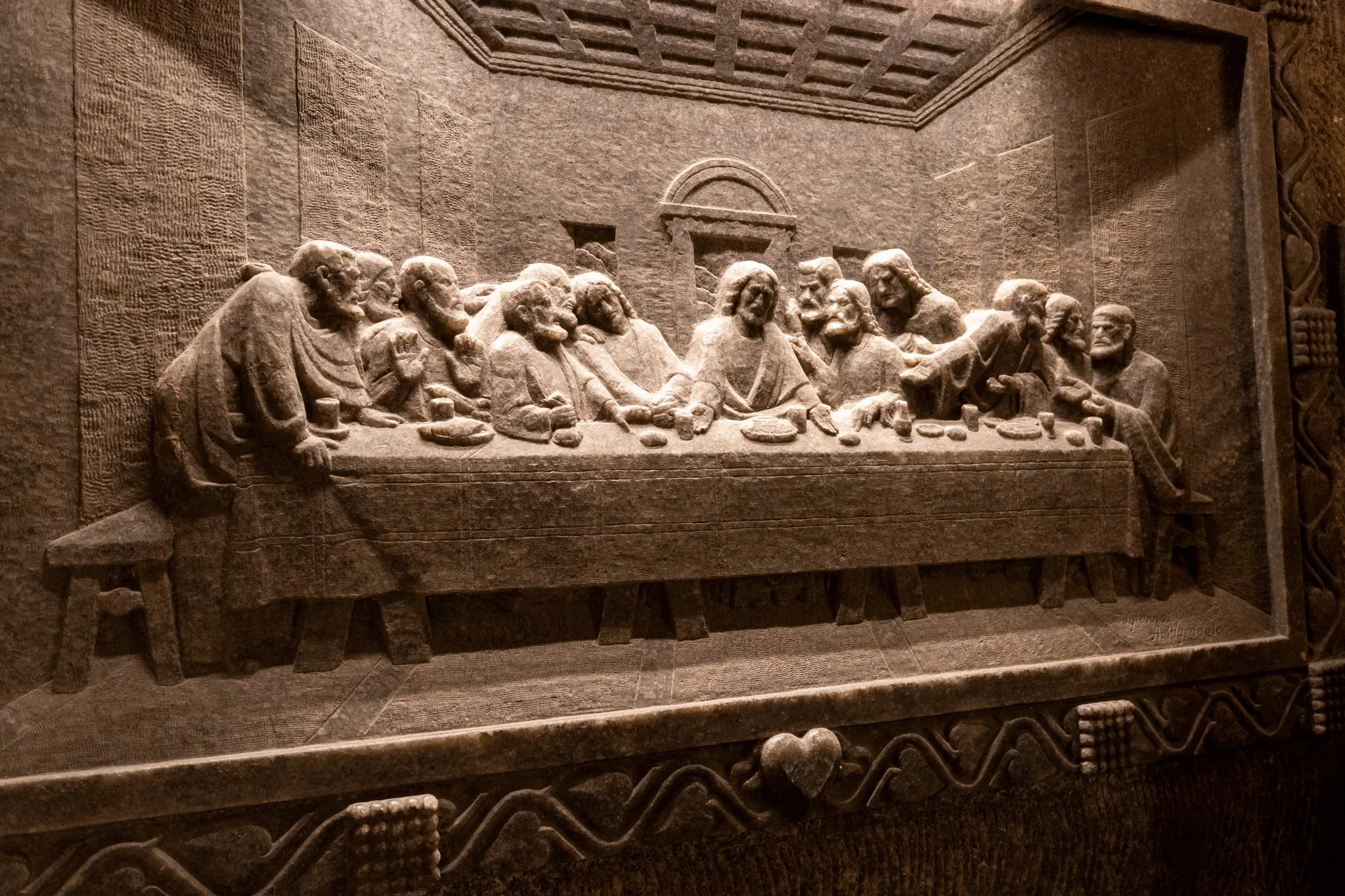
Angela: from a distance it looks like a marble work.
Piero: and it does, from afar it really resembles marble… and yet, guess what? It was carved directly into the salt wall.
Angela: the artist was clearly inspired by Leonardo da Vinci’s Last Supper, and the level of detail is extraordinary.
Piero: it is one of those works where the more you look, the more hidden details you discover.
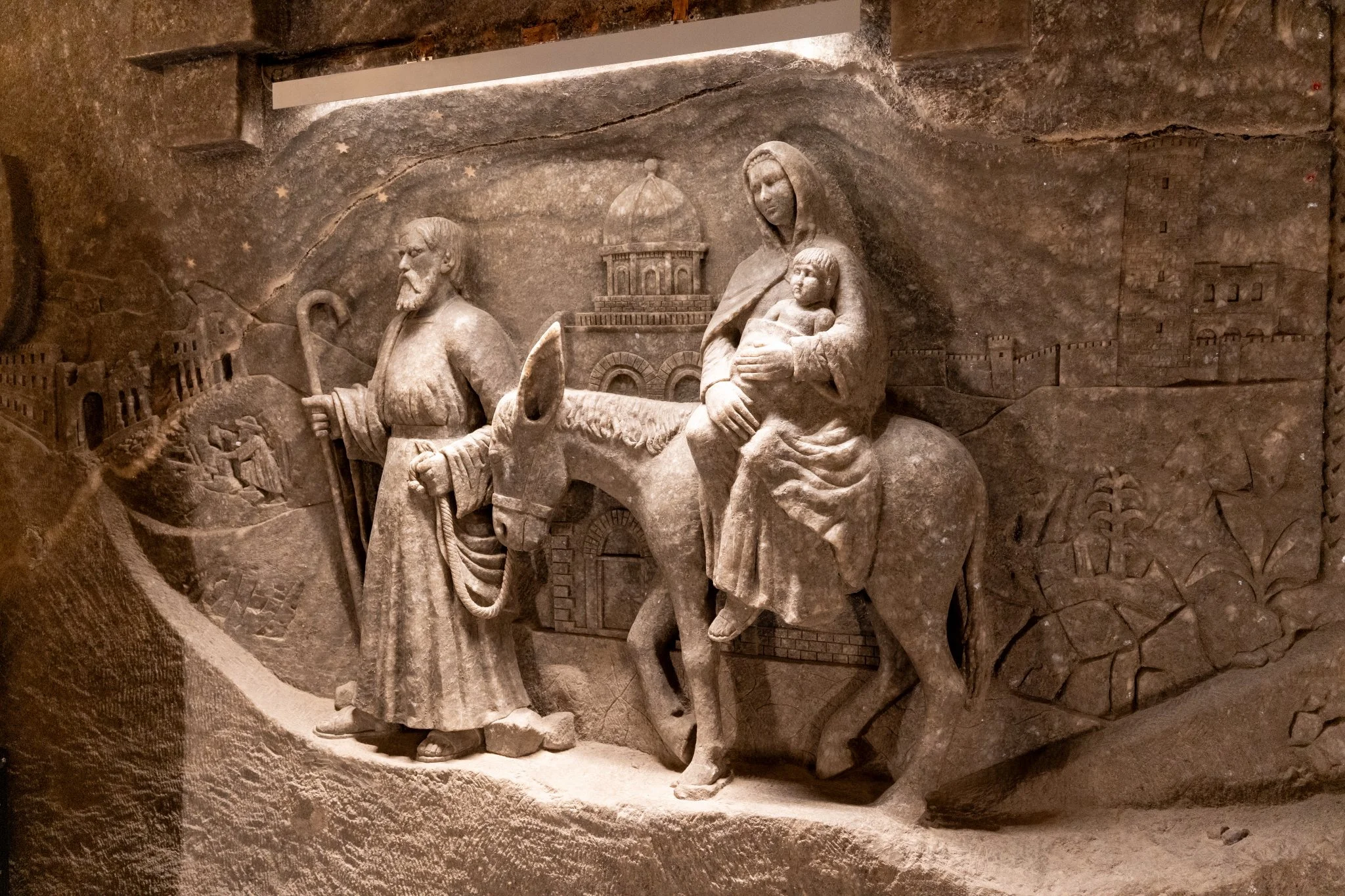
Angela: but it is not the only relief inside the chapel.
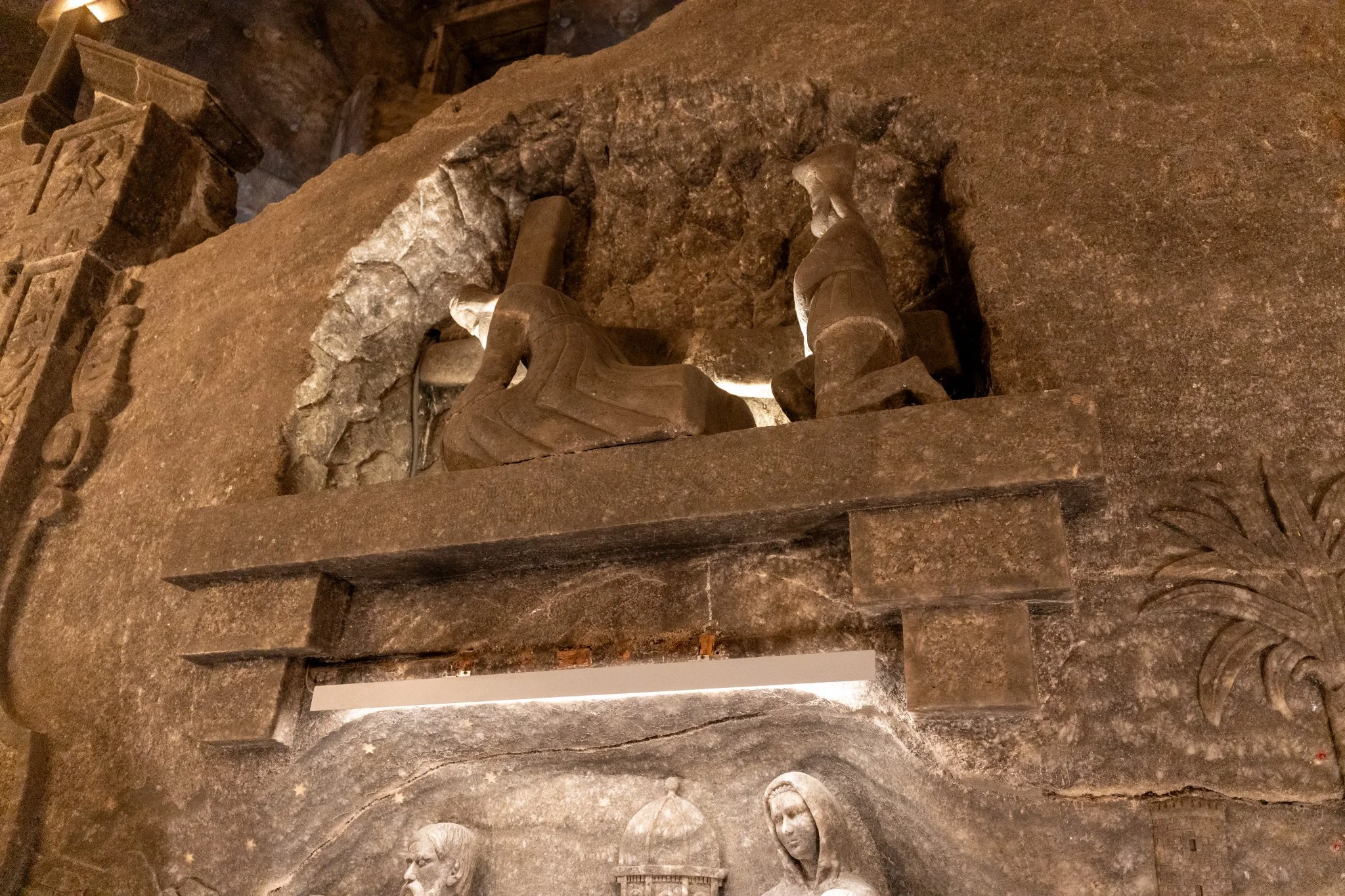
Piero: the walls narrate episodes from the New Testament and religious history through monumental sculptures and decorations.
Angela: every corner seems to hold a detail waiting to be noticed.
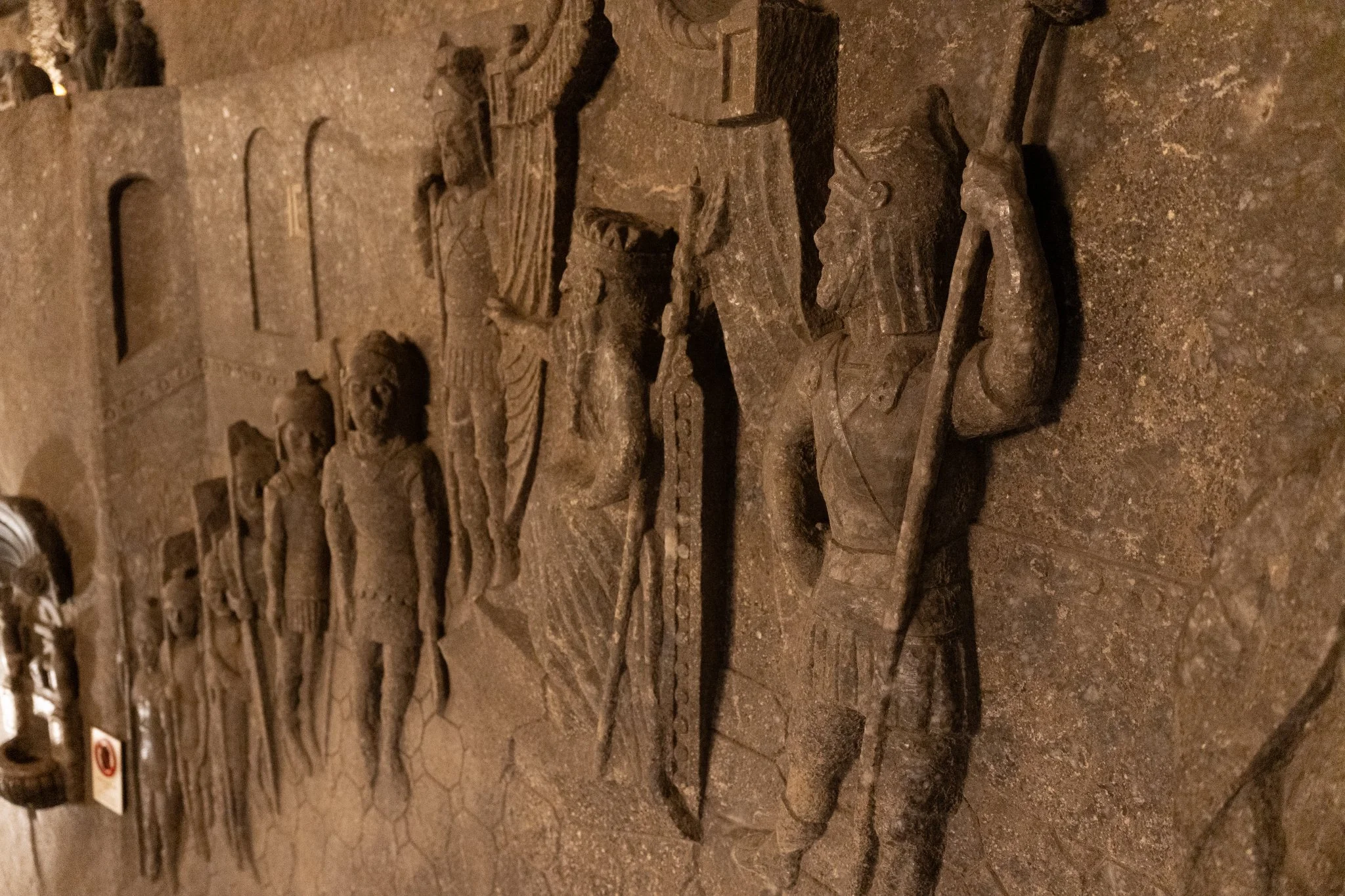
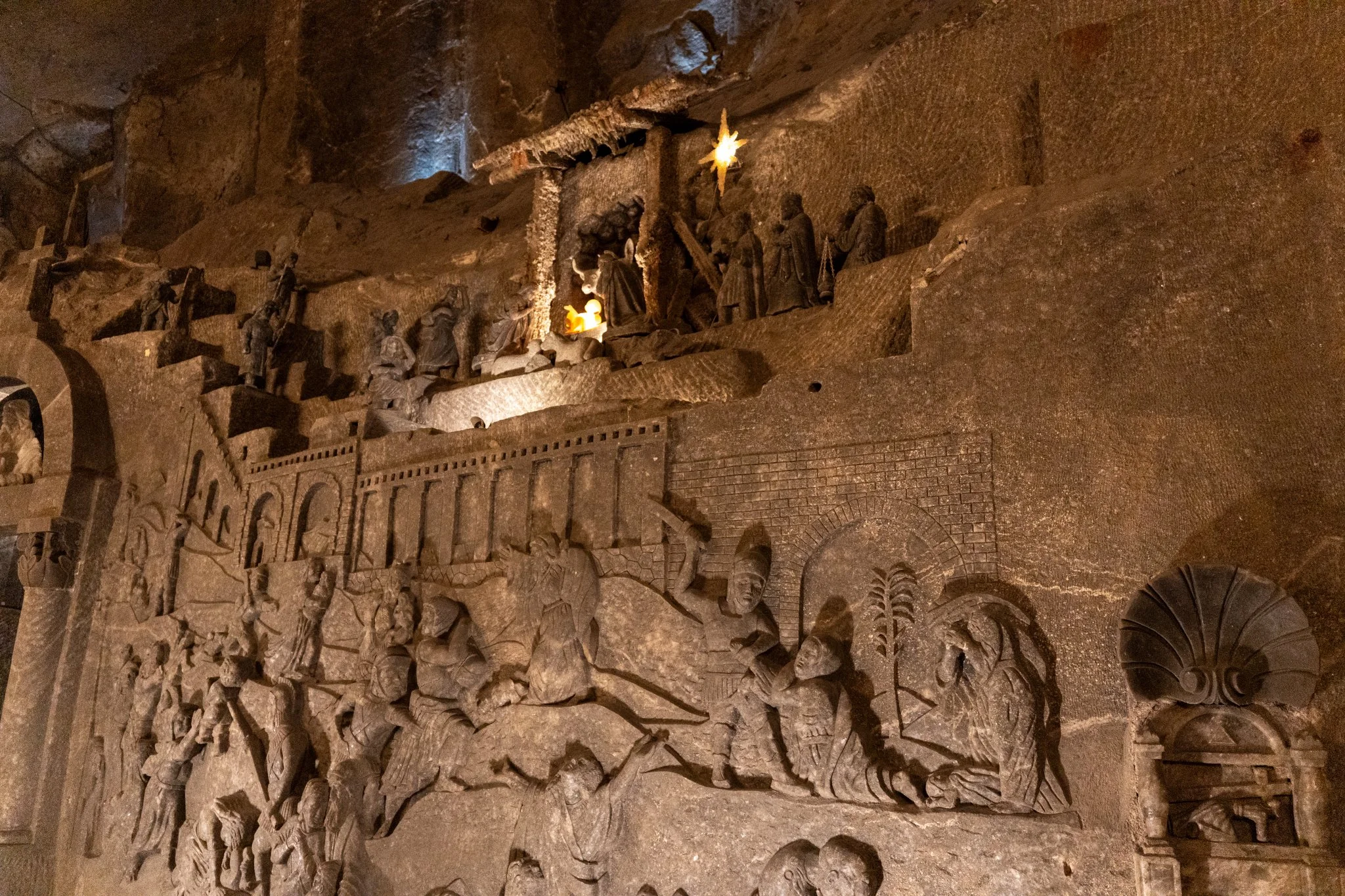
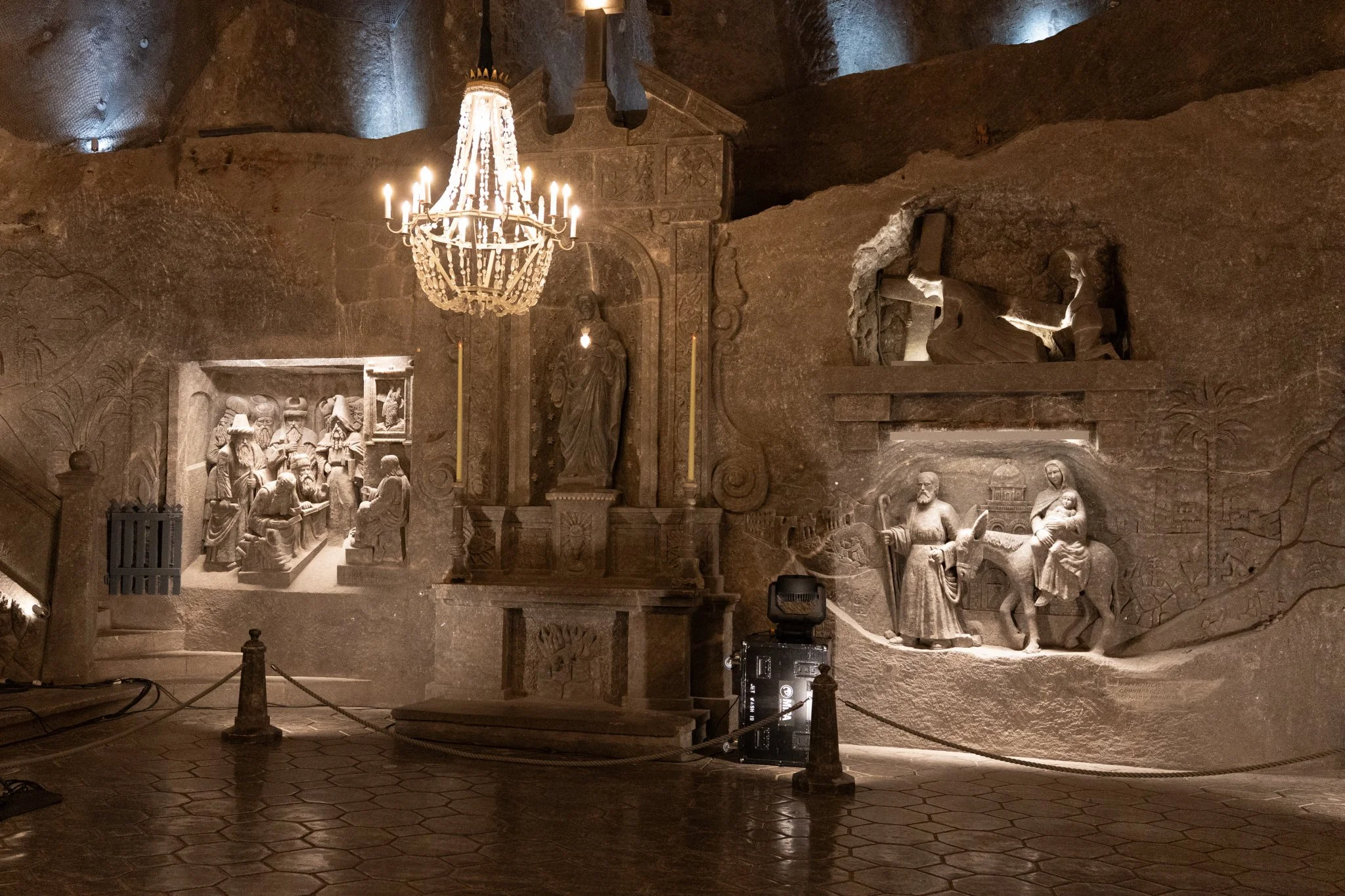
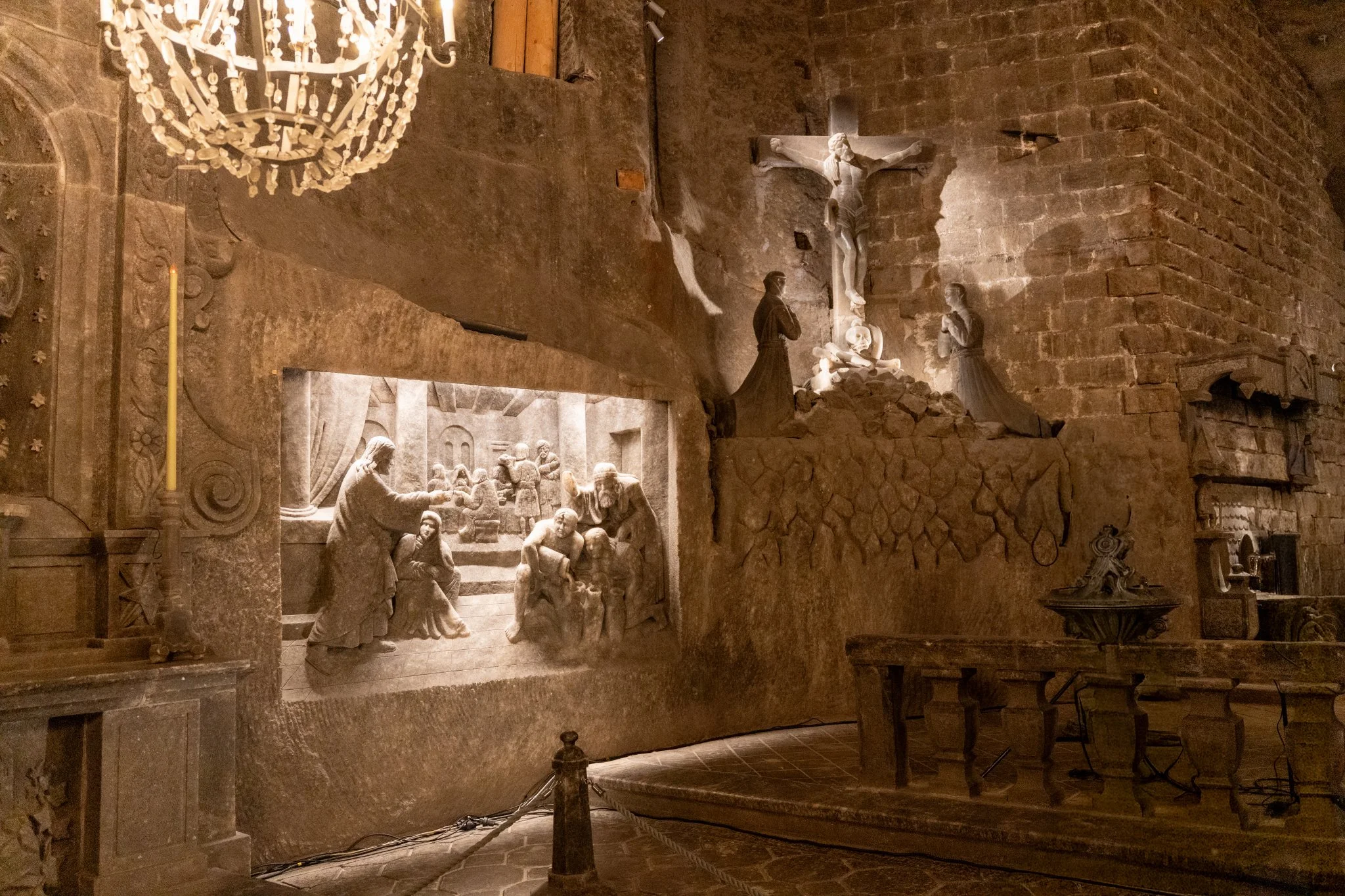
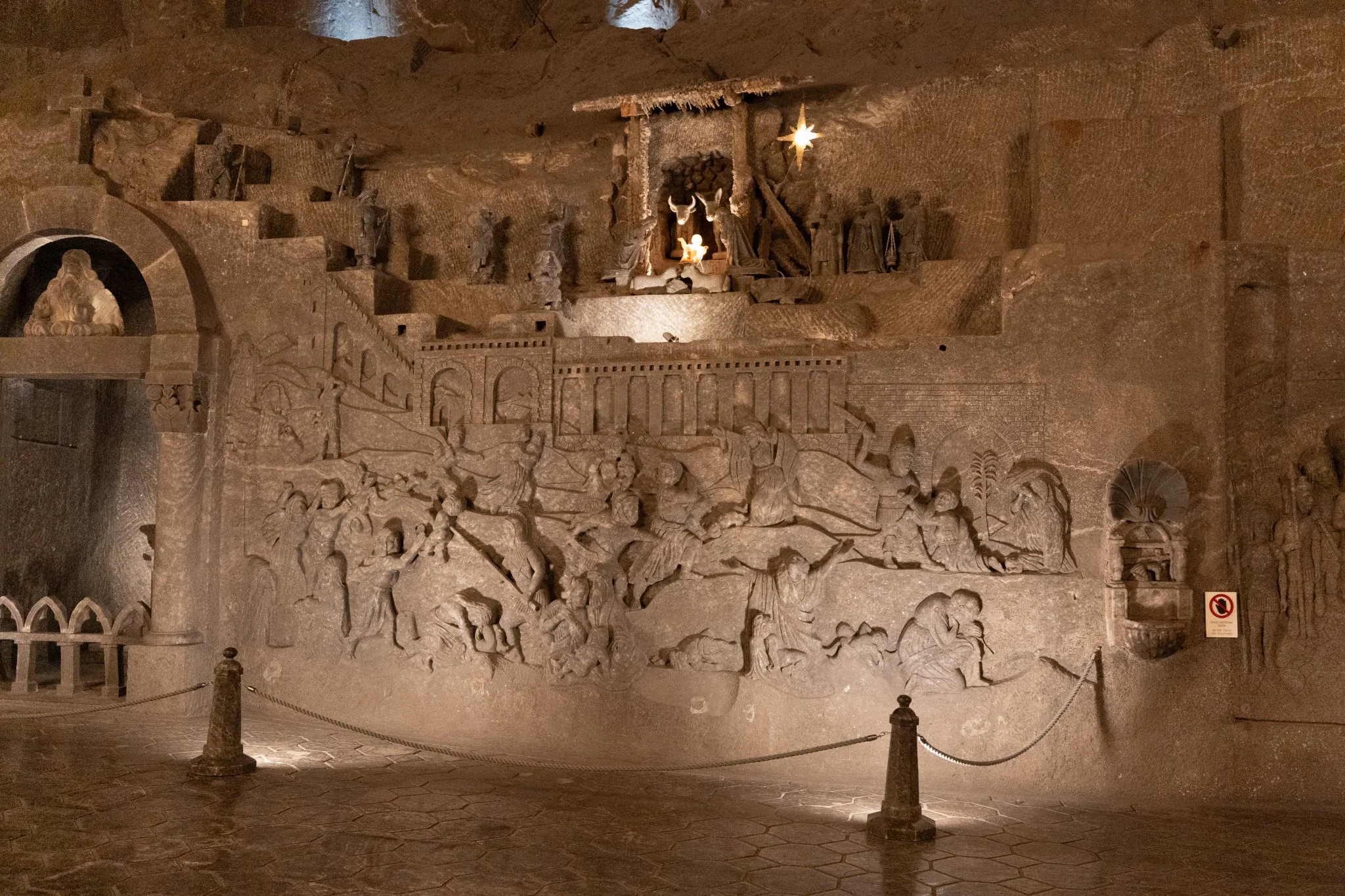
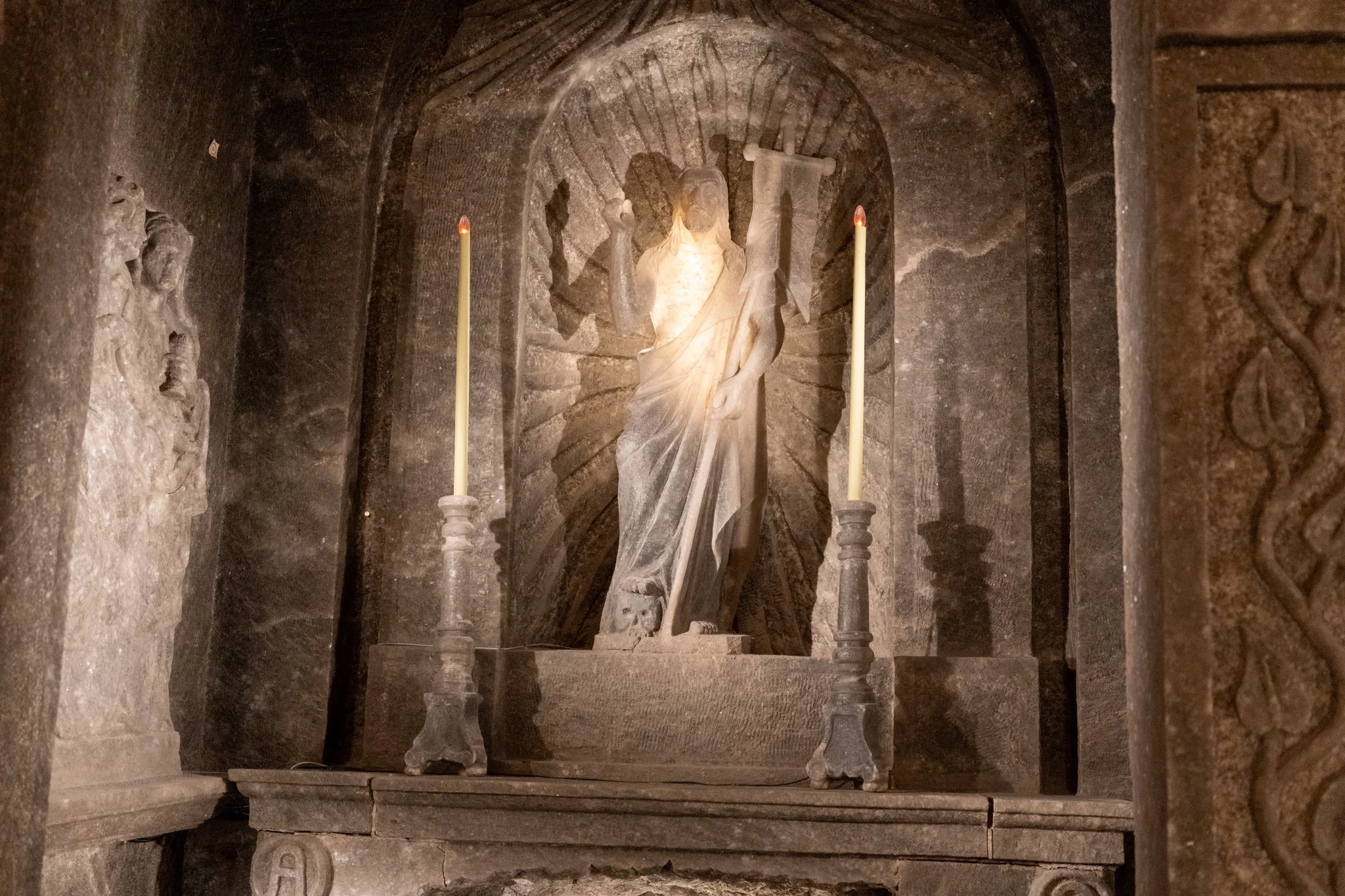
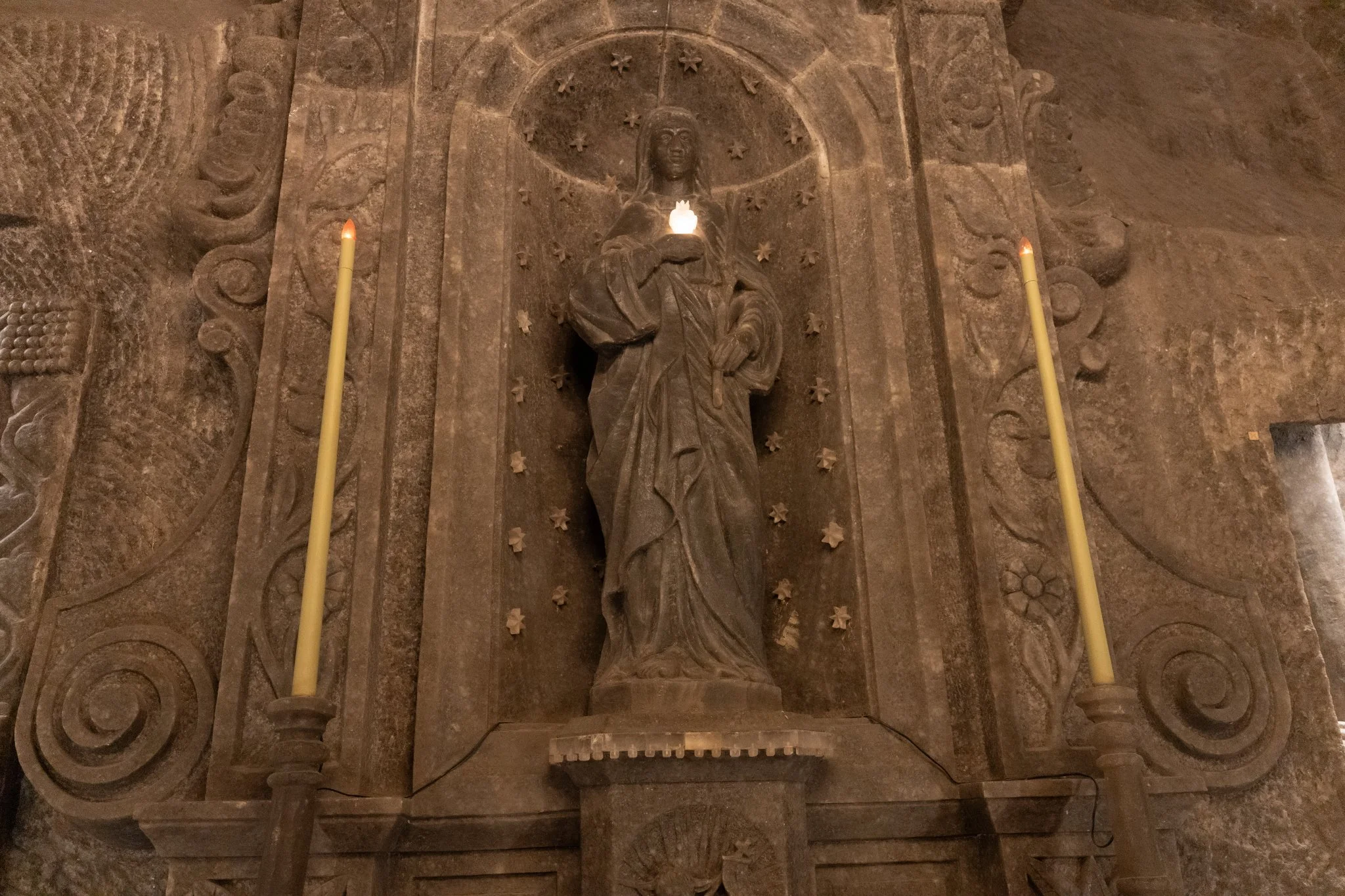
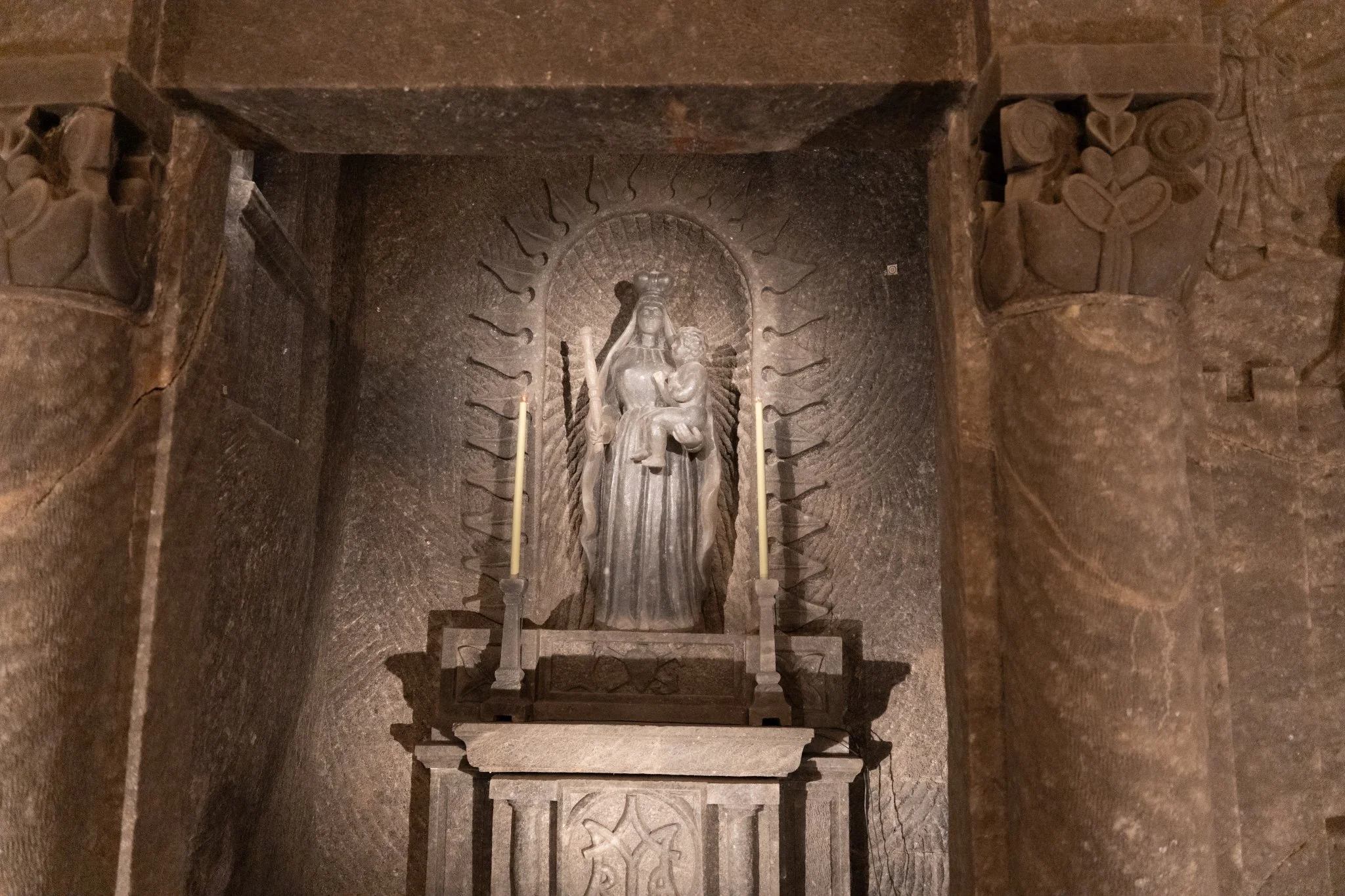
Piero: what strikes us most is the silence: despite the growing number of visitors, everyone here instinctively lowers their voice.
Angela: perhaps it is because you realize you are in a truly special place. A place born from the work of generations of miners: respect for religion, certainly, but also for sheer labour and sacrifice.
Piero: men who transformed a simple excavation chamber into one of the most extraordinary underground churches in the world.
Angela: it is not just the most beautiful part of the visit, it is one of those places that alone is worth the journey to Poland.
Piero: and as we prepare to leave the chapel, I turn back one more time.
Angela: because you already know the photos will be beautiful.
Piero: but you also know that none of them will ever truly capture the wonder of being here, deep within the earth, in front of this incredible salt cathedral.
Beyond Saint Kinga: underground lakes, wooden cathedrals and hidden wonders
Angela: clearly, Saint Kinga’s Chapel is the highest point of the visit, the postcard image that everyone takes home. But the Wieliczka Salt Mine continues to surprise.
Piero: the galleries extend deep underground, leading us towards new chambers carved over the centuries. Some still preserve the original appearance of the working areas.
Angela: particularly striking are the underground lakes, located in the lowest accessible part of the mine.
Piero: these small bodies of water have such a still surface that they look like glass. The motionless water reflects the lights, creating truly fascinating mirror-like effects.
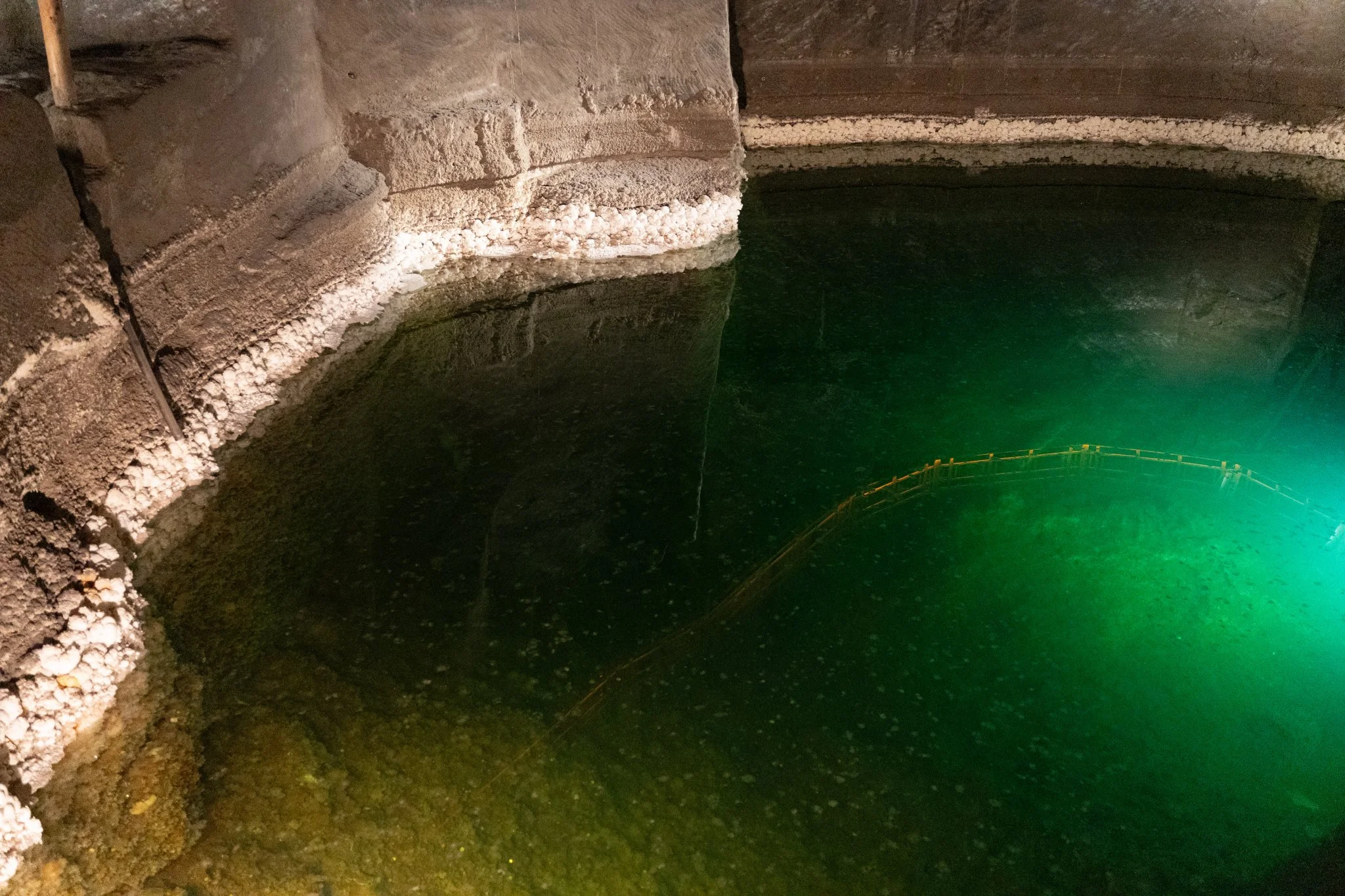
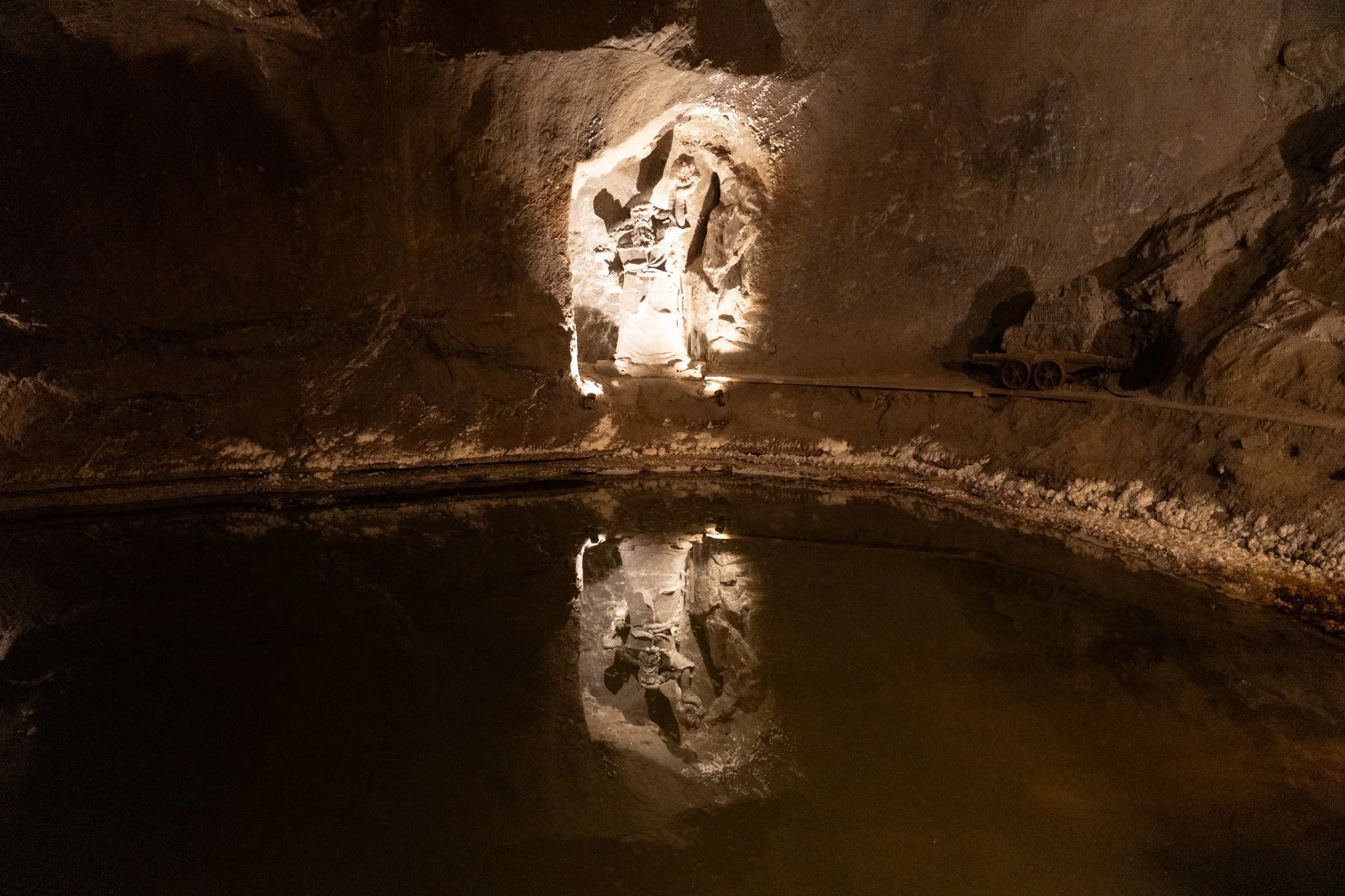
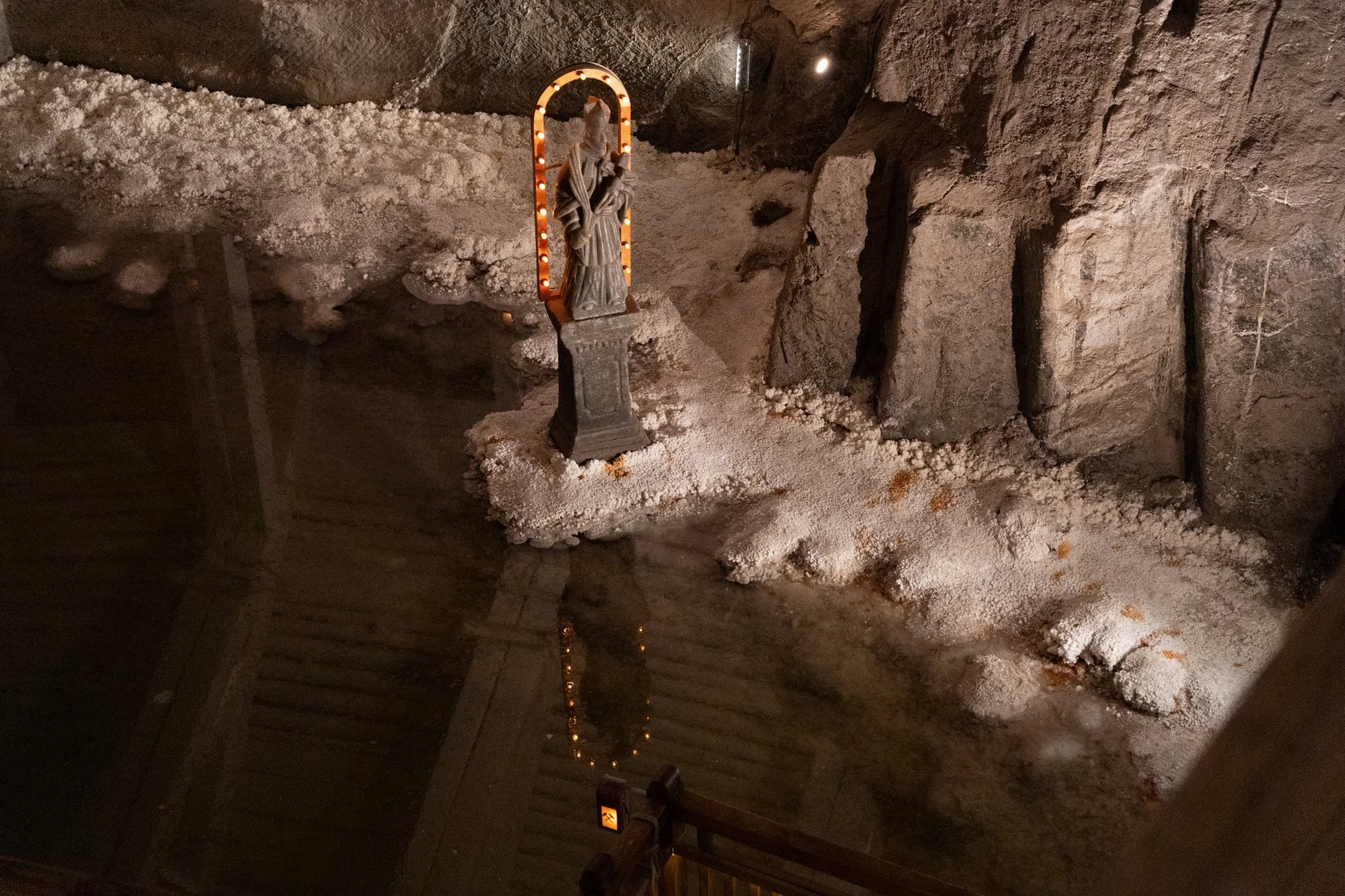
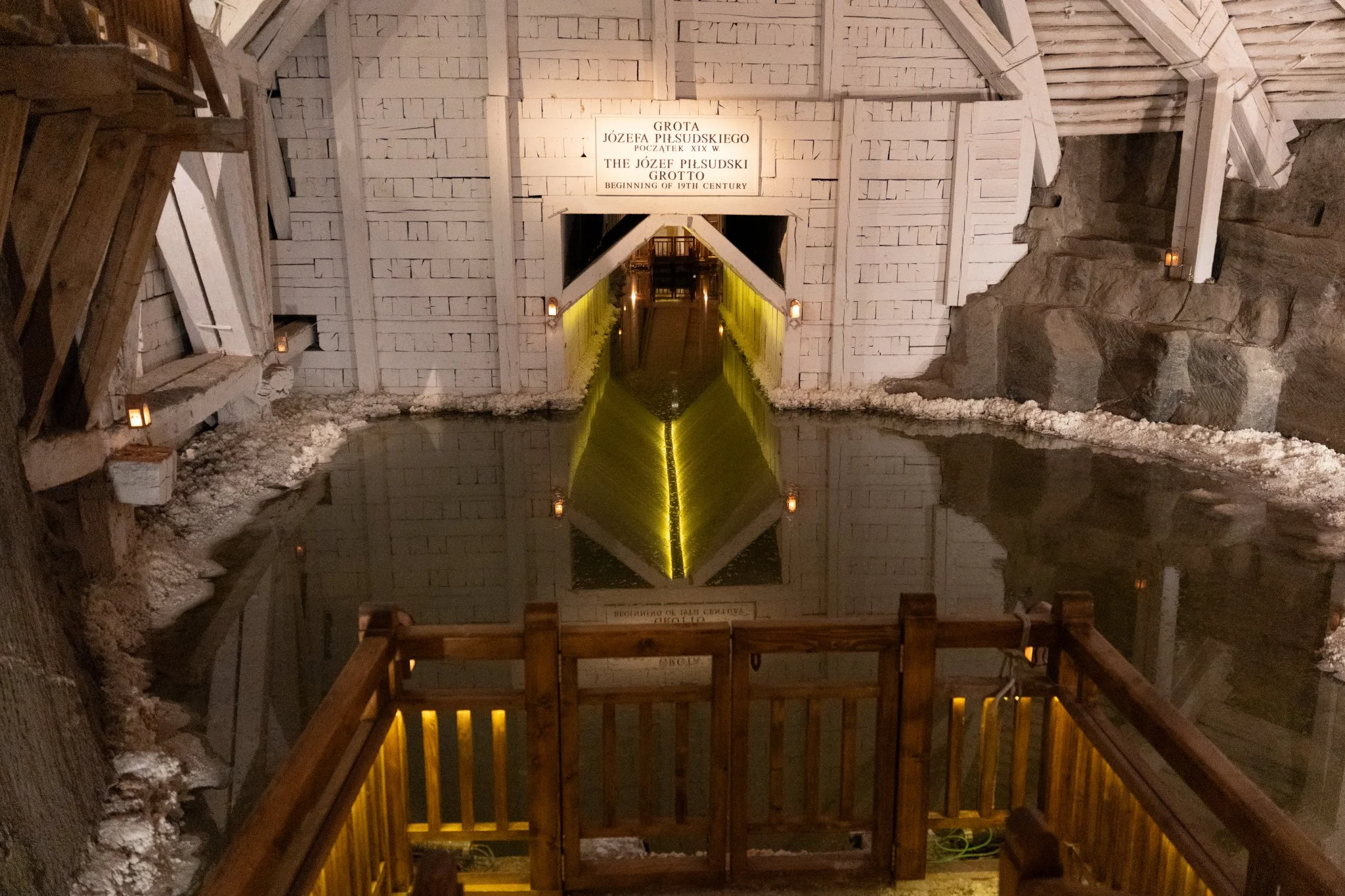
Angela: the guide explains that the high salt concentration makes it difficult to sink. Some playful tourists have even thought about jumping in to try…
Piero: the illuminated walls are reflected in the dark water, and for a moment you lose all sense of the real scale of the cavern: it is one of the most photographed areas of the entire route.
Angela: as we continue, we encounter other enormous chambers. Some illustrate the evolution of extraction techniques, while others display machinery, pulleys, and systems used to transport the salt to the surface.
Piero: each chamber adds another piece to the story of this place.
Angela: but one of the most beautiful surprises awaits us just a little further ahead: a gigantic white wooden structure.
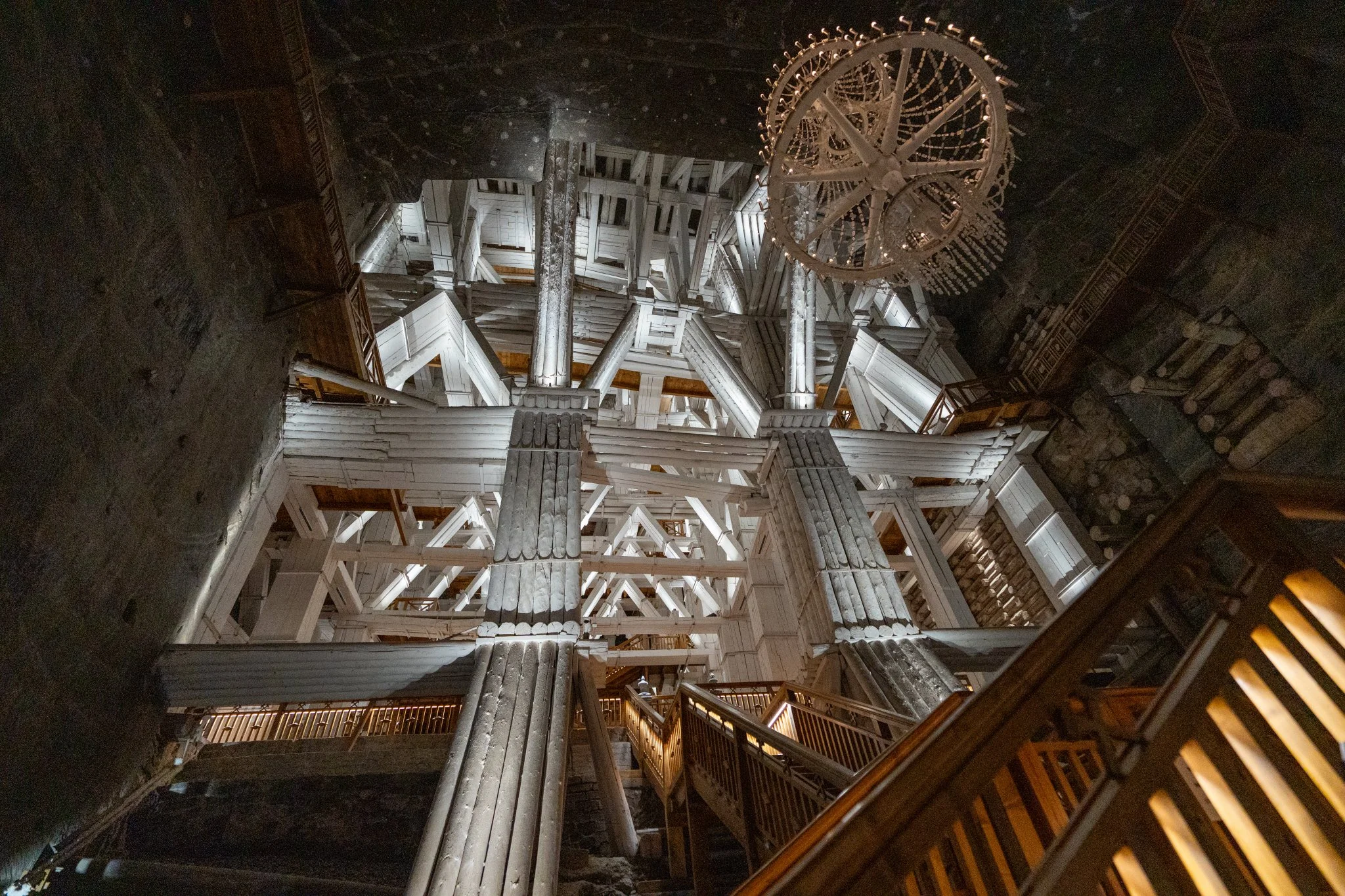
Piero: you are immediately struck by its size: it is hard to imagine that such a structure exists more than a hundred metres underground.
Angela: the beams intertwine, forming an elegant and perfectly preserved structure. The light colour of the wood creates a magnificent contrast with the grey salt walls.
Piero: the guide explains that the wood used in the mine has been exceptionally preserved thanks to the salty environment. And it is precisely this combination of engineering, nature, and history that makes Wieliczka so special.
Angela: you don’t just visit a mine: you walk through centuries of human labour.
Piero: before reaching the exit, we pass by chambers used for events, concerts, and even religious celebrations. Someone could even choose to get married here, although it is not exactly cheap… another demonstration of how this place is still alive today.
Angela: then comes the moment of going back up—and no stairs this time.
Piero: we will use the miners’ lift. A simple metal cabin, narrow and quite spartan.
Angela: more than an elevator, it looks like an industrial cage.
Piero: the most amusing feature is its two-level structure, with visitors distributed across both floors of the cabin.
Angela: you end up very close to the other passengers, almost like sardines, and inevitably a smile appears.
Piero: the doors close and within seconds the lift starts its journey to the surface. A rapid ascent that contrasts with the long descent at the beginning.
Angela: when the doors open again, natural light welcomes us back.
Piero: we are back in the world above.
Angela: but before seeing the sunlight again, discover this wonder with us in this short video.