Catania
Alberto: welcome back to Sicily, guys! Are you ready to set off again and discover this wonderful land?
Angela: absolutely ready! Where are we going this time?
Piero: you know, every time we land here or pass through, we have never actually visited it…
Alberto: that is quite an easy clue…
Angela: are you thinking about Catania?
Piero: exactly! We have seen so many places, but we have never stopped to explore this wonderful city, except just passing by.
Alberto: it would take two or three days to properly visit Catania, but I will try to show you the very best of it in just one day.
Piero: we leave our van comfortably at the Piazza Paolo Borsellino parking area, just a few steps from the city centre, and we will explore everything completely on foot.
Melior de cinere surgo
Angela: it is not just the inscription found on one of the gates of Catania, the Ferdinandea Gate; it is the perfect summary of the city’s history.
Piero: “I will rise from the ashes even more beautiful” is the phrase that perfectly expresses the pride of a population that, tirelessly, has continued to rebuild its city, making it more beautiful every time, after being repeatedly destroyed and reborn from the ashes of the previous one.
Alberto: when we talk about Catania, our thoughts immediately go to Mount Etna, the volcano that at the same time threatens and protects the city. “A muntagna”, as people call it here, is like a strict mother who cares for and punishes her children; in the same way, Etna has shaped the history of Catania, for better and for worse.

Angela: today Catania is the result of its troubled and fascinating history. Walking through its historic centre, you can see the coexistence of a strong late Baroque identity, with elegant churches and noble palaces, alongside Greek and Roman theatres, amphitheatres, and thermal baths. Everything is united by the unique ash-black colour of the lava stone.
Alberto: the history of Catania begins in 729 BC, when the Greeks, coming from the city of Naxos, founded Katanè. It became an important Greek commercial city until the 5th century BC. From that moment onwards, conflicts with Syracuse and the resulting defeats led to the abandonment of the city, with its inhabitants forced to move first to present-day Lentini and later to Paternò. Only from the 4th century BC was the city repopulated, until the Roman conquest in 263 BC, during the First Punic War.
Angela: the Roman period was a time of great splendour for Catania. This era saw the creation of much of the urban layout and road system, partly still visible today. The construction of the Roman Amphitheatre, the Theatre, the Odeon, numerous thermal complexes, and an efficient water supply system all date back to this period, proving the wealth and high quality of life that characterised Catania during the Imperial Age.
Angela: after the Byzantine period, the Vandals, Arabs, Normans, Swabians, Angevins, and Aragonese all left a deep mark on Catania, with the construction of palaces, churches, and Ursino Castle under Frederick II.
Piero: for Catania, the Early Middle Ages were a period of slow decline, which reached its peak with the devastating eruption of 1693. Although the city had always been threatened by the destructive power of Mount Etna, this eruption almost completely destroyed Catania, killing a large part of its population of around twenty thousand inhabitants at the time.
Angela: the city was immediately rebuilt thanks to a unified project by Giuseppe Lanza, Duke of Camastra, carried out by the Sicilian architect Giovan Battista Vaccarini, a disciple of Bernini. The energy of this reconstruction quickly brought Catania back to life, attracting craftsmen and architects and encouraging strong economic recovery. The city’s current splendour comes from this period, with the creation of wide straight streets, elegant palaces, and churches built with a harmonious style, using both black lava stone and light limestone. This gave rise to the distinctive Catanian Baroque, which characterises the historic centre, now a UNESCO World Heritage Site.
Piero: during the Bourbon period, Catania lost part of its importance in favour of Palermo, with an economy mainly based on agriculture and large estates. After the unification of Italy, the city began a new period of growth thanks to commercial and industrial development led by a young mayor and future foreign minister, Antonino Paternò Castello, Marquis of San Giuliano. This was also a period of rapid and turbulent social transformation, where the new wealthy classes and the old aristocracy maintained power, while many others remained excluded. These feelings were perfectly represented by the Sicilian Verismo literary movement, whose greatest exponent was Giovanni Verga, who portrayed the so-called “defeated” in works such as The House by the Medlar Tree among the poor and Mastro-don Gesualdo among the aristocracy.
Angela: Catania can rightly be considered the cultural capital of Sicily, thanks to its extraordinary literary and architectural vitality and to great figures such as the composer Vincenzo Bellini. It was also home to the first Sicilian university, one of the oldest in the world: the Siculorum Gymnasium, founded in 1434.
Piero: despite everything, nature has also been generous to this city. The volcanic soil has always been extremely fertile, with citrus groves and vineyards surrounding Catania towards Mount Etna. Even the coastline reflects the colours of the city’s architecture: to the south lies La Playa, with kilometres of golden sand, while to the north there are lava cliffs leading to the legendary Cyclops Riviera and the Faraglioni of Aci Trezza.
Angela: and, of course, Catania’s flavours, aromas, fruits, and traditional dishes are simply incomparable.
Piero: today Catania is a modern city that hosts one of the largest high-tech hubs in Italy, known as Etna Valley.
The wonders of Catania in just one day
Angela: with such a rich history behind it, expectations are certainly high, and I cannot wait to discover all the wonders of this city.
Piero: of course, one single day, even a full one, is not enough time to truly explore Catania, but it is sufficient to see its main attractions.
Alberto: let’s begin our pleasant summer walk then. We leave the parking area and cross the Pacini Gardens towards Porta Uzeda, the southern entrance to the historic centre and, above all, to Piazza Duomo. The gate opens through the 16th-century walls of Charles V and is named after the Spanish viceroy Giovanni Francesco Paceco, Duke of Uceda.

Angela: we cross Piazza Duomo, taking a quick look at the beautiful Cathedral of Sant’Agata on our right and the Elephant Fountain on our left. We will stop and admire them properly later. For now, let’s take the opportunity to visit the Badia of Sant’Agata, located opposite the left side of the Cathedral.


Piero: the Church of the Badia of Sant’Agata is a magnificent example of the late Baroque reconstruction that followed the devastating 1693 earthquake in Catania. Roman and Baroque architecture blend together perfectly; the marble floors and altars are particularly remarkable. After the 2015 restoration, the route to the terraces and the dome became accessible, offering a unique panoramic view over the entire city, from the sea to the mountain. We make it our first stop, early in the morning, avoiding the queues and the crowds of tourists, and taking all the time needed to enjoy this extraordinary spectacle.
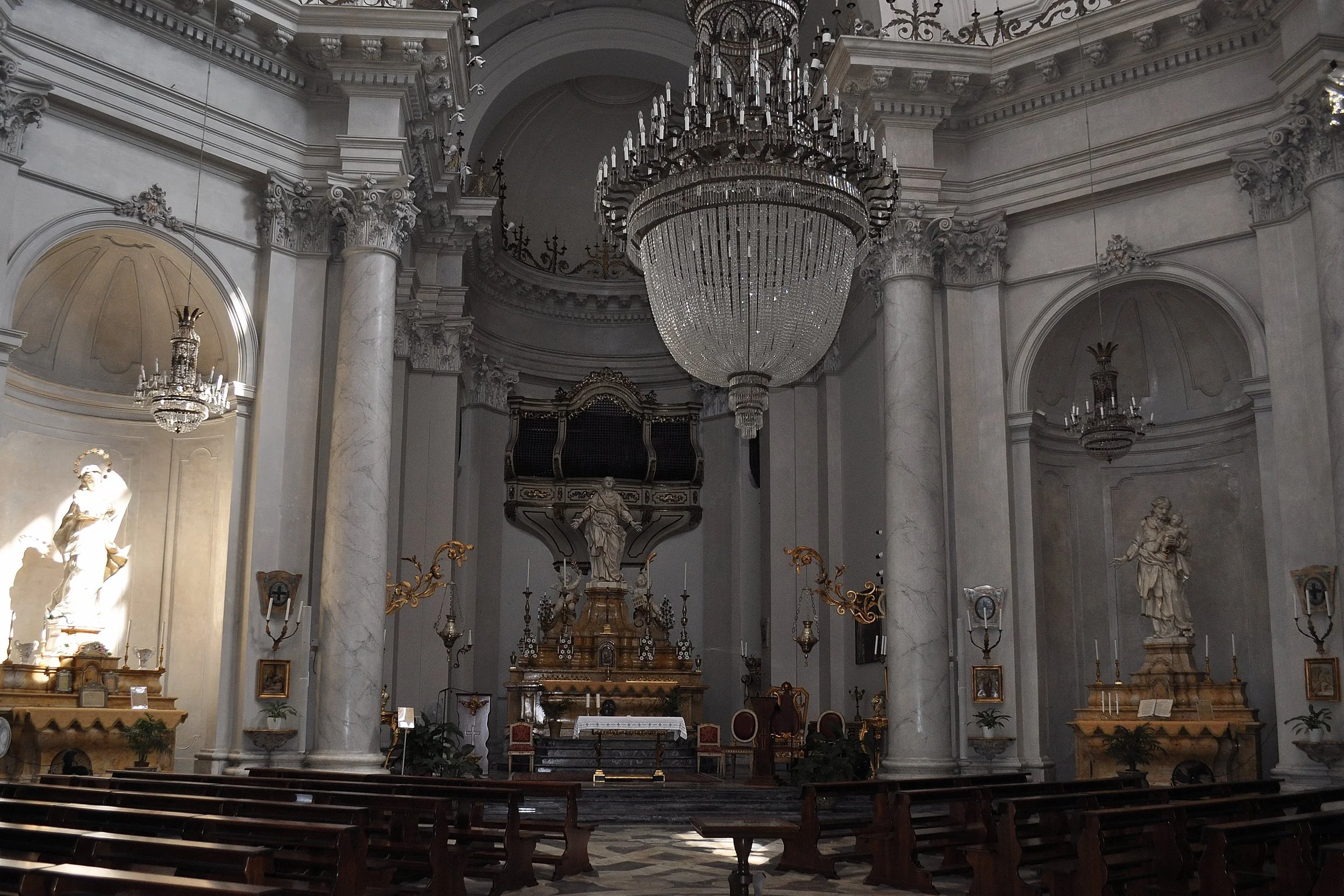


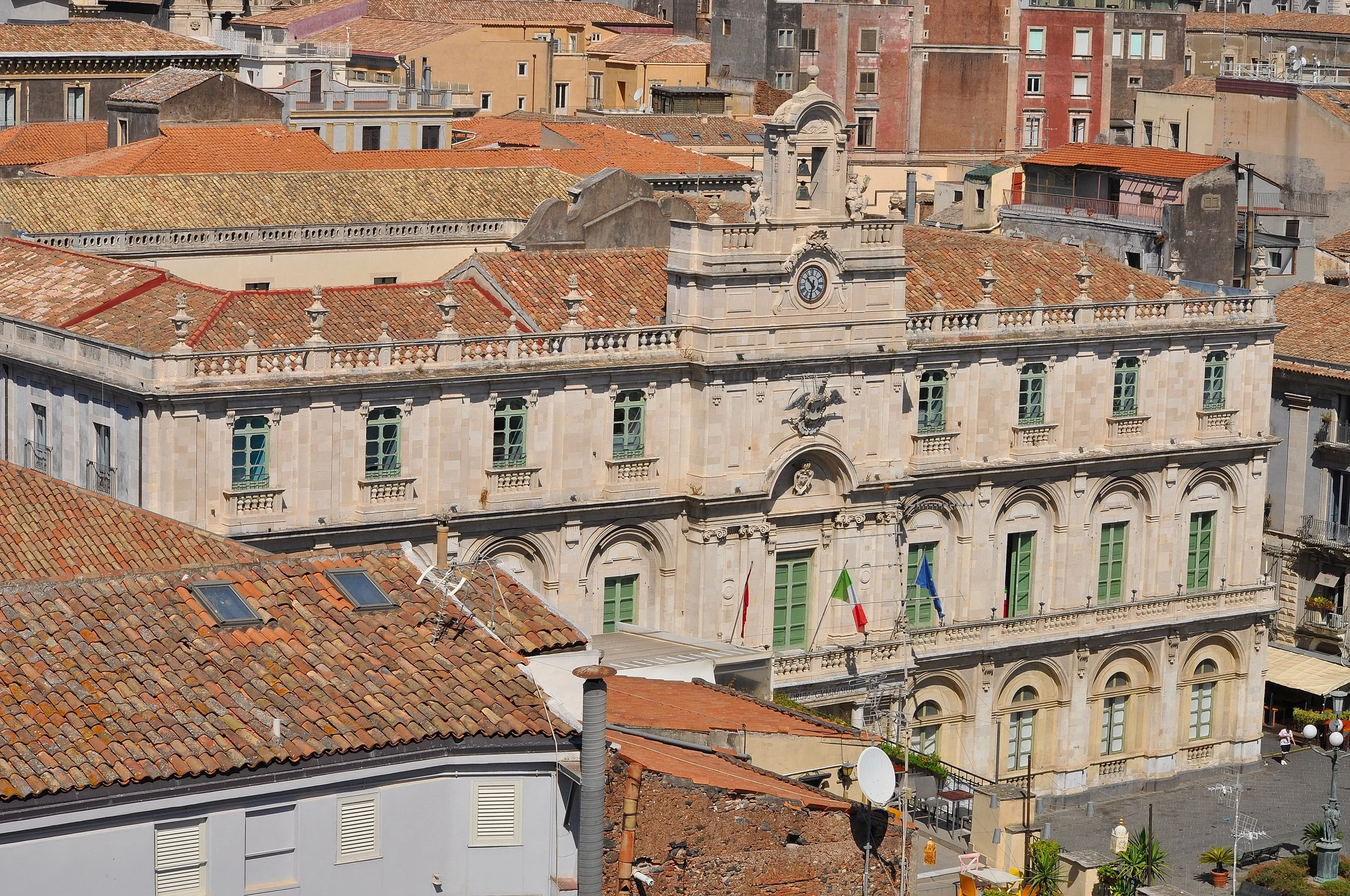


Angela: after admiring the Cathedral and its dome from above, we now set off to discover one of the greatest symbols of Catania: the Cathedral itself.

Piero: the Cathedral is dedicated to Saint Agatha, the virgin and martyr and patron saint of the city of Catania. Every February, the people of Catania celebrate her with extraordinary devotion in one of the most important religious festivals in the world.
Angela: the church has been destroyed and rebuilt several times throughout history due to the many earthquakes that struck the area. The first construction dates back to the 11th century, built on the remains of the ancient Roman Achillian Baths. The current building is the result of the combined work of the architect Girolamo Palazzotto, who designed the interior, and Giovanni Battista Vaccarini, who created and supervised the construction of the façade.


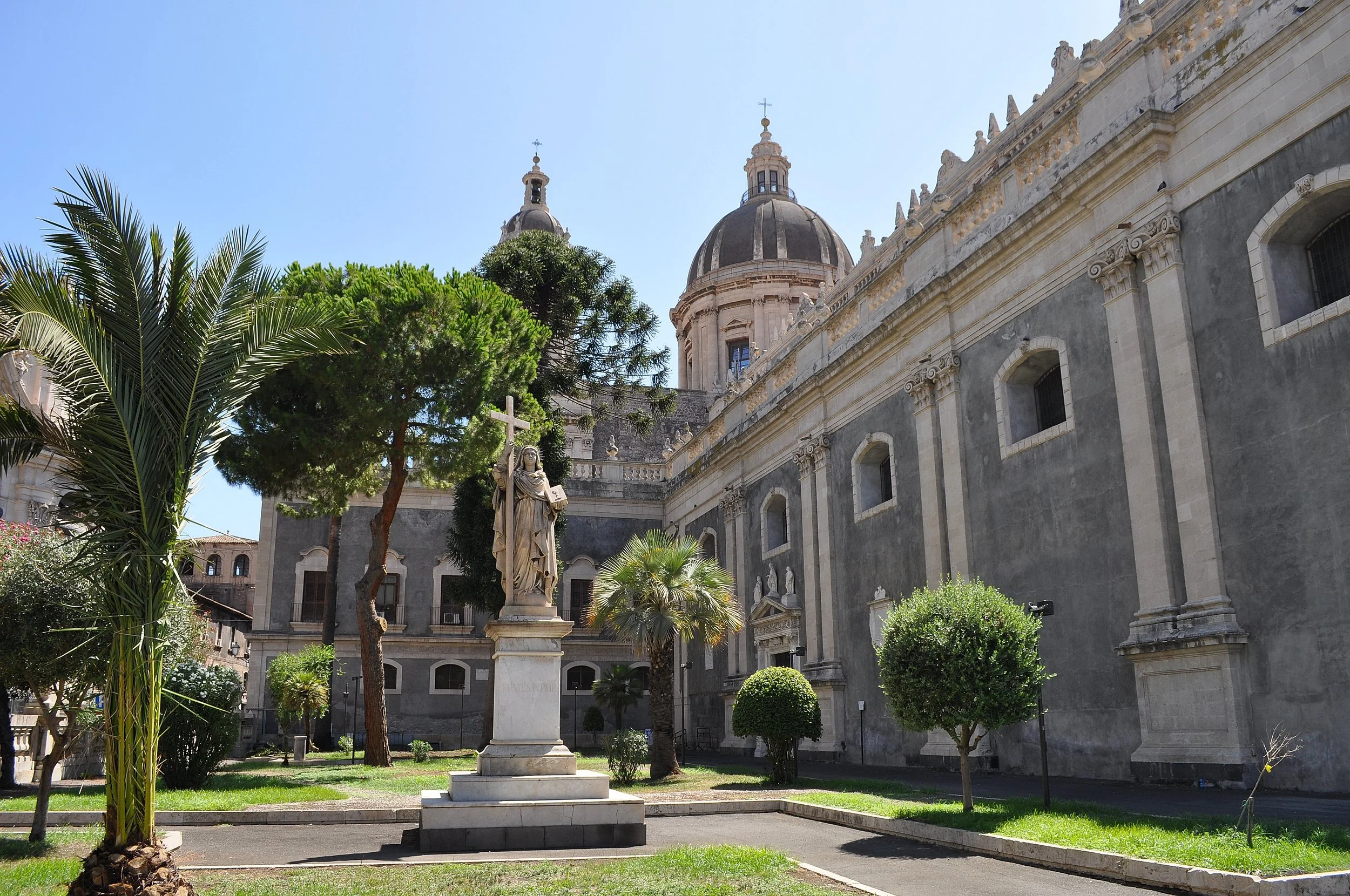
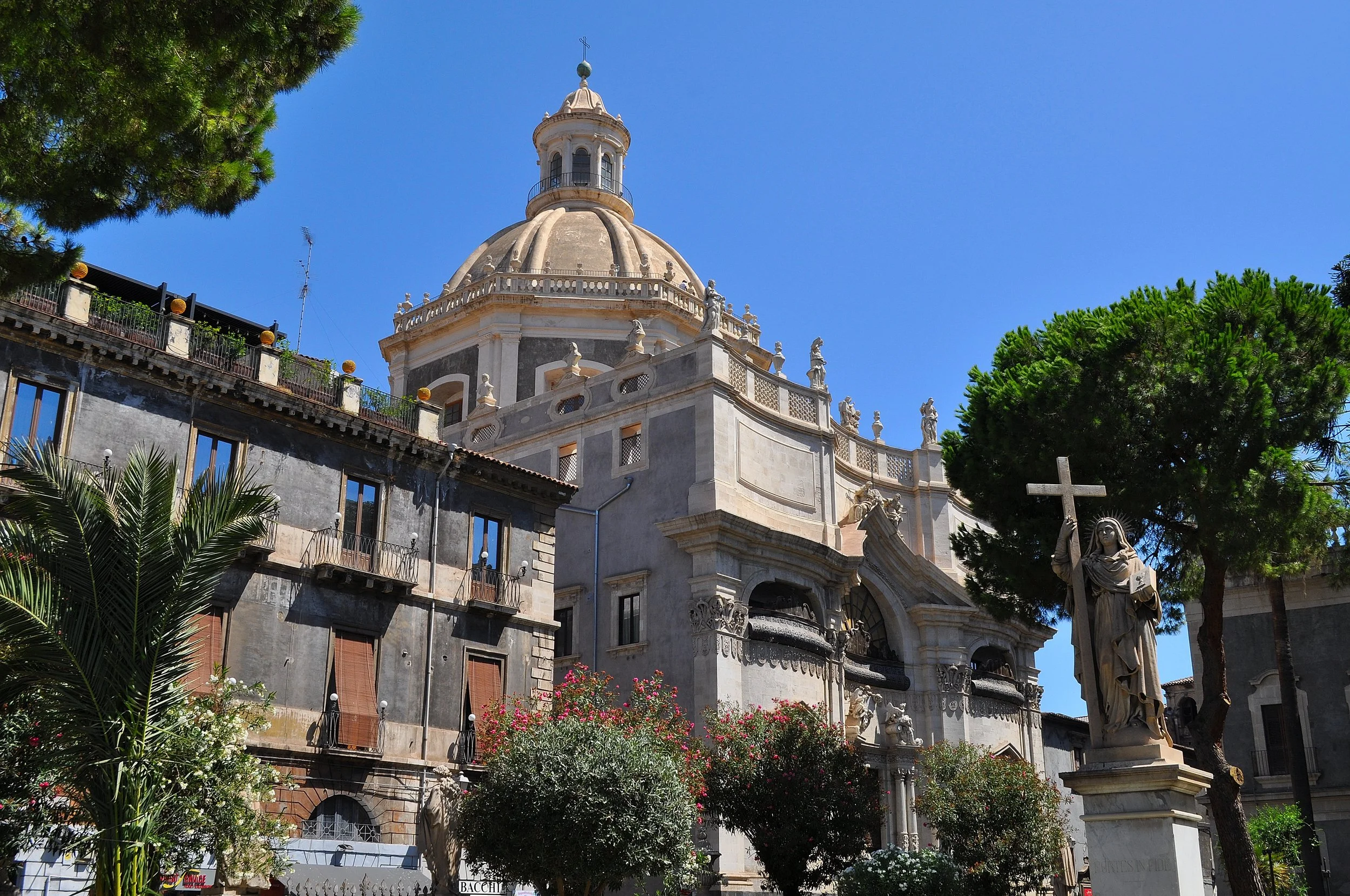


Piero: we leave the Cathedral and find ourselves once again in Piazza Duomo. At the centre of the square stands the Elephant Fountain, the true symbol of Catania.

Angela: this monument was also created by Vaccarini during the reconstruction that followed the devastating earthquake. The architect was inspired by the Minerva Obelisk in Rome, designed by Bernini. The fountain and the pedestal are made of white marble, as are the two statues representing the two rivers of Catania, the Simeto and the Amenano. The granite obelisk above the elephant statue recalls the ancient Egyptian obelisks; it was probably one of the two original turning points of the Roman circus of Catania (the other one is located in the courtyard of Ursino Castle).
Piero: the elephant, carved in an uncertain period from lava stone with white limestone eyes and tusks, is the central element and above all the symbol of Catania. “U Liotru”, as the people of Catania call it, is linked according to legend to the distorted pronunciation of the name Eliodoro, a nobleman from Catania who, after trying to become a bishop, fell into disgrace, became a magician, and was said to have created the statue. According to the story, Eliodoro was burned at the stake, and the city bishop ordered the statue to be taken outside the walls to make people forget it, but the population continued to honour it with almost divine reverence.
According to other legends, an elephant helped defeat wild animals during the foundation of ancient Catania, and later, during the war between the Carthaginians and the people of Catania, the locals captured all the elephants belonging to the invaders. The elephant and the statue therefore became symbols of these legendary victories.
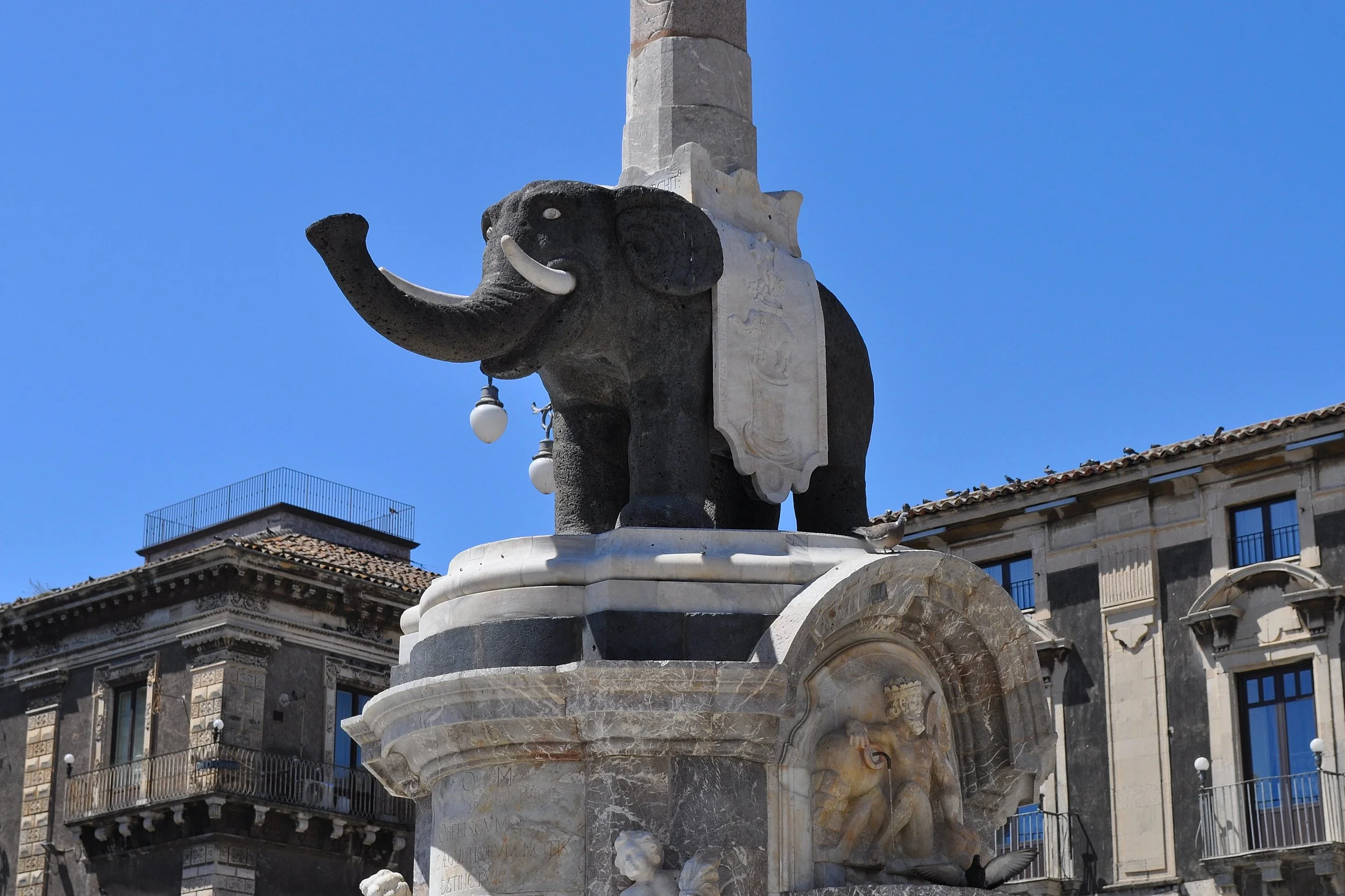
Angela: unlike the imaginative popular legends, the elephant statue is actually the gnomon of the sundial located in the centre of Piazza Duomo. The monument is therefore a device that measures time through the sunlight and is considered “heliotric”; in the Catanian dialect, this word became “liotru”. The people of Catania have always considered it a magical statue, capable of protecting the city from the eruptions of Mount Etna. Today, the pachyderm appears on the coats of arms of the municipality, the metropolitan city, and the university, as well as being the mascot of the main local sports clubs.
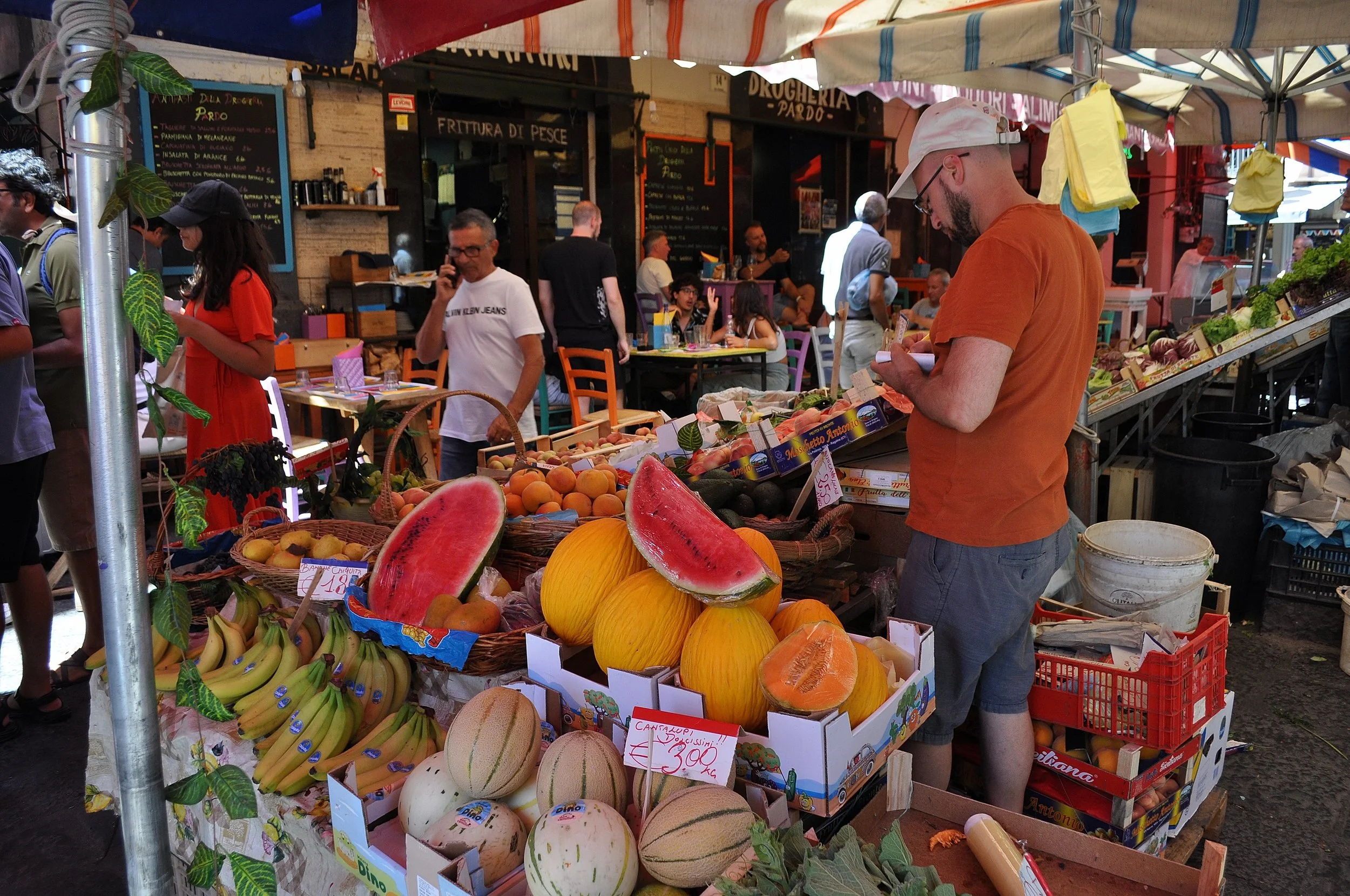
Piero: right near Piazza Duomo, behind the Amenano Fountain, known as “Acqua o linzolu”, lies the historic fish market, a true symbol of the area. Through its products and its fishermen, it tells wonderful stories every day, from the early hours of the morning until lunchtime. (Attention: it is closed on Sundays.)

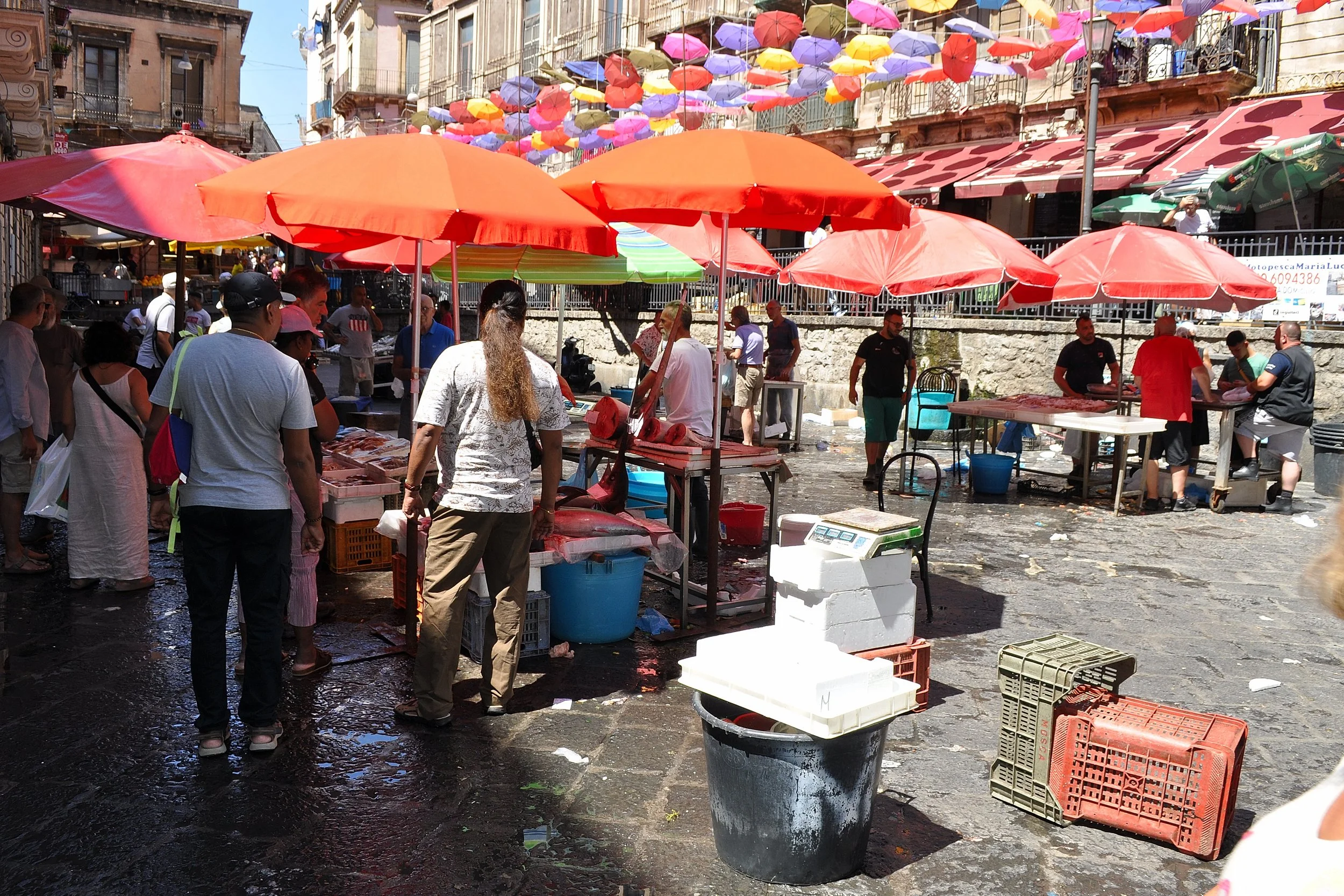

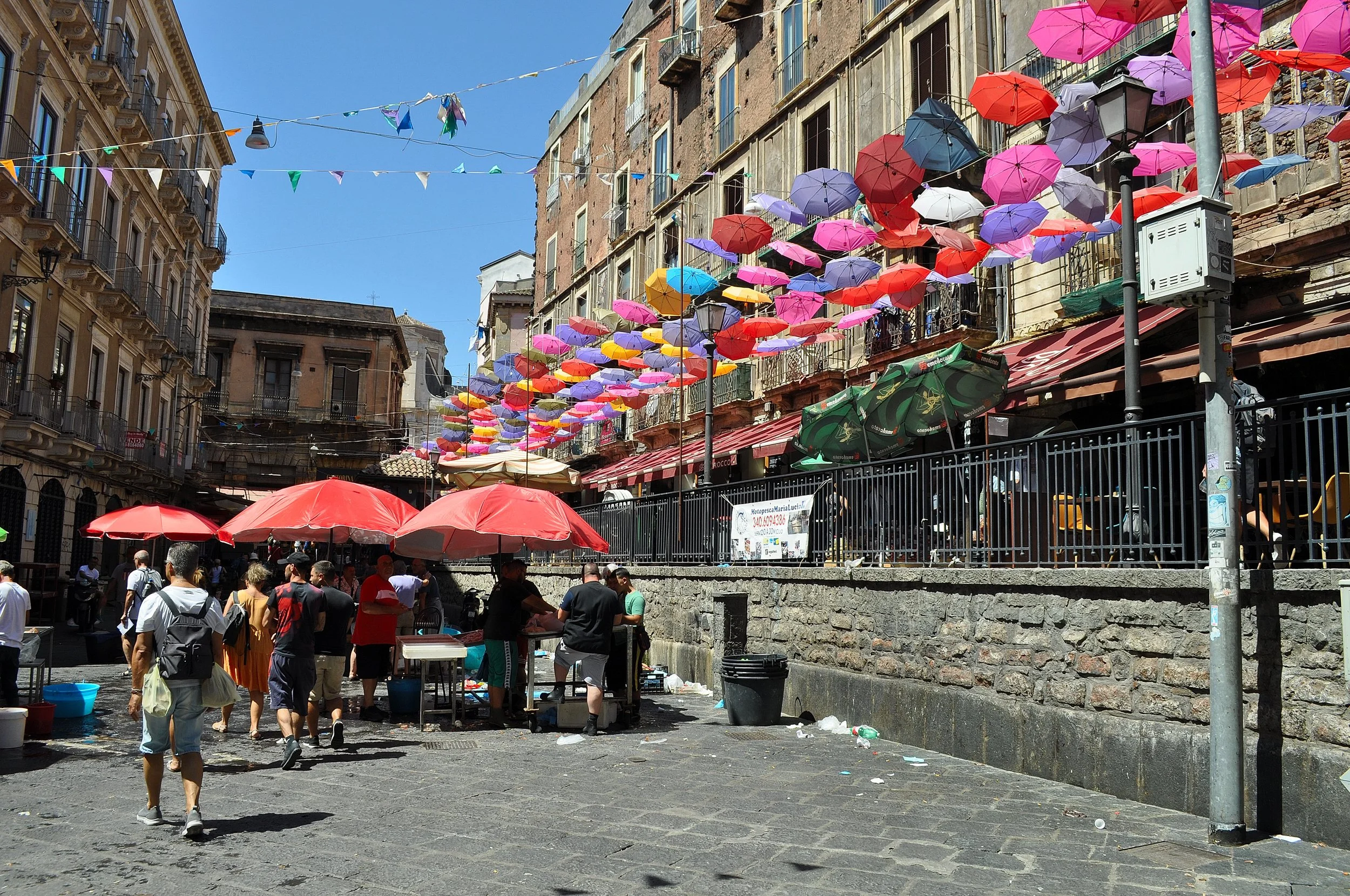
Angela: here, time seems to have stopped, and it is truly enjoyable to walk among the colours, sounds, and scents of this place. On the stalls, the blue of the anchovies, the black of the cuttlefish, the silver of sea bass and sea bream, and the red of freshly sliced tuna or swordfish contrast beautifully with the white marble. Listening to the calls of the fishermen and witnessing their art of bargaining, a tradition inherited from the Arabs, is a true experience of authentic Sicilian folklore, different every single day. “A piscaria”, as the people of Catania call it, feels like the place where you could find the fishermen described by Verga in The House by the Medlar Tree, even though we are not in Aci Trezza.
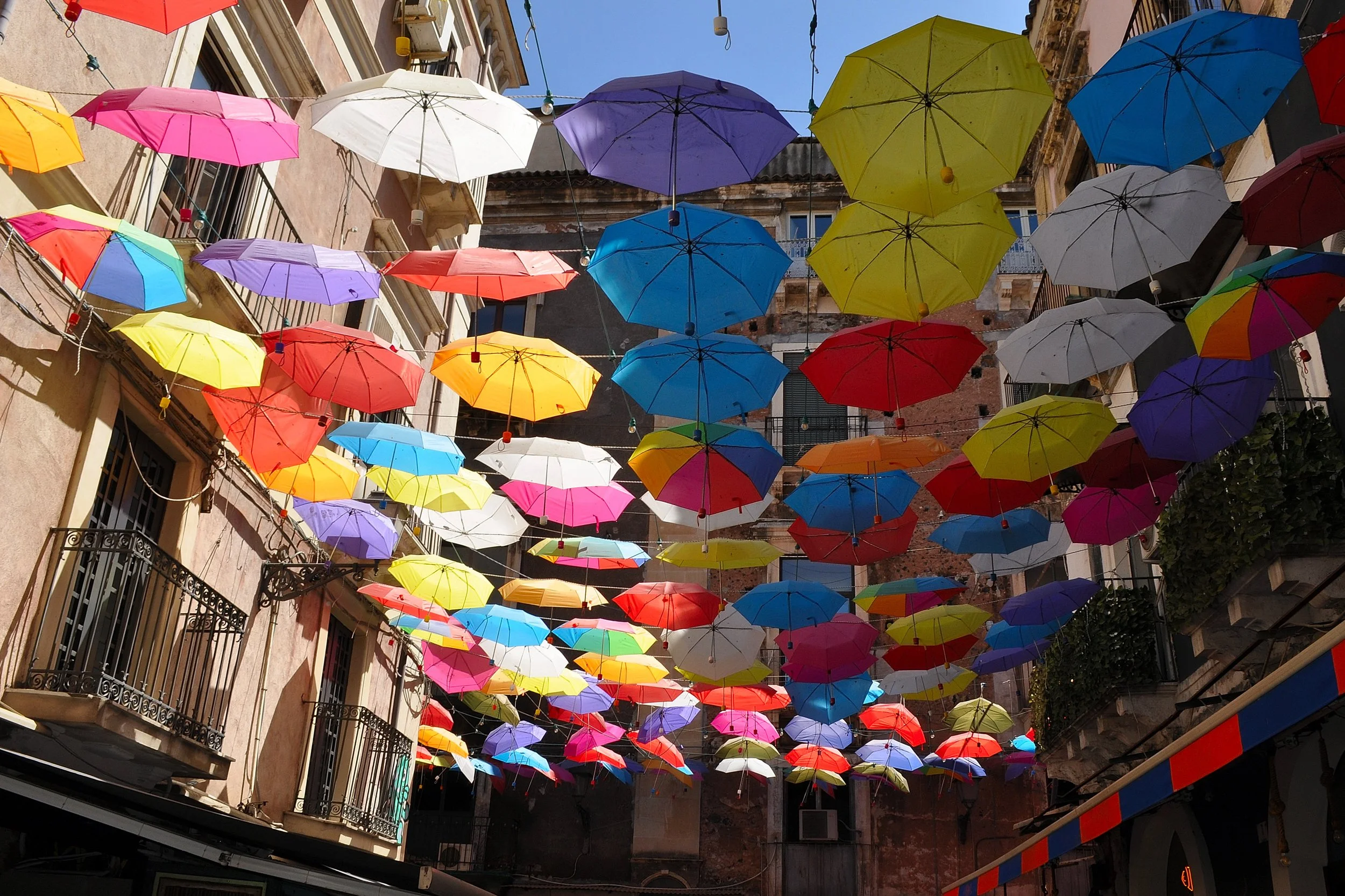
Piero: walking through the narrow streets, covered by colourful umbrellas, the fish stalls alternate with stands selling seasonal fruit and vegetables, small kiosks where you can quench your thirst or enjoy some delicious street food.


Angela: we end our morning with a visit to Palazzo Biscari.
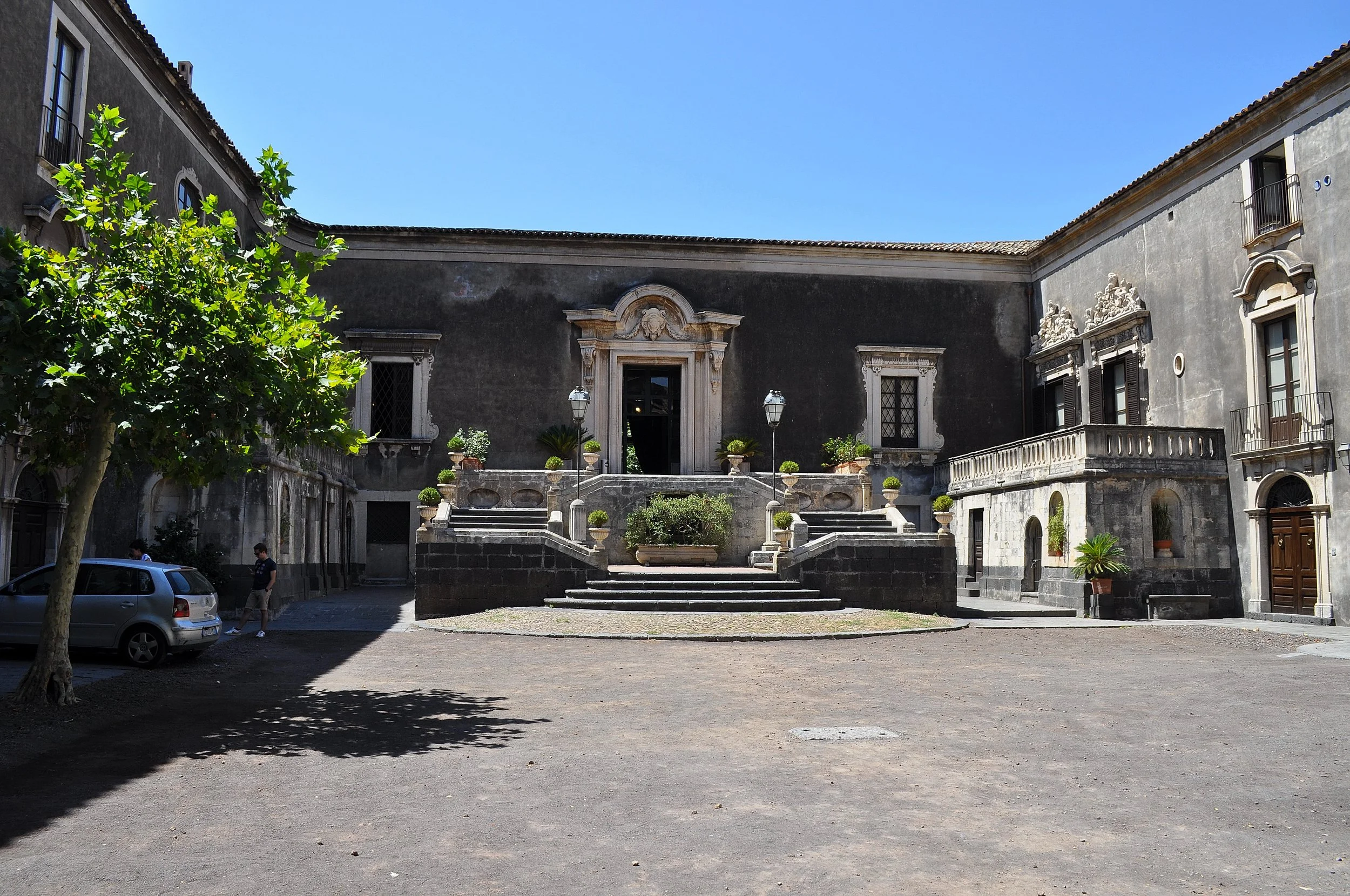
Piero: the historic centre of Catania is characterised by the presence of magnificent noble palaces, a testimony to the important past of this city. Of course, it is impossible to visit them all, so we choose the most important private palace in Catania, a precious example of Sicilian Baroque, with its fascinating and elegant frescoed halls.
Angela: this is the historic residence, still inhabited today, of the Paternò Castello family, Princes of Biscari. The palace was originally built along the city walls of Catania, and the Biscari family was one of the few aristocratic families granted royal permission to construct buildings directly on them. Originally, the palace overlooked the sea; with the expansion of the city, it is now located a few hundred metres away from the coastline.


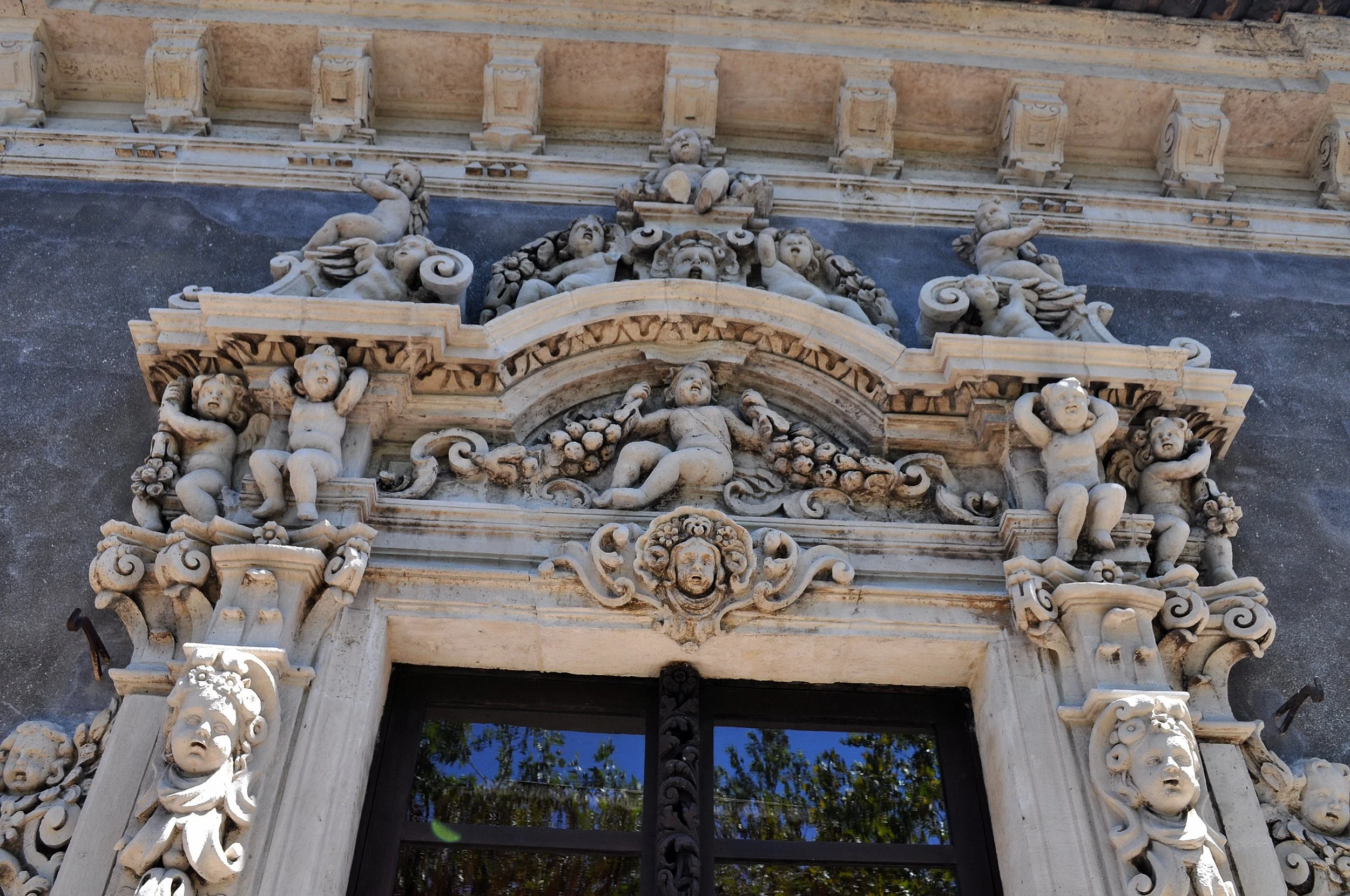
Piero: it is particularly interesting to visit the palace with the help of a guide. The seaside façade is not to be missed, with its allegorical groups representing abundance, prosperity, fertility, and wisdom.



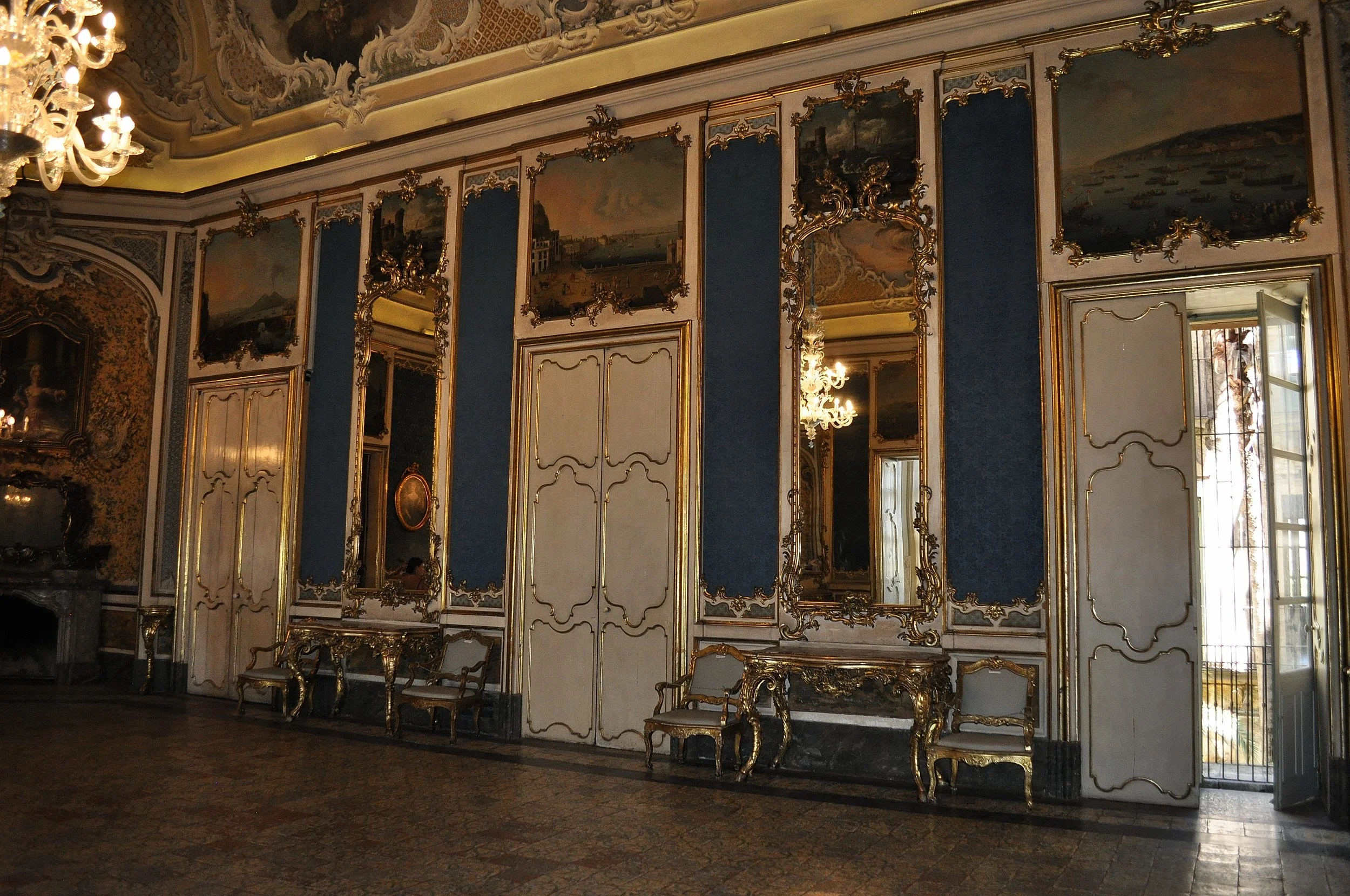
Angela: the ballroom is perhaps the most fascinating interior space, designed in the Rococo style with magnificent mirrors, stuccoes, and frescoes, as well as the central dome, which was used to house the orchestra. The dome can be reached through a staircase decorated with stucco work, which Prince Ignazio called “a fiocco di nuvola” (“a cloud bow”).


Piero: finally, it is worth visiting the Princess’s apartments, with their beautiful inlaid wooden boiseries and Roman-era marble floors.
Angela: here are some interesting facts about the palace: among its most famous visitors was the writer Johann Wolfgang Goethe, who, during his journey through Italy, was welcomed by the Prince of Biscari. In 2008, the palace became the setting for the music video of “Violet Hill” by the British band Coldplay. During the Second World War, the ballroom was turned by the British into a tennis court, and a ball damaged one of the paintings; Queen Elizabeth II personally “apologised” for it during her visit in the 1980s.
Angela: the final stop of our morning is the visit to the Massimo Theatre, dedicated to the great Catanian composer Vincenzo Bellini. It is located a short distance from Palazzo Biscari, in the square that bears his name. Inaugurated in 1890, the Bellini Theatre, magnificent in its architecture, is the heart of the city’s musical life. It can accommodate around 1,200 spectators, boasts perfect acoustics, and every year hosts an opera and ballet season, a symphonic season, and a chamber music season.
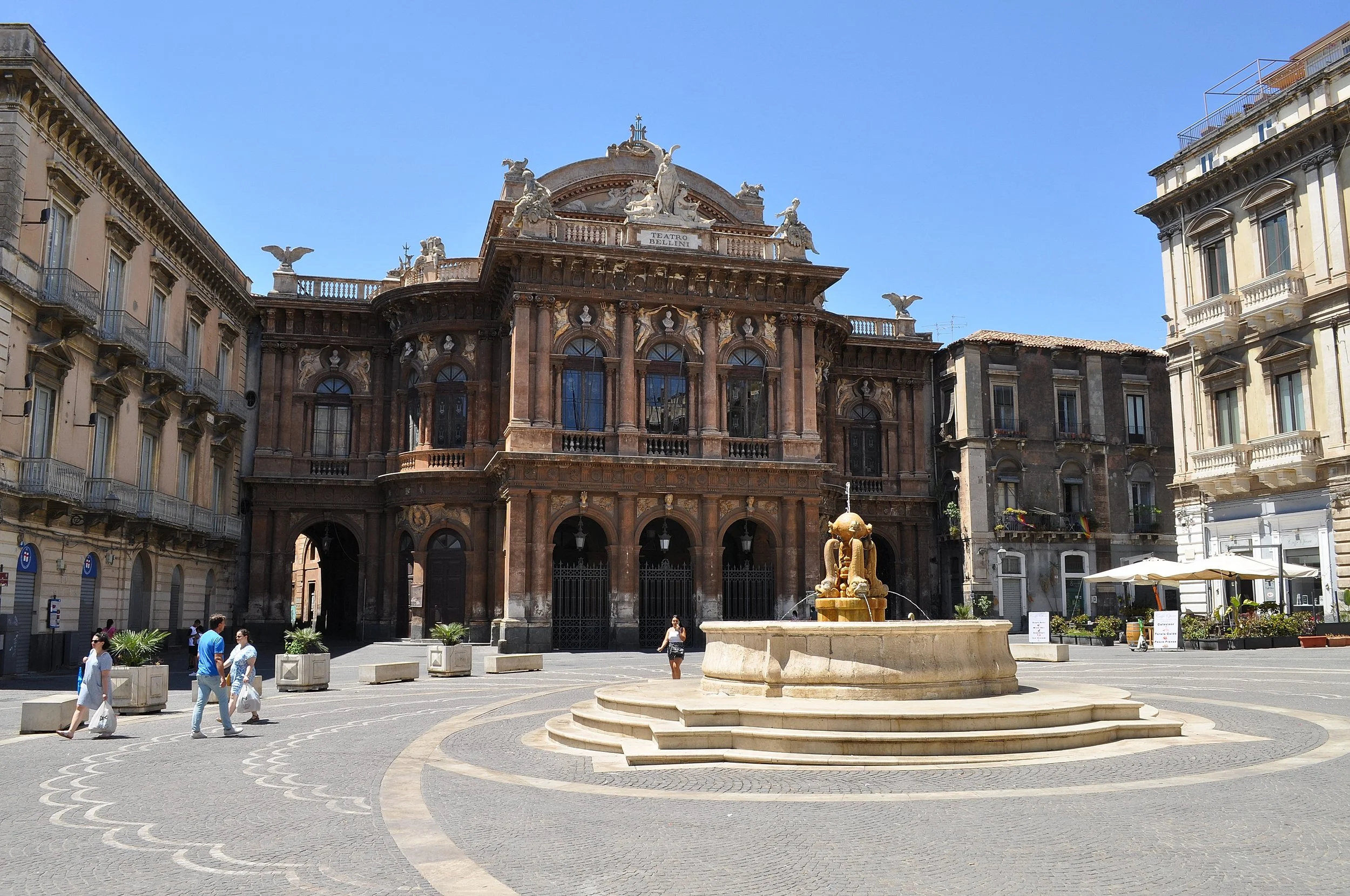

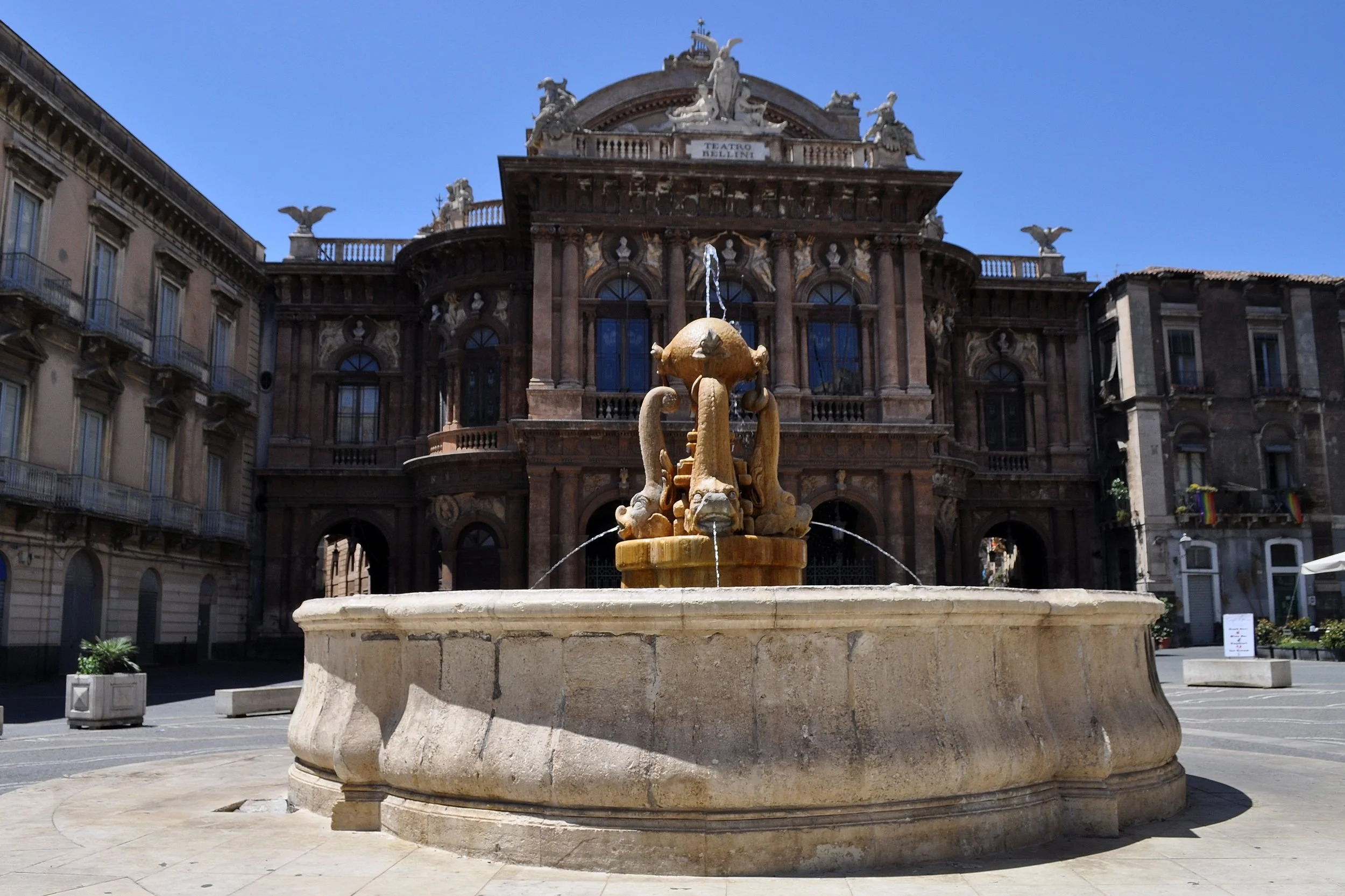


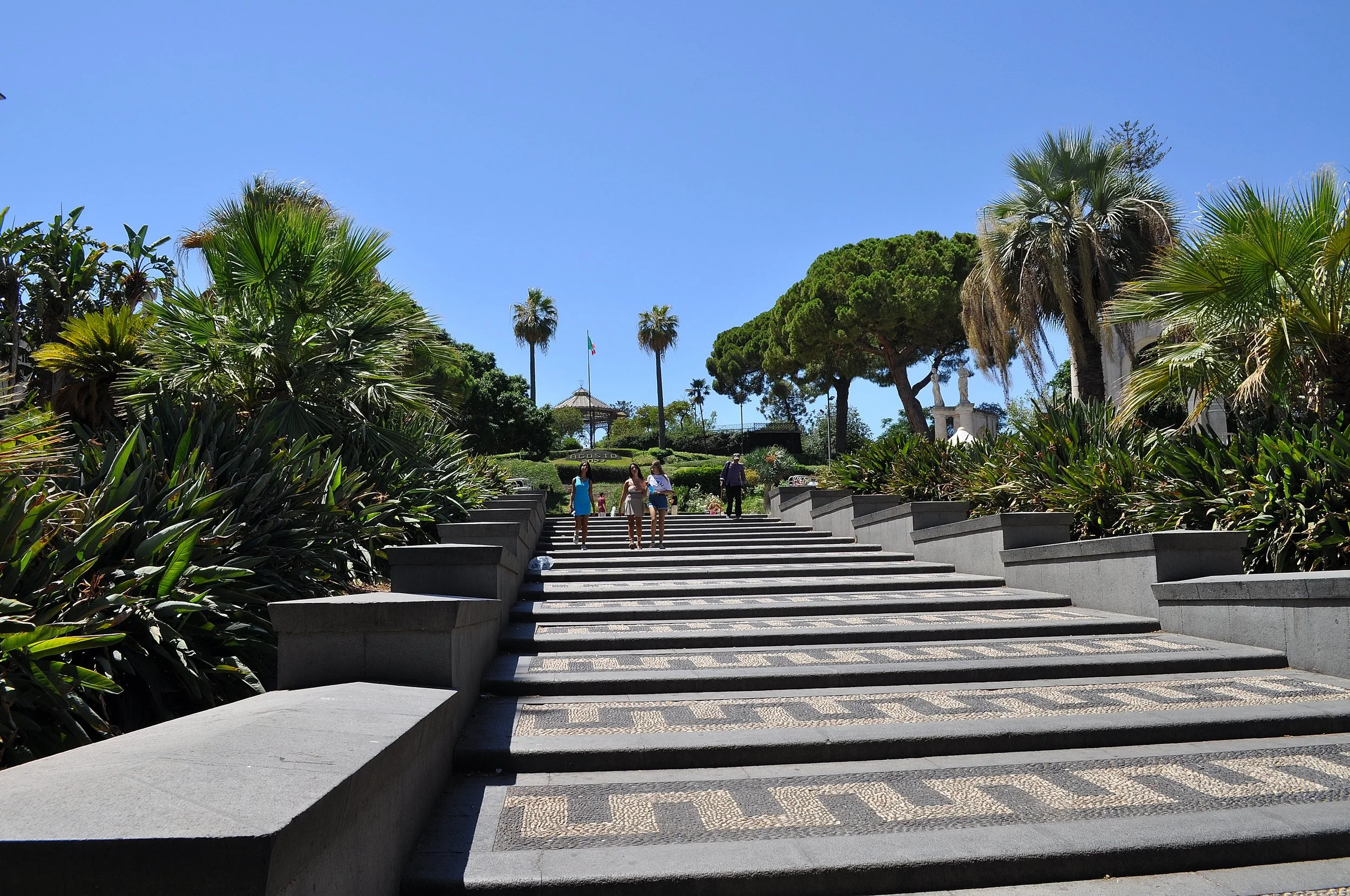
Piero: now it is time for a well-deserved break, with a granita or an arancino (remember, with the “o”…) perhaps enjoyed in front of Villa Bellini.
Angela: finally! Let’s enjoy some freshness in the most important park of Catania. Originally, the estate belonged to the Paternò Castello family (the same family of Palazzo Biscari). For the people of Catania, Giardino Bellini is simply called “a Villa”: a favourite place for leisure, relaxation, walks, and meetings. It hosts many species of plants, including exotic and century-old trees, as well as the Avenue of Celebrities, where the busts of the greatest Catanian personalities are displayed.


Piero: from Via Etnea, one of the main shopping streets of Catania, we reach Piazza Stesicoro, where we can see the few remaining ruins of the Roman Amphitheatre. They are rather modest and, unfortunately, not very well maintained. We quickly move on and head towards our next stop.


Angela: we arrive at Via dei Crociferi, a true explosion of Baroque architecture and atmospheres. Although it is very short, it is considered one of the most beautiful streets in Catania, so much so that it has been chosen as a film location for movies such as Il bell’Antonio by Bolognini, Storia di una capinera by Zeffirelli, and I Vicerè by Faenza. In just two hundred metres, it hosts four magnificent churches.

Piero: according to legend, the Arch of San Benedetto, which closes the street next to the homonymous church, was built in a single night, and it was said that a headless horse wandered beneath it.
Angela: not far from here we find the Church of San Nicolò l’Arena. It is a severe and imposing building, both in its external appearance and in its interior.


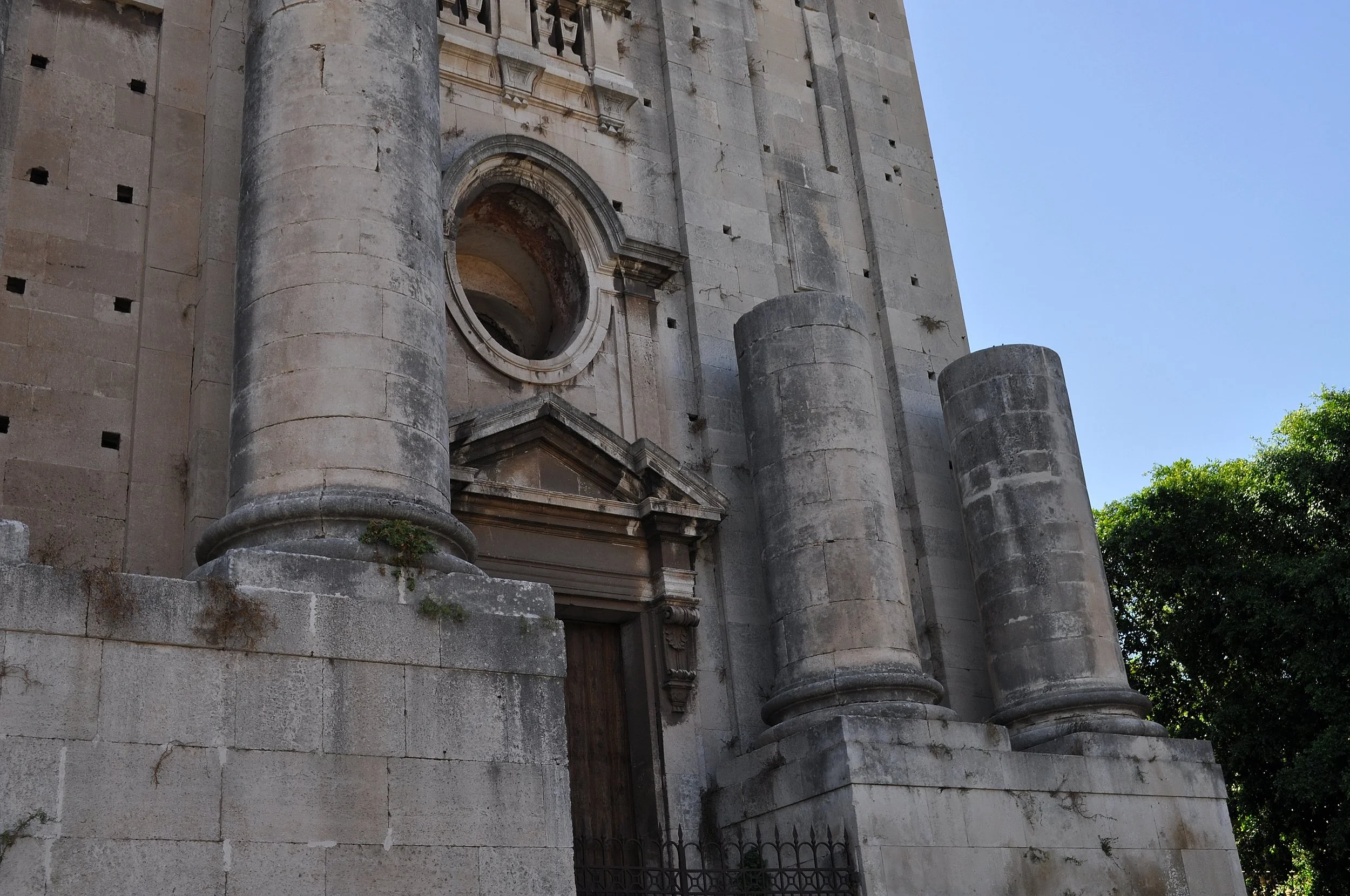
Piero: besides being a military memorial housing the remains of several Catanian soldiers who fell during the two World Wars, inside the church there are also some of the cerei, the large devotional candles traditionally used during the celebrations in honour of the city’s patron saint, Saint Agatha.


Angela: in the transept there is a large sundial extending for about forty metres between the two chapels dedicated to Saint Benedict of Norcia and Saint Nicholas of Bari.
Piero: adjacent to the church stands the Benedictine Monastery, a UNESCO World Heritage Site, which today houses the headquarters of the Department of Humanities of the University of Catania.
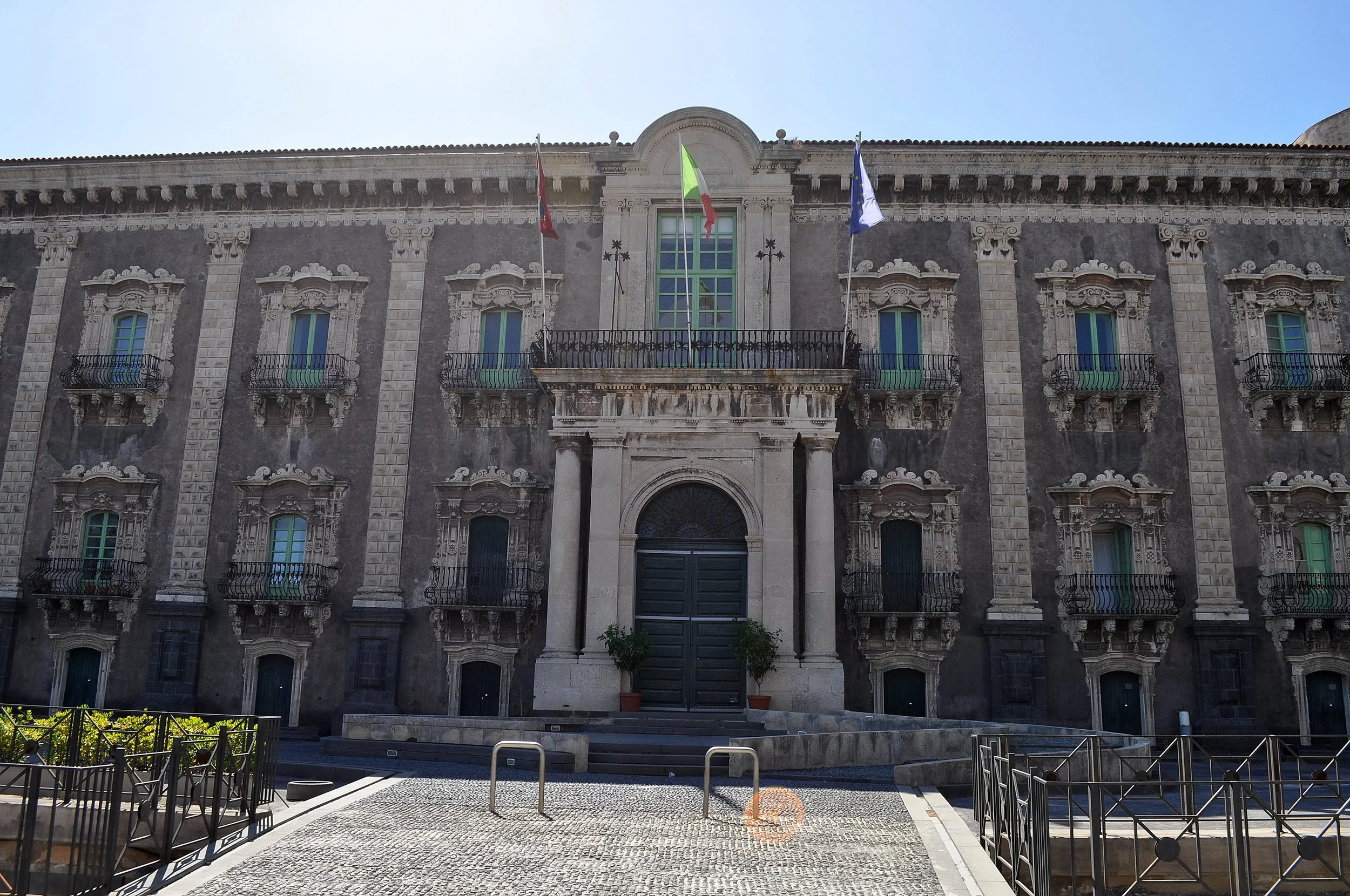
Angela: commissioned and built by the Benedictine monks in the 16th century, it is an example of architectural integration between different historical periods and stands on the remains of an ancient Roman city that is now buried. The cloister is particularly beautiful: it is definitely worth dedicating about one hour to a guided tour.
Piero: now rather tired, we continue our walk towards the Roman Theatre.
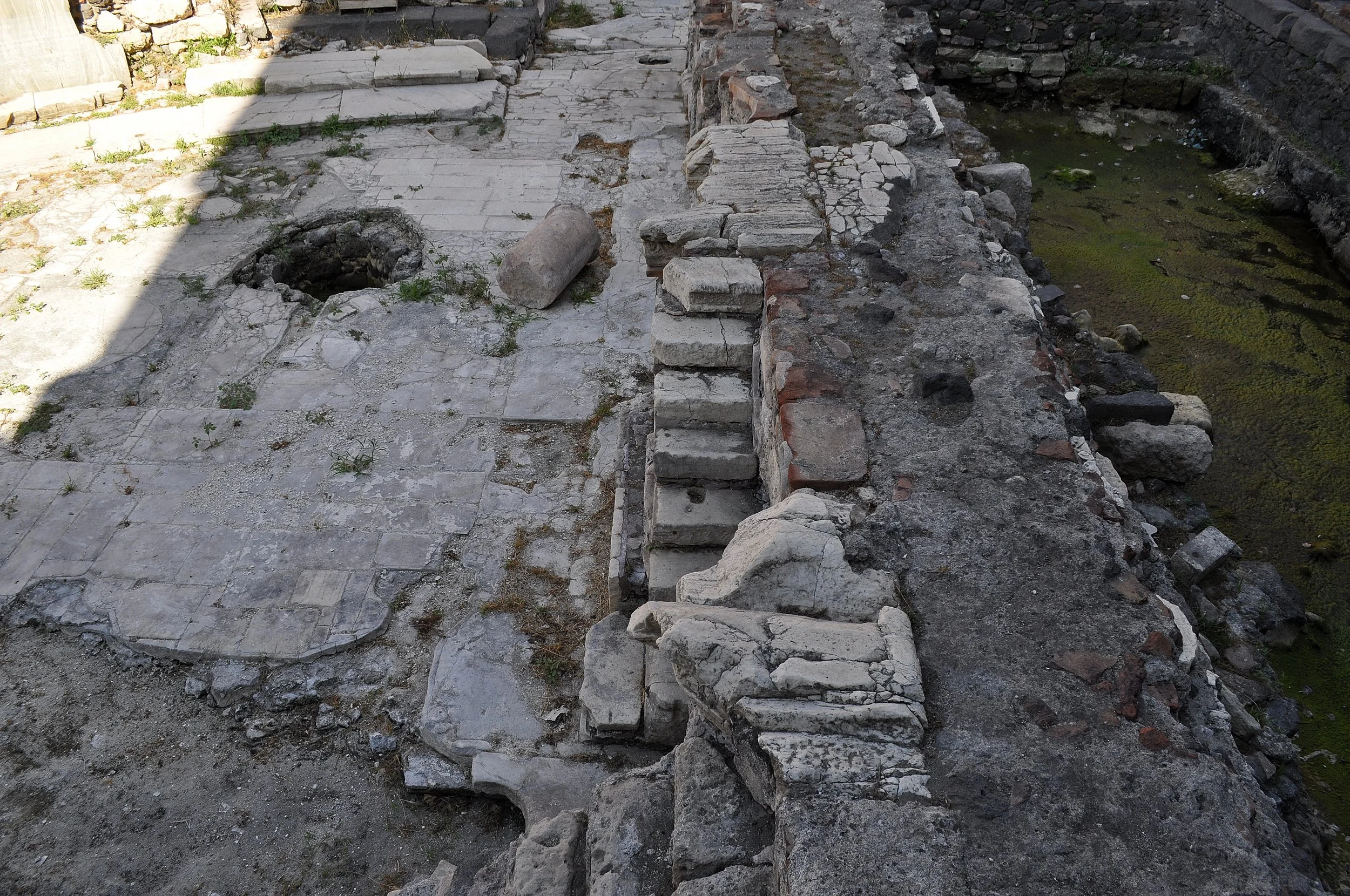
Angela: if you expect to see it emerge in all its majesty, you will be disappointed, because here in Catania the theatre is now hidden by the buildings that were constructed around and directly on top of it. In fact, it is accessed just like an ordinary building entrance, from number 266 Via Vittorio Emanuele.
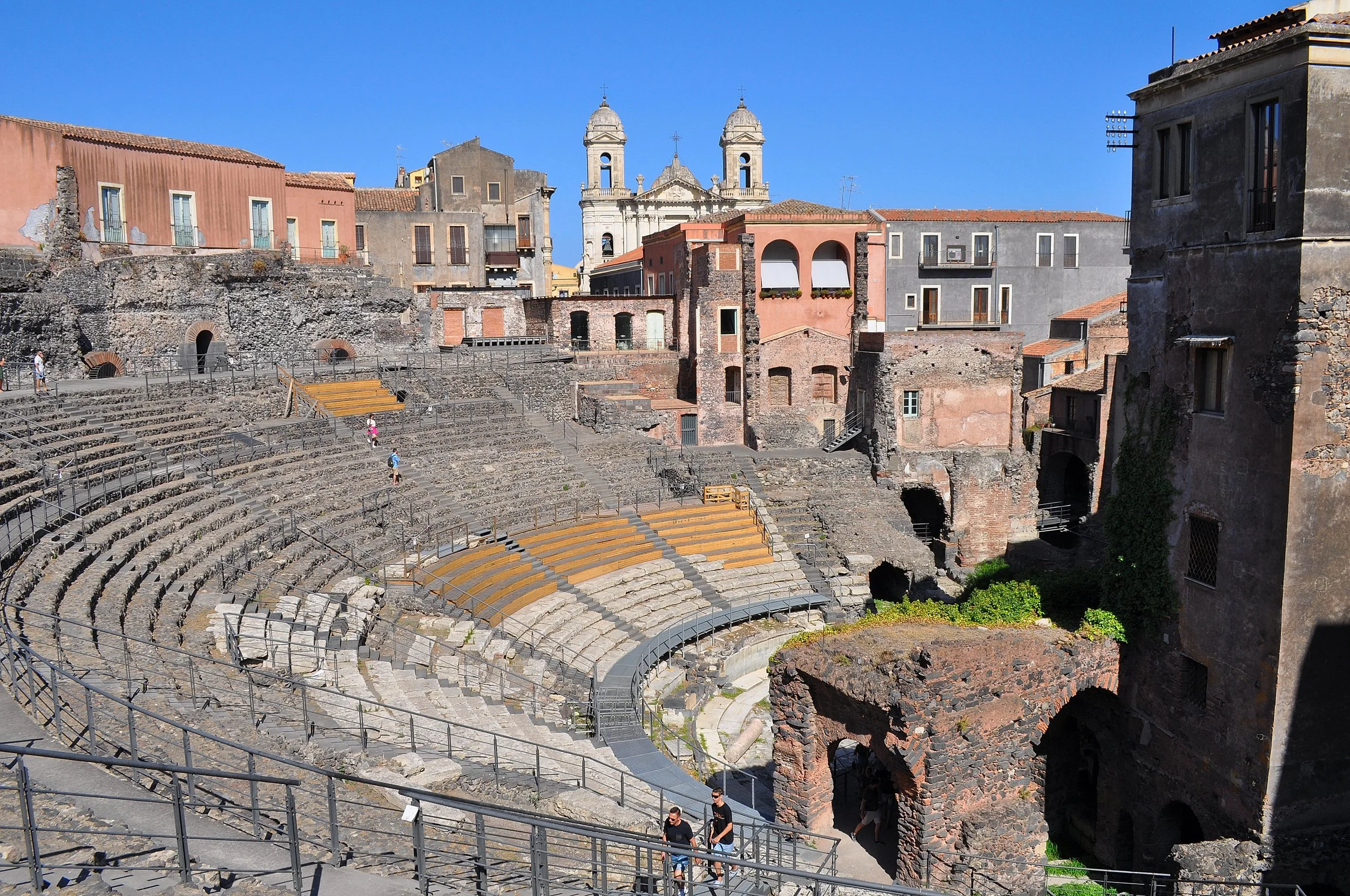
Piero: it dates back to the 2nd century AD and is connected to a smaller theatre known as the Odeon. It was probably built on top of an earlier Greek structure. As mentioned, today it is surrounded by noble palaces that over the centuries have partly altered its appearance and even occupied some of its spaces. Later expropriations and demolitions have restored much of its original splendour.




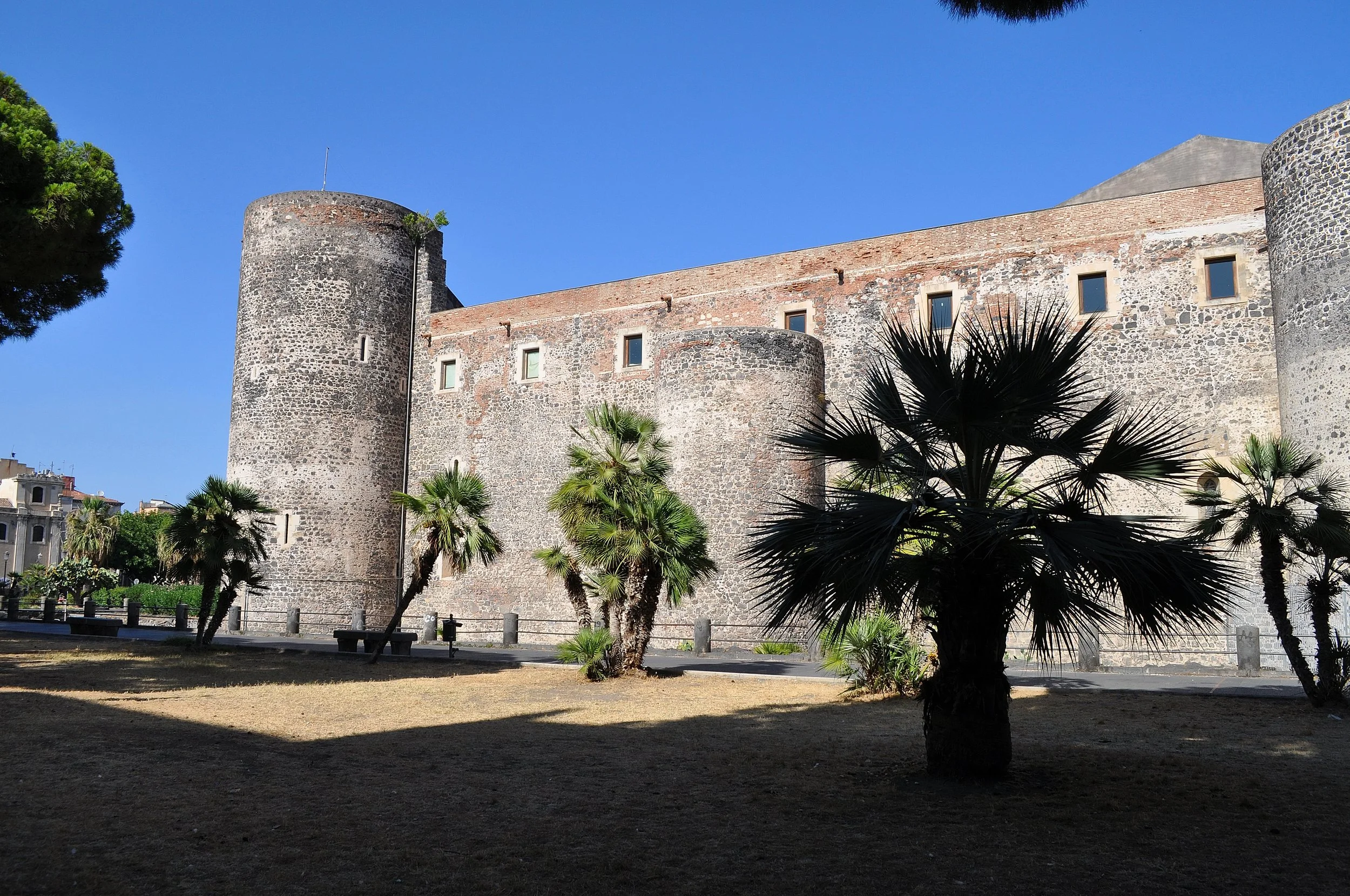
Angela: the final stop of our visit to Catania is another of the city’s great symbols: Ursino Castle.

Piero: the castle was built under Frederick II of Swabia in the 13th century, on what was once the seashore. The subsequent lava flows have changed the coastline, and today the sea is about a hundred metres away. Nowadays, it houses the Civic Museum of Catania.




Goodbye Catania!
Angela: this is how we end our day in the magnificent Catania. We have discovered most of the wonders of this extraordinary Etna city.
Piero: I did not expect to find a city so modern and dynamic on one side, yet so rich in history and traditions on the other.
Angela: Catania combines its energy and liveliness with a unique elegance, expressed through its famous “black Baroque” style. Destroyed and rebuilt many times throughout history, it is watched over, protected, and at the same time threatened by Mount Etna, which dominates the landscape behind it.
Piero: enjoy the beauty of our walk through Catania in this video.