Ragusa Ibla
Alberto: welcome back to Sicily, everyone! Another stop awaits us in this wonderful land.
Angela: here we are! Where are we going this time?
Alberto: today we have a short visit, less than a full day, to discover one of the hidden gems of south-eastern Sicily.
Piero: I suppose we're about to immerse ourselves once again in Sicilian Baroque.
Alberto: actually, we're visiting an ancient Greek city that was rebuilt in the Baroque style after a devastating earthquake.
Piero: I think I've guessed it. You're talking about Ragusa, and Ragusa Ibla in particular, aren't you?
Alberto: exactly! Then come with me.
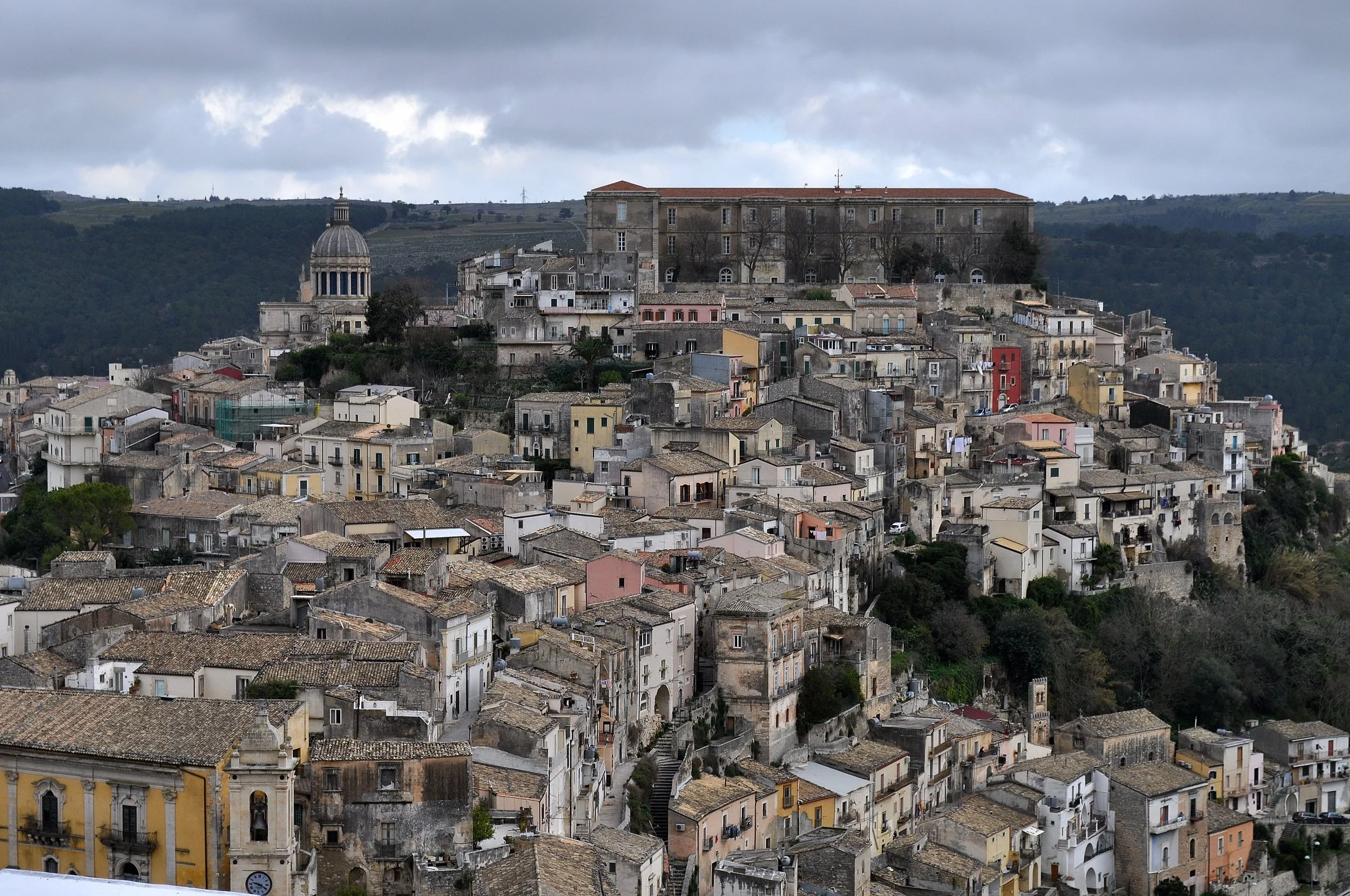
From Hybla Heraia to Ragusa Ibla
Piero: just as it happened when we visited Modica, the journey itself is a wonderful experience. The road winds through olive groves, carob trees, and wooded hills. Here on the Ragusa Plateau, villages and towns are scattered across the landscape, leaving plenty of space for nature to flourish.
Alberto: this jewel of Sicilian Baroque, a true treasure chest of art and history, is recognised as a UNESCO World Heritage Site, together with the other Baroque towns of the Val di Noto, thanks to its extraordinary historical and architectural value.
Angela: the historic centre of Ragusa Ibla stands on the site of the ancient Greek city of Hybla Heraia. Very little remains of the original settlement, as it was largely destroyed by the devastating 1693 earthquake that struck eastern Sicily. Ragusa was then rebuilt in two separate areas: Ragusa Superiore, the modern town, developed on the plateau above, while Ragusa Ibla was reconstructed in magnificent Baroque style on the ruins of the ancient city below.
Alberto: in 1866, the district of Ibla became administratively independent from Ragusa under the name Ragusa Inferiore. The name Ragusa Ibla was officially adopted only in 1922.
Piero: on 2 January 1927, when Ragusa became the capital of the new province, the two municipalities were reunited. Today, Ibla is the city's most fascinating historical and artistic district. Locals simply call it Ibla, or Iusu in the local dialect, referring to its position in the lower part of the city.
Walking through Ragusa and Ibla
Angela: our visit won't be very long. The main attractions can easily be explored in half a day, but if you really want to experience the very best of Ibla, it is well worth spending at least a full day here.
Piero: especially since no fewer than eighteen monuments in the town have been recognised as part of the UNESCO World Heritage Site. That alone says a lot about the extraordinary beauty of this remarkable place.
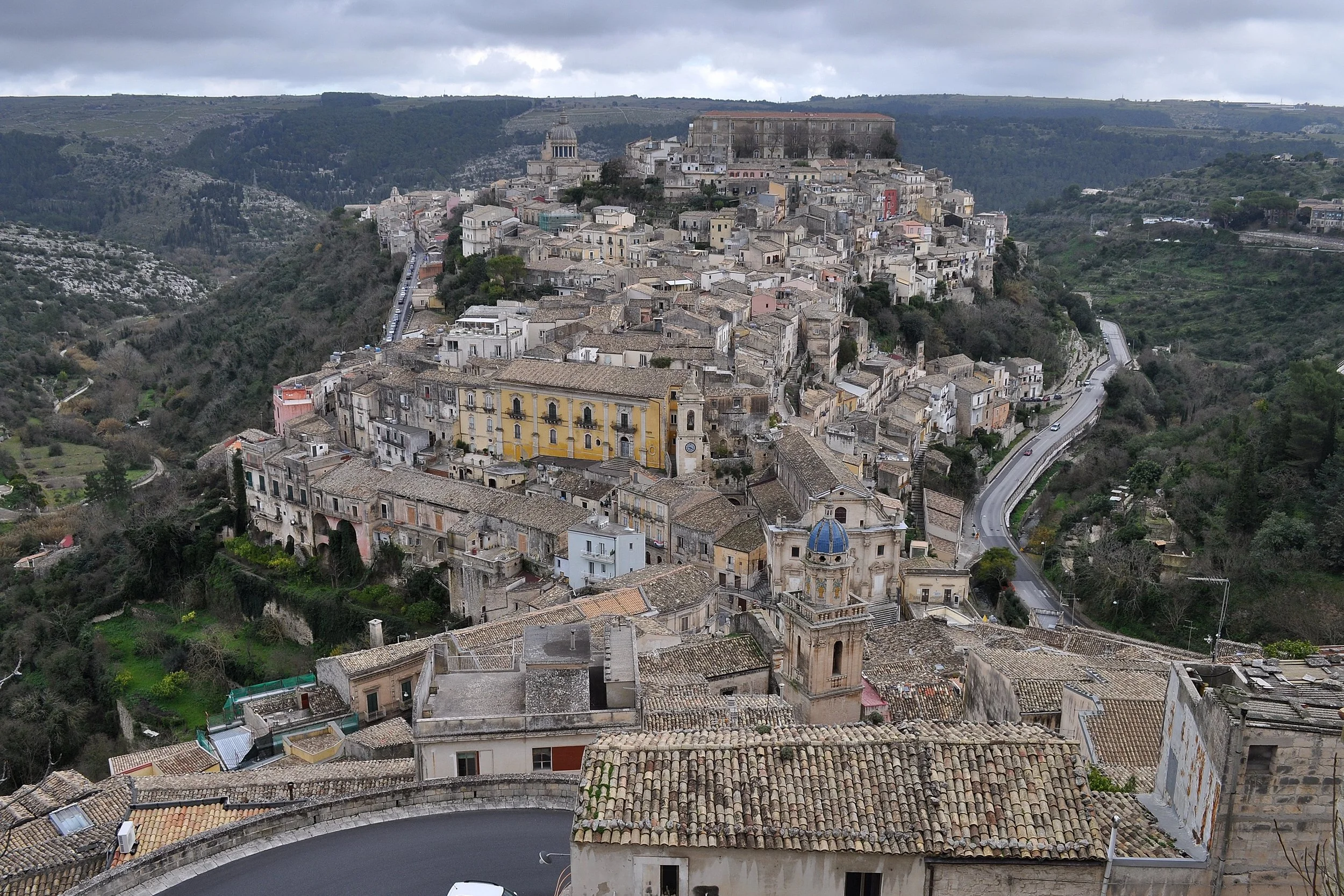
Angela: we easily find parking in the newer part of Ragusa. To reach Ibla, we have to descend 340 steps, and from the very beginning they reveal the beauty of this remarkable town. Almost immediately, we stop to capture the iconic postcard view that best represents Ragusa Ibla.
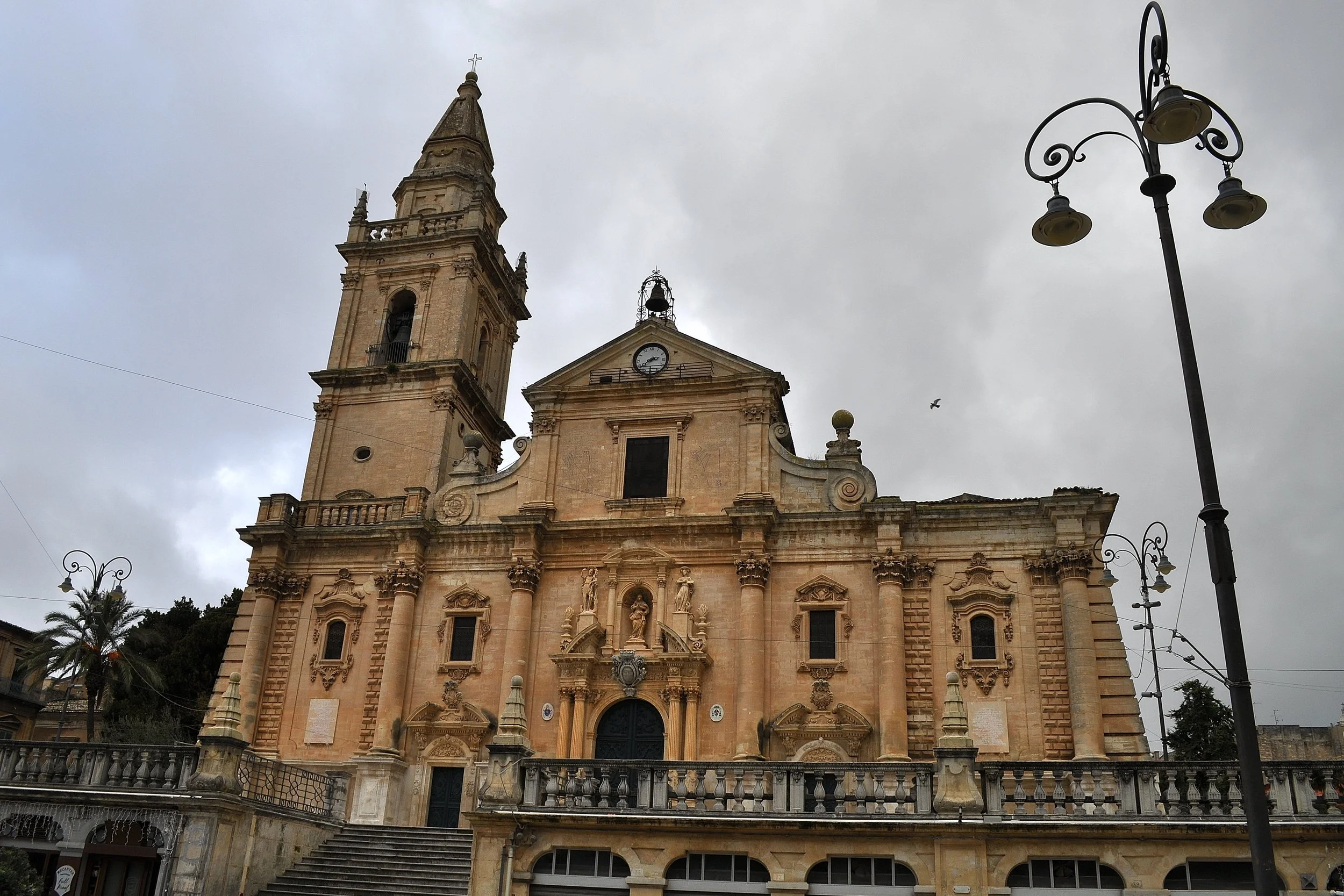
Piero: before heading down to Ibla, we stop to visit the Cathedral of Saint John the Baptist in the upper part of the city. Here we discover that Ragusa has two patron saints: Saint John for Ragusa Superiore and Saint George for Ragusa Ibla. The Cathedral of Saint John the Baptist features a magnificent Baroque façade adorned with statues and three portals. Built mainly during the 18th century, it has a Latin cross floor plan and boasts beautiful chapels decorated with gilded Rococo stuccoes and polychrome marble statues. At the end of August, the cathedral becomes the heart of the solemn celebrations in honour of the city's patron saint, when the traditional procession of votive candles accompanies the statue of Saint John, preceded by the Holy Ark.
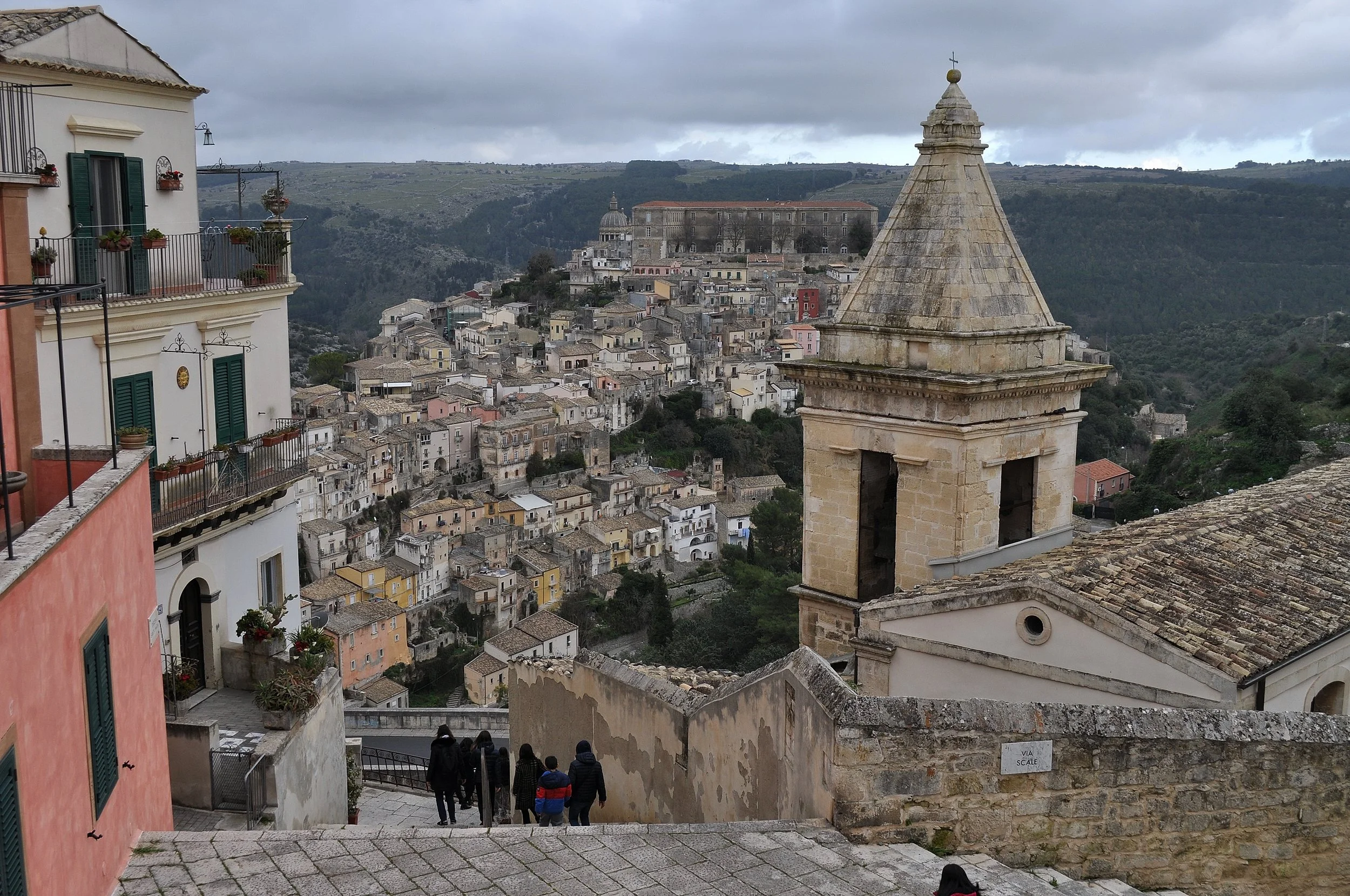
Alberto: we now make our way towards Via delle Scale, the long staircase that leads down to Ibla. The walk itself is already a wonderful introduction to the town. Our first stop is the Palazzo della Cancelleria, one of Ragusa's eighteen UNESCO World Heritage monuments and one of the finest examples of the town's refined Baroque architecture.

Piero: as we continue our walk, we arrive at the Church of Santa Maria delle Scale. The church itself may not be the most memorable monument in Ragusa, but its location makes it an unmissable stop on this itinerary. From the square in front of the church, you can enjoy a breathtaking panoramic view over the entire historic centre, with the magnificent dome of the Church of San Giorgio—our next destination—standing proudly above the rooftops.
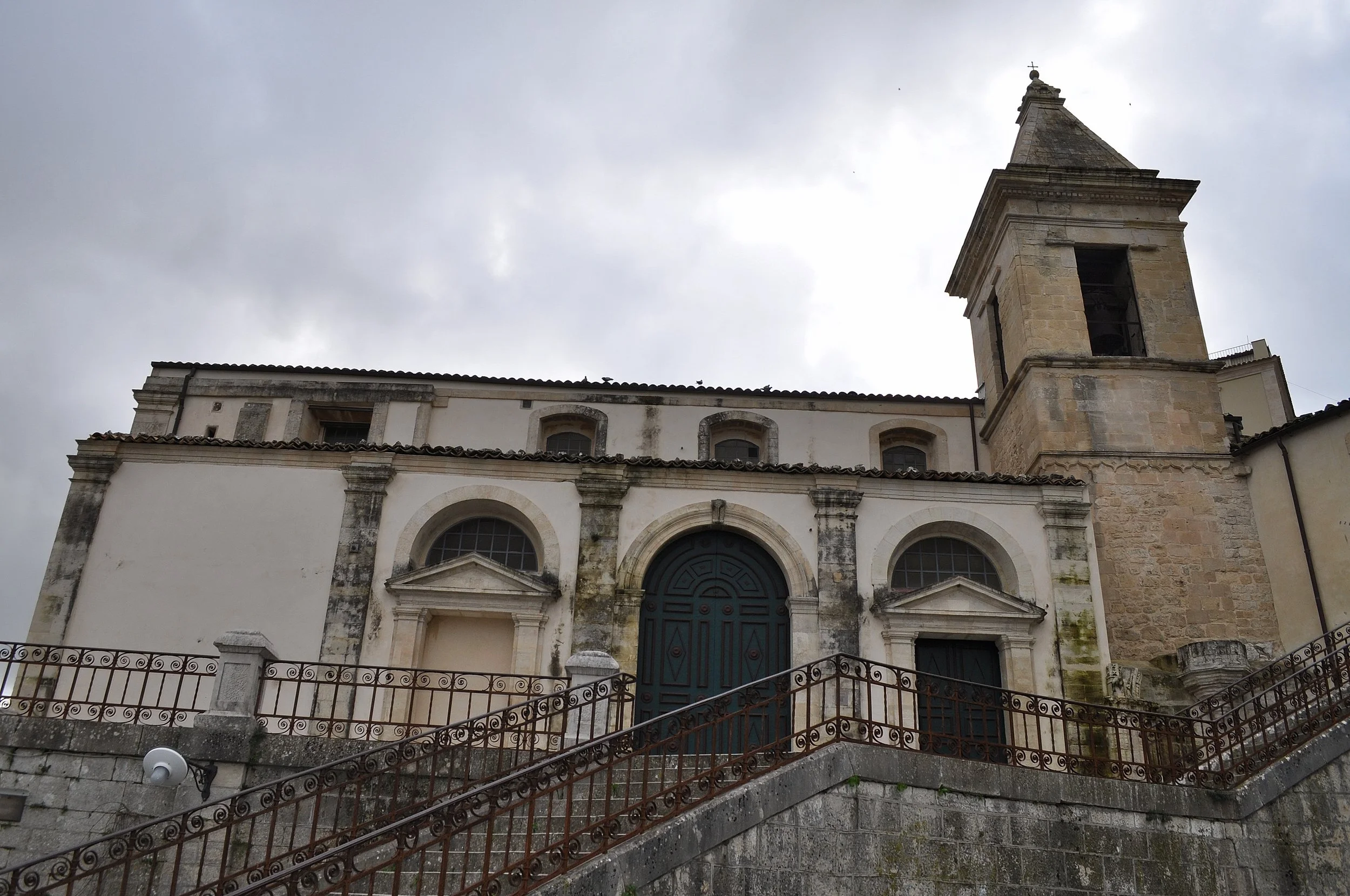
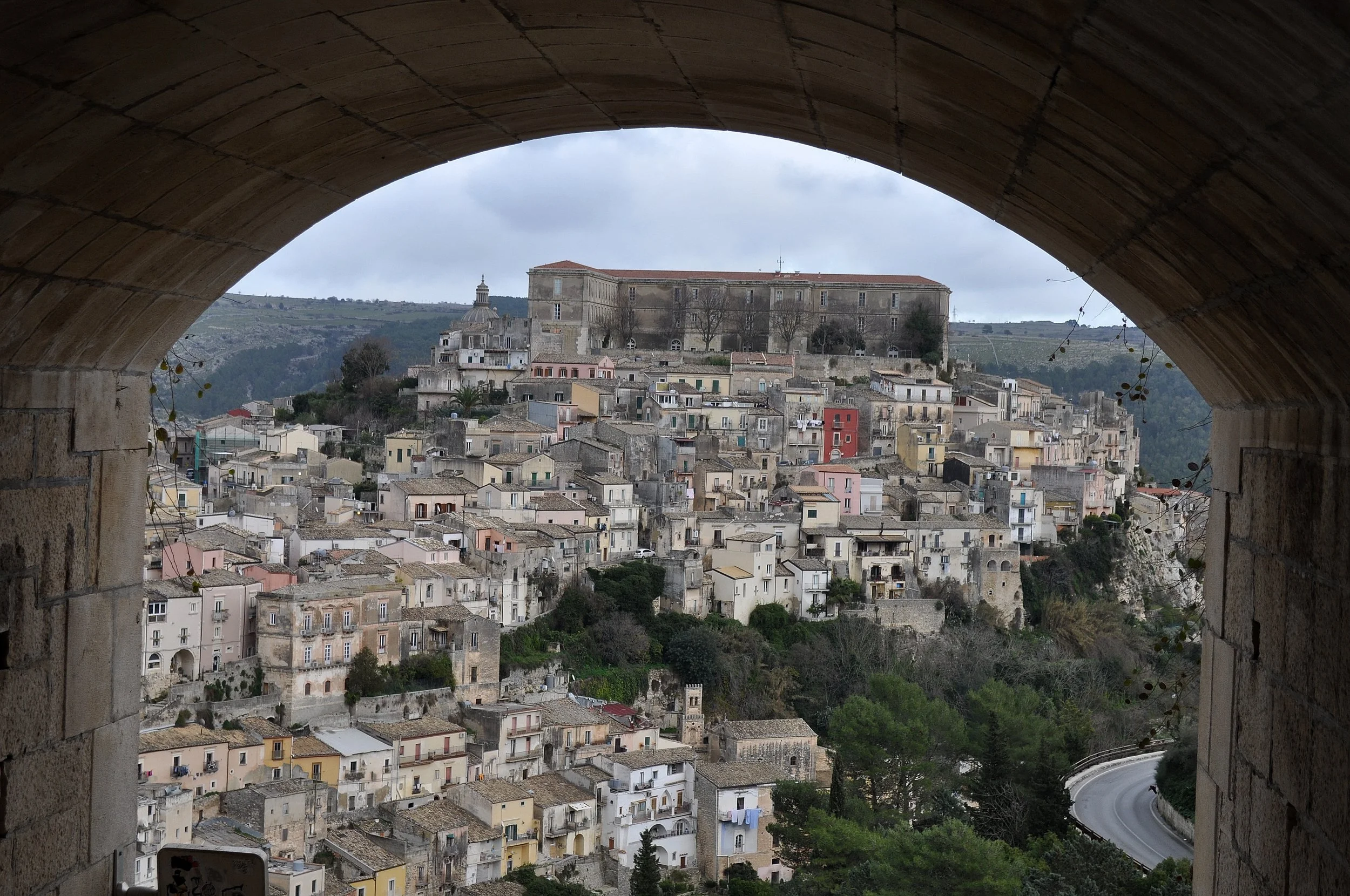
Angela: from this panoramic viewpoint, it is impossible not to notice the bell tower topped by the striking cobalt-blue dome of the Church of Santa Maria dell’Itria. Originally built in the 14th century by the Knights of Malta, it stands in what was once the city's Jewish quarter.


Piero: at the bottom of the staircase, a maze of narrow streets awaits us, opening onto charming little squares lined with majestic palaces and beautifully decorated churches. The feeling is that this place is almost too small to contain so much beauty and poetry. Yet its elegance is never overwhelming or ostentatious—it is simply majestic, refined, and surprisingly intimate.


Angela: our exploration of Ibla begins in the beating heart of the town, Piazza del Duomo, the perfect place to stop for a coffee or a refreshing granita before continuing our visit.

Piero: at the upper end of the square stands the magnificent Cathedral of Saint George, approached by a monumental staircase and enclosed by an impressive wrought-iron gate. Built between 1744 and 1775 to a design by Rosario Gagliardi, it is regarded—together with the Church of Saint George in nearby Modica—as one of the finest masterpieces of Hyblean Baroque and a true icon of Sicilian Baroque architecture.

Angela: the majestic convex façade rises above the monumental staircase, creating one of the most iconic views in Ragusa Ibla. The main portal is flanked by three columns on each side, which continue to the upper level, above which stands the richly carved and decorated bell tower. The central section is crowned by a dome over forty metres high, added only in 1820. Inside, the cathedral features three naves adorned with numerous works of art, while the magnificent 18th-century altarpiece is undoubtedly one of its greatest treasures.


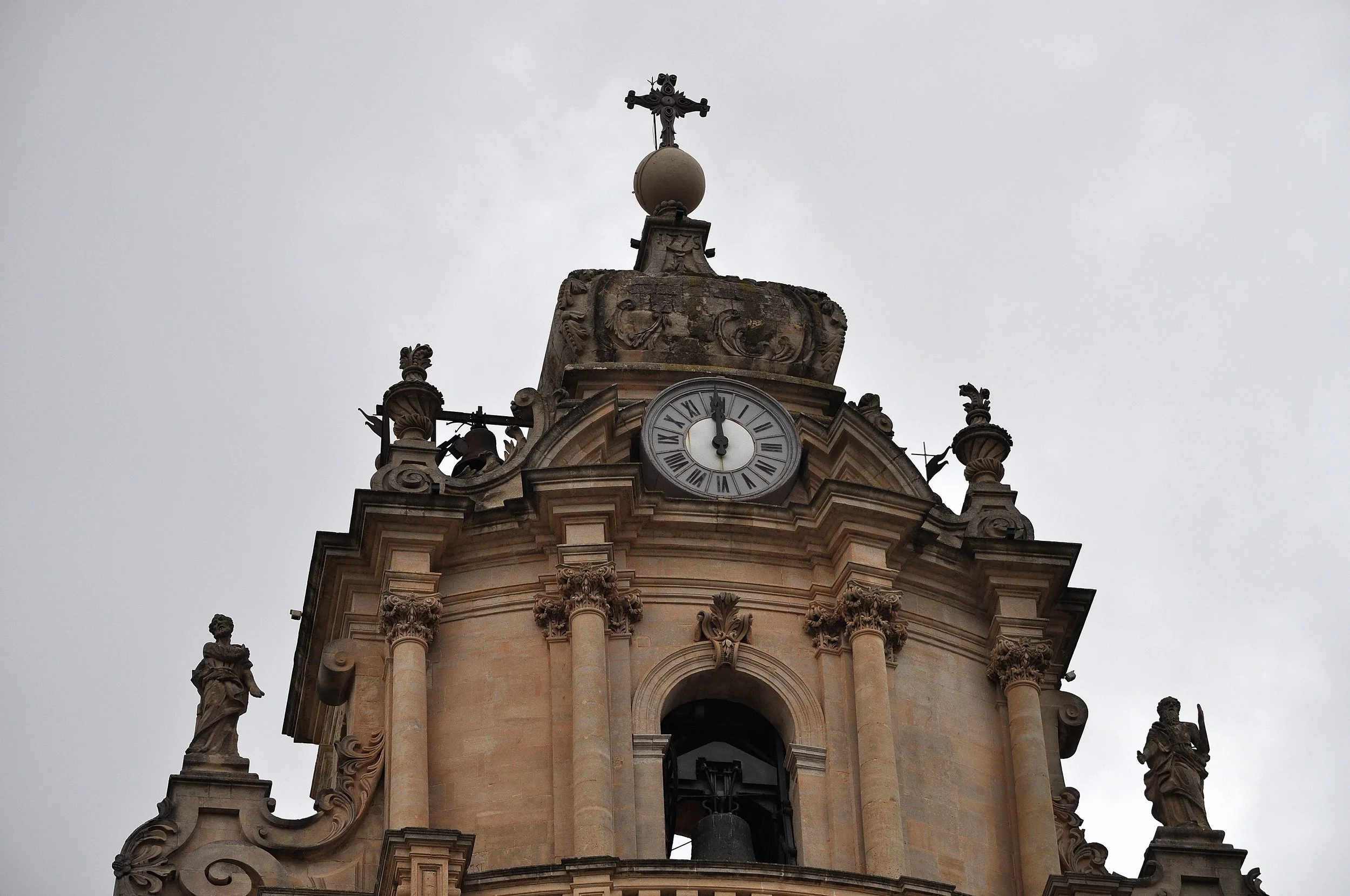
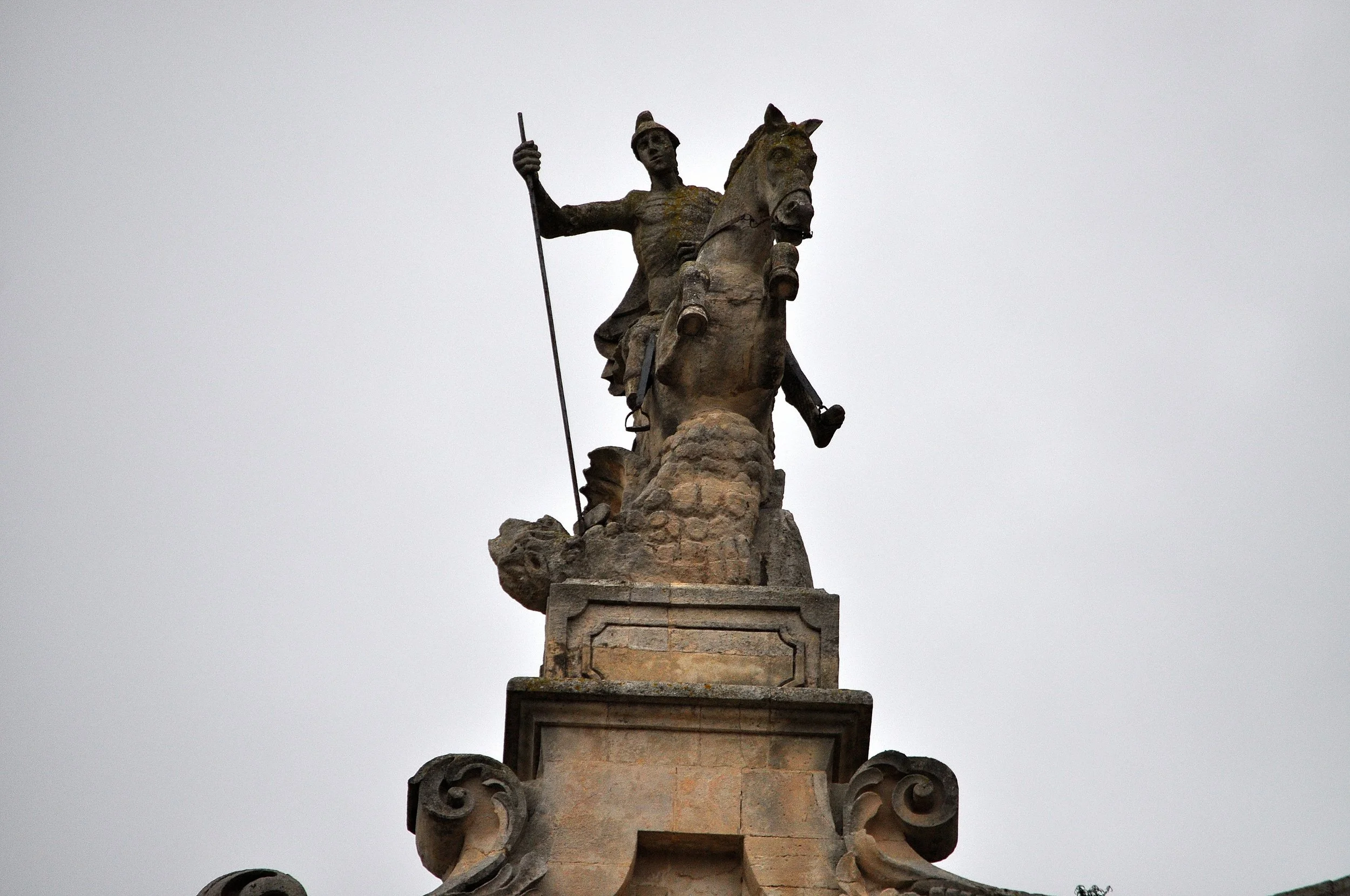


Alberto: you may have noticed that devotion to Saint George is especially strong in this part of Sicily, a tradition that dates back to the Norman period. In Ragusa Ibla, on the last Sunday of May, the city celebrates its patron saint with a spectacular procession through the streets. The equestrian statue of Saint George, shown defeating the dragon, is carried on the shoulders of the faithful and followed by a large crowd of devoted pilgrims.
Angela: and now for a more light-hearted curiosity. You may already recognise this church, its staircase, and the square from television: they were used as the fictional town of Vigata in the popular Italian TV series Inspector Montalbano.
Piero: climbing uphill from Piazza Duomo towards the upper part of Ibla, we reach Via Solarino, a panoramic street overlooking the dome of Saint George. From here, you can enjoy a unique view over the rooftops of Ibla, while also getting an up-close look at the cathedral's magnificent dome, with its colourful stained-glass windows and elegant Baroque architectural details.

Angela: on the opposite side of the square from the Cathedral, tucked away just behind a discreet corner on the right, stands the Church of Saint Joseph, one of Ragusa Ibla's hidden Baroque gems.

Piero: besides its magnificent churches, Ragusa Ibla is also home to eight noble palaces included among the town's eighteen UNESCO World Heritage monuments. These residences once belonged to the city's most influential families and are especially admired for their finely carved Baroque balconies. The most notable are Palazzo Cosentini and Palazzo Bertini, the latter famous for the three sculpted masks above its windows, representing the three emblematic figures of the Baroque age: a beggar, a merchant, and a nobleman. Also worthy of attention are Palazzo Zacco, Palazzo Schininà, Palazzo Sortino-Trono, Palazzo Nicastro, Palazzo Battaglia, and Palazzo La Rocca. Although it is not part of the UNESCO World Heritage Site, the Circolo di Conversazione, overlooking Piazza Duomo, is well worth a visit. Built in the mid-19th century in an elegant Neoclassical style, it was commissioned by the local aristocracy as an exclusive meeting place, away from the bustle of everyday life.


Alberto: continuing in the same direction, away from Piazza Duomo, we reach the Giardino Ibleo, a beautiful public garden filled with palm trees and offering lovely views over the surrounding Hyblean Hills. It is the perfect place for a short break or a picnic lunch. Inside the park, you'll find a children's playground, a fountain where you can cool off on hot summer days, and two charming churches: the Church of Saint James the Apostle and the Church of Saint Agatha of the Capuchins. Nearby stands the Portal of Saint George, the only surviving remnant of the original 12th-century church, which was destroyed in the devastating 1693 earthquake.


See you Ragusa!
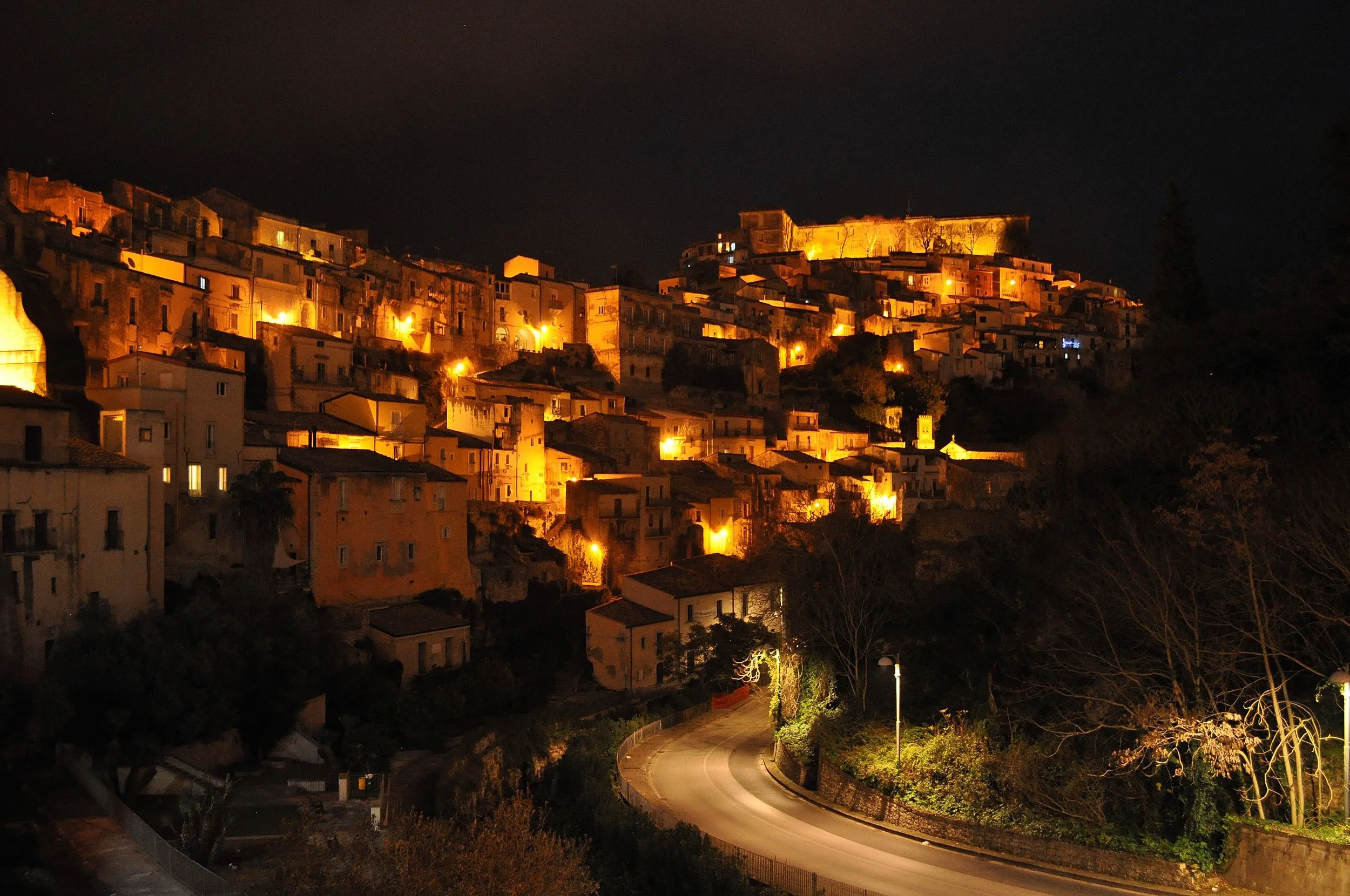
Piero: a short visit, but one that leaves a lasting impression. We end the day with one of the most beautiful views of Ragusa Ibla: after sunset, the town glows beneath a blanket of warm ochre-coloured lights, creating a magical atmosphere that is impossible to forget.
Angela: a true Baroque gem, Ragusa Ibla is an unmissable destination for anyone exploring the magnificent Val di Noto.
Piero: now sit back, relax, and enjoy the beauty of our walk through Ragusa Ibla in this video.