Modica
Alberto: are you ready, guys? We’re leaving again! After exploring Syracuse, we are now heading to discover the Val di Noto and its magnificent Baroque heritage.
Angela: wonderful! Since 2002, this area has been a UNESCO World Heritage Site.
Piero: over the next few days, we will visit some of the true gems of this region. Today we begin with Modica, famous not only for its extraordinary Baroque architecture, but also for its unique chocolate and for being the birthplace of Salvatore Quasimodo.
Angela: we’re ready then! Let’s go!

Next stop: Modica!
Piero: Modica is about 70 kilometres from Syracuse, heading south-west. The route is not complicated: after leaving Syracuse, we take the A18 motorway towards Gela and exit at Rosolini. From there, we continue for about 40 kilometres along the SP70 provincial road, which takes us directly to Modica.
Angela: the town is quite small and finding parking is not difficult. Once we leave our van, we practically won’t need it anymore. Our plan is to visit the main attractions in just over half a day, including a full lunch break.
Alberto: Modica stands on a plateau in the southern part of the Hyblean Mountains, not far from Ragusa, and stretches across the slopes of two valleys and the surrounding hills. It appears as a fascinating maze of small houses, narrow streets, and long stairways. The historic centre still preserves its medieval layout, which developed around the rocky spur of Pizzo Hill, where the once impregnable castle stood.
Angela: the houses built one against another are often extensions of ancient caves, inhabited since prehistoric times. Once, these hundreds of caves were directly used as homes; today, they have been incorporated into the later buildings, becoming an integral part of the town’s unique urban landscape.

Piero: the city has extremely ancient origins. It was first inhabited by the Sicani and later by the Phoenicians, before the arrival of the Greek and Roman dominations. Throughout its long history, Modica was crossed by the Byzantines, Vandals, and Goths during the Middle Ages. Around the year 1000, it came under the rule of the Saracens, who were later driven out by the Normans, followed by the Angevins and the Aragonese.
Angela: according to myth, the city was founded by Hercules. During his tenth labour, the Greek hero captured the red oxen of the giant Geryon and travelled towards Italy. However, the animals he was carrying with him were stolen in Sicily. Hercules was helped in recovering them by a young Greek woman named Motia. As a sign of gratitude, the hero founded three cities exactly in the places where he found the oxen again, dedicating each one to her. Thus were born Mozia, near Marsala, another Motya near Agrigento, and finally our own Modica.
Getting lost in Modica's stairways and alleys…
Alberto: to see everything at its best (and especially to take photographs…), we’ll need about two hours. And then I’d like to leave you some time for a little surprise…
Angela: let’s begin right away then!
Piero: Modica is built on a series of irregular levels and terraces, connected by stairways and winding climbs. As you venture into its narrow streets, every step and every staircase reveals a new discovery. Modica is the city of the “one hundred churches”, of magnificent noble palaces, but also of charming simple houses and old workshops, all together creating breathtaking views.
Alberto: it is precisely from one of these beautiful staircases that we approach the most famous and spectacular monument of the city: the Church of San Giorgio, which connects the lower and upper parts of Modica.
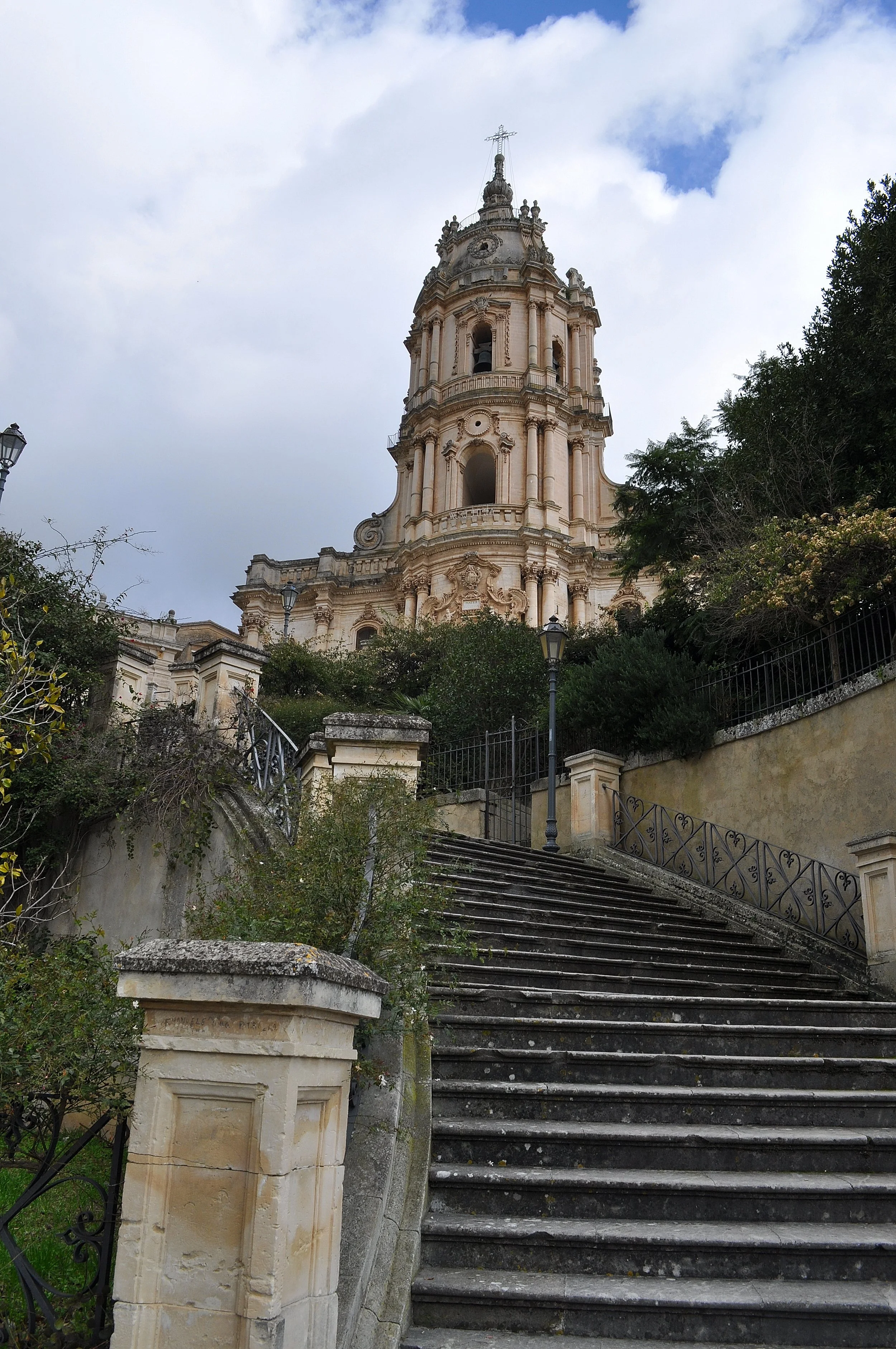
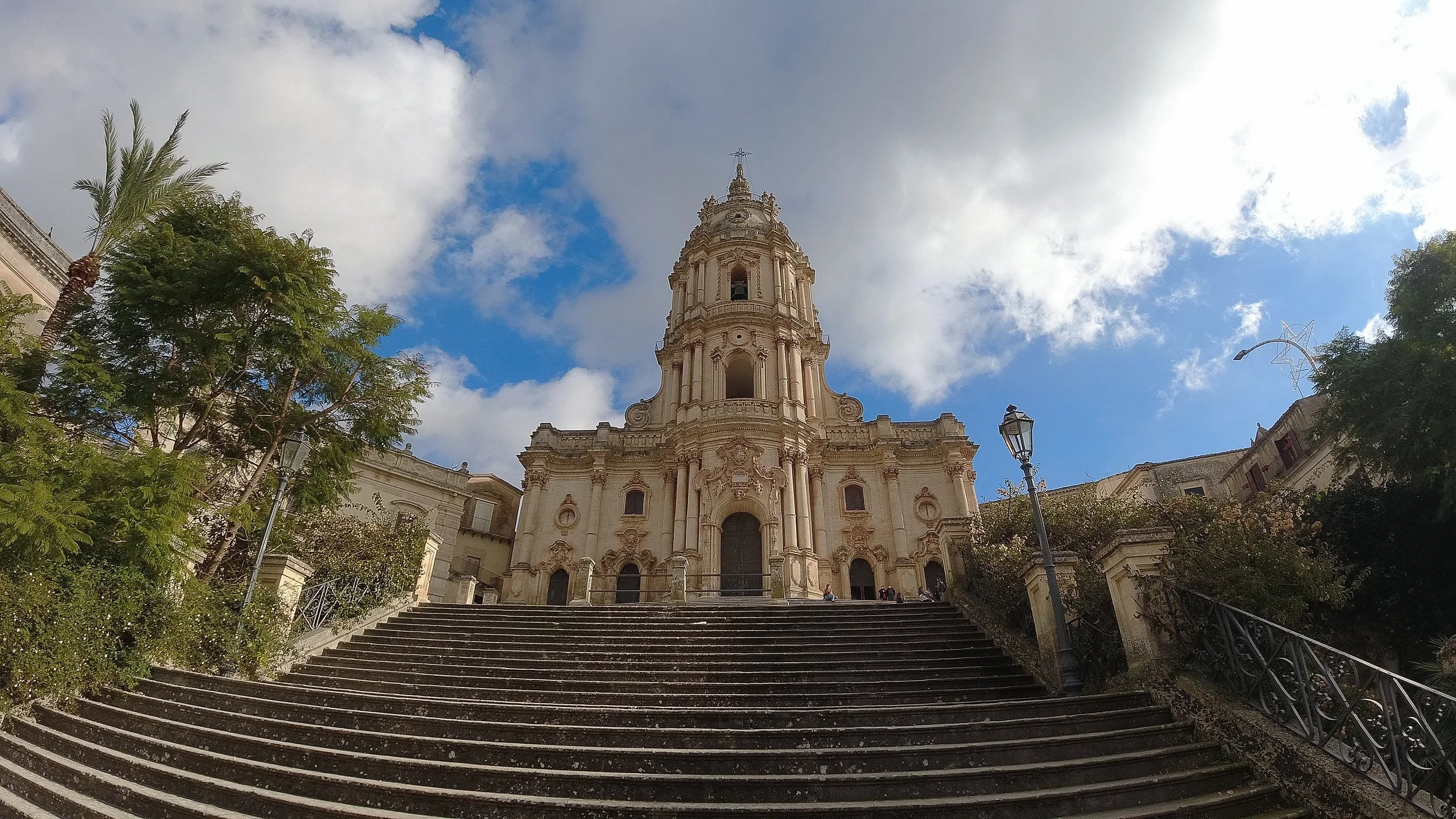
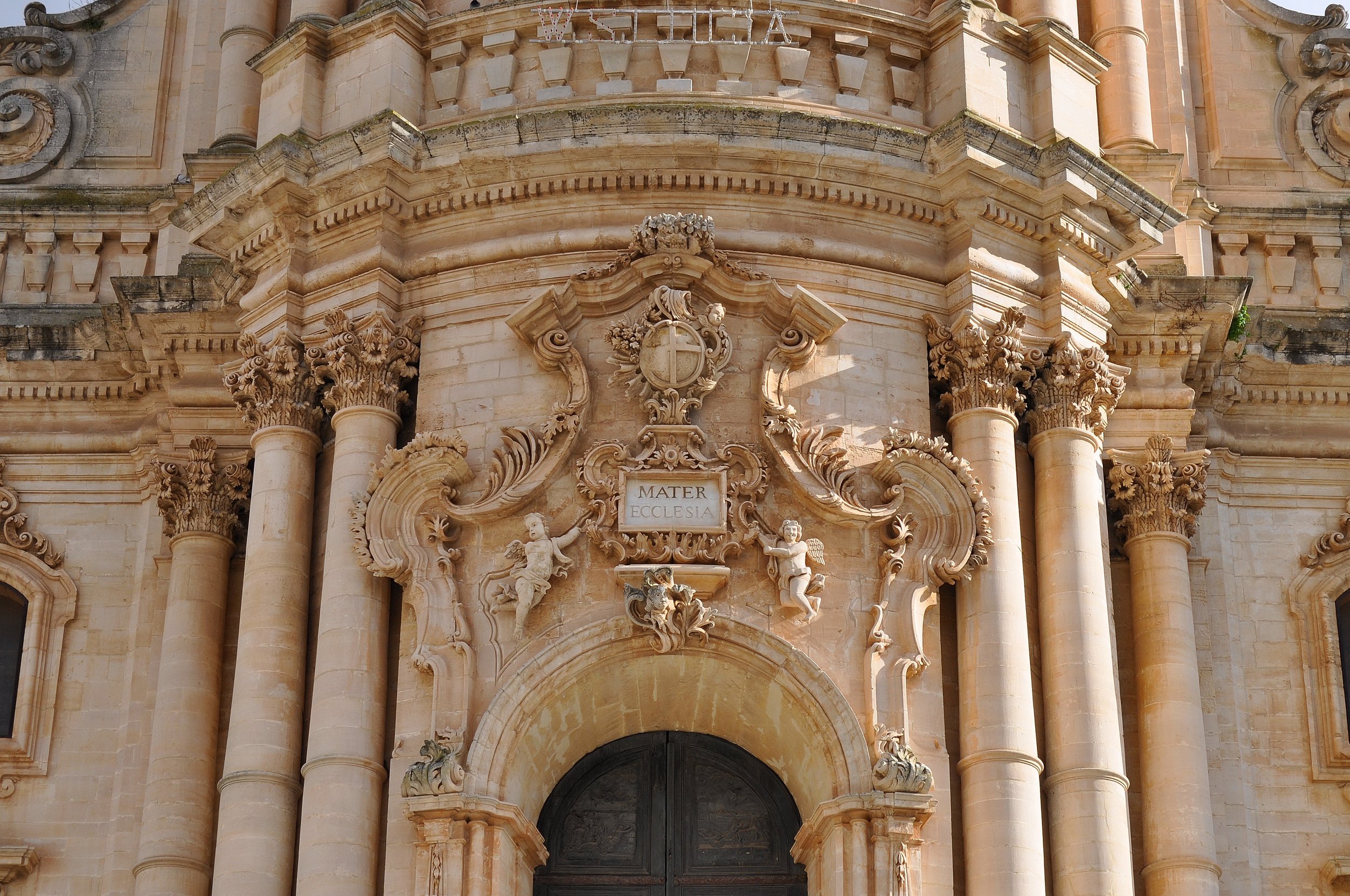
Angela: it is considered one of the most impressive Baroque places of worship in all of Sicily. Its grandeur is certainly enhanced by the 250 steps leading to the entrance, but above all by its more than 60 metres in height, which makes it visible from every point of the city.
The façade has a warm golden colour, typical of the Baroque style that characterizes the entire city, and is the result of the decision to rebuild the church after the devastating earthquake of 1693 that destroyed much of the Val di Noto.
It has five entrance doors and the interior is divided into five naves, with 22 columns featuring Corinthian capitals. Inside, it houses a magnificent organ with four keyboards and 3,000 pipes, several valuable paintings and statues, a large polyptych behind the altar, and a fascinating sundial on the floor.
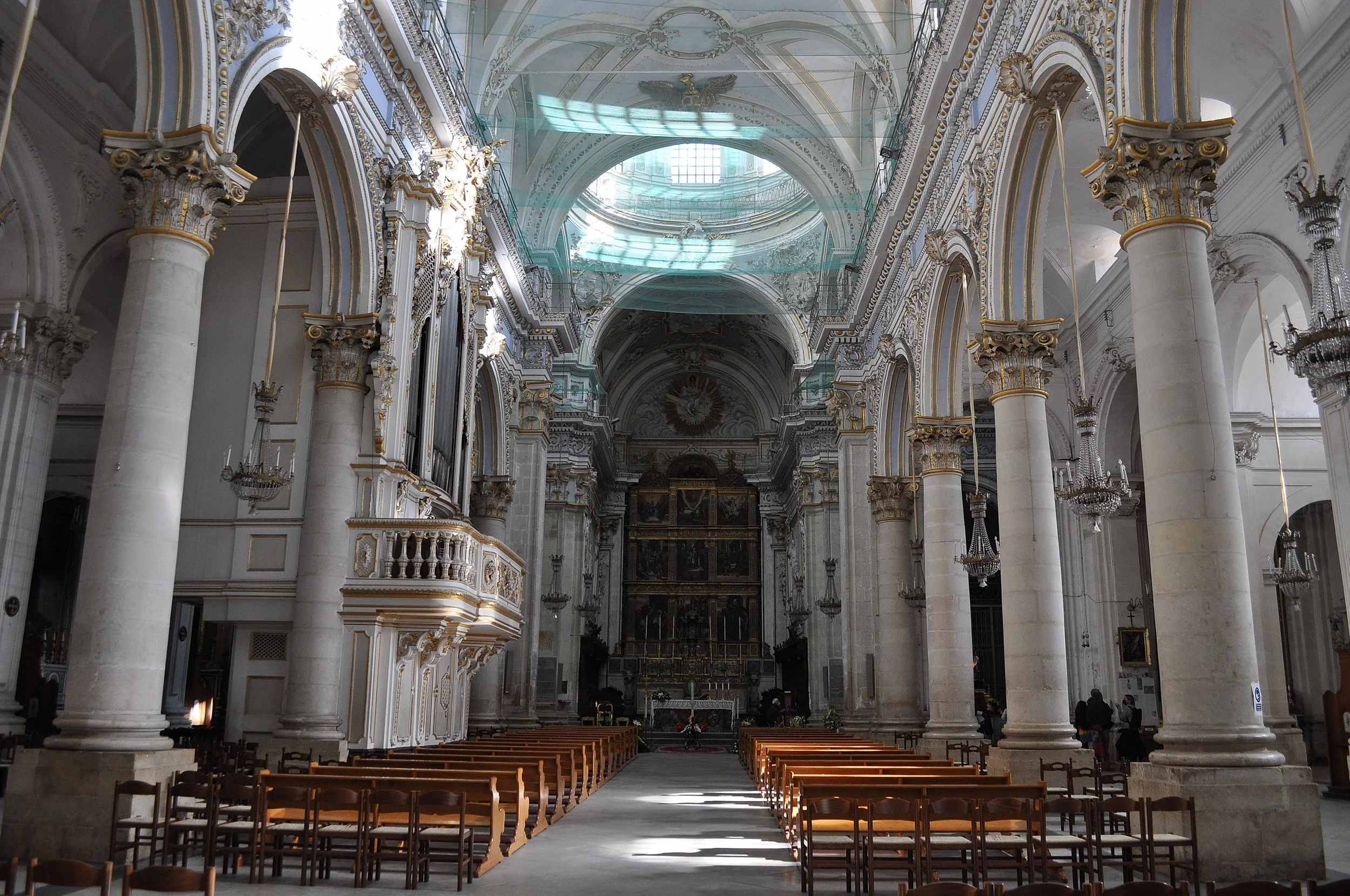
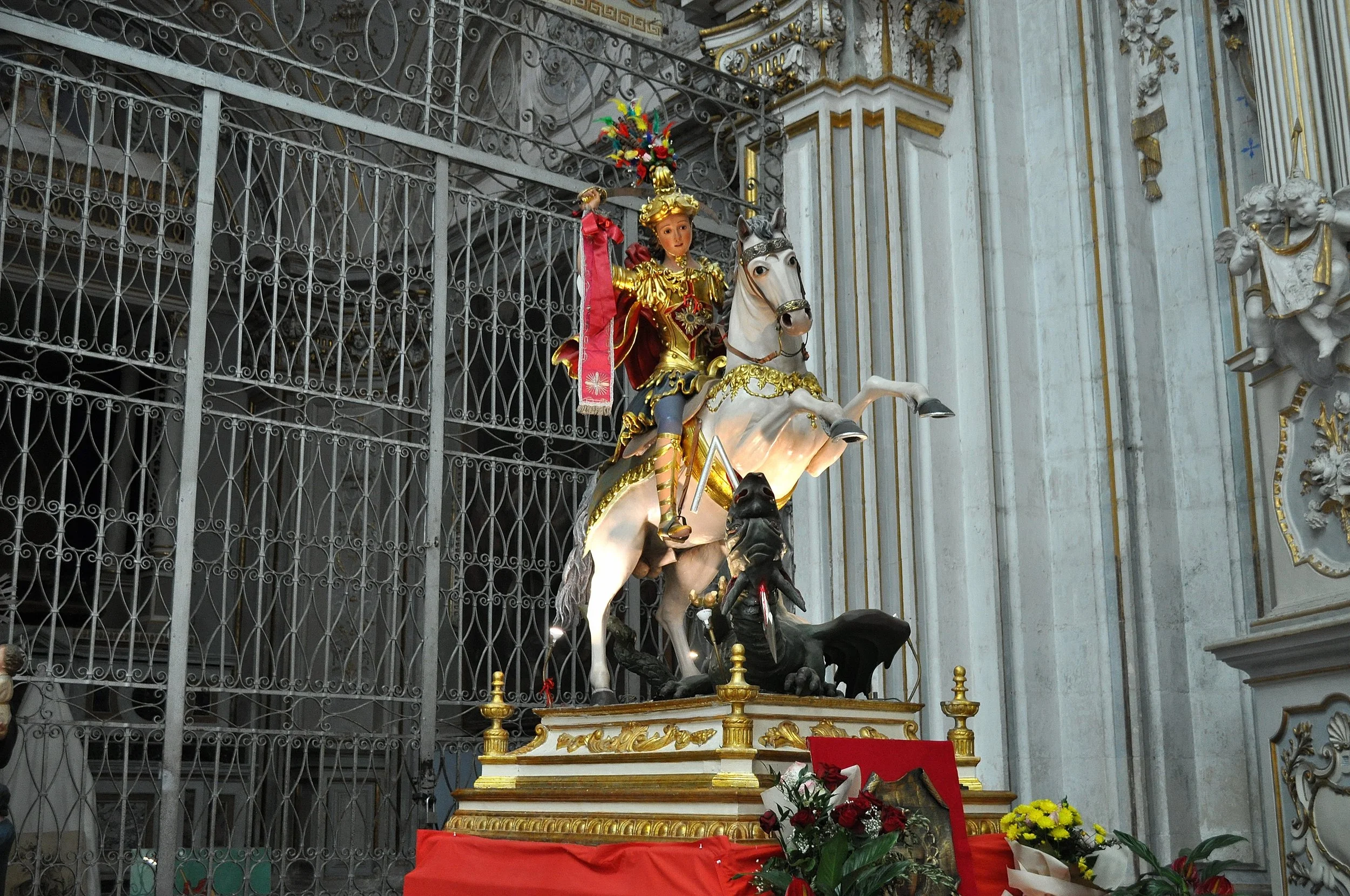

Piero: right next to the Cathedral, on its left side, stands Palazzo Polara, another magnificent example of Baroque architecture. The entrance must be booked in advance, and inside it preserves furniture, frescoes, and decorative objects that bring back the atmosphere of past centuries. The palace also has a balcony offering a wonderful view of the city. Together with the other noble palaces scattered throughout the town, it bears witness to the glorious past of Modica.
Angela: after the Norman reconquest, Modica became a county, perhaps one of the most important in the entire southern Italy. Its territory once included all the municipalities of today’s province of Ragusa, as well as the baronies of Alcamo and Calatafimi in the province of Trapani, along with other towns across Sicily. With the abolition of the feudal system in the 19th century, Modica gradually lost its political importance, and in 1927 it was Ragusa that was elevated to the status of a province. I mention this because we are now heading towards another great symbol of the city: the castle.
Alberto: it is only a few narrow streets away from the Cathedral, followed by another fairly demanding staircase… it’s better to check the opening hours first to avoid any surprises.
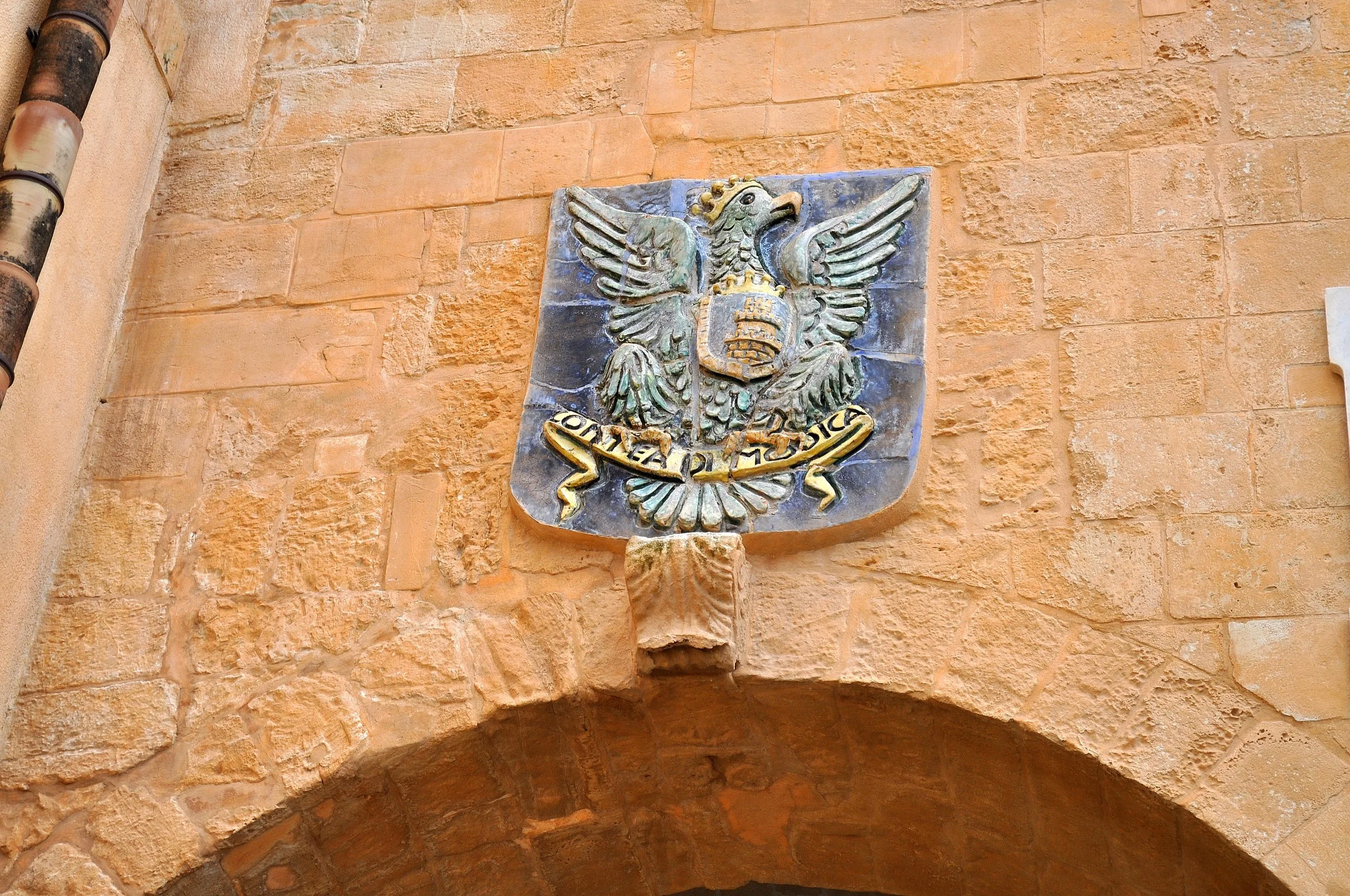
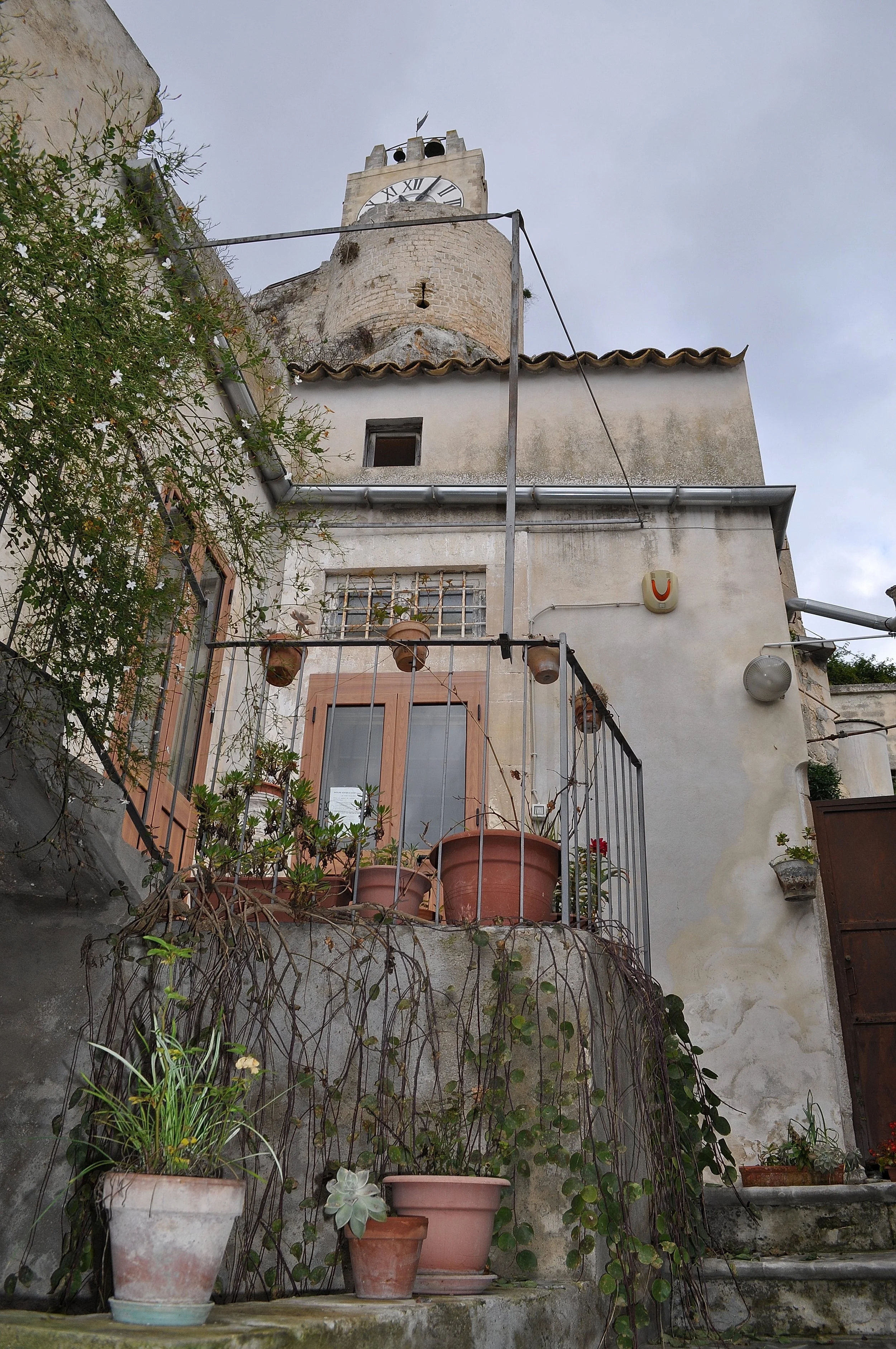
Piero: the Castle of the Counts is perched on top of a rocky spur and, together with the Cathedral, dominates the entire city. It is a medieval castle of which very little remains today, mainly due to the devastating earthquake of 1693. It is still possible to enjoy a pleasant walk along what remains of the ancient walls. Near the castle fortifications stands the Clock Tower, built on the remains of an old watchtower that was also destroyed by the earthquake.


Modica and Quasimodo
Alberto: since we are reaching the end of our walk through the upper part of the city, I want to take you to discover one of the most illustrious figures Modica has ever given birth to: Salvatore Quasimodo.
Piero: Salvatore Quasimodo was born in Modica on 20 August 1901, but his relationship with his hometown was not always straightforward. First of all, once he became famous, the poet preferred to indicate Syracuse as his birthplace, perhaps because of the strong connection between the Arethusean city, Magna Graecia, and the classical culture that was so close to him. Furthermore, at the age of only two, he moved to Roccalumera, near Messina, because of his father’s work as a railway employee. Having spent his childhood there, Quasimodo developed a stronger emotional bond with this town rather than with Modica.
Angela: despite everything, today Modica proudly celebrates the greatness of one of its most illustrious citizens, who was awarded the Nobel Prize in Literature in 1959.
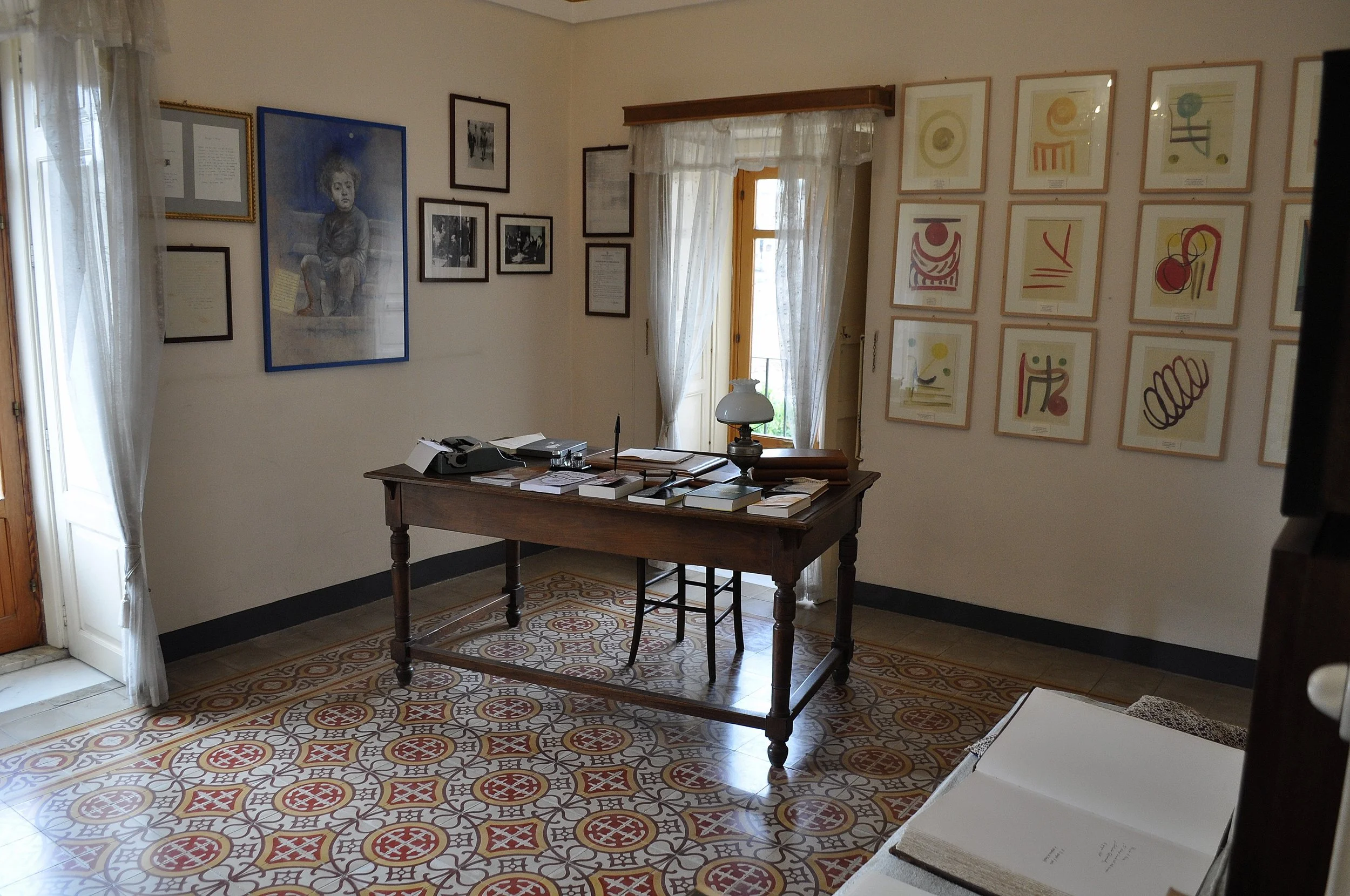
Piero: not far from the castle, still in the upper part of the city, stands the poet’s birthplace. It can be recognized by the commemorative plaque placed outside. Today, the house hosts the museum dedicated to the great writer, and it can be visited with the help of an extraordinary and passionate guide.
In the study and the bedroom, you can see the furniture and personal objects that belonged to Quasimodo, as well as admire a large collection of signed photographs, special editions of his works, and personal memorabilia. The guided visit lasts about half an hour and ends with a video of the Nobel Prize ceremony held in Stockholm, together with a recording of the poet’s own voice reciting some of his works. It is absolutely worth visiting!

Discovering Modica chocolate…
Angela: after completing our tour of the upper part of the city, we return towards Corso Umberto I, the main street of the lower town. Today it is the favourite evening meeting place, both for tourists and locals. Here you can enjoy a drink, taste an arancino, or simply take a walk while eating an ice cream.
Piero: we certainly cannot leave without tasting one of the specialities for which Modica is famous throughout the world: chocolate. The uniqueness of Modica chocolate lies in its cold processing, which keeps the sugar crystals intact. It does not melt completely in your mouth, but rather has a distinctive crumbly texture. The dark chocolate version is superb, but it is also available in many different varieties, such as cinnamon, chilli pepper, or even wine flavours.
Angela: with this delicious surprise, our visit to Modica comes to an end.
Piero: truly a wonderful discovery in the heart of the Sicilian Baroque. Art and culture are scattered among its narrow streets and stairways, offering breathtaking views at every turn. It is definitely worth spending a day in the land of Quasimodo and chocolate.
Alberto: now we have to go back and pick up our van. Our journey continues. Goodbye, Modica!
Piero: wait a moment! It is definitely worth watching our visit again in this video: