The wonder of Ortigia
Alberto: welcome back, guys! How strange to have you here in Sicily at this time of year...
Angela: thank you! We decided to spend a few days in this wonderful land between Christmas and New Year’s Eve. What do you think?
Alberto: I’d say it’s an absolutely perfect choice! If the weather is kind to us, we’ll have plenty of amazing places to see and lots of fun ahead.
Piero: the climate is often mild even at this time of year in Sicily. We probably won’t go swimming or spend our days on the beach, but we’ll visit some truly enchanting places, walking around in temperatures that could even reach 20°C (68°F).
Angela: who says you can only visit Sicily in summer? I think coming here in winter is a wonderful idea, because we can enjoy this amazing region without the tourists that crowd it during the summer months.
Alberto: I can see you’re excited! All that’s left is to pick up your van as soon as you leave the airport and begin our adventure!
Piero: we’d love to spend a few days exploring the southeastern part of Sicily, between the provinces of Ragusa and Syracuse.
Angela: let’s go then! I’m starting the engine…

Here we are in Syracuse!
Alberto: just over 45 minutes from Catania, we reach Syracuse via the motorway, which will be our base for the next three days of exploration.
Angela: we arrive just after lunch. We have just enough time to collect the keys to our apartments, unpack our luggage, and we’re ready for our first outing.
Piero: we park our van, because we won’t need it anymore today. Our destination is Ortigia, the most charming district of Syracuse. It covers just over one square kilometre and is incredibly easy to explore on foot.
Alberto: you really don’t waste a single minute, do you?
Piero: as always! This time, though, we have an extra reason. While it’s true that Sicily is beautiful even in winter, it’s also true that at these latitudes the daylight fades early, with the sun setting at around 5:00 p.m.
Alberto: let the adventure begin!

Ortigia nella storia
Angela: Ortigia is a small island located at the south-eastern tip of Syracuse, now connected to the mainland by two bridges.
Piero: Ortigia has always been the true heart of the city. Archaeological evidence shows that it was already inhabited during the Bronze Age. Thanks above all to its abundant freshwater, the area was considered an ideal place to settle and build a thriving community. Its greatest period of splendour undoubtedly came during the Greek era. In those days, Ortigia was the city's main political and religious centre. The Sacred Way was built here, lined with magnificent temples such as the Artemision and the Athenaion, now incorporated into the present-day Cathedral of Syracuse. Even the name Syracuse is thought to date back to this period, possibly deriving from the ancient Greek word Sirókos, meaning "abundance of water."
Angela: the Palace of the Tyrant, the residence of Syracuse’s ruler, was also built on the island. Historical accounts describe it as an impressive complex, especially during the reign of Dionysius I. He even ordered the entire population of Ortigia to leave the island, replacing them with his court, friends, and mercenaries. The same ruler also surrounded Ortigia with its own independent fortifications. Plato wrote about the palace's extraordinary wealth and beauty, describing vast gardens and a series of increasingly restricted areas protected by massive walls. At its very centre stood a small island, separated from the rest of the palace by a canal crossed by a drawbridge, which only Dionysius himself could raise or lower, ensuring complete security. Sadly, the palace was later completely destroyed, and today no trace of it remains.
Piero: Ortigia is still home to the city's two historic harbours—the Great Harbour and the Small Harbour—which have always played a crucial role in the island’s development and were at the centre of many of Syracuse’s greatest battles.
Angela: Ortigia was the last district of Syracuse to fall into the hands of Rome during the war against Carthage. Throughout the siege, its harbour proved essential because it was through here that Carthage, allied with Syracuse, supplied the city with reinforcements and provisions. Thanks to the support of the Carthaginian fleet and the brilliant war machines designed by Archimedes, the Syracusans resisted the Roman army for a long time, forcing it to remain outside the city's mighty walls. After the Festival of Artemis, however, taking advantage of the exhausted defenders and the betrayal of a citizen who secretly opened the gates, the Romans finally entered the city and conquered it district by district.
Piero: here’s an interesting fact: Archimedes was accidentally killed by a Roman soldier. The Roman commander, Marcus Claudius Marcellus, was deeply shocked by the death of the famous mathematician, and according to tradition, he even wept over both Archimedes and the fate of the magnificent city his army had just conquered. A few years later, at the beginning of the 2nd century BC, Marcellus ordered that no one should settle in Ortigia, probably because he feared that its strategic position could make it the perfect place for a future rebellion against Roman rule.
Angela: despite the conquest, Syracuse remained one of the most important cities of Roman Sicily, becoming the seat of the island’s Roman governors, who were probably housed in a rebuilt version of the ancient Palace of the Tyrants.
Piero: together with Syracuse, Ortigia followed all the major events of Sicilian history after the fall of the Roman Empire. One of its most significant periods came under Spanish rule. Architects commissioned by the rulers of Castile and Aragon transformed the island with magnificent Baroque architecture, creating a unique blend of Sicilian and Spanish art. Together with nearby Noto, Ortigia became one of the greatest symbols of Sicilian Baroque.
Angela: you're forgetting one final and very important detail, one that connects Ortigia to another place you hold very dear.
Piero: exactly! Ortigia has a remarkably strong connection with the Greek island of Delos. In ancient times, both islands were known as Ortigia. Delos later adopted its current name because of the myth surrounding the birth of Apollo, the god of the Sun, and Artemis, the goddess of the hunt. Many ancient poets celebrated the bond between the two Ortigias, highlighting their similarities and describing our Ortigia as the worthy sister of the famous island in the Cyclades.
Angela: just like the Greek island, its name is believed to derive from the abundance of quails, known as Ortighes by the ancient Greeks. However, no one knows which of the two islands first received this name—a small mystery that makes this extraordinary place even more fascinating.
Walking around the island
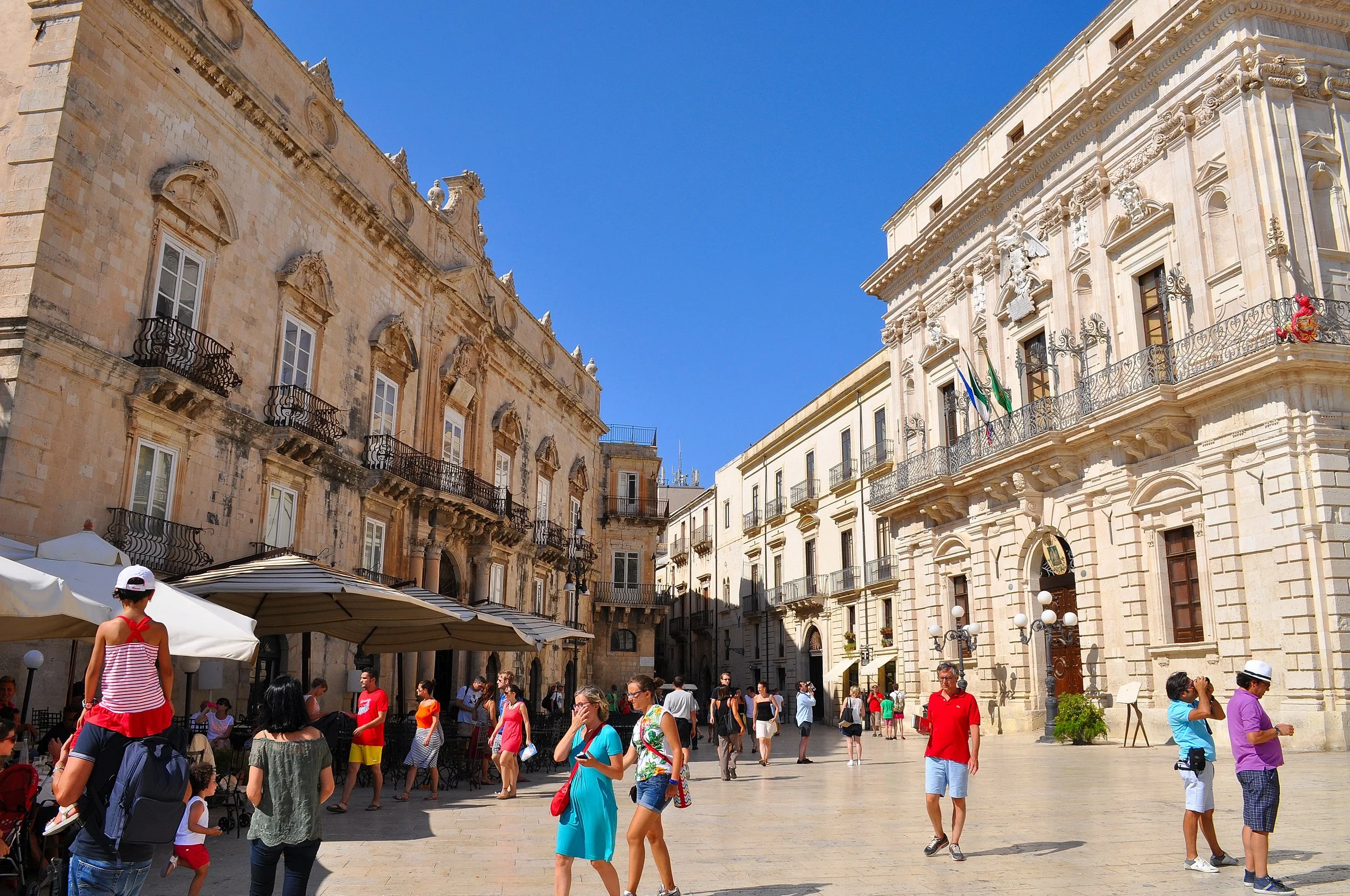
Alberto: everything you've told us is enough to make anyone fall in love with this enchanting place. Ortigia is truly unique, where all the different cultures and souls of the Mediterranean blend together in perfect harmony. You'll discover an endless succession of palaces, courtyards, and churches, followed by ancient temples, castles, and fountains, creating a magnificent mosaic that perfectly captures the very essence of Sicily. Its glowing white limestone, shining under the sun, is already a breathtaking sight, but experiencing Ortigia during the magical Christmas season makes it even more charming.

Angela: we reach Ortigia by crossing the Umbertino Bridge, which connects the island to the mainland.

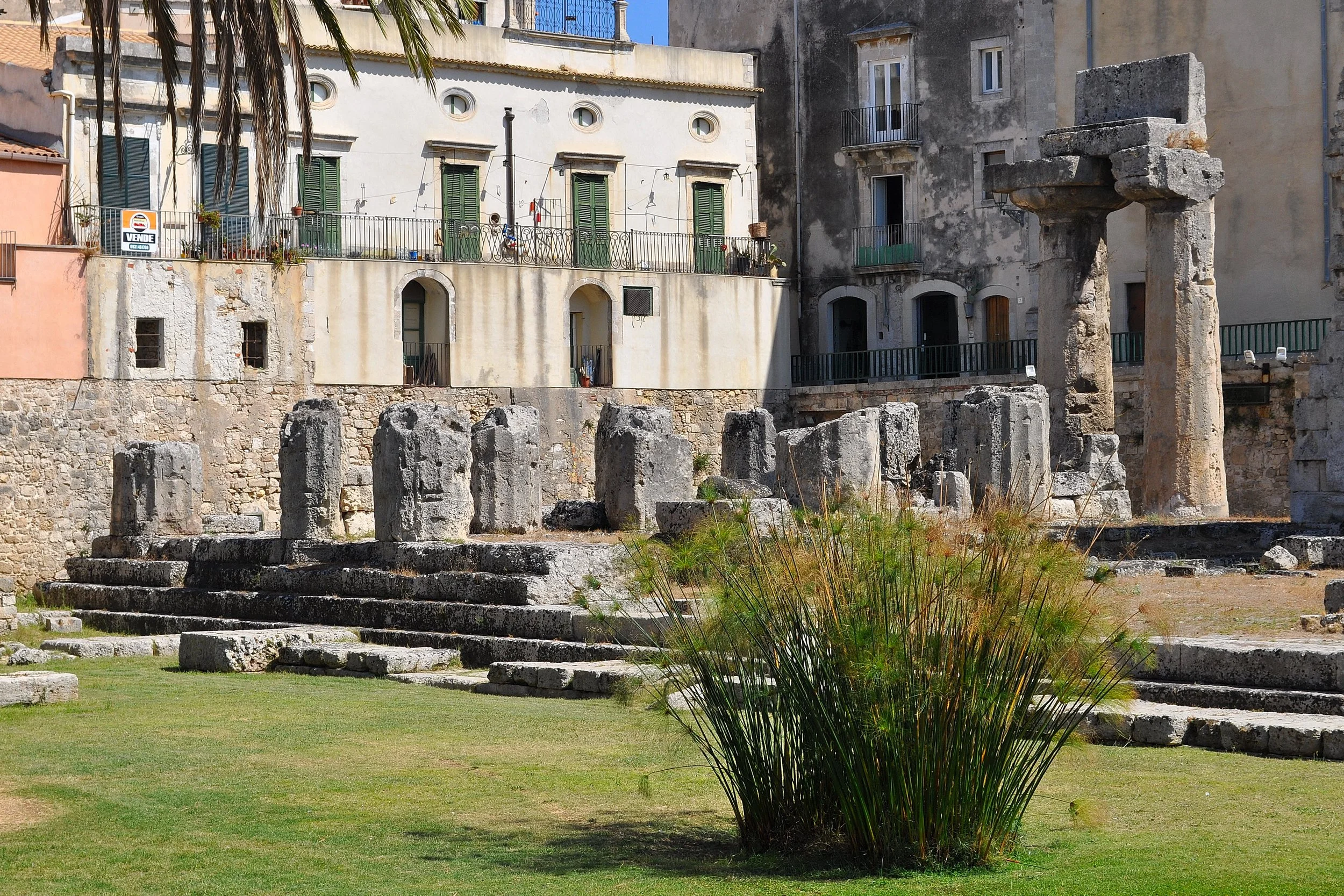
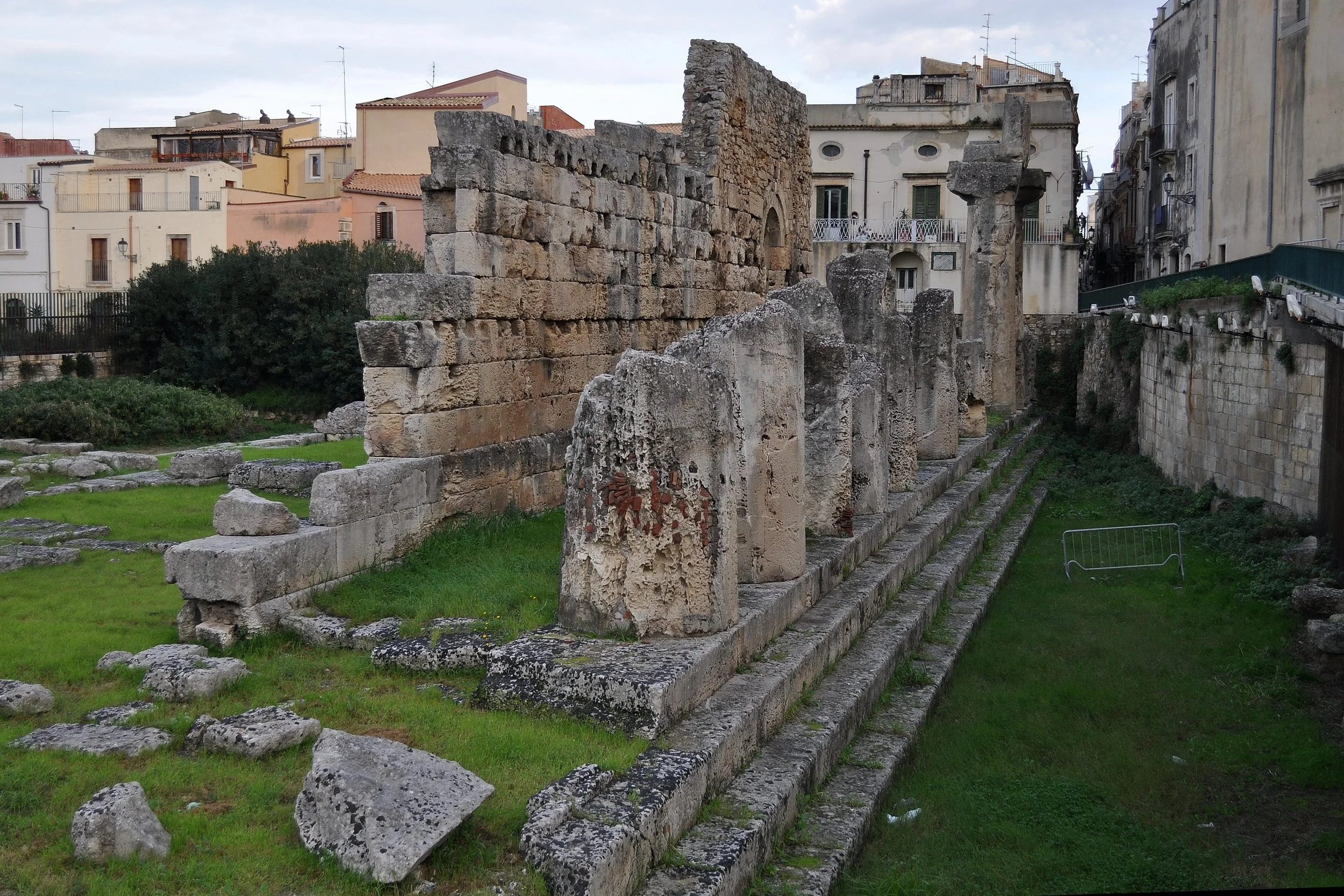
Piero: after crossing the bridge, you immediately arrive at the site of the Temple of Apollo, where only a few impressive columns remain today. This is the first great symbol of the Greek period and another testament to Ortigia’s strong connection with Delos, through the worship of Apollo, the god of the Sun. Construction began as early as the 6th century BC, and over the centuries the temple underwent many transformations, serving at different times as both a church and a mosque. Although only a small part of it survives today, it is still enough to reveal its ancient grandeur.



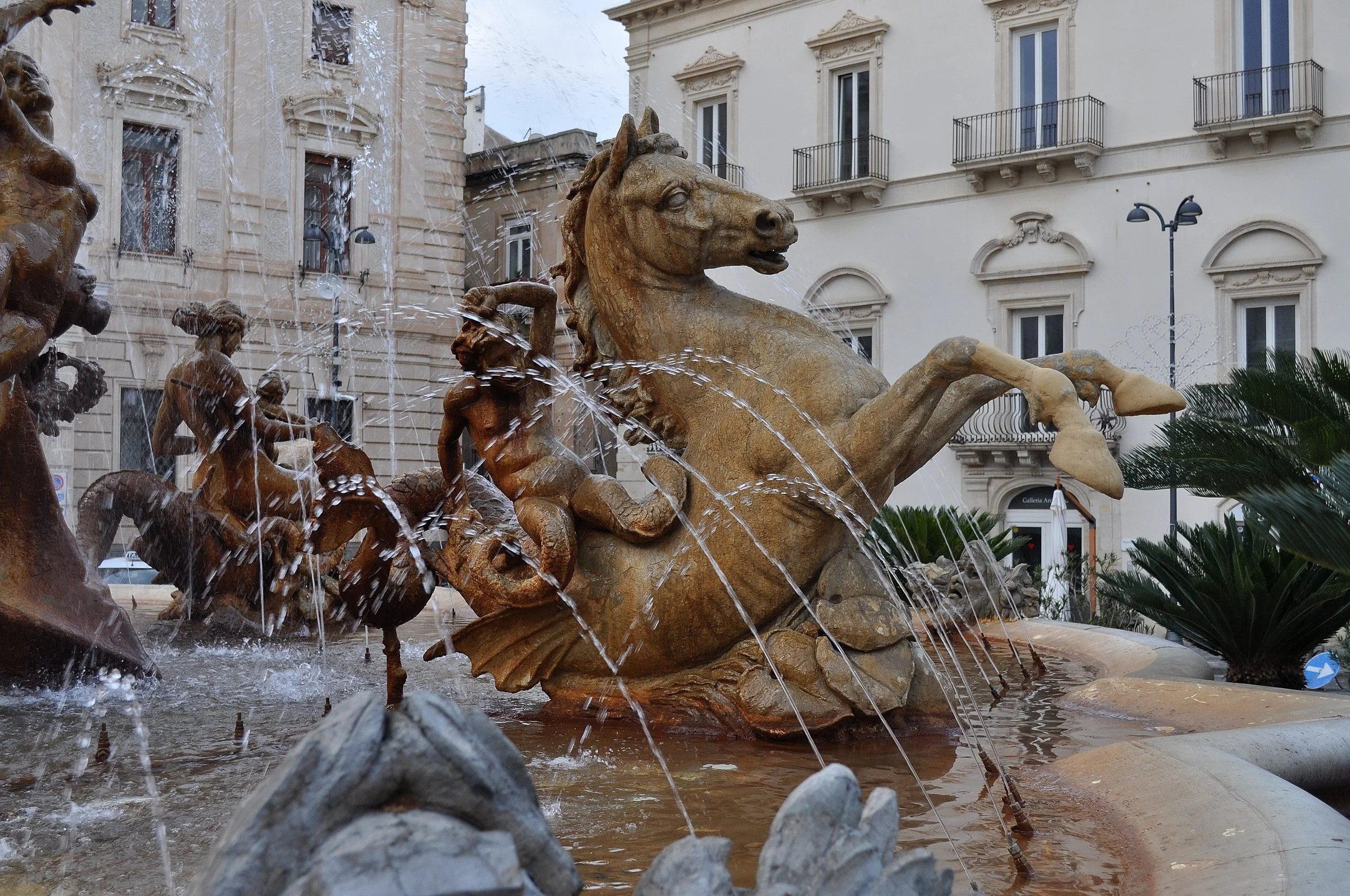
Angela: our walk continues towards Piazza Archimede, named after the great mathematician from Syracuse. The square is surrounded by beautiful historic palaces, but its true highlight is the magnificent Fountain of Artemis standing proudly at its centre.
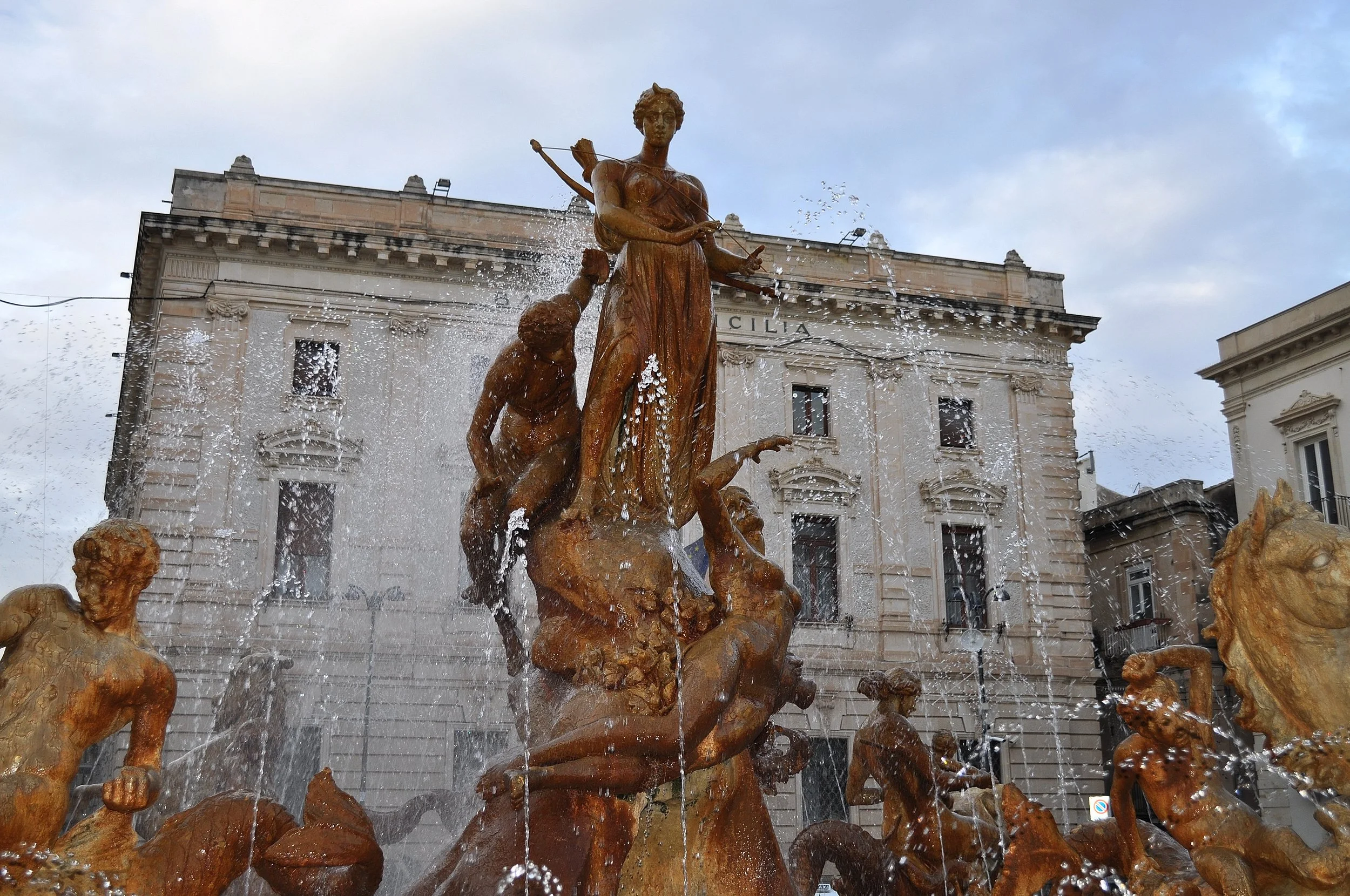
Piero: the Fountain of Artemis depicts the goddess of the hunt and recalls the famous myth of Alpheus and Arethusa. According to the legend, the river god Alpheus fell in love with Arethusa, the favourite among the nymphs of Artemis, the patron goddess of Syracuse. Since Arethusa did not return his love, she called upon Artemis for help. The goddess wrapped her in a cloud to hide her and transformed her into a spring. I won’t say anything more for now, because we’ll soon come across that very spring ourselves.

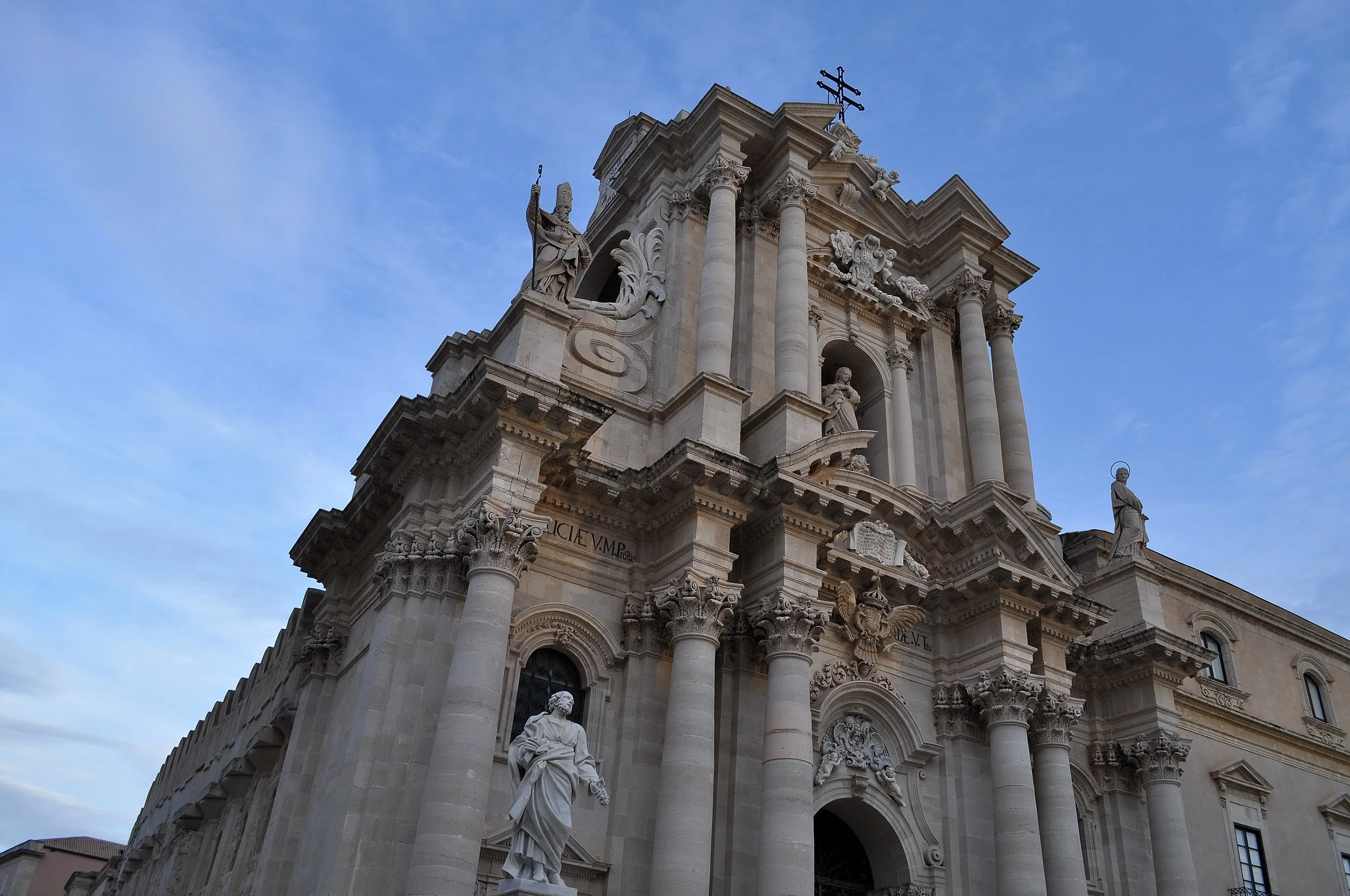
Angela: we are now approaching the heart of the island and perhaps the most beautiful part of our walk: Piazza Duomo. It is one of the greatest symbols of Syracuse, because it represents both the city’s ancient splendour and its more recent rebirth, with its magnificent new Baroque appearance. The square has a beautiful curved shape and is truly breathtaking, thanks also to the extraordinary play of light and shadows that creates unforgettable views. We reach it from Via Roma, and almost without realizing it, we are suddenly amazed by the majesty of the Cathedral of Syracuse.

Piero: what is now the Cathedral of Syracuse was originally a temple dedicated to Athena, dating back to the 5th century BC. Its transformation into a Christian basilica gave it the appearance we see today, with its magnificent Baroque façade, while still preserving many traces of its ancient past. In fact, one of the things that makes the Cathedral so extraordinary is the presence of the original columns of the Greek temple, which have survived 2,500 years of history, invasions, and even the devastating earthquake of 1693. It is still astonishing to find, within the same building, traces of Byzantine, Arab, Norman, and Spanish cultures. All these civilizations continued to make this place a sacred site, until it became the first Christian church in Europe.


Alberto: it’s a shame we didn’t manage to visit the Church of Santa Lucia, the patron saint of Syracuse, which houses a masterpiece by Caravaggio depicting the Burial of Saint Lucy. Another place not to be missed is the Artemision, the ancient Greek temple dedicated to Artemis, located beneath Palazzo Vermexio, the current seat of the City Hall.


Angela: we leave the square now and head towards the sea, where another great symbol of Ortigia and of all Syracuse awaits us: the Arethusa Spring.
Piero: it is a freshwater pool where lush papyrus plants grow. To explain the presence of fresh water just a few steps from the sea, the ancient Greeks turned to the very myth of the nymph Arethusa that I told you about earlier. Inside the spring, papyrus grows naturally, making it one of the very few papyrus groves in Europe.


Angela: from the spring, with its wonderful garden, it is possible to admire the breathtaking spectacle of the sunset. As the sun goes down, the face of Ortigia begins to turn pink, then orange, until it reaches a deep red, making the entire atmosphere even more fascinating.

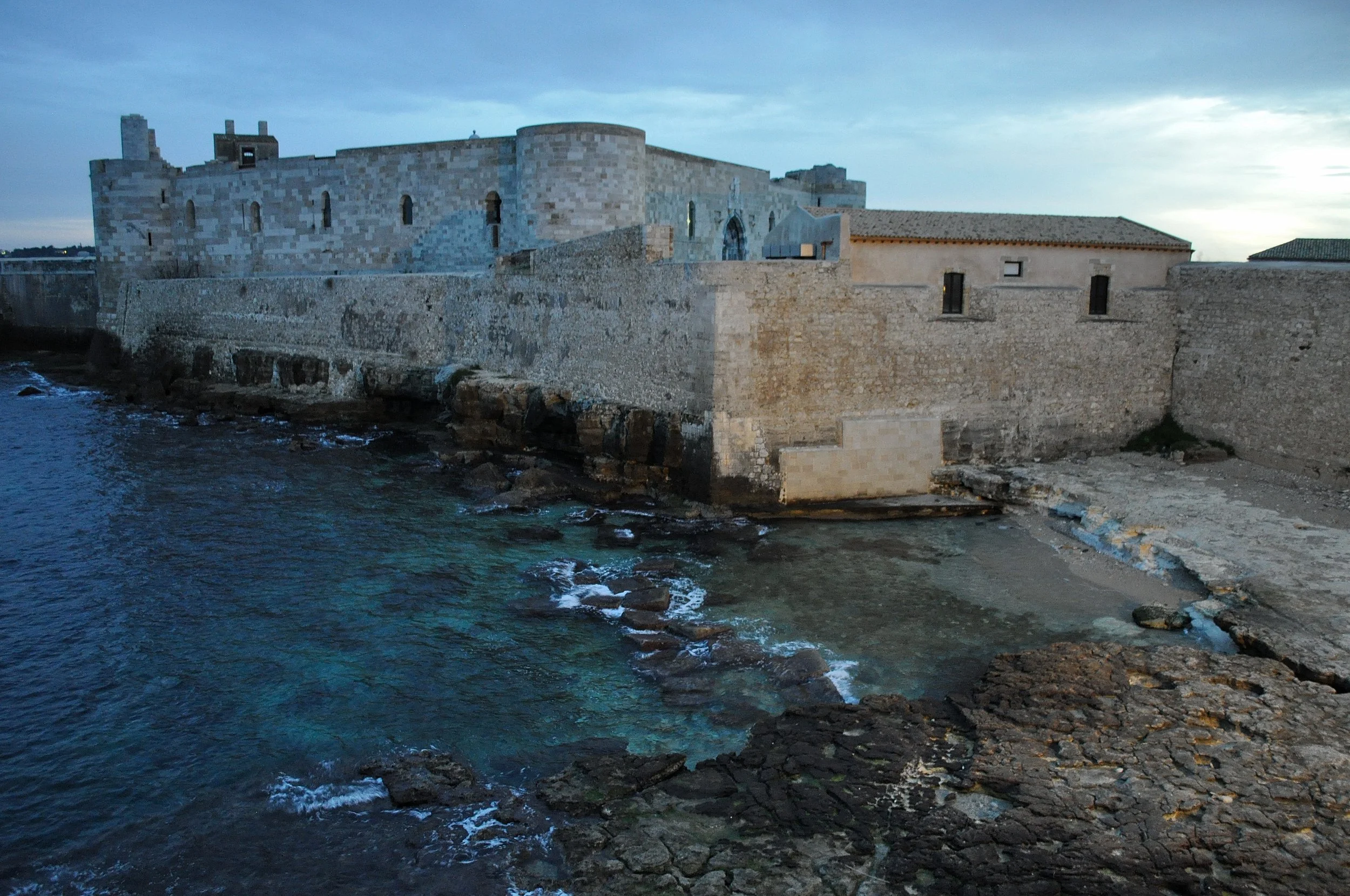
Alberto: in this wonderful setting, we enjoy a pleasant walk along the seafront that leads from the Arethusa Spring to Maniace Castle.

Piero: the castle is an important testimony to the medieval history of Ortigia and takes its name from the Byzantine general George Maniakes. Unfortunately, during our visit, the interior of the castle was closed (it is only open in the morning). We therefore limited ourselves to walking along the pathway around the castle, which offered us more breathtaking views of the sea and of the island of Ortigia.



Going back home…


Angela: what can we say… we have discovered yet another Sicilian gem! Ortigia is a wonderful example of what we love most: exploration, history, culture, and breathtaking views!
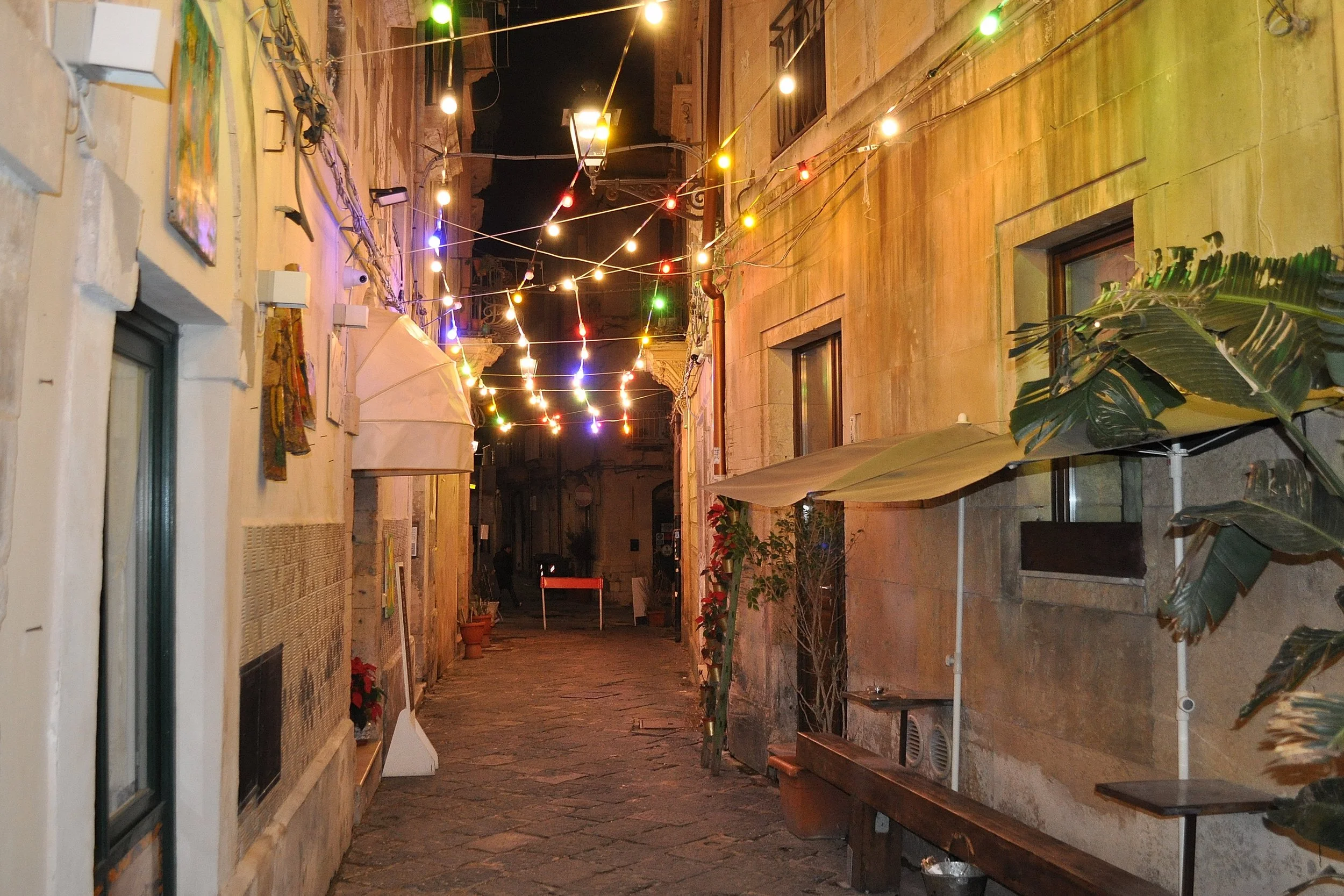
Alberto: before heading back, it is definitely worth taking a walk through the narrow streets of the island. It is yet another way to discover its charm. Believe me, every time I come back here, I discover something new!
Piero: and perhaps we can stop for dinner in one of the many charming restaurants to taste some delicious local specialities.
Alberto: great idea! Let’s refresh ourselves and get some rest, because our exploration of Syracuse continues…
Angela: in the meantime, enjoy the wonder of everything we have seen in this video!