
Siena: the medieval heart of Tuscany
Discover Siena, one of Italy’s most beautiful medieval cities. Walk with us through Piazza del Campo, the Duomo, the Piccolomini Library, Palazzo Pubblico and the stunning frescoes of the Hall of the Nine. We explore the history, legends, art and traditions of this Tuscan gem, from the famous Palio to hidden corners that make Siena an unforgettable destination.
Piero: we've started the van one last time. After the towers of San Gimignano, the perfectly preserved walls of Monteriggioni, and the Etruscan charm of Volterra, our Christmas and New Year's road trip through the villages of Tuscany comes to an end in one of Italy's most captivating cities: Siena.
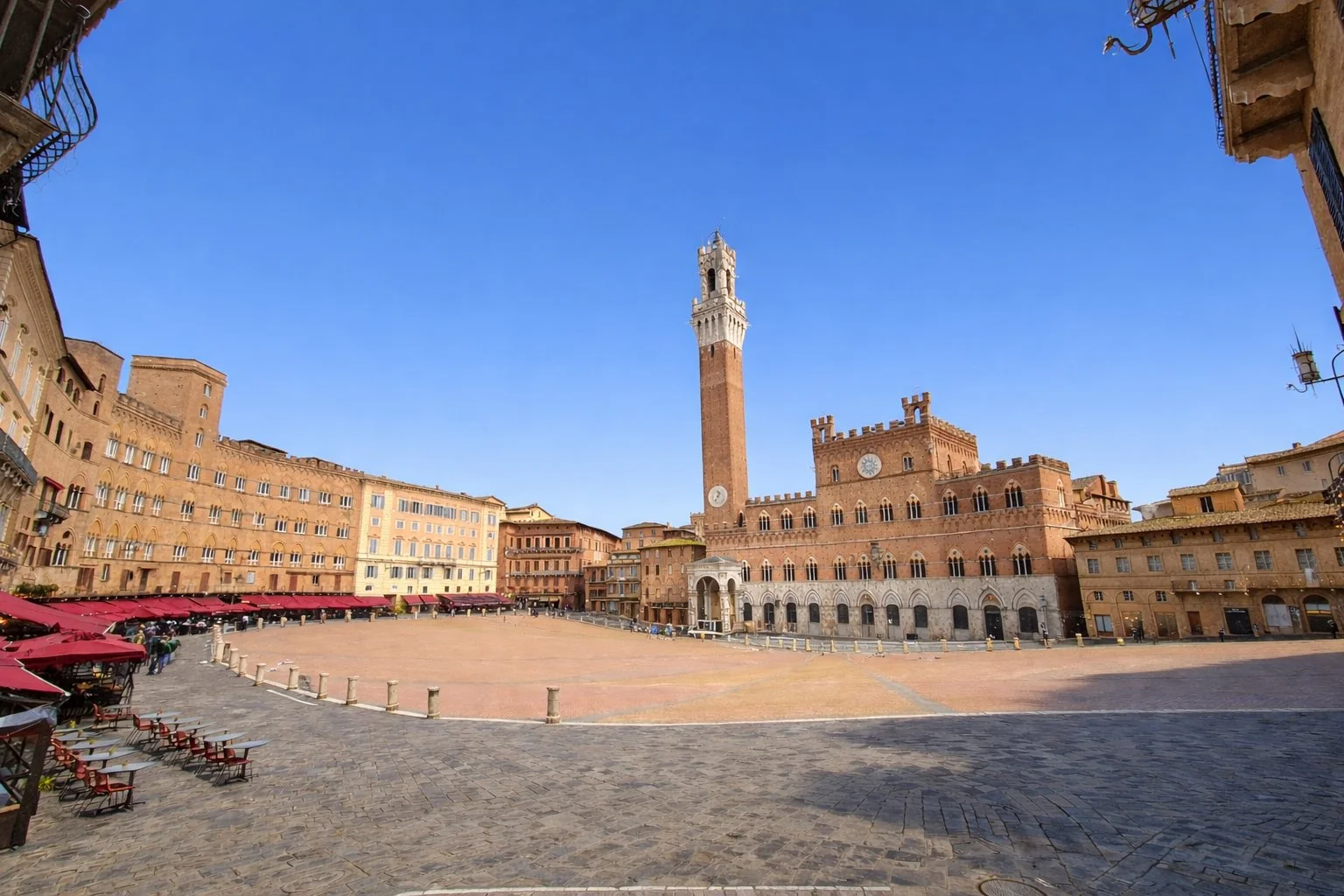
Angela: we arrive in the early afternoon, as the winter light sets the red bricks of the medieval walls aglow and the surrounding hills are painted in golden shades. Siena suddenly appears before us, perched on its three hills, with the unmistakable skyline of its medieval towers and the majestic dome of Siena Cathedral rising above the rooftops.
Piero: entering the city feels like stepping back in time. Here, the Middle Ages are more than just an atmosphere—they are the very fabric of the city itself. Narrow streets, winding alleys climbing up and down the hills, brick arches, ancient palaces, and hidden corners that seem to have come straight out of a 14th-century fresco.
Angela: arriving by van isn't exactly easy. We booked an apartment inside the medieval walls, just beyond Porta Romana, but the city's restricted traffic zone (ZTL) severely limits vehicle access. Which means one thing: parking isn't exactly nearby... and you'll need to drag your luggage up and down the steep streets.
Piero: a small effort that's well worth expecting. We decided to leave our van in the free car park just below the Medici Fortress. It's a convenient solution—and completely free—but be prepared for a pleasant walk before reaching Siena's historic centre.
Angela: once you pass through the city walls, though, everything changes. Siena feels suspended in time: narrow lanes, red brick everywhere, medieval views around every corner, and a unique atmosphere that tells centuries of history.
Piero: and as we wander through these ancient streets, with the scent of traditional Sienese pastries drifting from the bakeries and the colourful Palio district flags fluttering between the buildings, we can't help feeling that these next two days are going to be truly special.
Angela: Siena has a charm all its own: an elegant, captivating, deeply medieval city where every street tells a story of merchants, pilgrims, artists, and the fierce rivalries between the contrade. Come and discover it with us!
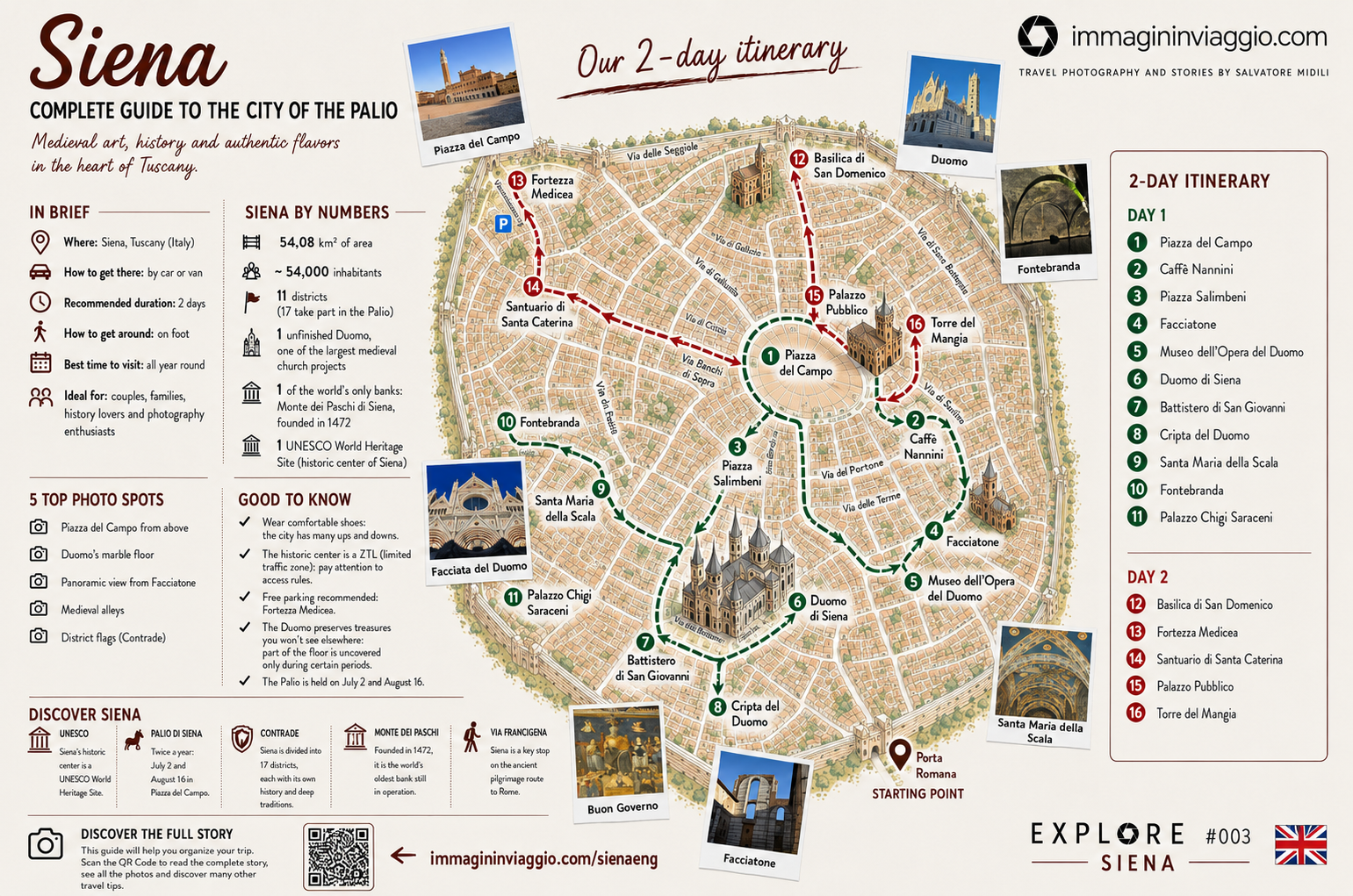
The Thousand-Year History of Siena
Piero: to truly understand Siena, we first need to travel far back in time.
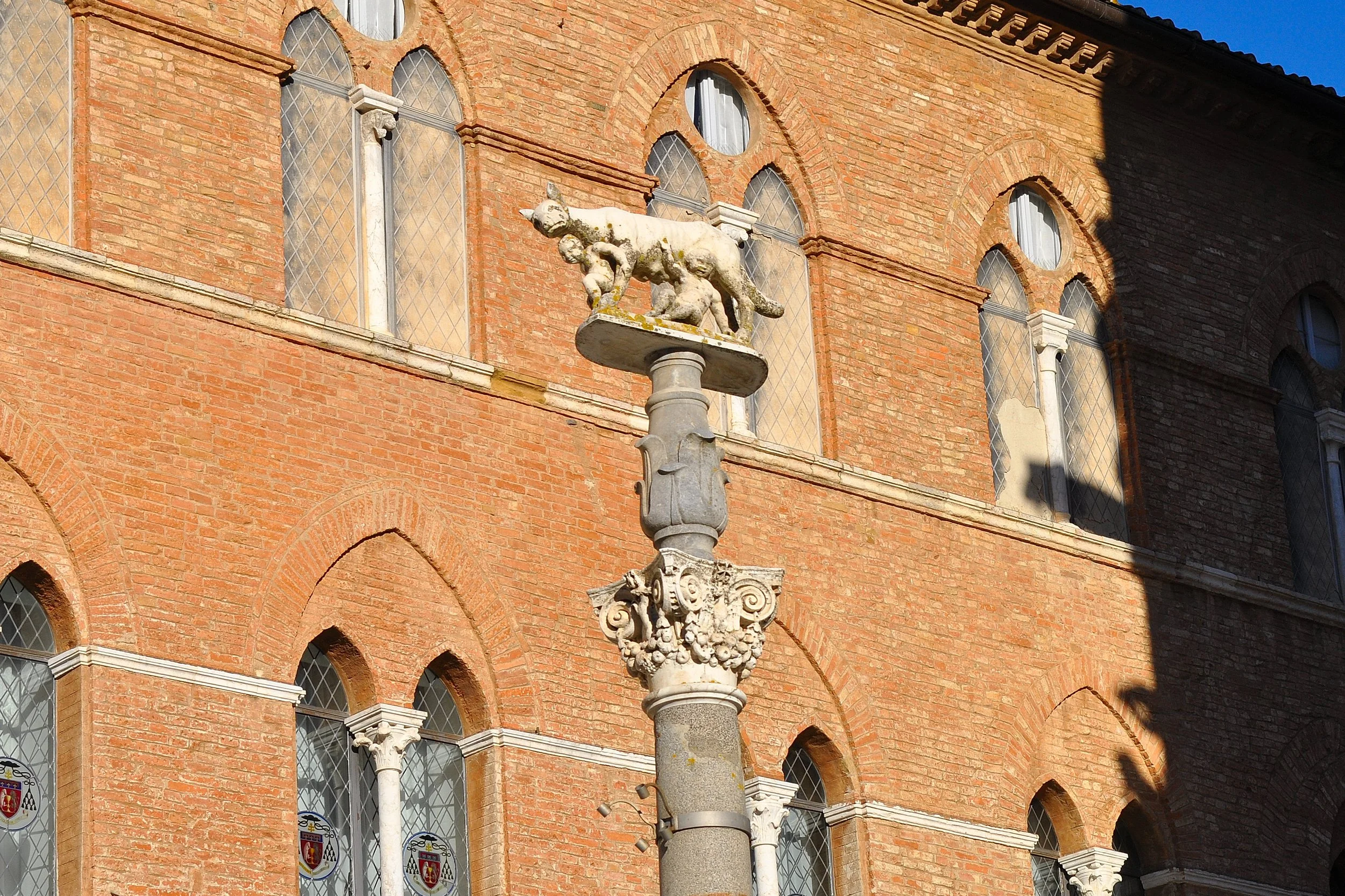
Angela: according to legend, the city was founded by Senius and Aschius, the sons of Remus, the brother of Romulus. After their father's death, they supposedly fled Rome, bringing with them the statue of the Capitoline Wolf, a symbol that still appears throughout the city today.
Piero: it's a fascinating legend and one that the people of Siena cherish. In reality, the city's origins are most likely Etruscan, while the later Roman settlement, known as Saena Iulia, remained relatively small and of little importance.
Angela: Siena's real growth began during the Middle Ages. Thanks to its strategic location along the Via Francigena, the great pilgrimage route connecting Northern Europe with Rome, the city became a vital centre for trade and travellers.
Piero: between the 12th and 14th centuries, Siena enjoyed its golden age. It became a powerful independent republic, the historic rival of Florence, and accumulated extraordinary wealth through commerce and, above all, banking.
Angela: it was here that one of Europe's greatest financial traditions was born. In 1472, the Monte dei Paschi di Siena was founded, and it is still considered the world's oldest bank in continuous operation.
Piero: the city's greatest splendour came during the 13th and 14th centuries. It was in this period that many of Siena's iconic landmarks were built, including the Cathedral, the Palazzo Pubblico, and the magnificent Piazza del Campo.
Angela: but everything changed suddenly. In 1348, the devastating Black Death struck Siena with catastrophic consequences. It is estimated that the city lost more than half of its population.
Piero: the plague abruptly halted many ambitious projects, including the grand expansion of Siena Cathedral, which was intended to become the largest cathedral in all of Christendom.
Angela: in the centuries that followed, Siena fiercely defended its independence until 1555, when, after a long war against Florence, it fell under Medici rule and became part of the Grand Duchy of Tuscany.
Piero: ironically, it was this very decline that preserved Siena's medieval appearance. Unlike many other Italian cities, it escaped major urban redevelopment and has reached us almost perfectly intact.
Angela: today, Siena's historic centre is a UNESCO World Heritage Site and one of the finest and best-preserved medieval city centres in all of Europe.
First day in Siena: from Piazza del Campo to the Cathedral
Piero: our tour can only begin in the heart of the city: Piazza del Campo. This is where you truly feel the soul of Siena. The square has its unmistakable shell-shaped design, while its brick pavement is divided into nine sections by elegant lines of travertine, a direct tribute to the Government of the Nine, the oligarchy that ruled Siena from the late 13th century to the mid-14th century, during the city's golden age as an independent republic.
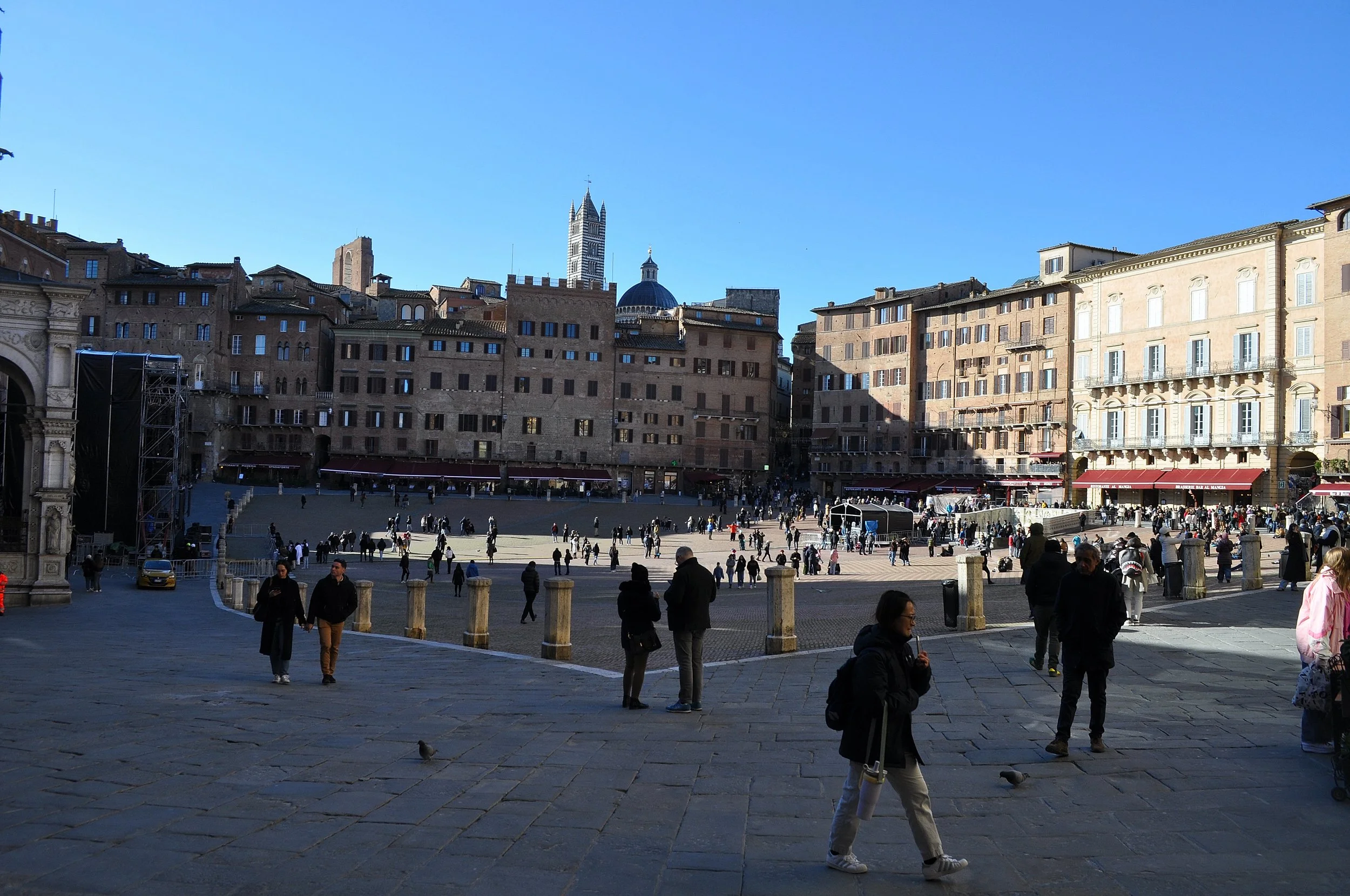
Angela: this shape is far more than an aesthetic choice. Every detail was carefully designed to create the perfect civic space. The square slopes gently towards the Palazzo Pubblico, the symbol of Siena's civic power, as if the entire city naturally converged on the seat of government. The buildings surrounding the square, all built of red brick and kept to a remarkably uniform height, create an extraordinary sense of architectural harmony.
Piero: at the centre of the square stands the famous Fonte Gaia (Fountain of Joy). The fountain you see today is a 20th-century replica of the original masterpiece created by Jacopo della Quercia in the early 15th century.
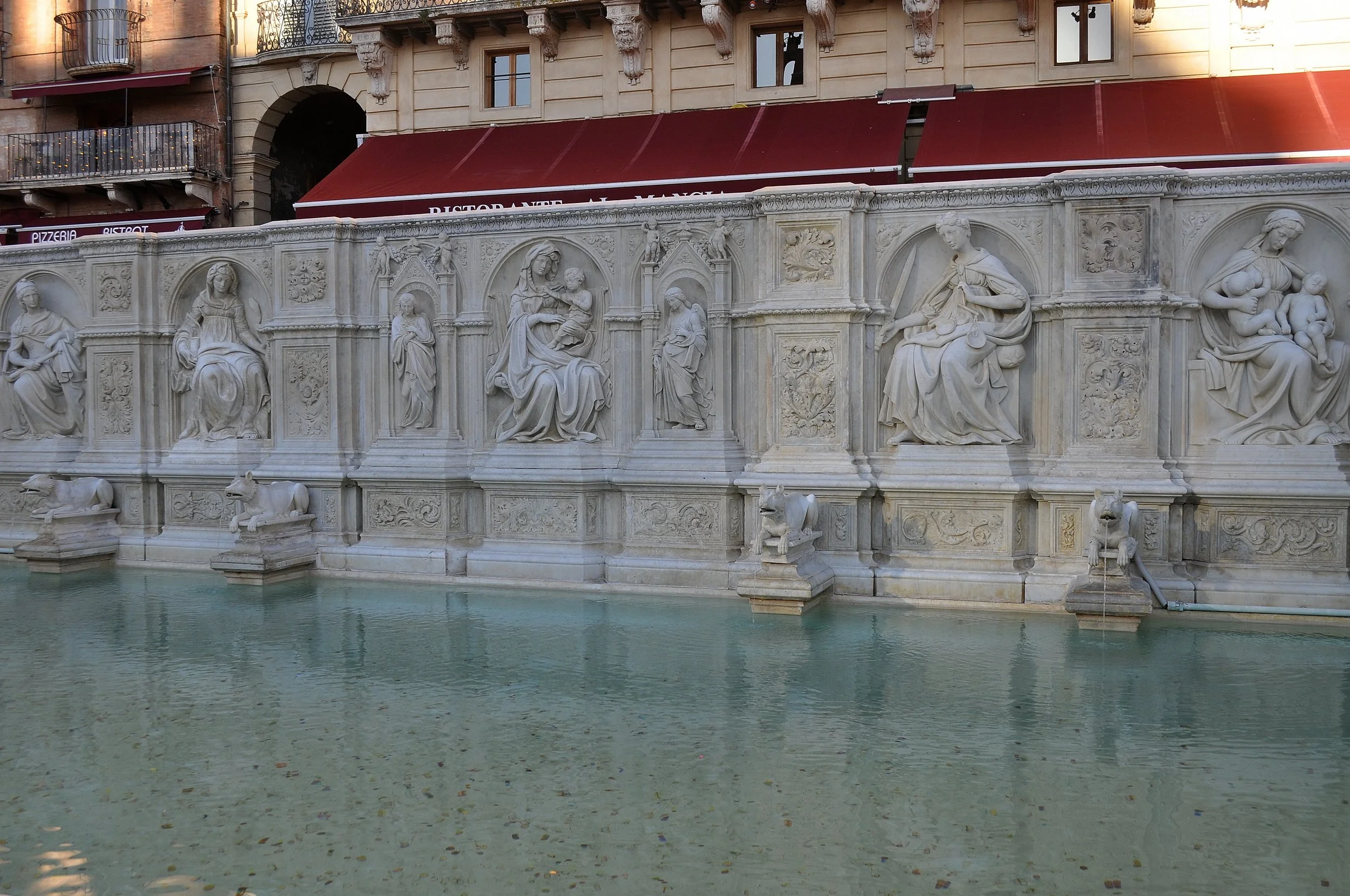
Angela: the original fountain is preserved inside the Santa Maria della Scala museum complex. Its sculptures depict Biblical and allegorical scenes, as well as the figures of Rhea Silvia and Acca Larentia, both closely linked to the legendary founding of Rome.
Piero: but Piazza del Campo is much more than a masterpiece of medieval urban planning. It is also the stage for one of Italy's most spectacular and deeply cherished traditions: the Palio di Siena.
Angela: twice a year, on 2 July and 16 August, the square is completely transformed. The brick pavement is covered with a thick layer of tuff, creating a racetrack that follows the entire perimeter of the piazza. In just a few days, the heart of the city becomes a true medieval racecourse.
Piero: these are not just ordinary horses racing. They are the horses of the contrade, the seventeen historic districts into which Siena is divided. Each contrada has its own symbol, colours, territory, and a remarkably close-knit community that proudly preserves its identity.
Angela: during the Palio, however, only ten contrade compete. Seven qualify automatically, while the remaining three are drawn by lot from those that did not take part in the previous race. Each horse is ridden bareback by a jockey in a breathtaking race of three laps around the square.
Piero: the race lasts just over ninety seconds, but the tension is extraordinary. The corners are incredibly tight—especially the famous San Martino bend—and it is not unusual for jockeys to fall during the race. Curiously, a riderless horse can still win, provided it crosses the finish line first.
Angela: but the Palio is much more than the race itself. It is a tradition rooted in the Middle Ages, involving the entire city for several days. Before the race, a magnificent historical procession fills the streets with hundreds of participants dressed in medieval costume: drummers, flag throwers, knights, and representatives of every contrada.
Piero: every detail is rich in symbolism. The Drappellone, or Palio, is a unique banner painted each year by a different artist and serves as the true prize of the race. It is not awarded to the horse or the jockey—it belongs to the winning contrada.
Angela: for the people of Siena, this is a matter of profound identity. Belonging to a contrada is almost like inheriting a family legacy. People are born, grow up, and live within their district, taking part in celebrations, communal dinners, and every important moment in neighbourhood life.
Piero: when the race is over, the victorious contrada carries the Palio to its own church, where celebrations begin and often continue for days. It is a moment of overwhelming joy, while the defeated rival districts are already looking ahead to the chance for redemption the following year.
Angela: and that is exactly what makes Piazza del Campo far more than a magnificent square. Here, medieval history is not simply preserved in the buildings or the bricks—it is still alive, renewed every year with the same passion that has inspired the people of Siena for centuries.
Piero: we leave the square behind and head along Via di Città, one of the most elegant and historic streets in Siena's old town.
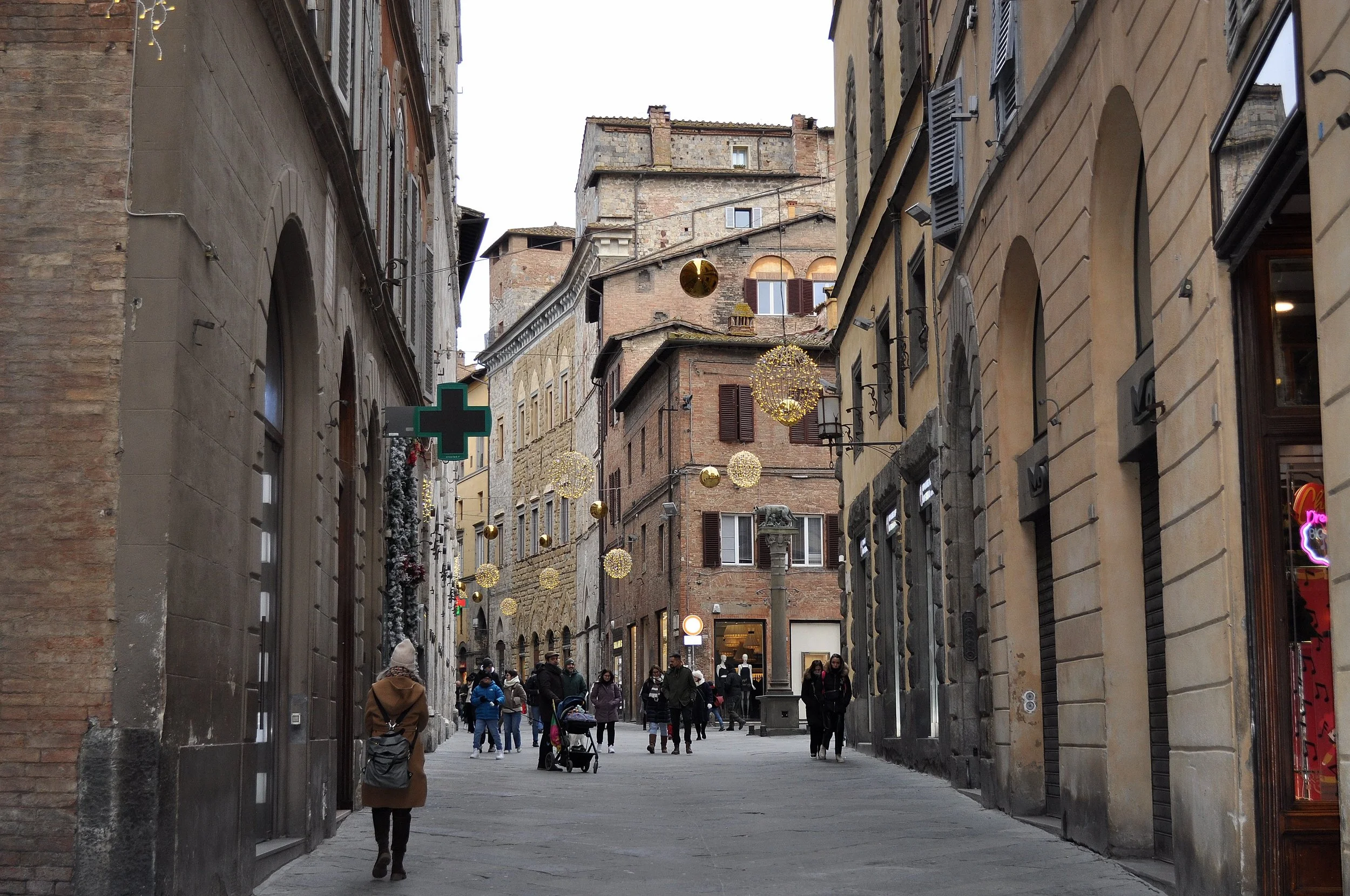
Angela: along this street you'll find a succession of medieval palaces, historic shops, and picturesque corners that reflect the wealth and prestige of medieval Siena, once one of Europe's great commercial centres.
Piero: but before continuing our walk, we make one essential stop: breakfast at the historic Caffè Nannini.
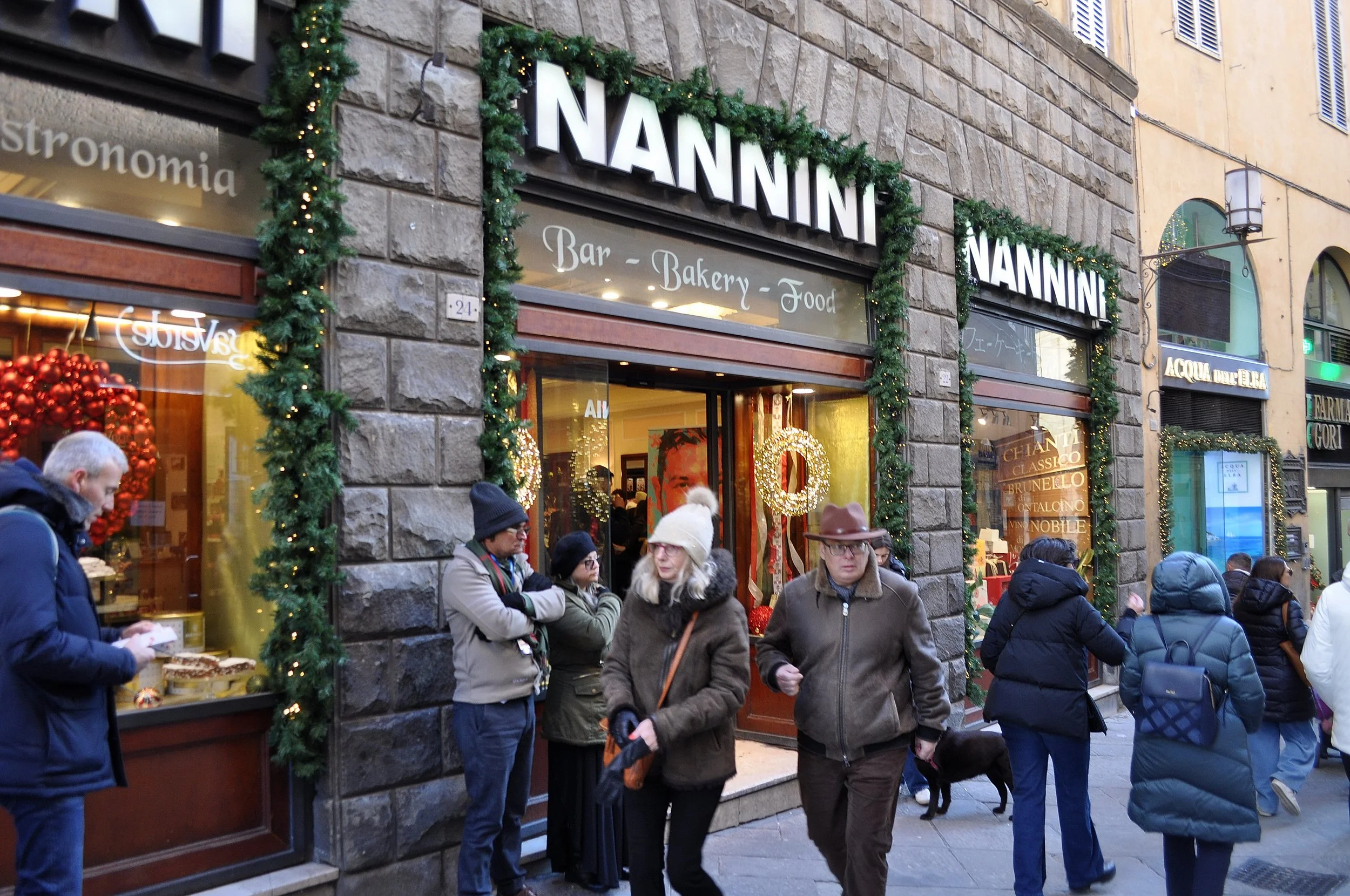
Angela: this café is famous throughout Italy. It is closely linked to the family of singer Gianna Nannini and former Formula One driver Alessandro Nannini.
Piero: surrounded by ricciarelli, panforte, and cavallucci, Siena's traditional pastries are simply irresistible.
Angela: continuing our walk, we arrive at Piazza Salimbeni, one of the most elegant squares in the city.
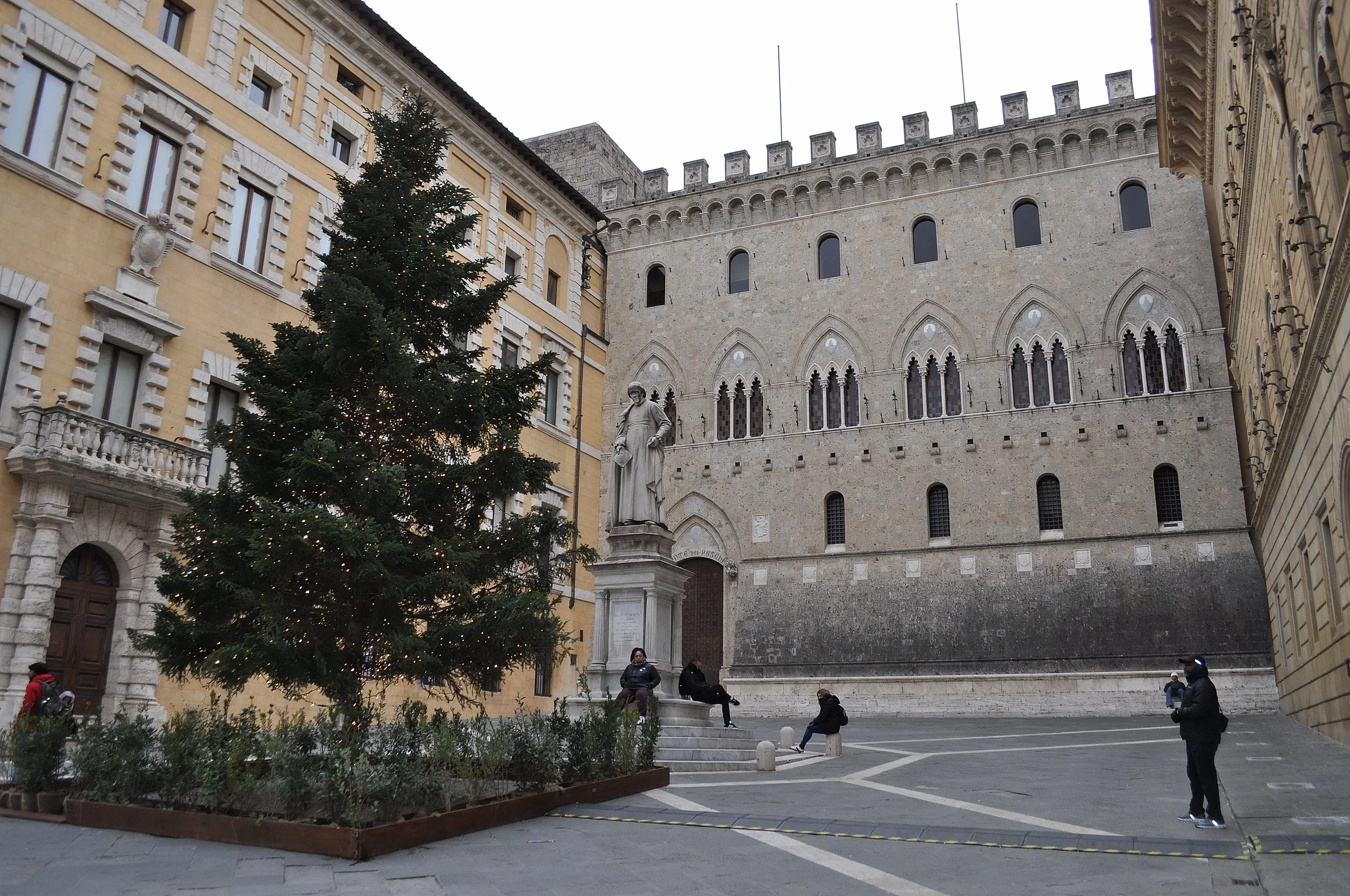
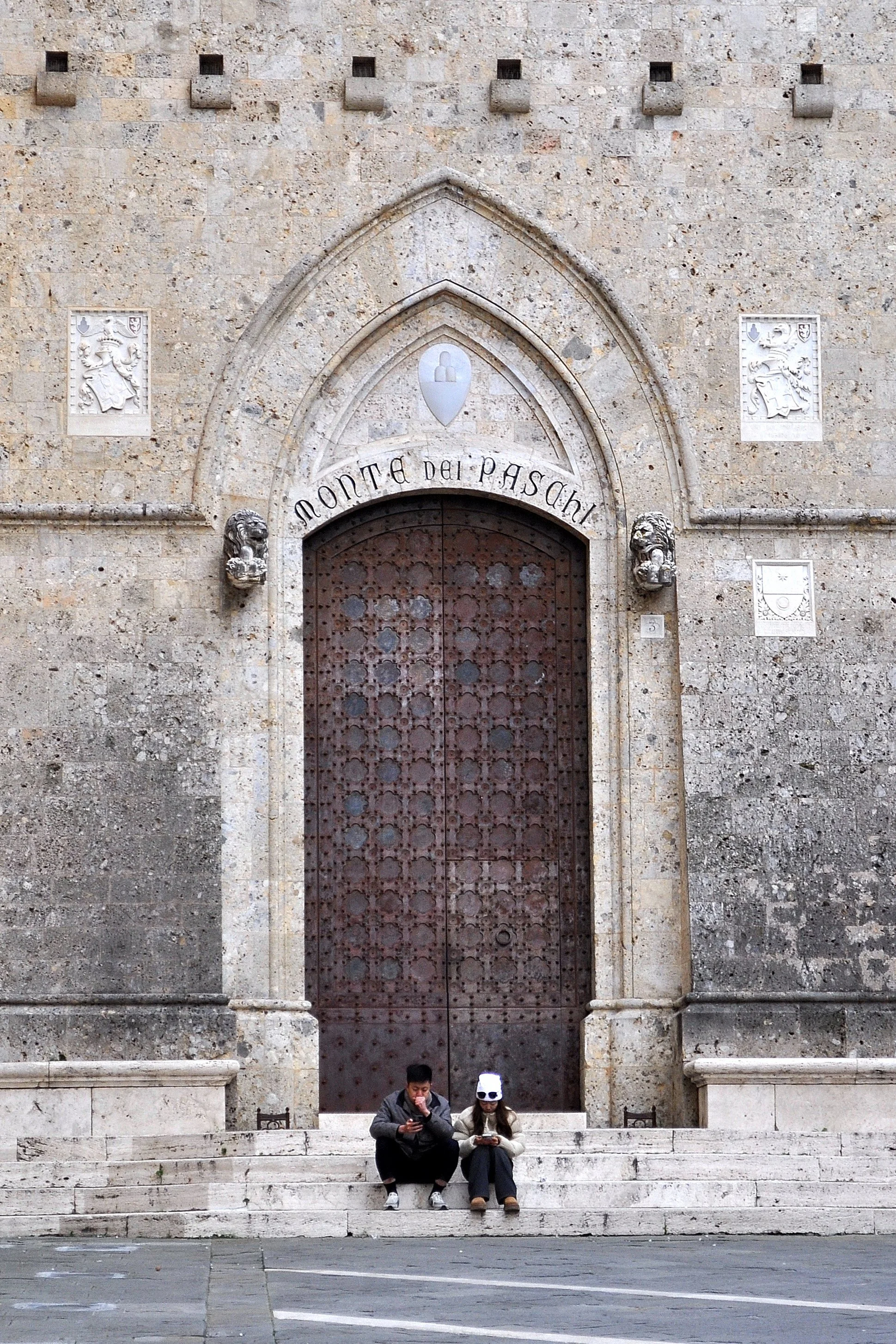
Piero: this is the headquarters of Monte dei Paschi di Siena, founded in 1472 and widely regarded as the world's oldest bank still in continuous operation.
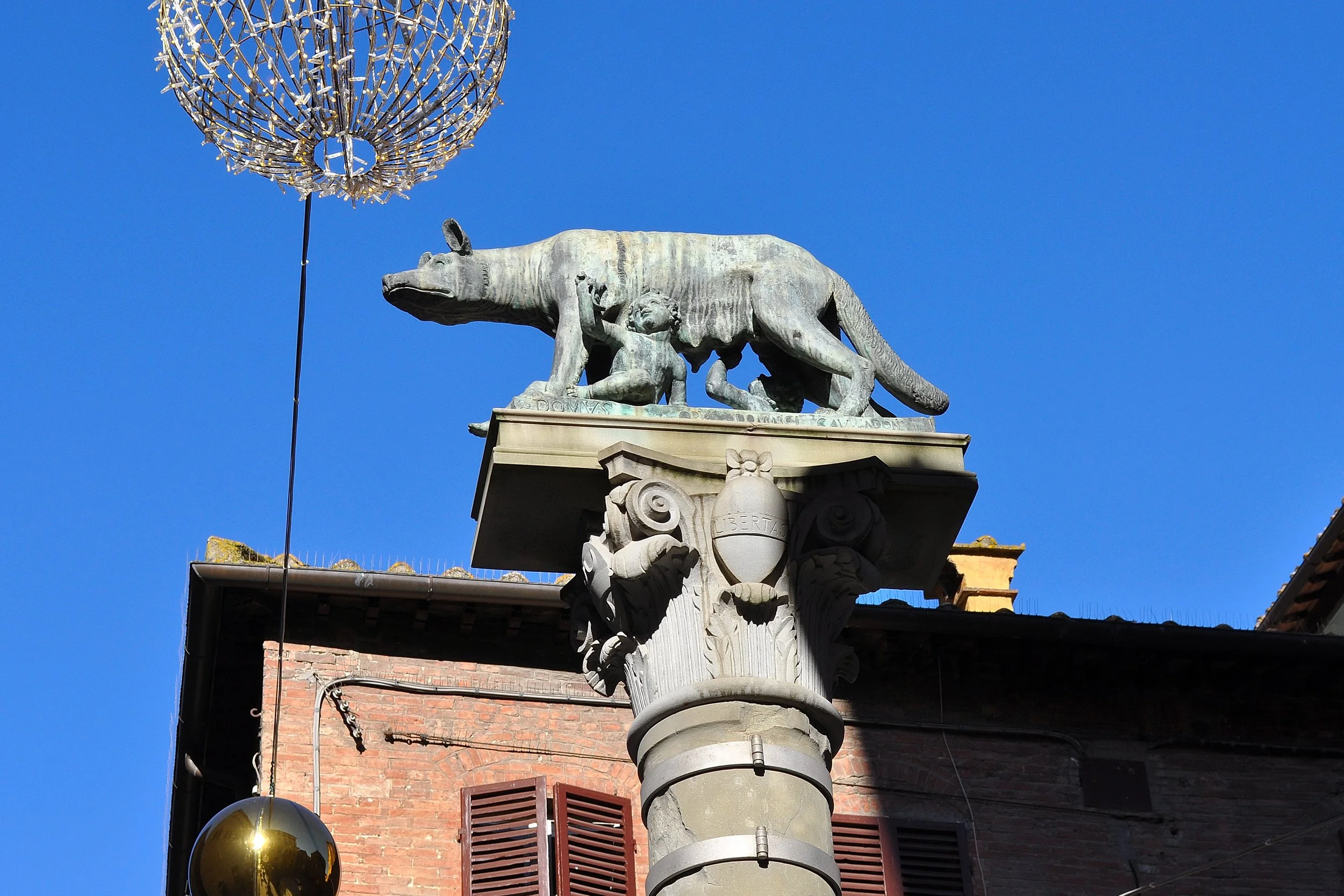
Angela: throughout the buildings surrounding the square, you'll often notice the Capitoline Wolf, Siena's iconic symbol and a reminder of the city's legendary connection to the founding of Rome.
Piero: at this point, we make our way towards one of the most exciting experiences in the city: the climb to the Facciatone.
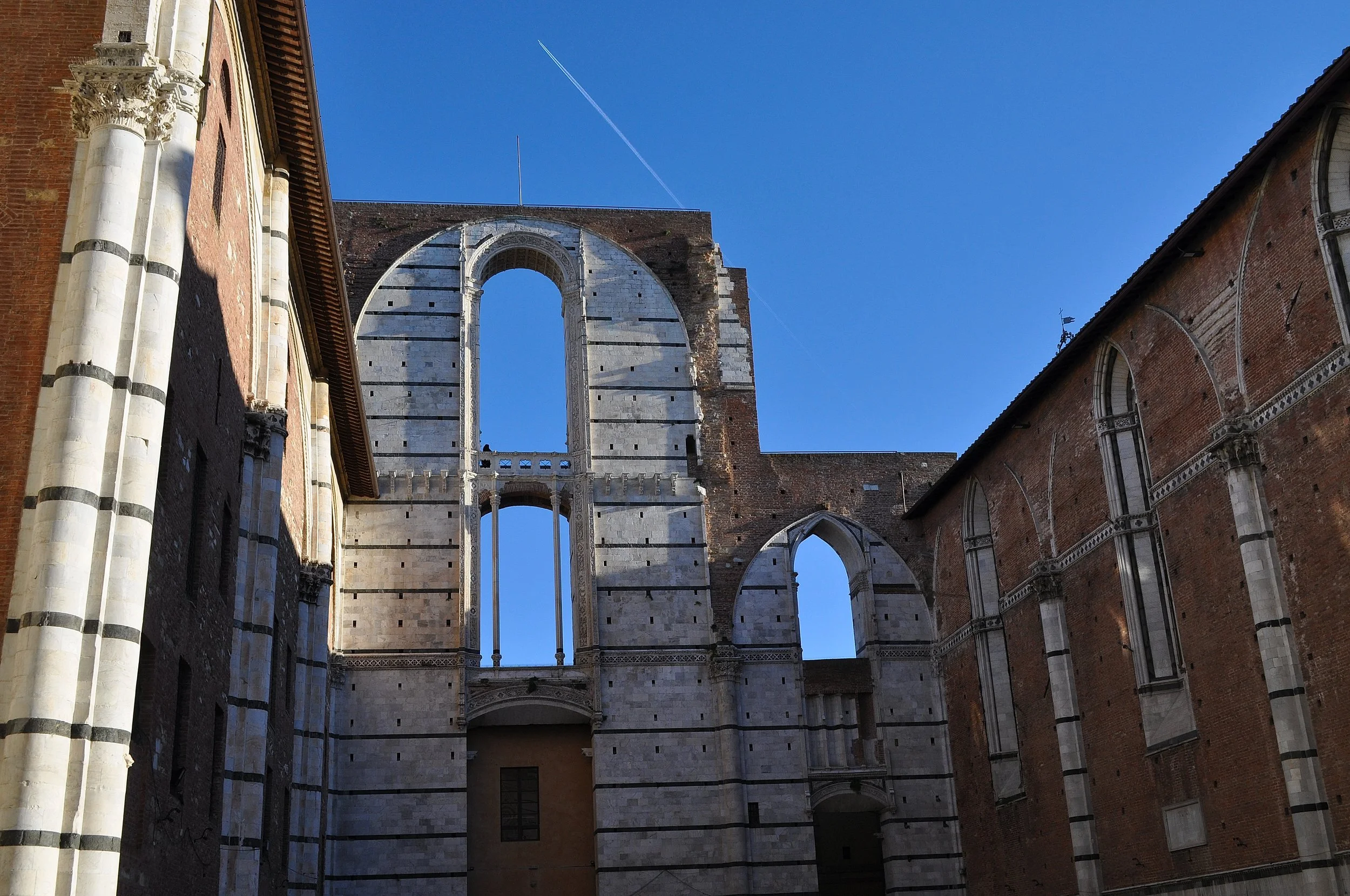
Angela: this enormous structure is what remains of the 14th-century project to expand Siena Cathedral.
Piero: the ambition was extraordinary: to transform the existing cathedral into the transept of a gigantic new church that would become the largest in all of Christendom.
Angela: but the Black Death of 1348, as we mentioned, brought the project to a halt, probably together with some structural design issues that emerged during construction.
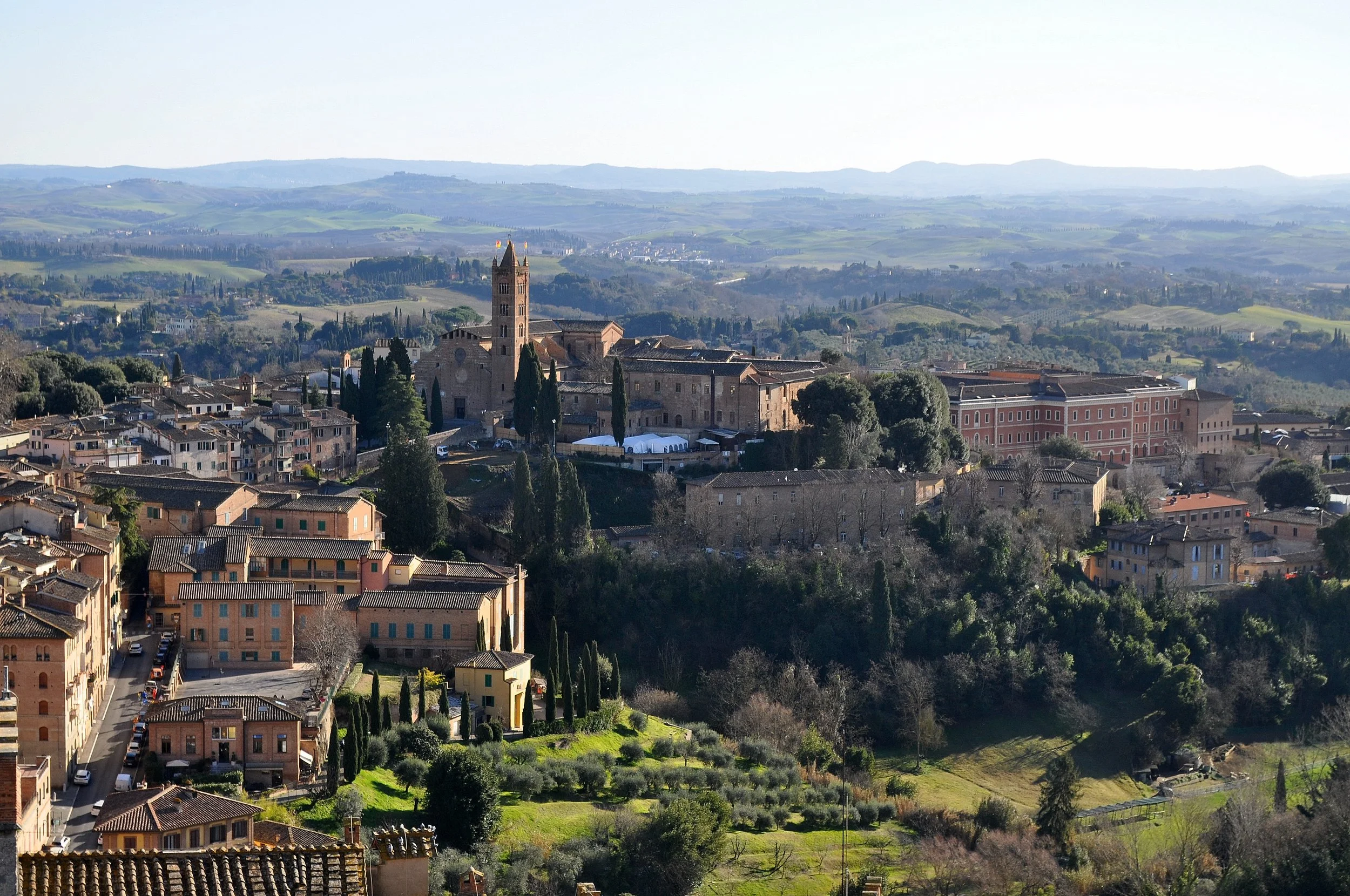
Piero: today, visitors can climb along the narrow walkways to the very top. From here, the view is simply breathtaking: red rooftops, medieval towers, and the rolling hills of the Sienese countryside stretching into the distance.
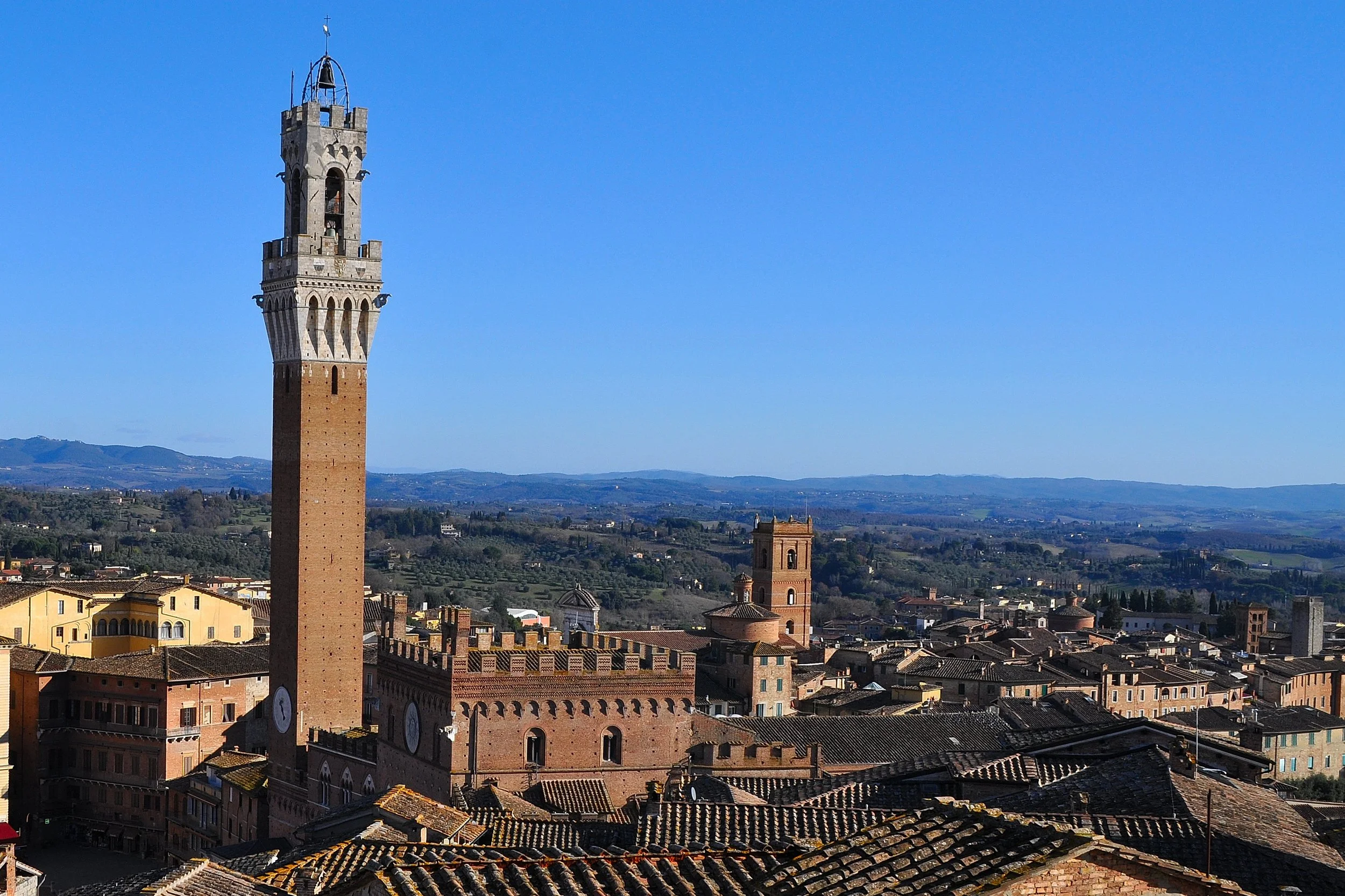
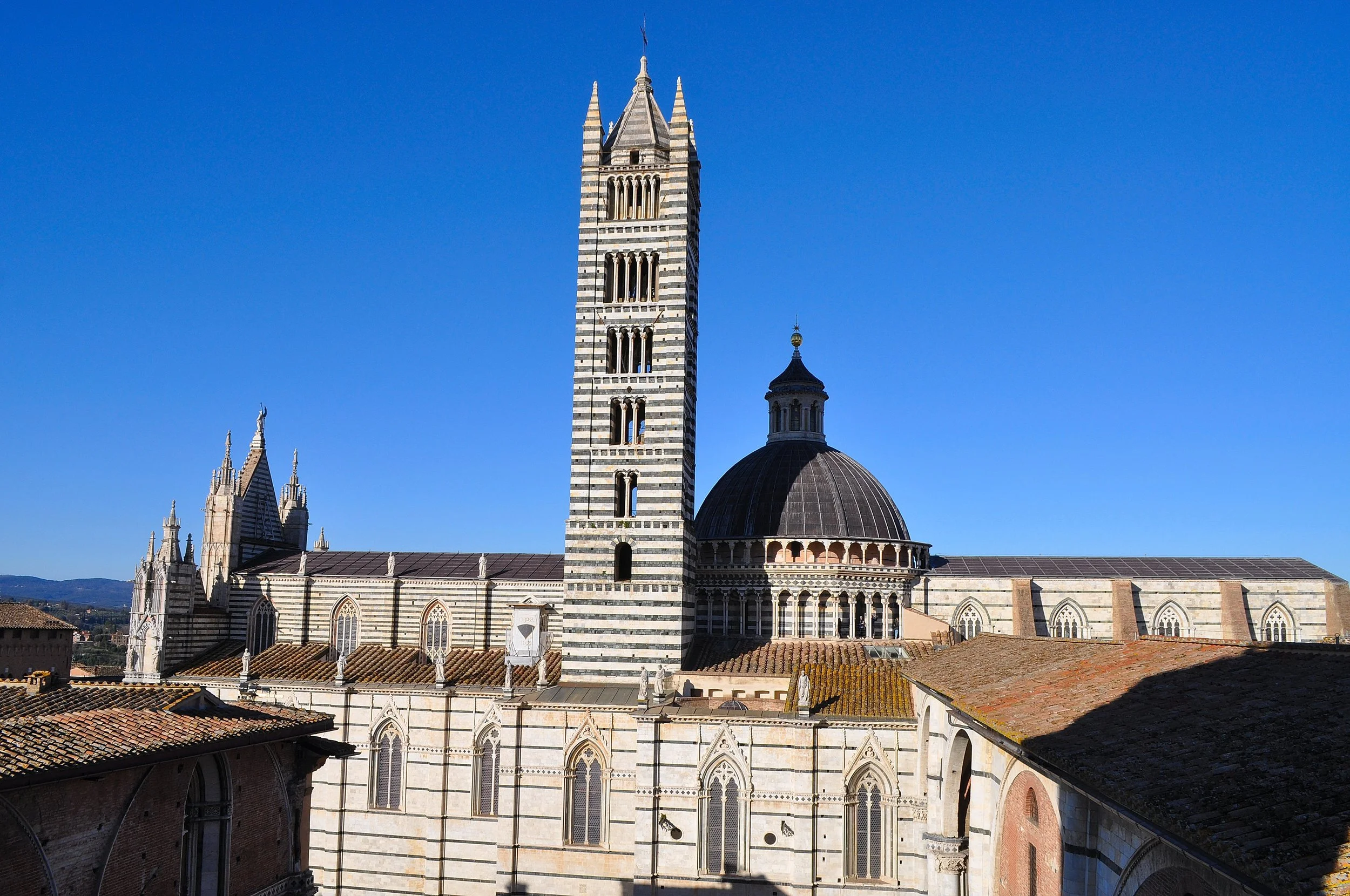
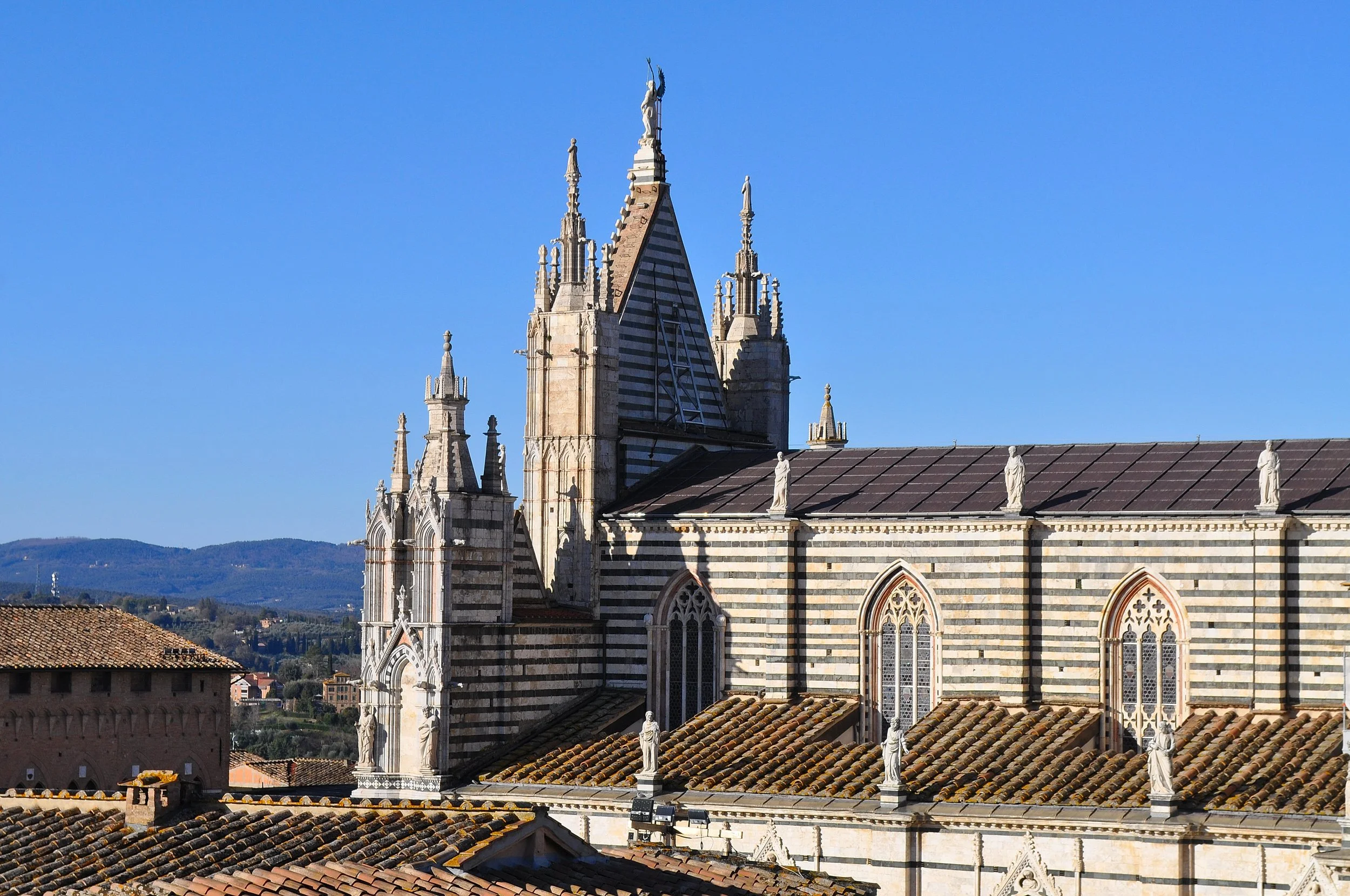
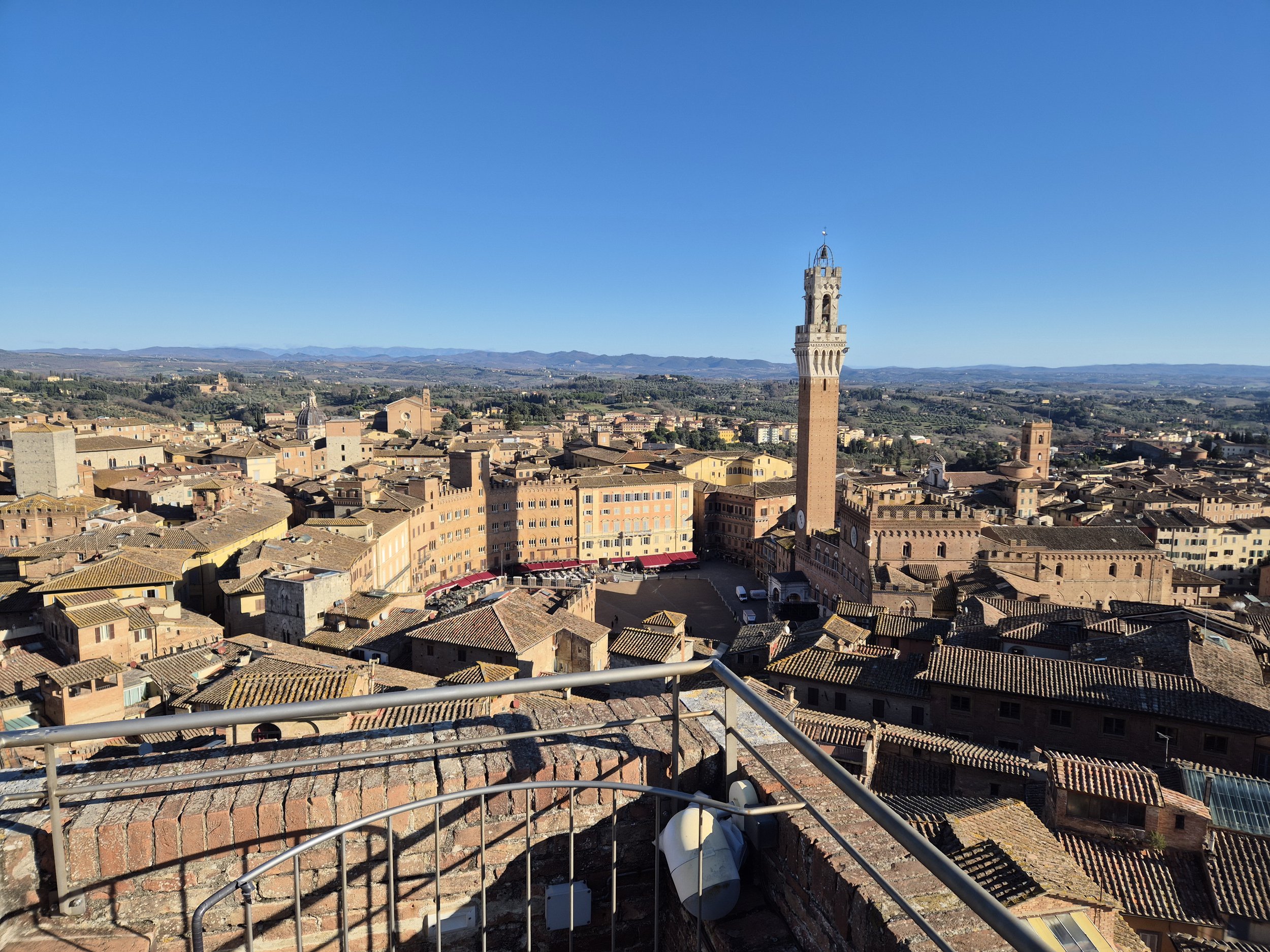
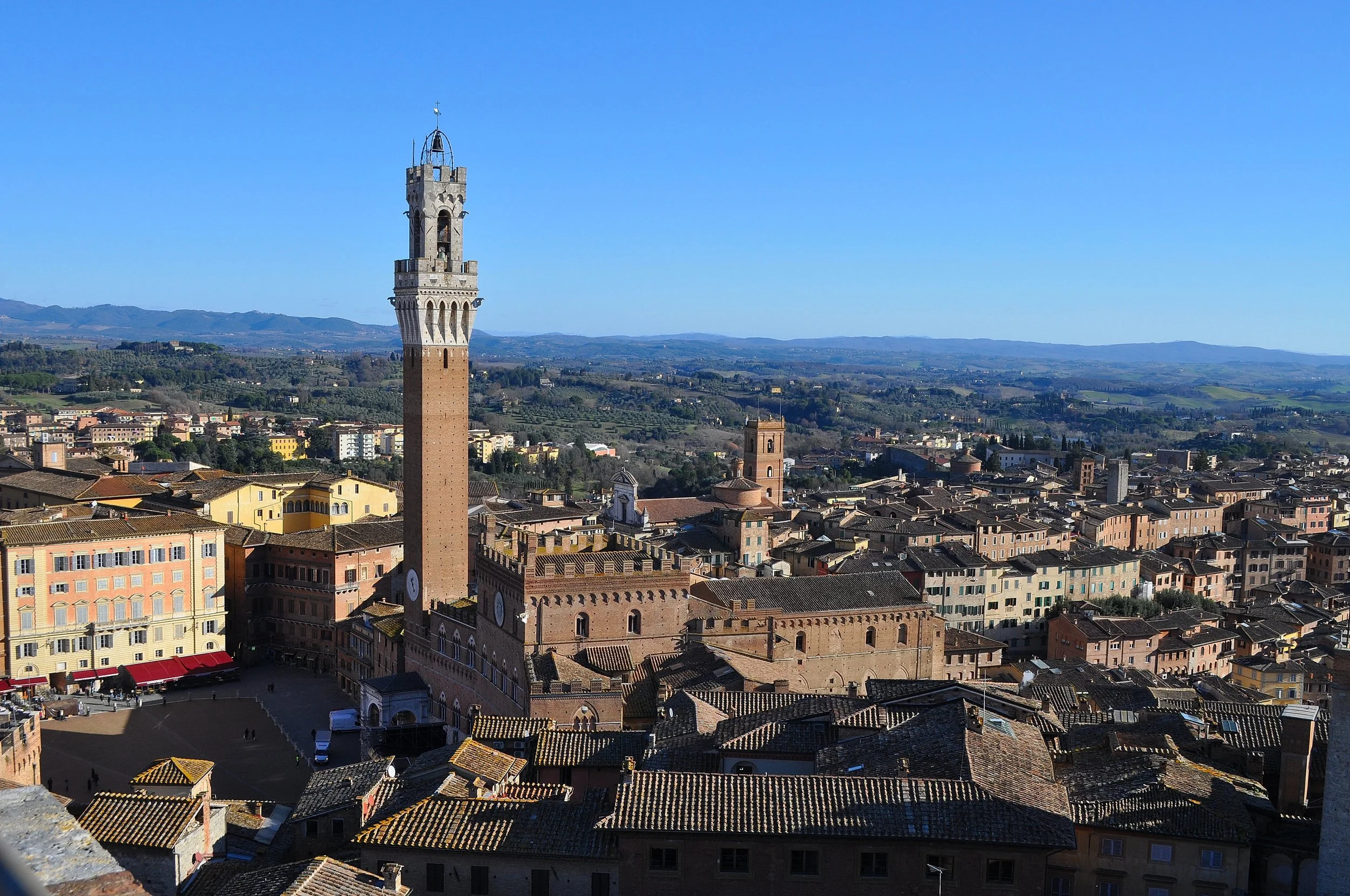
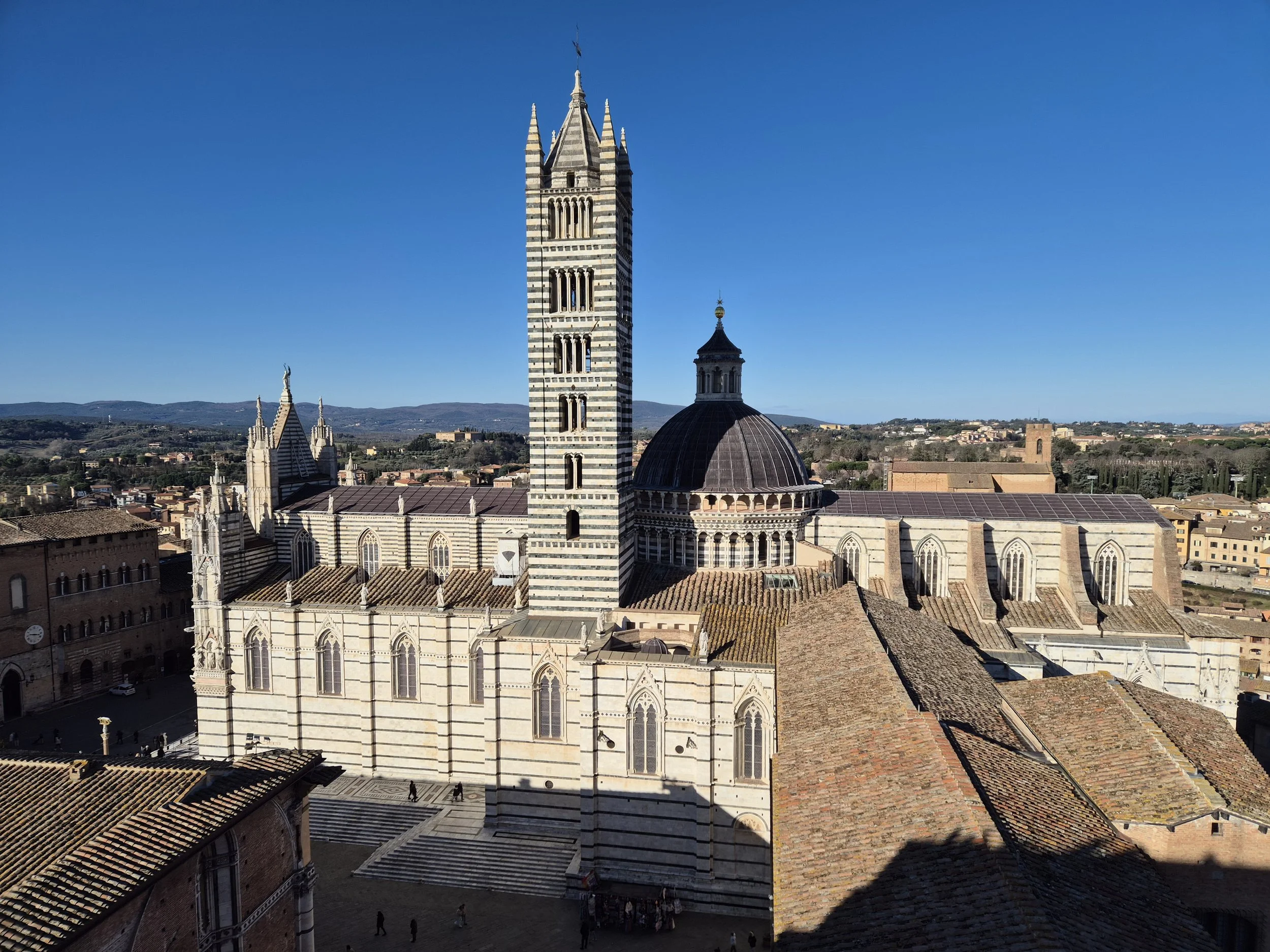
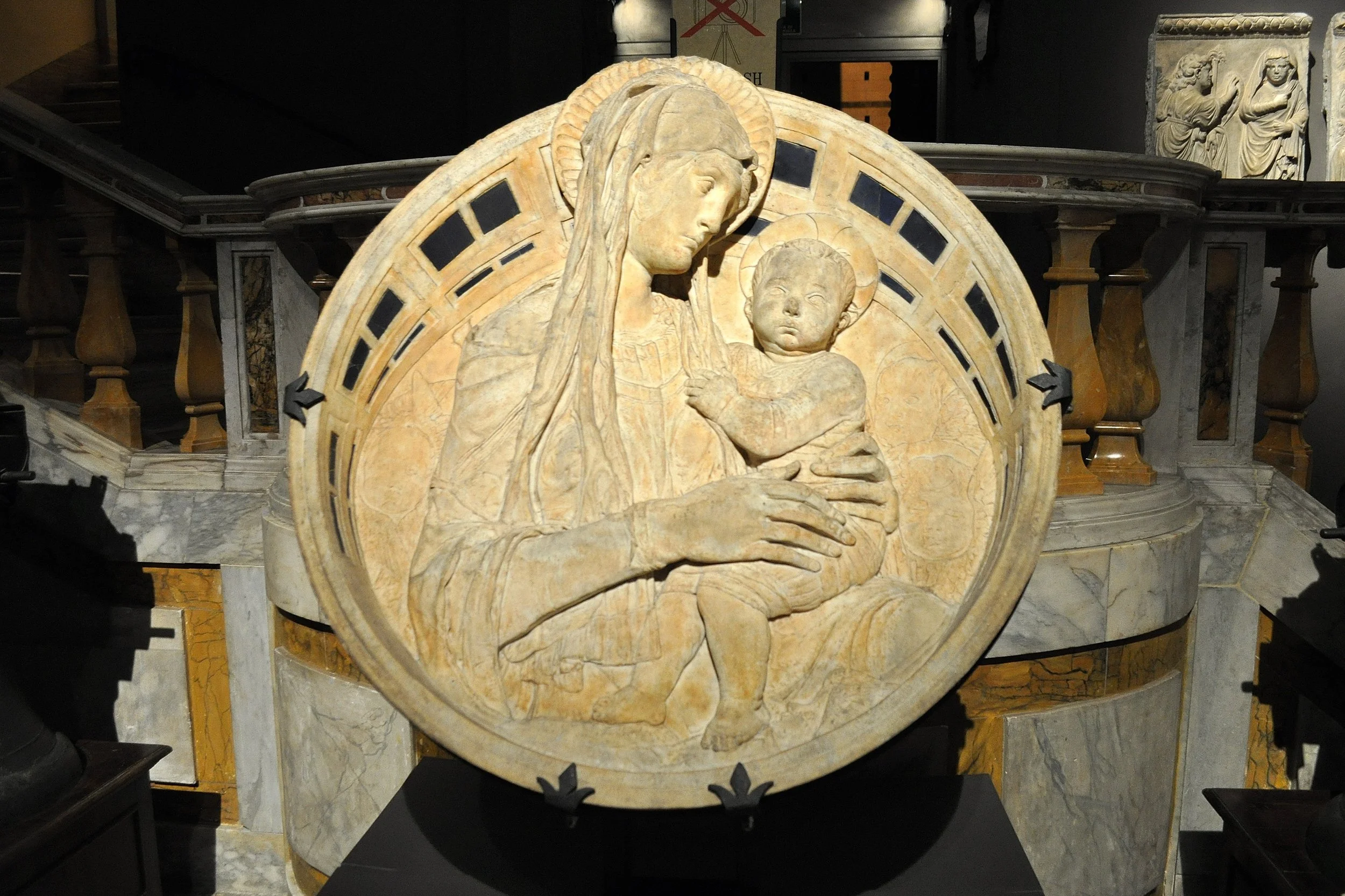
Angela: right next to the Facciatone (the entrance ticket also includes access to the museum), we find the Museum of the Opera del Duomo. And the visit begins immediately with a masterpiece: the Madonna del Perdono, the marble relief attributed to Donatello.
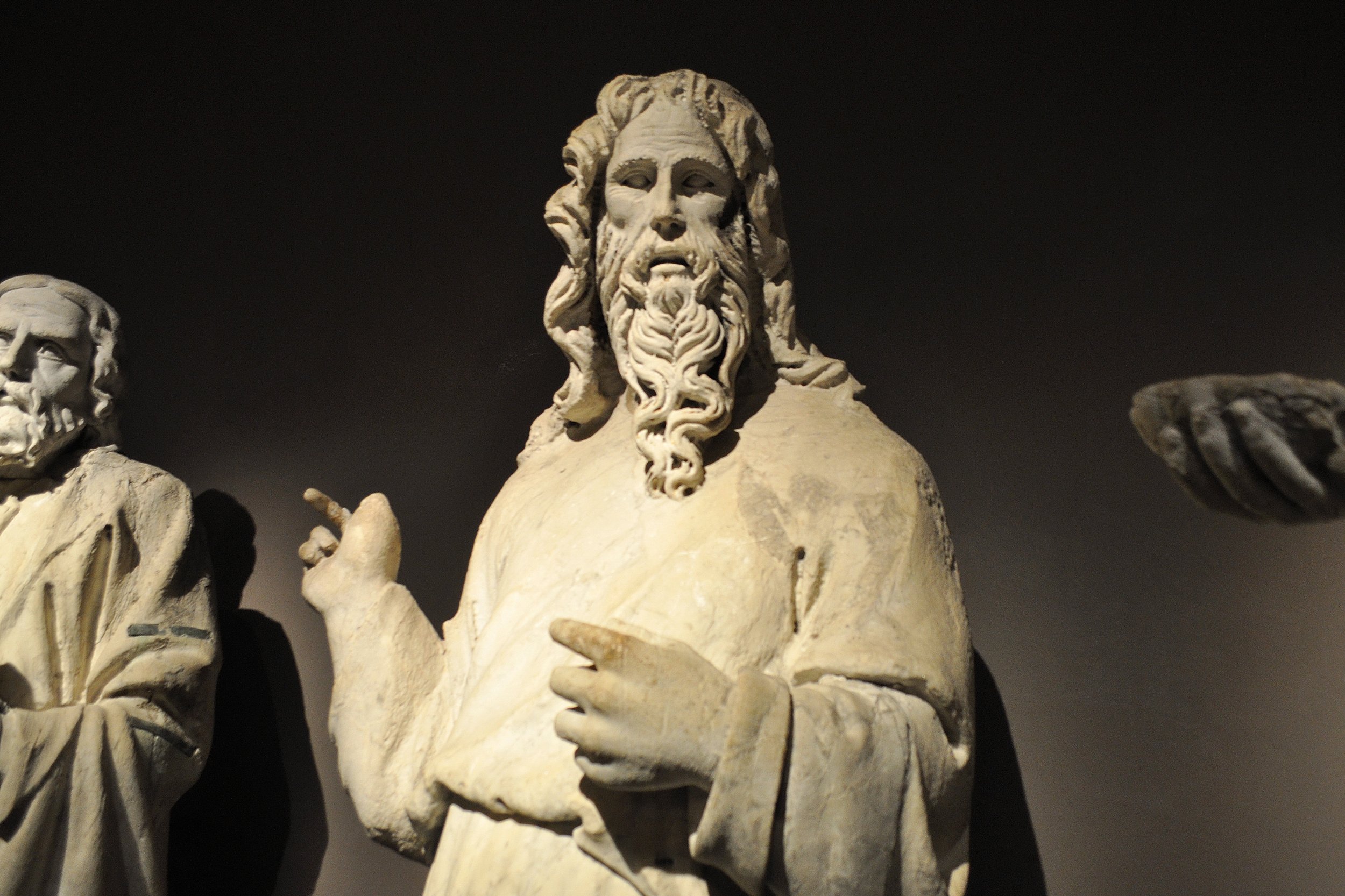
Piero: here you can admire the original sculptures from the cathedral façade, created by Giovanni Pisano and now replaced by copies on the exterior of the cathedral to preserve them from the effects of time and weather.
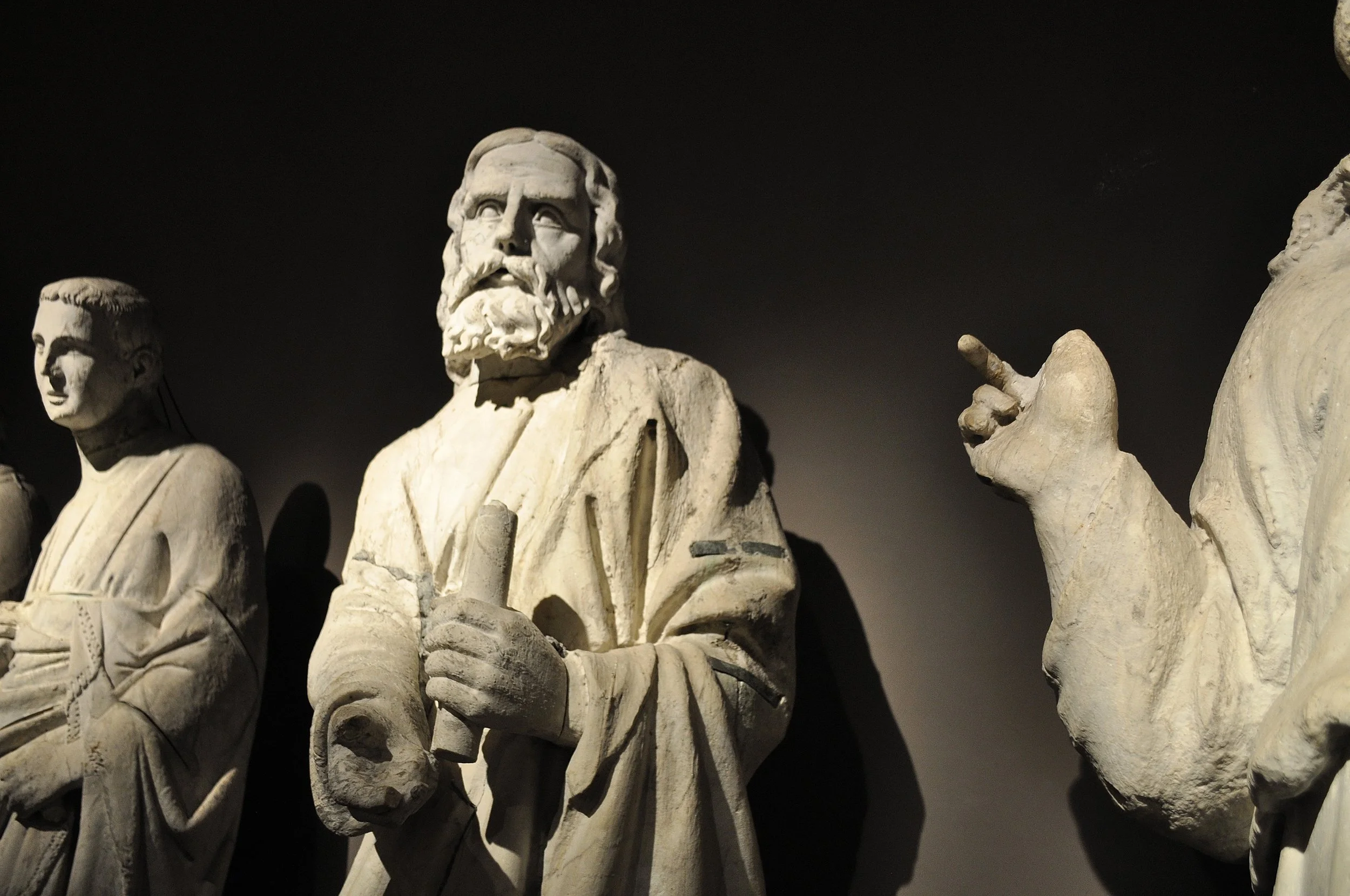
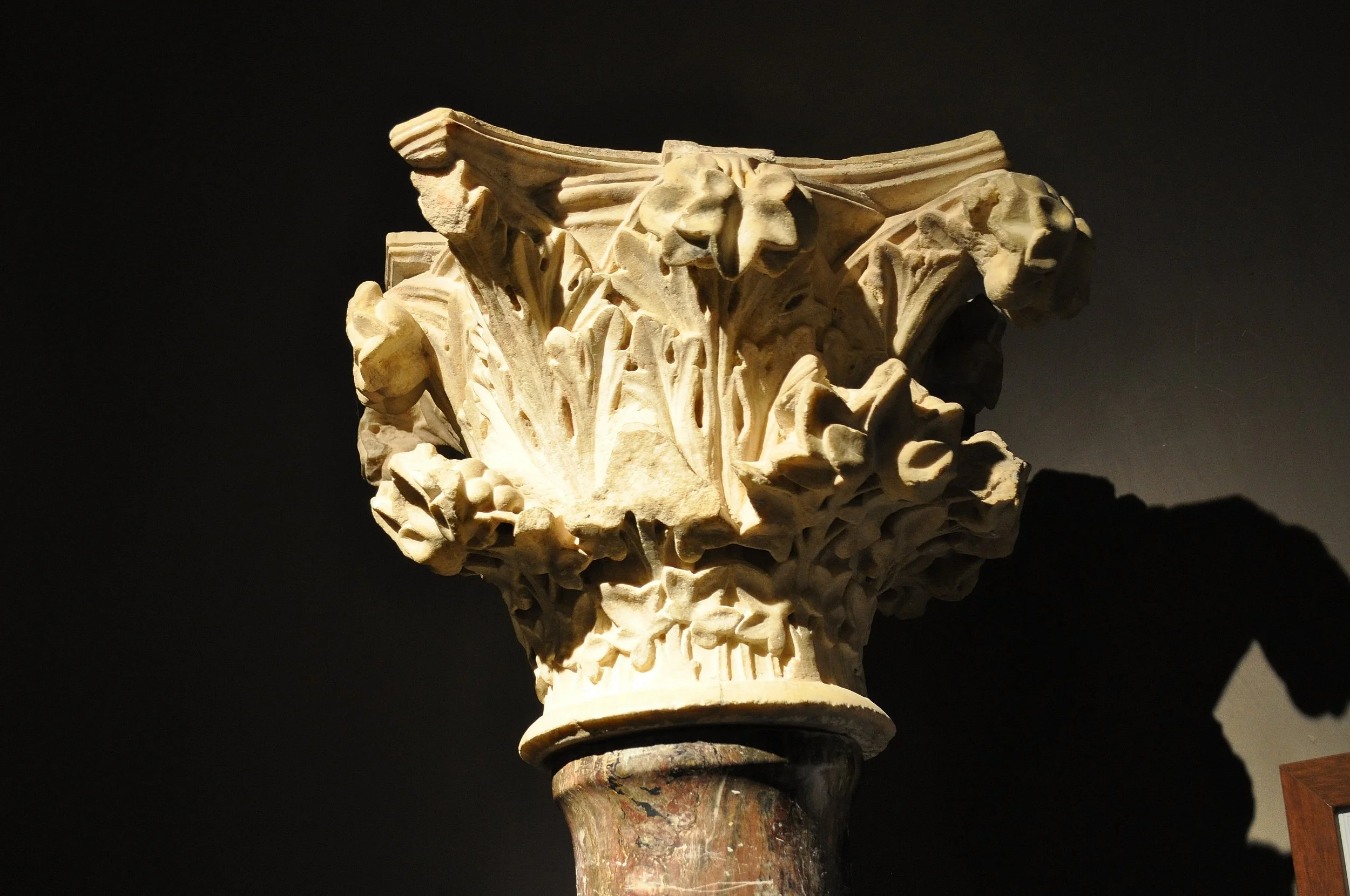
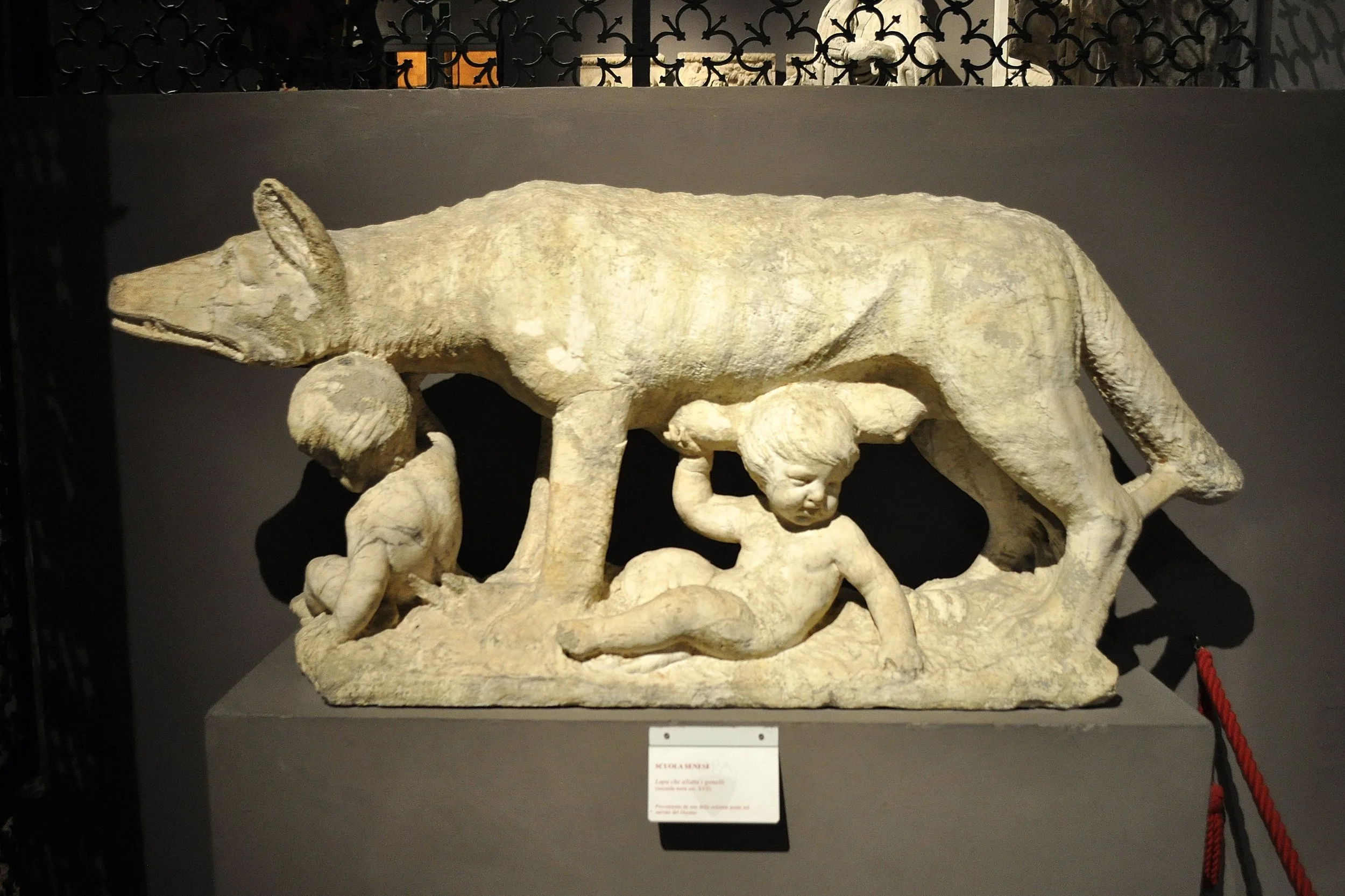
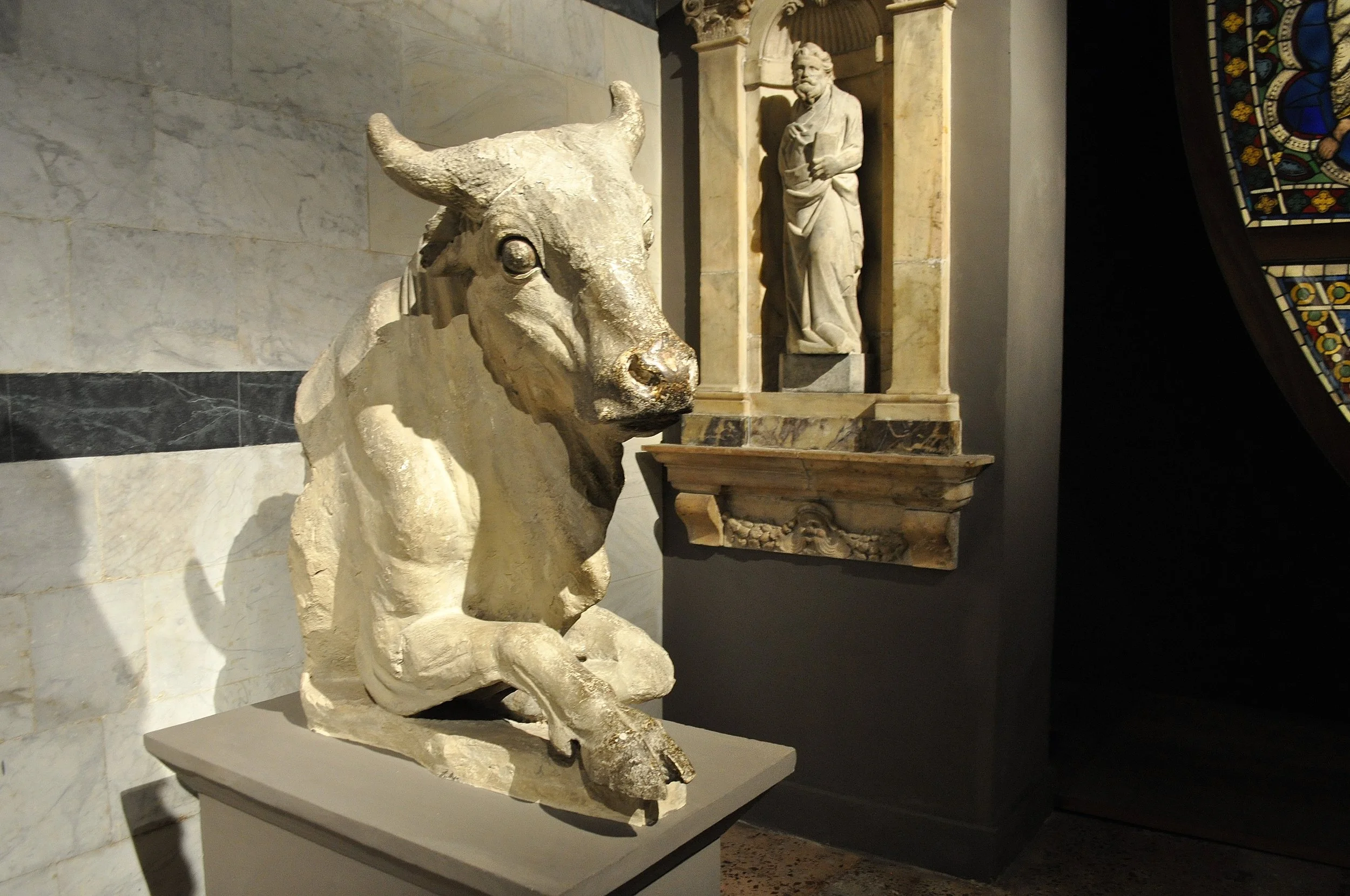
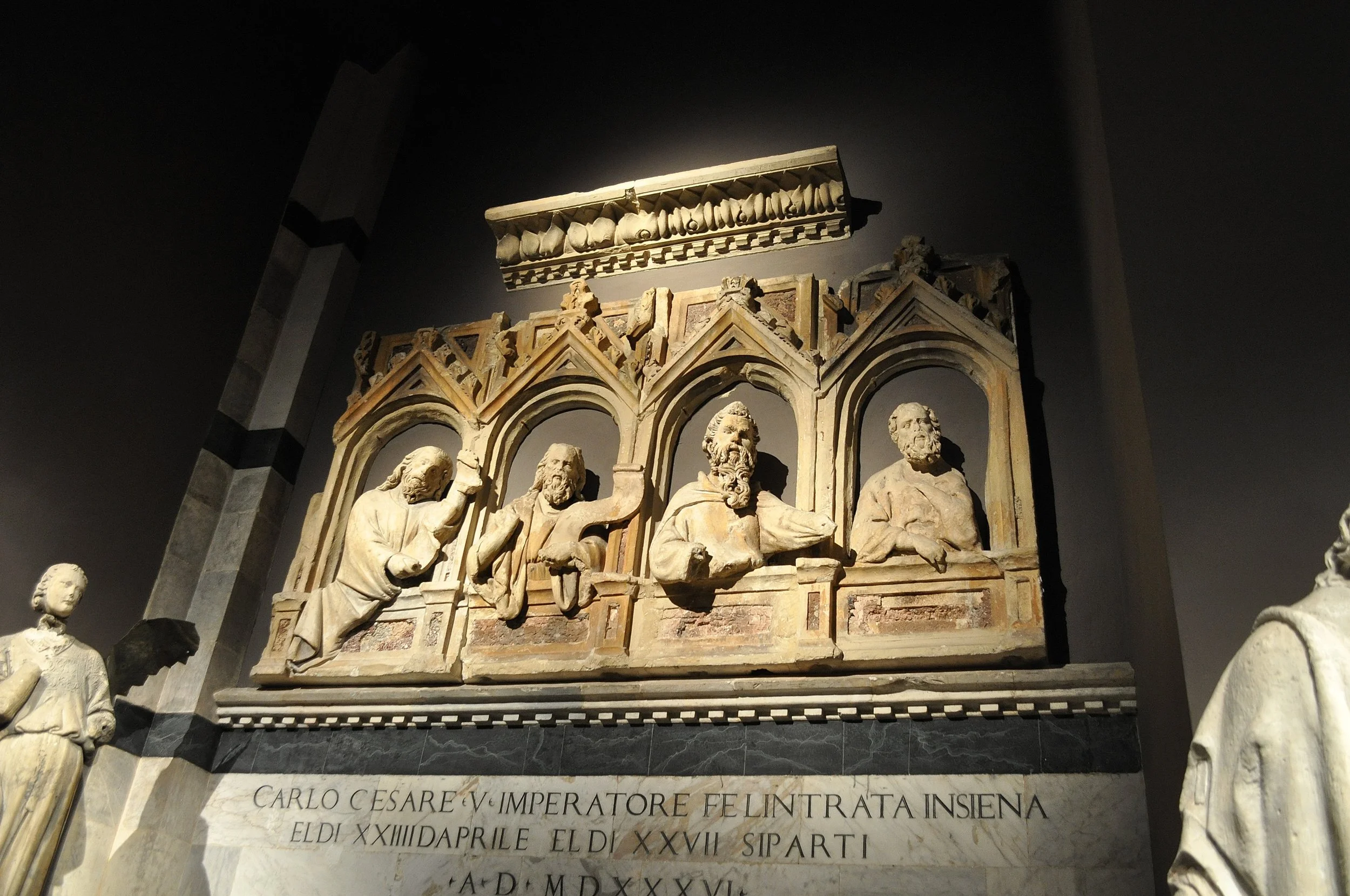
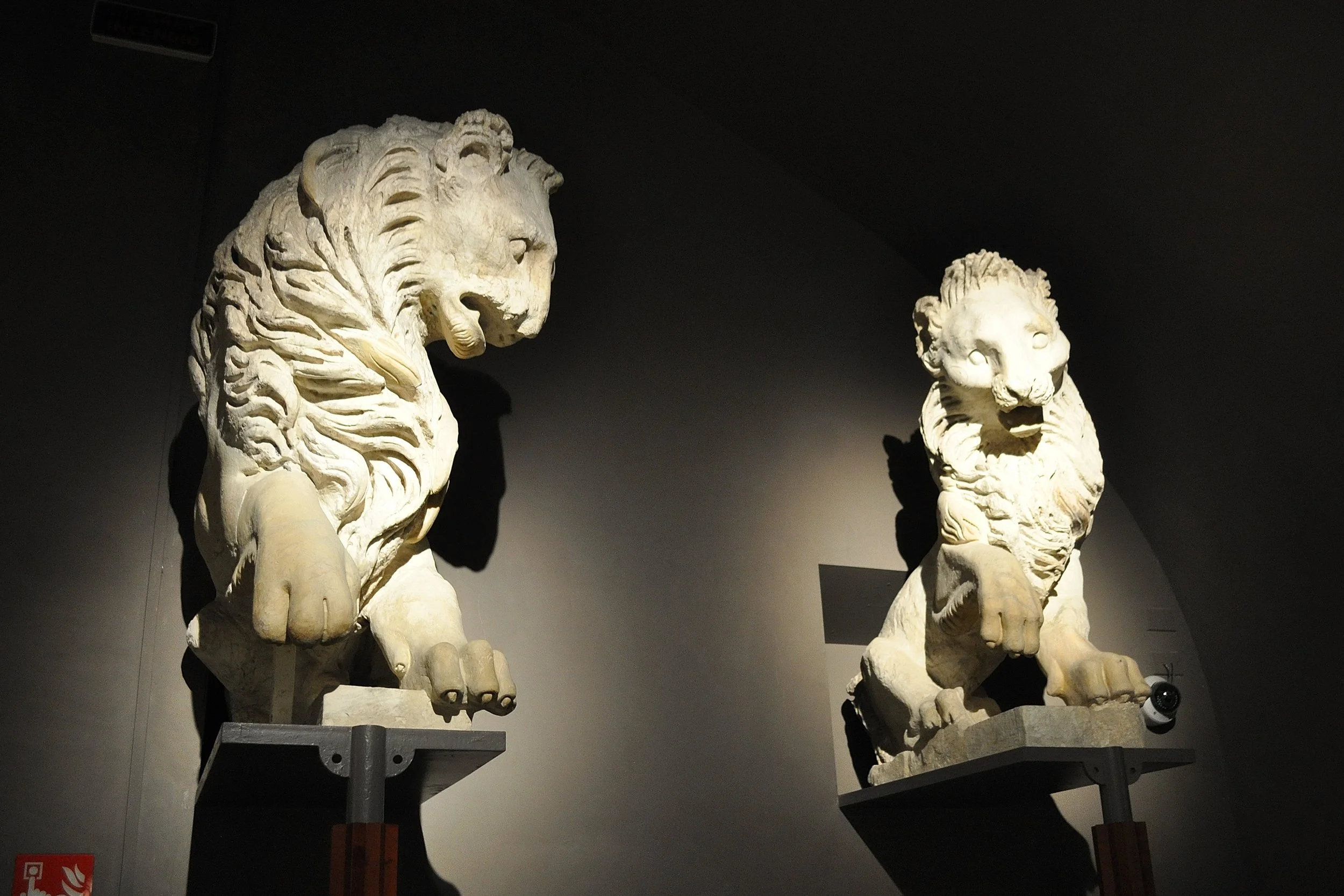
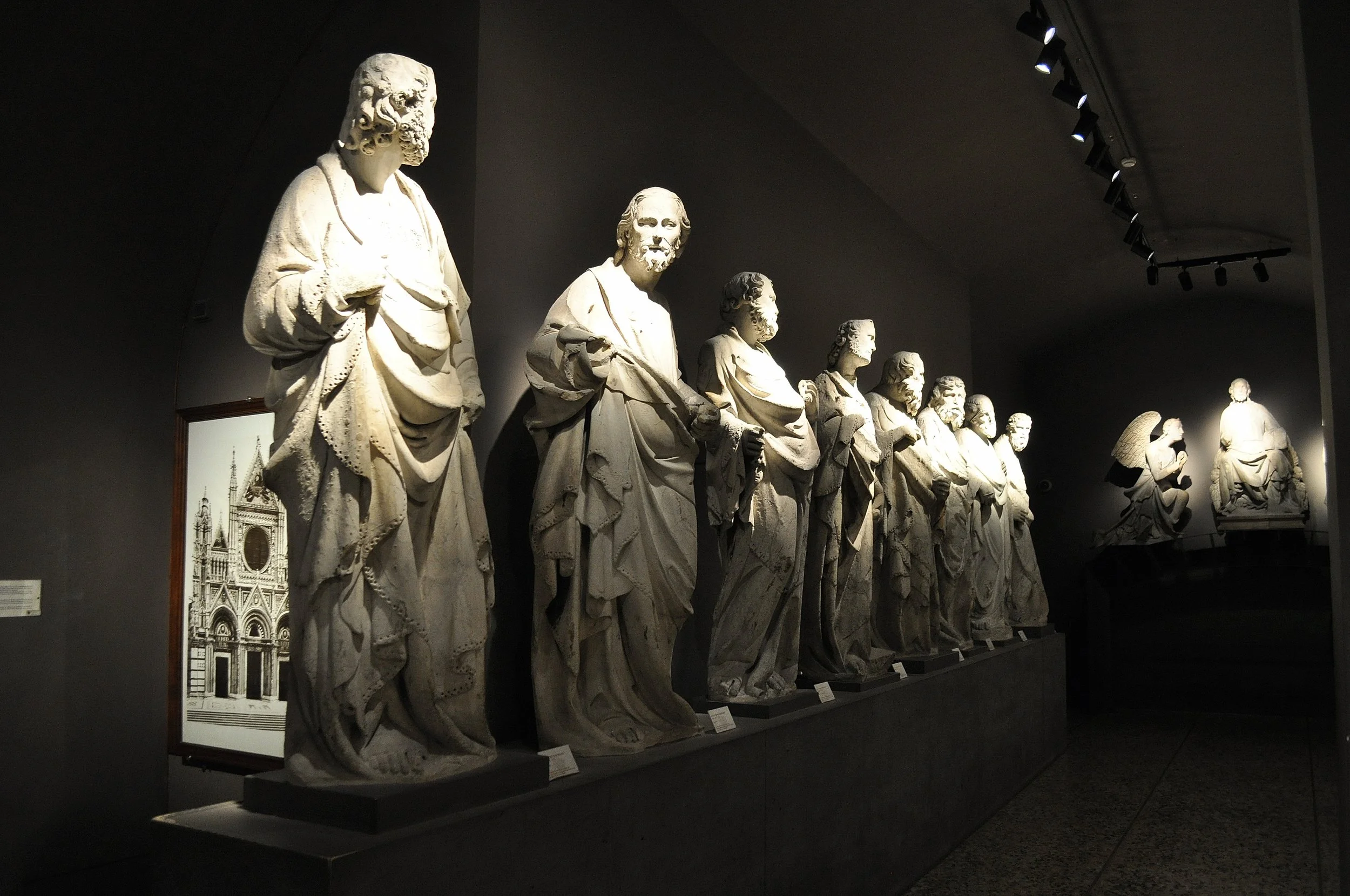
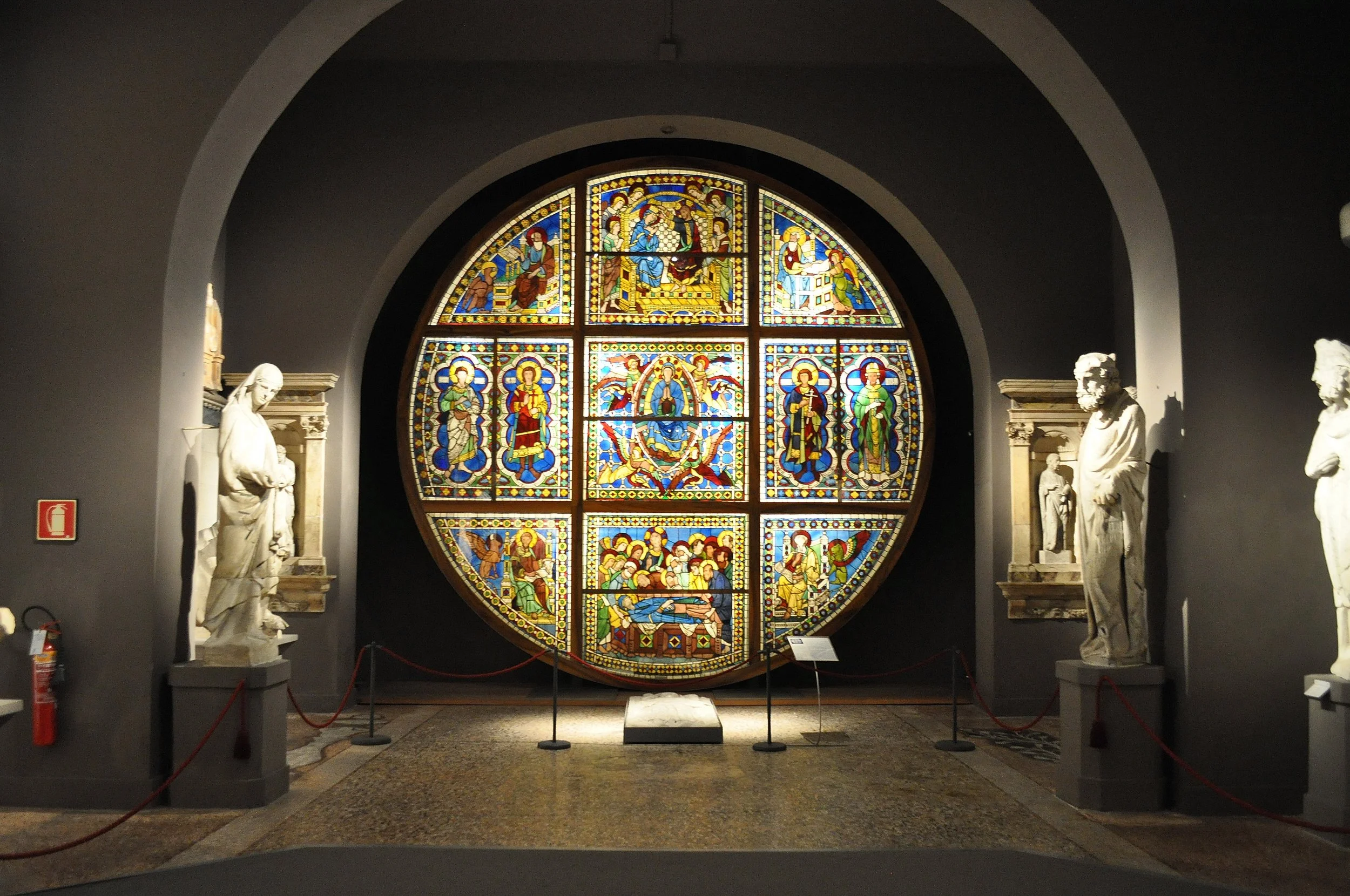
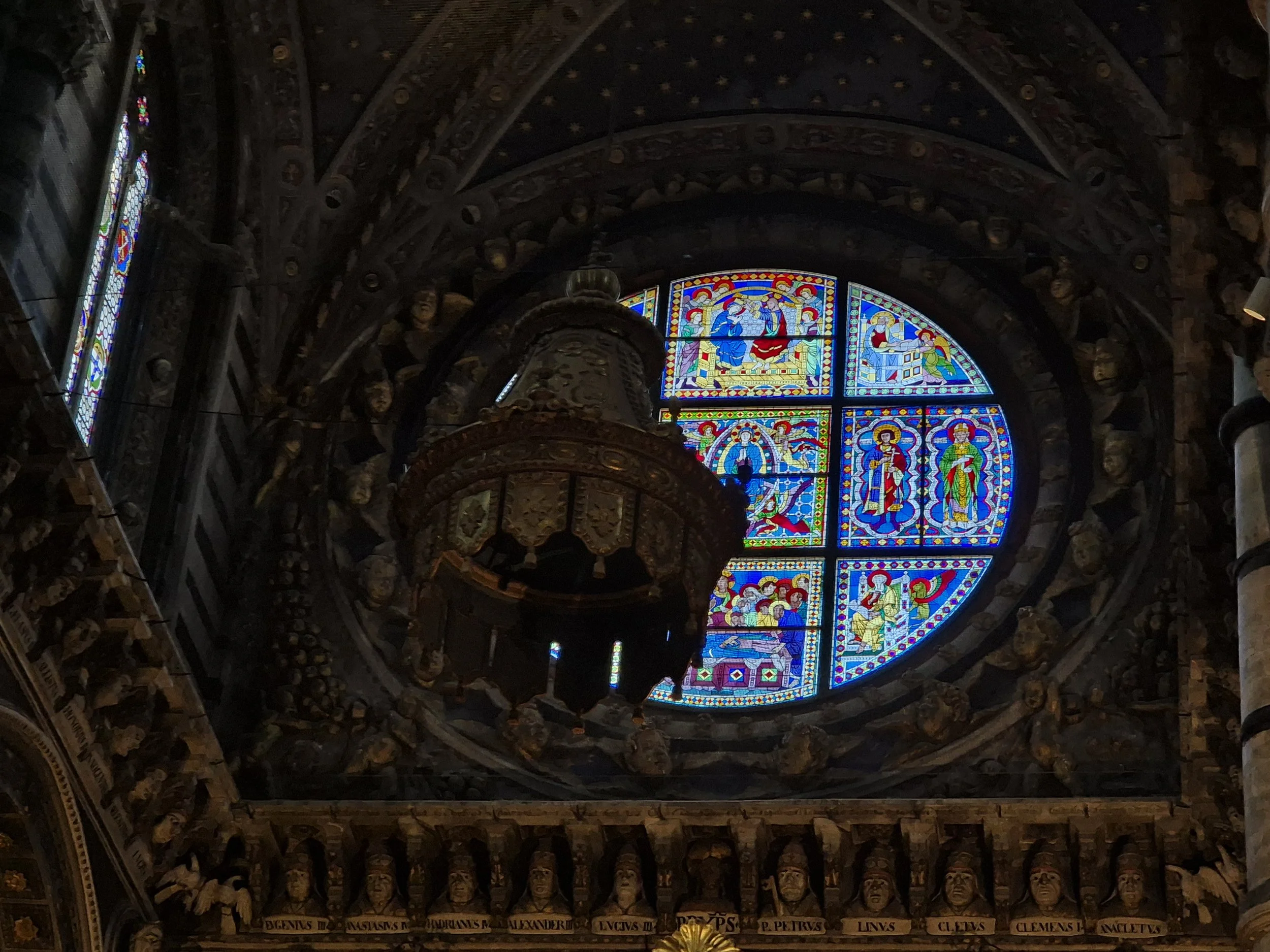
Angela: the museum also houses the original rose window of the Cathedral, carefully preserved here after being removed from its original position.
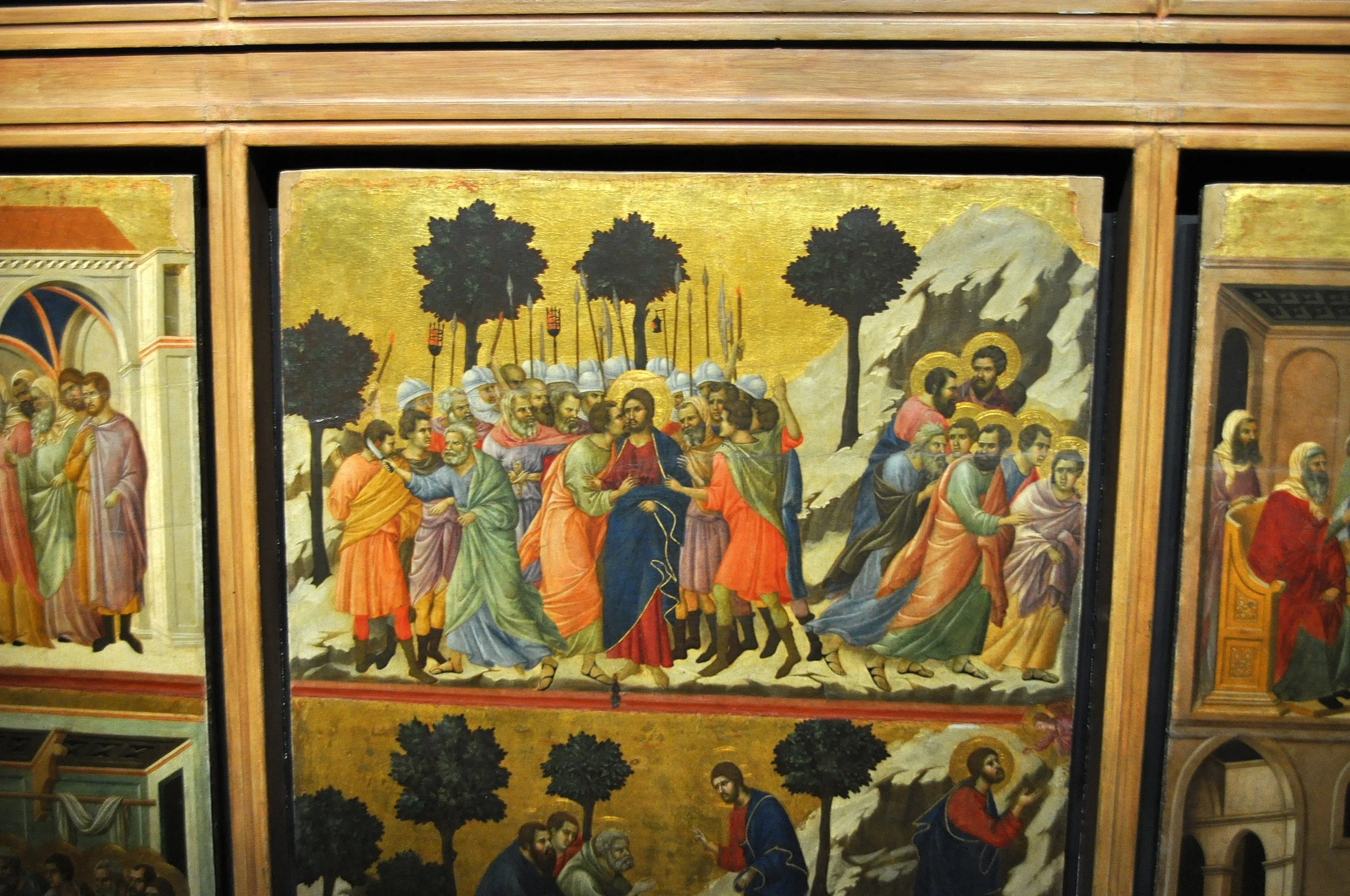
Piero: and above all, one of the absolute masterpieces of medieval painting: the Maestà by Duccio di Buoninsegna.
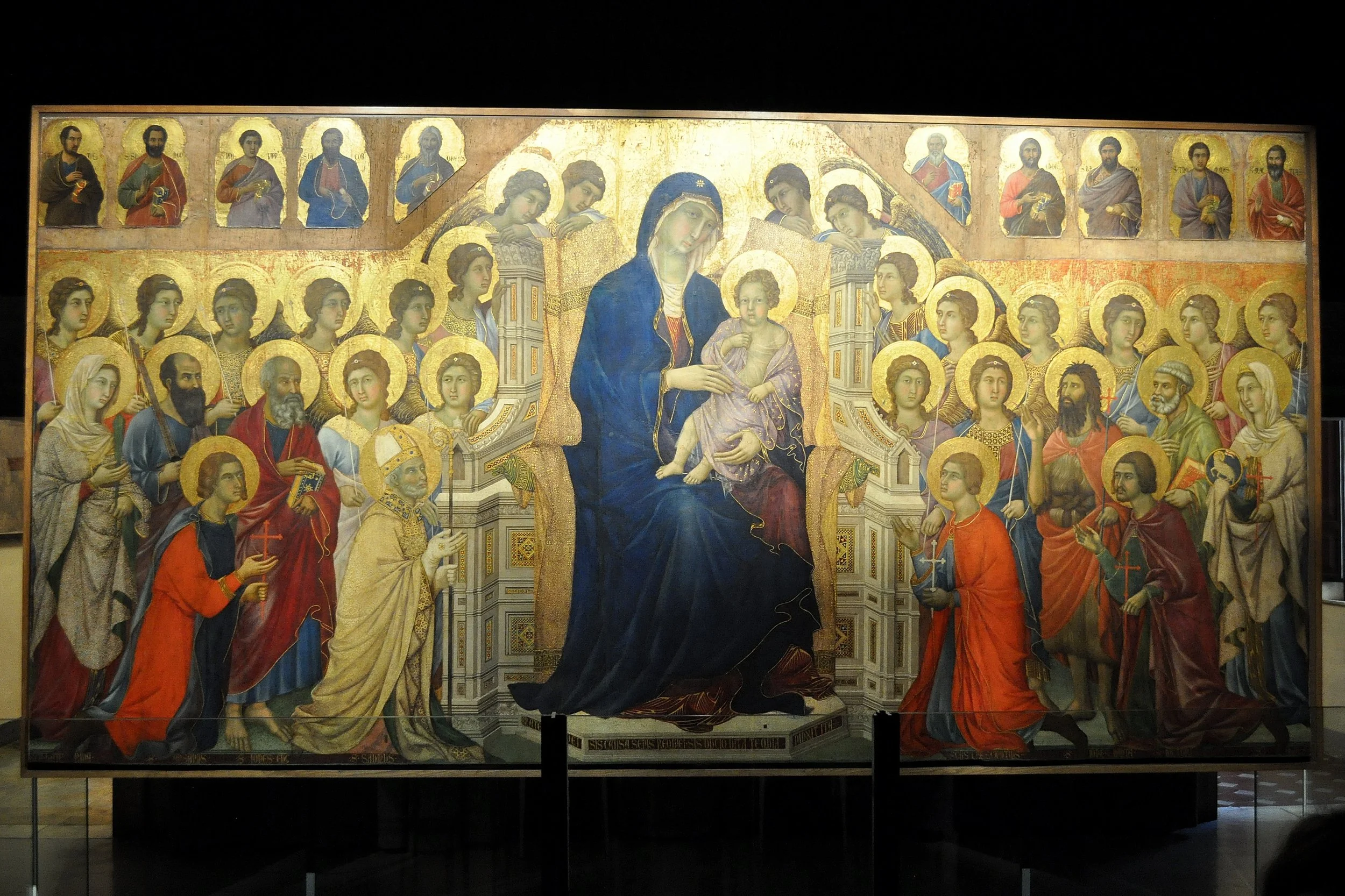
Angela: we lose ourselves among the many masterpieces housed here before finally making our way out.
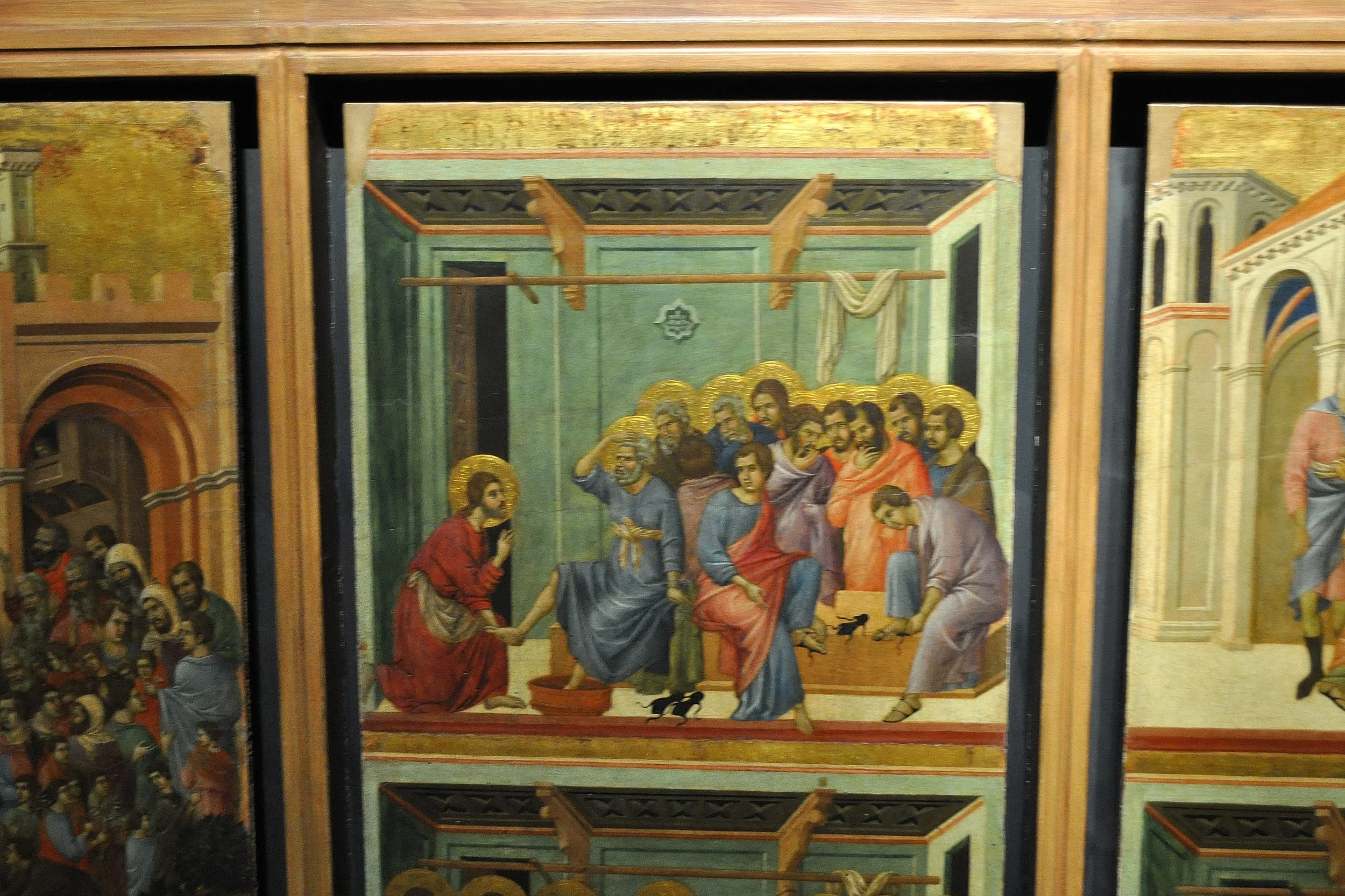
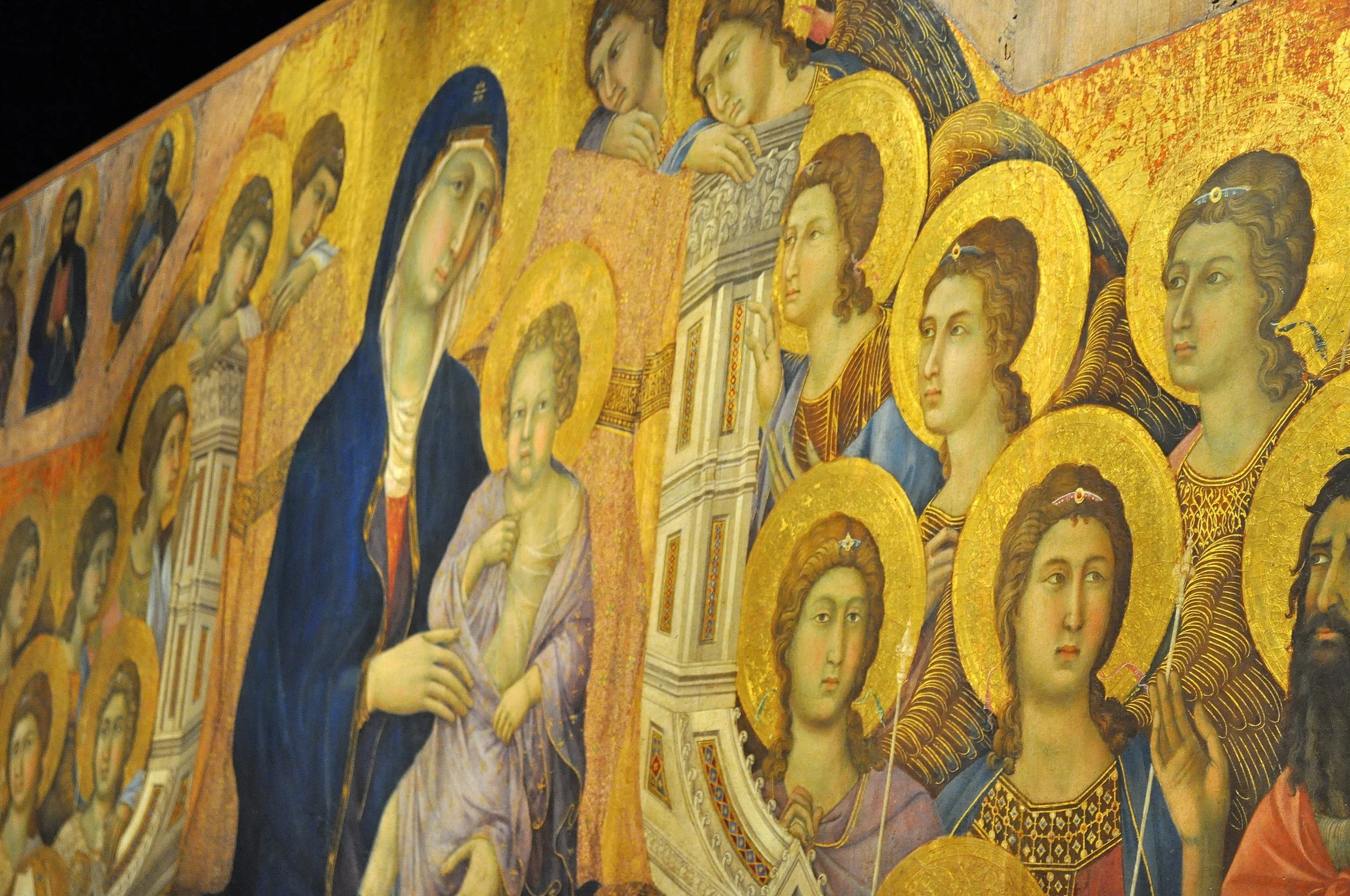
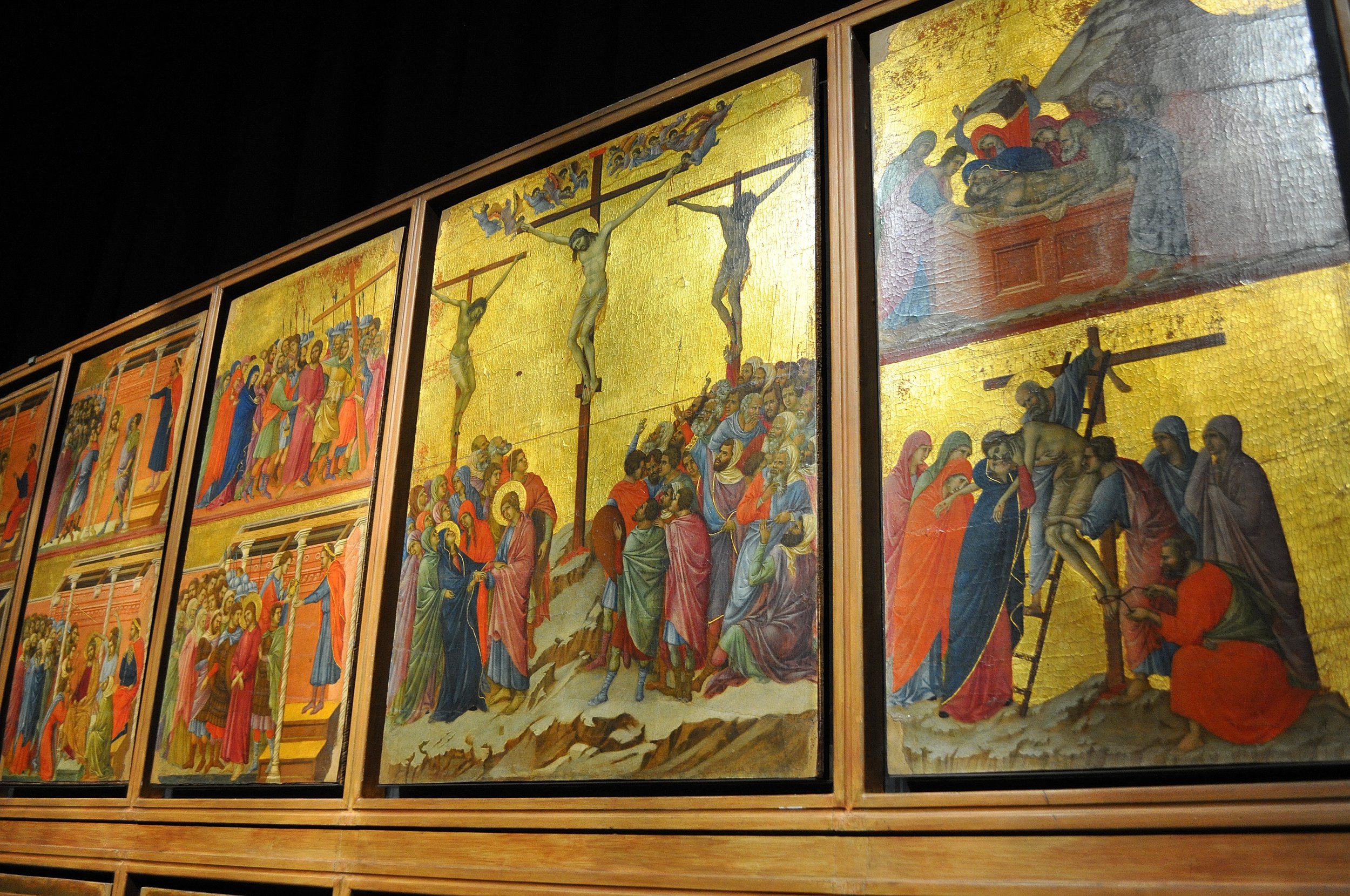
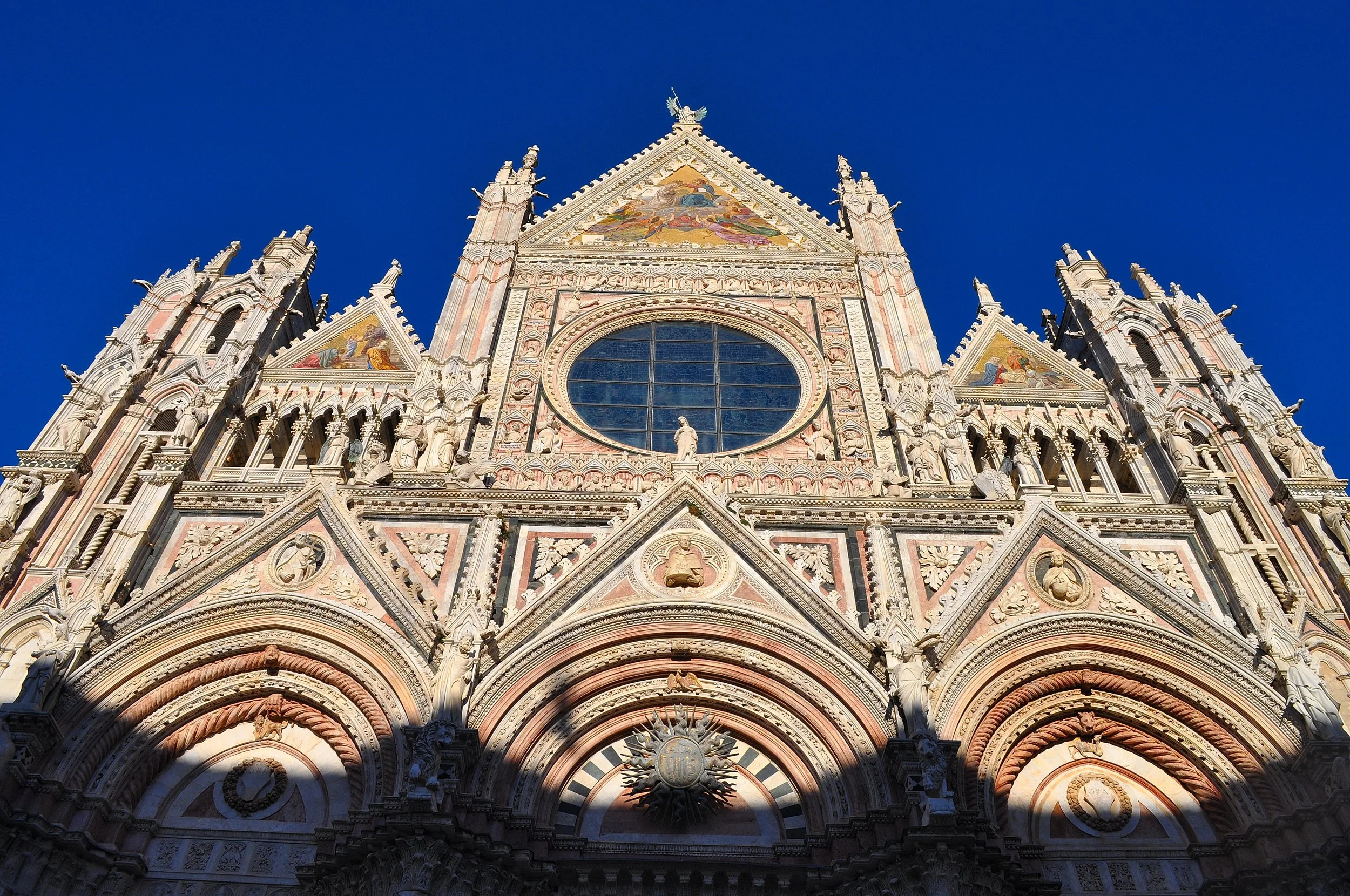
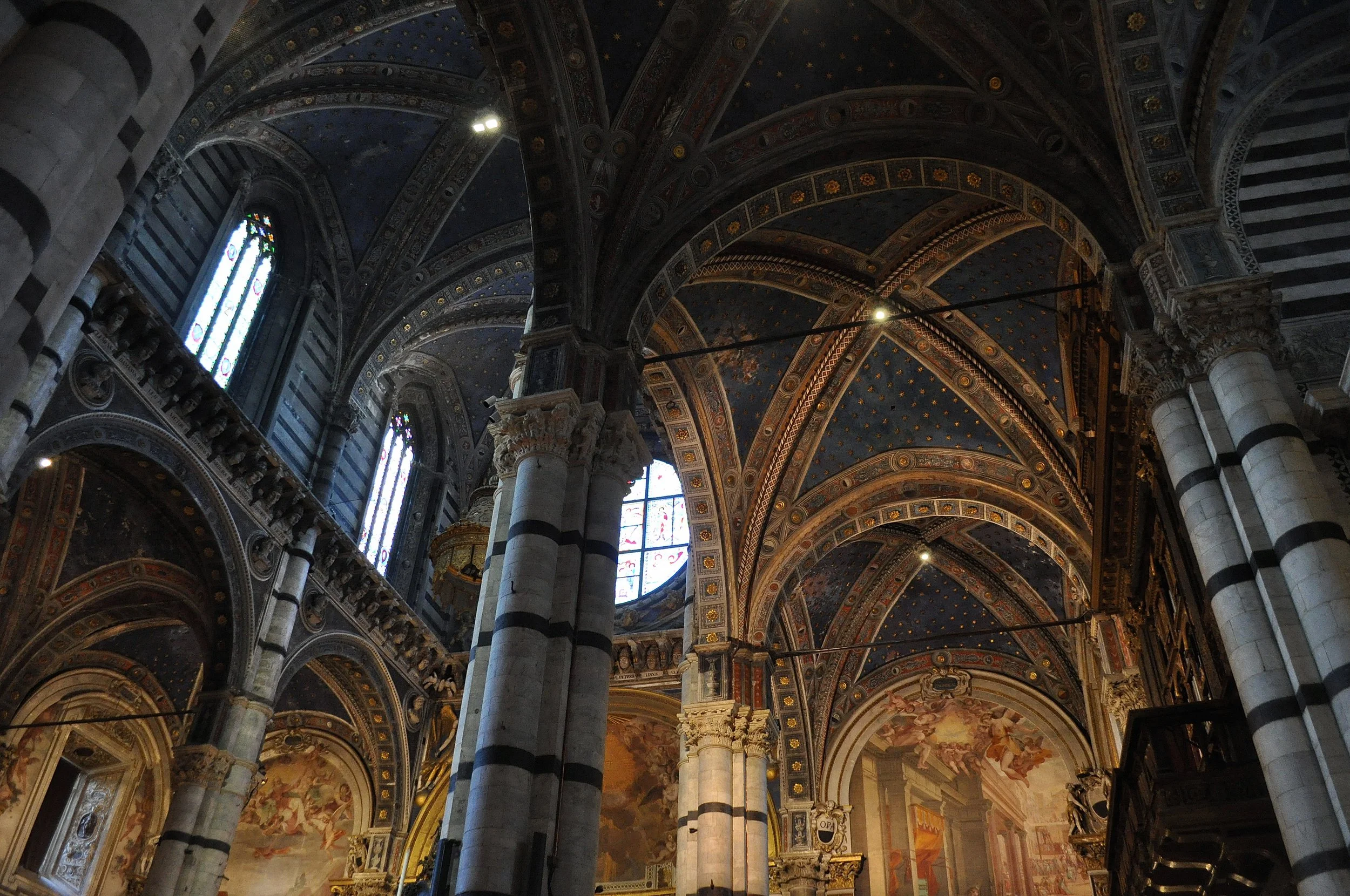
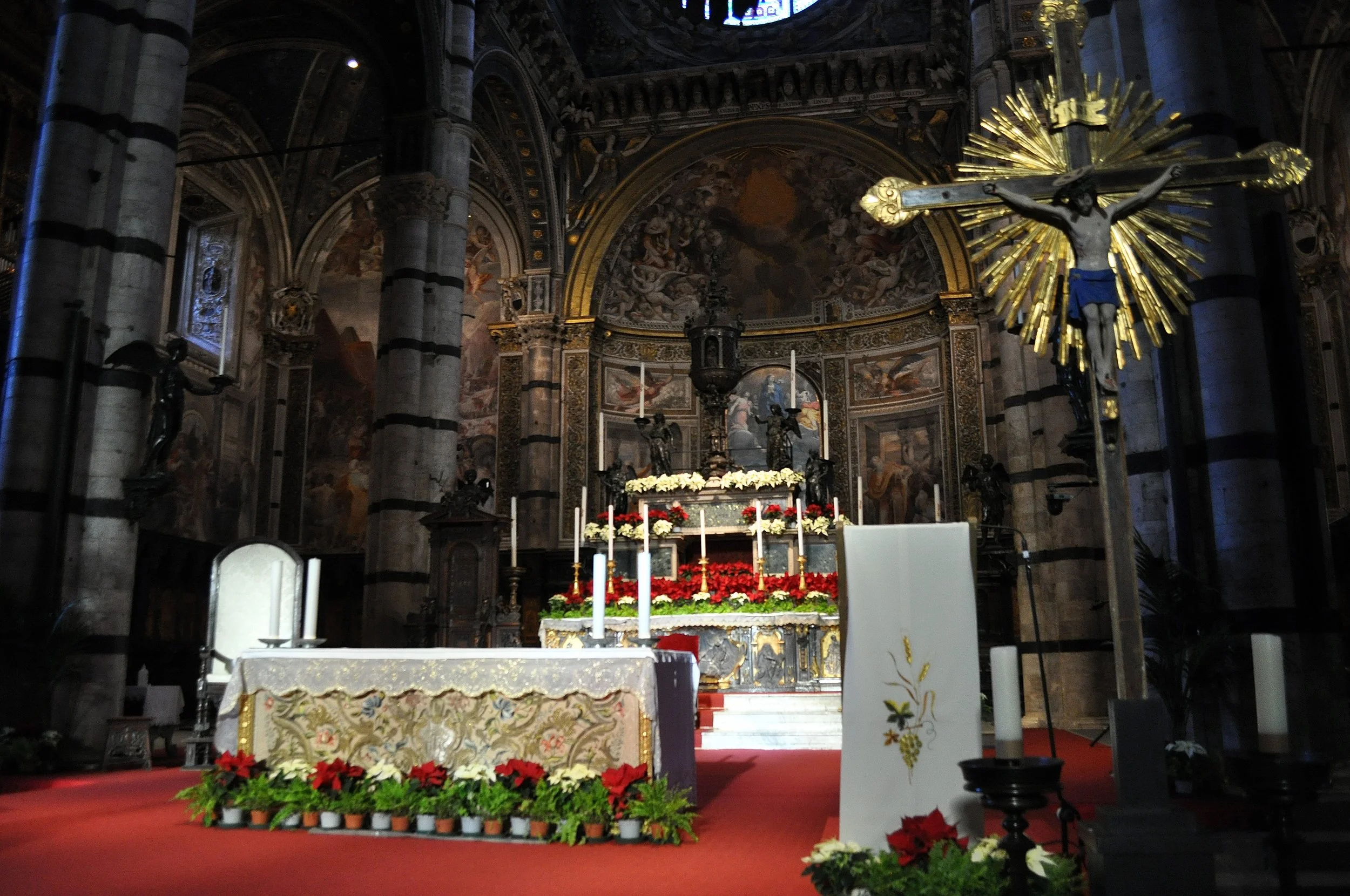
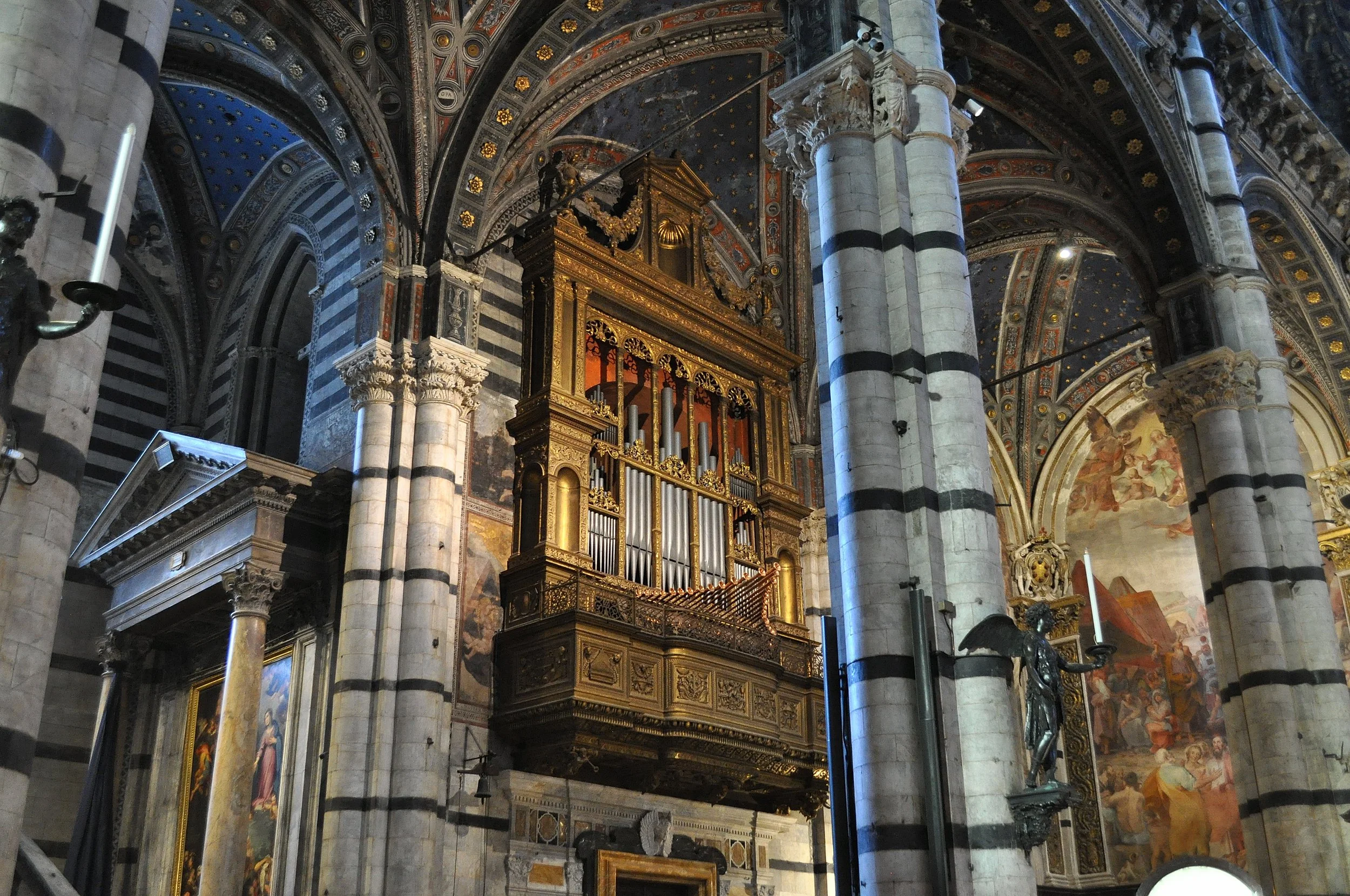
Piero: moving just a few steps further, we finally reach the magnificent Siena Cathedral, one of the greatest masterpieces of Italian religious architecture. Dedicated to the Assumption of the Virgin Mary, the cathedral is a symbol of the artistic and spiritual power of medieval Siena.
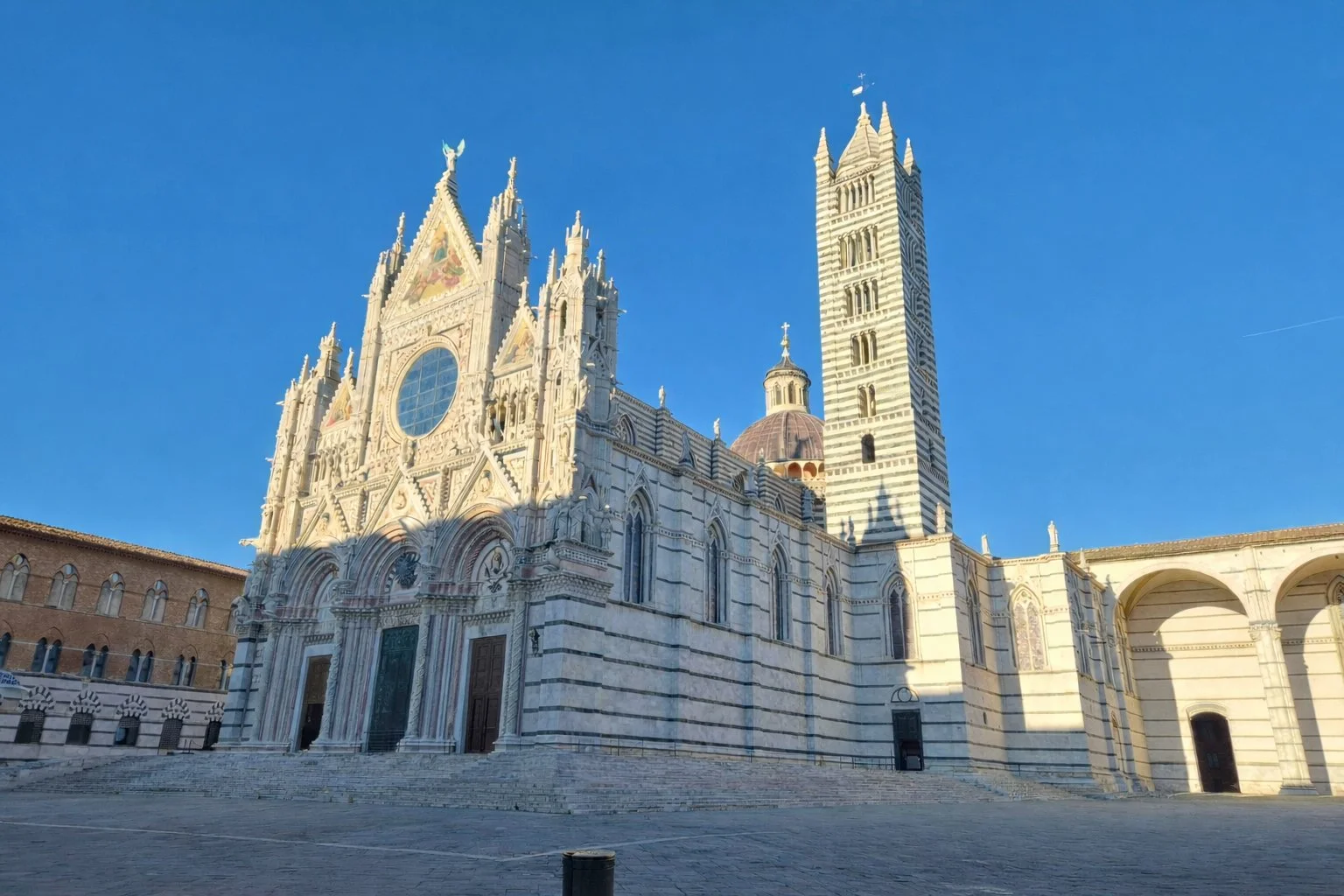
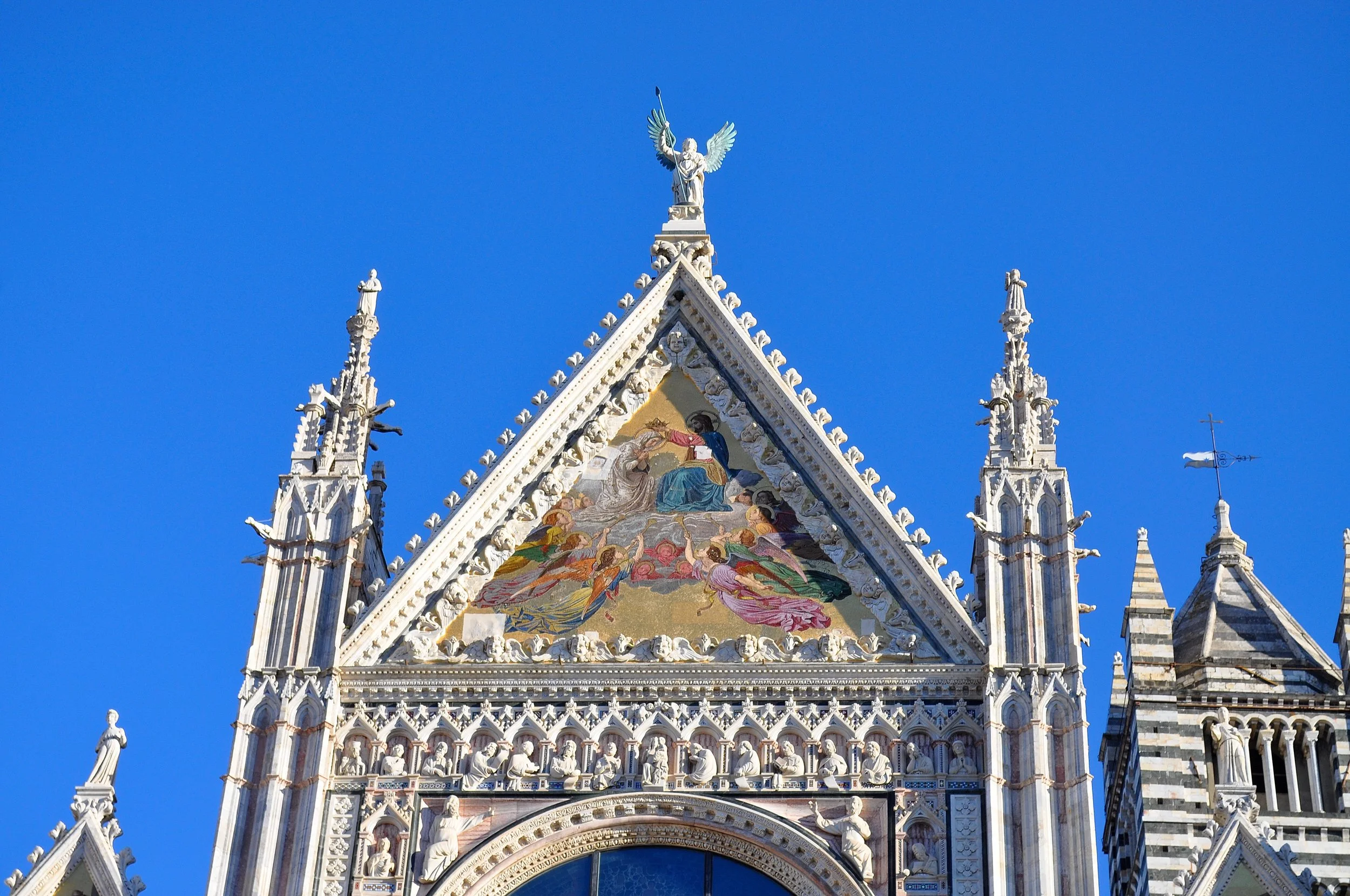
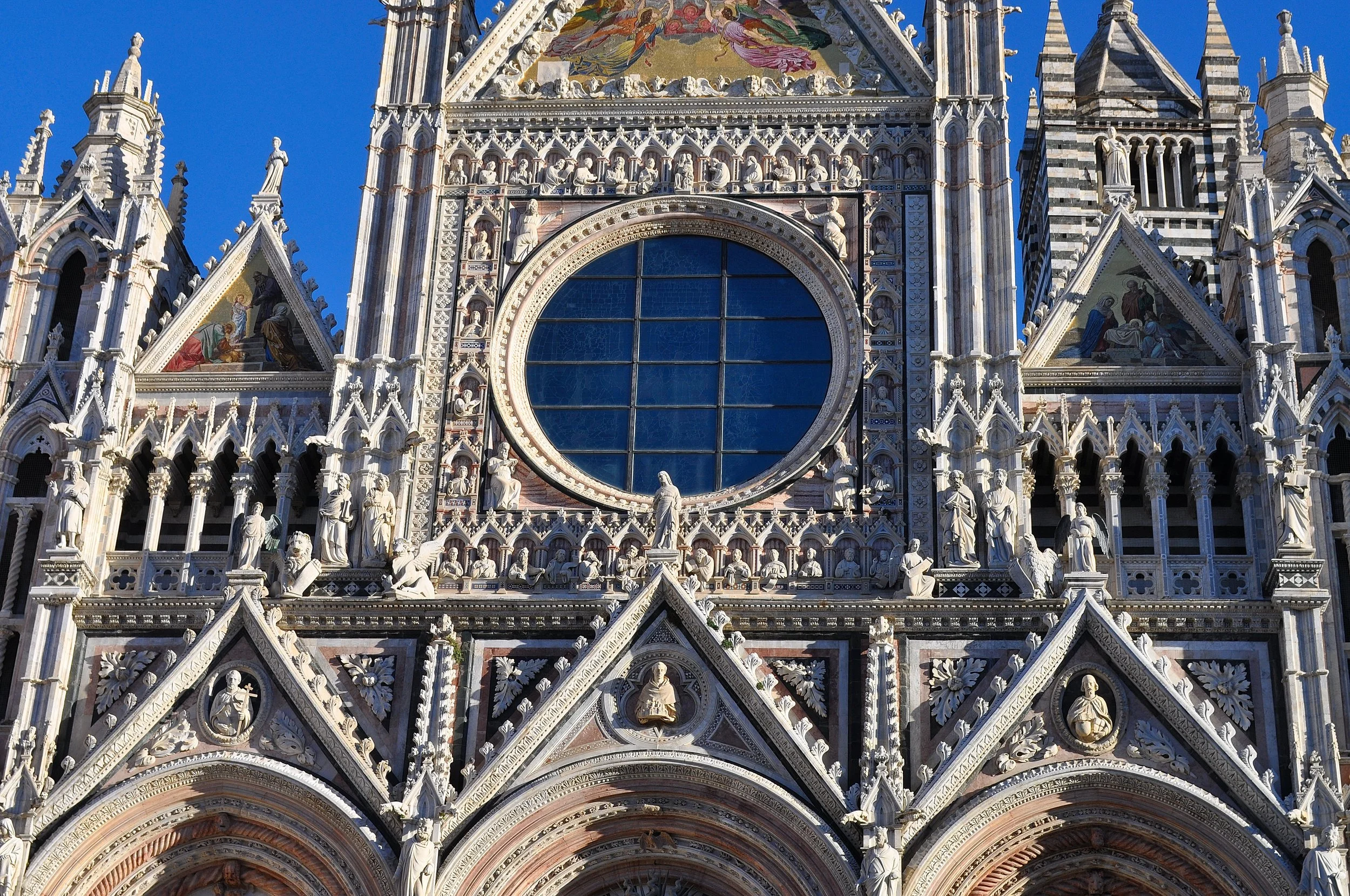
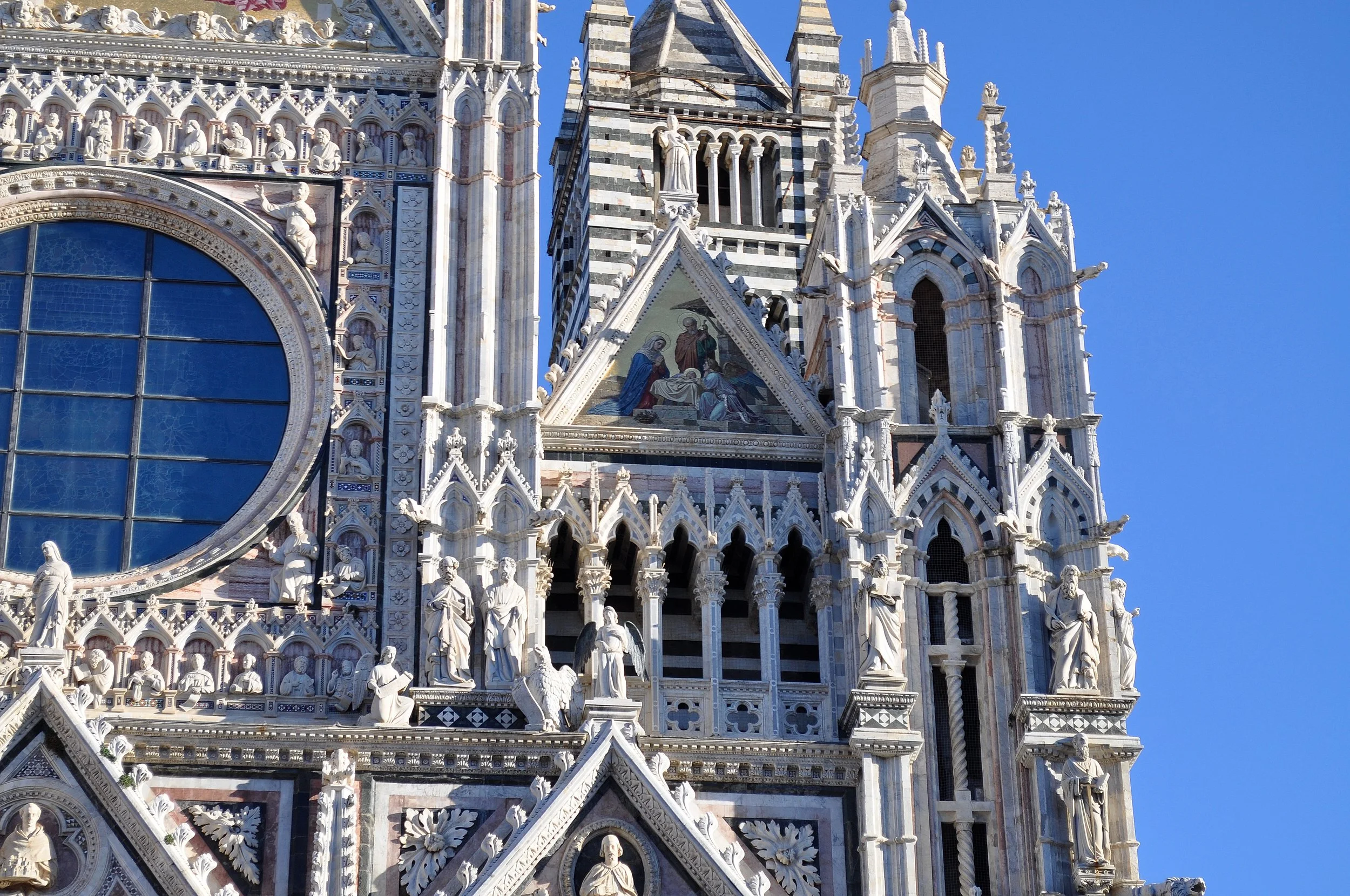
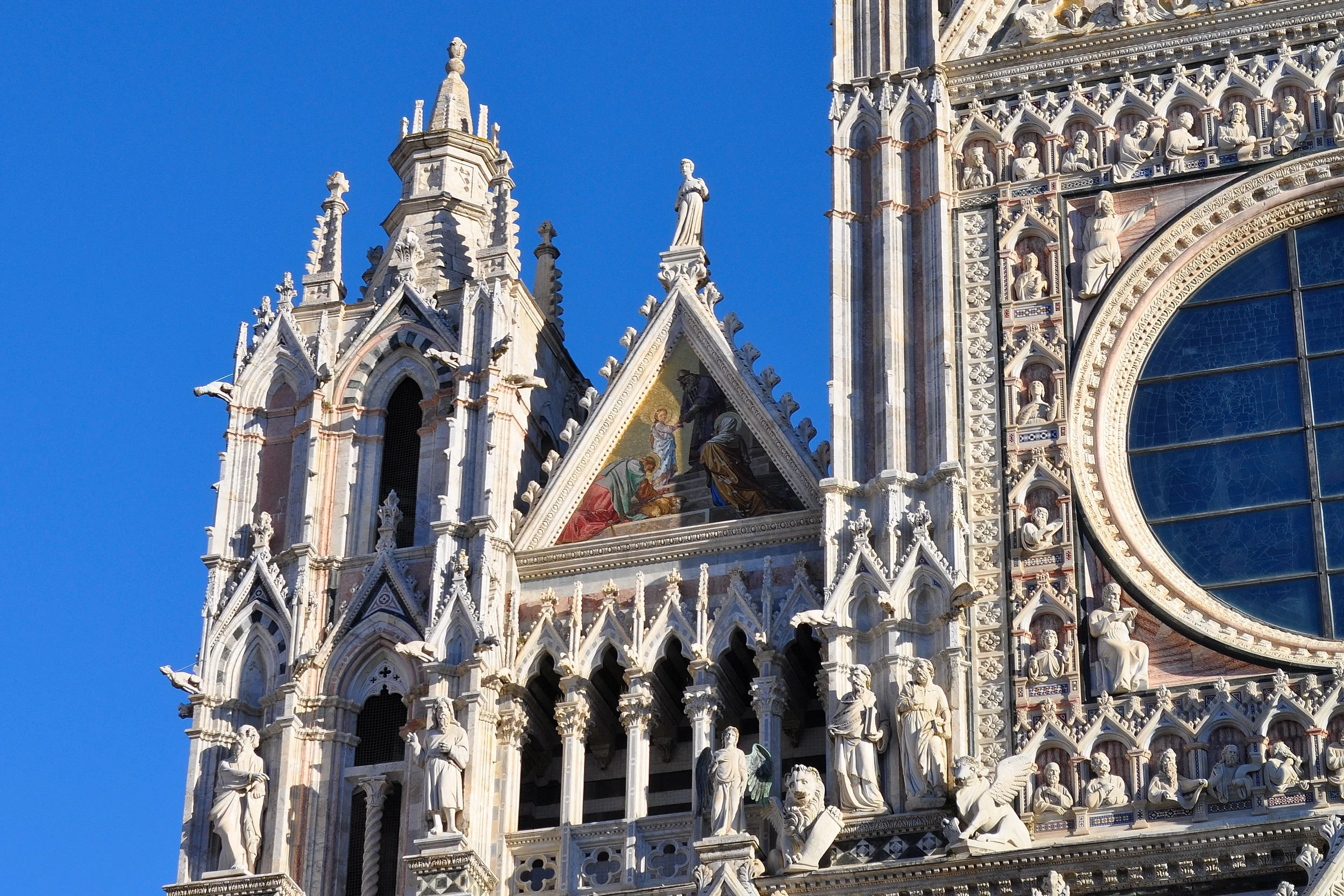
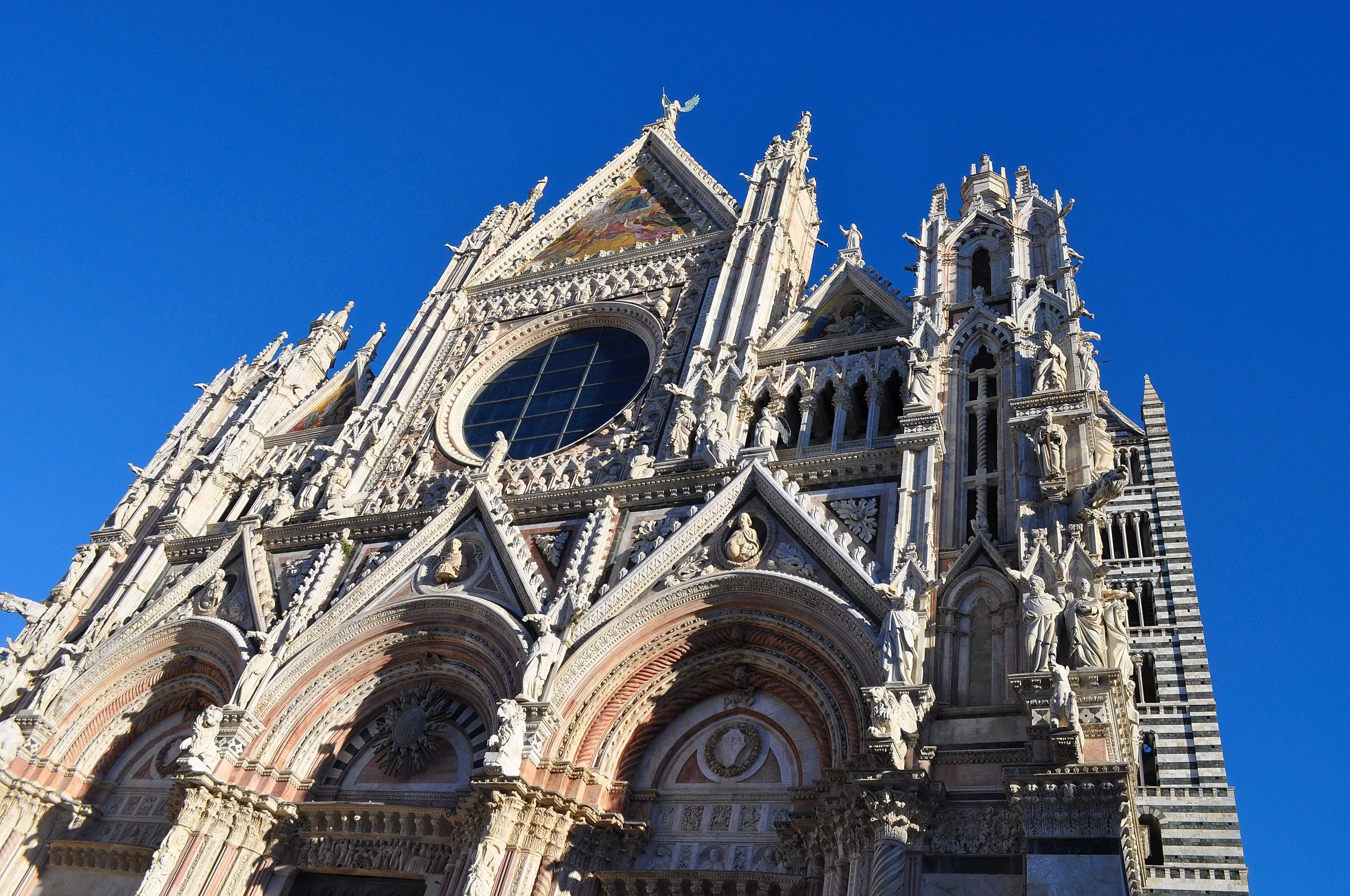
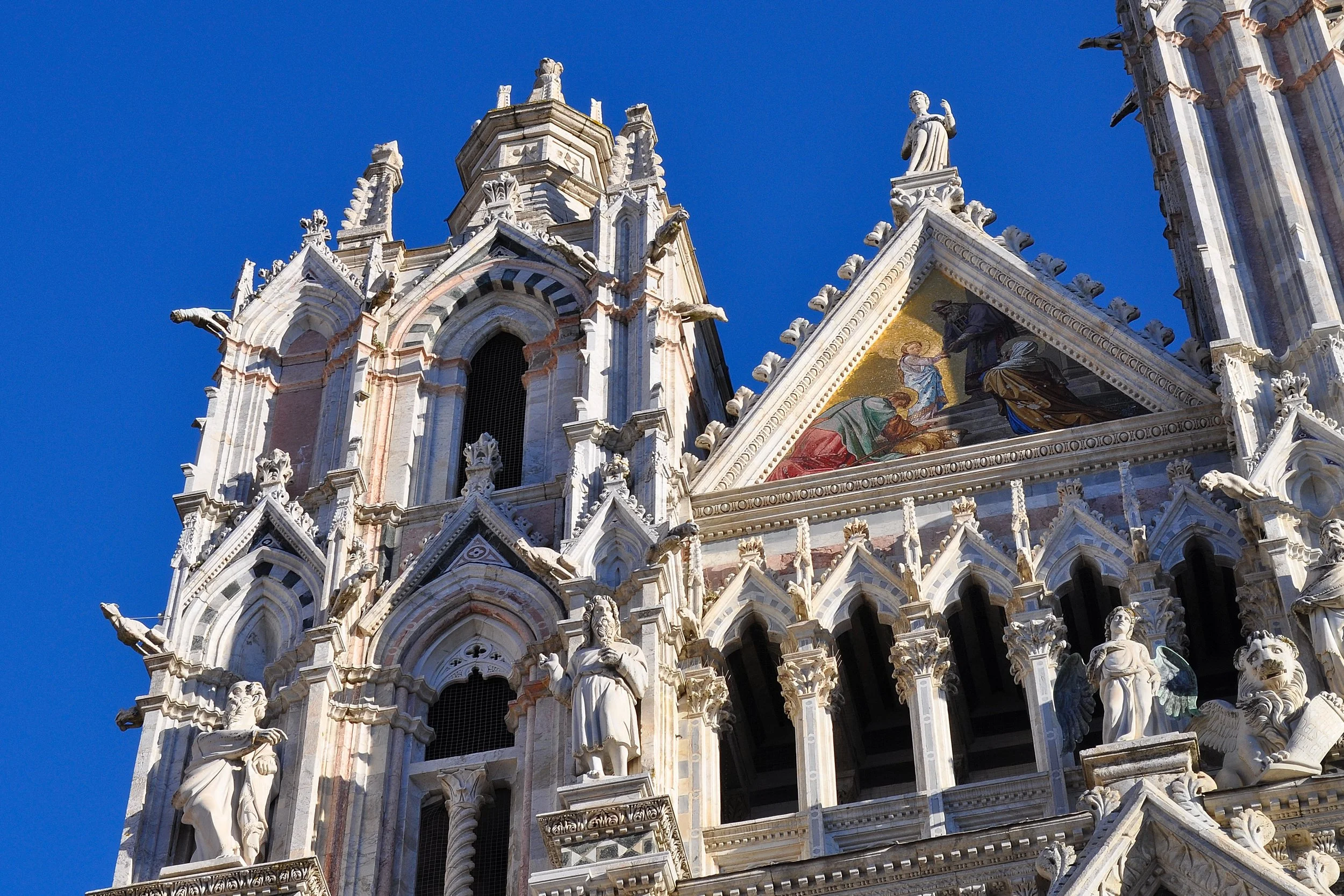
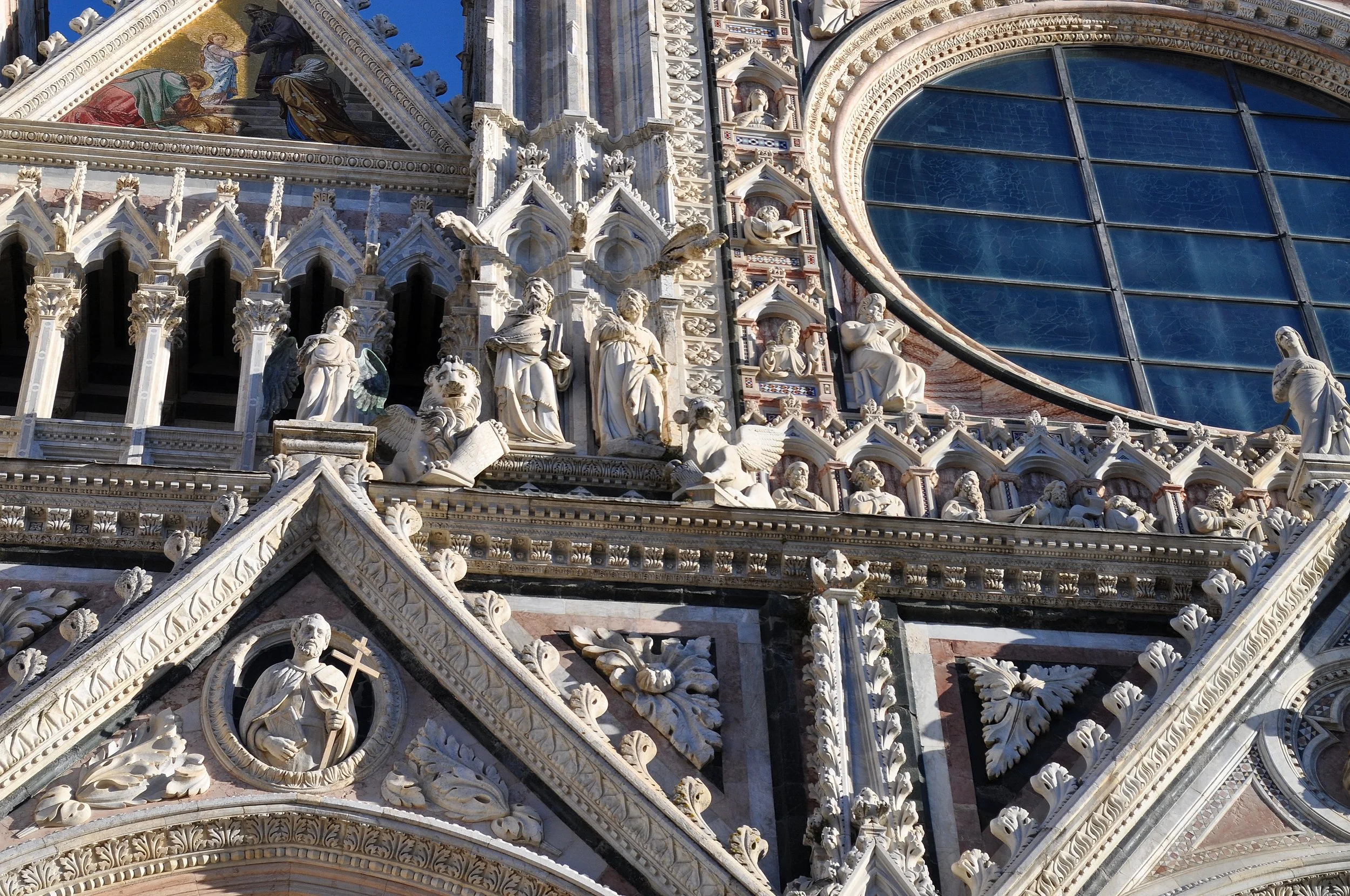
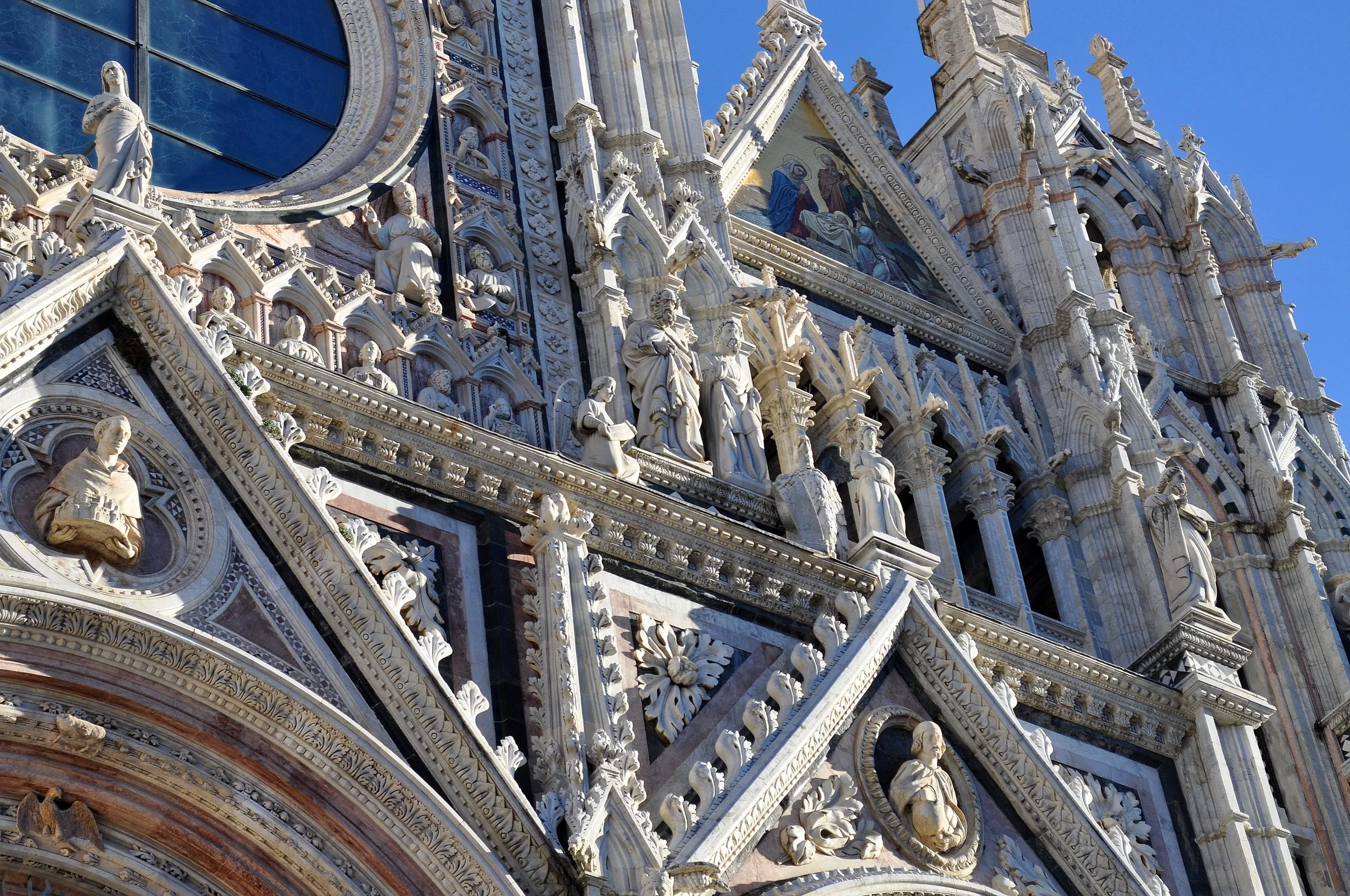
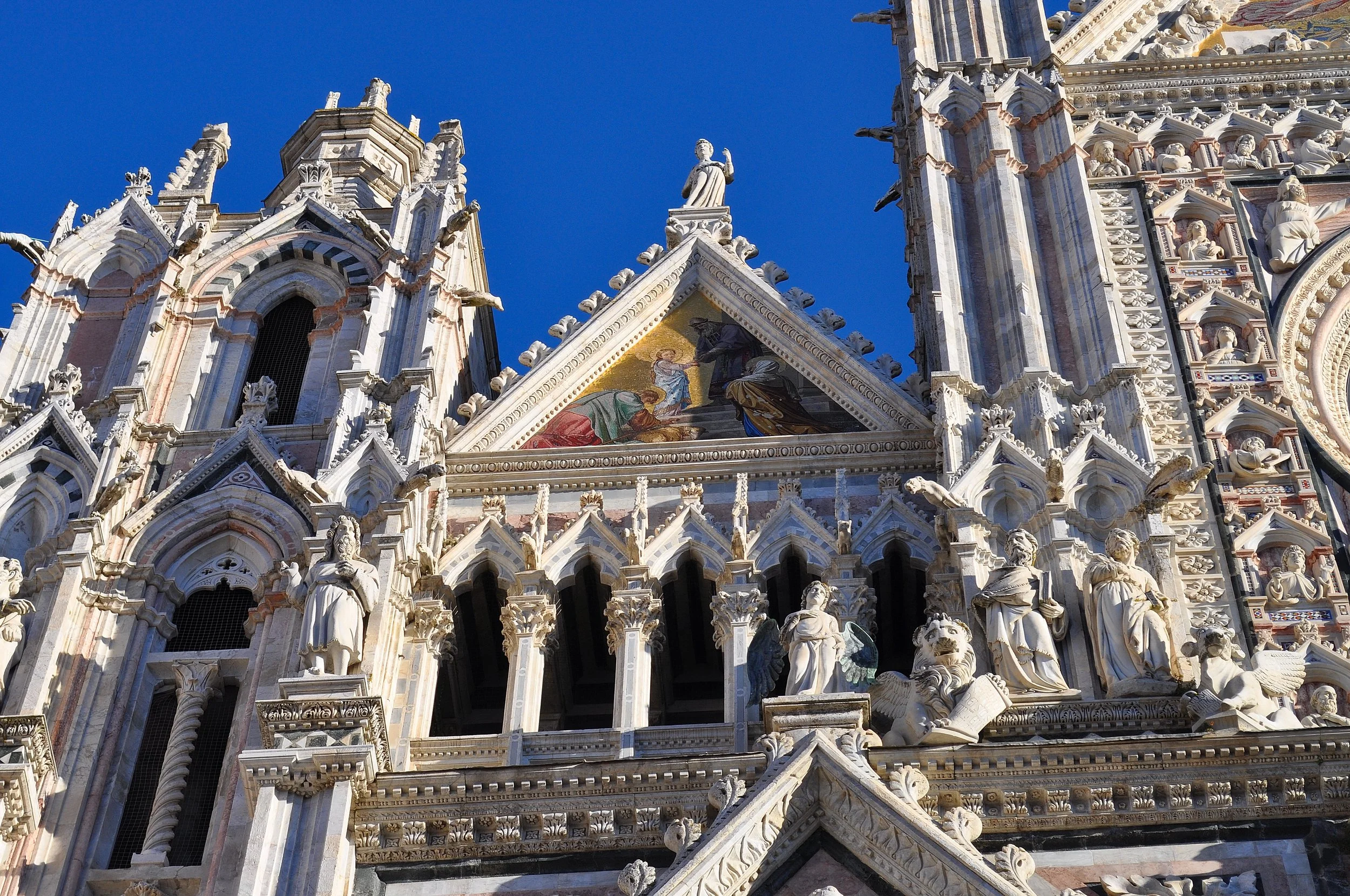
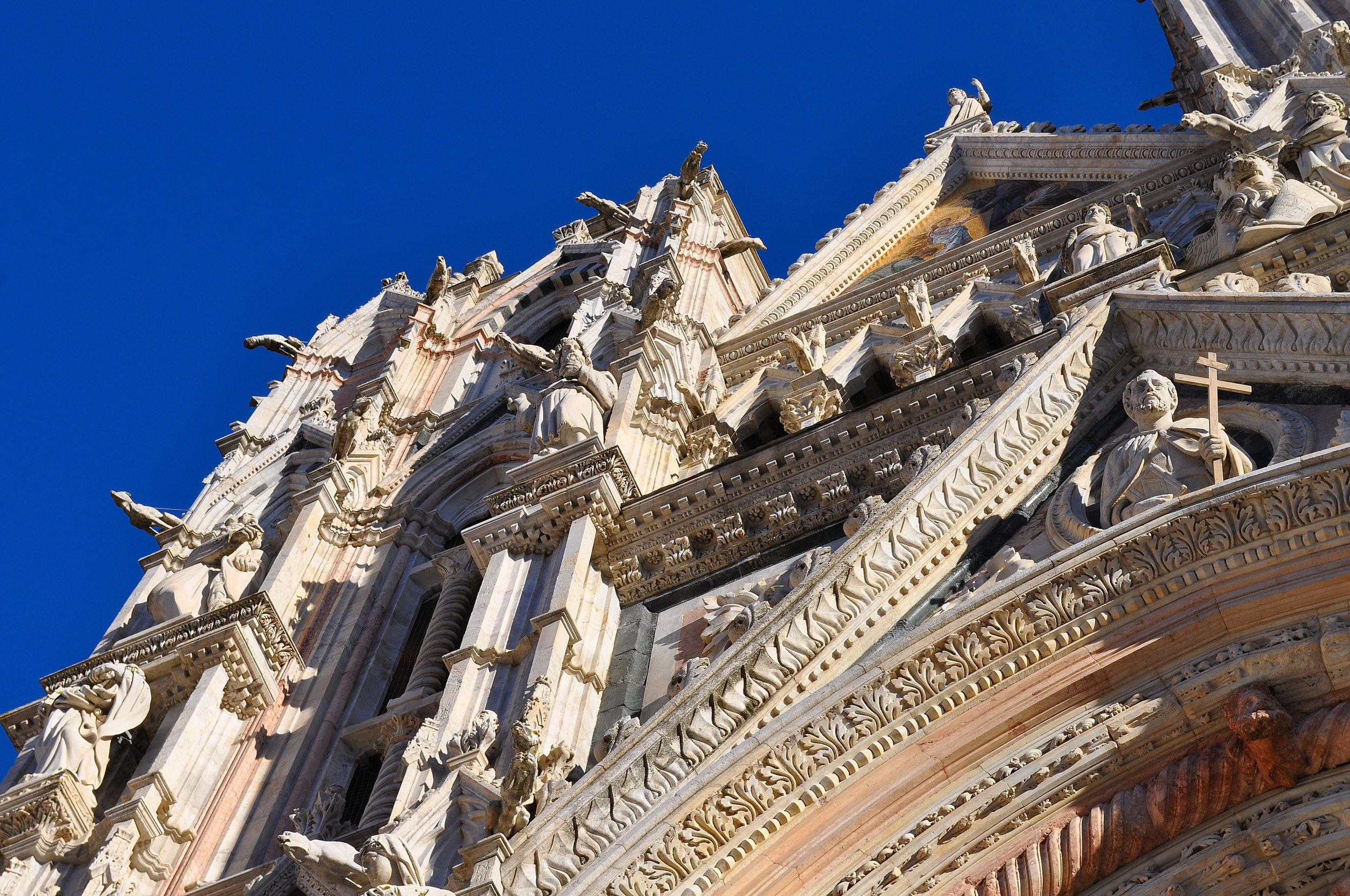
Angela: even from the outside, the cathedral is simply breathtaking. The façade, built largely during the 13th century, is a masterpiece of Italian Gothic architecture. The contrast between the white marble from Carrara and the dark green marble from Prato creates an extraordinary visual effect, a distinctive feature of Sienese architecture.
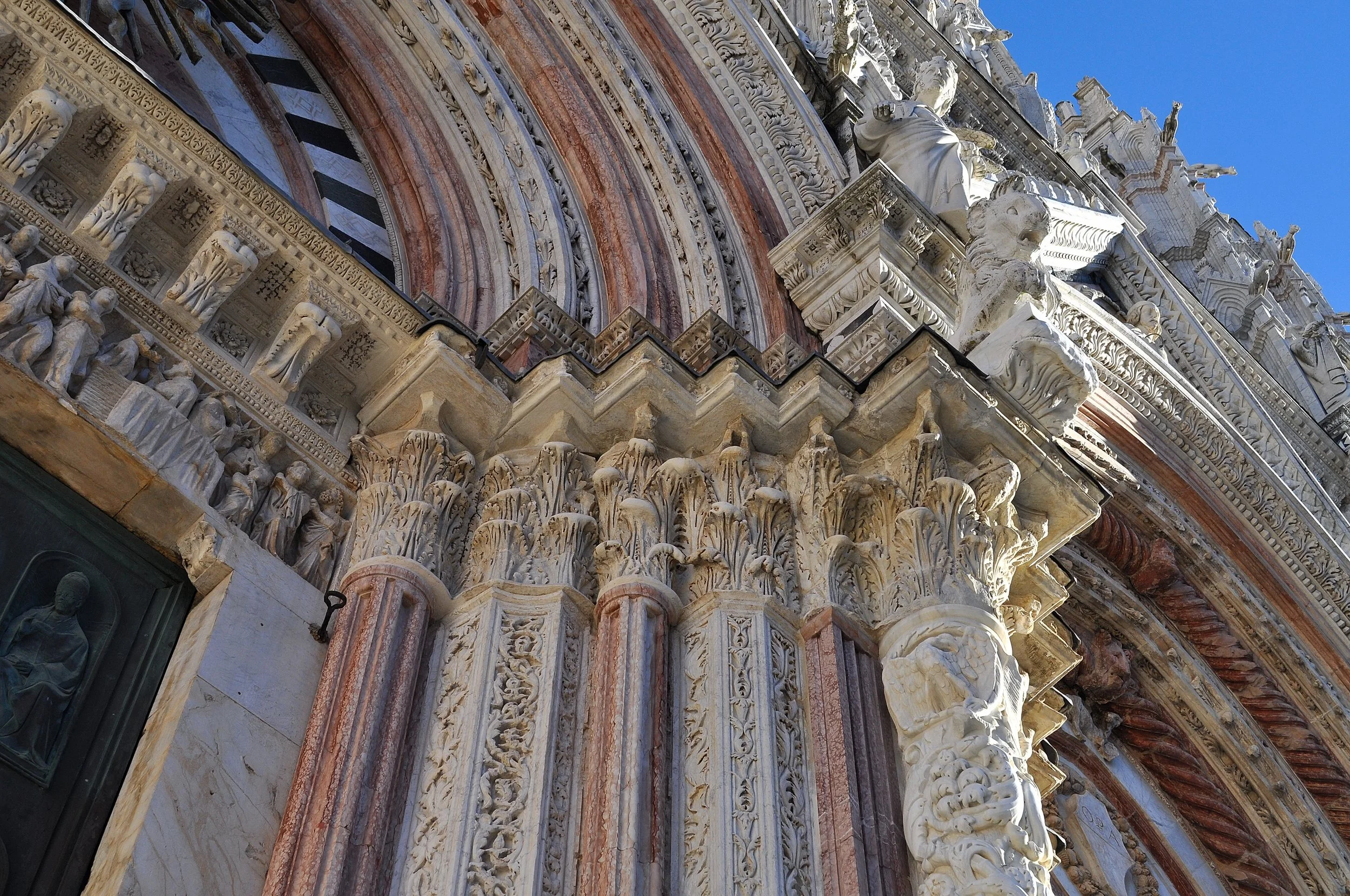
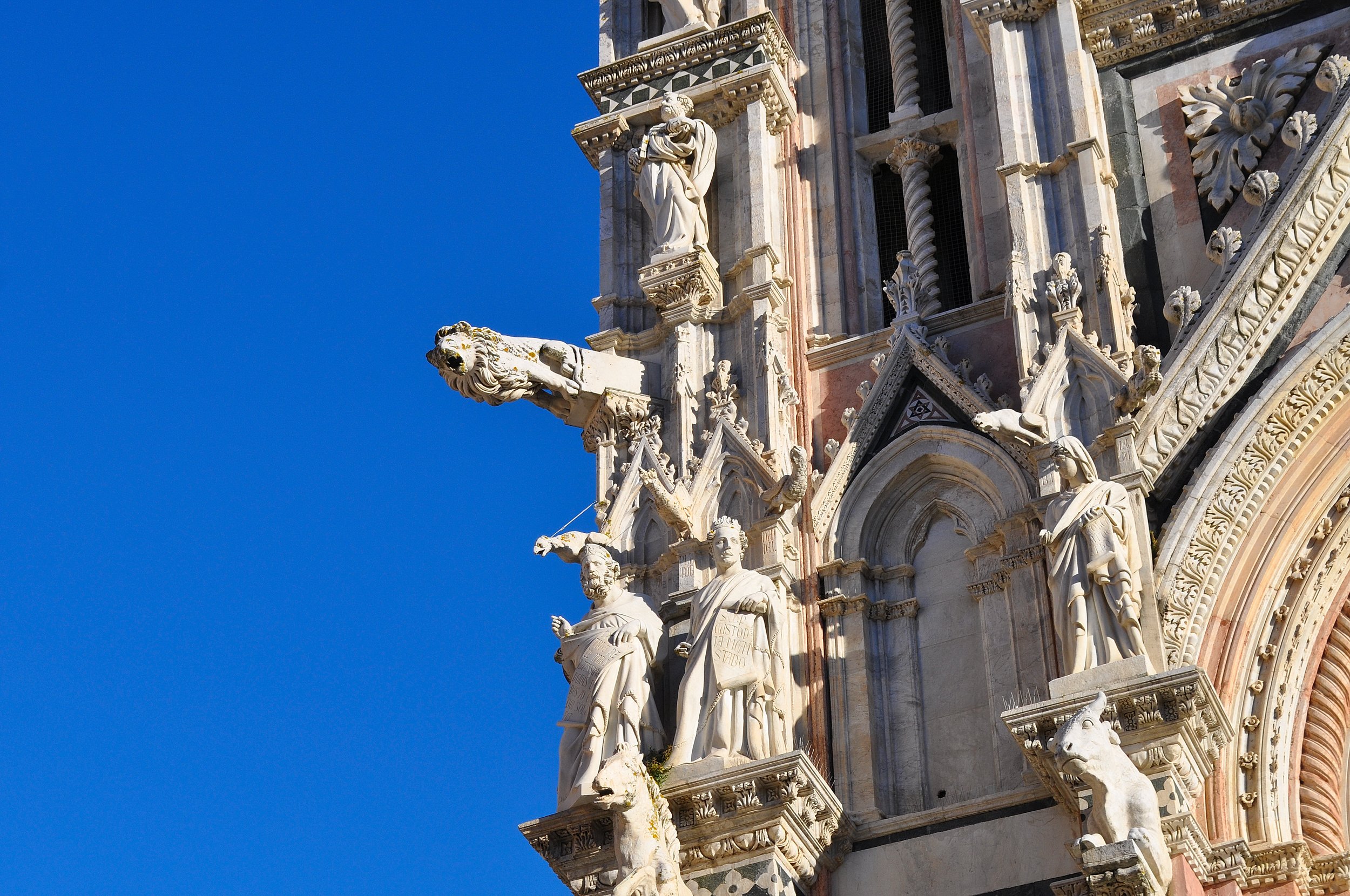
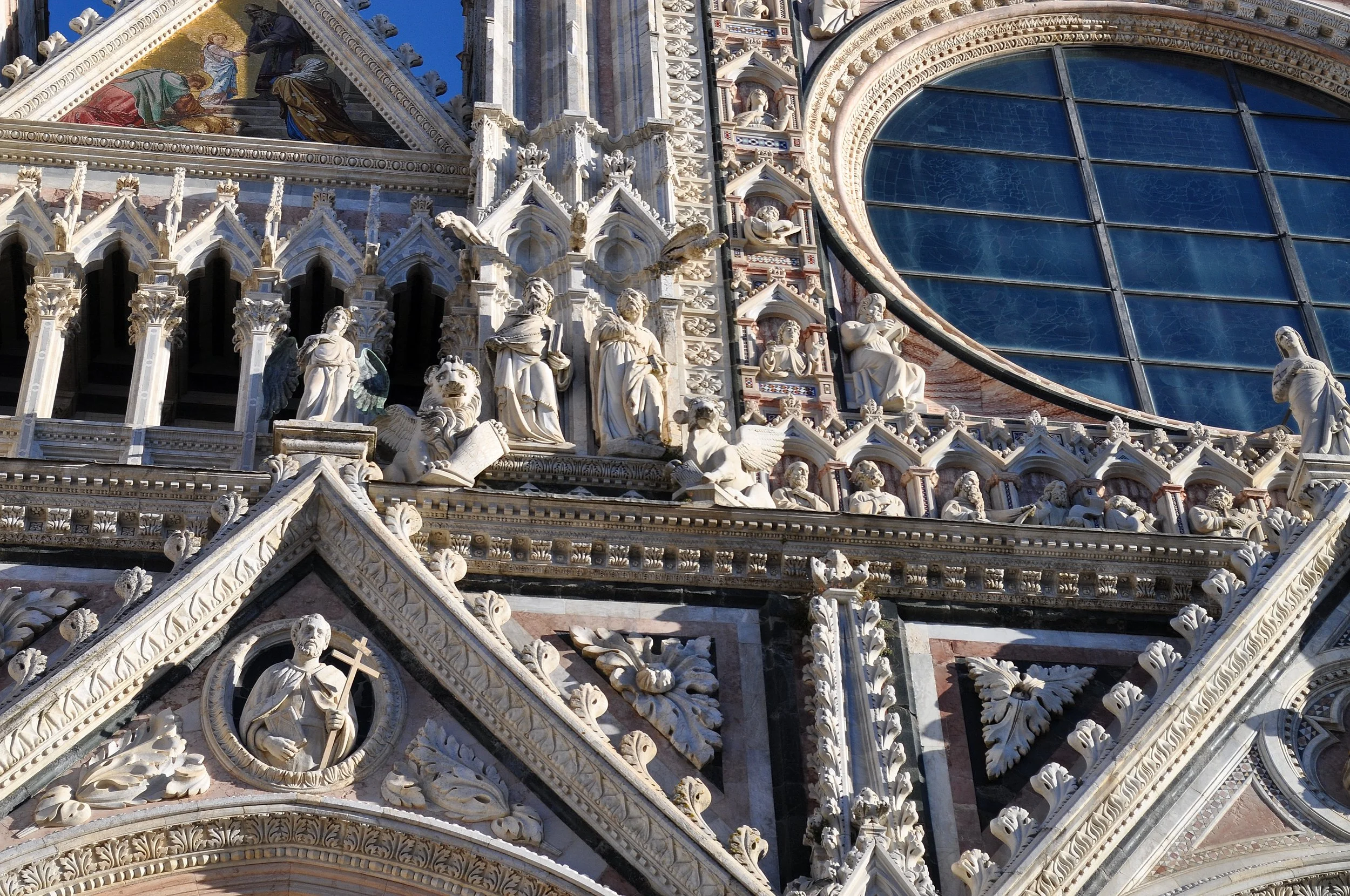
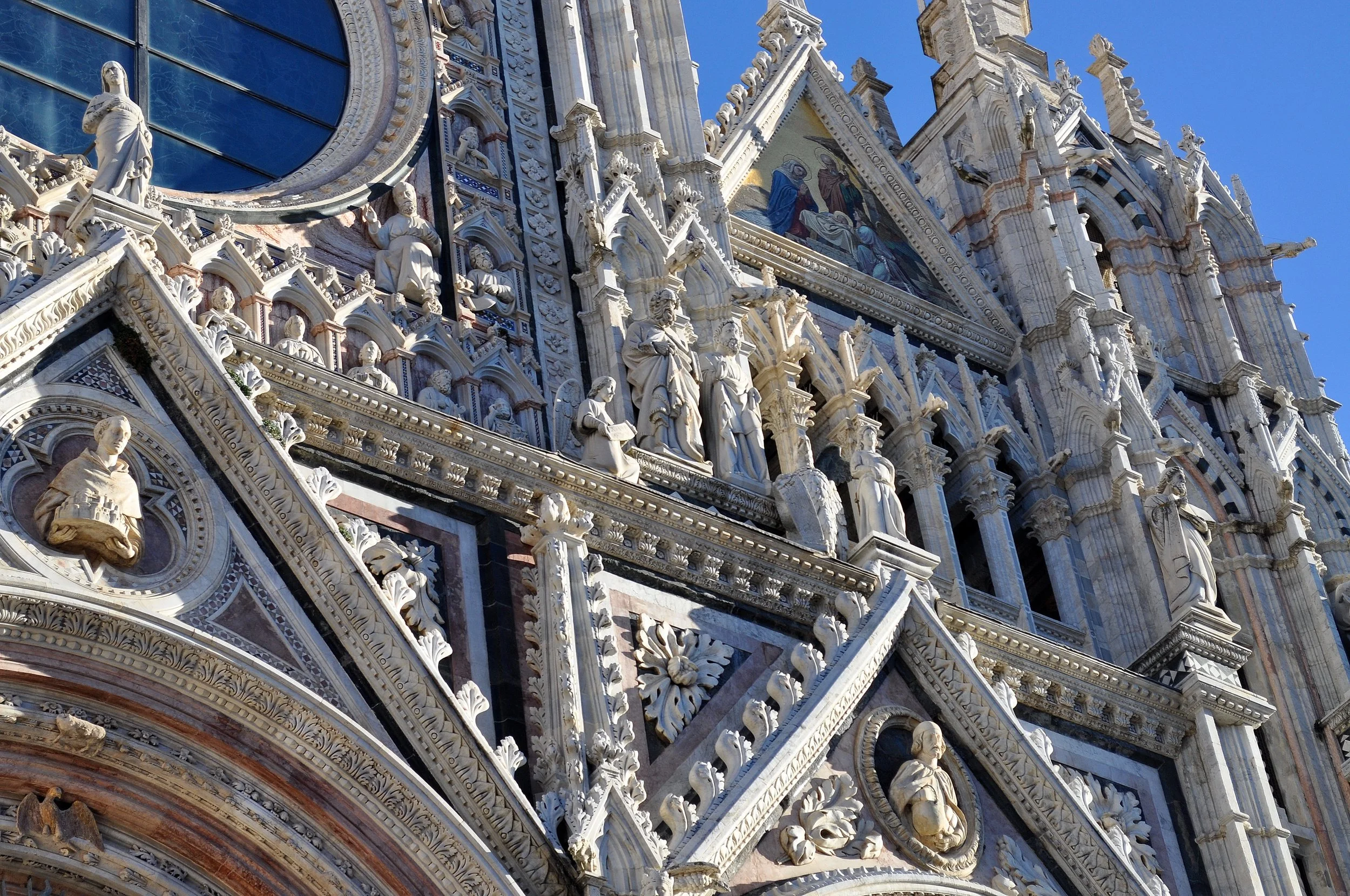
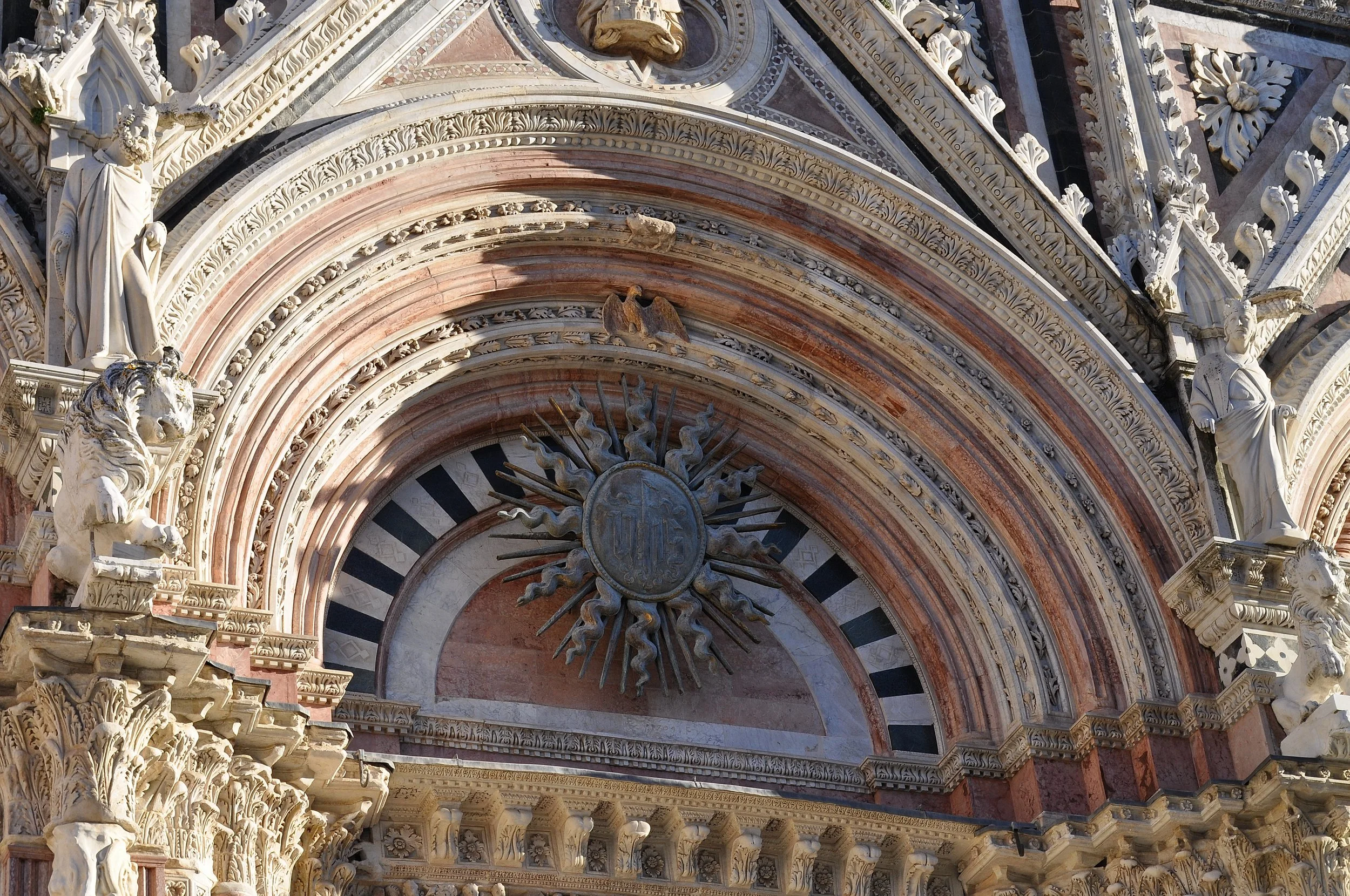
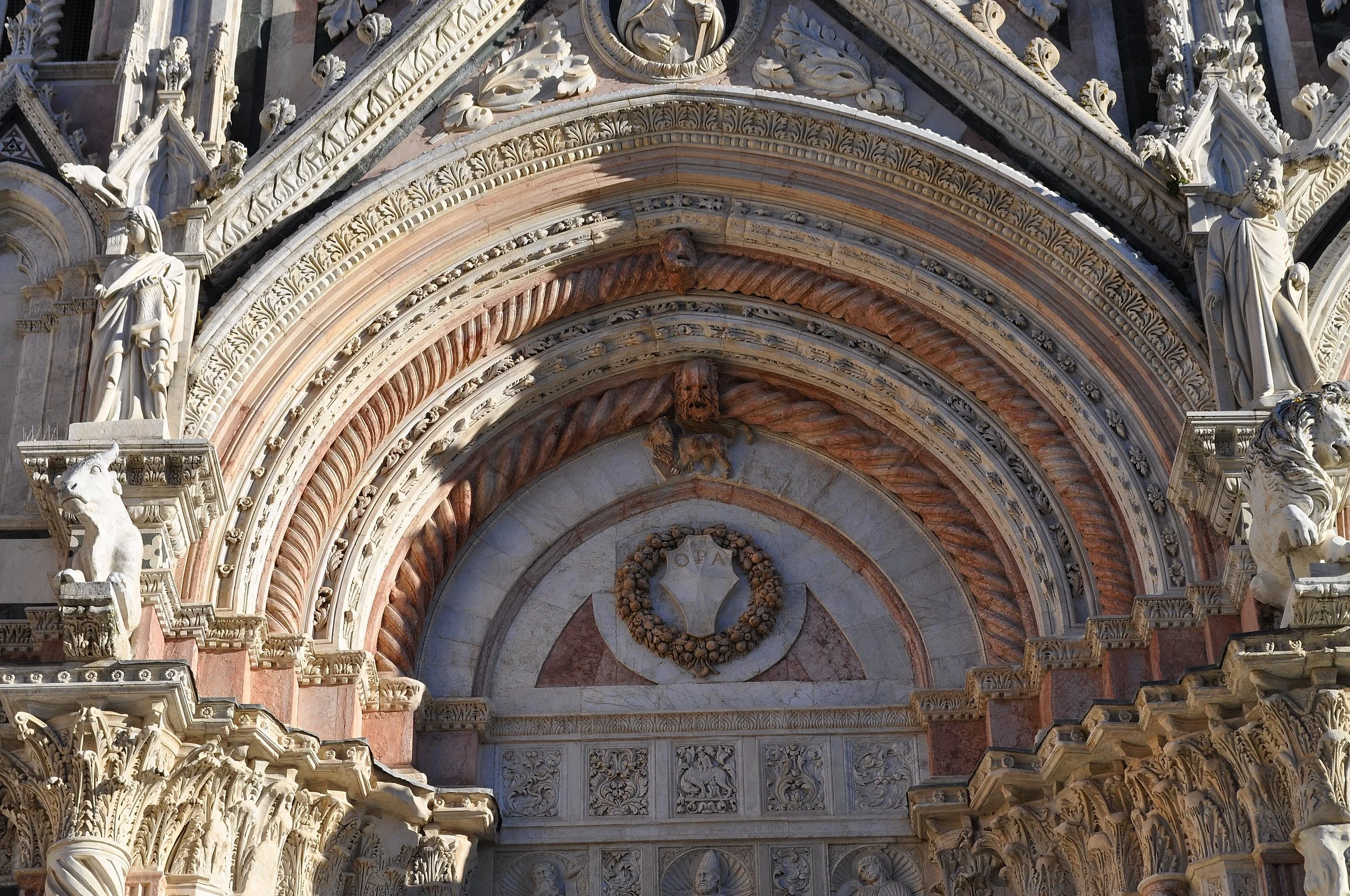
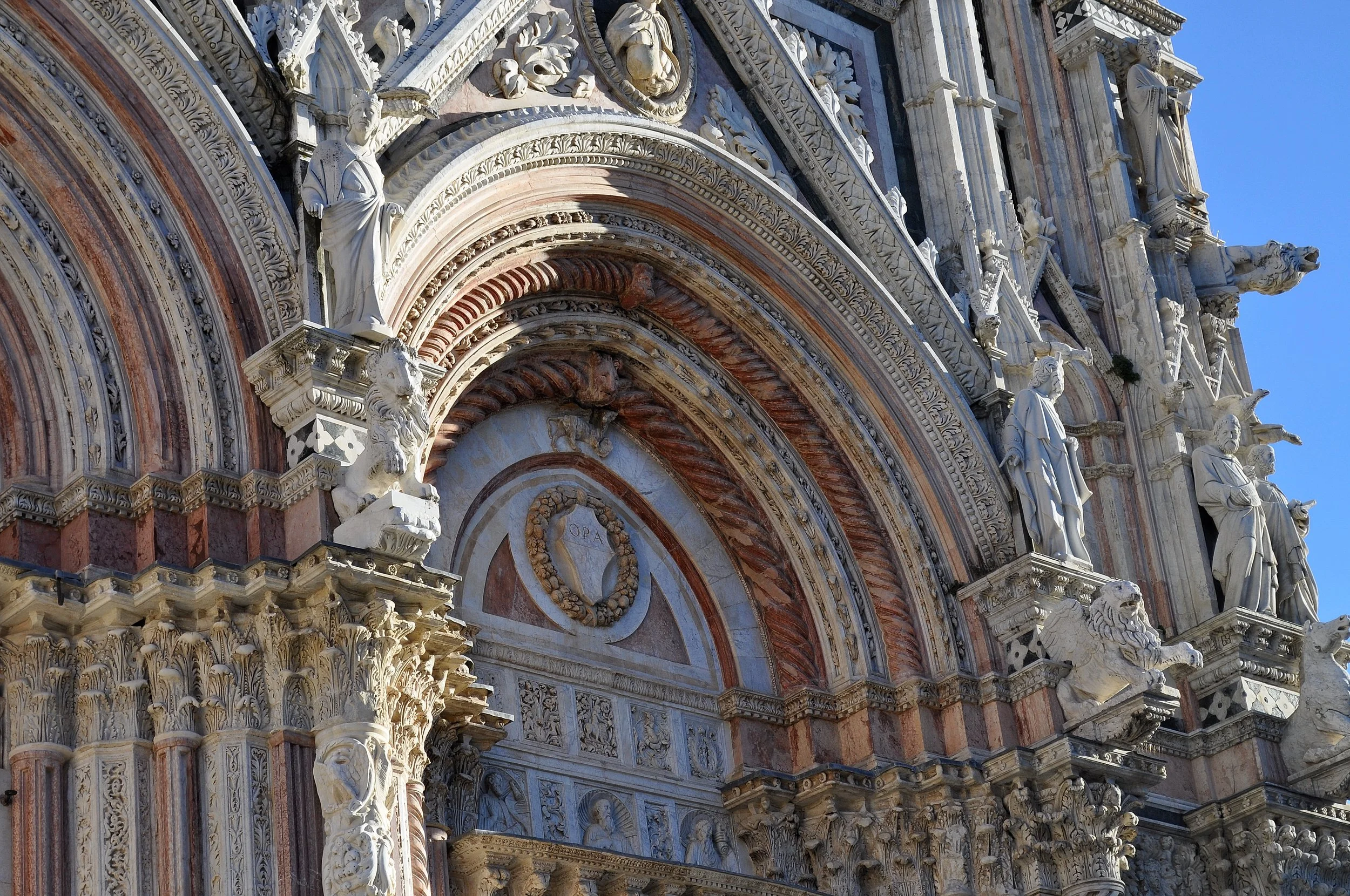
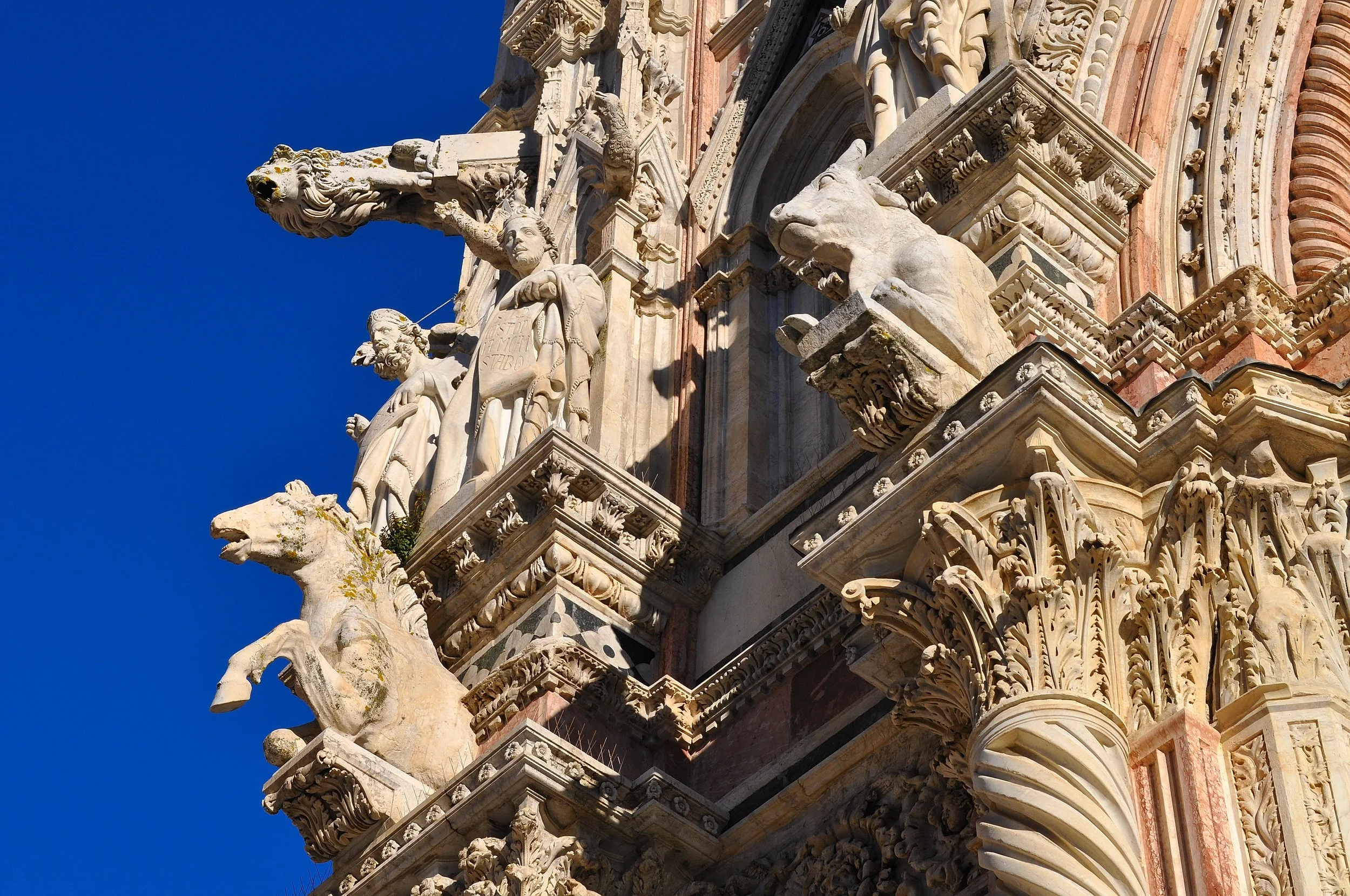
Piero: the lower section of the façade was designed by Giovanni Pisano, one of the greatest sculptors of the Middle Ages. The statues we see today are copies, while the originals, as we mentioned, are preserved in the Museum of the Opera del Duomo to protect them from the effects of time and weather.
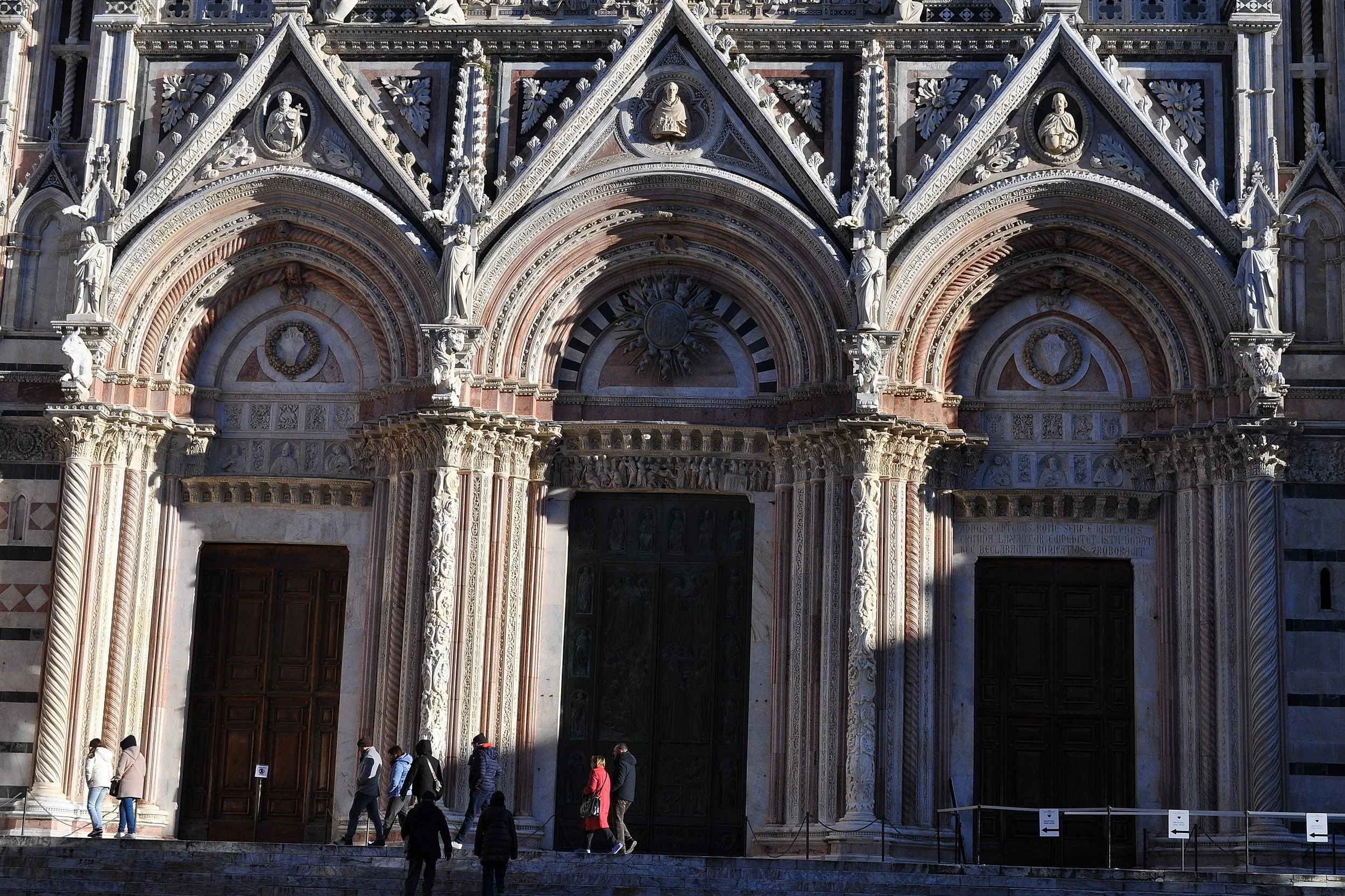
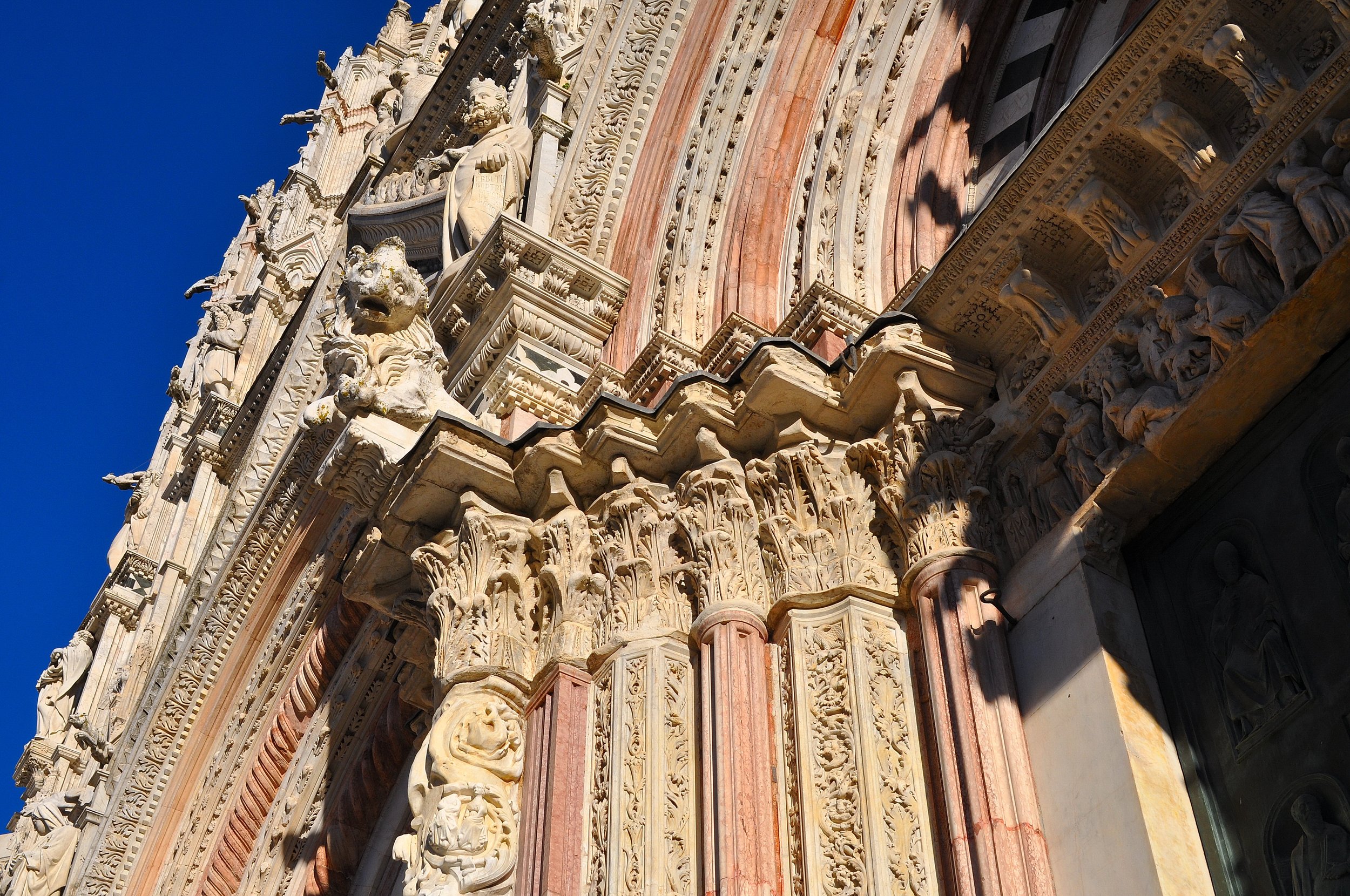
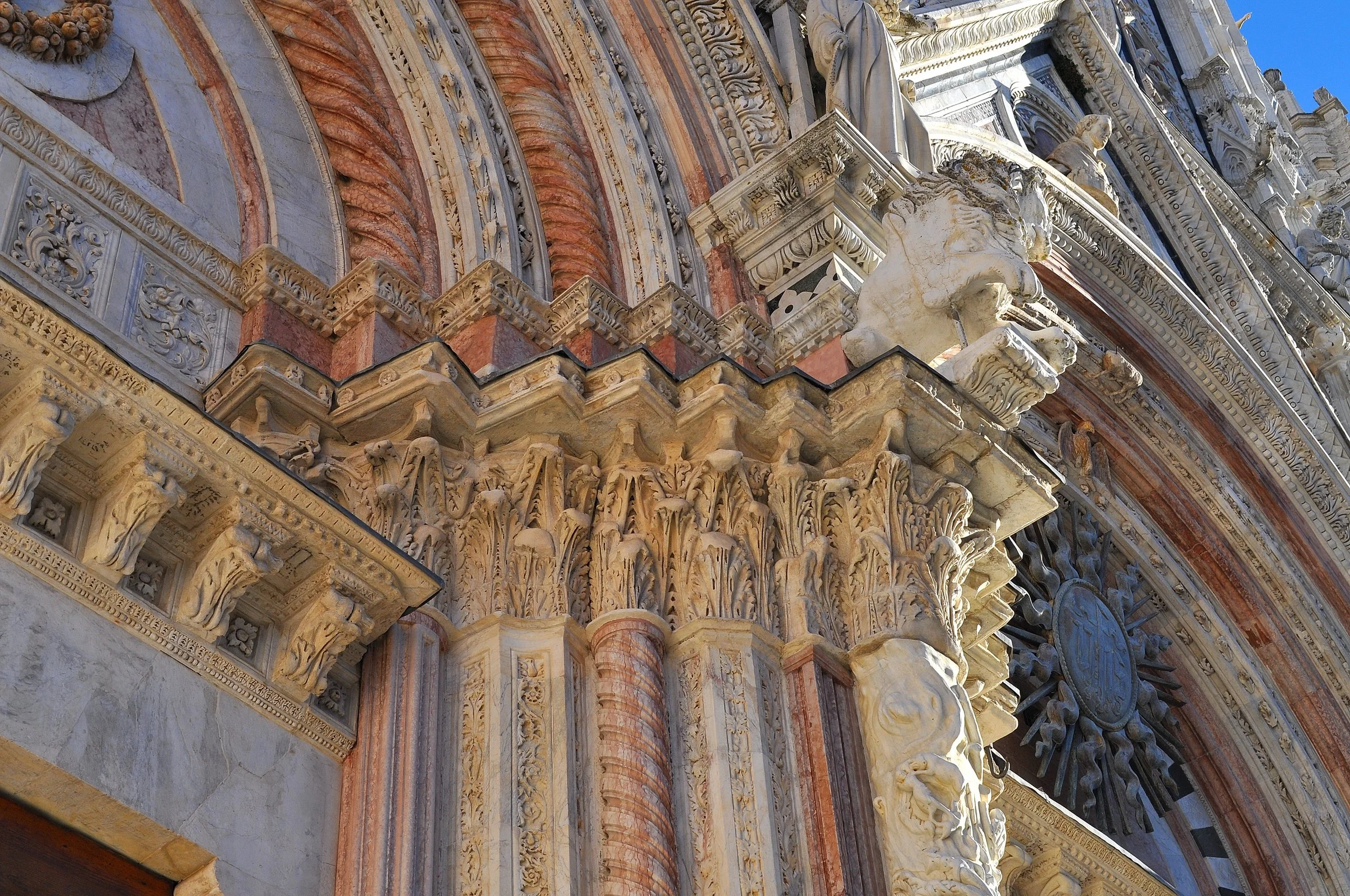
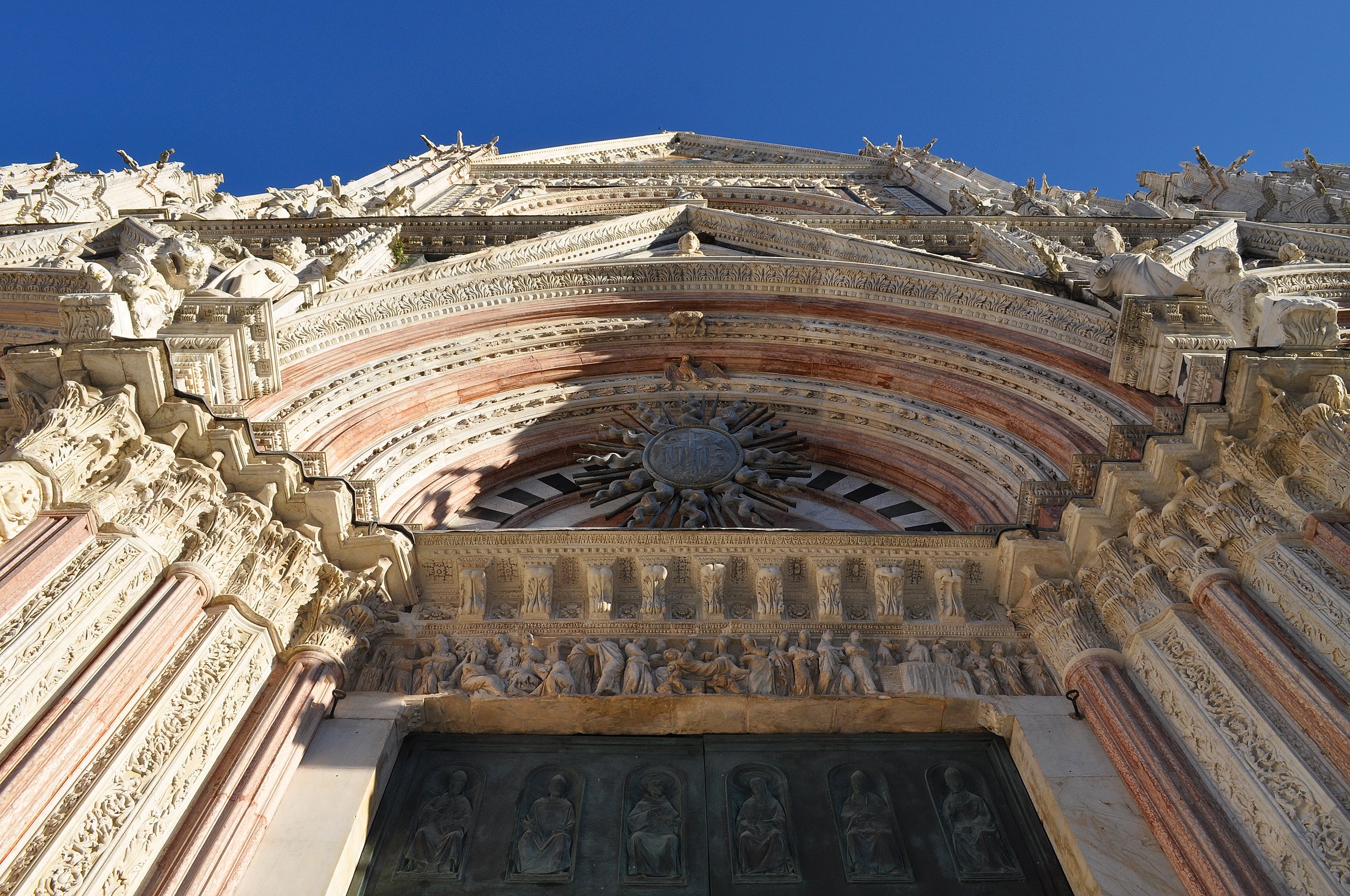
Angela: the upper section of the façade is instead the result of later interventions, carried out between the 14th and 19th centuries, with magnificent golden mosaics depicting episodes from the life of the Virgin Mary. The large central rose window also helps to give the façade an extraordinary sense of light and elegance.
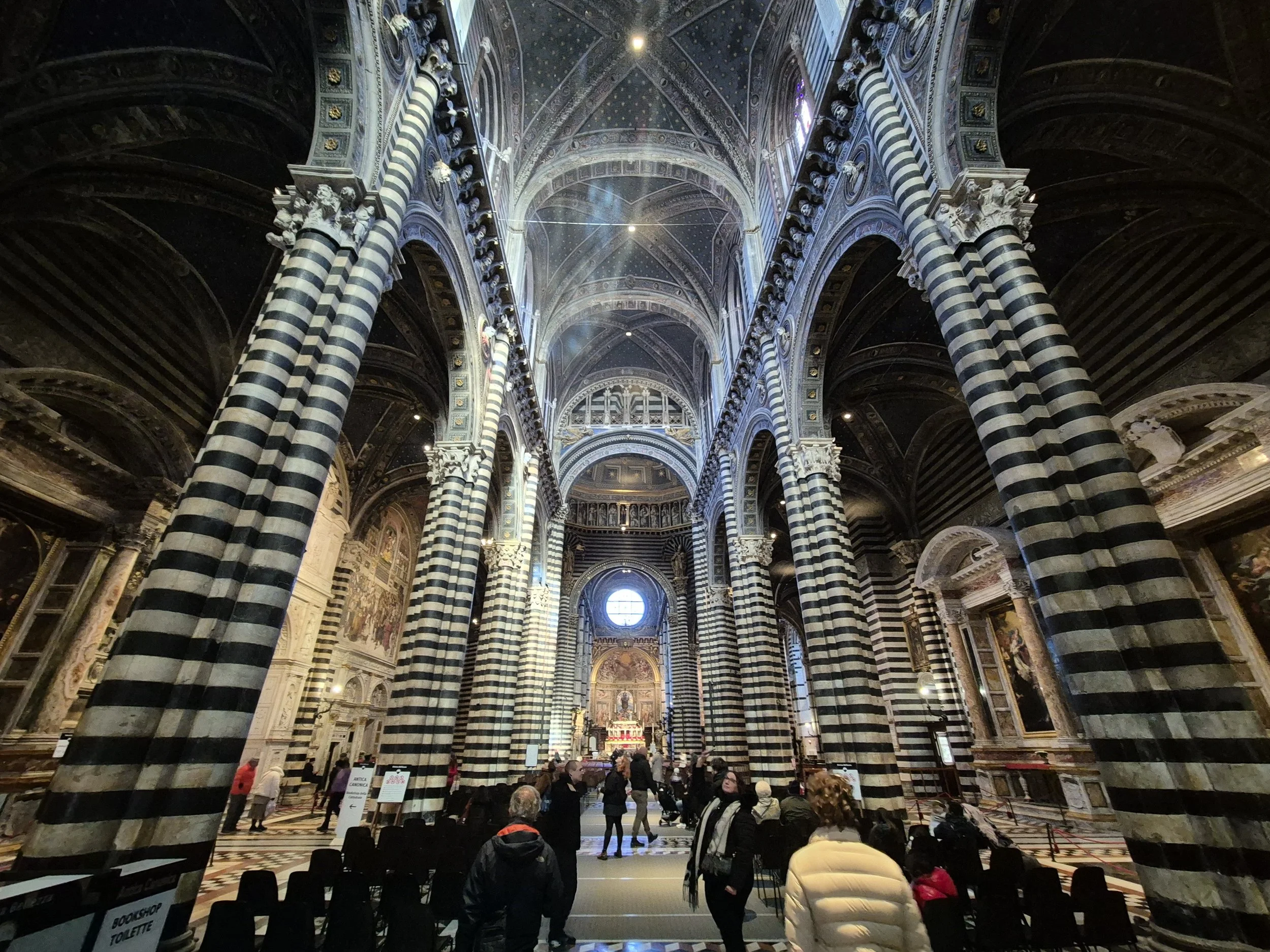
Piero: entering the cathedral, you are immediately struck by the alternating black and white columns, the symbolic colours of Siena, which according to tradition recall the horses of the legendary founders Senius and Aschius.
Angela: but the true masterpiece of the Cathedral of Siena is its extraordinary inlaid marble floor, considered one of the most beautiful in the world. It is a unique cycle of 56 marble panels, created between the 14th and 16th centuries, depicting Biblical scenes, allegories, and figures from classical culture.
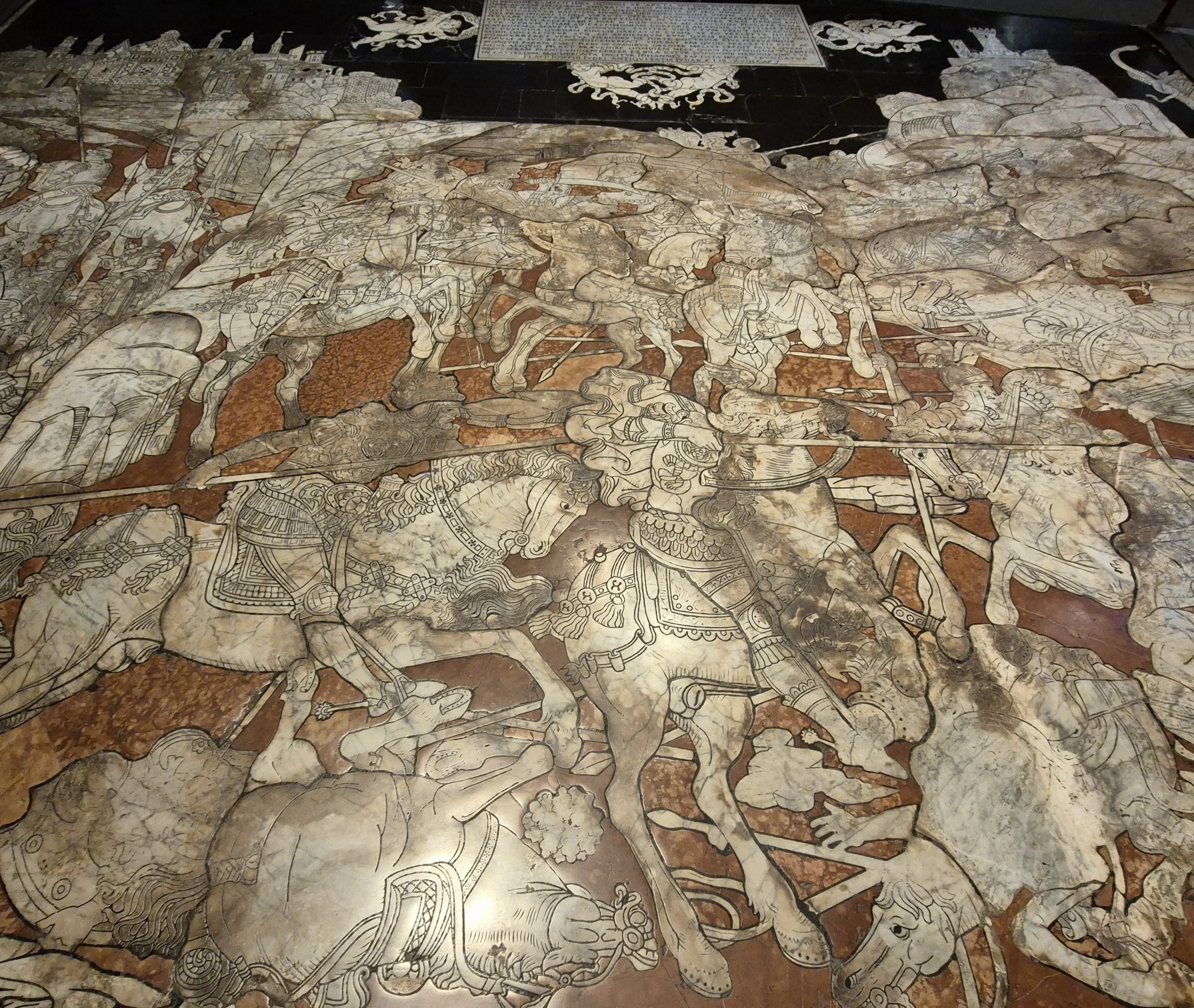
Piero: among the most famous scenes we find the Cumaean Sibyl, Hermes Trismegistus, the Sacrifice of Isaac, and the spectacular Massacre of the Innocents, created in the 16th century by Matteo di Giovanni. To protect these precious inlays, the floor remains covered for most of the year and is only uncovered during specific periods.
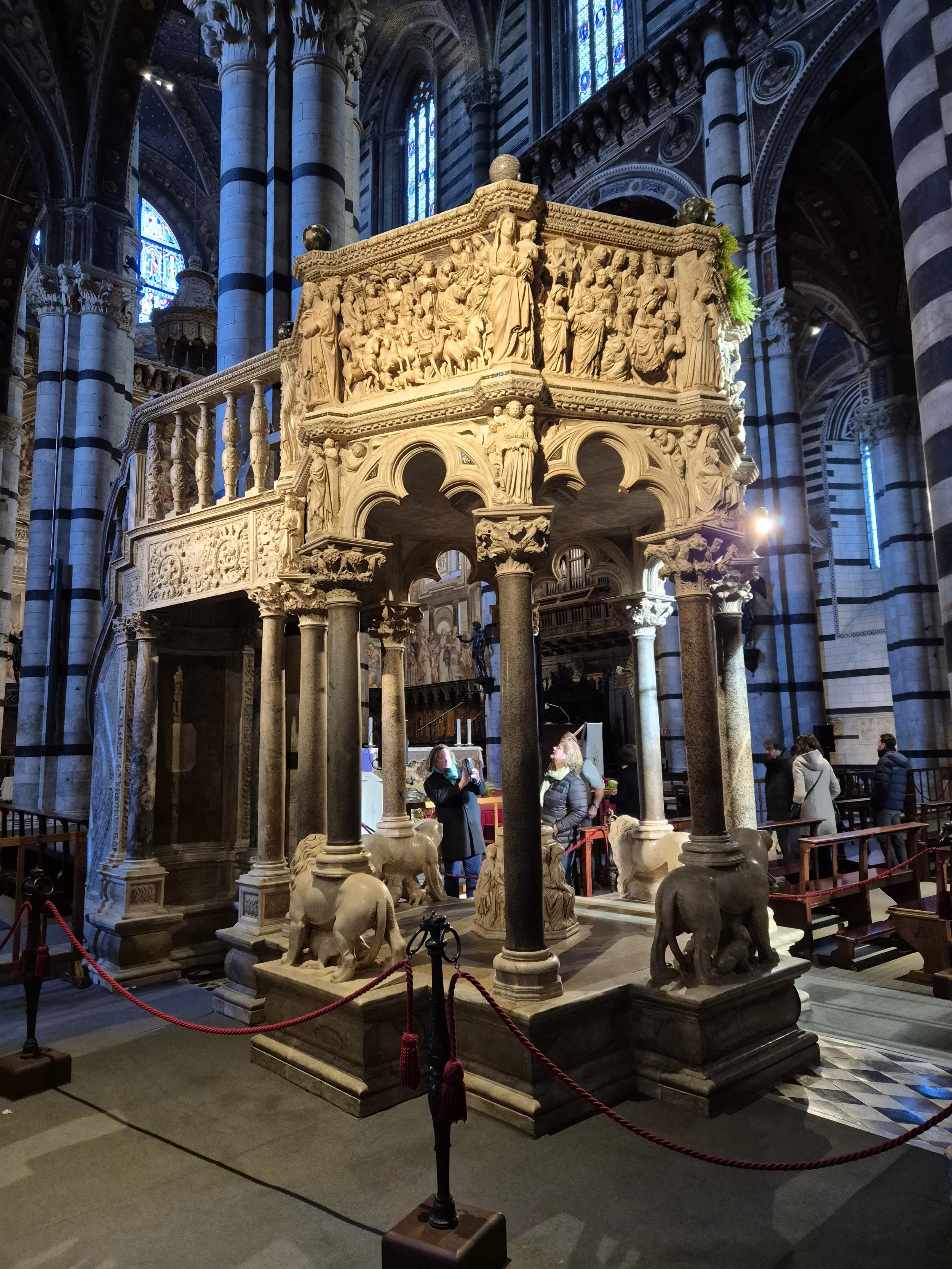
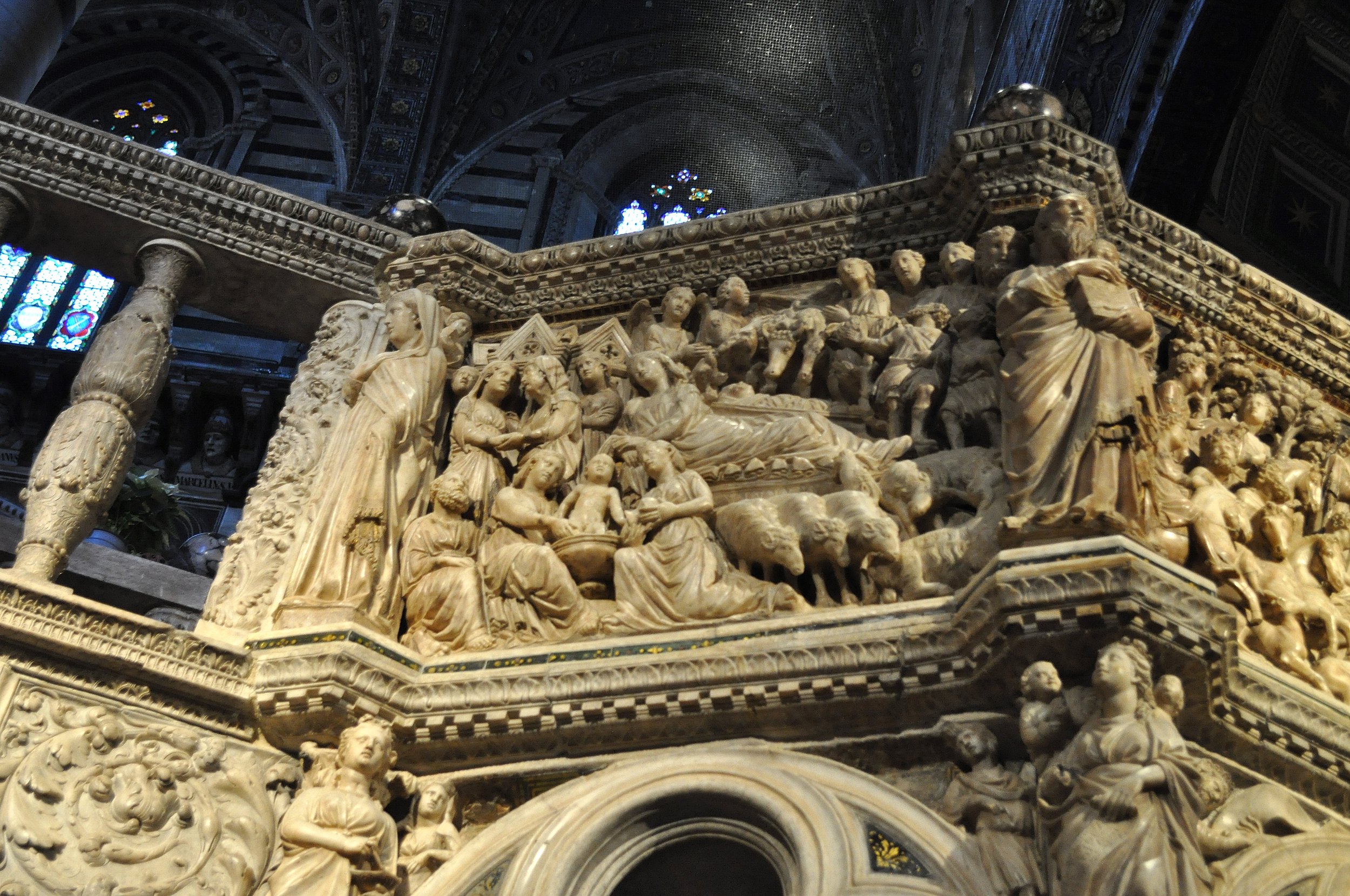
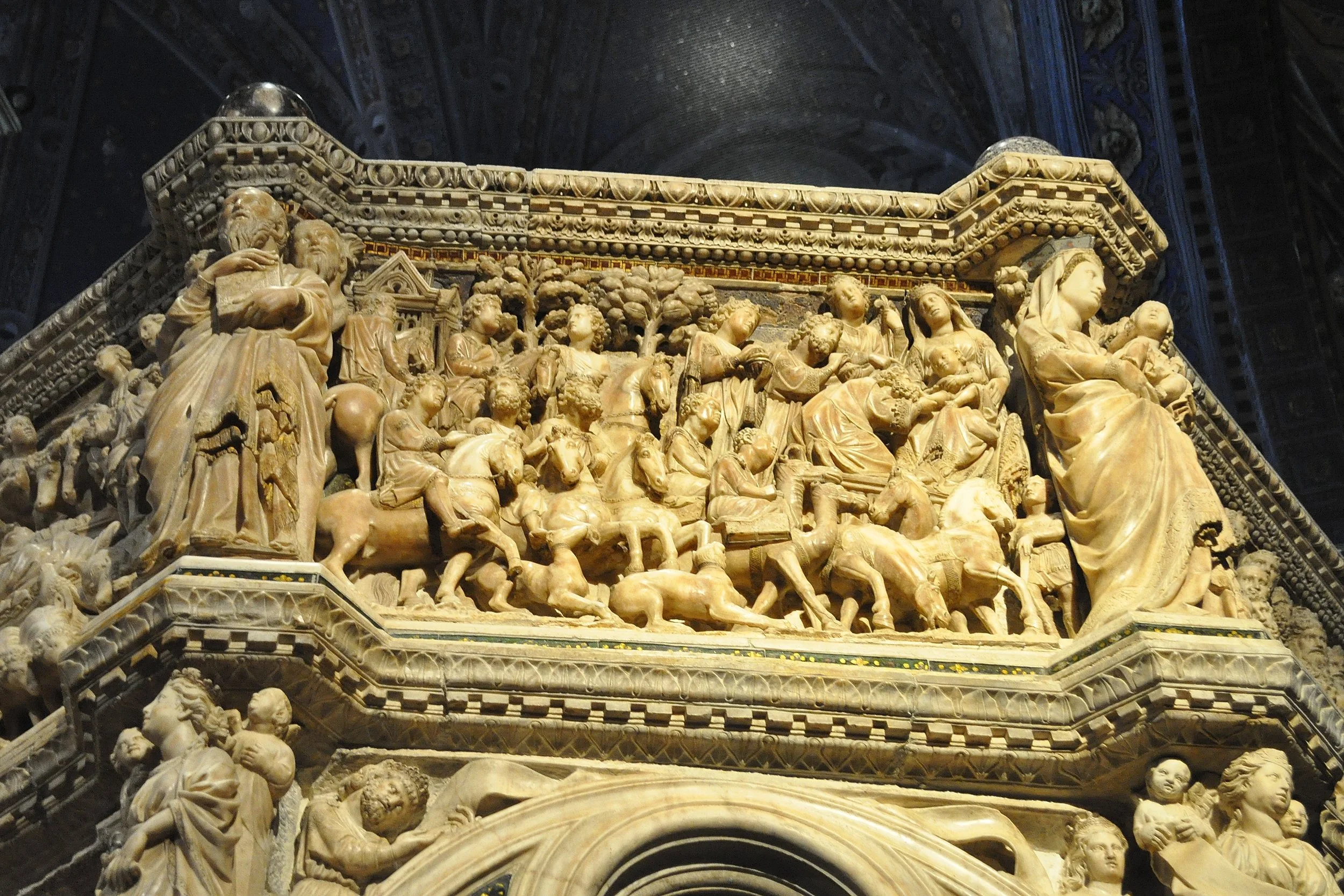
Angela: among the cathedral's most important sculptural works, the magnificent pulpit by Nicola Pisano stands out. Created between 1265 and 1268, it is a masterpiece of medieval sculpture, with panels depicting episodes from the life of Christ with extraordinary realism and expressive power.
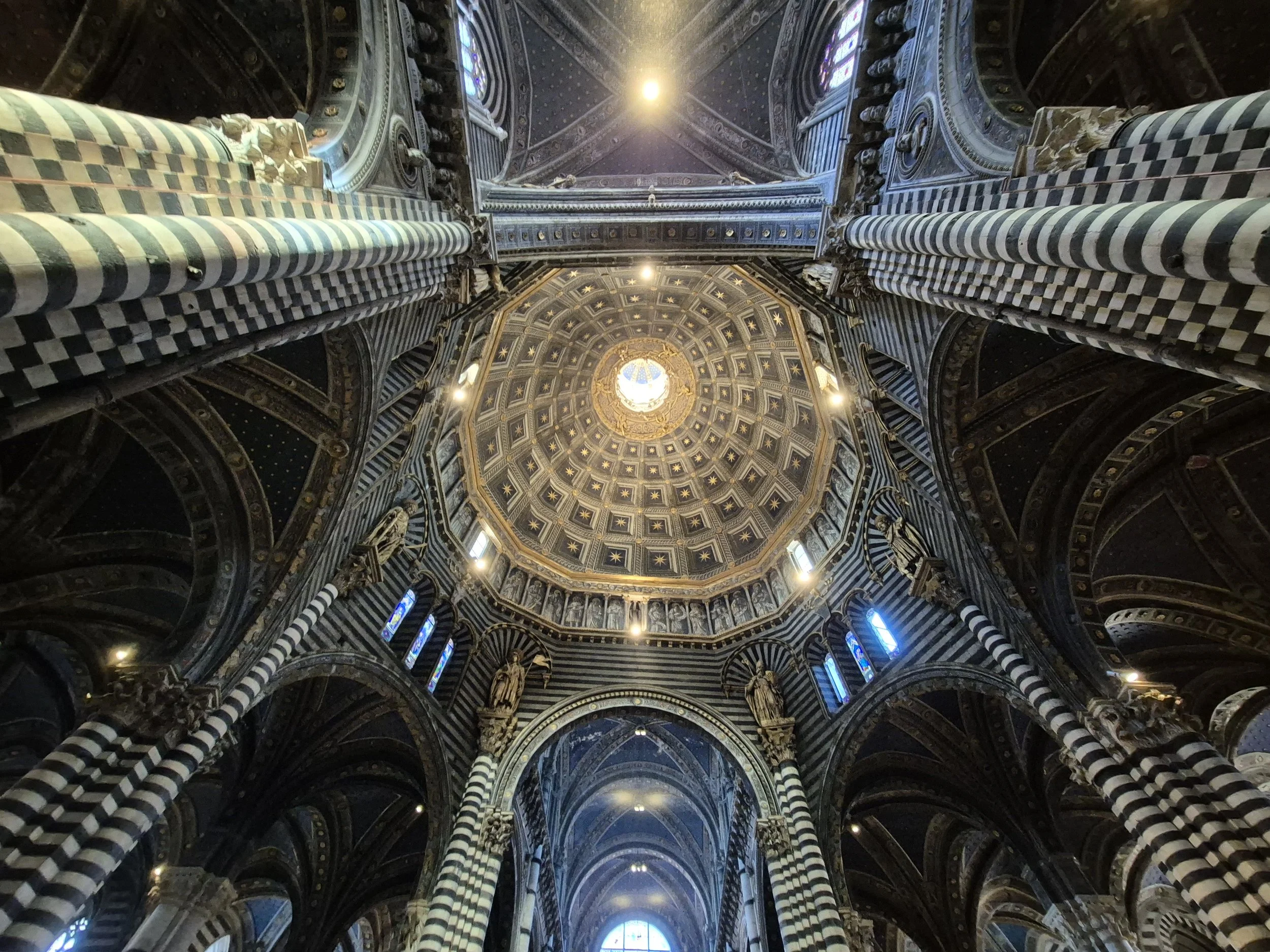
Piero: continuing along the nave, we reach the area beneath the great dome, designed in the 15th century and later enriched with decorations by Gian Lorenzo Bernini, one of the greatest masters of the Roman Baroque.
Angela: one of the most extraordinary rooms in the cathedral is undoubtedly the Piccolomini Library, commissioned by Cardinal Francesco Piccolomini, who later became Pope Pius III, to preserve the manuscripts of his uncle, Pope Pius II.
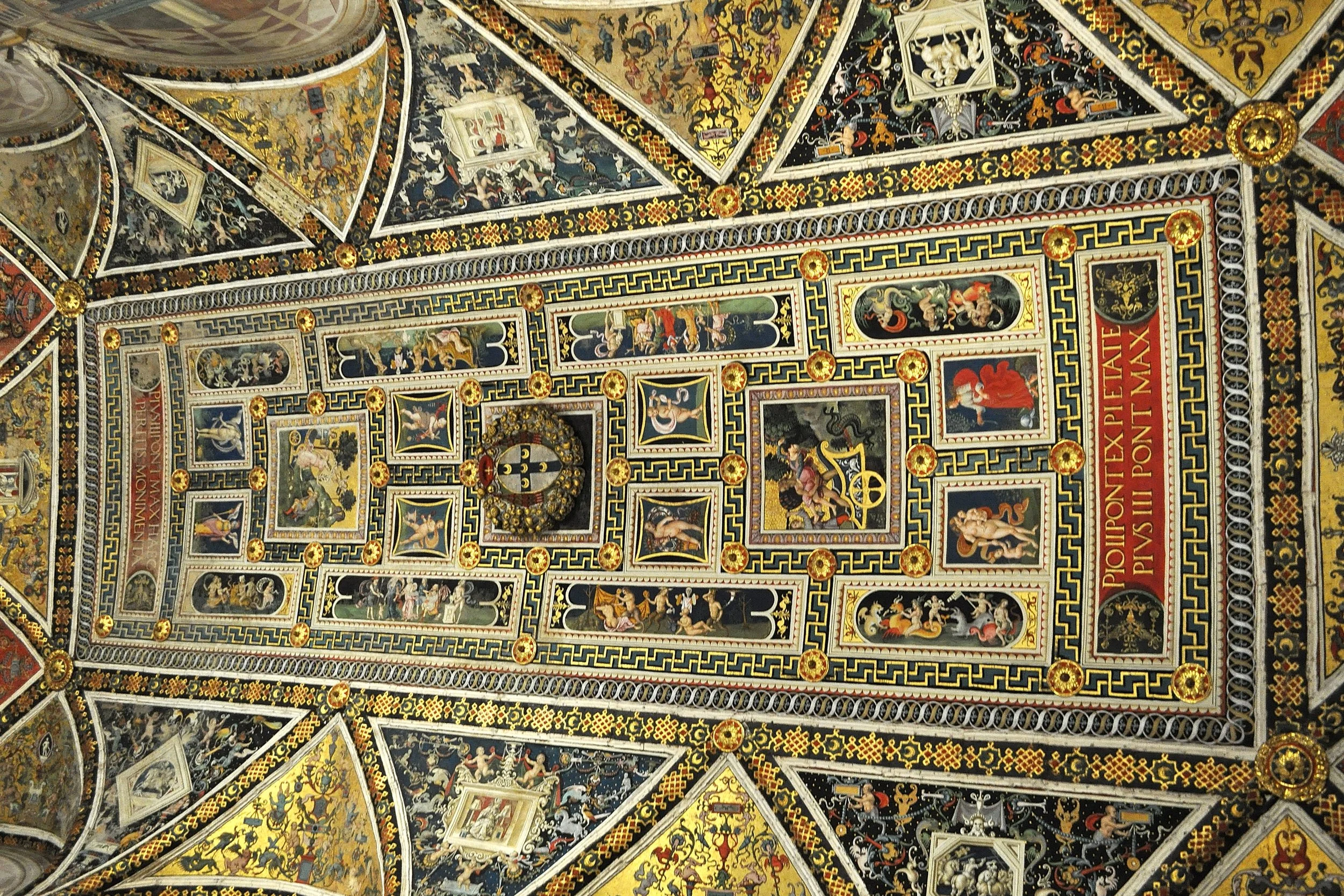
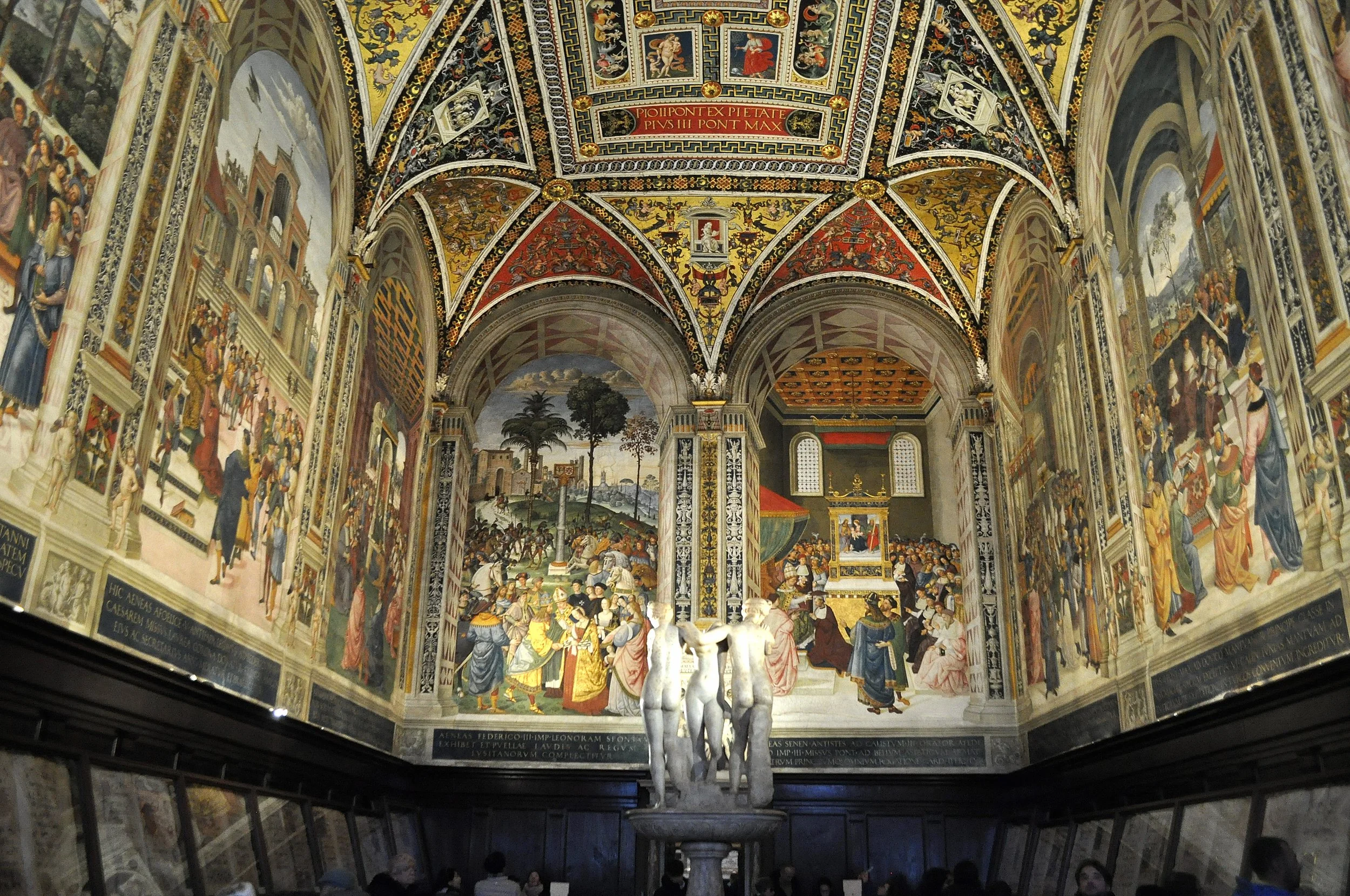
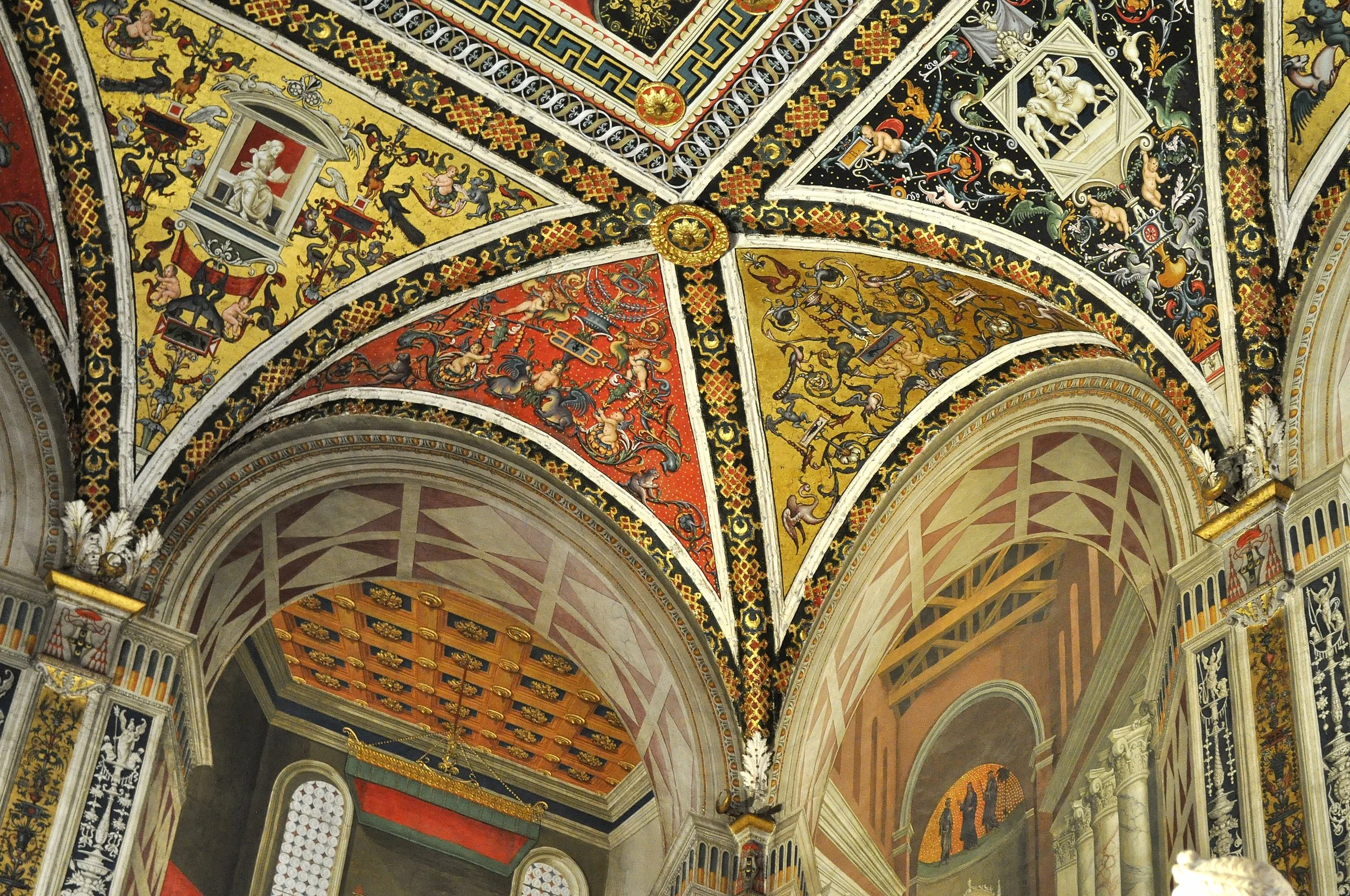
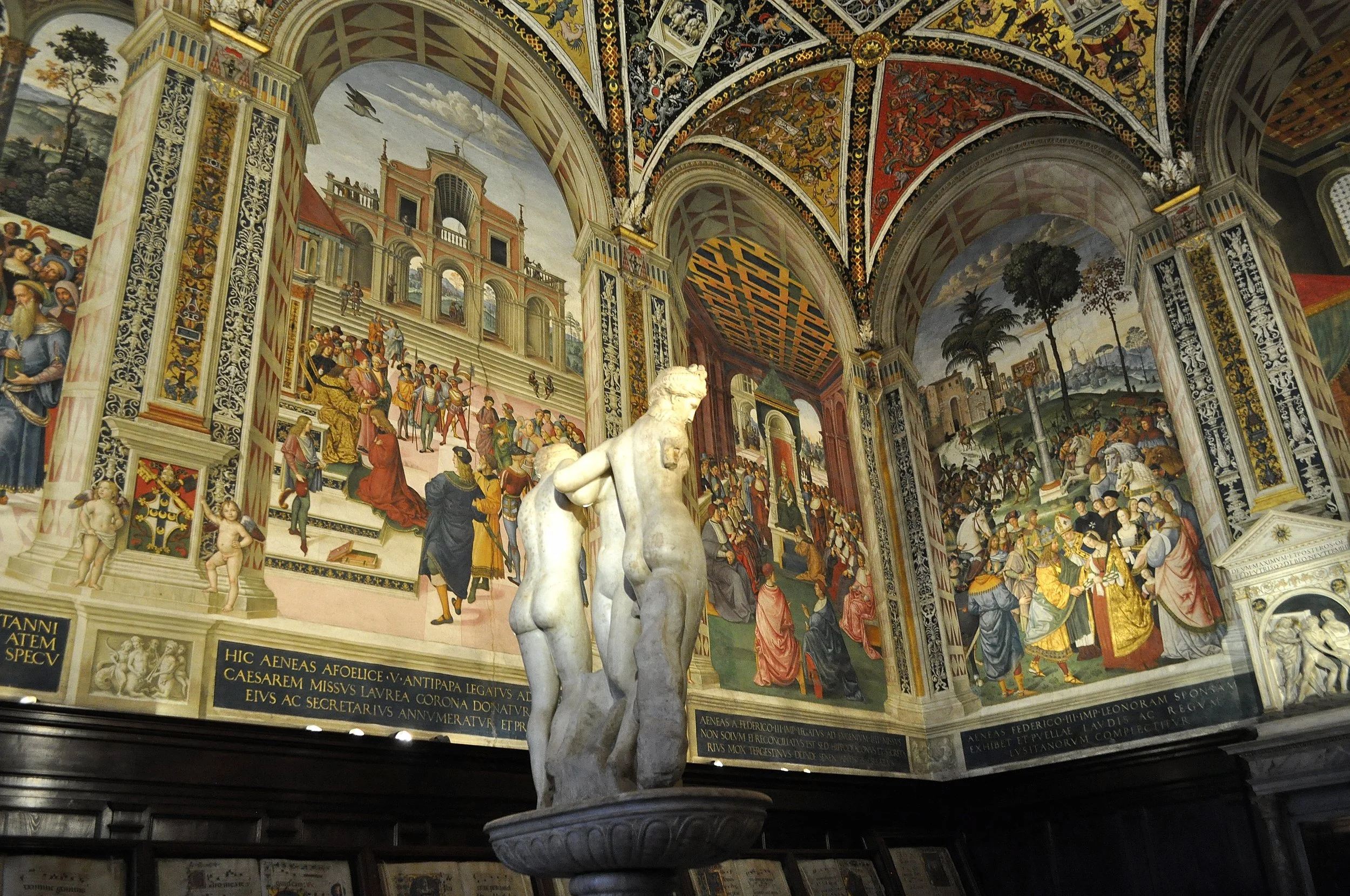
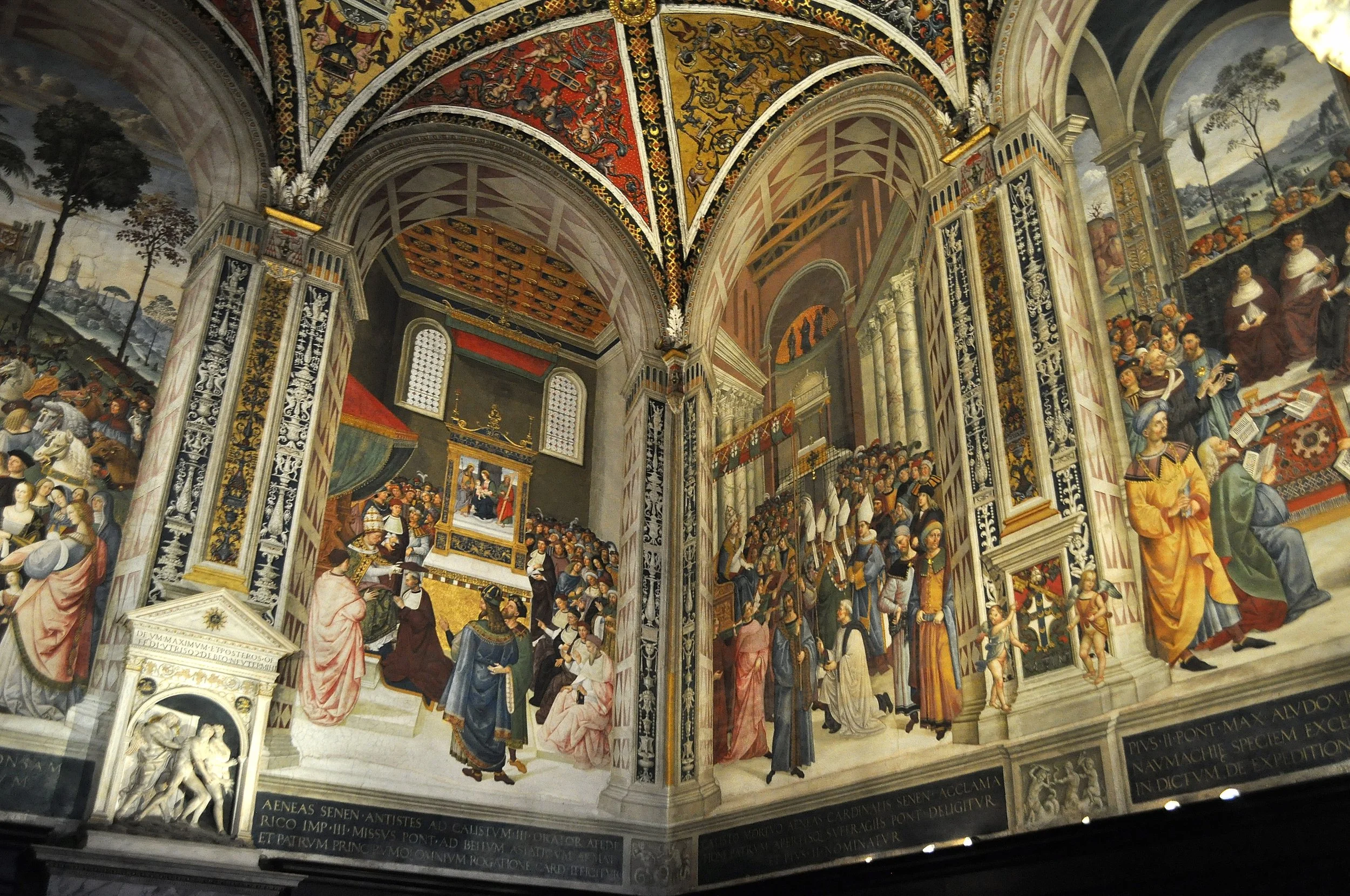
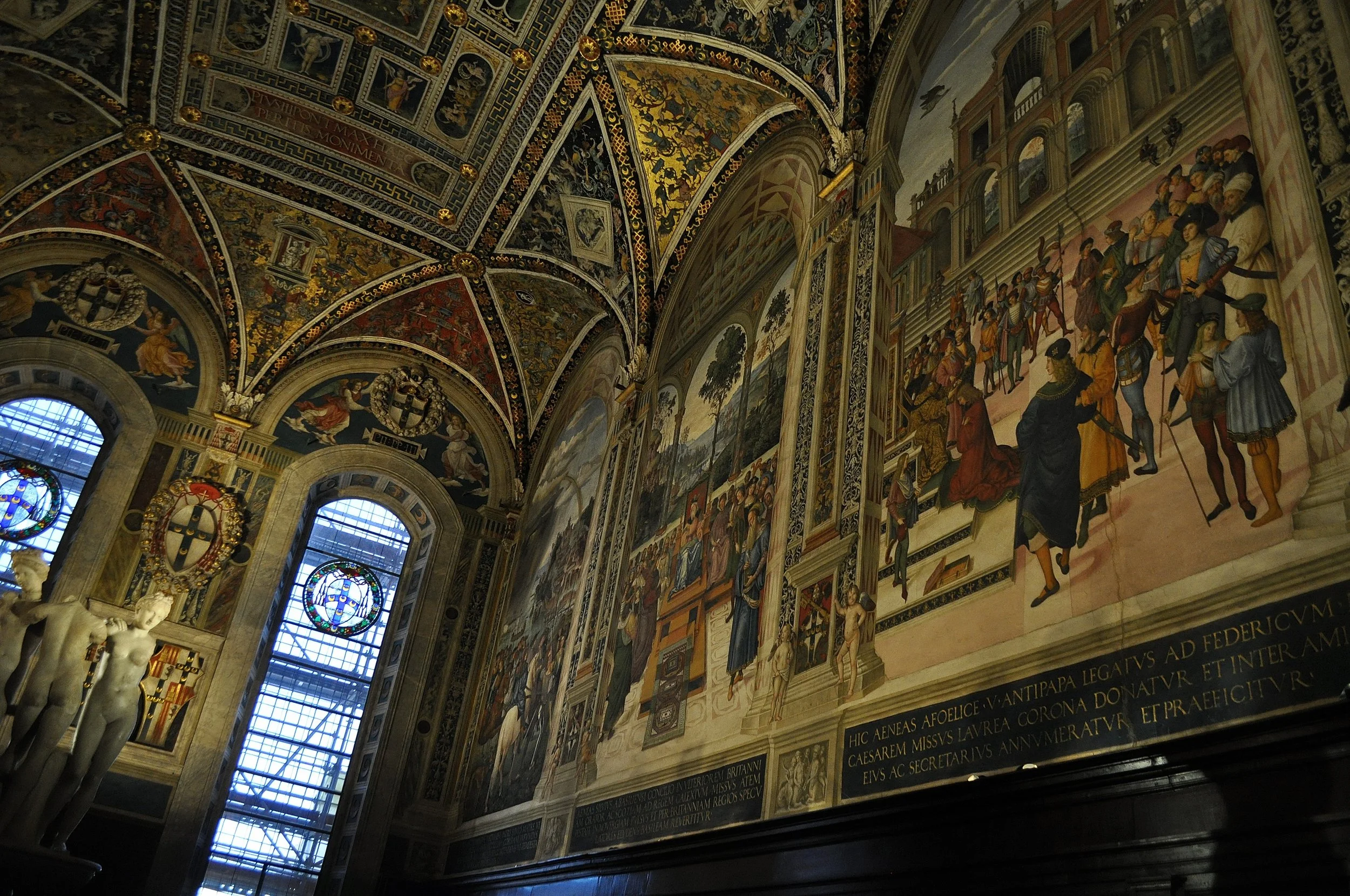
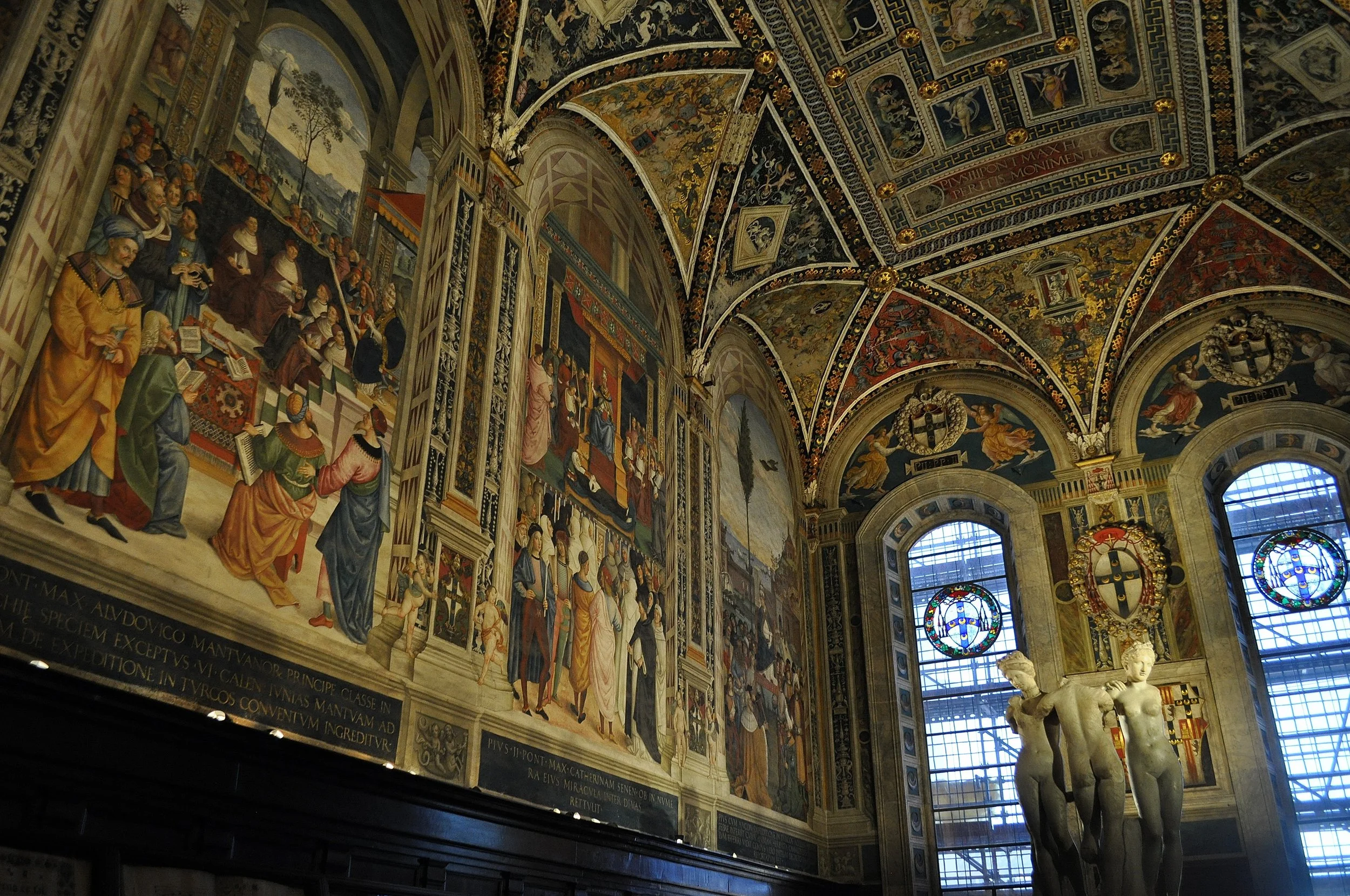
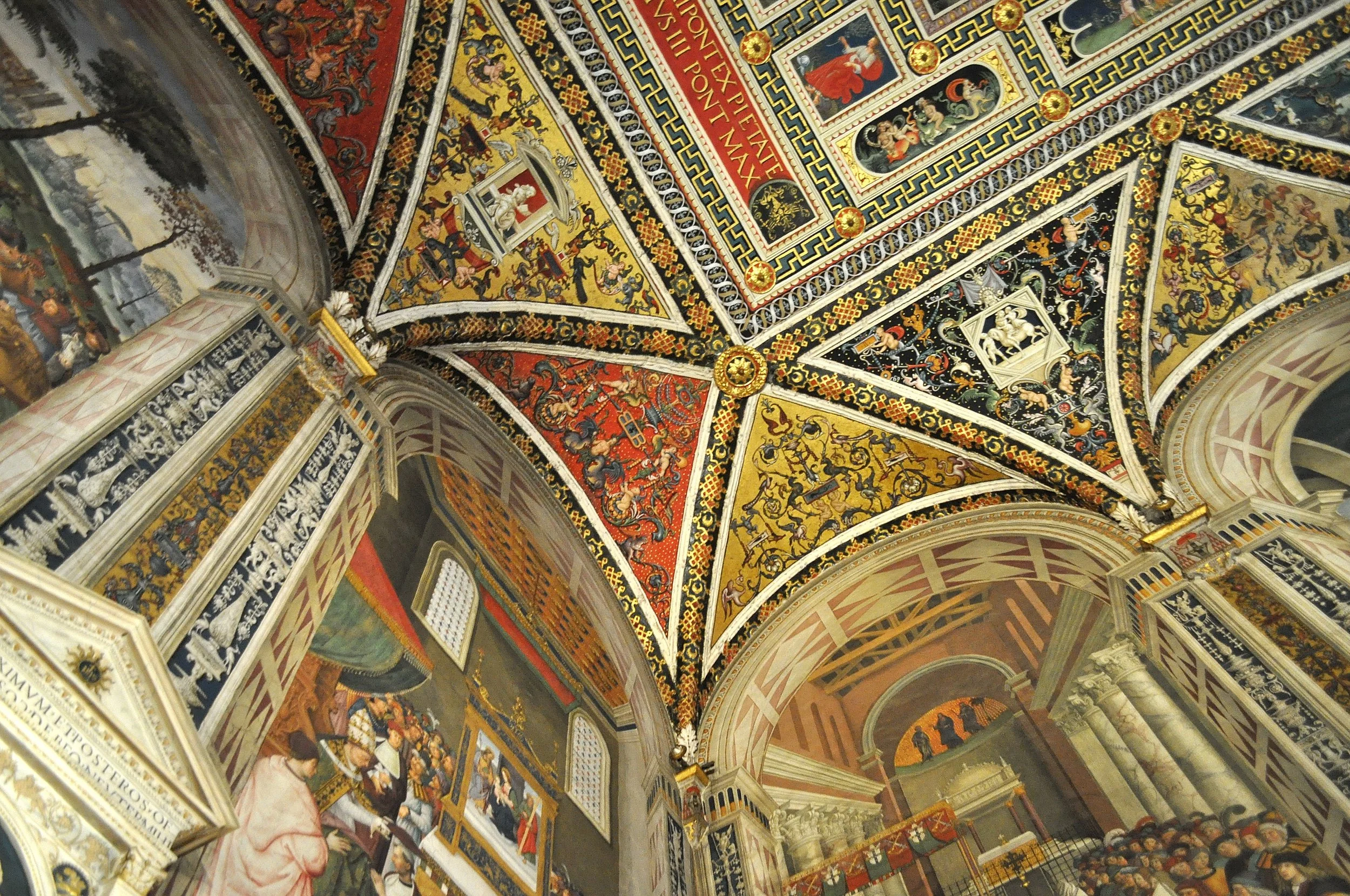
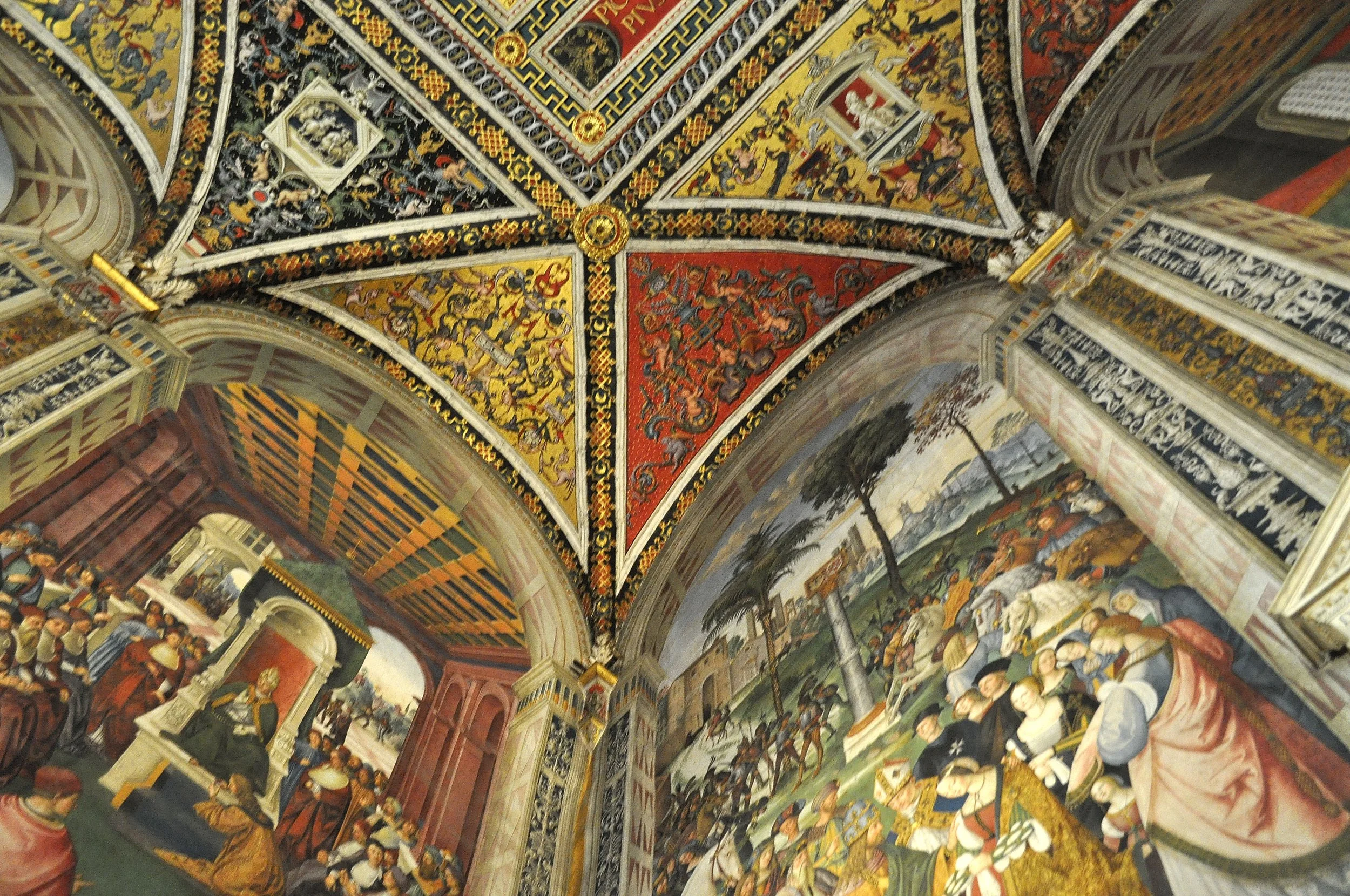
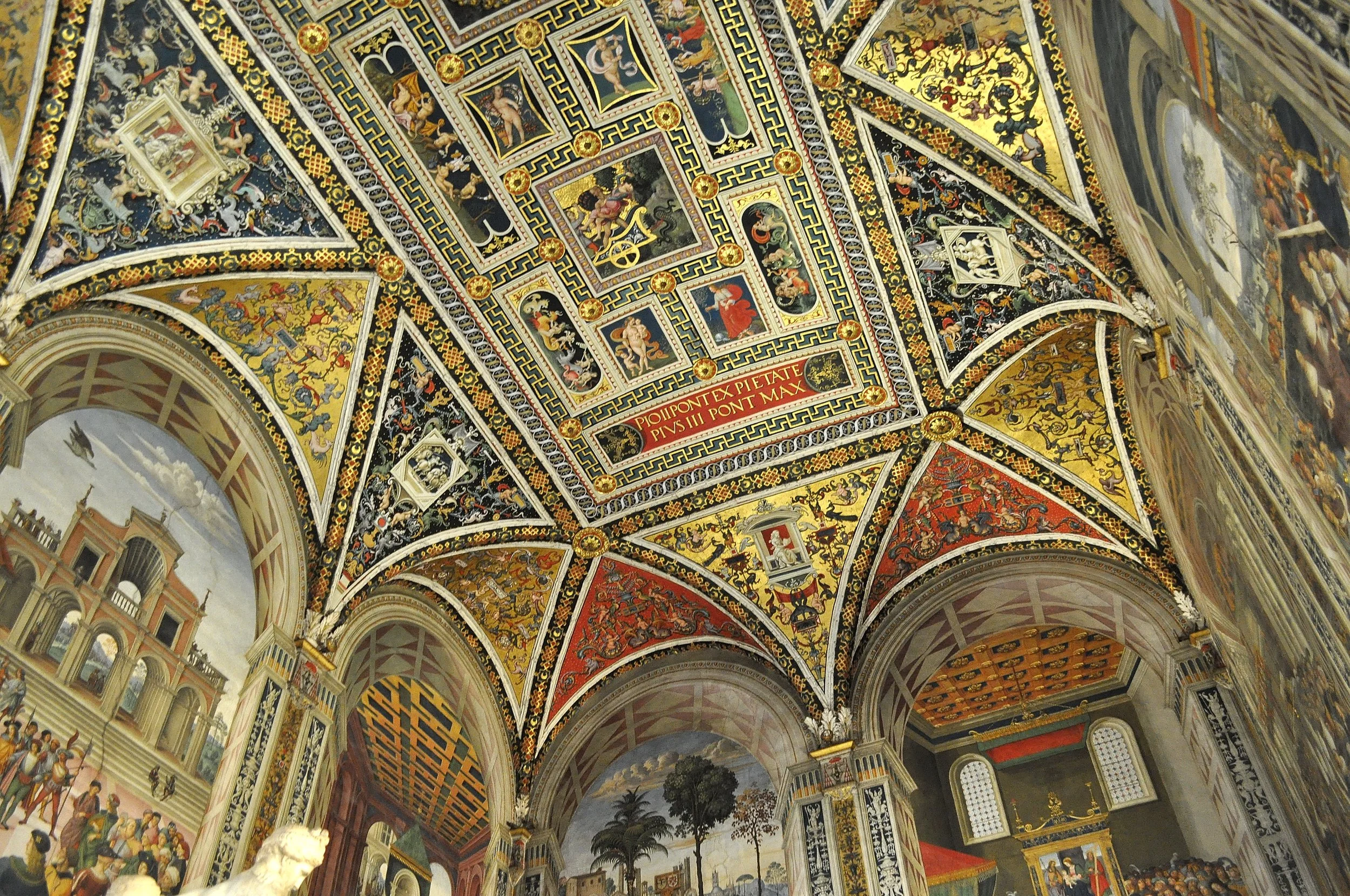
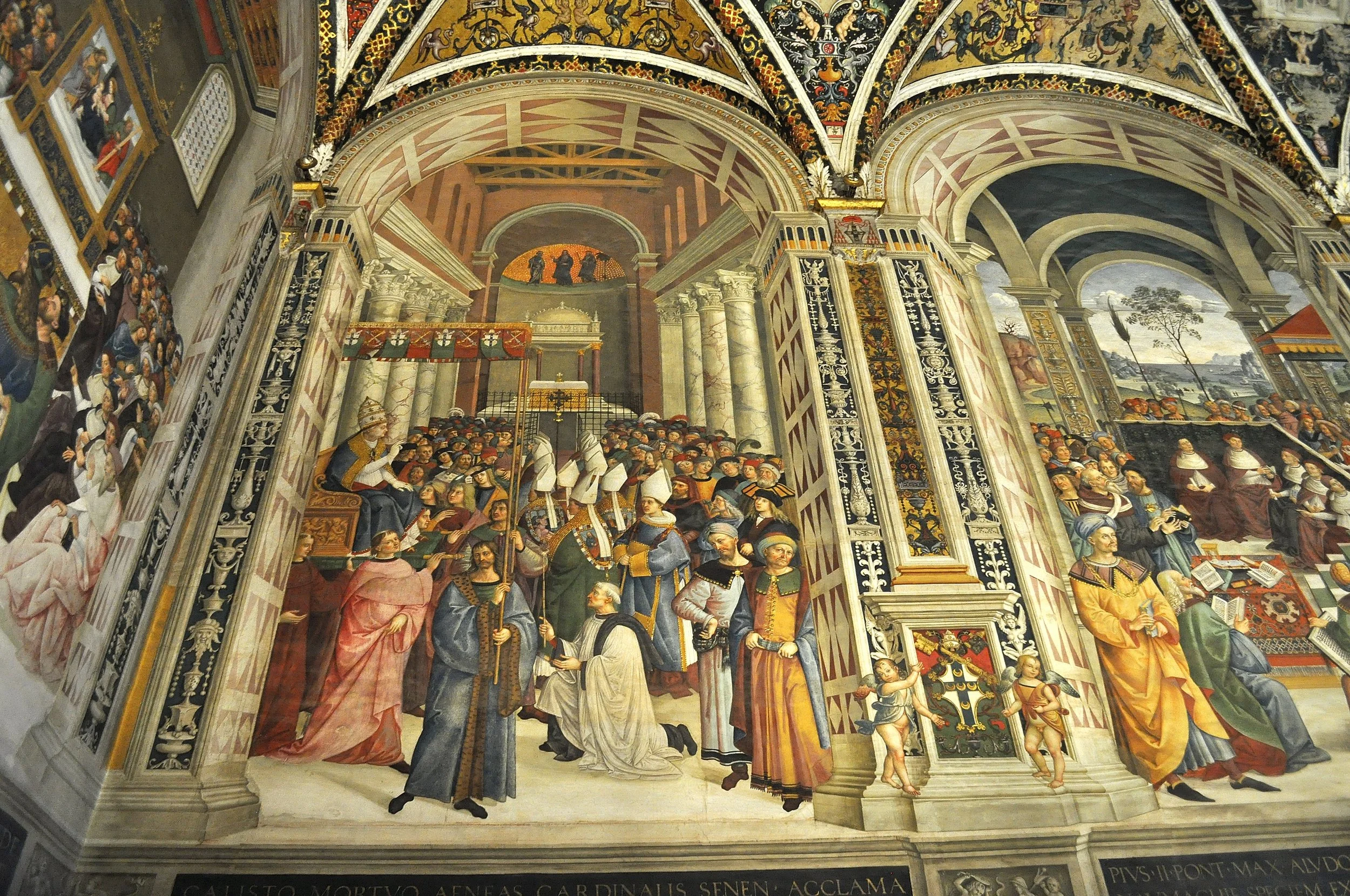
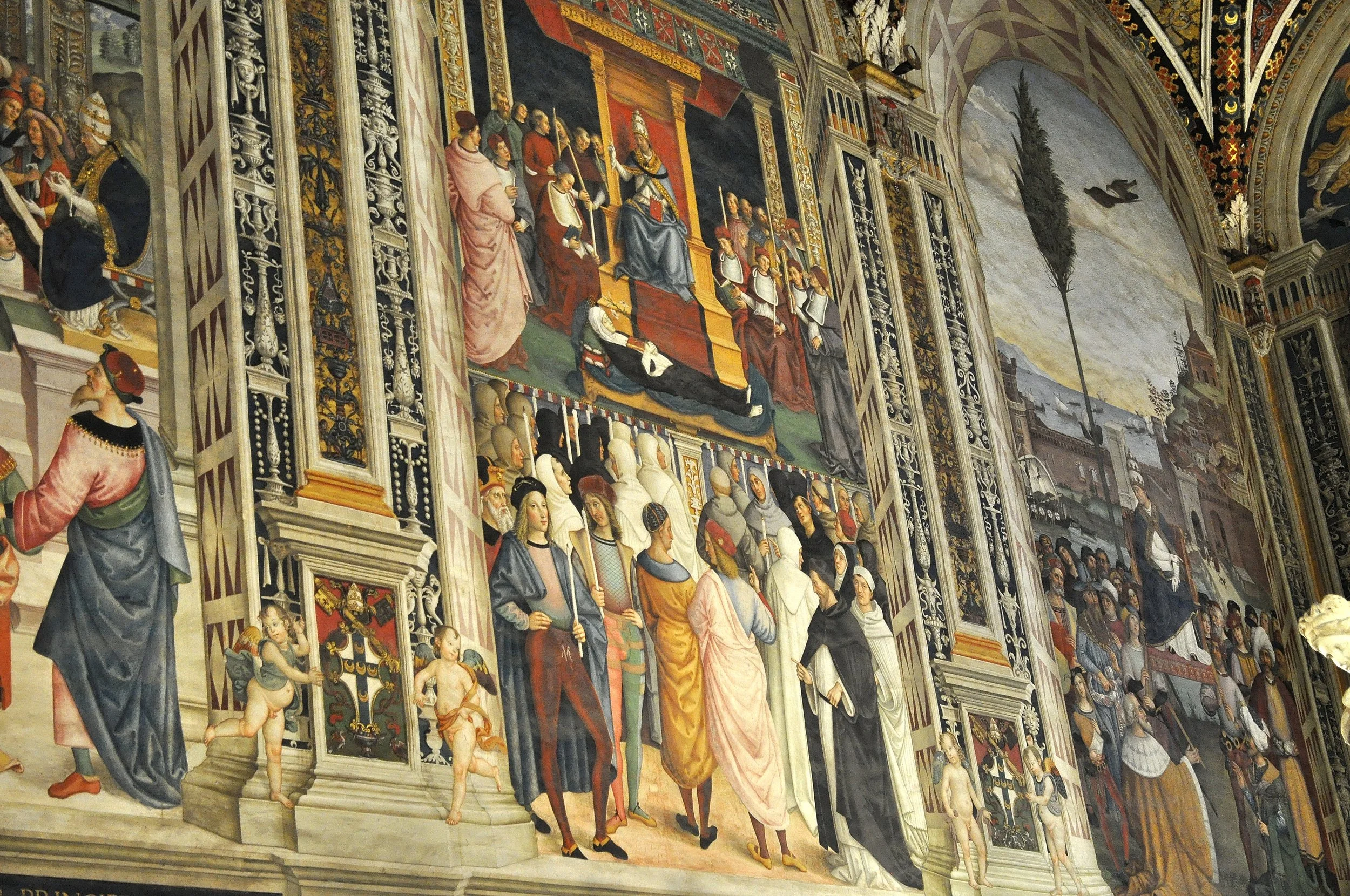
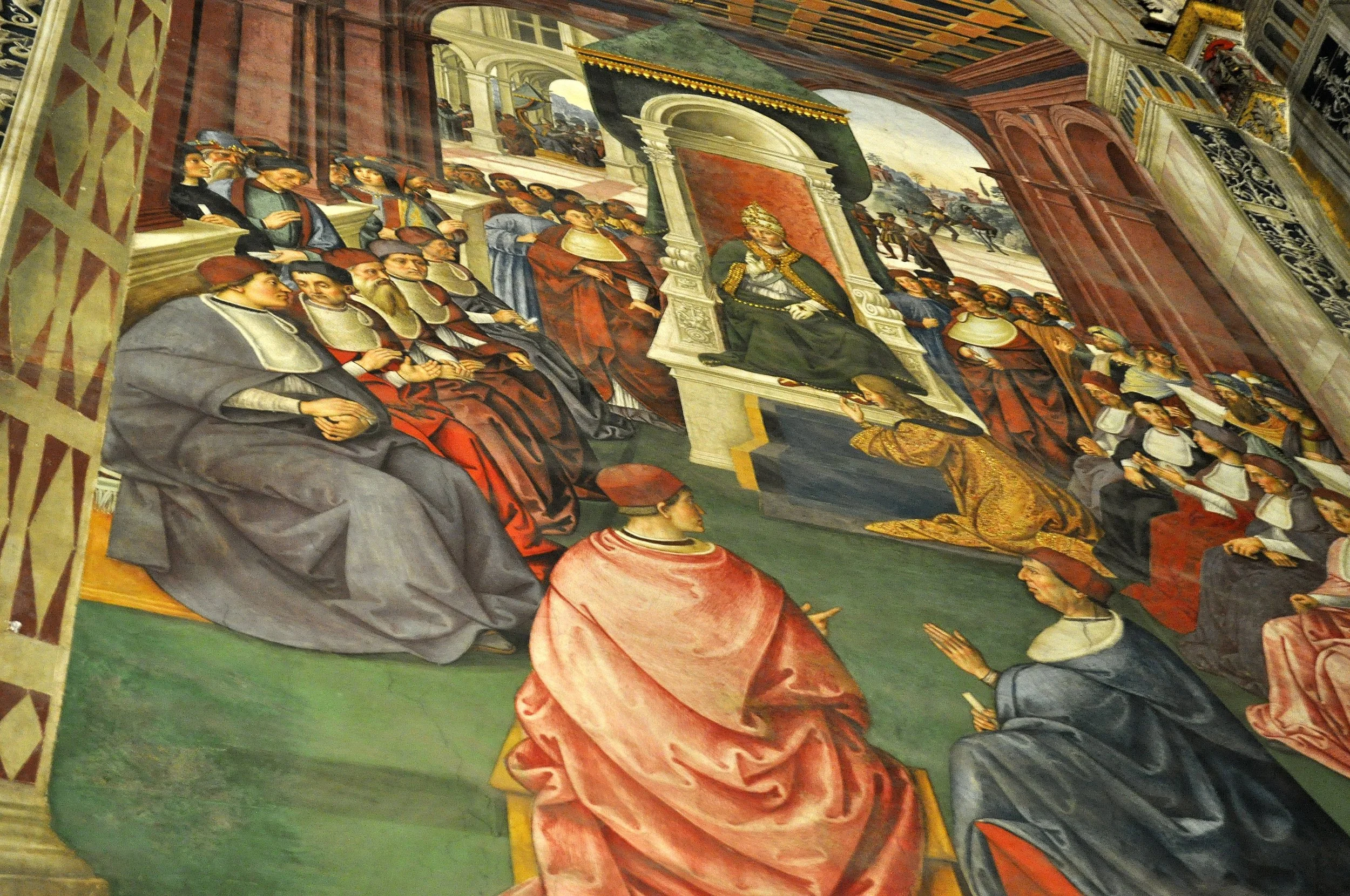
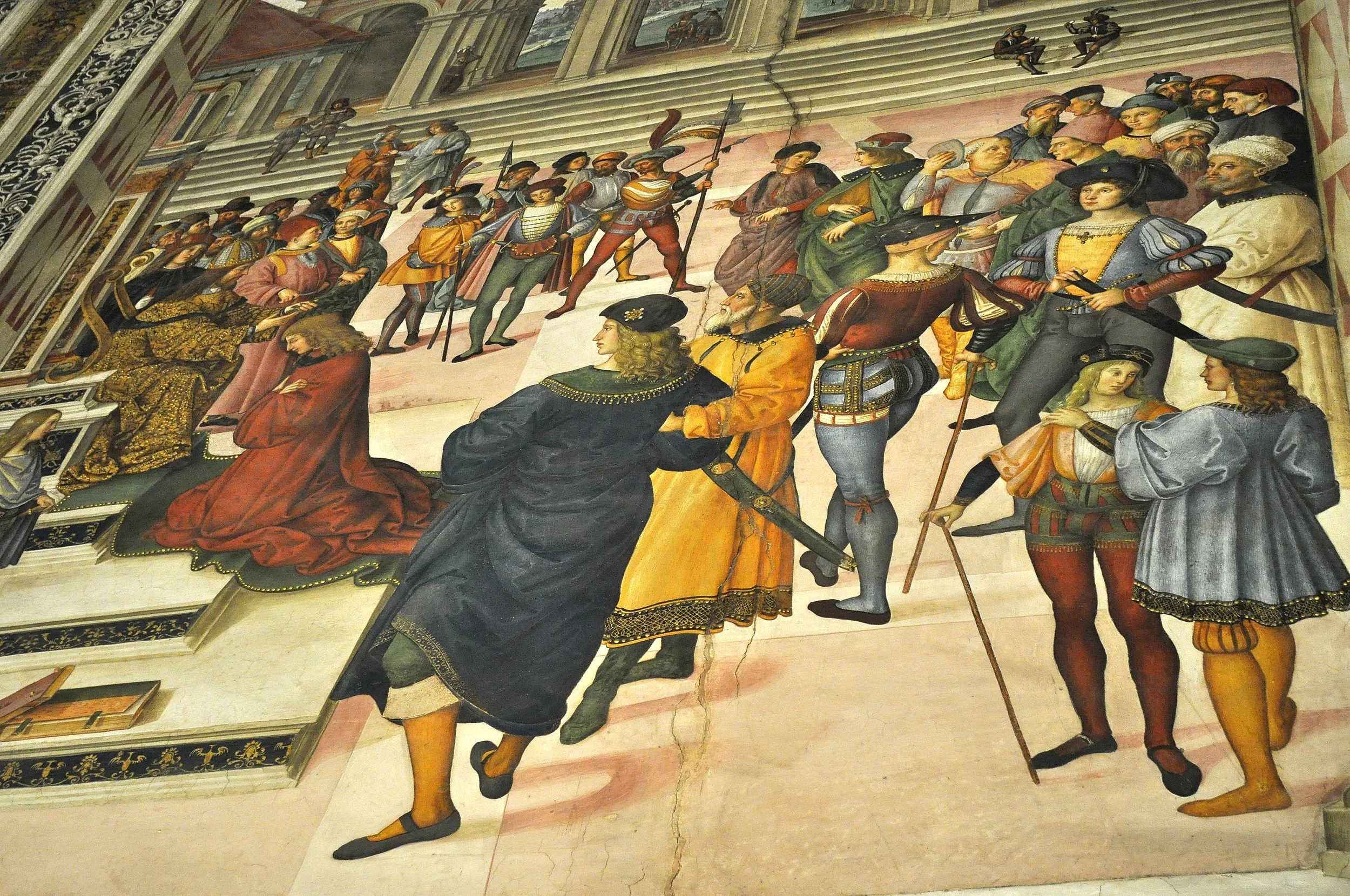
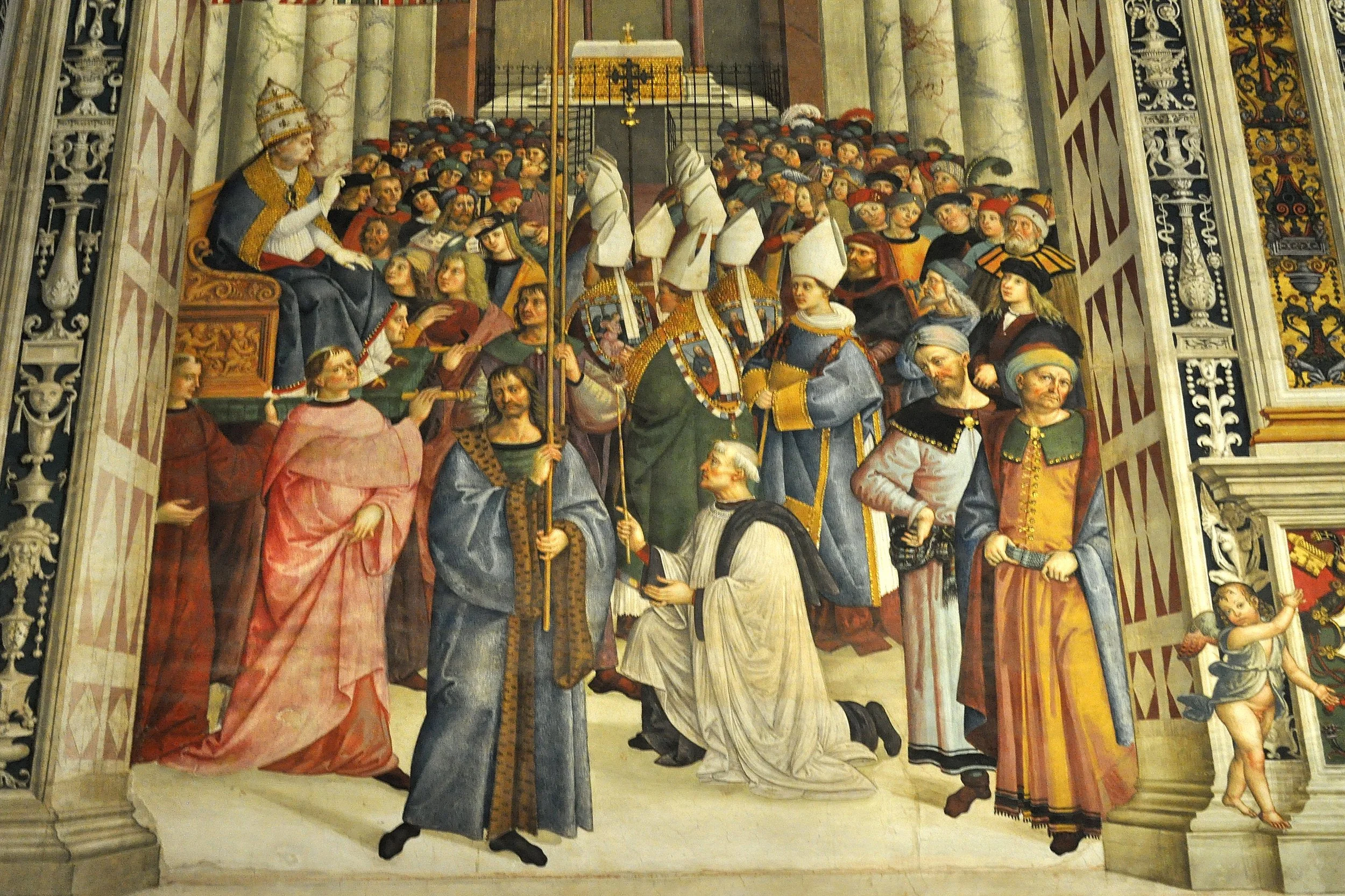
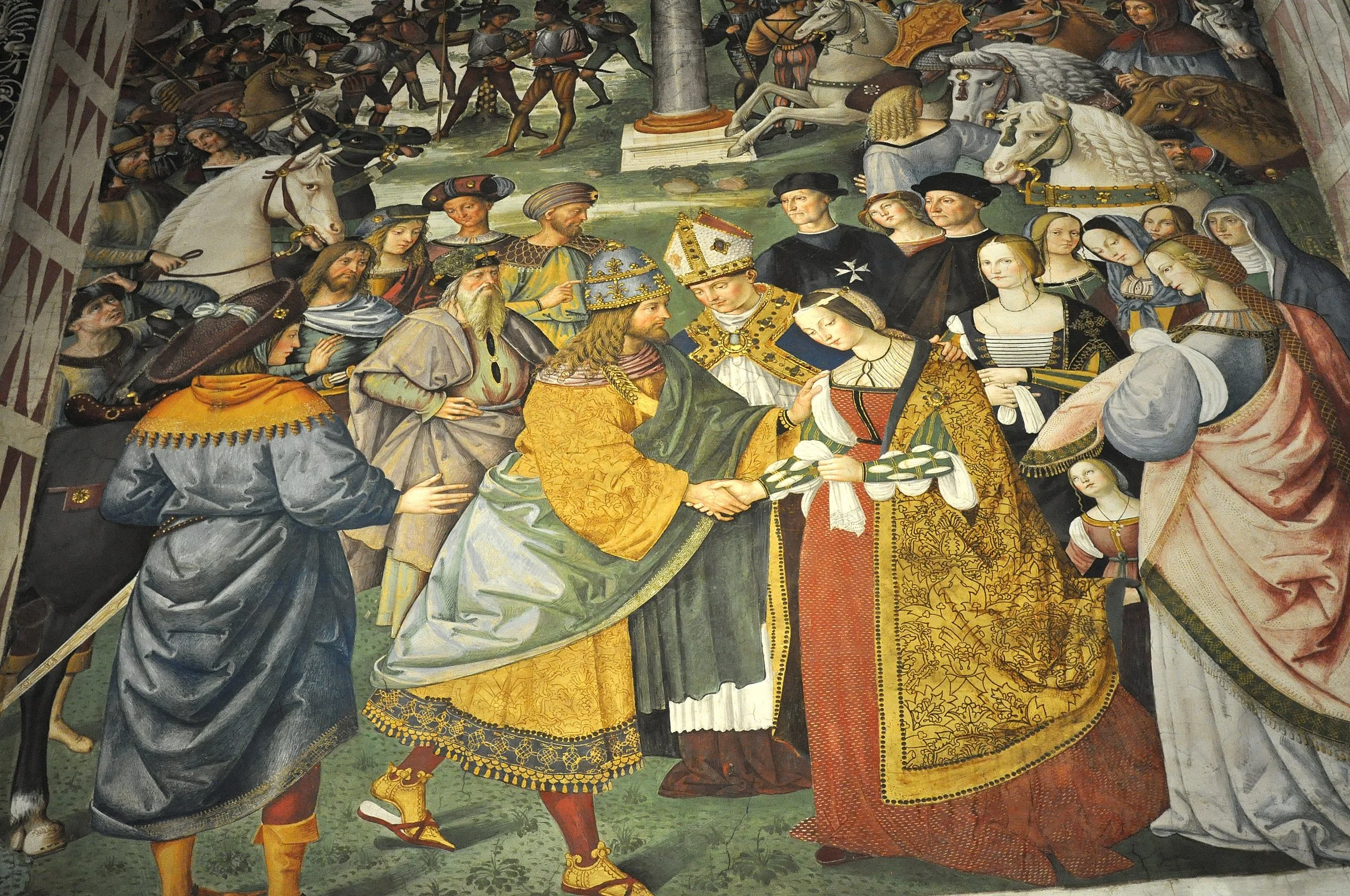
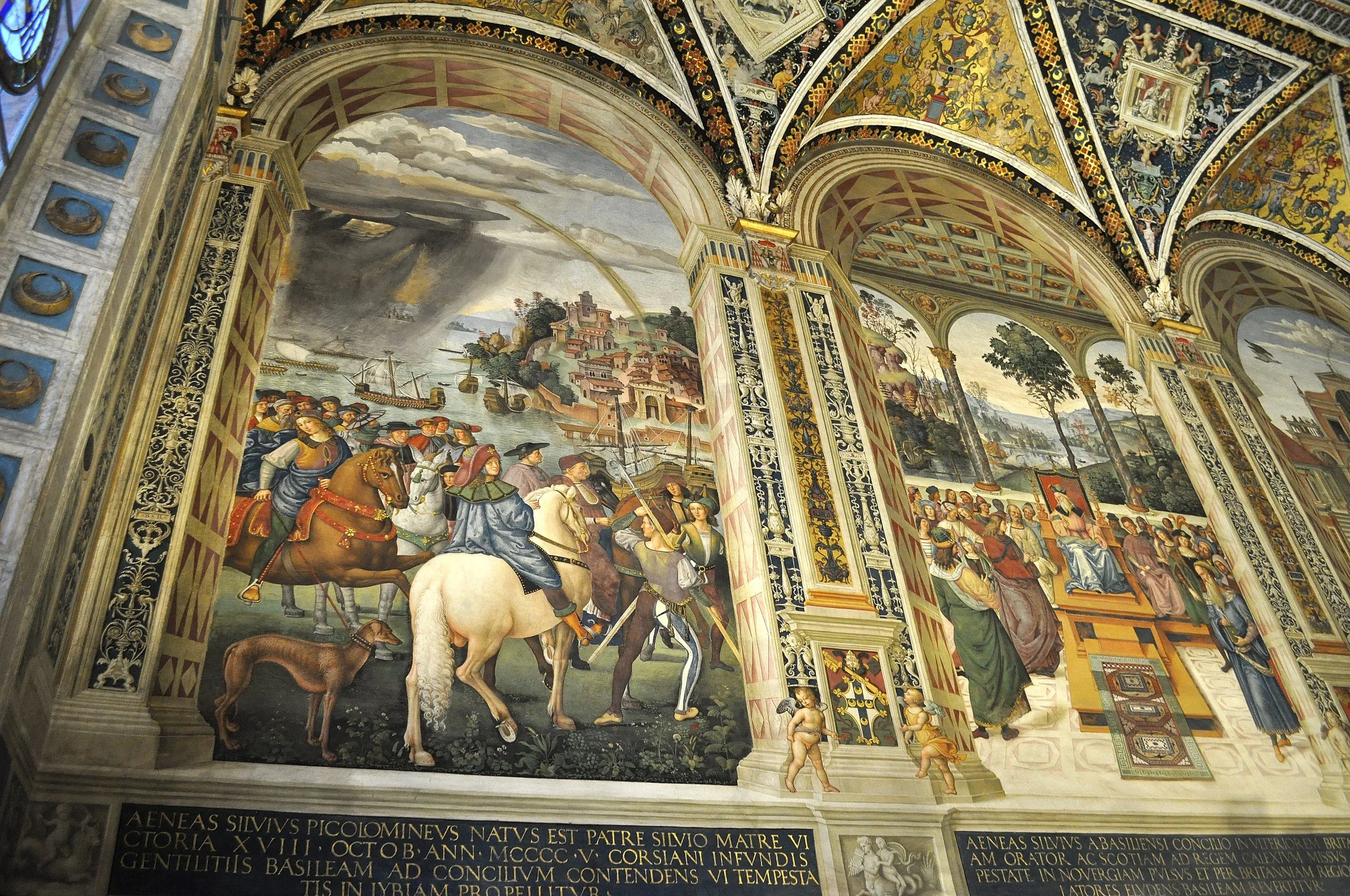
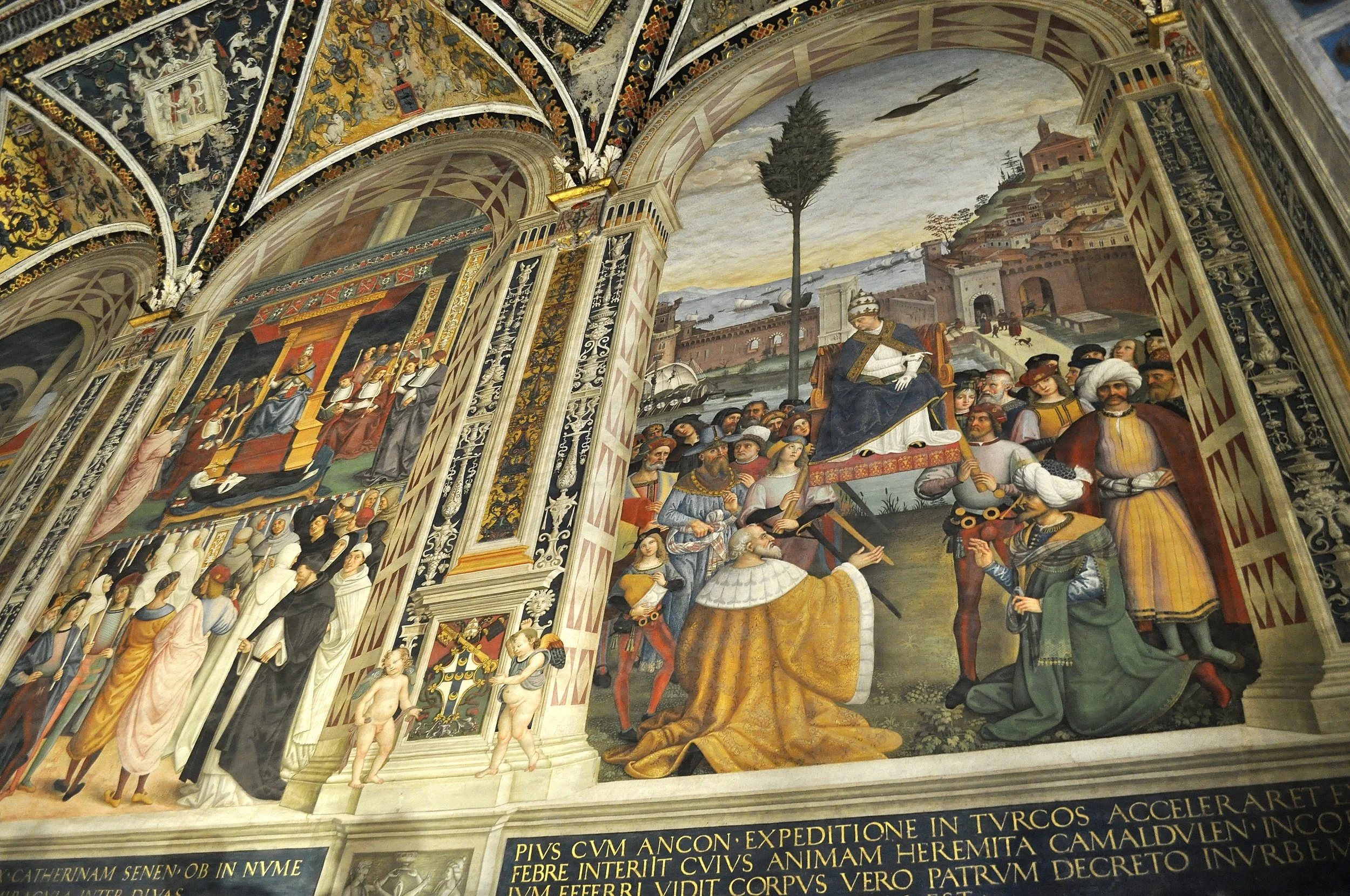
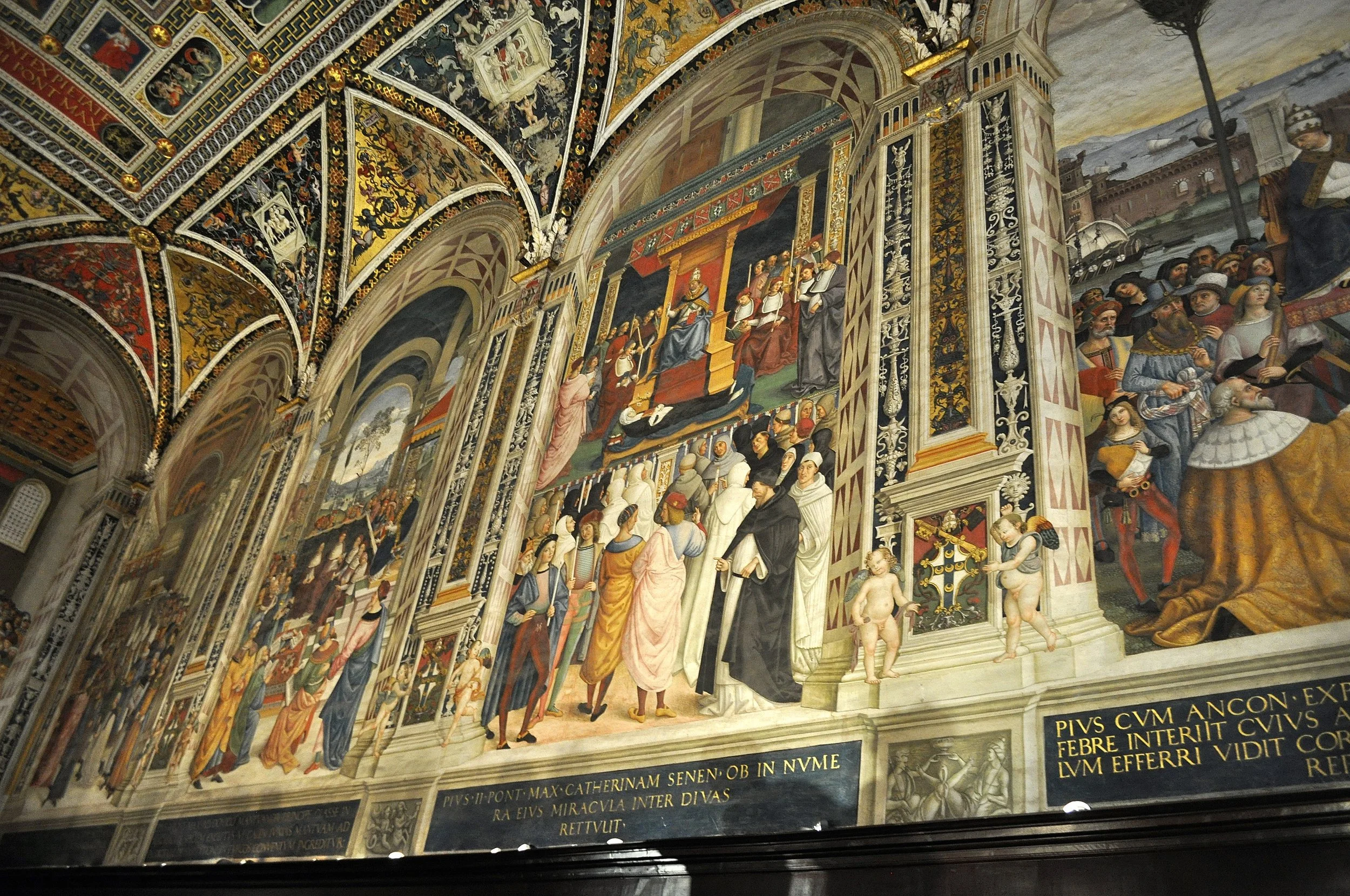
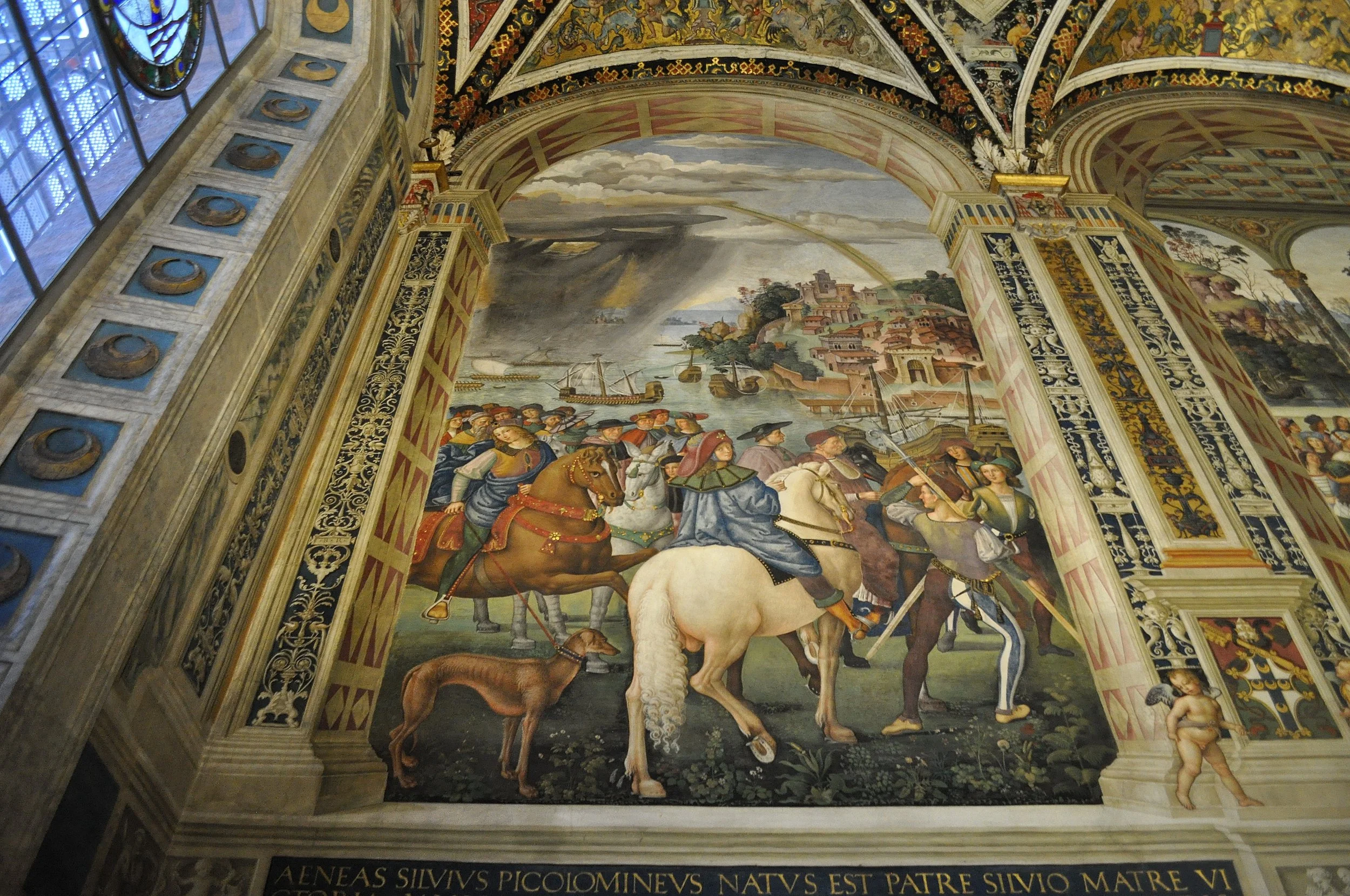
Piero: the walls are completely covered with extraordinary frescoes by Pinturicchio, depicting the life of Pope Pius II through vibrant colours and scenes filled with remarkable Renaissance details. It is one of the brightest and most spectacular spaces in the entire cathedral.
Angela: walking through these naves, it becomes clear just how wealthy and ambitious Siena was during the Middle Ages. Every artwork, every decoration, and every single detail of the Cathedral of Siena tells the story of the city's desire to create one of the most magnificent churches in Europe. Discover more in this video.
Piero: and considering the never-completed project of the New Cathedral, which would have transformed this church into the largest cathedral in all of Christendom, we can say that such ambition was anything but exaggerated.
Piero: after a quick lunch, we return to the Cathedral area, precisely to the rear of the building, to visit the Baptistery of San Giovanni.
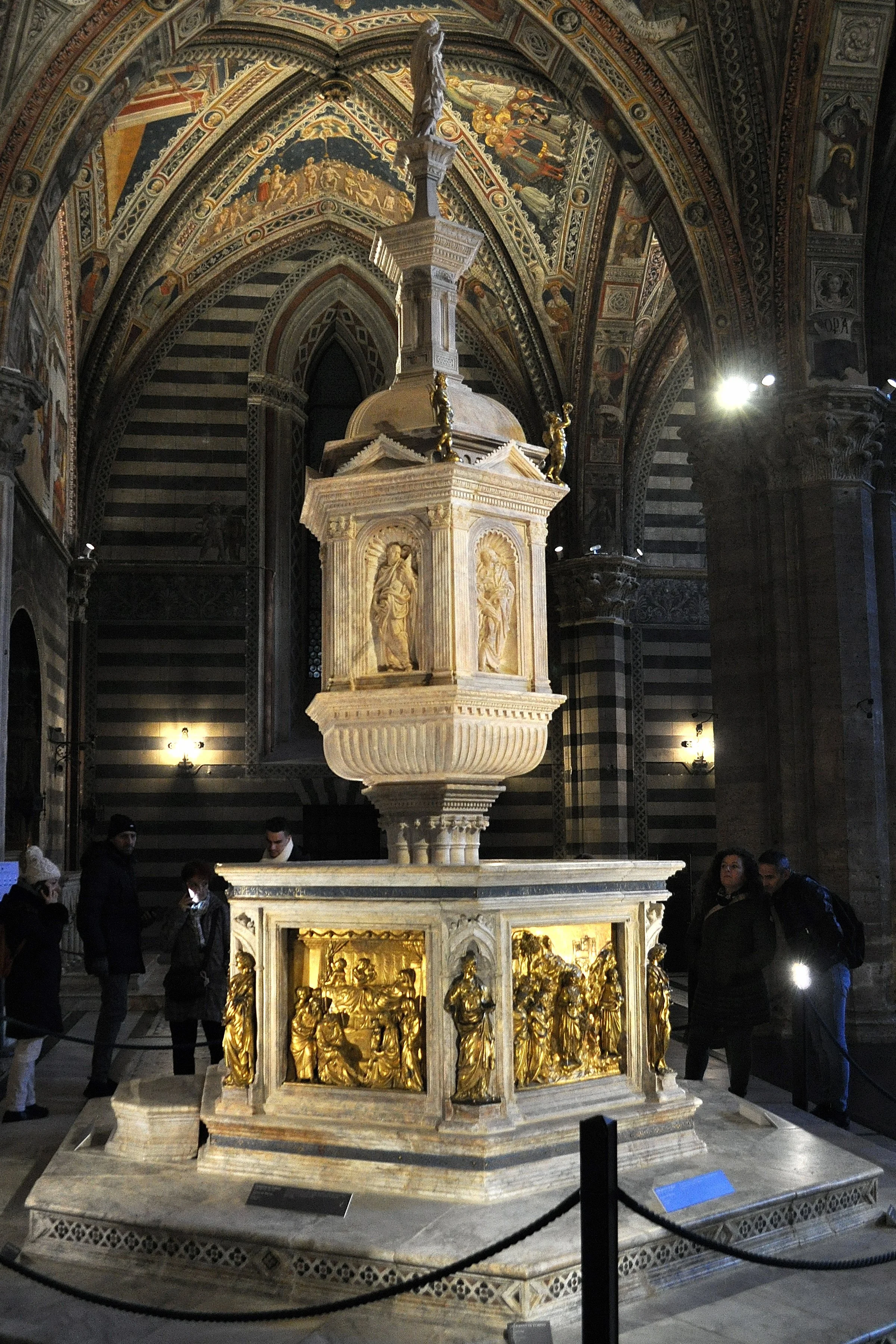
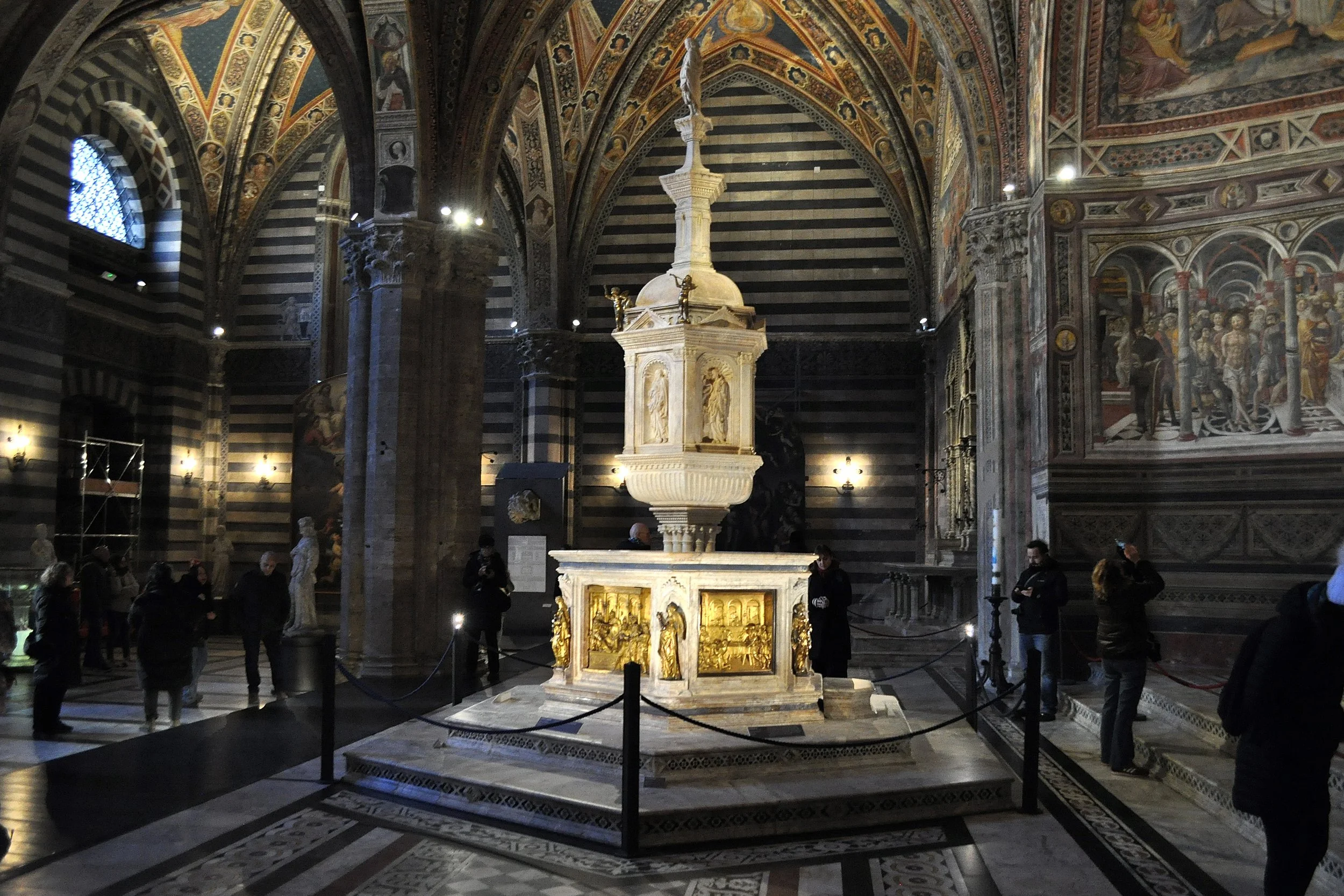
Angela: at the centre of the baptistery stands the magnificent baptismal font, decorated by some of the greatest artists of the Italian Renaissance, including Donatello, Lorenzo Ghiberti, and Jacopo della Quercia.
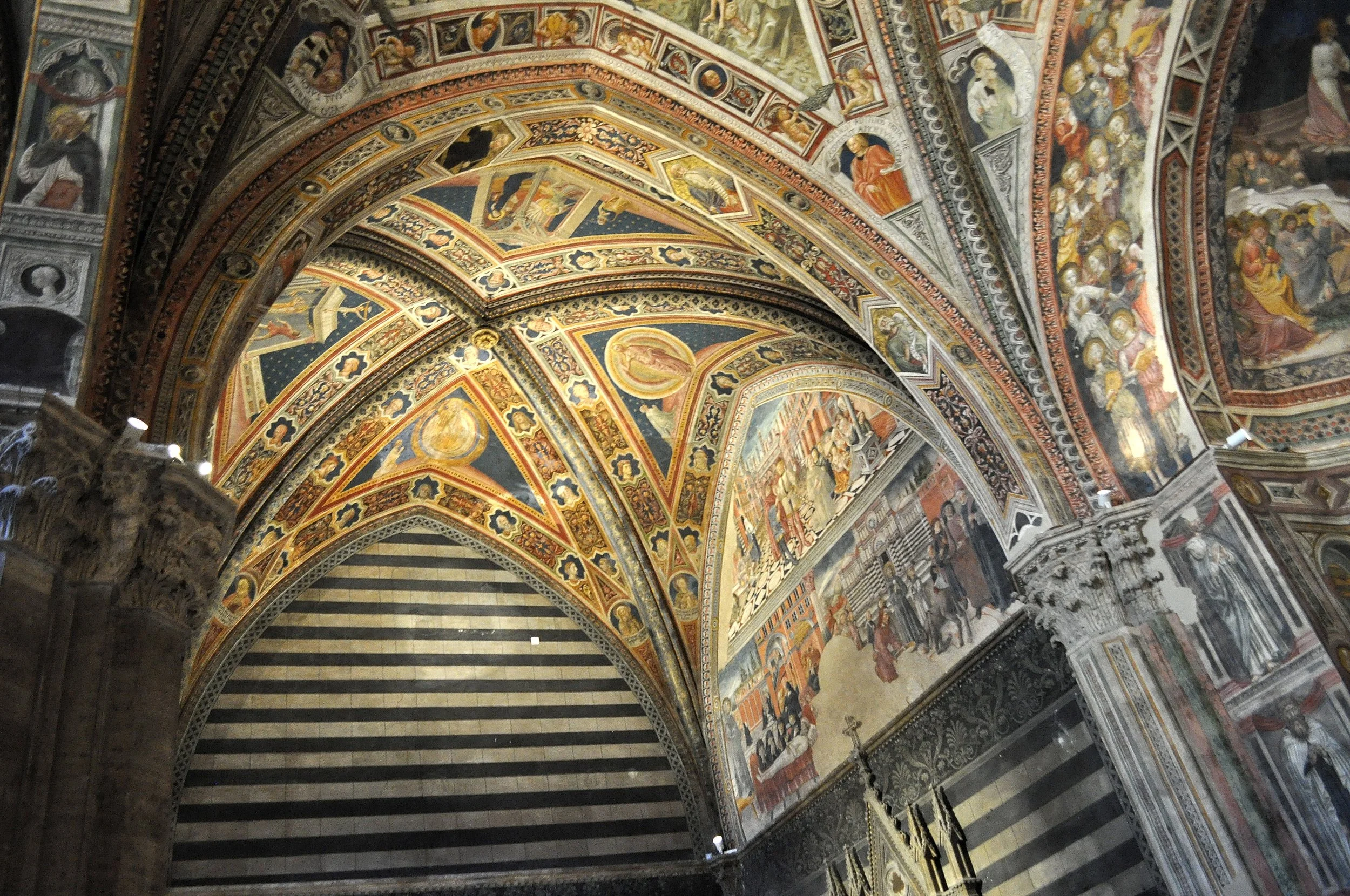
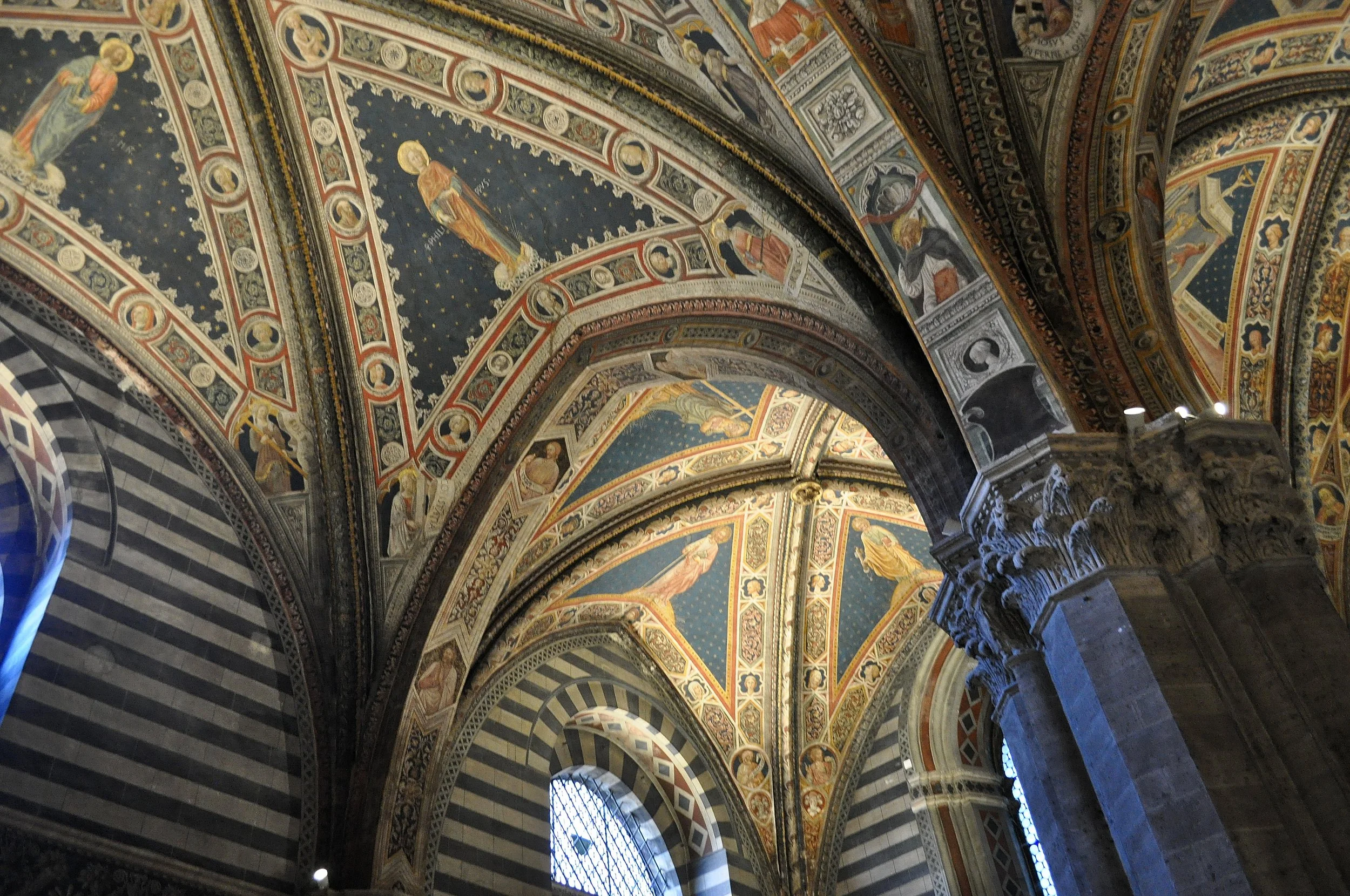
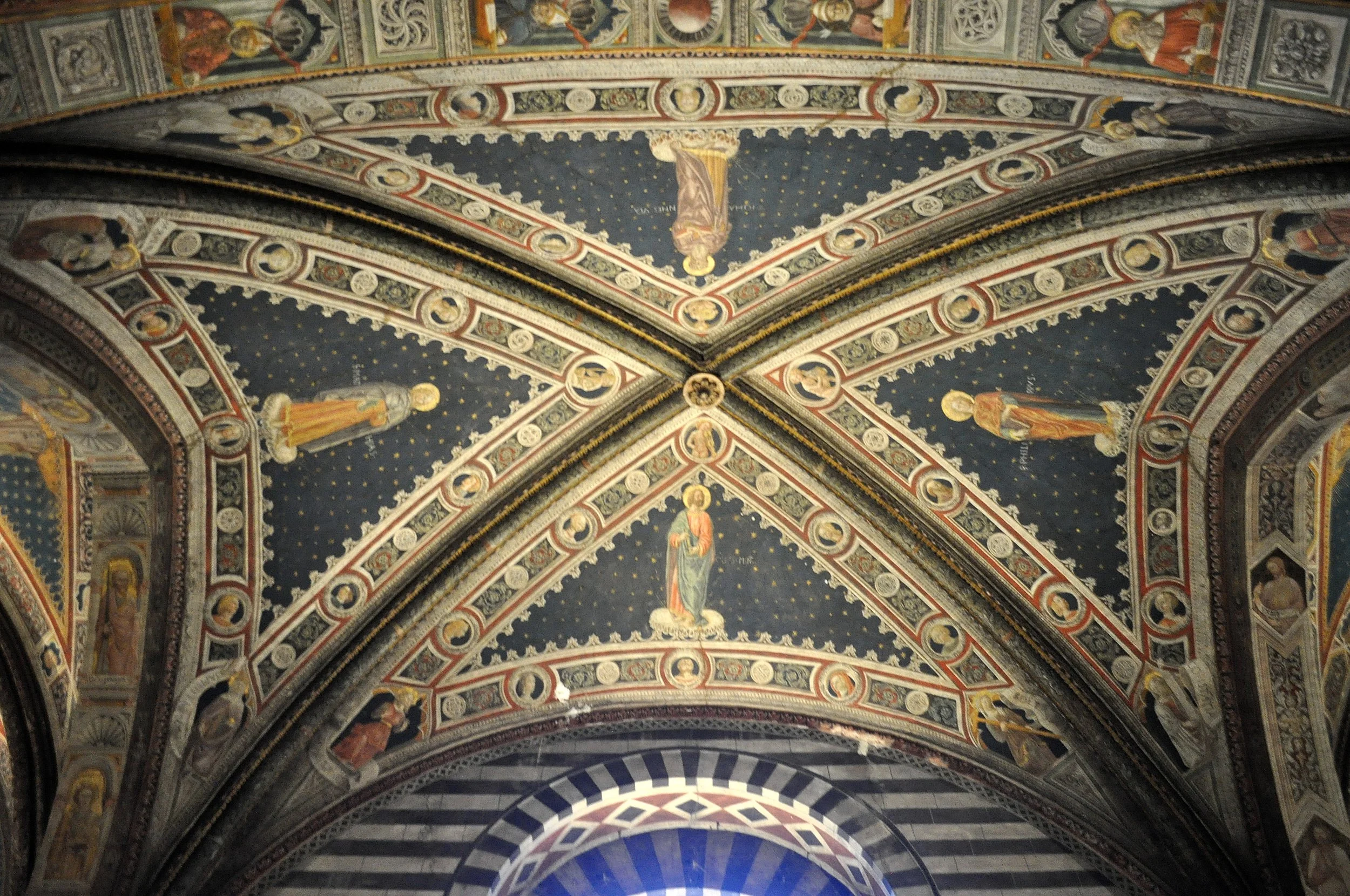
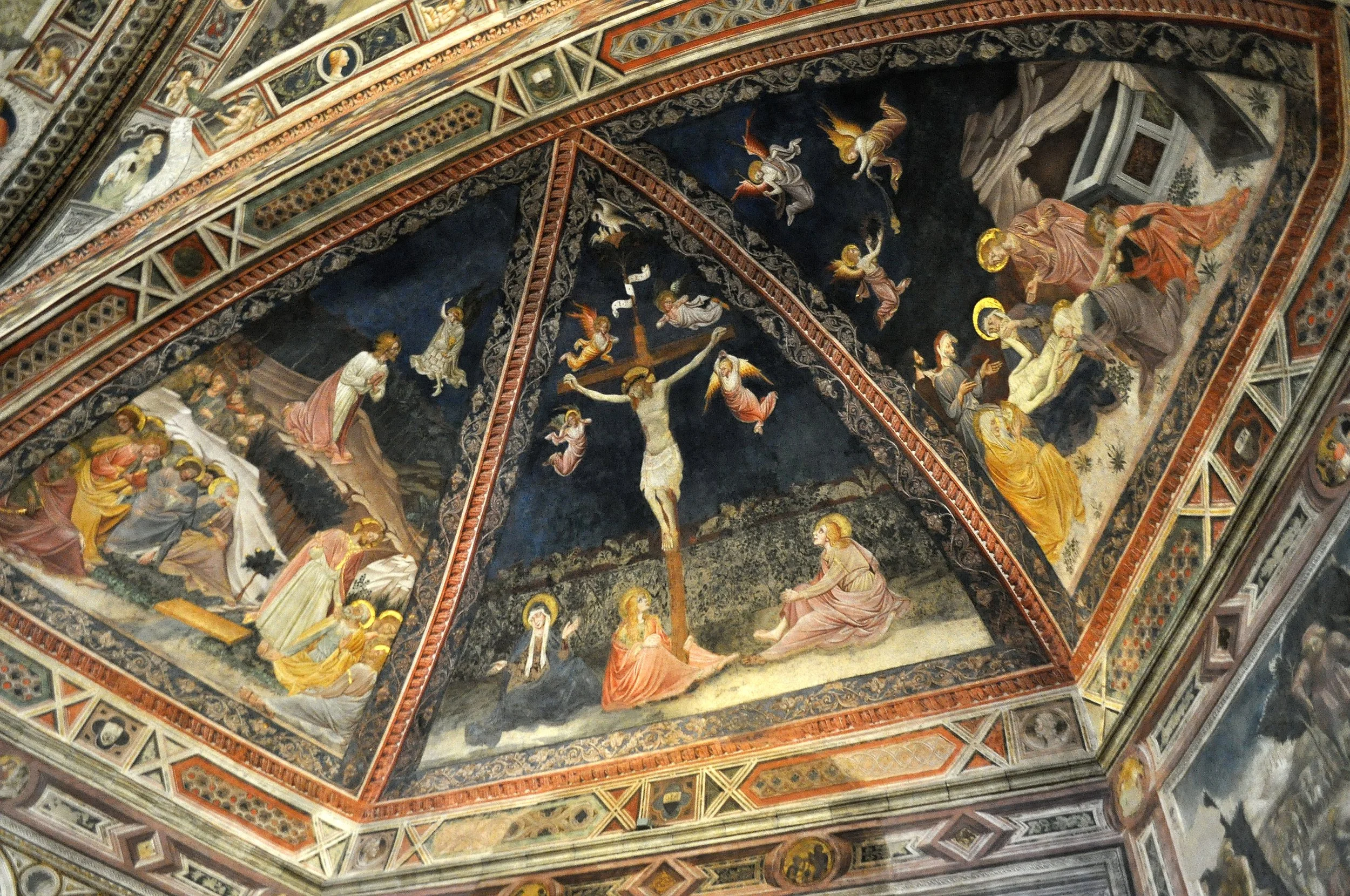
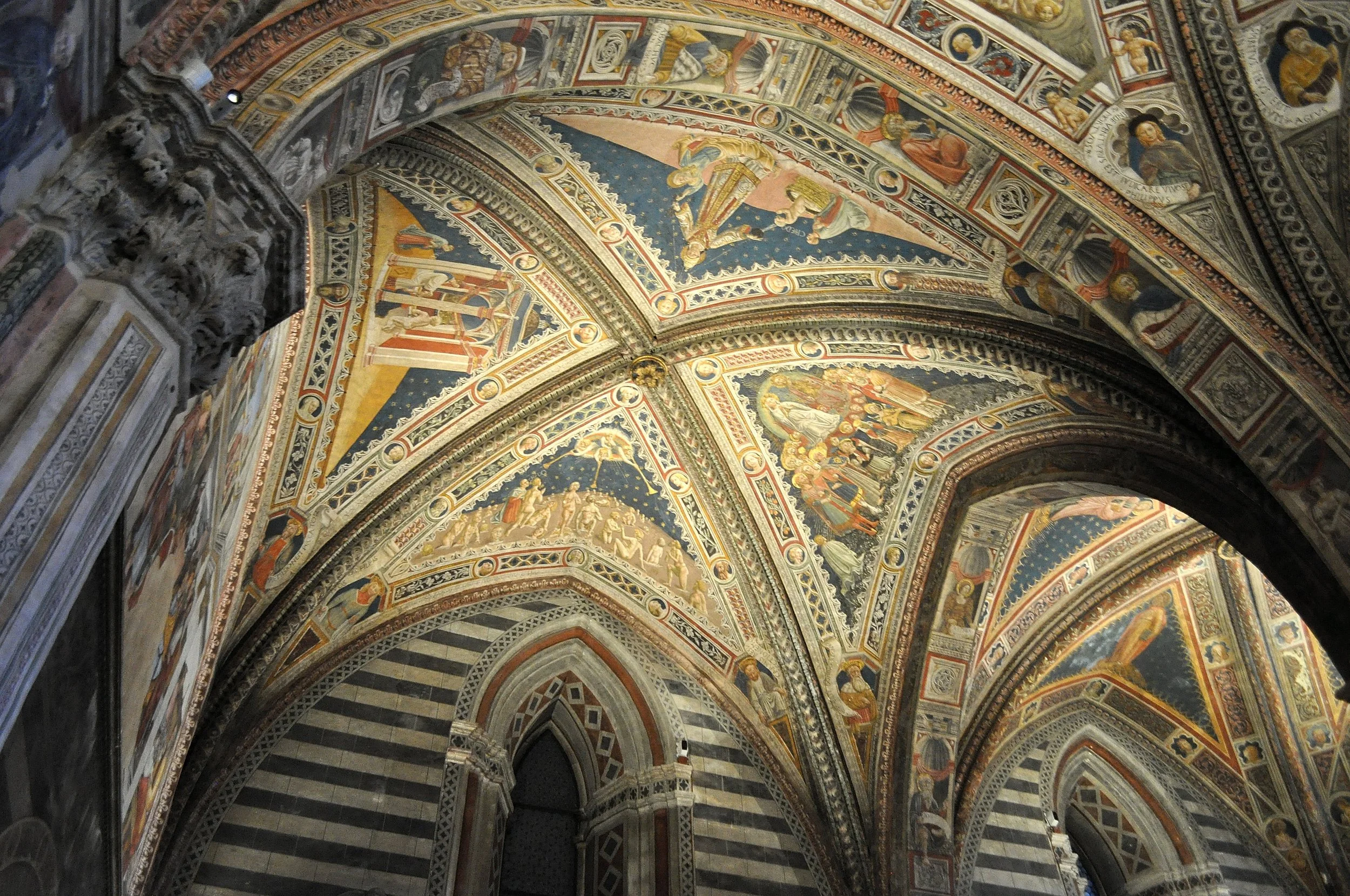
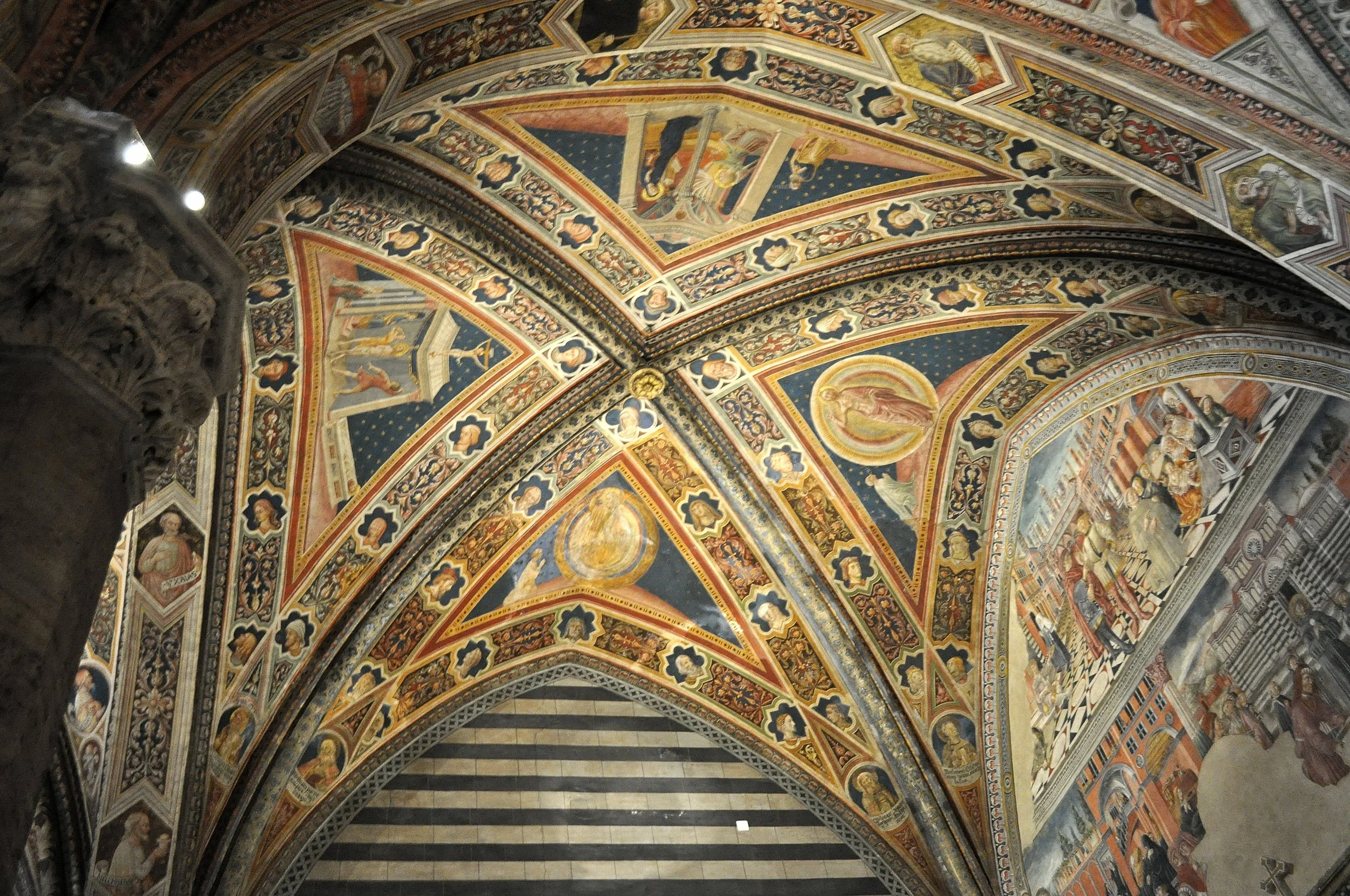
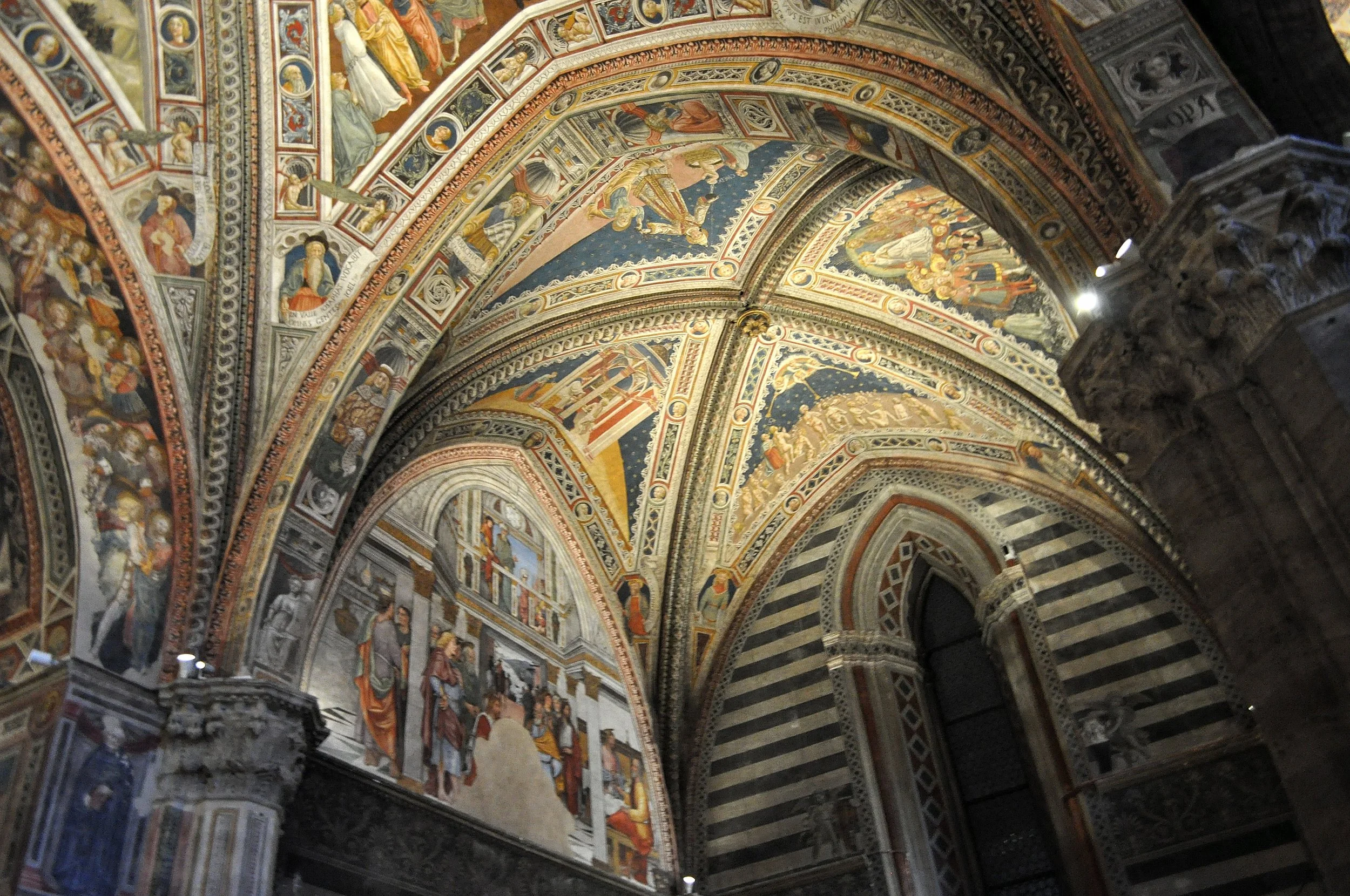
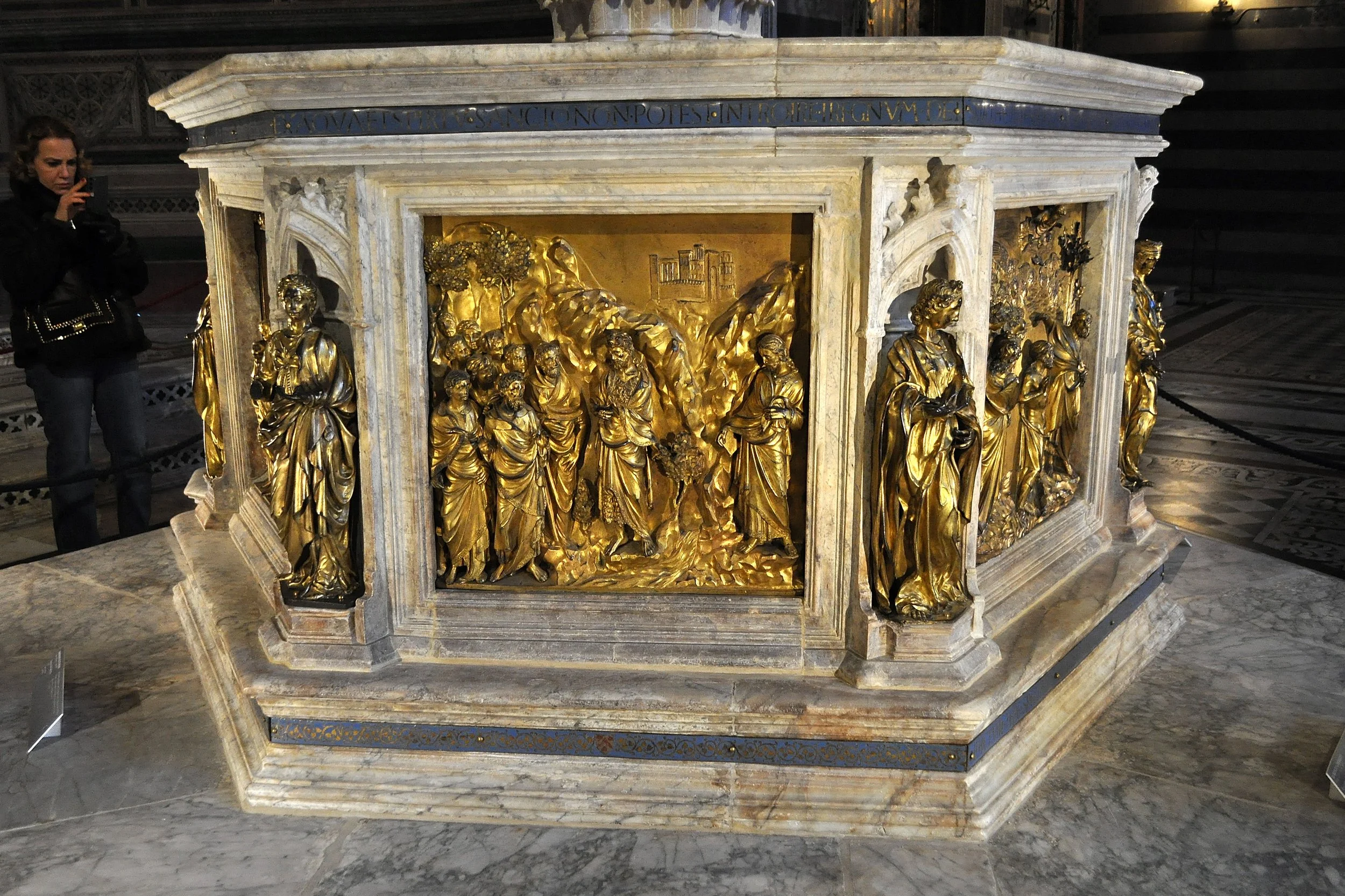
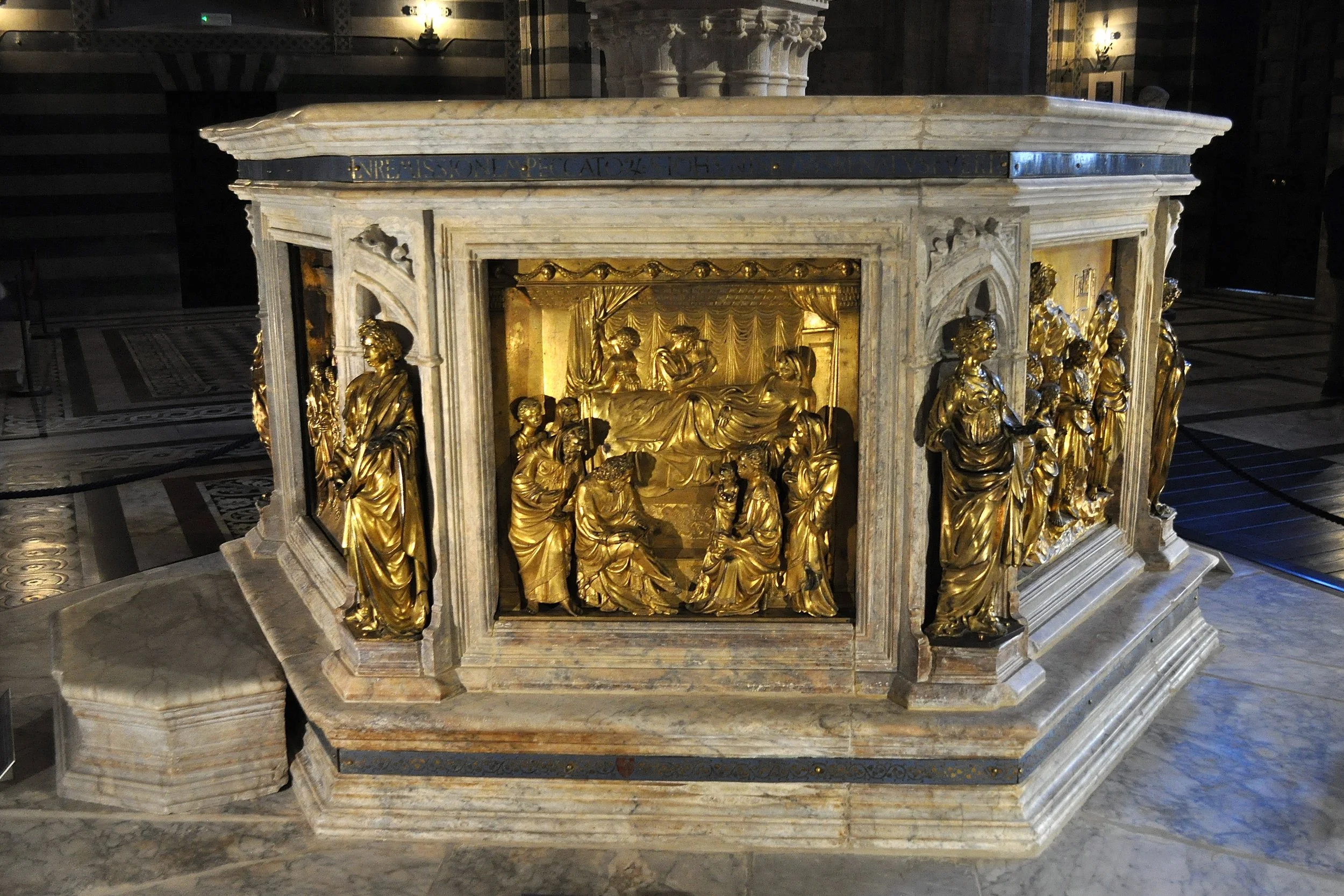
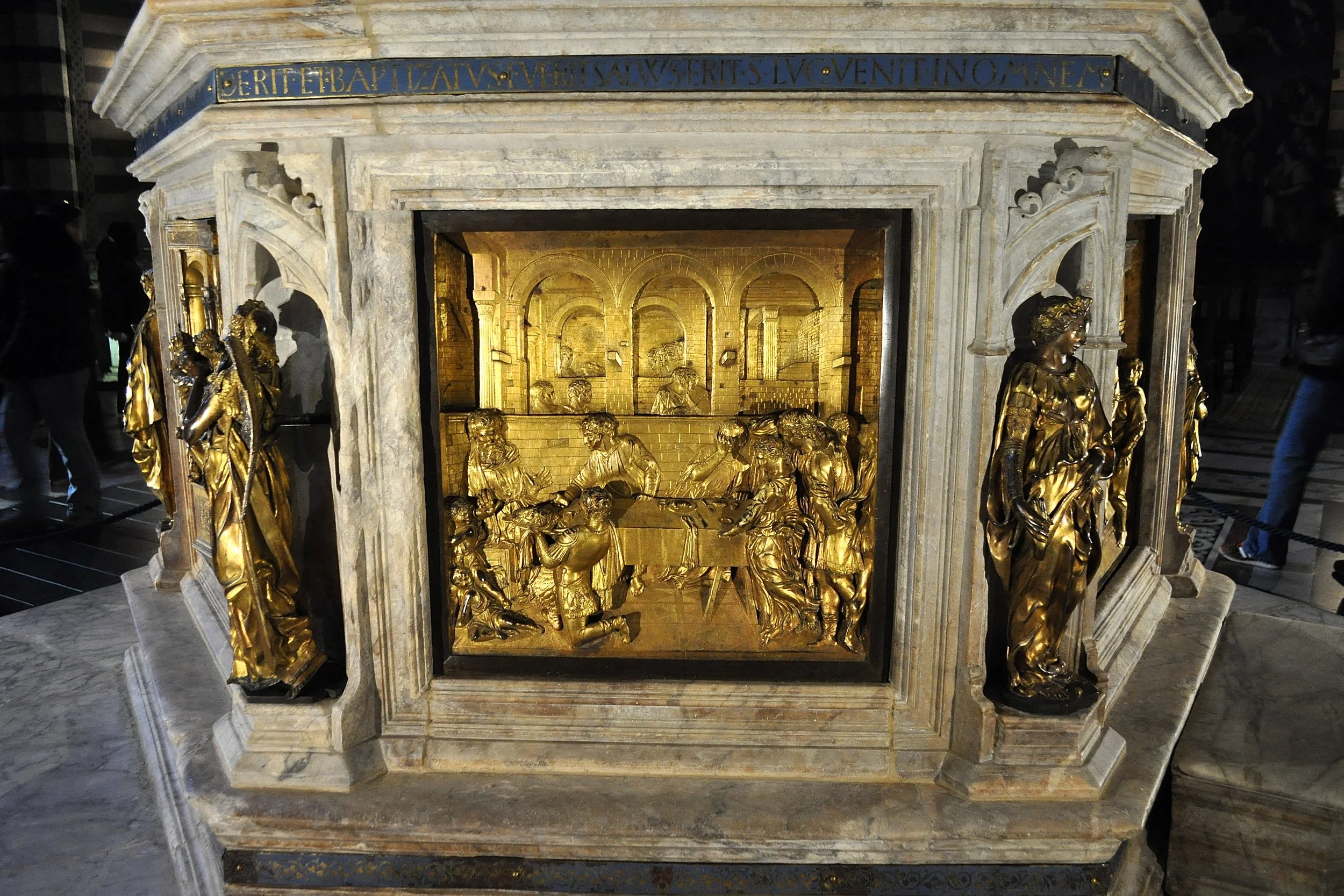
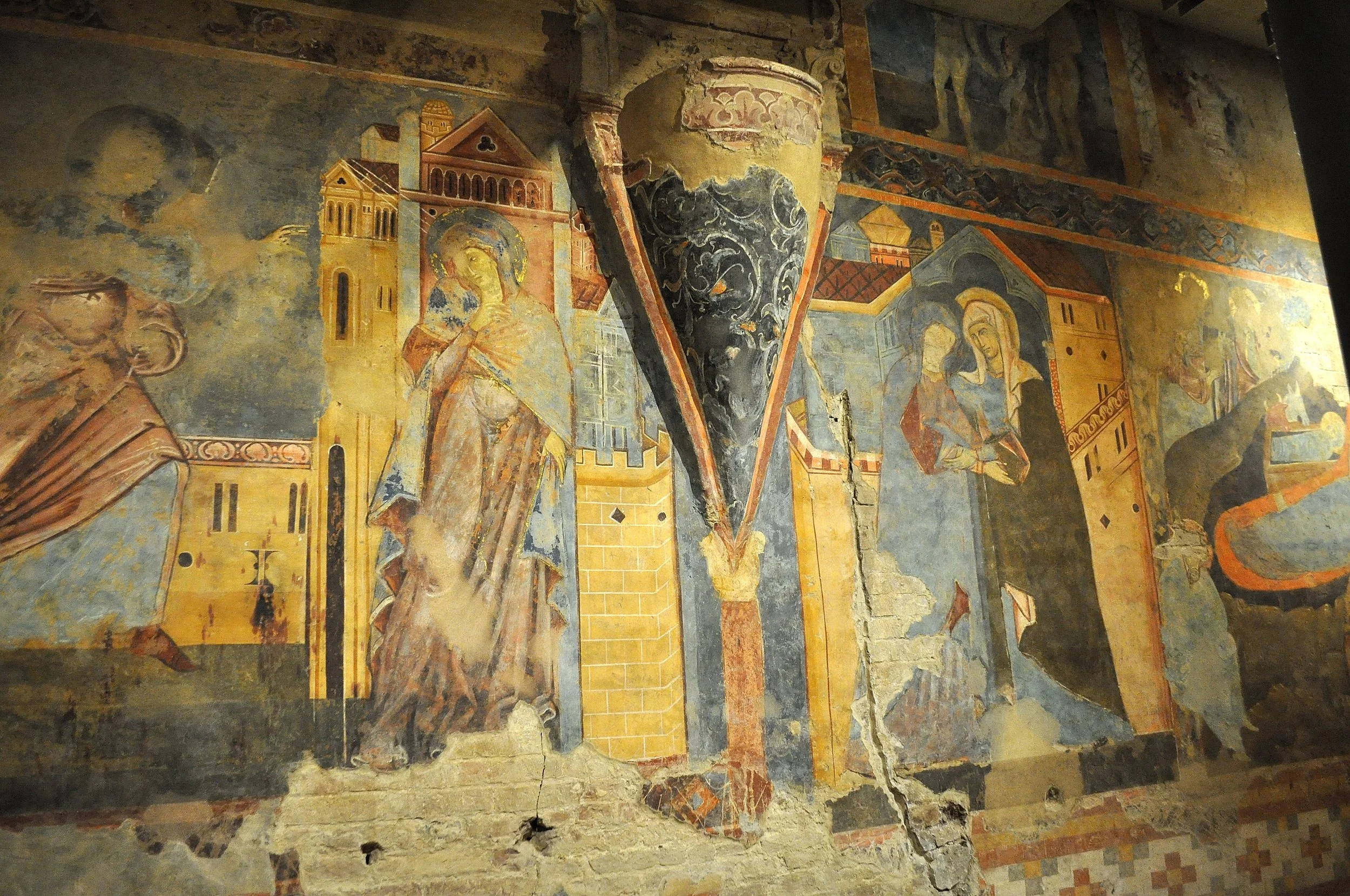
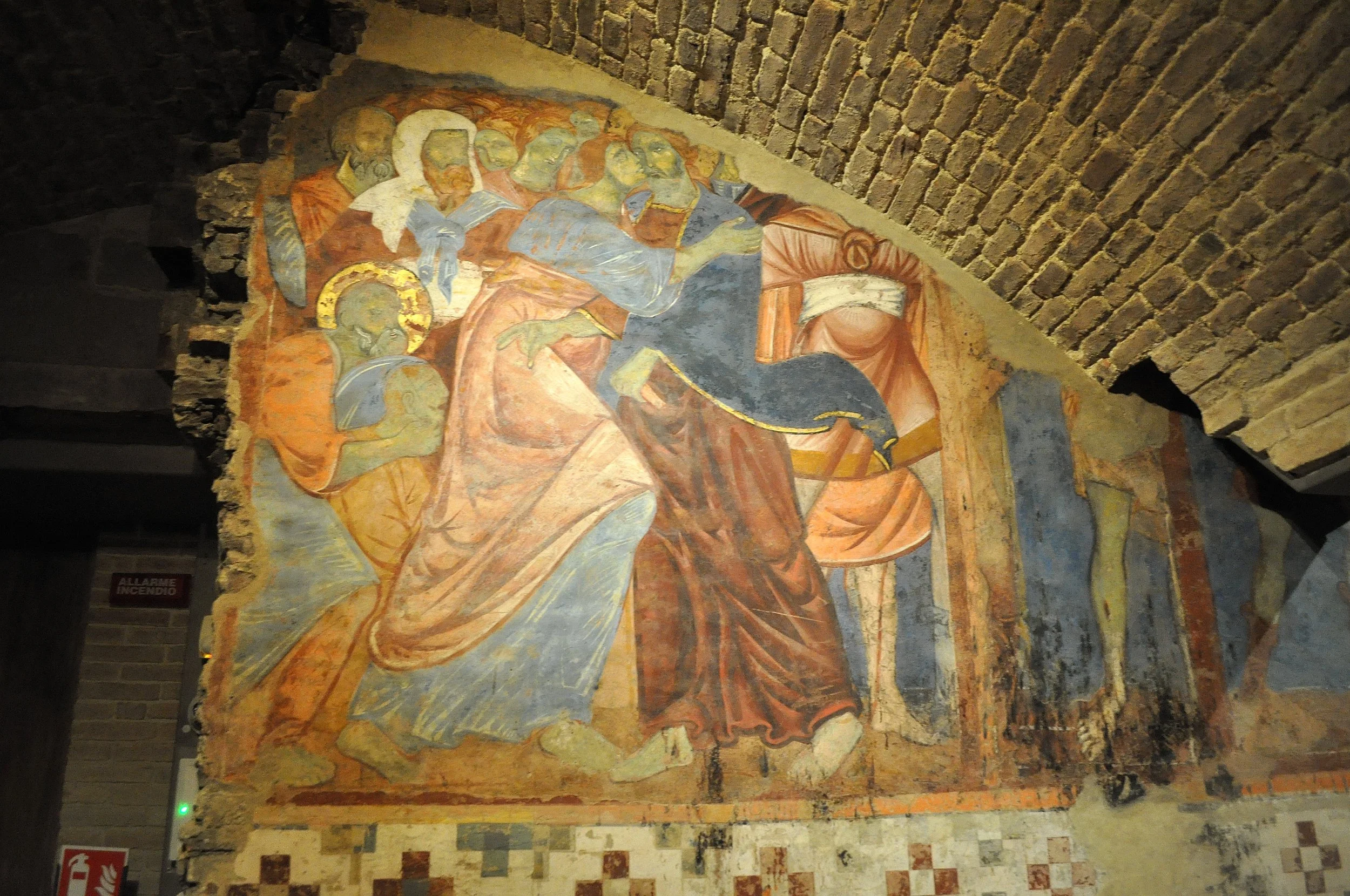
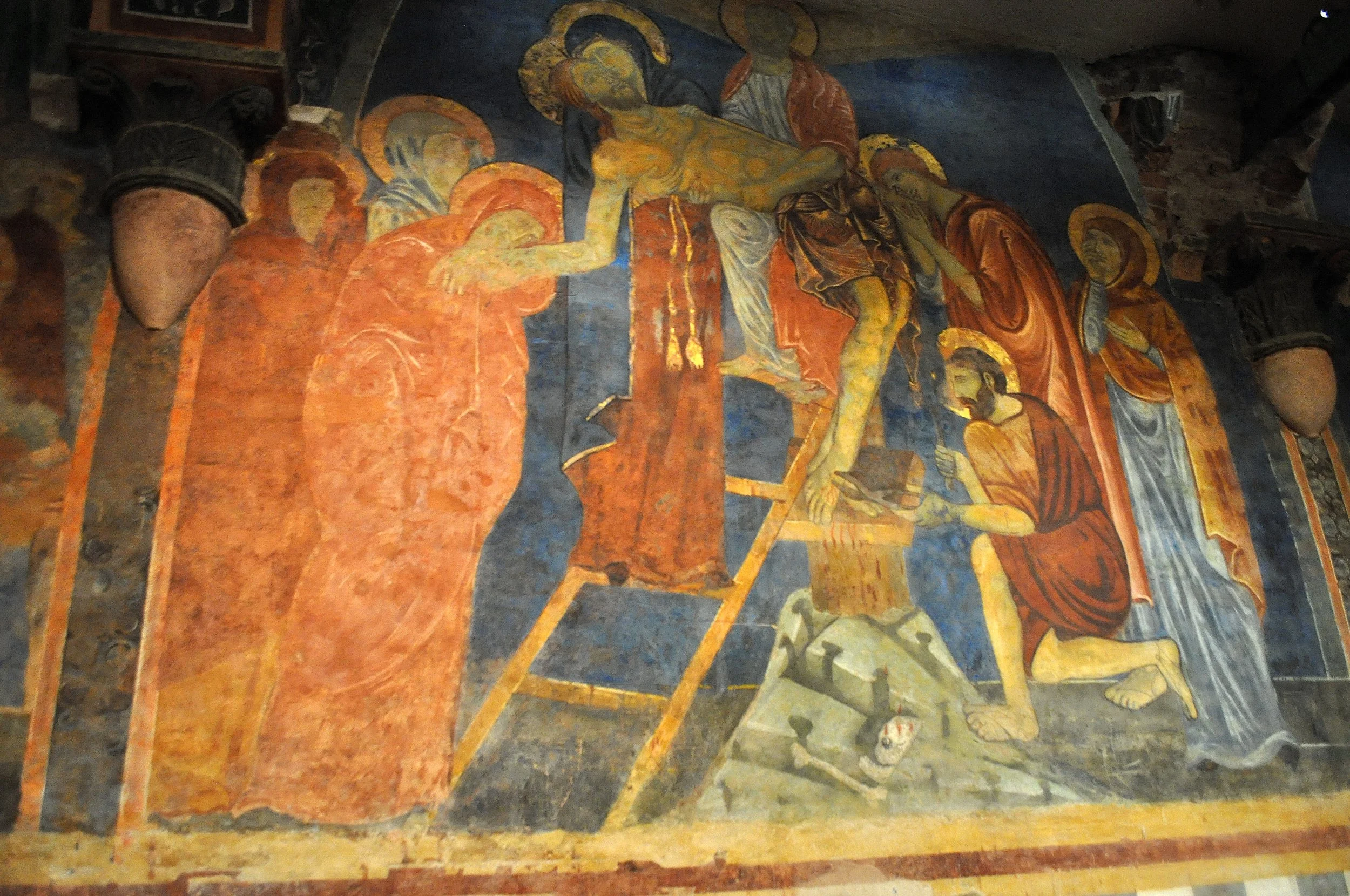
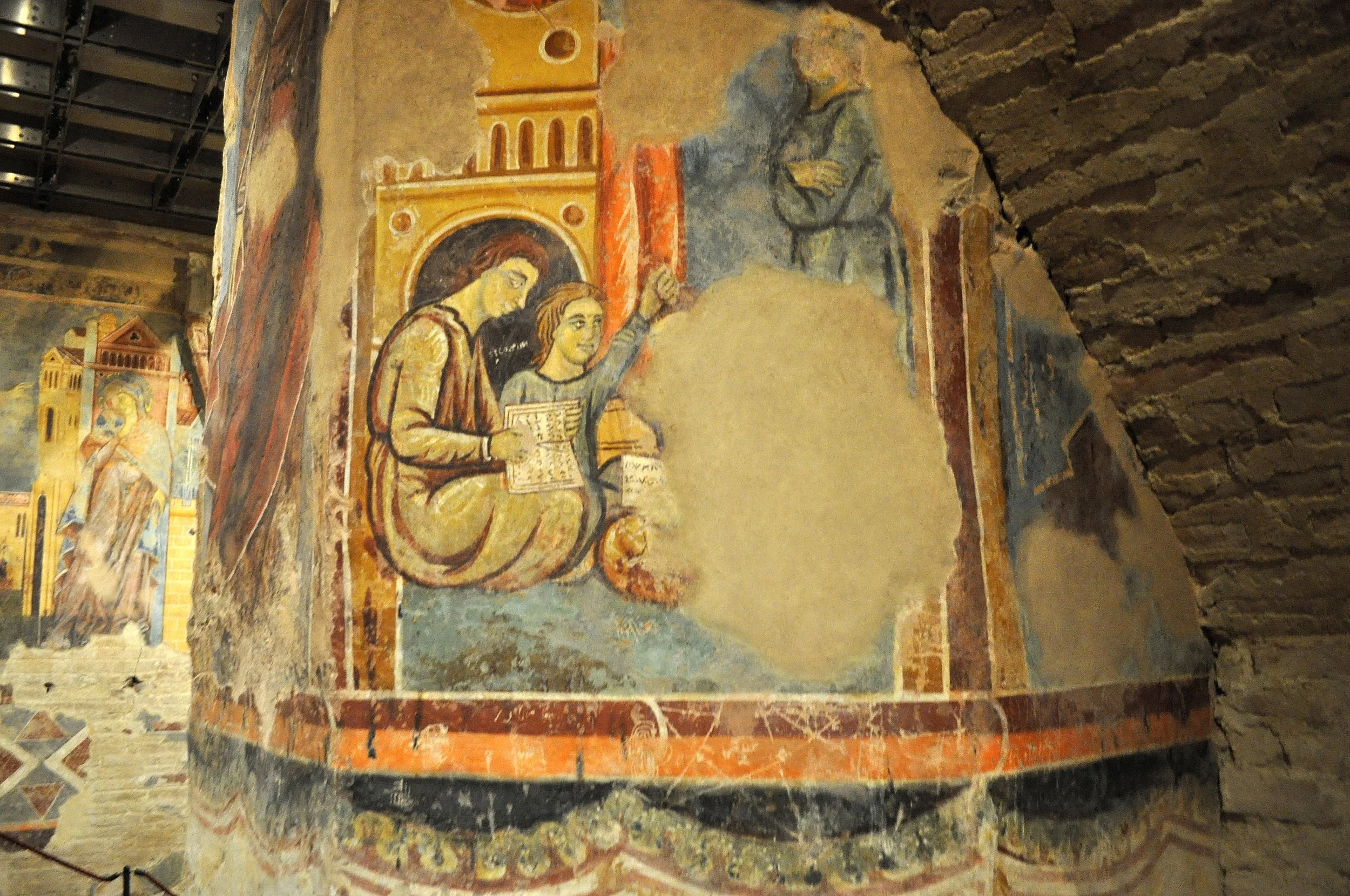
Piero: just below, we find the astonishing Crypt of the Cathedral, discovered only in 1999, with extraordinarily well-preserved medieval frescoes that reveal another hidden treasure of Siena’s history.
Angela: right across from Siena Cathedral, on the opposite side of the square, stands one of the city's most fascinating complexes: Santa Maria della Scala.
Piero: today it is a remarkable museum complex, but for almost a thousand years it was one of the most important hospitals in Europe. Its name simply comes from its location: it stands directly in front of the cathedral steps.
Angela: its origins date back at least to the 11th century, when Siena was constantly crossed by pilgrims travelling along the Via Francigena, the great medieval route connecting Northern Europe to Rome.
Piero: here, pilgrims, the sick, the poor, and abandoned children found shelter. It was much more than a hospital: it was a true city institution, supported by the Sienese Republic and by donations from local citizens.
Angela: the heart of the complex is the magnificent Pellegrinaio, the large hall where travellers were welcomed and cared for. Its walls are decorated with extraordinary 15th-century frescoes depicting the daily life of the hospital: doctors treating patients, monks distributing food, and pilgrims being welcomed after their long journeys.
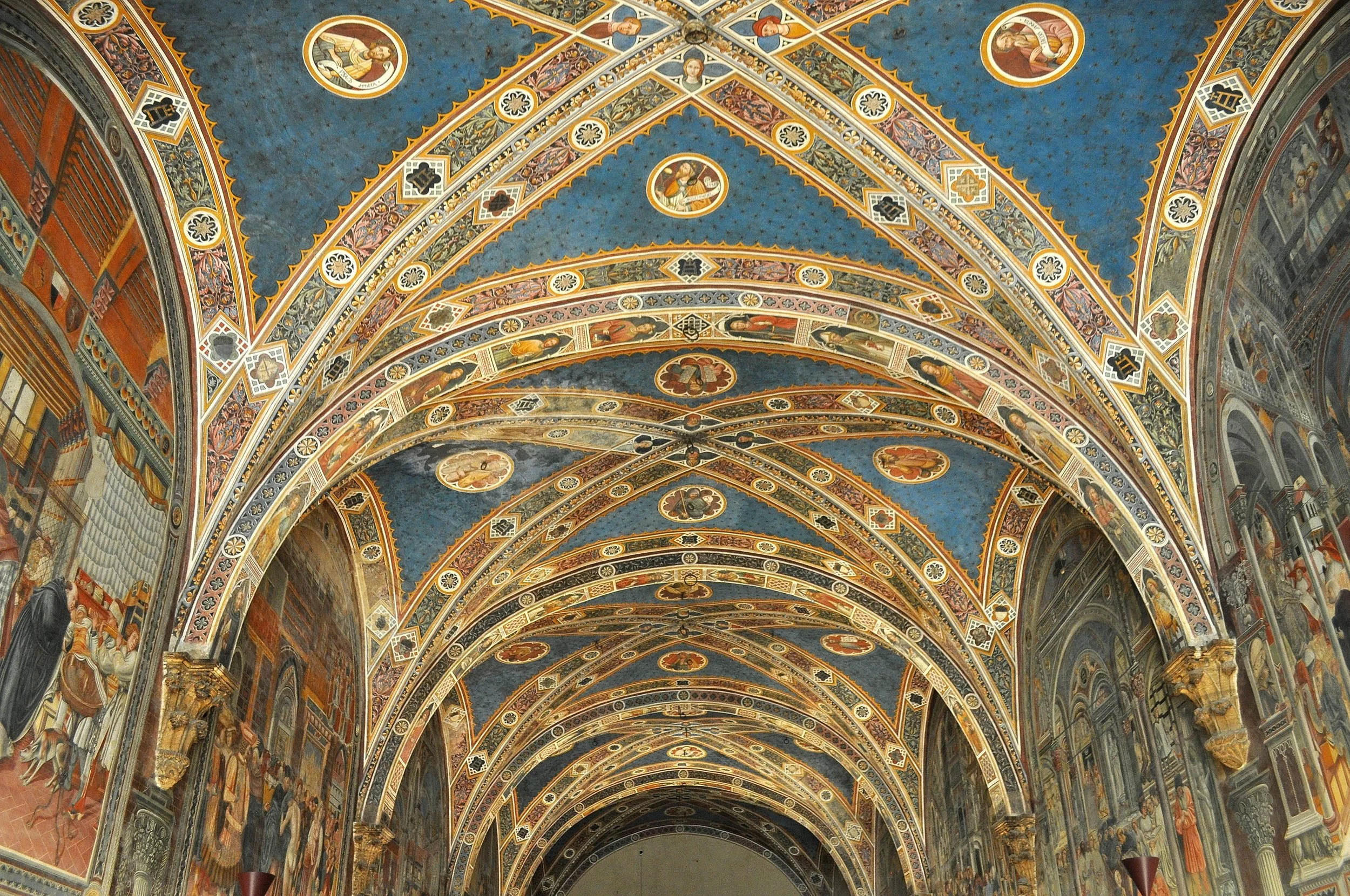
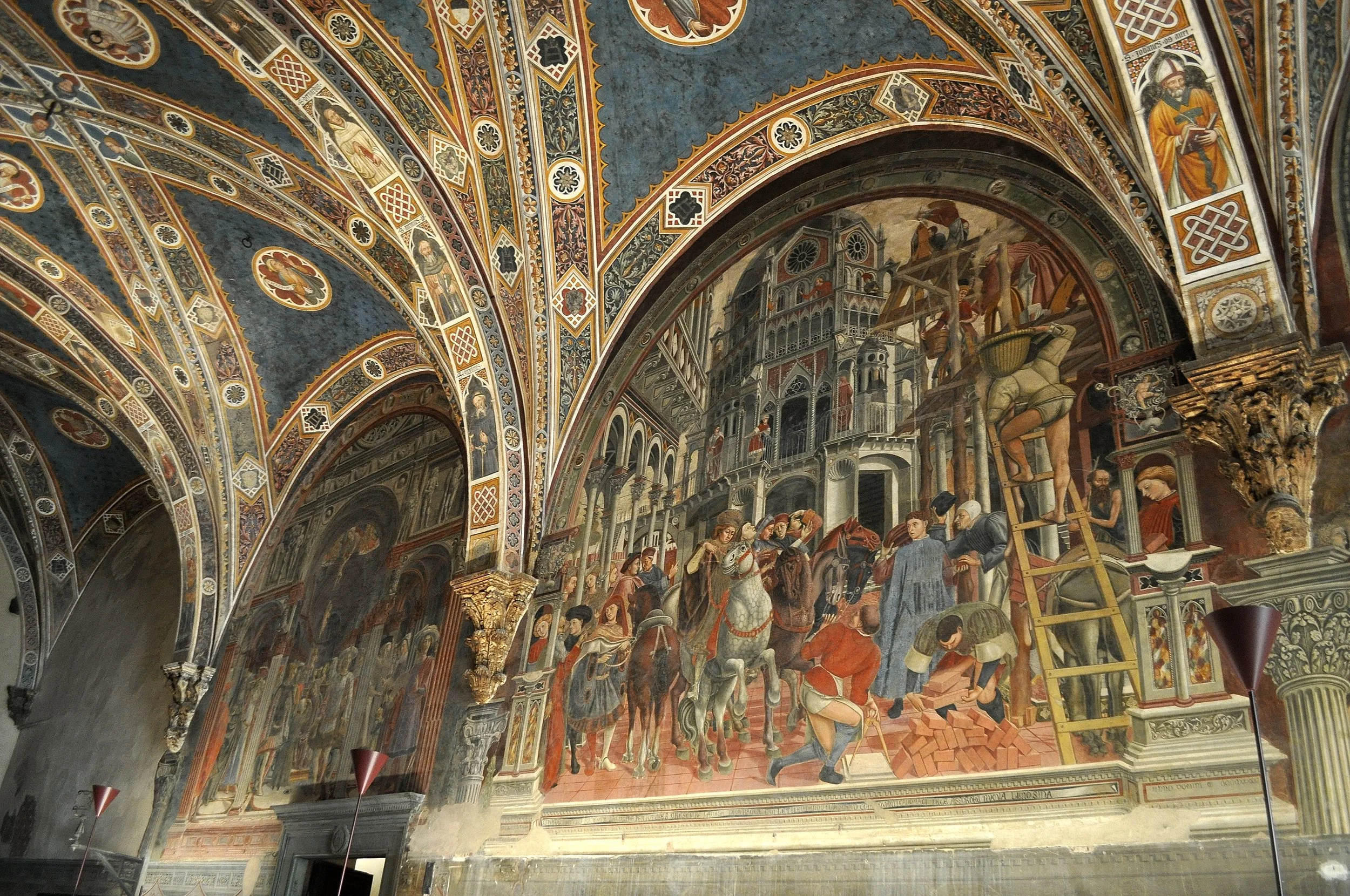
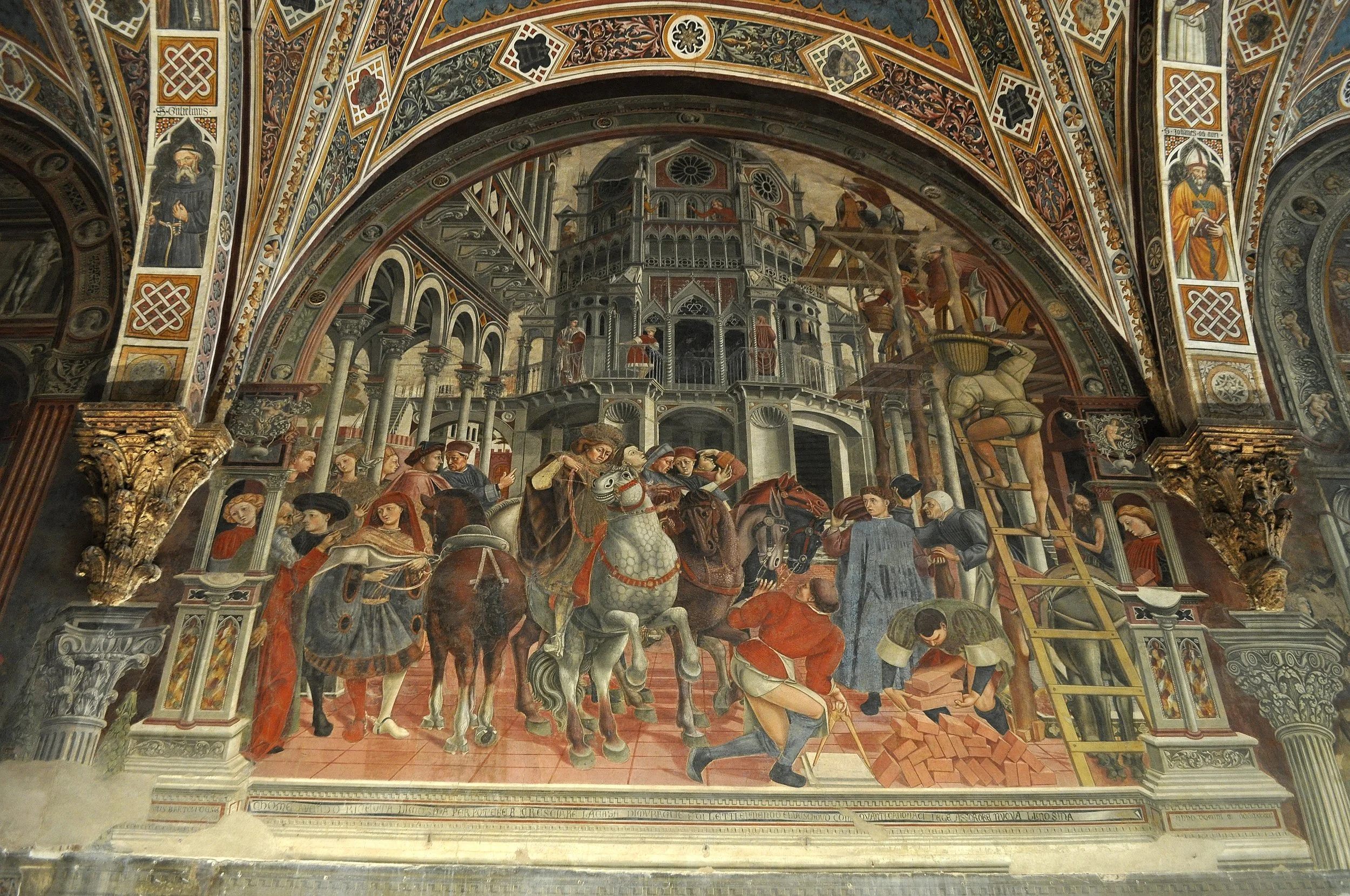
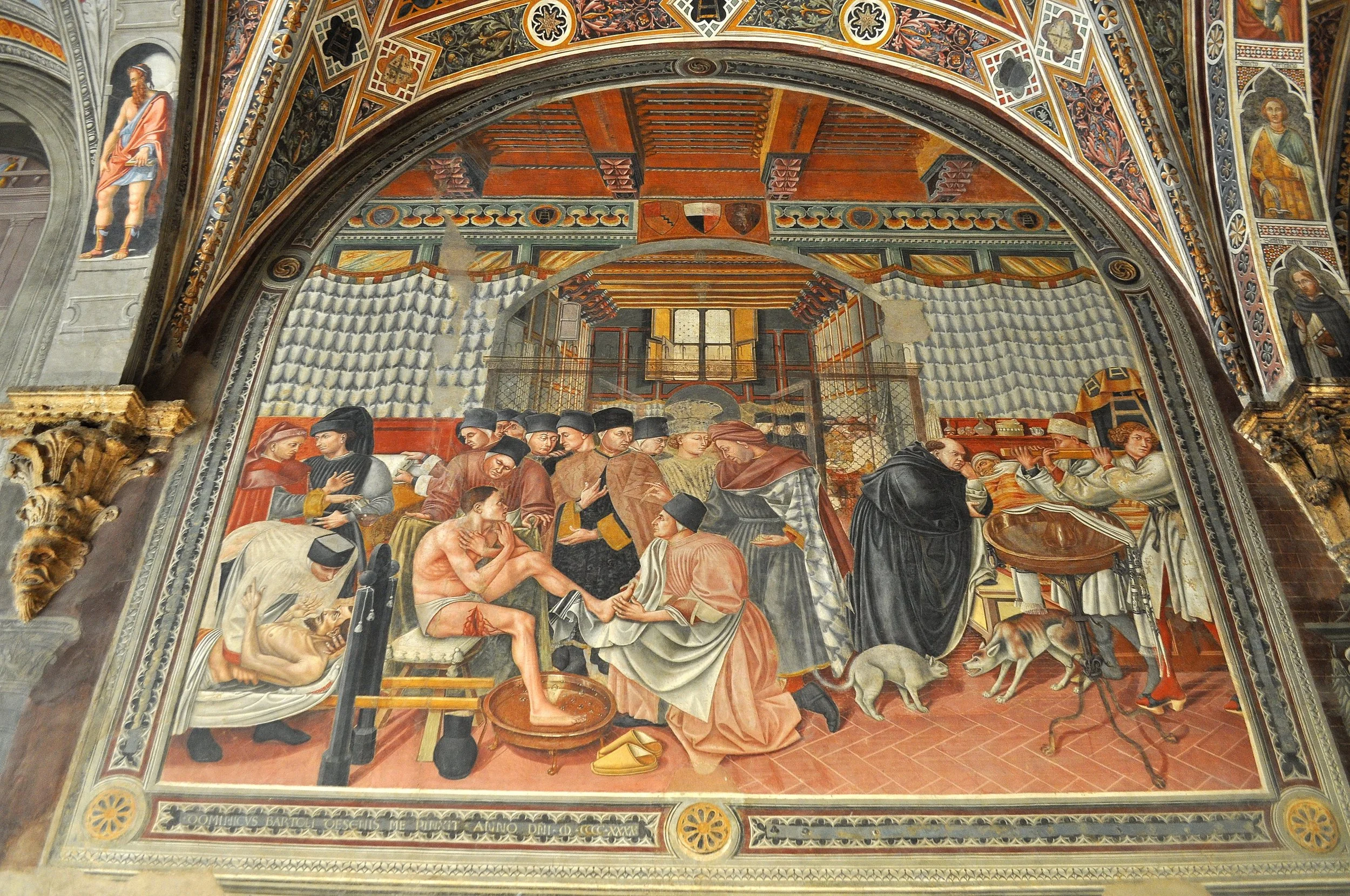
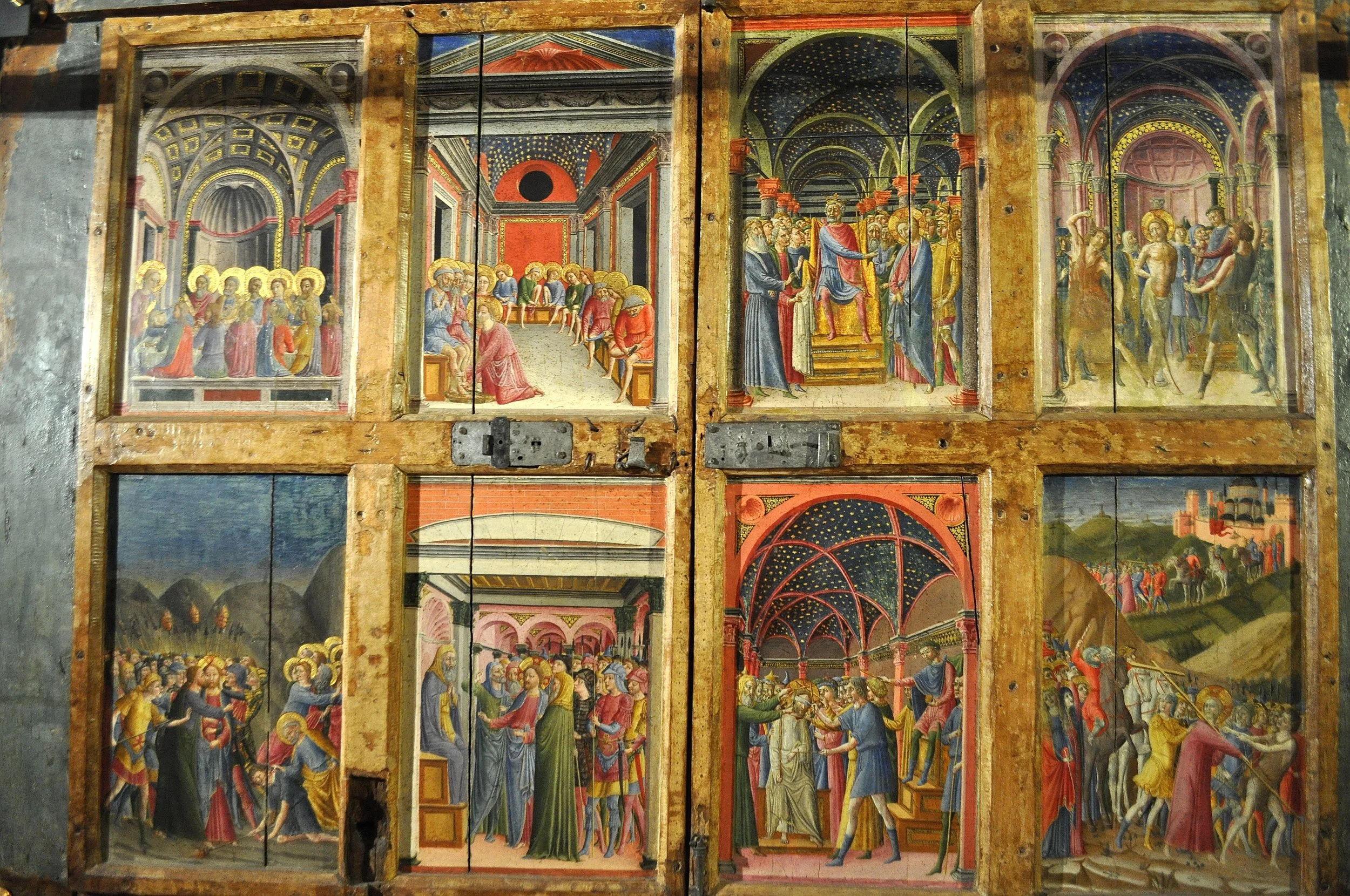
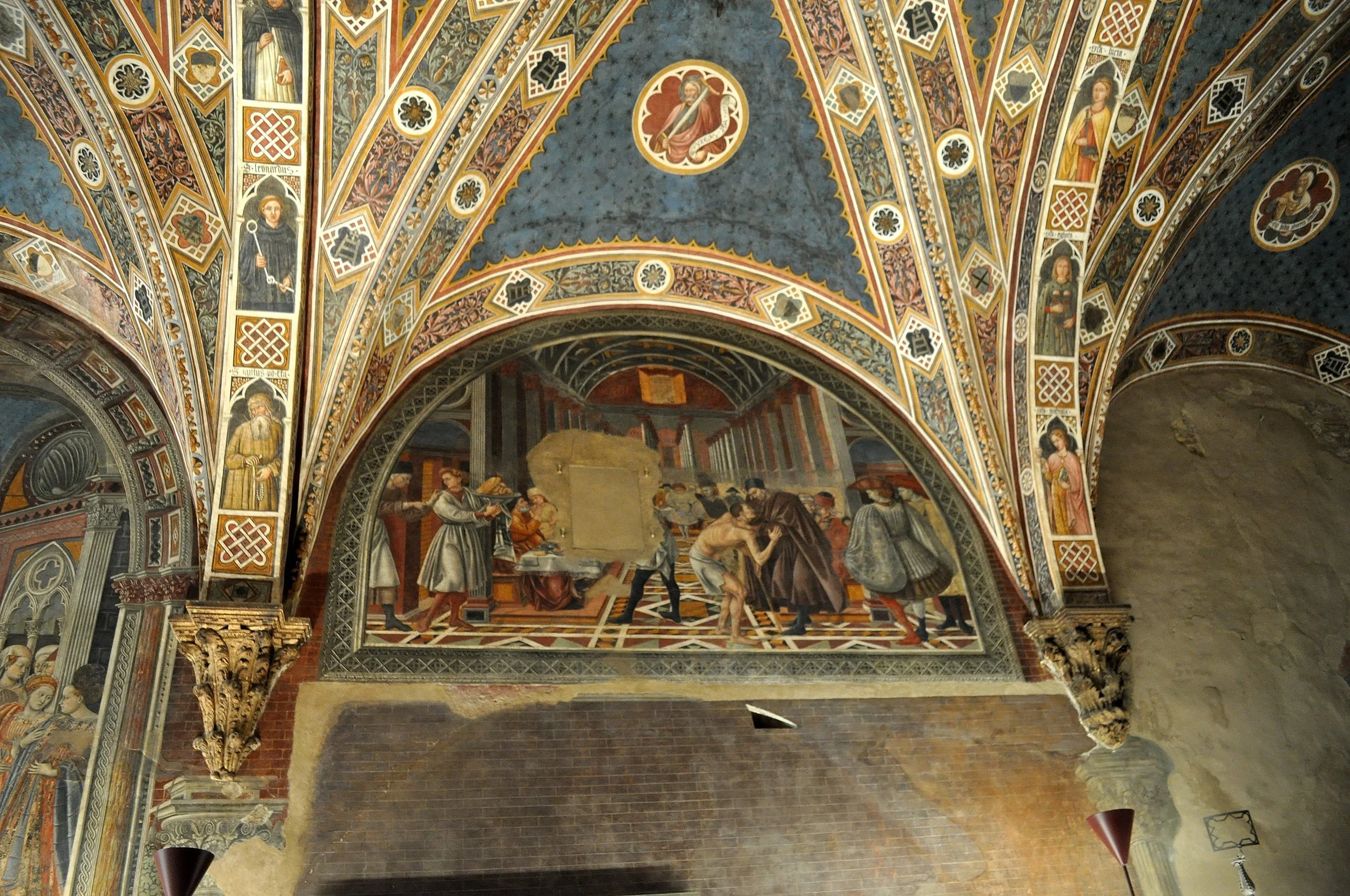
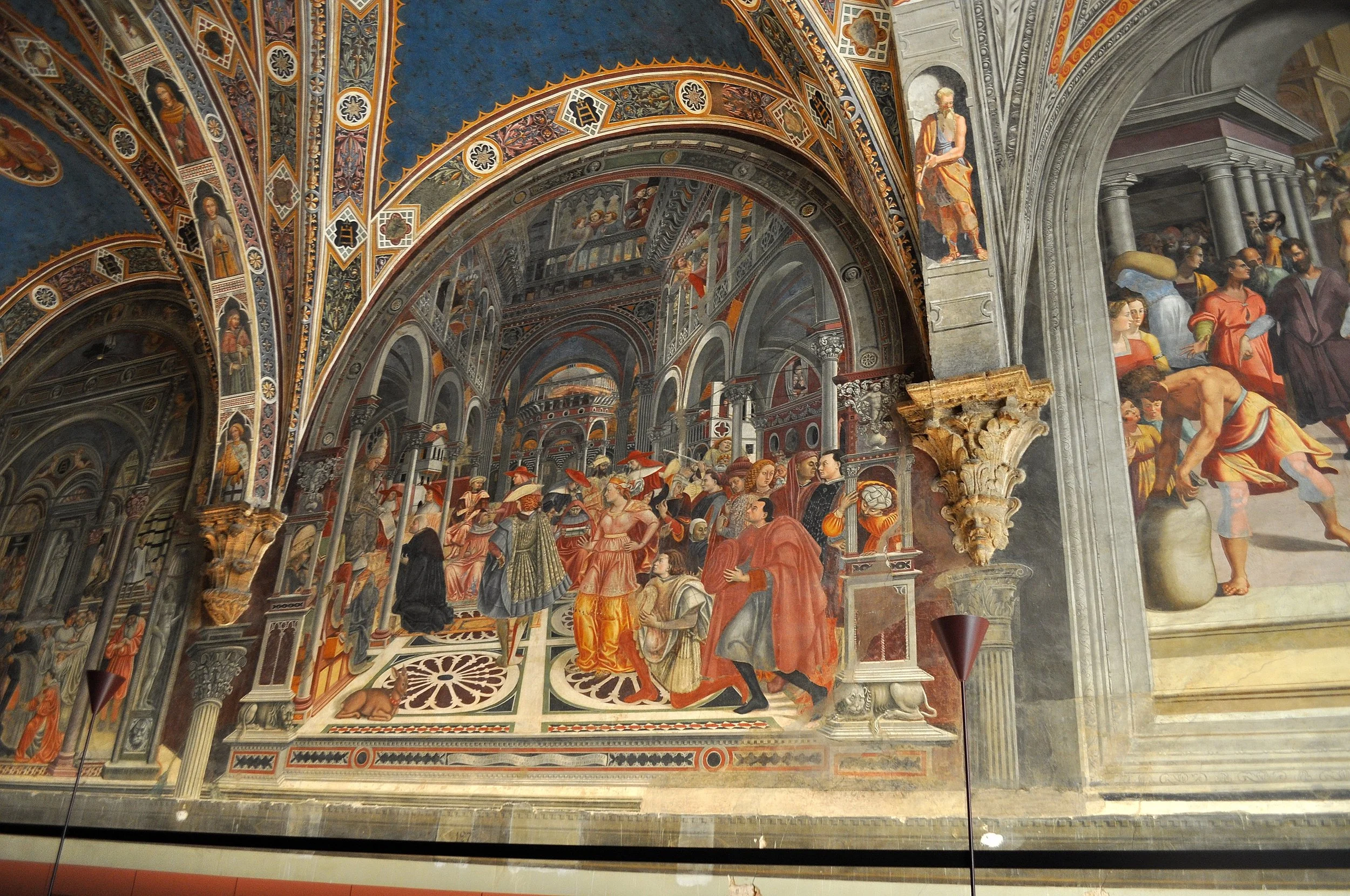
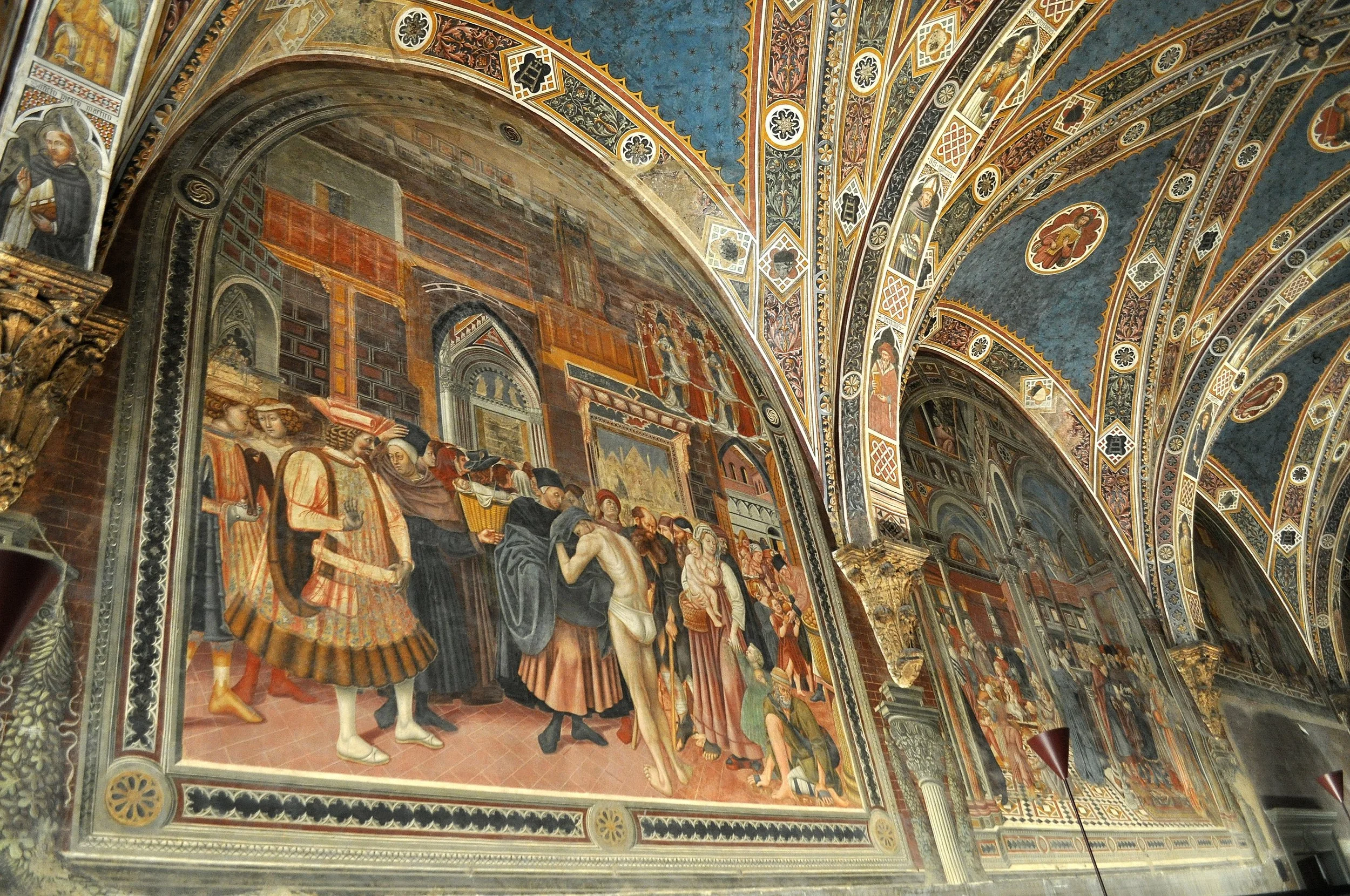
Piero: it is almost like looking at a photograph of the Middle Ages. The scenes are remarkably realistic and show us how one of the most advanced healthcare and assistance systems of the time actually worked.
Angela: continuing the visit, we walk through corridors, chapels, and ancient hospital rooms. Some areas even extend below the level of the city, with large underground spaces once used as storerooms and storage areas.
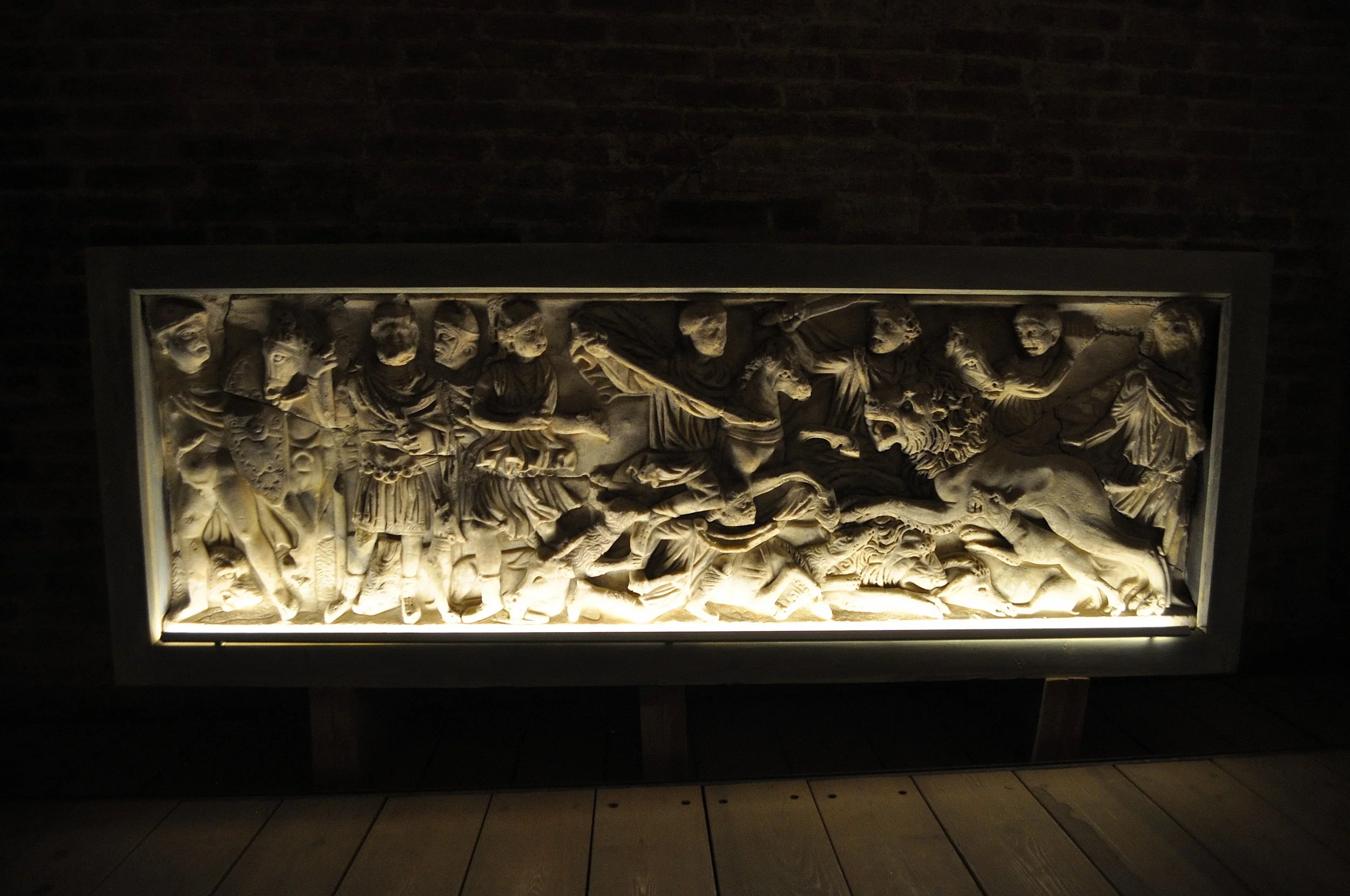
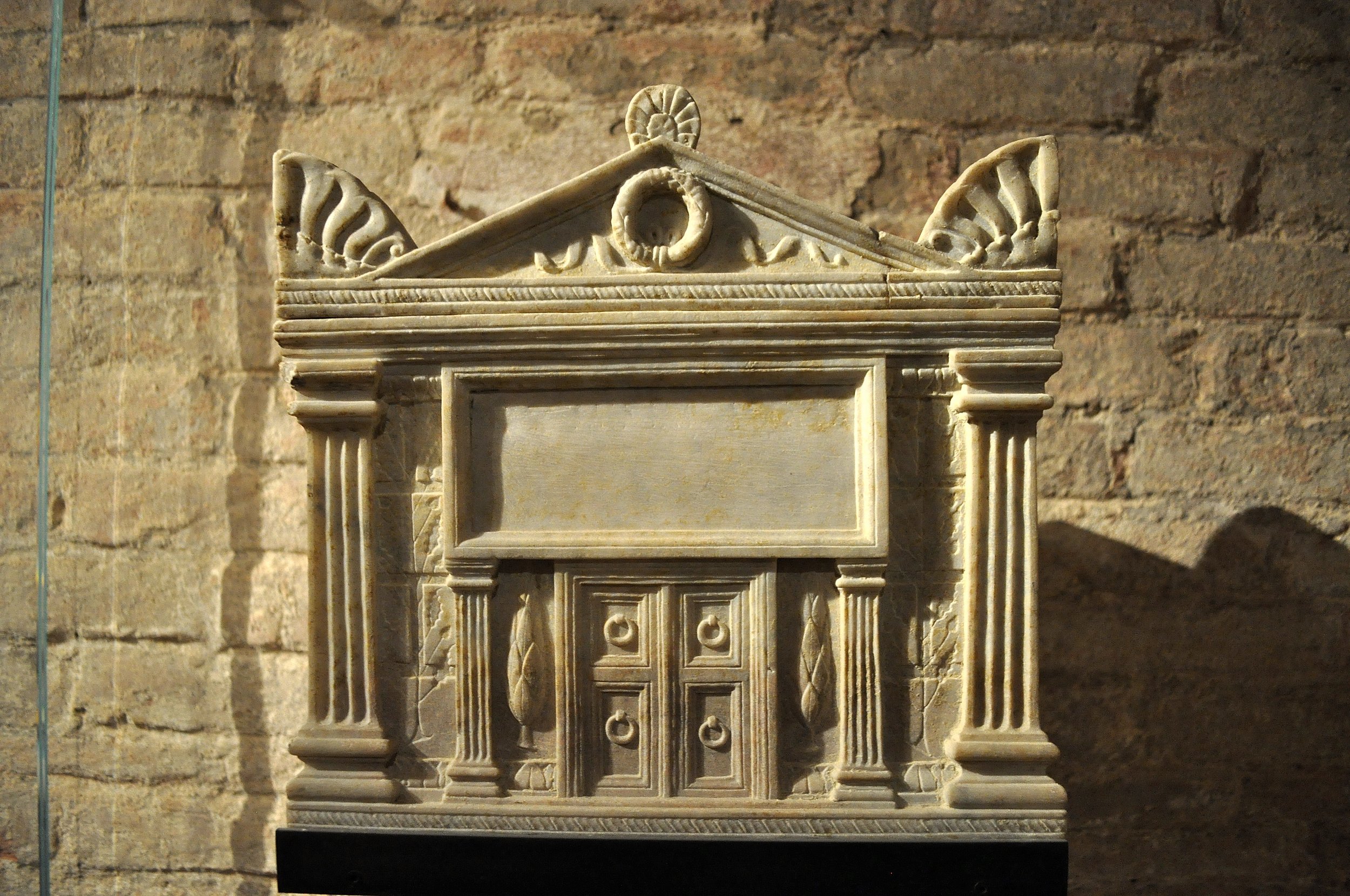
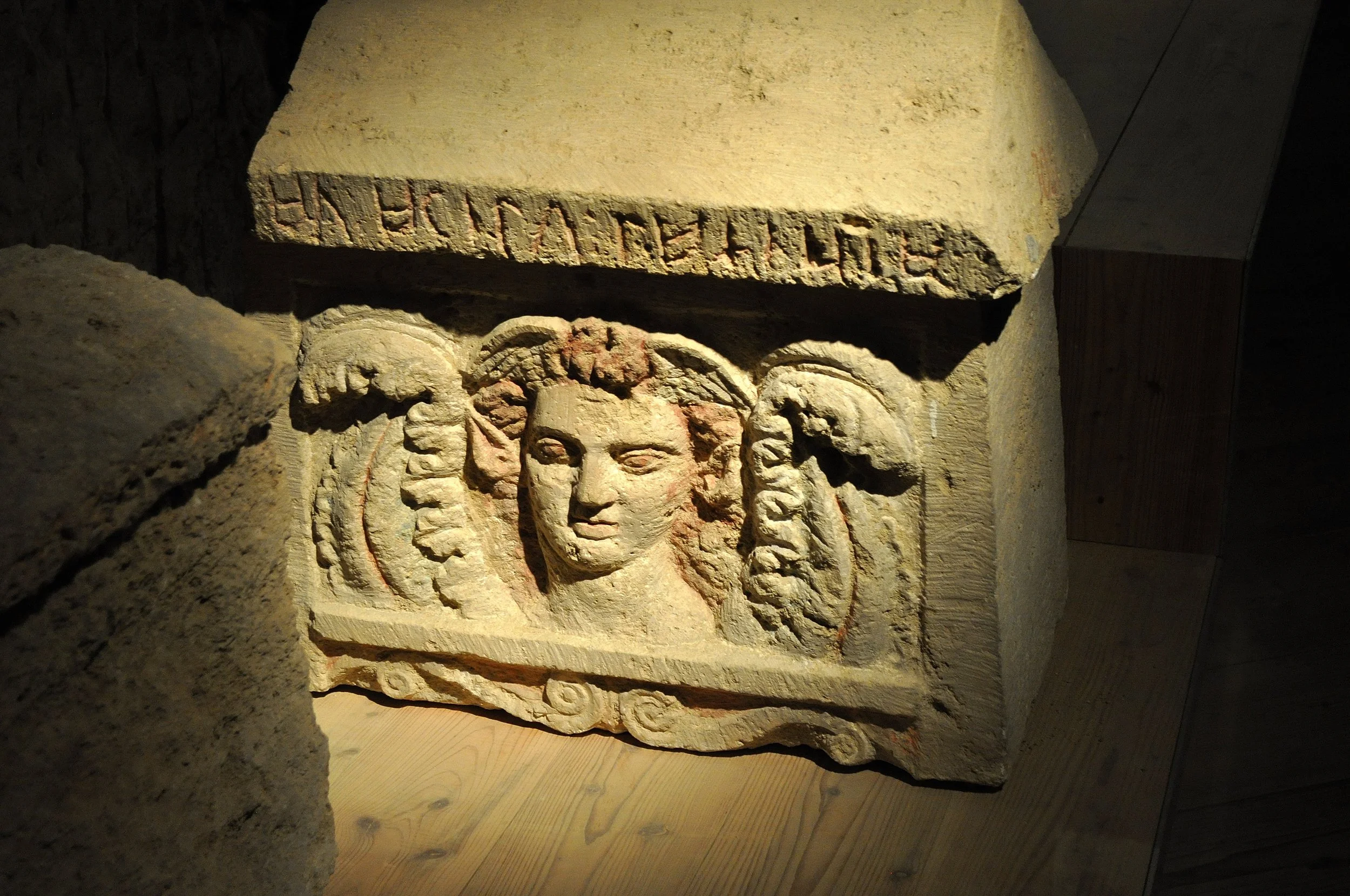
Piero: a place that reveals a lesser-known side of Siena: not only the city of towers and the Palio, but also a city that for centuries welcomed and cared for travellers crossing medieval Europe.
Piero: in the late afternoon, we reach Fontebranda, one of the oldest medieval fountains in Siena.
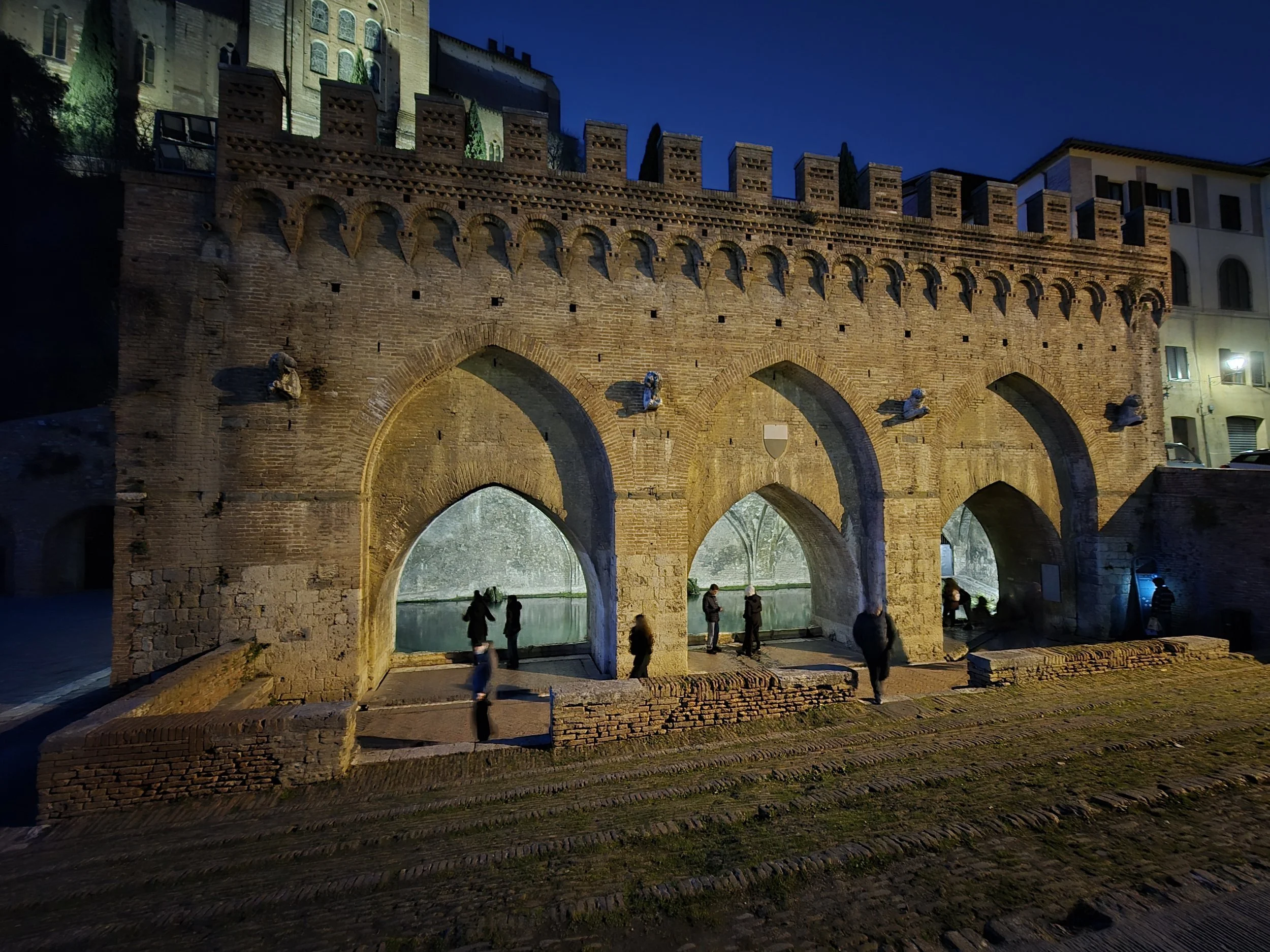
Angela: these structures were essential to the life of the city: they provided drinking water, served for washing clothes, and supported many craft activities.
Piero: before dinner, we stop for an aperitif at Palazzo Chigi Saraceni.
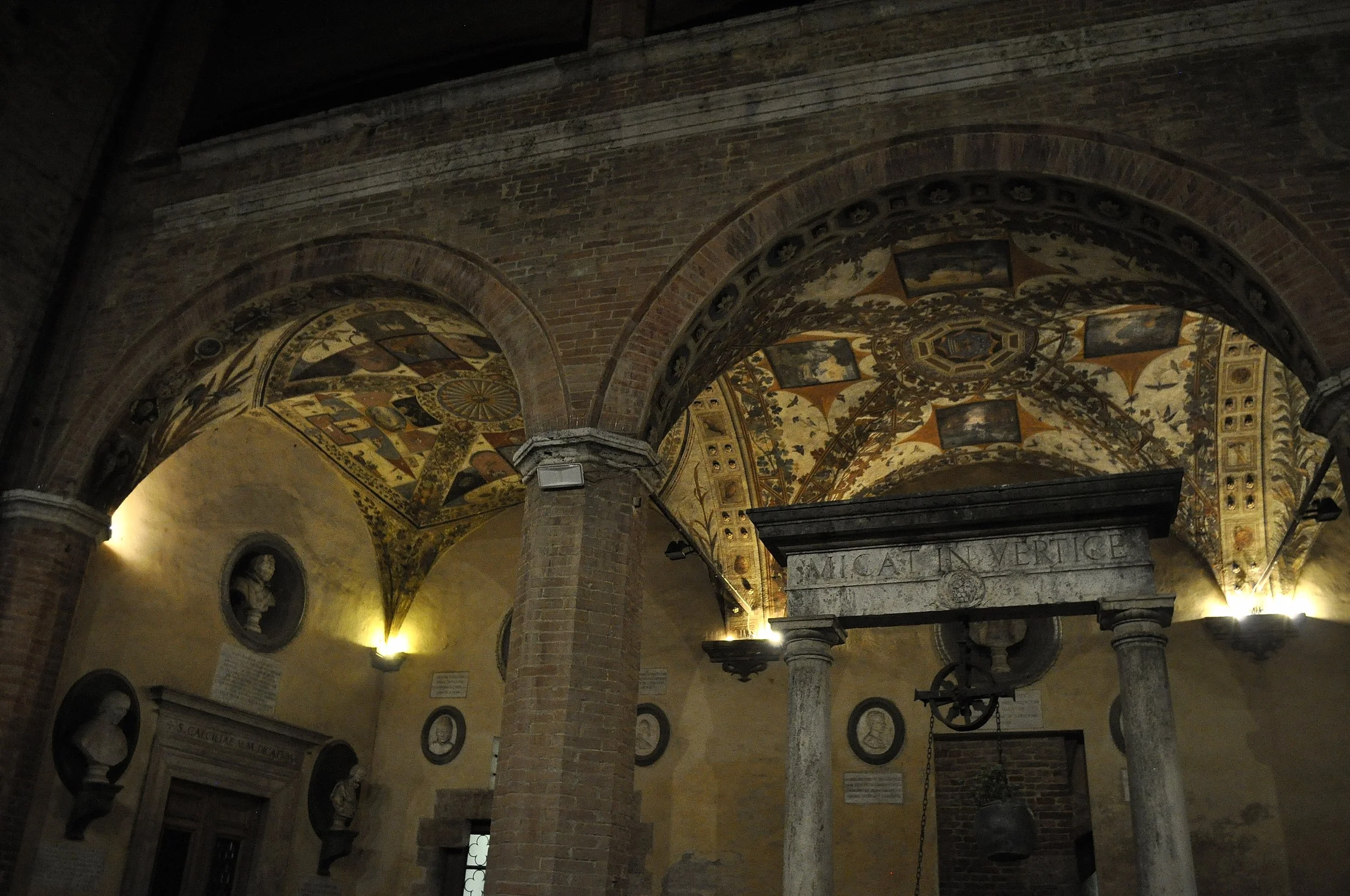
Angela: this magnificent Gothic palace is now home to the renowned Chigiana Musical Academy.
Piero: the evening continues with a typical Sienese dinner: pici, Tuscan cured meats, and a good wine from the Sienese hills.
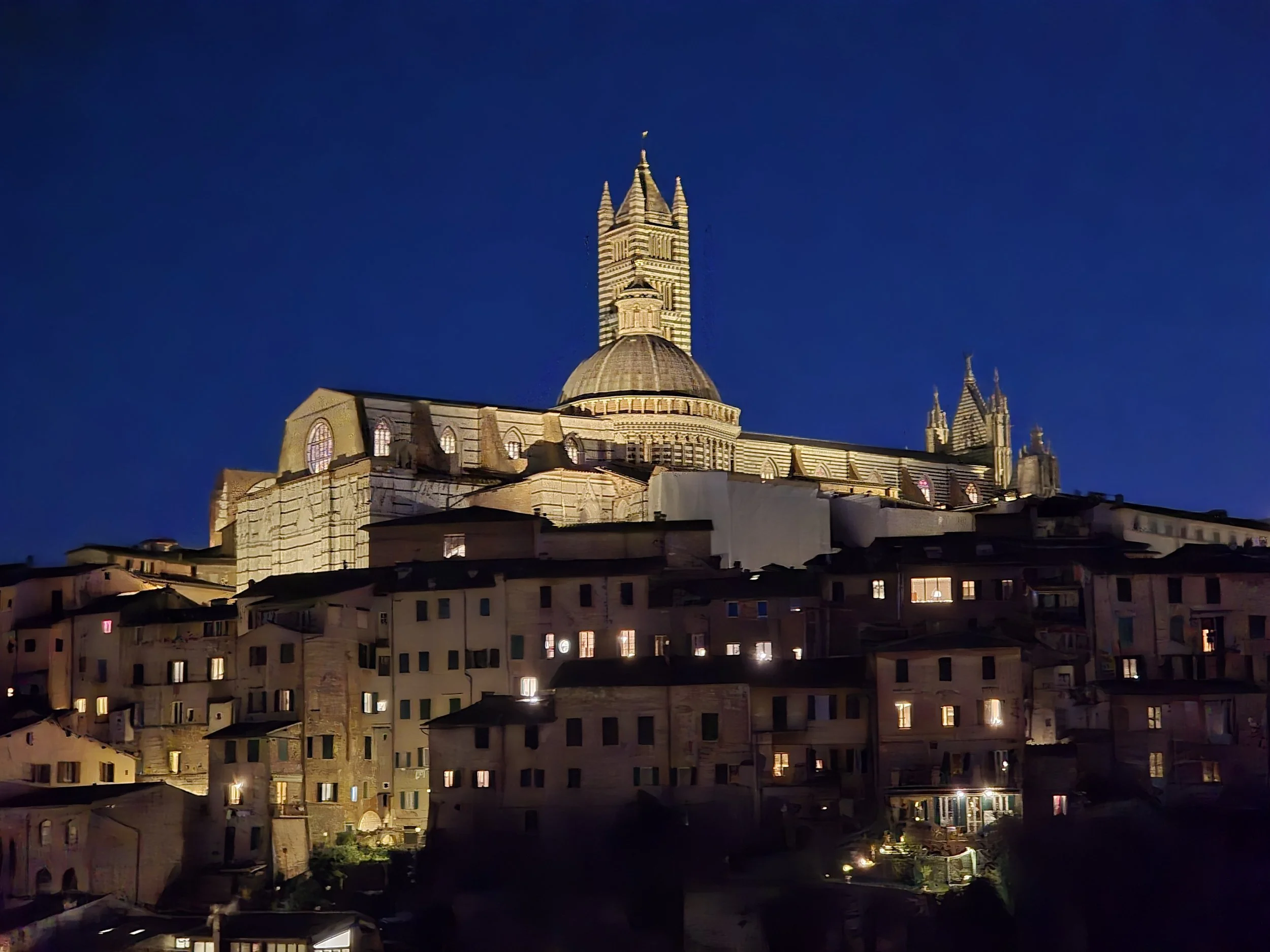
Angela: and then a night walk through Siena. The illuminated squares, the quiet narrow streets, and the red brick buildings glowing under the lights create a truly magical atmosphere.
Second day: Saint Catherine and the Palazzo Pubblico
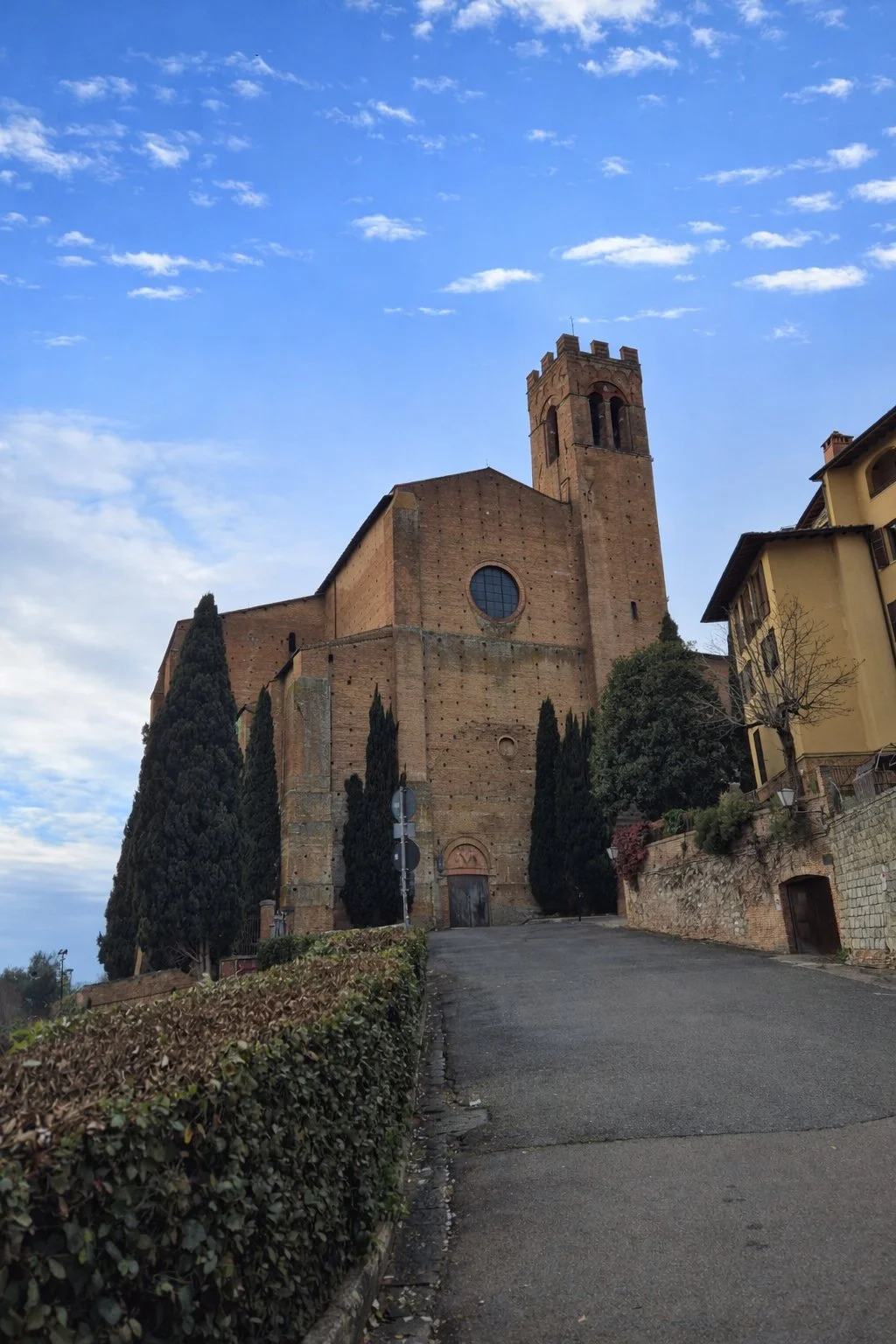
Piero: our second day begins with a visit to the Basilica of San Domenico.
Angela: here we find one of the most important relics of Siena: the head of Saint Catherine of Siena, one of the most significant spiritual figures in Italian history.
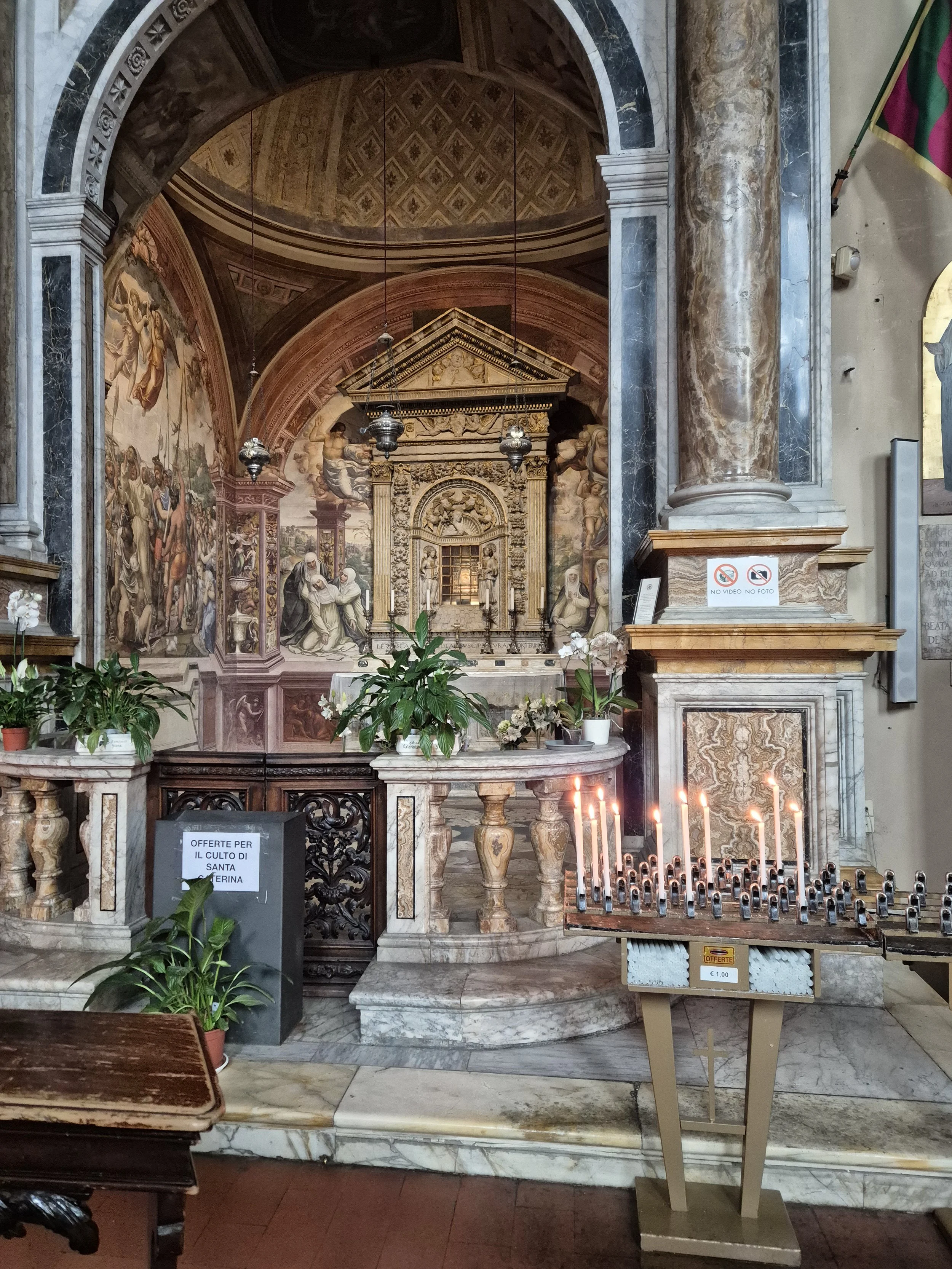
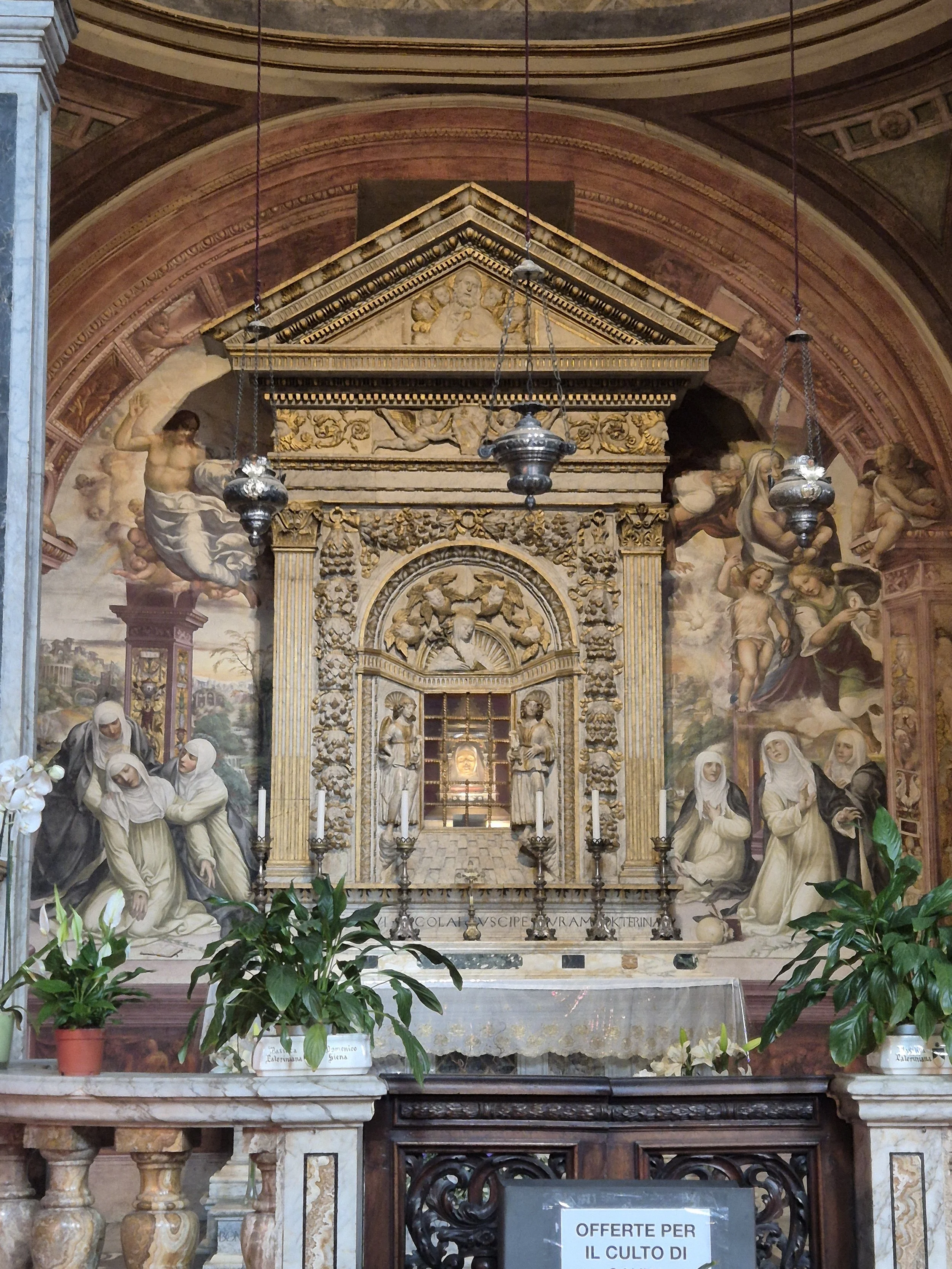
Piero: mystic, theologian, and diplomat, Catherine of Siena was proclaimed Doctor of the Church and Patron Saint of Italy. She is a central figure in Italian religious history, also because of her important role as a political mediator in the 14th century, when she helped convince the Pope to return from Avignon to Rome.
Angela: the basilica is one of the most impressive religious buildings in Siena, and the view over the city from here is simply spectacular.
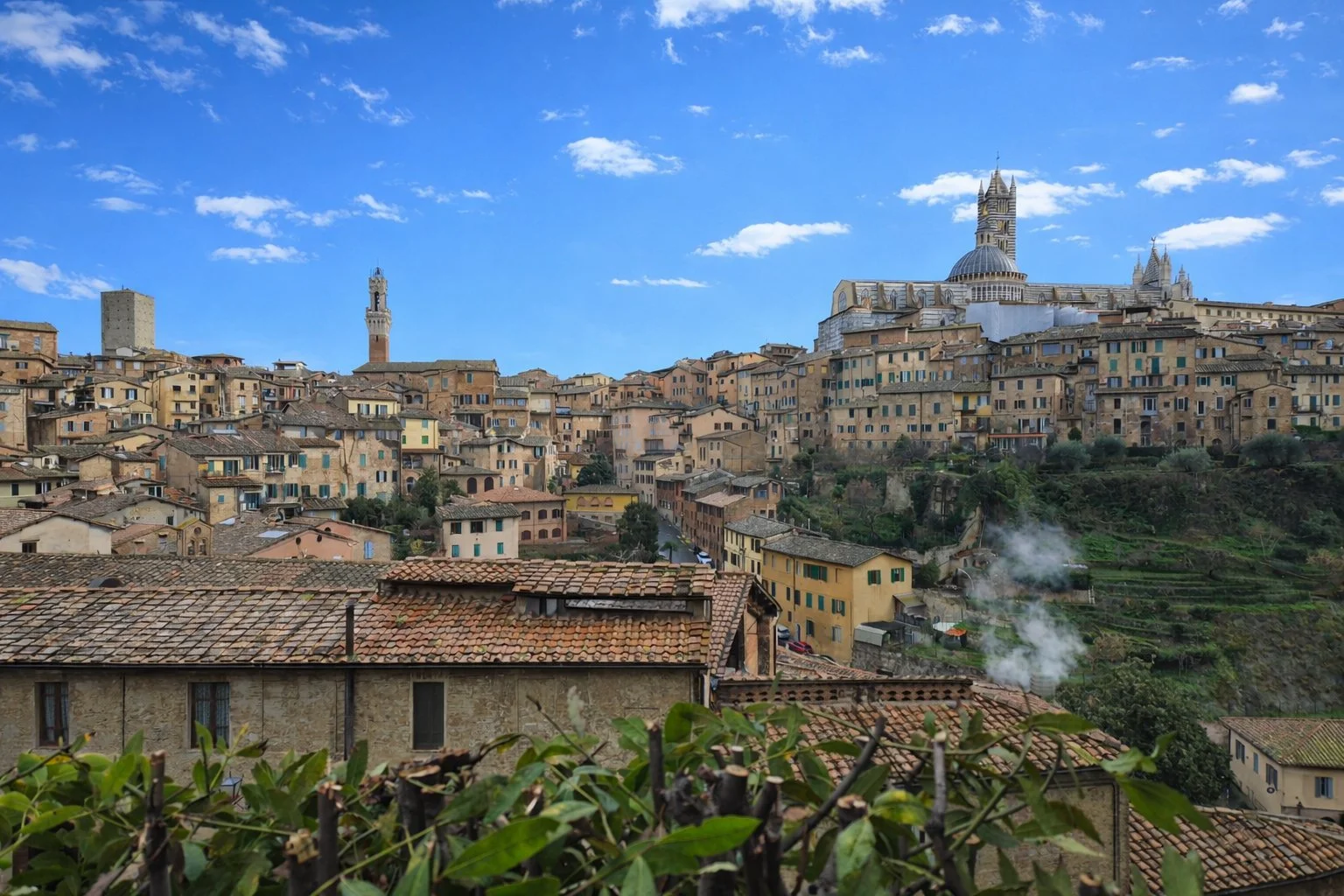
Piero: built between the 13th and 14th centuries, the church immediately impresses with its austere appearance: large brick walls, simple lines, and a structure that almost resembles a fortress.
Angela: not far from here, we reach the Medici Fortress, one of the most pleasant panoramic viewpoints in Siena.
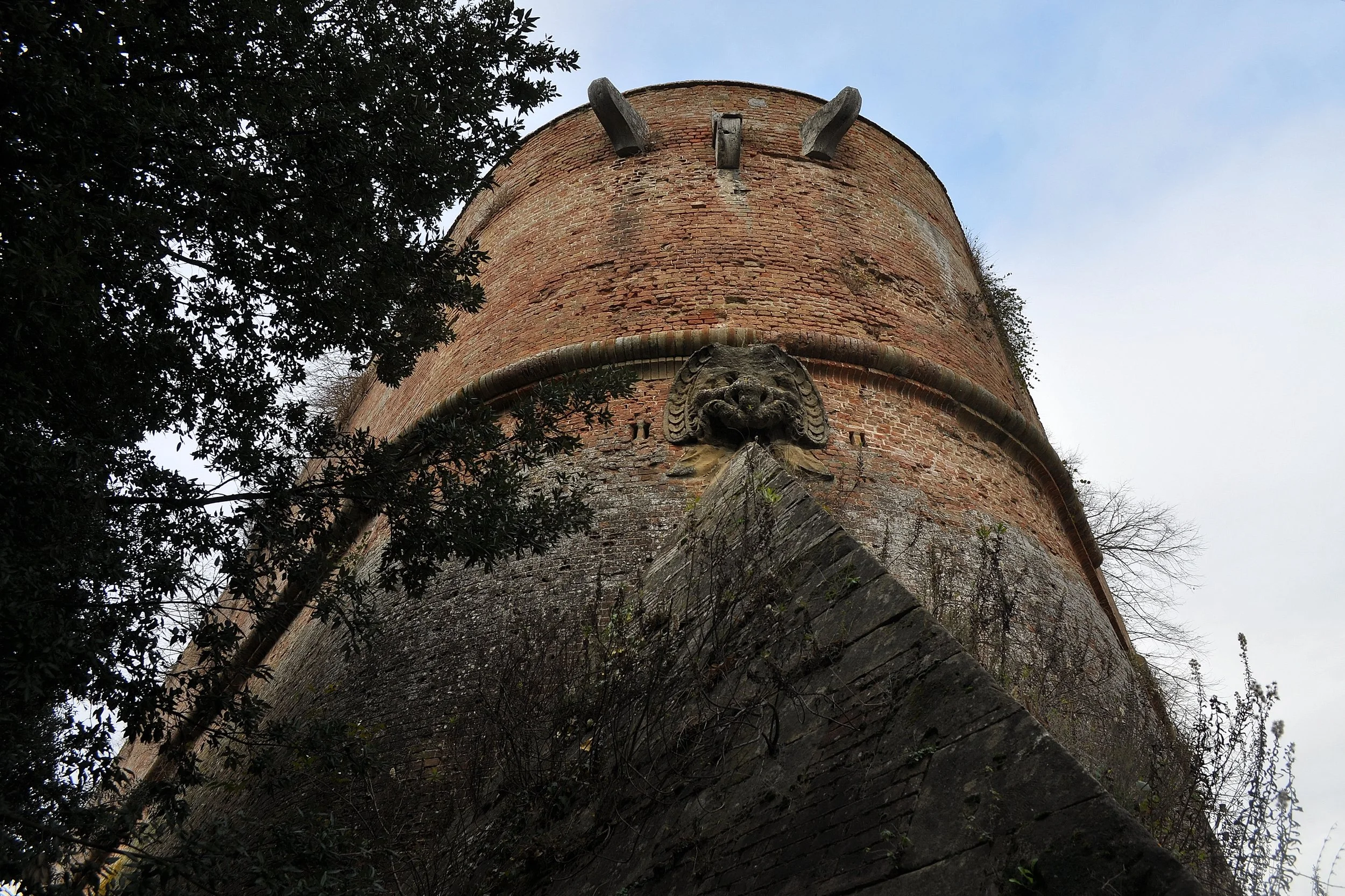
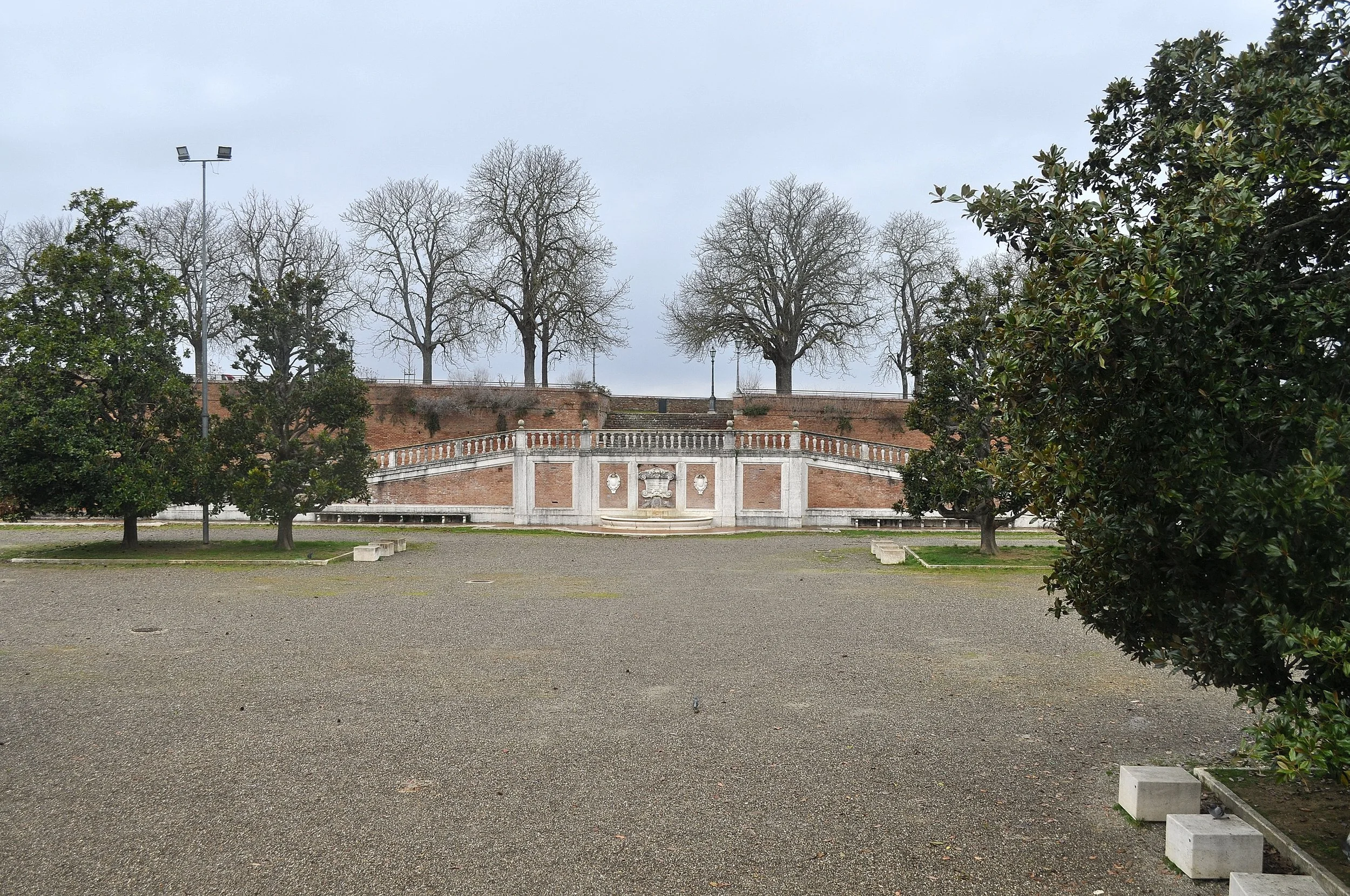
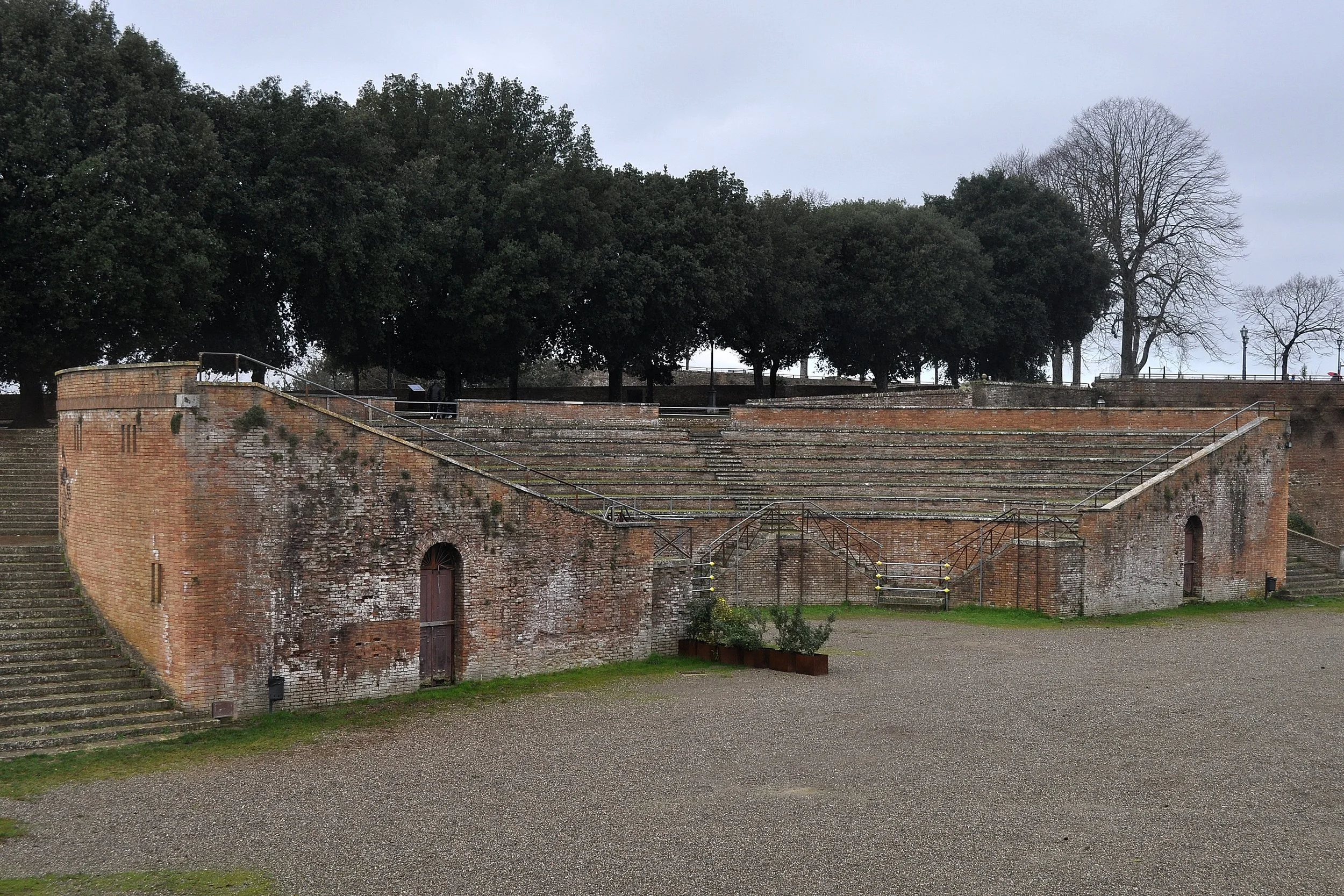
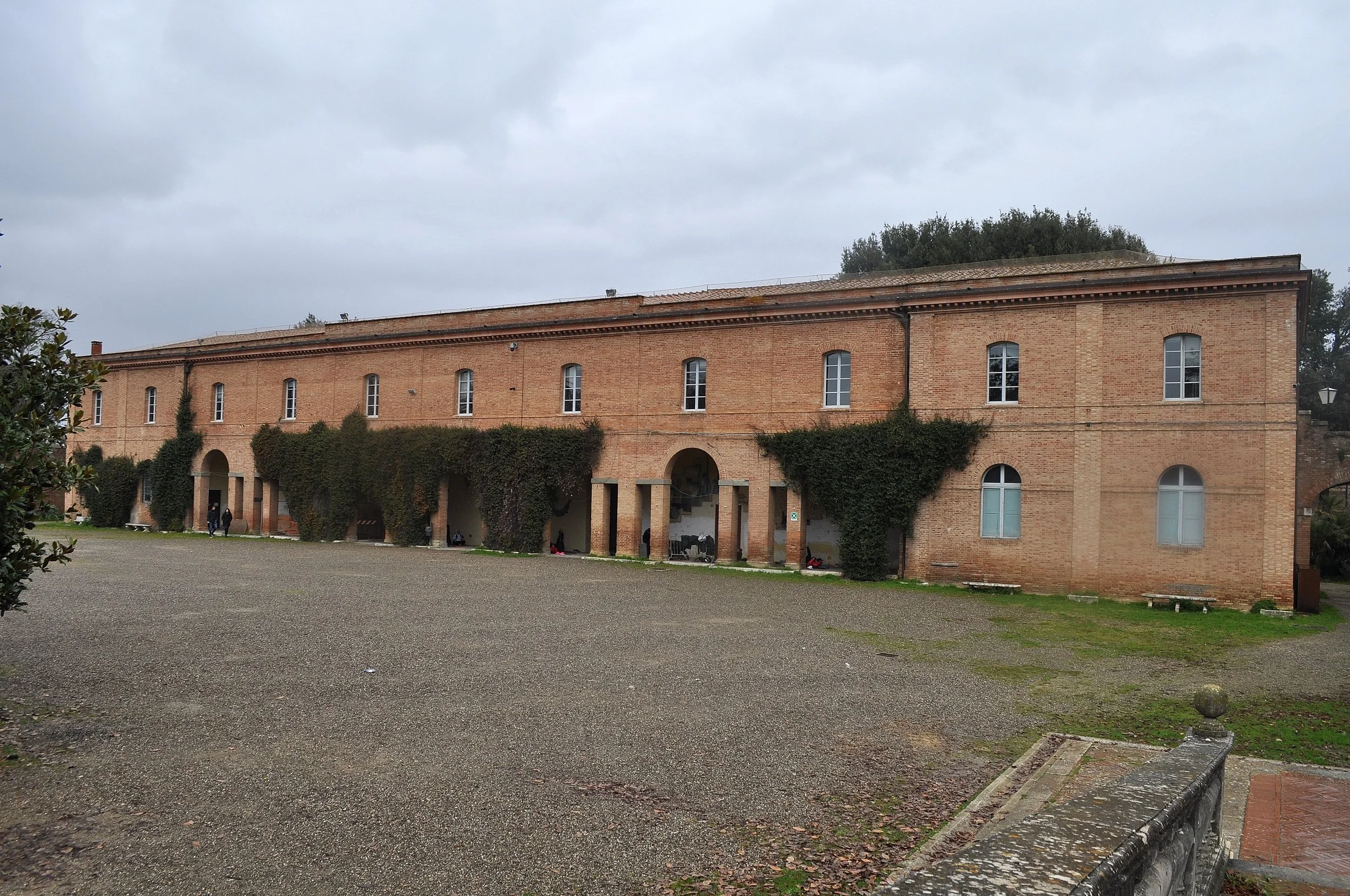
Piero: the fortress was built in the 16th century by the Medici, after the conquest of the city in 1555. It was a military structure designed to control Siena and prevent possible uprisings against the new Florentine rule.
Angela: the structure is impressive: large brick bastions, thick walls, and a quadrangular layout with four fortified corners. Today, however, the atmosphere is completely different from the past.
Piero: where soldiers and cannons once stood, today visitors stroll among tree-lined paths and lawns. The fortress walls have become a beautiful panoramic walkway, offering wonderful views over Siena’s rooftops and the rolling hills of the Tuscan countryside.
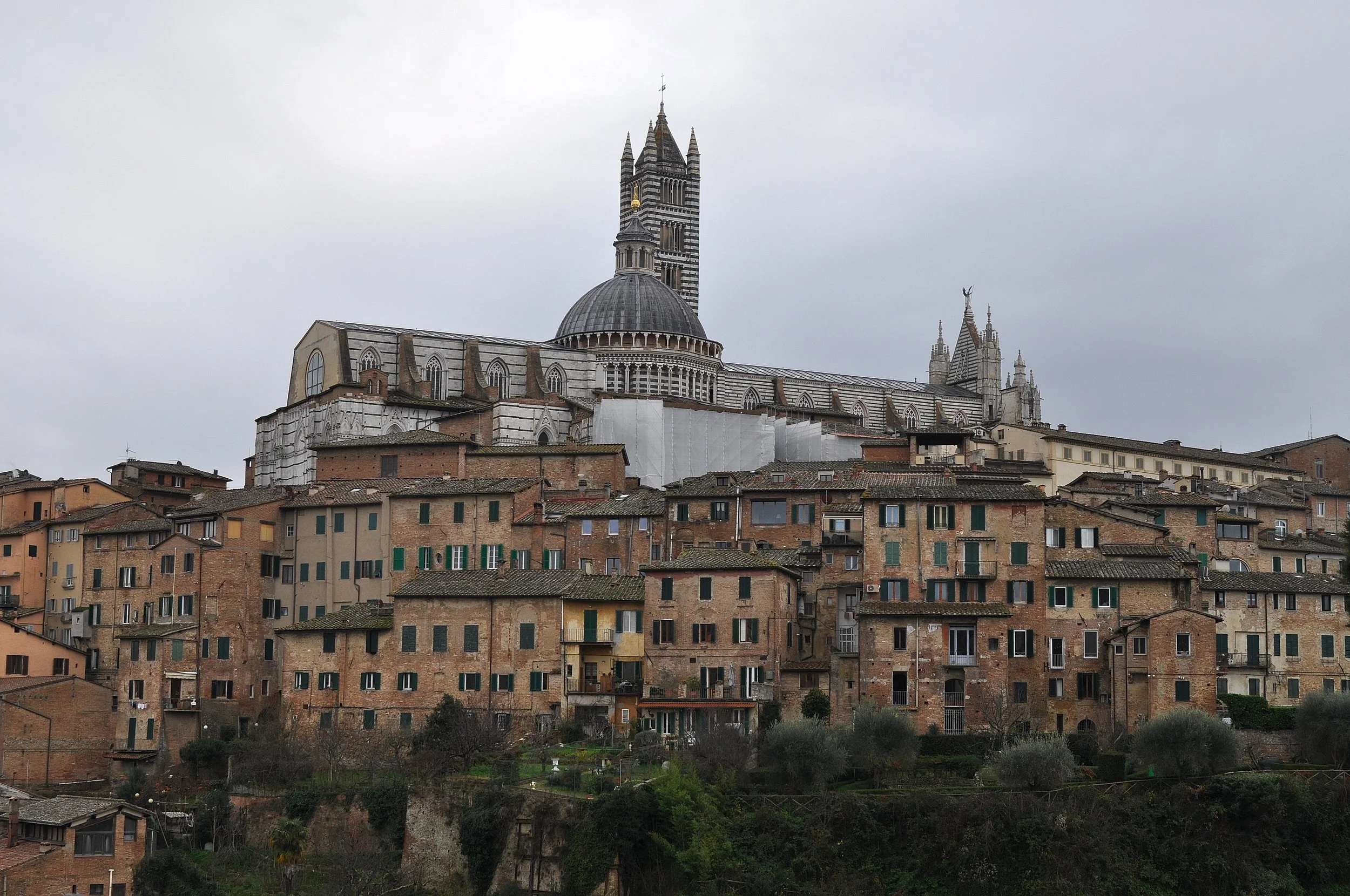
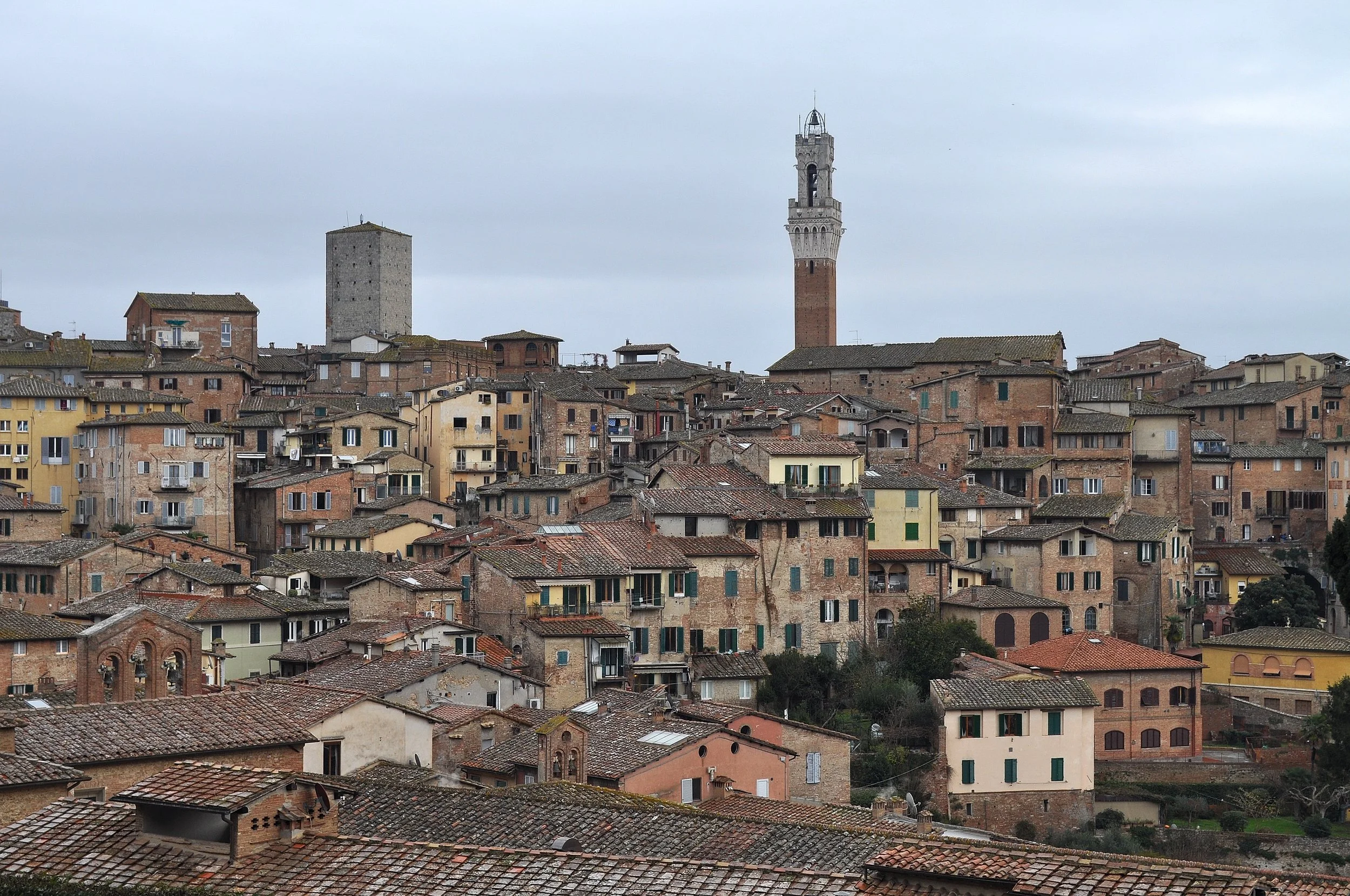
Angela: it is no coincidence that this is also one of the favourite places for the people of Siena to jog, walk, or simply enjoy some peace and quiet away from the flow of visitors in the city centre.
Piero: just a few minutes away, we reach the Sanctuary of Saint Catherine, built precisely on the site where the saint was born in 1347.
Angela: the complex is made up of several rooms and chapels arranged around the Benincasa family home, the birthplace of the saint.
Piero: one of the most evocative spaces is the small room where Catherine lived and prayed, a simple and intimate place that still preserves a deeply spiritual atmosphere today.
Angela: slightly higher up stands the Church of the Crucifix, where, according to tradition, Catherine received the stigmata, an event that profoundly marked her mystical life.
Piero: the sanctuary is very different from Siena’s great monumental churches: more intimate, almost hidden among the narrow streets, but precisely for this reason it is able to tell, in a direct and powerful way, the story and spirituality of one of the most important figures in the city’s history.
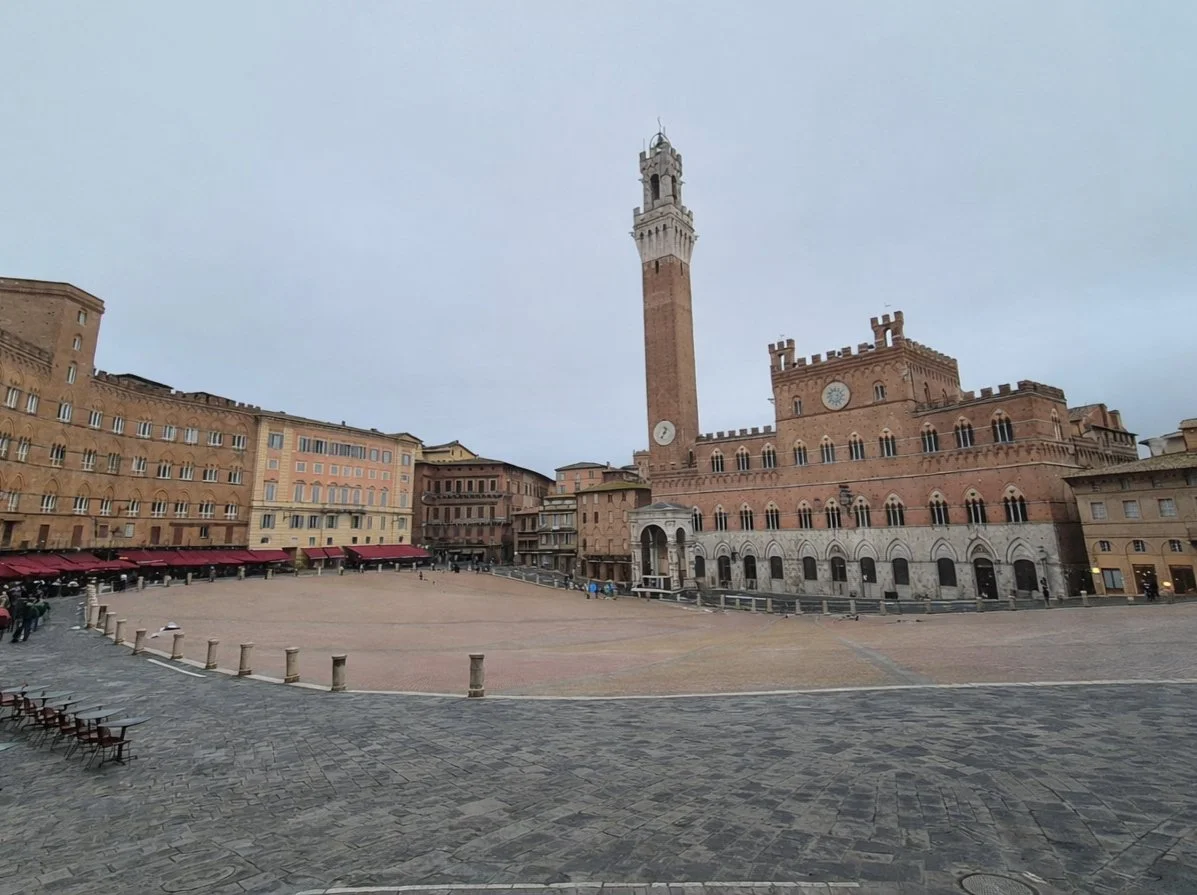
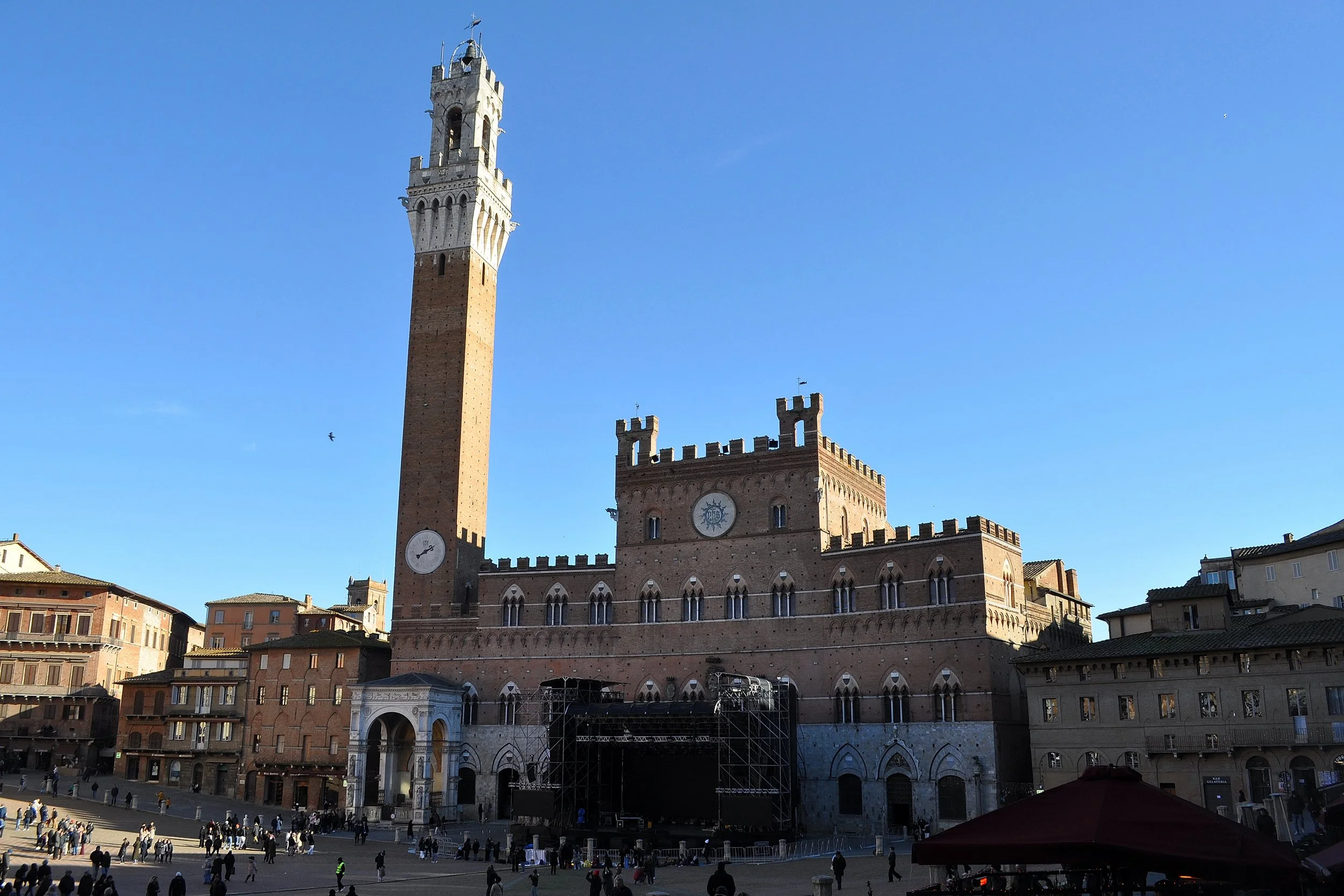
Angela: we return once again towards the heart of Siena and stop in front of the magnificent Palazzo Pubblico, the great red-brick building that dominates Piazza del Campo. For centuries, this was the seat of the city government, the famous Council of the Nine, which led the Sienese Republic during its golden age between the end of the 13th century and the middle of the 14th century.
Piero: the palace was built between 1297 and 1310 specifically to house the city administration. Its architecture is both elegant and solid: the slightly curved façade perfectly follows the shape of the square, almost as if it were embracing the entire civic space. Above, we can see the Gothic mullioned windows, the large Medici coat of arms added in a later period and, of course, the slender Torre del Mangia.
Angela: the name of the tower always intrigues visitors. It actually comes from the nickname of its first bell-ringer, Giovanni di Balduccio, known as “Mangiaguadagni” because, according to tradition, he spent everything he earned on food and entertainment. Over time, the nickname was shortened simply to Mangia, giving the tower its name.
Piero: built between 1338 and 1348, the tower reaches about 102 metres in height and is one of the tallest medieval towers in Italy. Originally, it also had a strong political meaning: it was designed to be as tall as the Duomo bell tower, symbolising the balance between civil power and religious power in the medieval city. Unfortunately, we cannot visit it today because of maintenance works. Never mind…
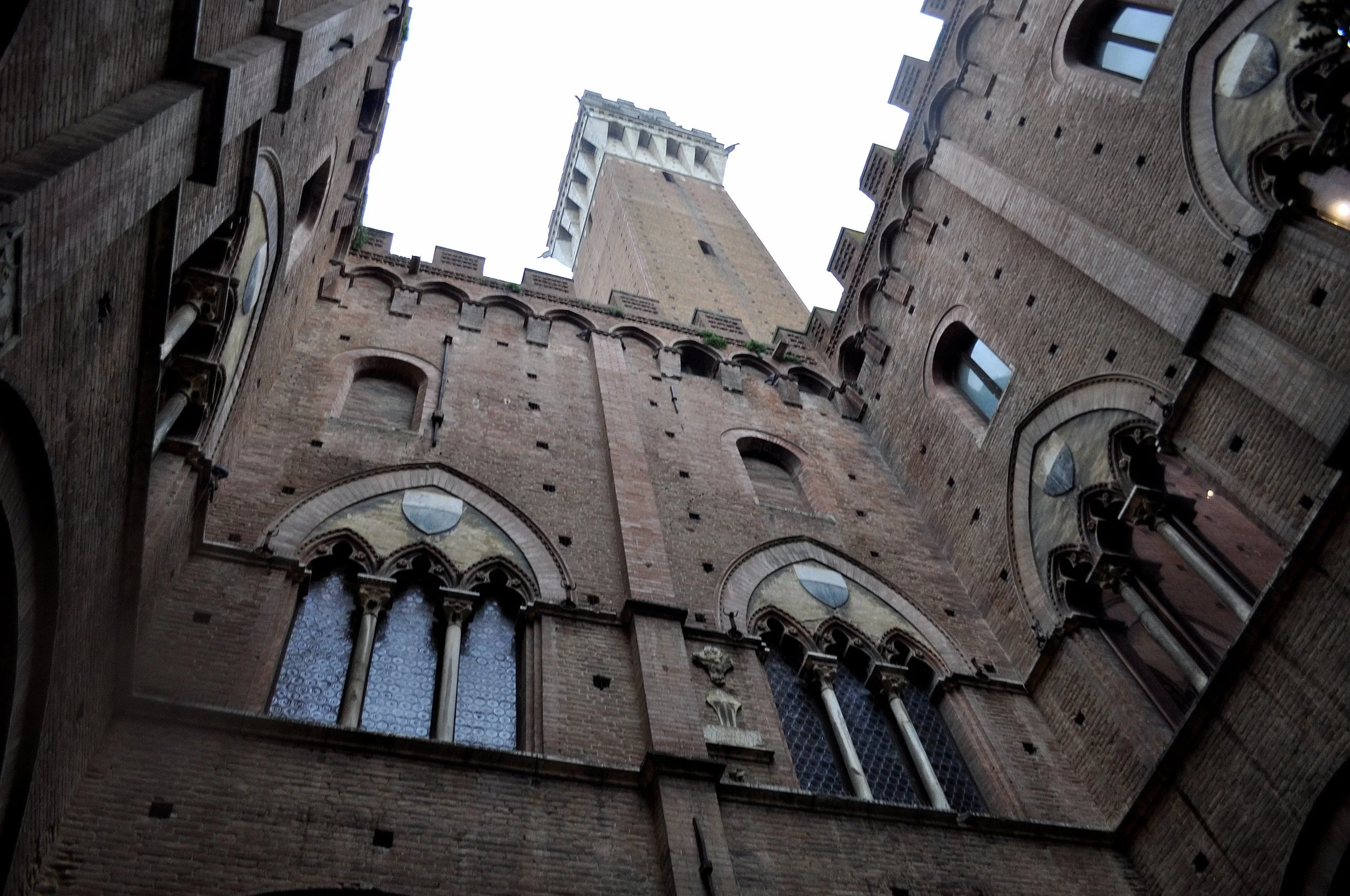
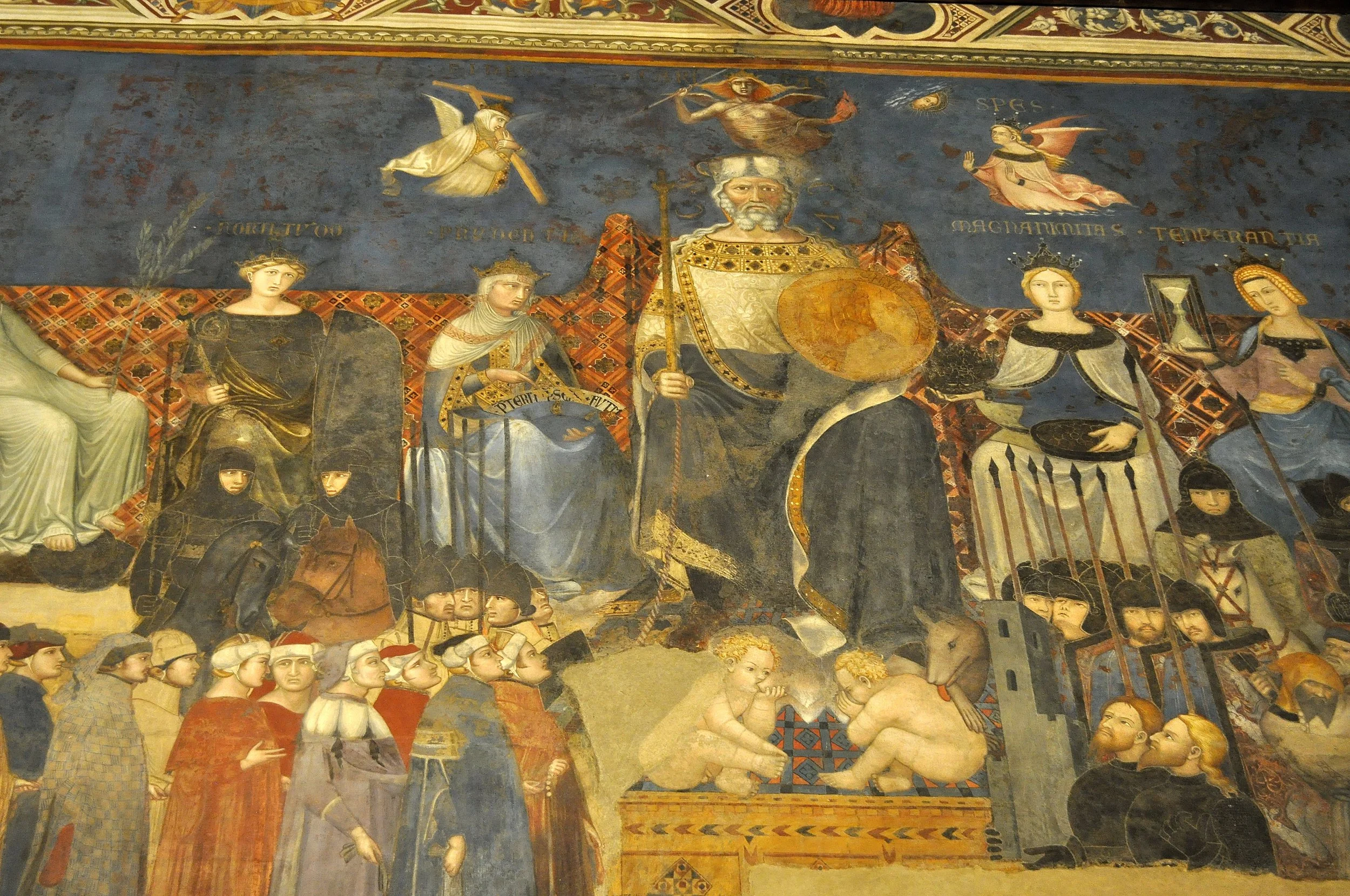
Angela: we finally enter Palazzo Pubblico, the political heart of the Republic of Siena since the 14th century. As we climb the grand staircase, we pass through some of the historic rooms that tell the story of the prestige and power of the medieval city.
Piero: one of the most fascinating is the Hall of the Risorgimento, decorated in the 19th century with large frescoes dedicated to the events of the unification of Italy.
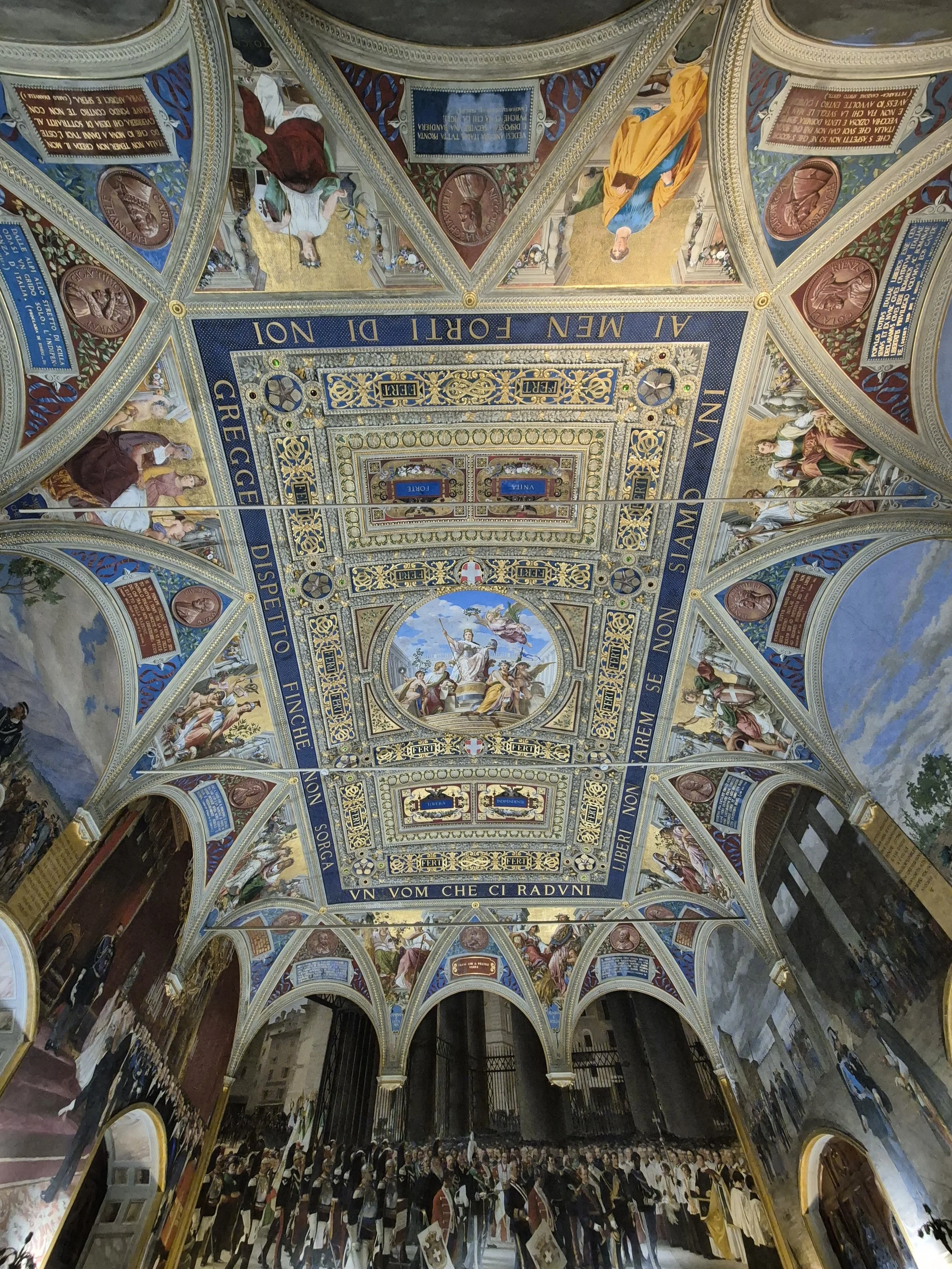
Angela: every room has something extraordinary to reveal, with the fascinating beauty of its frescoes telling stories of power, history, and art.
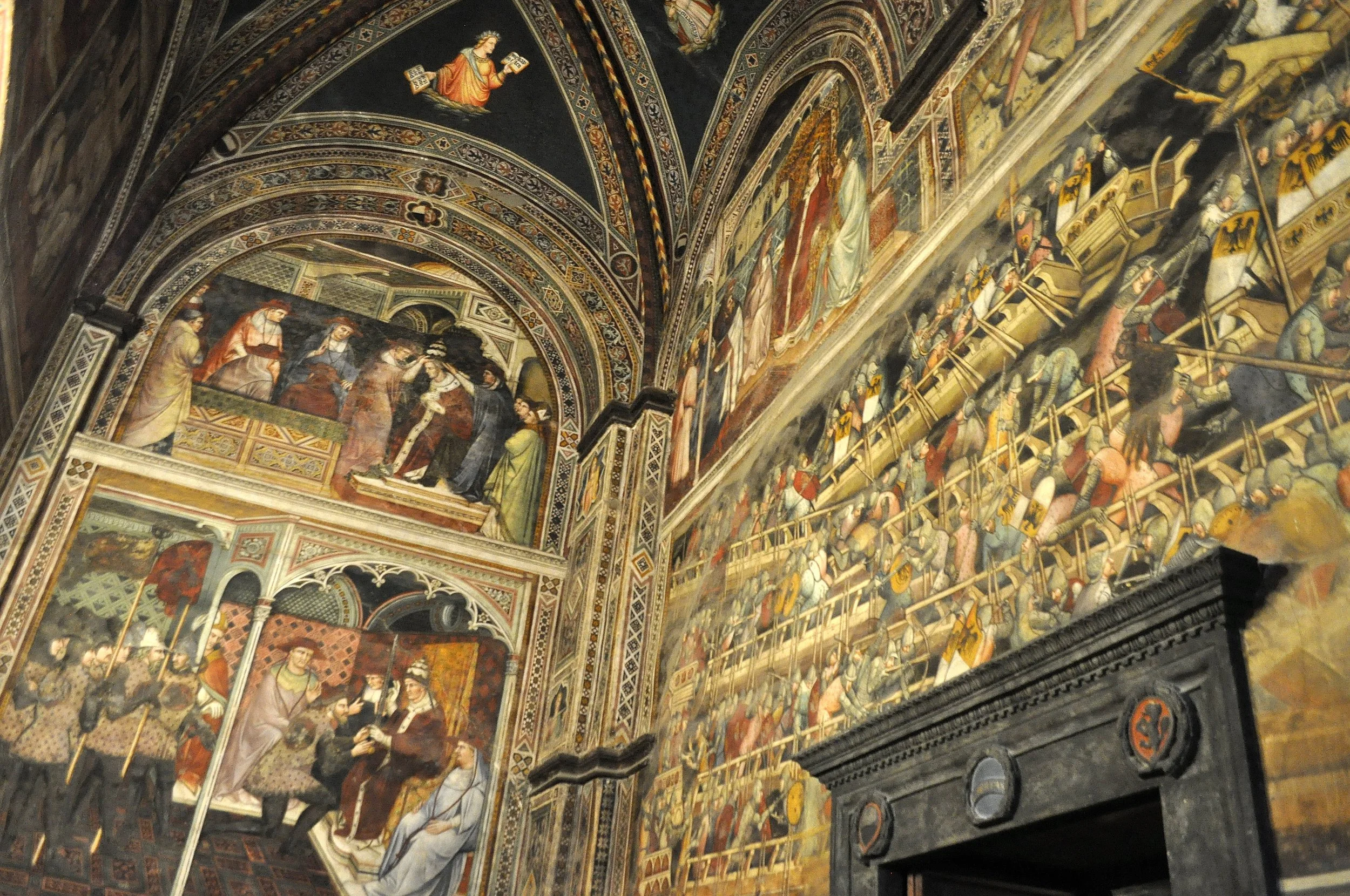
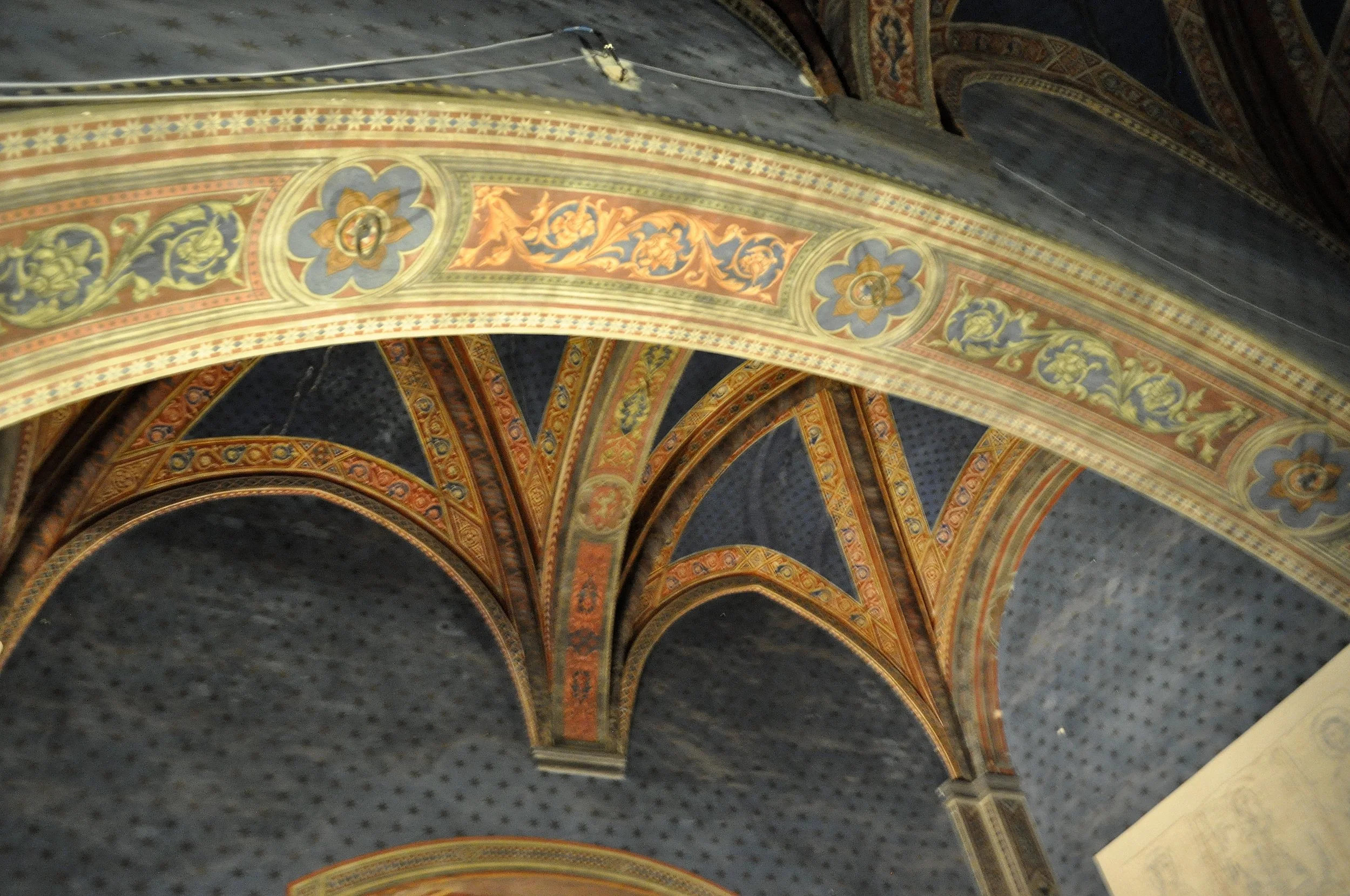
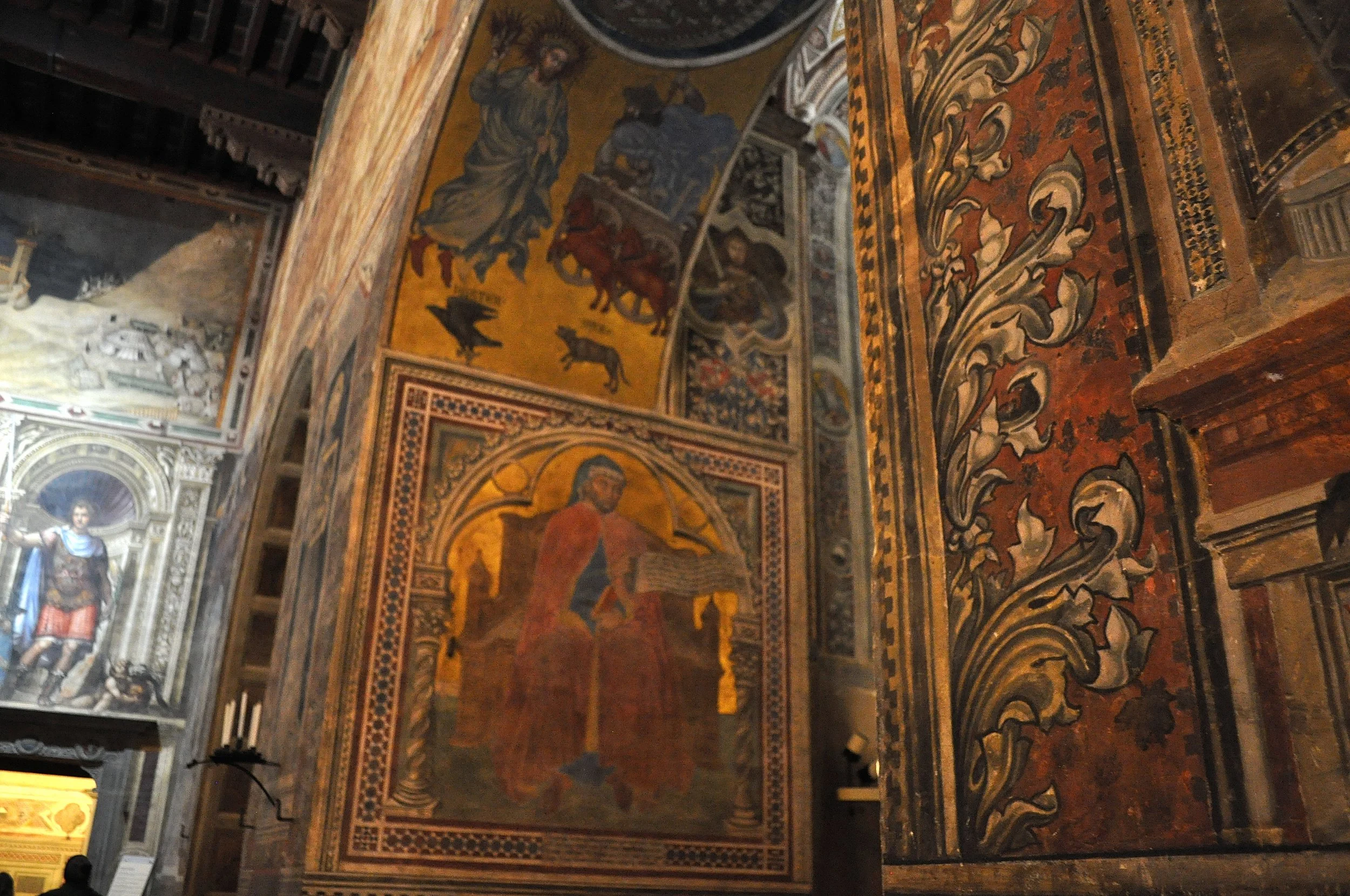
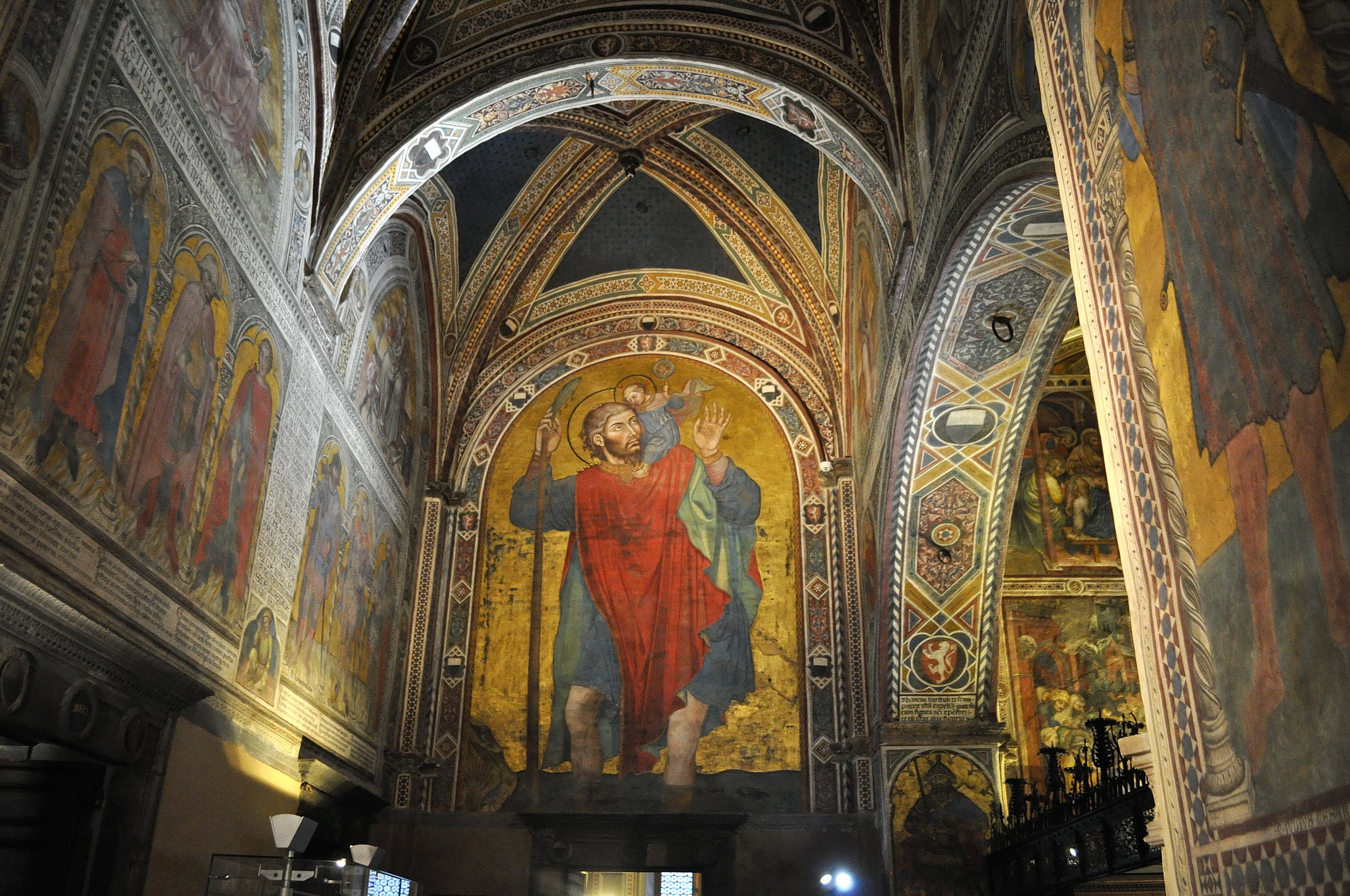
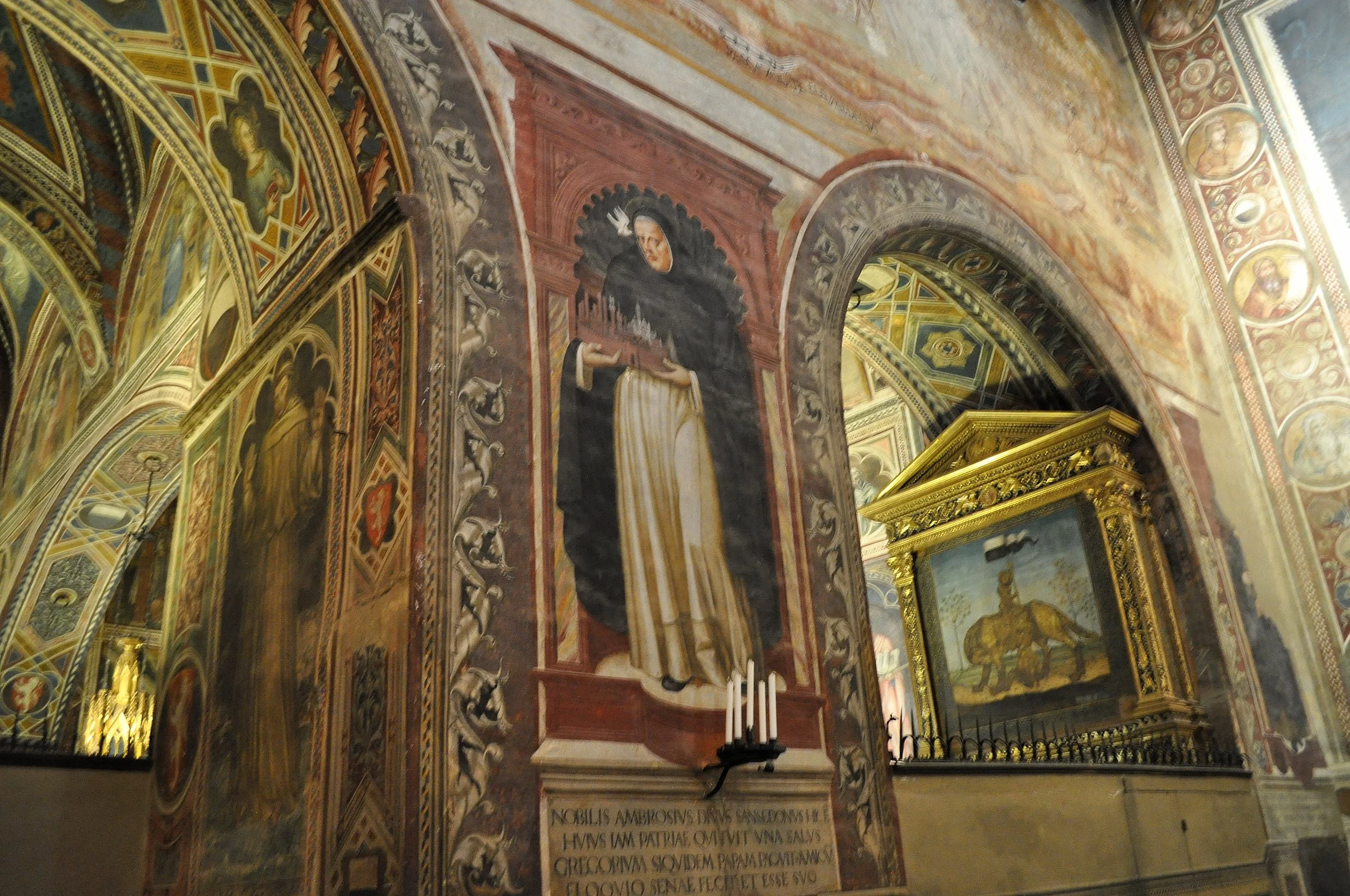
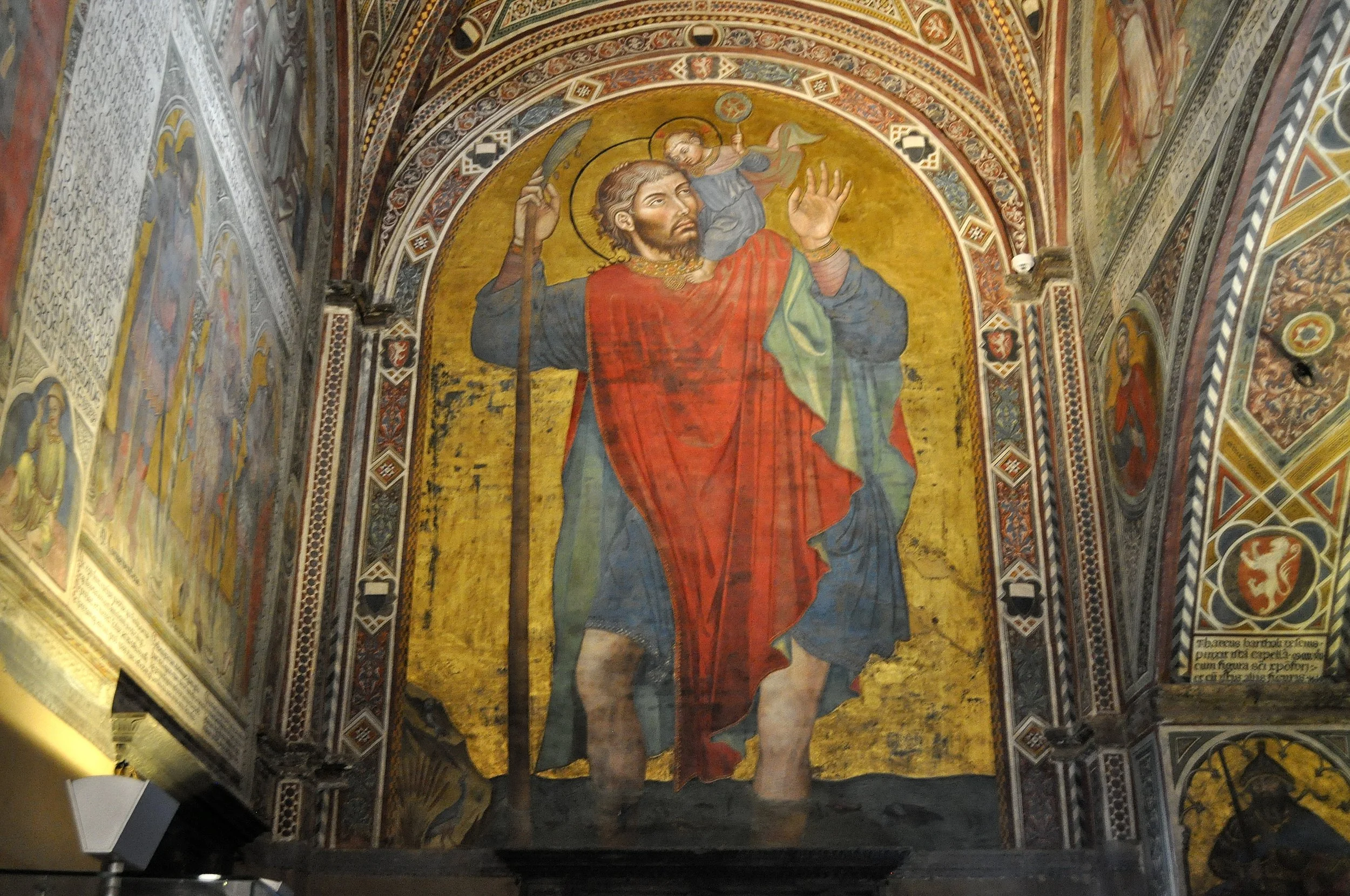
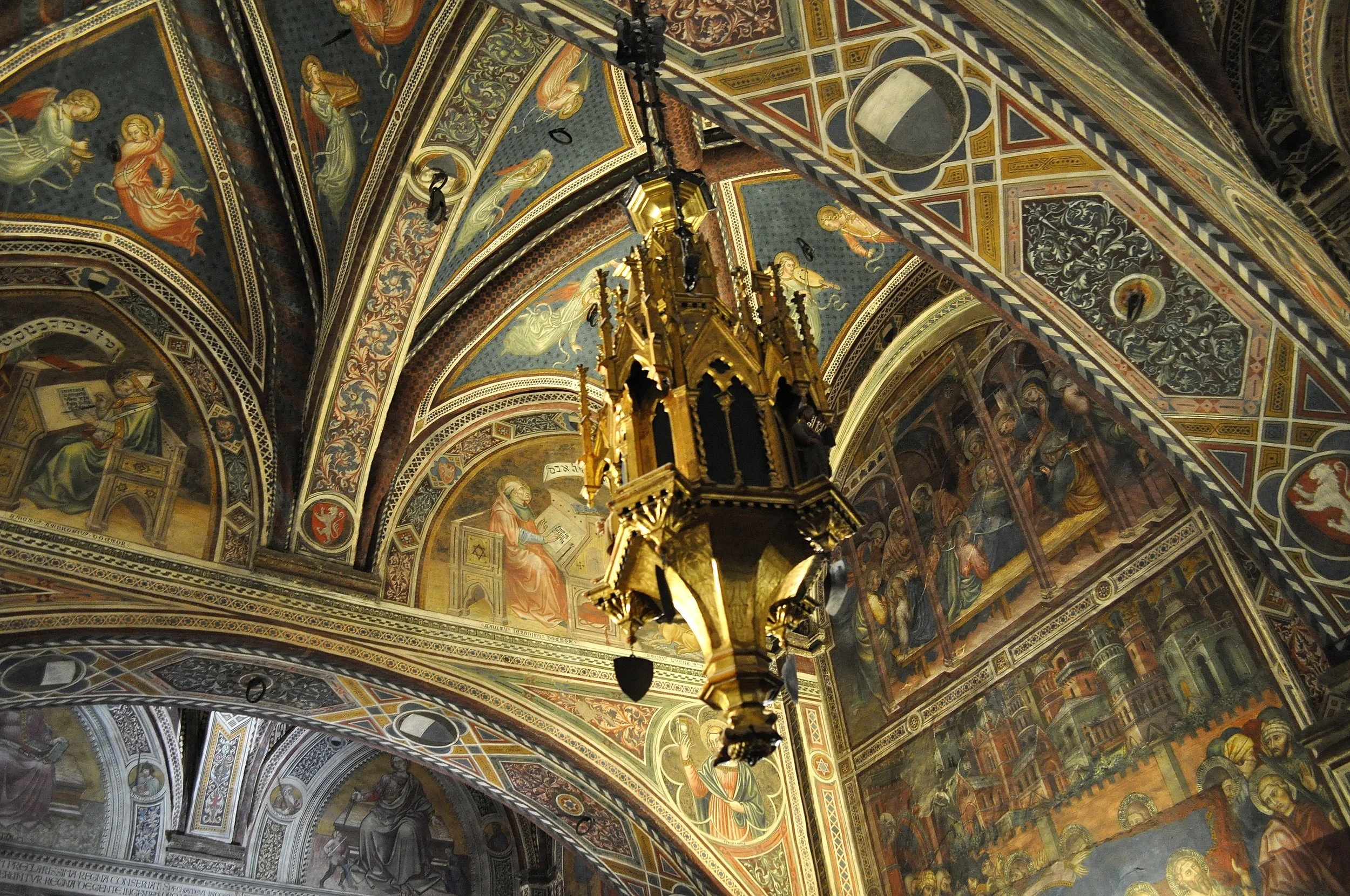
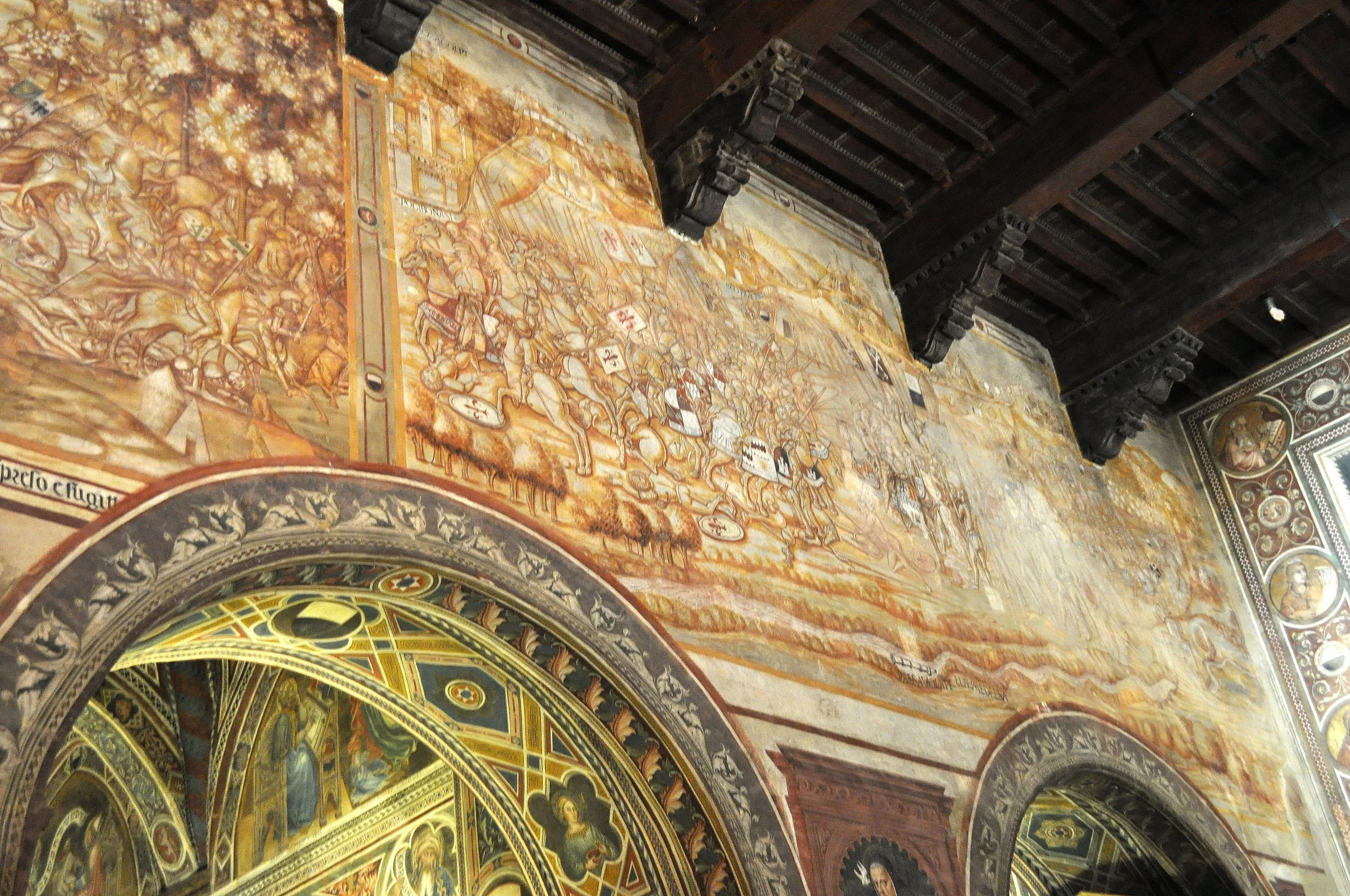
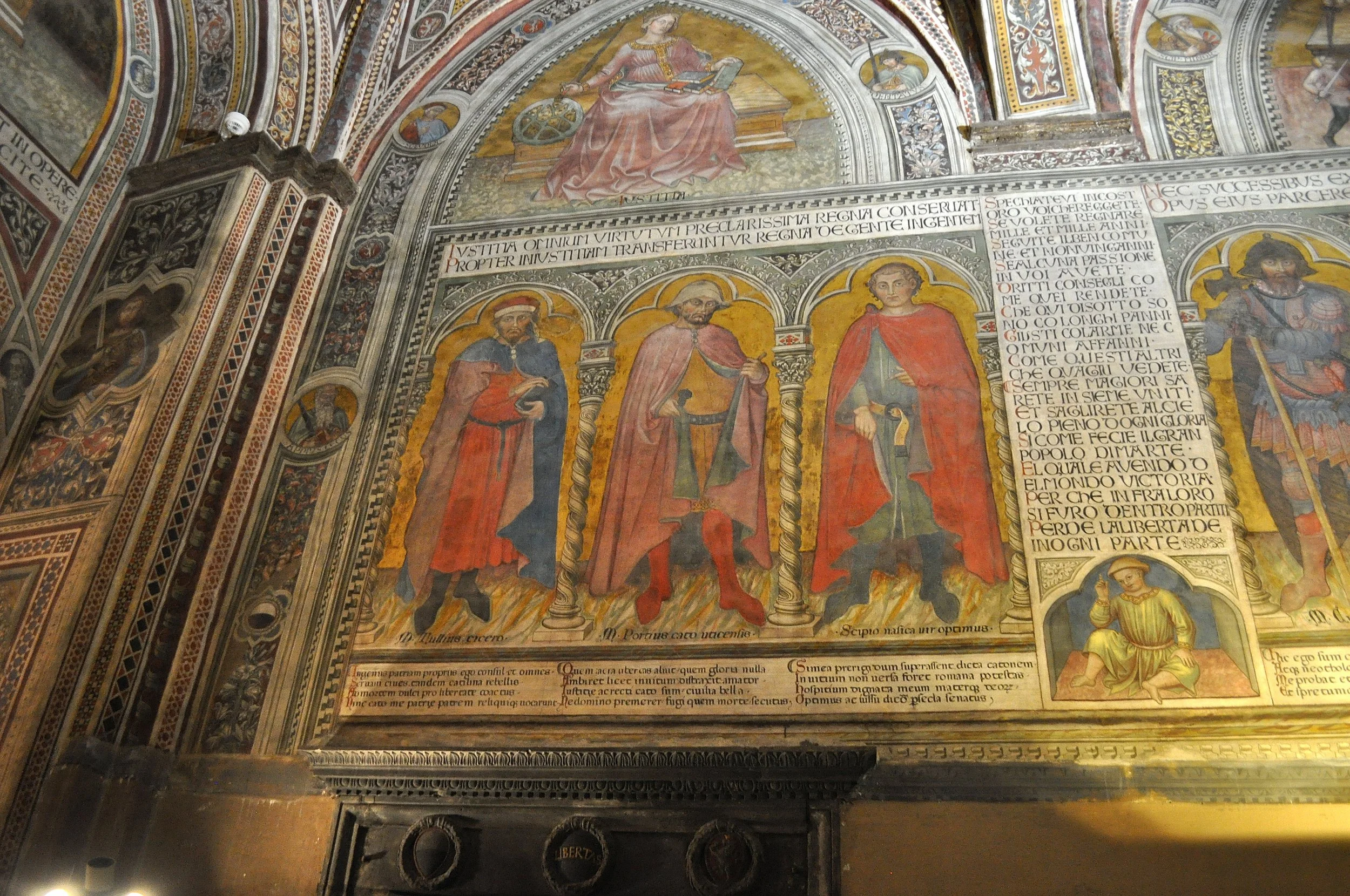
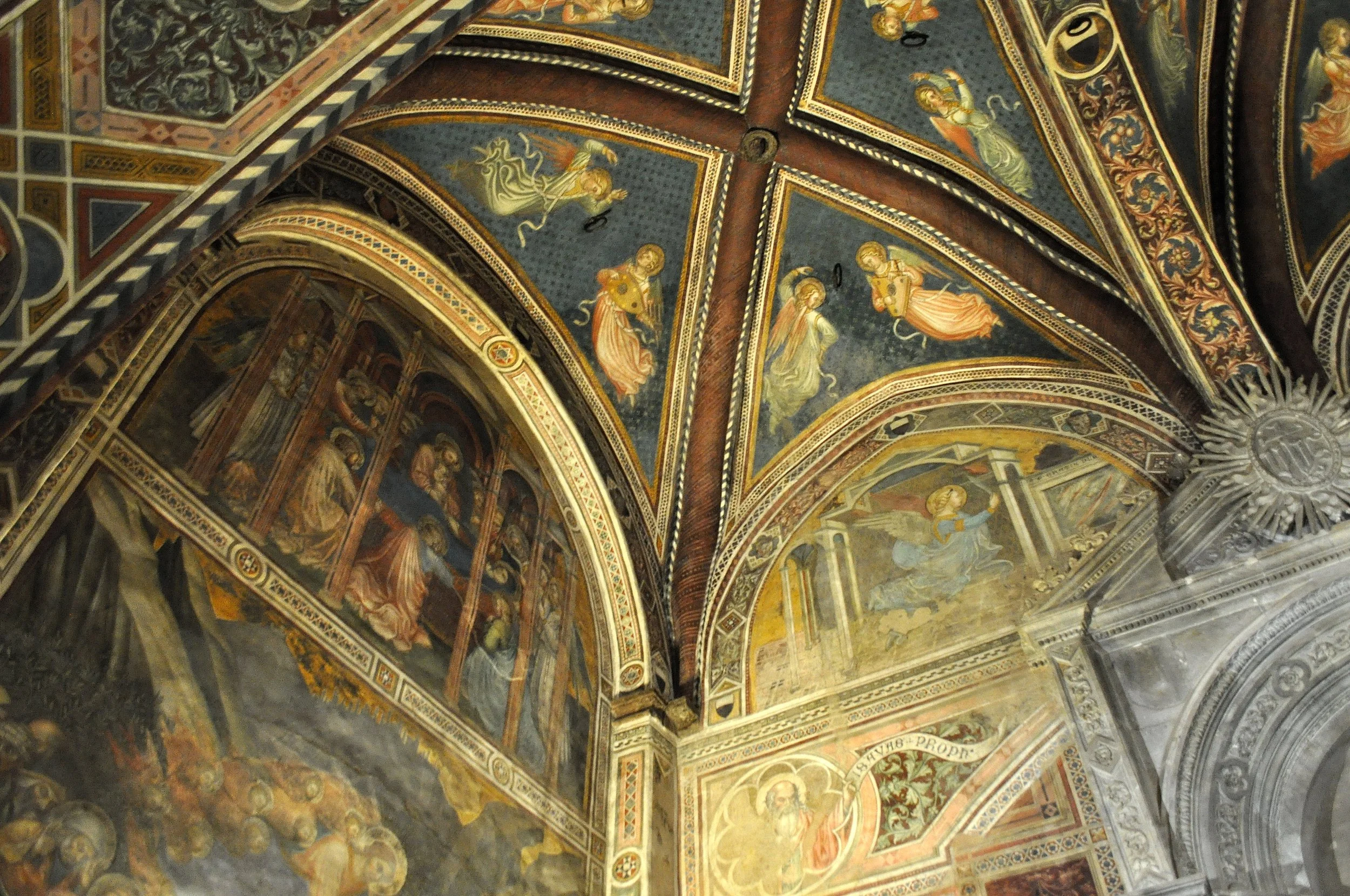
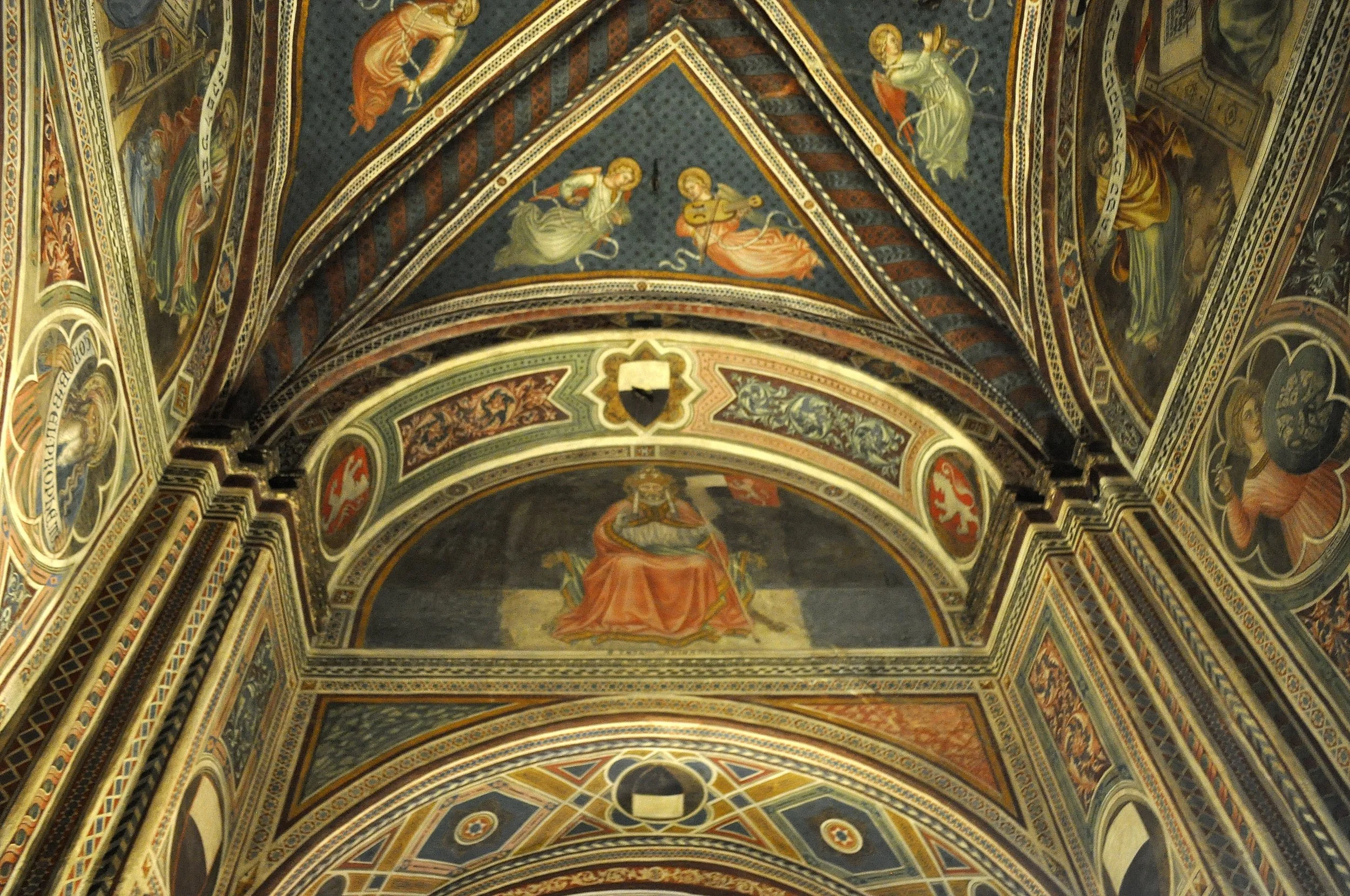
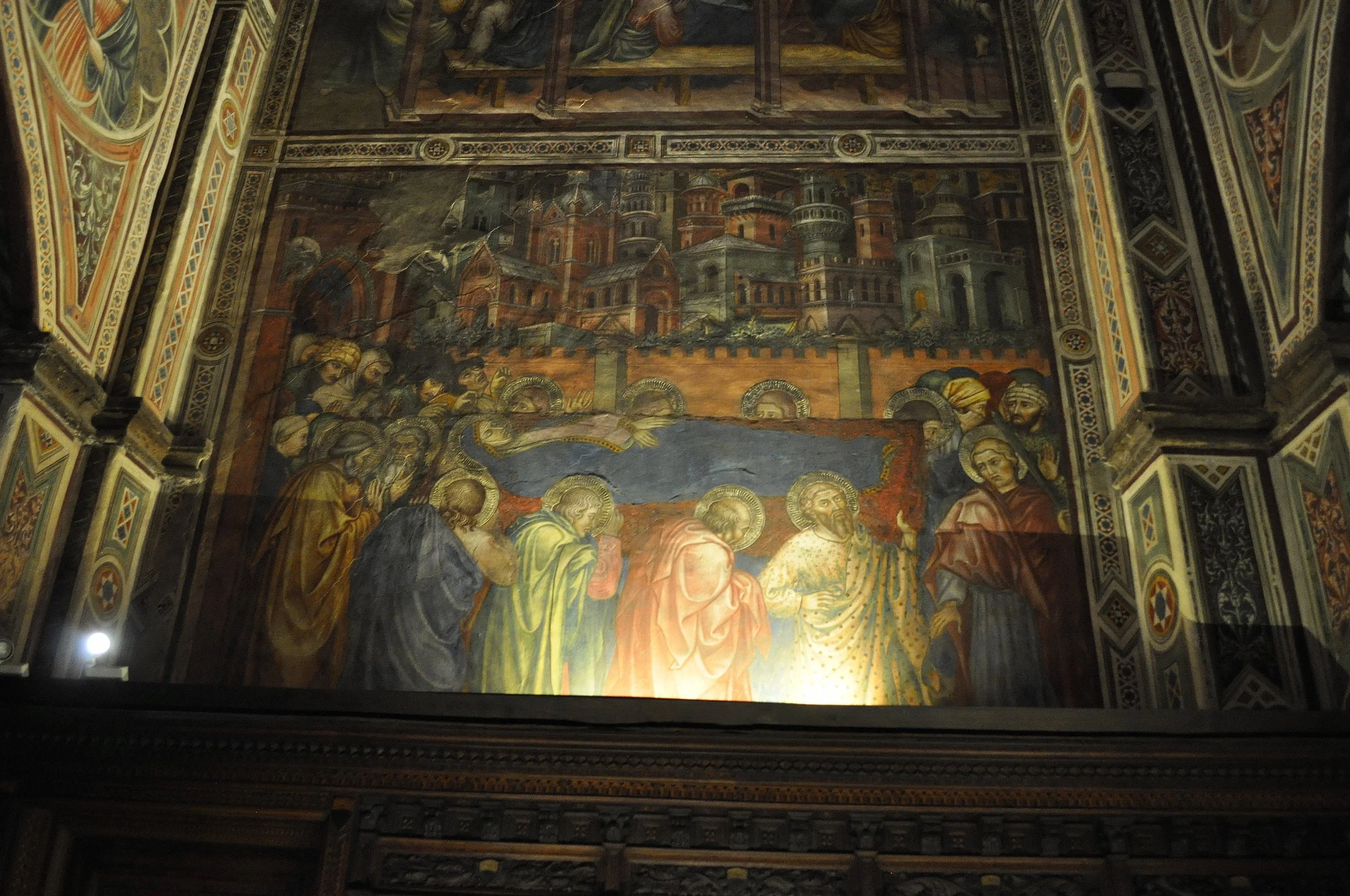
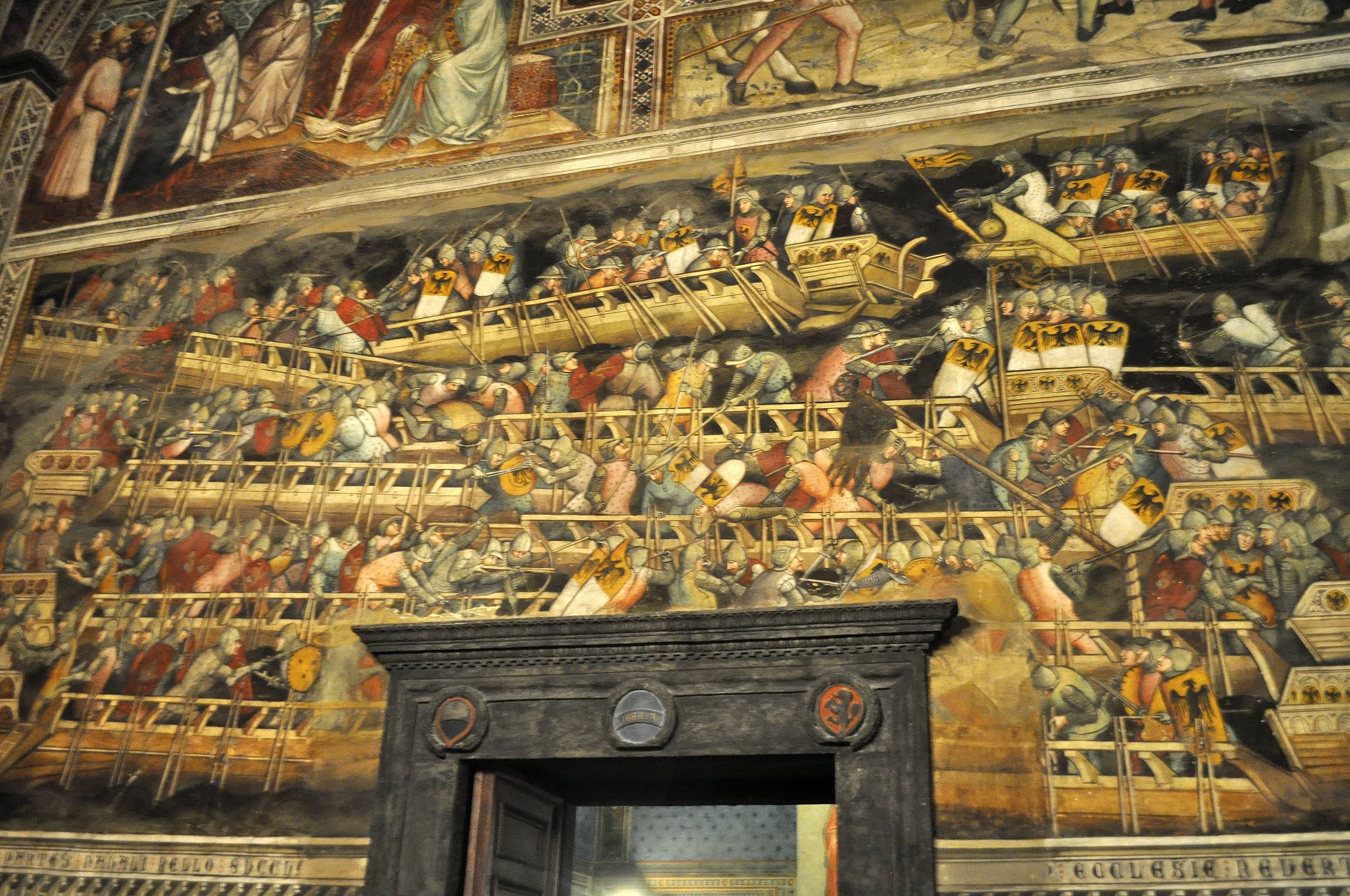
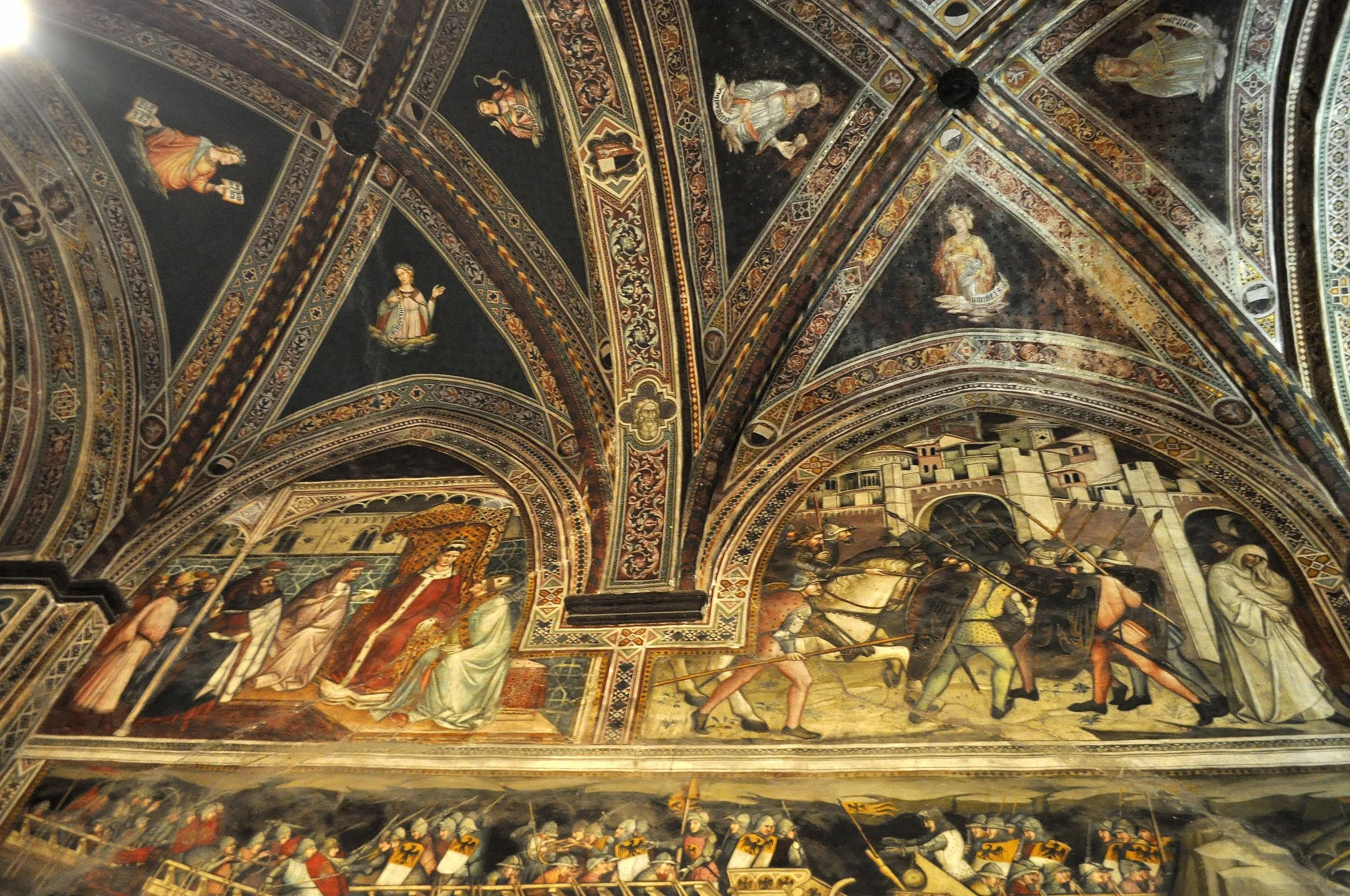
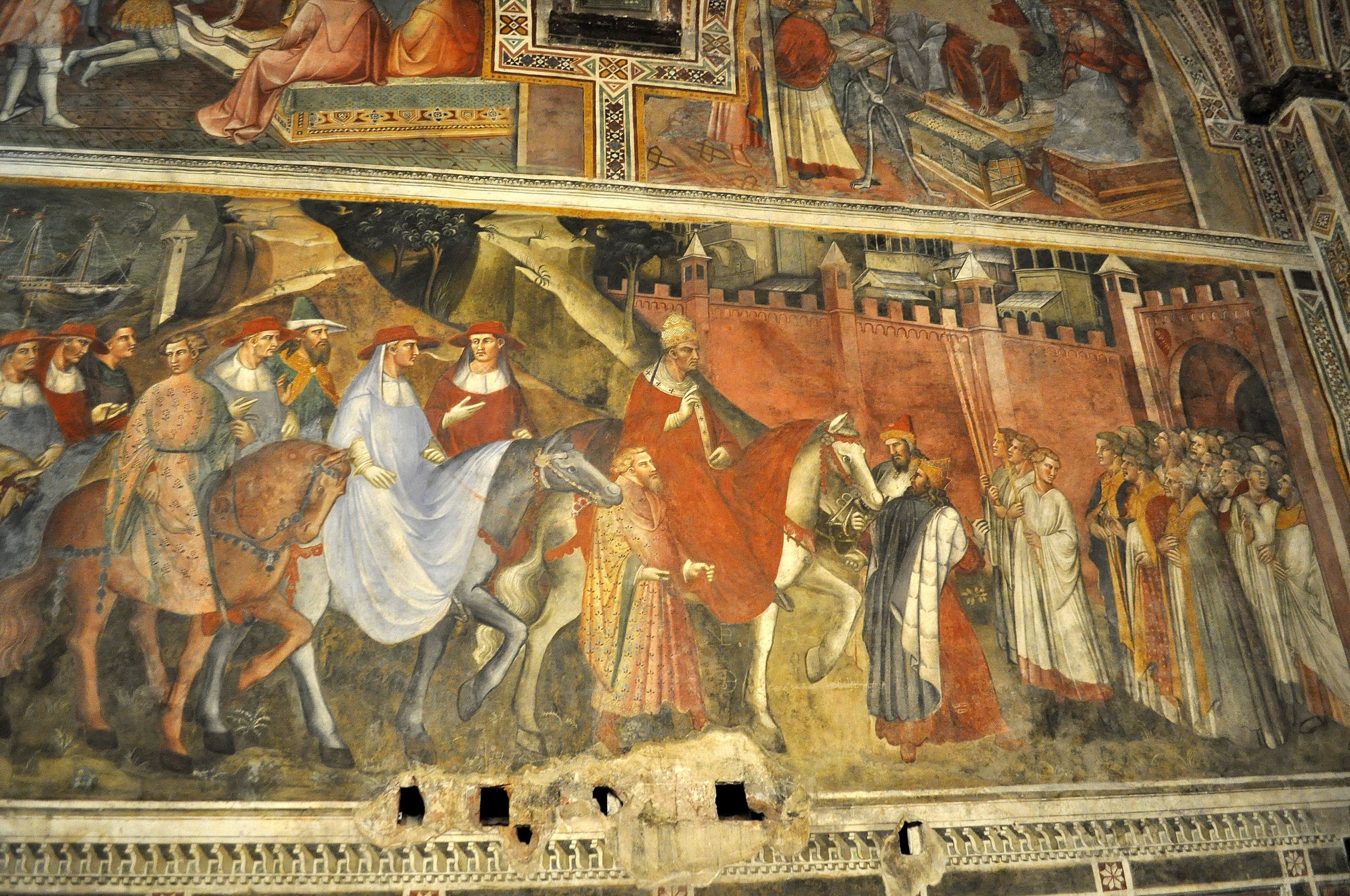
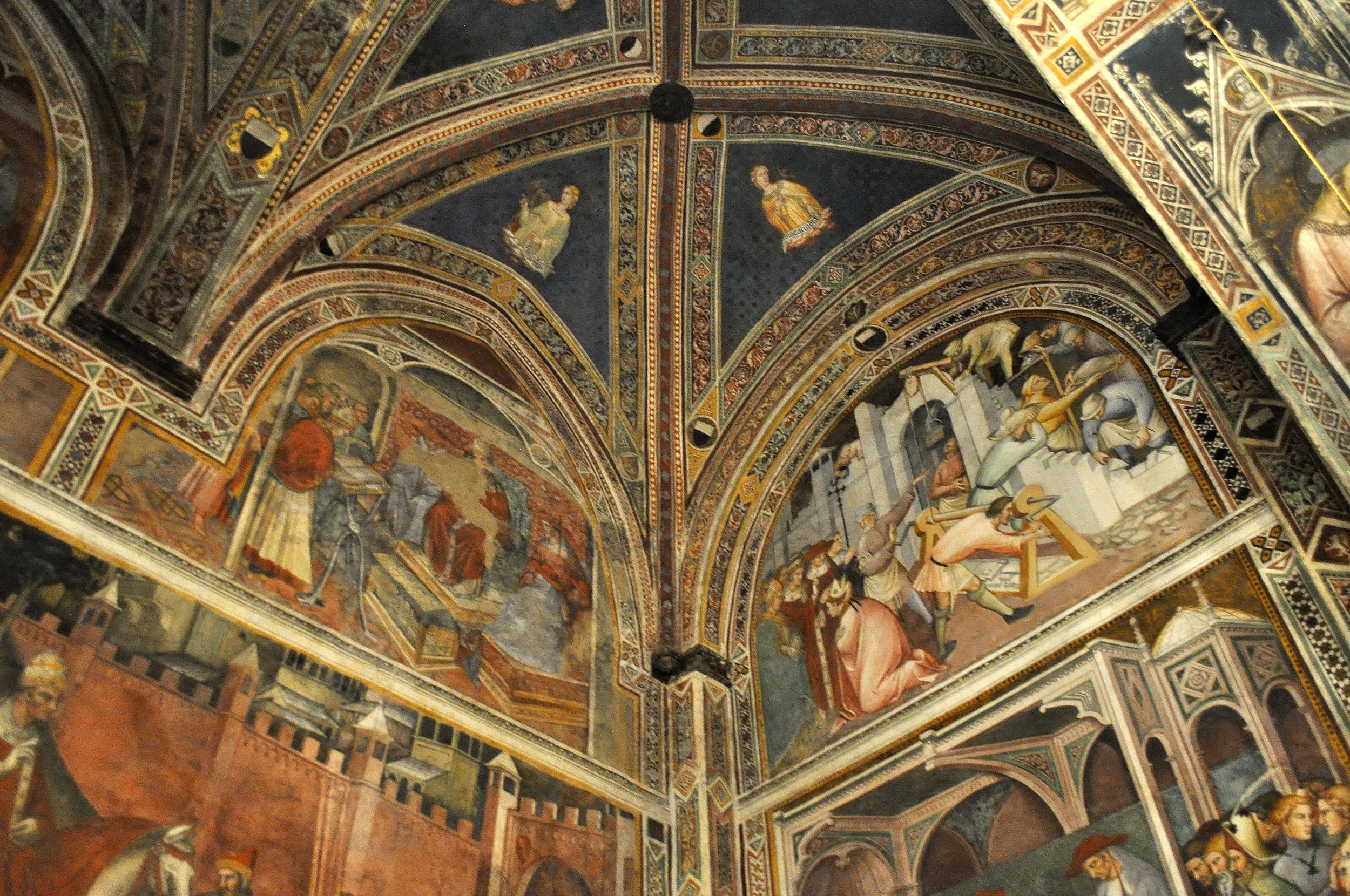
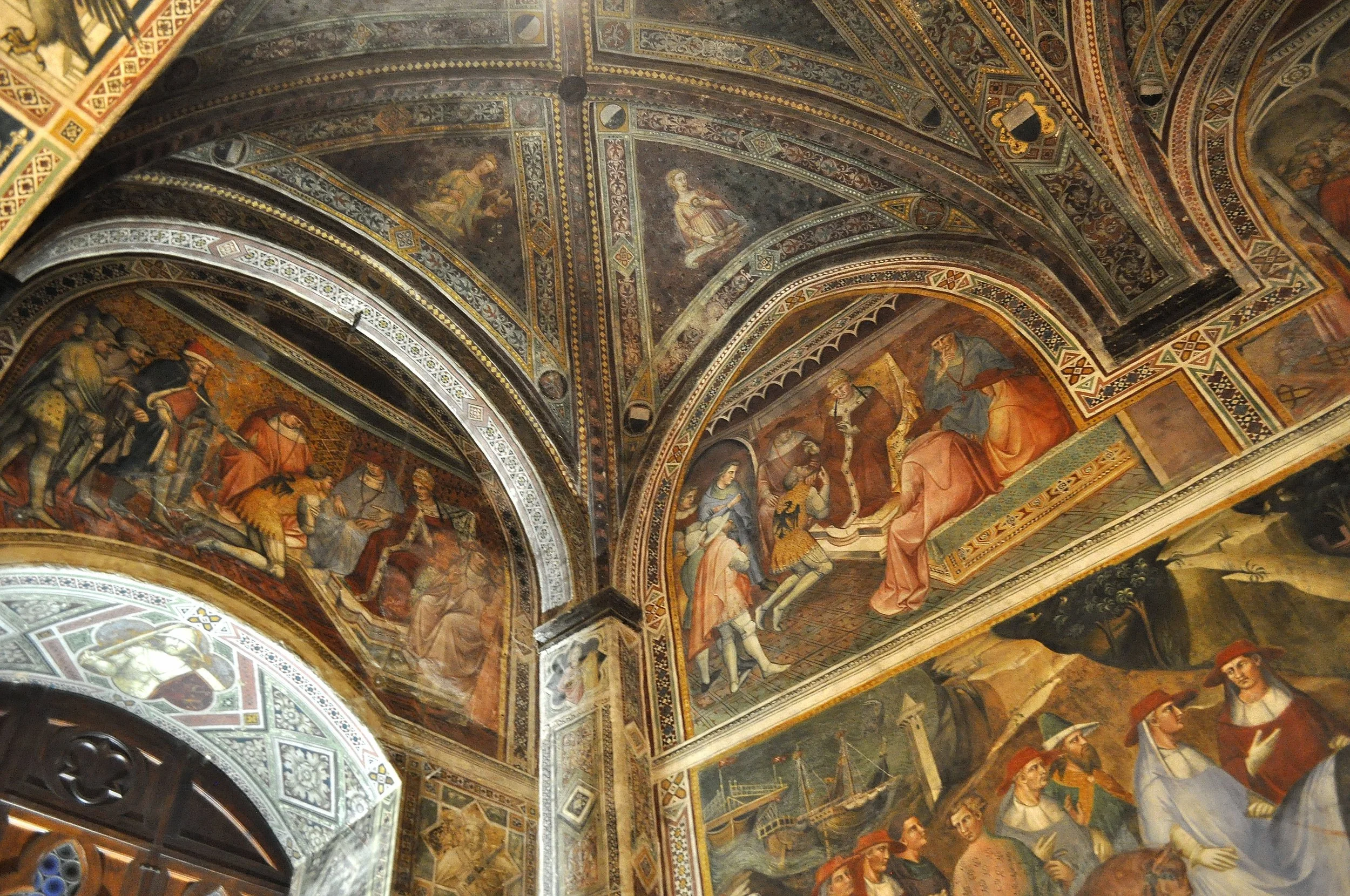
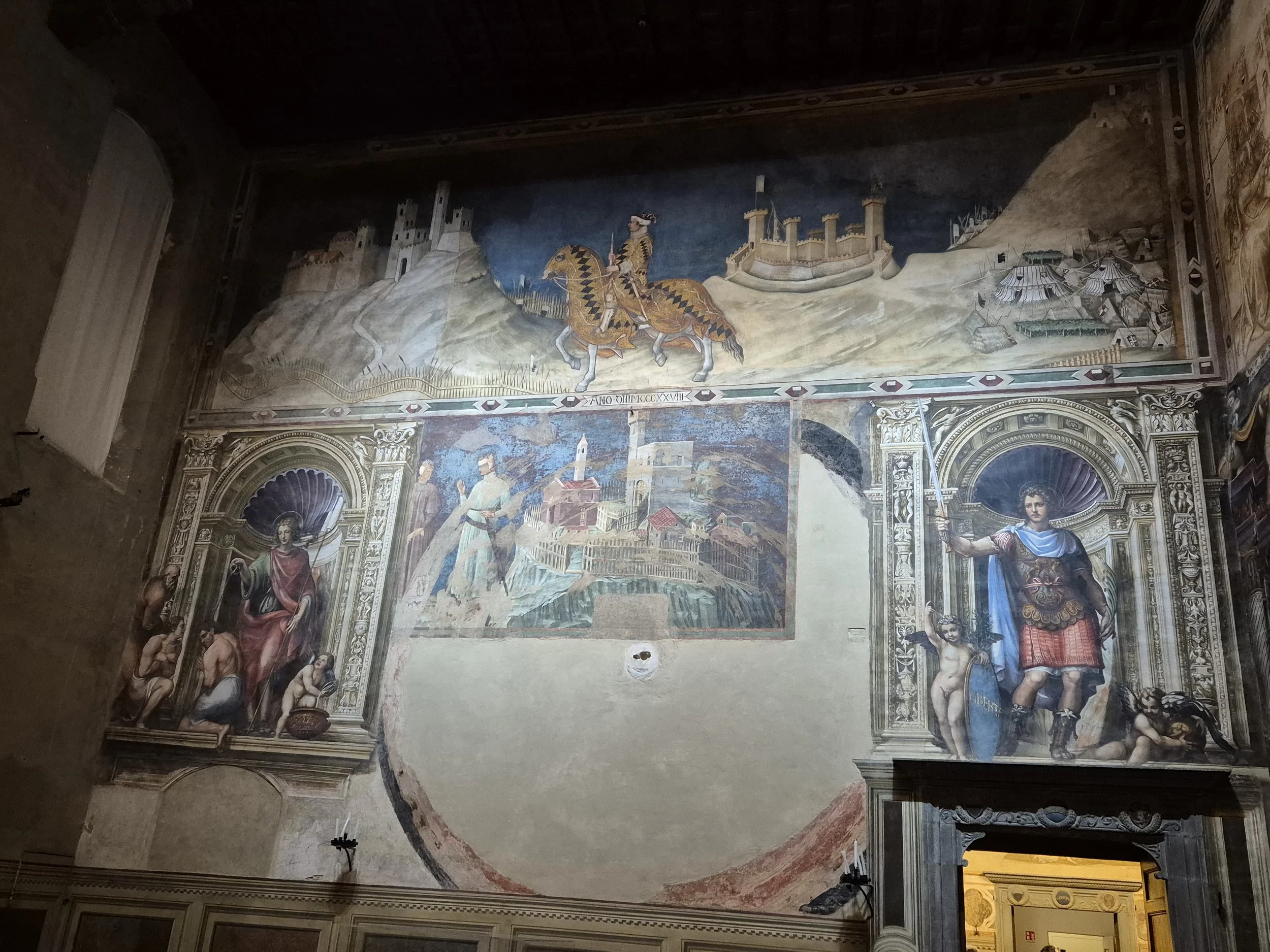
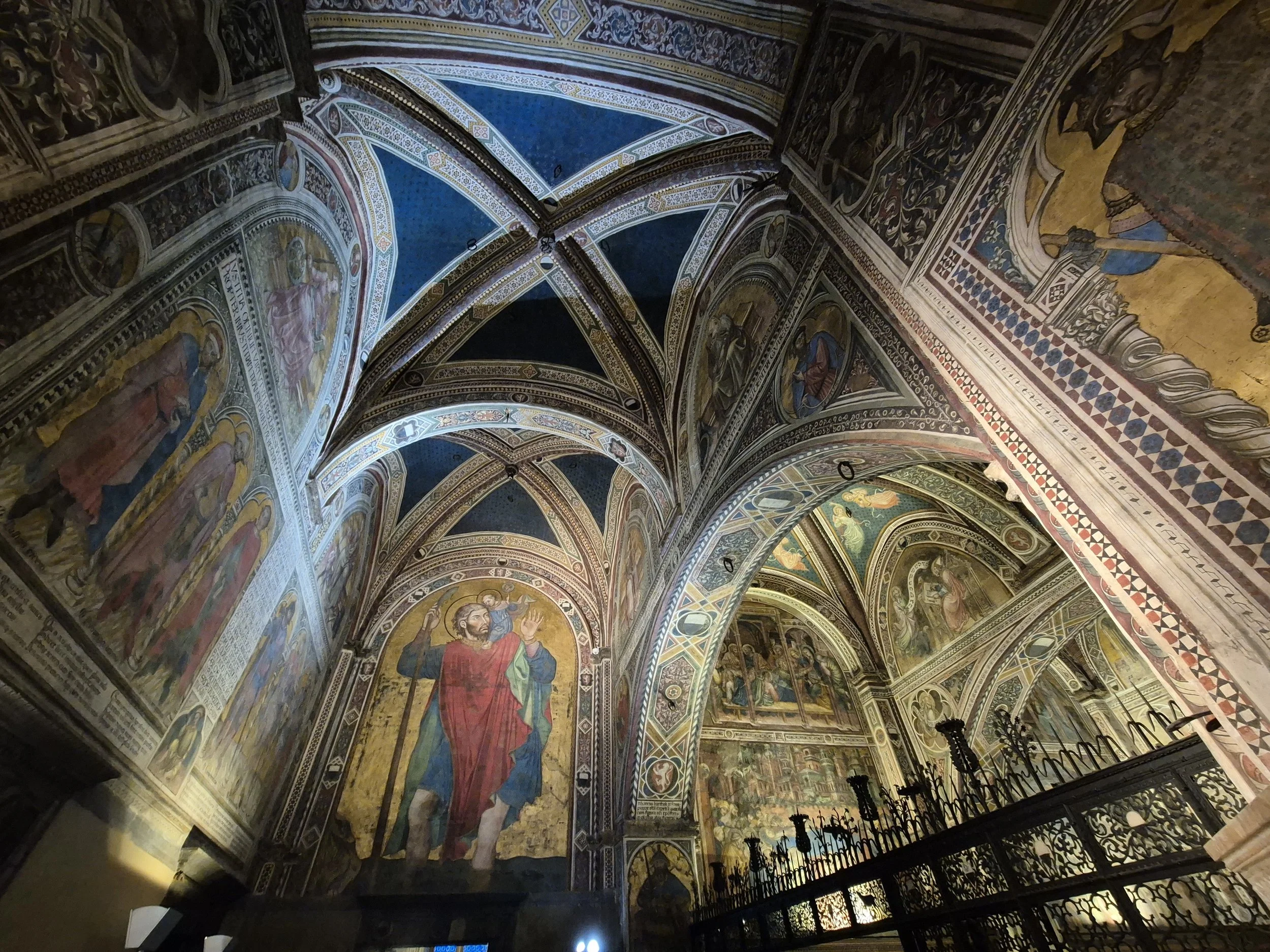
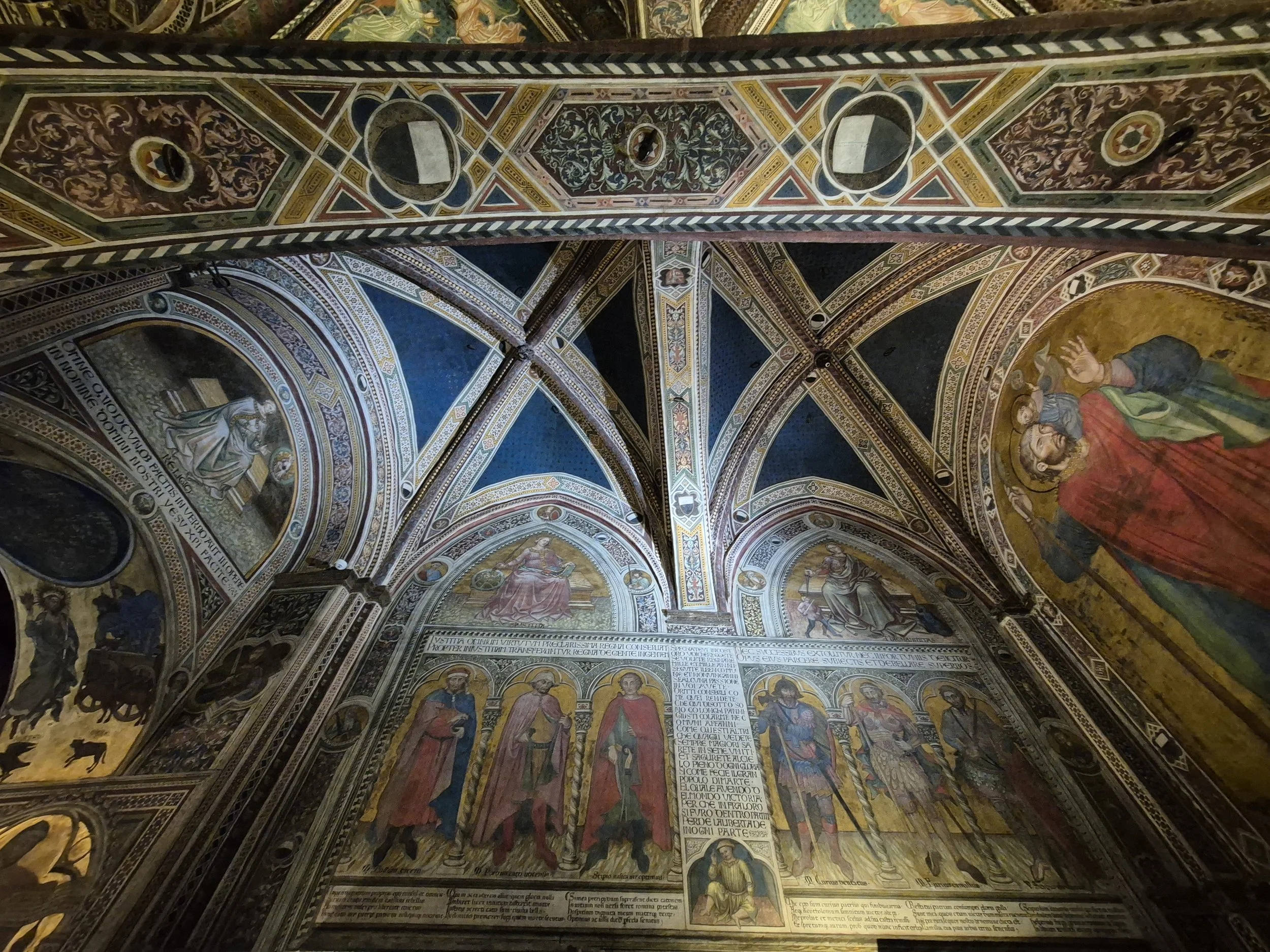
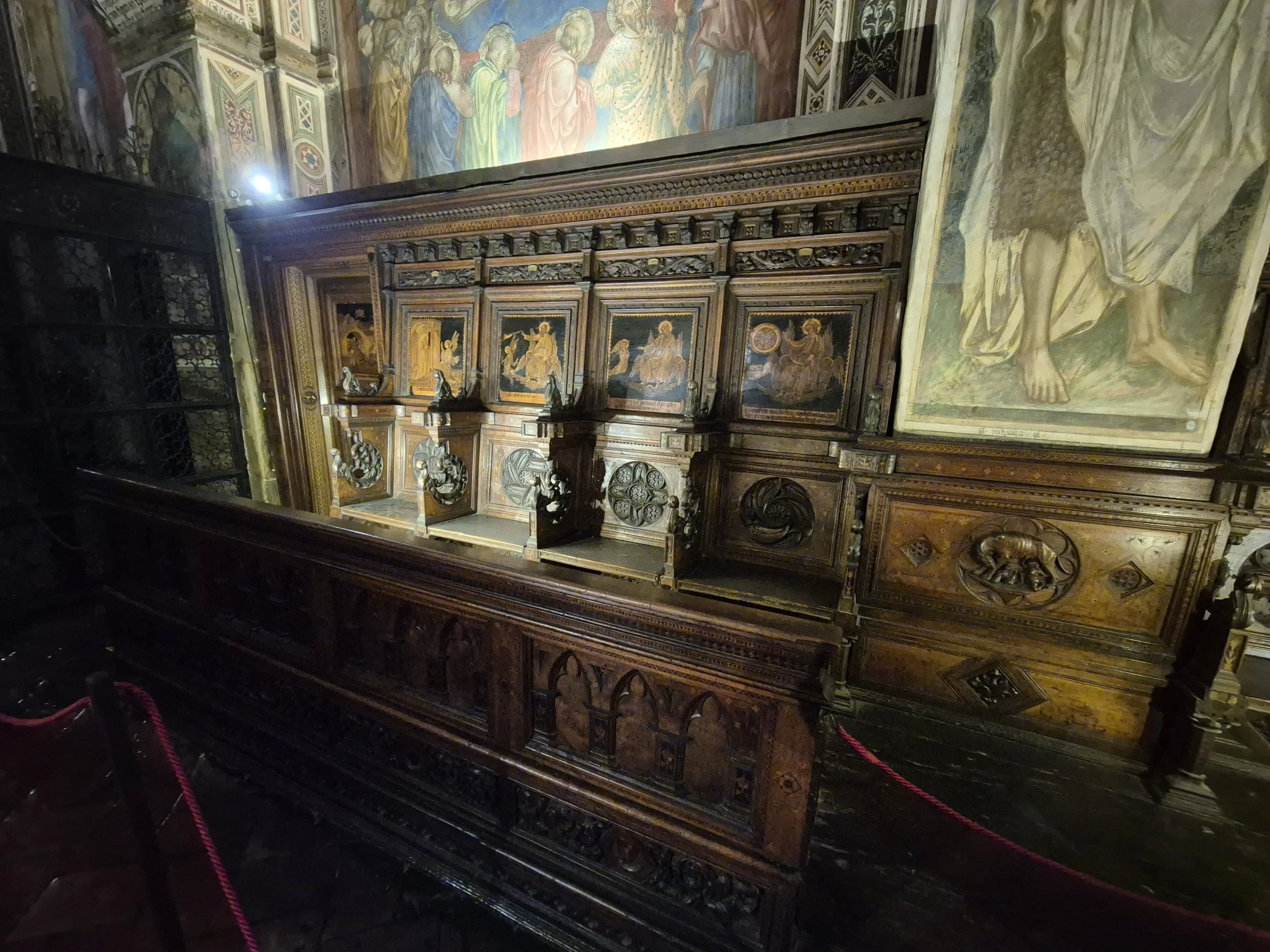
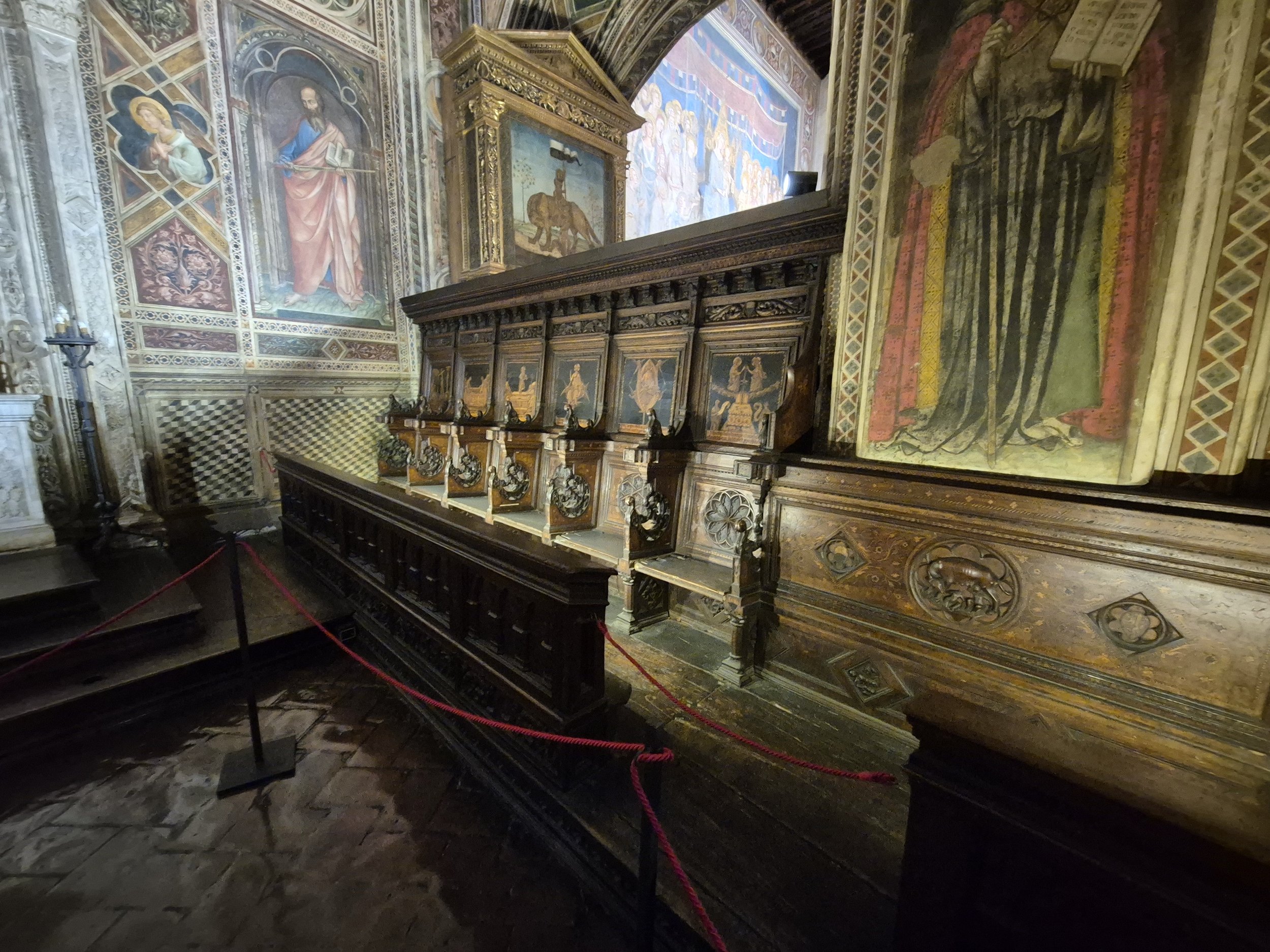
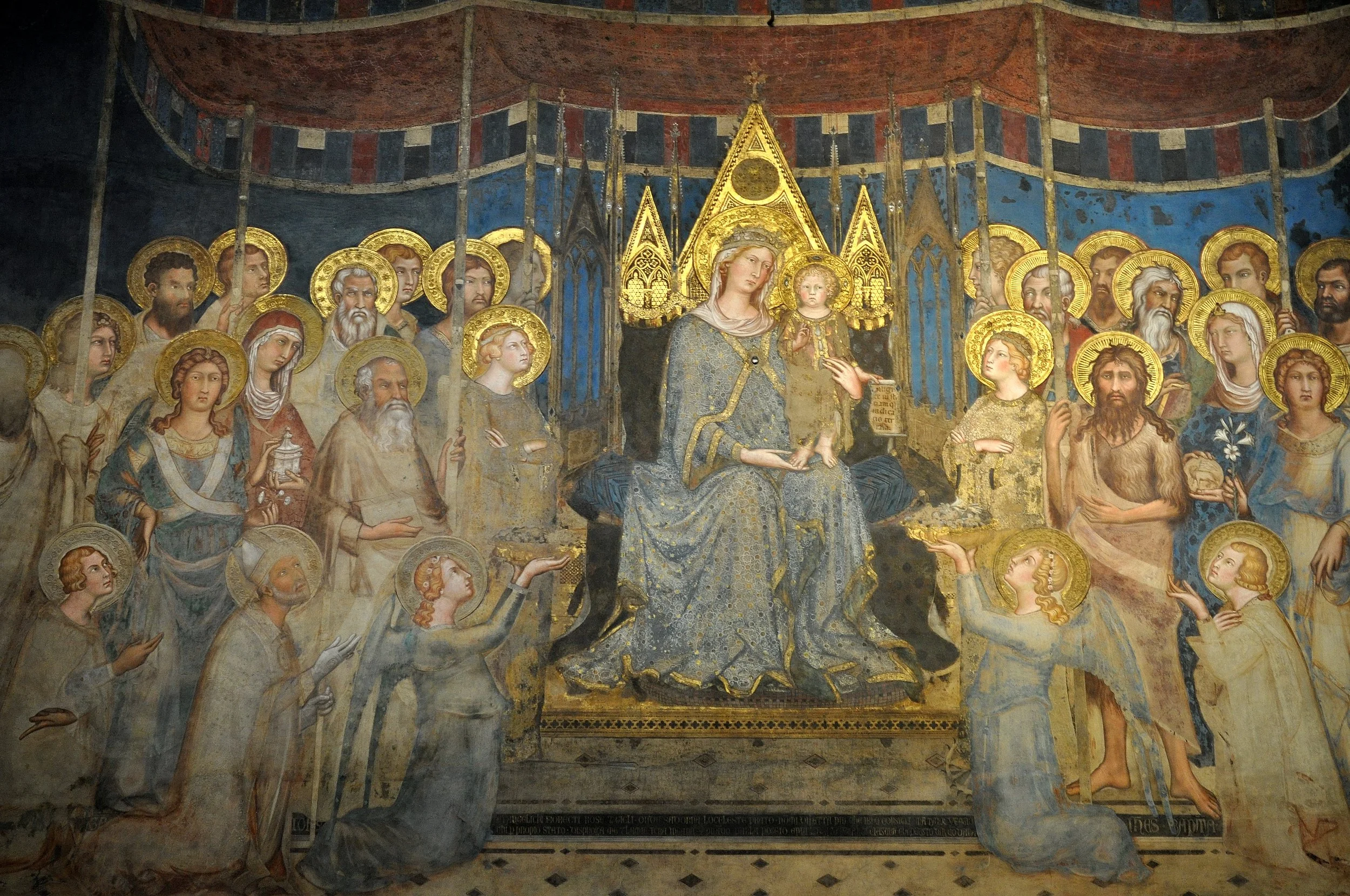
Piero: certainly unmissable is the famous Hall of the Globe, dominated by the magnificent Maestà by Simone Martini, painted in 1315.
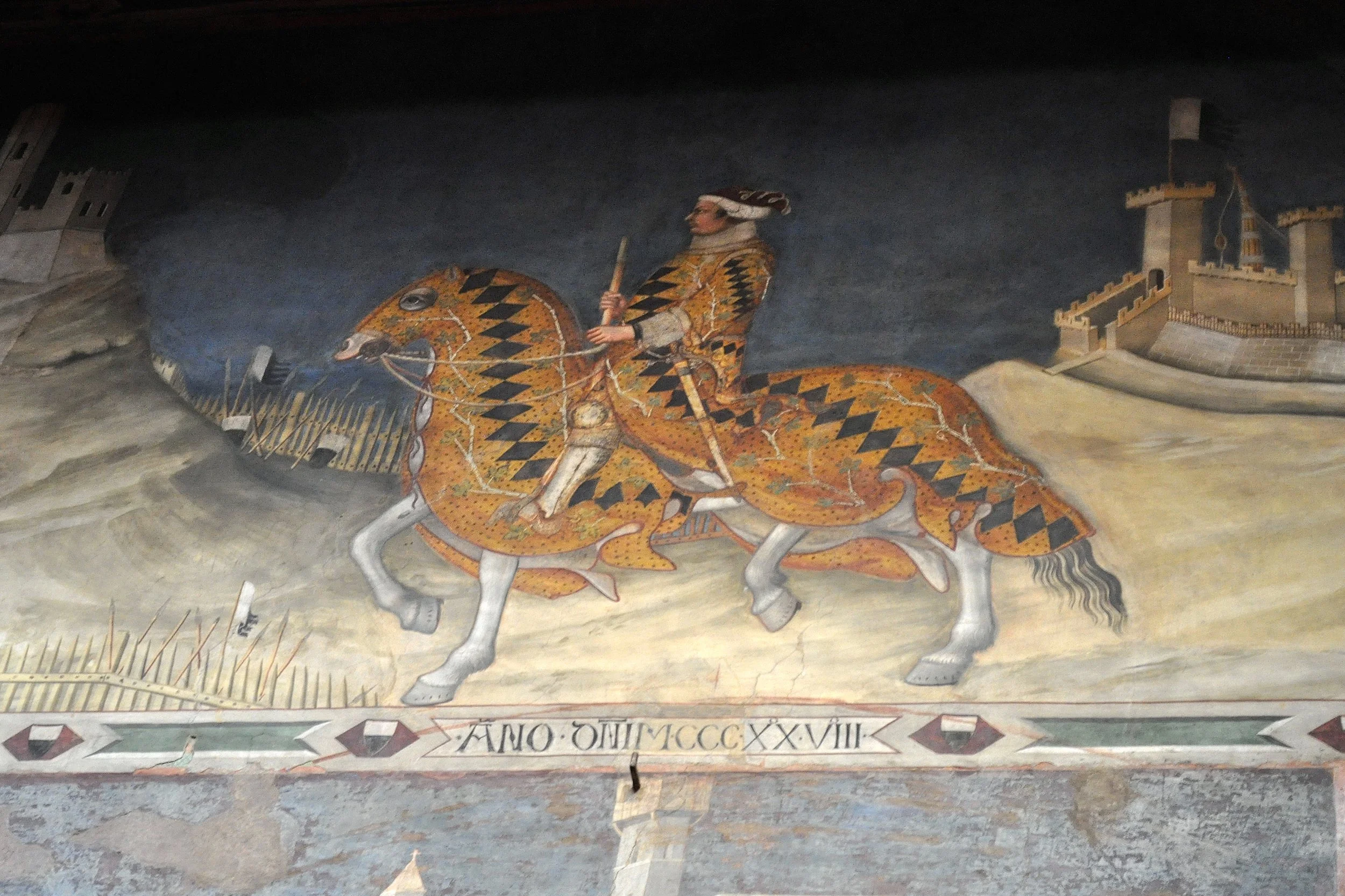
Angela: in the same room, we can also admire the famous fresco of Guidoriccio da Fogliano, the Sienese military commander depicted on horseback while leading the siege of a castle set in the landscape of the Tuscan countryside.
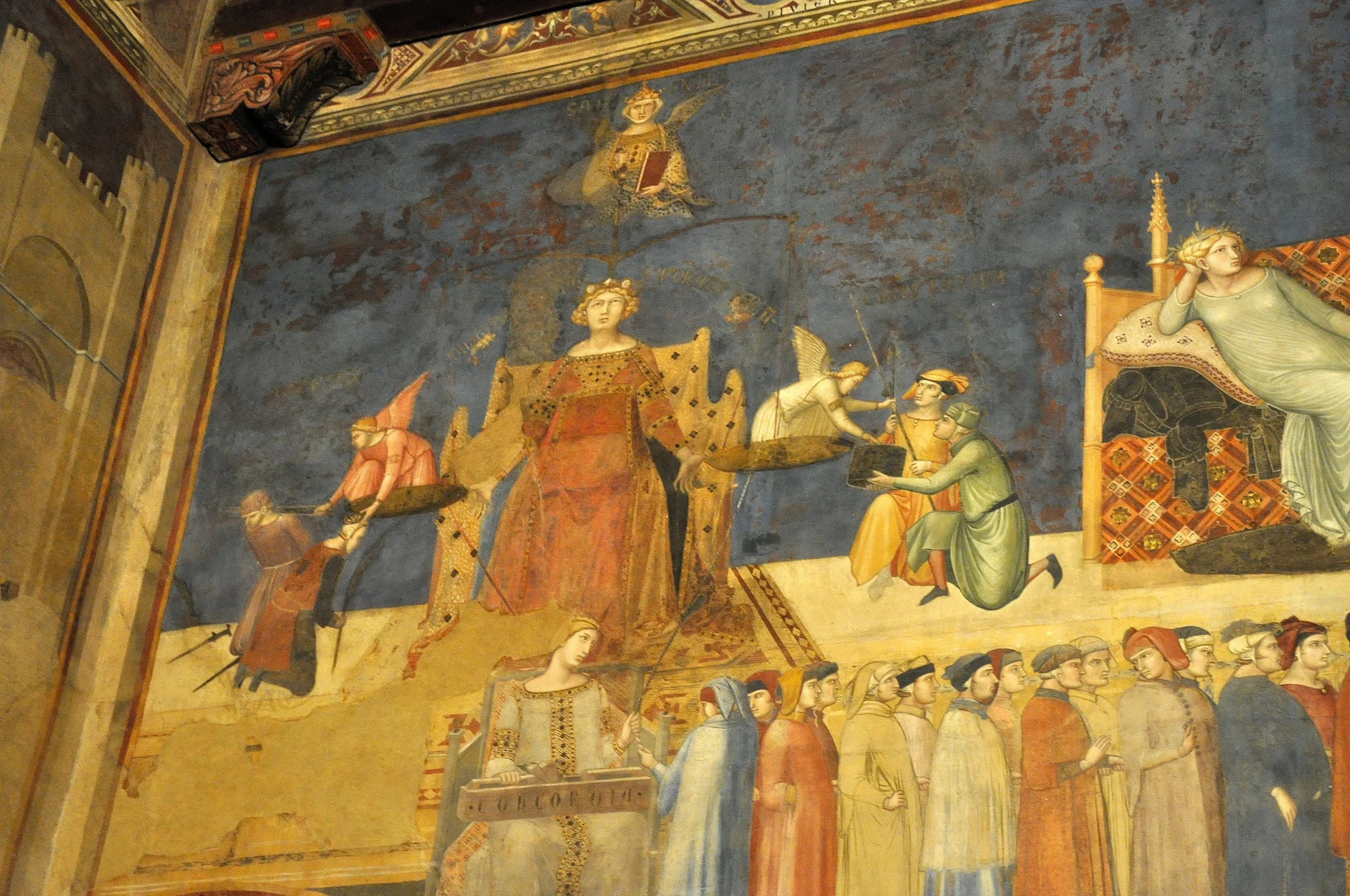
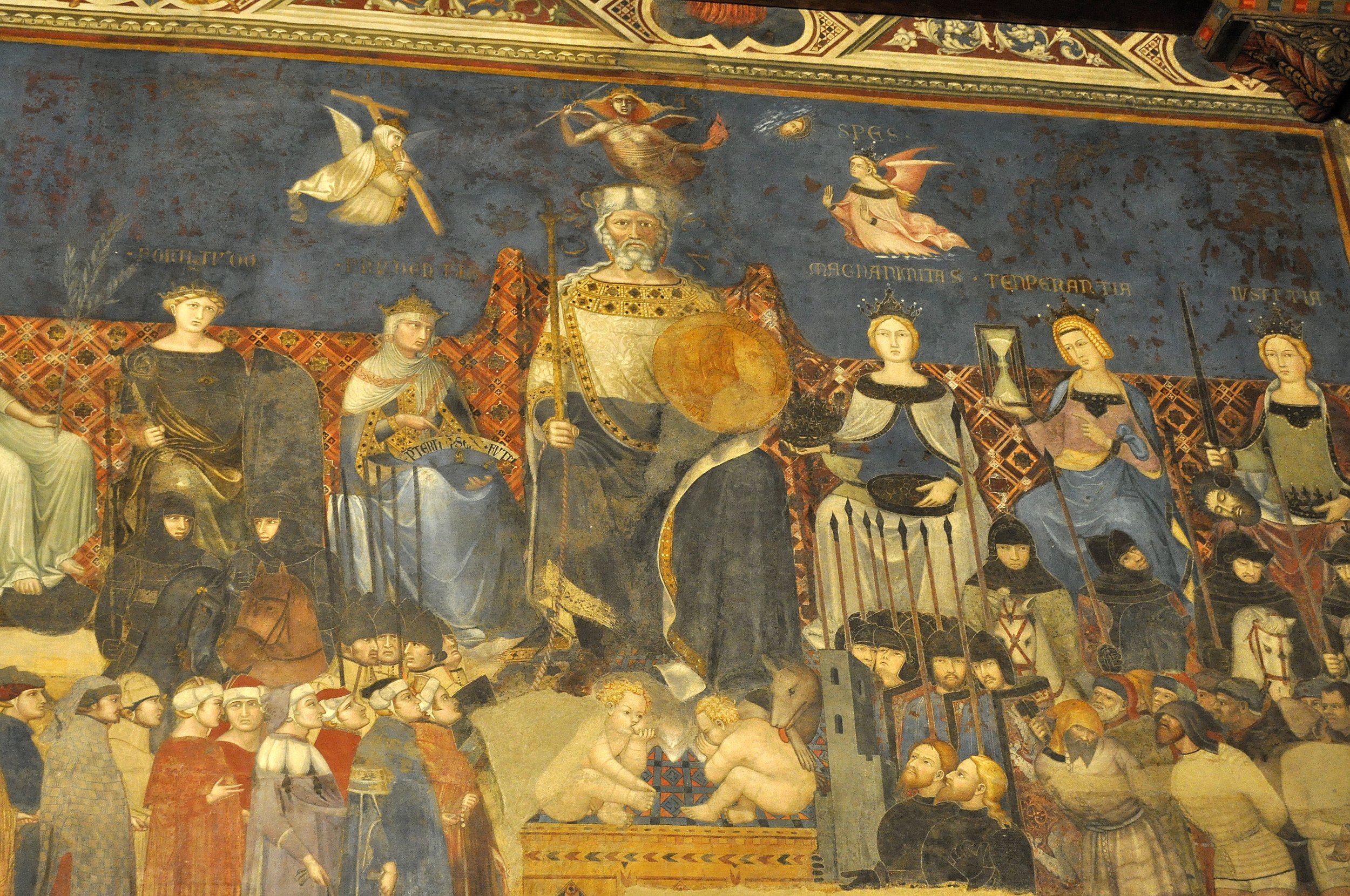
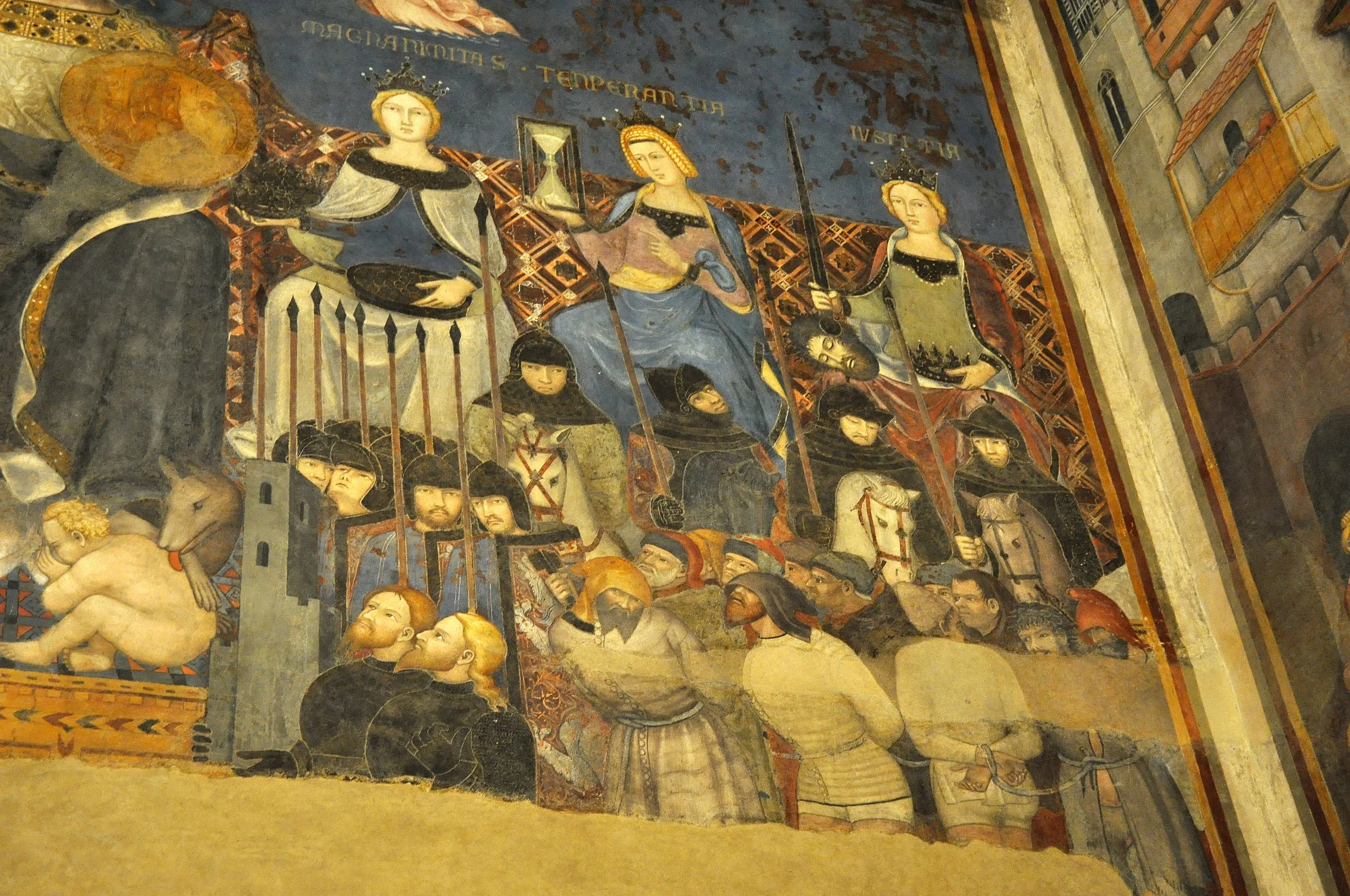
Piero: the final stop of our visit is perhaps the most fascinating one: the Hall of the Nine, the room where the rulers of the Sienese Republic used to meet.
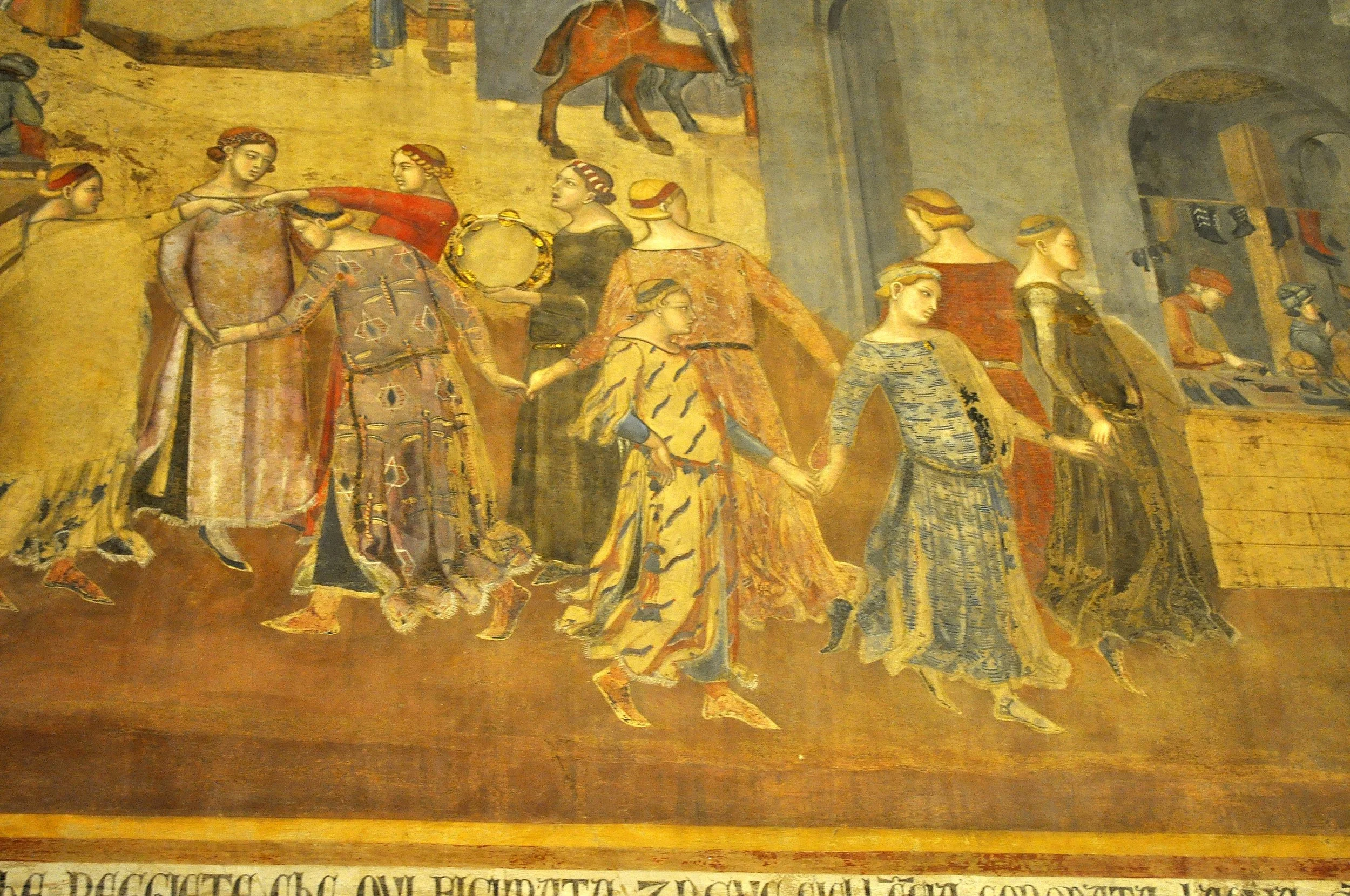
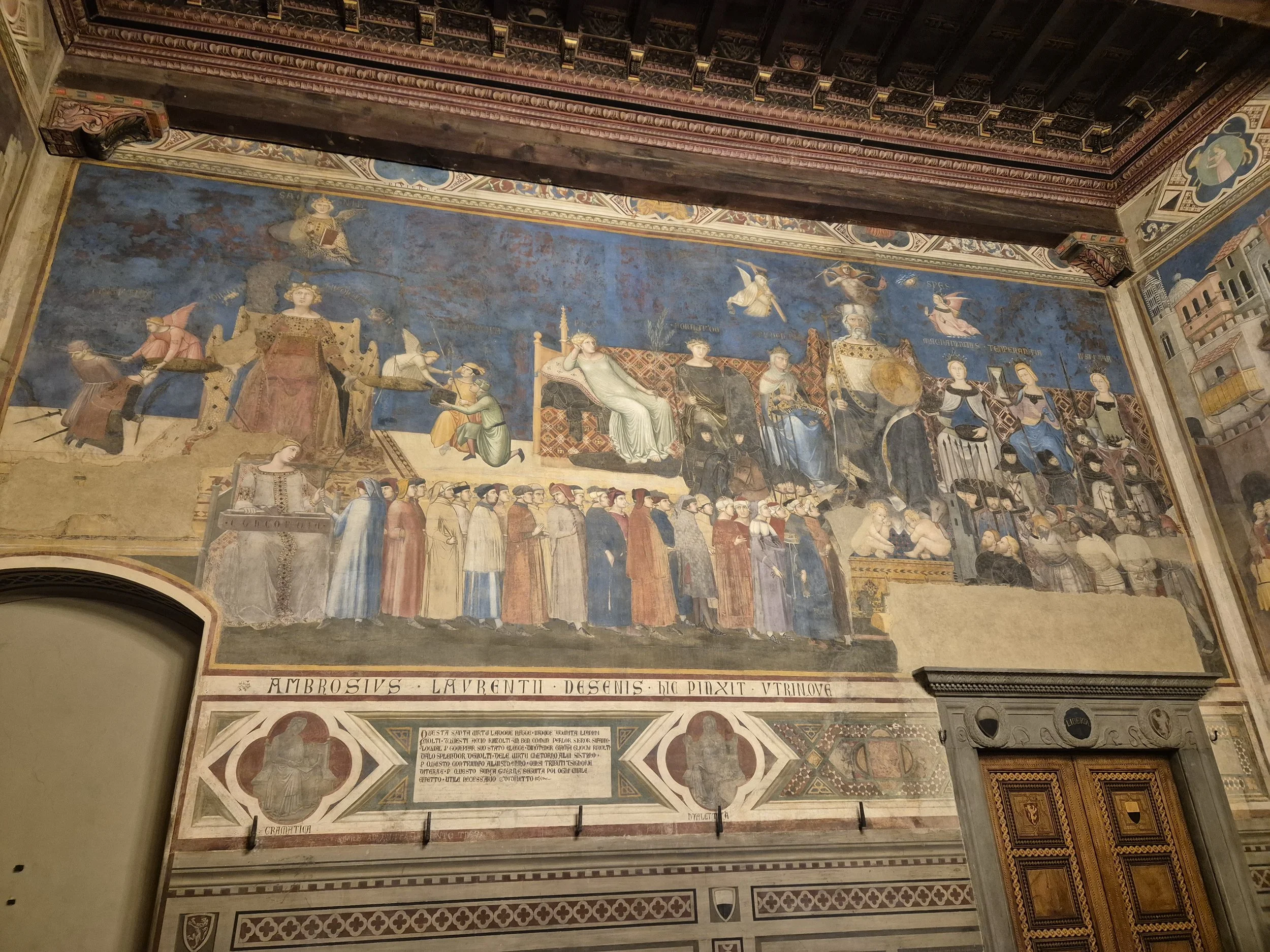
Angela: here, between 1338 and 1339, Ambrogio Lorenzetti created one of the most extraordinary pictorial cycles of the Middle Ages: the frescoes of the Allegory of Good and Bad Government.
Piero: in the Good Government fresco, the city appears prosperous and well ordered: open workshops, merchants, craftsmen at work, young people dancing in the square, and farmers cultivating the countryside beyond the city walls.
Angela: on the opposite side, the Bad Government fresco shows the consequences of tyranny: crumbling buildings, violence in the streets, and abandoned fields.
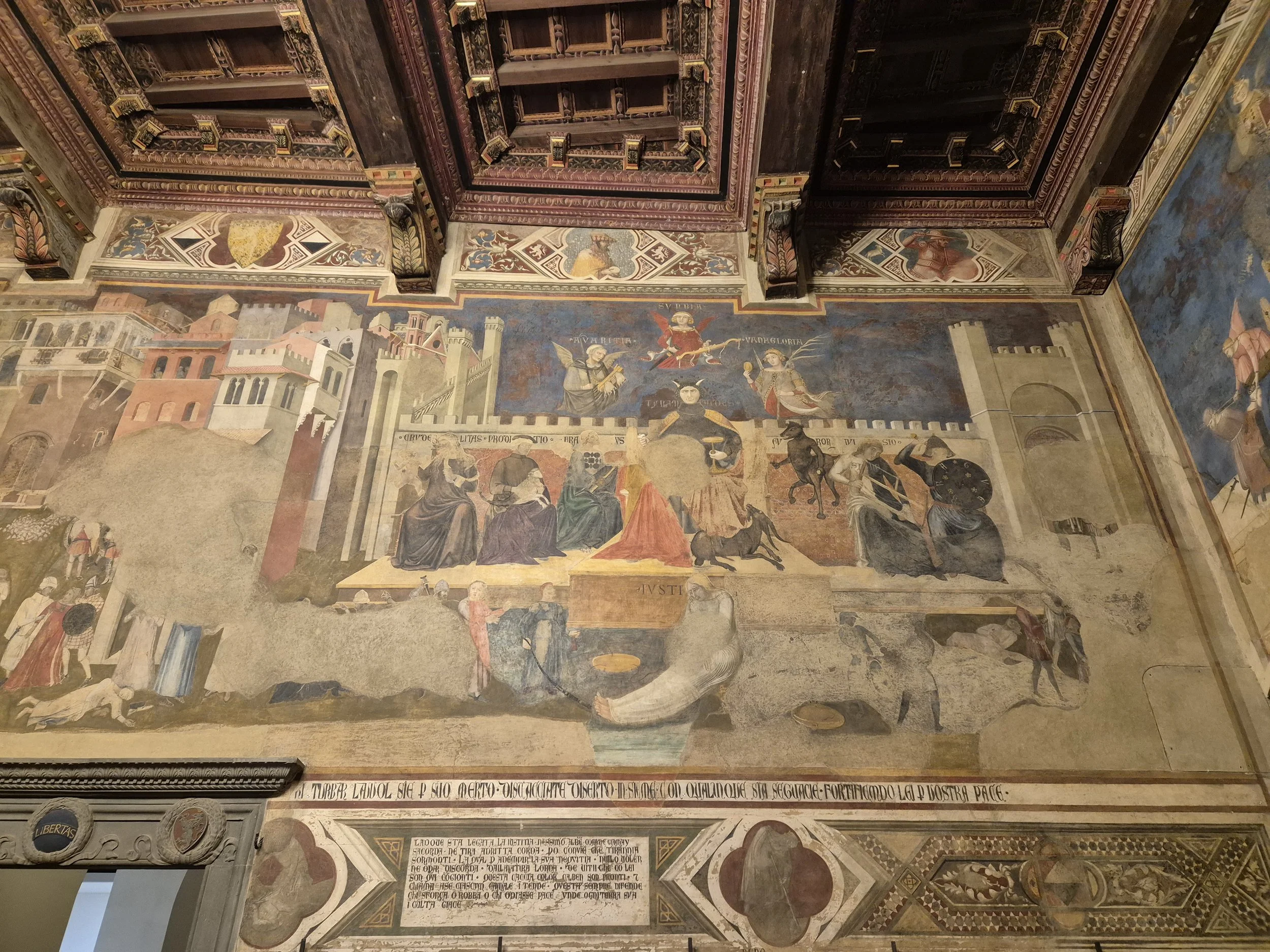
Piero: the message is absolutely clear: the destiny of a city depends on the quality of those who govern it.
Angela: and it is astonishing to think that this political lesson, painted on the walls of Siena’s government hall, continues to speak to the world almost seven centuries later.
Goodbye Siena
Piero: two days are not enough to discover everything that Siena has to offer.
Angela: there are still the National Art Gallery, the Civic Museum, the churches of San Francesco and Sant’Agostino, and the historic neighbourhoods of the Palio contrade waiting to be explored.
Piero: but what we have seen is enough to understand one thing: Siena is not just a city to visit, it is a city to experience.
Angela: and with this wonderful image in our eyes, our journey through Siena comes to an end.
Piero: the van is waiting for us.
Angela: but we will come back. In Siena, you always return. In the meantime, enjoy our walks through this video.